
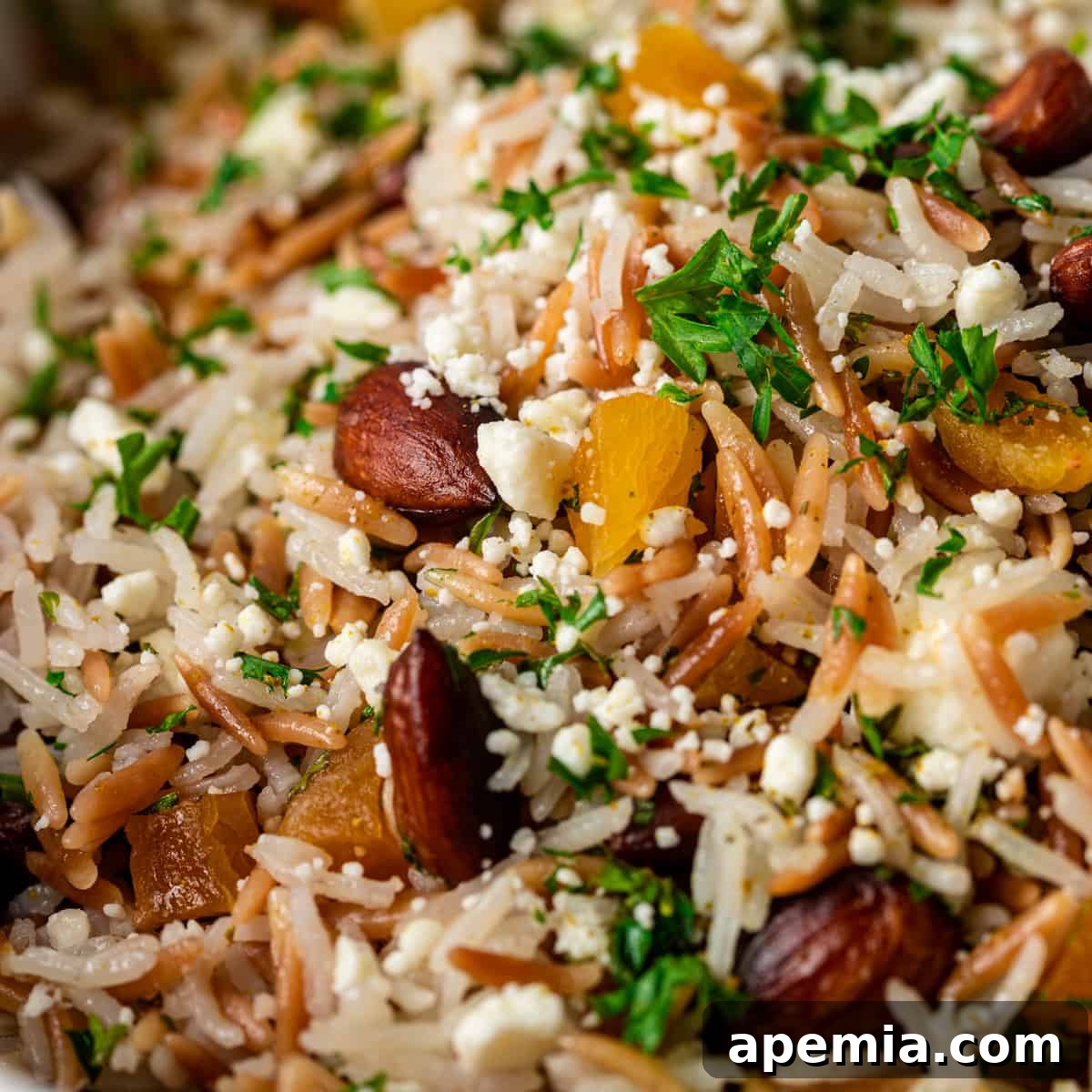
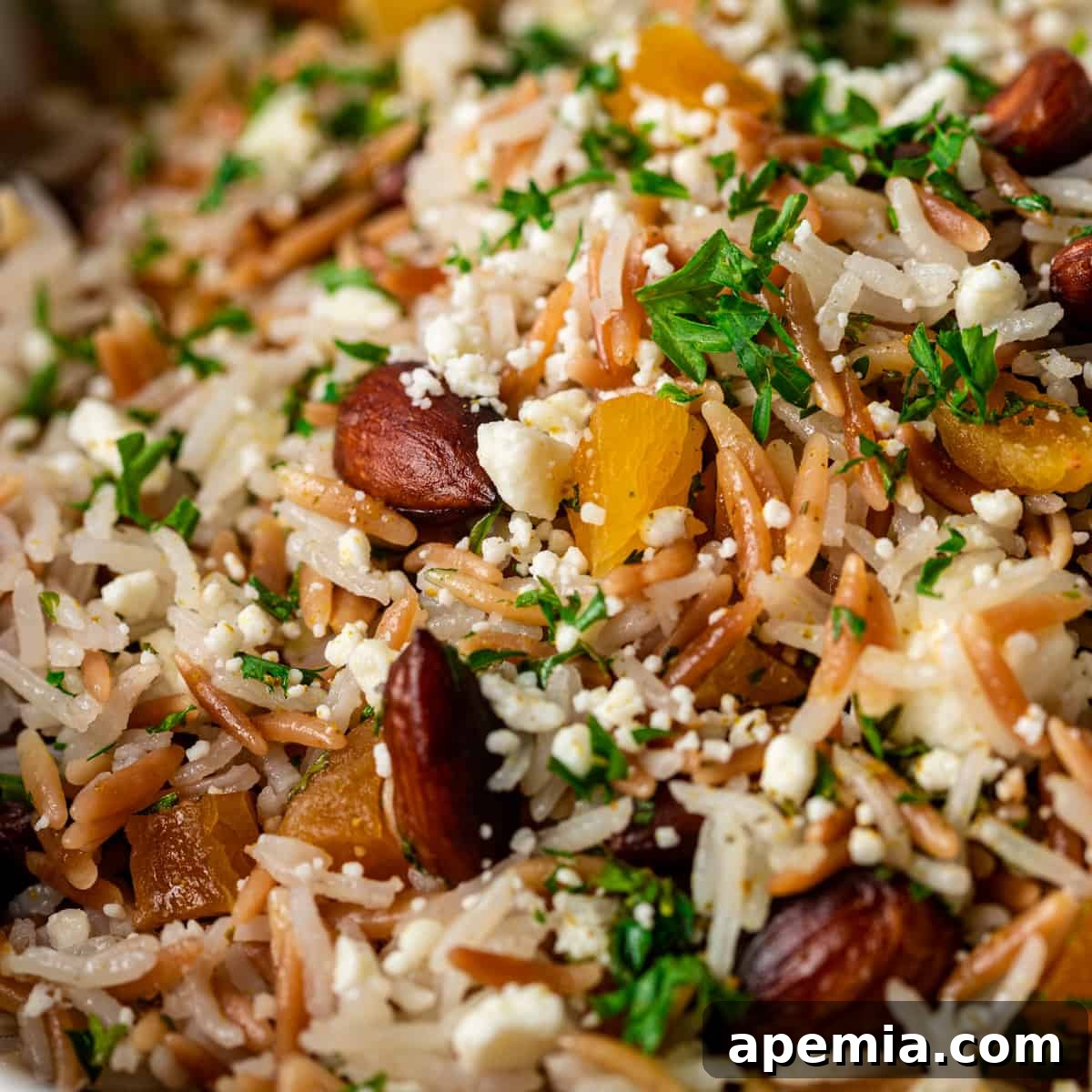
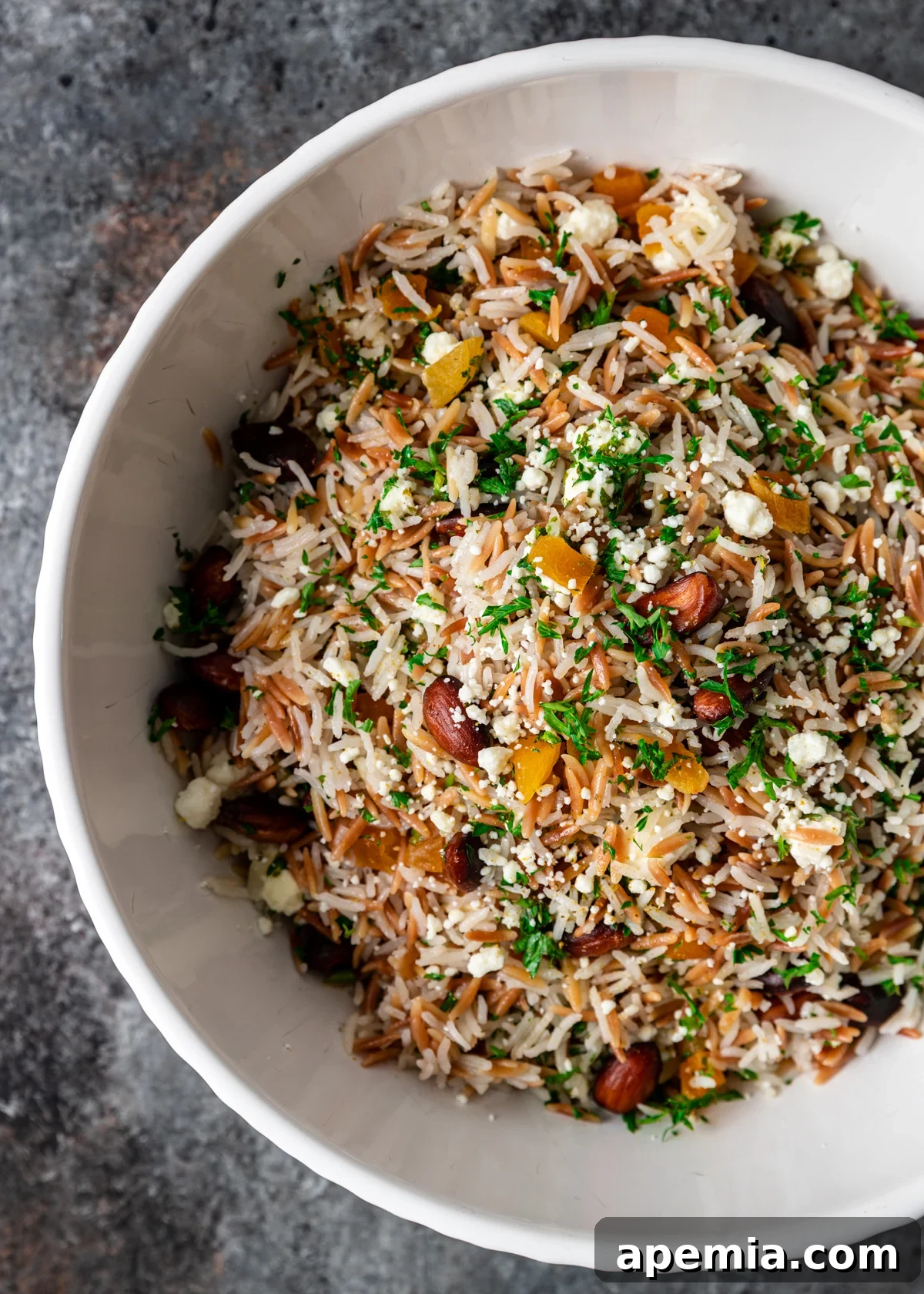
Fluffy, aromatic, and bursting with Mediterranean flavors, this Mediterranean Rice Pilaf is a truly captivating dish. Grains of basmati rice are carefully simmered in rich, savory chicken broth, complemented by beautifully toasted orzo pasta and crunchy almonds. Once cooked, the pilaf is generously adorned with a vibrant medley of sweet dried apricots and tangy feta cheese, culminating in a refreshing spritz of fresh lemon juice just before serving. It’s a remarkably simple, vibrant, and fresh-tasting dish that brings the sunny essence of the Mediterranean straight to your table, surprisingly easy to master for any home cook.
Mediterranean Rice Pilaf: A Journey of Flavor and Tradition
The story of rice pilaf is as rich and layered as the dish itself, tracing its origins back to ancient Persia and the legendary era of Alexander the Great. This innovative cooking method, which involves sautéing grains in oil before simmering them in a flavorful seasoned broth, proved revolutionary. It quickly spread along ancient trade routes, becoming a culinary staple across the vast and diverse regions of the Middle East, Central Asia, and into the Indian subcontinent. Each culture that embraced pilaf adapted it to their local ingredients and unique culinary customs, giving rise to an astonishing and vibrant family of variations that delight palates worldwide.
Throughout these regions, you’ll encounter countless interpretations of pilaf, each telling its own story. Some Middle Eastern versions, like those found along the historical Silk Road, are famously adorned with fragrant pine nuts and baked to a golden perfection in rich ghee, imparting a distinct nutty aroma. Other iterations, such as certain Lebanese pilafs, incorporate succulent ground beef, transforming the dish into a heartier, more substantial meal. Then there are the robust Central Asian “Plovs,” often stewed with tender cuts of meat and sweet, caramelized carrots, creating a lavish, one-pot feast that has sustained generations. This incredible diversity underscores pilaf’s remarkable versatility and its profound cultural significance as a beloved culinary tradition.
The Distinct Charm of Our Mediterranean Rice Pilaf
Our specific Mediterranean rice pilaf recipe is thoughtfully crafted for both efficiency and an explosion of authentic flavor, meticulously capturing the sun-drenched essence of coastal Mediterranean cuisine. It features a harmonious blend of carefully toasted almonds, delightfully chewy dried apricots, creamy and salty feta cheese, fragrant fresh parsley, and a bright, essential citrusy finish. With these vibrant, high-quality ingredients at its core, the dish delivers an undeniably genuine Mediterranean experience that tantalizes the taste buds and evokes memories of seaside dining.
While many traditional Mediterranean pilaf recipes primarily feature rice, the inclusion of orzo pasta in our version is a deliberate and celebrated choice. The small, rice-shaped pasta introduces a delightful velvety texture and a satisfyingly firm yet tender chewiness that beautifully contrasts with the fluffiness of the rice. This thoughtful textural interplay ensures that every spoonful is engaging and keeps the dish from becoming monotonous, adding a layer of sophisticated complexity. The combination of different grains, coupled with varied textures and bright flavors, truly elevates this pilaf beyond a simple rice dish into a gourmet experience.
For those who appreciate enhanced nutrition, added freshness, or simply more culinary variety, incorporating vegetables into your Mediterranean rice pilaf is a fantastic idea. To beautifully maintain and complement the vibrant Mediterranean theme, consider including finely diced carrots for a hint of natural sweetness, sautéed kale or fresh spinach for an earthy depth, tender sliced mushrooms for a rich umami flavor, or colorful bell peppers (red, yellow, or orange) for a touch of crispness and visual appeal. Other excellent choices that harmonize wonderfully with the existing flavors include tender zucchini, hearty chickpeas, or tangy artichoke hearts. These thoughtfully chosen additions not only significantly boost the nutritional profile of the dish but also introduce more captivating colors and varied textures, making the pilaf even more wholesome and appealing.
Table of Contents
- The Rich History of Pilaf: A Culinary Journey
- Essential Ingredients & Smart Substitutions
- Mastering Your Mediterranean Rice Pilaf
- Recommended Kitchen Tools
- Storing & Reheating Leftovers
- Frequently Asked Questions (FAQs)
- Mediterranean Rice Pilaf Full Recipe
Perfect Pairings: Elevating Your Meal with Mediterranean Rice Pilaf
This incredibly flavorful Mediterranean rice pilaf is far more than just a simple side dish; it’s a versatile culinary companion capable of elevating any meal, whether it’s a casual weeknight dinner or a special gathering. Its balanced profile and delightful textures allow it to pair beautifully with a wide array of proteins and main courses. Imagine serving this vibrant pilaf alongside succulent Chicken Parm Meatballs, where its bright, savory notes expertly cut through the richness of the cheese and sauce. Alternatively, pair it with a delicate and tangy Chicken Piccata, allowing the fresh lemon zest in the pilaf to beautifully echo the caper-infused sauce. It’s also an absolute dream with various seafood dishes, such as perfectly seared scallops, grilled swordfish, or succulent Tuscan Shrimp, absorbing all the delicious, savory juices and creating a truly memorable meal.
Beyond these popular choices, consider enhancing your dining experience by pairing your Mediterranean rice pilaf with tender grilled lamb kebabs for an authentic, hearty feast, or with flaky baked salmon for a lighter, health-conscious option. For a truly satisfying vegetarian main course, try it with pan-seared halloumi cheese, which offers a delightful salty contrast. Its remarkable ability to complement both robust and delicate flavors truly makes this pilaf a versatile kitchen hero. For a complete and simple vegetarian meal, simply serve it with a crisp, fresh green salad tossed with a light vinaigrette and a side of warm, crusty bread to soak up all the flavorful goodness.
Chef’s Insight
The Rich History of Pilaf: A Culinary Journey Across Civilizations
Pilaf, known by many names such as pilau, plov, or pilav, is a dish with an incredibly illustrious and ancient past, believed to have originated in the sophisticated culinary traditions of ancient Persia. Its innovative cooking technique, which uniquely involves lightly sautéing grains in oil or butter before simmering them in a flavorful seasoned broth, proved to be a groundbreaking method for achieving perfectly separate, fluffy rice grains. This ingenious approach quickly gained widespread traction and embarked on a remarkable culinary journey, spreading its influence across vast continents. It traveled along the intricate network of ancient trade routes, deeply embedding itself in the diverse cultures throughout the Middle East, Central Asia, and extending profoundly into the Indian subcontinent. Each new region warmly embraced pilaf, adapting it with its own unique local ingredients, aromatic spices, and traditional cooking methods. This dynamic cultural exchange resulted in the vast and wonderfully vibrant family of pilaf dishes we cherish today. From the intensely aromatic spice blends characteristic of Indian biryanis to the robust meat-and-vegetable combinations found in Uzbek plov, pilaf stands as a magnificent testament to