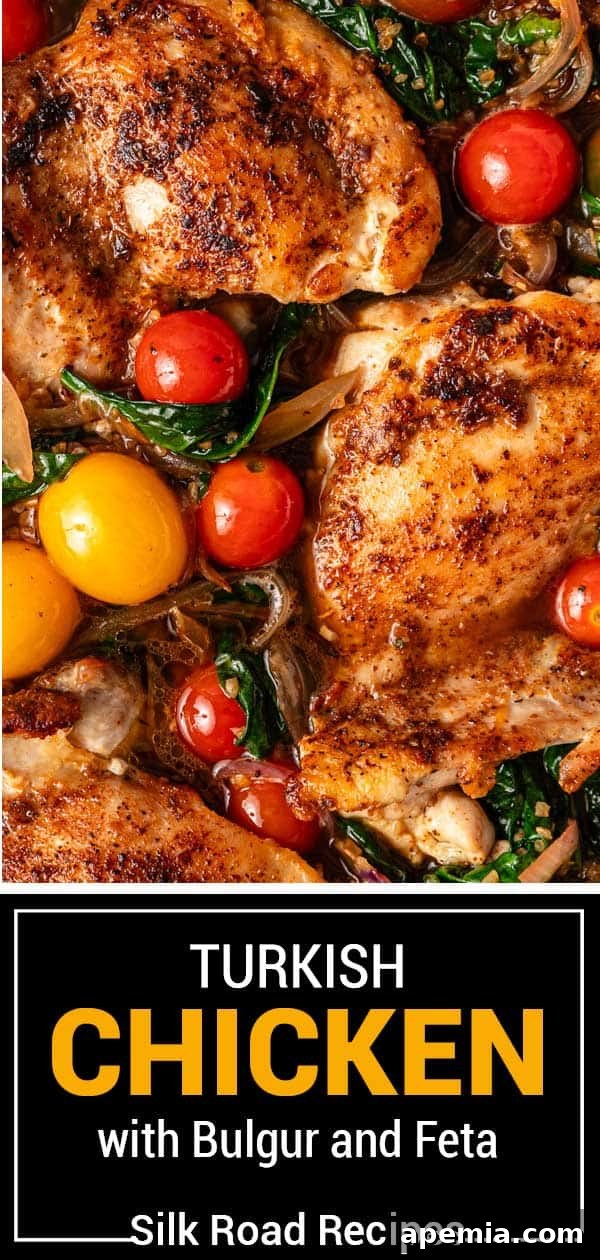
One-Pot Turkish Chicken with Bulgur and Feta: Your New Favorite Dinner
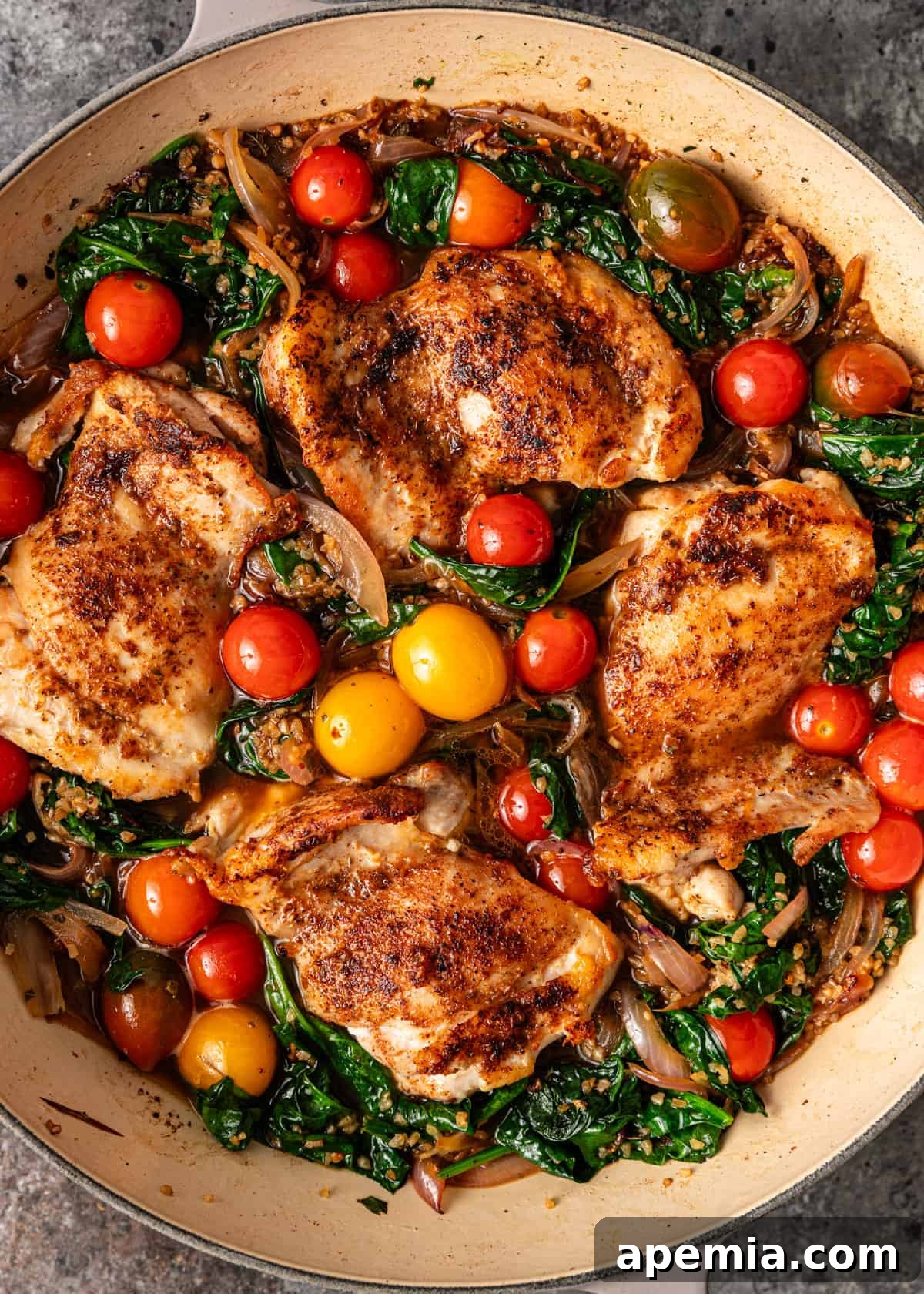
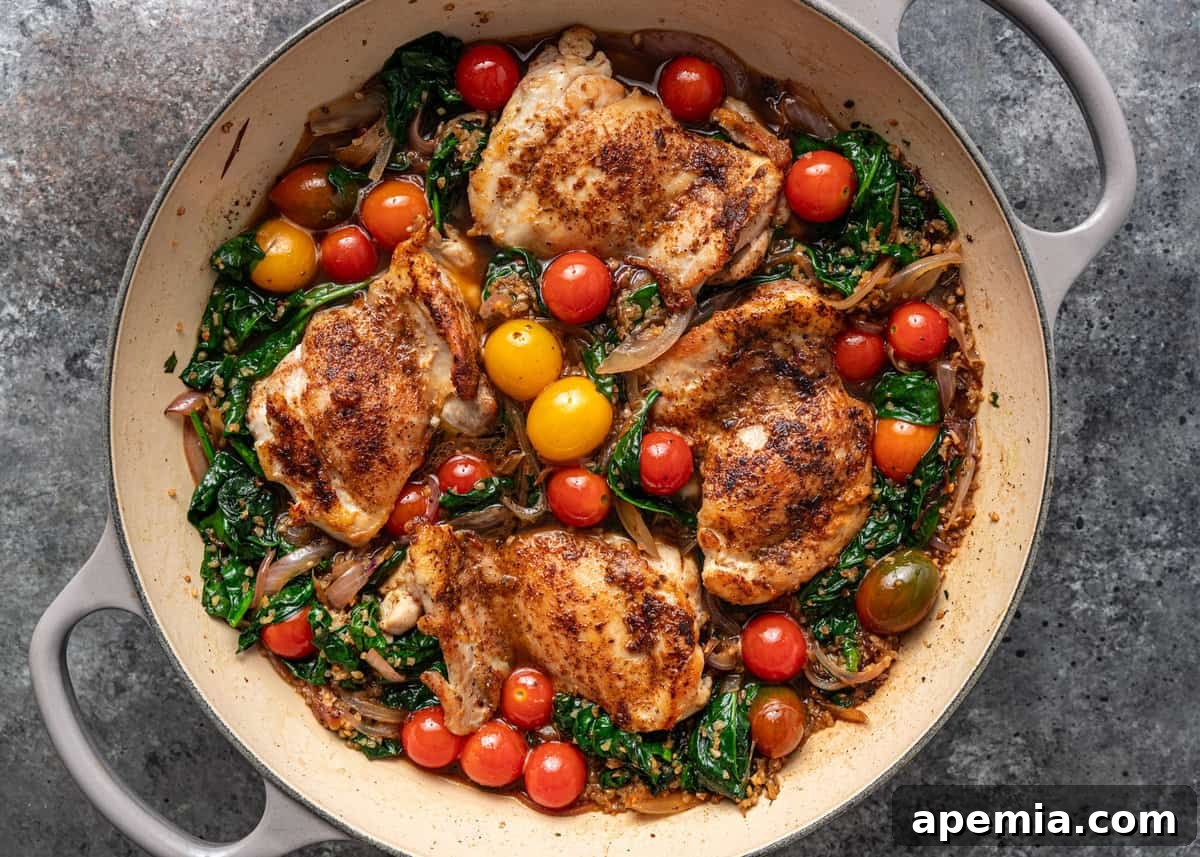
This incredible one-pot Turkish chicken recipe delivers a complete, satisfying meal in just 30 minutes. Packed with lean protein, vibrant vegetables, and wholesome grains, it’s designed to nourish your body and delight your taste buds. Seasoned with a rich blend of authentic Turkish spices, the chicken bakes to a golden brown perfection alongside tender, delightfully chewy bulgur wheat, and is finally crowned with tangy feta cheese and a sprinkle of fresh herbs. It’s a simple yet sophisticated dish that brings the vibrant flavors of the Middle East right to your dinner table, perfect for busy weeknights or a relaxed weekend meal.
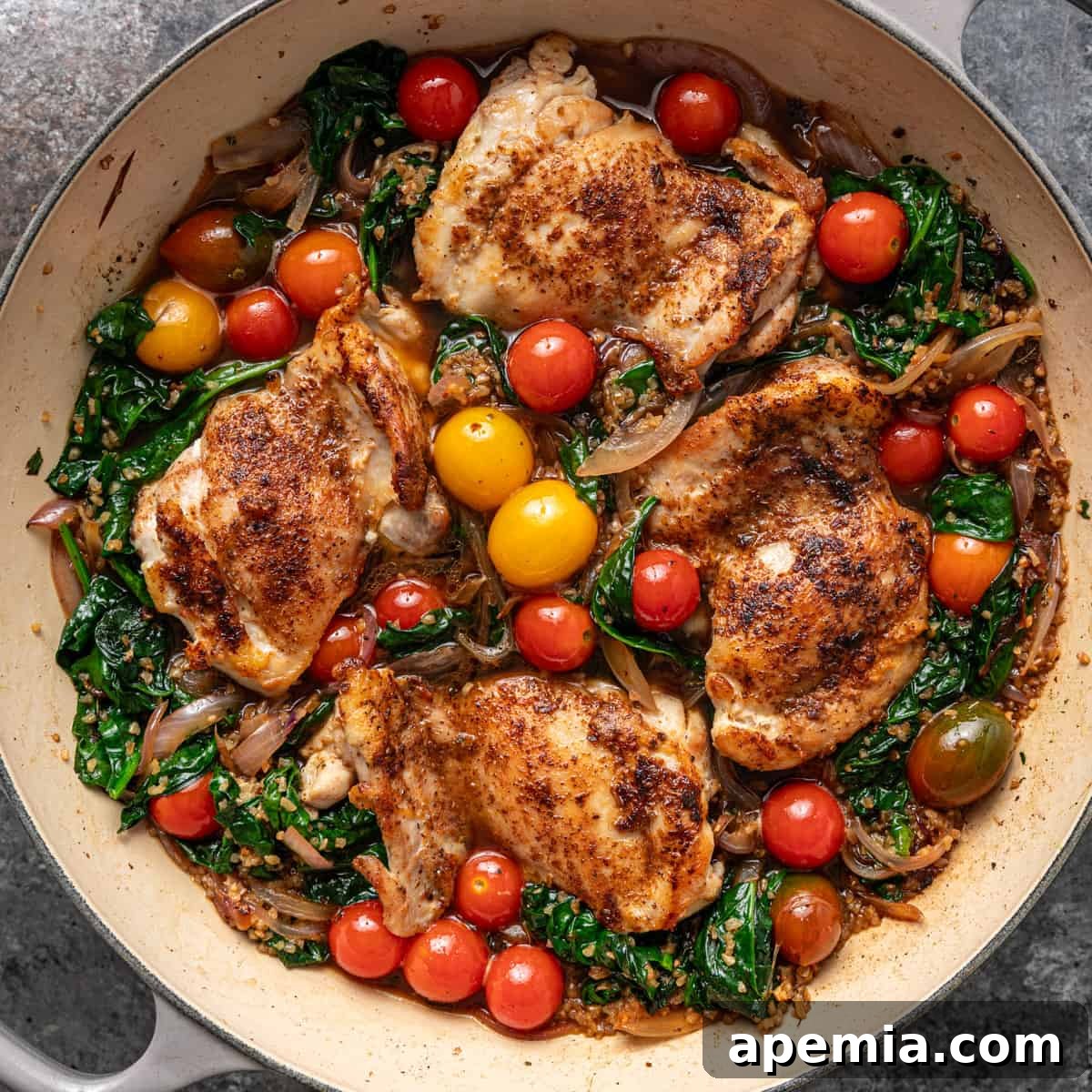
My Turkish chicken recipe takes something we’re all familiar with – juicy, mouthwatering baked chicken – and hopefully introduces a few new, exciting Middle Eastern flavors and ingredients. This dish is not just about a quick meal; it’s an invitation to explore the rich culinary traditions that make Turkish cuisine so universally loved, all condensed into a convenient one-pot preparation.
To start, boneless and skinless chicken thighs are quickly seared on the stovetop and then baked in the oven. This two-step method is crucial: searing locks in the natural juices and creates a beautiful, caramelized crust, while baking gently cooks the chicken through, ensuring the meat stays incredibly succulent and moist. A splash of savory chicken broth during the baking process further contributes to the tenderness, preventing any dryness and infusing the chicken with additional flavor.
I finish off this recipe by baking fresh spinach, hearty bulgur wheat, and the partially cooked chicken thighs together in chicken stock. This creates a sort of soft, golden pilaf-like base that soaks up all the wonderful seasonings and chicken juices. I chose bulgur specifically because it’s delightfully chewy, offering a satisfying texture similar to quinoa or couscous, and because it does an exceptional job of picking up the warm, earthy notes of the Turkish spice blend. It’s a foundational ingredient that adds both substance and authentic character to the dish.
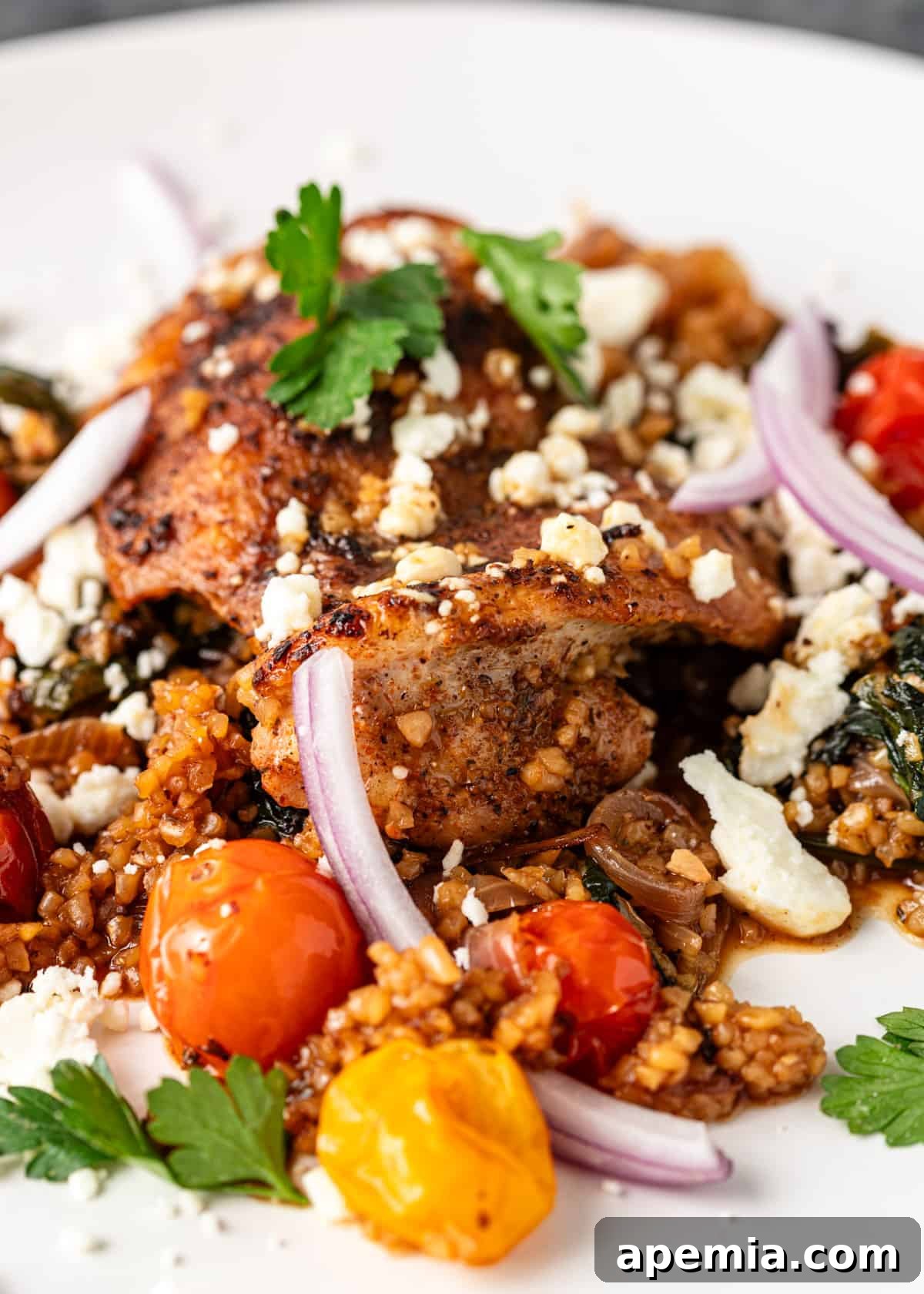
Table of Contents
- Ingredient Notes and Substitutions for Turkish Chicken
- What Makes Turkish Spice Unique?
- Step-by-Step Guide: How to Make Turkish Chicken
- Recommended Tools for One-Pot Cooking
- Storing and Reheating Leftovers
- Frequently Asked Questions About Turkish Chicken and Bulgur
- Turkish Chicken with Bulgur and Feta Recipe Card
While bulgur wheat is an excellent foundation for this savory chicken dish, its versatility extends far beyond. I usually use it in vibrant, fresh salads, like the traditional Turkish kısır or the popular Mediterranean tabbouleh, where its pleasant chewiness adds fantastic texture. However, as this Turkish chicken recipe beautifully demonstrates, bulgur is also superb for frying and baking. Its robust structure holds up well, absorbing other seasonings and liquids, or it can be shaped into crispy delights like Lebanese kibbeh croquettes. This makes it a wonderfully adaptable grain to keep in your pantry.
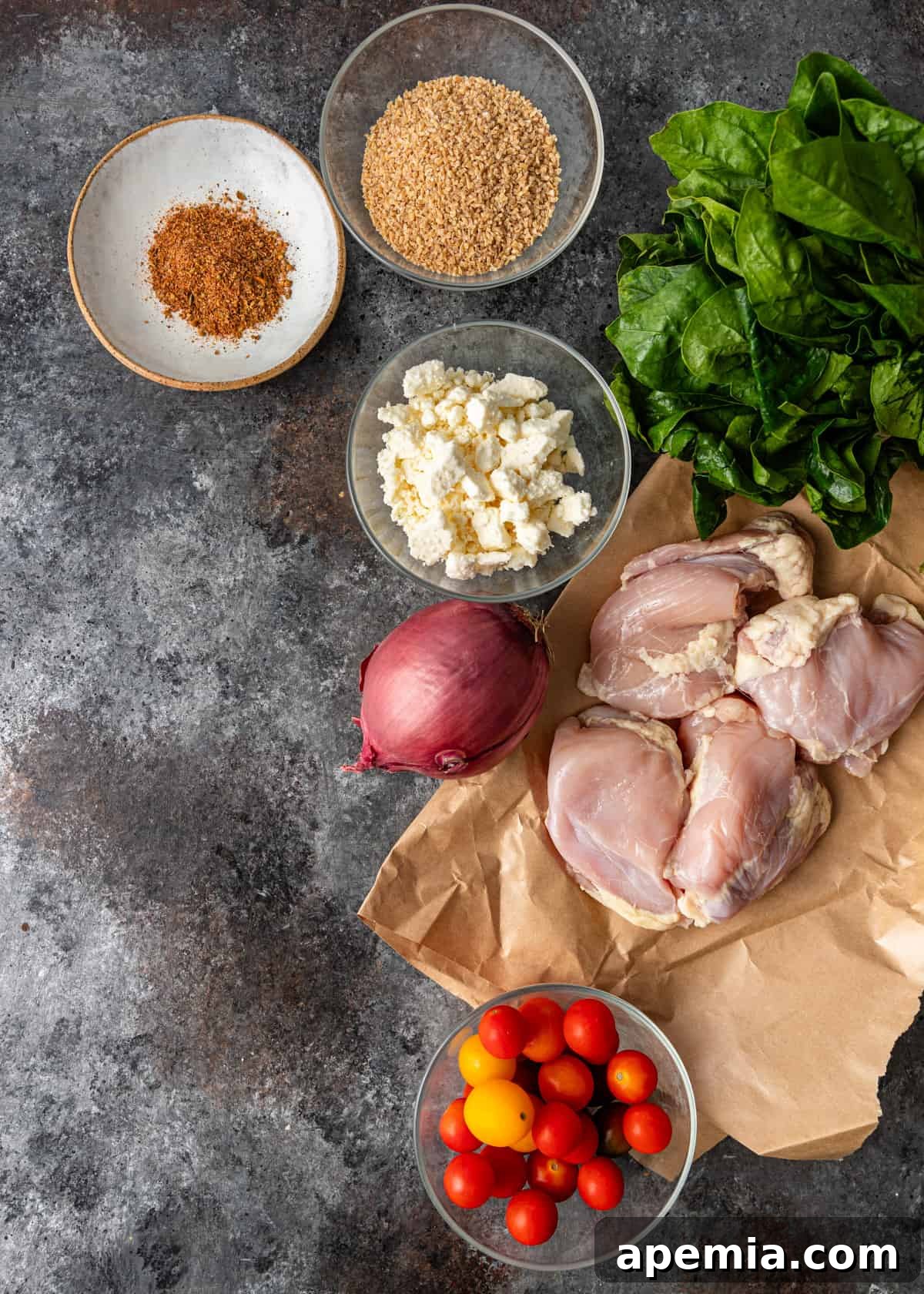
Ingredient Notes and Substitutions for Turkish Chicken
Crafting the perfect Turkish chicken dish begins with understanding each ingredient and how it contributes to the overall flavor profile. Here’s a detailed look at the components and suitable alternatives to ensure your meal is both delicious and adaptable to your pantry and preferences:
- Chicken: For this Turkish chicken recipe, boneless and skinless chicken thighs are my top recommendation. Their higher fat content ensures they remain exceptionally juicy and tender, even after searing and baking, delivering a rich, satisfying dark meat flavor that perfectly complements the robust spices. However, if you prefer chicken breast, it can be used without significant changes to the recipe. Just be mindful that breast meat cooks faster and is leaner, so it can dry out more easily. Adjust baking time and monitor the internal temperature carefully to prevent overcooking.
- Bulgur Wheat: This ancient grain is a nutritional powerhouse, rich in fiber and a fantastic whole-grain choice. Its distinct chewy texture and nutty flavor are a highlight of this dish, providing a wonderful contrast to the tender chicken. While bulgur is increasingly available in most well-stocked grocery stores, it can sometimes be challenging to find. Excellent substitutes include couscous (which is quicker to cook and has a similar texture), brown rice (offering a similar earthy depth and heartiness), or orzo pasta (which will create a different, but still delicious, texture, making the dish more pasta-like). Ensure any substitute is cooked according to its package directions if it requires pre-cooking before being added to the skillet.
- Feta Cheese: The inclusion of smooth, tangy feta cheese introduces a bright, salty counterpoint to the warm spices and savory chicken. Its crumbly texture and bold flavor make it an ideal garnish, cutting through the richness of the dish with a refreshing sharpness. Should feta not be to your liking, or if you’re looking for alternatives, fresh goat cheese offers a similar tanginess and creaminess. For a truly authentic Turkish touch, seek out Kars Gruyere, a hard, aged cheese from Turkey known for its robust and nutty flavor, which grates beautifully over the finished dish.
- Turkish Spice Blend: This carefully balanced blend of warm, earthy spices is the heart and soul of our Turkish chicken. It’s designed to infuse the meat with deep, aromatic notes that evoke the rich culinary landscape of the Middle East. While pre-made blends are available, I highly recommend creating your own at home using freshly ground spices for the most vibrant and potent flavors. My preferred blend typically includes cumin, black pepper, oregano, bay leaves, sumac, paprika, cayenne, and sesame seeds. Making your own allows you to adjust the heat and earthiness to your personal preference. You can often find detailed recipes for this blend on culinary blogs, or create your own based on what you have available.
- Red Onion: The thinly sliced red onion caramelizes beautifully during sautéing, adding a subtle sweetness, a pleasant bite, and aromatic depth to the base of the dish. If red onion isn’t available, white onion, yellow onion, or even shallots make excellent alternatives. The key is to slice them very thinly to allow them to soften and melt into the dish during cooking, releasing their aromatic compounds without overpowering the other flavors.
- Spinach: Fresh spinach leaves wilt down significantly during cooking, adding a burst of vibrant color, a wealth of nutrients, and a touch of earthiness that balances the richness of the chicken and spices. If using frozen spinach, remember to thaw it completely and squeeze out any excess water thoroughly before adding it to the skillet. This crucial step prevents the dish from becoming watery and ensures the flavors remain concentrated and intense.
- Cherry Tomatoes: Baking whole cherry tomatoes allows them to burst and release their sweet, juicy flavors directly into the bulgur and chicken, creating delightful pockets of warmth and a lovely acidity that brightens the dish. If cherry tomatoes are out of season or unavailable, grape tomatoes are an excellent, readily available substitute, offering a similar sweetness and size. Diced large tomatoes can also work in a pinch, though they may release more liquid.
What Makes Turkish Spice Unique?
The Turkish spice blend is a cornerstone of this recipe, lending it its distinctive Middle Eastern character. It’s a harmonious mix of warm and earthy spices, with cumin often playing a prominent role, balanced by other aromatic additions. This blend is incredibly versatile, perfect for rubbing onto roasted meats, enhancing stews, seasoning vegetables, or even elevating grain dishes. The beauty of Turkish spice blends lies in their ability to add profound depth and aroma without overwhelming the natural flavors of the main ingredients. My personal blend, which I encourage you to try making fresh for the best flavor, consists of:
- Cumin: Provides a deep, earthy, and slightly pungent base, a signature flavor in many Middle Eastern cuisines.
- Black Pepper: Adds a universal warmth and subtle kick, enhancing the overall spice profile.
- Oregano: Offers a fragrant, slightly bitter, and herbaceous note, reminiscent of the Mediterranean landscape.
- Bay Leaves (ground): Contributes a subtle, complex, and almost floral aroma that adds a layer of sophistication.
- Sumac: Delivers a bright, tart, and slightly fruity flavor, a hallmark of Middle Eastern cuisine that adds a refreshing zest.
- Paprika: Lends a beautiful reddish hue and a sweet, smoky, or sometimes mildly hot flavor, depending on the type you choose (sweet, smoked, or hot).
- Cayenne Pepper: Provides a gentle to moderate heat, adjustable to your preference, giving the dish a pleasant warmth.
- Sesame Seeds: Adds a delicate nutty crunch and distinctive aroma, especially when lightly toasted, providing a textural contrast.
Creating your own blend allows you to customize the intensity of each spice, making the dish truly your own. For those new to Turkish cooking, experimenting with such a blend is a fantastic and rewarding introduction to a vibrant culinary world.
Step-by-Step Guide: How to Make Turkish Chicken
Creating this flavorful one-pot Turkish chicken is surprisingly simple and efficient. Follow these detailed steps to ensure a perfectly cooked, aromatic, and deeply satisfying meal that’s packed with authentic flavors:
- Prepare Your Oven and Skillet: Begin by preheating your oven to 400°F (200°C). As the oven heats, warm 1 tablespoon of olive oil in a large, oven-safe skillet (a cast iron skillet is ideal for its heat retention) over medium-high heat on your stovetop. Ensure the skillet is hot enough to achieve a good sear, but not smoking.
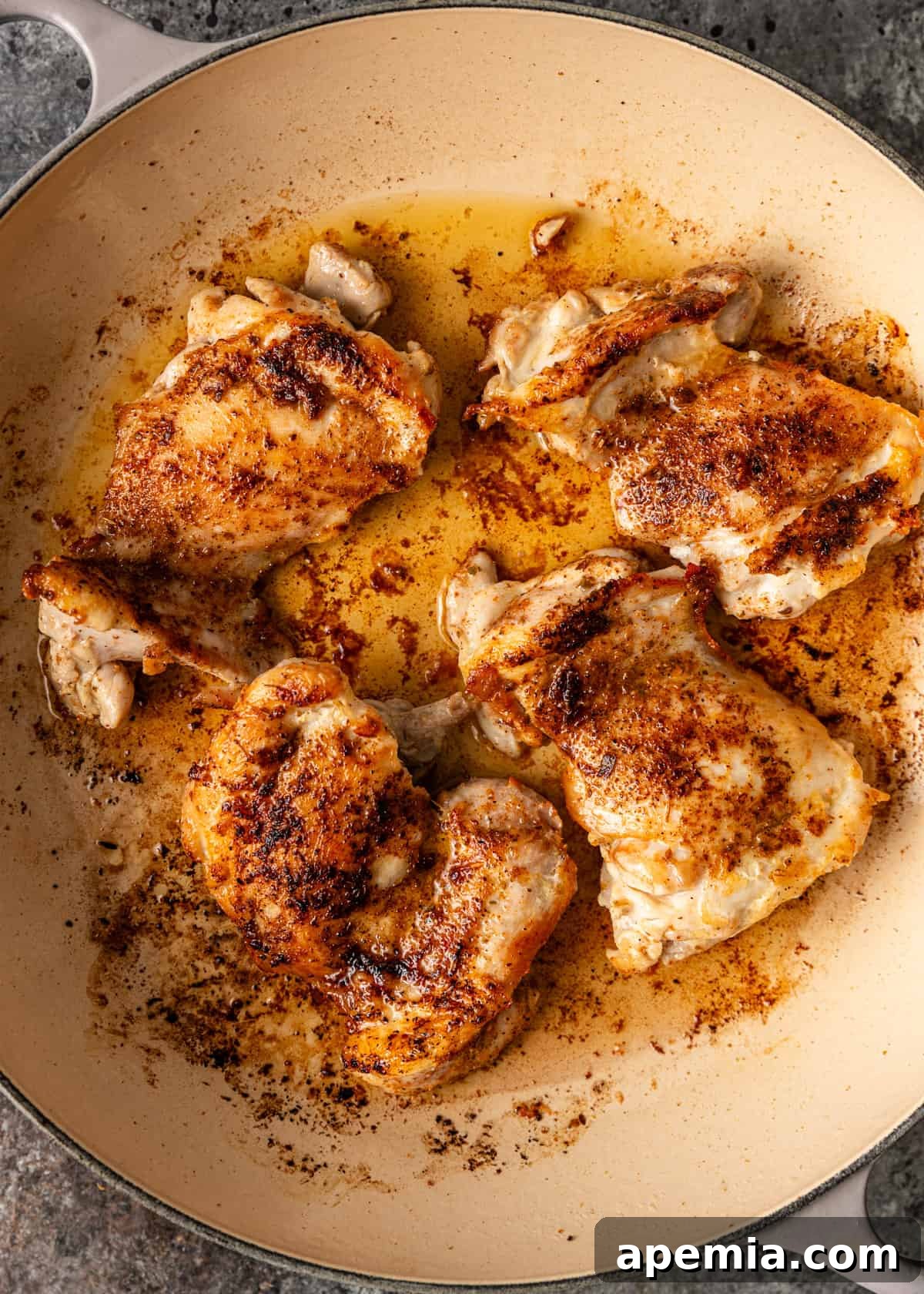
- Sear the Chicken to Golden Perfection: Generously season both sides of your boneless, skinless chicken thighs with the Turkish spice blend. Once the skillet is hot, carefully add the seasoned chicken. Sear for approximately 3 minutes on each side, allowing the meat to develop a beautiful golden-brown crust. This crucial step not only adds a layer of rich flavor through caramelization but also helps to lock in the juices, ensuring the chicken remains succulent. After browning, remove the chicken from the skillet and set it aside on a plate; it will complete its cooking in the oven later.
- Sauté Aromatics for the Base: Pour the remaining 1 tablespoon of olive oil into the same skillet. Reduce the heat slightly to medium. Add the thinly sliced red onion and minced garlic. Stir frequently, sautéing for about 5 minutes, or until the onions have softened, turned translucent, and become wonderfully aromatic. This foundational step releases their sweet and pungent compounds, which will infuse the entire dish with a rich savory base.
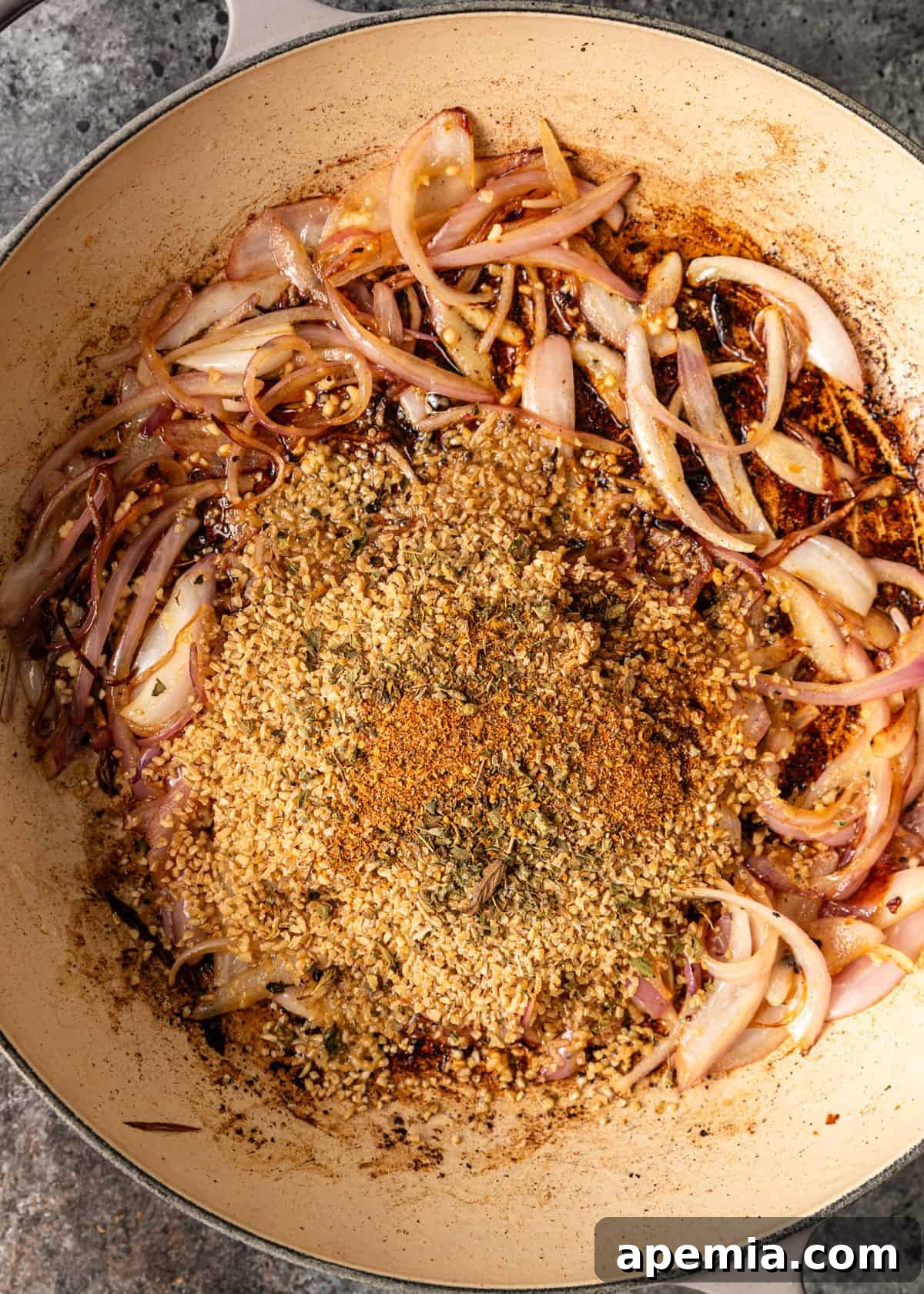
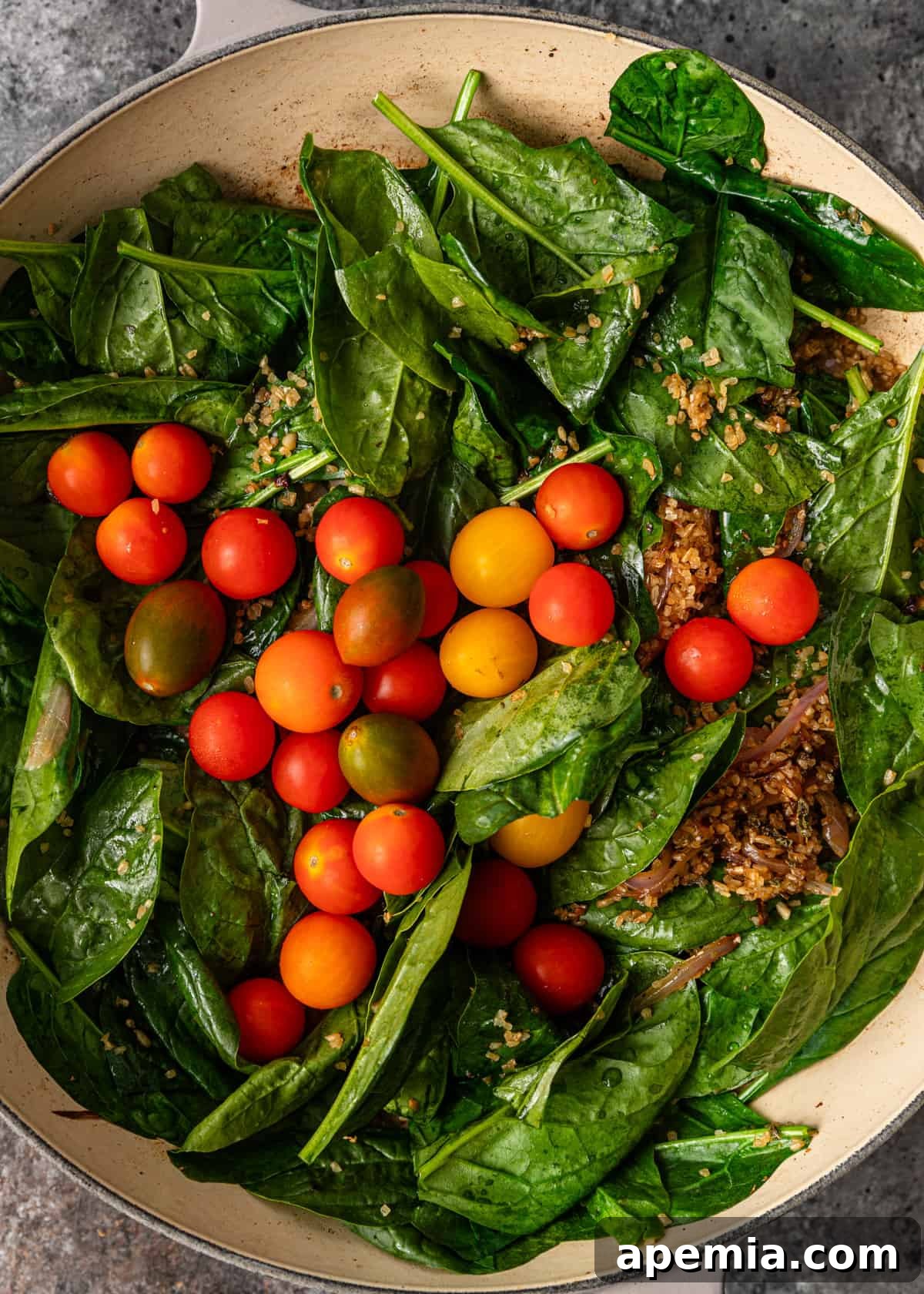
- Incorporate Bulgur and Spices: Stir the bulgur wheat and dried oregano into the sautéed onion and garlic mixture. Cook for a couple of minutes, stirring continuously, allowing the bulgur to slightly toast and absorb the aromatics. This light toasting enhances its nutty flavor. Next, add the fresh spinach leaves and cherry tomatoes. Continue stirring for another 2 minutes until the spinach has fully wilted and the cherry tomatoes begin to soften and slightly break down, releasing their sweet juices into the mixture.
- Add Stock and Arrange for Baking: Pour the chicken stock into the skillet, stirring well to combine all the ingredients and scrape up any flavorful browned bits from the bottom of the pan – these bits add tremendous depth. Gently return the seared Turkish chicken thighs to the skillet, nestling them into the bulgur and vegetable mixture. Press them down slightly to ensure they are partially submerged in the liquid, allowing them to absorb moisture and flavor during baking.
- Bake to Perfection: Cover the skillet tightly with a lid (or aluminum foil if your skillet doesn’t have one, ensuring a good seal). Transfer the covered skillet to the preheated oven. Bake for 15 minutes. The chicken is cooked when its internal temperature reaches 165°F (74°C) as measured with an instant-read meat thermometer inserted into the thickest part of the thigh.
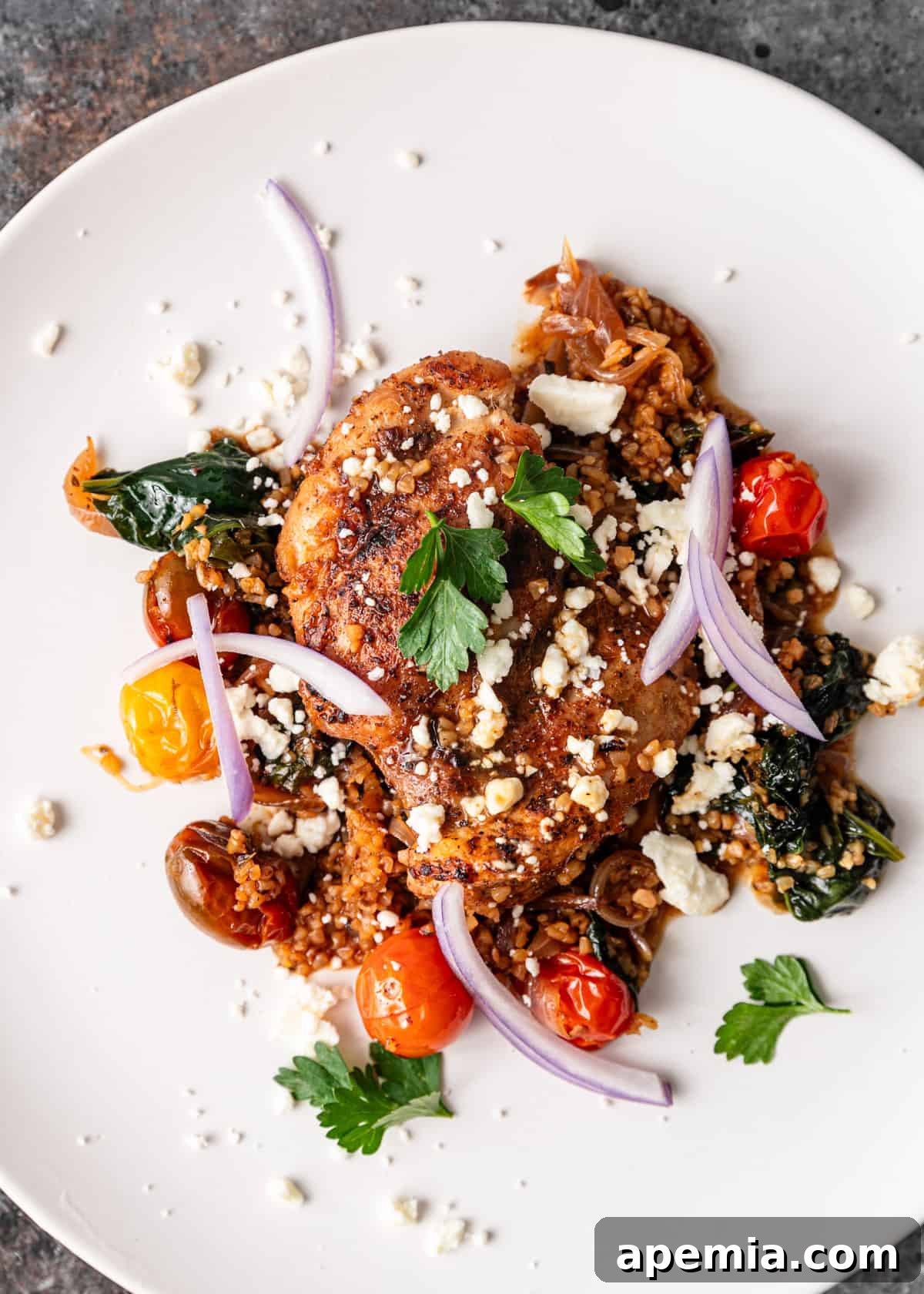
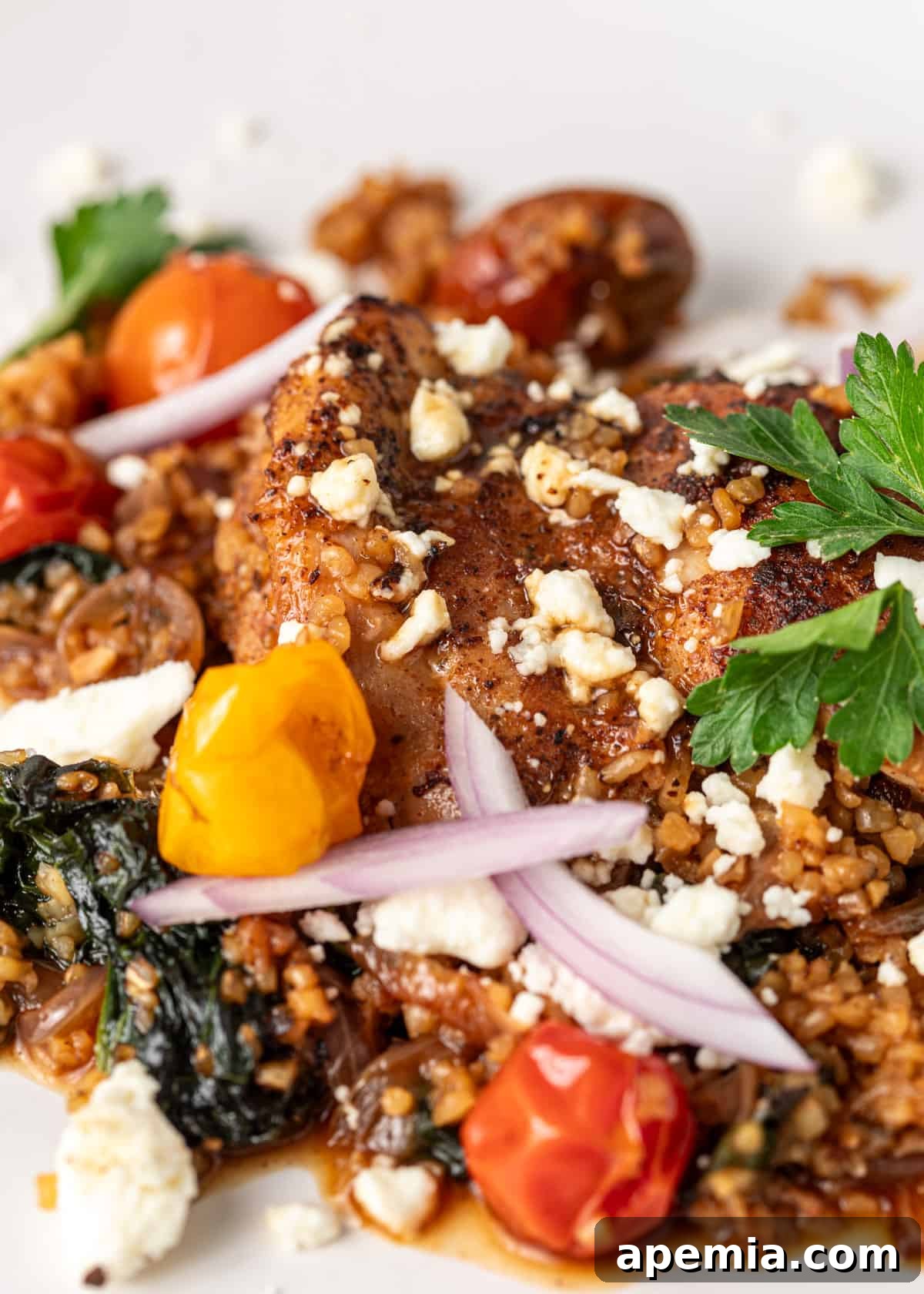
- Garnish and Serve Immediately: Once baked, carefully remove the skillet from the oven. Allow the cooked chicken and pilaf to rest in the skillet for at least 5 minutes before serving. This resting period helps redistribute the juices throughout the chicken, resulting in even more tender and flavorful meat. Finally, generously top the dish with crumbled feta cheese and a fresh sprinkle of chopped parsley. Serve this magnificent one-pot Turkish chicken hot and enjoy the symphony of flavors!
Recommended Tools for One-Pot Cooking
The beauty of this Turkish chicken recipe lies in its simplicity and the minimal cleanup, largely thanks to the right kitchen tools. A single, versatile skillet is truly the key to unlocking the convenience and deliciousness of one-pot cooking:
- Cast Iron Skillet: A high-quality, oven-proof skillet is an indispensable asset for any cook who loves one-pot meals. Cast iron is particularly excellent for this recipe because it retains heat exceptionally well and distributes it evenly, ensuring a perfect sear on the chicken and uniform cooking throughout the bulgur. Its robust construction allows it to transition seamlessly from stovetop to oven to the kitchen table, minimizing the need for multiple pots and pans. Look for a large skillet (10-12 inches in diameter) with a tight-fitting lid to trap moisture during baking, which is crucial for juicy chicken and fluffy bulgur.
- Instant-Read Meat Thermometer: While not strictly a “one-pot” tool, a reliable instant-read meat thermometer is crucial for ensuring your chicken is cooked perfectly to 165°F (74°C). This guarantees both food safety and optimal juiciness, as undercooked chicken is a health risk and overcooked chicken can be dry and tough.
- Sharp Knife and Cutting Board: Essential for efficiently preparing your chicken, onions, garlic, and herbs.
Storing and Reheating Leftovers for Best Flavor
This Turkish chicken dish makes fantastic leftovers, often tasting even better the next day as the flavors have more time to meld and deepen. Proper storage and reheating are essential to maintain its delicious quality and ensure a pleasant eating experience:
To store, transfer all leftover chicken, bulgur, vegetables, and any remaining sauce into a single airtight container. Combining all components is the best way to keep the chicken moist, allowing it to continue absorbing all the delightful savory flavors from the pilaf base and spices. Refrigerate promptly within two hours of cooking for optimal freshness, where it will keep well for up to 4 days.
For reheating, I recommend using either a skillet on the stovetop or a baking dish in the oven to gently warm the food through. Preheat your oven to around 350°F (175°C) or warm a non-stick skillet over medium-low heat. To prevent the dish from drying out, which can happen easily with cooked grains and chicken, add a splash (1-2 tablespoons) of chicken stock or water to the container before reheating. Cover the dish (if using a baking dish) or the skillet with a lid. Cook only until the chicken and bulgur are thoroughly warmed through to your desired temperature, typically about 10-15 minutes in the oven or 5-7 minutes on the stovetop. Overheating can make the chicken tough and the bulgur mushy. Once reheated, add a fresh sprinkle of crumbled feta cheese and chopped parsley to bring back that vibrant, fresh flavor and appealing texture before serving. This will revive the dish, making it taste almost as good as freshly made.
Frequently Asked Questions About Turkish Chicken and Bulgur
No, for most cooking applications, including this recipe, bulgur wheat does not require soaking prior to cooking. Bulgur is a parboiled, dried, and cracked wheat grain, which means it is essentially “pre-cooked.” This characteristic makes it a quick-cooking grain that simply needs to absorb hot liquid to become tender.
When used in raw or fresh recipes like salads (such as tabbouleh or kısır), it can be simply soaked in hot water for a short period until tender, then drained. However, for baked or sautéed dishes like our Turkish chicken, you can add it directly to the pan as instructed. It will cook beautifully by absorbing the chicken stock and other juices present in the skillet, contributing to a rich, cohesive dish without any extra pre-preparation steps. This convenience is one of the many benefits of cooking with bulgur.
For this particular Turkish chicken recipe, I highly recommend using boneless, skinless chicken thighs. Thighs are naturally fattier than breasts, which allows them to remain incredibly moist, tender, and juicy even after being seared and baked for an extended period. The dark meat also offers a richer, more robust flavor that pairs wonderfully with the earthy Turkish spices and the wholesome bulgur.
While chicken breast can certainly be used, it’s leaner and tends to dry out more quickly. If opting for breast meat, you’ll need to be extra vigilant with cooking times. Chicken breasts will typically cook faster than thighs due to their lower fat content. Start checking its internal temperature around the 10 to 12-minute mark of baking to prevent overcooking. Aim for an internal temperature of 165°F (74°C) for both thighs and breasts, but be aware that breasts will reach this faster and can become tough if overcooked.
No extensive marinating is necessary for this Turkish chicken recipe, making it a fantastic choice for a quick weeknight meal. The robust Turkish spice blend is applied directly to the chicken thighs as a dry rub just before searing and baking. The spices adhere beautifully to the meat, creating a flavorful crust during the searing process and deeply infusing their aromas throughout the chicken as it bakes with the stock and vegetables.
While you could season the chicken a bit in advance (e.g., 30 minutes to an hour before cooking) without any negative effects, it won’t significantly enhance the flavor or moisture compared to seasoning it right before cooking. The magic of this dish comes from the combination of searing, the flavorful spice blend, and the moisture absorbed from the chicken stock and vegetables, making it an efficient recipe without the need for lengthy marination.
Absolutely! This recipe can be easily adapted for a delicious vegetarian or vegan diet. Instead of chicken, you can use firm tofu or tempeh, pressed and cubed, then browned in the skillet before adding to the bulgur mixture to give it texture. Alternatively, a variety of hearty vegetables like chickpeas, diced eggplant, zucchini, or mushrooms would also work beautifully. Simply sauté your chosen vegetarian protein or extra vegetables with the onions and garlic, then proceed with the recipe as directed, ensuring you use vegetable stock instead of chicken stock to keep it fully plant-based. You can also add more spinach or other leafy greens.
This one-pot Turkish chicken is a complete and satisfying meal on its own, offering a perfect balance of protein, grains, and vegetables. However, to complement its rich and warm flavors, you can serve it with a few simple additions. A dollop of creamy plain yogurt or a refreshing cucumber-yogurt sauce (cacık) can provide a cooling contrast, especially if you’ve added a bit more cayenne to your spice blend. A simple side salad with a light lemon-olive oil dressing, or some warm pita bread to scoop up the flavorful bulgur and sauce, would also be excellent choices. For a heartier meal, consider serving it with a side of roasted vegetables like bell peppers or green beans, or a fresh tomato and onion salad.
Loved this recipe? Share it on Pinterest!
Help others discover this fantastic one-pot Turkish chicken meal by pinning it to your favorite boards.
Pin This Recipe
Turkish Chicken with Bulgur and Feta Recipe
This flavorful Turkish chicken is baked to perfection with spinach, aromatic herbs, sweet tomatoes, and savory onions, creating a delightful Middle Eastern-inspired pilaf that’s both healthy and hearty.
Recipe Details
- Yields: 4 generous servings
- Prep Time: 15 minutes
- Cook Time: 30 minutes
- Total Time: 45 minutes
Ingredients
- Chicken: 1 1/2 lb boneless, skinless chicken thighs (for the juiciest results)
- Seasoning: 2 tbsp Turkish Spice Blend (refer to notes above for homemade blend options)
- Olive Oil: 2 tbsp olive oil, divided (for searing chicken and sautéing aromatics)
- Aromatics: 1 medium red onion, thinly sliced; 4 cloves garlic, minced
- Grain: 1/2 cup bulgur wheat (medium grain is recommended for ideal texture)
- Herbs: 1 tsp dried oregano
- Vegetables: 1 lb fresh spinach leaves; 8 oz cherry tomatoes (mixed colors if available for visual appeal)
- Liquid: 1 cup chicken stock (low sodium recommended to control saltiness)
- Garnish: 1/3 cup crumbled feta cheese; fresh parsley, finely chopped (optional, for fresh flavor and color)
Instructions
- Preheat Oven & Sear Chicken: Preheat your oven to 400°F (200°C). Season both sides of the chicken thighs generously with the Turkish Spice Blend. Heat 1 tablespoon of olive oil in a deep, ovenproof skillet over medium-high heat. Sear the chicken for 3 minutes per side until beautifully golden brown. Remove chicken from skillet and set aside on a clean plate.
- Sauté Onions & Garlic: Add the remaining 1 tablespoon of olive oil to the same skillet. Add the thinly sliced red onion and minced garlic. Sauté for about 5 minutes, stirring occasionally, until the onions are softened, translucent, and fragrant.
- Build the Bulgur Base: Stir the bulgur wheat and dried oregano into the skillet with the sautéed aromatics. Cook for 2 minutes, stirring constantly to lightly toast the bulgur. Add the fresh spinach leaves and whole cherry tomatoes. Stir well to combine thoroughly and cook for another 2 minutes, until the spinach has fully wilted and the tomatoes begin to soften and slightly break down.
- Combine & Bake Prep: Pour the chicken stock into the skillet and stir to combine all the ingredients, ensuring to scrape up any browned bits from the bottom of the pan for maximum flavor. Nestle the seared chicken thighs on top of the bulgur and spinach mixture, pressing them down gently so they are partially submerged in the liquid. Cover the skillet tightly with its lid (or use aluminum foil if a lid is not available).
- Finish in Oven: Transfer the covered skillet to the preheated oven and bake for 15 minutes, or until the internal temperature of the chicken reaches 165°F (74°C) when measured with a meat thermometer.
- Garnish & Serve: Carefully remove the hot skillet from the oven. Let the chicken rest for 5 minutes in the skillet. Sprinkle generously with crumbled feta cheese and fresh chopped parsley before serving hot. Enjoy this complete and flavorful Turkish meal directly from the pan!
Nutrition Information (Estimated Per Serving)
The information shown is an estimate provided by an online nutrition calculator and is based on the ingredients listed. It should not be considered a substitute for a professional nutritionist’s advice. Individual results may vary based on exact ingredients and preparation methods.
- Calories: 452 kcal
- Carbohydrates: 31g
- Protein: 43g
- Fat: 19g (Saturated Fat: 5g, Polyunsaturated Fat: 3g, Monounsaturated Fat: 9g, Trans Fat: 0.03g)
- Cholesterol: 175mg
- Sodium: 482mg
- Potassium: 1467mg
- Fiber: 10g
- Sugar: 4g
- Vitamins: Vitamin A: 11143 IU, Vitamin C: 48mg
- Minerals: Calcium: 341mg, Iron: 9mg
Recipe Metadata
- Course: Main Dishes, Dinner, One-Pot Meal
- Cuisine: Turkish, Middle Eastern, Mediterranean
- Author: Kevin
Made This Recipe? Share Your Creation on Instagram!
We’d love to see your delicious Turkish chicken! Tag @keviniscooking or use the hashtag #keviniscooking so we can see your culinary masterpiece and share it with our community!