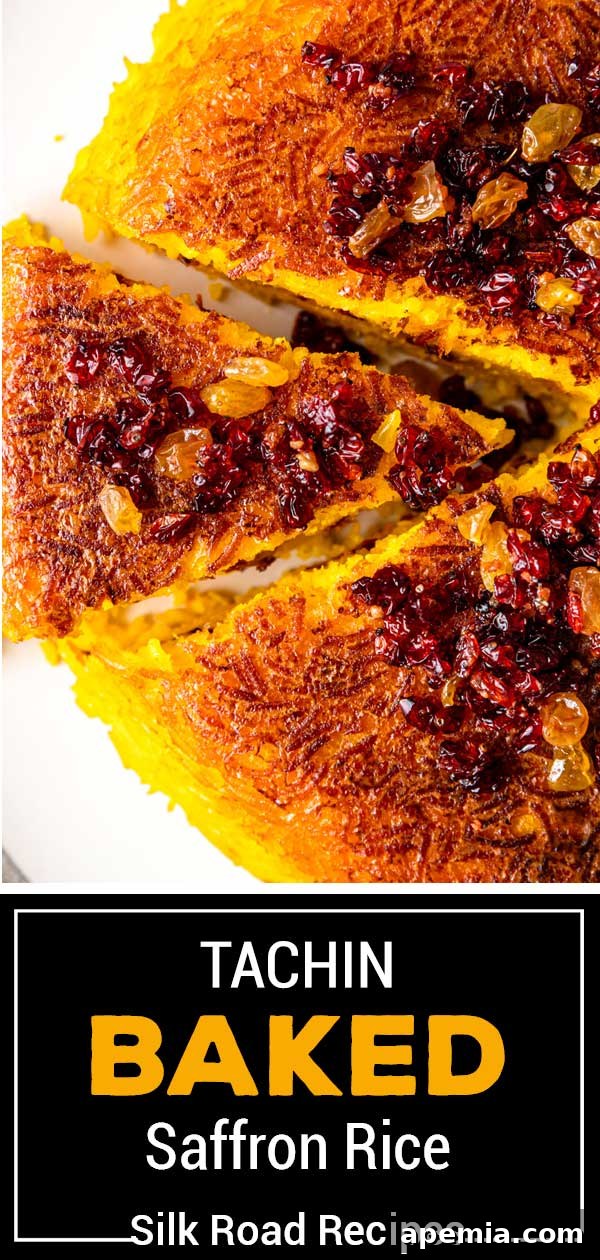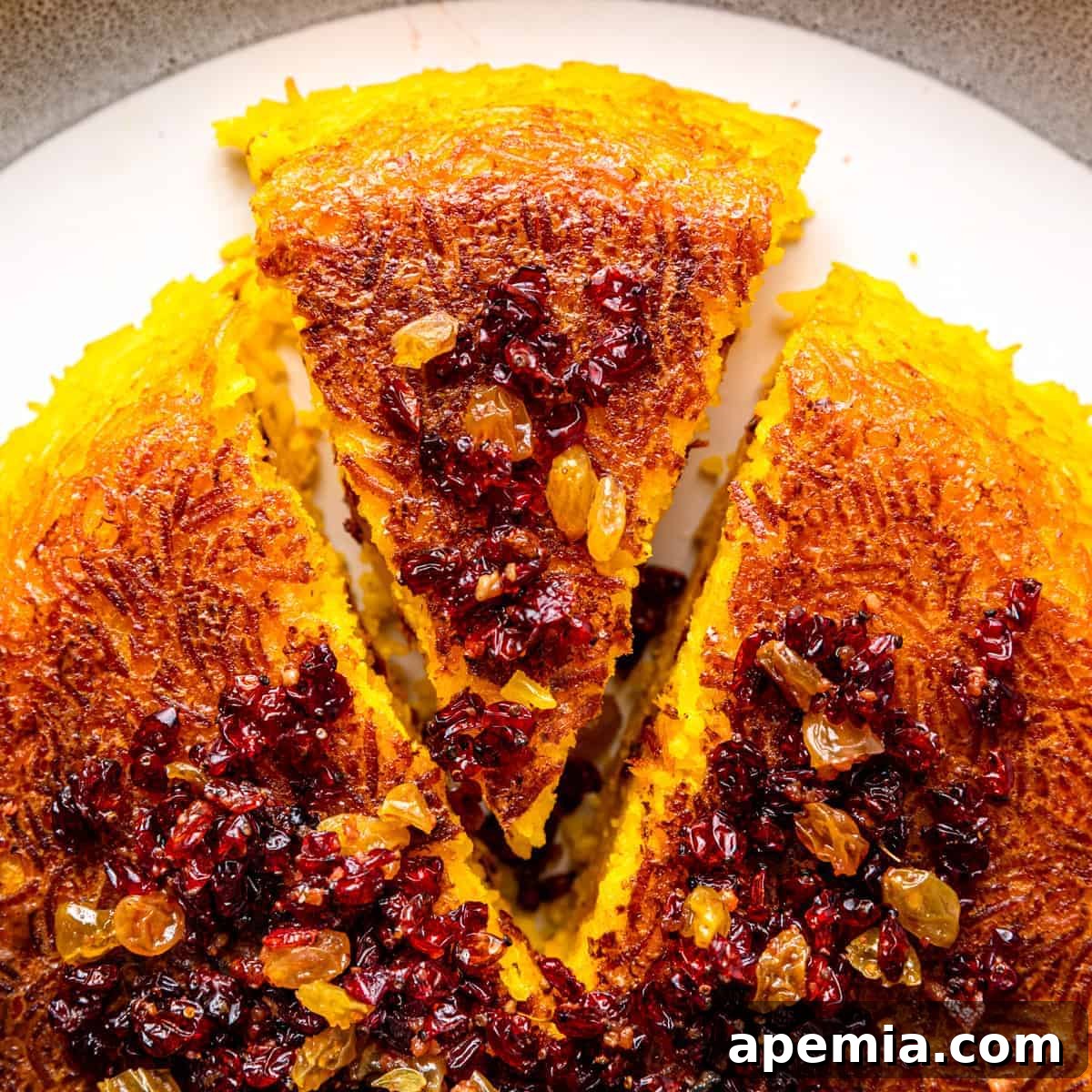
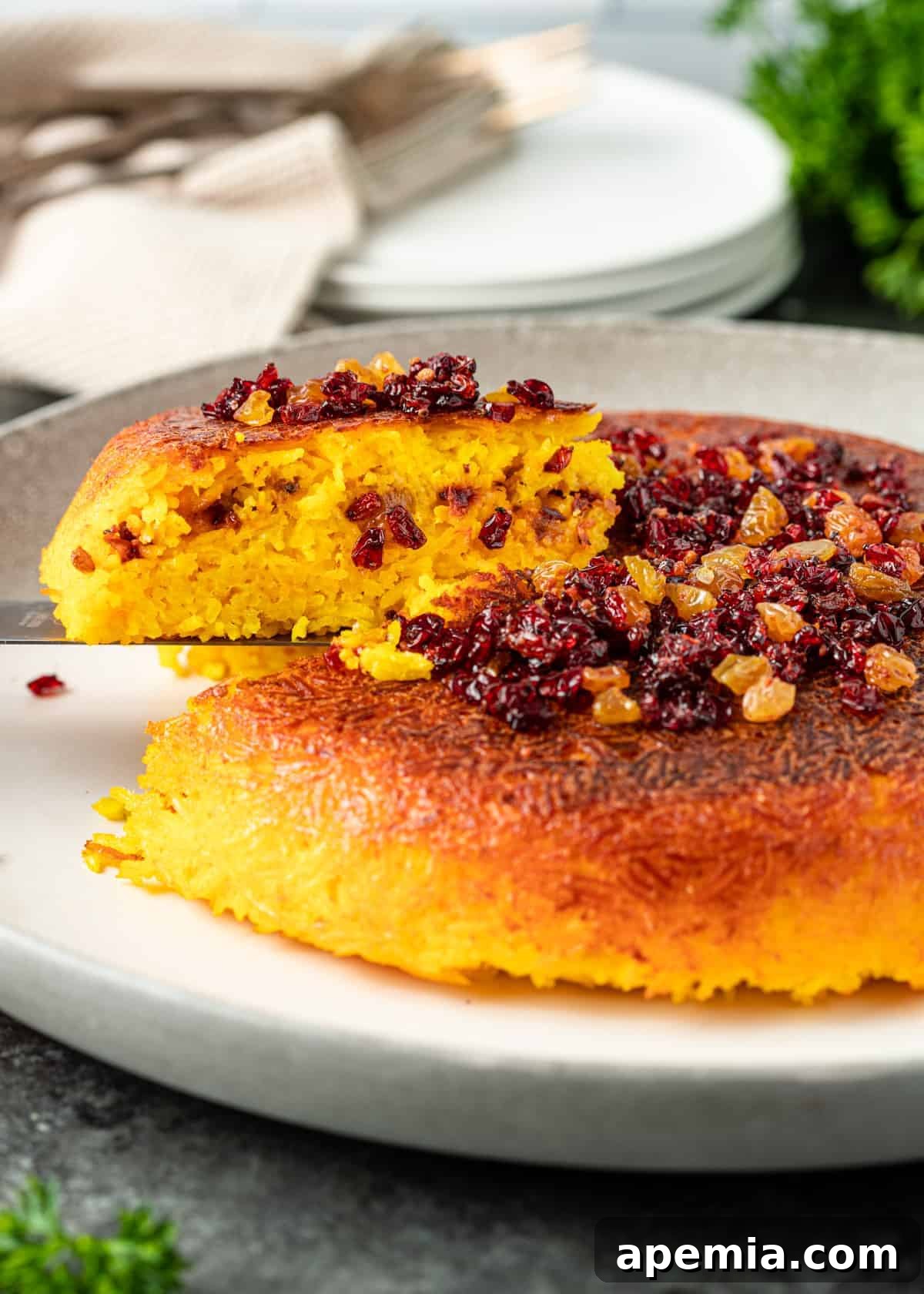
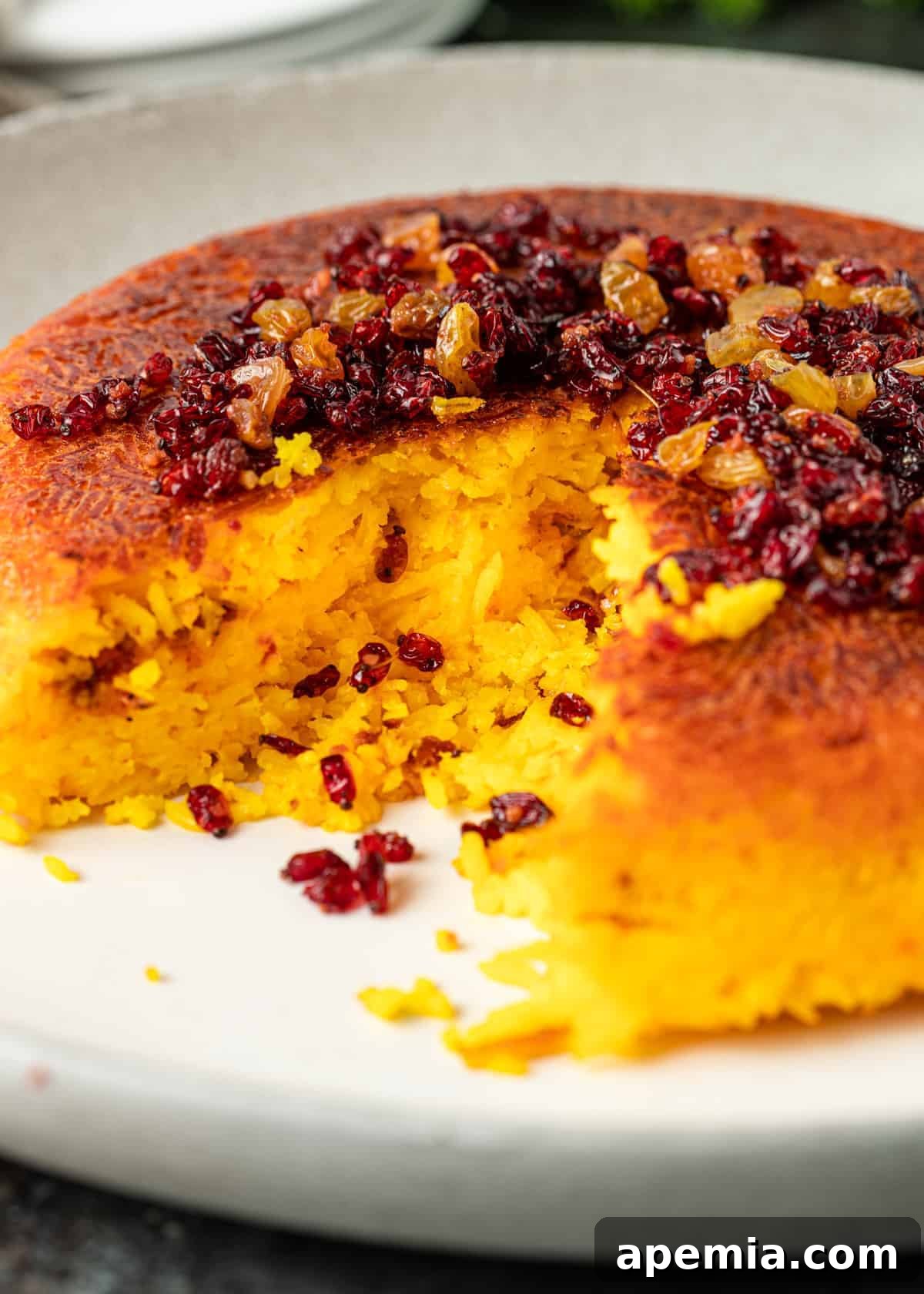
Persian Tachin is more than just a side dish; it’s a culinary masterpiece that showcases the rich flavors and vibrant colors of Iranian cuisine. This gorgeous layered saffron rice bake features tender basmati rice coated in a luxurious yogurt-egg sauce, infused with fragrant saffron, zesty orange, and aromatic Advieh seasoning. Baked to perfection, it boasts an irresistible golden-brown, crispy crust (known as tahdig) that gives way to a soft, fluffy interior, often adorned with sweet and tangy dried barberries and golden raisins.
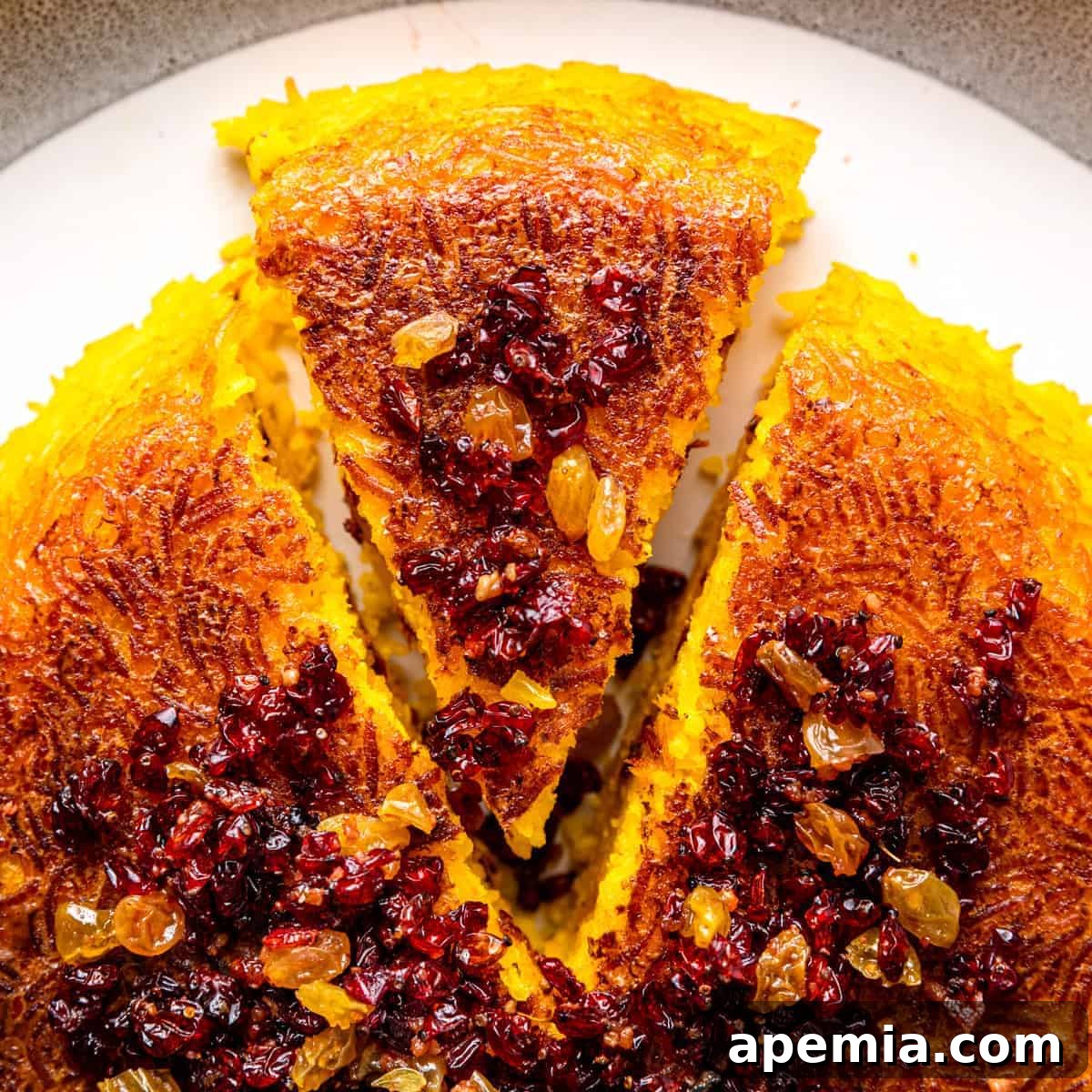
Tachin offers a delightful balance of flavors that makes it truly unique. While primarily savory, hints of sweetness and tartness from the barberries and raisins, alongside the fruity and floral notes of orange zest, rose water, and saffron, create a complex and inviting profile. Its nuanced taste allows it to complement a wide array of meals. It can brighten up heavier main courses like Koofteh (Persian meatballs) or succulent Kabobs. Alternatively, its structure holds up beautifully against saucier dishes such as a hearty Spiced Eggplant Stew or the iconic Pomegranate Walnut Chicken (Fesenjan), all staples of traditional Persian dining.
Despite its stunning appearance and sophisticated flavors, preparing this crispy Persian rice bake is surprisingly straightforward. With the right guidance, even novice cooks can achieve a perfectly golden and delicious Tachin. This comprehensive guide, complete with detailed steps and expert tips, makes mastering this Iranian delicacy easier than ever before.
Table of Contents
- The Magic of Glass Bakeware
- Ingredient Deep Dive and Substitutions
- Preparing the Foundations: Rice, Fruit, and Yogurt Sauce
- Assembling and Baking Your Tachin
- Essential Kitchen Tools
- Storing and Reheating Tachin
- Frequently Asked Questions About Tachin
- Crispy Tachin Saffron Rice Recipe
Expert Tip
The Magic of Glass Bakeware
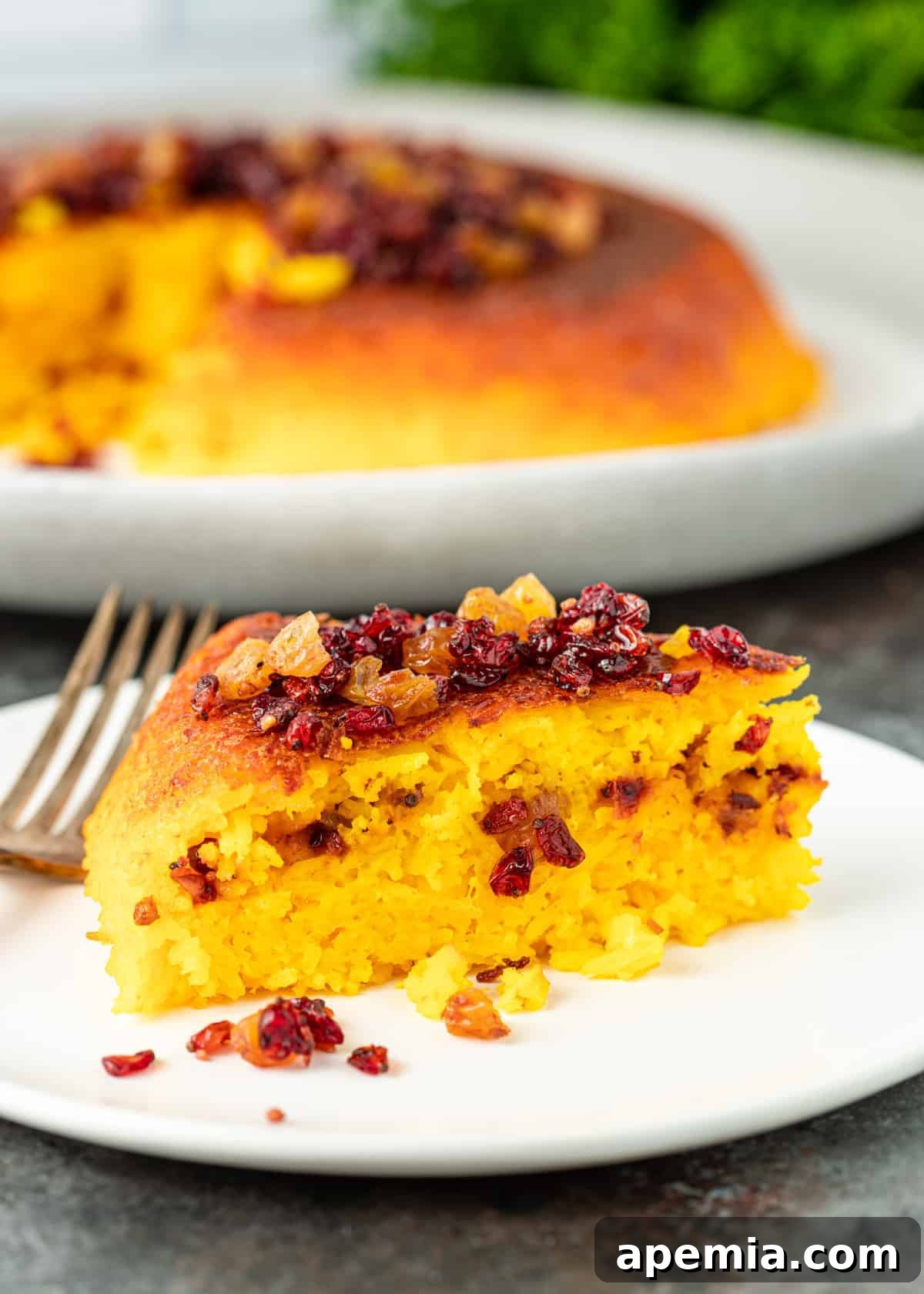
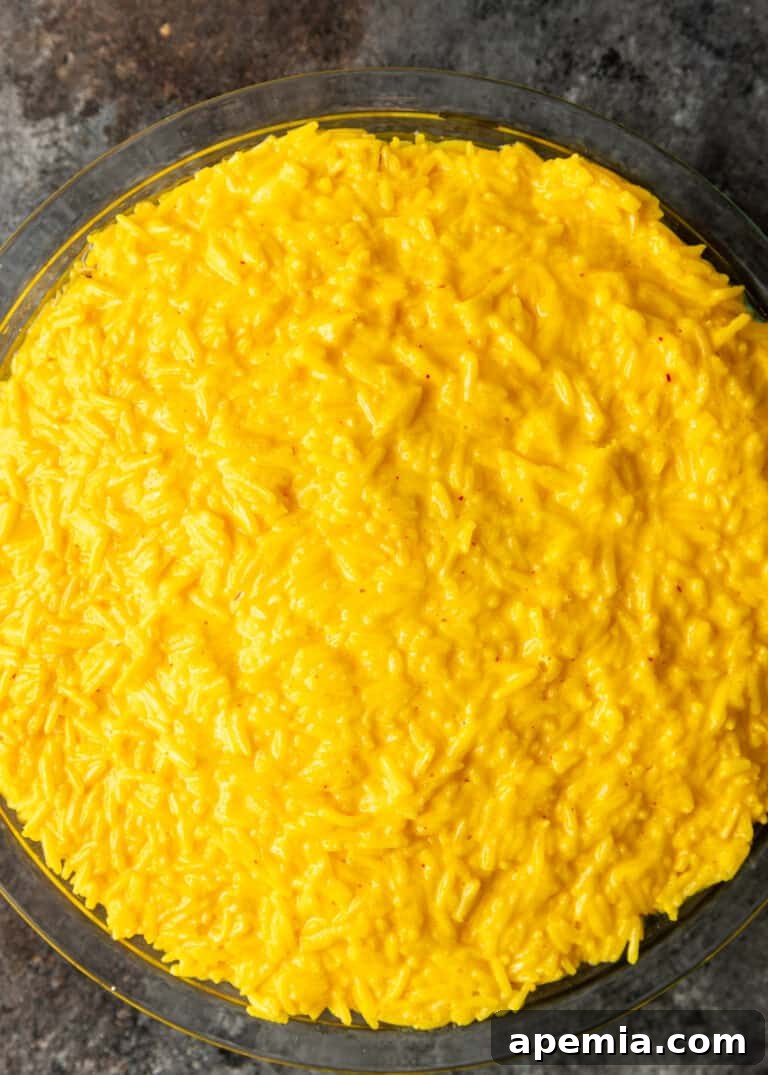
While not strictly essential for the dish’s success, using a glass baking dish—particularly a pie dish—can significantly simplify the process. Glass allows you to visually monitor the developing golden crust from beneath, ensuring that coveted crispy tahdig (the golden rice crust) reaches its perfect hue without needing to disturb the dish. This trick makes achieving the ideal Tachin much easier, especially for those new to Persian rice dishes.

Ingredient Deep Dive and Substitutions
(For a complete list of precise quantities, please refer to the recipe card below.)
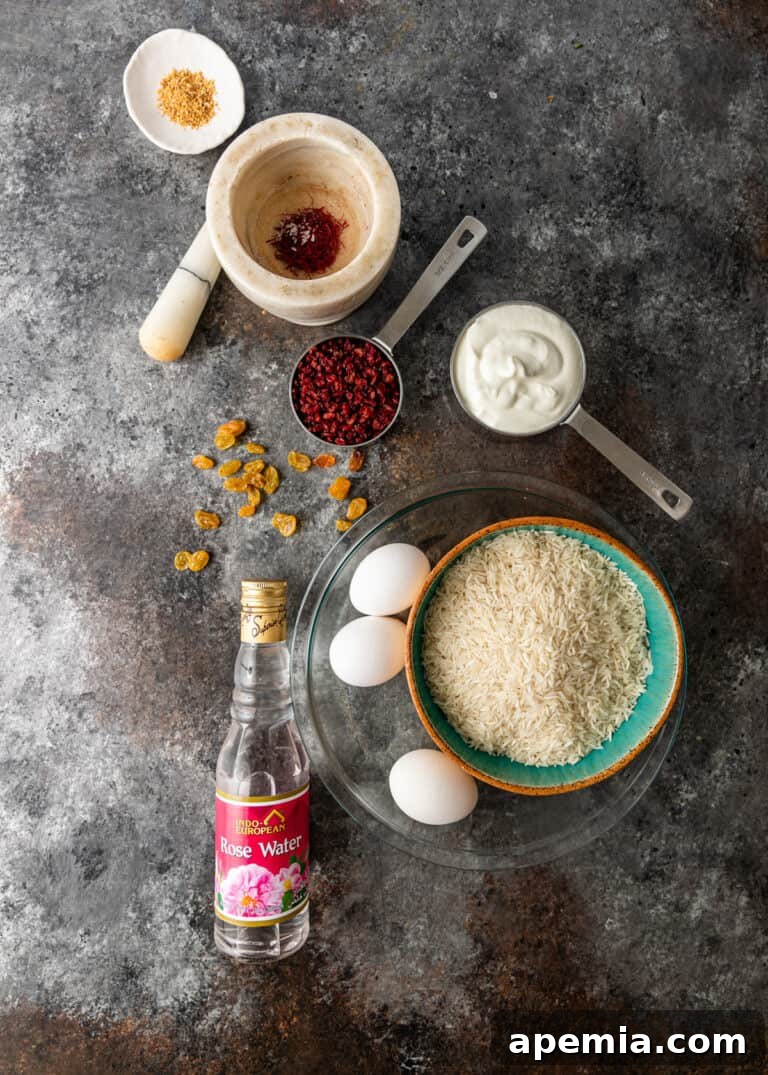
- Saffron: Often referred to as “red gold,” saffron is the soul of many Persian dishes, including Tachin. Its delicate, sweet, and floral aroma and distinct color are irreplaceable. To preserve its nuanced flavor, avoid pairing it with overly strong ingredients. Ensure you bloom your saffron properly for maximum flavor and color extraction.
- Orange Zest: Use only the fragrant outer peel of a fresh orange. This adds a bright, citrusy note that complements the saffron beautifully. Save the juice for another recipe, perhaps a delightful Persian love cake!
- Basmati Rice: Long-grain Basmati rice is paramount for Tachin. Its delicate grains cook up fluffy and separate, providing the ideal texture that won’t clump together in the bake. If Basmati is unavailable, Jasmine rice is a good secondary choice, though it tends to be a bit stickier.
- Barberries: These small, tart, yellow-red berries are a hallmark of Iranian cuisine. Iran is the world’s leading producer, making them a truly authentic ingredient for Tachin. Their vibrant sourness cuts through the richness of the rice, adding a delightful tang. If you cannot source fresh or dried barberries, dried tart cherries or cranberries can be used as a substitute, though they will offer a sweeter profile.
- Sultanas (Golden Raisins): Sweet and plump, sultanas introduce a subtle sweetness that balances the tartness of the barberries and the savory elements of the dish. They soften beautifully during cooking, adding bursts of juicy flavor.
- Rose Water: While optional, a dash of rose water infuses the yogurt sauce with a delicate, honeyed floral aroma, enhancing the overall fragrance of the dish and harmonizing with the orange and saffron. Use sparingly, as a little goes a long way.
- Egg Yolks: These are crucial for the texture and richness of Tachin. Egg yolks bind the rice, create the signature golden crust, and impart a creamy, luxurious body to the yogurt sauce.
- Plain Whole Milk Yogurt: Opt for regular, plain whole-milk yogurt. Greek yogurt is too thick and will result in a denser, less airy Tachin. The consistency of regular yogurt is key for achieving the proper balance in the sauce.
- Vegetable Oil: A neutral oil like vegetable, canola, or grapeseed oil is ideal for greasing the baking dish and contributing to the crispy crust without imparting unwanted flavors.
- Advieh: This quintessential Persian spice blend typically includes cinnamon, cardamom, turmeric, and cumin. Turmeric is responsible for the lovely yellow hue in the rice (distinct from saffron’s deeper golden color), while the other spices add warmth and complexity. It’s a foundational flavor enhancer in Iranian cooking.
- Kosher Salt: Essential for seasoning the rice during par-boiling and balancing the flavors in the yogurt mixture.
Preparing the Foundations: Rice, Fruit, and Yogurt Sauce
- Master the Rice Prep: Begin by thoroughly rinsing your Basmati rice under cool, running water. Swirl the grains with your fingers until the water runs clear; this removes excess starch, ensuring perfectly separate and fluffy grains. Next, par-boil the rice in heavily salted water for approximately 6 minutes, stirring occasionally to prevent sticking. The goal is rice that is tender but still retains a slight bite in its center. Immediately drain and rinse with cold water to halt the cooking process, then set aside.
- Sauté the Aromatic Fruit Mixture: In a skillet over medium heat, melt the butter. Add the dried barberries and golden raisins and cook for just a few minutes, stirring frequently, until they visibly plump up and rehydrate. Remove from heat and gently stir in the fresh orange zest and, if using, the fragrant rose water. Set this vibrant mixture aside.
- Craft the Rich Yogurt Sauce: First, grind the saffron threads into a fine powder, ideally using a mortar and pestle to maximize flavor release. Transfer the ground saffron to a small bowl with 2 tablespoons of warm water and allow it to “bloom.” This process draws out its deep color and intense aroma, yielding a dark, ruby-red liquid. In a larger bowl, combine this bloomed saffron with the egg yolks, vegetable oil, plain whole-milk yogurt, salt, and Advieh. Stir thoroughly until all ingredients are well incorporated, forming a smooth, golden sauce.
Assembling and Baking Your Tachin
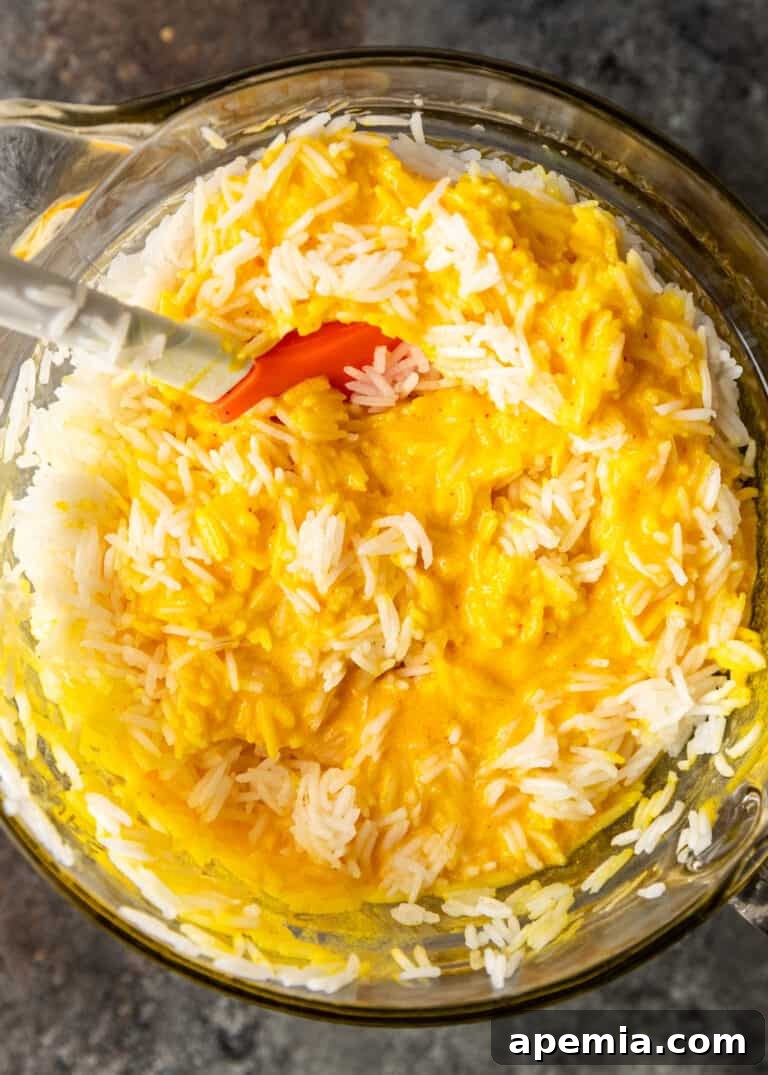
- Combine Rice and Yogurt Sauce: Gently fold the par-boiled rice into the prepared yogurt sauce. Use a soft spatula and a light hand to ensure every grain is evenly coated without smashing or breaking the delicate Basmati. This step is crucial for achieving a uniform flavor and color throughout the dish.
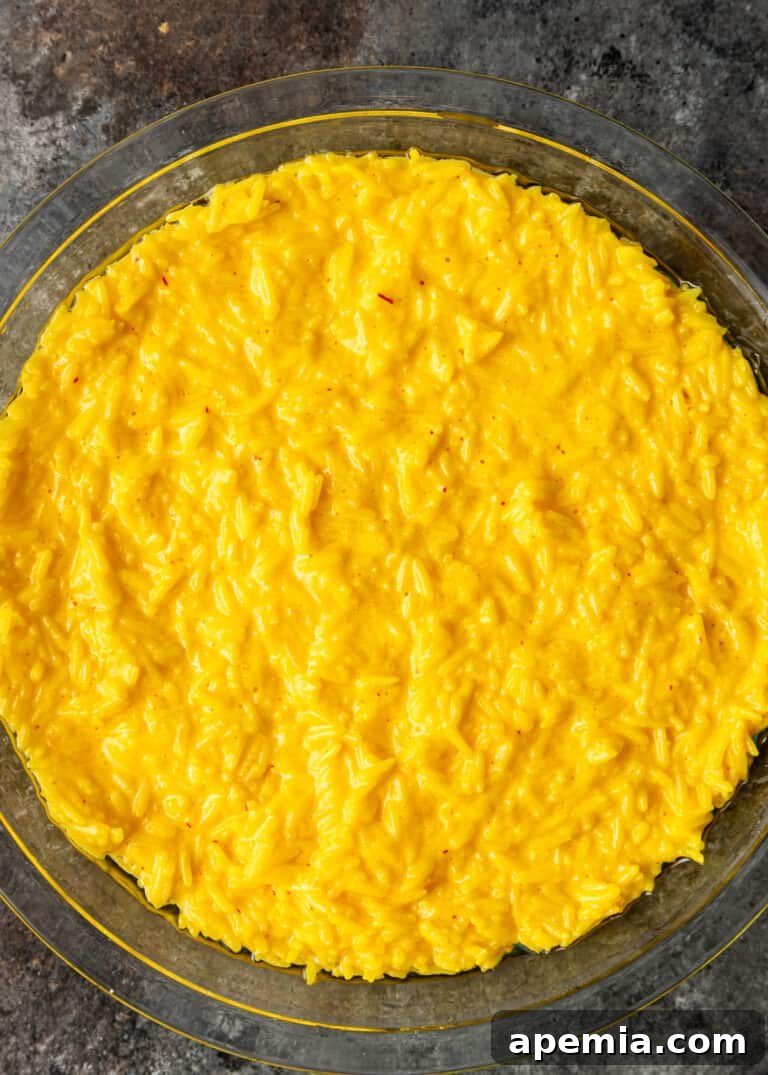
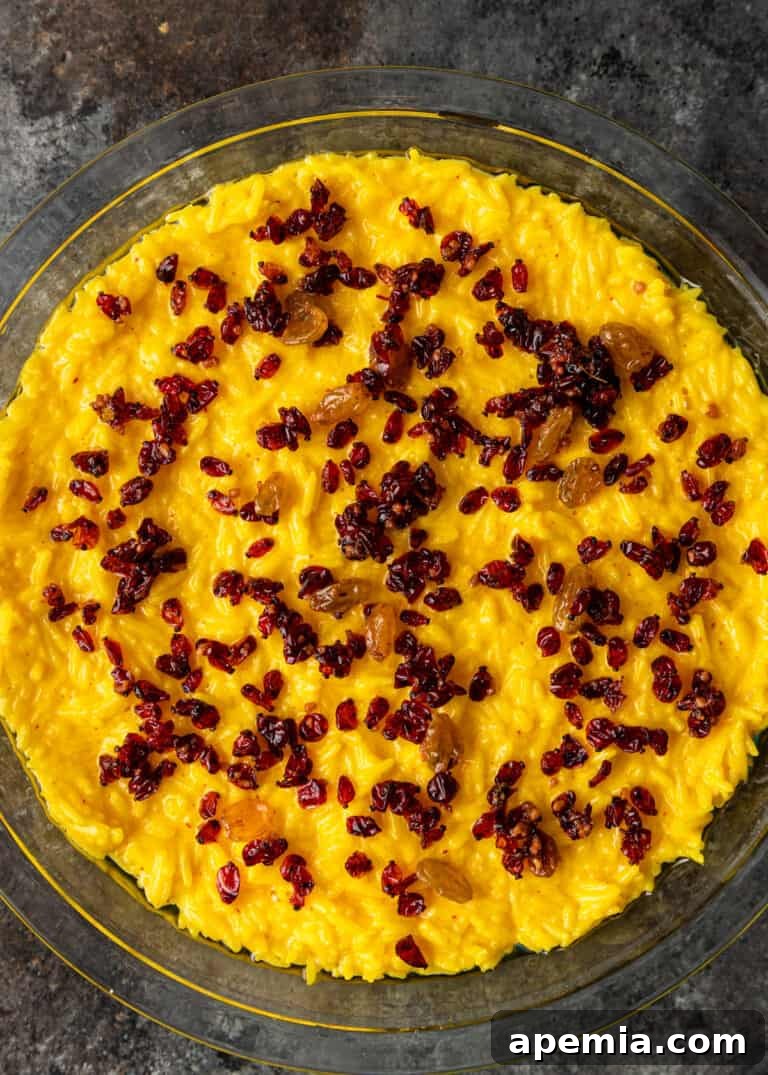
- Thoughtful Layering: Generously oil a 10-inch diameter glass baking dish (a pie dish works wonderfully). Add precisely half of the rice mixture to the dish, using your spatula to gently but firmly pack it down onto the bottom. This bottom layer will form your magnificent tahdig. Evenly spread half of the cooked fruit mixture over this rice layer. Finally, top with the remaining rice and press down very firmly with the spatula, ensuring it’s densely packed. A tight seal is vital for the crispy crust. Cover the entire dish securely with a layer of aluminum foil.
- Bake to Golden Perfection: Place the foil-covered dish on the bottom rack of your oven, preheated to 400°F (200°C). Bake for 65 to 75 minutes. The baking time is critical; you’re looking for a deep, golden-brown crust along the edges and bottom. The glass dish will allow you to monitor this transformation. Once achieved, carefully remove the dish from the oven, discard the foil, and let it rest for at least 10 minutes. This resting period allows the crust to set and makes for easier inversion.
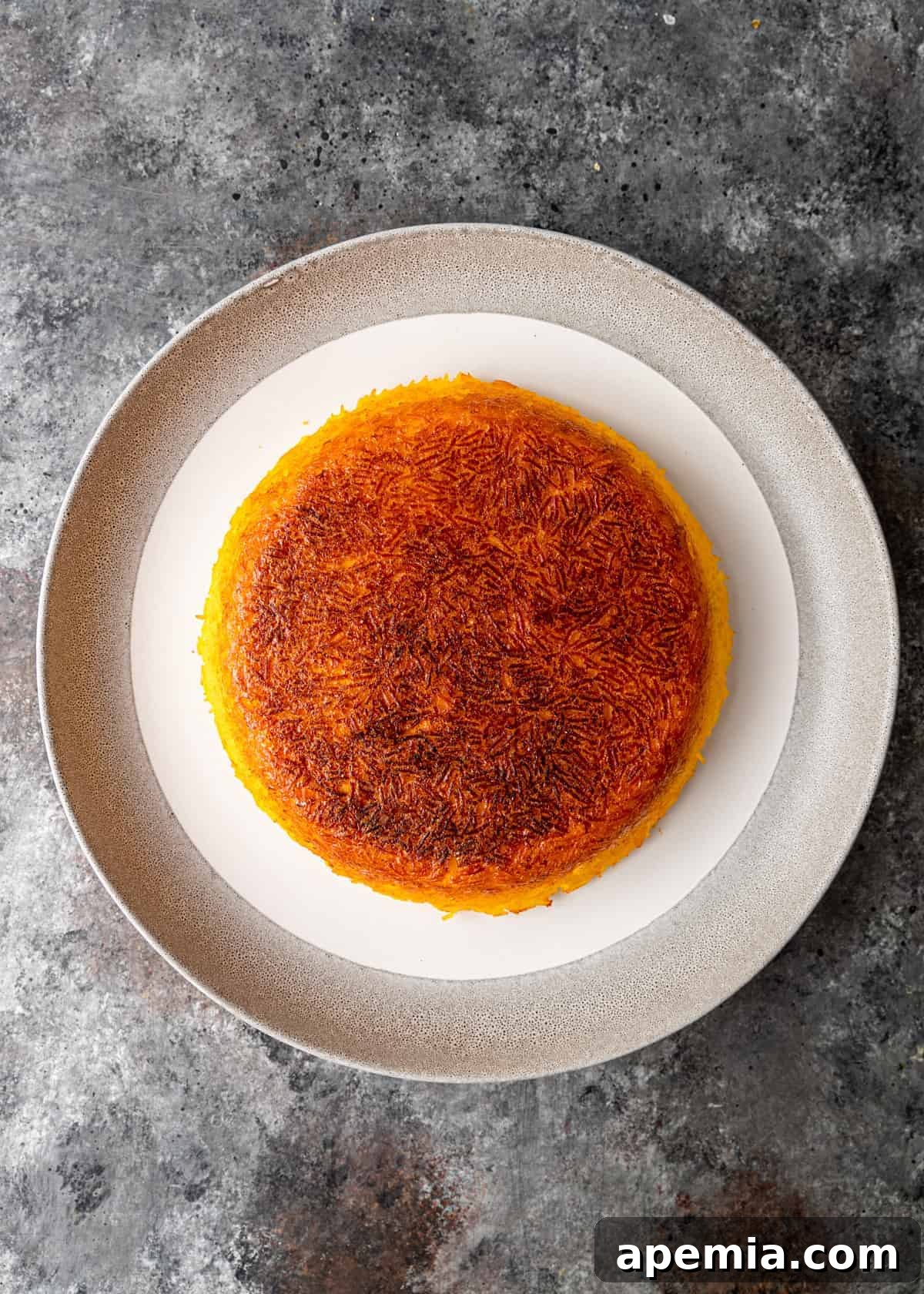
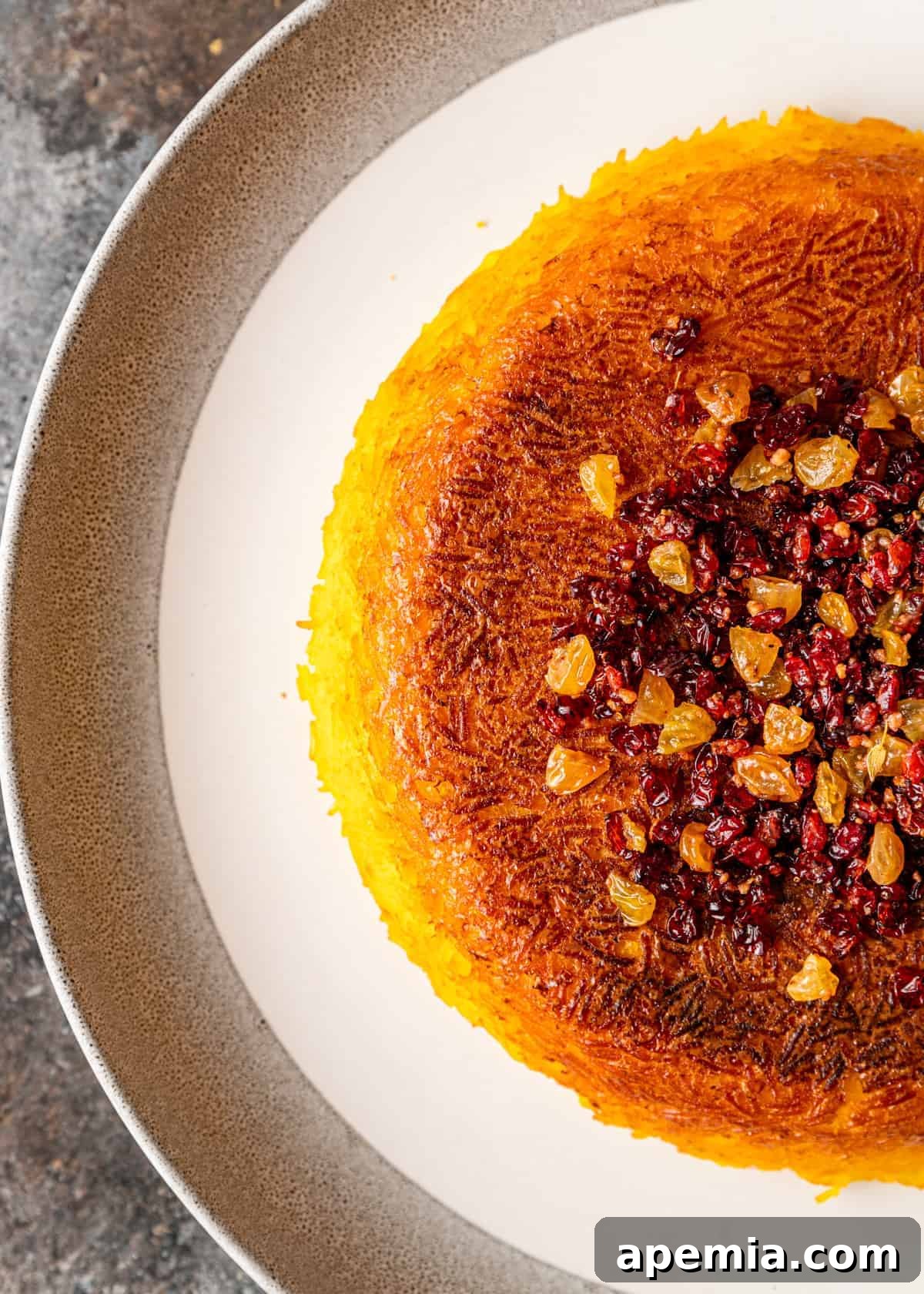
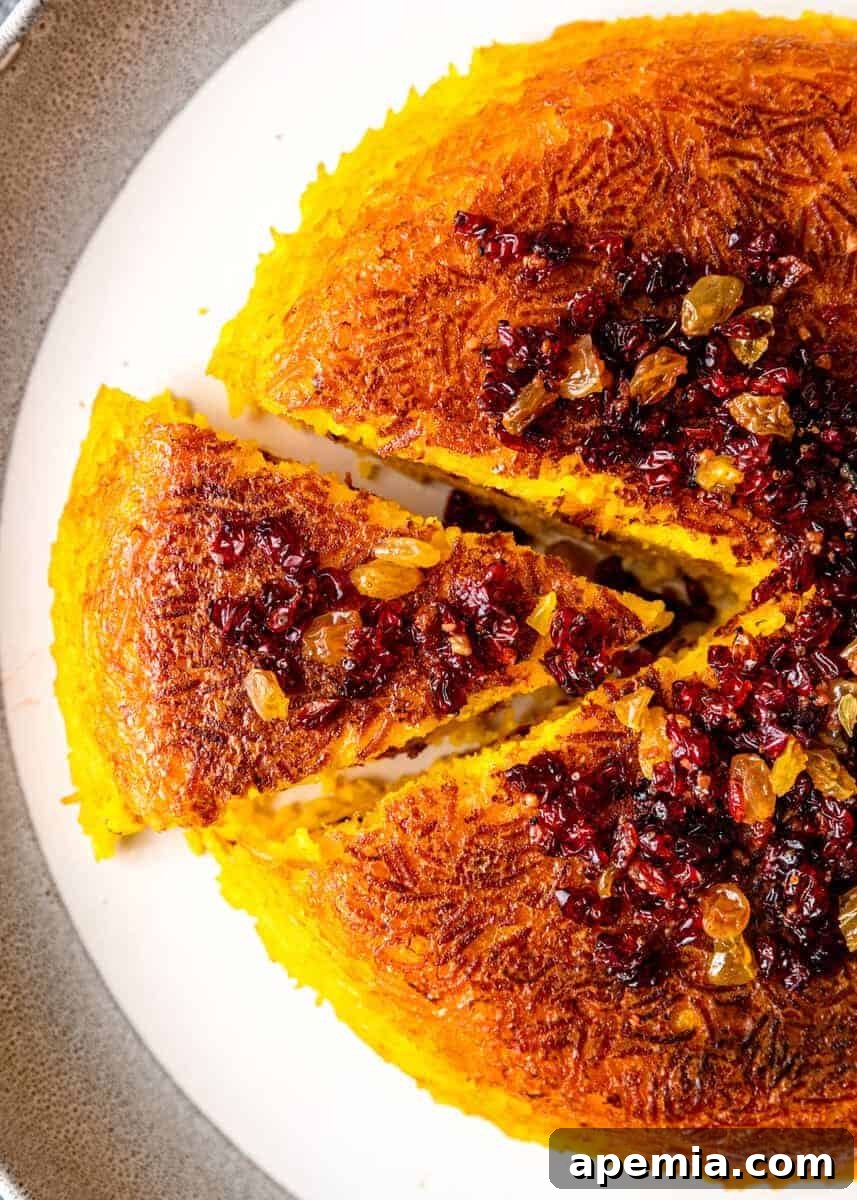
- Invert, Garnish, and Serve: After resting, use a knife to carefully loosen the edges of the baked rice from the dish. Place a large serving plate directly over the baking dish, then, with a swift and confident motion, quickly flip the dish upside down, holding the plate firmly in place. The Tachin should invert perfectly onto the plate, resembling a beautiful cake with its golden crust on top. Scatter the remaining fruit mixture over the top as a vibrant garnish. Slice into wedges and serve immediately, marveling at your creation!
Essential Kitchen Tools
- Mortar & Pestle: Highly recommended for grinding saffron threads into a fine powder, which is crucial for extracting maximum color and flavor.
- Large Pot & Medium Skillet: Necessary for par-boiling the rice and preparing the fruit mixture.
- Glass Pie Dish or Round Baking Dish: A 10-inch diameter dish is ideal. As mentioned, glass bakeware is particularly helpful as it allows you to observe the browning of the bottom crust, ensuring perfect tahdig every time.
- Spatula: For gently folding ingredients and firmly packing the rice.
- Aluminum Foil: To tightly cover the dish during baking, creating a steamy environment that cooks the rice thoroughly while the bottom crisps.
Storing and Reheating Tachin
Should you be lucky enough to have leftovers of this delectable Tachin, proper storage and reheating will ensure you can enjoy it again. Store any remaining portions in an airtight container in the refrigerator for up to 3 days.
For reheating, it’s best to warm individual servings to maintain texture. Place a slice on a microwave-safe plate, sprinkle a few drops of water over it, and cover it with a damp paper towel. Reheat in 1-minute increments until thoroughly warmed through. This method helps to reintroduce moisture, preventing the rice from drying out. While the crust may lose some of its initial crispness, the flavors will remain delightful.
Share this recipe on Pinterest!
Loved this recipe? Spread the joy and share it with your friends on Pinterest!
Frequently Asked Questions About Tachin
Tahdig and Tachin are related but distinct concepts in Persian cuisine. Tahdig refers specifically to the crispy, golden crust formed at the bottom of a pot of rice, a highly prized element in Persian meals. Tachin, on the other hand, is a complete dish—a layered saffron rice cake—where the most prominent feature is its magnificent tahdig. In Tachin, the entire bottom layer of rice is intentionally prepared to create that desirable golden crust, making tahdig an integral and defining component of Tachin. You can explore more about making perfect tahdig in my dedicated Tahdig recipe.
The optimal soaking time for saffron is a subject of friendly debate among chefs. Some suggest soaking it for at least 20 minutes to fully extract its color and flavor. However, from my experience, particularly when revisiting favorite Persian recipes like this Tachin or Apricot Saffron Rice, I’ve found that grinding the saffron into a fine powder before adding warm water, and then letting it bloom for about 10 minutes, yields excellent results with a deep ruby-red color and rich aroma. While soaking for 20 minutes won’t harm the saffron, a diligent 10-minute bloom after grinding is typically sufficient for a vibrant outcome.
Yes, absolutely! Tachin is a fantastic dish for meal prepping or preparing for guests. You can prepare the rice and combine it with the yogurt sauce up to a day in advance. Store the combined mixture in an airtight container in the refrigerator. When you’re ready to bake, simply allow the mixture to come to room temperature for about 30 minutes before layering it into your baking dish and proceeding with the baking instructions. This flexibility makes Tachin a convenient and impressive dish for any occasion.
Crispy Tachin Saffron Rice
★
★
★
★
★
6
15 mins
1 hr
15 mins
1 hr
30 mins
PrintRecipe
Video
Ingredients
Instructions
-
Grind the saffron threads into a fine powder using the palm of your hand, or ideally, a mortar and pestle. Mix with 2 tablespoons of warm water in a small bowl. Allow the saffron to bloom for at least 10 minutes to draw out its maximum color and aroma, resulting in a deep ruby-red liquid.
-
Zest 1 teaspoon of the orange and set it aside for later use with the dried fruit.
-
Bring a large pot of water to a rolling boil. Add ¼ cup of salt to the boiling water and stir until dissolved.
-
Place the Basmati rice in a fine-mesh strainer or sieve. Rinse thoroughly under lukewarm water, using your fingers to gently agitate the rice. Continue rinsing until the water runs completely clear, indicating that excess starch has been removed.
-
Add the rinsed rice to the boiling salted water. Stir immediately to prevent the grains from sticking to the bottom of the pot. Cook for approximately 6 minutes, stirring occasionally, until the rice grains begin to rise to the surface and are tender yet still have a slight al dente bite in the center. Drain the par-boiled rice and rinse it quickly with cold water to stop the cooking process. Set aside.
-
In a medium skillet, melt the butter over medium-low heat. Add the dried barberries and golden raisins. Cook, stirring frequently, for about 2 minutes, until the fruit appears slightly plumped and warmed through. Remove the skillet from the heat and stir in the reserved orange zest and the optional rose water.
-
Preheat your oven to 400°F (200°C). Position the oven rack in the lower third of the oven.
-
In a large mixing bowl, add the bloomed saffron mixture, egg yolks, yogurt, ½ cup vegetable oil, kosher salt, and Advieh. Mix thoroughly with a spatula until well combined and smooth. Add the par-boiled rice to this yogurt mixture and gently fold it in. Take care to ensure every single grain of rice is evenly coated with the rich saffron-yogurt sauce without breaking the grains.
-
Generously coat a 10-inch diameter glass pie dish (or other round baking dish) with vegetable oil. This is crucial for the tahdig. Spread half of the rice mixture into the prepared dish and use your spatula to gently but firmly pack the rice down. Scatter half of the cooked fruit mixture evenly over this layer. Top with the remaining rice mixture, then press down very firmly again with the spatula to compact it well.
-
Cover the dish tightly with aluminum foil. Place it on the lower oven rack and bake for 65–75 minutes, or until the rice on the bottom and around the edges has achieved a deep, golden-brown, crispy tahdig. The glass dish will allow you to monitor the color. Once baked, remove from the oven, discard the foil, and let it cool for 10 minutes. This resting period helps the tahdig to set and makes for easier removal.
-
Using the tip of a knife, carefully loosen the rice around the edges of the dish. Place a large serving plate (larger than the dish) on top of the baking dish. Confidently and quickly invert the dish onto the plate, much like you would flip a cake. The Tachin should come out in one beautiful piece, with the golden tahdig now on top. Scatter the remaining fruit mixture over the top as a final garnish. Slice into wedges and serve warm.
Nutrition Facts (per serving)
- Calories:
- 516 kcal
- Carbohydrates:
- 68g
- Protein:
- 8g
- Fat:
- 23g
- Saturated Fat:
- 17g
- Cholesterol:
- 104mg
- Sodium:
- 807mg
- Potassium:
- 203mg
- Fiber:
- 1g
- Sugar:
- 5g
- Vitamin A:
- 228IU
- Vitamin C:
- 12mg
- Calcium:
- 94mg
- Iron:
- 1mg
The information shown is an estimate provided by an online nutrition calculator. It should not be considered a substitute for a professional nutritionist’s advice.
Side Dish, Main Course
Middle Eastern, Persian, Iranian
Kevin
Have You Made This Recipe? Let Me Know on Instagram!
Tag @keviniscooking or use hashtag #keviniscooking!