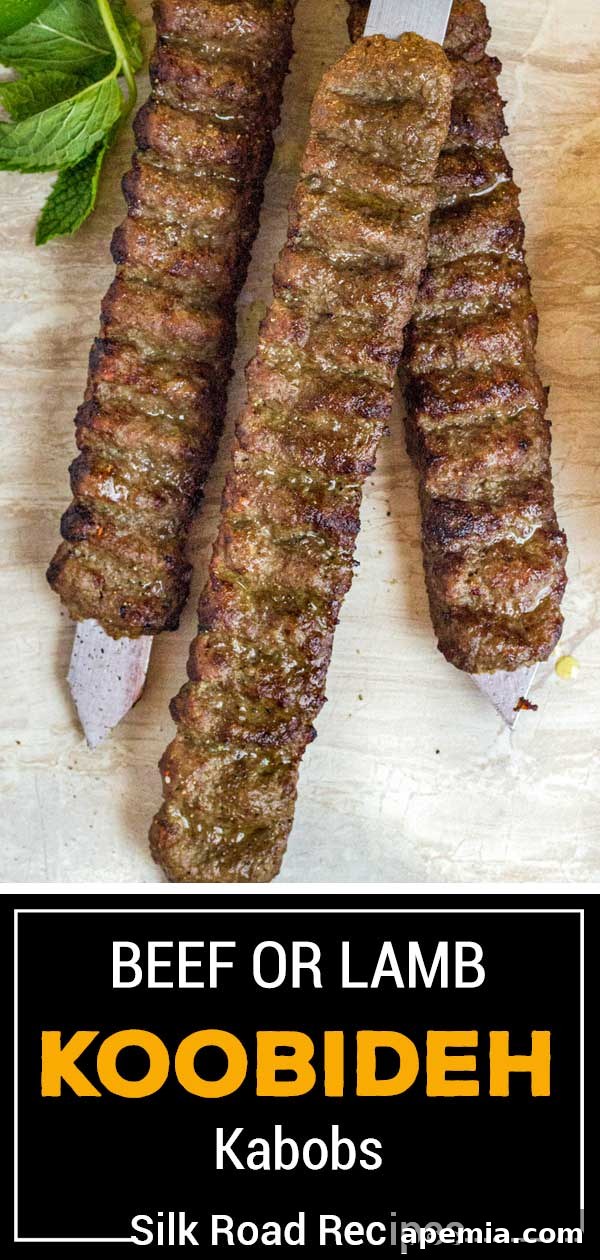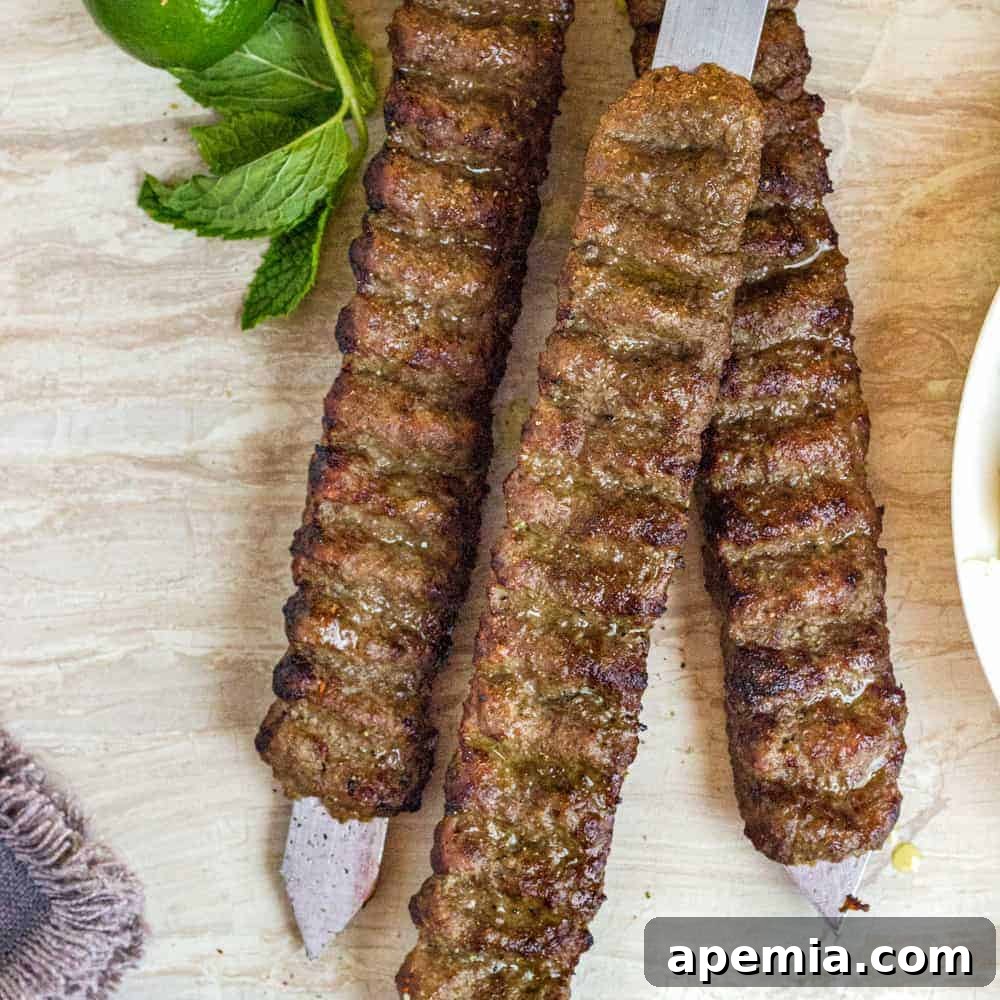
Embark on a culinary journey to Persia by making homemade Koobideh, the iconic Iranian kabob! This incredible recipe, featuring a delectable blend of beef and lamb, delivers super juicy, flavorful skewers in less than 30 minutes, whether you grill them or cook them in the oven. Seasoned with a harmonious mix of sweet, peppery, and tangy spices, these Koobideh kabobs are so irresistibly delicious, you’ll find it hard to stop at just one!
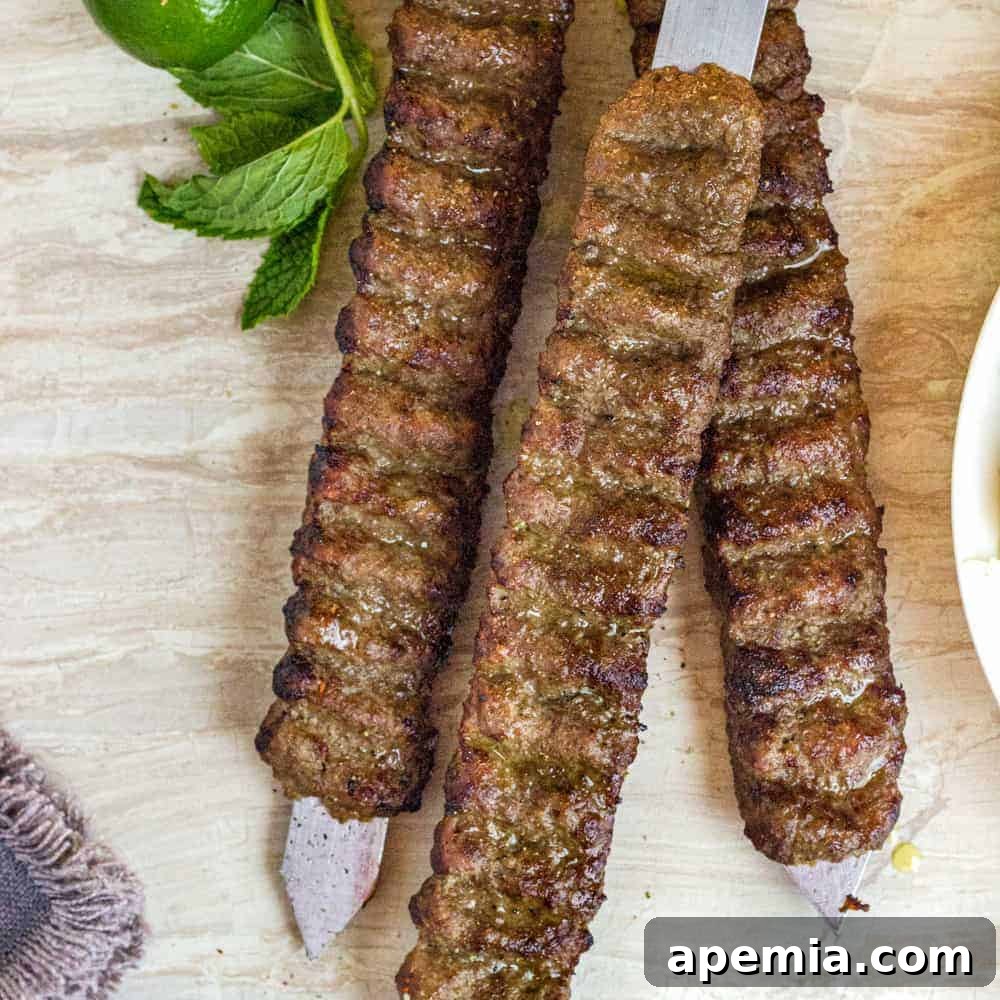
Authentic Koobideh: The Ultimate Persian Beef and Lamb Kabob Recipe
Koobideh, pronounced “koo-bee-deh,” is more than just a dish; it’s a cherished national treasure of Iranian cuisine, a staple found everywhere from bustling street food stalls to elegant restaurant tables. This traditional Iranian beef and lamb kabob is celebrated for its simplicity and profound flavor, embodying centuries of Persian culinary artistry. Typically served with warm flatbread, fragrant rice, sliced onions, and grilled tomatoes, Koobideh offers a taste of Iran that is both comforting and exotic—a truly versatile dish perfect for any occasion.
The magic of Koobideh lies in its unique meat blend. The rich, robust flavor of beef perfectly complements the earthy sweetness of lamb, creating a kabob that is exceptionally moist, tender, and beautifully balanced. This exquisite juiciness is so inherent to the dish that it’s rarely served with a heavy sauce. However, a squeeze of fresh lemon juice adds a bright, tangy counterpoint that elevates the flavors, and I personally love to pair it with a dollop of Toum Lebanese garlic sauce for an extra layer of creamy, garlicky richness.
Why You’ll Love This Koobideh Recipe
- Authentic Flavor: Experience the true taste of Iran with a meticulously balanced spice blend.
- Incredibly Juicy: Our technique ensures every bite of Koobideh is succulent and flavorful.
- Quick & Easy: From prep to plate in less than 30 minutes, making it perfect for weeknights or entertaining.
- Versatile Cooking: Enjoy perfectly cooked kabobs straight from the grill or effortlessly made in your oven.
- Customizable: Easily adjust seasonings and serving accompaniments to suit your preference.
Table of Contents
- How to Make Perfect Koobideh
- Ingredient Essentials and Substitutions
- Pro Tips for Shaping Koobideh Kabobs
- Recommended Kitchen Tools
- Serving Suggestions: What to Pair with Koobideh
- Storing and Reheating Leftovers
- Frequently Asked Questions About Koobideh
- Beef and Lamb Koobideh Kabob Recipe Card
Global Cousins: Similar Middle Eastern Kabob Recipes
Koobideh belongs to a large family of ground meat kabobs found across the Middle East and beyond, each with its own unique twist. If you love Koobideh, you might also enjoy exploring these similar delicious dishes:
- Moroccan Kefta: Often made with ground beef and infused with fragrant Moroccan spices like cumin, paprika, and fresh herbs, Kefta kabobs are typically grilled and served with a zesty tomato sauce or fresh mint tea.
- Turkish Doner Kebab: While traditionally cooked on a vertical rotisserie, the concept of seasoned ground or thinly sliced meat is similar. Doner is often served in pita bread with fresh vegetables and yogurt sauce.
- Lebanese Kafta: A popular staple in Lebanese cuisine, Kafta features ground beef or lamb mixed with finely chopped parsley, onions, and often a touch of allspice. It can be grilled on skewers, baked in a tray with potatoes, or even formed into patties.
Trying these variations will further enrich your understanding and appreciation of Middle Eastern culinary traditions!
Pro Tips for Shaping Koobideh Kabobs
Achieving perfectly shaped Koobideh that stays on the skewer is key to success. If your meat mixture feels too soft or warm, it might struggle to hold its form. A simple solution is to refrigerate the mixture for about 20 minutes. This firms up the meat, making it much easier to mold.
To expertly form the meat around the skewer, start by taking an oval-shaped portion of the meat mixture in one hand. With your other hand, slowly pierce the meat through with the flat metal skewer. As the skewer goes through, use your thumb and index finger to encircle the meat, gently pinching and squeezing it along the length of the skewer. This motion helps to flatten and distribute the meat evenly, aiming for each kabob to be approximately 8 inches long. Don’t forget to wet your hands periodically to prevent the meat from sticking to your skin, ensuring a smooth and clean shaping process.
Ingredient Essentials and Substitutions for Perfect Koobideh
(Please refer to the recipe card below for precise quantities)
- Ground Protein: The heart of Koobideh is a blend of ground beef and ground lamb. For the best texture and juiciness, aim for lean meats, ideally a 90/10 fat-to-meat ratio. An 80/20 mix is also acceptable and will still yield delicious results. The combination provides a depth of flavor and moisture that single-meat kabobs often lack.
- Onion: Freshly grated onion is a critical component for both flavor and moisture. To ensure the kabobs hold their shape and aren’t watery, it’s essential to grate the onion and then squeeze out as much liquid as possible. Place the grated onion in a sieve set over a bowl and press firmly with your hands. The reserved onion water can be a flavorful base for stocks, soups, or even marinades, minimizing food waste.
- Garlic: I typically use four cloves of finely minced garlic to achieve a perfectly subtle yet noticeable garlic flavor. However, the amount can be adjusted to your preference – some recipes call for as little as one clove, while others use up to six for a bolder profile.
- Parsley: Fresh, finely chopped parsley adds a bright, herbaceous note that complements the rich meat. If fresh parsley is unavailable, you can substitute with chervil, oregano, or tarragon, adjusting the quantity to taste.
- Key Seasonings:
- Paprika: Use sweet paprika, not smoked, as it offers a mild, slightly sweet flavor and a beautiful red hue without overpowering the other spices. If your paprika is simply labeled “paprika,” it’s usually sweet. For a spicier kick, a pinch of cayenne pepper can be a good substitute.
- Turmeric: This earthy, peppery spice provides a warm, golden color and a unique flavor depth. As turmeric has a distinct profile, there’s no single perfect substitute. A combination of ground ginger and cumin can offer a similar warmth and complexity if turmeric is not available.
- Sumac: A staple in Middle Eastern cooking, sumac offers a wonderfully tangy, lemony flavor. It’s often sprinkled on top of cooked kabobs for a final flourish. If you don’t have sumac, a bit of lemon zest and a squeeze of fresh lemon juice can provide a similar tartness, or you can omit it entirely without compromising the core flavor.
- Salt & Black Pepper: Essential for enhancing all the other flavors. Adjust to your taste.
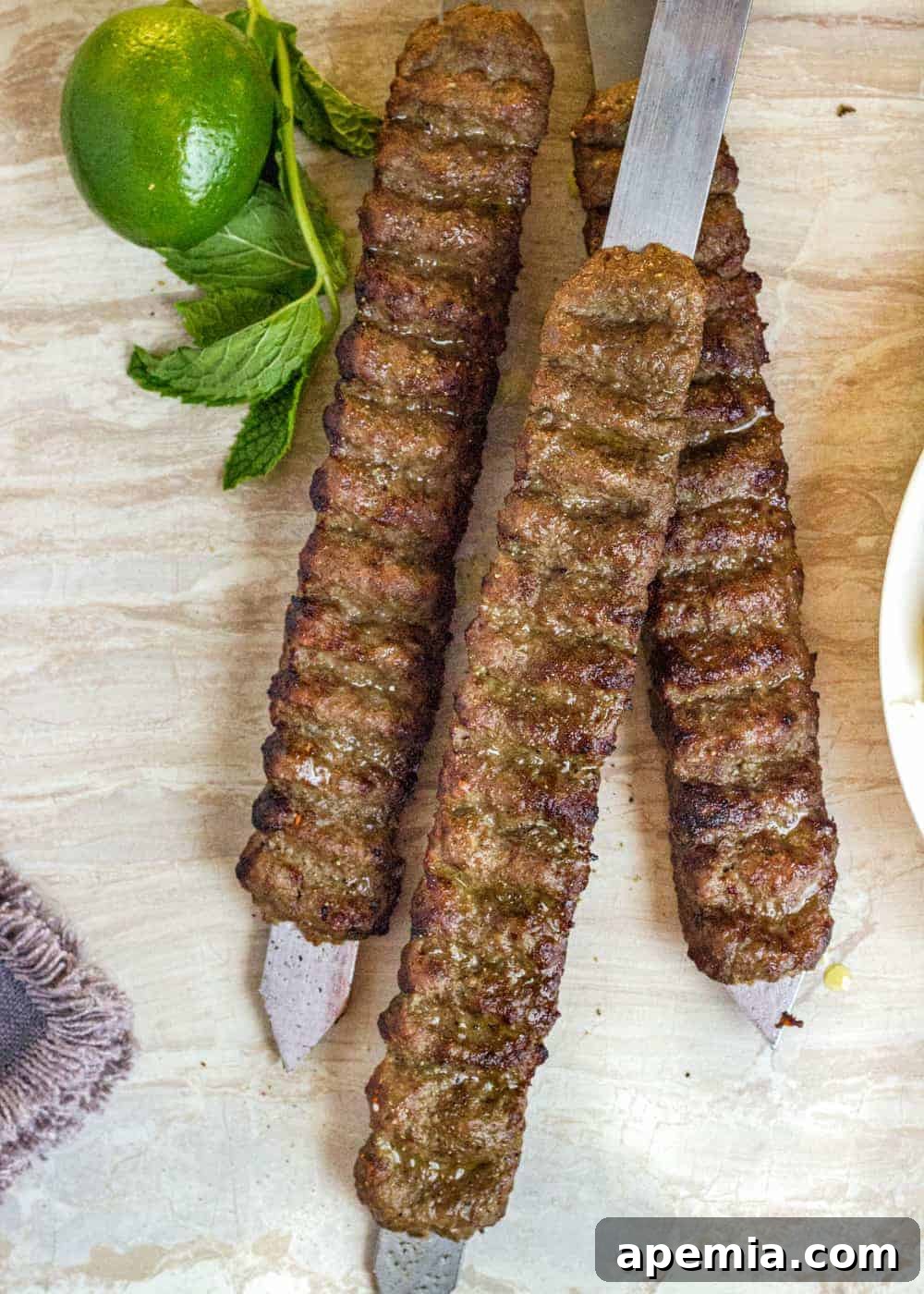
How to Make Koobideh: Step-by-Step Guide
- Prepare the Onion: Begin by grating the onion using a fine grater. Place the grated onion into a fine-mesh sieve set over a bowl. Use your hands to press and squeeze out as much liquid as possible. This step is crucial for preventing watery kabobs and ensuring they bind properly. Discard the onion juice or save it for another use, like flavoring a soup base.
- Create the Koobideh Mixture: In a large mixing bowl, combine the squeezed grated onion with the ground beef, ground lamb, minced garlic, finely chopped parsley, kosher salt, black pepper, ground turmeric, and paprika. Using your hands, mix all the ingredients thoroughly until well combined and the mixture becomes slightly sticky. This ensures all flavors are evenly distributed and the meat binds together. Divide the mixture evenly into eight portions.
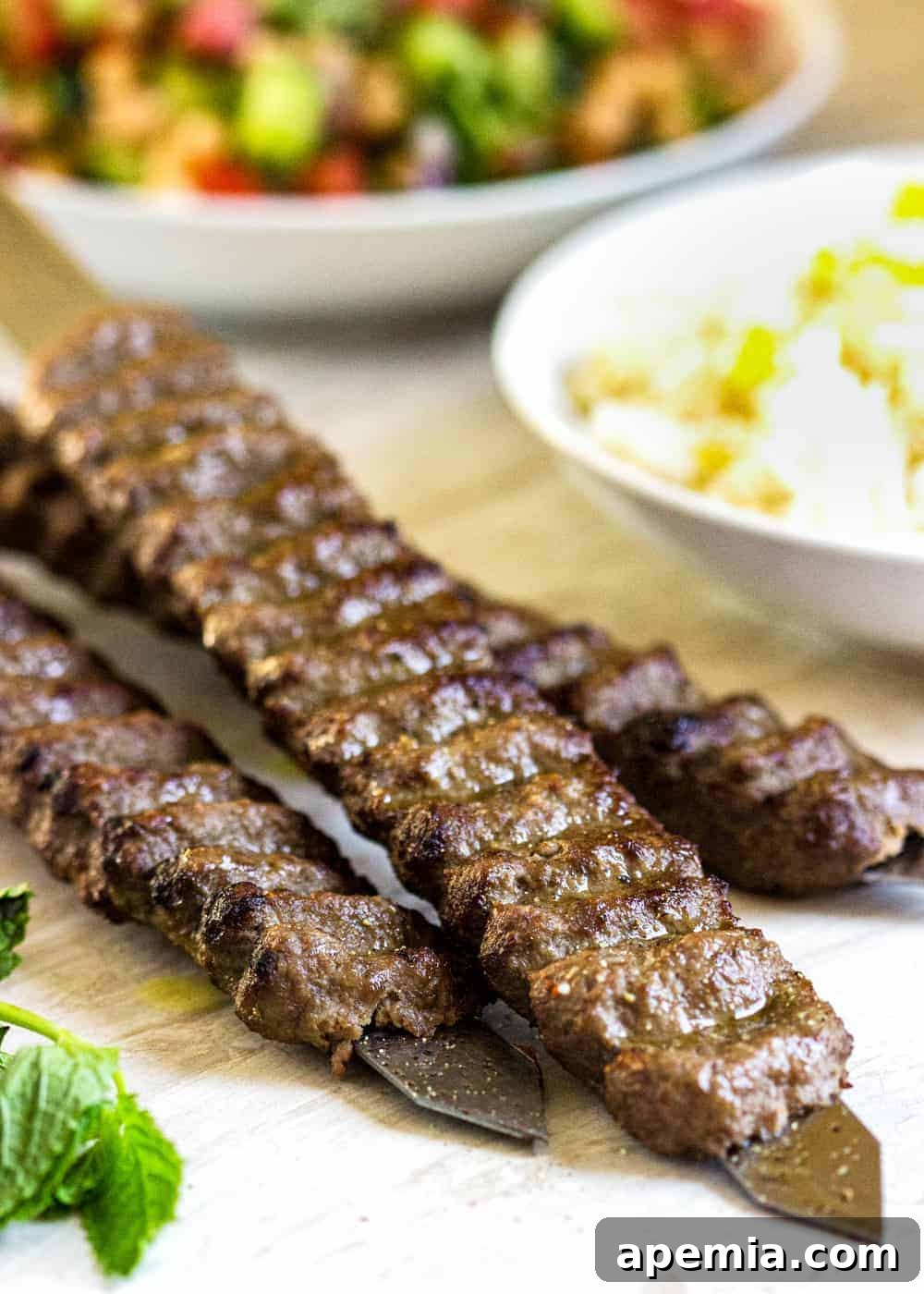
- Shape the Kabobs: Lightly wet your hands with water to prevent the meat from sticking. Take one portion of the meat mixture and mold it onto a flat kebab skewer. Gently press and flatten the meat around the skewer with your thumb and index finger, shaping it into an 8-inch long kabob. The flat surface of the skewer helps the meat adhere better. For a traditional Koobideh look, make slight indentations along the kabob with your fingers (as shown in photos/video). If you don’t have flat skewers, you can form the meat into 8-inch sausage-like shapes.
- Cook the Koobideh:
- Grilling Method: Preheat your grill to a medium-high heat, around 350°F (175°C). Clean and lightly oil the grill grates to prevent sticking. Carefully place the skewers on the hot grill. Cook for 3 to 4 minutes per side, turning them gently, until the meat is beautifully browned, slightly charred, and cooked through.
- Oven Broiler Method: If using a broiler, ensure your skewers are all-metal. Otherwise, form the meat into long sausage shapes without skewers. Place the kabobs on a broiler rack set over a pan to catch any drippings. Position the oven rack to the second-highest setting from the top. Broil the kabobs at 350°F (175°C) for 6 to 7 minutes on one side, then flip and broil for another 6 to 7 minutes until they are browned and cooked through.
- Serve Immediately: Once cooked, allow the kabobs to rest for 3 to 5 minutes. This helps the juices redistribute, ensuring maximum tenderness. Serve hot, optionally sprinkled with a little ground sumac, a squeeze of fresh lemon juice, or a dollop of creamy toum garlic spread. Enjoy!
Recommended Kitchen Tools for Koobideh
- Box Grater or Food Processor: Essential for finely grating the onion. A four-sided cheese grater works perfectly, allowing you to catch all the valuable onion juice in a bowl below. A food processor can also achieve a fine mince if you pulse it carefully.
- Flat Metal Skewers: Highly recommended for Koobideh. The flat surface provides a better grip for the ground meat mixture, preventing it from spinning or falling off, and makes flipping much easier compared to traditional round skewers.
- Grill or Broiler: A charcoal or gas grill imparts an authentic smoky flavor. If you don’t have an outdoor grill, a stovetop grill pan or your oven’s broiler are excellent alternatives. For the oven, a broiler rack with a drip pan is ideal for catching juices.
Storing and Reheating Koobideh Leftovers
Making Ahead: If you plan to prepare Koobideh in advance, it’s best to form the kabobs onto the skewers before refrigerating. The meat mixture is easier to shape when it’s at room temperature, and it will adhere better to the skewers. You can prepare them a few hours ahead of cooking time. Cover the formed kabobs loosely with plastic wrap and refrigerate.
Storing Cooked Koobideh: Once cooked, any leftover beef and lamb kabobs should be transferred to an airtight container and refrigerated promptly. They will stay fresh for up to 4 days.
Reheating Instructions: To best preserve their juiciness, reheat Koobideh gently:
- Oven Method: Place the leftover kabobs in an oven-safe dish with a splash of water or a few drops of broth. Cover the dish tightly with aluminum foil to trap moisture. Reheat in a preheated oven at 350°F (175°C) for about 10-15 minutes, or until thoroughly warmed through.
- Microwave Method: For a quick reheat, place the kabobs on a microwave-safe plate with a tablespoon of water, then cover loosely. Microwave in 30-second intervals until hot. You can also place them directly over warm rice, allowing the steam from the rice to gently reheat the kabobs, making for an efficient two-in-one meal!
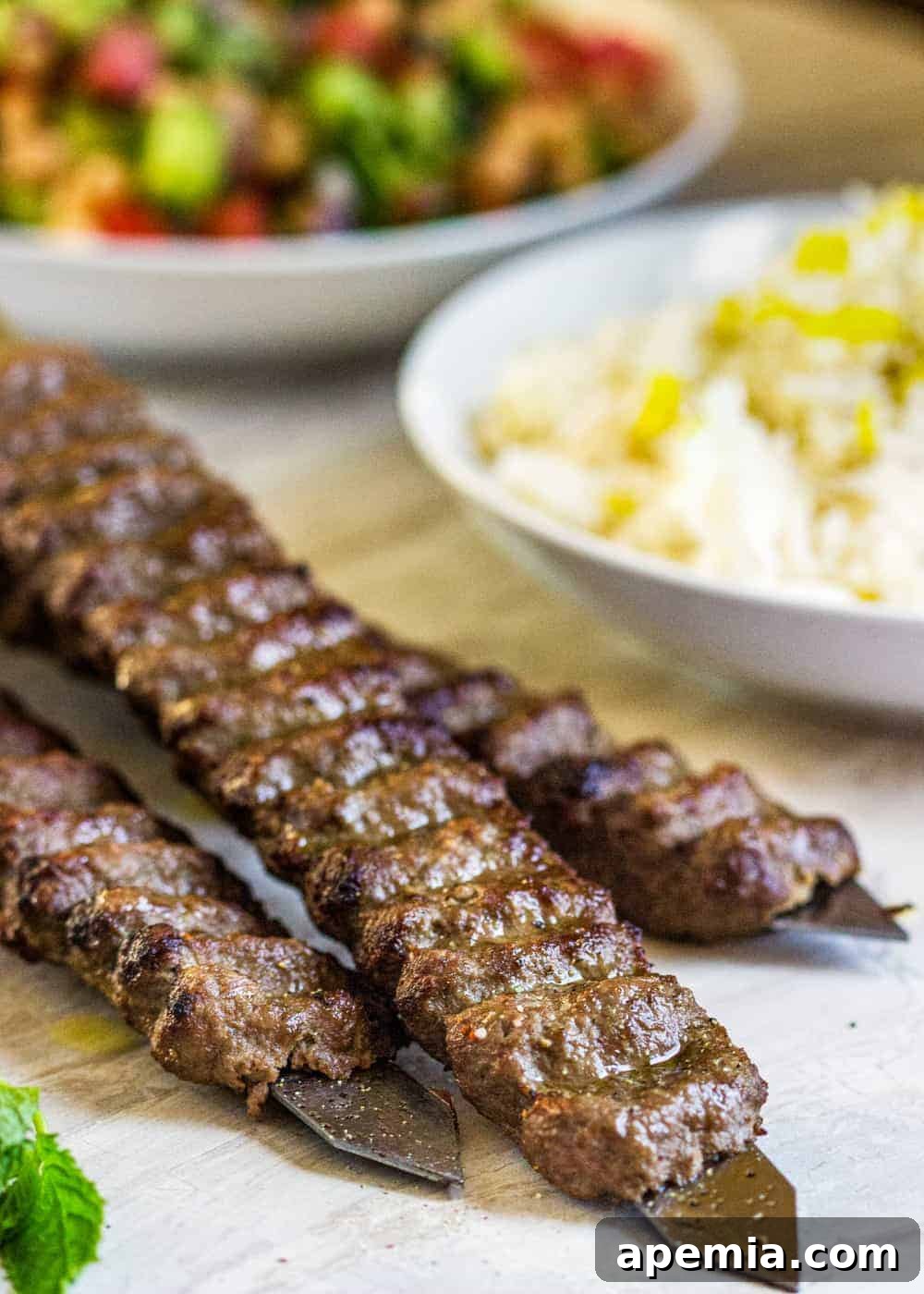
Serving Suggestions: What to Pair with Koobideh
Koobideh is a star on its own, but its traditional accompaniments truly complete the Persian dining experience. Here are some fantastic pairings to make your meal unforgettable:
- Persian Saffron Rice: Fragrant basmati rice infused with golden saffron threads is the quintessential side. The delicate aroma and fluffy texture perfectly complement the rich kabobs.
- Lubia Polo: A flavorful green bean and rice pilaf, Lubia Polo offers a hearty and aromatic addition, often incorporating meat and tomatoes for a complete dish.
- Sabzi Polo: A vibrant herb rice, typically made with a blend of fresh parsley, cilantro, dill, and chives, especially popular for Nowruz (Persian New Year). It adds a fresh, green element to the meal.
- Barbari Bread: A thick, chewy, and slightly leavened Persian flatbread, perfect for tearing and scooping up the juicy kabob meat. Its rustic charm adds authenticity to the meal.
- Grilled Tomatoes and Onions: Halved tomatoes and thick slices of onion, grilled alongside the kabobs, caramelize beautifully and add a sweet-tart counterpoint.
- Fresh Herbs (Sabzi Khordan): A platter of fresh herbs like mint, basil, tarragon, and radish, often served with feta cheese and walnuts, provides a refreshing bite between richer flavors.
- Dill Yogurt (Mast-o-Khiar): A cooling yogurt dip with cucumber and dill offers a creamy, refreshing contrast to the grilled meat.
Assemble a spread of these delicious sides to create a meal bursting with authentic Persian flavors and visual appeal!
Love this recipe? Share it with the world on Pinterest!
Share on Pinterest
Frequently Asked Questions About Koobideh
What is Koobideh made of?
Koobideh is a traditional Iranian kabob primarily made from a blend of ground lamb, ground beef, or often both. The meat is seasoned with grated onion (from which excess liquid has been squeezed), garlic, parsley, and a unique blend of spices including turmeric, paprika, salt, and black pepper. This combination ensures a flavorful and incredibly juicy kabob.
Can I make this Koobideh recipe in the oven?
Absolutely, Koobideh can be successfully made in the oven, especially using the broiler setting. If you have all-metal skewers, you can use them as you would on a grill. If not, simply form the seasoned meat mixture into 8-inch sausage-like shapes. Place these on a broiler rack lined pan (to catch delicious juices). Position your oven rack to the second-highest setting. Broil at 350°F (175°C) for approximately 6-7 minutes per side, until the kabobs are beautifully browned and cooked through. Always let them rest for 5 minutes before serving to retain their juiciness.
How do I shape Koobideh so it sticks to the skewer?
Several factors contribute to Koobideh sticking to the skewer. First, ensure your garlic and onion are very finely chopped or grated; any large pieces can prevent the meat from binding. Second, thoroughly mix the meat mixture until it becomes sticky and cohesive. If the meat feels too soft or warm, refrigerate it for about 20 minutes to firm it up. When shaping, wet your hands before you start to prevent the meat from sticking to your skin, not the skewer. The trick is to apply even pressure as you mold the meat onto the skewer, rather than shaping it separately and then trying to skewer it. Avoid packing the meat too thick, and use your thumb and index finger to create small indentations along the kabob for that traditional look and even cooking. Refer to the ‘Pro Tips for Shaping Koobideh Kabobs’ section above for a detailed guide and visual cues.
What kind of skewers should I use for Koobideh?
For authentic Koobideh, flat, wide metal skewers are highly recommended. These provide a much larger surface area for the ground meat to adhere to, which prevents the kabobs from rotating or falling off during cooking. If you only have round skewers, ensure your meat mixture is very well-bound and firm (chilling helps) to minimize the risk of it falling off.
Can I use only beef or only lamb for Koobideh?
While the traditional recipe often calls for a blend of both beef and lamb for optimal flavor and moisture, you can certainly make Koobideh using only ground beef or only ground lamb. If using only beef, choose a slightly fattier cut (like 80/20) to ensure juiciness. If using only lamb, be aware that the flavor will be more distinctly “lamb-y,” which some prefer. Adjust seasonings to your liking.
Beef and Lamb Koobideh Kabobs
These Koobideh skewers are an exquisite mix of seasoned ground beef and lamb, fresh onions, and aromatic Persian spices. Master this traditional Iranian kabob recipe and have a delicious meal ready in under 30 minutes!
Print Recipe
Video
A video demonstration for making these delicious Koobideh kabobs is available on the original recipe page, guiding you through each step for perfect results.
Ingredients
- 1 medium onion (peeled and finely grated)
- 1 lb lean ground lamb
- 1 lb lean ground beef (90/10 mix recommended)
- 4 cloves garlic (peeled and finely chopped)
- 2 tbsp parsley (finely chopped)
- 1 tsp kosher salt
- 1/2 tsp black pepper
- 1 tsp ground turmeric
- 1 tsp paprika (sweet)
- ground sumac (optional, for serving)
- 1 lemon (optional, for serving)
- toum garlic spread (optional, for serving)
Units: US Customary – Metric
Instructions
- Prepare Onion: Grate the onion finely. Place it in a sieve over a bowl and firmly squeeze out all excess water using your hands. Discard the onion juice or save it for another culinary use.
- Mix Ingredients & Shape Kabobs: In a large bowl, combine the squeezed grated onion, ground beef, ground lamb, chopped garlic, parsley, salt, pepper, turmeric, and paprika. Mix thoroughly by hand until the mixture is uniform and slightly sticky. Divide the meat mixture evenly into eight portions. Wet your hands and carefully mold each portion onto a flat metal skewer, pressing and flattening the meat around the skewer to create an 8-inch long kabob. For a traditional look, gently pinch the meat along the skewer with your thumb and index finger. If not using skewers, shape the meat into eight 8-inch long sausage-like forms. Set the kabobs aside. If the mixture is too warm or not holding its shape, refrigerate for 20 minutes before shaping.
- Grill Method: Preheat your grill to 350°F (175°C) and clean/oil the grates to prevent sticking. Place the kabobs on the hot grill and cook for 3-4 minutes per side until they are nicely browned and cooked through.
- Serve: Let the cooked kabobs rest for 3-5 minutes. Serve immediately, garnished with an optional sprinkle of ground sumac, a squeeze of fresh lemon juice, and/or a dollop of toum garlic spread.
Broiler Method (Alternative)
If you prefer to use your oven’s broiler, ensure your skewers are all-metal. Otherwise, form the meat into long rolls instead of using skewers. Place them on a broiler rack set over a pan to catch juices. Move the oven rack to the second-highest setting from the top. Broil the kabobs until browned, about 6-7 minutes on each side. Allow to rest for 5 minutes before serving.
Notes
- For grating onion and catching juice, a four-sided box grater placed in a bowl works very effectively.
- If the meat mixture is at room temperature and struggles to hold its shape on skewers, refrigerating it for 20 minutes can help it firm up. When forming, hold an oval shape of meat in one hand, slowly pierce it with the skewer with the other hand, then use your thumb and index finger to encircle, pinch, and squeeze the meat along the skewer, molding and flattening it to approximately 8 inches long.
- I highly recommend serving these kabobs with a generous spread of Toum Garlic Spread for an added burst of flavor.
Nutrition Facts (per serving)
- Calories: 236 kcal
- Carbohydrates: 3g
- Protein: 22g
- Fat: 15g
- Saturated Fat: 7g
- Trans Fat: 1g
- Cholesterol: 77mg
- Sodium: 374mg
- Potassium: 260mg
- Fiber: 1g
- Sugar: 1g
- Vitamin A: 211 IU
- Vitamin C: 10mg
- Calcium: 23mg
- Iron: 3mg
The information shown is an estimate provided by an online nutrition calculator. It should not be considered a substitute for a professional nutritionist’s advice.
Have You Made This Recipe? Let Me Know on Instagram!
Tag @keviniscooking or use the hashtag #keviniscooking to share your delicious Koobideh creations!