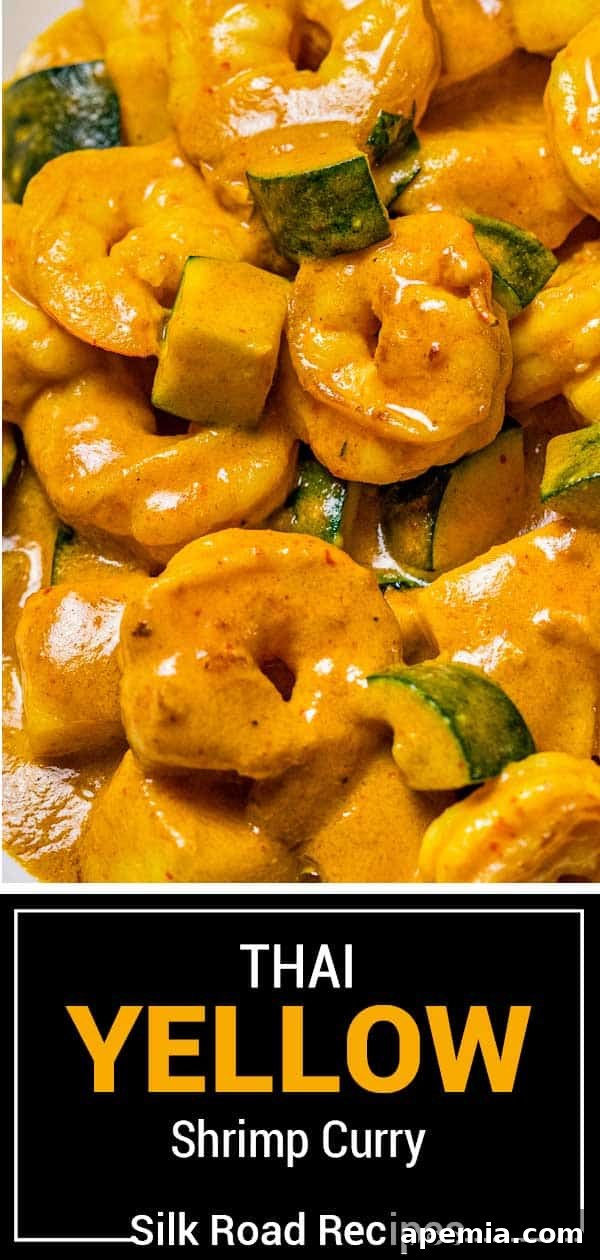
The Ultimate Coconut Shrimp Curry: A Sweet & Spicy Thai Delight
Prepare to tantalize your taste buds with a dish unlike any you’ve experienced: Coconut Shrimp Curry. This vibrant Thai classic reimagined offers a luscious, creamy base where the richness of coconut milk beautifully melds with the unexpected sweetness of banana. Simmered to perfection with aromatic yellow curry paste, it delivers a delightful warmth that’s perfectly balanced by its refreshing, fruity notes. Thick, luxurious, and irresistibly sweet with just the right kick, this is a curry that promises a truly memorable dining experience.
Whip Up a Delicious Thai Meal in Under 40 Minutes
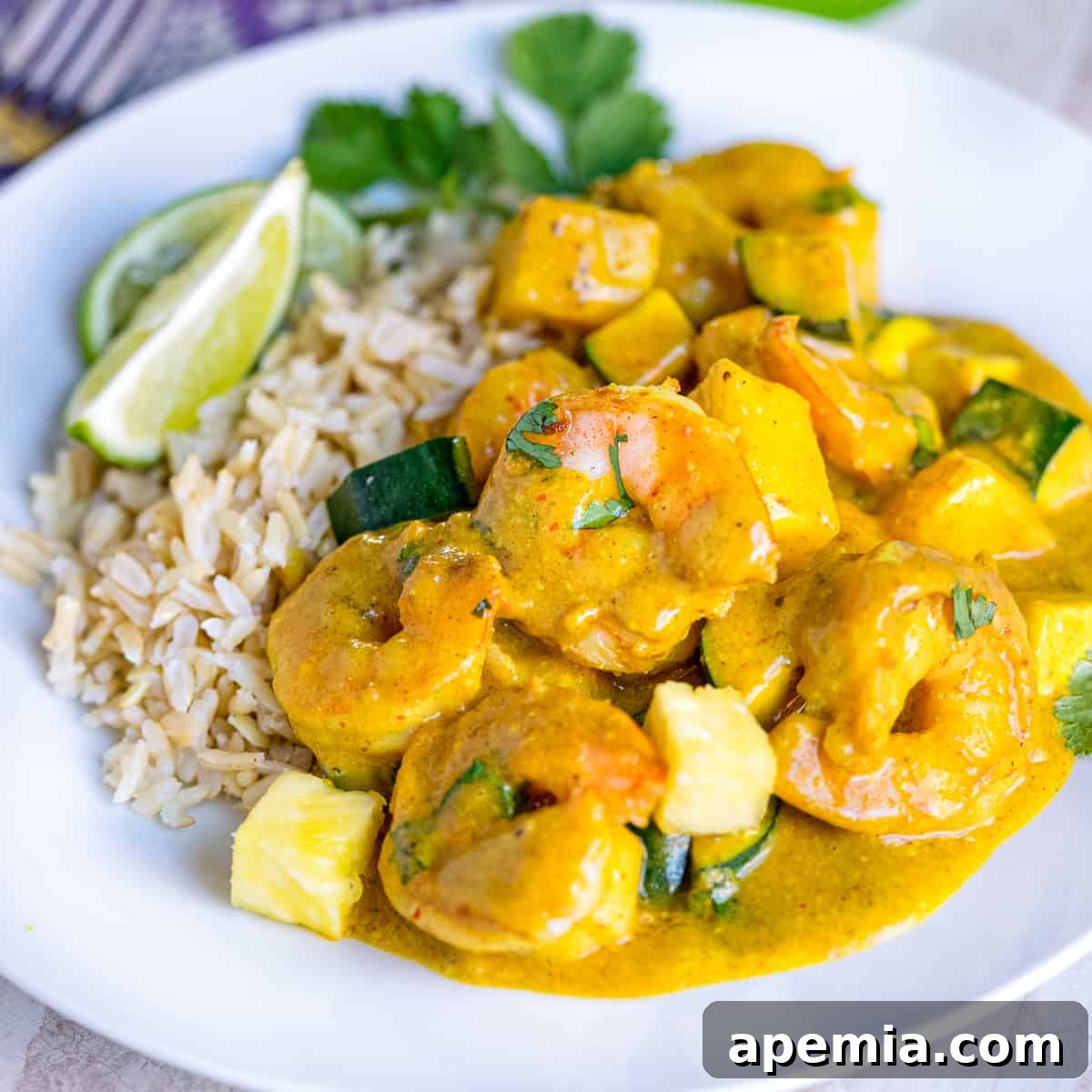
In today’s fast-paced world, finding a gourmet-quality meal that’s both quick and easy is a true culinary victory. Our easy coconut shrimp curry is designed to bring exotic flavors to your table in just 40 minutes, making it an ideal choice for busy weeknights or when you simply crave something special without the fuss. This recipe is a symphony of flavors, with a complex sauce and varied textures that make every bite exciting. To truly appreciate its richness, we recommend serving it simply alongside a bowl of perfectly steamed white jasmine rice. The mild rice acts as a perfect canvas, soaking up every drop of the delectable curry sauce.
This exquisite dish is crafted using authentic yellow curry paste. Known for its savory, sweet, and moderately spicy profile, yellow curry paste offers a milder heat compared to its fiery red counterpart, yet it provides more warmth than the herbaceous green variety. What truly sets this Thai recipe apart is its remarkable balance. The tropical sweetness of ripe banana – yes, banana! – combined with the cooling creaminess of coconut milk, creates a soothing counterpoint to the curry’s spices, making it surprisingly mild and incredibly inviting even for those sensitive to heat.
What’s Inside: Flavor Profile & Key Ingredients
Beyond its delightful base, this Thai shrimp curry bursts with refreshing notes from fresh herbs like Thai basil and cilantro. These aromatic additions infuse the spiced sauce with a vibrant, herbaceous flavor and intoxicating aroma, elevating the entire dish. A squeeze of fresh lime juice at the end brightens everything, tying all the diverse flavors together with a zesty flourish. Shrimp, with its naturally sweet and delicate flesh, is the ideal protein for such a delicious, fruity curry. It cooks quickly and absorbs the rich flavors beautifully, making it a standout feature of this recipe.
If this unique blend of sweet, savory, and spicy has piqued your interest in fruit-infused curries, you’re in for a treat! Explore other exciting options like our Mango Chicken Curry or our rich Coconut Beef Curry recipes next. Each offers a distinct journey for your palate.
Why Banana? The Secret to This Curry’s Unique Sweetness
One of the most intriguing ingredients in this coconut shrimp curry recipe is the banana. While it might seem unconventional in a savory dish, ripe banana is a surprisingly brilliant addition. It doesn’t just contribute natural sweetness; it also adds a wonderful viscosity and creaminess to the sauce, helping it to thicken and achieve that desired luscious texture. The banana’s mild, fruity flavor blends seamlessly with the coconut milk and spicy yellow curry paste, creating a harmonious and balanced taste profile that is truly unique and absolutely delicious.
This creative use of banana showcases the versatility of Asian cuisine, where fruits are often incorporated to balance strong spices and rich textures. Here, it acts as a cooling agent, mellowing the heat from the curry paste and rounding out the sharp acidity from other ingredients like pineapple and lime. The result is a curry that is complex yet incredibly approachable, offering a gentle sweetness that complements the shrimp and spices without overpowering them. Don’t let the unusual ingredient deter you – it’s a game-changer for this recipe!
Versatile Veggie Additions for Your Coconut Shrimp Curry
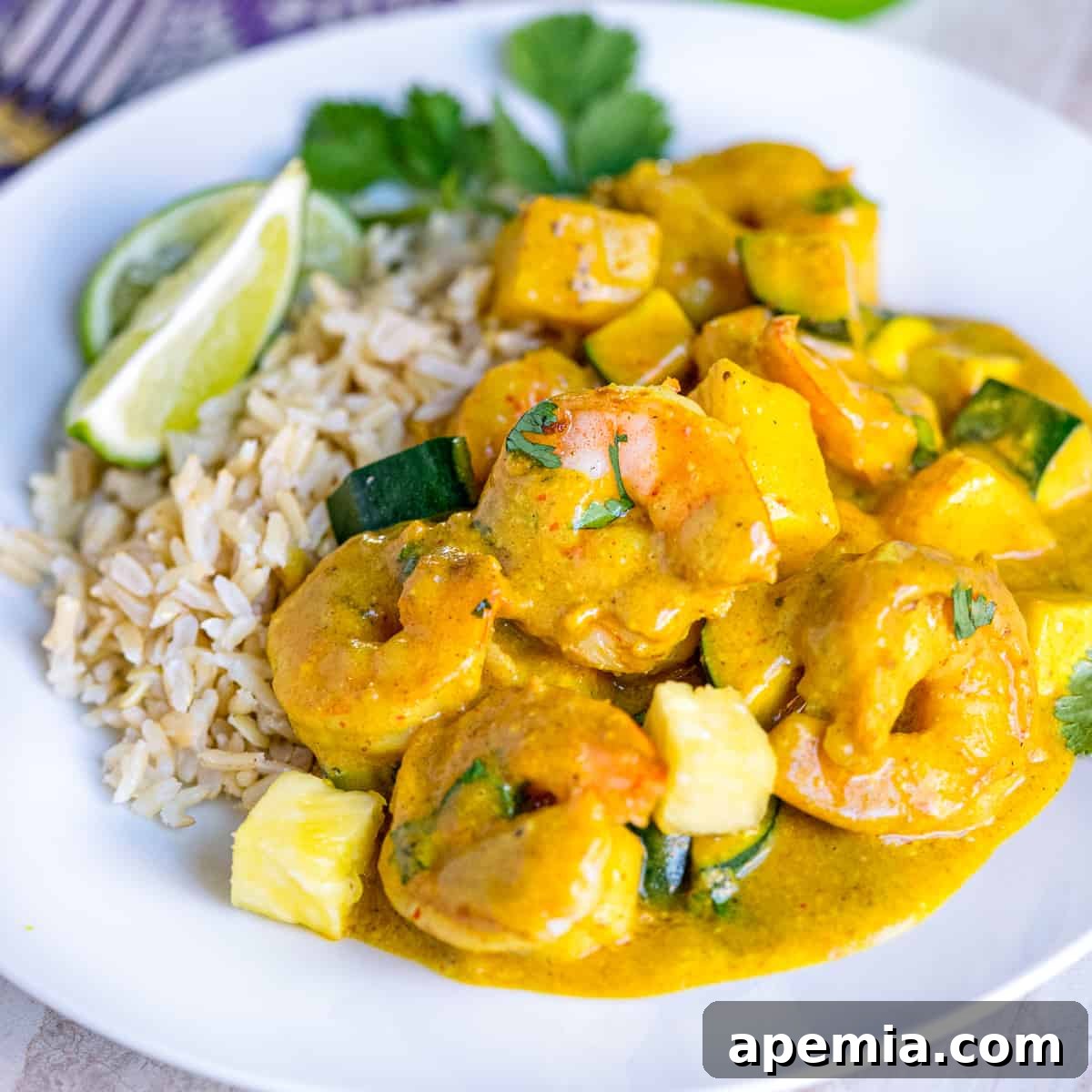
This creamy shrimp curry is wonderfully adaptable when it comes to vegetables. While I often use zucchini, especially when I have an abundance from the garden, feel free to get creative with your choice of greens. Bell peppers (any color), green beans, snap peas, or even bamboo shoots would make fantastic additions, contributing different textures and flavors. For denser vegetables like carrots or broccoli florets, a quick steam or blanch before adding them to the curry is highly recommended. This ensures they cook through evenly and become tender without overcooking the delicate shrimp, which only needs a few minutes to be perfectly done.
Adding a variety of vegetables not only boosts the nutritional value but also adds visual appeal and textural interest to your curry. Consider experimenting with thinly sliced mushrooms, baby corn, or even spinach (stirred in at the very end until wilted). For an extra layer of aromatic depth, thinly sliced onions or shallots can be sautéed with the curry paste at the beginning of the cooking process until they are beautifully caramelized and fragrant, forming a delicious foundation for your sauce.
Ingredient Notes and Smart Substitutions
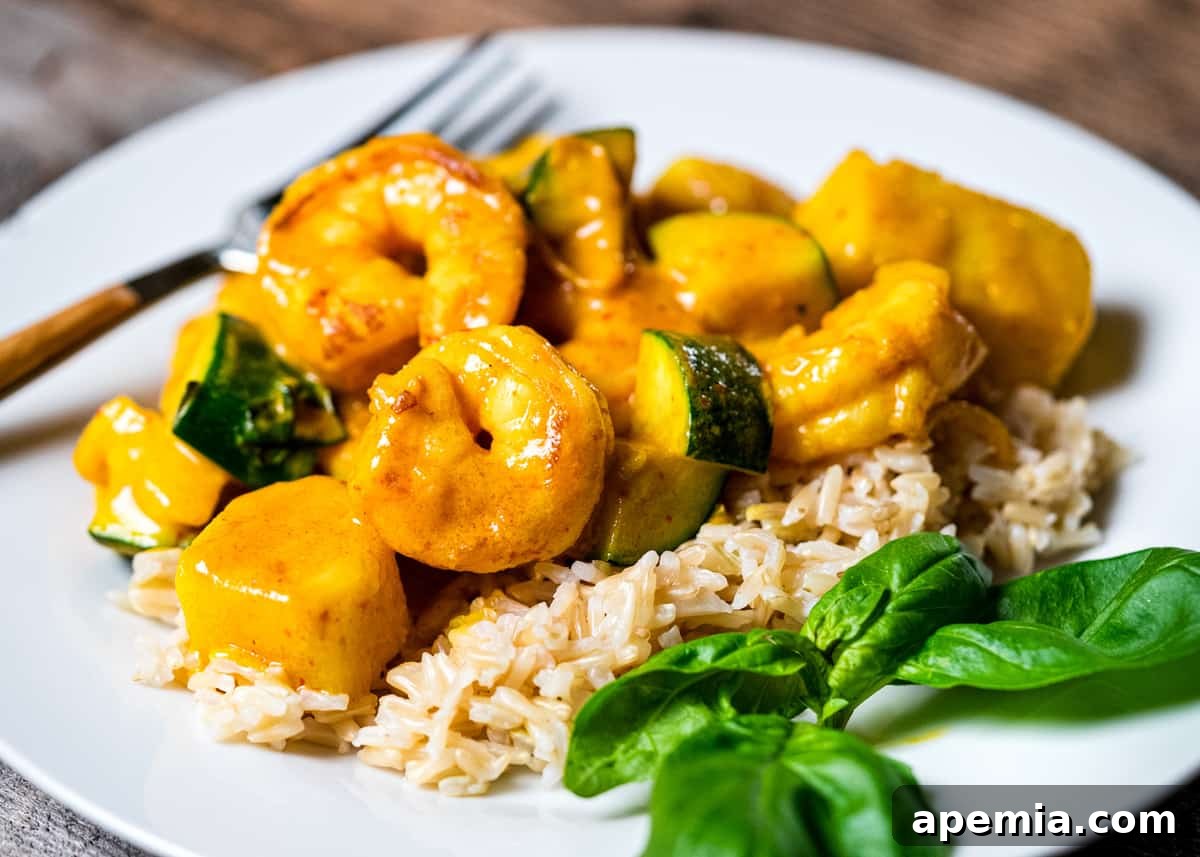
Creating an exceptional coconut shrimp curry starts with understanding your ingredients. Below, you’ll find detailed notes and substitution ideas to help you craft the perfect dish, tailored to your pantry and preferences.
(For a full list of ingredients and precise quantities, please refer to the recipe card below.)
- Large Shrimp: For the best flavor and texture, I highly recommend using fresh, raw, large shrimp (peeled and deveined). Cooking them directly in the spiced sauce allows them to absorb maximum flavor. If you’re using pre-cooked shrimp, add them only in the final minute or two of cooking to simply warm them through, preventing them from becoming rubbery.
- Yellow Curry Paste: This is the heart of our curry, offering a harmonious blend of savory, sweet, and spicy notes. Its complex profile, featuring ginger, cumin, lemongrass, and turmeric, beautifully complements seafood, fruits, and fresh herbs. For a deeper understanding of Thai curry pastes, explore our guide on Thai Curry Paste Differences.
- Full-Fat Coconut Milk: Essential for the luscious, creamy texture and subtle sweetness of the curry. Always opt for full-fat coconut milk (not “light” versions) for the best results, as it provides the rich mouthfeel that defines a great curry.
- Pineapple: Fresh or canned (drained) pineapple adds a bright, acidic, and vibrant counterpoint to the creamy sauce. Its slight tartness cuts through the richness, creating an exciting flavor dynamic. Make sure it’s diced into bite-sized pieces.
- Ripe Banana: The secret ingredient! It provides natural sweetness, a unique fruity depth, and helps thicken the sauce to a silky consistency. It’s truly a beautiful, unexpected addition that harmonizes wonderfully with coconut milk and spices. If you prefer a less sweet profile or a different texture, consider using plantains.
- Thai Basil: This herb offers a savory, slightly peppery, and subtly anise-like flavor that is more robust than common Italian basil. It’s crucial for authentic Thai flavor. If unavailable, regular basil can be used, but the flavor will differ.
- Cilantro: Known for its fresh, lemony, and peppery notes. If you’re one of those who find cilantro soapy, excellent substitutes include fresh parsley or papalo (a Mexican herb with a similar flavor profile).
- Fish Sauce: A fundamental ingredient in Thai cooking, fish sauce provides umami depth and a crucial salty balance to the sweetness of the curry. It echoes the seafood flavor while enhancing the overall complexity. Good quality fish sauce makes a difference. Substitutes include soy sauce, oyster sauce, or a tiny bit of anchovy paste for a similar savory kick.
- Zucchini: A mild, watery squash that cooks quickly and absorbs flavors well. Feel free to substitute with yellow squash, cucumber, or other quick-cooking vegetables.
- Ghee: Clarified butter, ghee, offers a nutty, rich flavor and a high smoke point, making it an excellent alternative to vegetable oil for sautéing your curry paste. Vegetable oil or coconut oil also work perfectly well.
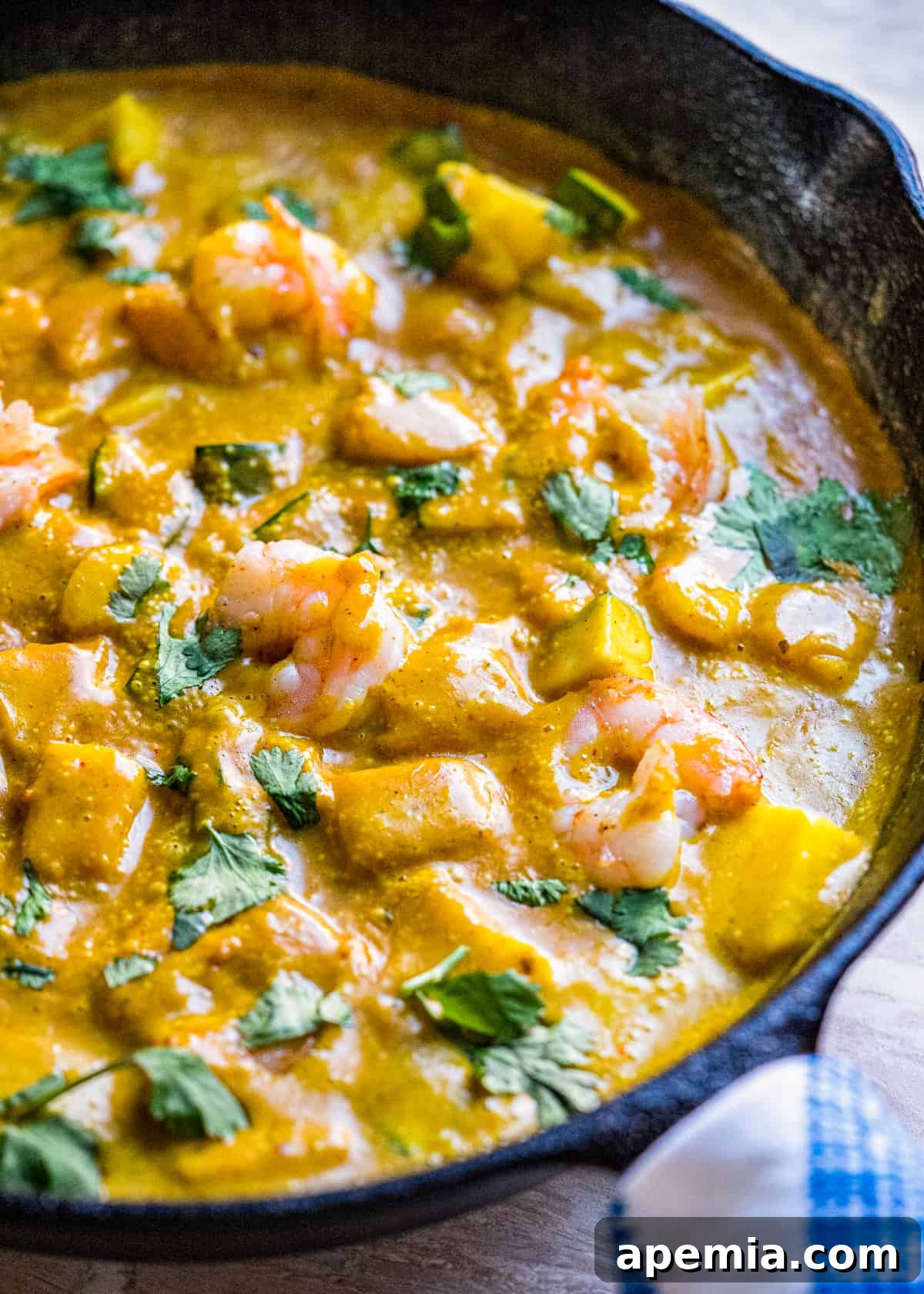
How to Master This Coconut Shrimp Curry: Step-by-Step Guide
Creating this flavorful coconut shrimp curry is simpler than you might think. Follow these clear steps to achieve a dish that’s rich in flavor and perfectly balanced.
- Prepare the Creamy Base: In a blender, combine the full-fat coconut milk, fish sauce, and the ripe banana. Purée the mixture until it is completely smooth and free of any lumps. This step is crucial for achieving the velvety texture of the sauce. Set this flavorful purée aside.
- Infuse the Curry Paste: Heat the ghee (or your chosen vegetable oil) in a large skillet or a robust cast-iron pan over medium heat. Once shimmering, add the yellow curry paste. Stir it continuously, allowing it to simmer gently for about 2 minutes. This crucial step “blooms” the spices in the paste, releasing their full aromatic potential and intensifying the flavor of your curry. Your kitchen will fill with an incredible fragrance.
- Sauté Pineapple and Shrimp: Introduce the diced pineapple to the skillet, stirring it into the fragrant curry paste. Allow it to caramelize and brown slightly for 2 to 3 minutes, enhancing its natural sweetness. Next, add the peeled and deveined large shrimp. Sauté quickly for about 1 to 2 minutes per side, just until they turn pink. Shrimp cooks very fast, and overcooking can lead to a rubbery texture, so keep a close eye on it. Once perfectly pink, remove the shrimp from the skillet and set it aside; it will be added back later to warm through without overcooking.
- Thicken the Sauce with Zucchini: Pour the previously blended coconut milk and banana purée into the skillet with the caramelized pineapple. Stir well to incorporate all the flavors. Let this mixture simmer for about 3 minutes, allowing the flavors to meld and the sauce to begin thickening. Now, add the diced zucchini. Continue to sauté for another 2 minutes, stirring often, as the sauce further reduces and thickens to a luxurious consistency.
- Combine and Serve: Return the cooked shrimp to the skillet. Add half of your fresh, chopped herbs (Thai basil and cilantro) to the curry. Gently stir the shrimp and herbs into the warm sauce until everything is thoroughly heated through, which should only take about a minute. Serve your exquisite coconut shrimp curry immediately, topped with the remaining fresh herbs and a quarter lime wedge for a burst of zesty freshness. Plate it generously over a bed of fluffy steamed rice, and get ready to enjoy!
Expert Tips for Perfectly Cooked Shrimp
The key to an outstanding shrimp curry lies in perfectly cooked shrimp – tender, juicy, and never rubbery. Shrimp cooks incredibly fast, so precision is essential. Here are some tips to ensure your shrimp turns out flawless every time:
- Don’t Overcrowd the Pan: Cook shrimp in batches if necessary. Overcrowding the skillet lowers the temperature, steaming the shrimp instead of searing it, leading to a less desirable texture.
- Watch for Color Change: Raw shrimp is typically grey and translucent. As it cooks, it turns opaque pink. As soon as it curls into a C-shape and is uniformly pink, it’s done. A tightly curled O-shape indicates overcooked shrimp.
- Remove Promptly: As instructed in the recipe, remove the shrimp from the skillet once cooked and set it aside. You’ll reintroduce it briefly at the end to warm it through, preventing any chance of overcooking in the simmering sauce.
- Fresh vs. Frozen: While fresh shrimp is ideal, high-quality frozen shrimp can also be used. Thaw frozen shrimp completely in the refrigerator overnight or under cold running water for a quick thaw. Pat them dry thoroughly before cooking to ensure a good sear.
- Seasoning: A pinch of salt and pepper on the shrimp before cooking can enhance their natural flavor, though the curry paste will provide most of the seasoning.
Recommended Kitchen Tools for Your Curry
Having the right tools can make all the difference in preparing this delicious curry efficiently and effectively:
- Blender: Absolutely essential for achieving that perfectly smooth, creamy banana and coconut milk base. While you could attempt to mash the banana by hand, a blender ensures a silky texture without any unwanted chunks.
- Large Skillet or Cast Iron Pan: A spacious skillet or a robust cast-iron pan is ideal for this recipe. It allows for even heat distribution and provides enough surface area to properly sauté the curry paste, pineapple, and shrimp without overcrowding, which is key for developing rich flavors.
- Sharp Knife and Cutting Board: For efficiently dicing your pineapple, zucchini, and chopping fresh herbs.
- Measuring Cups and Spoons: For accurate ingredient proportions, especially for the curry paste and liquids, ensuring consistent results.
- Spatula or Wooden Spoon: For stirring and sautéing, ensuring ingredients cook evenly and prevent sticking.
Storing and Reheating Your Coconut Shrimp Curry
Leftover coconut shrimp curry is just as delightful the next day, and proper storage ensures its freshness and flavor. Transfer any remaining curry to an airtight container and refrigerate promptly. It will keep beautifully for up to 3 days.
When you’re ready to enjoy it again, reheat the curry gently on the stovetop over medium heat. Stir constantly to prevent the sauce from sticking to the bottom or scorching. Be mindful not to boil vigorously, especially since the shrimp has already been cooked once. The goal is to warm it through slowly and evenly. If the sauce has thickened too much in the fridge, you can add a tablespoon or two of water or coconut milk to reach your desired consistency. Freezing is generally not recommended for shrimp curries as shrimp can become quite tough upon defrosting and reheating, but if absolutely necessary, freeze the sauce separately without the shrimp, and add freshly cooked shrimp when reheating.
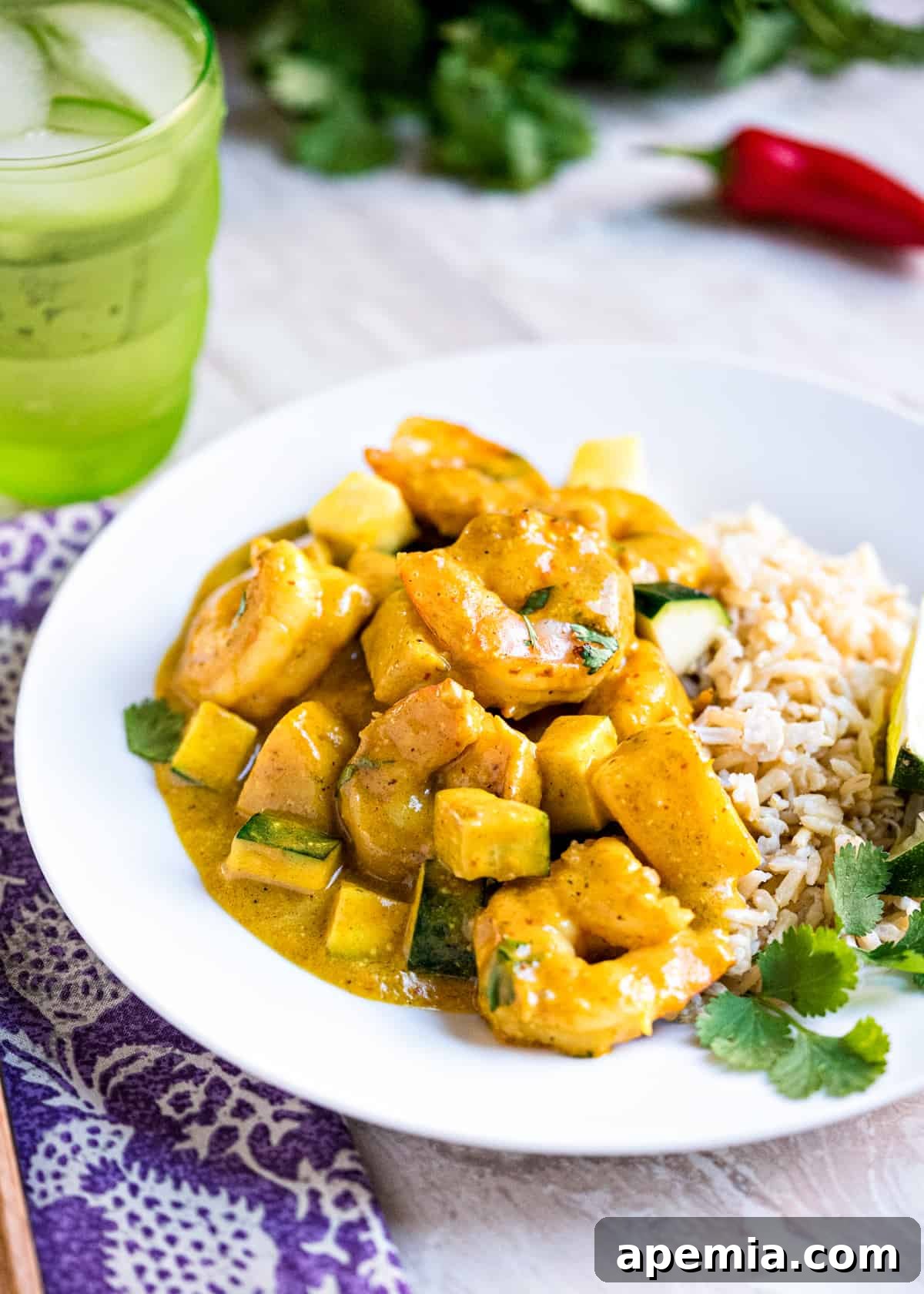
Share this recipe on Pinterest!
Love this recipe? Share it with the world on Pinterest.
Share on Pinterest
Frequently Asked Questions About Coconut Shrimp Curry
Banana is a fantastic addition that brings natural sweetness, increases the viscosity, and enhances the creaminess of the sauce. Its flavor doesn’t taste out of place; instead, it’s beautifully complemented by the coconut milk and plays wonderfully with the citrusy, peppery notes of the yellow curry paste. It’s a delicate balancing act that results in a uniquely delicious and well-rounded flavor profile. For a less sweet sauce, you can try using plantains instead, which offer a similar thickening property with a more savory, starchy taste.
Absolutely! This curry is incredibly versatile for vegetable additions. Beyond zucchini, consider incorporating yellow squash, vibrant broccoli florets, sweet carrots, earthy mushrooms, or tender peas – all of which are delicious in yellow shrimp curry. For a boost of savory depth and aromatic flavor, thinly sliced onions or shallots can be added early on with the yellow curry paste. Sautéing them until caramelized makes them wonderfully sweet and fragrant, building a robust flavor foundation for your curry. Remember to pre-cook denser vegetables if needed to ensure they are tender by the time the shrimp is cooked.
The most common reason for rubbery shrimp is overcooking. Shrimp cooks very quickly, and even a minute too long can change its texture from succulent to tough. To prevent this, I advise cooking the shrimp briefly until just pink, then removing it from the skillet. You’ll stir it back into the warm sauce for only a minute or two just before serving to heat it through. Additionally, shrimp that has been frozen and then defrosted might have a slightly tougher texture than fresh shrimp. If using pre-cooked seafood, ensure it thaws slowly and is added to the skillet only at the very end to gently warm up.
Jasmine rice is the quintessential choice for Thai curries. Its delicate fragrance and slightly sticky texture are perfect for soaking up the rich, creamy sauce of a coconut shrimp curry. Other options include basmati rice or even brown rice for a healthier alternative, though they offer a different texture and flavor profile.
Yes, you can easily adjust the spice level. Yellow curry paste is generally milder than red or green. To make it even less spicy, simply reduce the amount of yellow curry paste you use. You can also increase the amount of coconut milk slightly to further dilute the heat. The banana in this recipe already contributes to a milder overall taste.
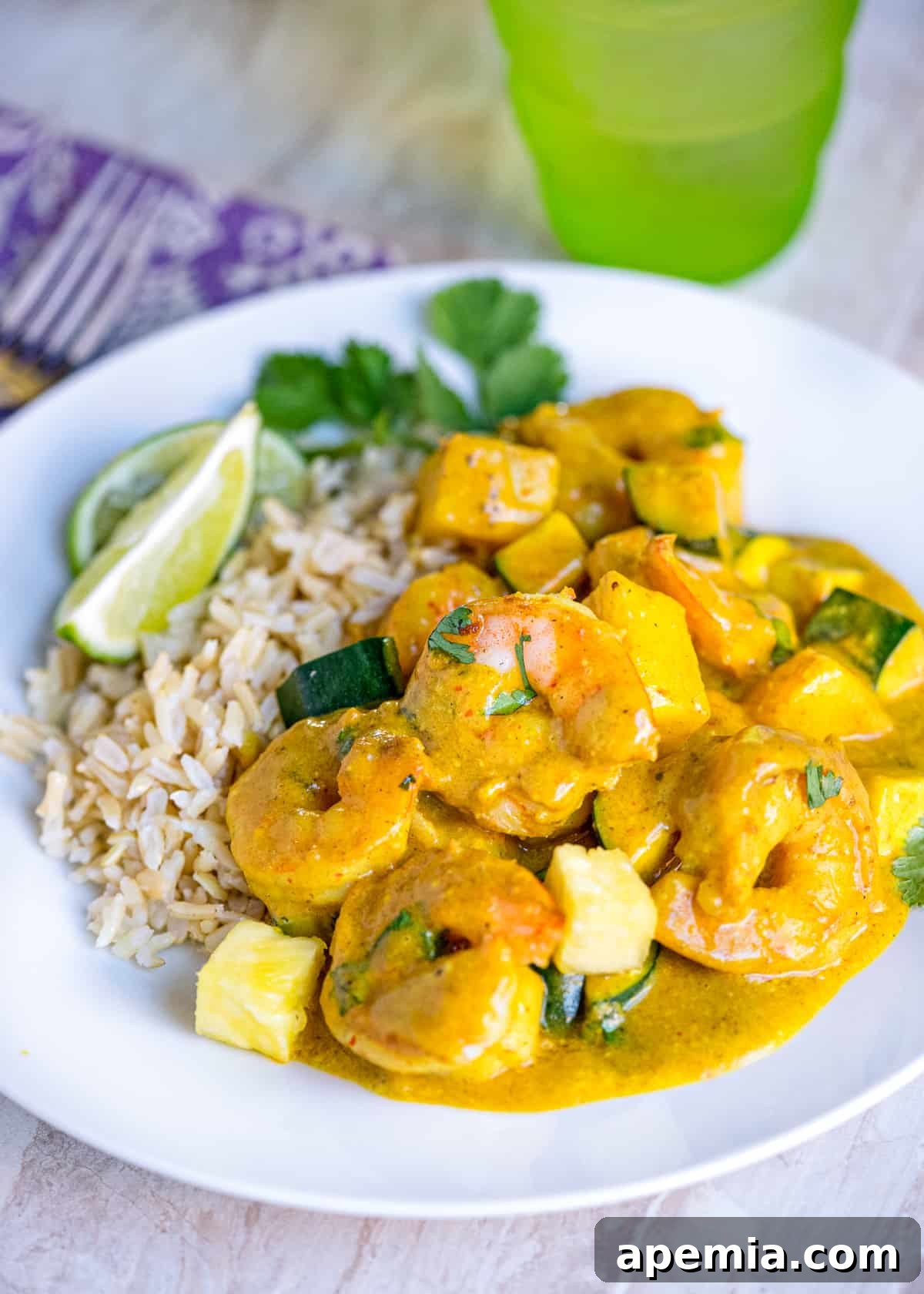

Coconut Shrimp Curry
Creamy coconut shrimp curry is a fruity, fragrant, and tantalizingly spicy curry with plump shrimp, fresh herbs, zucchini, and pineapple.
4
15 mins
25 mins
40 mins
Print Recipe
Ingredients
Instructions
- In a blender, combine the coconut milk, fish sauce, and banana. Purée until smooth. Set aside.
- Heat the ghee or oil in a large skillet or cast iron pan over medium heat. Add the yellow curry paste and stir. Cook for at least 2 minutes, or until fragrant.
- Add the pineapple and stir to caramelize and brown slightly, about 2-3 minutes. Add the shrimp and quickly sauté for a minute or two, stirring to flip shrimp until they turn pink. Remove the shrimp and set aside to prevent overcooking.
- Pour the coconut milk and banana purée over the pineapple in the skillet, stirring to incorporate. Cook for another 3 minutes. Add the diced zucchini and cook for an additional 2 minutes, stirring often. The sauce will thicken.
- Return the shrimp to the pan along with half of the chopped herbs. Stir everything together and heat through for about a minute. Serve immediately with the remaining chopped herbs and a fresh lime wedge over steamed rice.
Nutrition
Calories: 301kcal
|
Carbohydrates: 24g
|
Protein: 19g
|
Fat: 16g
|
Saturated Fat: 12g
|
Trans Fat: 1g
|
Cholesterol: 143mg
|
Sodium: 1715mg
|
Potassium: 614mg
|
Fiber: 4g
|
Sugar: 14g
|
Vitamin A: 5104IU
|
Vitamin C: 49mg
|
Calcium: 144mg
|
Iron: 4mg
The information shown is an estimate provided by an online nutrition calculator. It should not be considered a substitute for a professional nutritionist’s advice.