
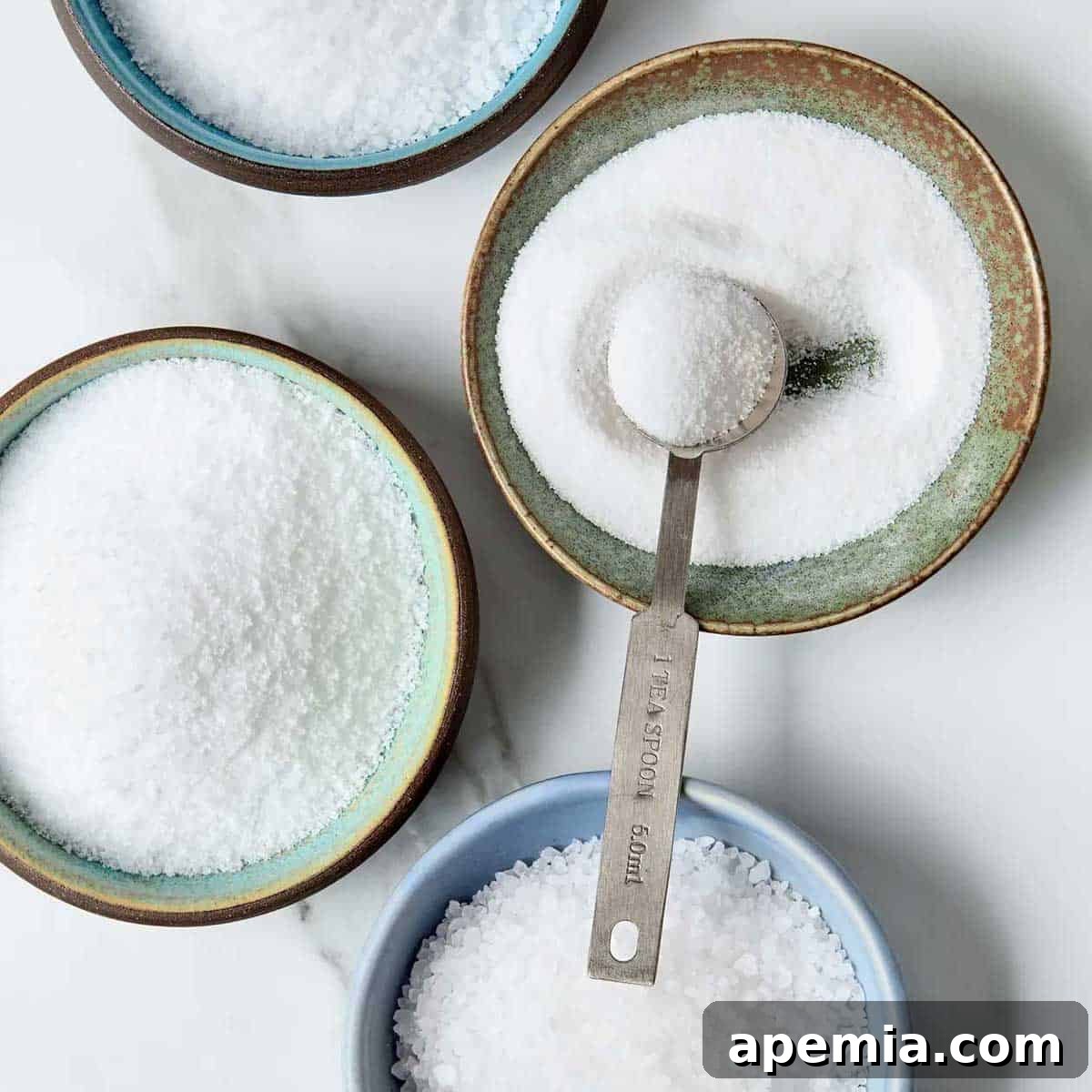
In the vast and flavorful world of culinary arts, few ingredients hold as much power and versatility as salt. Far more than just a seasoning, salt has been a fundamental pillar of human civilization, crucial for both enhancing flavors and preserving food for millennia. From the ancient practice of salting meats to modern gourmet applications, its role is indispensable. Among the myriad varieties available today, kosher salt stands out as a favorite for many chefs and home cooks alike, celebrated for its unique properties and adaptability in the kitchen. But what truly sets it apart from its counterparts like table salt, sea salt, or even specialized pickling salt?
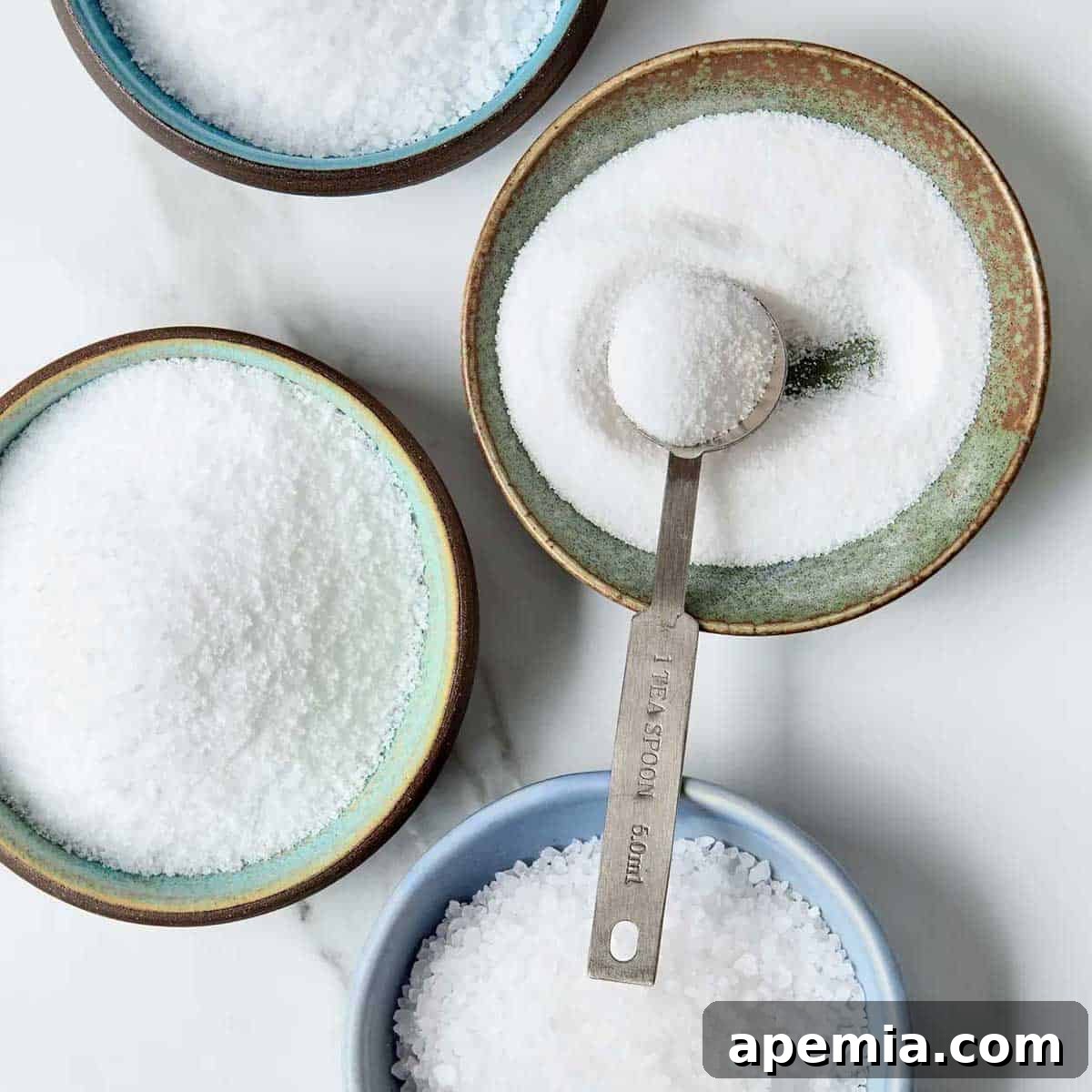
Photo Credit: Epicurious, Travis Rainy
The World of Salt: Kosher vs. Table vs. Sea vs. Pickling
Navigating the diverse landscape of culinary salts can be an enlightening journey for any food enthusiast. While they all share the fundamental characteristic of being sodium chloride, their origins, processing methods, crystal structures, and mineral compositions create distinct profiles that profoundly impact the taste and texture of your dishes. Understanding these differences is key to unlocking new levels of flavor and precision in your cooking. This guide delves into the primary types of salt you’ll encounter – kosher salt, table salt, sea salt, and pickling salt – highlighting their unique attributes and ideal applications.
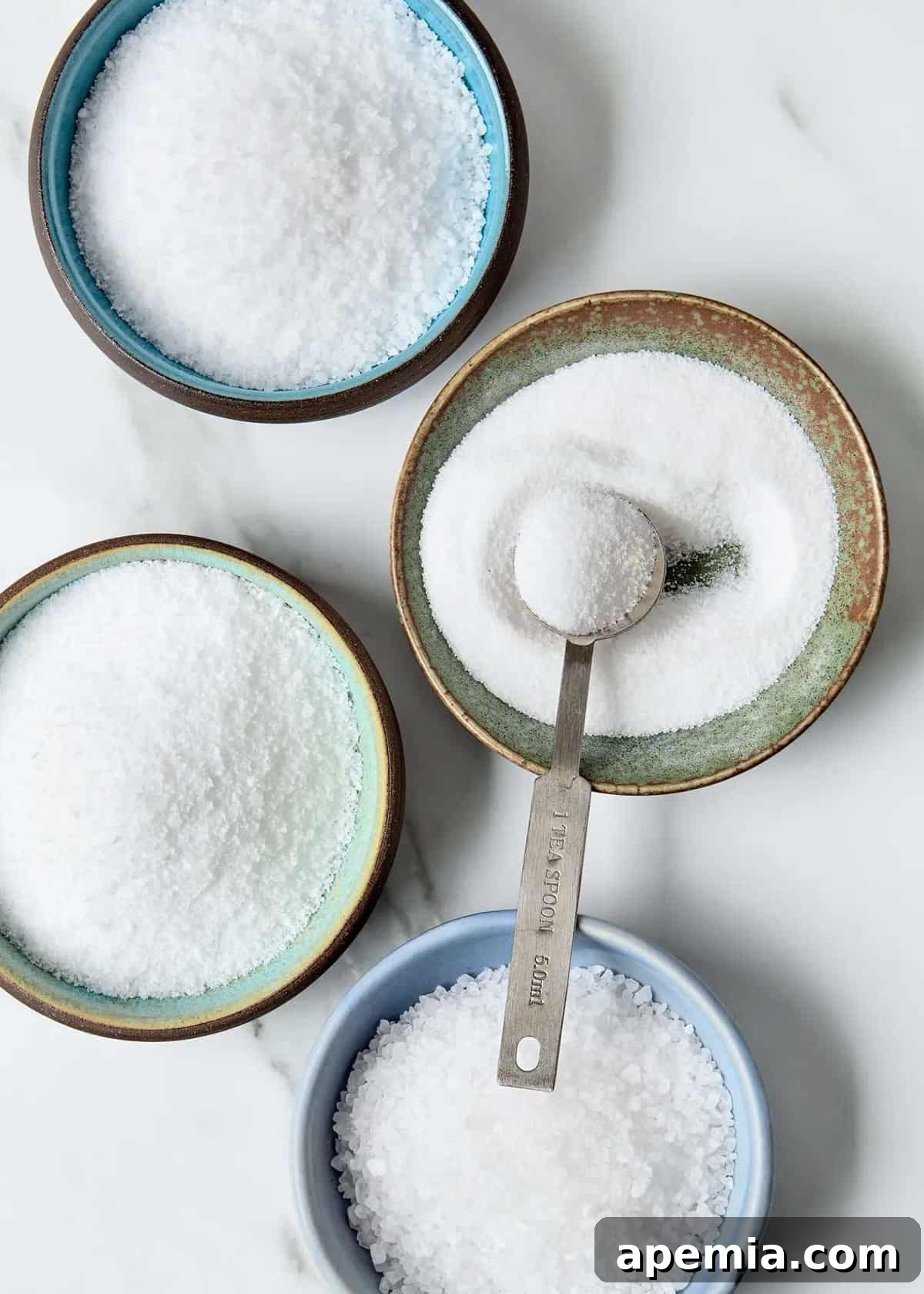
Photo Credit: Epicurious, Travis Rainy
Unveiling the Unique Characteristics of Each Salt Type
Each type of salt brings its own set of characteristics to the culinary stage, influencing everything from seasoning control to flavor enhancement and even the final presentation of a dish. Let’s explore what makes each variety distinct and how to best utilize them in your kitchen.
Kosher Salt: The Chef’s Choice for Precision Seasoning
Kosher salt earned its name not from being certified kosher itself, but from its traditional use in the koshering process of meat, which involves drawing out blood through salting. Distinct from common table salt, kosher salt is celebrated for its larger, irregularly shaped, flaky crystals. These unique flakes are crucial for several reasons: they make it easier for chefs to pinch and sprinkle, providing superior tactile control over seasoning; they dissolve more slowly, offering a more gradual and even distribution of salinity; and crucially, they typically contain no iodine or anti-caking agents. This absence of additives ensures a pure, clean salt flavor that enhances ingredients without imparting any metallic aftertaste often associated with iodized salts. Its versatility makes it ideal for a broad range of culinary applications, from brining and rubbing meats to seasoning vegetables, soups, and sauces. The satisfying crunch it provides also makes it a favorite for finishing dishes where a textual element is desired.
Table Salt: The Everyday Staple for Consistent Salinity
Also known as refined salt, table salt is the most ubiquitous form of salt found in households worldwide. It is typically mined from underground salt deposits and then undergoes an intensive refining process to remove impurities, resulting in consistently fine, evenly-sized crystals. This uniform granularity means it packs densely, delivering a high level of salinity per volume, which is why precise measurements are critical when using it. A significant characteristic of table salt is the common addition of iodine, a vital nutrient for preventing iodine deficiency, and anti-caking agents like calcium silicate or magnesium carbonate, which prevent the fine grains from clumping together. Its fine texture and rapid dissolution make it an excellent choice for baking, where precise volumetric measurements are essential, and for general everyday seasoning where a smooth, consistent flavor is desired.
Sea Salt: The Taste of the Ocean with Diverse Textures
As its name suggests, sea salt is produced through the evaporation of seawater, a method that can range from traditional sun-drying techniques to more modern industrial processes. This natural origin allows sea salt to retain a wealth of trace minerals, such as magnesium, calcium, and potassium, which impart unique and subtle flavor complexities not found in highly refined salts. The production method often dictates the crystal size and texture, yielding a spectrum from delicate flakes like Fleur de Sel, to coarse grains, and fine crystals. Its larger, often irregularly shaped crystals provide a delightful textural contrast and a burst of briny flavor, making it a popular choice as a finishing salt. Sprinkled just before serving, sea salt can elevate the presentation and sensory experience of dishes, from salads and roasted vegetables to grilled meats and even desserts like salted caramel. Varieties like Celtic sea salt or Himalayan pink salt fall under this category, each boasting its own distinct mineral profile and visual appeal.
Pickling Salt: The Purest Form for Preservation
Often referred to as preserving salt or canning salt, pickling salt is a specialty salt specifically formulated for food preservation, particularly for making pickles and brining vegetables. What sets it apart is its composition: it is a fine-grain, pure salt devoid of iodine, anti-caking agents, and any other trace minerals that could potentially discolor or cloud the brine. Iodized table salt, for instance, can cause pickles to darken or turn cloudy, compromising their visual appeal and sometimes their texture. Pickling salt’s fine texture ensures it dissolves quickly and completely in brining liquids, creating a clear, stable brine that maintains the vibrant color and crisp texture of pickled ingredients. Its purity makes it an indispensable tool for home canners and professional preservers alike, guaranteeing high-quality, clear, and perfectly preserved products.
Frequently Asked Questions About Salt
While both Morton and Diamond Crystal are leading brands of kosher salt, they possess distinct characteristics that can significantly influence their performance in your kitchen and the final outcome of your dishes. The primary difference lies in their crystal structure, which affects density, solubility, and how they feel when pinched.
Morton Kosher Salt is characterized by its coarser, more granular crystals. These larger, somewhat blocky flakes make it feel heavier and denser by volume. Its texture is more pronounced, which can be advantageous when you desire a visible salt crust or a distinct crunch, such as seasoning thick cuts of meat before grilling or in dry rubs. The larger crystals also make it easy to grasp and sprinkle, offering a good degree of control for experienced hands. Because of its density, less Morton kosher salt is needed by volume compared to Diamond Crystal to achieve the same level of salinity.
Diamond Crystal Kosher Salt, on the other hand, features lighter, flakier, and more irregularly shaped crystals. These delicate flakes are less dense, meaning you’ll need a larger volume to achieve the same saltiness as Morton. Its primary advantage lies in its rapid dissolution. The fine flakes melt away quickly into liquids, making it ideal for brining, baking, and recipes where salt needs to be evenly distributed without adding noticeable texture. Chefs often prefer Diamond Crystal for its ability to provide a delicate, controlled seasoning without overwhelming a dish, making it excellent for finishing salads, seasoning pasta water, or adjusting flavor profiles in sauces. Many culinary schools and professional kitchens lean towards Diamond Crystal for its consistency and ease of use in fine-tuning flavors.
Photo Credit: America’s Test Kitchen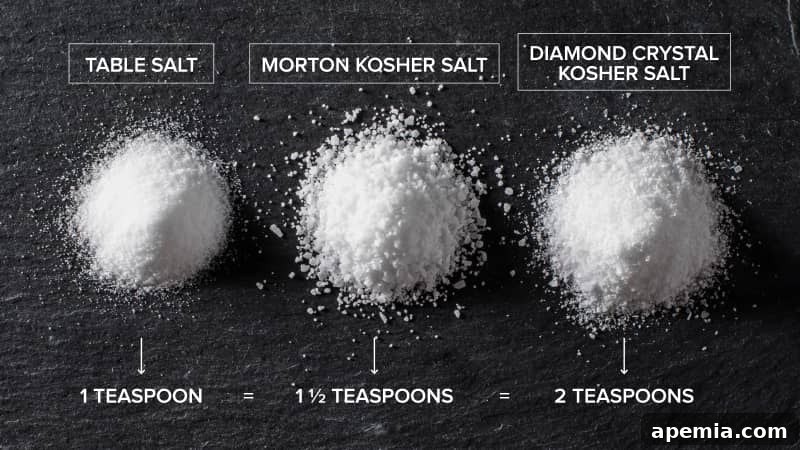
Substituting table salt for kosher salt, or vice versa, requires careful consideration due to their significant differences in crystal size and density. Table salt’s fine, compact grains mean it is much denser by volume than the larger, flakier crystals of kosher salt. This directly translates to varying levels of salinity per spoonful.
As a general guideline, if a recipe calls for table salt and you’re using kosher salt, you’ll need to use more kosher salt by volume to achieve the same level of salinity. Conversely, if a recipe specifies kosher salt and you’re using table salt, you’ll need to use less table salt.
A commonly accepted conversion rule of thumb is as follows:
- 1 part Table Salt = 1½ parts Morton Kosher Salt
- 1 part Table Salt = 2 parts Diamond Crystal Kosher Salt
For example, if a recipe calls for 1 teaspoon of table salt, you would use approximately 1.5 teaspoons of Morton kosher salt or 2 teaspoons of Diamond Crystal kosher salt. However, it’s crucial to remember that these are approximations. The most reliable method, especially for those new to these conversions or for critical recipes, is to weigh the salt (if possible) or to add it gradually and taste as you go. Personal preference for saltiness also plays a significant role, so always adjust to your palate.
Chefs worldwide overwhelmingly favor kosher salt for a combination of practical, aesthetic, and flavor-related reasons that elevate their culinary creations. The preference stems from several key attributes:
- Superior Control and Tactile Feedback: The larger, irregular crystals of kosher salt are easier to pick up between the fingers. This tactile control allows chefs to “feel” how much salt they are adding, enabling more precise and even seasoning across a dish. It’s a fundamental aspect of intuitive cooking, much like a painter feeling the texture of their brushstrokes.
- Pure Flavor Profile: Unlike most table salts, kosher salt typically contains no iodine or anti-caking agents. This absence of additives ensures a clean, pure salt taste that enhances the natural flavors of ingredients without introducing any metallic or chemical aftertastes. This purity is vital for allowing other delicate flavors to shine through.
- Versatility in Applications: Its crystal structure makes it incredibly versatile. It’s excellent for seasoning meat, creating brines and rubs, and adding to cooking liquids. The moderate dissolution rate means it seasons gradually, allowing for adjustments.
- Texture and Presentation: The flaky crystals provide a subtle textural crunch when used as a finishing salt, adding another dimension to a dish. It adheres well to food surfaces, ensuring even seasoning.
- Even Dispersion: The irregular flakes tend to disperse more evenly over food surfaces compared to fine grains, leading to a more consistent flavor profile in every bite.
In essence, kosher salt empowers chefs with greater control, delivers a purer flavor, and offers versatility that is invaluable in a professional kitchen, contributing to consistently delicious and perfectly seasoned food.
While both kosher salt and pickling salt share the crucial characteristic of being free from iodine and anti-caking agents – which can cause discoloration or cloudiness in preserved foods – they are not entirely interchangeable for all applications, particularly when it comes to their primary intended uses.
- Pickling Salt: This salt is specifically engineered for pickling and canning. Its defining feature is its extremely fine grain. This fine texture allows it to dissolve rapidly and completely in pickling liquids, ensuring a perfectly clear brine that won’t obscure the vibrant colors of your pickled fruits or vegetables. The purity and quick dissolution are paramount for producing shelf-stable, visually appealing preserves.
- Kosher Salt: While also free of additives, kosher salt’s crystals are significantly larger and flakier than pickling salt. These larger flakes are excellent for drawing moisture out of ingredients (like in the koshering process or for curing), seasoning meats, and flavoring cooking water (such as for pasta), where quick dissolution isn’t necessarily the top priority. However, if used in pickling, its larger crystals might take longer to dissolve and could potentially lead to a slightly less clear brine, depending on the specific brand and dissolution time allowed.
In summary, while you might be able to use kosher salt in a pinch for pickling if no other additive-free salt is available, pickling salt is the superior choice for preserving due to its fine grain and guaranteed clear brine. Kosher salt shines in general cooking, seasoning, and brining applications where its larger, controllable flakes are a distinct advantage.
Yes, you can generally substitute sea salt for kosher salt, but it requires careful consideration of crystal size, density, and potential flavor nuances. Not all sea salts are created equal in terms of texture and salinity.
- Crystal Size and Density: Like the comparison between table and kosher salt, the crystal size of sea salt varies greatly. Fine-grain sea salt will be denser than flaky sea salt. If you’re using a coarse or flaky sea salt, you’ll likely need to use more by volume than the recipe’s specified amount of kosher salt to achieve the same level of saltiness. Conversely, if you’re using a very fine sea salt, you might need slightly less.
- Flavor Profile: Sea salts often contain trace minerals that can impart subtle flavor differences compared to the pure saline taste of kosher salt. While these differences are usually mild and can even enhance a dish, it’s something to be aware of, especially in delicate recipes where the salt’s flavor might come through more prominently.
- Additives: Most pure sea salts, like kosher salt, are free of iodine and anti-caking agents, making them a good choice for substitution in that regard. However, always check the label to be sure.
Best Practice: When substituting, it’s always best to start with a slightly smaller amount of sea salt than the recipe calls for with kosher salt, then taste and adjust. This approach allows you to control the salinity precisely and account for any textural or flavor differences. For finishing dishes, coarse sea salt can be a wonderful substitute, offering a beautiful crunch and briny burst.
Understanding the unique properties of each salt type empowers you to make informed decisions in the kitchen, transforming simple ingredients into extraordinary culinary experiences. Whether you’re a seasoned chef or a home cooking enthusiast, mastering the art of salt selection is a fundamental step toward achieving perfectly balanced and delicious dishes every time.