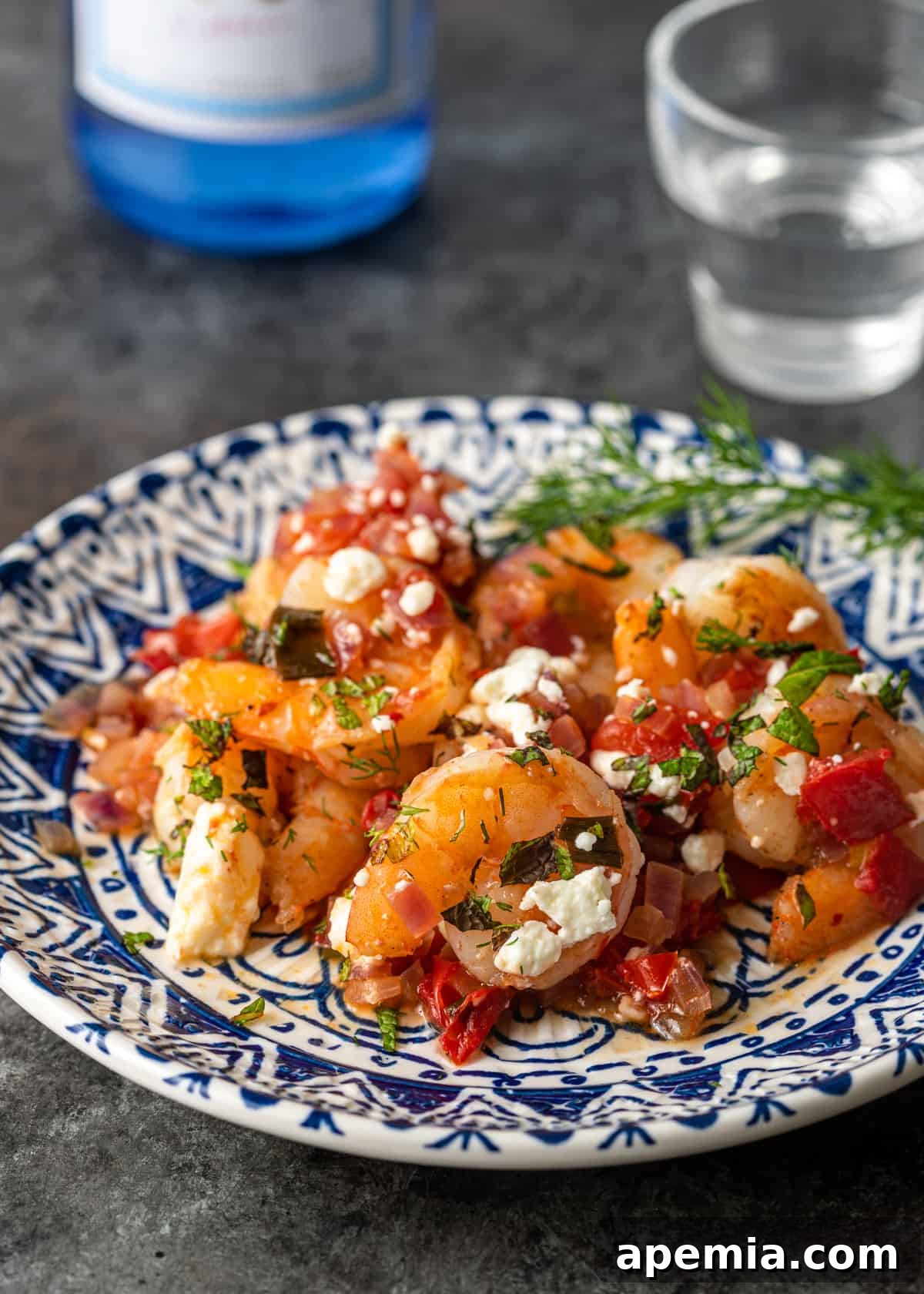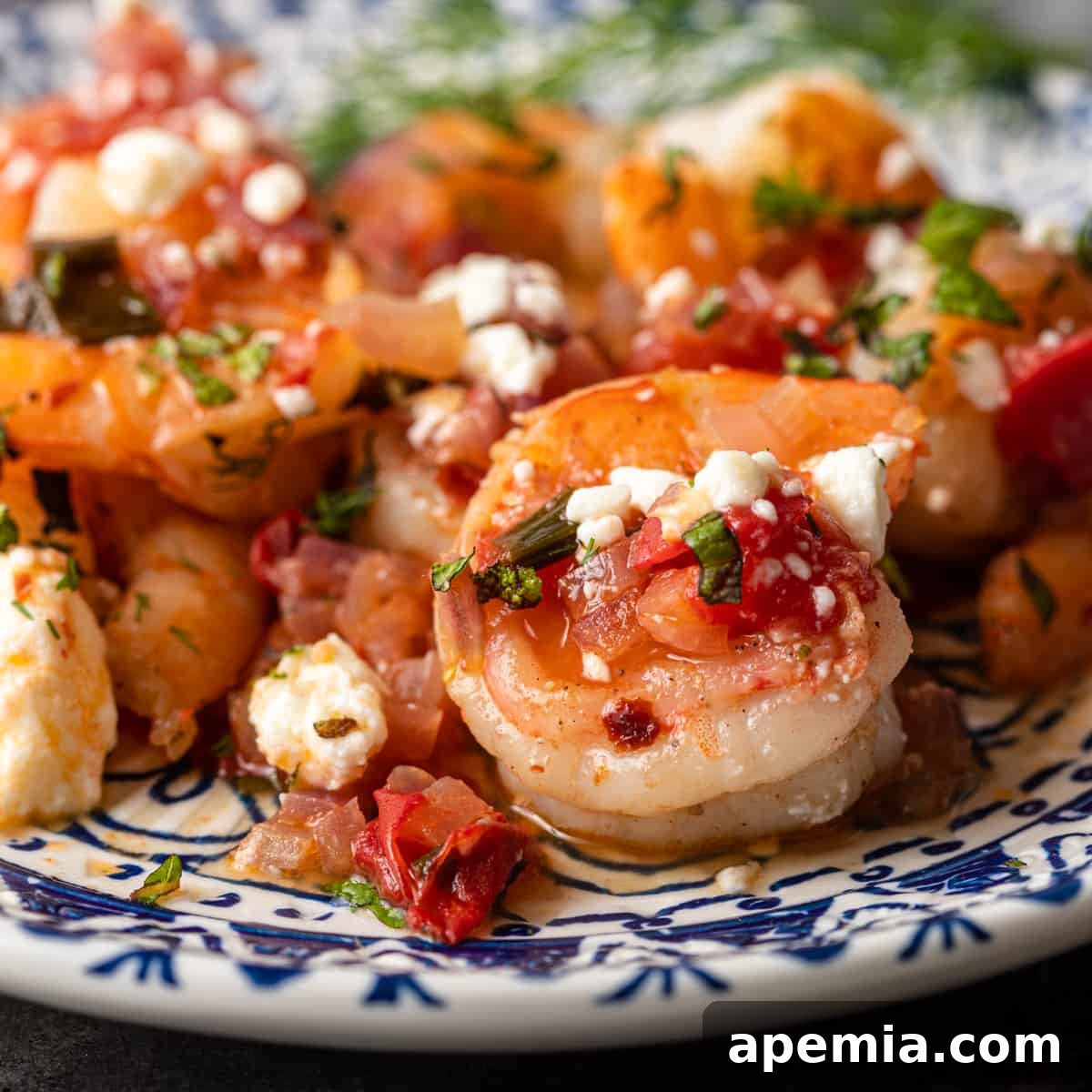
Prepare an authentic Greek Shrimp Saganaki in under 25 minutes with this incredibly simple and delicious recipe! This vibrant dish brings together fresh, succulent shrimp, rich and gooey feta cheese, sweet tomatoes, fragrant mint and dill, and a touch of ouzo – the traditional anise liqueur that elevates the flavors and ties everything into a harmonious Mediterranean masterpiece.
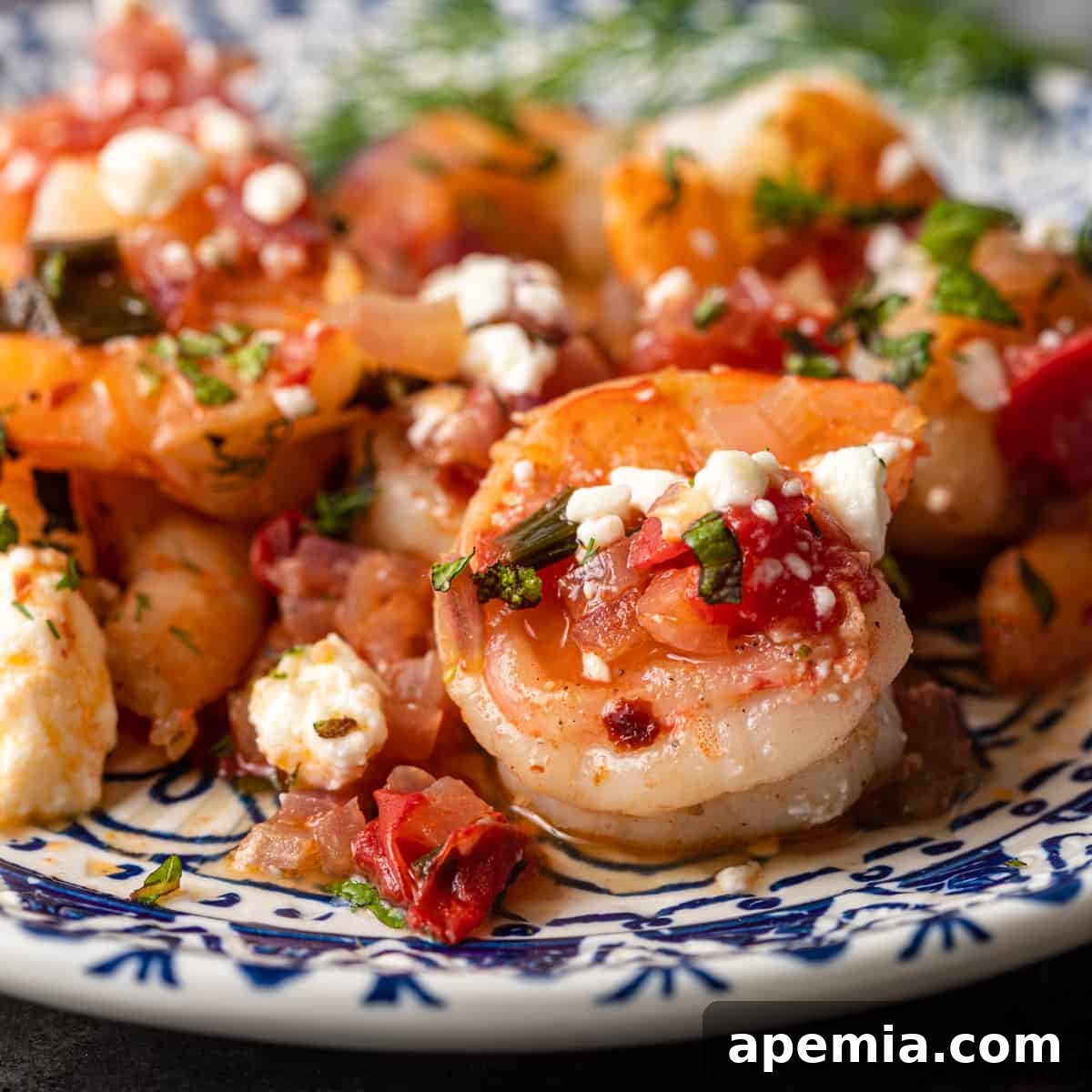
My passion for Mediterranean food is boundless, especially as the days grow longer and the weather warms. This celebrated cuisine is a testament to fresh, whole ingredients and bright, invigorating flavors, making it the quintessential choice for spring and summer dining. It’s a culinary journey that promises both deliciousness and health benefits, rooted in ancient traditions and a love for local produce.
Shrimp Saganaki stands out as a prime example of this philosophy. It’s a dish where fresh seafood, perfectly ripe tomatoes, aromatic herbs, and savory onions simmer together, often with a subtle kick of spice. The beauty of this saucy delight lies in its speed – you can whip up this impressive meal in less than 25 minutes, meaning more precious time spent at the dinner table, savoring moments with friends and family, and less time fussing over the stove.
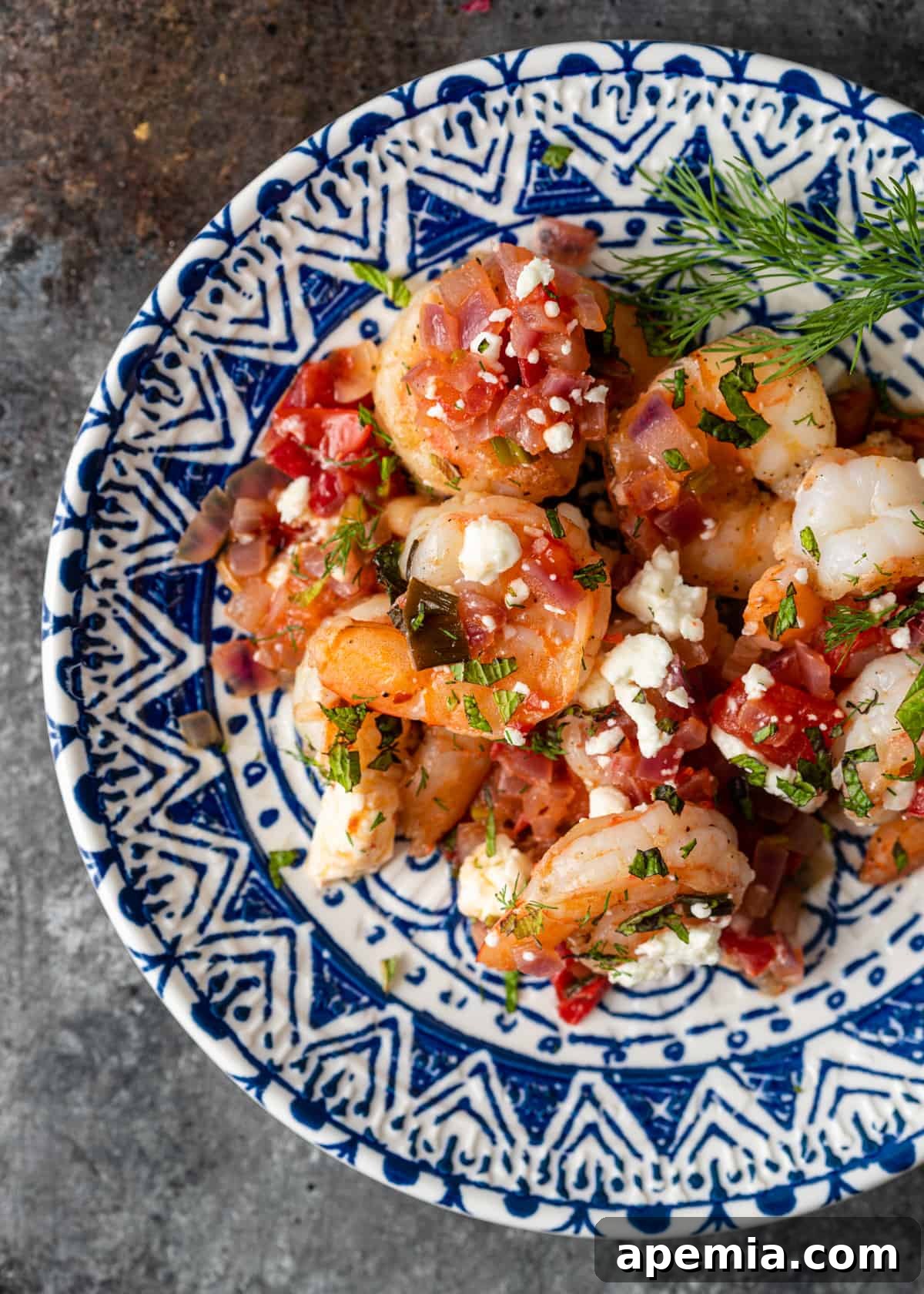
Table of Contents
- Why You’ll Love This Shrimp Saganaki
- The Story Behind Saganaki
- Ingredient Notes and Substitutions
- Exploring Ouzo and Its Alternatives
- How to Make Shrimp Saganaki
- Expert Tips for the Perfect Saganaki
- Recommended Tools
- Storing and Reheating
- Frequently Asked Questions
- Greek Shrimp Saganaki Recipe
- Serving Suggestions for Shrimp Saganaki
Why You’ll Love This Shrimp Saganaki
There are countless reasons to fall in love with this Greek Shrimp Saganaki recipe. Beyond its incredible speed, taking less than half an hour from start to finish, it’s a dish that truly delivers on flavor and experience. Here’s why it will become a regular in your rotation:
- Explosive Mediterranean Flavors: Every bite bursts with the essence of Greece – plump shrimp, rich tomato sauce, savory onions, and a refreshing blend of herbs, all brightened by the unique touch of ouzo.
- Quick & Easy: Perfect for busy weeknights or impromptu gatherings, this recipe proves that gourmet-tasting meals don’t require hours in the kitchen. The active cooking time is minimal, allowing you to enjoy your evening.
- Healthy & Wholesome: Packed with lean protein from shrimp, vitamins from fresh vegetables, and healthy fats from olive oil, it aligns perfectly with the renowned health benefits of the Mediterranean diet.
- Versatile Serving Options: Whether you’re looking for a light main course, an impressive appetizer, or a vibrant side dish, Shrimp Saganaki adapts beautifully to any meal context.
- Crowd-Pleaser: The irresistible combination of sweet, savory, and tangy notes, coupled with the creamy melted feta, makes this dish universally appealing. It’s guaranteed to impress your guests!
The Story Behind Saganaki
The term “saganaki” refers not to a specific ingredient, but to the small, two-handled frying pan in which the dish is traditionally cooked. This unique cooking vessel, often ceramic or copper, gives the dish its name and is central to its preparation. While many outside Greece associate saganaki solely with the famous flaming cheese dish, it is in fact a category that encompasses a variety of pan-fried appetizers or main courses cooked in this distinct manner.
Shrimp saganaki (Garides Saganaki) is one of the most beloved variations, showcasing Greece’s abundant seafood. It embodies the simplicity and fresh flavors characteristic of Greek island cuisine, where ingredients are often local and minimally processed. The combination of tomatoes, herbs, and feta with fresh seafood has been a staple for centuries, reflecting a diet rich in nature’s bounty.
Serving Suggestions for Shrimp Saganaki
This succulent shrimp saganaki recipe is incredibly versatile and pairs wonderfully with a variety of accompaniments. It can easily serve as a light and satisfying main course or an impressive appetizer for a larger spread. Consider these delightful pairings:
- Fresh Salads: A crisp salad provides a refreshing counterpoint to the rich tomato sauce. A traditional Greek feta salad, with its vibrant mix of cucumbers, tomatoes, olives, and bell peppers, is an ideal match. You could also opt for a simple green salad with a lemon-herb vinaigrette.
- Crusty Bread or Pita: Don’t let a single drop of that incredible tomato and feta sauce go to waste! Serve with generous slices of warm, crusty pita bread or a rustic artisan loaf for dipping. The bread soaks up the flavorful juices beautifully.
- Roasted Potatoes: For a more substantial meal, consider serving alongside Greek roasted potatoes, seasoned with lemon, oregano, and olive oil. Their soft interior and crispy exterior provide a comforting texture contrast.
- Rice Pilaf or Orzo: A simple rice pilaf or a light orzo pasta dish can be an excellent base, absorbing the savory sauce and making the meal even more filling.
- Other Small Plates: As part of a mezze (small plate) spread, saganaki shines. Offer it alongside dishes like fried squash patties (kolokithokeftedes), hummus, tzatziki, or marinated olives for a true Greek feast.
- Wine Pairing: A crisp, dry white wine like Assyrtiko from Santorini, a Sauvignon Blanc, or even a light-bodied rosé would complement the seafood and tomato flavors beautifully.
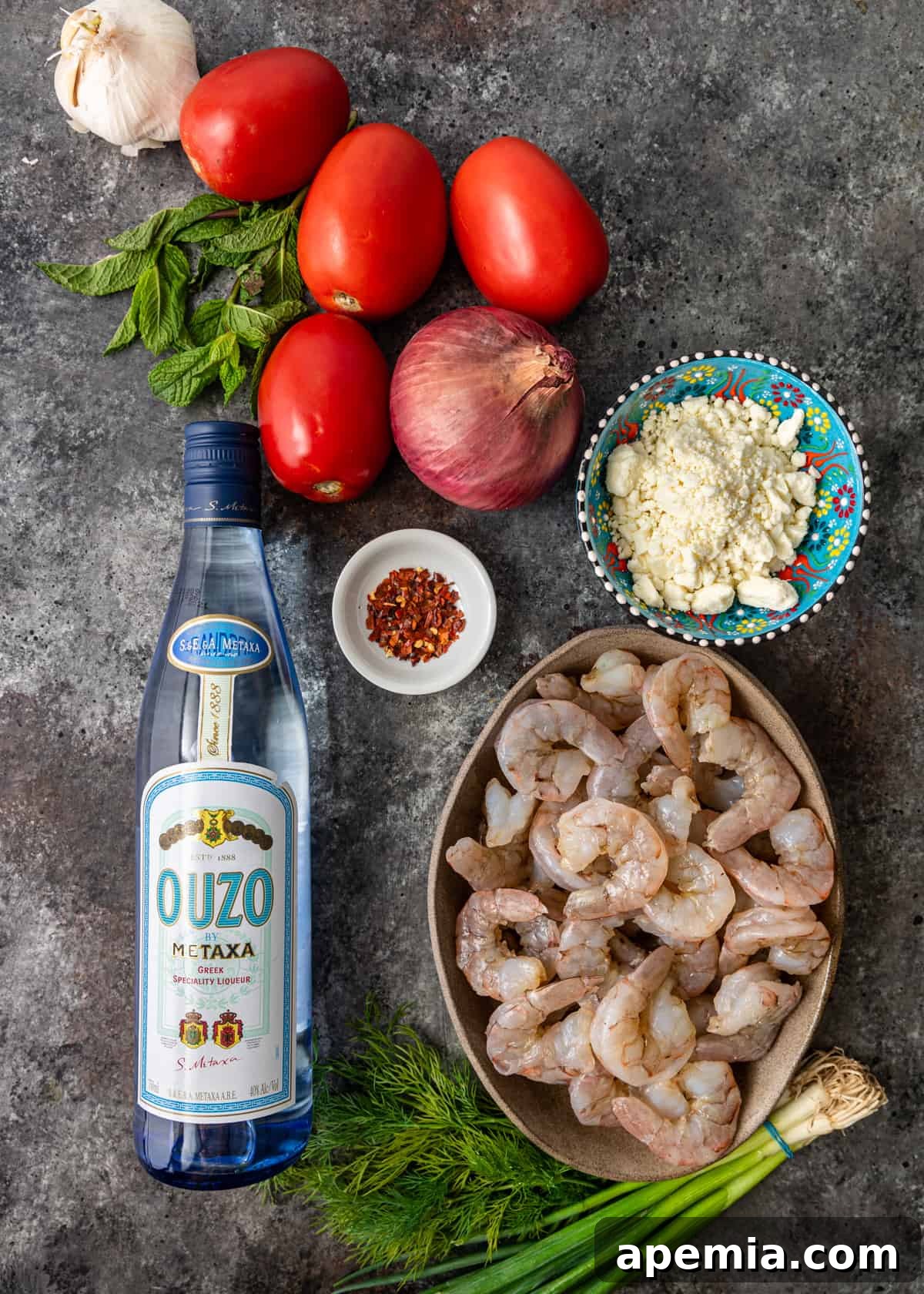
Ingredient Notes and Substitutions
(For precise measurements and quantities, please refer to the complete recipe card below)
- Shrimp: For the best results, select 26/30-count shrimp, which are medium-large in size and cook evenly. You can certainly use frozen shrimp; just remember to transfer them to the refrigerator the night before to allow for a slow, proper thaw. Avoid flash-thawing with hot water, as this can negatively impact the texture of the shrimp. Ensure they are peeled and deveined for convenience.
- Greek Ouzo (Optional, but Recommended): This anise-flavored liqueur is the secret ingredient that truly sets this saganaki apart. Its distinctive licorice flavor adds a subtle complexity and aroma that is traditionally Greek. It’s used to deglaze the pan, helping to lift up any browned bits from the shrimp, intensifying the overall flavor profile. If ouzo is unavailable or you prefer a non-alcoholic option, dry white wine or white wine vinegar can be used for deglazing, though they won’t replicate the unique anise note. For a similar flavor, a tiny pinch of crushed fennel or anise seeds can be added to the sauce.
- Red Onion: Red onions contribute a wonderful sharpness and spicy undertone that complements seafood beautifully. They become sweet and mellow as they cook down in the sauce.
- Green Onions: While not strictly essential for the base flavor, green onions offer a delicate freshness and a mild oniony bite. Added at the end, they brighten the sauce and add a lovely visual appeal.
- Garlic: Freshly minced garlic is a cornerstone of Mediterranean cooking, providing an indispensable aromatic foundation for the tomato sauce. Two cloves, or approximately one teaspoon, will infuse the sauce with robust flavor.
- Roma Tomatoes: Known for their meaty texture and lower water content, Roma tomatoes are ideal for creating a rich, concentrated sauce. Their natural sweetness balances the savory elements. If Romas are not available, other meaty plum tomatoes like San Marzano or Amish Paste can be excellent substitutes.
- Red Chili Flakes: A touch of red chili flakes adds a pleasant warmth and depth, characteristic of many traditional saganaki dishes. Adjust the quantity to your personal preference; if you enjoy a spicier kick, feel free to be generous.
- Fresh Herbs: Dill and mint are the heroes here, providing that unmistakable, vibrant Greek aroma and flavor. Their fresh, pungent notes elevate the dish. If these aren’t your favorites, or you’re looking for an alternative, fresh parsley, oregano, or even a hint of thyme can be used, though the flavor profile will differ slightly.
- Feta Cheese: Crumbled feta cheese is paramount, melting into gooey pockets of salty, tangy goodness. It provides a creamy texture and iconic Greek flavor. If you’re seeking a substitute, a robust goat cheese could work, offering a stronger, creamier alternative, but be mindful of its more intense flavor.
Tip From Kevin
Exploring Ouzo and Its Alternatives
Ouzo is more than just an ingredient; it’s a cultural icon in Greece, an anise-flavored aperitif traditionally enjoyed diluted with water or over ice. Its strong, distinctive licorice taste is due to the dominant presence of anise. When added to savory dishes like saganaki, it provides a unique aromatic depth and a subtle hint of its characteristic flavor, making the dish truly authentic.
A good substitute largely depends on whether you’re trying to replicate the anise flavor, the deglazing action, or both. Here are some alternatives:
- For Anise Flavor:
- Pernod (France): A popular French pastis, very similar to ouzo in its strong anise flavor, though often slightly sweeter.
- Sambuca (Italy): An Italian anise-flavored liqueur, typically sweeter and sometimes infused with elderflower.
- Arak (Middle East): A clear, unsweetened anise-flavored distilled alcoholic drink. It’s less sweet than ouzo or sambuca.
- Raki (Turkey): Another potent anise-flavored spirit from Turkey, often confused with ouzo but distinct in its production and serving traditions.
- For Deglazing (Non-alcoholic):
- White Wine Vinegar: Excellent for lifting browned bits from the pan and adding a touch of acidity, though it won’t contribute the anise flavor.
- Vegetable Broth: A mild option for deglazing, adding moisture without altering the flavor profile significantly.
- For Anise Flavor (Non-alcoholic):
- Fennel or Anise Seeds: A very small pinch of crushed fennel or anise seeds (about ⅛ teaspoon) can be added to the sauce along with other spices to impart a subtle licorice note without the alcohol. Be cautious, as too much can overpower the dish.
Ultimately, while substitutes exist, ouzo offers a singular character to Shrimp Saganaki that is hard to fully replicate. Its subtle addition truly elevates the dish to its authentic Greek glory.
How to Make Shrimp Saganaki
Creating this flavorful Greek Shrimp Saganaki is a straightforward process, broken down into a few simple steps. Follow these instructions to achieve a perfect, restaurant-quality dish:
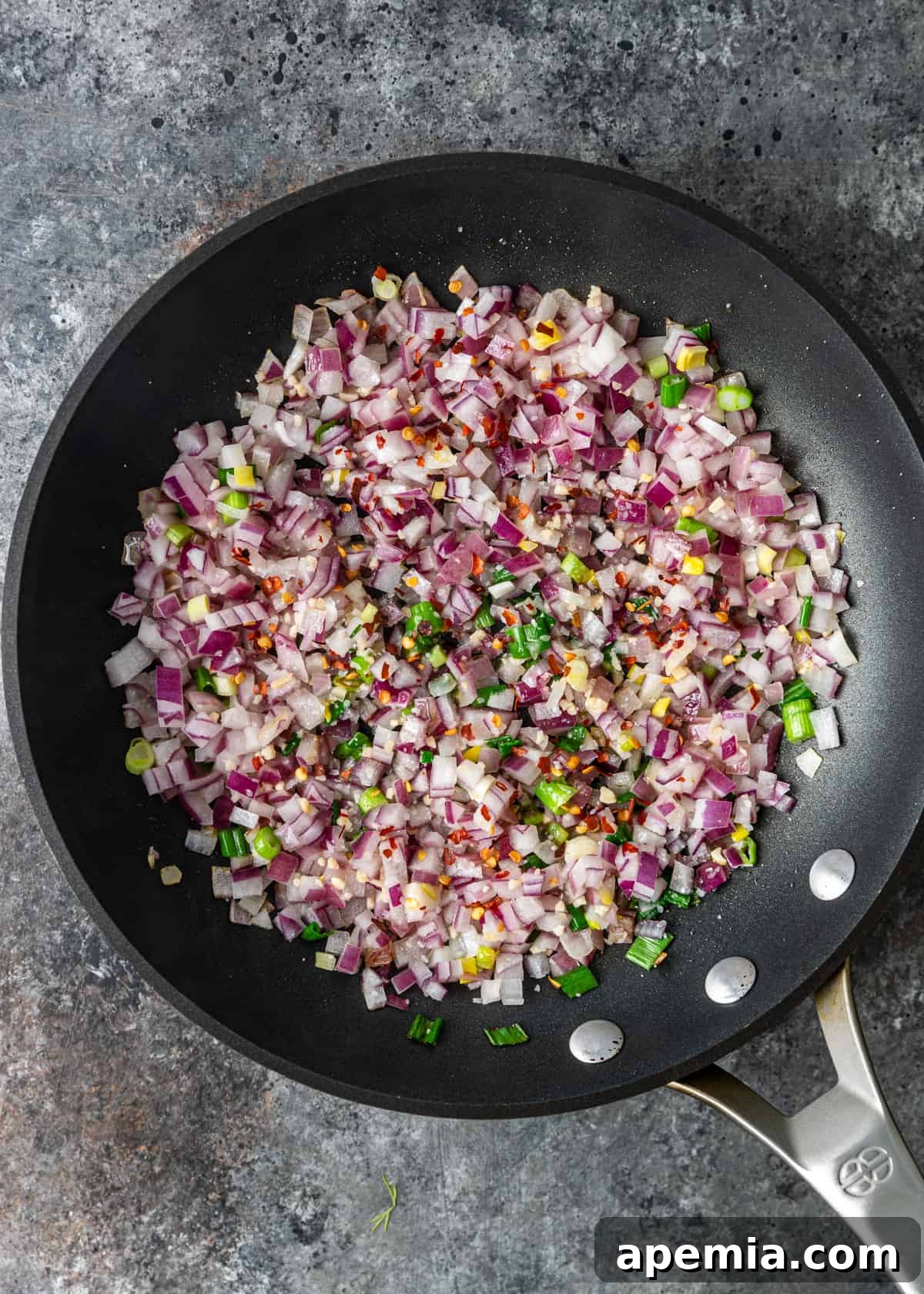
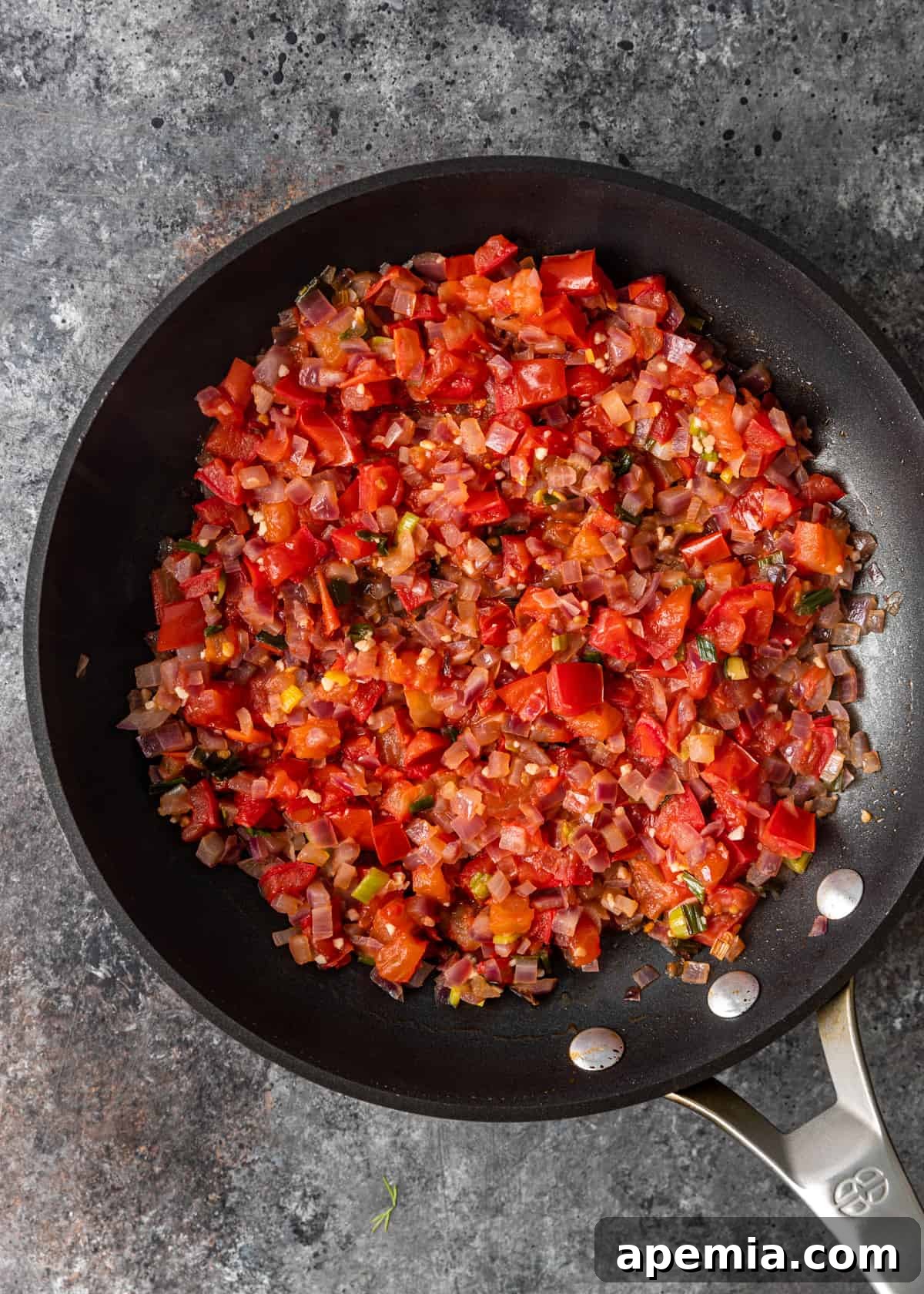
- Begin with the Sauce: Heat 1 tablespoon of olive oil in a medium skillet over medium heat. Add the finely diced red onions and sauté gently for about 2-3 minutes until they begin to soften and become translucent, releasing their sweet aroma. Next, add the minced garlic, kosher salt, and red chili flakes, stirring constantly for another minute until fragrant. Pour in the diced Roma tomatoes, stir well to combine, and bring the mixture to a gentle simmer. Cover the skillet, reduce the heat to low, and allow the sauce to cook for 5 minutes, allowing the flavors to meld beautifully. This is the perfect time to start preparing your shrimp!
- Prepare the Shrimp: While your flavorful tomato sauce is simmering, quickly prepare your shrimp. Ensure the shrimp are fully peeled and deveined. Rinse them under cold water to remove any impurities, then thoroughly pat them dry with paper towels. This crucial step helps ensure a better sear and prevents the shrimp from steaming. Season the shrimp generously with kosher salt and freshly ground black pepper.
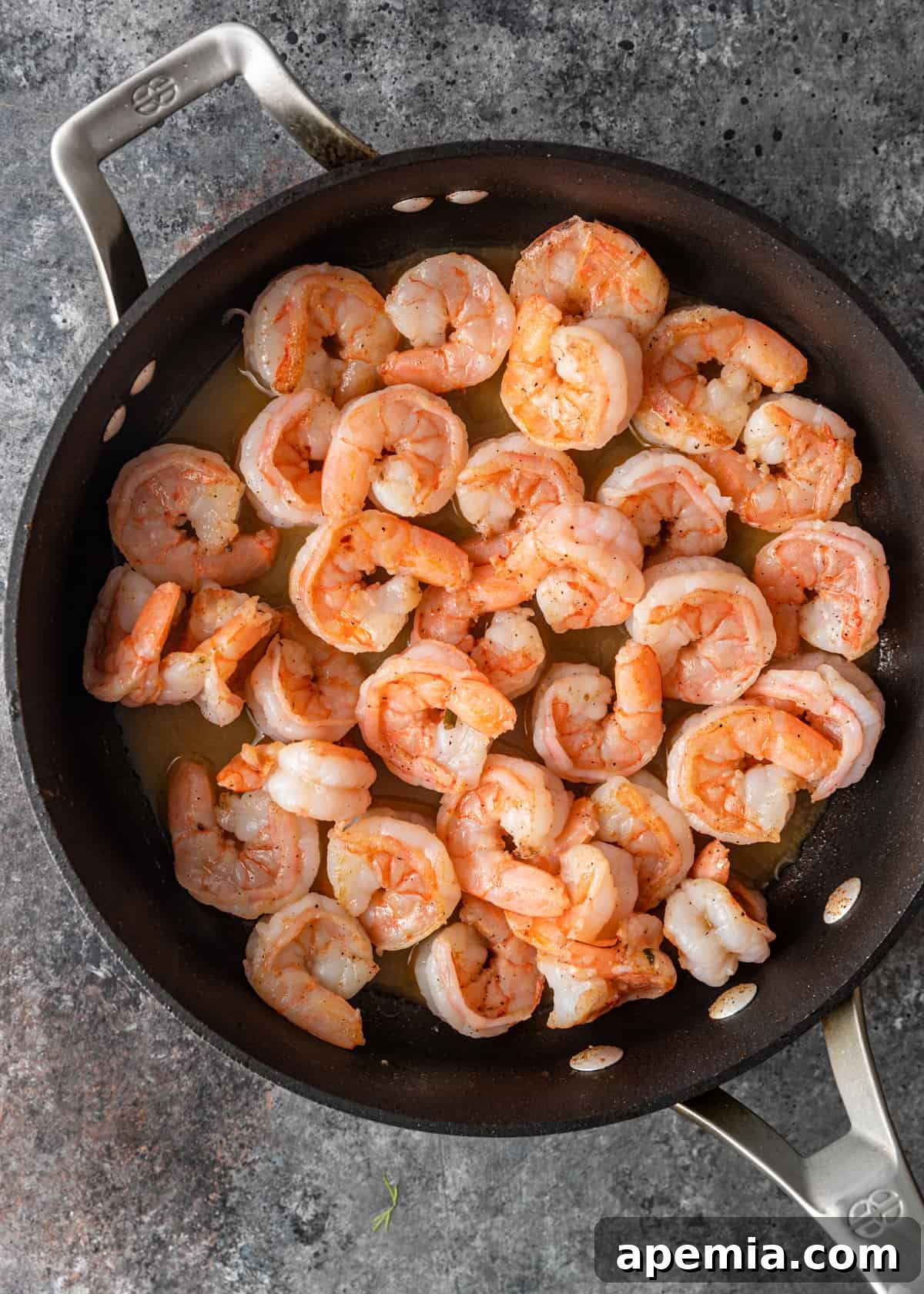
- Cook the Shrimp to Perfection: In a separate large skillet, heat 3 tablespoons of olive oil over high heat until it shimmers. Add the seasoned shrimp in a single layer, being careful not to overcrowd the pan (cook in batches if necessary). Sear the shrimp for just one minute per side until they turn pink and opaque. Shrimp cook very quickly, and overcooking can lead to a rubbery texture, so keep a close eye on them. If you’re using ouzo, now is the time to pour it into the hot pan to deglaze, scraping up any browned bits from the bottom to capture all that incredible flavor.
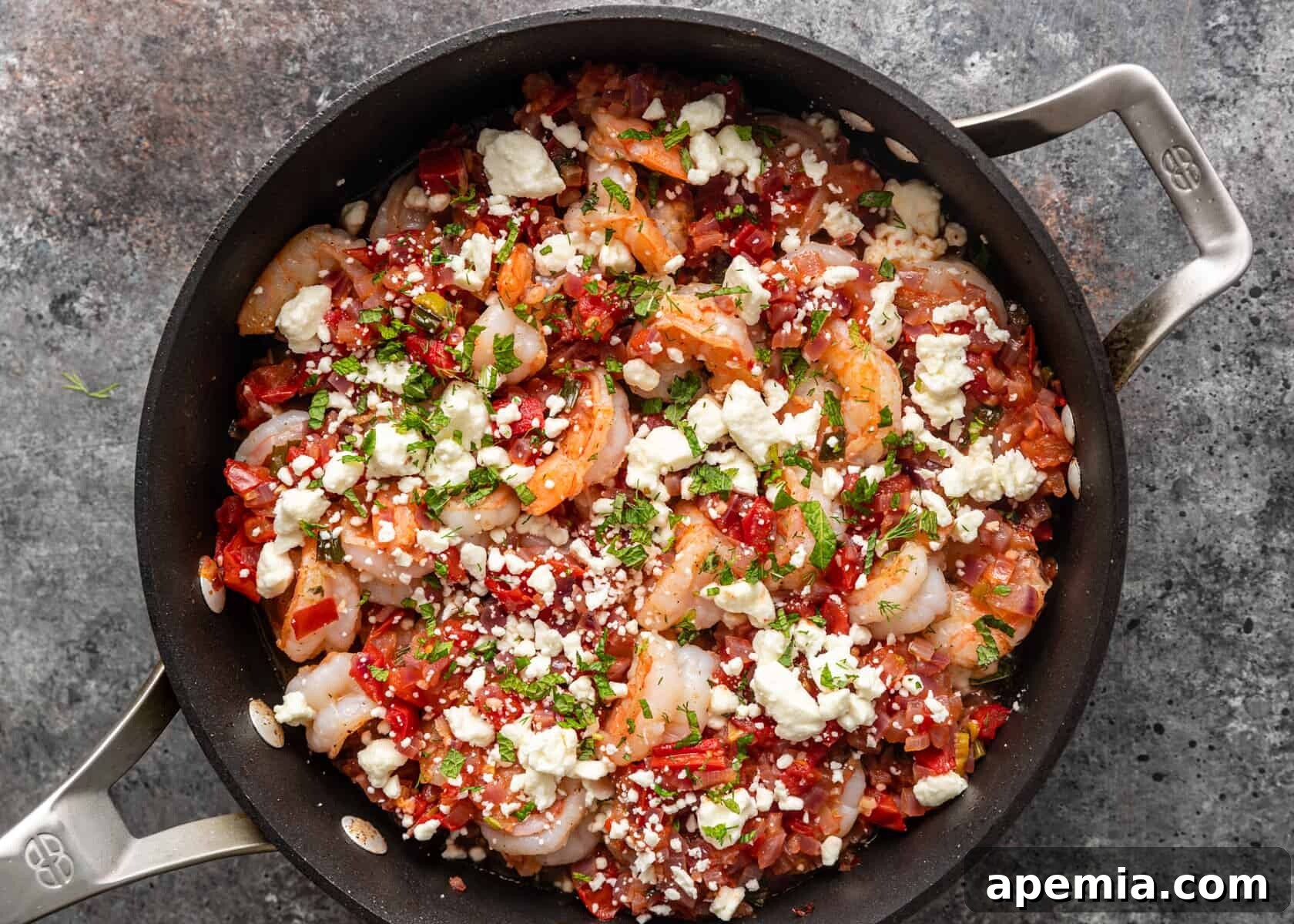
- Combine and Finish the Dish: Carefully spoon the simmering tomato sauce from the first skillet over the cooked shrimp in the second skillet. Sprinkle the fresh chopped mint and dill, along with the crumbled feta cheese, evenly over the top. Cover the skillet and reduce the heat to low. Allow it to simmer for just 2-3 minutes, or until the feta cheese is wonderfully melted and gooey, enveloping the shrimp in its creamy richness.
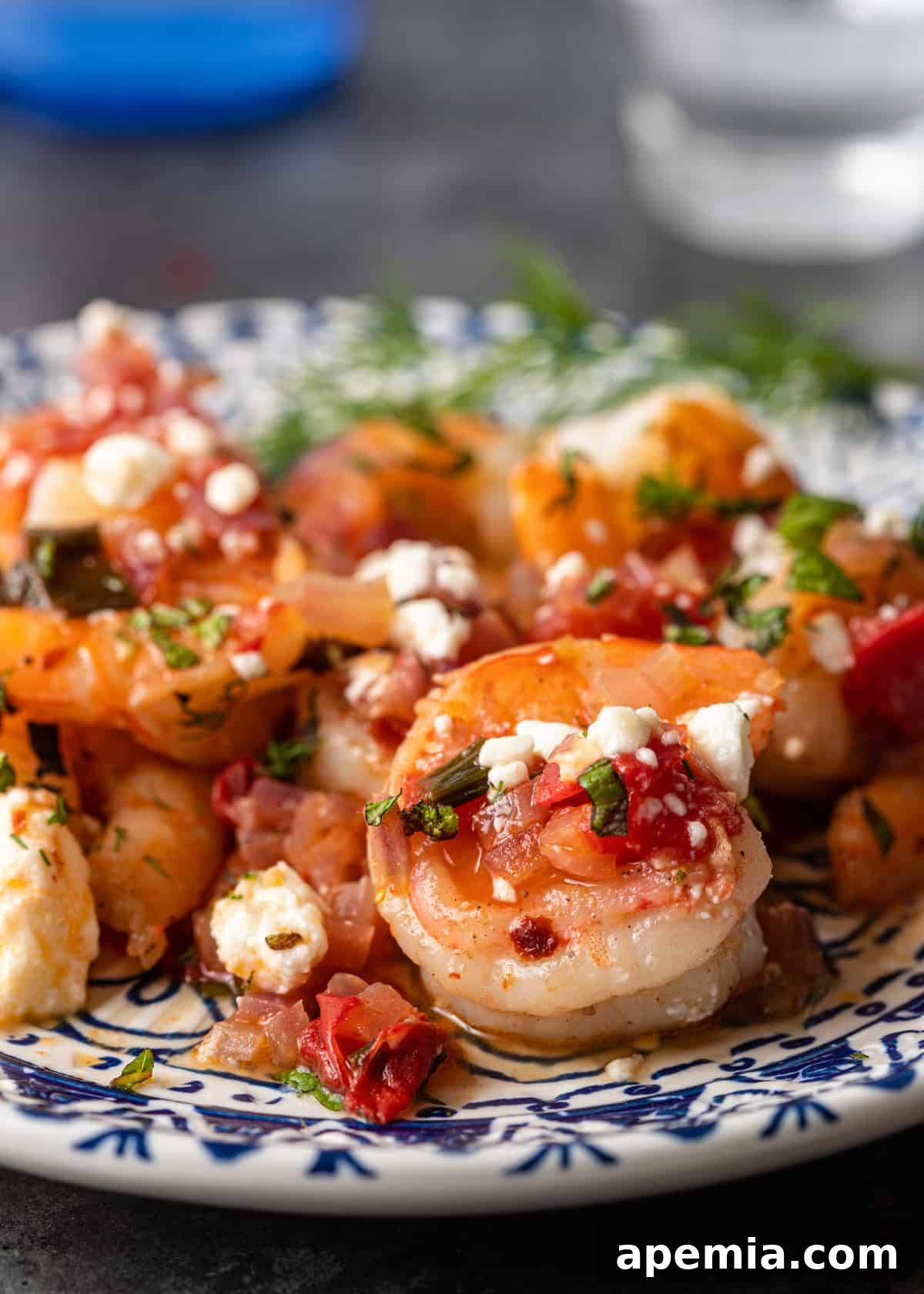
- Serve Immediately: As soon as the feta is melted and bubbly, your Greek Shrimp Saganaki is ready! Serve it hot, straight from the pan, or transfer it to individual plates. Garnish with a few extra fresh herbs and a final sprinkle of feta for a burst of color and flavor. Enjoy this exquisite Mediterranean delight!
Expert Tips for the Perfect Saganaki
Achieving a truly exceptional Shrimp Saganaki is simple with a few key techniques. Here are some expert tips to ensure your dish is perfect every time:
- Don’t Overcook the Shrimp: This is the golden rule for any shrimp dish. Shrimp cooks incredibly fast. Once they turn pink and opaque, they’re done. Overcooking leads to a tough, rubbery texture. A minute per side is usually sufficient for medium-large shrimp.
- Pat Shrimp Dry: Before seasoning and cooking, always pat your shrimp thoroughly dry with paper towels. Excess moisture will steam the shrimp instead of searing them, preventing that desirable browned exterior and proper flavor development.
- Use Good Quality Olive Oil: As with much of Mediterranean cooking, olive oil is a foundational flavor. Use a good quality extra virgin olive oil for both sautéing the vegetables and cooking the shrimp for the best taste.
- Fresh Herbs Make a Difference: While dried herbs can be used in a pinch, fresh mint and dill are truly transformative in this dish. Their bright, vibrant flavors are essential for the authentic Greek taste.
- Don’t Skip the Ouzo (if possible): While optional, ouzo adds a unique depth and aromatic complexity that is difficult to replicate. The subtle anise note elevates the dish from good to exceptional. If you choose to use it, ensure it’s added to a hot pan to allow the alcohol to cook off quickly, leaving only the flavor.
- Balance the Heat: The red chili flakes add a nice warmth. Taste your sauce before adding the shrimp and adjust the chili flakes to your preferred spice level.
- Serve Immediately: Saganaki is best enjoyed fresh off the stove while the feta is still warm and gooey and the shrimp are tender.
Recommended Tools
Having the right kitchen tools can make the preparation of your Shrimp Saganaki even smoother and more enjoyable:
- Medium Skillet (for sauce): I prefer a skillet over a saucepan for making the sauce. Its wider surface area allows for better evaporation of liquids, resulting in a more concentrated and flavorful tomato sauce.
- Large Skillet (for shrimp and combining): Choose a skillet that is wide enough to cook the shrimp in a single layer without overcrowding. It also needs to be deep enough to comfortably hold the shrimp and sauce once combined. Cast iron or a good quality non-stick skillet works well.
- Sharp Chef’s Knife: Essential for efficiently dicing onions, garlic, and tomatoes, and chopping fresh herbs.
- Cutting Board: A sturdy cutting board will provide a stable surface for all your chopping needs.
- Measuring Cups and Spoons: For accurate ingredient measurements, ensuring the perfect balance of flavors.
- Wooden Spoon or Spatula: Ideal for sautéing and stirring without scratching your skillet.
Storing and Reheating
If you happen to have any leftovers of this delicious Shrimp Saganaki, proper storage and reheating are key to maintaining its quality:
Storing: Allow the shrimp saganaki to cool completely to room temperature before transferring it to an airtight container. Store it in the refrigerator for up to 3-4 days. For optimal freshness and safety, avoid leaving it out at room temperature for more than two hours.
Reheating: Reheating shrimp can be tricky, as it tends to overcook and become rubbery very easily. To best preserve the tender texture of the shrimp, I recommend reheating leftovers gently on the stovetop. Place the saganaki in a skillet over very low heat. Add a splash of water or vegetable broth if the sauce seems too thick or dry. Cover the skillet and allow it to simmer gently, stirring occasionally, until it is warmed through. Avoid high heat, as this will toughen the shrimp quickly. You can also microwave individual portions on a low setting for short bursts, stirring in between, until heated through, but the stovetop method generally yields better results.