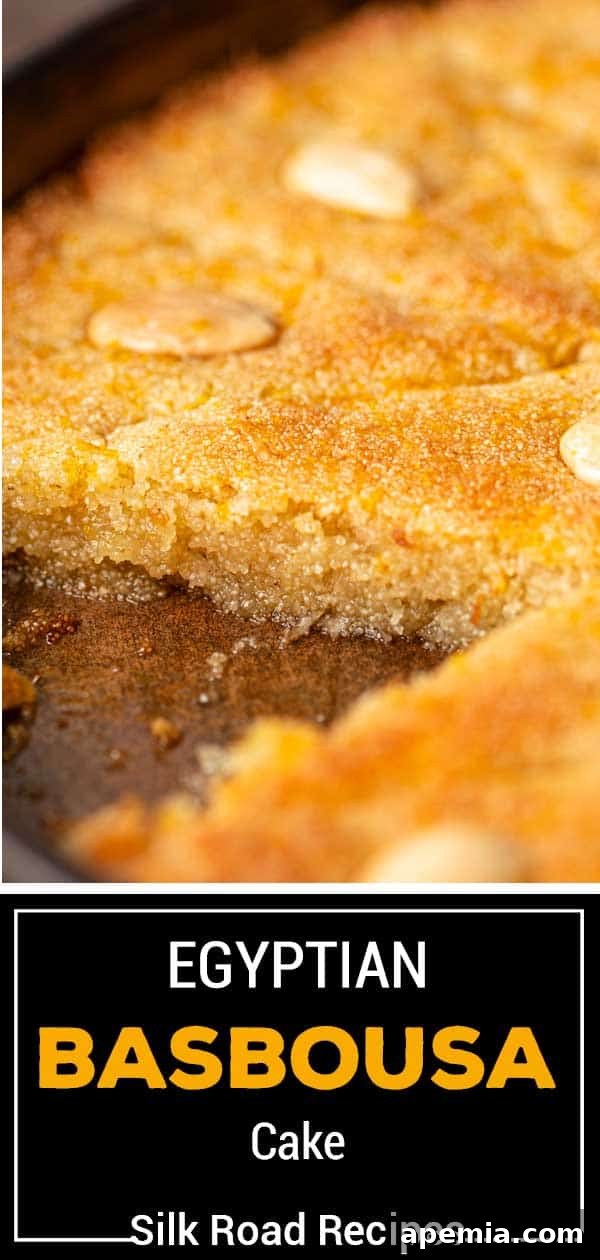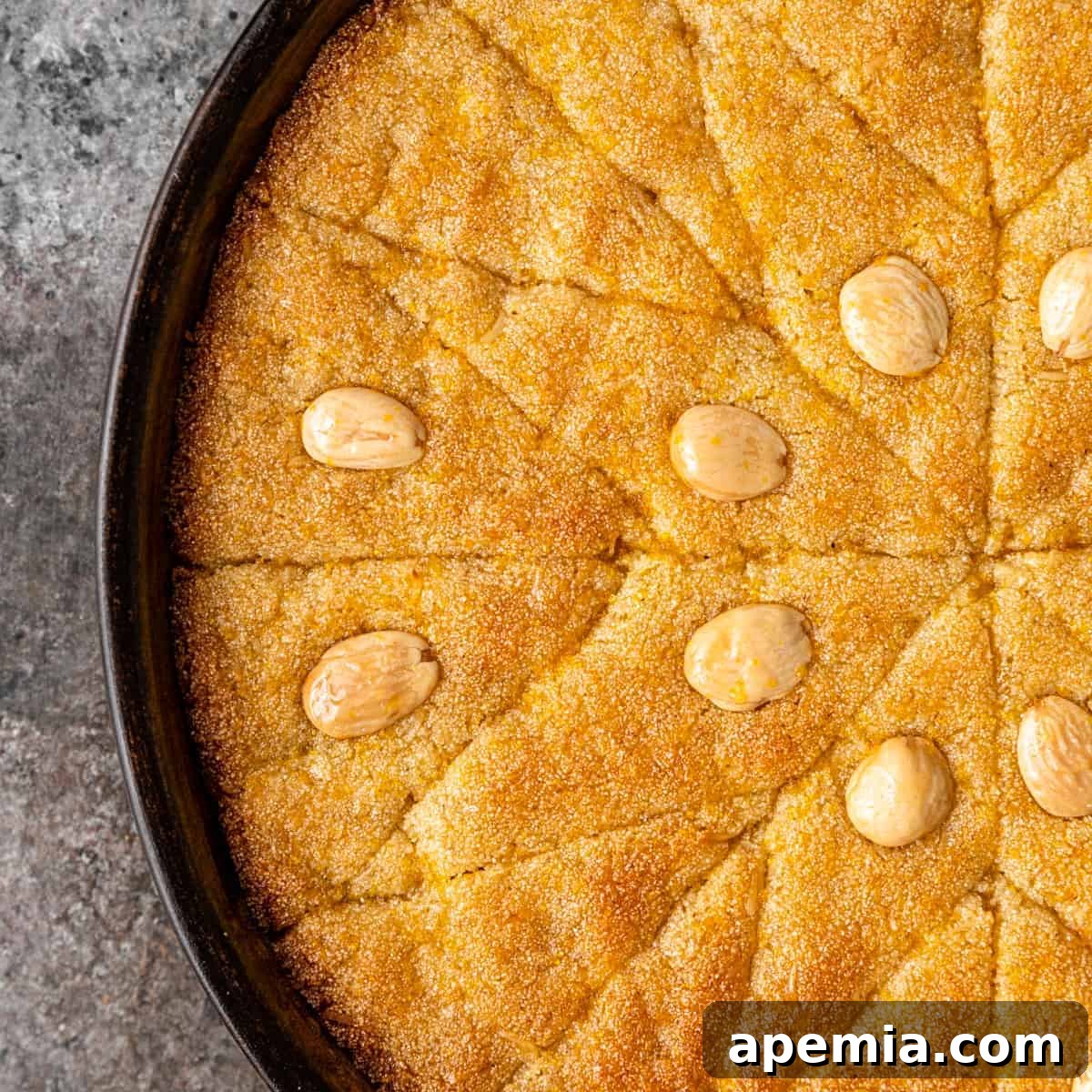
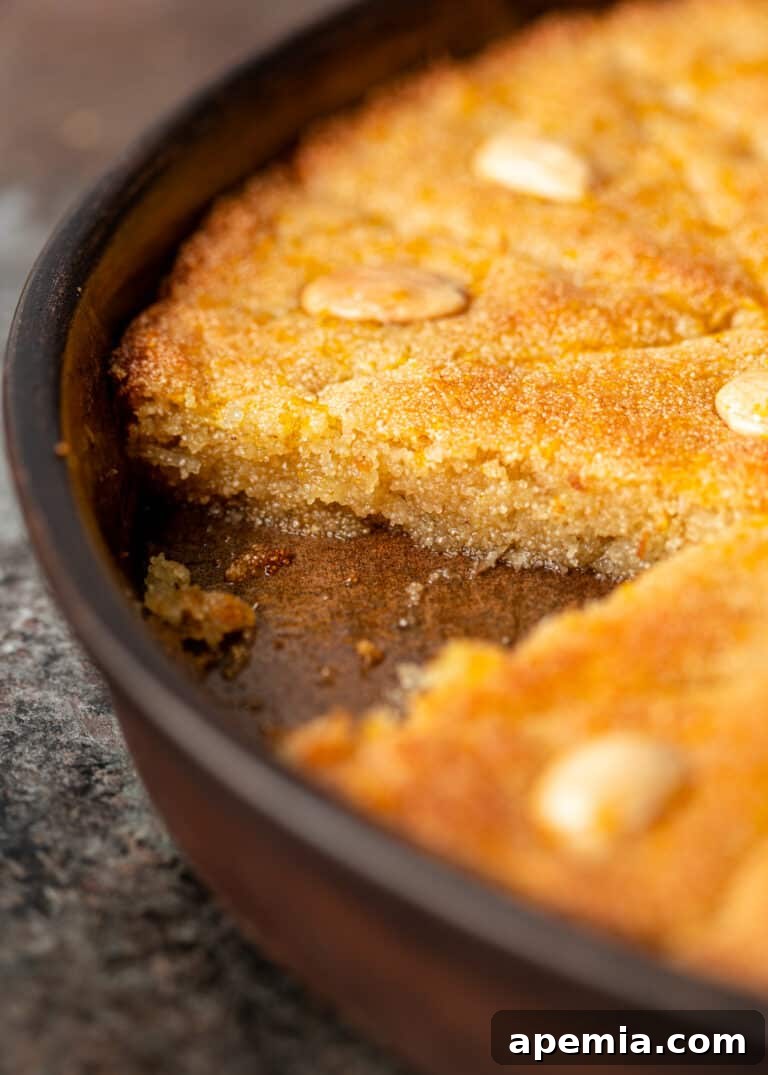
Basbousa is an utterly irresistible Middle Eastern semolina cake, renowned for its tender crumb and rich, buttery flavor. This beloved dessert is generously soaked in a sweet, aromatic citrus syrup, making it so incredibly moist that it truly melts in your mouth with every bite. Infused with delightful notes of honey, orange, lemon, and often featuring almonds or shredded coconut, Basbousa is a culinary masterpiece that captures the essence of traditional Middle Eastern hospitality and flavors.
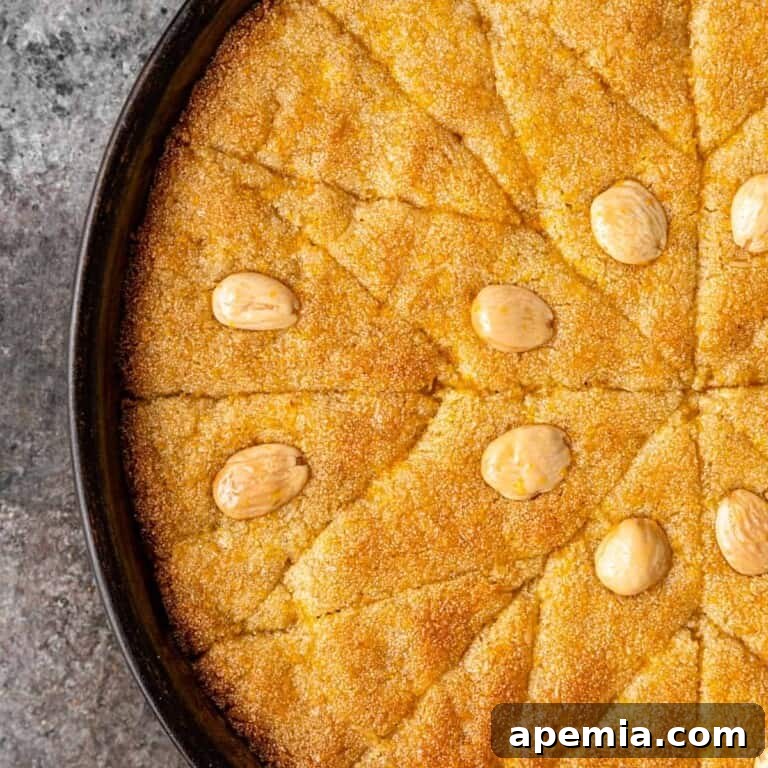
The secret to any truly exceptional dessert lies in its balance. It’s not just about sweetness, but rather a harmonious interplay of textures and flavors that tantalize the palate. When it comes to achieving this perfect equilibrium, few culinary traditions rival the artistry of Middle Eastern desserts.
These sweet treats are skillfully crafted to satisfy your cravings without being overwhelmingly sugary. Typically sweetened with simple sugar syrup or golden honey (or a delightful combination of both), they are often elevated by delicate hints of citrus and warming spices. If you’re captivated by these intricate flavors, you’ll surely adore other traditional delights like Maamoul semolina cookies and Simsemieh orange sesame snaps.
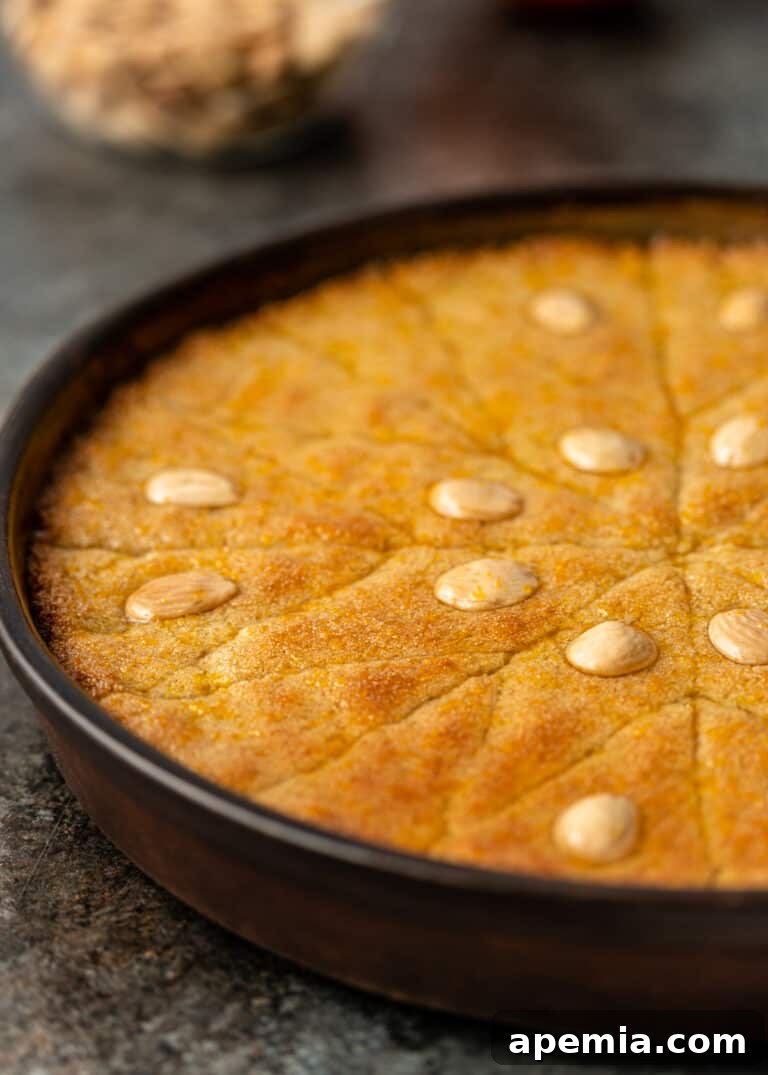
Among the pantheon of exquisite Middle Eastern sweets, Basbousa holds a special place in my heart. My first unforgettable encounter with this fragrant dessert was at the historic Khan el-Khalili bazaar and souq in Cairo, Egypt – a sensory journey that ignited a lifelong passion. This particular Basbousa recipe is a cherished heirloom from a dear friend’s mother, a culinary wizard who enlightened me on the brilliance of using farina instead of traditional semolina. The result? An extraordinarily velvety smooth cake that boasts an unparalleled capacity to absorb that exquisite, mouthwatering orange and honey syrup, achieving a moistness that is simply divine.
Basbousa, also known as Harissa in some regions or Revani in Greece and Turkey, is more than just a cake; it’s a celebration of heritage and flavor, deeply embedded in the culinary landscape of the Middle East. Its simple yet profound ingredients come together to create a dessert that is both comforting and exotic, often served during holidays, family gatherings, or as a delightful everyday indulgence with a cup of tea or coffee.
Table of Contents
- Why Semolina or Farina Flour is Key for Basbousa
- Ingredient Notes and Expert Substitutions
- How to Make the Perfect Egyptian Basbousa
- Recommended Tools for Basbousa Baking
- Storing Your Basbousa Cake for Freshness
- Mastering the Traditional Star Pattern for Basbousa
- Frequently Asked Questions About Basbousa
- Authentic Egyptian Basbousa (Semolina Cake) Recipe
Are you ready to embark on this delightful baking adventure? Read on to learn how you can create this magnificent Basbousa yourself in just 35 minutes of active preparation and cooking time, plus soaking!

Tip From Kevin
Why Semolina or Farina Flour is Key for Basbousa
Semolina flour is the foundational ingredient in many traditional Middle Eastern and Mediterranean cakes, including Basbousa. Its unique granular texture is precisely what gives these cakes their signature slightly coarse yet incredibly tender structure, resulting in a rich, robust crumb that stands up beautifully to being drenched in syrup. This particular characteristic allows the cake to absorb a generous amount of liquid without becoming soggy, leading to the exceptionally moist texture that Basbousa is famous for.
Originating from durum wheat, semolina has a higher protein content compared to regular all-purpose flour. This contributes to a subtle chewiness in the cake, adding another layer of textural interest while still maintaining a wonderfully soft and delicate bite. When combined with other traditional ingredients like creamy yogurt, rich ghee, and bright citrus, semolina not only enhances the flavor profile with its inherently nutty taste but also provides crucial structural integrity to the cake.
While semolina is the classic choice, many modern recipes and family traditions, like my friend’s mother’s, opt for farina. Farina, also a wheat product, is typically ground to a finer consistency than semolina. This difference in grind size yields a Basbousa with an even more velvety smooth texture, which some prefer for its melt-in-your-mouth quality and enhanced ability to soak up the sweet syrup. Whether you choose semolina for a more authentic, heartier texture or farina for supreme smoothness, the result will be a deliciously aromatic and deeply satisfying dessert.
Ingredient Notes and Expert Substitutions
(Be sure to check the recipe card below for a full list of ingredients and precise quantities)
- Semolina or Farina Flour: As discussed, semolina is the classic choice, imparting a slightly coarser, yet tender crumb. For an even smoother, more delicate cake that absorbs syrup beautifully, opt for farina. Both will yield delicious results, so choose based on your preferred texture.
- Unsweetened Shredded Coconut: This is my personal secret ingredient that adds a wonderful texture and a subtle, milky richness to the Basbousa batter. While optional, I highly recommend it for an added layer of flavor and moisture.
- Granulated Sugar & Honey: The combination of sugar and honey creates a balanced sweetness. Honey introduces a deeper, more complex natural sweetness that harmonizes beautifully with the bright citrus and nutty flavors inherent in Basbousa.
- Fresh Lemon Juice: Used in both the cake batter and the syrup, fresh lemon juice is non-negotiable for its vibrant acidity and fragrant aroma. Always opt for freshly squeezed for the best flavor; bottled juice simply doesn’t compare.
- Plain Whole Milk Yogurt: Instead of eggs, traditional Basbousa recipes often use yogurt, and for good reason. It’s the key to an incredibly moist, tender, and subtly tangy cake. Ensure you use plain whole milk yogurt, not Greek yogurt, as its thicker consistency will alter the desired texture of the batter.
- Tahini: This thick, nutty sesame paste is a game-changer, adding an earthy depth and richness to the semolina cake without overpowering its delicate flavors. It contributes to the cake’s moistness and gives it an authentic Middle Eastern touch.
- Ghee (Clarified Butter): A staple in Middle Eastern cooking, ghee provides a superior, nutty butter flavor and richness that regular butter simply can’t match. It also has a higher smoke point. However, if ghee is unavailable, unsalted regular butter can be used as a direct substitute.
- Orange Blossom Water & Zest: These ingredients are central to Basbousa’s signature fragrant profile. Orange blossom water imparts a delicate, floral, and sweet aroma, while fresh orange zest adds a bright, tangy citrus note. If you can’t find orange blossom water, rose water is a suitable substitute, but if using rose water, omit the orange zest to avoid conflicting flavors. Vanilla extract can also be used, though it changes the flavor profile significantly.
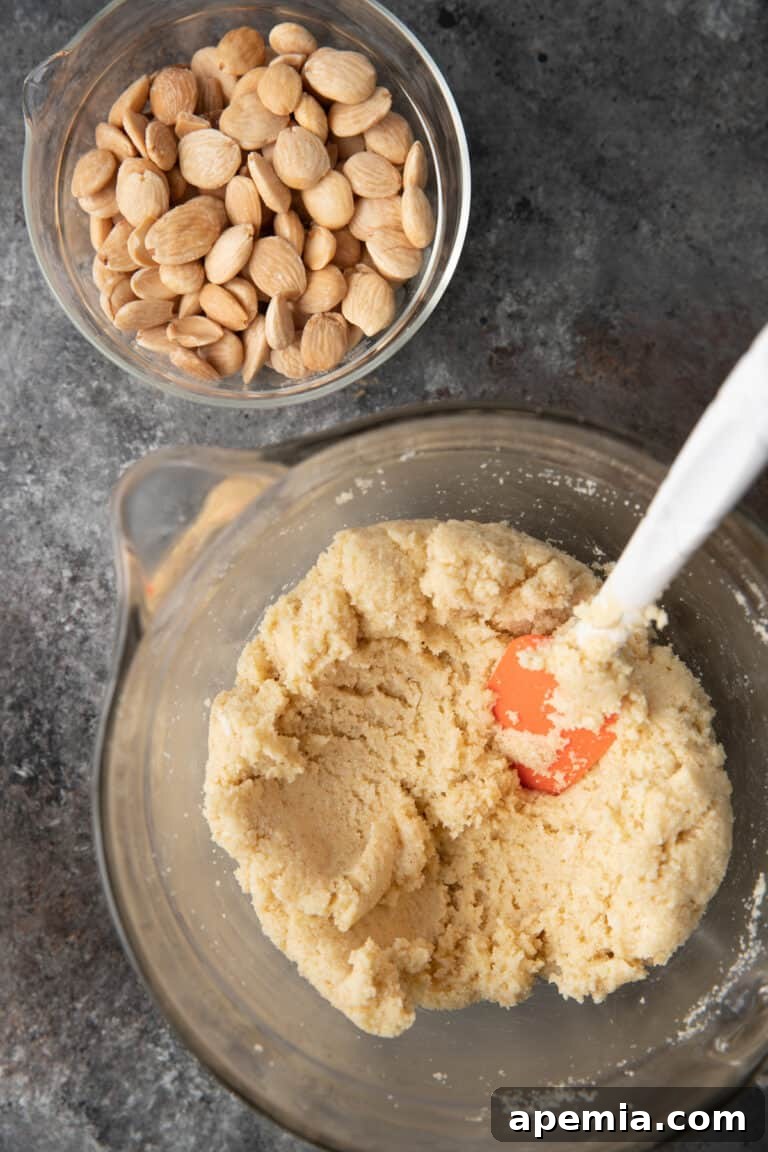
- Blanched Almonds: Traditionally used as a garnish, blanched almonds (I prefer Marcona almonds for their buttery taste) add a beautiful visual appeal and a delightful crunch. Feel free to use any other nuts you like, such as pistachios or walnuts, to personalize your Basbousa.
How to Make the Perfect Egyptian Basbousa
Crafting Basbousa is a delightful and straightforward process. Follow these steps for a perfect, moist semolina cake every time:
- Prepare the Batter: Begin by combining all your dry ingredients – semolina (or farina), sugar, shredded coconut, and baking powder – in a large, deep mixing bowl. Whisk them thoroughly to ensure they are well integrated. In a separate, smaller bowl, gently melt the ghee. To this melted ghee, add the plain yogurt, honey, and tahini, whisking until smooth and fully combined. Pour these wet ingredients into the dry mixture and mix just until a homogeneous batter forms. Be careful not to overmix, as this can lead to a tough cake.
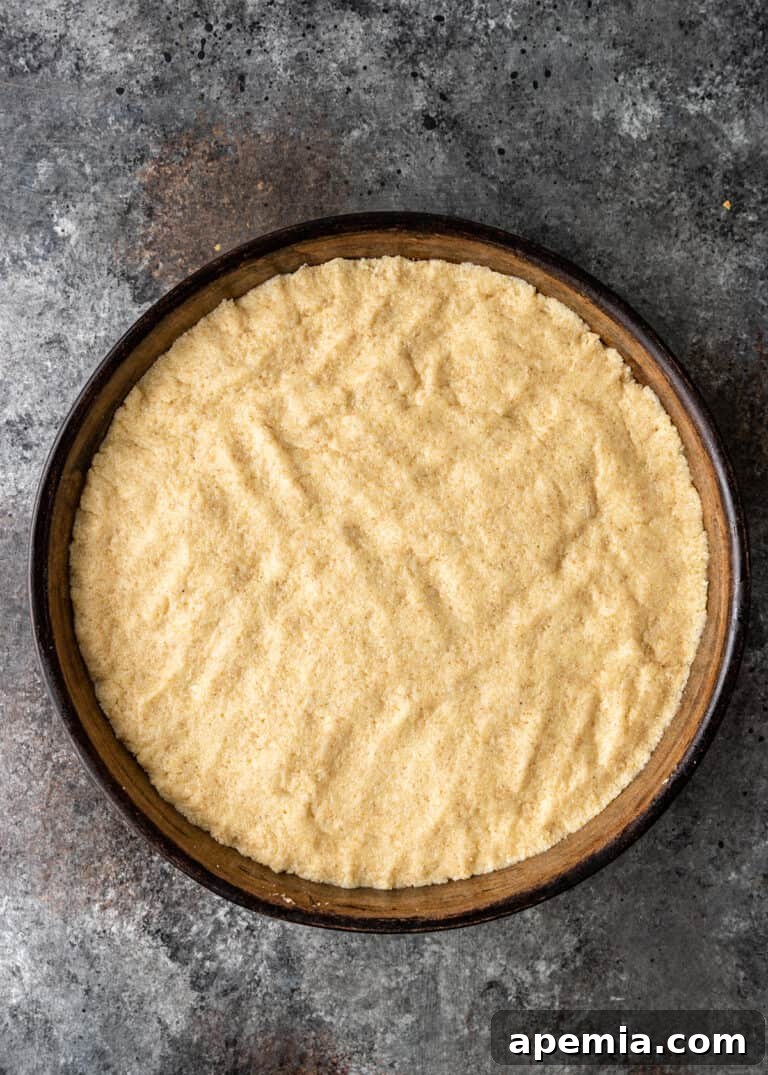
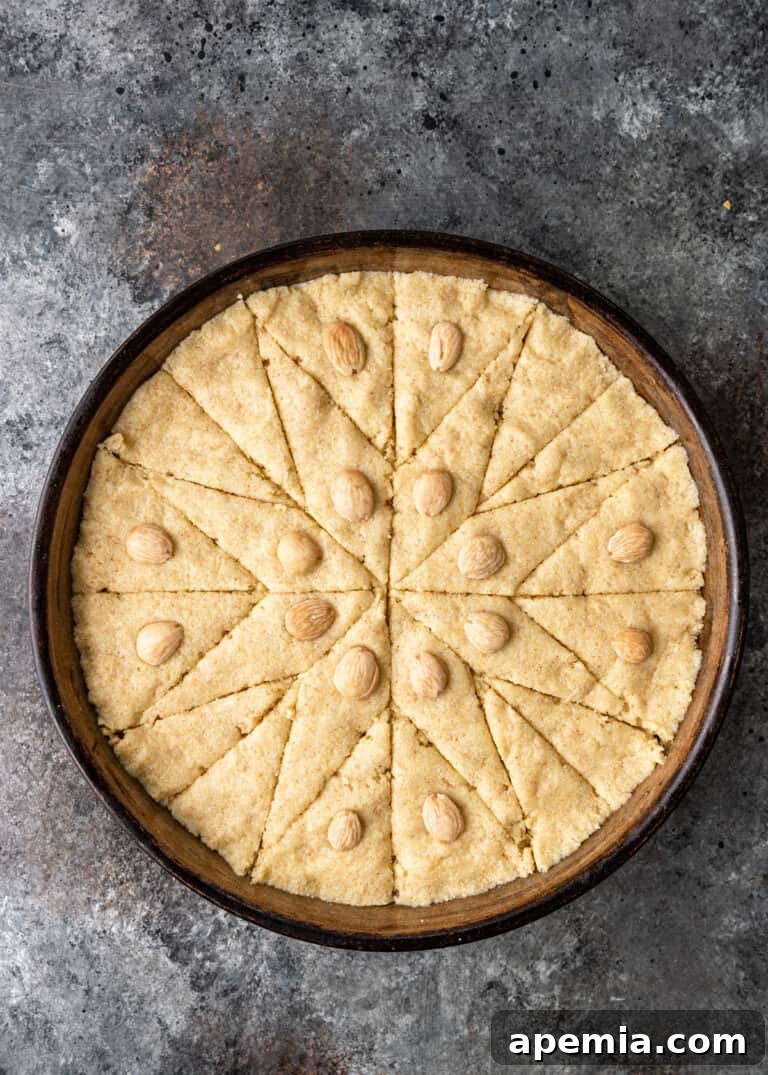
- Design and Prepare for Baking: Carefully pour the Basbousa batter into your generously greased baking dish, spreading it evenly. If you desire the traditional and beautiful diamond or star pattern, follow the detailed instructions and visual guide in our FAQ section below on how to cut the design. Once the pattern is incised, sprinkle your desired toppings, such as blanched almonds, onto the batter, arranging them in the pattern you’ve created or any design you prefer.
- Bake to Golden Perfection: Place the prepared baking dish onto the middle rack of your oven, which should be preheated to 350°F (175°C). Bake for approximately 20-25 minutes, or until the top of the Basbousa achieves a rich, golden-brown hue and the edges appear set. The aroma filling your kitchen will be incredible!
- Simmer the Syrup: While the cake bakes, prepare the essential citrus syrup. Combine all the syrup ingredients – sugar, water, lemon juice, honey, orange blossom water, and orange zest – in a small saucepan. Bring this mixture to a rolling boil over medium heat. Once boiling, reduce the heat to a gentle simmer and let it thicken for about 10 minutes. The syrup should be fragrant and slightly viscous but still pourable.
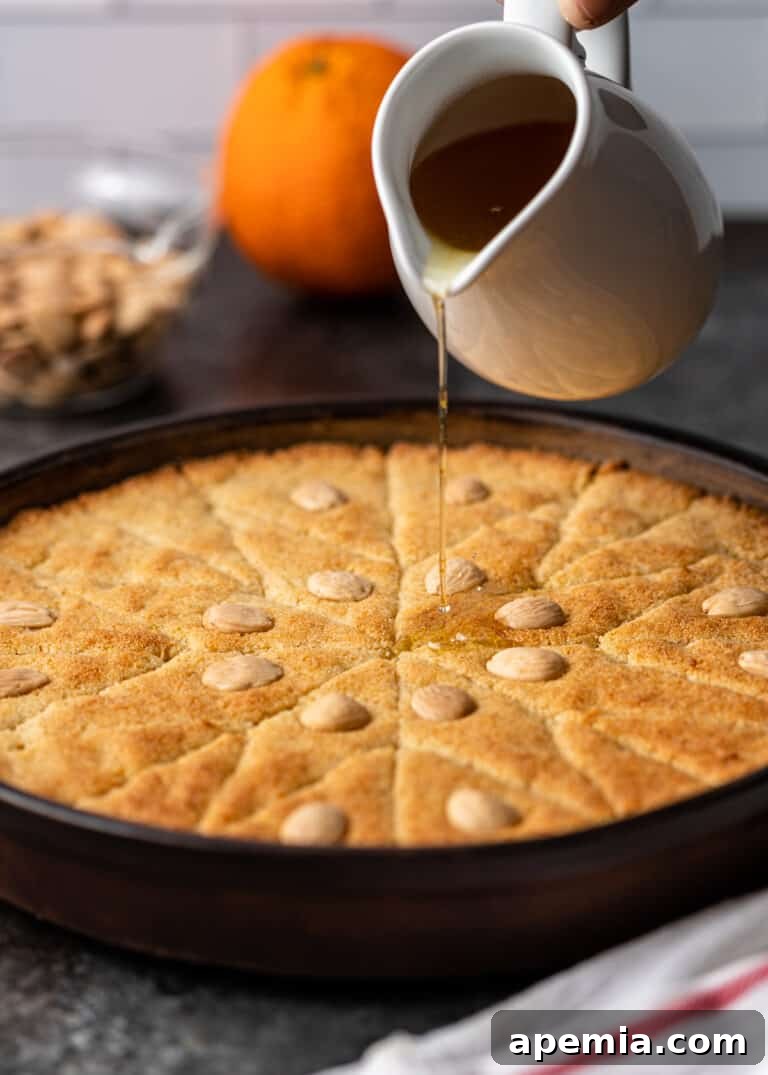
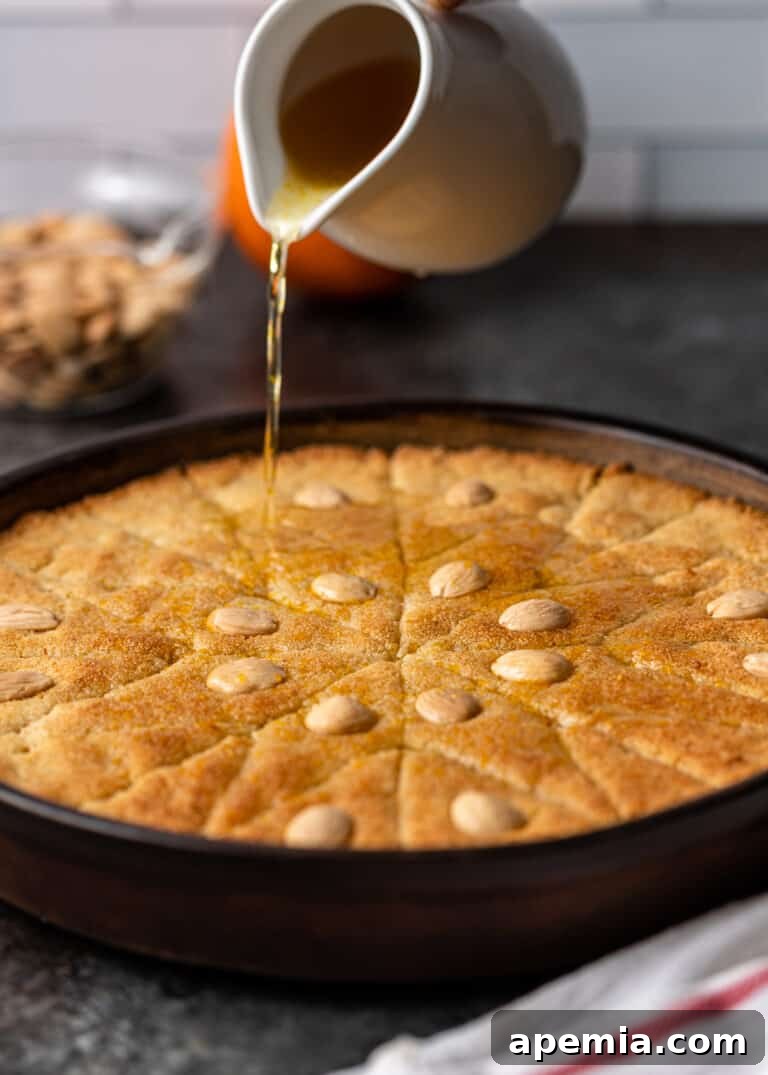
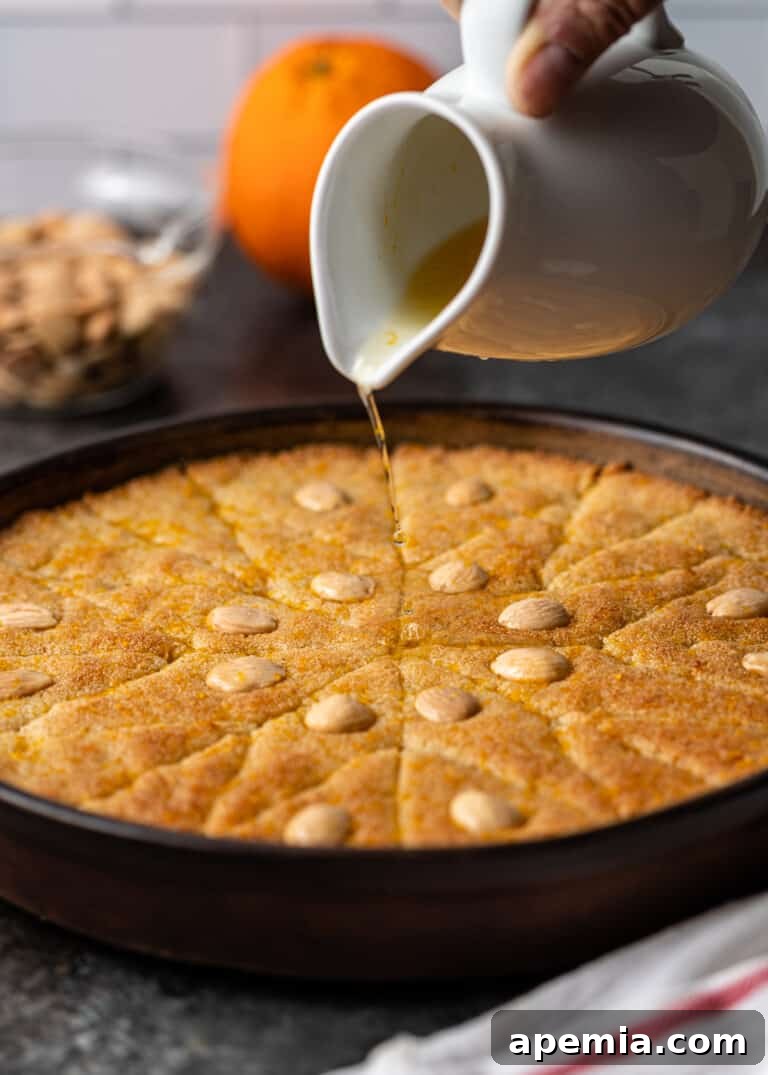
- Soak and Serve: Immediately upon removing the golden Basbousa from the oven, pour the warm syrup evenly over the entire hot cake. The hot cake will eagerly absorb the warm syrup, ensuring maximum moisture. Allow the Basbousa to rest and soak for at least one hour (or ideally, even longer) before carefully slicing and serving. This resting period is crucial for the cake to fully absorb the syrup and develop its signature moist texture and flavor.
Recommended Tools for Basbousa Baking
Having the right tools can make your Basbousa baking experience even smoother:
- Baking Dish: The choice of baking dish impacts the cake’s thickness. I typically use a 10-inch round baking stone or my trusty quiche pan, which yields a cake of medium thickness. For a slightly thinner Basbousa, a rectangular 11×9-inch pan works well. If you prefer a taller, more substantial cake, opt for a 9×9-inch square pan. Ensure your chosen pan is greased generously before adding the batter.
- Sharp Knife: Essential for cutting the decorative pattern and for clean slices after soaking.
- Whisk and Spatula: For thoroughly mixing ingredients without overworking the batter.
- Small Saucepan: For preparing the aromatic simple syrup.
Storing Your Basbousa Cake for Freshness
One of the many wonderful qualities of Basbousa is how well it keeps. The syrup helps to preserve its moisture, allowing the flavors to meld and deepen over time. Basbousa cake remains delightfully moist and flavorful for several days after it’s baked, often tasting even better on the second or third day!
To ensure it doesn’t dry out or become stale, always store your Basbousa in an airtight container at room temperature for up to 3 days. For maximum shelf life, especially in warmer climates, store it in the refrigerator. When properly stored in the fridge, your Basbousa should last for up to 5 days. Just bring it to room temperature or gently warm it slightly before serving to fully enjoy its rich flavors and moist texture. Well, unless you eat it all before then – which is a very real possibility!
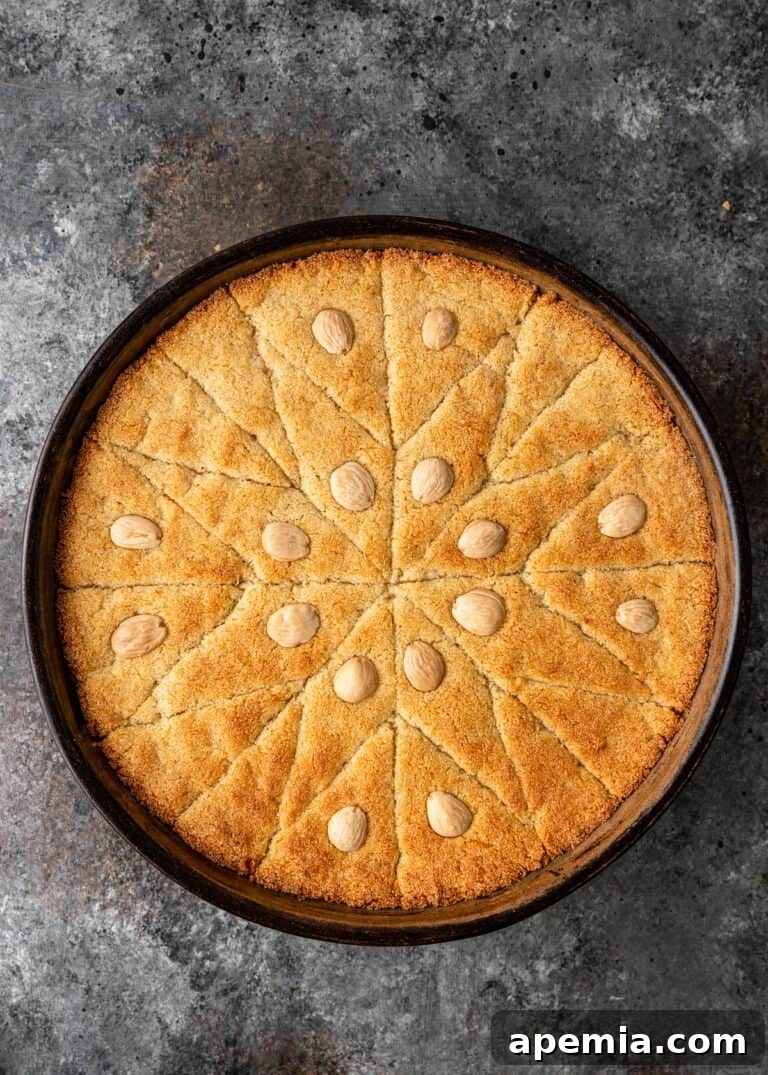
Mastering the Traditional Star Pattern for Basbousa
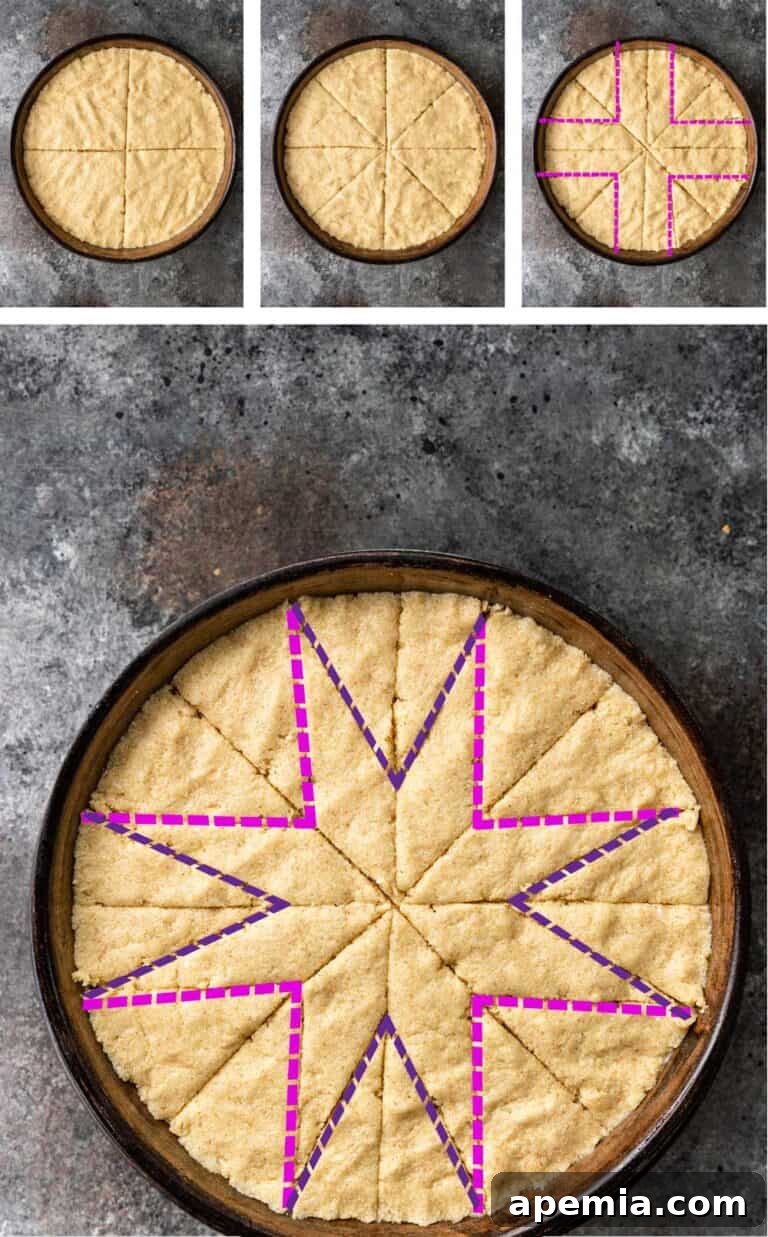
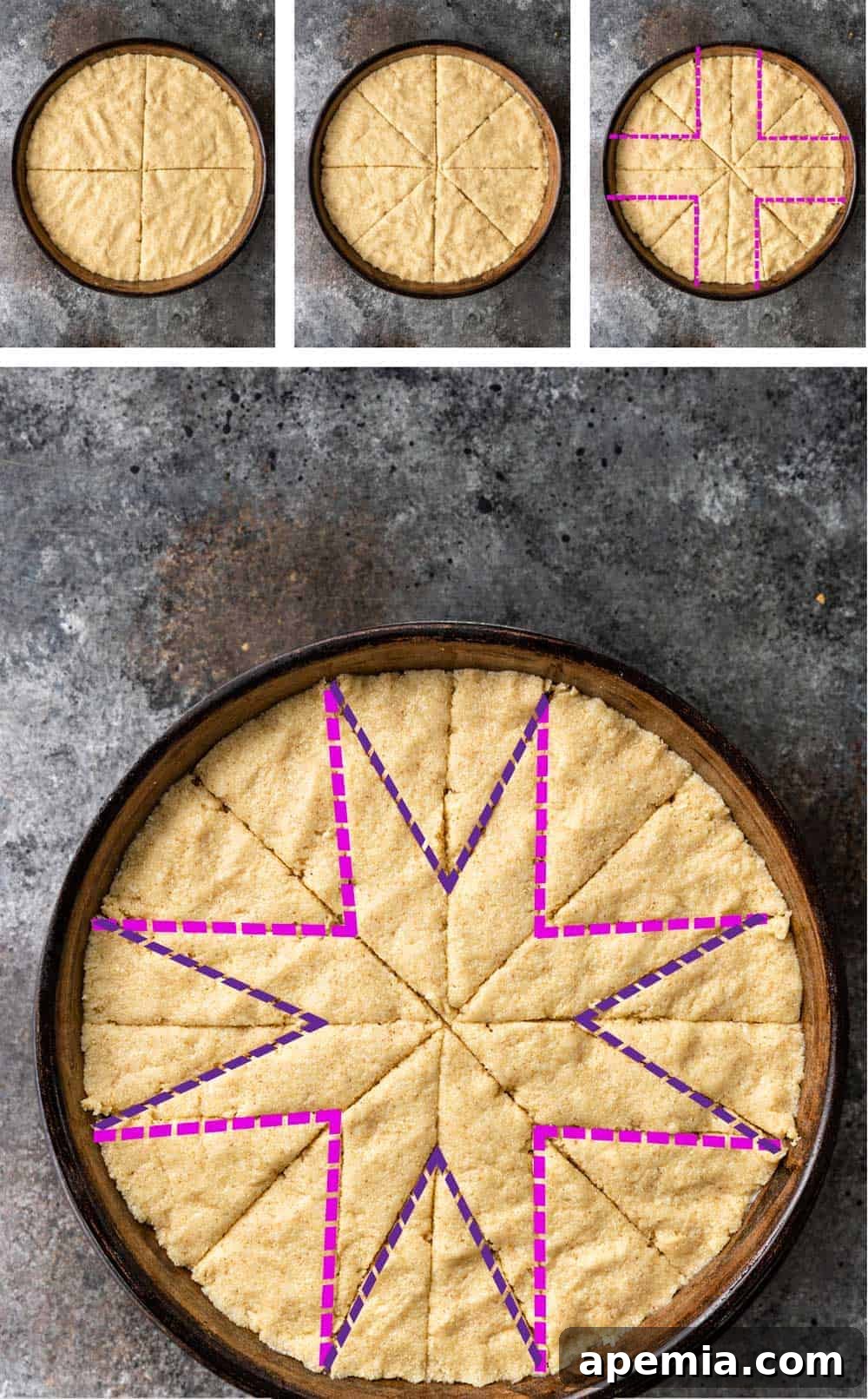
Creating the beautiful star or diamond pattern on your Basbousa is a classic touch that’s much simpler than it looks! All you need is a sharp knife and a steady hand. Follow these four easy steps, referring to the process images above for visual guidance. Remember to wipe your knife clean after each cut to ensure crisp, distinct lines:
- After you’ve evenly spread the Basbousa batter into your greased pan, use your sharp knife to gently cut the entire cake into four equal quarters. Do not cut all the way through to the bottom of the pan, just score the surface.
- Next, take each of those four quarters and carefully cut them in half lengthwise, creating eight uniform wedges. Again, only score the surface.
- Now, for the “V” cuts: starting from roughly one-third of the way out from the center of each wedge, make a “V” cut pointing inwards. Imagine the pink dashed lines in the provided process images; these cuts should connect to the previous lines, forming the inner points of your star.
- Finally, create another set of “V” cuts between the cuts you just made. These new cuts should also connect to the rim of the dish and point inward about one-third of the way from the center, completing the intricate star-like design across the entire cake.
For an even clearer visual guide, you can refer to the accompanying video tutorial (if available on the original site) which demonstrates this process perfectly!
Share this recipe on Pinterest!
Love this delightful Basbousa recipe? Help spread the word by sharing it with your friends and followers on Pinterest. Let’s inspire more home bakers!
Frequently Asked Questions About Basbousa
The choice between semolina and farina flour for your Basbousa largely comes down to personal preference regarding texture. Semolina is the traditional choice and often gives the cake its name, “semolina cake.” It results in a slightly coarser, heartier crumb with a distinct nutty flavor that many find authentic and satisfying. On the other hand, farina flour, being made from a softer, finer grind of wheat, produces an exquisitely smooth and velvety texture. This finer grind allows the cake to absorb the syrup even more effectively, leading to an exceptionally moist and tender result. Both options are delicious, so feel free to experiment and discover which texture you prefer!
Basbousa offers a delightful symphony of flavors and textures. It’s a rich, nutty, and buttery cake with a balanced sweetness that isn’t cloying, thanks to the subtle tang from the yogurt and lemon. The fragrant orange blossom water and orange zest infuse it with a distinct citrusy-floral aroma. Texturally, it’s incredibly tender and moist; if made with farina flour, it achieves an extra velvety smoothness that literally melts in your mouth. The optional almonds add a pleasant crunch, contrasting with the soft, syrup-soaked cake. It’s truly a comforting and aromatic dessert.
Absolutely! Basbousa is an excellent dessert to prepare in advance. In fact, many believe it tastes even better on the second or third day as the flavors have more time to meld and the syrup fully penetrates the cake, enhancing its moisture. You can bake the cake and prepare the syrup, then pour the warm syrup over the hot cake and let it sit at room temperature for several hours or overnight before serving. Store any leftovers in an airtight container as described in the storage section.
While often sharing a similar core concept of a semolina cake soaked in syrup, Basbousa, Harissa, and Revani are regional variations with subtle differences. Basbousa is the most common name in Egypt and many parts of the Middle East, often featuring coconut and a citrus syrup. Harissa is a name used in some Levantine countries (like Lebanon, Syria, Jordan), and while similar, it might have slightly different spices or nut toppings. Revani is the Turkish and Greek version, typically made with yogurt and lemon syrup, and sometimes includes mastic. Each name represents a beloved version of this comforting semolina dessert, often with minor regional tweaks that make them unique while sharing a common delicious lineage.
Egyptian Basbousa (Semolina Cake)
My Basbousa is a moist, tender semolina cake generously soaked in a fragrant orange and honey syrup. This recipe features creamy yogurt, earthy tahini, and unsweetened coconut, beautifully topped with blanched almonds for the perfect finish!
Servings: 12
Prep Time: 15 mins
Cook Time: 20 mins
Total Time: 35 mins (plus 1 hour soaking time)
Print Recipe
Video Tutorial
For a visual guide, please refer to the video tutorial usually found here.
Ingredients
Dry Ingredients
- 1 2/3 cup semolina (or farina for finer texture)
- 1/2 cup granulated sugar
- 1/2 cup unsweetened shredded coconut
- 1 1/2 tsp baking powder
Wet Ingredients
- 1/2 cup ghee melted (or unsalted butter)
- 1/2 cup plain whole milk yogurt
- 1 tbsp honey
- 2 tsp tahini
Syrup
- 1 cup granulated sugar
- 1 cup water
- 1 tsp fresh lemon juice
- 2 tbsp honey
- 1/2 tsp orange blossom water (See Note 2)
- 1 tsp grated orange zest
Garnish
- 16 blanched almonds (See Note 3)
Unit System: US Customary
Instructions
- Preheat oven to 350°F (175°C). In a large, deep bowl, combine all dry ingredients (semolina/farina, sugar, shredded coconut, baking powder) and mix well with a whisk.
- In a separate small bowl, melt the ghee. Add the plain yogurt, 1 tbsp honey, and tahini to the melted ghee. Whisk these wet ingredients together until fully incorporated and smooth.
- Pour the wet mixture into the dry ingredients. Mix gently with a whisk or spatula until just combined. Be careful not to overmix the batter.
- Evenly spread the Basbousa mixture into a generously greased (with ghee, butter, or cooking spray) 10-inch round baking pan (see Note 5 for pan size alternatives).
- OPTIONAL: For a traditional presentation, gently score a design into the batter as pictured and described in Note 6, or simply cut into diagonal diamond shapes.
- Distribute the blanched almonds (or other preferred nuts) on top of the Basbousa batter, following your chosen design or scattered evenly.
- Bake on the middle oven shelf for 20-25 minutes, or until the top turns a beautiful golden brown color.
- While the cake is baking, prepare the syrup: In a small saucepan, combine all syrup ingredients (sugar, water, lemon juice, 2 tbsp honey, orange blossom water, grated orange zest). Bring to a boil over medium heat, then reduce heat and simmer gently for 10 minutes until slightly thickened and fragrant.
- Immediately remove the hot Basbousa from the oven. Carefully and evenly pour the warm syrup all over the surface of the cake. Allow the cake to soak up all the syrup and rest for at least one hour before slicing and serving. This resting period is crucial for maximum moisture and flavor.
Notes
- Regular unsalted butter can be substituted for ghee.
- Rose water or vanilla extract can be used as a substitute for orange blossom water. If using rose water, it’s best to omit the orange zest to avoid conflicting floral notes.
- I prefer using Marcona almonds for their buttery flavor. However, pistachios, walnuts, or any other preferred nut can be substituted for the almonds as a garnish.
- Grease your baking pan thoroughly with ghee, butter, or cooking spray to prevent sticking.
- A 10-inch round baking stone or a quiche pan works well for a medium-thickness Basbousa. Alternatively, use an 11×9-inch rectangular pan for a thinner cake or a 9×9-inch square pan for a taller Basbousa.
-
How to cut the design as shown:
After pressing the Basbousa batter into the pan, use a sharp knife to gently score it into four quarters (refer to the first process photo).Wipe your knife clean and then cut each quarter in half, creating eight wedges (refer to the second process photo).
Wipe your knife again. Now, make a “V” shape about one-third of the way out from the center in each quarter, connecting to the previous cuts. (See the PINK dashed lines in the images for guidance).
Wipe your knife once more and make another set of “V” cuts between the large pieces, connecting to the rim of the dish and pointing inward about one-third from the center, to complete the intricate star shape.

Nutrition Information (Estimated Per Serving)
Calories: 308kcal | Carbohydrates: 49g | Protein: 4g | Fat: 12g | Saturated Fat: 7g | Trans Fat: 1g | Cholesterol: 21mg | Sodium: 91mg | Potassium: 88mg | Fiber: 2g | Sugar: 30g | Vitamin A: 11IU | Vitamin C: 1mg | Calcium: 219mg | Iron: 8mg
The information shown is an estimate provided by an online nutrition calculator. It should not be considered a substitute for a professional nutritionist’s advice.
Course: Dessert
Cuisine: Egyptian, Middle Eastern, Turkish
Author: Kevin
Have You Made This Recipe? Let Me Know on Instagram!
Tag @keviniscooking or use the hashtag #keviniscooking! I’d love to see your beautiful Basbousa creations.