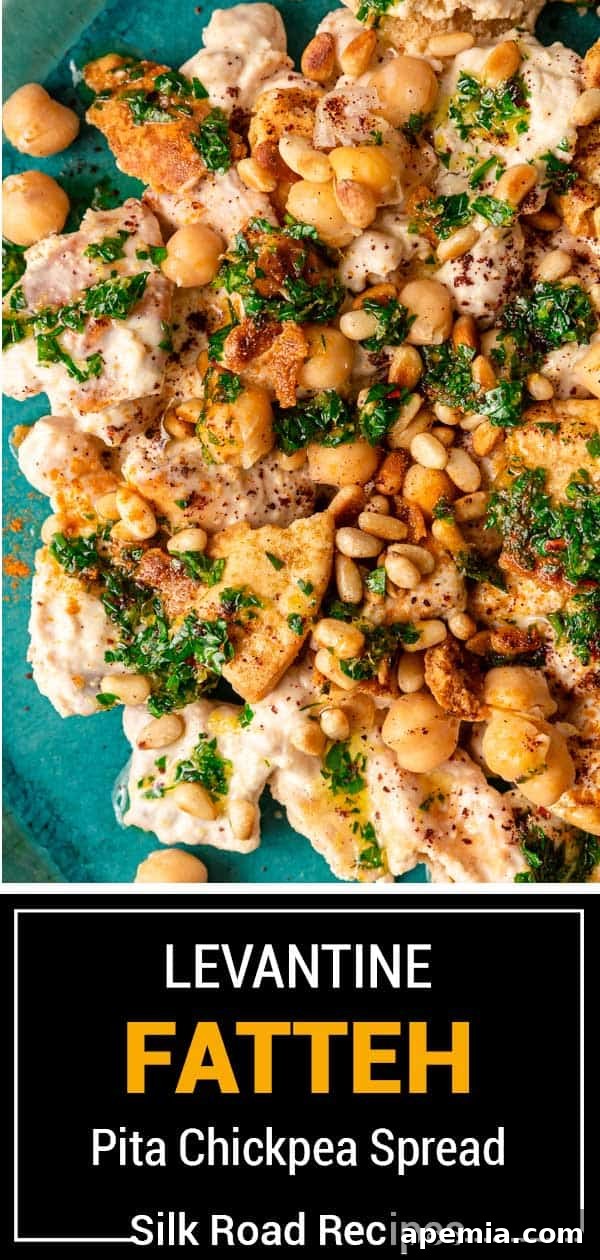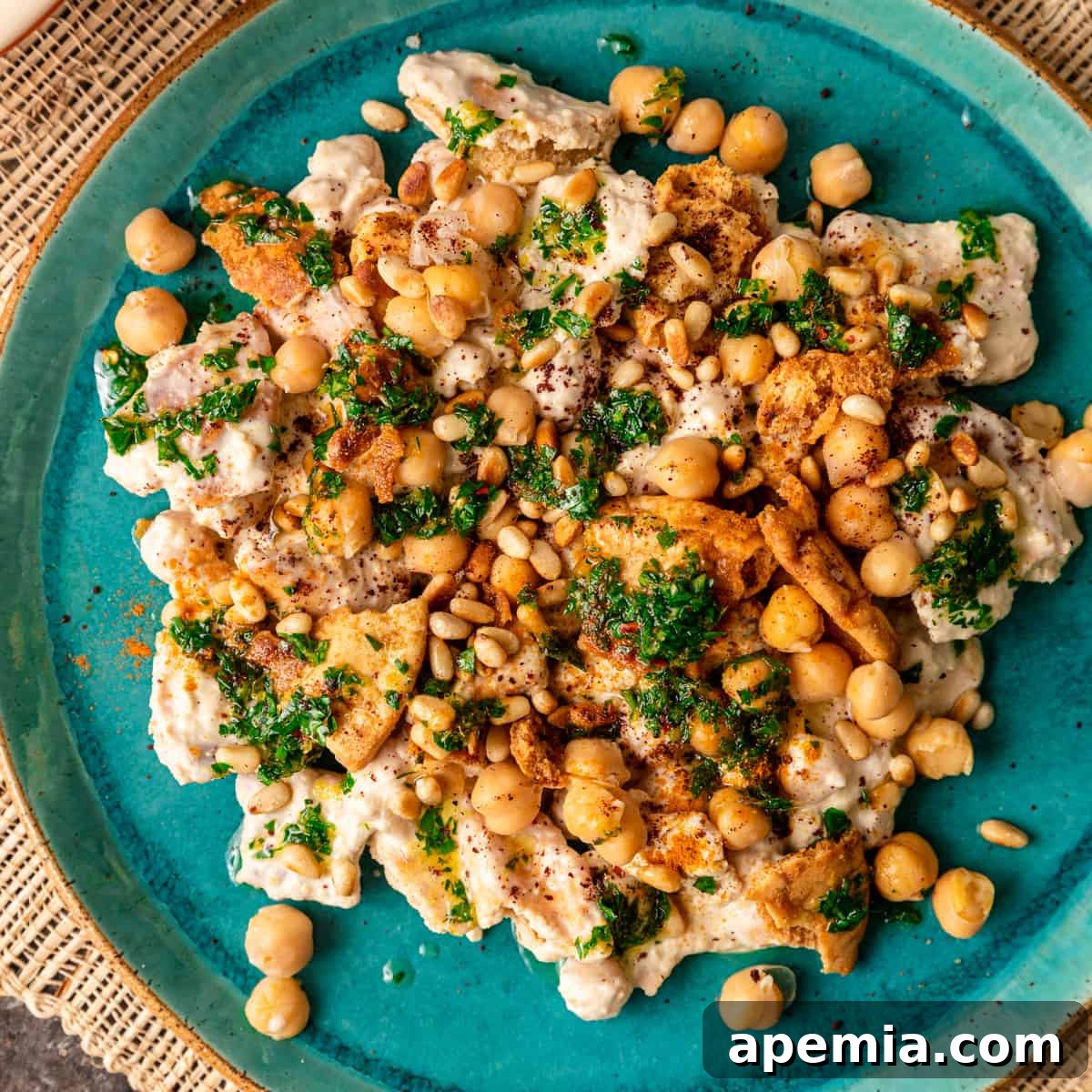
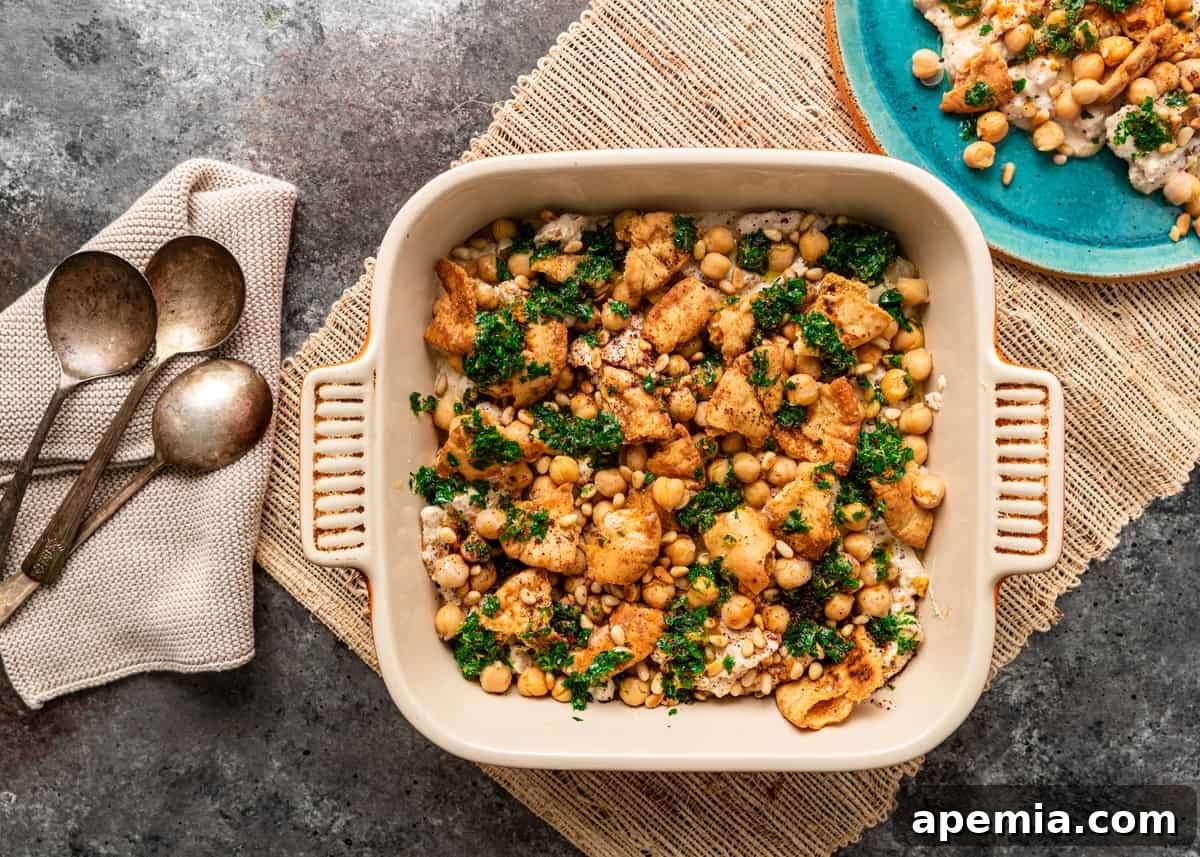
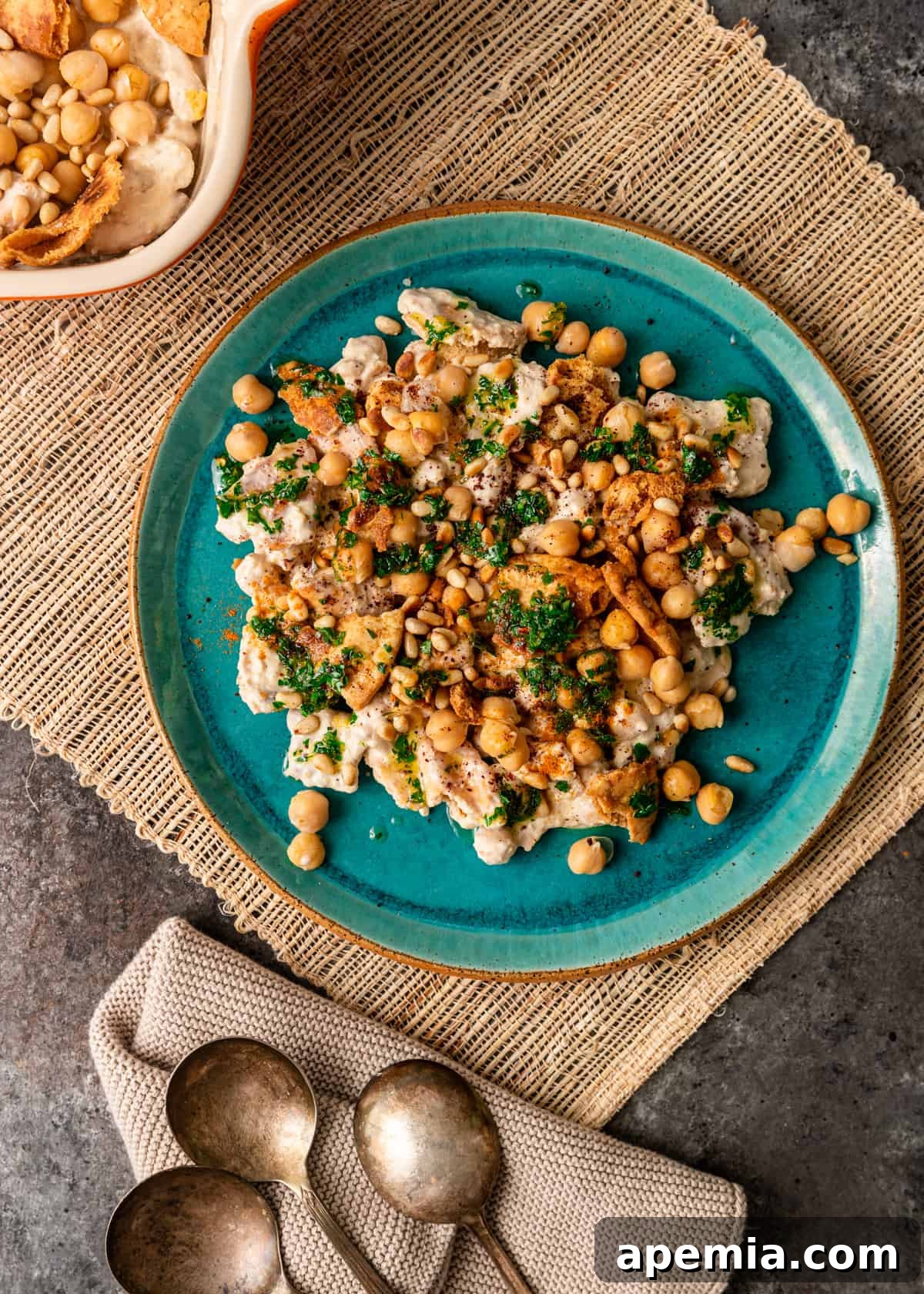
Experience the rich tapestry of Middle Eastern flavors with our incredible recipe for Authentic Fatteh. This creamy, savory, and wonderfully textural dish is a celebration of simple ingredients transformed into something extraordinary. Imagine tender chickpeas bathed in aromatic spices, blended into a luscious hummus that’s brightened with tangy Greek yogurt, all generously layered over golden, crispy pita chips. Crowned with salty pine nuts and a vibrant parsley oil, this Fattet Hummus is more than just a dip or a spread; it’s a delightful mezze, a hearty breakfast, or a light meal that comes together in just 35 minutes.
The Heart of Levantine Cuisine: A Journey Through Fatteh
Fatteh, a cherished dish hailing from the ancient Levant region—an area now recognized as the Eastern Mediterranean—embodies centuries of culinary tradition. This crossroads of civilizations, traversed by the historic Silk Road, fostered a vibrant exchange of ingredients, techniques, and ideas. Consequently, Levantine recipes are a testament to this rich cultural fusion, constantly evolving as people traded goods, stories, and culinary wisdom across diverse lands.
Our Fatteh recipe draws inspiration from the acclaimed cookbook Falastin, a treasure trove of authentic Palestinian dishes. While traditional preparations often involve a separate yogurt sauce, we’ve streamlined the process for modern home cooks. By ingeniously blending the creamy Greek yogurt directly into the hummus base, we significantly reduce preparation time without compromising on the dish’s signature tangy and smooth character. This adaptation makes an otherwise intricate dish accessible, bringing the authentic taste of the Levant to your kitchen with remarkable ease.

Beyond the creamy hummus, our version elevates the textural experience by incorporating whole, tender chickpeas and perfectly toasted pine nuts. These additions provide a delightful contrast to the smooth hummus and crispy pita, ensuring every spoonful offers a symphony of flavors and textures. This Fatteh recipe is commonly enjoyed as a comforting breakfast, a sophisticated appetizer, or as a vibrant component of a larger mezze spread. Imagine it alongside other Middle Eastern delights like muhammara (roasted red pepper dip), creamy eggplant dip, pickled turnips, and an array of other delicious snacky dishes. Its versatility makes it a perfect addition to any meal, inviting a communal dining experience steeped in tradition and flavor.
Fatteh or Fetteh? Understanding Regional Variations
The name “Fatteh” (or sometimes “Fattah” or “Fetteh”) is an Arabic word derived from “fatta,” meaning “to crumble” or “to break,” specifically referring to dishes made with pieces of stale or fresh bread. While the core concept of a bread-based casserole remains consistent, the accompanying ingredients vary significantly across the Middle East.
The yogurt and chickpea version presented here is a classic Palestinian rendition, often savored for breakfast due to its nourishing and comforting qualities. In contrast, an Egyptian Fattah, which I’ve had the pleasure of experiencing in Cairo, features the same delightful toasted pita and a vibrant herb-citrus topping, but typically incorporates hearty lamb and rice, creating a more substantial main course. Understanding these regional distinctions adds another layer of appreciation for the culinary diversity within the Middle East, highlighting how a single concept can evolve into uniquely delicious forms.
Essential Ingredients & Smart Substitutions for Perfect Fatteh
Crafting the perfect Fatteh requires a careful selection of fresh ingredients, each playing a crucial role in the dish’s overall harmony. Don’t worry if you need to make a few adjustments; here’s a guide to the key components and their best substitutes:
- Crispy Pita – The foundation of Fatteh is its irresistibly crunchy pita chips. We toss olive oil, cumin, and salt with torn pita bread before toasting them to a golden crisp. While we use standard pita here, traditionally, Fatteh is often made with whole wheat khubz for a more rustic texture and nutty flavor. For an adventurous twist, consider making crispy za’atar or barbari bread chips, which would infuse the dish with unique aromatic notes. The key is to get them golden and crunchy!
- Vibrant Parsley Oil Topping – This fresh, aromatic oil cuts through the richness of the hummus and adds a bright finish. It’s a simple blend of high-quality olive oil, finely chopped flat-leaf parsley, zesty lemon juice and zest, a pinch of salt, and a hint of heat from red pepper flakes. For a slightly different flavor profile, you can substitute cilantro for parsley, which will lend a more robust, peppery bite.
- Creamy Hummus with a Twist – Our Fatteh hummus stands apart from your everyday chickpea dip, primarily due to the inclusion of Greek yogurt. It starts with the familiar base of canned chickpeas (or freshly prepared dried chickpeas for superior flavor and texture), rich tahini, water, and salt. The special additions include:
- Ground Cumin – An indispensable spice in Middle Eastern cooking, cumin offers an earthy, warm, and nutty aroma. It provides a depth of flavor that is essential to Fatteh. If you’re out of cumin, ground coriander or ground caraway seeds can offer a similar aromatic complexity.
- Garlic – Fresh garlic is key for that pungent, savory kick. A clever trick for maximizing its flavor is to lightly crush the cloves with the side of your knife before boiling them with the chickpeas. This gentle crushing helps to release their aromatic compounds more effectively into the cooking liquid.
- Pine Nuts – These small, creamy nuts are toasted to unlock their buttery, delicate flavor and provide a delightful crunch. While pine nuts are traditional, toasted, chopped almonds or cashews can make excellent substitutes, offering their own unique nutty notes.
- Greek Yogurt – This is the star ingredient that truly distinguishes our Fattet Hummus! It’s crucial to use plain, unsweetened Greek yogurt to achieve the desired tangy, creamy texture without introducing unwanted sweetness. For alternatives, full-fat sour cream or a rich, plain regular yogurt can be used, though Greek yogurt’s thickness and tang are unparalleled.
- Sumac – This beautiful fiery red spice is a staple in Middle Eastern pantries, celebrated for its distinctly fresh, lemony, and slightly astringent flavor. Sprinkled generously over the finished dish, it adds a vibrant color and a burst of bright, citrusy notes. If sumac is unavailable, a combination of additional lemon zest and juice can provide a similar refreshing tang.
Effortless Fatteh: Your Step-by-Step Guide
Creating this irresistible Fatteh is a straightforward process that yields impressive results. Follow these simple steps for a perfect outcome:
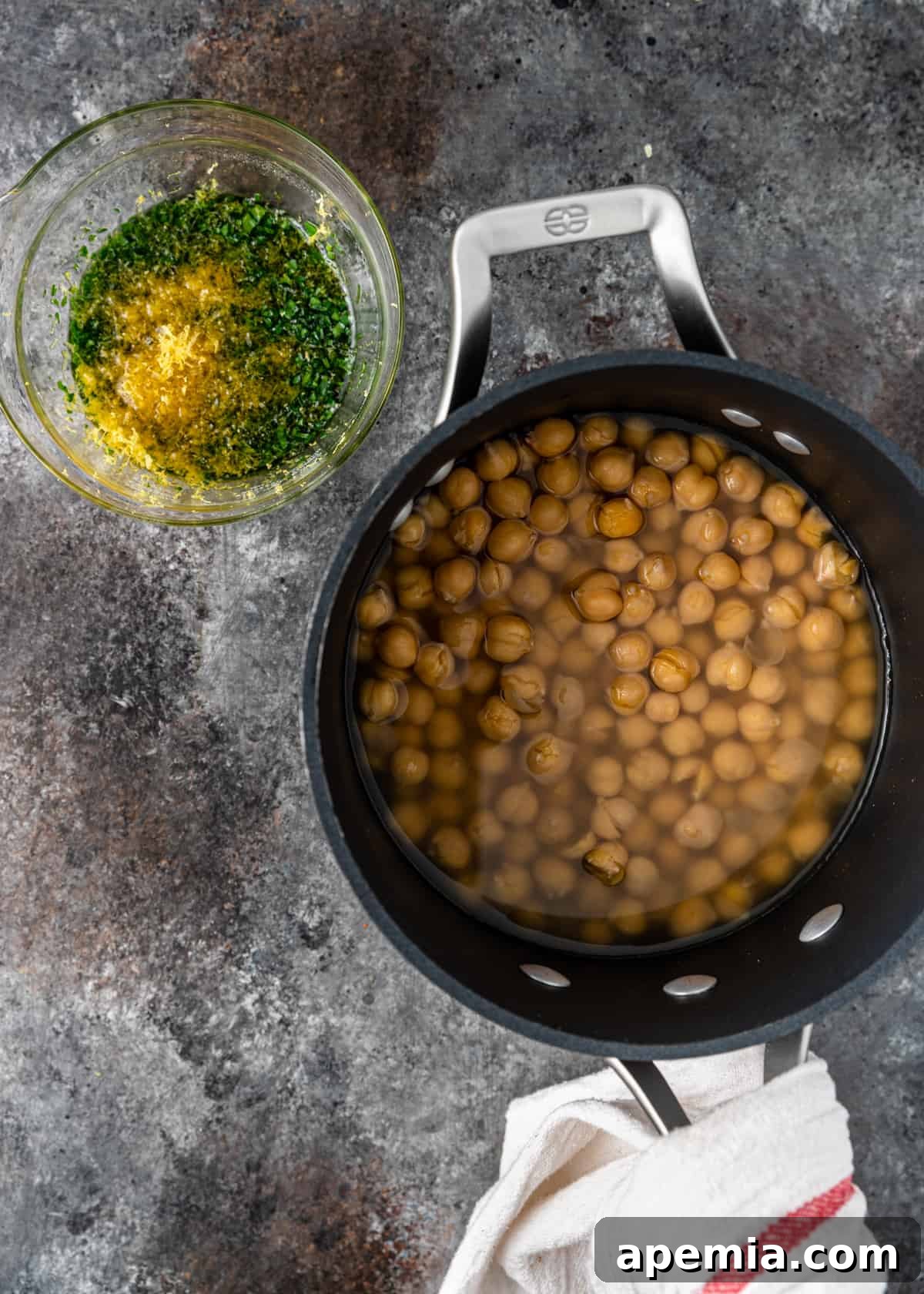
- Prepare the Chickpeas: Begin by placing your cooked (or canned and drained) chickpeas into a saucepan. Add 2 ½ cups of water, a teaspoon of cumin, and the lightly crushed garlic cloves. Bring the mixture to a rolling boil, then reduce the heat to a gentle simmer. Allow it to cook, uncovered, for about 10 minutes. This step infuses the chickpeas with rich flavor and ensures they are perfectly tender for the hummus.
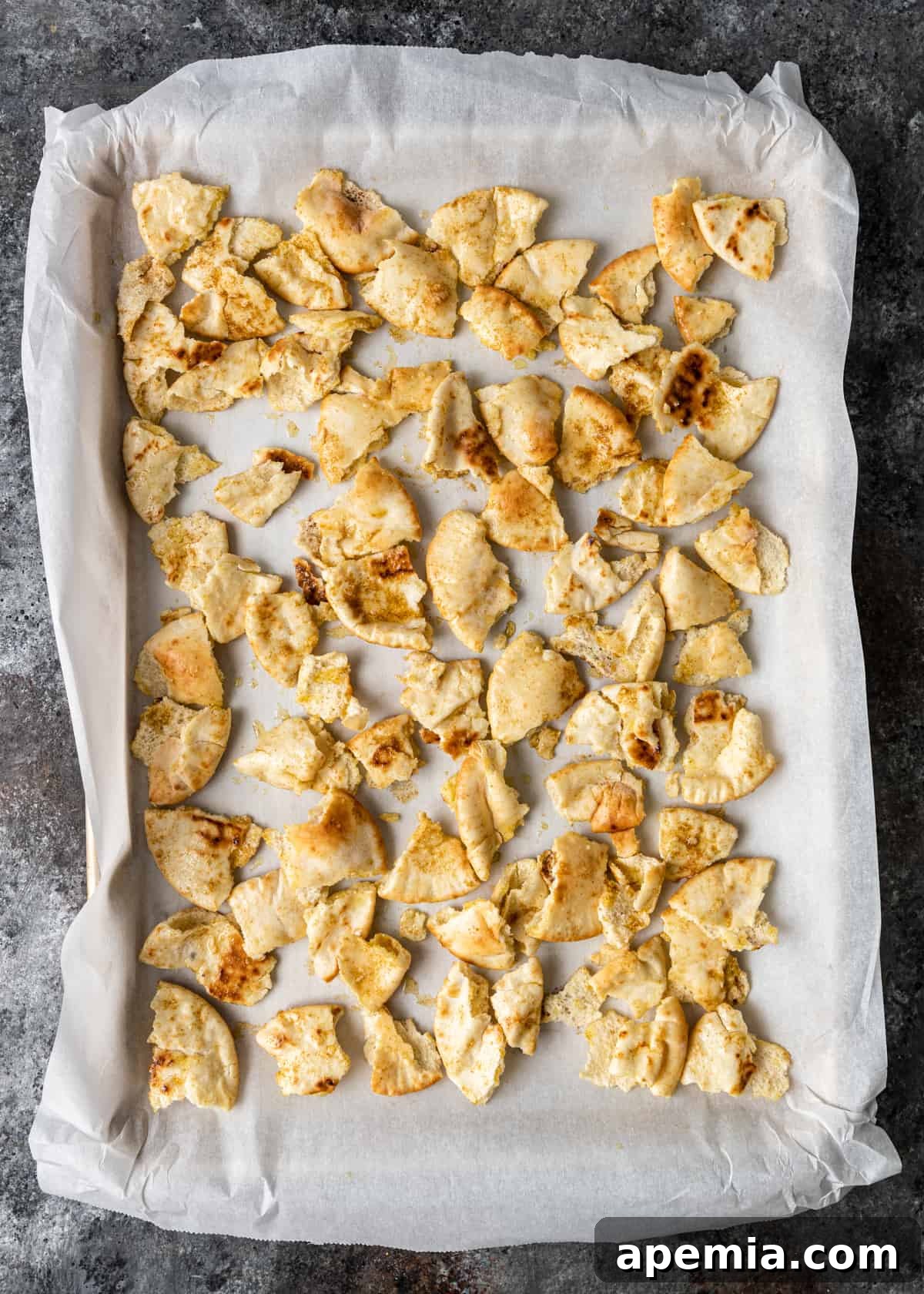
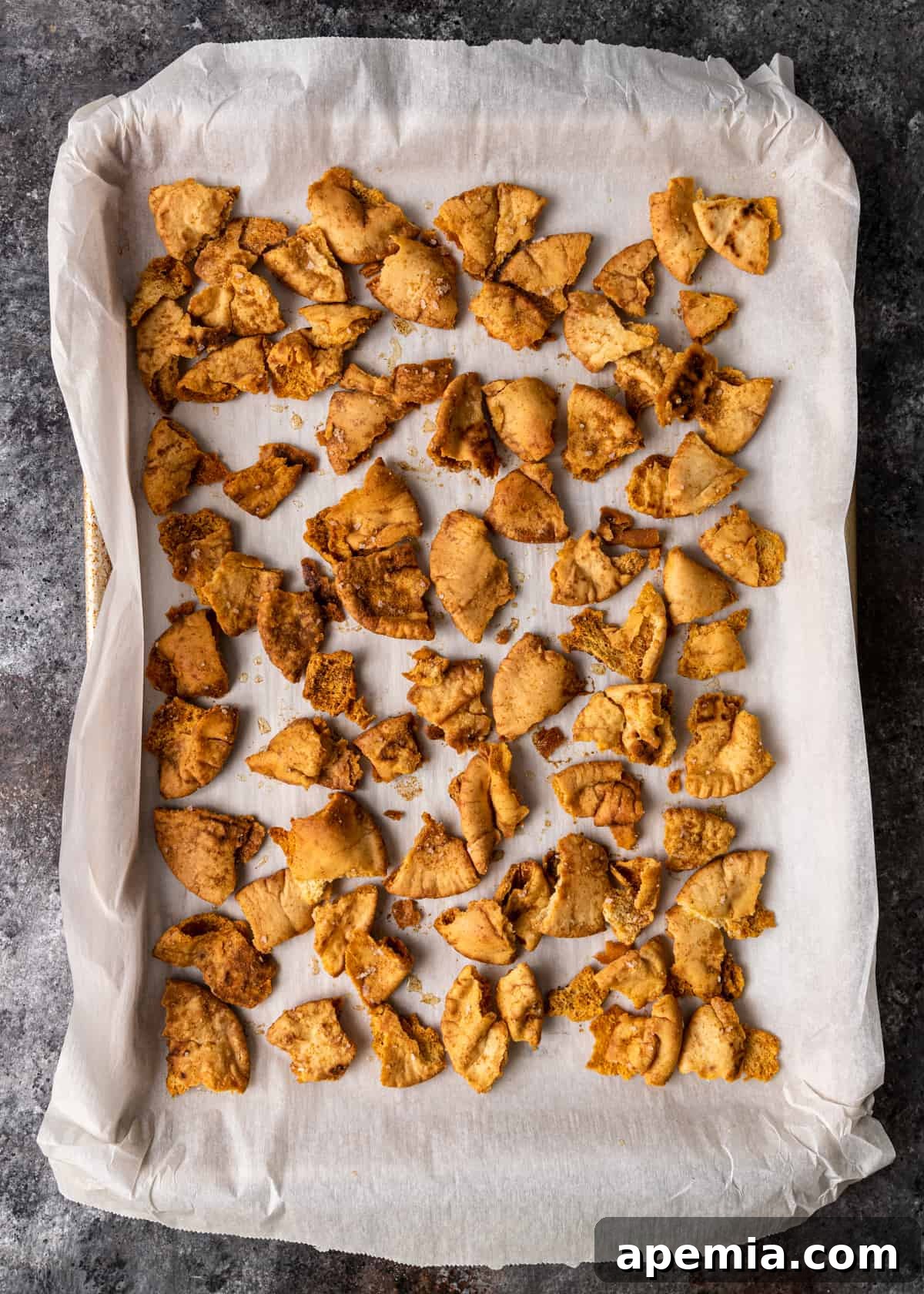
- Achieve Crispy Pita Perfection: While the chickpeas simmer, preheat your oven to 350°F (175°C). Tear your pita bread into bite-sized, roughly 1-inch pieces. Transfer these pieces to a mixing bowl, drizzle with olive oil, sprinkle with cumin and salt, and toss thoroughly until each piece is lightly coated. Spread the seasoned pita in a single layer on a baking sheet lined with parchment paper. Toast in the preheated oven for approximately 20 minutes, or until they turn a beautiful golden brown and are wonderfully crisp. Keep a close eye on them to prevent burning.
- Whisk Up the Parsley Oil: In a small bowl, combine the finely chopped flat-leaf parsley, fresh lemon zest, a tablespoon of olive oil, a pinch of salt, and the red pepper flakes. Stir everything together until well combined. This vibrant oil will be spooned over the finished Fatteh, adding a burst of freshness and a hint of spice. Set it aside.
- Toast the Pine Nuts: In a small, dry skillet set over low heat, gently toast the pine nuts. Stir them frequently to ensure even browning. Continue toasting until they are lightly golden and emit a fragrant, nutty aroma. Be careful not to burn them, as they can go from toasted to burnt very quickly. Remove them from the heat and set aside to cool.
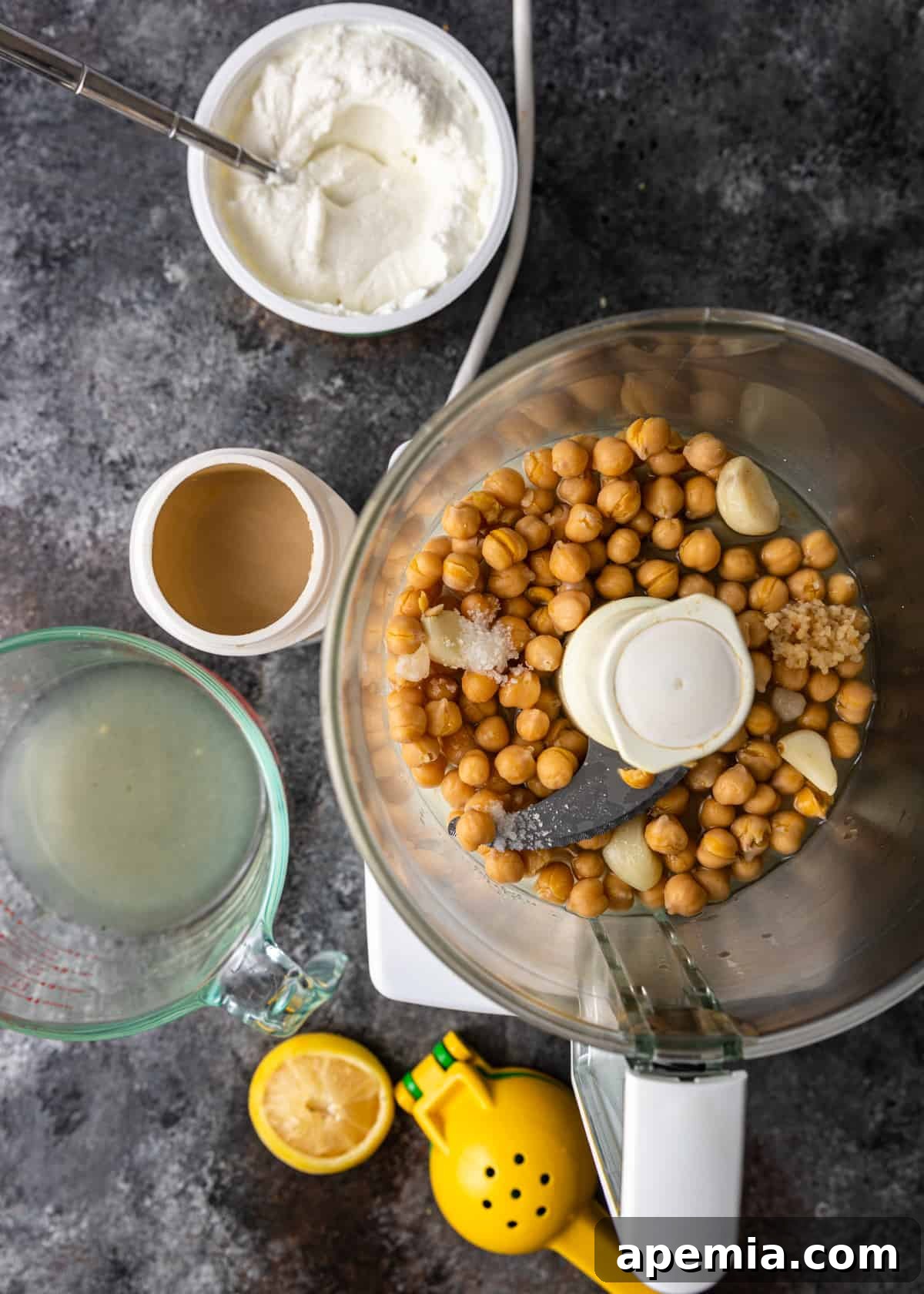
- Prepare the Velvety Hummus: Transfer 1 ½ cups of the cooked chickpeas (from step 1) to a food processor. Add the cooked garlic cloves from the saucepan, 7 tablespoons of the reserved chickpea cooking liquid, fresh lemon juice, Greek yogurt, tahini, and salt. Process the mixture until it becomes incredibly smooth and creamy. If you desire a thinner consistency, you can add a little more cooking liquid, one tablespoon at a time, until it reaches your preference.
- Assemble Your Fatteh Masterpiece: In a large mixing bowl, gently combine half of the toasted pita chips, half of the toasted pine nuts, two-thirds of the remaining warm whole chickpeas, and the freshly pureed hummus mixture. Toss carefully to ensure everything is evenly coated. Spoon this luscious mixture into your chosen serving dish—a 9×13-inch baking dish for a wider spread or an 8×8-inch dish for a deeper, more substantial casserole.
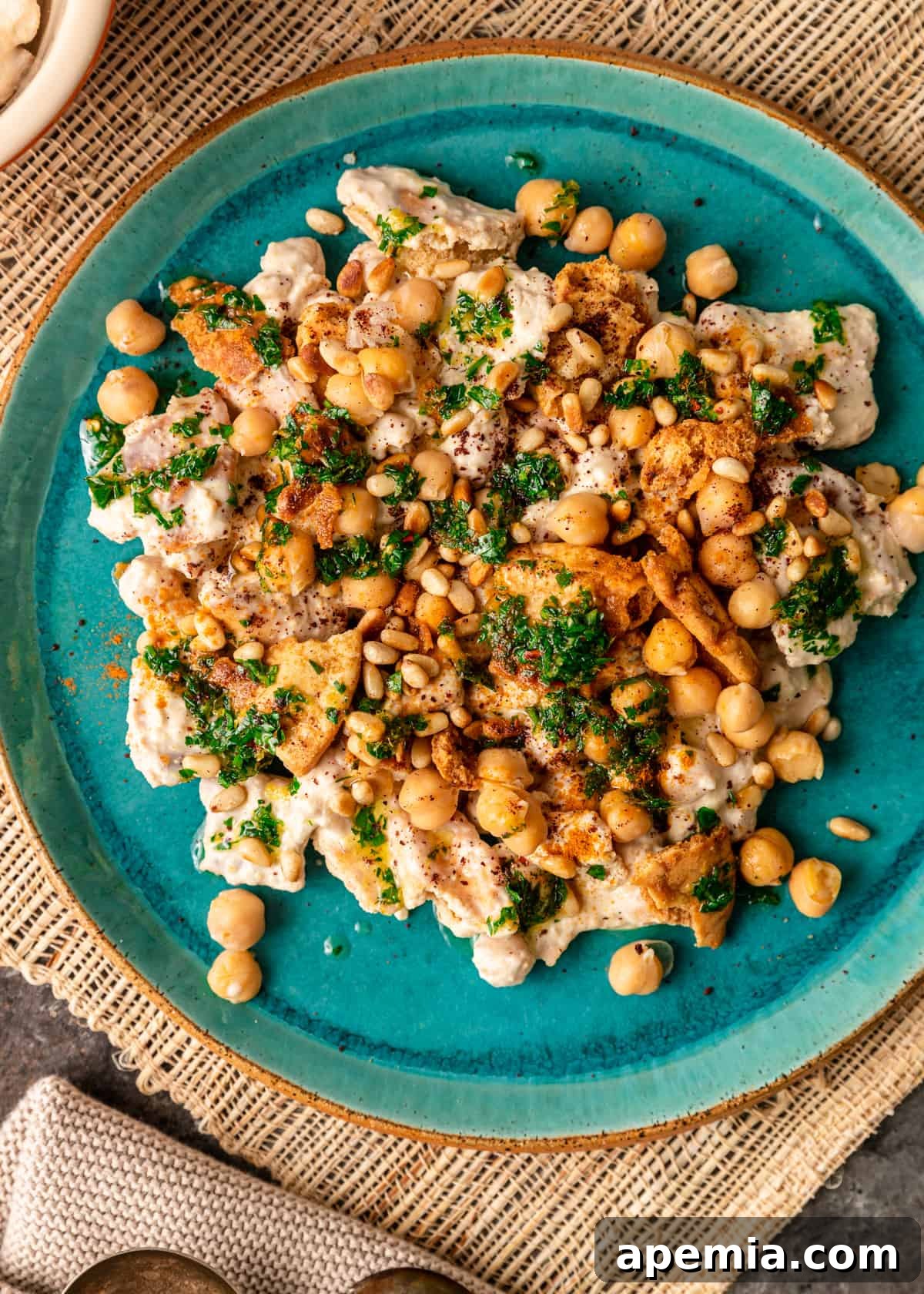
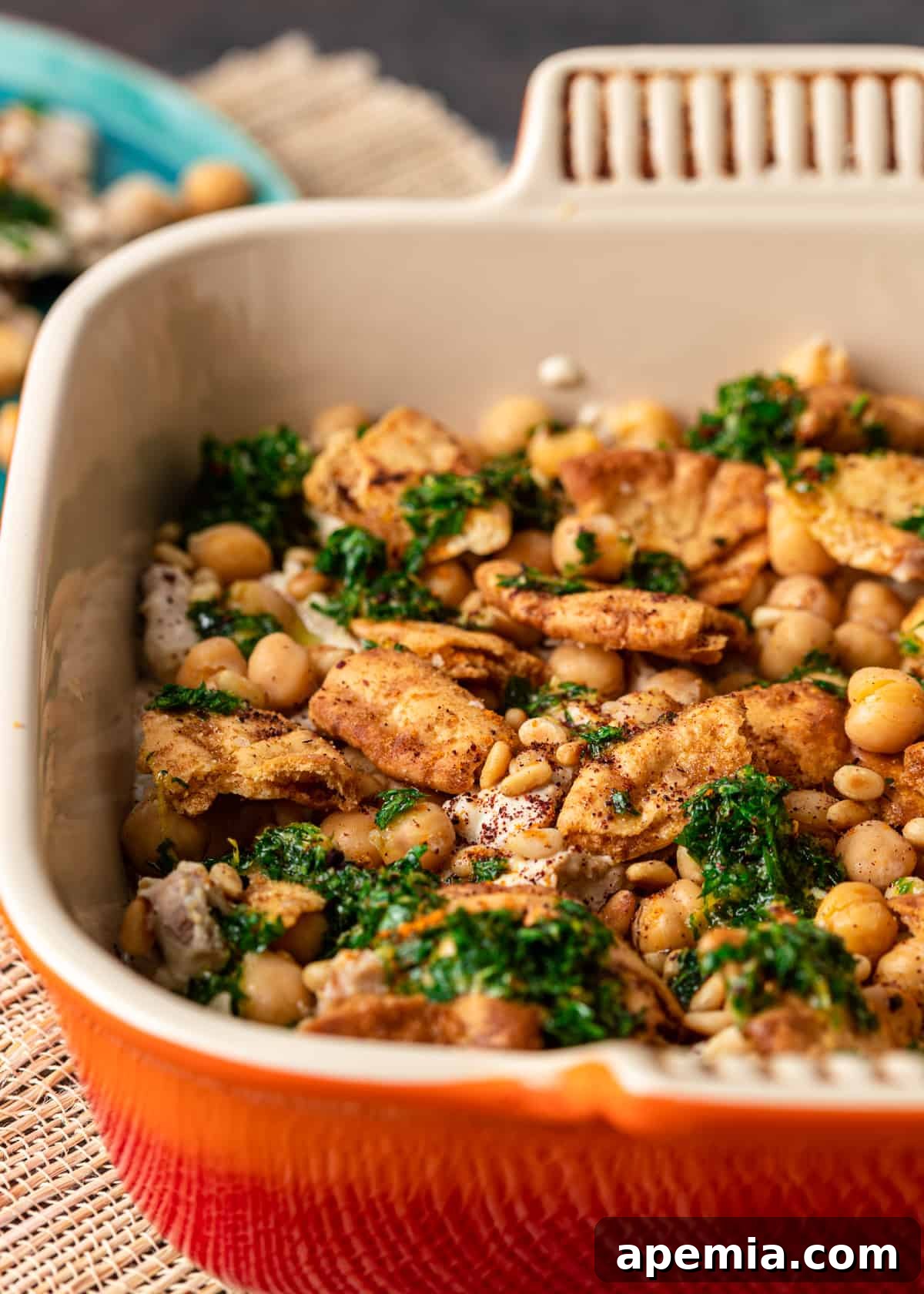
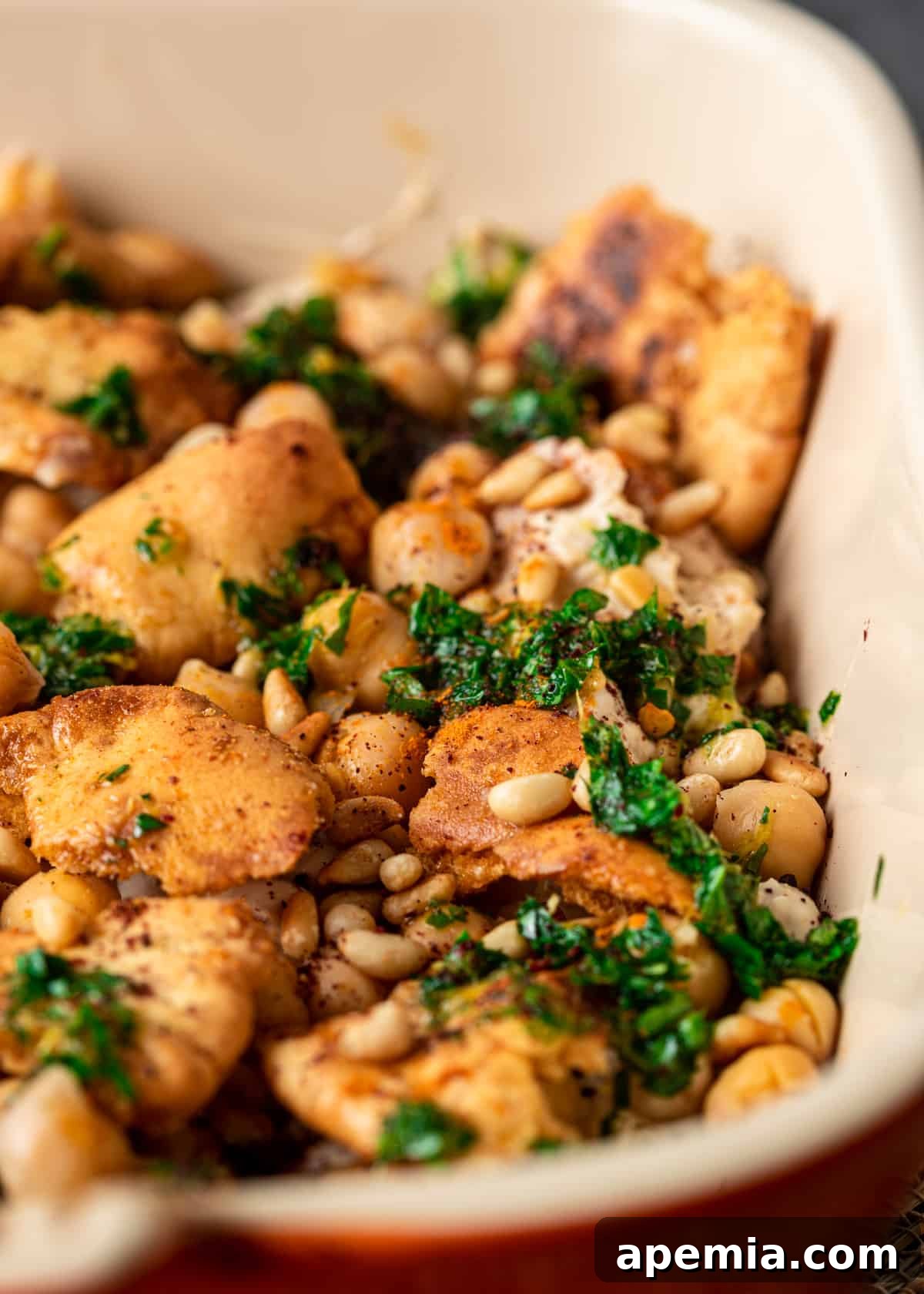
- Final Touches: Top the assembled Fatteh with the remaining crispy pita chips, the rest of the whole chickpeas, and the remaining toasted pine nuts. Drizzle the prepared parsley oil generously over the top, and finish with a sprinkle of bright red sumac for an authentic flourish and an extra touch of tang. Serve your Fatteh warm, allowing the flavors to meld beautifully.
Recommended Tools for Fatteh Success
While Fatteh can be made with basic kitchen equipment, a few tools will significantly enhance your experience and the final result:
- Food Processor: For truly smooth, lump-free hummus, a food processor or a high-powered blender is indispensable. It breaks down the chickpeas and garlic into a creamy consistency that’s hard to achieve by hand.
- Sturdy Baking Dish: A 9×13-inch or an 8×8-inch baking dish (for a deeper, more casserole-like presentation) is ideal for assembling and serving Fatteh. Opt for one that comes with a lid if you plan on storing leftovers, making it convenient for refrigeration.
- Small Skillet: A small, dry skillet is perfect for toasting the pine nuts to golden perfection without burning them. Its size allows for better heat control and even browning.
Storing and Reheating Your Fatteh
Leftover Fatteh is wonderfully delicious, whether enjoyed warm or cold straight from the fridge. However, it’s important to note that the crispy pita chips will inevitably soften over time, even after reheating. They will still be flavorful and integrate beautifully with the creamy hummus, but they won’t retain their initial crunch. If you prefer your pita chips super crispy for leftovers, a great tip is to toast a fresh batch of pita separately and add them just before serving.
To reheat Fatteh, gently warm it in the oven. Cover the dish with foil to prevent the top from drying out or burning, and bake until it’s warmed through. Avoid using a microwave if possible, as it can make the hummus watery and the pita soggy. Enjoying Fatteh the next day is a testament to its enduring flavors, making it a perfect make-ahead dish for gatherings or meal prep.
Frequently Asked Questions About Fatteh
Hummus, especially a traditional one, is naturally quite thick, which is part of its charm! If your hummus feels too dense for your preference, don’t worry. You can easily adjust its consistency by adding a small amount of the reserved chickpea cooking liquid (from step 1) to the food processor. Blend thoroughly and repeat, adding one tablespoon at a time, until you achieve your desired level of creaminess and smoothness. Olive oil or a little fresh lemon juice can also help thin it out while adding flavor.
Fatteh is designed to be a communal dish, perfect for sharing! Simply scoop up generous portions using the crispy pita chips directly from the top of the casserole. For a truly authentic experience, make sure to get a bit of every layer – the crunchy pita, the creamy hummus, and the whole chickpeas – in each bite. If you anticipate a large group or simply love a lot of crunch, I encourage you to prepare an extra batch of crispy pita chips for ample dippers. It can also be enjoyed with soft, uncooked pita bread for a different textural experience.
As mentioned, “Fatteh” broadly refers to casserole-like dishes incorporating broken or “crushed” bread. While this Levantine fattet hummus features a delightful combination of chickpeas, a yogurt-tahini dip, and crispy pita, other variations abound. Egyptian fattah, for instance, is a heartier dish often served with rice and meat, typically lamb. Some regional versions might incorporate eggplant (fattet makdous), chicken (fattet djaj), or other vegetables, reflecting the diverse agricultural and culinary traditions across the Middle East. Each type offers a unique and delicious exploration of this beloved concept.
While Fatteh is best enjoyed warm and freshly assembled for maximum crunch from the pita, you can prepare many components ahead of time to make assembly quick and easy. Cook the chickpeas and prepare the hummus mixture a day in advance, storing them separately in airtight containers in the refrigerator. You can also toast the pita chips and pine nuts beforehand and store them at room temperature. Assemble the Fatteh just before serving, then briefly warm it in the oven if desired, to ensure the freshest taste and texture.
Fatteh, particularly this chickpea and yogurt version, can be a very wholesome and nutritious dish. Chickpeas are an excellent source of plant-based protein and dietary fiber, which aids digestion and promotes satiety. Greek yogurt adds probiotics for gut health and additional protein. Healthy fats come from olive oil and tahini, providing essential nutrients. While portions and additional ingredients (like butter for pine nuts, if used) can influence its calorie count, Fatteh is generally considered a balanced meal or snack, rich in vitamins, minerals, and plant-based goodness.
Share this recipe on Pinterest!
Love this recipe? Share it with the world on Pinterest to inspire others.
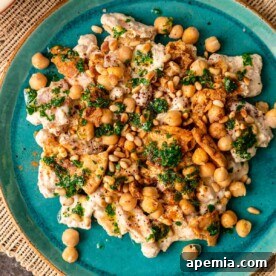
Fatteh (Crispy Pita Hummus and Yogurt)
6
15 mins
20 mins
35 mins
Print Recipe
Ingredients
Crispy Pita
- 3 pita breads (about 7 ounces total)
- 2 tbsp olive oil
- 1/2 tsp ground cumin
- 1/2 tsp kosher salt
Topping
- 1/2 cup finely chopped flat leaf parsley
- 2 lemons (1/4 cup juice and 2 tsp zest)
- 2 tbsp olive oil
- 1/4 tsp kosher salt
- 1/4 tsp red pepper flakes
Hummus
- 3 3/4 cups cooked chickpeas (three 15.5 oz cans, drained)
- 2 1/2 cups water
- 1 tsp ground cumin
- 4 cloves garlic (slightly crushed, see Note 1)
- 2/3 cup plain Greek yogurt
- 1/2 cup tahini
- 1 tsp kosher salt
- 1/2 cup pine nuts
- 1/2 tsp sumac
Instructions
- Preheat oven to 350°F (175°C). Line a baking tray with parchment paper or Silpat liner. Set aside.
- Add chickpeas to a saucepan and cover with 2 1/2 cups water, 1 tsp cumin, and slightly crushed garlic cloves. Bring to a boil, lower heat to simmer; cook uncovered for 10 minutes.
- Tear the pita into 1-inch pieces and transfer to a mixing bowl. Add 2 tbsp olive oil, 1/2 tsp cumin and 1/2 tsp salt and toss to combine. Spread on lined baking tray and toast in preheated oven for 20 minutes, or until golden brown.
- In a small bowl, add and stir together parsley, lemon zest, 2 tbsp olive oil, 1/4 tsp salt and red pepper flakes. Set aside.
- In a small skillet over low heat, gently dry toast the pine nuts until golden brown. Set aside.
- Transfer 1 1/2 cups cooked chickpeas to a food processor. Add cooked garlic cloves, 7 tablespoons of cooking liquid, lemon juice, yogurt, tahini and salt. Puree until smooth.
Assembly
- To a large mixing bowl, add half of the toasted pita, 1/2 the pine nuts, 2/3 remaining warm chickpeas, and pureed hummus mixture. Gently toss to coat and combine.
- Spoon into a 9×13″ or 8×8″ dish with sides (for a deeper fatteh hummus). Top with remaining pita chips, remaining chickpeas, remaining pine nuts.
- Spoon the parsley oil over the top and sprinkle with sumac. Serve warm.
Notes
- Use the side of a chef’s knife or garlic press to lightly crush the garlic cloves.
- Recipe adapted from Falastin.
Nutrition
The information shown is an estimate provided by an online nutrition calculator. It should not be considered a substitute for a professional nutritionist’s advice.
breakfasts
Levantine, Middle Eastern
Kevin
Have You Made This Recipe? Let Me Know on Instagram!
Tag @keviniscooking or use the hashtag #keviniscooking!