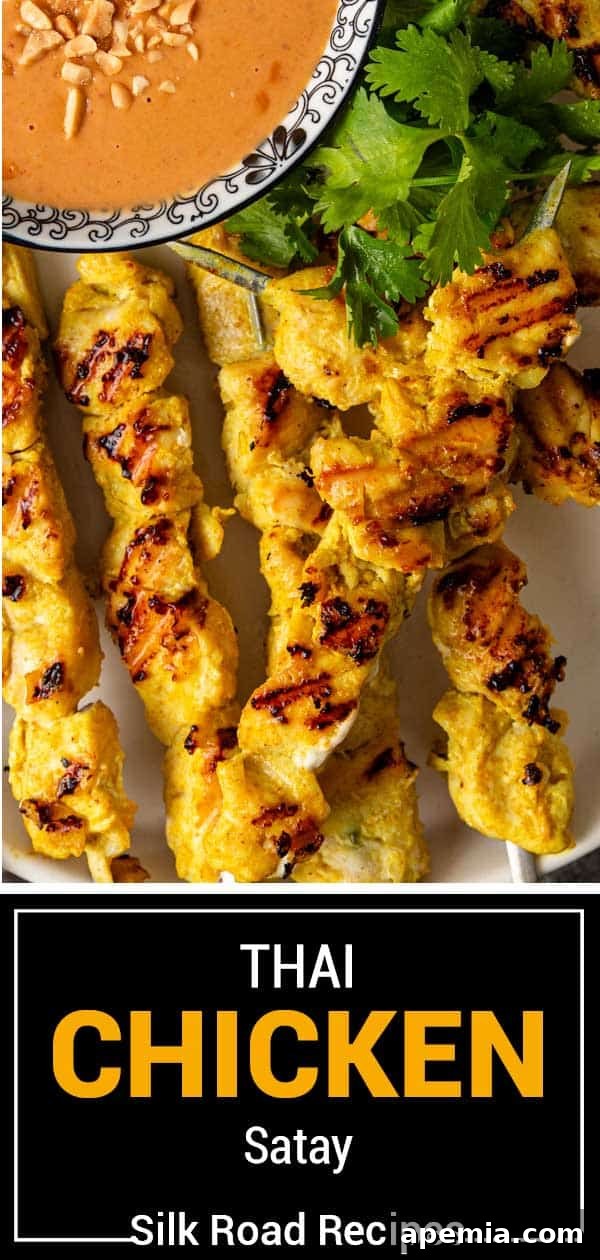
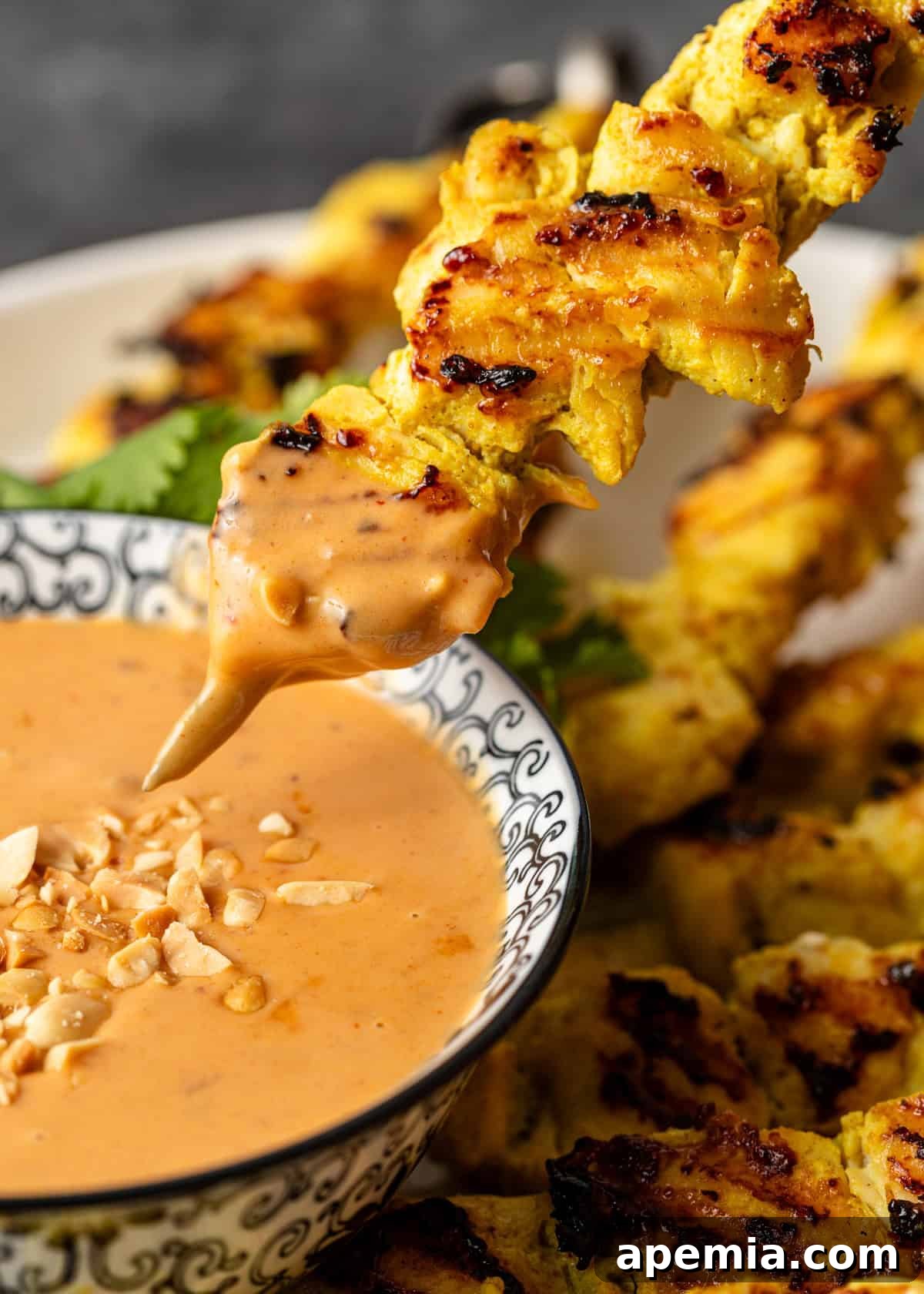
Prepare to tantalize your taste buds with my incredibly flavorful Chicken Satay Skewers, a truly essential addition to any summer BBQ spread! Imagine succulent chunks of chicken, lovingly marinated in a rich, sweet, and savory Thai peanut sauce, then perfectly charred on the grill for an irresistible smoky bite that’s bursting with aromatic spices.
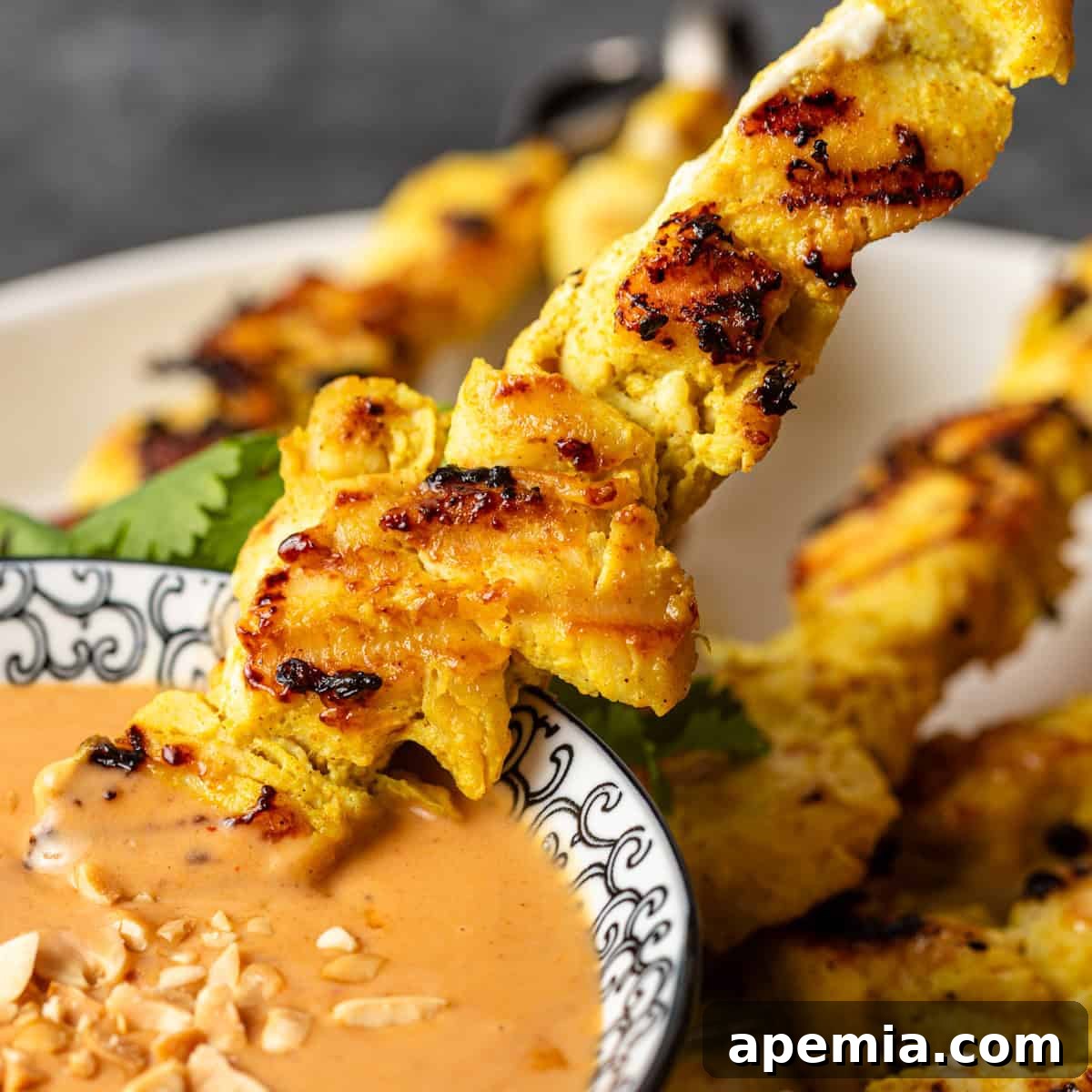
Chicken satay is more than just a dish; it’s a culinary journey, and it’s consistently one of my favorite takeout orders. While deceptively simple in concept—marinated, grilled meat threaded onto a skewer—this South Asian classic is an explosion of unbelievably complex and satisfying flavors! Its popularity stretches across many cultures, each with unique regional interpretations that add to its rich heritage.
Throughout Southeast Asia, satay takes on countless forms. Singaporean hawker centers are renowned for their sweet, miniature sticks of various meats, expertly grilled al fresco over roaring open fires. Indonesia, often credited as the birthplace of satay, boasts hundreds of regional “sate” variants, each with its distinctive marinades, meats, and accompanying sauces, reflecting the diverse culinary traditions of its islands. From Madura’s sweet soy-glazed satay to Padang’s spicy curry-like sauce, the variations are endless.
My personal favorite, and the star of today’s recipe, is a vibrant Thai-style chicken satay. This rendition features tender pieces of chicken breast or thigh, deeply infused with a luxurious marinade that delivers a harmonious balance of sweet, savory, and subtly spicy notes. Grilled swiftly over high heat, these skewers develop a delicious smoky char on the outside while remaining incredibly juicy within. They are positively loaded with the fresh essence of coconut milk, the warmth of aromatic spices like turmeric and cumin, and a hint of sweetness that caramelizes beautifully under the flames.
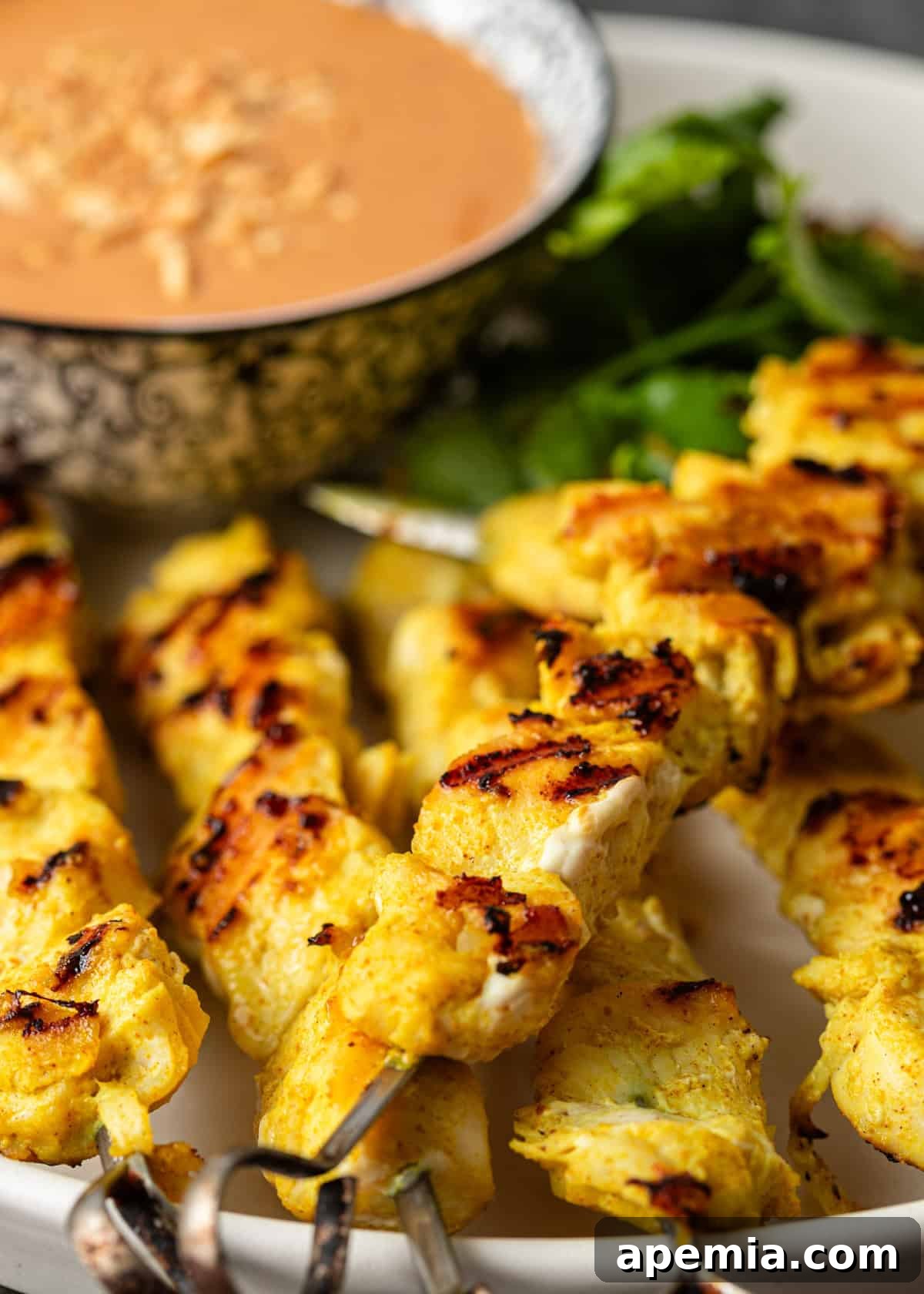
No chicken satay experience is complete without its signature dipping sauce. For the ultimate pairing, I highly recommend using my specialized Thai Peanut Sauce recipe, or you can adapt the easy peanut sauce from my Thai burger recipe for a quicker alternative. Serve these exquisite skewers with a fluffy helping of fragrant jasmine rice to soak up all the delicious flavors. For a lighter, carb-conscious option, wrap the chicken in crisp lettuce leaves with some fresh herbs, transforming it into a mouthwatering, refreshing snack or appetizer. Garnish with a squeeze of fresh lime juice and a sprinkle of chopped cilantro for an extra burst of freshness.
Table of Contents
- The Importance of Marinade and a Separate Dipping Sauce
- Ingredient Notes and Smart Substitutions
- How to Make Perfect Chicken Satay
- Recommended Tools for Chicken Satay
- Storing and Reheating Leftover Satay
- Frequently Asked Questions About Chicken Satay
- Chicken Satay Recipe
With my straightforward recipe, you can effortlessly whip up restaurant-quality chicken satay right in your own kitchen. It’s a fantastic dish for entertaining, a delightful family meal, or an impressive contribution to any potluck. Your friends and family will undoubtedly thank you for this flavorful creation!
Kevin’s Essential Tip for Food Safety
The Importance of Marinade and a Separate Dipping Sauce
A critical food safety reminder: It is absolutely essential NOT to use the marinade that the chicken was in as a dipping sauce once the chicken has been grilled. This is because the raw marinade contains raw chicken juices, which can harbor harmful bacteria like Salmonella. Always prepare a fresh, separate dipping sauce for serving. For maximum flavor and safety, I strongly recommend making my dedicated Thai Peanut Sauce (you’ll find the link in the recipe card below). This strategy not only prevents cross-contamination but also ensures the dipping sauce is perfectly fresh and vibrant. A clever tip to reduce waste: this recipe typically uses half a can of coconut milk for the chicken marinade. I often use the remaining half, plus one more full can, when I prepare my peanut sauce, ensuring every drop of flavor is utilized!
Ingredient Notes and Smart Substitutions
(For precise measurements and quantities, kindly refer to the full recipe card below)
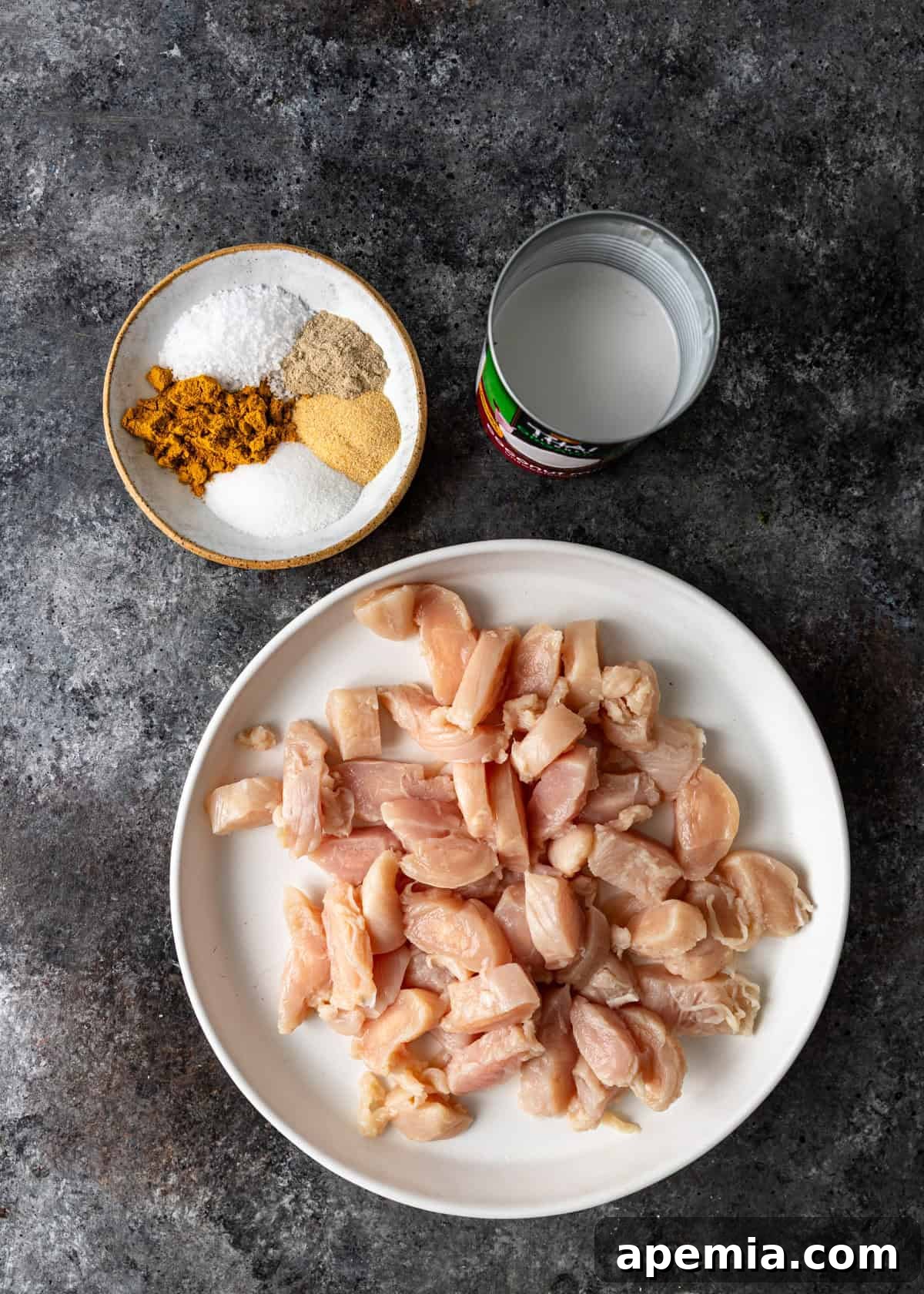
- Chicken Breast: Boneless, skinless chicken breast is an excellent choice as it crisps up beautifully under high heat, giving us the irresistible signature char that satay is known for. Its lean nature also readily absorbs the marinade. Alternatively, boneless, skinless chicken thigh meat works equally well, often providing an even juicier and more forgiving result for those who prefer dark meat. Ensure chicken is cut against the grain for maximum tenderness.
- Coconut Milk: This forms the luxurious, creamy base of our marinade, imparting a subtle sweetness and helping tenderize the chicken. Its cool, fresh flavor beautifully balances the warming spices like curry powder and white pepper. For a richer flavor, opt for full-fat coconut milk; light coconut milk can be used if you’re watching calories, but may slightly alter the texture and depth of flavor.
- Sugar: Granulated sugar is essential for achieving that mouthwatering caramelization under the intense grilling heat, adding a tantalizing sweetness to this classic chicken satay recipe. For a more authentic Thai flavor profile, you could substitute granulated sugar with palm sugar, finely grated, which offers a deeper, more nuanced caramel note. Brown sugar is also a viable substitute.
- Curry Powder: As always, I prefer using my own homemade blend for the most vibrant and intense flavor profile, packed with turmeric, cumin, coriander, and other aromatics. If you don’t have a homemade blend, a good quality store-bought Madras curry powder works wonderfully. For a spicier, more authentic kick, consider a small amount of Thai red curry paste in addition to or as a partial substitute for the powder, adjusting to your heat preference.
- Kosher Salt: Salt is not just for seasoning; in a marinade, it acts as a tenderizer, enhancing the chicken’s ability to absorb all the delicious flavors and resulting in the most incredibly tender and juicy chicken satay. Sea salt can be used as a direct substitute, but table salt should be used in lesser quantities due to its finer grain and higher salinity.
- White Pepper: Used specifically instead of black pepper for the more subtle, earthy heat it provides, which is characteristic of many Southeast Asian cuisines. It blends seamlessly with the other spices without overpowering them.
- Garlic Powder: Provides a foundational savory, umami kick that is indispensable in many Asian dishes. For an even more pungent and fresh flavor, feel free to finely mince 2-3 cloves of fresh garlic as an alternative to the powder.
- Canola Oil or Nonstick Spray: Absolutely crucial for preventing the chicken from sticking to the grill grates, ensuring an even cook and beautiful char without tearing the delicate chicken pieces. Any other neutral oil with a high smoke point, such as grapeseed oil or vegetable oil, can be used as an effective alternative.
- Optional Fresh Aromatics: For an even more complex and authentic Thai flavor, consider adding finely minced lemongrass, galangal, or shallots to your marinade. These ingredients provide layers of fragrant, zesty, and subtly spicy notes that elevate the satay.
How to Make Perfect Chicken Satay
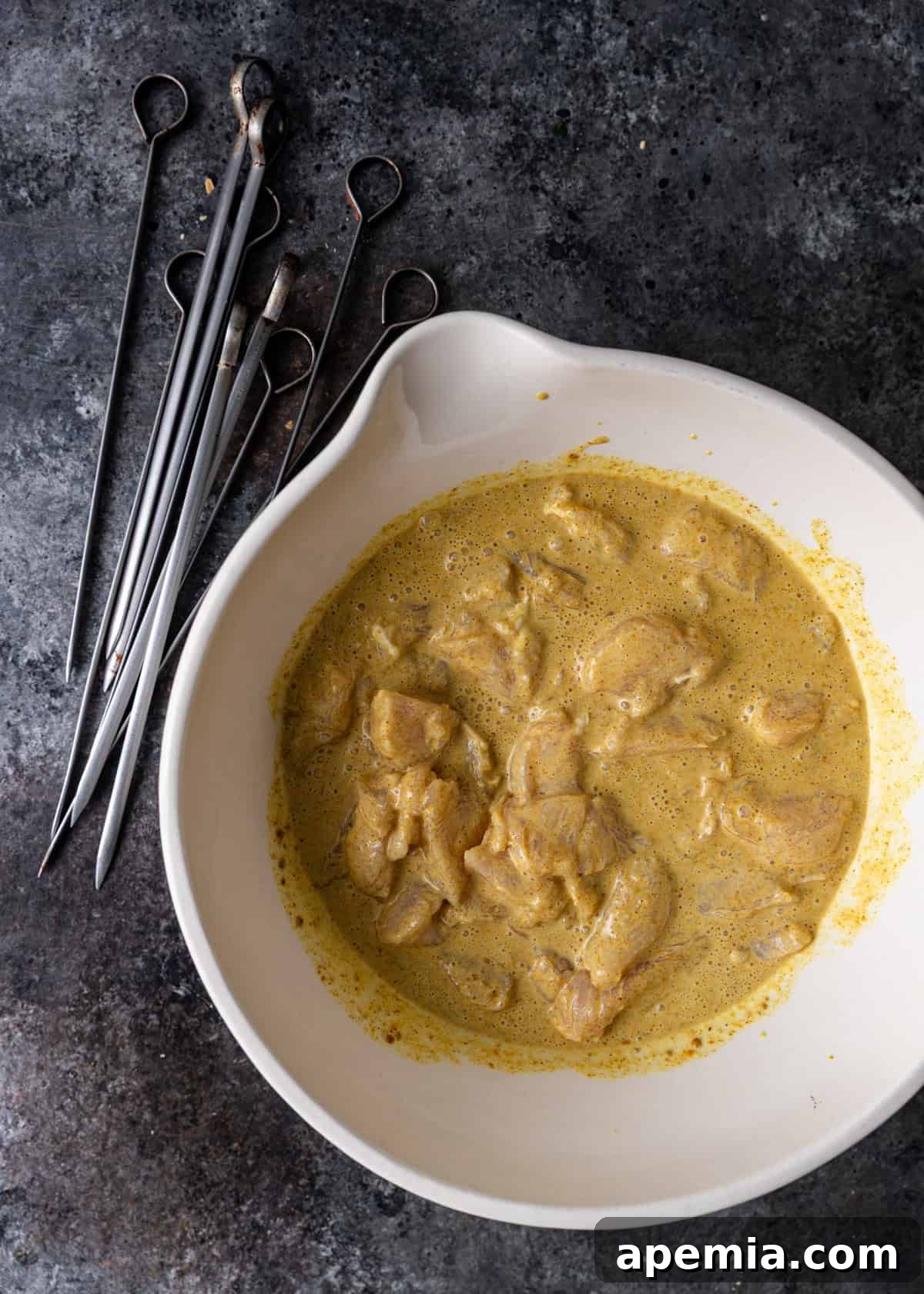
- Craft the Marinade: In a medium-sized bowl, combine the creamy coconut milk, granulated sugar, aromatic curry powder, kosher salt, subtle white pepper, and savory garlic powder. Whisk these ingredients together thoroughly until all the solid components have completely dissolved and the mixture is smooth and well-incorporated. This ensures an even distribution of flavor throughout the chicken.
- Prepare the Chicken: Lay your boneless, skinless chicken breast (or thigh) on a clean cutting surface. Using a sharp knife, carefully slice the chicken against the grain of the meat into uniform 2-inch long pieces, about ¼-inch thick. This cutting technique helps the chicken remain tender. Transfer the sliced chicken to the bowl with the marinade and toss vigorously until every piece is evenly coated. Cover the bowl tightly and set it aside to marinate for at least 20 minutes; for deeper flavor, you can marinate it for up to 4 hours in the refrigerator.
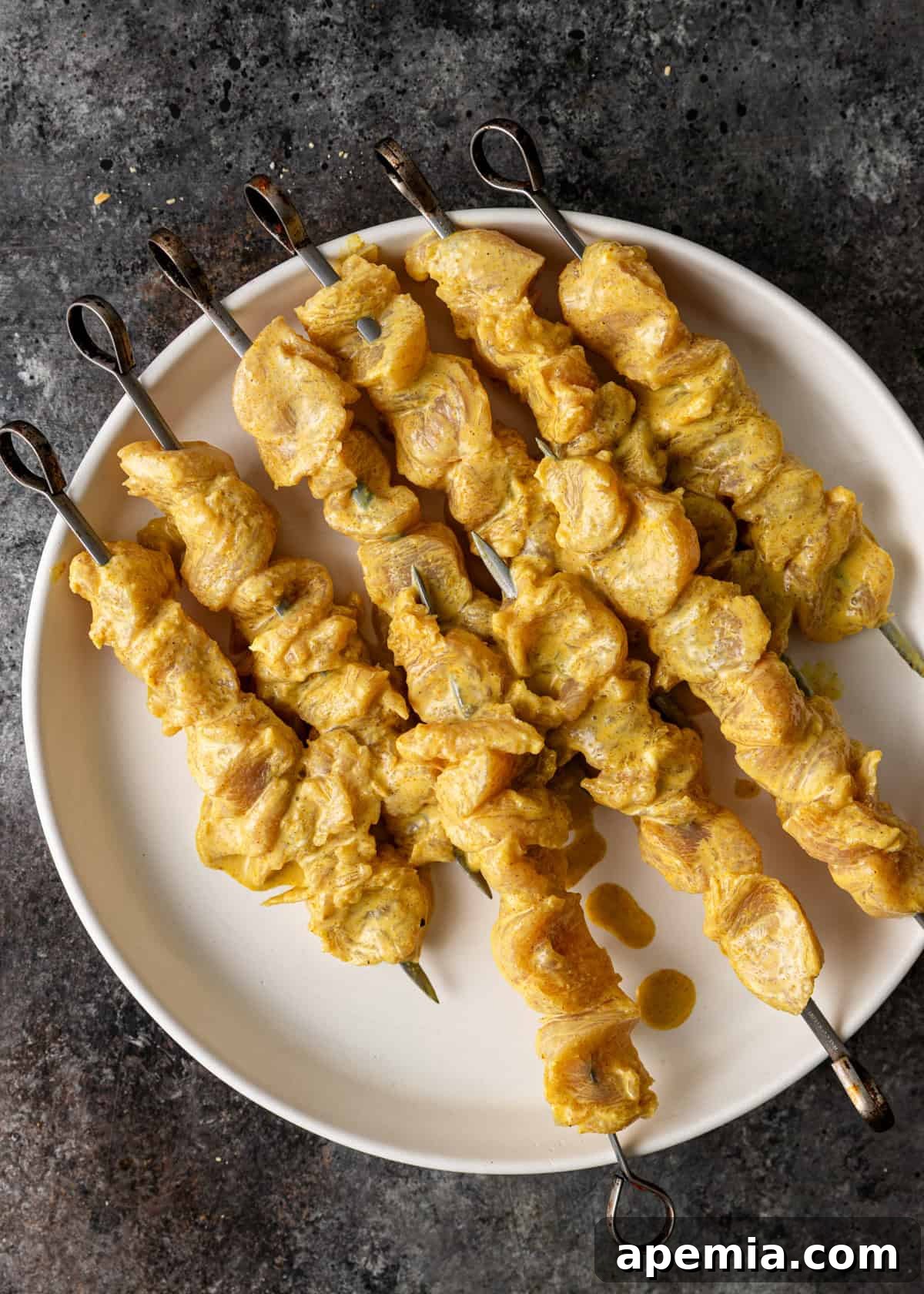
- Construct the Skewers: If using bamboo skewers, ensure they have been soaked in water for at least 20-30 minutes to prevent them from burning on the grill. Carefully thread each marinated chicken piece onto a skewer, arranging them tightly but without overcrowding. Leave approximately 2 inches clear at the base of each skewer to serve as a convenient handle during grilling.
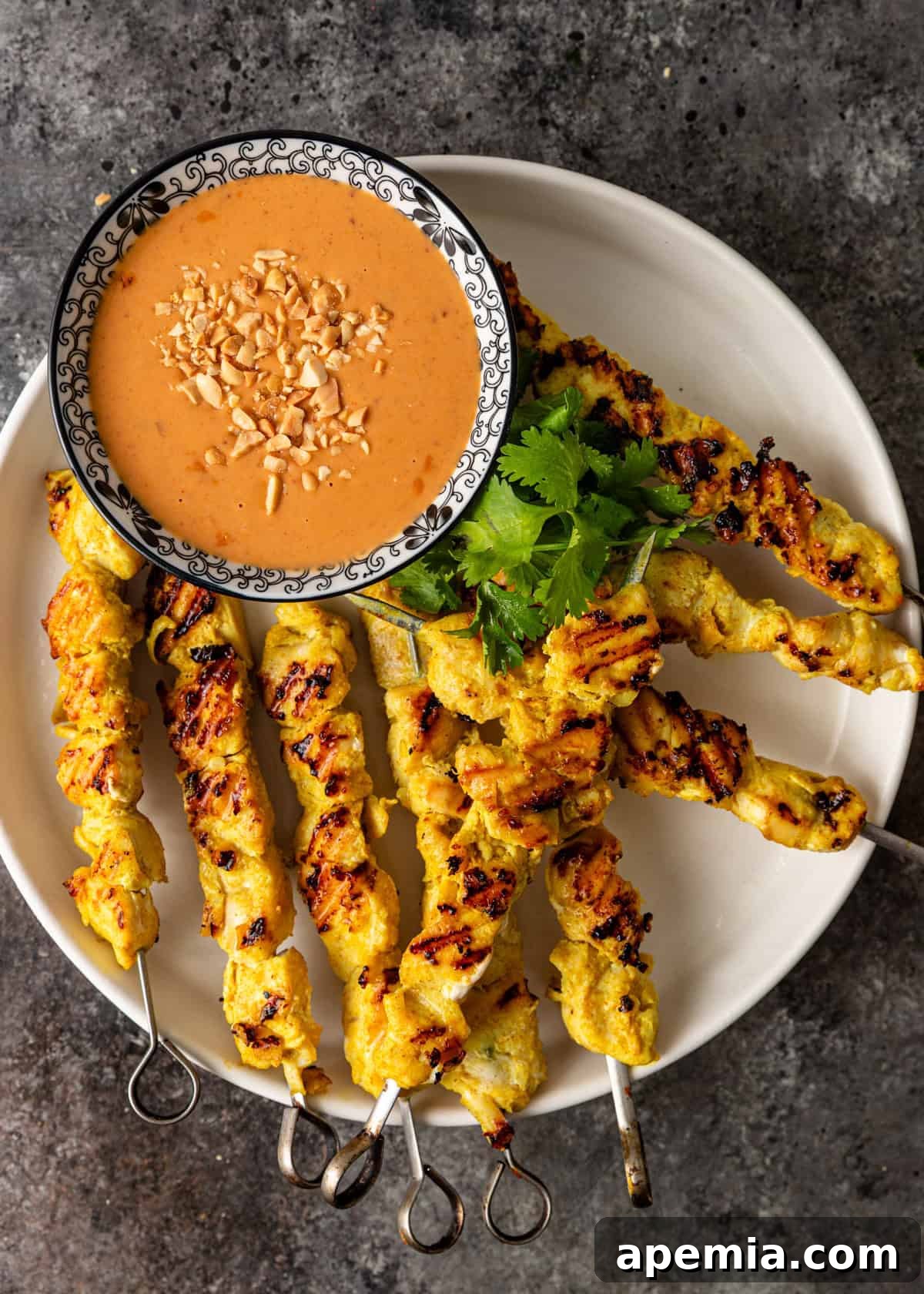
- Grill to Perfection: Begin by thoroughly cleaning your grill grates to prevent sticking and ensure optimal heat transfer. Spray the grates generously with nonstick cooking spray or brush with canola oil. Preheat your grill to a medium-high heat, aiming for a consistent temperature of 350-375 degrees F (175-190°C). Once hot, place the chicken satay skewers on the grill. Grill each side for 3 to 5 minutes, or until the chicken is beautifully charred on the exterior and cooked through to an internal temperature of 165°F (74°C). The cooking time will vary slightly depending on the thickness of your chicken and the heat of your grill.
- Serve Immediately: Once perfectly grilled, remove the chicken satay skewers from the grill. Arrange them enticingly on a platter. Serve immediately with a generous bowl of your homemade Thai peanut sauce for dipping, and offer fresh lime wedges on the side for guests to squeeze over their satay for a bright, zesty finish. A sprinkle of fresh cilantro also adds a lovely touch.
Recommended Tools for Chicken Satay
- Skewers: It simply wouldn’t be satay without the skewers! Bamboo skewers are the classic, traditional choice; just remember to soak them in water for at least 20 minutes before grilling to prevent them from catching fire. Alternatively, metal skewers work just as well, are reusable, and require no pre-soaking, making them a more eco-friendly and convenient option for frequent grilling.
- Whisk: An essential tool for thoroughly combining all the ingredients in your marinade. A small manual whisk will suffice perfectly here, ensuring a smooth, well-emulsified marinade without the need for any powered equipment.
- Grill or Grill Pan: While an outdoor grill provides the best smoky char, a heavy-duty grill pan used on your stovetop over high heat can achieve a very similar effect indoors. Ensure it’s well-seasoned or sprayed with nonstick oil.
- Tongs: Long-handled tongs are indispensable for safely handling and flipping the skewers on the hot grill, preventing burns and ensuring even cooking.
- Sharp Knife and Cutting Board: For preparing the chicken into uniform pieces for optimal cooking and presentation.
Storing and Reheating Leftover Satay
Proper storage is key to enjoying your delicious chicken satay leftovers. Once the skewers have completely cooled to room temperature, transfer them to an airtight container or wrap them individually in aluminum foil. Stored this way, they will maintain their freshness and flavor for 3 to 4 days in the refrigerator.
Chicken satay also freezes exceptionally well, making it a fantastic meal prep option. For best results, it’s a good idea to remove the chicken pieces from the skewers before freezing, as the skewers can take up unnecessary space and sometimes splinter. Separate the individual chicken pieces and arrange them in a single layer on a baking sheet to flash freeze for about an hour. Once solid, transfer them to freezer-safe bags or containers, ensuring as much air is removed as possible. They will keep beautifully for up to 2 months. When you’re ready to enjoy them, thaw the frozen chicken overnight in the refrigerator before reheating.
To reheat your chicken satay, you have several excellent options to maintain moisture and flavor. For oven reheating, place the meat on a baking tray, cover it loosely with foil to prevent drying, and bake in a preheated oven at 350 degrees F (175°C) for 10 to 12 minutes, or until thoroughly heated through. Alternatively, for a quick stovetop method, place the chicken pieces in a skillet over medium heat with a splash of water or a little extra coconut milk, cover, and gently steam for a few minutes until warmed through. An air fryer can also provide excellent results, crisping the exterior while keeping the inside tender.
Share this recipe on Pinterest!
Love this recipe? Share it with the world on Pinterest and inspire others to cook!
Frequently Asked Questions About Chicken Satay
Absolutely, you can! If you don’t have access to an outdoor grill, a cast-iron grill pan on your stovetop is an excellent alternative that provides a very similar cook and beautiful char marks. Just ensure the pan is adequately preheated over high heat, and use plenty of cooking spray or oil to prevent sticking. You might also consider flipping the chicken more regularly as the contact surface with the pan is larger, increasing the likelihood of sticking if left unattended for too long. For those without a grill pan, broiling in the oven or even pan-frying in a regular skillet can work, though the char and smoky flavor profile will be slightly different.
Yes, satay is incredibly versatile and traditionally comes in many different varieties beyond chicken. Lamb, beef (typically sirloin or tenderloin), and even whole shrimp are common and delicious choices for satay. Each meat offers a unique texture and flavor profile. You will need to adjust the cooking time accordingly for different types of meat; for instance, beef may require slightly longer cooking, while shrimp cooks very quickly. The marinade recipe, however, remains largely the same, making it easy to experiment with your favorite proteins.
It will certainly look a little different from the classic presentation, but it is perfectly fine to cook ‘satay-style’ chicken without skewers. Simply grill or pan-fry the marinated chicken pieces directly. This method is often quicker, as you don’t spend time threading the chicken. When cooking individual pieces, be sure to decrease the cooking time slightly to account for the lack of skewer material, which would otherwise add a small amount of insulation. This makes for a great “deconstructed satay” bowl, perfect for meal prep!

Authentic Thai Chicken Satay
4
15 minutes
15 minutes
20 minutes
50 minutes
PrintRecipe
Equipment
-
12 6-inch bamboo skewers (soaked in water for 20 minutes) or metal skewers
-
Grill or heavy-duty grill pan
-
Whisk
-
Large mixing bowl
Video
Ingredients
- 2 lbs chicken breast boneless skinless or thigh meat
- 1/2 can coconut milk (13.66 ounce can, full-fat recommended)
- 1 tbsp granulated sugar (or palm sugar for authenticity)
- 1 tbsp curry powder (homemade or high-quality store-bought)
- 1 tbsp kosher salt
- 1 tsp white pepper
- 1 tsp garlic powder (or 2-3 cloves fresh minced garlic)
- 12 bamboo skewers (6-inch) soaked in water for 20 minutes or metal skewers
- Canola oil or nonstick cooking spray for grill
- Lime wedges for serving
- Fresh cilantro for garnish (optional)
Instructions
-
In a medium bowl, thoroughly whisk together the coconut milk, sugar, curry powder, salt, white pepper, and garlic powder until the mixture is smooth and all solids are dissolved. This is your flavorful marinade.
-
On a clean cutting surface, slice the chicken breast (or thigh) against the grain into uniform 2-inch pieces, about 1/4-inch thick. Transfer the chicken to the marinade bowl and toss well to ensure every piece is evenly coated. Cover the bowl and let the chicken marinate for 20 minutes at room temperature, or up to 4 hours in the refrigerator for maximum flavor.
-
Thread the marinated chicken pieces onto the pre-soaked bamboo skewers (or metal skewers), leaving approximately 2 inches clear at the bottom of each skewer to serve as a handle. Arrange the chicken snugly but not overly packed to allow for even cooking.
-
Preheat your grill or grill pan to 350°F (175°C) for at least 3 minutes to ensure it’s hot enough. Once heated, clean the grill grates thoroughly and spray with nonstick cooking spray or brush with canola oil to prevent sticking.
-
Place the chicken satay skewers on the hot grill. Grill on one side for 3-5 minutes, until a beautiful char forms. Flip the skewers and cook for another 3-5 minutes, or until the chicken is cooked through and reaches an internal temperature of 165°F (74°C).
-
Remove from the grill and serve your delicious chicken satay with plenty of Thai peanut sauce drizzled on top and more on the side for dipping. Garnish with fresh lime wedges and cilantro if desired.
Notes
- I typically serve this with my homemade Thai Peanut Sauce and fresh lime slices to squeeze on top, which adds a wonderful bright contrast to the rich flavors.
- Consider serving with jasmine rice or a fresh cucumber relish for a complete meal.
Nutrition
Carbohydrates: 6g |
Protein: 49g |
Fat: 16g |
Saturated Fat: 10g |
Polyunsaturated Fat: 1g |
Monounsaturated Fat: 2g |
Trans Fat: 0.03g |
Cholesterol: 145mg |
Sodium: 2015mg |
Potassium: 977mg |
Fiber: 1g |
Sugar: 3g |
Vitamin A: 83IU |
Vitamin C: 3mg |
Calcium: 30mg |
Iron: 3mg
The nutritional information provided is an estimate generated by an online calculator and should not be considered a substitute for professional nutritionist’s advice. Values may vary based on specific ingredients and preparation methods.
Have You Made This Recipe? Let Me Know on Instagram!
Tag @keviniscooking or use the hashtag #keviniscooking!