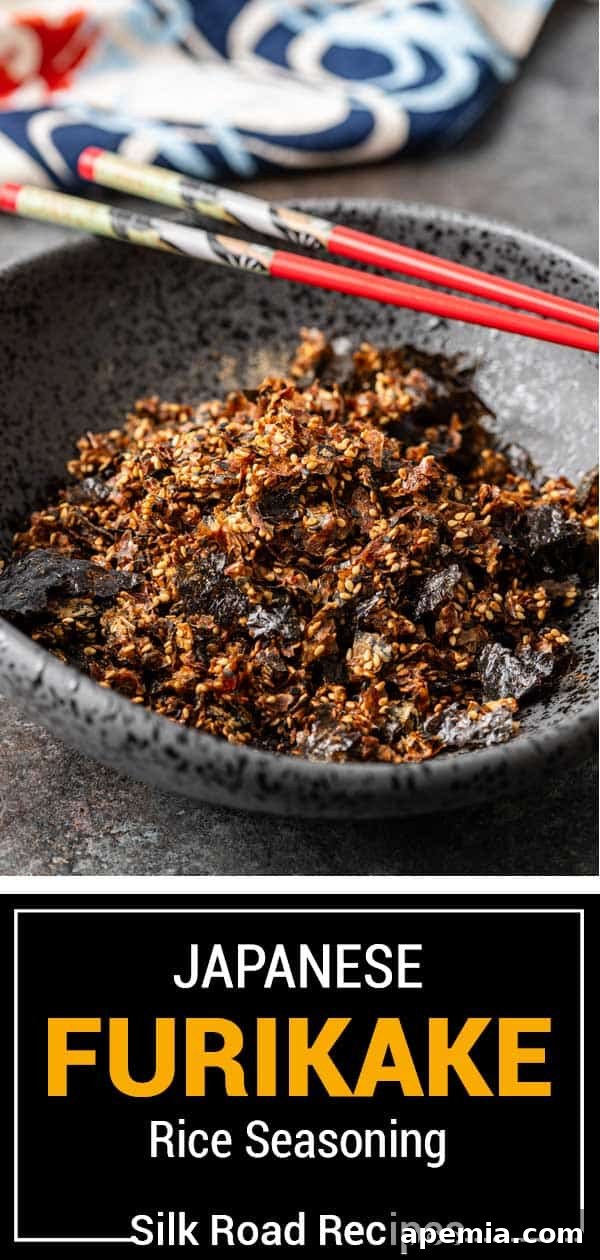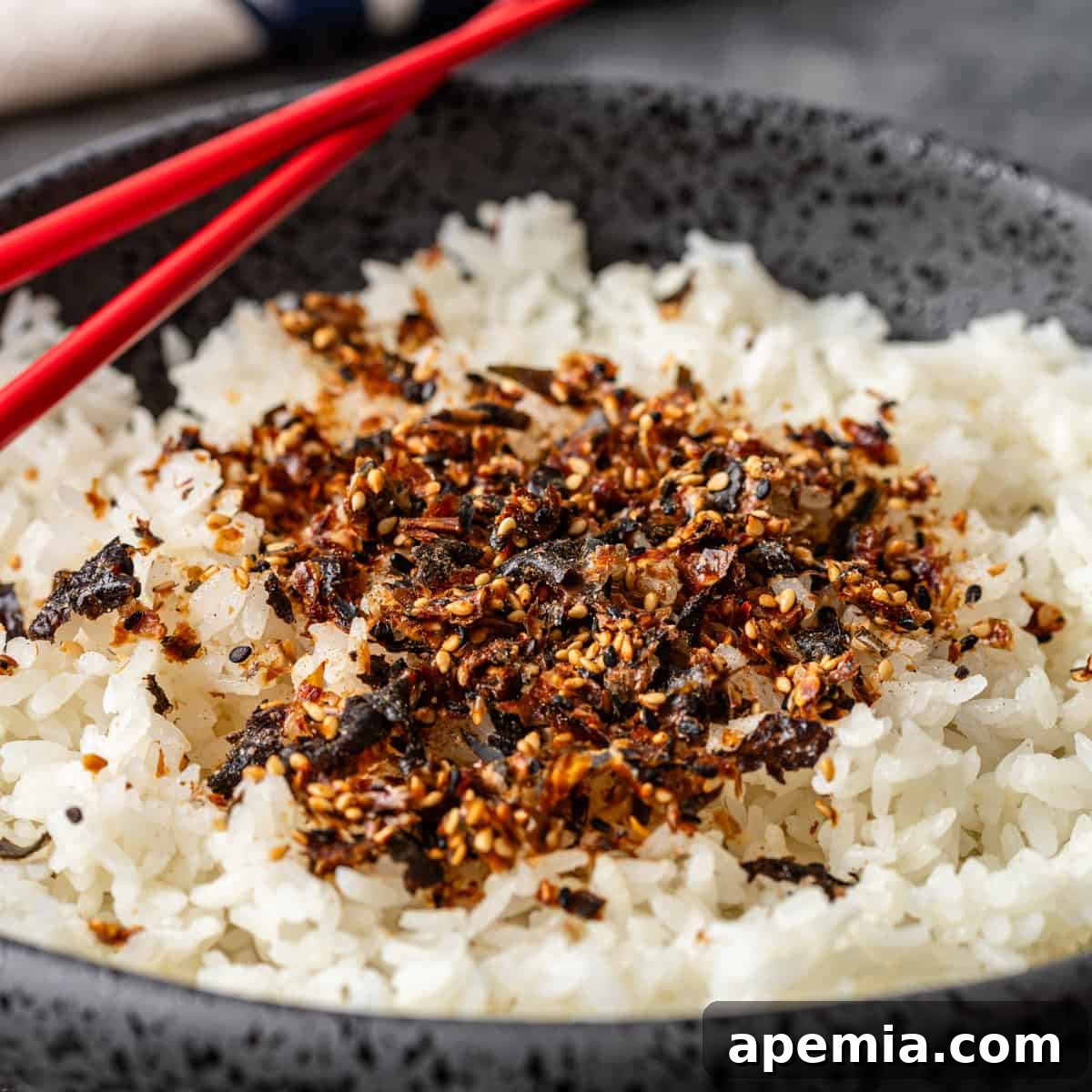
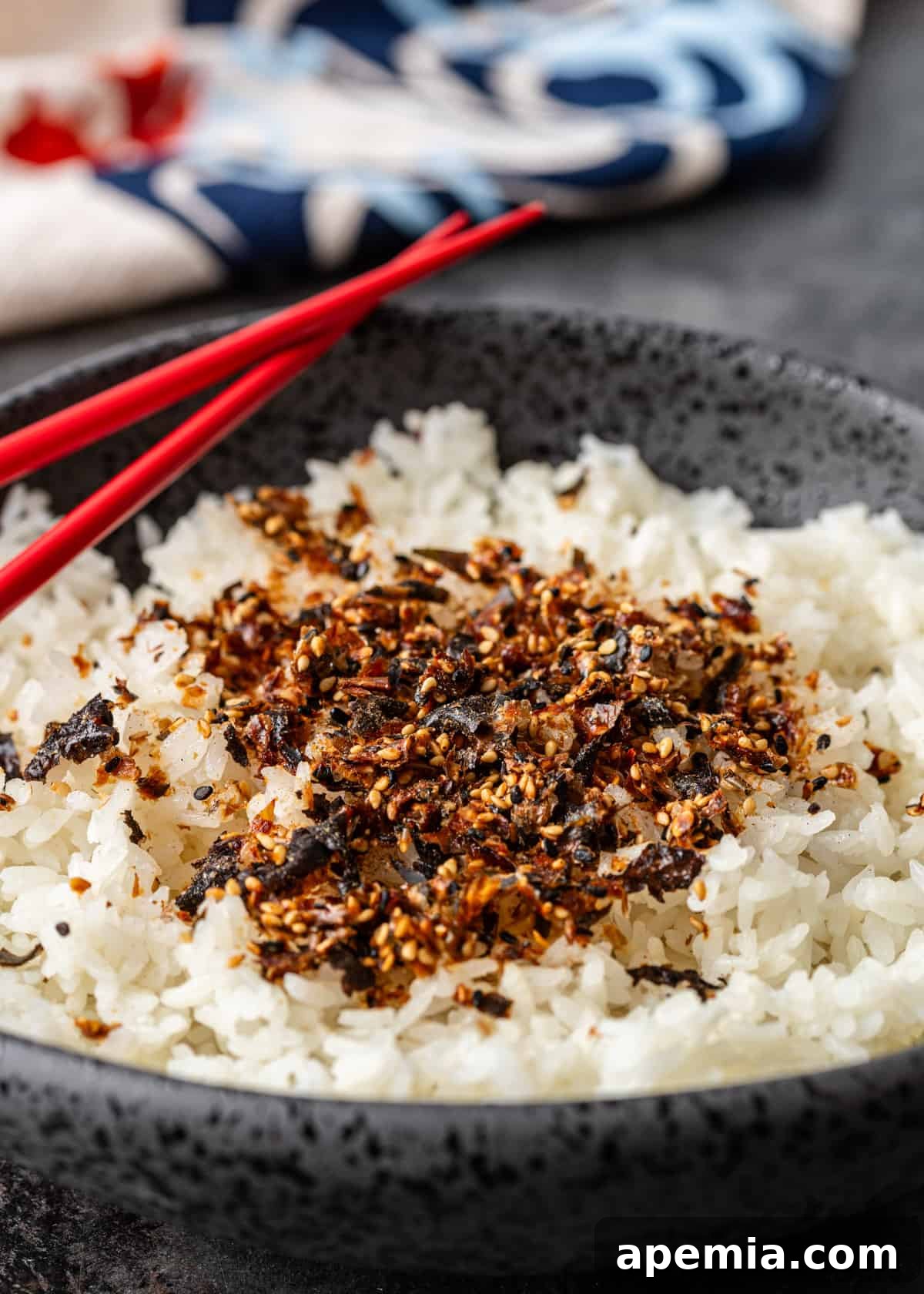
Whip up a batch of this incredible homemade furikake and infuse all your favorite dishes with a profound umami flavor. This quintessential Japanese rice seasoning brings together a harmonious blend of three distinct seaweeds and savory dried fish flakes, perfectly balanced with robust soy sauce, fragrant sake, and other essential ingredients. The result is a rich, savory, and irresistibly crunchy blend that transforms simple meals into culinary delights.
Unlocking Umami: The Art of Homemade Furikake
As an avid enthusiast of crafting DIY spice blends, I can confidently say that this furikake recipe stands out as a true gem. This versatile seasoning not only imparts an intense umami flavor but also adds an utterly delightful crunch to virtually anything it touches. More than just a topping, it offers a fascinating glimpse into the rich culinary traditions and meticulous flavor balancing inherent in Japanese cuisine.
While the prospect of making this Japanese rice seasoning might seem daunting due to a list of ingredients that may be unfamiliar, I assure you it’s quite straightforward. Embrace your curiosity, allow your creativity to flourish, and have fun introducing these exciting new staples into your pantry. You’re about to embark on a flavor journey, discovering tastes you might never have experienced before. So, relax and savor every moment of this delicious adventure!
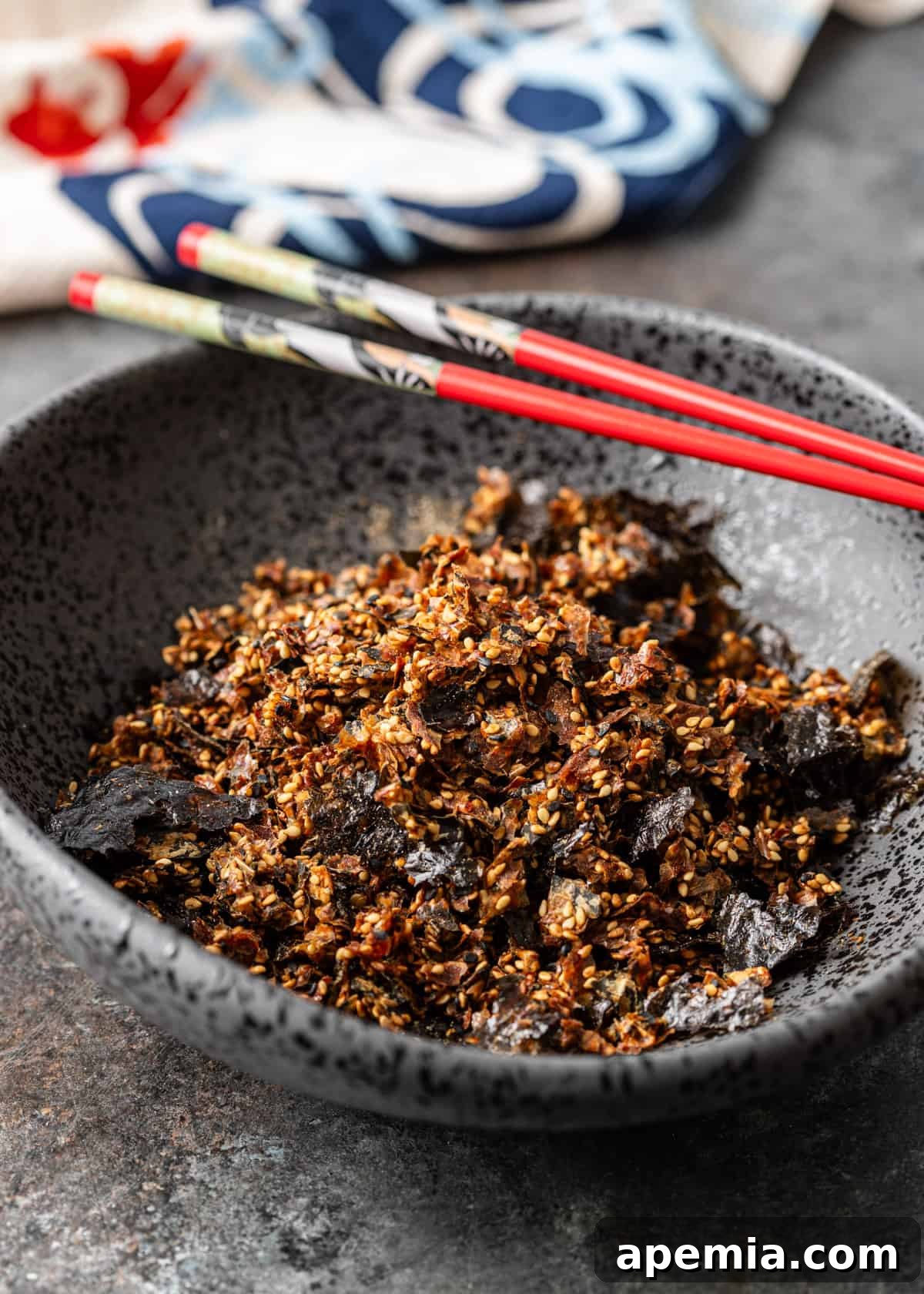
Table of Contents
- What Exactly is Furikake?
- Why Choose Homemade Furikake?
- Essential Ingredients for Your Furikake
- Smart Sourcing: Ingredients Doing Double Time
- Step-by-Step Guide to Making Furikake
- Creative Ways to Enjoy Furikake
- Frequently Asked Questions About Furikake
- Homemade Furikake (Japanese Rice Seasoning) Recipe
What Exactly is Furikake?
Furikake (ふりかけ) is a dry, savory Japanese condiment designed to be sprinkled over rice, noodles, or other dishes. Its name literally means “to sprinkle,” and it has been a beloved staple in Japanese households for generations. Typically composed of dried fish, sesame seeds, chopped seaweed, sugar, and salt, furikake offers a complex flavor profile that is salty, sweet, savory, and full of umami. It’s not just a flavor enhancer; it also adds a wonderful textural contrast, making every bite more exciting. The history of furikake dates back to the early 20th century, originally developed as a way to supplement calcium intake from fish in daily diets, evolving into the versatile and delicious seasoning we know today.
Why Choose Homemade Furikake?
While store-bought furikake is readily available, making your own offers several significant advantages. First and foremost, you gain complete control over the ingredients. This means you can avoid common additives like MSG (monosodium glutamate) if you prefer, and tailor the salt and sugar levels to your personal taste. Homemade versions also tend to be fresher, with more vibrant flavors and a more pronounced crunch from the toasted ingredients. Furthermore, it’s an incredibly satisfying culinary project that allows you to deepen your understanding of Japanese flavors and techniques. You’ll be amazed at how simple it is to create such a complex and delicious seasoning from scratch.
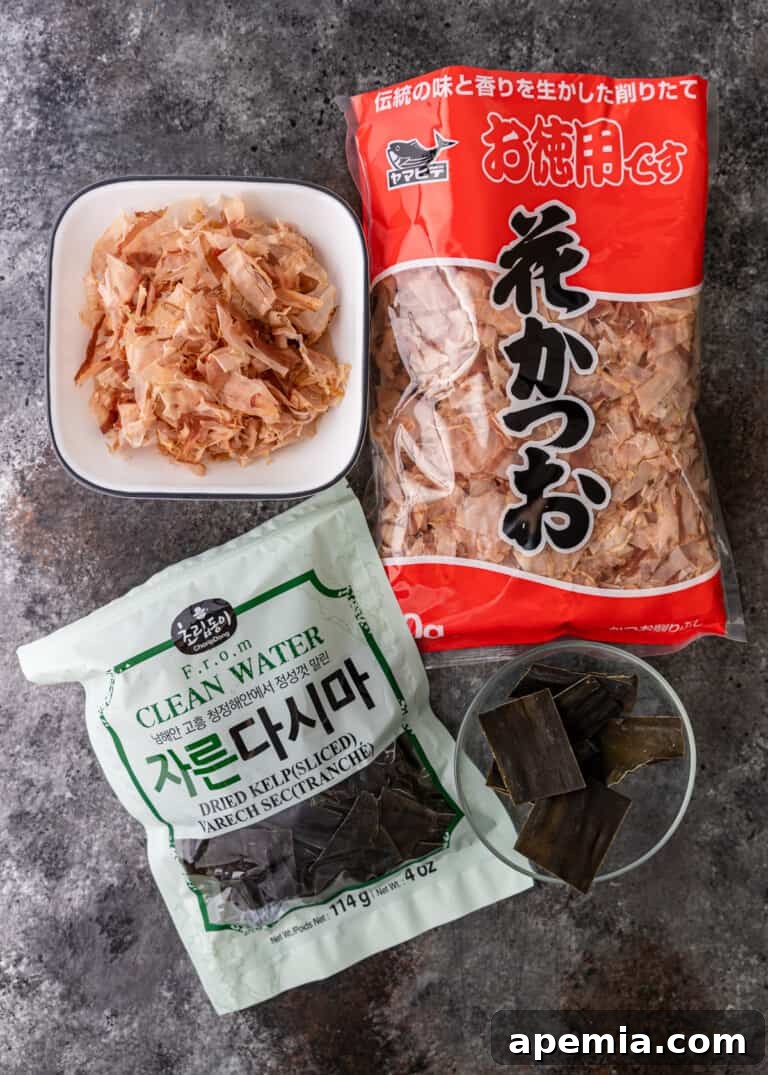
For those feeling inspired to delve deeper into Japanese cooking, consider making a batch of Dashi Soup Stock alongside this spice blend. A fantastic bonus of preparing dashi from scratch is the leftover kombu and katsuobushi. Instead of discarding these nutrient-rich ingredients, you can let them dry out again and ingeniously repurpose them to create your furikake seasoning. This not only minimizes waste but also imbues your furikake with an even deeper, more nuanced flavor profile. It’s a wonderful example of culinary efficiency and sustainability.
Essential Ingredients for Your Furikake
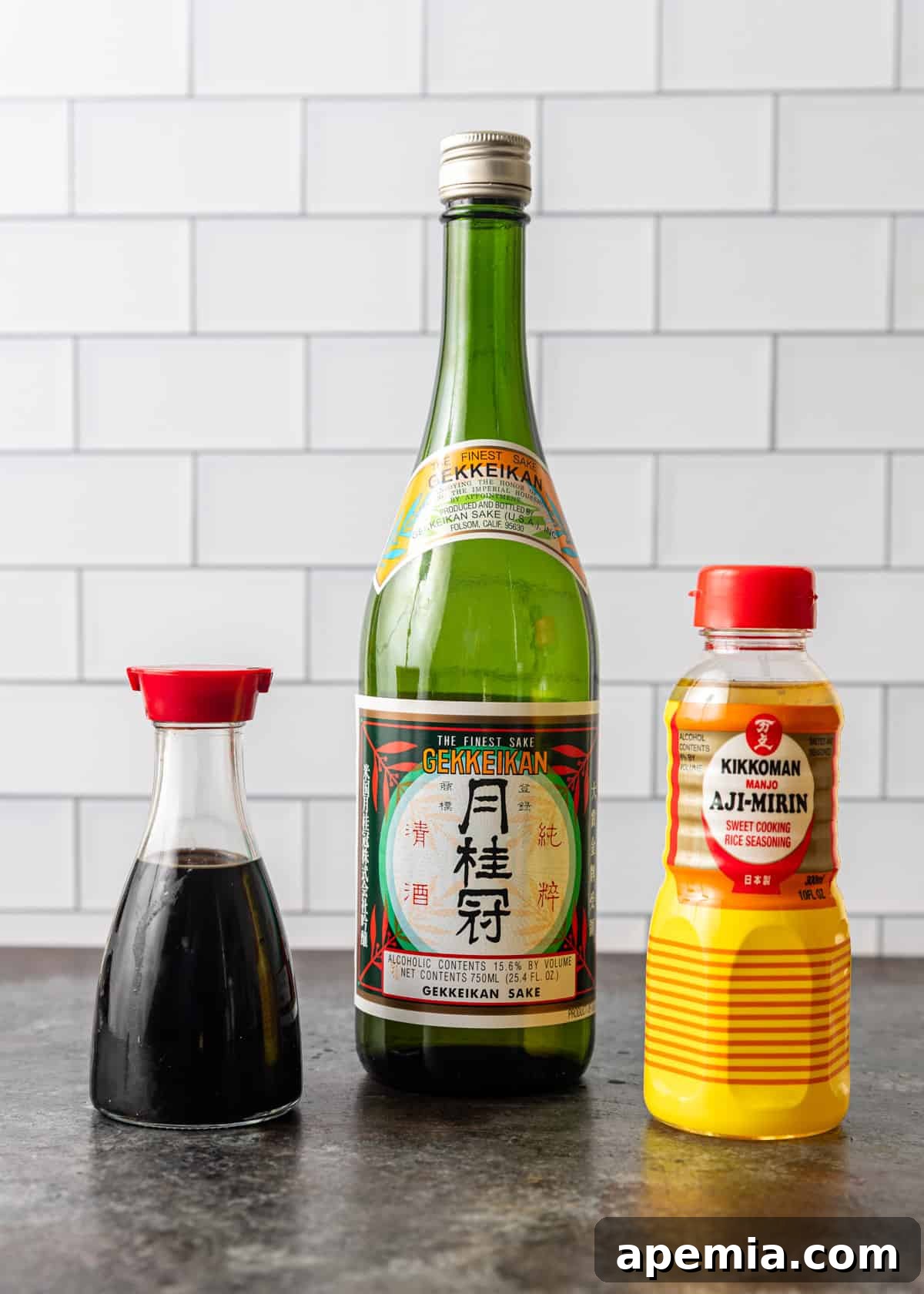
- Soy Sauce: This fundamental ingredient provides the savory, robust backbone for our spice blend, contributing depth and a rich, salty foundation.
- Sake: Japanese rice wine introduces a subtle floral aroma and a delicate sharpness, enhancing the overall complexity of the flavor profile. Choose a cooking sake or a dry drinking sake.
- Mirin: A sweet, syrupy rice wine that balances the saltiness with its unique tangy and slightly sweet notes. It’s crucial for achieving that characteristic furikake sweetness.
- Sugar: Just a touch of granulated sugar rounds out the flavors, providing a complementary sweetness that harmonizes with the savory and briny elements.
- Kosher Salt: Essential for seasoning and bringing out the natural flavors of the other ingredients. Adjust to taste.
- Katsuobushi (Dried Bonito Flakes): These thin, dried, smoked, and fermented flakes of skipjack tuna are a powerhouse of umami. They contribute a deeply savory, slightly smoky, and distinctly fishy flavor, which is central to authentic furikake.
- Kombu (Dried Kelp): A large, edible dried seaweed that delivers a profound, earthy umami flavor with subtle briny and mushroom-like undertones. It’s a cornerstone of Japanese flavor.
- Sesame Seeds (White & Black): A blend of both toasted white and black sesame seeds adds a dynamic textural crunch and a spectrum of delicate, nutty flavors. The black seeds also offer a striking visual contrast.
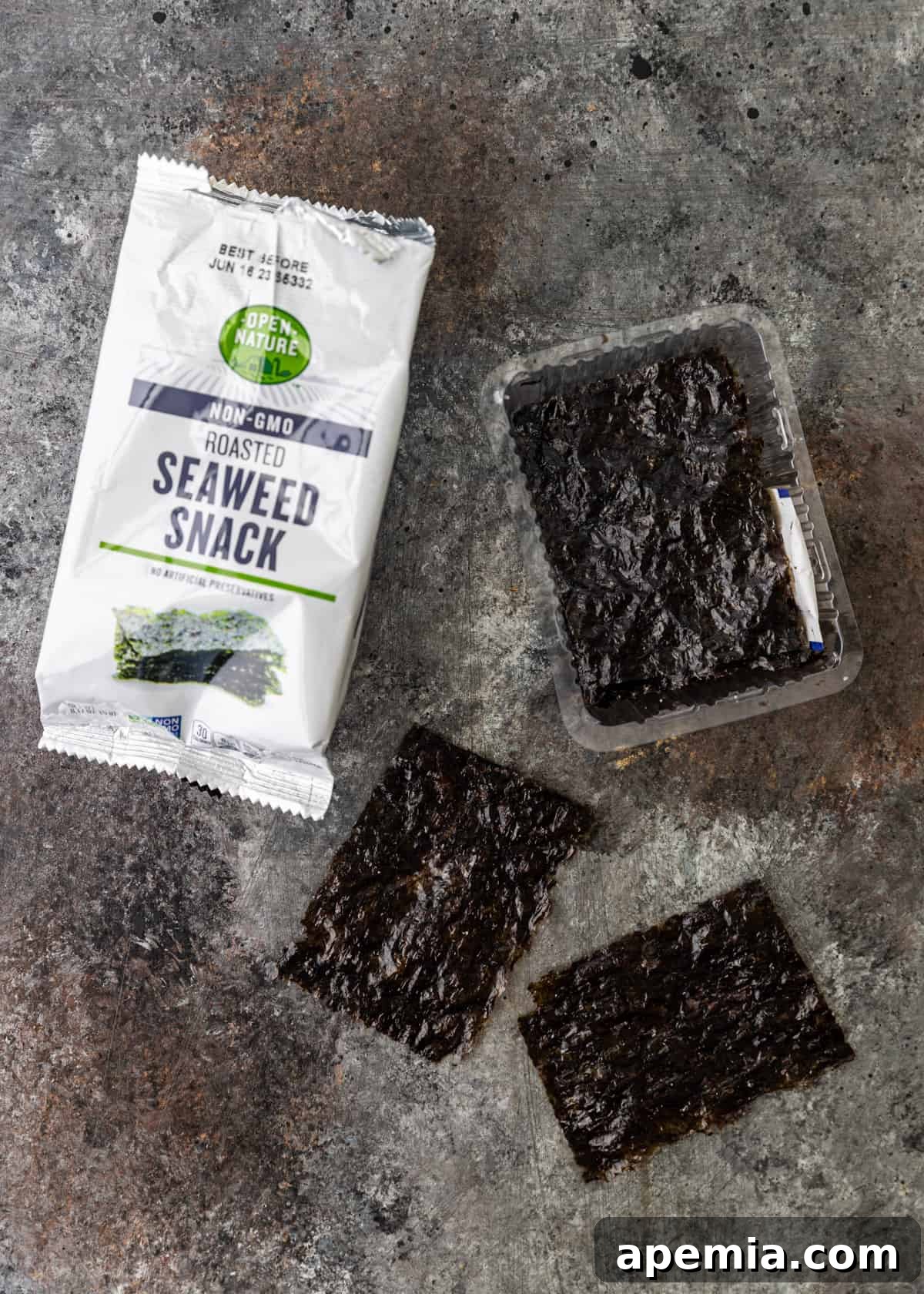
- Nori (Dried Seaweed Sheets): The same type of dried seaweed typically used to wrap sushi. You’ll usually find it sold in sheets or as seasoned crispy snacks. It offers a mild, oceanic flavor and a delightful crispness once added. Look for it in Asian markets, major supermarkets, or even warehouse clubs like Costco.
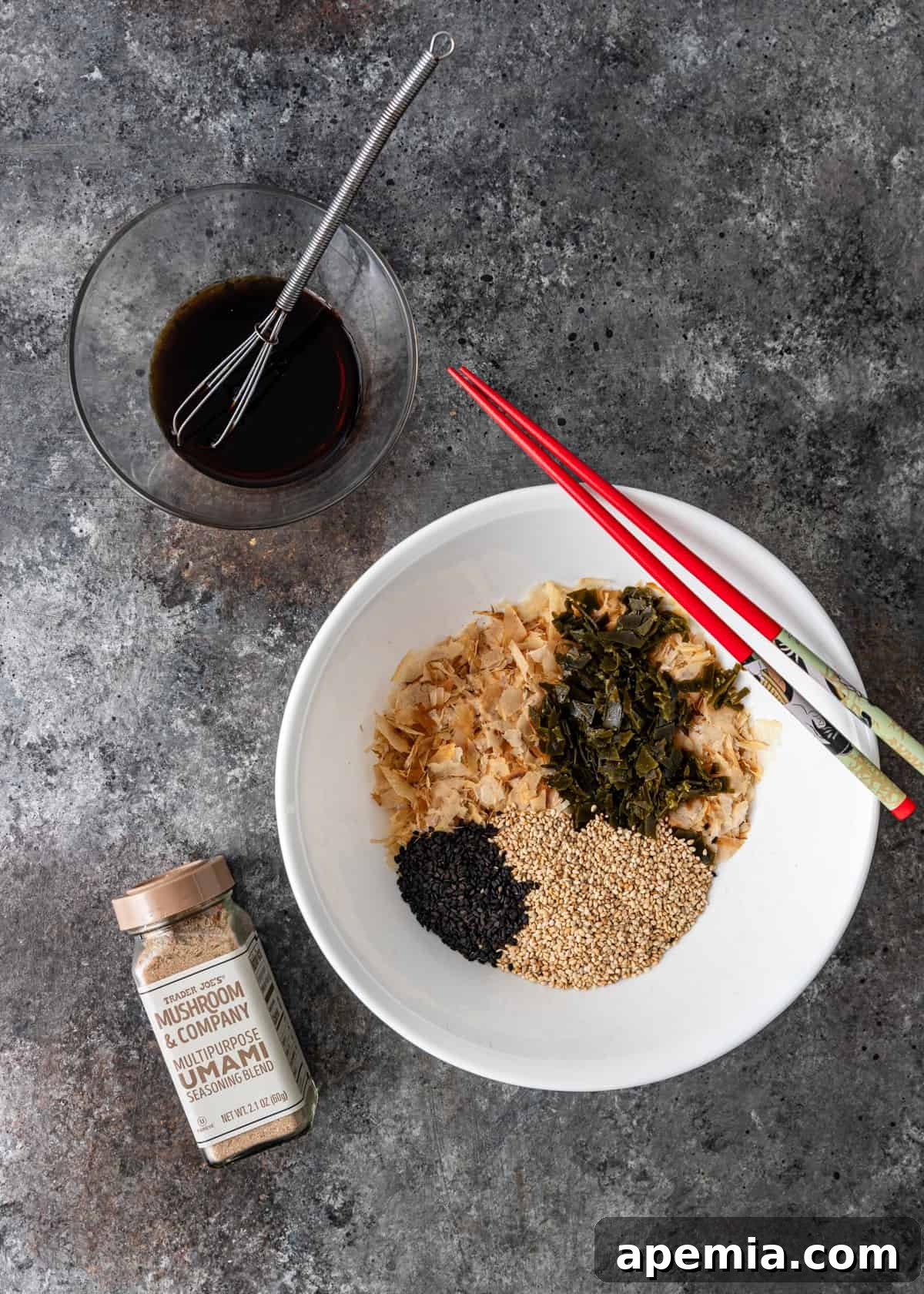
- Umami Seasoning (Optional, but Highly Recommended): While optional, incorporating an umami seasoning blend significantly amplifies the depth of flavor. I prefer natural, additive-free options like Trader Joe’s multipurpose umami seasoning. If using another brand, check labels if you are concerned about MSG content; however, the natural ingredients in furikake often provide ample umami without it.
- Aonori (Dried Green Laver Seaweed): A vibrant green, powdered seaweed known for its robust, aromatic flavor and beautiful color. It adds a final layer of distinct oceanic notes and visual appeal.
Tip From Kevin
Smart Sourcing: Ingredients Doing Double Time
One of my favorite culinary hacks is repurposing ingredients to maximize their potential and minimize waste. Whenever I prepare dashi (Japanese soup stock) from scratch, I’m inevitably left with the simmered kombu and katsuobushi. These ingredients, though having lent their primary flavors to the dashi, still hold a remarkable amount of goodness. Instead of discarding them, I give them a second life by allowing them to dry out completely, then incorporating them into my homemade furikake. This not only enhances the furikake with an extra layer of nuanced flavor but also makes the entire cooking process more sustainable and economical. It’s a win-win for flavor and for the environment.
Step-by-Step Guide to Making Furikake
- Prepare the Oven & Baking Sheet. Begin by preheating your oven to a low 250°F (120°C). This low temperature is crucial for slowly dehydrating and crisping the ingredients without burning them. Line a large baking sheet with parchment paper to prevent sticking and ensure easy cleanup. Set this prepared sheet aside.
- Combine Wet Ingredients. In a small mixing bowl, pour in the soy sauce, sake, mirin, sugar, and kosher salt. Whisk these ingredients together thoroughly until the sugar granules are mostly dissolved, creating a flavorful liquid base. Set this bowl aside for later use.
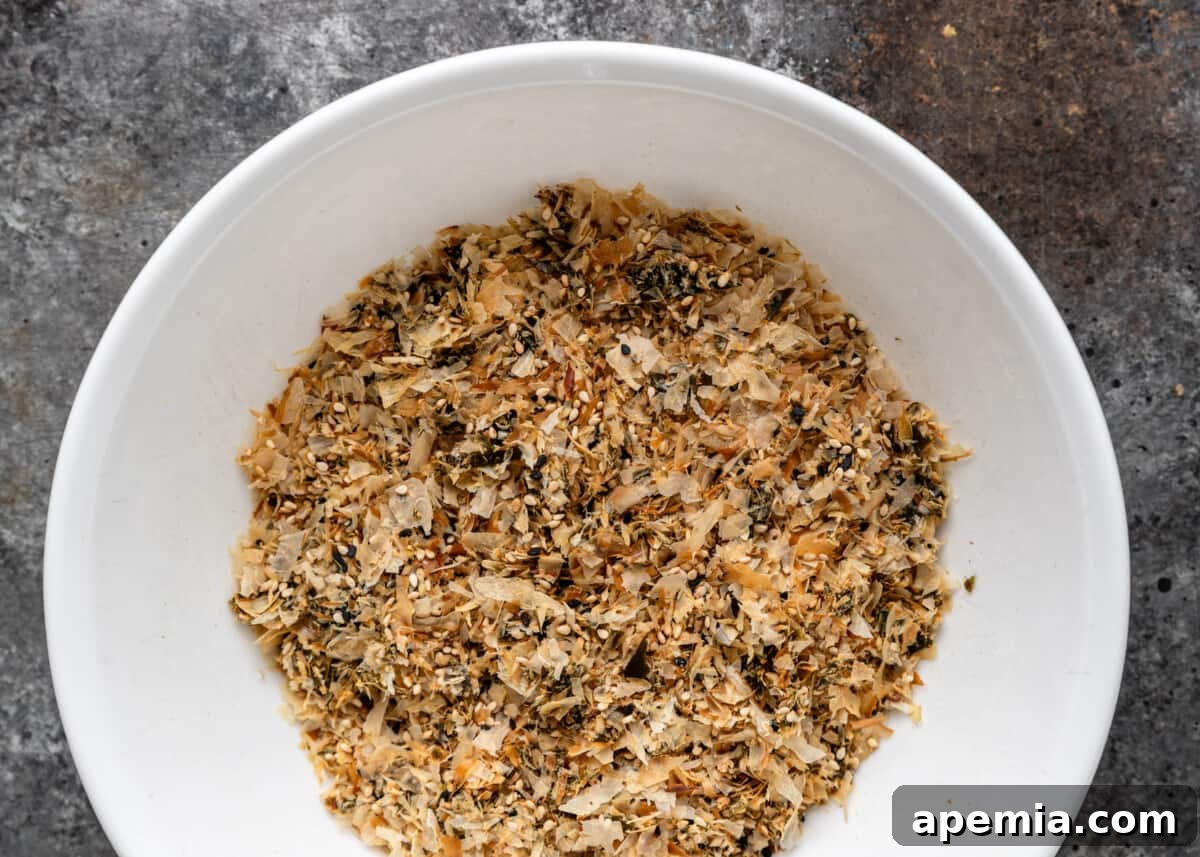
- Mix Dry Ingredients. Take a large bowl and add the katsuobushi, prepared kombu (chopped or shredded as per notes), and both toasted white and black sesame seeds. Using chopsticks or a fork, gently mix these dry components until they are well combined.
- Incorporate Mixtures. Now, carefully drizzle the soy sauce mixture evenly over the dry ingredient blend in the large bowl. Continue using your chopsticks or fork to fluff and mix the ingredients until the liquid is fully absorbed and evenly distributed throughout the dry mixture. Ensure there are no overly wet clumps and that every flake and seed is coated.
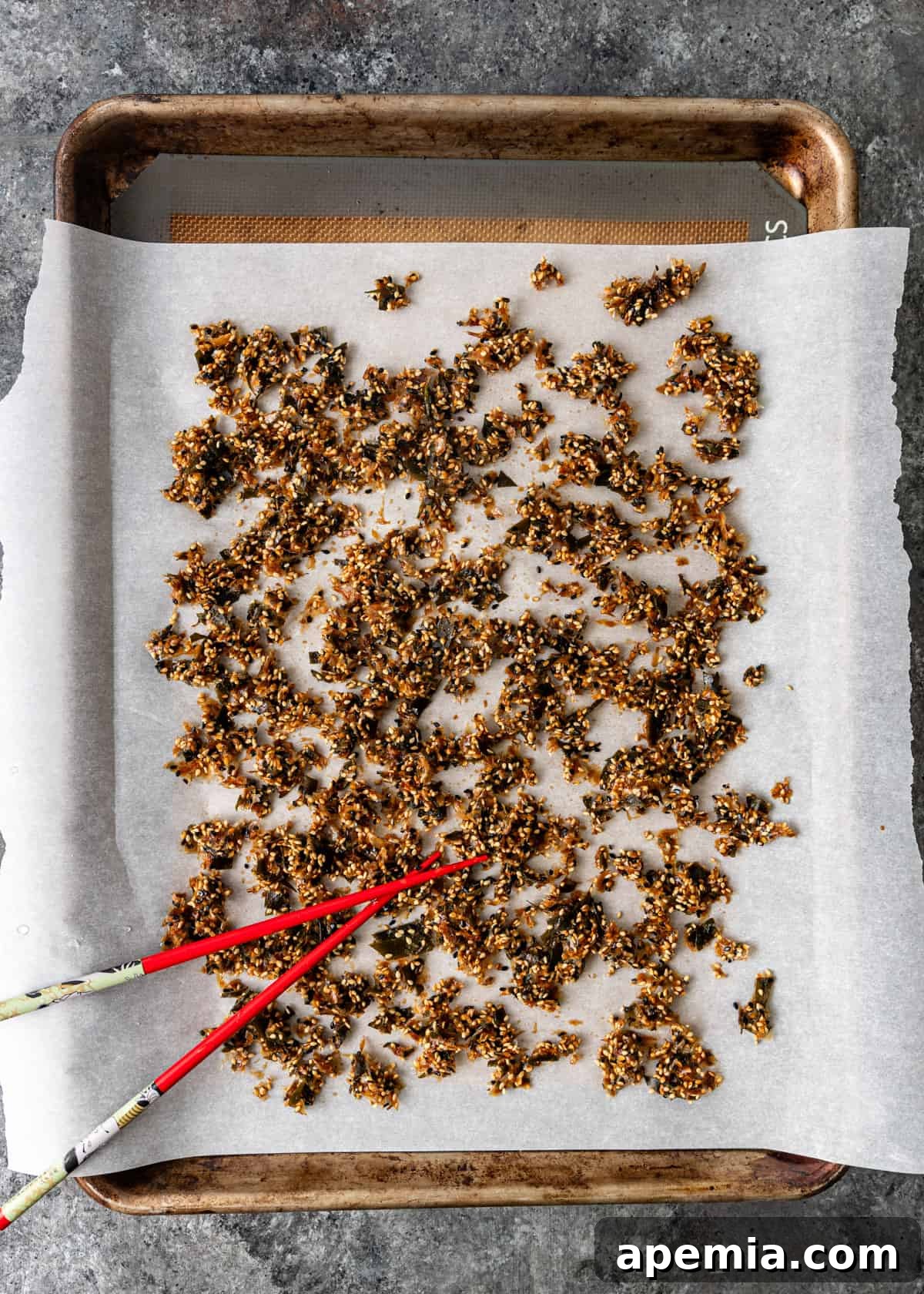
- First Bake & Break Apart. Transfer the moist furikake blend onto your prepared baking sheet, spreading it out into a single, even layer that reaches almost to the edges of the pan. Bake in the preheated oven for 10 minutes. After this initial bake, remove the baking sheet from the oven. Using your chopsticks or a spatula, gently break up any clumps or overly congested areas, ensuring the mixture can dry uniformly. This step is key for achieving an even crispness.
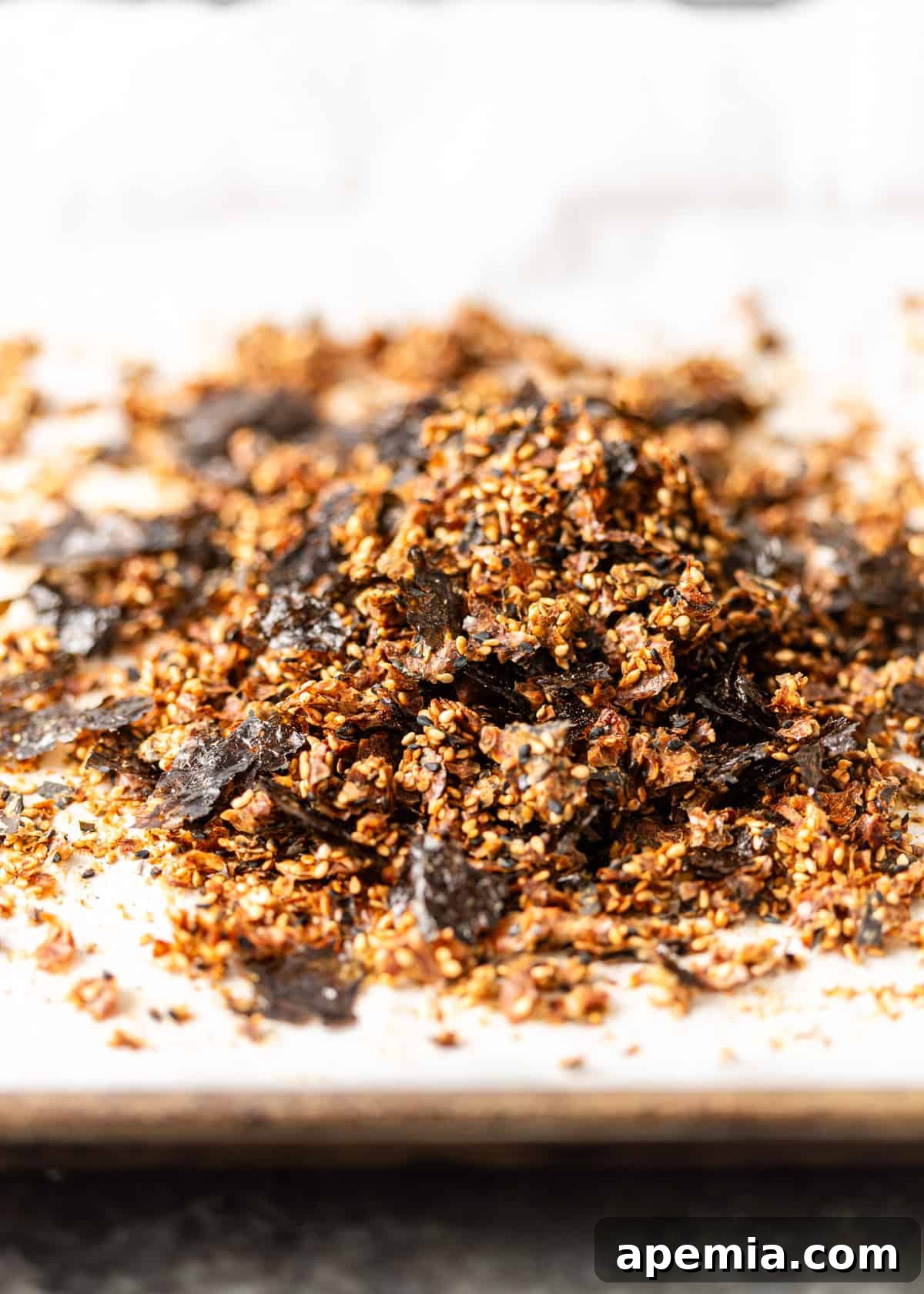
- Second Bake to Crispness. Return the baking sheet to the oven and continue baking for another 10-12 minutes. The goal is for the spice blend to become thoroughly dry and wonderfully crispy. Keep a close eye on it to prevent burning. Once achieved, remove the pan from the oven and allow the furikake to cool completely on the counter. It will crisp up even further as it cools.
- Add Seaweed & Optional Boosters. Once the furikake is completely cool, use a knife, kitchen scissors, or your hands to break the nori sheets into small, irregular pieces. Add these nori pieces into the crispy furikake mix. This is also the stage to add the optional aonori and/or umami seasoning, if desired. Both are highly recommended for an extra punch of flavor and visual appeal. Stir everything together gently. Store your freshly made furikake in an airtight jar at room temperature and enjoy within two weeks for optimal freshness.
Creative Ways to Enjoy Furikake
Commonly celebrated as a Japanese rice seasoning, furikake’s applications extend far beyond a simple sprinkle over a bowl of steamed rice. Its unique blend of savory, sweet, and umami flavors, coupled with an irresistible crunch, makes it a versatile topping for a wide array of dishes. Here are some inspiring ways to incorporate homemade furikake into your culinary repertoire:
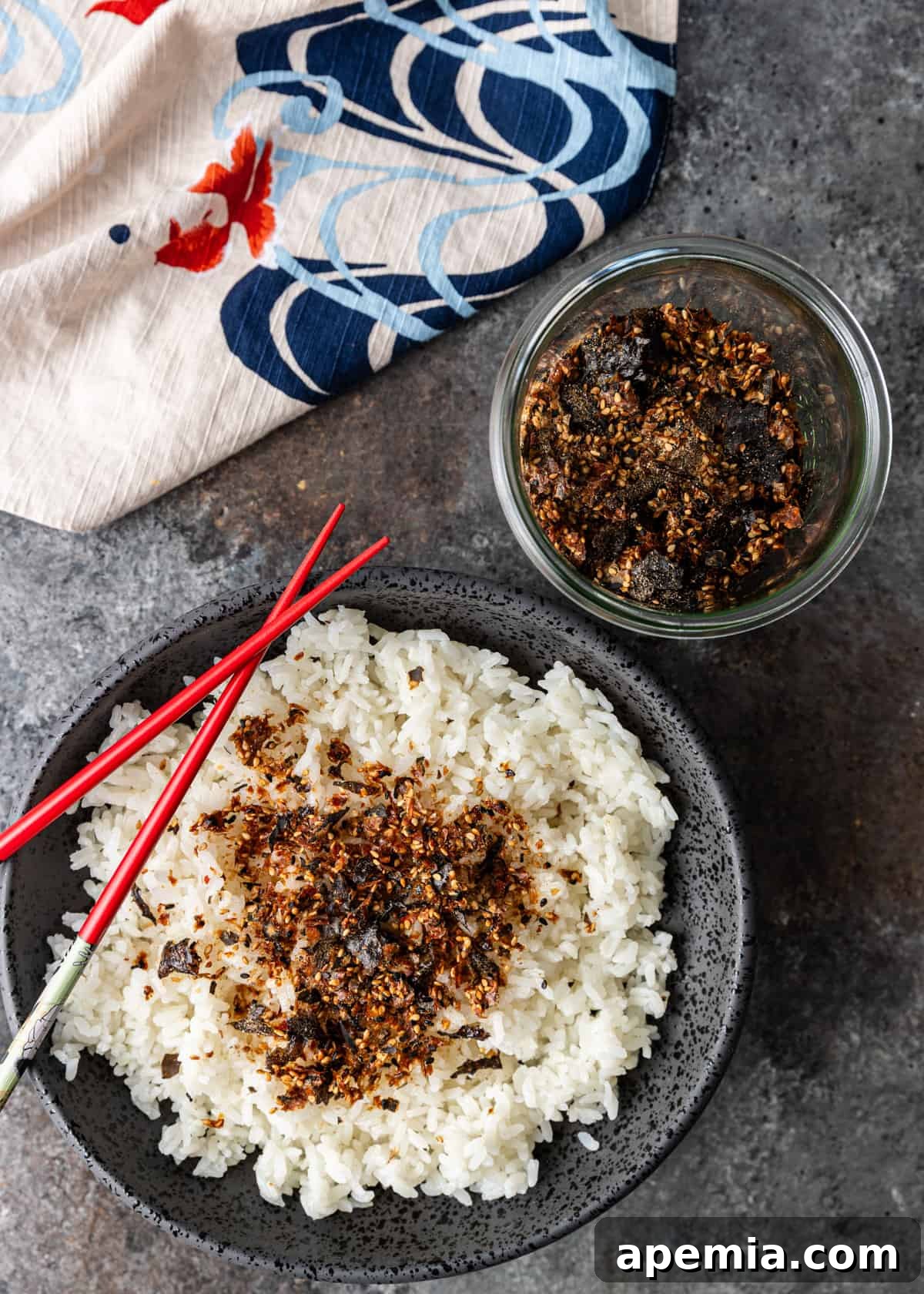
- The Classic Rice Topping: Of course, the most traditional way is to sprinkle it generously over freshly cooked white rice. It instantly elevates a plain bowl of rice into a satisfying and flavorful meal. It’s equally fantastic on fried rice, congee, or even sushi rolls for an added layer of texture and taste.
- Eggs, Any Style: Transform your breakfast or brunch by adding furikake to eggs. Sprinkle it over scrambled eggs, fried eggs, or even hard-boiled eggs for an unexpected burst of umami and crunch. It pairs wonderfully with the richness of the yolk.
- Popcorn Perfection: Forget plain salt! Furikake is an extraordinary seasoning for freshly popped popcorn. Its complex flavors of seaweed, fish, and sesame add a gourmet touch that’s addictive. Beyond popular choices like Ranch seasoning, Turkish Spice Blend, Berbere Spice Mix, or Parmesan cheese, furikake offers a distinctly savory and oceanic punch.
- Asian-Inspired Dishes: Use this blend to dramatically enhance the flavor and texture of various Asian-themed dishes.
- Rice Dishes: Jazz up a bowl of simple Jasmine Rice, add excitement to your next batch of Hibachi Fried Rice, or even sprinkle on sticky rice balls.
- Salads & Bowls: Elevate a fresh Ahi Tuna Poke Bowl or a crisp Sunomono Salad with its vibrant flavors and textures. It adds a delightful counterpoint to fresh seafood and vegetables.
- Sushi & Onigiri: Perfect for home sushi nights or topping your own Mango Shrimp Sushi Stacks. It’s also a fantastic way to season onigiri (rice balls).
- Soups & Noodles: Dress up a bowl of hearty Hot and Sour Soup or a savory Miso Soup Recipe. It adds depth and a pleasant textural surprise to ramen, udon, or pho.
- Curries & Stir-Fries: A sprinkle over Japanese Beef Curry or any of your favorite Stir Fry Recipes can introduce an unexpected layer of umami and crunch.
- Vegetable Enhancement: Sprinkle over steamed or roasted vegetables like asparagus, broccoli, or sweet potatoes for an instant flavor upgrade.
- Grilled Fish or Chicken: A light dusting on grilled white fish or chicken before serving can add a subtle, savory kick.
Frequently Asked Questions About Furikake
Furikake is a Japanese rice seasoning that offers a complex and highly addictive flavor profile. It delivers a delicious, crispy texture and a predominant salty, deeply umami taste. The sesame seeds contribute a nutty aroma and a satisfying crunch, while various seaweeds like nori and kombu layer in profound, ocean-kissed savoriness. These core flavors are beautifully enhanced by the tangy notes of soy sauce and sake, coupled with a hint of sweetness from mirin and sugar. The overall effect is a meticulously balanced seasoning that truly awakens and tantalizes every taste bud!
Cooking the furikake mixture in the oven is a critical step for two main reasons. First, it allows the dry ingredients (like katsuobushi, kombu, and sesame seeds) to fully absorb the rich liquid seasonings (soy sauce, sake, mirin, sugar, and salt). This infusion ensures that every component is deeply flavored. Second, and perhaps more importantly, the baking process dehydrates the mixture, making it dry and crispy. If you skip this step, the loose sugar and salt might sink to the bottom of your container, leading to an unevenly flavored, less enjoyable furikake. The crisp texture is also a hallmark of authentic furikake.
Some commercially produced versions of furikake might contain added MSG, but this homemade recipe is completely free of the additive. There’s genuinely no need for it! The combination of richly flavored, ocean-based ingredients such as katsuobushi (dried bonito flakes) and various seaweeds naturally provides a profound depth of umami flavor that MSG is renowned for enhancing. By focusing on high-quality, natural ingredients, you achieve an authentic and potent umami experience without any artificial boosters.
This homemade furikake recipe, when stored in an airtight jar at room temperature, will retain its peak freshness and crispness for up to 2 weeks. For extended shelf life, you can place a food-safe silica gel desiccant packet inside the airtight container. This helps absorb any residual moisture, allowing the furikake to stay fresh and crispy for 1-2 months at room temperature. Always ensure it’s stored in a cool, dry place away from direct sunlight.
Yes, you can adapt this recipe to be vegetarian or vegan. The main non-vegetarian ingredient is katsuobushi (dried bonito flakes). To make it vegetarian/vegan, simply omit the katsuobushi and increase the amount of seaweed (nori, kombu, aonori) and sesame seeds, or add a vegetarian umami booster like nutritional yeast, dried shiitake mushroom powder, or a plant-based umami seasoning. The flavor profile will shift slightly, but it will still be delicious and savory.
This recipe can be made gluten-free by ensuring all your ingredients are certified gluten-free. The primary ingredient to watch out for is soy sauce, which often contains wheat. Simply substitute regular soy sauce with a gluten-free tamari. All other ingredients like sake, mirin, seaweed, and sesame seeds are naturally gluten-free, but always double-check labels, especially for any processed seasonings or ingredients.
Share this recipe on Pinterest!
Love this recipe? Share it with the world on Pinterest.
Homemade Furikake (Japanese Rice Seasoning)
Ingredients
- 1 tbsp soy sauce
- 1 tbsp sake
- 2 tsp mirin
- 1 tsp sugar
- ½ tsp kosher salt
- 20 grams katsuobushi (dried bonito flakes)
- 10 grams kombu (dried kelp, optional, See Note 1)
- 4 tbsp toasted sesame seeds (a mix of white and black recommended)
- 1 tbsp black sesame seeds
- 5 grams nori (shredded, See Note 2)
Optional Add-Ins
- 1 tsp Trader Joe’s Multipurpose Umami Seasoning Blend
- 1 tsp aonori (dried green laver seaweed, See Note 3)
Instructions
- Preheat oven to 250°F (120°C). Line a baking sheet with parchment paper and set aside.
- In a small bowl, stir the soy sauce, sake, mirin, sugar, and salt together until the sugar is mostly dissolved. Set aside.
- In a large bowl, mix together the katsuobushi, kombu, and sesame seeds with chopsticks or a fork.
- Drizzle the soy sauce mixture evenly over the dry ingredients. Fluff and mix with chopsticks to incorporate thoroughly until everything is coated.
- Transfer the furikake mixture to the prepared baking sheet and spread evenly to the edges. Bake for 10 minutes. Remove from oven and, using chopsticks, break up any clumps to ensure even drying. Return to oven and bake for another 10-12 minutes, or until completely crisp. Let it cool completely on the baking sheet.
- Using your hands, a knife, or scissors, cut the nori into small pieces and mix them into the cooled furikake. If desired, add the optional aonori and/or Trader Joe’s Multipurpose Umami Seasoning Blend (highly recommended for extra flavor). Store in an airtight jar. It can be refrigerated for up to 2 weeks, or up to 1-2 months with a food-safe desiccant packet.
Notes
- If using repurposed katsuobushi from making dashi, use 25 grams and chop it finely. Otherwise, crush 20 grams of dried katsuobushi with your hands before using in the recipe.
- If using repurposed kombu from making dashi, use 15 grams and chop it finely. If using dried kombu (kelp), cut it into thin strips, then turn the strips 90° and cut into small pieces. Place in a small bowl with 2 tablespoons of hot water and soak for 5 minutes. Drain and squeeze out any excess water, then use in the recipe.
- Nori is typically used to wrap sushi and is dried green seaweed. You can often find a 5g package of roasted seaweed snacks (like Open Nature brand) at stores such as Costco, Safeway, Albertsons, and WINCO in the Asian food section, or any dedicated Asian market.
- Aonori (dried green laver or seaweed) is a powdered green seaweed known for its extremely aromatic quality and vibrant color.
- This recipe is adapted from Marc over at No Recipes.
Nutrition
Carbohydrates: 2g |
Protein: 2g |
Fat: 2g |
Saturated Fat: 0.2g |
Polyunsaturated Fat: 1g |
Monounsaturated Fat: 1g |
Cholesterol: 1mg |
Sodium: 196mg |
Potassium: 40mg |
Fiber: 0.4g |
Sugar: 1g |
Vitamin A: 23IU |
Vitamin C: 0.2mg |
Calcium: 35mg |
Iron: 1mg
The information shown is an estimate provided by an online nutrition calculator. It should not be considered a substitute for a professional nutritionist’s advice.
Made This Recipe? Share on Instagram!Tag @keviniscooking or use hashtag #keviniscooking!