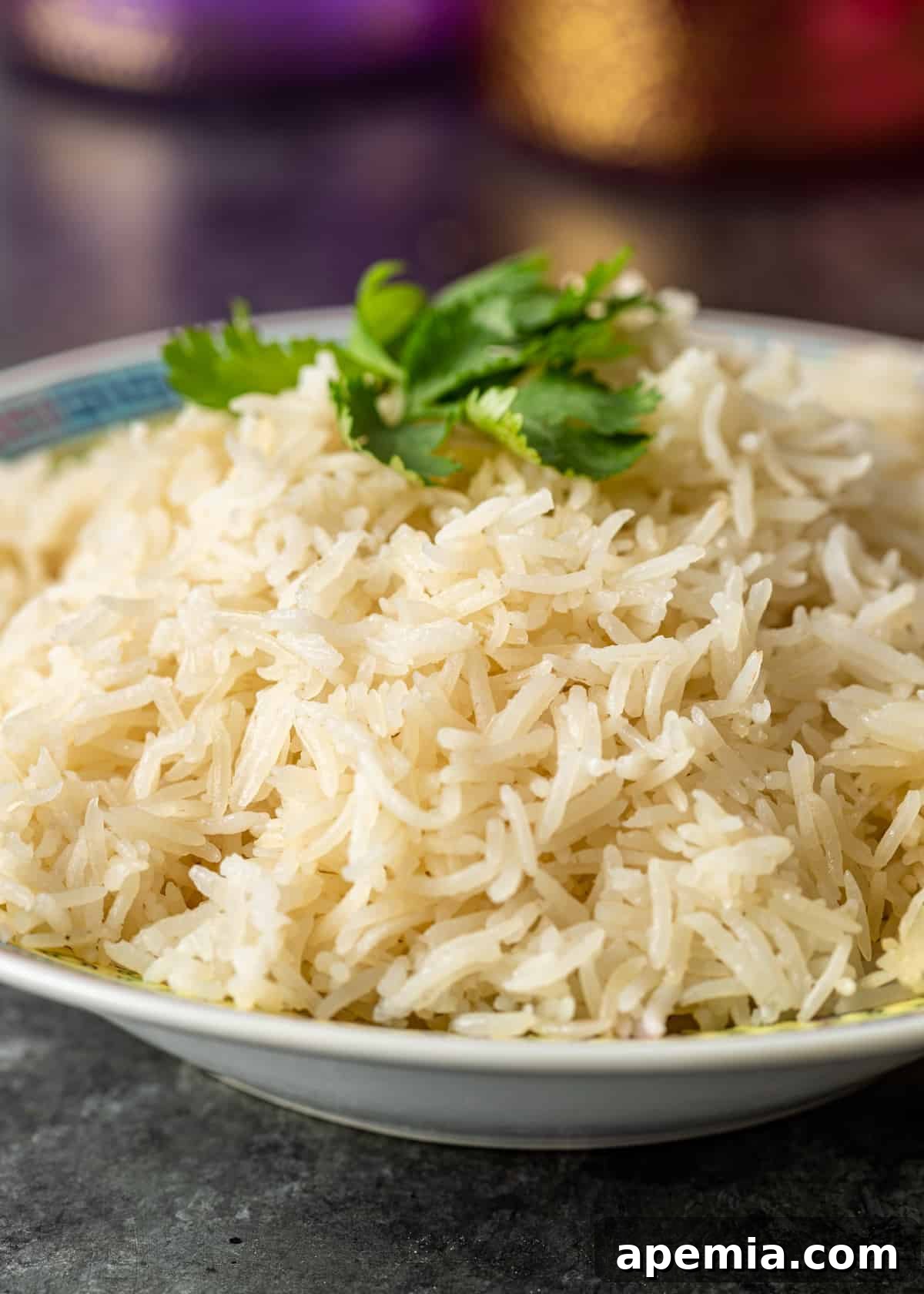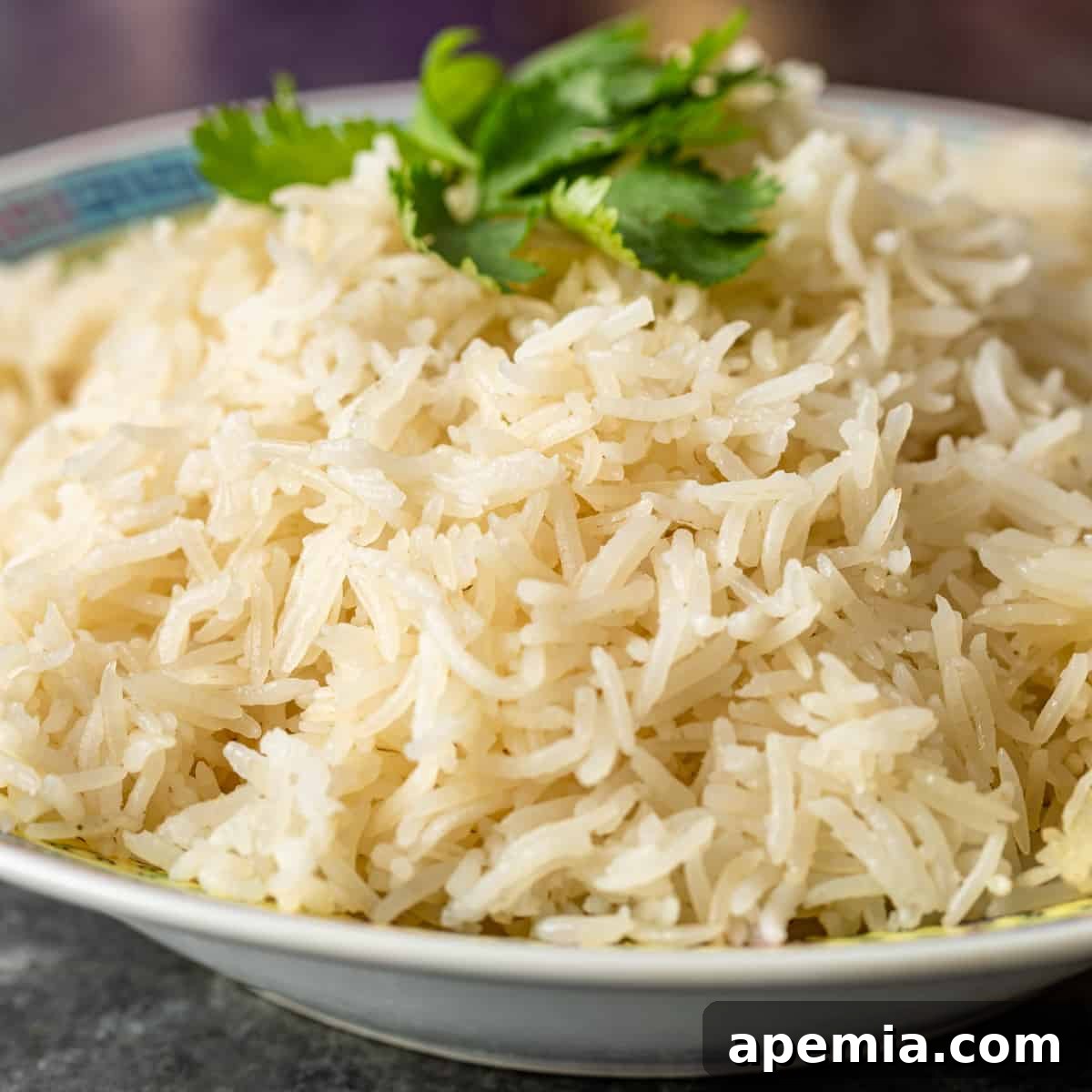
Basmati rice holds a special place in kitchens worldwide, and it’s undoubtedly a star in mine! This exquisite long-grain white rice, native to the fertile foothills of the Himalayas in India, is renowned for its unique characteristics. It’s celebrated for its distinctive fragrance and aromatic profile, often described as having delicate nutty and floral notes. These subtle yet profound flavors elevate it far beyond the blandness of traditional white rice, adding a sophisticated “oomph” to any meal. When prepared correctly, Basmati rice transforms into an incredibly light, fluffy, and flavorful accompaniment, with each grain distinct and perfectly tender.
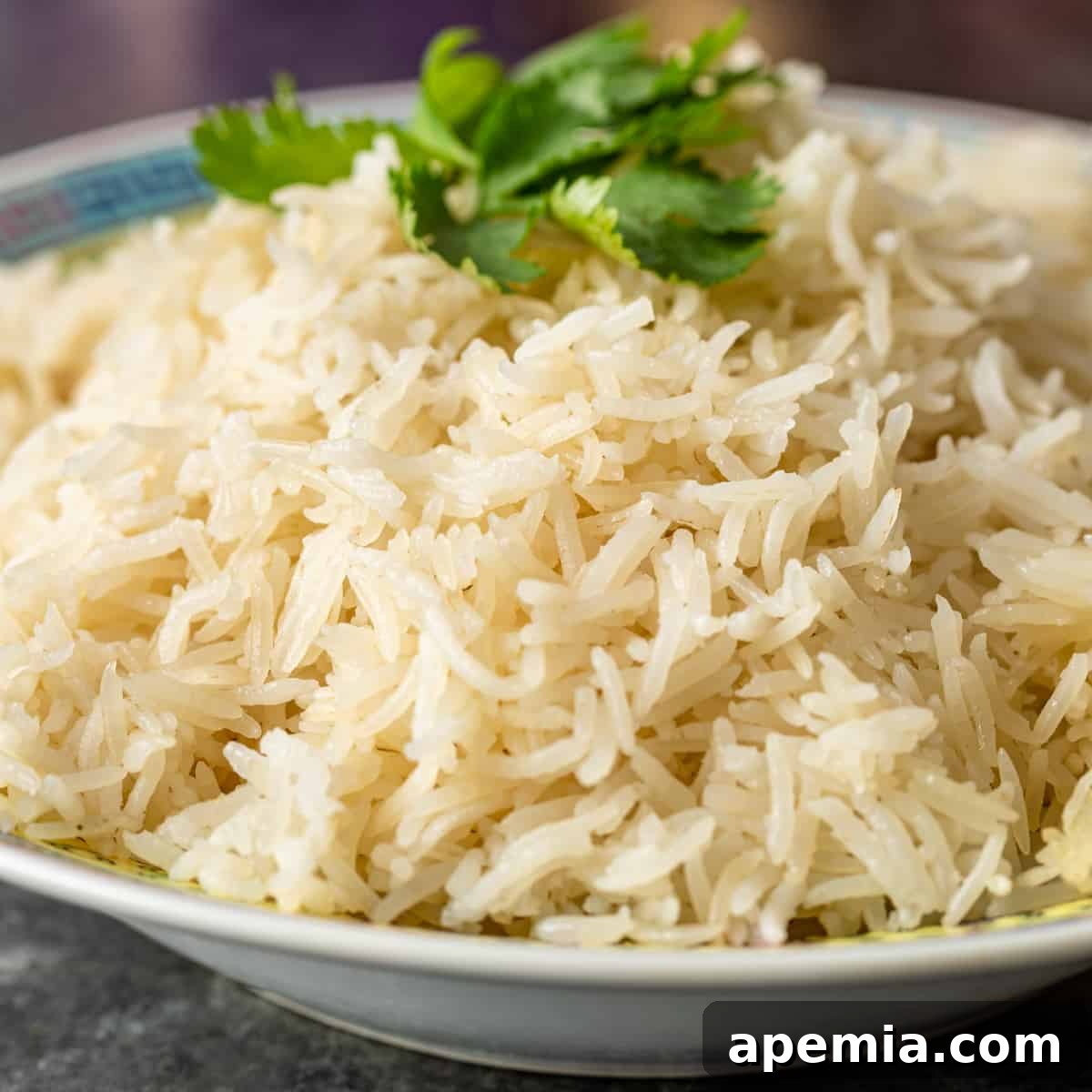
The versatility of Basmati rice makes it a staple in countless cuisines. Some of my personal favorite recipes include a hearty baked Basmati rice pilaf, the iconic Egyptian national dish Koshari, and the comforting Middle Eastern lentils and rice dish known as Mejadra. These are just a few examples of the myriad ways Basmati can enhance your culinary creations, proving its adaptability and delicious appeal.
Achieving perfectly cooked Basmati rice, like any rice variety, requires a touch of finesse. The most crucial factor often overlooked is the precise water-to-rice ratio. Understanding and applying the correct quantities of water is paramount to avoid sticky, mushy, or undercooked grains. In this comprehensive guide, I will share the exact measurements and essential techniques that guarantee flawless results every time. You’ll also discover:
- The ideal cooking duration for achieving tender Basmati rice.
- Diverse cooking methods, including stove-top, microwave, and Instant Pot, tailored for perfect Basmati.
- Inspirational serving suggestions and delicious recipes to help you make the most of your perfectly cooked Basmati rice.
Let’s unlock the secrets to preparing this magnificent grain!
Should You Wash Basmati Rice Before Cooking?
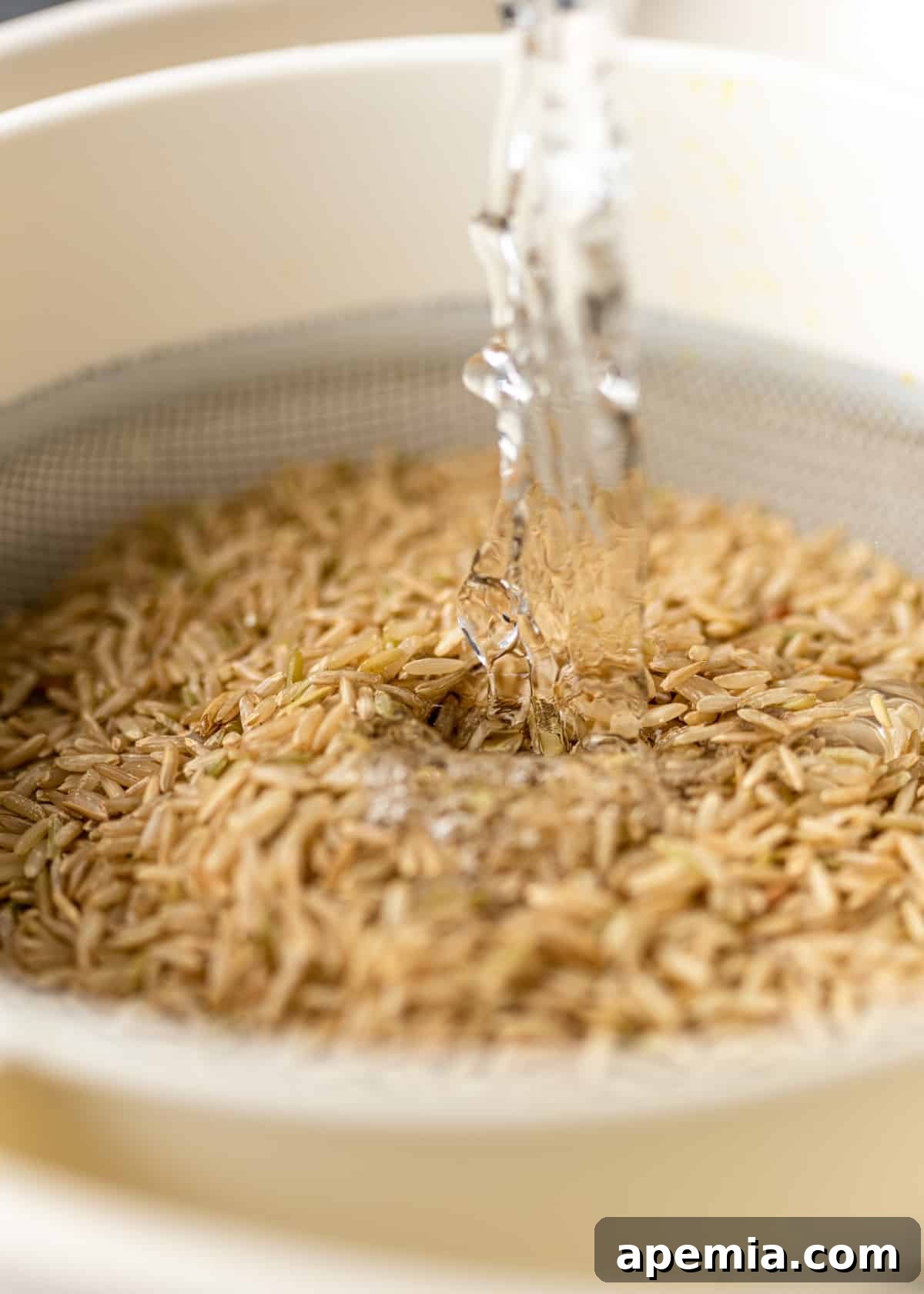
Absolutely, YES! This step is non-negotiable for achieving the light, separate, and fluffy Basmati grains that are highly sought after. To properly wash Basmati rice, place it in a fine-mesh sieve or a colander and rinse it thoroughly under cold running water. Continue rinsing until the water runs completely clear, indicating that the excess starch has been removed. After rinsing, shake off any residual water as much as possible.
This vital pre-cooking process removes the loose starch that coats the rice grains. If not removed, this residual starch will gelatinize during cooking, acting like glue and causing the grains to stick together, resulting in a clumpy, undesirable texture. By washing, you ensure each grain cooks independently, expanding beautifully and retaining its distinct form, leading to the fluffy, individual grains we all desire.
Mastering the Art of Cooking Basmati Rice
Learning how to cook Basmati rice to perfection is a straightforward process once you grasp a few fundamental principles. As highlighted earlier, the most critical element is the precise rice-to-water ratio. Different types of rice demand varying amounts of water due to their starch content and grain structure. Basmati, being a long-grain white rice, requires less water compared to some other varieties, allowing it to cook up light and non-sticky.
For standard stovetop cooking, a common recommendation is:
Use 1 ½ cups of water for every 1 cup of dry, rinsed Basmati rice if you prefer an al dente texture. For softer, more tender, and fluffier rice, increase the ratio to 2 cups of water for every 1 cup of Basmati.
It’s crucial to understand that this ratio will need slight adjustments depending on your chosen cooking method. Pay close attention to these minor differences in water quantity and cooking technique for each method outlined below. Adhering to these guidelines consistently will ensure you achieve light, perfectly fluffy Basmati rice every single time.
Optimal Cooking Times for Basmati Rice
Beyond the water ratio, understanding the correct cooking duration is equally important. Just as the water-to-rice ratio varies by method, so too will the cooking time. The goal is always tender, separate grains without overcooking or undercooking them. Here’s a quick overview of typical cooking and resting times for various methods:
- On the Stove: A 12-minute active cook time, followed by a crucial 10-minute rest period.
- In an Instant Pot: A rapid 6-minute pressure cook time, succeeded by a 10-minute natural pressure release (rest time).
- In the Microwave: Approximately 20 minutes of cooking, complemented by a 5-minute resting phase.
- In a Rice Cooker: Typically 12-15 minutes of cooking time, plus a mandatory 10-minute rest. (Note: Cooking duration may vary based on your specific rice cooker model).
How to Cook Basmati Rice on the Stove: The Classic Method
The stovetop method remains my go-to for preparing Basmati rice due to its simplicity and the lack of need for specialized equipment. It’s an accessible and reliable way to achieve perfect rice with just a saucepan.
Step 1: Prepare and Combine. Begin by thoroughly rinsing 1 cup of Basmati rice until the water runs clear. Transfer the rinsed rice to a medium-sized saucepan. Add the appropriate amount of water: 1 ½ cups for an al dente texture, or 2 cups for a softer, fluffier result. For an extra layer of flavor and to prevent sticking, you can add a pinch of salt and a small knob of butter or a teaspoon of oil at this stage. Bring the mixture to a gentle simmer over medium heat, uncovered.
Step 2: Simmer to Perfection. Once the surface of the water begins to bubble and foam, reduce the heat significantly to medium-low, just enough to maintain a very gentle simmer. Cover the saucepan tightly with a lid and allow the rice to cook undisturbed for precisely 12 minutes. Resist the urge to lift the lid during this time, as it allows precious steam to escape, which is crucial for even cooking.
Step 3: Rest and Fluff. After 12 minutes, remove the pan from the heat, keeping the lid securely in place. Let the rice rest for a minimum of 10 minutes. This resting period is critical; it allows the steam to redistribute within the grains, completing the cooking process and ensuring maximum fluffiness. Finally, remove the lid, gently fluff the rice with a fork to separate the grains, and serve immediately.
How to Cook Basmati Rice in the Microwave: Quick and Easy
For those times when convenience is key, the microwave offers a surprisingly effective way to cook Basmati rice. It’s a method many of us have tried at some point, and with the right approach, it yields perfectly cooked grains in minimal time.
Step 1: Combine Ingredients in Microwave-Safe Dish. Place 1 cup of thoroughly rinsed Basmati rice into a large, microwave-safe bowl. Add 2 cups of water. It is essential to use a microwave-safe bowl equipped with a vented lid, or at least one that can be left slightly ajar. The vents or opening allow excess steam to escape safely, preventing dangerous pressure buildup and ensuring even cooking.
Step 2: Microwave in Stages. Microwave the rice on High power for 5 minutes. This initial burst of high heat brings the water to a boil quickly. After 5 minutes, reduce the microwave power to Medium (around 50-60%) and continue cooking for an additional 15 minutes. This lower setting allows the rice to absorb the water gradually and cook through without drying out.
Step 3: Rest and Serve. Once the cooking cycle is complete, carefully remove the bowl from the microwave. Keep it covered with the vented lid and let it sit undisturbed for 5 minutes. This resting phase is crucial for the rice to finish absorbing any remaining moisture and to achieve its final fluffy texture. After resting, fluff the rice gently with a fork and serve hot.
How to Cook Basmati Rice in a Rice Cooker: Ultimate Convenience
If you own a rice cooker, it’s an incredibly convenient appliance for preparing Basmati rice. Rice cookers are designed to take the guesswork out of cooking rice, consistently delivering perfect results with minimal effort and making cleanup a breeze.
Step 1: Prepare and Load. Start by rinsing 1 cup of Basmati rice thoroughly under cold water until it runs clear. Transfer the cleaned rice into the inner pot of your rice cooker. Add 1 ½ cups of water (for slightly firmer rice) or 1 ¾ cups of water (for softer rice) to the pot. Stir gently to distribute the rice evenly.
Step 2: Initiate Cooking Cycle. Place the inner pot back into the rice cooker, close the lid, and select the “Normal Rice” or “White Rice” setting. Press the “Start” button. The cooking time will typically range from 12 to 15 minutes, but this can vary depending on the specific make and model of your rice cooker. Most modern rice cookers automatically switch to a “Keep Warm” setting once cooking is complete.
Step 3: Rest and Fluff. Once the cooking cycle finishes and the rice cooker switches to “Keep Warm,” allow the rice to rest in the cooker, with the lid closed, for an additional 10 minutes. This resting period is essential for the grains to fully steam and become perfectly fluffy. After resting, open the lid, gently fluff the Basmati rice with a fork, and it’s ready to serve.
How to Cook Basmati Rice in an Instant Pot — The Pressure Cooker Advantage
The Instant Pot is another fantastic appliance for preparing Basmati rice, offering speed and consistent results. Its pressure cooking capability significantly reduces the cooking time compared to traditional stovetop methods, making it a favorite for busy individuals. For an even more in-depth guide, check out my dedicated post: Instant Pot Basmati Rice.
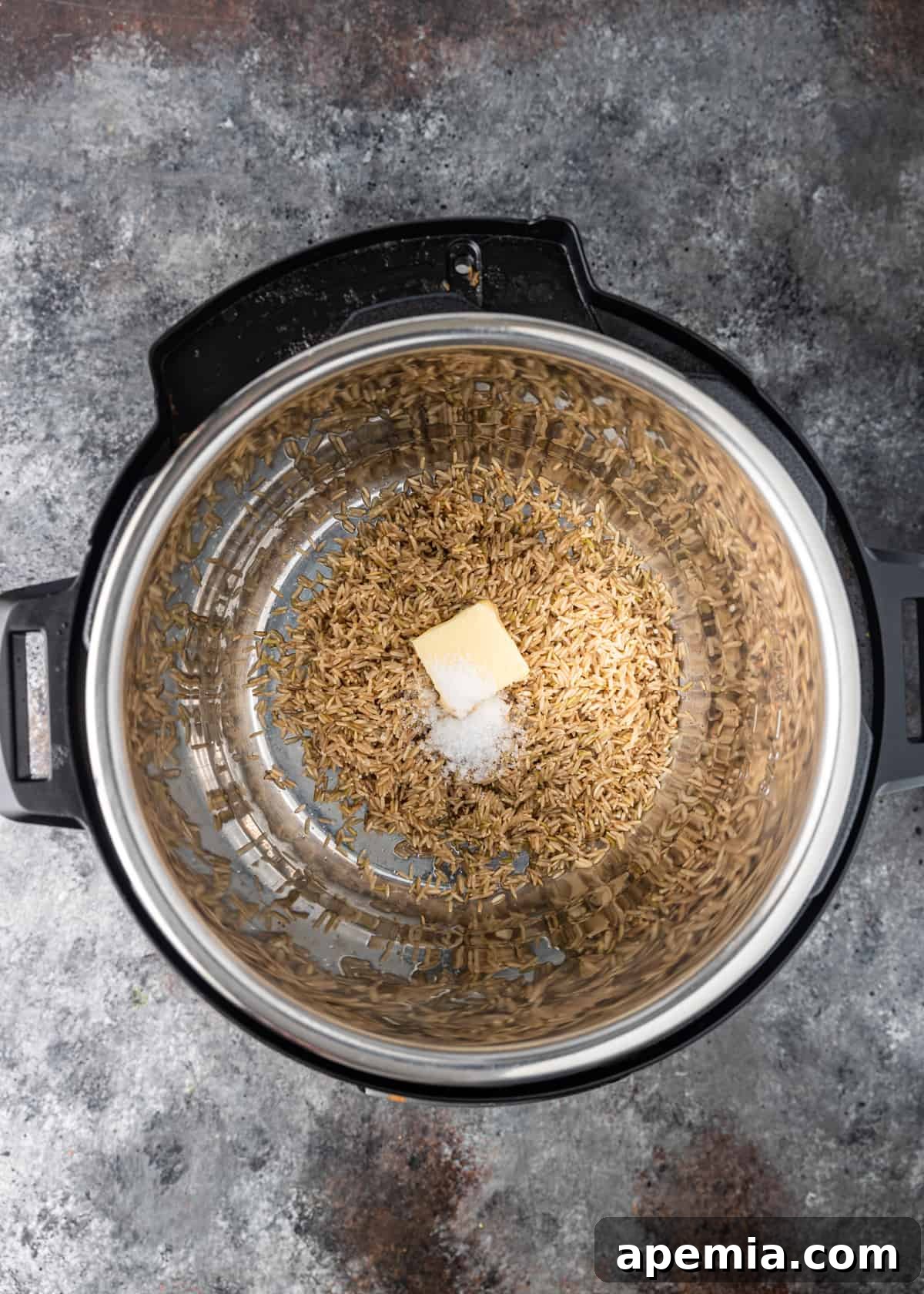
Step 1: Combine Ingredients and Seal. Place 1 cup of thoroughly rinsed Basmati rice into the inner pot of your Instant Pot. Add the appropriate amount of water: 1 cup of water for a slightly firmer, al dente white Basmati rice, or 1 ¼ cups for fluffier white Basmati rice. Ensure the venting knob is in the “Sealing” position.
Step 2: Pressure Cook. Close the Instant Pot lid and make sure it’s securely sealed. Select the “Pressure Cook” or “Manual” setting and set the cooking time to 6 minutes for white Basmati rice. If you are cooking brown Basmati rice, the cooking time will be longer, typically 18 minutes. Once the cooking cycle is complete, allow a natural pressure release (NPR) for 10 minutes. This means you do nothing and let the pressure release gradually on its own for the specified time.
Step 3: Release Pressure and Fluff. After the 10-minute natural pressure release, carefully turn the venting knob to the “Venting” position to quick release any remaining pressure. Once the float valve drops, you can safely open the lid. Gently fluff the Basmati rice with a fork to separate the grains and serve immediately.
Creative Ways to Use Basmati Rice: Inspiring Serving Suggestions
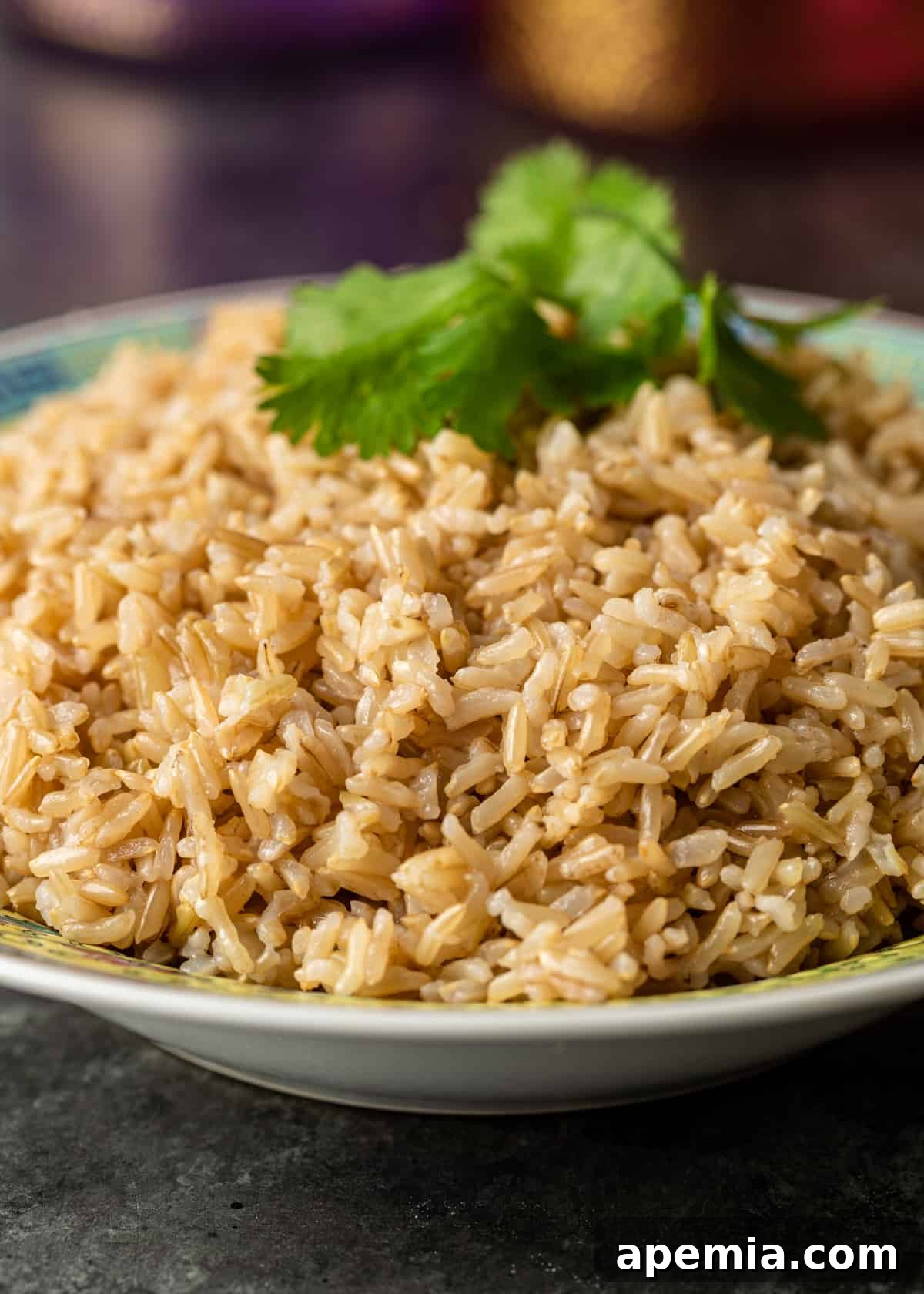
The exceptional aroma and texture of Basmati rice make it incredibly versatile, suitable for a wide array of culinary applications. Its distinctive qualities allow it to shine as both a main component and a perfect complement to many dishes. Here are some of my favorite ways to incorporate Basmati rice into meals:
- Rice Pilaf Base: Basmati is arguably one of the best choices for crafting exquisite rice pilaf dishes. Its naturally light and fluffy texture, combined with its long grains that tend not to stick together, results in a perfectly textured pilaf. It absorbs flavors beautifully, making it an ideal canvas for herbs, spices, and other additions.
- An Essential Side Dish: The subtle nutty and floral flavors of Basmati rice pair harmoniously with an extensive range of main courses. Whether it’s delicate seafood, robust red meats, tender poultry, or vibrant vegetarian and vegetable-based dishes, Basmati adds a refined touch. Furthermore, it is the quintessential accompaniment for any type of curry, soaking up the rich sauces and balancing the spices with its delicate profile.
- Hearty Additions to Salads & Soups: Basmati rice can instantly transform light salads and soups into more substantial, satisfying meals. Adding cooked Basmati provides a pleasant texture and a boost of complex carbohydrates. It’s also an excellent idea to swap out pasta for Basmati in pasta salads or to thicken and enrich various soup recipes, offering a gluten-free alternative that’s equally delicious.
5 Great Basmati Rice Recipes to Try
Now that you’ve mastered the techniques for cooking perfect Basmati rice, it’s time to put your skills to delicious use! Here are some of my top Basmati rice recipes that showcase its incredible versatility and flavor:
- Lebanese Vermicelli Rice with Meat (Hashweh): A flavorful dish where Basmati is cooked with vermicelli pasta and seasoned ground meat.
- Baked Basmati Rice Pilaf: An easy, oven-baked method for a fragrant and fluffy rice pilaf, perfect for gatherings.
- Lubia Polo (Iranian Rice Dish): A vibrant Persian dish combining Basmati rice with green beans and meat, often served with yogurt.
- Jeera Rice Recipe (Steamed or Boiled): A popular Indian staple where Basmati rice is infused with the warm, earthy notes of cumin seeds.
- Mulligatawny Soup: A rich and creamy Anglo-Indian soup, often thickened with lentils and served with a side of Basmati rice.
Frequently Asked Questions About Cooking Basmati Rice
What is the Best Way to Cook Basmati Rice?
The “best” way to cook Basmati rice ultimately comes down to your personal preference and the kitchen equipment you have available. As I’ve shared, stovetop cooking is a favorite for many, including myself, as it’s straightforward, requires only basic tools, and consistently delivers excellent results. However, I highly encourage you to experiment with all the methods! You can achieve equally perfect Basmati rice using an Instant Pot for speed, a microwave for convenience, or a dedicated rice cooker for consistent, hands-off cooking. Each method has its unique advantages.
What is the Optimal Ratio of Water to Basmati Rice?
The ideal water-to-Basmati rice ratio varies significantly depending on the cooking method and your desired texture. For stovetop and rice cooker methods, I recommend starting with 1 cup of dry, rinsed Basmati rice to 1 ½ cups of water for an al dente texture, or 2 cups of water for a softer, fluffier result. When using the microwave, slightly increase the ratio to 1 cup of dry rice for every 2 cups of water. For the Instant Pot, which utilizes pressure, the ratio is lower: 1 cup of dry rice to just 1 cup of water for firm rice, or 1 ¼ cups of water for fluffier white Basmati.
How Do You Make Basmati Rice Fluffy and Not Sticky?
Achieving fluffy, separate, non-sticky Basmati rice relies on three critical factors. First and foremost, **always rinse and thoroughly drain the rice** under cold water until the water runs clear. This removes excess surface starch that causes stickiness. Second, meticulously **adhere to the correct rice-to-water ratio** for your chosen cooking method; too much water leads to mush, too little results in crunchy rice. Finally, **respect the cooking and resting times**; cooking for the recommended duration and allowing the rice to rest undisturbed after cooking is crucial for the grains to fully absorb moisture and separate perfectly.