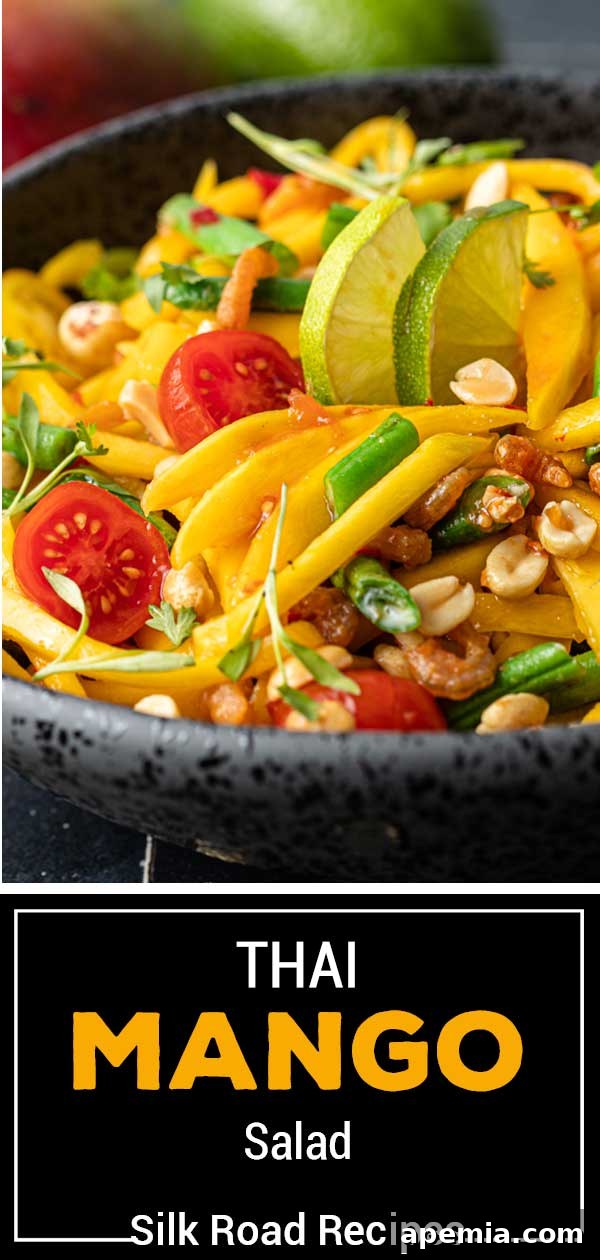
Exotic Thai Mango Salad Recipe: A Burst of Sweet, Spicy, and Tangy Flavors
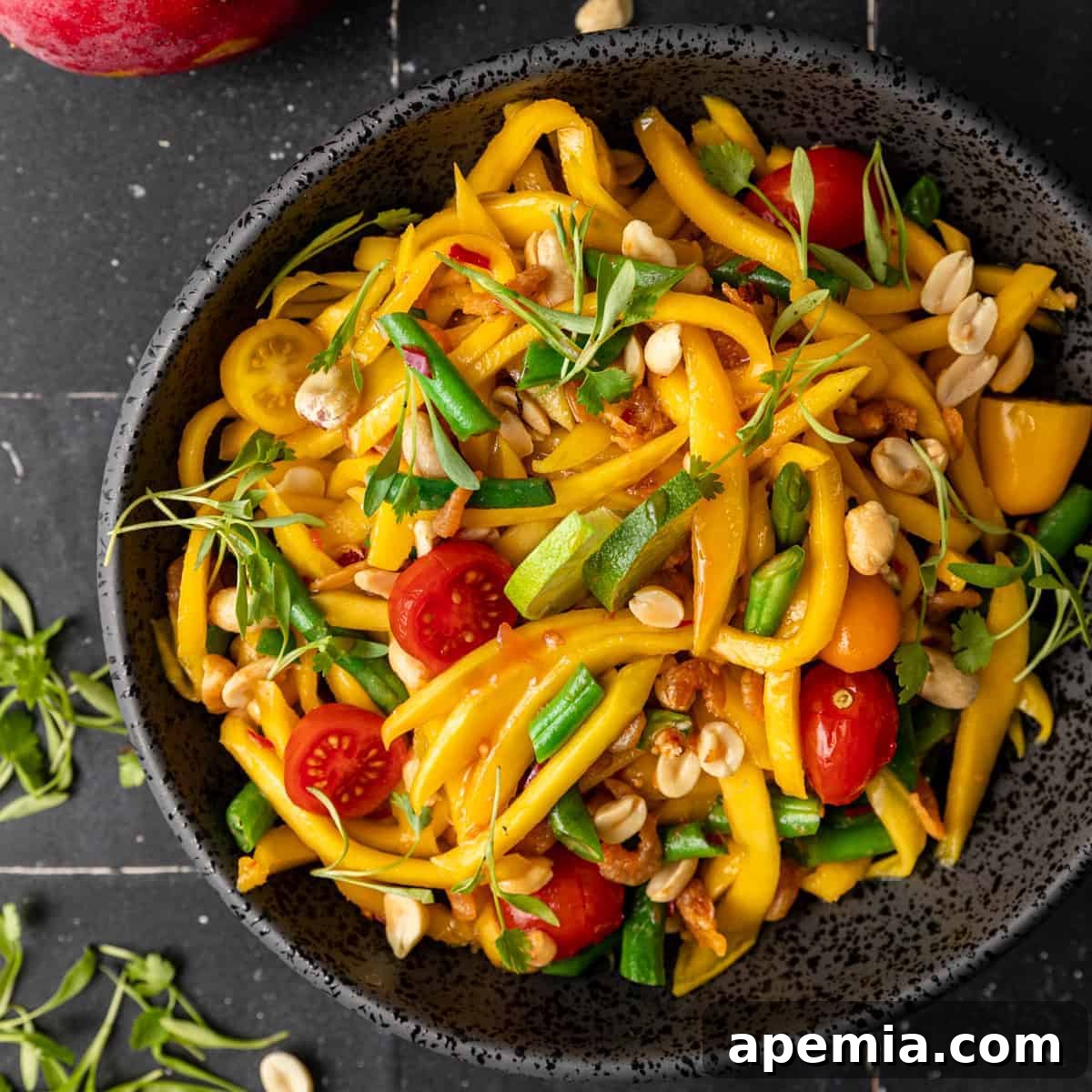
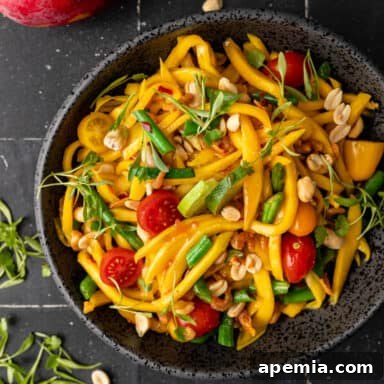
Embark on a culinary journey with our vibrant Thai Mango Salad recipe, a symphony of contrasting flavors and textures that tantalizes the palate. This invigorating dish perfectly marries the sweet, tropical essence of mango with the fiery kick of fresh chiles, all brought together in a refreshing medley of crisp green beans and juicy cherry tomatoes. Garnished generously with fresh cilantro and crunchy roasted peanuts, it’s not just a meal; it’s an energizing experience, delivering a unique balance of hot, sweet, tangy, and savory notes that truly awaken the senses.
Why You’ll Love This Refreshing Thai Mango Salad
More than just a delight for your taste buds, this fresh mango salad is a powerhouse of nutrition. Each ingredient contributes to a bountiful supply of essential vitamins and minerals, making it as healthy as it is delicious. From the luscious mangoes to the crisp peppers, verdant green beans, and ripe tomatoes, this salad is rich in Vitamins A, B, C, and K, along with vital minerals like magnesium and potassium. Incorporating this dish into your diet is a flavorful way to boost your overall well-being.
One of the many charms of this Thai Mango Salad recipe is its incredible versatility and adaptability. You can make this dish completely seasonal by swapping out ingredients based on what’s fresh and available in your local market. While our recipe features green beans and cherry tomatoes, feel free to experiment with other vibrant produce. Mixed greens, crunchy broccoli florets, or aromatic basil can seamlessly blend with the tropical flavors of the mango, offering a fresh take on the classic every time you prepare it.
This recipe offers a delightful twist on the traditional Thai mango salad. While authentic versions often feature unripe (green) mangoes for their distinct tartness and firm texture, we also embrace the use of ripe mangoes. For those new to Thai cuisine, or simply preferring a sweeter profile, ripe mangoes create an equally delicious and perhaps more approachable version of this vibrant salad. Both options yield an incredible dish, allowing you to tailor the experience to your personal preference.
The beauty of mango extends beyond its inherent sweetness. Believe it or not, mangoes pair exceptionally well with savory elements, creating complex and intriguing flavor profiles. For instance, the richness of a Mango Curry Chicken perfectly showcases this versatility. If you’re eager to explore more sweet and spicy combinations, be sure to try our adventurous Thai Shrimp Pizza, another dish that perfectly balances contrasting flavors.
The Star of the Show: Understanding Mangoes
Choosing Your Mango: Ripe vs. Unripe
In traditional Thai cuisine, the true green mango (known as Mamuang Kiew Sa Wei) is prized for its unique characteristics. It’s not simply an unripe version of the sweet, juicy mangoes commonly found in Western supermarkets. The authentic Thai green mango is remarkably crunchy, reminiscent of a crisp Granny Smith apple, with subtle nutty and even slightly floral notes. Its flavor is distinctly tart and refreshing, not at all sweet or tropical like its ripe counterparts. However, sourcing this specific variety can be challenging depending on your geographic location, making it a rare find for many home cooks.
For this reason, most recipes for “Thai Mango Salad” outside of Thailand will call for common unripe mangoes. While these unripe mangoes provide the desired tartness and firm texture crucial for the salad, they don’t replicate the exact nutty and floral nuances of a true Thai green mango. Nevertheless, they offer a fantastic substitute, allowing you to achieve a similar refreshing and tangy profile. If you happen to find authentic Mamuang Kiew Sa Wei, by all means, use it for an unparalleled experience. Otherwise, a firm, unripe mango will still yield a wonderfully delicious and authentic-tasting salad.
For those who prefer a touch more sweetness, a ripe mango is a perfectly acceptable and equally delicious alternative. The salad’s dressing, with its spicy, sour, and salty notes, beautifully complements the natural sweetness of a ripe mango, creating a slightly different but equally captivating flavor harmony. Don’t be afraid to experiment with your preferred mango ripeness to discover your perfect balance!
How to Peel and Slice Mangoes Effortlessly
The thought of peeling and slicing a mango can seem daunting to some, especially with its large, flat central pit. However, with a few simple techniques and the right tools, it’s surprisingly easy to prepare this tropical fruit for your salad. Achieving those perfect julienne strips, whether from a firm unripe mango or a softer ripe one, is key to the salad’s texture.
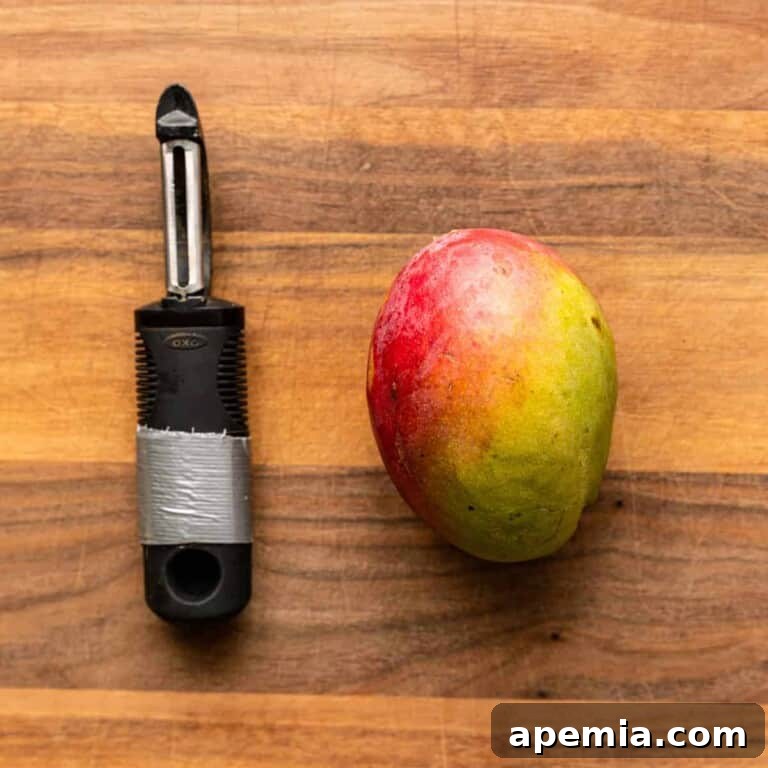
- Begin by thoroughly washing your mango. Place it on a sturdy cutting board. Use a swivel vegetable peeler or a Y-peeler to carefully remove the outer skin.
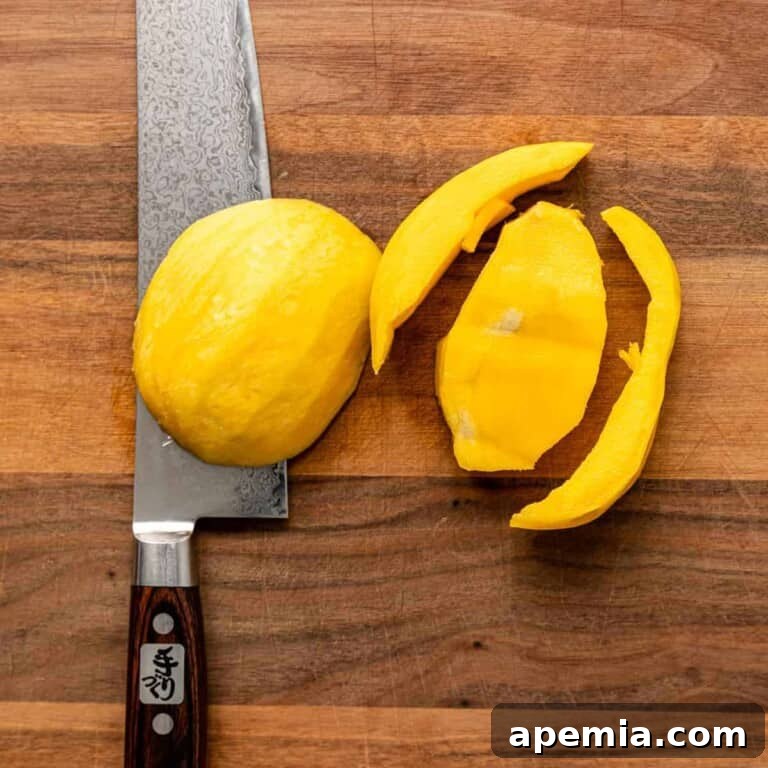
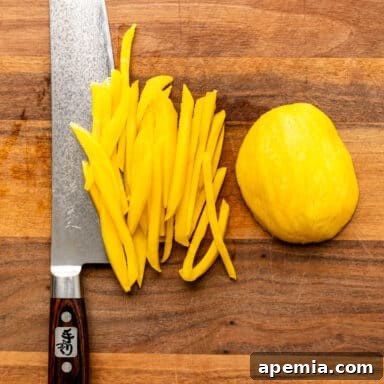
- Once peeled, stand the mango upright on your cutting board. Using a sharp Chef’s knife, make your first cut parallel to the long, flat side of the pit. You’ll feel the resistance of the pit, so cut as close to it as possible to maximize the flesh. Repeat this on the other side of the pit, yielding two large, oval cheeks of mango flesh. Then, carefully slice off the smaller strips of flesh from the remaining sides of the pit.
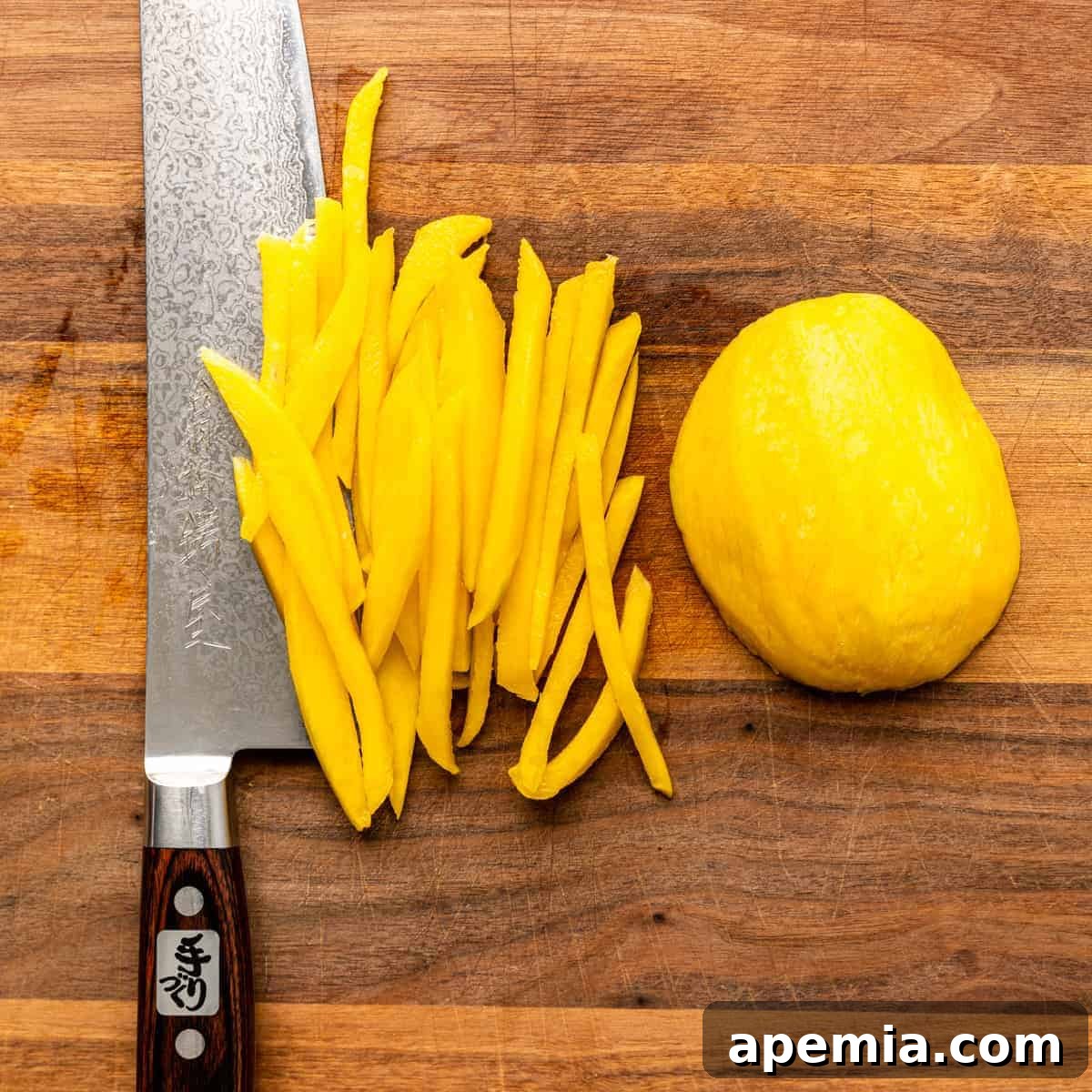
- Finally, to create julienne strips, take your mango cheeks and lay them flat. You can either use a julienne slicer, a mandoline (with caution, using a guard), or simply your Chef’s knife to slice the fruit into uniform, thin strips. For unripe mangoes, a sturdy grater commonly used for cabbage salad can also work wonders for a finely shredded texture.

Key Ingredients: Crafting the Perfect Thai Mango Salad
The magic of this Thai Mango Salad lies in the harmonious blend of fresh, high-quality ingredients. Each component plays a vital role in creating the salad’s signature sweet, sour, salty, and spicy profile. Understanding the nuances of these ingredients, and knowing their potential substitutions, empowers you to truly make this recipe your own.
- Mangoes: As discussed, traditionally, unripe mangoes are preferred for their firm texture and tart flavor, mimicking the authentic Thai green mango. However, feel free to use ripe mangoes if you prefer a sweeter salad or if unripe ones are hard to find. The key is to get them into thin, consistent julienne strips.
- Green Beans & Cherry Tomatoes: These vegetables add a delightful crunch and a balance of acidic and grassy notes to the salad. Green beans provide a refreshing snap, while cherry tomatoes burst with sweet and tangy juiciness. Don’t limit yourself though; you can easily customize your salad with other fresh vegetables like thinly sliced bell peppers for sweetness, crisp cucumbers for coolness, or blanched broccoli for added texture and nutrients.
- Fresno Chile: This vibrant red pepper is similar in heat to a jalapeño but offers a fruitier, slightly smoky undertone that elevates the flavor of the dressing. If Fresno chiles are unavailable, jalapeño or serrano peppers are excellent substitutes for a comparable level of spice. For those sensitive to heat, milder banana peppers or even a small amount of red bell pepper can be used to capture some of the visual appeal without the intensity.
- Brown Sugar: Essential for balancing the heat and tartness, brown sugar (or traditional palm sugar) introduces a deep, moist sweetness that is crucial to the dressing’s complexity. If you don’t have brown sugar, honey or maple syrup can serve as effective alternatives, each contributing its own unique subtle flavor.
- Fish Sauce: This staple of Southeast Asian cuisine provides a unique savory depth and umami, a salty-sweet funk that is indispensable. It’s the backbone of the Thai dressing. If you need a substitute, a combination of soy sauce and a touch of rice vinegar can offer a similar salty and tangy profile, though the umami depth might be slightly different. For gluten-free needs, look for gluten-free fish sauce brands or use coconut aminos.
- Lime: Freshly squeezed lime juice is paramount, delivering the bright, zesty tang that defines Thai salads. You’ll need at least 3 tablespoons of juice, typically from one large lime, to achieve the desired vibrant acidity. Do not use bottled lime juice; fresh is non-negotiable for this recipe.
- Dried Shrimp: These tiny, intensely flavorful shrimp are a secret weapon in many Thai dishes, adding a concentrated burst of savory, oceanic flavor and an intriguing texture to the dressing. Look for them in the international or Asian foods section of your grocery store. It’s crucial to note that dried shrimp must be cooked (often simply rehydrated and then added) before use. If you omit them, the salad will still be delicious but will have a slightly different flavor profile.
- Optional Garnishes: Fresh cilantro adds a refreshing, herbaceous, and slightly citrusy note that beautifully complements the salad’s vibrant flavors. Roasted peanuts provide a crucial textural contrast, offering a satisfying crunch and a nutty richness that ties everything together. Feel free to use other nuts like cashews or macadamia nuts for a different twist, or omit them entirely for a nut-free version.
Fresno chili peppers are just slightly spicier than jalapeño peppers, but they also boast a wonderful fruity flavor that you won’t typically find in jalapeños. This fruitiness contributes significantly to the complexity of our dressing.
Remember, the beauty of homemade salads is their flexibility. Feel free to swap out any or all of these salad ingredients for ones that you prefer or have on hand!
Crafting Your Thai Mango Salad: A Step-by-Step Guide
Making this refreshing Thai Mango Salad is a rewarding process that comes together quickly. The key is in preparing your ingredients and then combining them to allow the flavors to meld beautifully. Follow these steps to create a truly authentic and delectable salad.
- Prepare the Mango: First, peel your mangoes using a vegetable peeler. For unripe mangoes, which are firmer, you can use a grater (like one for cabbage) or a kitchen mandoline to achieve thin, shredded strips. If using ripe mangoes, carefully slice the flesh away from the large pit with a sharp, dry knife. Once separated, slice these mango chunks into uniform strips. Transfer all the prepared mango to a large mixing bowl.
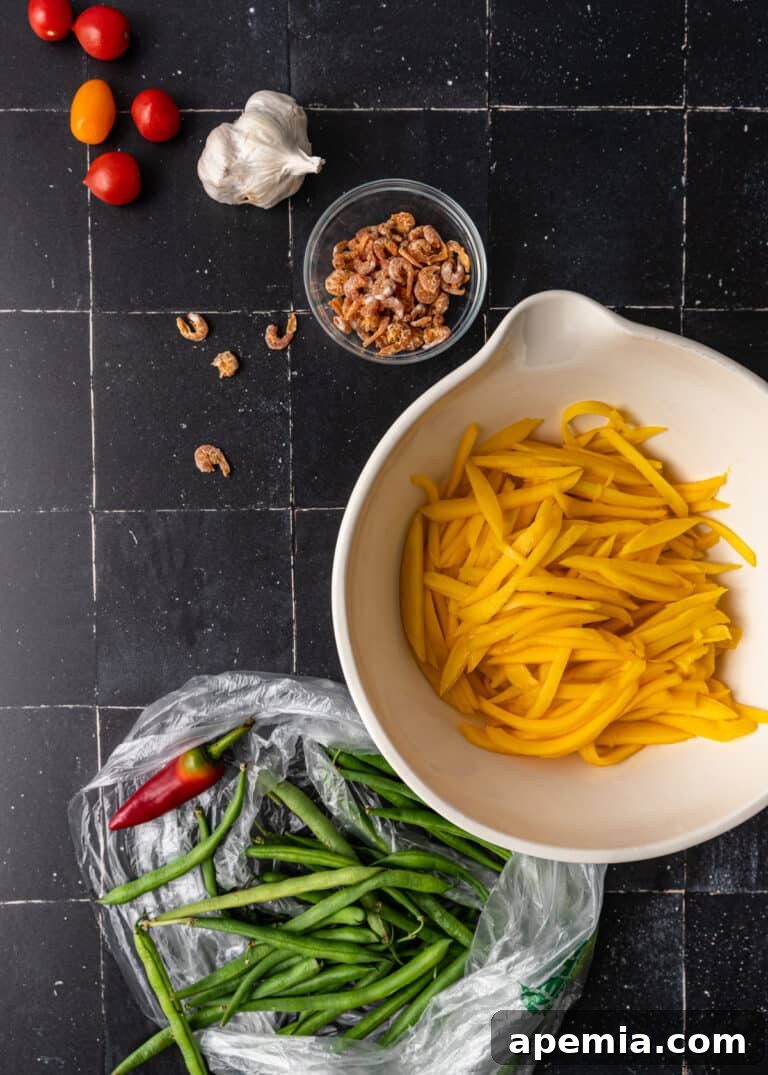
- Ready the Other Vegetables: Trim the tough ends off your fresh green beans. Slice about two-thirds of the green beans into 2-inch pieces and add them to the bowl with the mango. Set aside the remaining one-third of green beans for the dressing. Halve all the cherry tomatoes and set them aside as well.
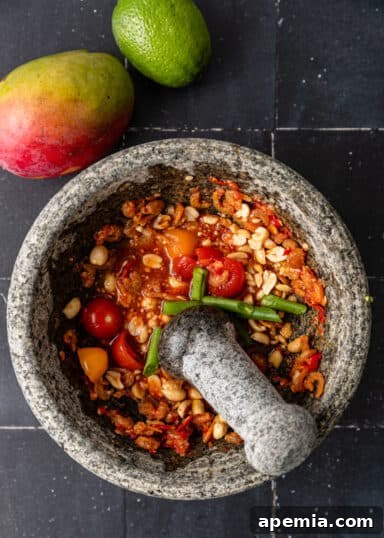
- Begin the Flavorful Paste: This is where the magic starts. Place the Fresno chile (or your chosen substitute) and garlic cloves into a mortar. Using a pestle, grind them down into a rough, aromatic paste. The texture doesn’t need to be perfectly smooth; a slightly coarse paste adds character. If you don’t have a mortar and pestle, you can finely dice the chile and mince the garlic thoroughly on a cutting board.
- Build the Dressing Base: To the chile and garlic paste in the mortar (or mixing bowl), add the reserved unsliced green beans and half of the roasted peanuts. Lightly crush these ingredients with the pestle (or the back of a wooden spoon) just enough to bruise them and release their flavors. This step is crucial for incorporating the freshness and nutty notes into the dressing.
- Complete the Dressing: Now, add the brown sugar, fish sauce, freshly squeezed lime juice, and dried shrimp to the mixture. Continue to crush and mix everything together thoroughly. Aim for a well-combined, chunky sauce rather than a smooth liquid. The dried shrimp will break down and infuse the dressing with incredible umami.
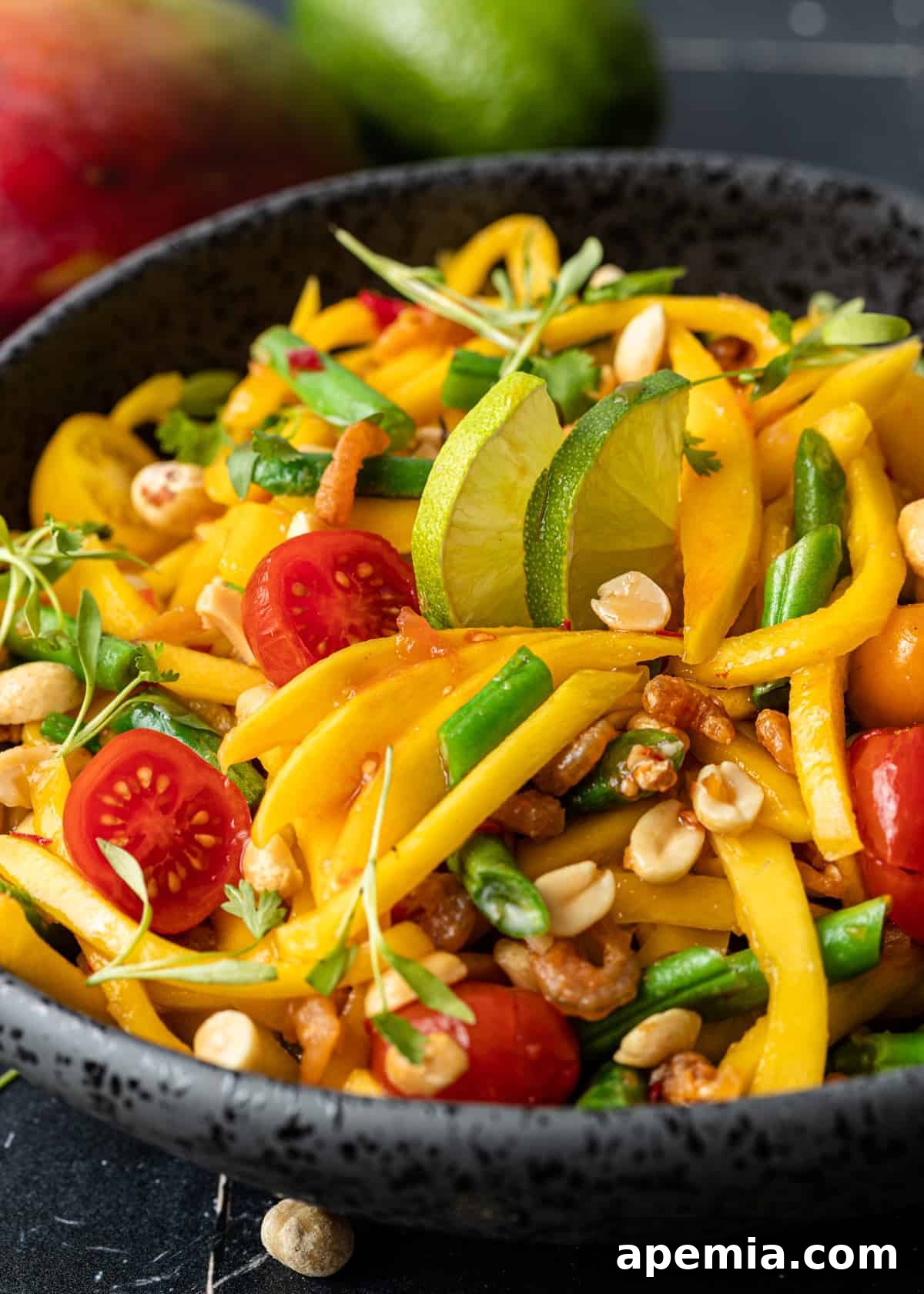
- Sauce and Serve: Pour the prepared dressing over the sliced mango and green beans in the mixing bowl. Toss everything gently but thoroughly, ensuring all the fruit and vegetables are evenly coated with the vibrant sauce. For the best flavor, allow the salad to chill in the refrigerator for at least 30 minutes before serving, as the flavors will meld and deepen. Serve immediately, garnished with fresh slices of lime, the remaining roasted peanuts, and a generous sprinkle of chopped cilantro.
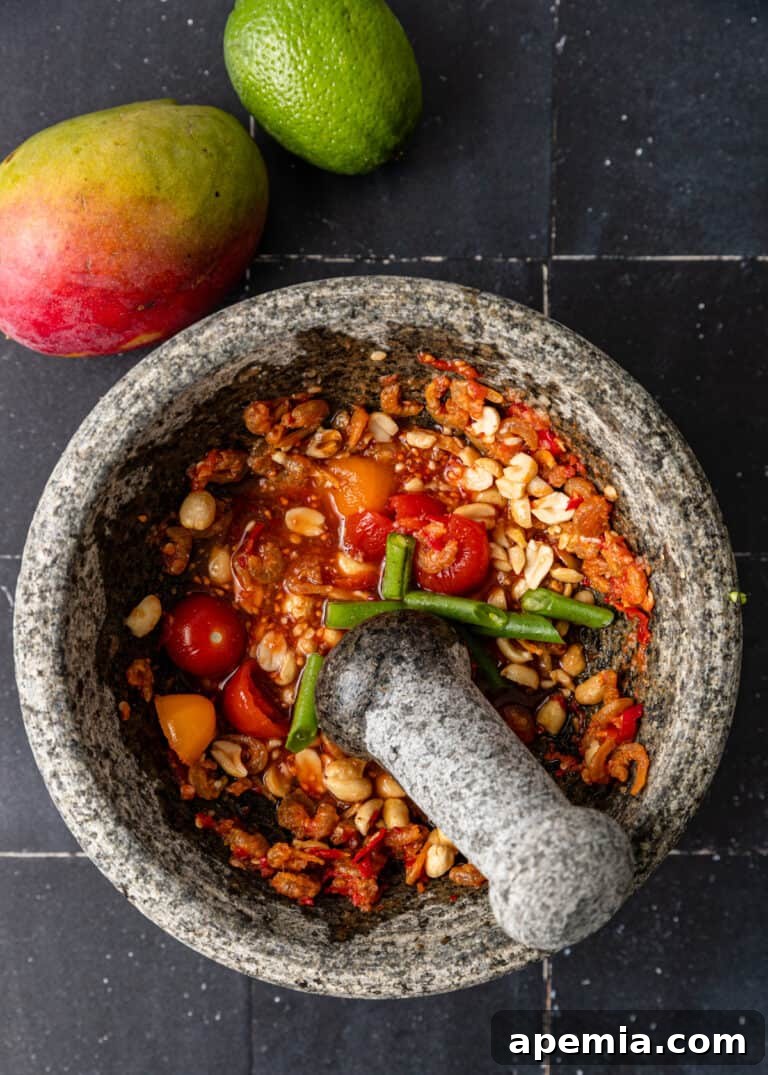
The Heart of the Flavor: Making Thai Mango Salad Dressing
The dressing is arguably the most crucial component of this Thai Mango Salad, bringing together all the diverse ingredients into a cohesive and unforgettable flavor profile. It’s a testament to the balance of sweet, spicy, sour, and salty that defines Thai cuisine. While the process is straightforward, using the right tools can significantly impact the final texture and depth of flavor.
Creating the dressing involves mashing the core ingredients into a flavorful paste, which is then thinned out with the refreshing juices of lime and tomatoes. While you can certainly achieve a decent result using a sturdy mixing bowl and the back of a wooden spoon, we highly recommend using a traditional large granite mortar and pestle. The abrasive surface of granite effectively breaks down the cell walls of the chiles, garlic, and other ingredients, releasing their essential oils and creating a more integrated and fragrant paste. This traditional method contributes to the authentic taste and rustic texture of the dressing.
Beyond this delicious mango salad, a mortar and pestle is a versatile and invaluable tool for any kitchen. It excels at making vibrant pastes, grinding your own fresh spice blends, preparing creamy hummus, chunky guacamole, and countless other fresh preparations. Investing in a good quality mortar and pestle is a decision your taste buds will thank you for time and time again.
Customizing Your Thai Mango Salad: Variations and Dietary Adjustments
One of the joys of cooking is the freedom to adapt recipes to suit individual tastes and dietary requirements. This Thai Mango Salad is incredibly versatile, making it easy to put your personal stamp on it.
- Vegetarian/Vegan Version: To make this salad vegetarian or vegan, simply omit the dried shrimp and substitute the fish sauce with a high-quality vegetarian fish sauce alternative or a combination of soy sauce (or tamari for gluten-free) and a splash of rice vinegar. You can also add a pinch of seaweed flakes for an oceanic hint if desired.
- Nut-Free Option: If you or your guests have a nut allergy, roasted peanuts can be easily omitted without compromising the salad’s core flavors. The crunch can be replaced with toasted pumpkin seeds or sunflower seeds for a similar texture, or even crispy fried shallots.
- Spice Level Adjustment: The heat from the Fresno chile is central to the salad. If you love spice, consider adding an extra chile or a few slices of bird’s eye chili. For a milder version, remove the seeds and membranes from the chile before grinding, or use a very small amount of a less potent pepper like a mini bell pepper.
- Add More Vegetables: This salad is a fantastic vehicle for a variety of fresh produce. Consider adding thinly sliced red onion for a pungent bite, shredded carrots for extra sweetness and color, bean sprouts for freshness, or even thinly sliced cabbage for more crunch.
- Herb Variations: While cilantro is traditional, feel free to experiment with other fresh herbs. Mint leaves can add a refreshing coolness, while Thai basil can introduce a distinct anise-like aroma.
Serving Suggestions for Your Thai Mango Salad
This vibrant Thai Mango Salad is incredibly versatile and can be enjoyed in many ways. It makes a fantastic light lunch on its own, especially on a warm day, offering a refreshing and satisfying meal.
- As a Side Dish: It pairs beautifully as a refreshing side to a variety of main courses. Think grilled chicken, pan-seared fish, or succulent shrimp. Its bright, tangy flavors cut through the richness of proteins, creating a balanced meal.
- With Rice: Serve it alongside a bowl of sticky rice or jasmine rice to absorb the delicious dressing and create a more filling meal.
- Part of a Thai Feast: If you’re hosting a Thai-themed dinner, this mango salad is a must-have addition, complementing other classic dishes like Pad Thai, green curry, or spring rolls.
- Appetizer or Potluck Item: Its vibrant colors and unique flavors make it an excellent appetizer for guests or a standout dish to bring to a potluck.
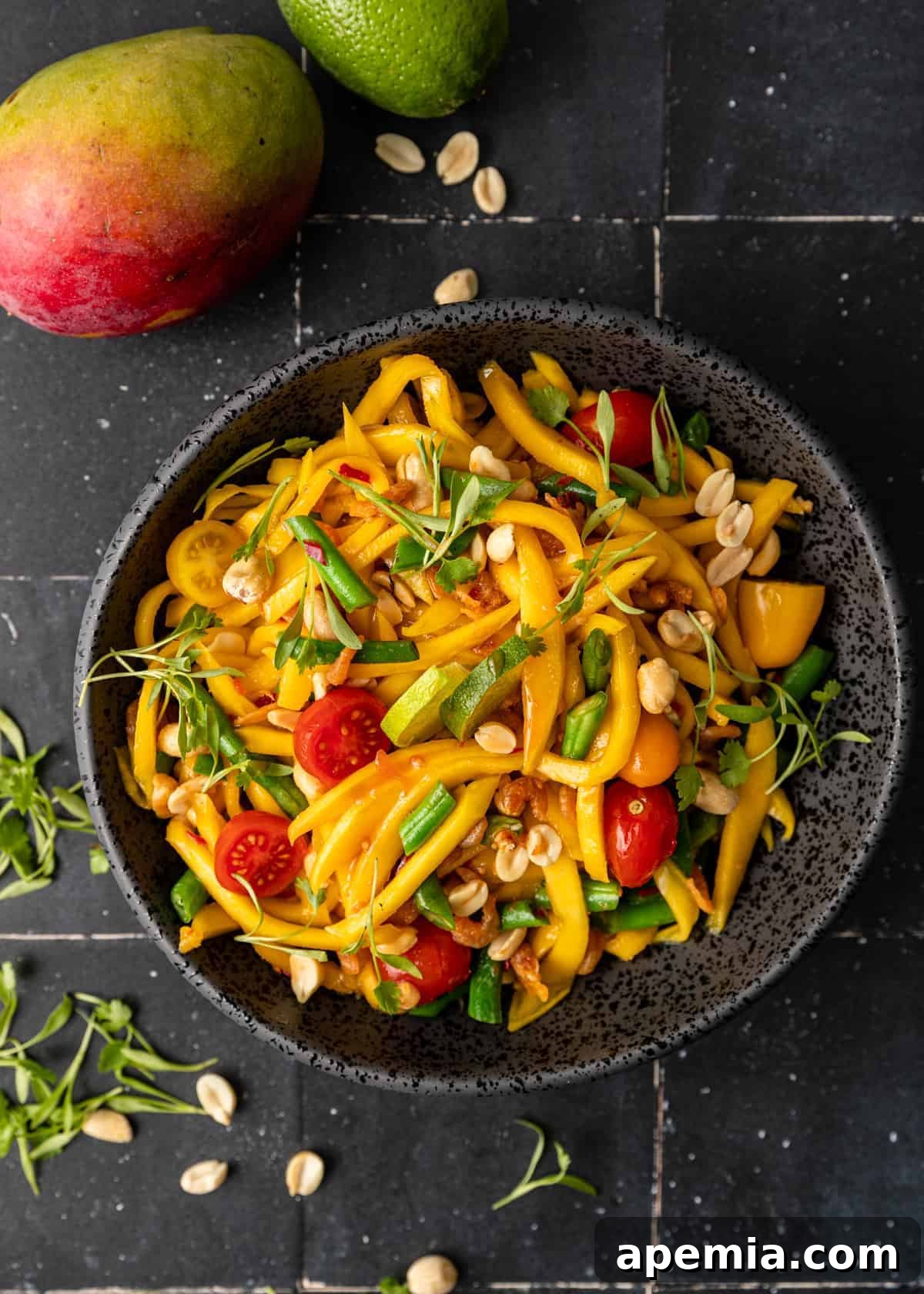
Storage Tips and Frequently Asked Questions
Recipe Notes for Optimal Enjoyment
- Best Served Chilled: This salad truly shines when it’s well-chilled, allowing the flavors to fully meld and the freshness to be amplified.
- Storage: Store any leftovers in an airtight container in the refrigerator. It’s best enjoyed within 3 to 4 days of making it. Beyond that, the mango and vegetables might start to lose their crispness.
- Nut Options: If you need to accommodate a nut allergy, simply omit the peanuts completely. Alternatively, feel free to experiment with other nuts of your choice; toasted cashews, macadamia nuts, or even pistachios can add a delightful crunch and different flavor profile to a Thai mango salad.
Frequently Asked Questions (FAQ)
There’s absolutely no reason to include seafood in your salad if you don’t enjoy it or have dietary restrictions. You can omit both the dried shrimp and fish sauce. If you still want the umami and depth that fish sauce provides but need a gluten-free or vegetarian option, there are excellent gluten-free fish sauce brands available, or you can substitute with coconut aminos.
It’s perfectly acceptable and common to substitute ripe, sweet mango for the traditional sweet green mango. While the flavor profile will be different (sweeter rather than tart and nutty), the salad will still be incredibly delicious and refreshing. Alternatively, using a common unripe (but not specifically Thai green) mango is also an excellent choice to mimic the tartness and firm texture of the traditional version.
Traditionally, Thai mango salad (Som Tum Mamuang) is made with shredded Thai green mango, various fresh peppers like bird’s eye chilies, and other vegetables such as green beans, cherry tomatoes, and sometimes red onion and bean sprouts, often topped with roasted peanuts.
The authentic Thai salad dressing is a rough-ground paste typically made in a mortar and pestle. It combines crushed chile, garlic, a mix of vegetables like green beans and tomatoes (which are lightly bruised), brown sugar (or palm sugar), fish sauce, fresh lime juice, and often dried shrimp. It’s more of a chunky, textured sauce than a smooth, liquid dressing.
The term “green mango” can be a bit confusing. A true Thai sweet green mango (Mamuang Kiew Sa Wei) is very unique and not simply a sour version of the sweet, sticky fruit we typically associate with mangoes in Western countries. It’s crunchy and firm, with a texture similar to an apple, and possesses a tart, slightly nutty, and even floral flavor rather than just sourness.
When authentic Thai green mango is unavailable, recipes often call for unripe mangoes (which are green in color) from more common varieties. These unripe mangoes are indeed sour or tart, and while they don’t fully capture the complex flavor of a true Thai green mango, they effectively mimic the desired tartness and firm texture that is crucial for this salad. This makes them the best widely available substitute for achieving that authentic Thai mango salad experience.
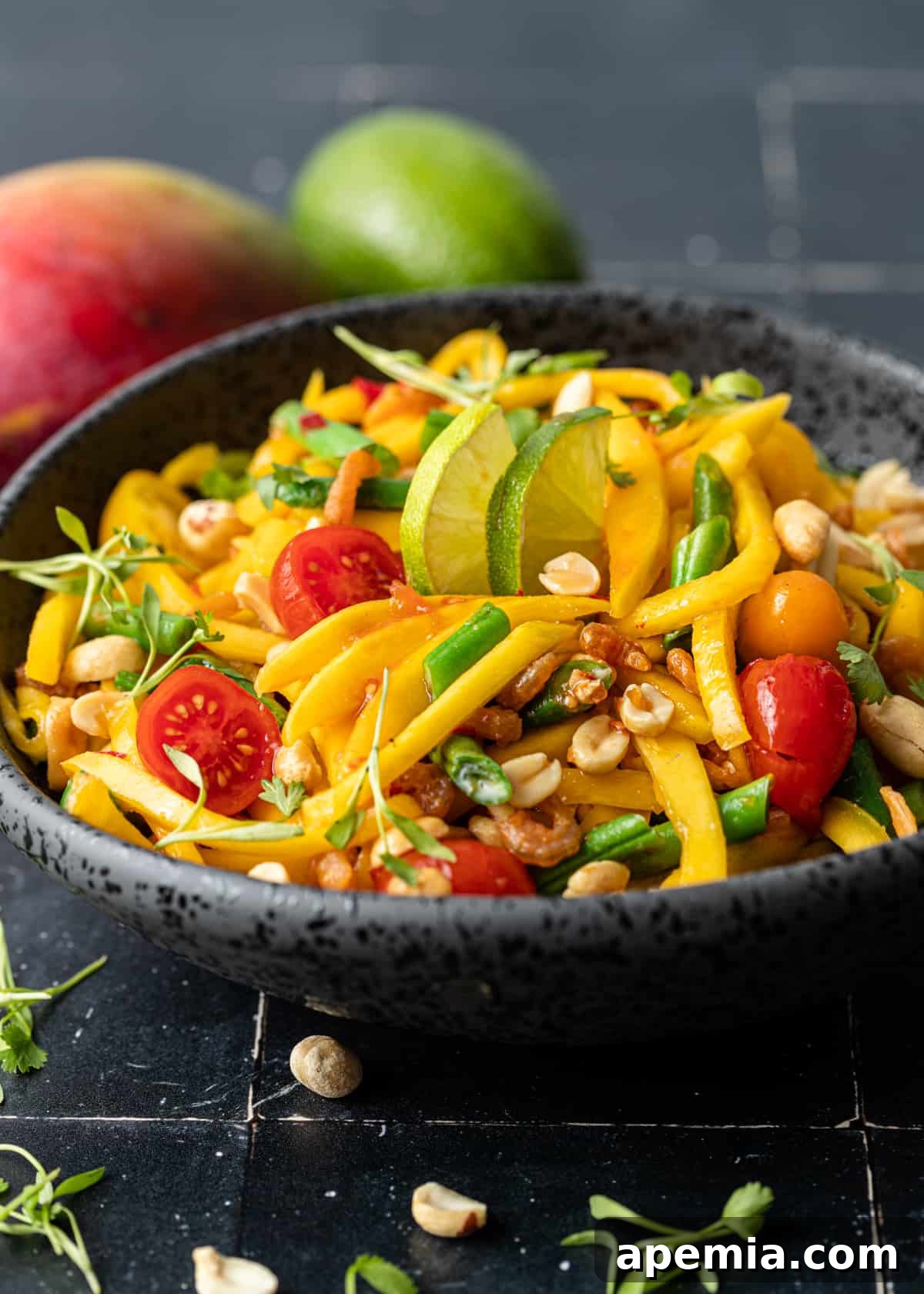
Thai Mango Salad Recipe Card
Recipe Summary
This Mango Salad is a harmony of fresh fruits and vegetables! Get a vitamin boost from this sweet, spicy, sticky, and crunchy Thai salad recipe.
- Servings: 4
- Prep Time: 20 minutes
- Total Time: 20 minutes
Ingredients
- 2 mangoes (See Note 1 for ripeness options)
- 20 fresh green beans
- 8 cherry tomatoes (cut in half)
- 1 Fresno chile (3-inch in length)
- 3 garlic cloves
- 2 tbsp brown sugar (or palm sugar)
- 1 1/2 tbsp fish sauce
- 1 large lime (yielding approximately 3 tbsp juice)
- 1/4 cup dried shrimp
Garnish
- 1/2 cup roasted peanuts
- 1/4 cup cilantro for garnish (chopped or micro cilantro)
Instructions
-
Peel the mangoes with a vegetable peeler. For an unripe mango, use a grater (like for cabbage salad) or a kitchen mandoline to shred the flesh. For a ripe mango, use a sharp, dry knife to slice the fruit away from the pit. Slice the mango chunks into thin strips and transfer to a large salad bowl.

-
Trim the ends off the green beans and cut two-thirds into 2-inch pieces. Add these to the salad bowl. Reserve the remaining one-third of green beans. Cut the cherry tomatoes in half and set aside.
-
Using a mortar and pestle, crush the red chile and garlic into a paste. Alternatively, finely dice the red chile and mince the garlic if you don’t have a mortar and pestle.
-
Add the halved tomatoes, the reserved one-third of green beans, and half of the roasted peanuts to the mortar (or bowl with paste). Lightly crush them slightly with the pestle (or a wooden spoon) to bruise and release flavors. Then, add the brown sugar, fish sauce, lime juice, and dried shrimp. Crush and mix thoroughly until well combined, forming a chunky sauce.
-
Pour the sauce mixture over the sliced mango and green beans in the salad bowl. Toss well to ensure all ingredients are thoroughly coated and mixed. Chill the salad in the refrigerator for at least 30 minutes for best flavor, or serve immediately. Garnish with fresh lime slices, the remaining peanuts, and chopped cilantro on top.
Notes
- Typically, a true Thai Mango Salad uses unripened mangoes, but feel free to use ripe mangoes for a sweeter profile. Both yield delicious results.
- This salad generously serves 4 as a side dish, or 2 as a satisfying main course.
Nutrition Information (Estimate)
The information shown is an estimate provided by an online nutrition calculator. It should not be considered a substitute for a professional nutritionist’s advice.
- Calories: 261 kcal
- Carbohydrates: 30g
- Protein: 18g
- Fat: 10g
- Saturated Fat: 1g
- Cholesterol: 169mg
- Sodium: 1038mg
- Potassium: 495mg
- Fiber: 4g
- Sugar: 22g
- Vitamin A: 1505IU
- Vitamin C: 68mg
- Calcium: 114mg
- Iron: 2mg
Recipe Details
- Course: Salad
- Cuisine: Asian, Thai
- Author: Kevin
Have you made this recipe? Let me know on Instagram!
Tag @keviniscooking or tag me #keviniscooking!