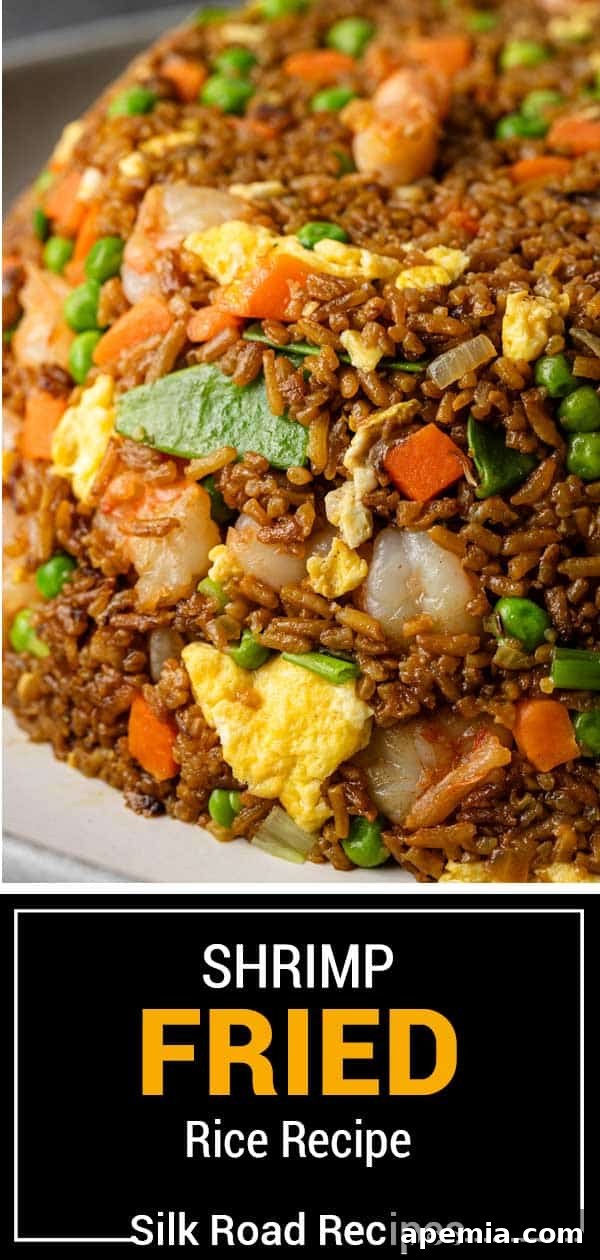
The Ultimate Guide to Savory Shrimp Fried Rice: A Classic Chinese Takeout at Home
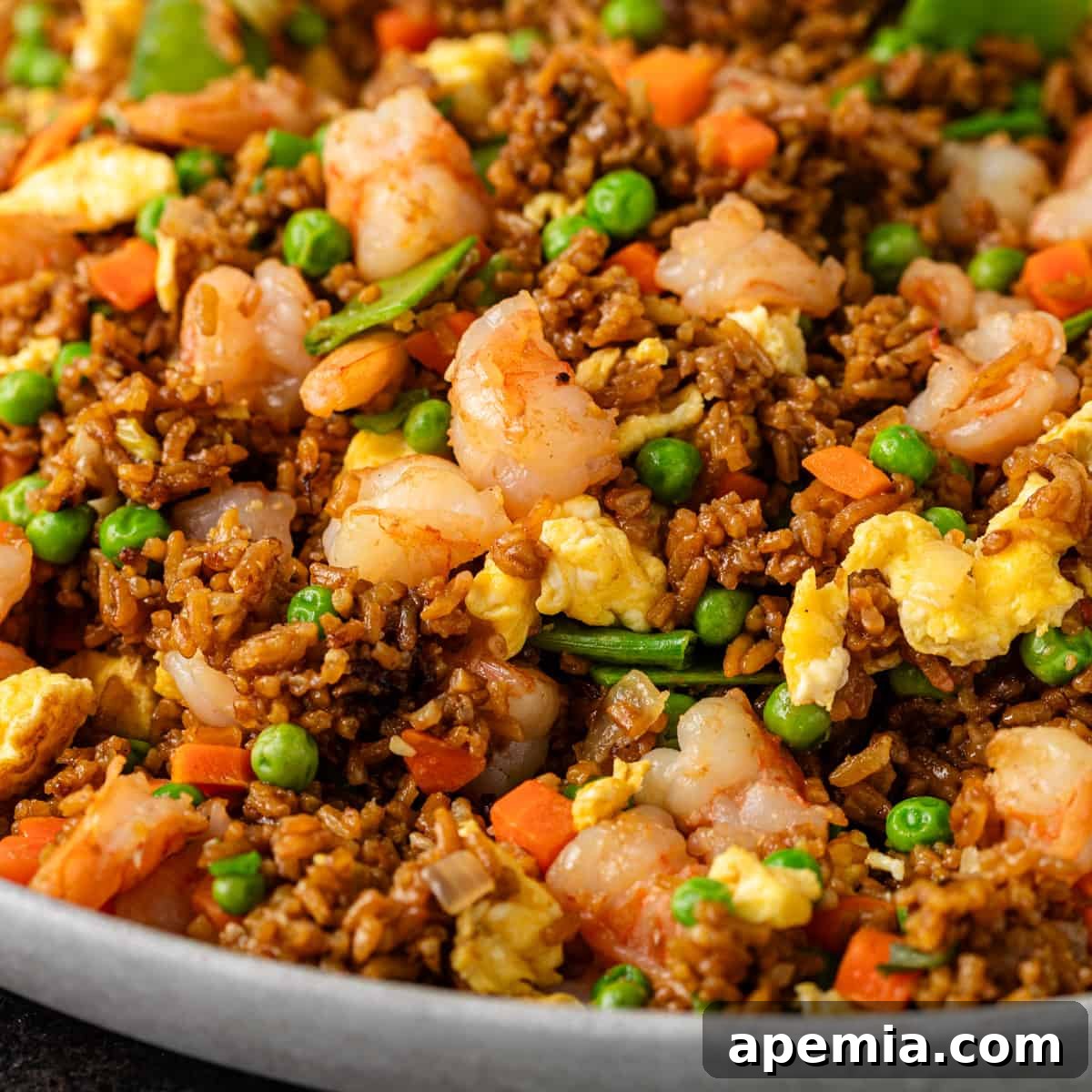
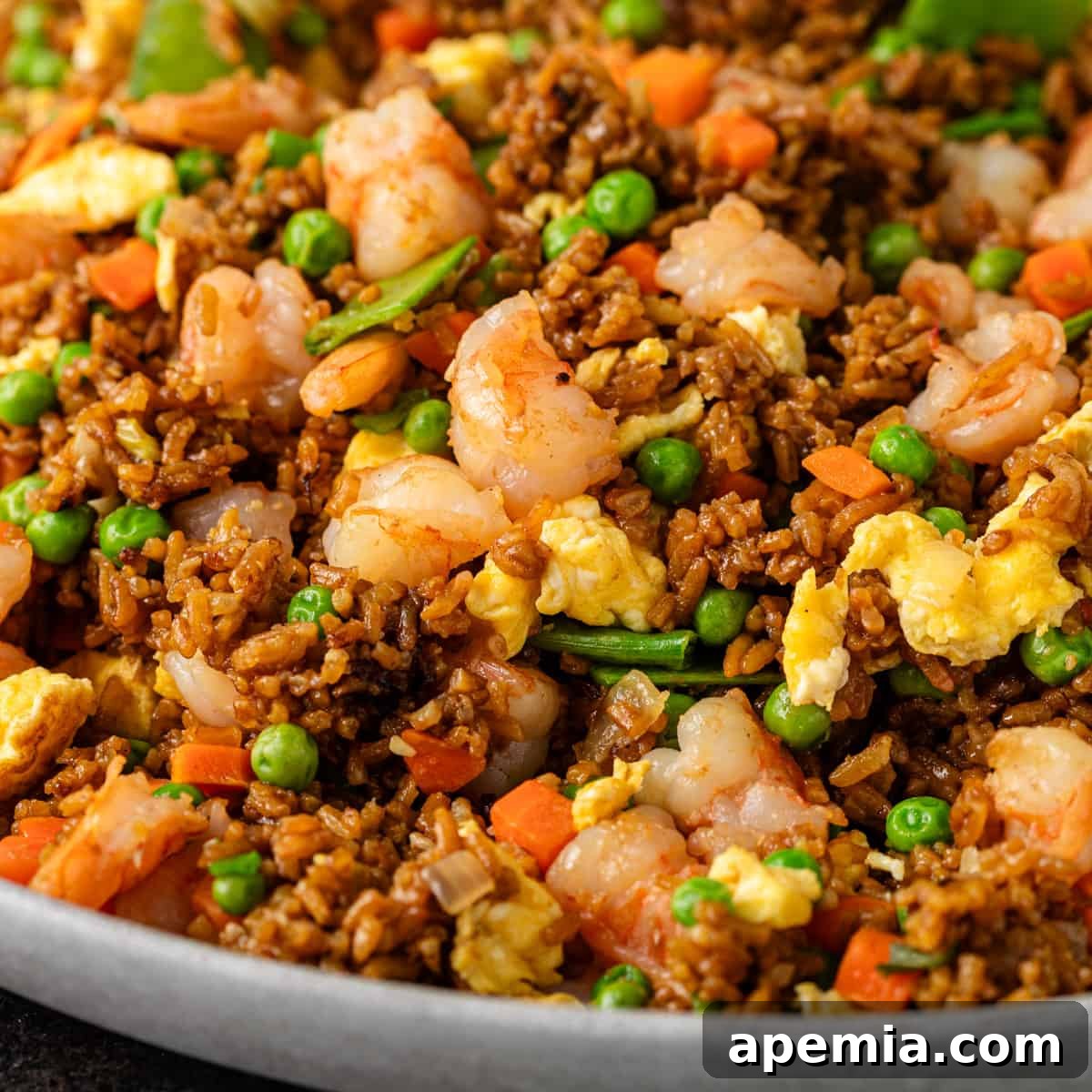
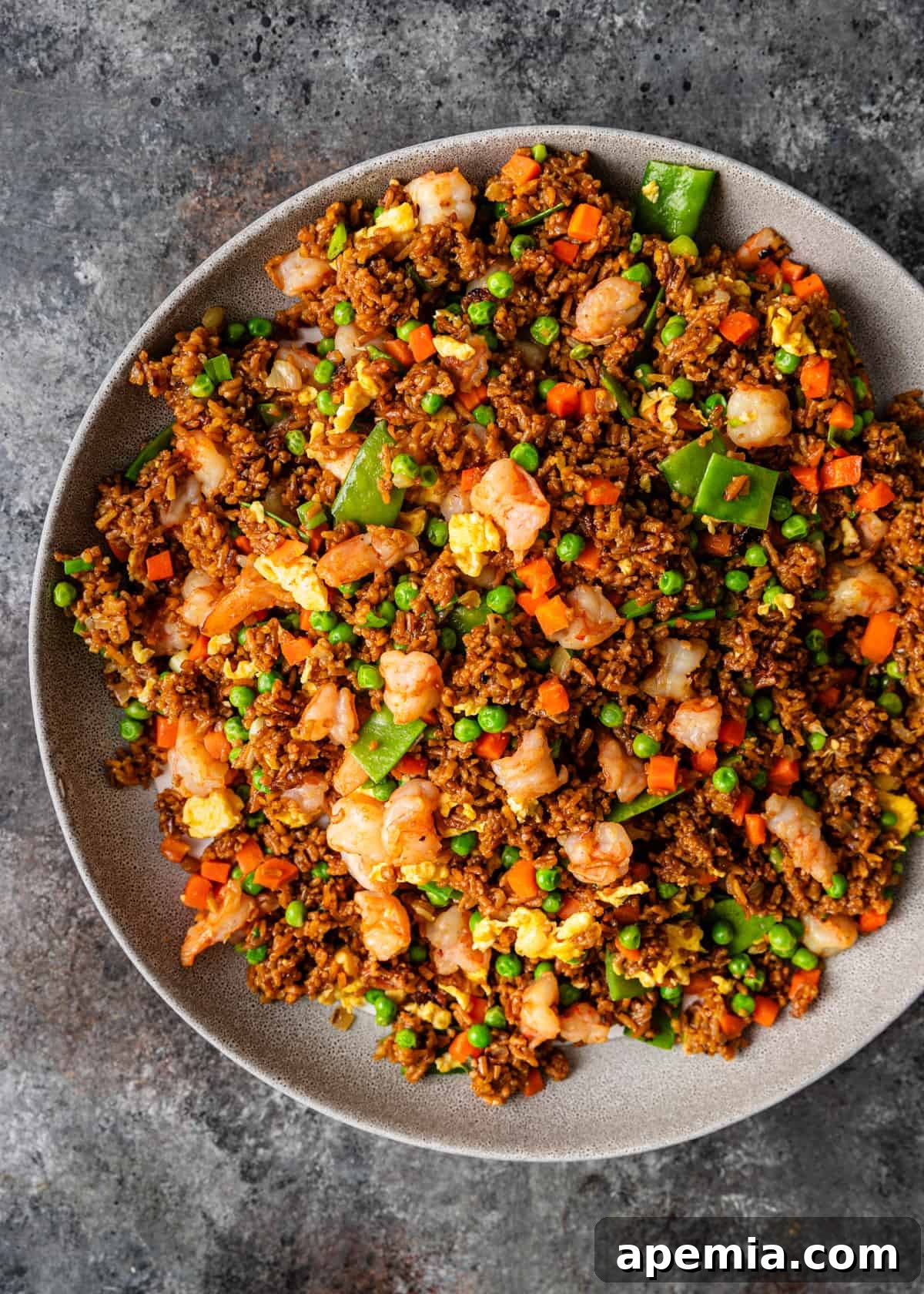
Prepare to delight your taste buds with this incredible shrimp fried rice recipe, a simple yet profoundly flavorful dish that promises to become a regular fixture at your dinner table. Forget greasy takeout; this homemade version delivers a mountain of perfectly seasoned rice, studded with vibrant peas, sweet carrots, crisp green onions, and an abundance of succulent, plump shrimp. It’s a culinary journey that brings the authentic taste of Chinese stir-fry right into your kitchen, crafted with fresh ingredients and expert techniques.
Fried rice is a beloved staple across many Asian cuisines, each with its unique flair. From the smoky, theatrical Japanese hibachi style, often characterized by direct cooking on a large griddle, to the comforting, umami-rich classic Chinese takeout dish, the variations are endless. While both are undeniably delicious, they achieve their distinct flavors and textures through different approaches. This particular recipe takes its inspiration from the latter—the traditional Chinese preparation—focusing on firm, distinct rice grains infused with rich soy sauce and stir-fried to perfection, enhanced by the aromatic symphony of sesame oil, garlic, and onions.
What truly sets this Chinese-style shrimp fried rice apart is its high-heat, high-speed cooking method, and the strategic separation of ingredients. Unlike some recipes where everything might be tossed in at once, here, each component—from scrambled eggs to aromatics, vegetables, and shrimp—is cooked in rapid succession. This meticulous approach ensures that every ingredient retains its optimal texture and flavor, preventing overcrowding in the wok and allowing each element to shine independently before being harmoniously combined. The result is a dish where the shrimp remains tender, the vegetables crisp, and the rice beautifully separated, never mushy.
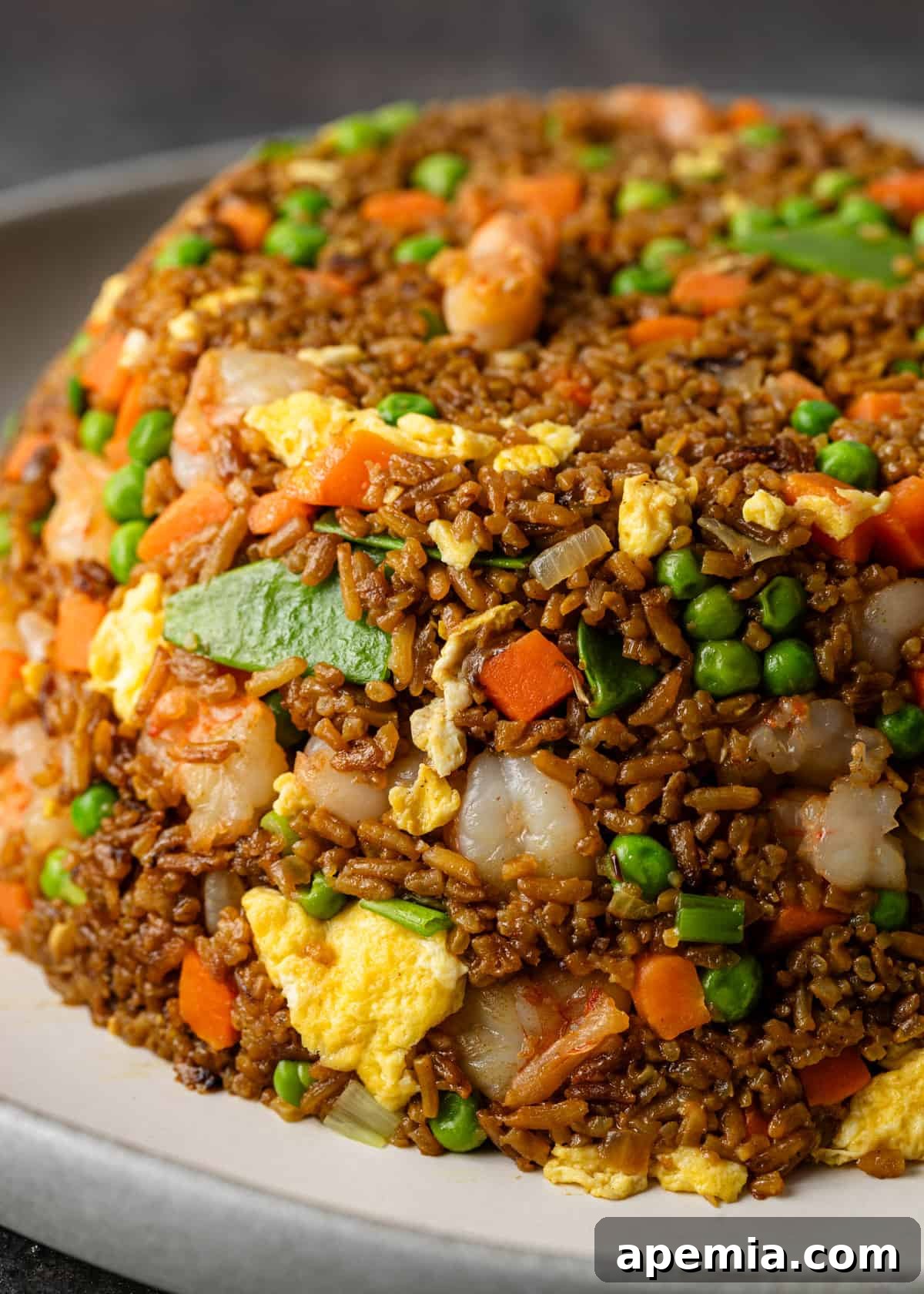
Table of Contents
- The Secret to Perfect Fried Rice: Day-Old Rice
- Understanding Soy Sauce: Light and Dark
- Essential Ingredient Notes and Substitutions
- Step-by-Step: How to Make Shrimp Fried Rice
- Recommended Tools for Stir-Frying
- Storing and Reheating Your Fried Rice
- Frequently Asked Questions
- Shrimp Fried Rice Recipe Card
While shrimp is the star of this particular dish, the beauty of fried rice lies in its versatility. You can easily substitute the shrimp with other proteins, tailoring it to your preference or what you have on hand. Sweet and sticky pork fried rice is another incredibly popular and flavorful option. For a vegetarian take, simply omit the meat and focus on an array of colorful vegetables. This flexible dish can also serve as a hearty side to other main courses, such as savory sweet and sour ribs or perfectly seasoned spicy Asian chicken meatballs, making it an excellent choice for any meal occasion.
Tip From Kevin
Understanding Soy Sauce: Light and Dark
When diving into authentic Chinese cooking, understanding the nuances between different types of soy sauce is key to unlocking truly rich flavors. Many recipes, including this one, call for both light and dark soy sauce, and for good reason.
Dark soy sauce is typically thicker, sweeter, and possesses a deeper, more robust umami flavor compared to its light counterpart. It often contains added sugar or molasses, which contributes to its characteristic dark color and slight sweetness. While it might have a higher sodium content (sometimes about 15% more), its intense flavor profile means you usually use it in smaller quantities, primarily for adding a beautiful reddish-brown color to dishes, as well as a subtle depth of flavor. If you find yourself without dark soy sauce, Tamari can serve as a decent substitute, though it lacks the characteristic sweetness and color. Be mindful of sodium levels if using a standard Tamari.
On the other hand, light soy sauce, which translates to “fresh soy sauce” in Chinese, is traditionally derived from the first pressing of fermented soybeans. This is the most common and versatile Chinese soy sauce, used widely for seasoning and bringing out the natural flavors of ingredients. It’s lighter in color and saltier in taste than dark soy sauce, providing the primary savory element in many stir-fries and marinades. It is crucial not to confuse this with “light soy sauce” from Western brands like Kikkoman, which usually denotes a low-sodium variety. Always look for “light soy sauce” or “fresh soy sauce” at Asian grocery stores for the authentic Chinese version.
Tip From Kevin
The Secret to Perfect Fried Rice: Day-Old Rice
One of the most critical, yet often overlooked, secrets to achieving truly restaurant-quality fried rice is using day-old, chilled rice. While it might seem counterintuitive, freshly cooked rice is often too moist and sticky, leading to a clumpy, mushy texture when stir-fried. Day-old rice, however, has had time to dry out and firm up in the refrigerator. This process, known as retrogradation, transforms the starch molecules into crystalline structures, making the grains more resilient to heat and less prone to clumping.
Using drier, firmer rice ensures that each grain remains separate and distinct, allowing it to absorb the flavors of the sauces and aromatics beautifully without becoming soggy. It also prevents the rice from sticking to the wok, making for a much easier and more enjoyable stir-frying experience. To prepare your rice ahead of time, follow the initial cooking step in the recipe card, then spread the cooked rice on a baking sheet or transfer it to a shallow container, leaving it uncovered in the refrigerator overnight. This optional but highly recommended step will elevate your fried rice from good to absolutely fantastic!
Essential Ingredient Notes and Substitutions
(Be sure to check the recipe card for a full list of ingredients and quantities)
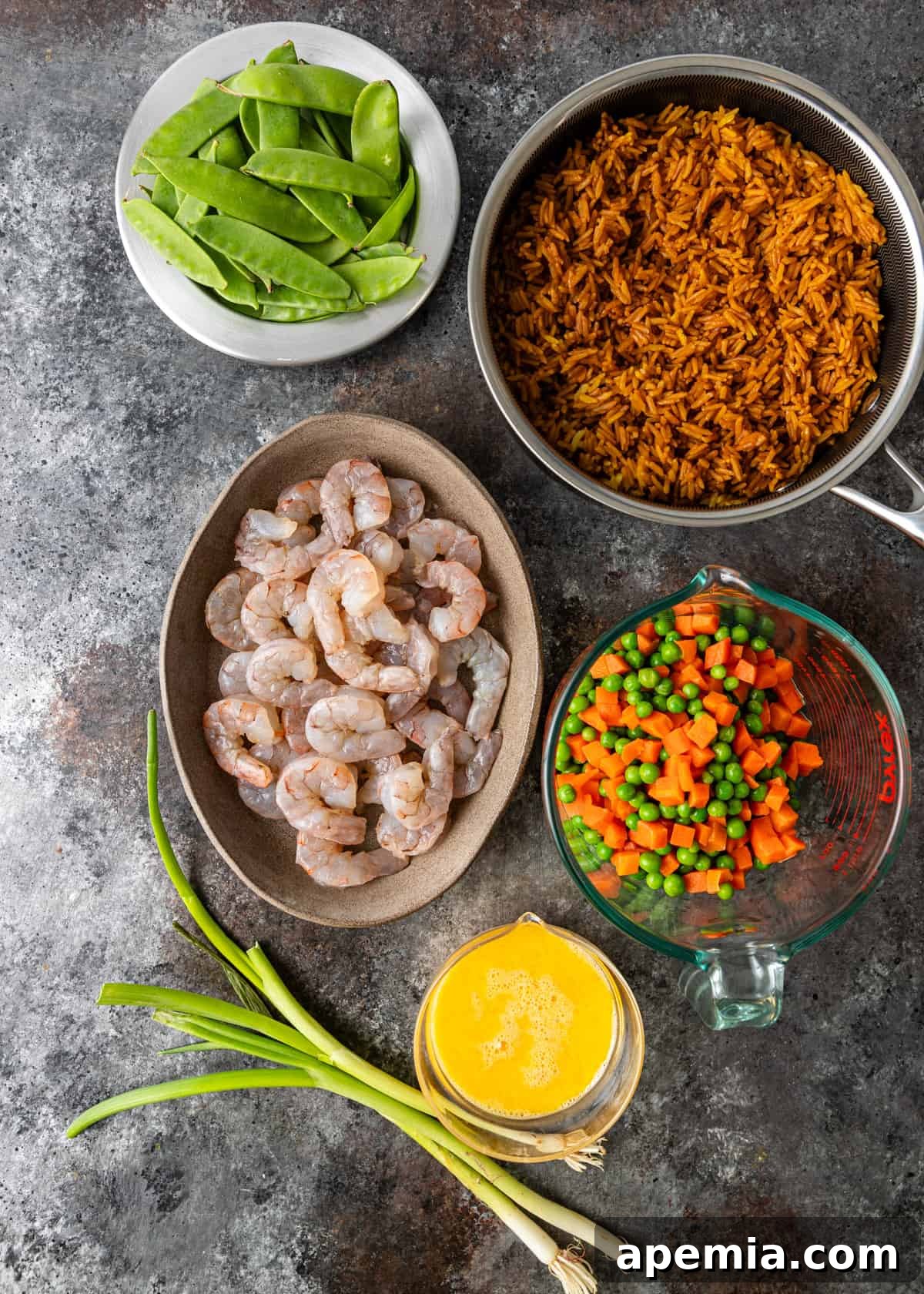
- Shrimp: For the best results, use medium to large shrimp. If they are large, peel, de-vein, and chop them into ½-inch pieces to ensure even cooking and distribution throughout the rice. Frozen shrimp often come pre-peeled and de-veined, saving you prep time. If using smaller shrimp, they can be left whole for a different textural experience. Fresh shrimp should be cleaned thoroughly before use.
- Rice: This recipe utilizes jasmine rice, cooked with a combination of dark and light soy sauce for authentic flavor and color. However, don’t fret if you only have regular all-purpose soy sauce in your pantry; it will still yield a delicious result. Medium-grain or long-grain white rice varieties work best for fried rice due to their lower starch content compared to short-grain varieties, which can become too sticky.
- Eggs: Fluffy scrambled eggs are a hallmark of great fried rice. The key is to cook them quickly over high heat, scrambling them just until they are set but still moist. Overcooking will lead to dry, rubbery egg pieces. We recommend pasture-raised eggs for superior flavor.
- Garlic & Onion: These fundamental aromatics are the backbone of flavor for this dish. Freshly minced garlic and diced yellow onion build a robust foundation that permeates the entire dish. Don’t skimp on these for maximum taste!
- Shaoxing Wine: This Chinese cooking wine adds a distinctive depth and complexity to the fried rice. If you don’t have it, dry sherry or Japanese sake make excellent substitutes. For an alcohol-free alternative, chicken or vegetable stock can be used, though the flavor profile will be slightly different.
- Salt & Ground White Pepper: While black pepper is common in Western cooking, white pepper is the traditional choice for Chinese cuisine. It offers a milder, earthier heat that blends seamlessly without overwhelming the other delicate flavors. Kosher salt provides a clean, pure saltiness.
- Sugar: A touch of sugar is a secret weapon in many Chinese dishes, balancing the savory and salty notes and bringing a subtle sweetness that truly elevates the flavor, mimicking that sought-after restaurant taste.
- Sesame Oil: Use plain, untoasted sesame oil for stir-frying, and if desired, a drizzle of toasted sesame oil at the very end for an extra aromatic kick. Even just a teaspoon adds incredible fragrance and authentic Asian flavor.
- Vegetables: Frozen peas and carrots are convenient and cook quickly. We also add chopped snow peas for extra crunch and sweetness. Freshly chopped green onions (scallions) are essential for garnish and a fresh, pungent bite. Feel free to experiment with other frozen vegetable medleys that include corn, broccoli florets, or finely chopped cauliflower for added nutrition and texture.
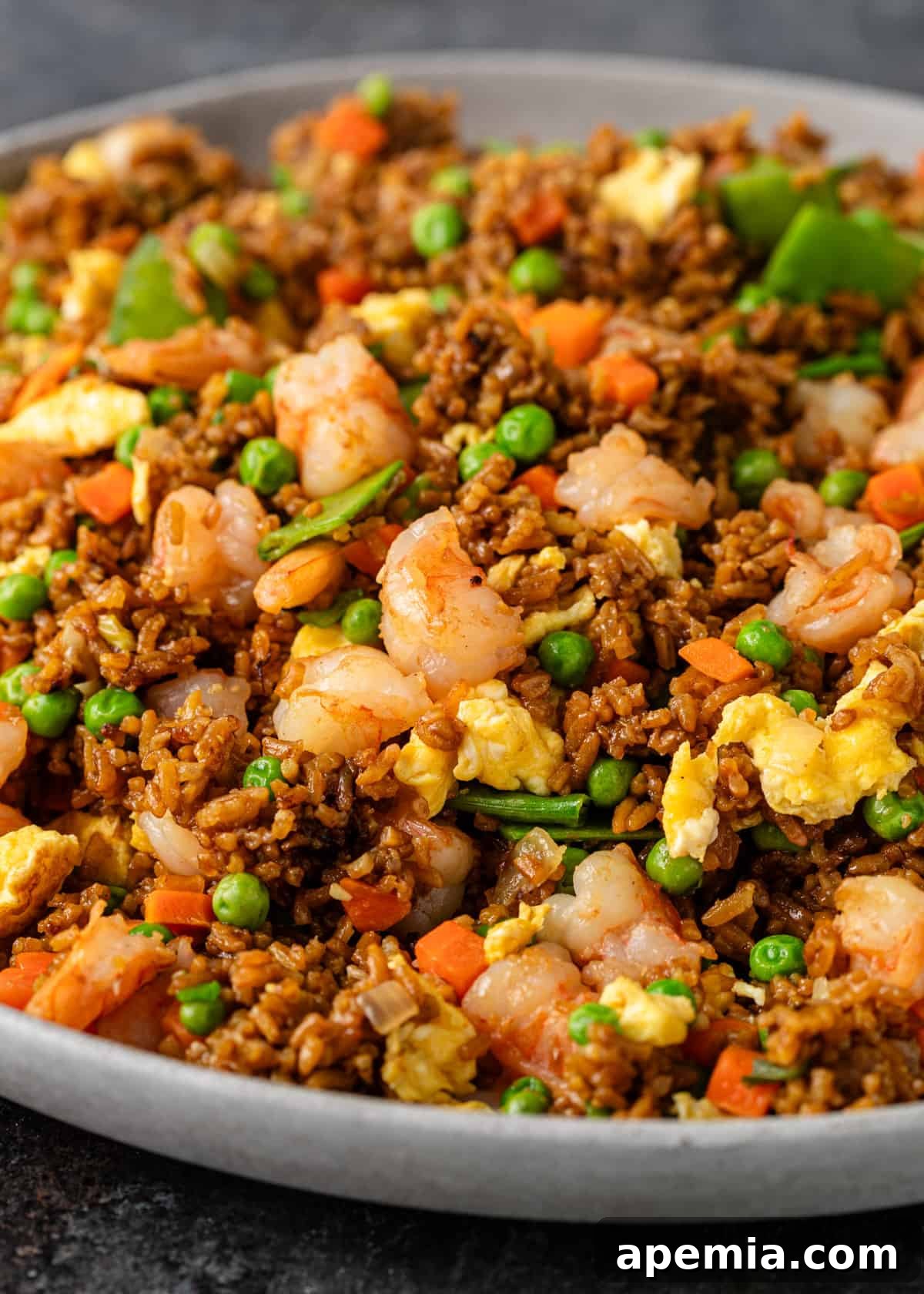
Step-by-Step: How to Make Shrimp Fried Rice
Creating this flavorful shrimp fried rice is a quick and rewarding process. Follow these detailed steps for a perfect stir-fry:
- Prepare the Rice: In a saucepan, combine jasmine rice, water, dark soy sauce, and light soy sauce. Bring the mixture to a rolling boil over high heat. Once boiling, immediately cover the pan with a tight-fitting lid and reduce the heat to its lowest setting. Allow the rice to simmer, undisturbed, for precisely 10 minutes. Crucially, do not lift the lid during this time! After 10 minutes, remove the pan from the heat, keeping the lid firmly in place, and let the rice rest for another 10 minutes. This resting period allows the steam to fully penetrate and finish cooking the rice, resulting in perfectly fluffy grains. Finally, fluff the rice gently with a fork and spread it out to cool completely. For best results, refrigerate it uncovered overnight; day-old rice is ideal for fried rice as it’s drier and less prone to clumping.
- Scramble the Eggs: Heat your wok or large frying pan over medium-high heat. Add a tablespoon of canola oil and swirl to coat the surface. Pour in the beaten eggs and quickly scramble them, breaking them into small, bite-sized chunks as they cook. The goal is to cook them just until they are set and fluffy, but not dry or browned. Transfer the scrambled eggs to a plate and set aside.
- Cook the Shrimp: Return the wok to high heat until it begins to smoke lightly. Add another tablespoon of canola oil and swirl it around the wok. Add the prepared shrimp (peeled, de-veined, and chopped if large) in a single layer. Stir-fry rapidly for about 20 seconds on each side, or until the shrimp turn opaque and are just cooked through. Be careful not to overcook them, as this can make them rubbery. Remove the cooked shrimp from the wok and set aside with the eggs.
- Stir-Fry the Aromatics: With the wok still over medium-high heat, add the remaining tablespoon of canola oil. Add the diced yellow onions and minced garlic to the hot oil. Stir-fry continuously until the onions become translucent and fragrant, typically 1-2 minutes. Next, pour in the Shaoxing wine, salt, sugar, sesame oil, and ground white pepper. Stir well to ensure all the aromatics are coated and the flavors are thoroughly combined.
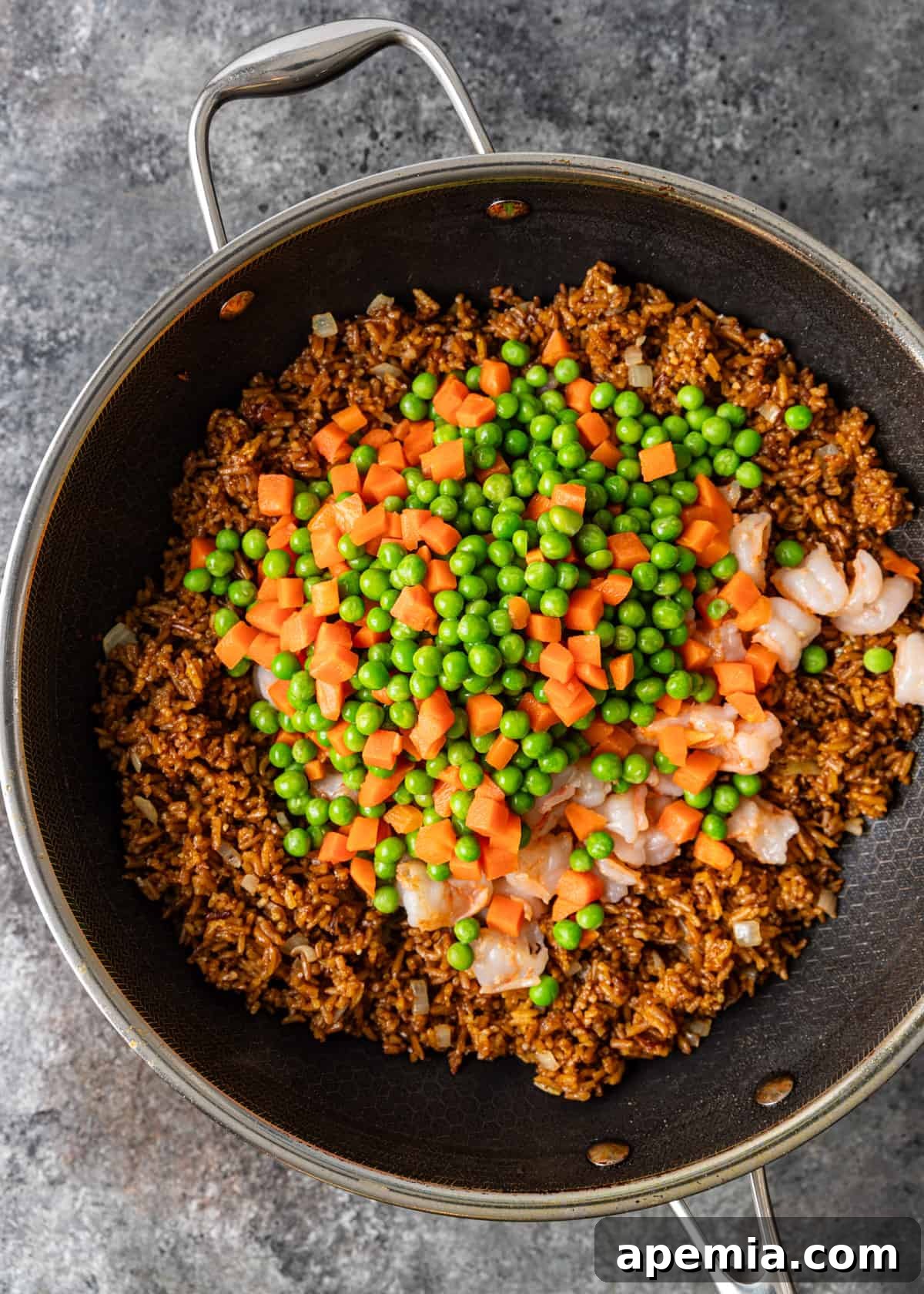
- Incorporate the Rice and Vegetables: Add the cooled, cooked rice to the wok with the aromatics. Using a spatula or wok shovel, quickly stir-fry the rice, breaking up any clumps and ensuring it’s evenly coated with the seasonings. Continue to stir-fry for 1-2 minutes. Then, add the thawed frozen peas and carrots, along with the chopped snow peas. Stir-fry for another minute, allowing the vegetables to heat through and meld with the rice.
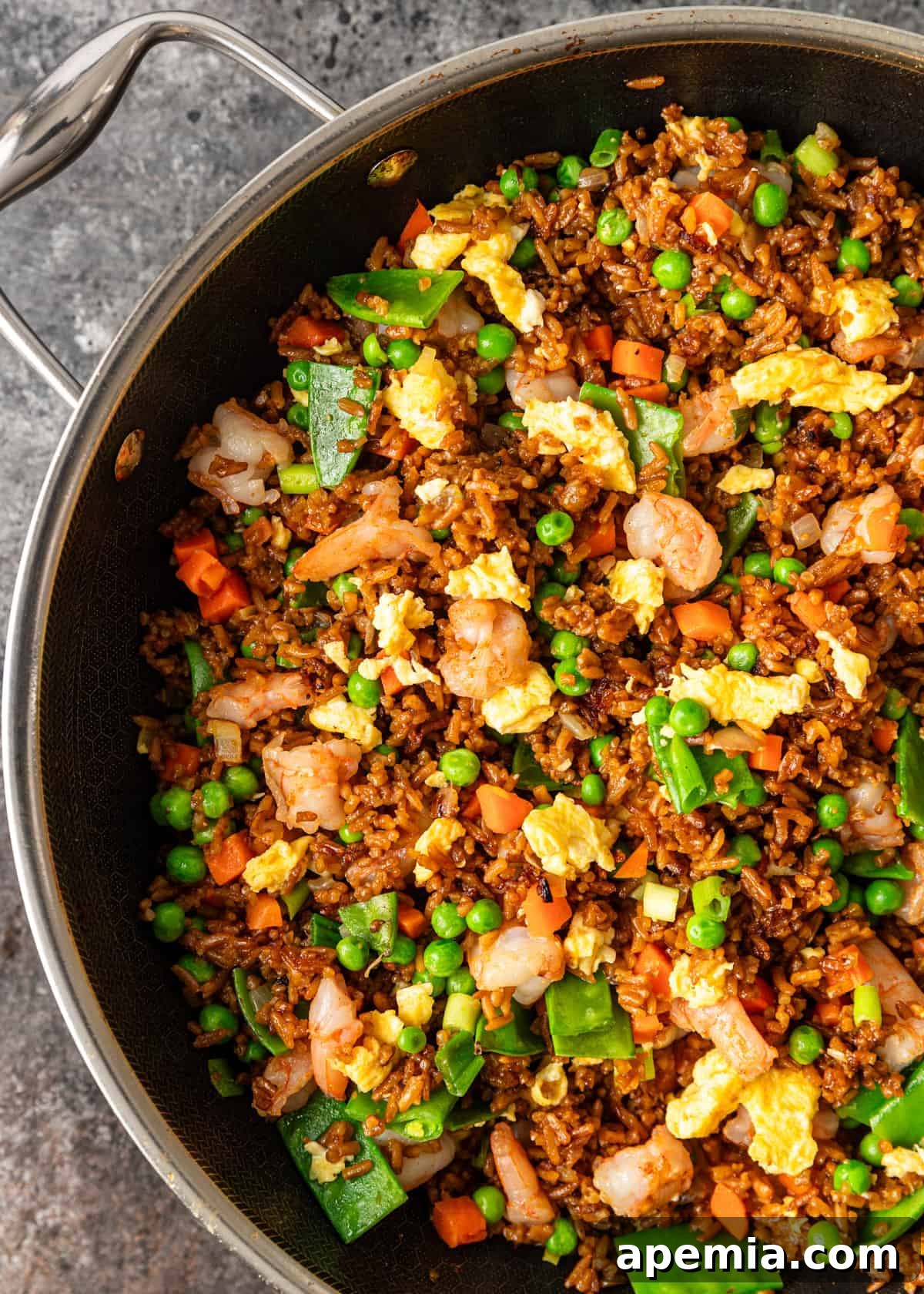
- Combine Remaining Ingredients and Serve: Finally, return the cooked scrambled eggs and the chopped green onions to the wok. Give everything a final quick stir-fry for about 30 seconds, ensuring all ingredients are well combined and heated through. Serve your delicious homemade shrimp fried rice immediately while hot, either in individual bowls or on a large serving platter. Enjoy the fresh, vibrant flavors!
Recommended Tools for Stir-Frying
Having the right kitchen tools can make all the difference in achieving perfect stir-fried rice. Here are a couple of essentials:
- Saucepan: A sturdy saucepan with a tight-fitting lid is crucial for cooking the jasmine rice separately before stir-frying. Ensure it has enough capacity to comfortably boil 2 cups of rice with 2½ cups of water. The lid is key for proper steam absorption during the resting phase, which results in fluffy, distinct rice grains.
- Wok: While a large skillet can work in a pinch, a traditional wok is truly the star for stir-frying. Its high, sloped sides and curved bottom allow for even heat distribution and provide ample surface area for quickly tossing and cooking ingredients at high temperatures. This versatility makes it ideal for handling each stage of this recipe, from scrambling eggs to searing shrimp and stir-frying vegetables and rice. If you don’t own a wok, choose the largest, heaviest-bottomed skillet you have, preferably cast iron or stainless steel, to mimic the high heat capabilities.
Storing and Reheating Your Fried Rice
Homemade shrimp fried rice makes for excellent leftovers, perfect for a quick lunch or dinner later in the week. To ensure maximum freshness and safety:
Transfer any leftover shrimp fried rice to an airtight container as soon as it has cooled sufficiently (within two hours of cooking). Refrigerate promptly, and it will keep well for up to 3-4 days. For longer storage, fried rice actually freezes quite well! Portion it into individual freezer-safe containers or resealable bags. Breaking up any clumps before freezing will make reheating easier. Frozen fried rice can be stored for up to 1-2 months.
To reheat, transfer the desired portion to a microwave-safe bowl. Sprinkle a tablespoon or two of water over the rice—this helps to reintroduce moisture and prevent it from drying out. Cover the bowl loosely with a microwave-safe lid or plastic wrap, leaving a small vent. Microwave on high for 1-2 minutes, stirring halfway through. Test the rice; if it’s still hard or dry, add a bit more water and microwave for another 30 seconds to 1 minute, until thoroughly heated and fluffy. Alternatively, you can reheat it in a lightly oiled pan over medium heat, stirring frequently, until warmed through.
Share this recipe on Pinterest!
Love this recipe? Share it with the world on Pinterest and inspire others to cook!
Share on Pinterest
Frequently Asked Questions
The ultimate trick to achieving truly exceptional fried rice lies in two key elements: the rice itself and high-heat cooking. First, always use day-old, chilled rice. Freshly cooked, warm rice is too moist and will clump together, leading to a mushy texture. Refrigerating cooked rice overnight dries it out, making the grains firm and separate, which is essential for proper stir-frying. Second, cook on high heat in a well-seasoned wok or a large, heavy-bottomed skillet. High heat ensures that the ingredients caramelize and cook quickly, imparting a smoky “wok hei” flavor and preventing the dish from steaming instead of frying. This combination results in distinct, flavorful grains and perfectly cooked ingredients.
Yes, shrimp fried rice freezes surprisingly well, making it an excellent meal-prep option! To freeze, allow the fried rice to cool completely, then portion it into individual airtight, freezer-safe containers or heavy-duty freezer bags. This prevents large clumps and makes reheating easier. When ready to enjoy, simply microwave directly from frozen. The natural moisture released during thawing and reheating helps keep both the shrimp and rice tender and plump. Alternatively, you can reheat it on the stovetop over medium heat with a splash of water or broth until thoroughly warmed.
For authentic and delicious fried rice, medium-grain or long-grain rice varieties are your best bet. Jasmine rice is the preferred choice for many Chinese restaurants and home cooks alike, and for good reason. Its naturally lower moisture and starch content compared to short-grain rice means it’s less sticky and less prone to clumping when cooked, leading to those coveted distinct, fluffy grains essential for fried rice. Basmati rice is another excellent long-grain option that performs similarly well. Avoid sticky or glutinous rice varieties, as they will result in a heavy, clumpy dish rather than the light, airy texture you’re aiming for.
Absolutely! The beauty of fried rice lies in its incredible adaptability. While shrimp is fantastic, you can easily substitute it with other proteins or even a mix. Diced chicken breast or thigh, thinly sliced pork, beef strips, or even tofu are all excellent choices. Simply cook your chosen protein ahead of time, ensuring it’s cooked through and lightly browned, then add it back to the wok at the same stage as the shrimp in the recipe instructions. This versatility allows you to customize the dish to your dietary preferences or what you have available in your fridge.
Making your fried rice healthier is simple and doesn’t sacrifice flavor. You can start by increasing the vegetable content significantly – add extra peas, carrots, snow peas, or introduce new veggies like broccoli florets, chopped bell peppers, or shredded cabbage. Consider using brown rice instead of white rice for added fiber and nutrients, remembering that brown rice may require slightly different cooking times and may benefit even more from being day-old. You can also reduce the amount of oil used in cooking or opt for healthier oils like avocado oil. Using low-sodium soy sauce or reducing the overall amount of soy sauce can cut down on sodium. Lastly, consider lighter protein options like lean chicken breast or tofu.
Shrimp Fried Rice
Perfect shrimp fried rice has fluffy eggs, a handful of vegetables, and tender shrimp. Make it at home with this quick, easy recipe for a delicious, authentic meal!
- Servings:
- 4
- Prep Time:
- 20 mins
- Cook Time:
- 32 mins
- Total Time:
- 52 mins
Ingredients
- 2 cups jasmine rice (1-day old cooked is best)
- 2½ cups water
- 2 teaspoons dark soy sauce
- 2 teaspoons light soy sauce
- 3 tablespoons canola oil, divided
- 3 eggs, beaten
- 1 lb medium shrimp (peeled and deveined), cut into 1/2-inch pieces
- 1 medium yellow onion, diced
- 2 cloves garlic, minced
- 1 tablespoon Shaoxing wine
- 1/2 teaspoon kosher salt
- 1/2 teaspoon sugar
- 1/2 teaspoon sesame oil
- 1/2 teaspoon ground white pepper
- 12 oz frozen peas and carrots, thawed
- 1 cup snow peas, chopped
- 3 green onions, chopped
Instructions
- Place jasmine rice, water, dark and light soy sauce in a saucepan over high heat. Bring to a boil, cover the pan with a lid and reduce the heat to low. Allow it to cook, covered, for 10 minutes. Do not lift the lid! Remove the pan from the heat (do not lift the lid) and let the rice rest for 10 minutes. Fluff the rice and let cool. Refrigerate uncovered, overnight. Making this 1 day ahead is highly recommended, as day-old rice works best in fried rice recipes.
- Heat a wok over medium-high heat. Add 1 tablespoon of canola oil, and add the beaten eggs, scrambling them until they’re just cooked through. Break up the large pieces into smaller chunks. Set aside on a plate.
- Heat the wok until just smoking and swirl another tablespoon of canola oil around the wok. Add the shrimp and quickly stir-fry for 20 seconds on each side, or until opaque. Stir-fry the shrimp until just cooked through and set aside with the eggs.
- With the wok over medium-high heat, add the remaining tablespoon of canola oil. Add the diced yellow onions and minced garlic, and stir-fry until translucent and fragrant, about 1-2 minutes. Add the Shaoxing wine, salt, sugar, sesame oil, and white pepper, stirring well to mix through.
- Next, add the cooled, cooked rice to the wok and quickly stir-fry to mix thoroughly with the aromatics and seasonings. Now add the cooked shrimp, thawed peas and carrots, and chopped snow peas. Continue to stir-fry for another minute, ensuring all ingredients are well combined and heated.
- Finally, add the cooked scrambled eggs and chopped green onions. Continue stir-frying the rice for another 30 seconds to fully incorporate everything. Serve immediately while hot. (See Note 1 for serving suggestion).
Notes
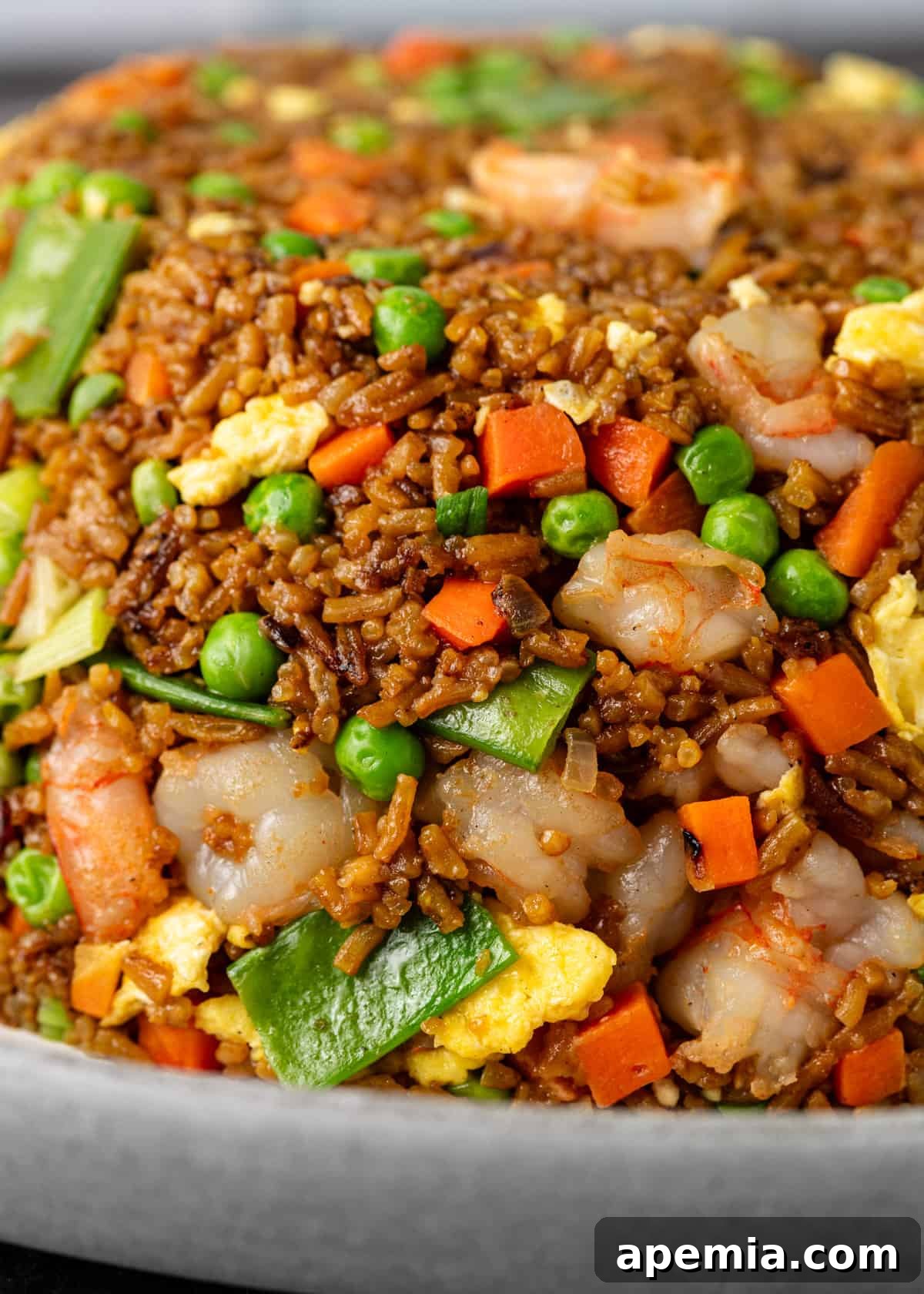
- You can serve this shrimp fried rice in individual bowls or on a large serving platter. For a visually appealing presentation (as seen in some images), transfer all the fried rice into a large, heat-proof bowl, gently pressing to smooth out the top. Place a serving platter on top of the bowl and quickly flip it over. Carefully remove the bowl to reveal a perfectly mounded dome of fried rice.
Nutrition
The information shown is an estimate provided by an online nutrition calculator. It should not be considered a substitute for a professional nutritionist’s advice.
- Calories:
- 661 kcal
- Carbohydrates:
- 90g
- Protein:
- 38g
- Fat:
- 16g
- Saturated Fat:
- 2g
- Polyunsaturated Fat:
- 4g
- Monounsaturated Fat:
- 8g
- Trans Fat:
- 0.1g
- Cholesterol:
- 305mg
- Sodium:
- 891mg
- Potassium:
- 750mg
- Fiber:
- 6g
- Sugar:
- 3g
- Vitamin A:
- 8612 IU
- Vitamin C:
- 28mg
- Calcium:
- 173mg
- Iron:
- 4mg
- Course:
- Main Dish
- Cuisine:
- Chinese
- Author:
- Kevin
Have You Made This Recipe? Let Me Know on Instagram!
Tag @keviniscooking or use the hashtag #keviniscooking!