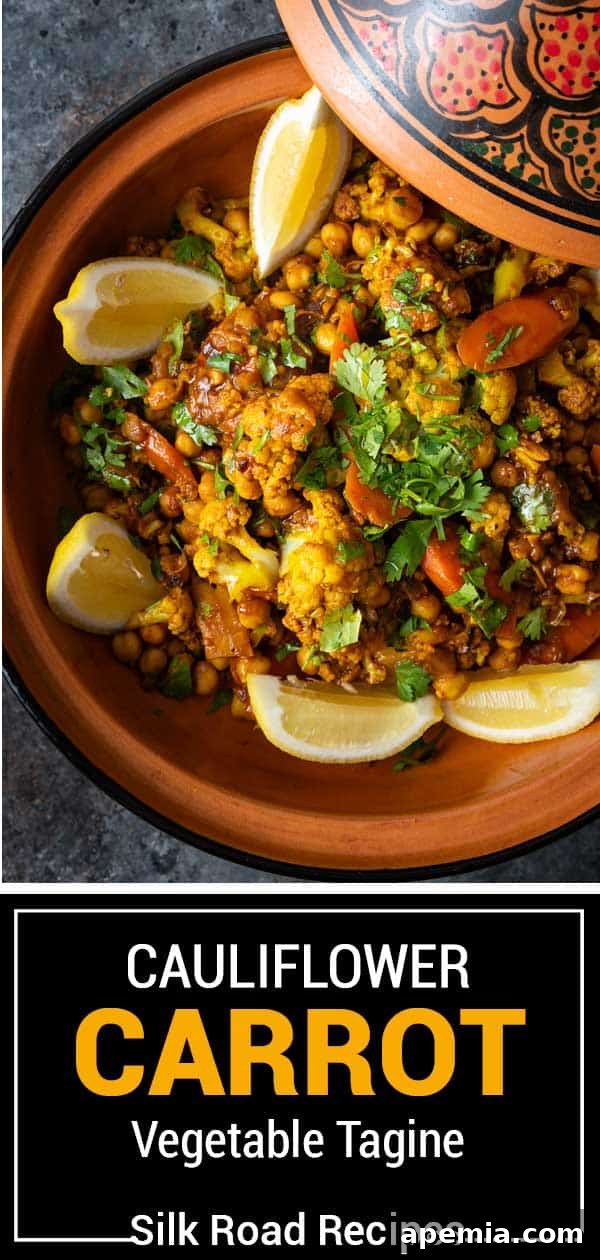
Hearty & Healthy Vegetarian Moroccan Tagine: Cauliflower, Carrots & Chickpeas
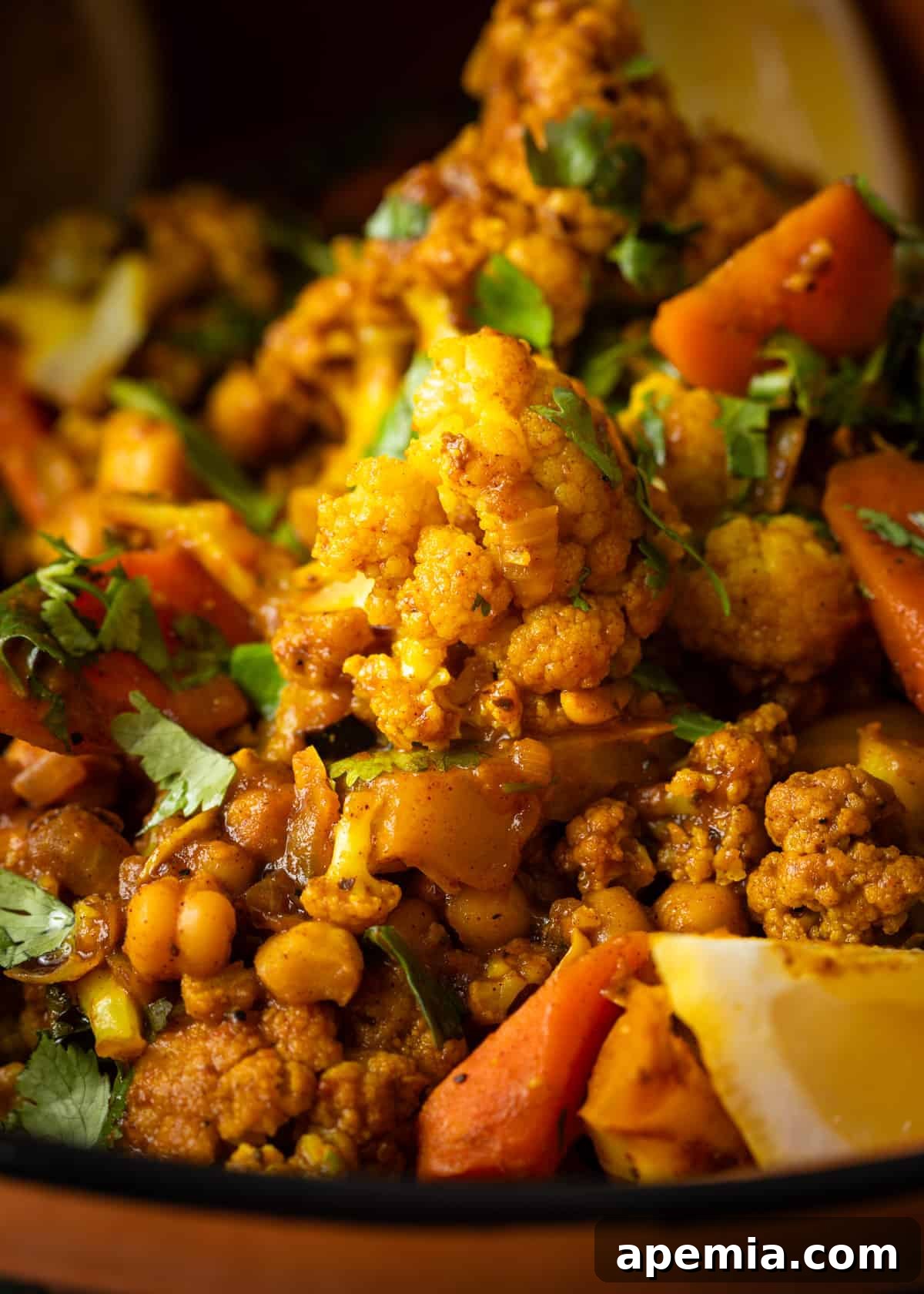
Embark on a culinary journey to North Africa with this truly exceptional vegetable tagine. It’s a dish that promises to be not only hearty and healthy but also overflowing with the authentic, complex flavors that define Moroccan cuisine. Imagine tender carrots, delicate cauliflower florets, and protein-rich chickpeas, all simmered together in a fragrant broth infused with onion, garlic, and a lavish array of aromatic spices. Best of all, this vibrant vegetarian feast comes together in just about 30 minutes, making it perfect for a delicious weeknight dinner or a special gathering.
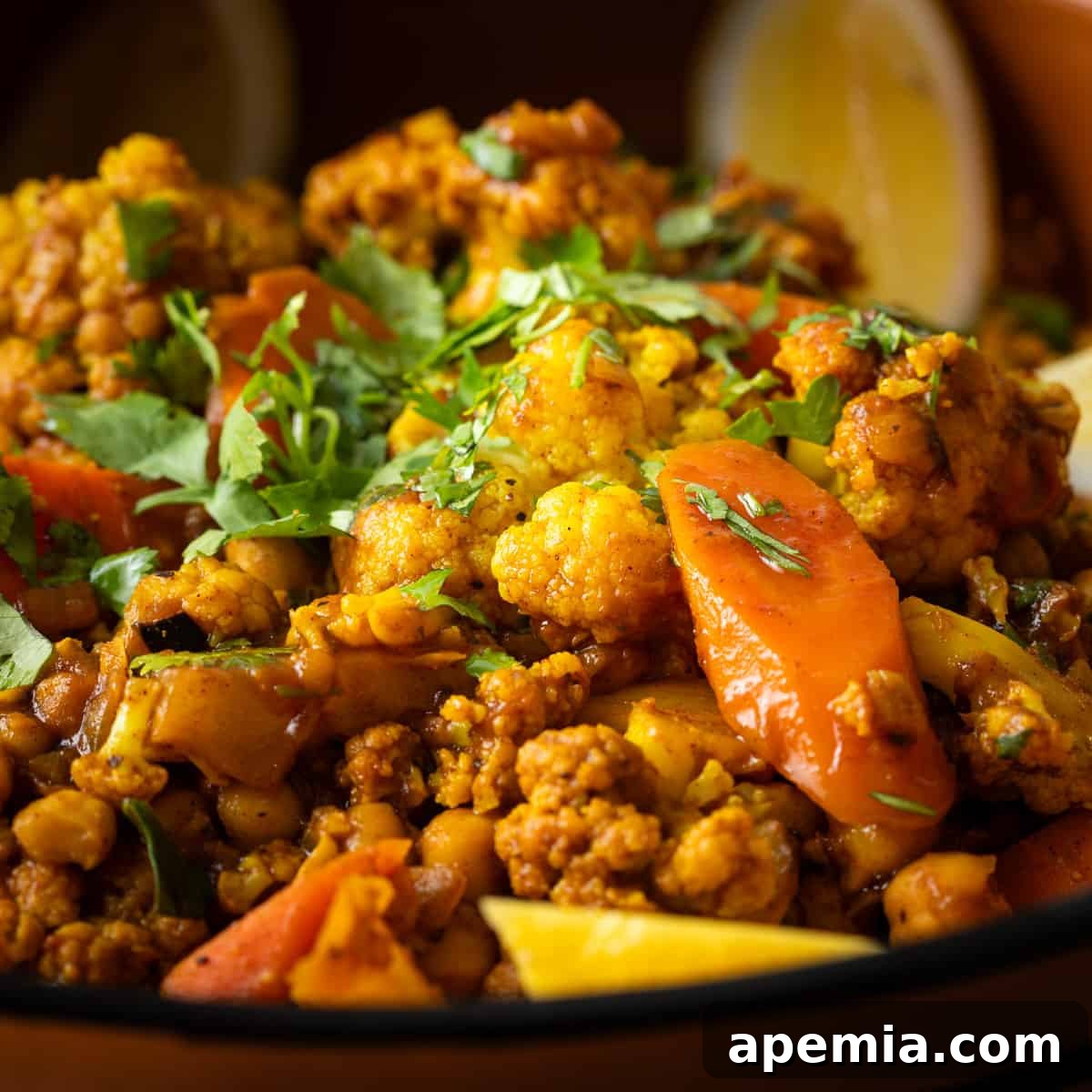
Moroccan cuisine is celebrated worldwide for its ability to layer flavors, creating dishes that are both comforting and exhilarating. This particular Moroccan vegetable tagine perfectly embodies that tradition. From the first spoonful, you’ll understand why tagines are beloved for their mouthwatering depth and warmth. Each ingredient plays a crucial role in building a harmonious flavor profile that is simply unforgettable.
The magic begins with a robust blend of spices: earthy turmeric, warm cumin, sweet cinnamon, and a hint of fiery cayenne. These spices lay a foundation of rich warmth, which is then beautifully complemented by delicate touches of sweetness from rose water and a drizzle of honey. Finally, a bright dash of lemon juice cuts through the richness, adding a refreshing finish that elevates every bite. While the ingredients are straightforward and the cooking process is surprisingly simple, the resulting flavor of this healthy vegetarian tagine will undoubtedly impress you and your guests.
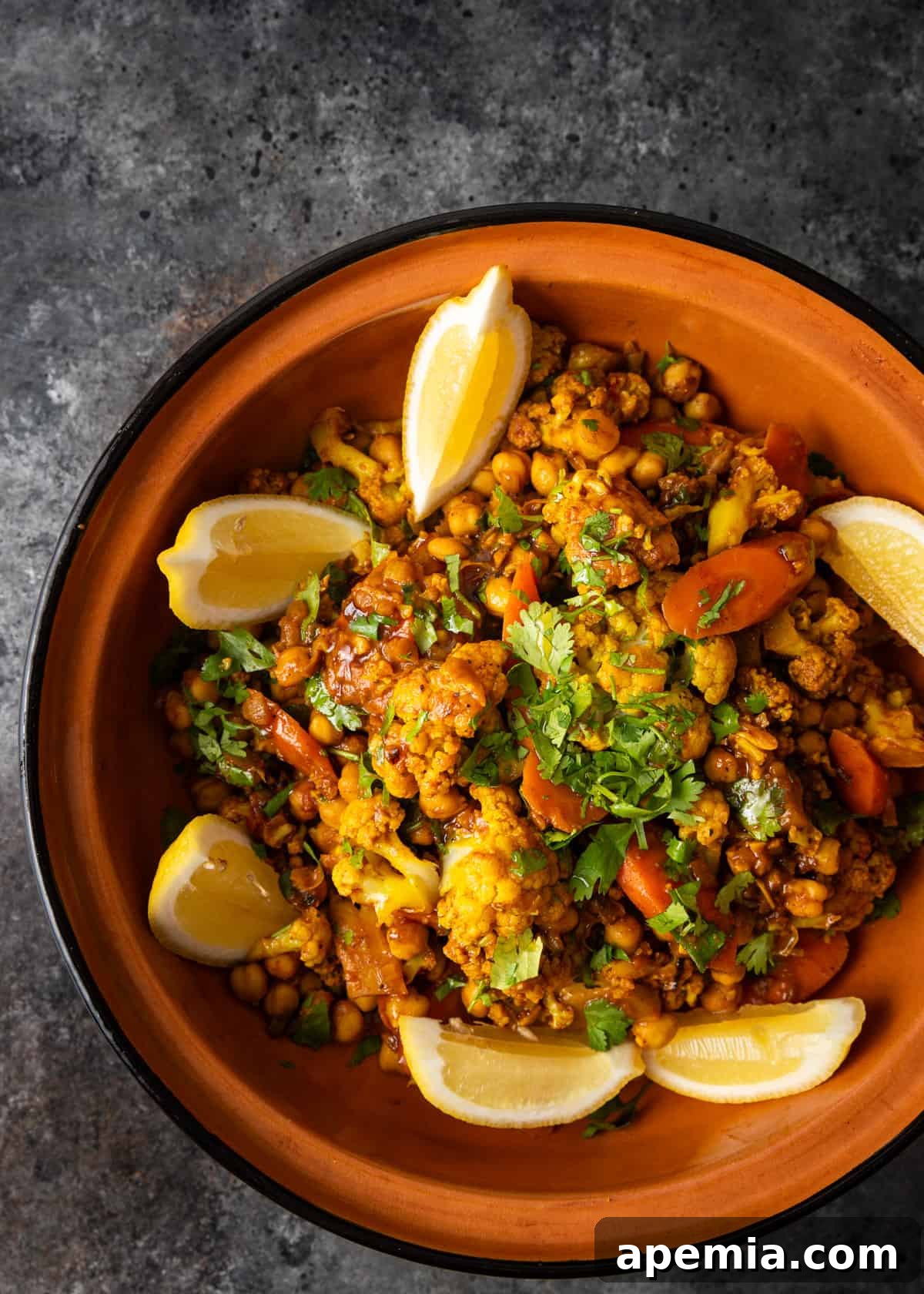
If you’re a fan of the rich and exotic flavors of North Africa, you might also enjoy some of my other popular tagine recipes, such as Lamb Tagine with Apricots and Dates, Beef Tagine with Sweet Potatoes, or the savory Chicken Tagine with Chickpeas and Olives. For more authentic Moroccan delights that bring the taste of the Silk Road to your kitchen, be sure to explore my recipes for Moroccan Pastilla, Moroccan Meatballs, and the classic breakfast or brunch dish, Moroccan Shakshuka.
Why You’ll Adore This Vegetarian Tagine
This isn’t just another weeknight meal; it’s a flavorful experience that brings the exotic tastes of Morocco directly to your dining table. Here are compelling reasons why this vegetarian tagine will become a new favorite:
- Explosion of Authentic Flavors: Every spoonful is a delightful journey of sweet, savory, and aromatic notes, thanks to a thoughtful blend of traditional Moroccan spices like turmeric, cumin, and cinnamon, perfectly balanced with honey and rose water.
- Nutrient-Dense and Wholesome: Packed with fresh vegetables like cauliflower and carrots, and fortified with protein-rich chickpeas, this tagine is a powerhouse of nutrients. It’s a healthy, satisfying meal that truly nourishes your body.
- Surprisingly Quick to Prepare: Despite its deeply complex flavor profile, this vegetarian tagine is designed for efficiency. It comes together in approximately 30 minutes, making it an ideal choice for busy weeknights without compromising on taste or quality.
- Perfect for Diverse Diets: Naturally vegetarian and incredibly easy to adapt for a vegan lifestyle, this dish is inclusive and suitable for a wide range of dietary preferences. It’s also gluten-free, focusing on wholesome, natural ingredients.
- An Authentic Culinary Adventure: Experience the rich culinary heritage of North Africa with a dish that is both traditional in spirit and approachable for the home cook. It’s an authentic taste of Morocco without needing to leave your kitchen.
The Essence of Tagine: More Than Just a Pot
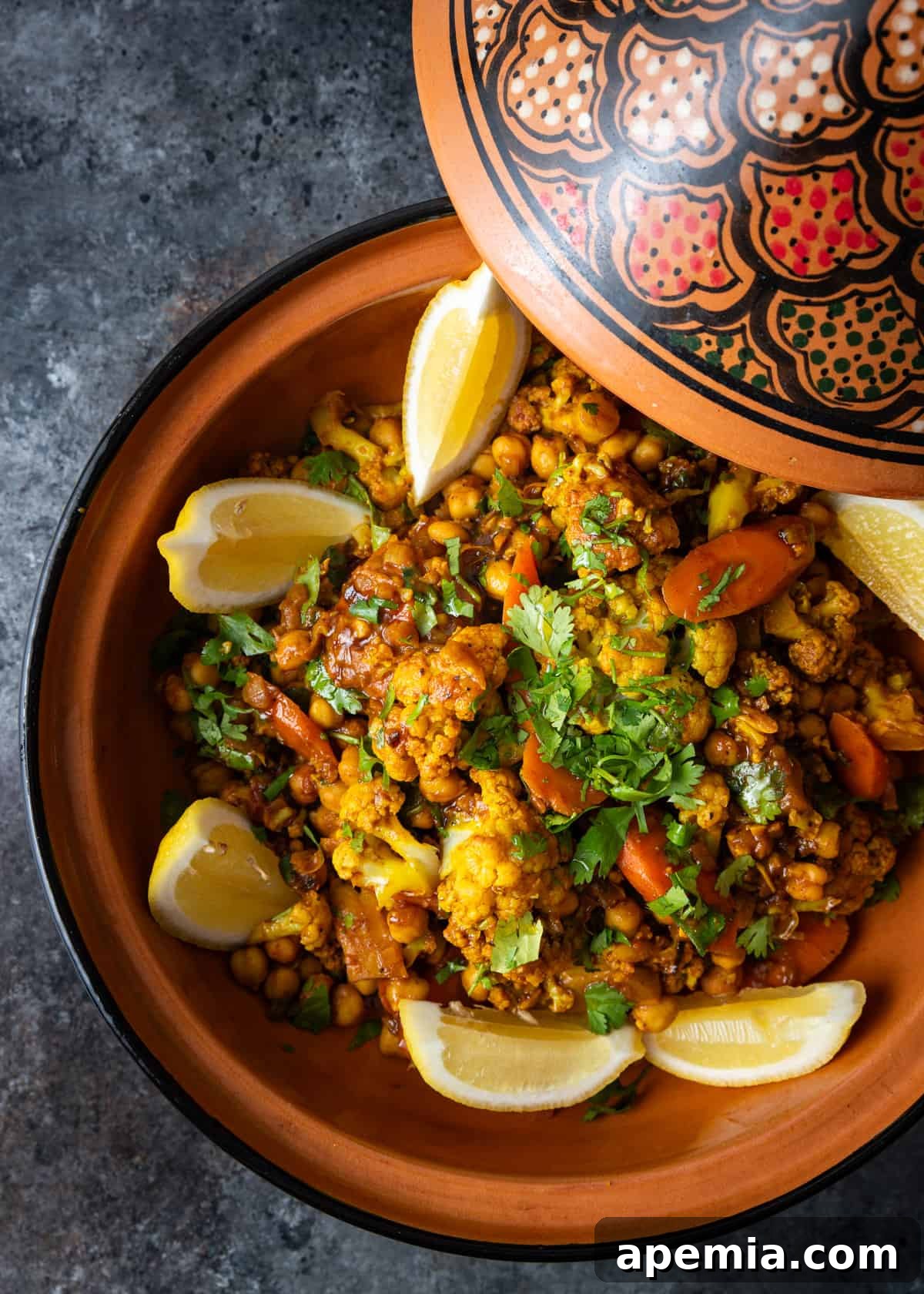
When we talk about “tagine,” we often refer to two distinct but intertwined concepts: the iconic, cone-shaped cooking vessel and the rich, slow-cooked stew prepared within it. Both are central to Moroccan culinary tradition and embody a centuries-old cooking philosophy.
The tagine as a dish is a hallmark of North African cuisine, particularly in Morocco. It’s celebrated for its intricate layers of savory, sweet, and aromatic components, creating a deeply satisfying and complex meal. Traditionally, tagines can feature a wide variety of ingredients, including succulent meats like lamb, beef, or chicken, often combined with dried fruits (such as apricots or dates), nuts, and a generous medley of fresh vegetables. These ingredients are slowly simmered in a fragrant broth, infused with a unique blend of warming spices that define the dish’s character.
This particular recipe, a vibrant vegetarian tagine, beautifully showcases this tradition by focusing on the natural sweetness of carrots and the hearty textures of cauliflower and chickpeas. It proves that a tagine can be incredibly rich and fulfilling even without meat, making it a fantastic plant-based option for everyone.
The distinctive design of the tagine pot itself is not just for aesthetics; it’s a masterpiece of ancient cooking technology. The conical lid is ingeniously shaped to create a self-basting system. As the stew simmers over low heat, steam rises into the cone, condenses, and then drips back down onto the food. This continuous circulation of moisture keeps the ingredients incredibly tender and moist without the need for excessive liquid, effectively concentrating and deepening all the flavors within the dish. This gentle, moist-heat cooking method allows all the spices and ingredients to meld together perfectly, resulting in an exceptionally rich, tender, and intensely flavorful stew.
Understanding this dual nature of the tagine – both the vessel and the magnificent meal – is key to appreciating the depth of Moroccan culinary artistry.
Key Ingredients for an Authentic Vegetable Tagine
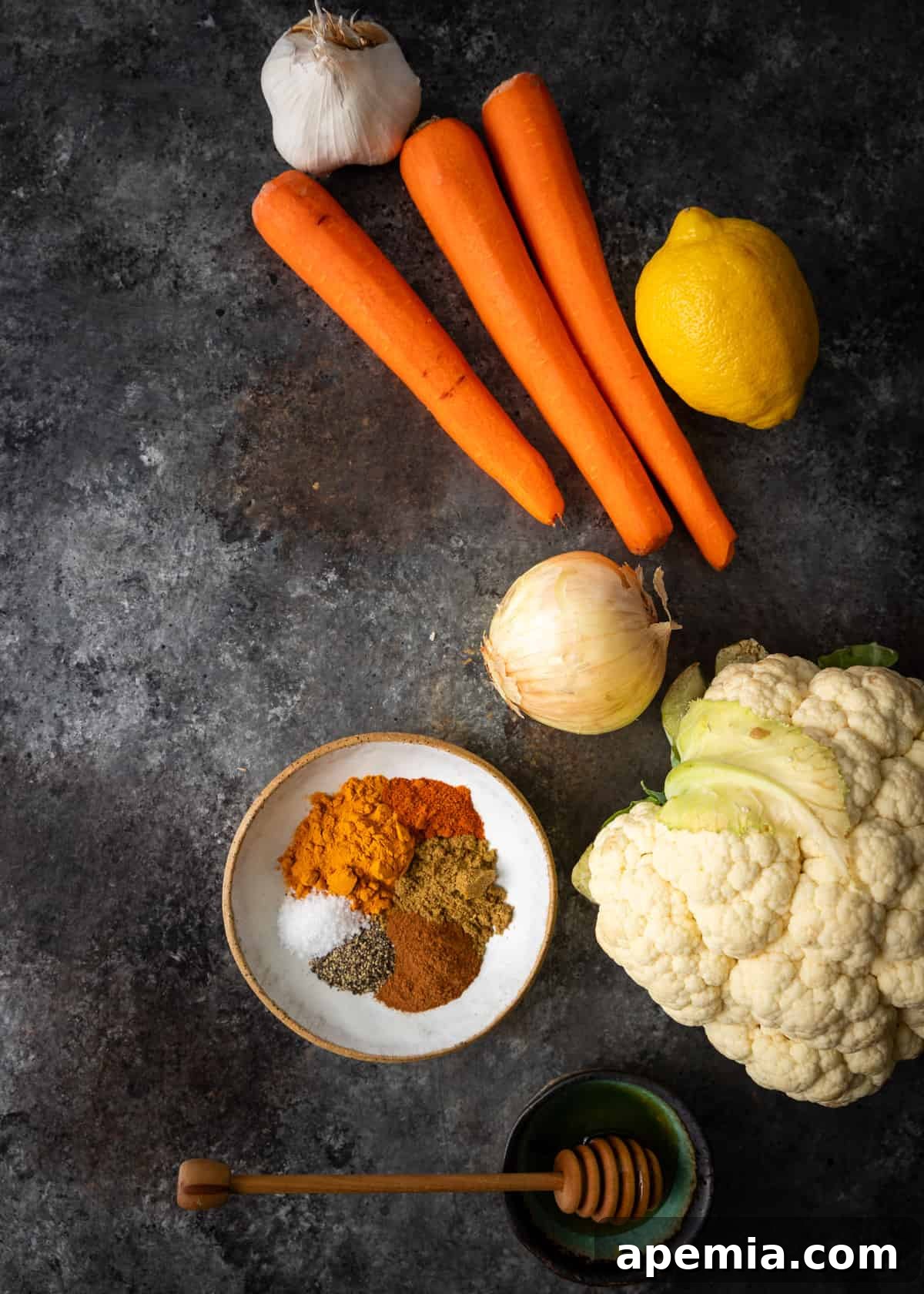
The foundation of an outstanding tagine lies in the quality of its fresh ingredients and a carefully selected blend of aromatic spices. Here’s a closer look at what makes this specific vegetable tagine truly shine:
- Vegetables: The core of our tagine features tender cauliflower florets, naturally sweet carrots (which we slice diagonally for optimal texture and visual appeal), and protein-packed chickpeas. This trio provides a delightful range of textures and flavors. Don’t hesitate to customize this! Feel free to incorporate other seasonal vegetables like diced sweet potatoes or butternut squash for added richness, zucchini or bell peppers for different textures, or even a handful of fresh spinach towards the end of cooking for a boost of greens.
- Cooking Fat (Olive Oil or Ghee): A high-quality extra virgin olive oil offers a wonderfully fruity and robust base, which is classic in Mediterranean and North African cooking. Alternatively, ghee, or clarified butter, provides a distinct nutty, rich depth that truly enhances the traditional flavor profile of Moroccan dishes. Ghee can often be found in the international foods aisle or with other cooking oils in larger supermarkets.
- Aromatics (Yellow Onion & Garlic): These humble ingredients are absolutely essential for building the foundational aromatic layer of the tagine. Diced yellow onions, when slowly sautéed, caramelize beautifully, releasing a natural sweetness that balances the spices. Freshly minced garlic provides a sharp, earthy pungency and a zesty kick, awakening all the other flavors in the pot. While red or white onions can be used, yellow onions are often preferred for their superior sweetness when cooked down.
- The Enchanting Spice Blend: This is where the magic truly unfolds, transforming simple vegetables into an exotic feast.
- Turmeric Powder: Imparts a beautiful golden hue and an earthy, slightly bitter flavor that is a cornerstone of North African and Indian cuisines. It’s also renowned for its anti-inflammatory properties.
- Ground Cumin: Adds a warm, intensely earthy, and slightly pungent flavor that is quintessential to Moroccan cooking, providing a deep, aromatic base.
- Ground Cinnamon: This spice might seem unexpected in a savory dish, but it’s a critical component in Moroccan tagines. It contributes a unique warmth and delicate sweetness that harmonizes exquisitely with both the savory vegetables and the subtle honey and rose water.
- Cayenne Powder: Offers a gentle, lingering heat that perfectly balances the sweetness and warmth of the other spices without overwhelming the palate. Adjust the amount to suit your personal preference for spice.
- Kosher Salt & Black Pepper: These fundamental seasonings are vital for enhancing and rounding out the natural flavors of all the ingredients, ensuring a well-balanced and delicious dish.
- Sweetness and Fragrance (Honey & Rose Water): These two ingredients elevate the tagine from merely spiced to truly exceptional.
- Honey: A drizzle of honey adds a subtle, natural sweetness that beautifully complements the robust spices and highlights the inherent sugars in the carrots, creating a more complex flavor profile.
- Rose Water: A traditional Moroccan ingredient, food-grade rose water infuses the tagine with a unique, light floral essence and a delicate, almost ethereal sweetness. It’s a hallmark of authentic North African sweets and savory dishes. Always ensure you are using food-grade quality, typically found in the international or baking aisle of specialty stores. A small amount goes a long way to impart its distinctive aroma.
- Fresh Garnishes (Chopped Cilantro & Lemon Wedges): These final touches are more than just decoration; they are integral to the dish’s overall experience. Fresh cilantro provides a vibrant burst of herbaceous freshness and a beautiful green contrast. Fresh lemon wedges, served alongside, offer a crucial bright, zesty counterpoint that cuts through the richness and invigorates the palate just before serving.
By carefully selecting and combining these key ingredients, you are well on your way to creating a truly memorable and authentic Moroccan vegetarian tagine that will delight your senses.
Chef’s Tip: What Can I Use If I Don’t Own a Tagine Pot?
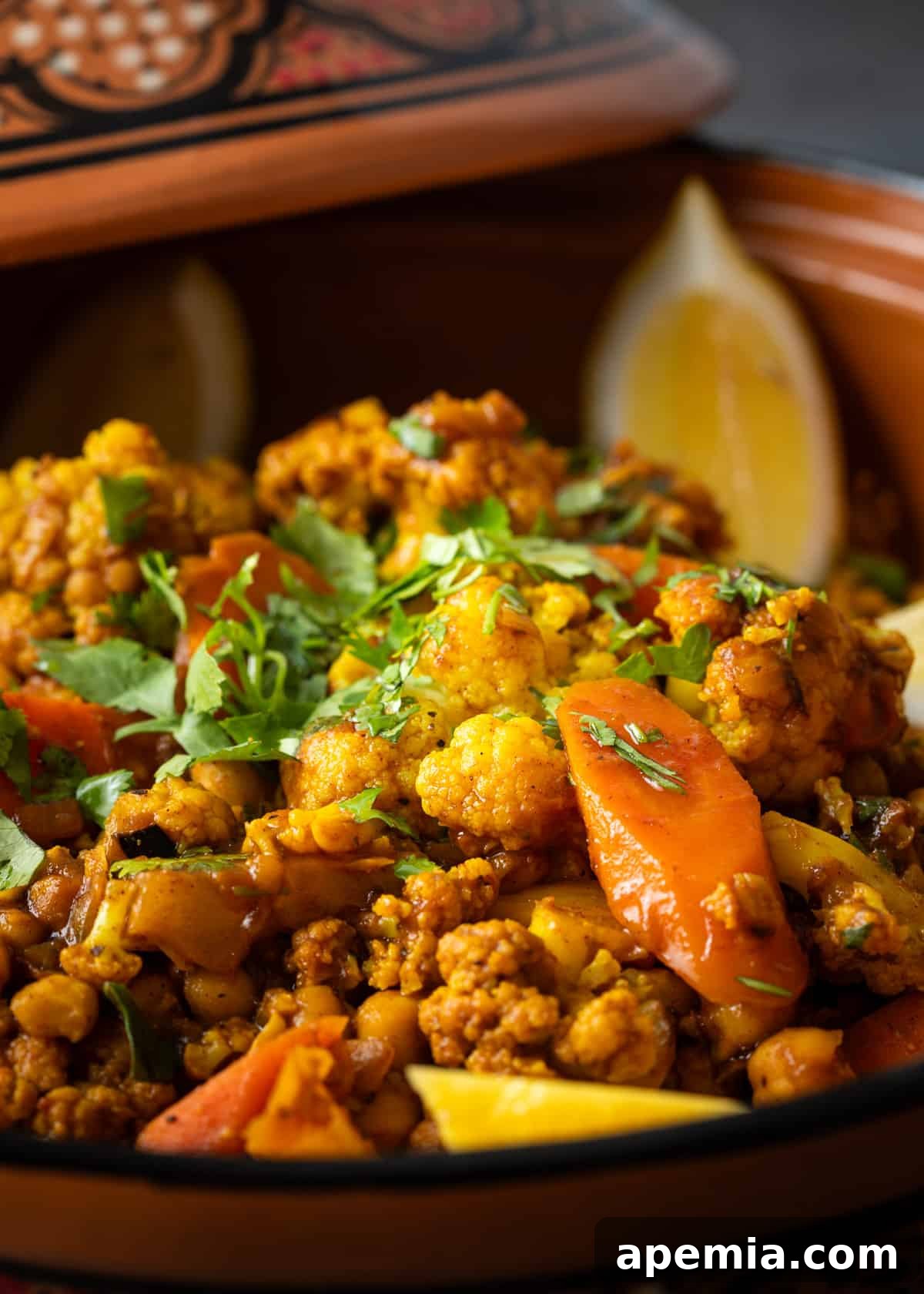
While cooking in a traditional tagine pot can impart unique nuances and is a beautiful experience, you absolutely do not need one to create a phenomenal vegetable tagine! This recipe is designed to deliver incredible results using readily available kitchen equipment. The most effective substitute for a tagine pot is a wide, shallow Dutch oven or any heavy-bottomed pot or skillet with a tight-fitting lid. The essential qualities to look for in a substitute are:
- Excellent Heat Retention: Heavy-bottomed pots like Dutch ovens distribute heat evenly and retain it well, which is crucial for the slow, gentle simmering required for a tagine.
- Tight-Fitting Lid: The magic of a tagine lies in its ability to trap steam and create a self-basting environment. A snug lid will mimic this effect, ensuring your vegetables become incredibly tender and moist while concentrating the flavors within the stew. If your lid isn’t perfectly tight, you can place a layer of aluminum foil directly over the pot before putting on the lid to seal in the steam more effectively.
- Sufficient Volume: Ensure your chosen pot is large enough to comfortably hold all the vegetables and liquid without overflowing, allowing ample space for stirring and simmering.
Using a Dutch oven or a similar heavy pot with a good lid will still allow you to achieve the slow-cooked tenderness and deeply melded flavors that define a great tagine. So, don’t let the absence of a specialized pot deter you from making this delicious North African feast!
Step-by-Step Guide: How to Make Vegetable Tagine
Creating this flavorful Moroccan vegetable tagine is simpler than you might think, making it a perfect dish for both novice and experienced cooks. Follow these straightforward steps to bring this vibrant North African delight to your table:
- Sauté the Aromatics and Bloom the Spices: Begin by heating your preferred cooking fat—olive oil or ghee—over medium heat in a large skillet, Dutch oven, or your tagine pot. Once shimmering, add the diced yellow onion and minced garlic. Sauté gently, stirring occasionally, until they become beautifully softened and translucent, usually about 5-7 minutes. This step is crucial for developing a sweet, aromatic base. Next, stir in the turmeric powder, kosher salt, ground cumin, ground cinnamon, cayenne powder, and ground black pepper. Cook for an additional minute, stirring continuously, allowing the spices to toast and “bloom.” This process intensifies their flavors and aromas, creating a rich foundation for your tagine.
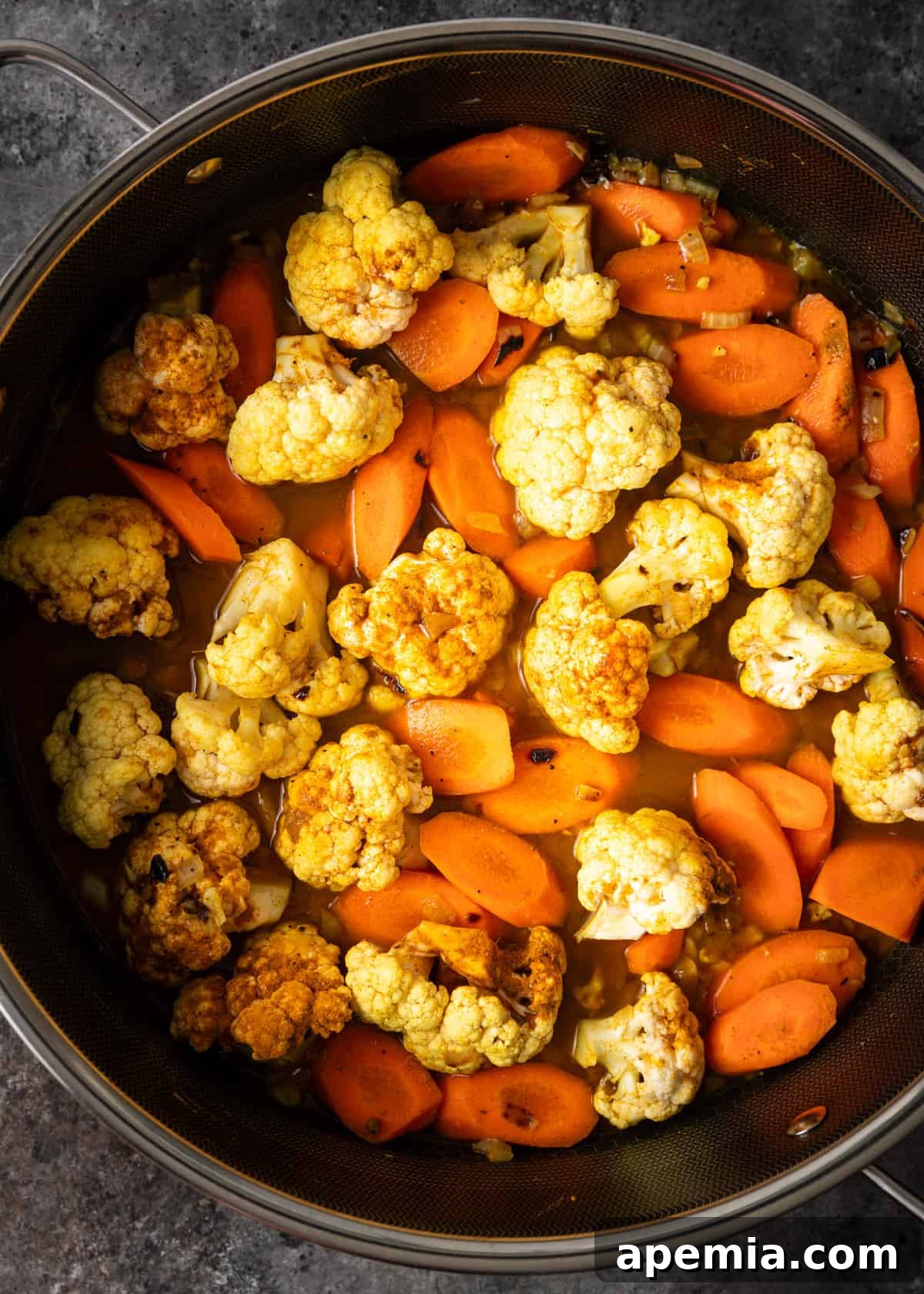
- Simmer the Hearty Vegetables: Add the cauliflower florets and diagonally sliced carrots to the pot, ensuring they are well coated with the fragrant spice mixture. Pour in 1 ½ cups of water (or, for an even deeper flavor, use vegetable broth). Give everything a good stir to combine. Cover the pot tightly with its lid, reduce the heat to low, and let the mixture gently simmer for approximately 15 minutes. This slow cooking allows the carrots and cauliflower to become tender-crisp while absorbing the vibrant flavors of the broth and spices.
- Incorporate Chickpeas and Finish Cooking: After 15 minutes, carefully remove the lid. Add the rinsed and thoroughly drained chickpeas to the pot. Stir them gently into the simmering vegetables. Continue to cook, uncovered, for another 5 minutes. This final simmering period allows the chickpeas to heat through and fully meld with the rich flavors of the tagine, ensuring every component is perfectly integrated.
- Add the Delicate Finishing Touches and Serve: Just before it’s time to serve, drizzle the honey and sprinkle the food-grade rose water evenly over the top of the tagine. Stir these delicate additions gently into the stew to ensure they are well dispersed without losing their subtle nuances. Transfer your glorious vegetarian tagine to individual serving bowls. Garnish generously with freshly chopped cilantro leaves and serve immediately with fresh lemon wedges on the side. A squeeze of lemon juice before eating brightens all the flavors and adds a final, zesty flourish.
Following these steps will result in a perfectly cooked tagine where each vegetable retains its texture while soaking up the rich, complex, and utterly delicious flavors of Moroccan cuisine.
Expert Tips for Crafting the Perfect Vegetarian Tagine
Elevate your Moroccan vegetable tagine from great to extraordinary with these helpful tips:
- Embrace the Aromatics: Do not rush the initial sautéing of the onions and garlic. Cooking them until they are truly softened and slightly golden develops a sweet, caramelized base flavor that is crucial. Similarly, allowing the spices to “bloom” in the hot oil for a minute before adding liquids intensifies their aroma and taste dramatically.
- Master the Heat: Tagines are traditionally slow-cooked dishes. Whether you’re using a specific tagine pot or a Dutch oven, maintain a low, gentle simmer throughout the cooking process. This slow infusion of heat allows the flavors to meld beautifully and ensures the vegetables become tender without turning mushy. Avoid high heat, especially with a clay tagine, to prevent scorching or cracking.
- Customize Your Vegetables: While cauliflower, carrots, and chickpeas are a fantastic combination, feel free to experiment with other vegetables that hold up well to simmering. Chunks of sweet potato, butternut squash, turnip, bell peppers, or even green beans can be wonderful additions. Adjust cooking times as needed based on the density and firmness of your chosen vegetables.
- Quality Rose Water Matters: Always use food-grade rose water for cooking. Cosmetic or non-food-grade versions can contain impurities or artificial fragrances that are unsuitable for consumption. A little goes a long way with rose water, so measure carefully to achieve a delicate floral note rather than an overpowering perfume.
- Tailor the Spice Level: The suggested amount of cayenne pepper provides a mild, pleasant warmth. If you prefer a spicier tagine, feel free to increase the amount incrementally. For a milder dish, you can reduce it or omit it entirely. Always taste and adjust to your palate.
- The Zest of Fresh Lemon: The fresh lemon juice added at the very end is not merely a garnish. Its bright acidity cuts through the richness of the spices and the sweetness of the honey, providing a refreshing counterpoint that awakens and balances all the flavors. Do not skip this crucial final touch!
Frequently Asked Questions About This Vegetable Tagine
What is the difference between a tagine and a stew?
At its heart, a tagine is a specific and unique type of North African stew, deeply embedded in the culinary traditions of Morocco. The term “tagine” refers to two things simultaneously: the distinctive conical clay or ceramic cooking vessel and the slow-cooked, aromatic dish prepared within it. Moroccan tagines are particularly renowned for their exquisite layers of savory, sweet, and aromatic flavors, often achieved through a complex blend of warming spices, and frequently include various meats, dried fruits, nuts, and a rich medley of fresh vegetables.
In contrast, “stew” is a much broader culinary classification that encompasses any dish where ingredients are cut into pieces and slowly simmered in liquid until they become tender and the flavors have thoroughly melded. While all tagines are stews, not all stews are tagines. Tagines are distinguished by their cultural origins, their characteristic spice profiles (like turmeric, cumin, cinnamon), their often sweet-and-savory balance, and crucially, the unique cooking environment created by their specialized pot, which encourages self-basting and flavor concentration that sets them apart from a generic stew.
Does food taste different when cooked in a traditional tagine pot?
Many culinary enthusiasts and traditional cooks will assert that food indeed develops a distinct and often superior flavor when cooked in a traditional tagine pot, though this particular recipe is carefully developed to yield fantastic results even without one. The key difference lies in the tagine pot’s unique design. Its conical lid acts as a natural condenser: as the ingredients simmer, steam rises, collects in the cooler upper part of the cone, and then drips back down into the food. This continuous self-basting process keeps the food incredibly moist and tender, requiring less added liquid, and crucially, it concentrates the flavors, resulting in a dish with greater depth and richness.
Furthermore, traditional unglazed clay tagine pots, when properly seasoned and maintained over time, can impart a subtle, earthy, and mineral flavor to the dish, enhancing its authenticity and complexity. While a heavy Dutch oven with a tight-fitting lid can achieve a very similar effect in terms of moisture retention and tenderness, the nuanced flavor development and cultural experience of using an authentic clay tagine are often cherished by purists. If you are considering purchasing one, be sure to research the different types available (glazed for easier cleaning, unglazed for traditional flavor) to choose one suitable for your cooking needs.
What goes well with Moroccan vegetable tagine?
This versatile vegetable tagine is wonderfully adaptable, serving beautifully as a hearty vegetarian main course or a substantial, flavorful side dish. Its rich and aromatic profile pairs well with a variety of accompaniments. Here are some delightful ideas to complete your Moroccan-inspired meal:
- Breads for Scooping: The flavorful sauce of the tagine is perfect for scooping up with fresh bread. Serve it alongside a warm batch of soft Khubz (whole wheat pita bread), the chewy, slightly sweet Barbari bread, or any other favorite flatbread.
- Couscous and Grains: Couscous is a classic Moroccan pairing. Enjoy your tagine with a fluffy serving of Pomegranate Couscous, delicious Moroccan Couscous Cakes, or simply plain, steamed couscous. It also marries exceptionally well with aromatic rice varieties like light Jasmine rice, long-grain Basmati rice, or luxurious Persian Saffron Rice.
- Bright Salads: To add a refreshing contrast, serve your tagine with a vibrant side salad. A zesty Moroccan Carrot Salad, a simple green salad with a lemon-herb vinaigrette, or a refreshing cucumber and tomato salad would be excellent choices.
- Tangy Pickles and Preserves: The acidity and tang of pickled vegetables provide a wonderful balance to the rich tagine. Consider serving with a selection of Middle Eastern pickled turnips or traditional Moroccan preserved lemons, which offer a burst of complex sourness.
Whether you’re planning an elaborate dinner party or simply seeking a comforting weeknight meal, these accompaniments will perfectly round out your vegetable tagine, transforming it into a complete and unforgettable dining experience.
Love This Recipe? Pin it for Later!
If you enjoyed preparing and tasting this delicious Moroccan Vegetable Tagine, don’t keep it to yourself! Share the culinary love by saving this recipe to your favorite Pinterest board. It’s a great way to easily find it again and inspire your friends and followers with your vibrant plant-based cooking adventures.
Pin This Recipe on Pinterest
Cauliflower Carrot & Chickpea Vegetarian Tagine
A Hearty Moroccan Vegetarian Feast
This recipe for vegetarian tagine offers a deeply flavorful Moroccan dish, combining tender cauliflower, sweet carrots, and protein-packed chickpeas in an aromatic and warming stew that’s perfect for any occasion.
Servings: 4
Prep time: 10 minutes
Cook time: 20 minutes
Total time: 30 minutes
Rating: 5 out of 5 stars (based on 1 vote)
Equipment
- 1 Tagine Pot (Traditional or Modern)
- Alternatively: A Large Dutch Oven or Heavy Skillet with a Tight-Fitting Lid
Ingredients
- 2 tbsp olive oil or ghee
- 1 medium yellow onion, diced
- 3 cloves garlic, minced
- 2 tsp turmeric powder
- 1 tsp kosher salt
- 1 tsp ground cumin
- 1 tsp ground cinnamon
- 1/2 tsp cayenne powder (adjust to your preferred level of heat)
- 1/2 tsp ground black pepper
- 4 cups cauliflower florets (about 1 medium head)
- 3 medium carrots, peeled and sliced diagonally
- 14 oz (approximately 1.5 cups) cooked chickpeas, rinsed and thoroughly drained
- 1 1/2 cups water (or for richer flavor, use vegetable broth)
- 2 tbsp honey (or maple syrup for a vegan option)
- 1 tbsp food-grade rose water
- 1/4 cup fresh cilantro, chopped (for garnish)
- 1 fresh lemon, cut into wedges (for serving)
Instructions
- Sauté Aromatics and Bloom Spices: In a large skillet, Dutch oven, or tagine pot, heat the olive oil or ghee over medium heat. Add the diced yellow onion and minced garlic, sautéing for 5-7 minutes until softened and fragrant. Stir in the turmeric, kosher salt, ground cumin, ground cinnamon, cayenne powder, and black pepper. Cook for another minute, stirring constantly, to allow the spices to bloom.
- Simmer Vegetables: Add the cauliflower florets and sliced carrots to the pot along with 1 1/2 cups of water (or vegetable broth). Stir well to combine. Cover the pot tightly, reduce the heat to low, and simmer for about 15 minutes, or until the vegetables are tender-crisp.
- Add Chickpeas and Finish: Remove the lid and gently stir in the rinsed and drained chickpeas. Continue to cook, uncovered, for another 5 minutes to heat through and allow all the flavors to meld.
- Final Touches and Serve: Just before serving, drizzle the honey and sprinkle the rose water evenly over the vegetables. Stir gently to incorporate. Garnish generously with fresh chopped cilantro and serve immediately with fresh lemon wedges on the side for a bright finish.
Notes
For best results, if substituting a tagine, use a heavy-bottomed pot like a Dutch oven with a lid that fits very snugly to trap moisture effectively. This slow, moist cooking method is key to a tender and flavorful tagine.
Nutrition Information (Estimated per serving)
Calories: 331kcal | Carbohydrates: 53g | Protein: 12g | Fat: 10g | Saturated Fat: 1g | Polyunsaturated Fat: 2g | Monounsaturated Fat: 6g | Sodium: 654mg | Potassium: 876mg | Fiber: 13g | Sugar: 19g | Vitamin A: 7857IU | Vitamin C: 70mg | Calcium: 118mg | Iron: 5mg
The nutritional information provided is an estimate calculated by an online nutrition tool. It should not be considered a substitute for professional dietary advice or a precise nutritional analysis. Individual results may vary based on exact ingredients and preparation methods.
Course: Main Dish, Side Dish, Vegetarian Entree
Cuisine: Moroccan, North African
Author: Kevin
Made This Recipe? We’d Love to See It!
There’s nothing we love more than seeing your beautiful culinary creations! If you’ve prepared this delicious Vegetarian Moroccan Tagine, please share your photos on Instagram. Don’t forget to tag @keviniscooking or use the hashtag #keviniscooking so we can admire your amazing work and share it with our community!