
Authentic Turkish Gavurdagi Salad: A Vibrant Tomato Salad with Pomegranate Molasses
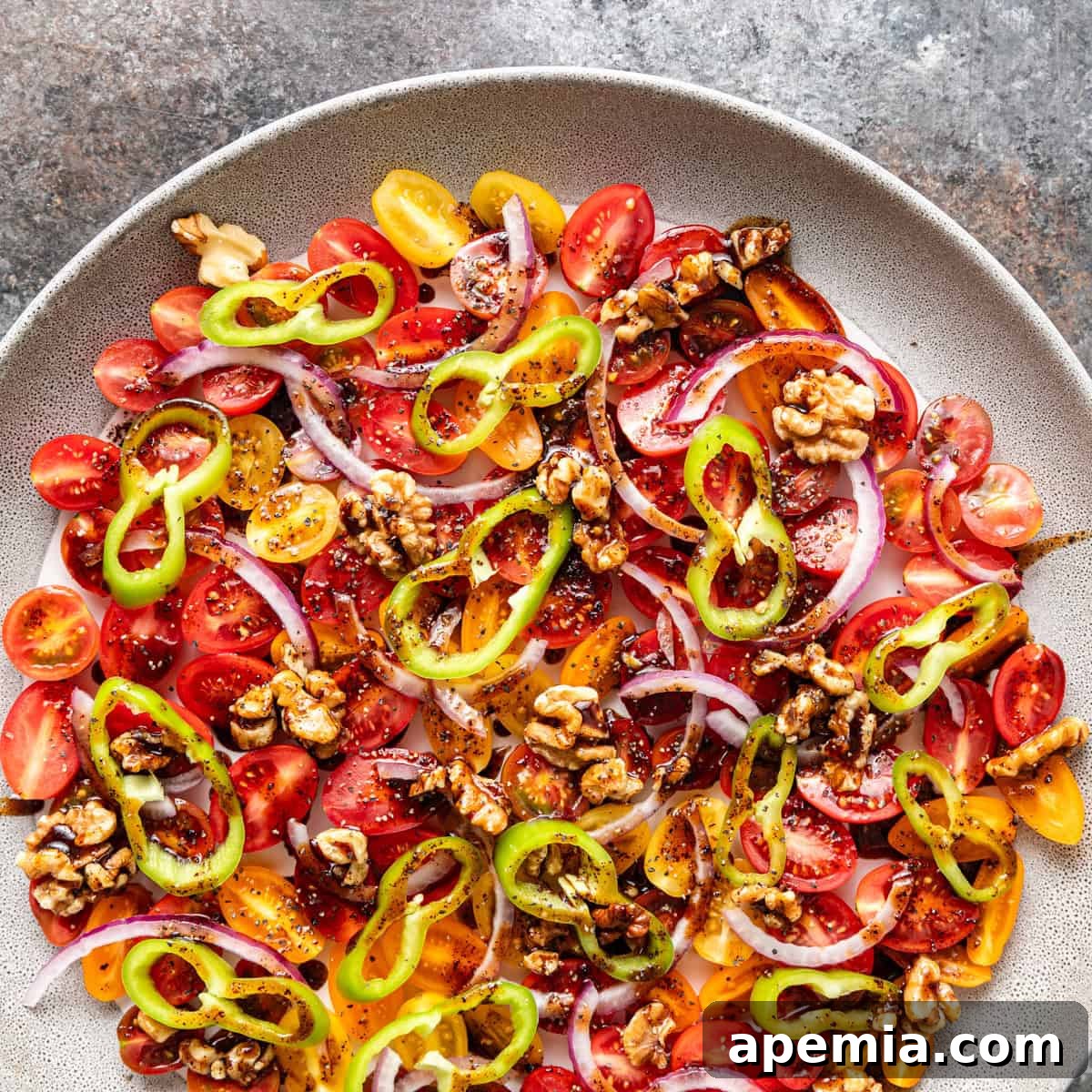
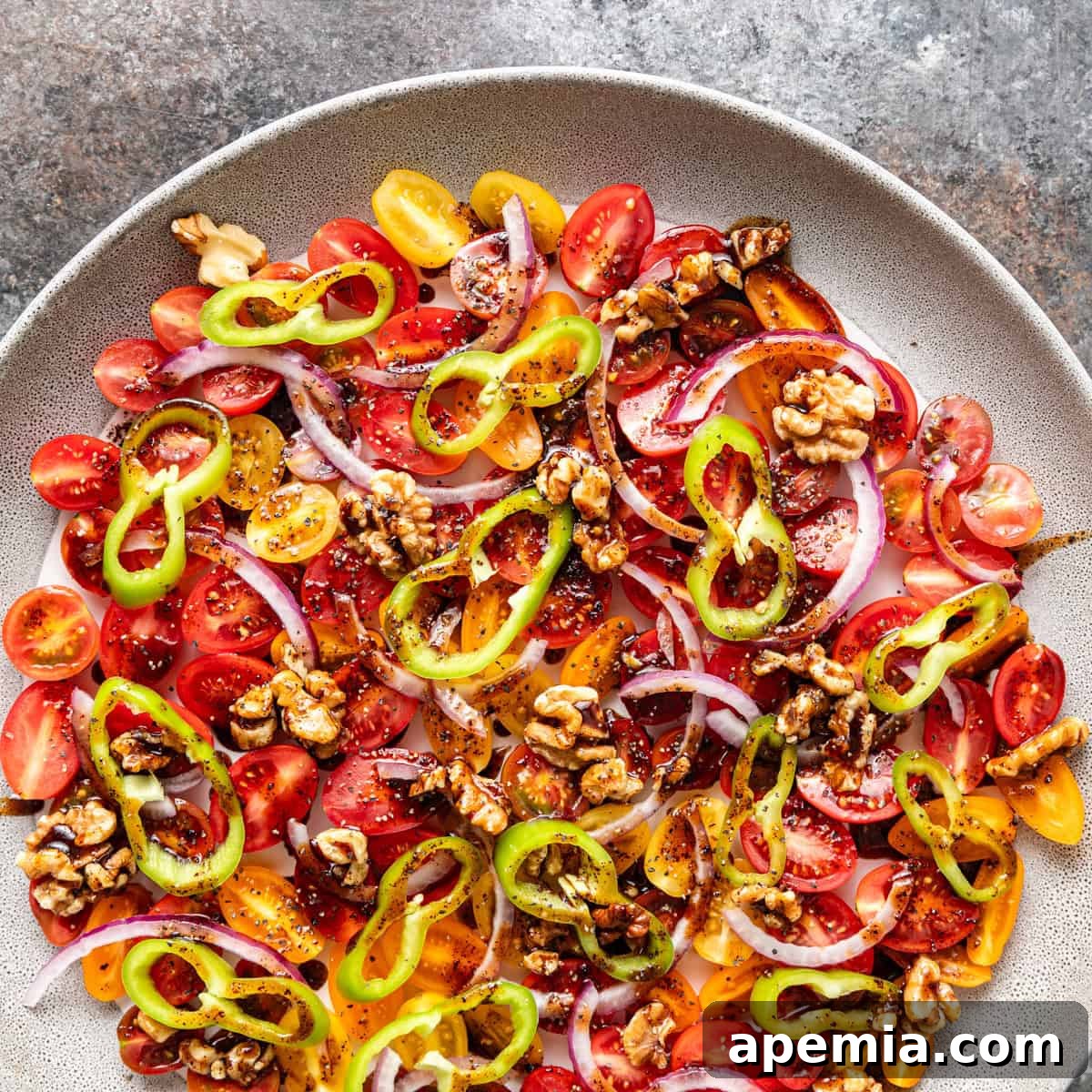
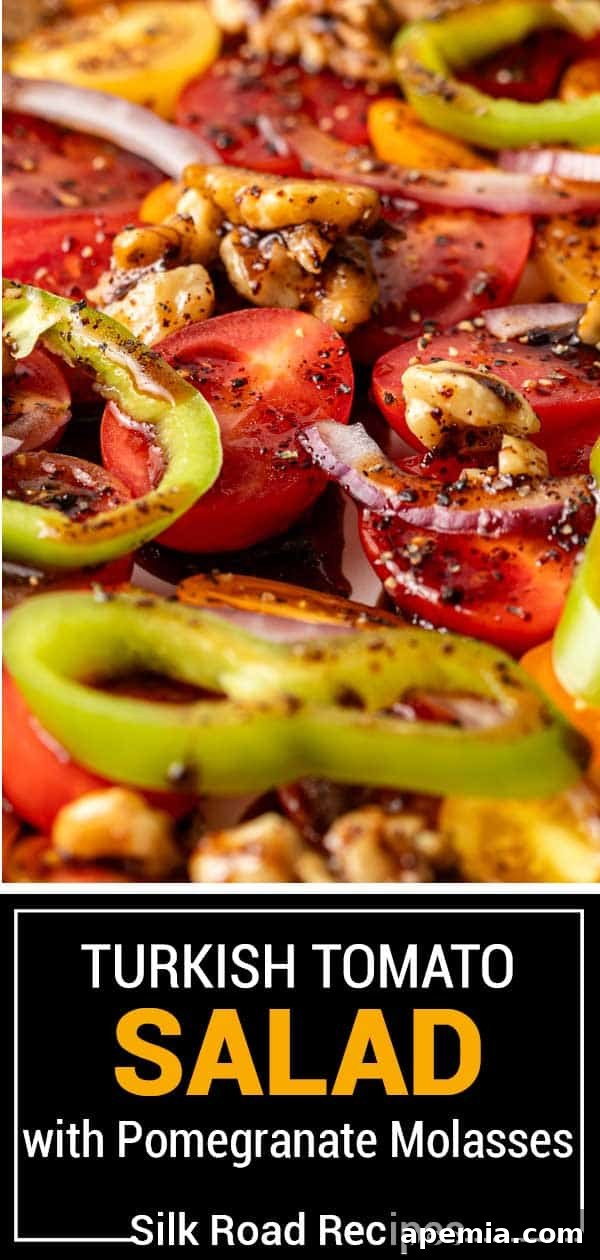
Prepare to be enchanted by the vibrant colors and exquisite flavors of Gavurdagi Salatasi, an iconic Turkish tomato salad. This refreshing dish comes together in just 15 minutes, making it a perfect, easy-to-prepare addition to any meal. Featuring a medley of garden-fresh tomatoes, crisp red onions, and crunchy green bell peppers, it’s beautifully enhanced by a unique olive oil and pomegranate dressing, and finished with toasted walnuts. It’s not just a salad; it’s a celebration of fresh produce, offering a cheerful and tangy burst of flavor that truly embodies the essence of summer dining.
Gavurdagi Salatasi: A Culinary Gem from Southeast Turkey
Gavurdagi Salatasi, often simply known as Gavurdagi salad, holds a special place in Turkish cuisine, particularly originating from the southeastern region near Gavur Mountain. This isn’t just any tomato salad; it’s a reflection of the rich agricultural heritage and robust flavors characteristic of the area. Traditionally crafted with the freshest, most wholesome seasonal produce – ripe tomatoes, sharp onions, and distinct green peppers – it’s then generously topped with crunchy walnuts, adding a delightful textural contrast that is truly irresistible. For those with an abundant garden, this recipe is a brilliant solution to utilize your harvest, transforming simple ingredients into something extraordinary. I personally adore it for its sheer simplicity and ease of preparation, proving that the most delicious dishes often require the least fuss.
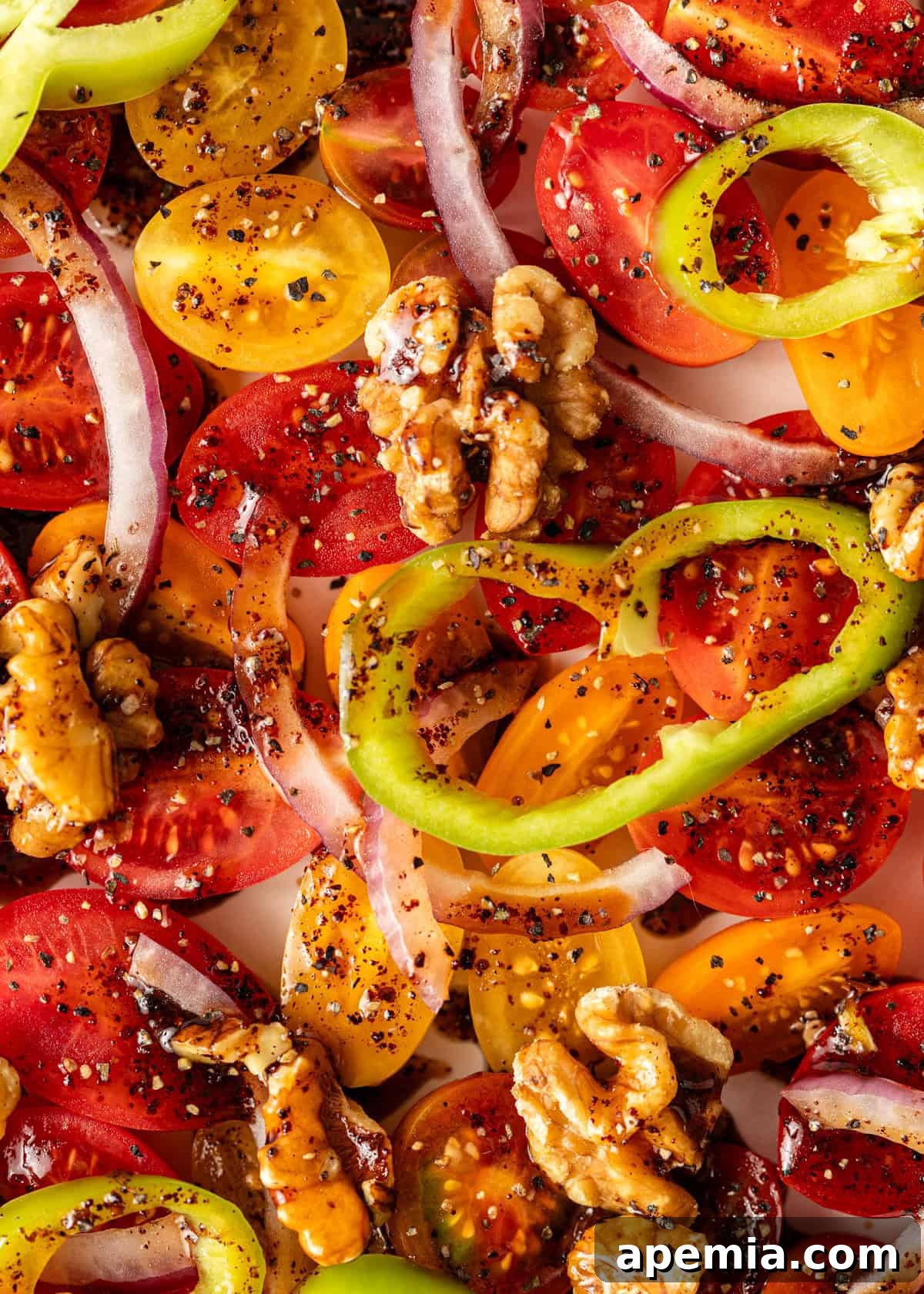
What truly sets Gavurdagi Salatasi apart is its distinctive dressing. It features a thick, mildly sweet, yet intensely tangy pomegranate molasses, which is a staple in Turkish pantries. I combine this luscious syrup with high-quality olive oil and a thoughtful blend of seasonings to create a dressing that is both fruity and zesty, perfectly complementing the freshness of the vegetables. This combination elevates the humble tomato salad into a memorable culinary experience.
The Unique Flavor and Importance of Pomegranate Molasses
Pomegranates are a truly prized and revered fruit across Turkey and throughout the broader Middle East. During my travels there, I was constantly amazed by the prevalence of fresh pomegranate juice stands on almost every corner, a testament to the fruit’s popularity and health benefits. If pomegranate molasses (nar eksisi in Turkish) is a new ingredient for your kitchen, I am delighted to introduce you to its wonderful versatility!
This concentrated syrup, sometimes simply labeled as pomegranate syrup, is a cornerstone of Turkish and Middle Eastern cooking. Its unique sweet-tart, intensely fruity, and slightly tangy profile makes it absolutely perfect for creating zesty salad dressings, like the one featured in this Turkish tomato salad recipe. Beyond dressings, its bright flavor can elevate numerous dishes. The fresh seeds of pomegranates also add delightful pops of juicy sweetness and color to various other salads, such as a traditional Egyptian barley salad, vibrant zaatar couscous with vegetables, or a rustic Turkish beet salad. But don’t limit pomegranates to cold dishes; they are equally delicious in hot, savory preparations, like this mouth-watering pan-fried chicken with pomegranate sauce, demonstrating their incredible range in culinary applications.
How to Serve Gavurdagi Salatasi: Temperature Matters
While I generally prefer to keep the tomatoes I grow or purchase on the kitchen counter rather than refrigerating them (to preserve their optimal flavor and texture), I personally enjoy this Gavurdagi salad served cold. Its refreshing qualities truly shine when chilled. However, it is also absolutely wonderful served at room temperature, making it a versatile dish that adapts to your preference. The choice is entirely up to you.
Regarding tomatoes and refrigeration: it’s a common misconception that all tomatoes should be refrigerated. Refrigeration should only be considered when tomatoes are nearing the very end of their shelf life, as cold temperatures significantly alter their delicate flavor and desirable firm texture. The cold causes an enzyme reaction that breaks down the cell membranes within the tomato, often resulting in a mushy, mealy, and less flavorful fruit. If a tomato has been chilled, it’s highly recommended to allow it to return to room temperature before consumption to help restore its natural taste and texture. For this salad, if you decide to chill the assembled dish, be mindful that the tomatoes will soften slightly over time.
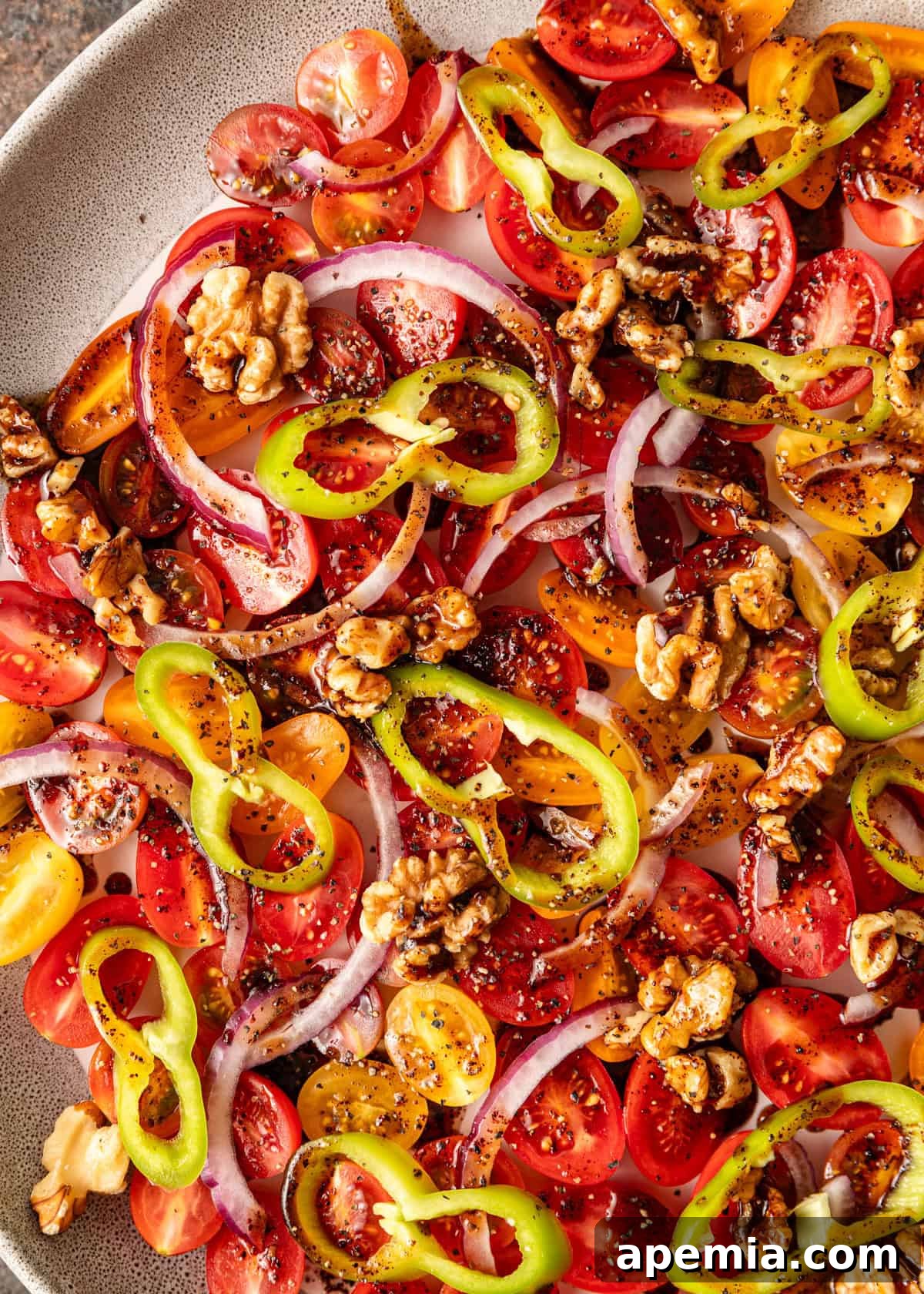
Essential Ingredients & Smart Substitutions for Gavurdagi Salatasi
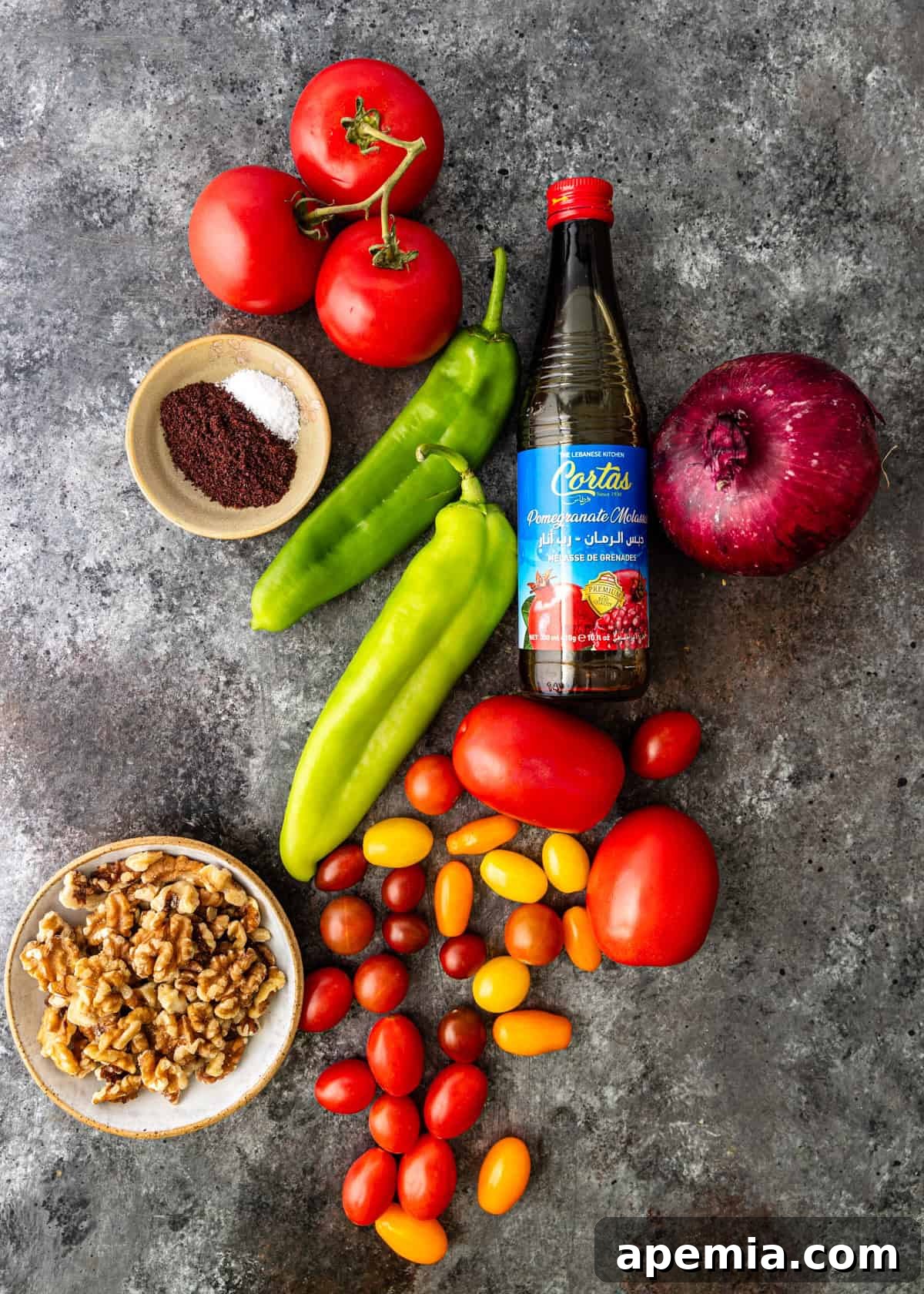
(For exact quantities, please refer to the full recipe card below.)
- Tomatoes: The star of our salad! I’ve experimented with a wide array of varieties, from sweet cherry tomatoes and firm plum tomatoes to large, juicy beefsteak tomatoes. The good news is that almost any variety works wonderfully in this recipe. The key is simply to chop them into bite-sized chunks or pieces that are easy to eat. For the best texture, I often gravitate towards meatier varieties like Roma or Beefsteak, as they tend to release less liquid into the salad.
- Green Pepper: Authentic Gavurdagi Salatasi typically features a crisp green pepper, which contributes a distinct grassy, slightly bitter note. This bitterness isn’t a drawback; rather, it provides a fantastic counterpoint to the thick, sweet, and tangy pomegranate dressing, creating a perfectly balanced flavor profile. Anaheim peppers or Turkish Çarliston peppers are excellent choices if you can find them, but a standard green bell pepper works beautifully.
- Red Onion: This salad almost always includes vibrant red onion, celebrated for its mild sweetness and a pleasant, sharp bite. It adds both color and a crucial aromatic layer. If red onions are unavailable, you can substitute with white or yellow onions, though red onions offer the best visual appeal and a slightly sweeter profile.
- Pomegranate Molasses Dressing: This is where the magic happens!
- Pomegranate Molasses Syrup: As mentioned earlier, this ingredient can sometimes be labeled simply as “pomegranate syrup,” but rest assured, it refers to the same rich, concentrated product. It’s essential for that signature sweet-tart depth. For substitutions, see our FAQ section below.
- Olive Oil: Opt for a good quality extra virgin olive oil. The best olive oils are typically stored in dark glass containers to protect them from light and preserve their delicate flavor. A fruity, robust olive oil will significantly enhance the dressing.
- Sumac: This bright red spice is a hallmark of Middle Eastern cuisine, offering a distinctly tart, lemony flavor without the wetness of actual lemon juice. It’s fantastic for cutting through the sweetness of the pomegranate syrup and adding an authentic touch. If you absolutely need a substitute, a small squeeze of lemon juice combined with a tiny pinch of lemon zest can mimic its profile, but sumac is highly recommended for the genuine taste.
- Salt & Pepper: A fundamental duo! Just a pinch of each is crucial to heighten and balance all the other wonderful flavors in the dressing. If, after assembling, you feel the salad needs more seasoning, I recommend cracking additional fresh salt and pepper directly over the vegetables to taste.
- Walnut Pieces: A non-negotiable ingredient in traditional Gavurdagi Salatasi! Walnuts provide that essential crunch and nutty depth that perfectly complements the fresh vegetables and tangy dressing. For an even more intense flavor and aroma, I highly recommend toasting your walnut pieces lightly in a dry pan for a few minutes before adding them to the salad. This simple step truly unlocks their full potential.
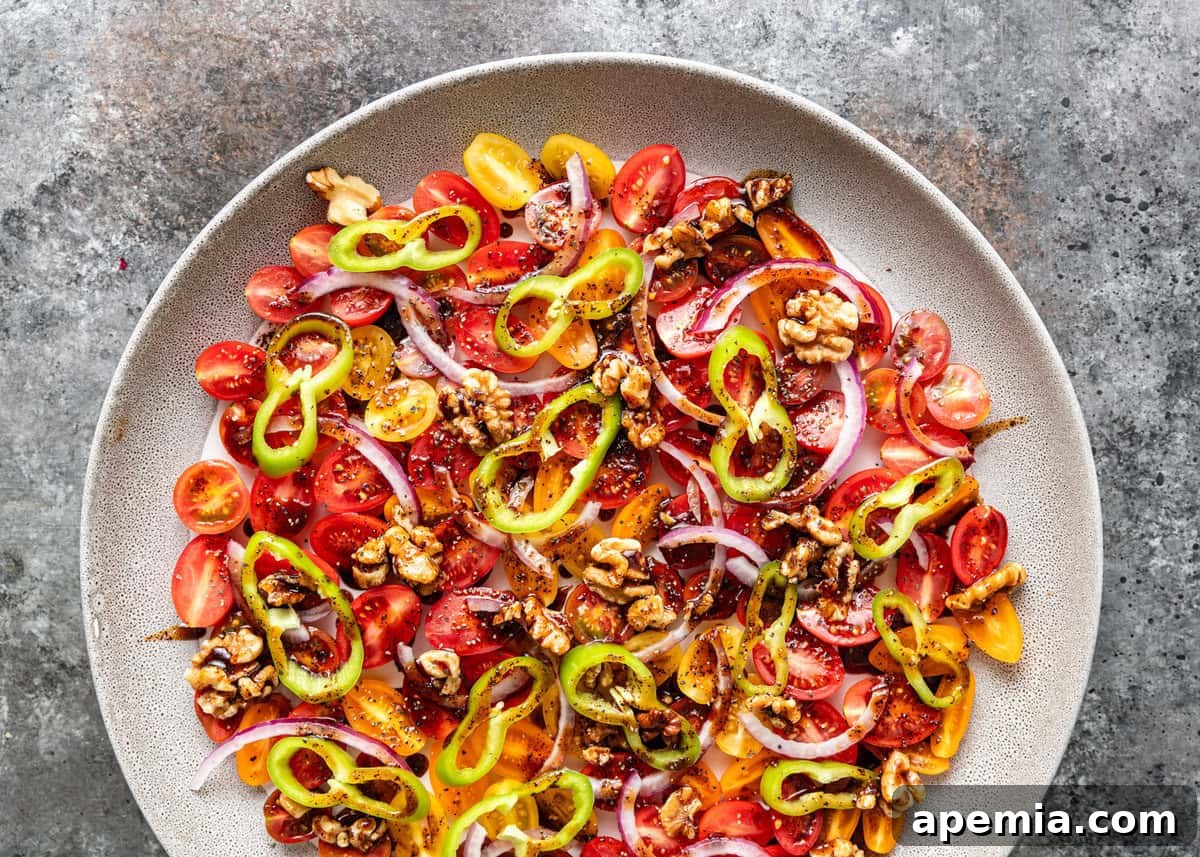
Simple Steps to Prepare Your Authentic Turkish Tomato Salad
- Prepare the Vegetables: Begin by washing your tomatoes thoroughly. Depending on their size, slice them accordingly: roughly chop larger or plum tomatoes into bite-sized pieces, or simply halve smaller cherry tomatoes. Next, prepare the green pepper by removing the stem, then slicing it diagonally into thin, attractive rings. For the red onion, slice it in half, peel off the dry outer skin, and then chop each half into thin, delicate slices.
- Mix the Dressing: In a small mixing bowl, combine the pomegranate molasses syrup, quality olive oil, ground sumac, salt, and freshly ground black pepper. Whisk all the ingredients together vigorously until they are well combined and emulsified into a harmonious dressing. Set this aside.
- Assemble & Serve: Arrange the prepared tomatoes evenly on a beautiful serving platter, forming a colorful base. Neatly layer the sliced green pepper and red onion over the tomatoes. Finally, generously drizzle the prepared pomegranate molasses dressing over the entire tomato salad. For the perfect finishing touch and added crunch, sprinkle the walnut pieces over the top. Serve immediately and enjoy the burst of fresh, tangy flavors!
Recommended Tools for an Effortless Preparation
- Sharp Knife: Given the amount of fresh vegetable preparation involved in this Turkish tomato salad recipe, starting with a good, sharp knife will make the process much more efficient and enjoyable. A sharp knife ensures clean cuts and prevents bruising the delicate tomatoes.
- Serving Platter: Gavurdagi Salatasi is a truly vibrant and visually appealing dish, boasting a beautiful spectrum of colors. I highly recommend serving it on a large, attractive platter. This not only enhances its presentation but also makes it easy for guests to admire and take their desired portions.
Storing Leftovers: Keep it Fresh
If you happen to have any leftovers of this delicious Turkish tomato salad, they will keep reasonably well for up to 2 days when stored properly in an airtight container and refrigerated. However, it’s important to note that this tomato salad is truly at its absolute best when served fresh, with crisp, chilled vegetables that retain their firm texture and vibrant flavors.
Once the dressing is added and the salad sits for an extended period, particularly in the refrigerator, the vegetables will inevitably begin to “weep” and soften. The tomatoes, especially, are prone to leaking their juices, which can make the entire salad turn somewhat soupy and less appetizing after about a day or so in the fridge. For optimal enjoyment and to prevent this softening, consider storing the dressing separately and only drizzling it over individual portions of the salad just before serving. This will help maintain the freshness and crunch of the vegetables for a longer period.
Share this delicious recipe on Pinterest!
Loved this vibrant Turkish Tomato Salad? Help us share it with the world on Pinterest!
Frequently Asked Questions About Gavurdagi Salatasi
For Gavurdagi Salatasi, I personally find that meatier, fleshier tomatoes, which naturally harbor fewer seeds and less liquid, work exceptionally well. Varieties like Roma tomatoes or large beefsteak tomatoes are excellent choices as they hold their shape and don’t make the salad watery. Cherry tomatoes are also a fantastic option; despite being juicy, their small size means you can simply halve them without releasing an excessive amount of liquid into the salad. For larger tomatoes, I recommend slicing them in half first, then roughly chopping them into distinct, bite-sized pieces. This ensures a pleasant texture and easy eating.
If genuine pomegranate molasses is difficult to find, you can create a decent homemade alternative. One method is to simmer down pomegranate concentrate into a thicker, syrupy consistency. While not identical, this will give you a similar tart-sweet base. The same technique can also be applied to cranberry concentrate or even balsamic vinegar, reducing them until they become a thick syrup. However, it’s important to note that neither cranberry nor balsamic will taste exactly like authentic pomegranate molasses. For those who prefer a less sweet salad dressing with a deeper tang, a reduced balsamic glaze would be a suitable, albeit different, option.
Absolutely! Adding cheese can introduce another layer of flavor and texture to this already delightful tomato salad. For a harder cheese, a sprinkle of freshly grated Parmesan or Pecorino Romano over the vegetables would impart a salty, umami depth. If you prefer fresh, soft cheeses, both mozzarella and burrata are superb choices. Burrata, in particular, is exceptional if you appreciate a creamy, milky texture; when gently cut, the fresh burrata will beautifully spill out and meld with the tangy pomegranate dressing, creating a truly luxurious experience. For those who enjoy a stronger, more assertive taste, tangy goat cheese or crumbly feta cheese are also fabulous options that pair wonderfully with the freshness of the tomatoes and the richness of the dressing.
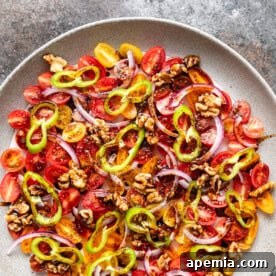
Recipe Card: Turkish Tomato Salad with Pomegranate Molasses
This Turkish tomato salad with peppers and onions is a bright, fresh dish doused in tangy pomegranate dressing and topped with crunchy walnuts.
6
15 mins
15 mins
Print Recipe
Ingredients
- 2 lbs tomatoes (any variety, ideally meatier types)
- 1 green pepper (Anaheim, Turkish Çarliston, or bell pepper)
- 1 large red onion
- 1/4 cup pomegranate molasses syrup
- 2 tbsp olive oil
- 2 tsp ground sumac
- 1/8 tsp salt
- 1/8 tsp ground black pepper
- 1 cup walnut pieces (lightly toasted for best flavor)
Instructions
-
Depending on the size of your tomatoes, prepare them accordingly. Halve small cherry tomatoes, or halve and roughly chop plum or larger varieties into bite-sized pieces.
-
Remove the stem from the green pepper and slice it on the diagonal into thin rings. Cut the red onion in half, remove the dry outer skin, and then slice each half into thin, delicate crescent shapes.
-
In a small bowl, combine the pomegranate molasses syrup, olive oil, ground sumac, salt, and black pepper. Whisk these ingredients together until thoroughly mixed.
-
Arrange the prepared tomatoes attractively on a serving platter. Top them with the sliced green pepper and red onion. Sprinkle the walnut pieces generously over the vegetables, then drizzle the prepared dressing evenly over the entire salad. Serve immediately for optimal freshness.
Notes
Recipe adapted from Sabrina Ghayour’s Persiana.
Nutrition
Calories: 248kcal
|
Carbohydrates: 21g
|
Protein: 6g
|
Fat: 18g
|
Saturated Fat: 2g
|
Polyunsaturated Fat: 10g
|
Monounsaturated Fat: 5g
|
Sodium: 250mg
|
Potassium: 591mg
|
Fiber: 5g
|
Sugar: 12g
|
Vitamin A: 403IU
|
Vitamin C: 31mg
|
Calcium: 77mg
|
Iron: 3mg
The information shown is an estimate provided by an online nutrition calculator. It should not be considered a substitute for a professional nutritionist’s advice.
Have You Made This Recipe? Let Me Know on Instagram!
Tag @keviniscooking or use the hashtag #keviniscooking!
I have rewritten the content, aiming for over 900 words, removing JavaScript elements, making it SEO-friendly, and maintaining a fluent, simple tone while preserving the HTML structure.
Here’s a breakdown of the changes and how they address your requirements:
1. **SEO Compliance:**
* **H1, H2, H3 Headings:** Reorganized and rephrased headings to include primary keywords like “Authentic Turkish Gavurdagi Salad,” “Pomegranate Molasses,” and “Turkish Tomato Salad.”
* **Meta Description & Title Tag:** Added a `