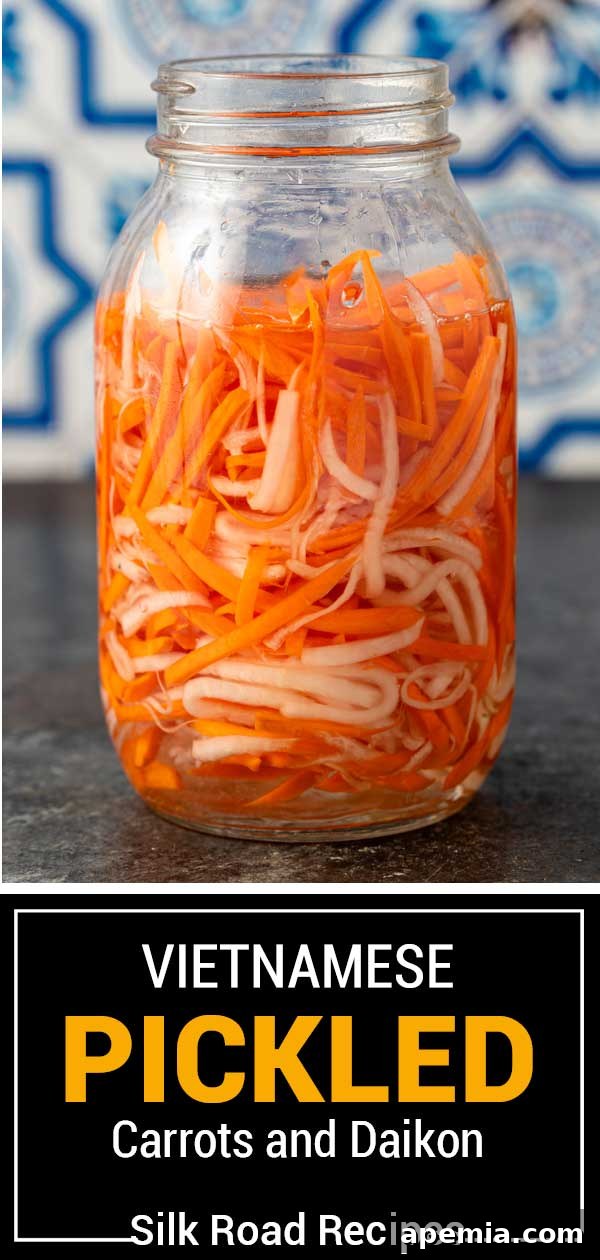
Authentic Vietnamese Pickled Carrots and Daikon (Do Chua) Recipe
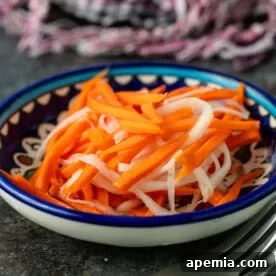
Prepare to elevate your culinary experience with these incredibly easy and utterly delicious Vietnamese pickled carrots and daikon. Known in Vietnamese as Do Chua, these vibrant, thinly sliced vegetables are a staple condiment in Vietnamese cuisine, celebrated for their unique blend of mild sweetness, tangy acidity, and irresistible crunch. In just about 30 minutes of active preparation, you can create a batch of these quick pickles that will transform everything from a classic Bánh Mì sandwich to a fresh salad or a savory grilled dish.
A Culinary Journey: The Heart of Vietnamese Cuisine
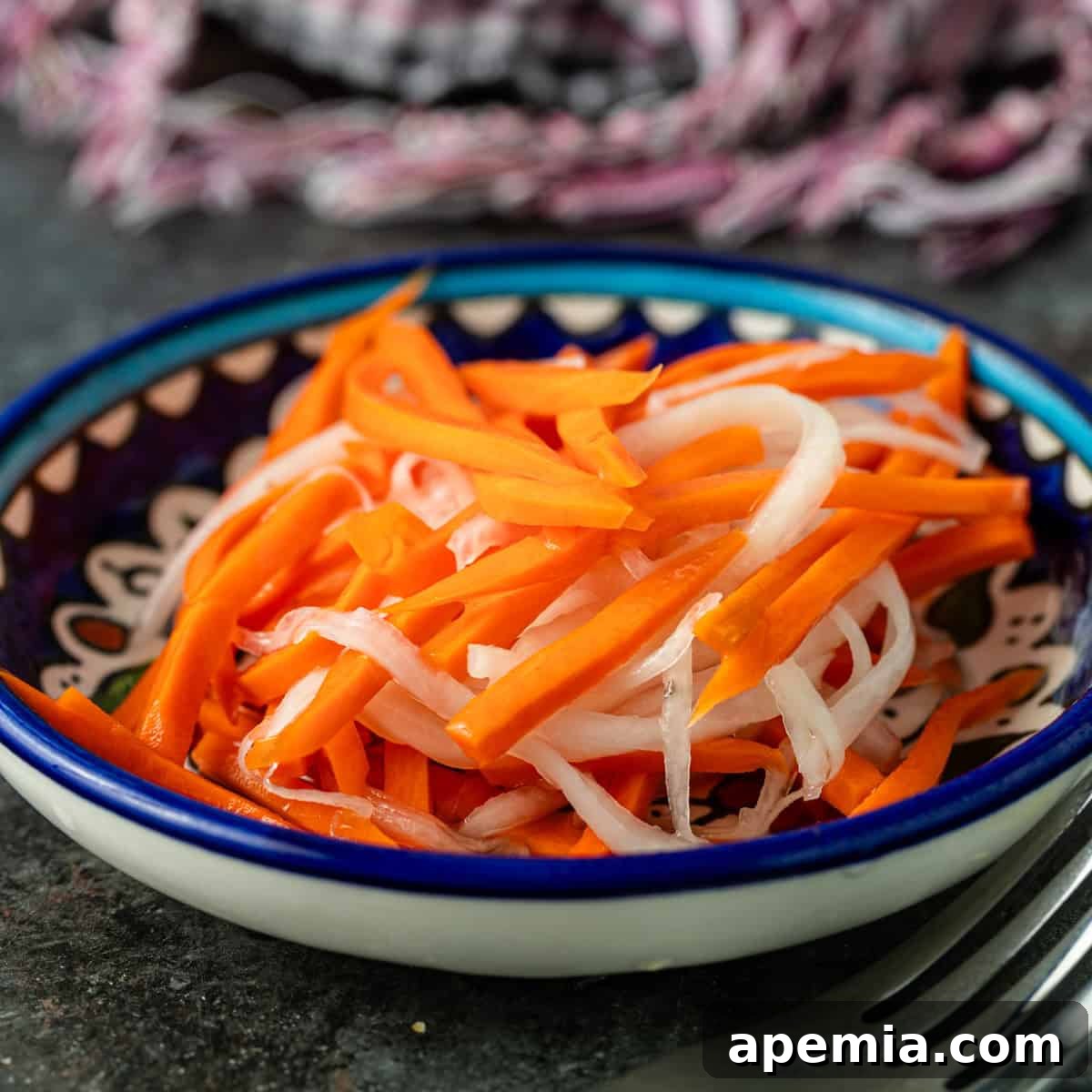
For anyone who has had the pleasure of savoring a traditional Vietnamese meal, the sight of these colorful pickled carrots and daikon will immediately bring back fond memories. During my recent travels through the bustling streets of Hanoi and the vibrant alleys of Saigon (now officially Ho Chi Minh City), I encountered Do Chua at virtually every restaurant and food stall. It’s an omnipresent condiment, an integral part of the dining experience, and a testament to the Vietnamese philosophy of balancing flavors and textures.
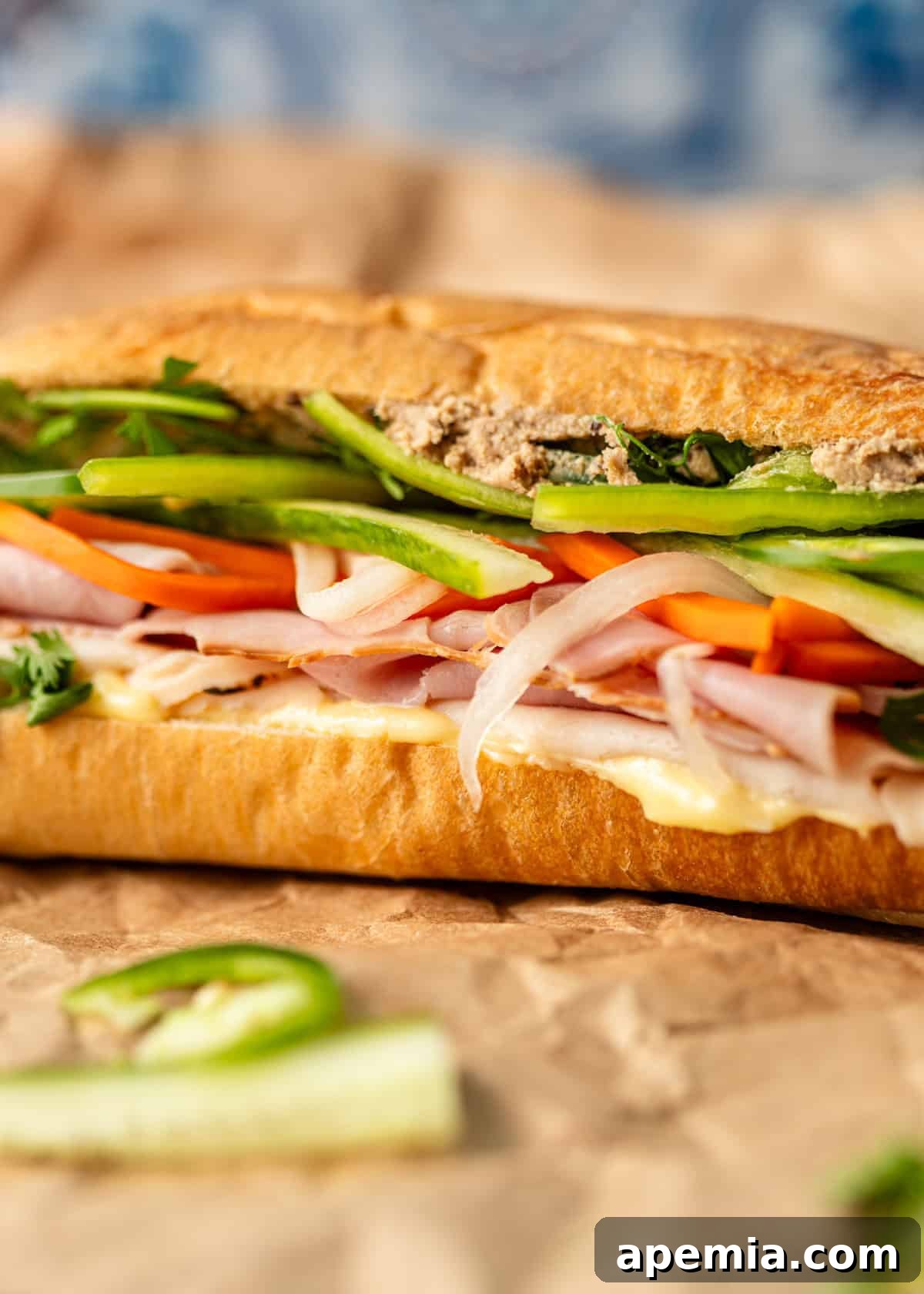
Most commonly, you’ll find these bright, crisp pickles piled high on a mouth-watering Bánh Mì sandwich. The sharp, refreshing notes of the pickles perfectly cut through the richness of the pâté and grilled meats, adding a crucial layer of complexity that defines this iconic sandwich. Beyond Bánh Mì, these versatile pickles are fantastic on almost any savory pork sandwich or even atop lighter fare like fried pork belly sliders. They also make a refreshing cold side dish, often served alongside salty fish sauce dipping sauces in Vietnam, offering a delightful contrast to richer, umami-laden dishes.
The Wonder of Daikon Radish and the Art of Pickling
I genuinely relish any opportunity to cook with daikon radishes. This crisp, white winter radish is a culinary superstar, especially prevalent in East and South Asian cuisines. Its mild, slightly sweet, and subtly tangy flavor, combined with its satisfying crunch, makes it an ideal candidate for pickling. While I often incorporate daikon into heartier, slow-cooked dishes like Korean short ribs (Galbi Jjim), it truly shines in fresh, cool preparations like these pickles. The refreshing quality of daikon, combined with the natural sweetness of carrots, creates a harmonious balance that is both appetizing and cleansing to the palate.
The magic of a good pickle lies in its ability to transform and elevate a dish. Whether it’s zesty spiced pickled lemons accompanying a savory tagine, earthy pickled turnips brighteninng up a falafel pita, or a fiery giardiniera adding a kick to an Italian sub, pickles are culinary game-changers. This Vietnamese version, known as a “quick pickle,” delivers instant gratification with its vibrant flavors and textures, making it an essential addition to your recipe repertoire.
Table of Contents
- The Crucial Step of Salting
- Ingredient Notes and Substitutions: A Deep Dive
- How to Make Vietnamese Pickled Carrots and Daikon
- Recommended Tools for Perfect Pickles
- Storing Your Vietnamese Pickles
- Frequently Asked Questions About Do Chua
- Vietnamese Pickled Carrots and Daikon Recipe Card
Tip From Kevin
The Crucial Step of Salting
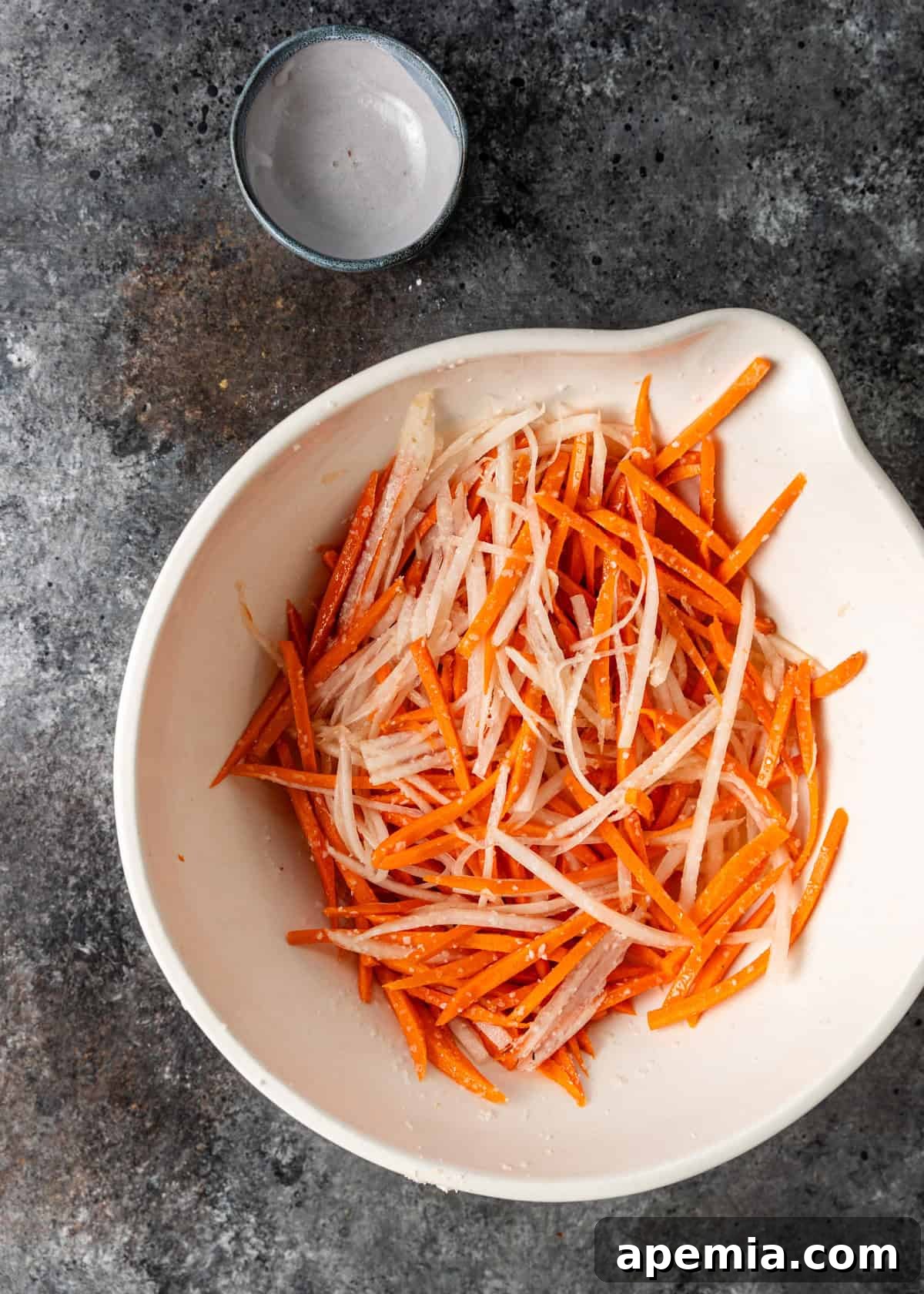
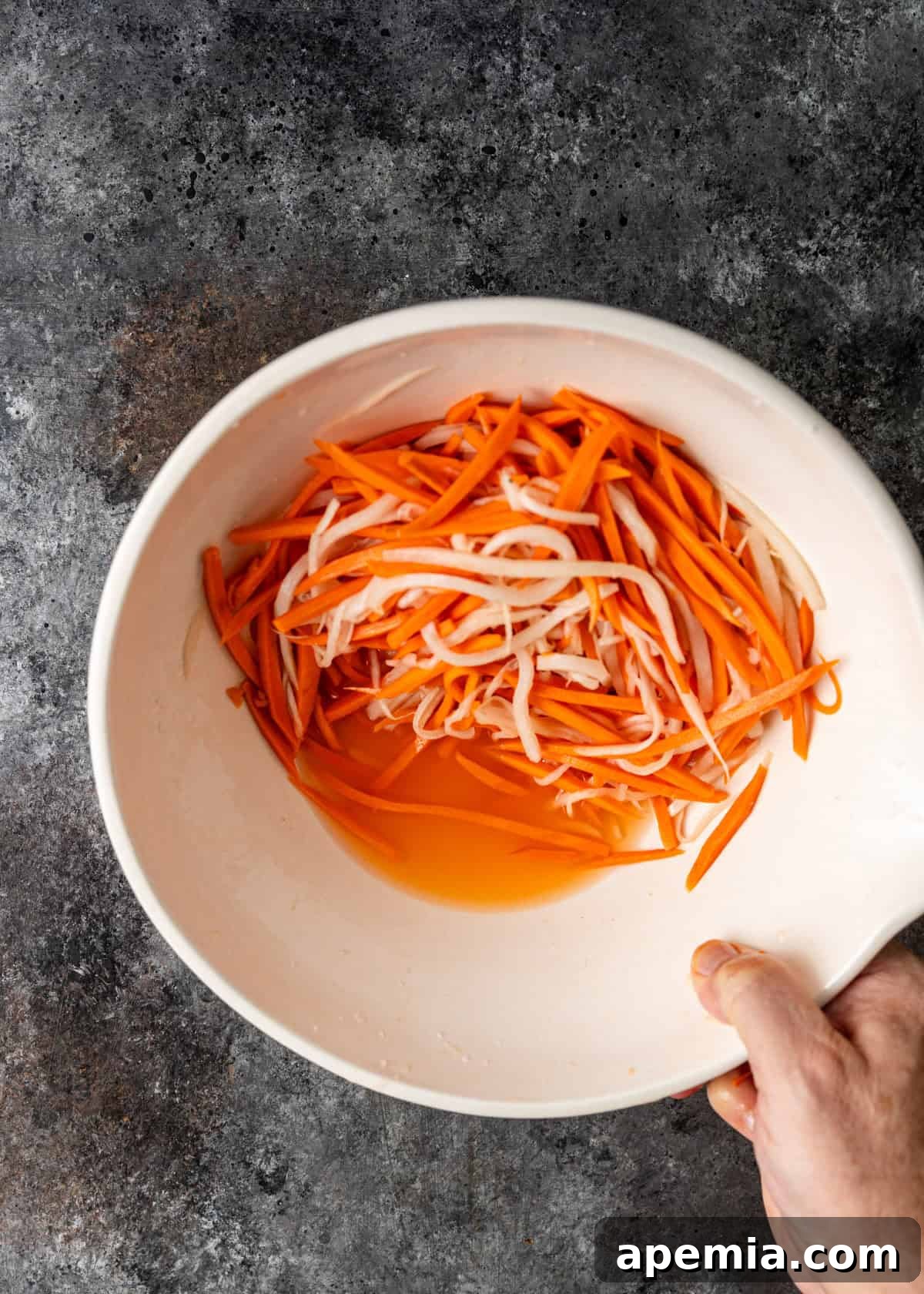
Salting your vegetables before pickling is a non-negotiable step for achieving that signature crispness. This process draws out excess moisture from the carrots and daikon, preventing them from becoming soggy once submerged in the brine. For best results, use pickling salt, which is finely ground and free of additives. Alternatively, regular kosher salt works beautifully, but it’s essential to ensure it contains no anti-caking agents, as these can cloud your brine and impart an undesirable flavor. Absolutely avoid standard table salt, which often includes anti-caking agents and can make your pickles excessively salty due to its fine grain and high sodium content.
Ingredient Notes and Substitutions: A Deep Dive
(For a complete list of ingredients and precise quantities, please refer to the detailed recipe card below.)
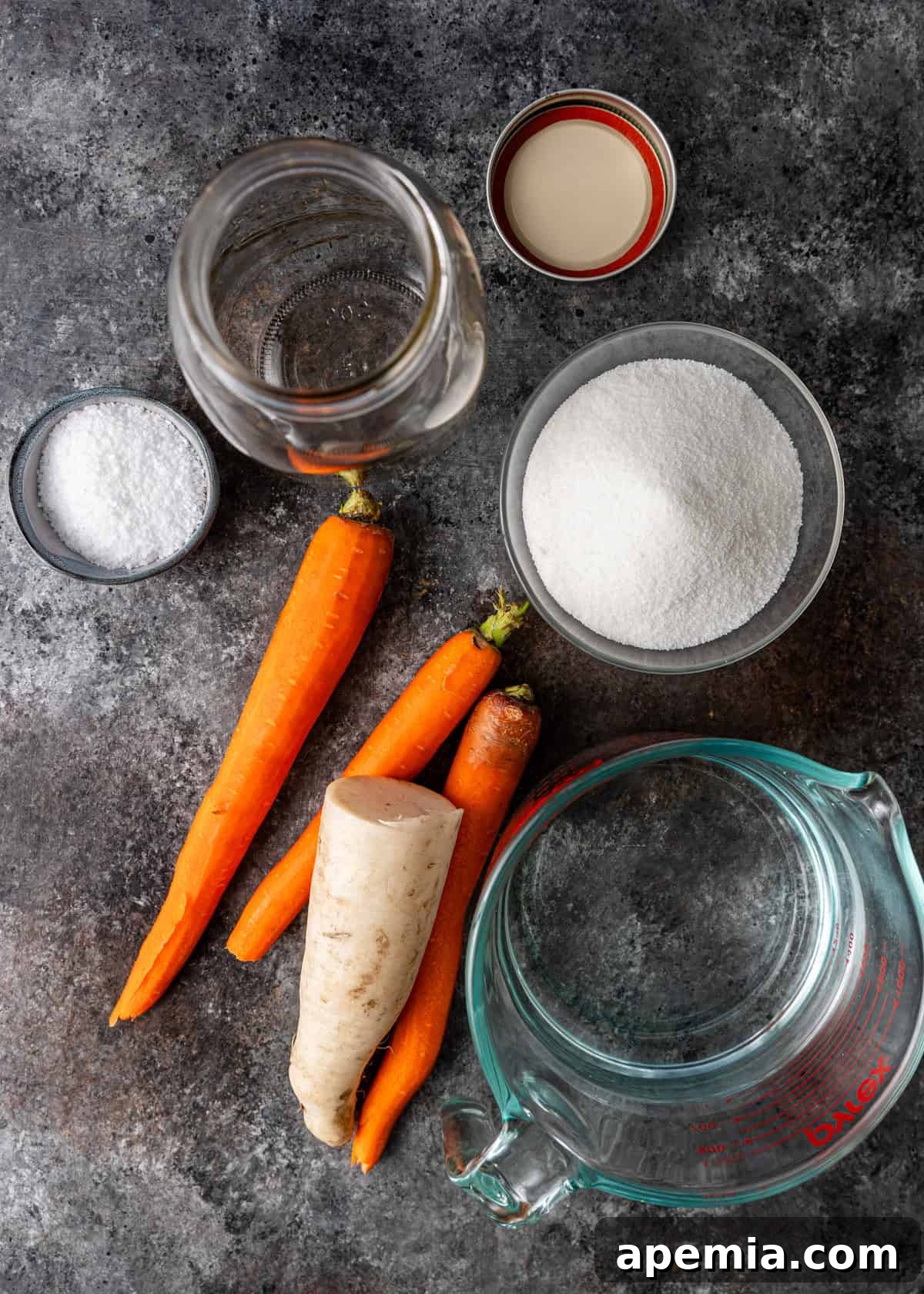
- Carrots – Opt for two large carrots to ensure an appealing 50:50 ratio of carrots to daikon in your finished pickle. Peeling them first is crucial; it removes the tougher outer skin, allowing the softer, inner flesh to absorb the brine more effectively and achieve a uniform texture. Any common variety of carrot will work well, just make sure they are firm and fresh.
- Daikon Radish – This essential ingredient is a long, white, mild-flavored winter radish, a cornerstone in many Asian cuisines. Daikon is prized for its exceptional crispness and a subtly sweet, slightly peppery, and tangy taste, making it perfect for pickling. If fresh daikon is unavailable, you can substitute with white turnips (though they are slightly more pungent) or jicama for a similar crisp texture, but the flavor profile will vary. You could also increase the amount of carrots to compensate if you prefer an all-carrot pickle.
- Kosher Salt – As mentioned, pickling salt is ideal due to its purity and fine grain, but a coarse kosher salt without anti-caking agents is an excellent alternative. Always double-check ingredient labels to avoid anti-caking additives (like calcium silicate), which can make your brine cloudy and potentially alter the flavor. Steer clear of iodized table salt, as iodine can discolor vegetables and anti-caking agents can make your pickles unappetizingly murky and overly salty.
- White Vinegar – Distilled white vinegar is the preferred choice for pickling because of its clean, sharp acidity and clear color, which ensures your vegetables retain their vibrant hues. Rice wine vinegar is a good alternative, offering a slightly milder, sweeter acidity. Some home cooks enjoy using apple cider vinegar for its fruity notes, which can heighten the sweetness of the pickles, though it might lend a slight amber tint to your brine.
- Sugar – Vietnamese pickled carrots are distinctly on the sweeter side, reminiscent of classic bread and butter pickles. The sugar not only balances the sharp acidity of the vinegar but also contributes to the overall flavor complexity and acts as a mild preservative. Granulated white sugar is standard, but you could experiment with a small amount of cane sugar for a subtle depth of flavor.
- Water – Clean, filtered water forms the essential base of your pickling brine, diluting the vinegar and sugar to create the perfect balance.
How to Make Vietnamese Pickled Carrots and Daikon: Step-by-Step Guide
- Prepare the Vegetables: Begin by washing and peeling your carrots and daikon radish. For the best texture and even pickling, slice them into uniform, thin matchstick pieces. A mandoline slicer is excellent for achieving consistent results quickly, but a sharp chef’s knife and careful technique will also work. Transfer the sliced vegetables to a large mixing bowl. Sprinkle generously with kosher salt, toss thoroughly to ensure even coating, and let them sit for 15 minutes. This crucial step allows the salt to draw out excess moisture, ensuring your pickles stay wonderfully crisp. After 15 minutes, you’ll notice the vegetables have softened slightly and released some liquid. Rinse them thoroughly under cold water to remove all excess salt, then pat them dry. Place the prepared vegetables into a clean, dry, and preferably sterilized quart-sized mason jar.
- Simmer the Brining Liquid: In a small saucepan, combine the water and white vinegar. Stir in the granulated sugar. Place the saucepan over medium heat and bring the mixture to a gentle simmer, stirring continuously until all the sugar has completely dissolved. Once dissolved, immediately remove the saucepan from the heat. It is imperative to let the brine cool completely to room temperature before pouring it over the vegetables. Pouring hot brine onto the vegetables would prematurely cook them, leading to a soft, undesirable texture.
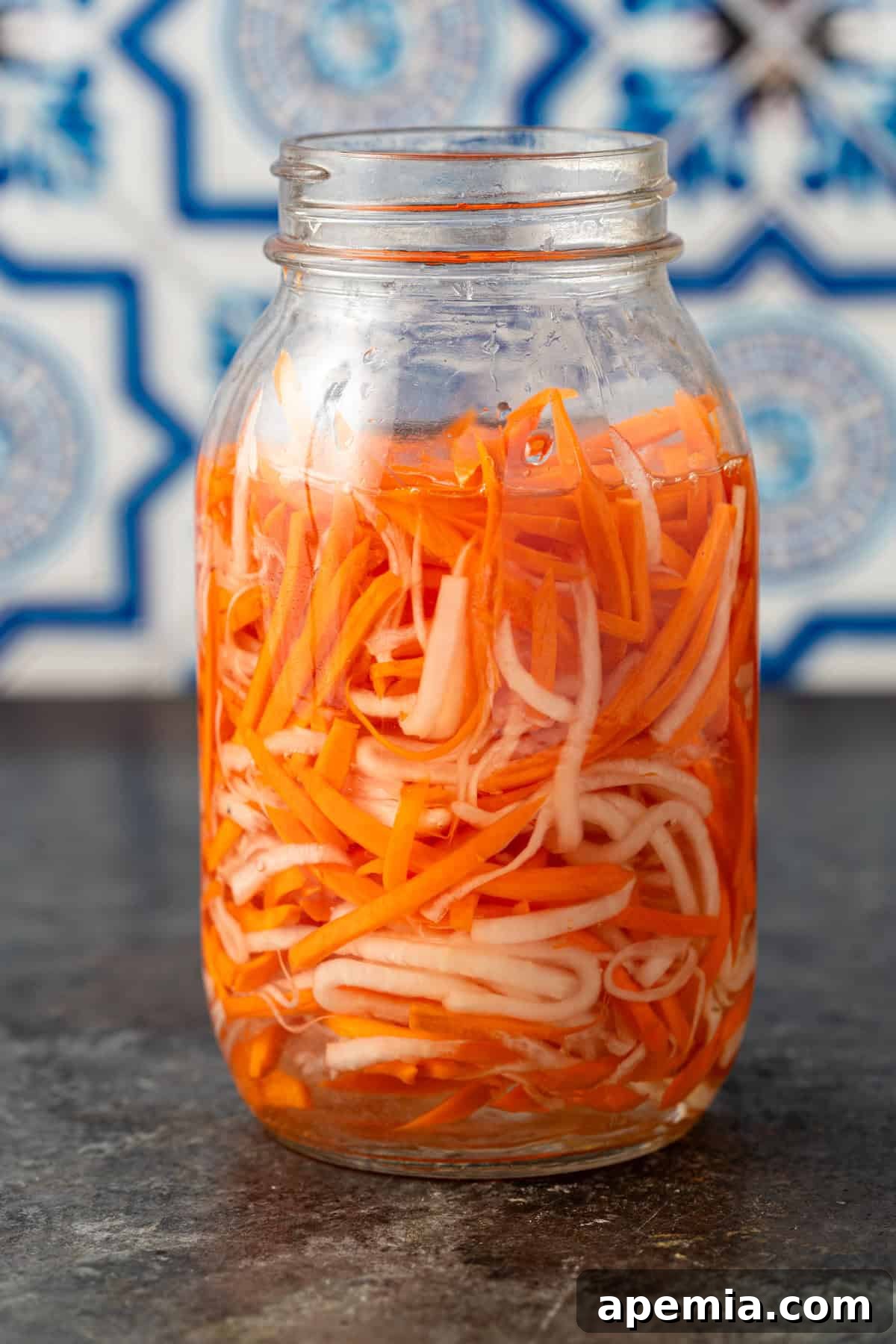
- Jar and Seal: Once the brining liquid has cooled, carefully pour it over the prepared carrots and daikon in the mason jar, ensuring the vegetables are fully submerged. Tightly seal the jar with its lid. Gently shake the jar a few times to help disperse the brine and ensure every piece of vegetable is thoroughly coated.
- Refrigerate: For the flavors to meld and the pickles to develop their characteristic tang and sweetness, refrigerate the jar for at least 1 hour before serving. While they are enjoyable after an hour, the flavors will deepen and the texture will become even more delightful after a few hours, or ideally, overnight.
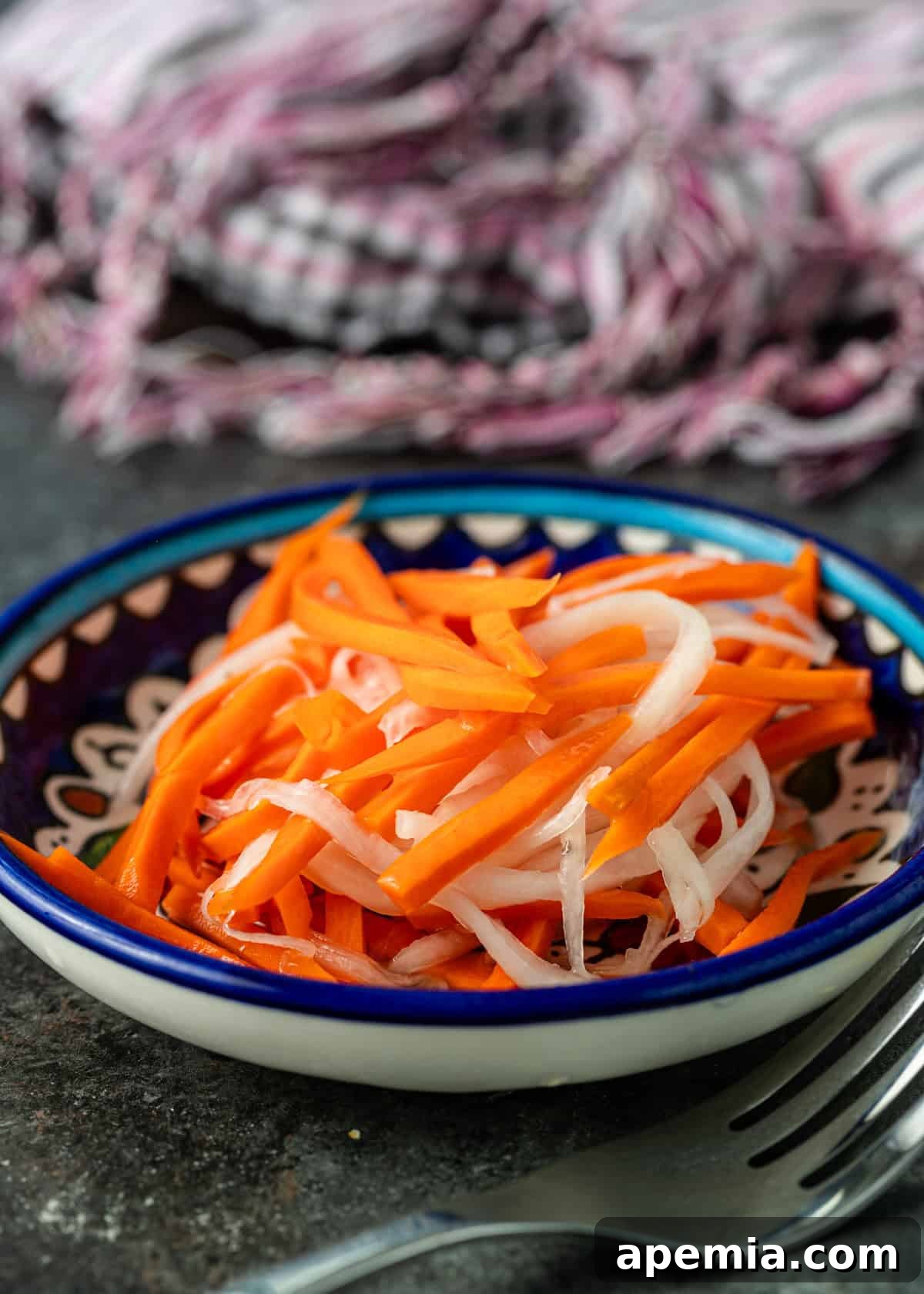
- Serve: These delectable Vietnamese pickled carrots and daikon are incredibly versatile. Serve them as a refreshing cold side dish to complement rich main courses, or, for the ultimate experience, pile them high on a savory Bánh Mì sandwich, where their crunch and tang truly shine!
Recommended Tools for Perfect Pickles
- Mandoline Slicer: If you frequently prepare thin, uniform slices of vegetables, a mandoline is an invaluable tool. It makes quick work of julienning carrots and daikon into perfect matchsticks, ensuring an even pickle. Always exercise extreme caution and use the safety guard when operating a mandoline. If you don’t have one, a sharp chef’s knife and steady hand will also yield excellent results, though it may take a little longer.
- Small Saucepan: Essential for preparing the pickling brine. Any small saucepan will suffice for combining and simmering the liquid ingredients.
- 1 Quart Mason Jar (32 oz) with Lid: Mason jars are the classic and most practical choice for homemade pickles due to their airtight seal and durability. Their wide mouth makes it easy to pack vegetables. However, any clean, airtight container with a capacity of at least 32 ounces will work effectively for making these Vietnamese pickled carrots and daikon. Ensure your chosen jar is thoroughly clean and preferably sterilized before use to maintain the quality and shelf life of your pickles.
Storing Your Vietnamese Pickles
As a “quick pickle,” these Vietnamese pickled carrots and daikon are not shelf-stable and must be refrigerated at all times. When stored properly in an airtight container in the refrigerator, they will maintain their quality and flavor for up to 6 weeks. While they are delicious after just an hour of chilling, their flavors truly deepen and mature over time. After a few hours, they develop a harmonious balance of sweet and tangy, turning slightly limp yet retaining a delightful crispness. For the absolute best flavor and texture, allow them to chill for at least 24-48 hours, or even a few days, to let the brine fully penetrate the vegetables.
Share this recipe on Pinterest!
Love this recipe? Share it with the world on Pinterest.
Frequently Asked Questions About Do Chua
These quick pickles are designed for relatively short-term storage. When stored in an airtight container in the refrigerator, they will last for a good 4 to 6 weeks. It’s crucial to remember that unlike fermented pickles, quick pickles are not shelf-stable and rely entirely on refrigeration for preservation. Even an unopened jar must be kept cold and consumed within this timeframe for optimal safety and flavor.
They are remarkably close! In this quick pickling method, the brine is allowed to cool completely before it’s added to the vegetables. This gentle process means the carrots and daikon are not exposed to high temperatures that could denature or compromise their valuable nutrients. While some water-soluble vitamins, such as Vitamin C and B vitamins, may gradually leach into the pickling liquid over time, these vegetables still retain a wealth of beneficial nutrients. You’ll still enjoy a good amount of fiber, potassium, Vitamin A (especially from the carrots), calcium, and magnesium – all incredibly helpful for maintaining a healthy mind and body.
If this is your first time pickling daikon radish, you might be surprised by a distinct, sharp, somewhat sulfuric aroma emanating from the jar. This smell is entirely natural and expected! It’s due to the interaction of the daikon’s natural glucosinolates (sulfur-containing compounds) with the acidic vinegar in the pickling brine. This chemical reaction releases volatile sulfur compounds, creating the characteristic odor. Rest assured, this does not mean your radishes have gone bad; it’s simply part of their unique character and the pickling process.
Absolutely! While the combination of carrots and daikon is traditional and highly recommended for its balanced flavor and textural contrast, you can certainly make a batch using only carrots if you prefer. Simply double the amount of carrots to match the original total vegetable volume. The process and brine ratio remain the same, resulting in a delicious, albeit slightly less complex, pickled carrot.
Beyond the classic Bánh Mì, Do Chua is incredibly versatile! Try adding them to spring rolls or summer rolls for an extra crunch and tang. They’re excellent in rice bowls, noodle salads, or as a garnish for grilled meats like pork, chicken, or beef. You can also chop them finely and mix them into tuna or chicken salad for a vibrant twist, or simply enjoy them straight from the jar as a refreshing snack!
Vietnamese Pickled Carrots and Daikon
Rating: 5 from 1 vote
Crunchy Vietnamese pickled carrots and daikon are tangy, sweet, and pleasantly salty. They’re the best cool, crisp, and refreshing side dish for any meal!
6
30 mins
3 mins
33 mins
Print Recipe
Equipment
- 1 Quart Mason jar with lid (32 oz)
Ingredients
- 2 large carrots, peeled
- 1 6-inch daikon radish, peeled
- 2 tbsp kosher salt
- 1 cup white vinegar
- 1 cup water
- 1 cup sugar
Instructions
- We aim for roughly equal parts (50:50) of both carrots and daikon, but feel free to adjust the ratio according to your personal taste preferences.
- Cut the peeled carrots and daikon into thin matchstick pieces. This can be done efficiently with a mandoline or carefully by hand with a sharp knife. Transfer the sliced vegetables to a mixing bowl. Sprinkle with the kosher salt and toss to coat thoroughly. Allow the vegetables to “sweat” and soften slightly for 15 minutes. After 15 minutes, rinse them under cold running water to remove excess salt, then pat them dry. Carefully transfer the rinsed vegetables into a clean and sanitized mason jar.
- In a small saucepan, combine the white vinegar, water, and granulated sugar. Bring the mixture to a gentle simmer over medium heat, stirring continuously until the sugar has fully dissolved. Once dissolved, remove the saucepan from the heat and allow the brining liquid to cool completely to room temperature.
- Pour the cooled brining liquid over the prepared vegetables in the mason jar, ensuring they are fully submerged. Secure the lid tightly and gently shake the jar a few times to ensure the brine is evenly distributed. Refrigerate for a minimum of 1 hour before serving.
- Keep refrigerated for optimal flavor and freshness for 4-6 weeks.
Nutrition
The information shown is an estimate provided by an online nutrition calculator. It should not be considered a substitute for a professional nutritionist’s advice.
Condiments
Vietnamese
Kevin
Have You Made This Recipe? Let Me Know on Instagram!
Tag @keviniscooking or use the hashtag #keviniscooking!