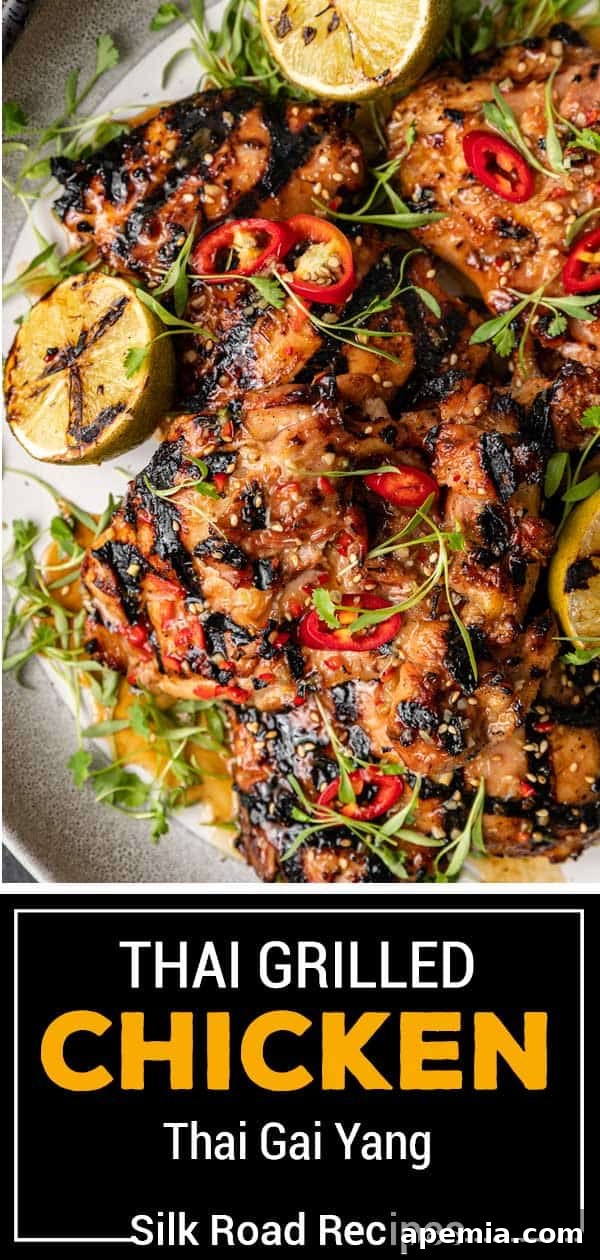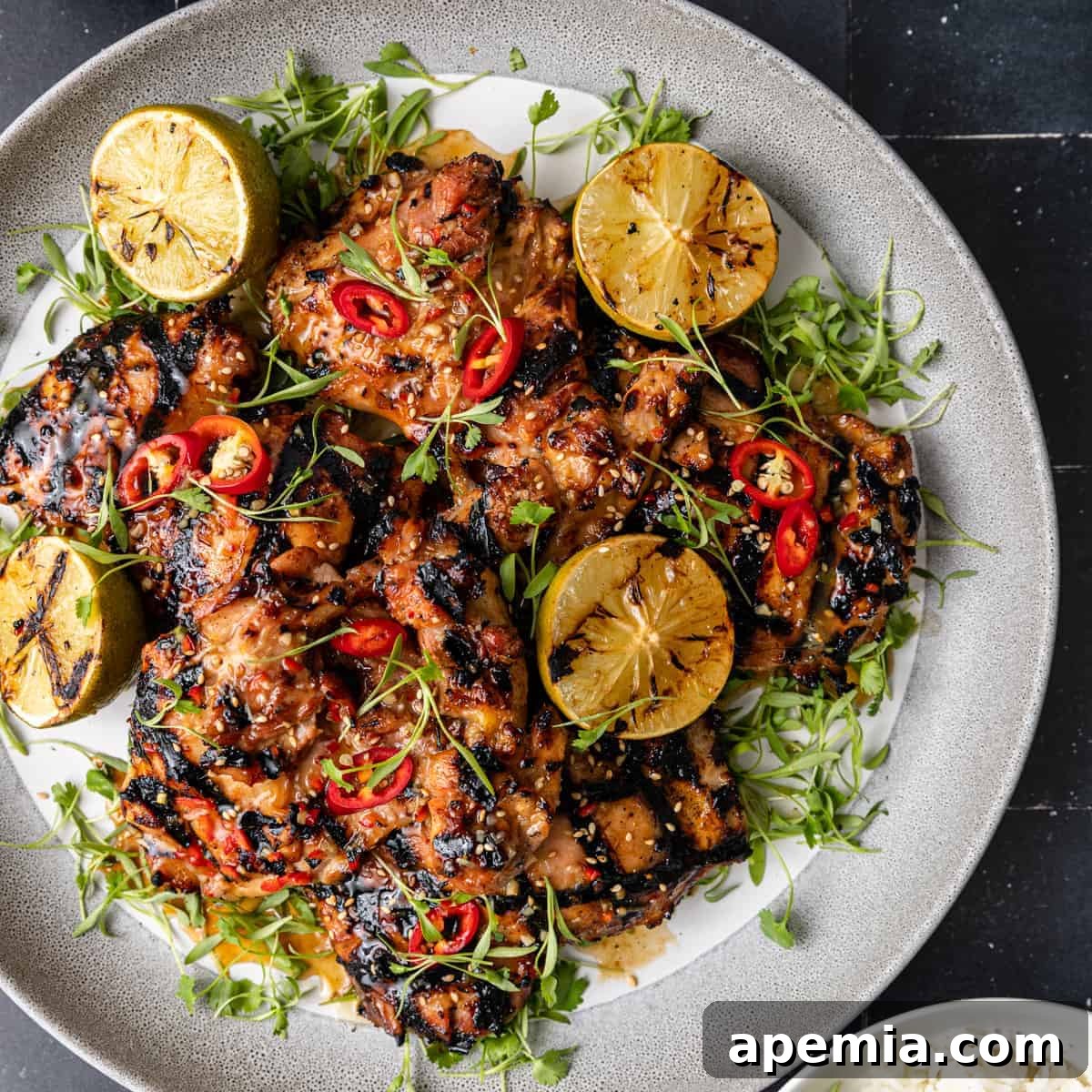
Grilled Thai Chicken (Gai Yang): A Flavorful Southeast Asian BBQ Delight
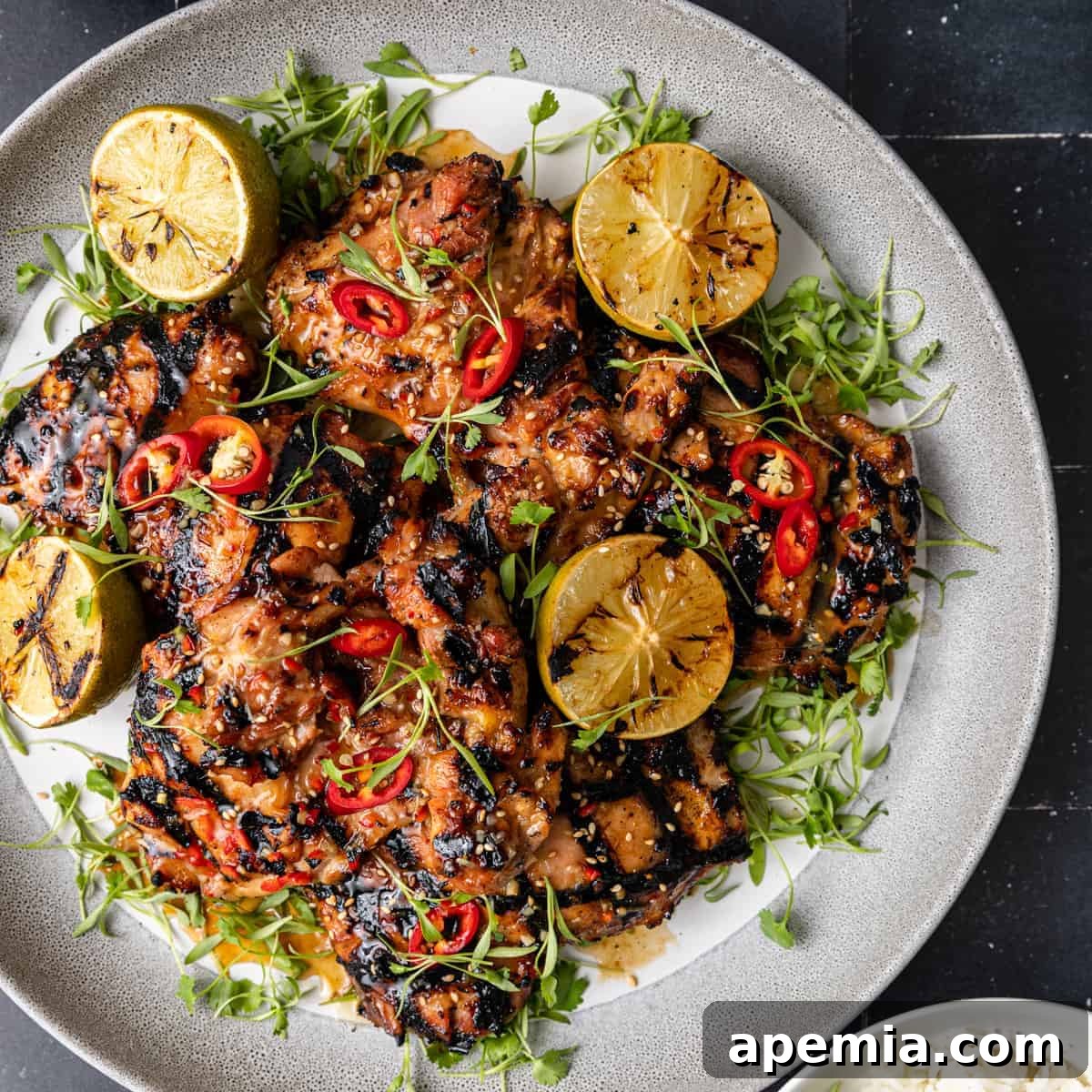
Prepare your taste buds for an extraordinary culinary journey with Grilled Thai Chicken, affectionately known as Gai Yang. This iconic Southeast Asian dish is a symphony of flavors – a harmonious blend of spicy, sweet, and savory notes that captivate from the first bite. Succulent chicken thighs are meticulously marinated in an aromatic concoction of fresh lemongrass, fiery chili, and golden honey, then grilled to achieve a perfectly juicy, tender, and irresistibly sticky finish. It’s more than just a meal; it’s an experience that brings the vibrant street food culture of Thailand right to your backyard or kitchen.
What is Gai Yang? The Essence of Thai Grilled Chicken
“Gai” translates to chicken, and “Yang” means grilled in Thai. So, Gai Yang literally means grilled chicken. However, this simple name barely scratches the surface of the profound depth and complexity of flavors packed into this beloved Thai chicken recipe. Gai Yang is a staple in Thai cuisine, particularly popular as a street food dish, often served with sticky rice and a spicy dipping sauce. Its widespread appeal comes from its ability to perfectly balance robust flavors and tender texture.
The magic truly lies within its marinade. A carefully crafted blend of ingredients transforms ordinary chicken into something spectacular. Imagine the bright, citrusy notes of floral lemongrass, the fiery kick of fresh chilis, the savory depth of fish sauce, and the rich sweetness of honey and brown sugar, all brought together with a hint of earthy sesame oil. Each component plays a crucial role, creating an aromatic, sticky glaze that not only flavors the chicken but also contributes to its beautiful caramelized exterior and moist interior during grilling.
This Asian BBQ masterpiece is incredibly versatile. While it shines as a standalone dish, it pairs wonderfully with a variety of sides. Serve your sweet and spicy Gai Yang with fluffy steamed white rice, a generous sprinkle of fresh cilantro, and vibrant lime wedges for a burst of freshness. For an even more authentic and refreshing accompaniment, consider adding a vibrant side like my delicious Thai Mango Salad.
Table of Contents
- The Art of Marinating Chicken
- Ingredient Notes and Substitutions for Authentic Gai Yang
- How to Make Perfect Grilled Thai Chicken
- Recommended Tools for Grilling
- Storing and Reheating Leftovers
- Frequently Asked Questions About Gai Yang
- Thai Gai Yang Chicken Recipe
If the tantalizing flavors of this grilled Thai chicken resonate with your palate, you’ll undoubtedly enjoy exploring other Thai-inspired dishes. For another flavorful chicken option, you might want to try my Thai grilled curry chicken. Or, if you’re seeking a more indulgent and robust recipe with a longer preparation time, my roasted coconut milk chicken offers a moist, succulent, and simply amazing experience.
Tip From Kevin
The Art of Marinating Chicken
For optimal flavor absorption and tenderness, marinate your chicken for at least 45 minutes. However, I strongly recommend not exceeding 8 hours, with 24 hours being the absolute maximum. Unlike tougher cuts of beef, poultry does not possess significant connective tissue that requires extensive tenderization. Over-marinating, especially with high-acid ingredients like vinegar, wine, citrus juice, or tomatoes, can start to break down the chicken’s muscle fibers too much, leading to an undesirably mushy or stringy texture. While an overnight marinade (typically 8 hours) is generally safe and beneficial for infusing deeper flavors, extending it beyond 24 hours risks compromising the texture and integrity of the chicken. Always be mindful of the marinade’s acidity and adjust your marinating time accordingly to ensure your Gai Yang remains perfectly tender and juicy.
The purpose of the marinade is twofold: to impart flavor and to tenderize the meat. For Gai Yang, the blend of sweet, savory, and spicy ingredients penetrates the chicken, creating a rich internal flavor profile. Furthermore, the sticky nature of the honey and brown sugar in the marinade creates an incredible glaze during grilling, leading to that signature caramelized finish that makes this dish so appealing. Don’t discard the leftover marinade once the chicken is removed; it’s a valuable tool for basting, adding layers of flavor and moisture as the chicken cooks.
Ingredient Notes and Substitutions for Authentic Gai Yang
(For a complete list of precise ingredients and quantities, please refer to the recipe card below)
- Chicken: For the most succulent and flavorful Grilled Thai Chicken, I highly recommend using boneless, skinless chicken thighs. Their higher fat content ensures they remain moist and juicy, even when grilled at high temperatures. Furthermore, being boneless allows for quick and even cooking, making them ideal for the grill. While boneless, skinless chicken breasts can be used, be mindful that they are leaner and may dry out more easily; adjust cooking times accordingly.
- Lemongrass Paste: This aromatic ingredient is central to the authentic Thai flavor profile of Gai Yang. You’ll typically find lemongrass paste in the produce section of well-stocked grocery stores or Asian markets. While fresh lemongrass stalks can be used, they require more preparation (finely mincing the tender inner part) and might not impart as concentrated a flavor as a good quality paste. If using stalks, aim for about 2-3 stalks, finely minced.
- Red Chili Flakes & Fresh Chilis: To achieve that perfect balance of heat, this recipe calls for a combination of both dried red chili flakes and fresh peppers. The chili flakes provide a consistent, background warmth, while fresh chilis offer a brighter, more immediate spicy kick. For fresh chilis, I suggest Fresno chilis or red jalapeños for a medium heat level. If you prefer more spice, bird’s eye chilis are an excellent choice. For a milder version, omit the fresh chilis and reduce the chili flakes.
- Lime Juice: Freshly squeezed lime juice is indispensable for adding a vibrant, dynamic acidity that cuts through the richness of the marinade and brightens all the other flavors. While lime is traditional for Thai cuisine, fresh lemon juice can serve as an adequate substitute in a pinch, though it will slightly alter the flavor profile.
- Garlic: Always opt for fresh garlic cloves, smashed and minced. Powdered garlic will simply not deliver the potent, pungent, and fresh flavor required for an impactful marinade.
- Brown Sugar & Honey: These two sweeteners are crucial for both flavor and texture. Brown sugar provides a molasses-rich sweetness, while honey contributes a deeper, floral sweetness and a sticky viscosity that is key to creating that wonderful caramelized coating on the grilled chicken. Do not skip or drastically reduce these, as they are fundamental to the dish’s signature sticky perfection.
- White Pepper: In many Asian cuisines, white pepper is preferred for its distinct earthy heat and ability to blend seamlessly without leaving visible black flecks. However, if unavailable, black pepper can be used as a substitute, though the flavor will be slightly different.
- Chinese Cooking Wine: This ingredient, often a Shaoxing wine, adds a complex depth and subtle sweetness to the marinade. If you don’t have Chinese cooking wine, dry sherry or sake are excellent substitutes. A dry white wine can also work in a pinch.
- Fish Sauce: A cornerstone of Thai cooking, fish sauce provides an essential salty, earthy, and profound umami flavor that cannot be truly replicated. While soy sauce or tamari can be used as alternatives, be aware that they will significantly alter the final taste profile. If substituting, you might need to adjust other seasonings to balance the flavors.
- Sesame Oil: Toasted sesame oil adds a rich, nutty aroma and flavor that is unique and hard to substitute without losing a key characteristic of the dish. I strongly recommend trying to source it. If you absolutely must replace it, use a neutral-flavored oil like canola or vegetable oil to avoid introducing conflicting flavors.
How to Make Perfect Grilled Thai Chicken
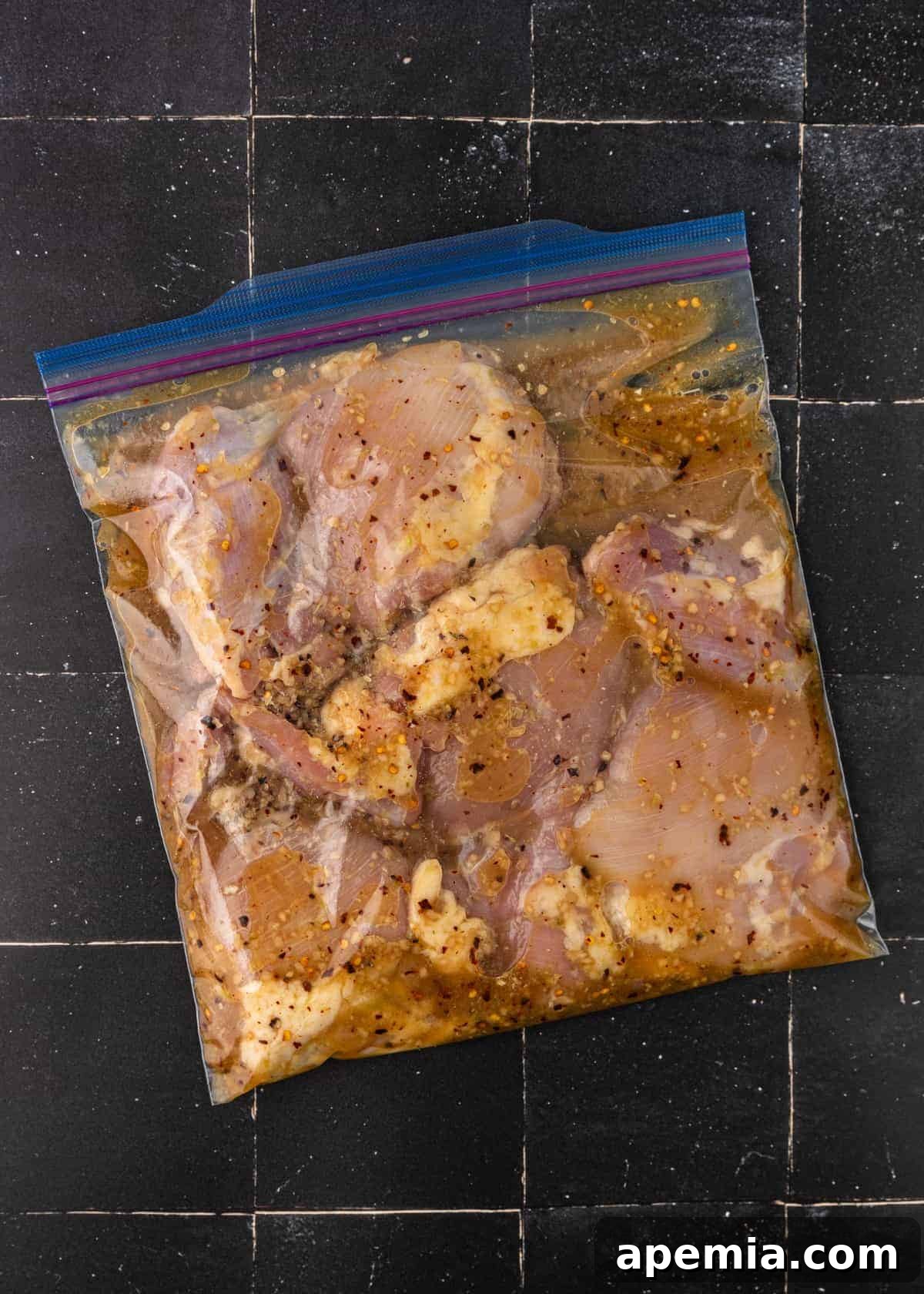
- Prepare and Marinate the Meat: In a medium-sized bowl, combine all the marinade ingredients and whisk them thoroughly until well mixed. Place your boneless chicken thighs into a large, sturdy Ziploc bag or a non-reactive container. Pour the prepared marinade over the chicken, ensuring each piece is fully coated. Seal the bag or cover the container, then gently massage the liquid into the chicken to ensure maximum flavor penetration. Refrigerate for a minimum of 45 minutes to allow the flavors to meld, but ideally no longer than 8 hours for best texture.
- Preheat Your Grill: About 15-20 minutes before you plan to cook, preheat your grill to a medium-high temperature, aiming for approximately 350°F (175°C). As the grill comes up to temperature, remove the marinated chicken from the refrigerator and take it out of the marinade. Set the chicken aside on a plate. Crucially, *retain* the leftover marinade; this will be used for basting the juicy thighs as they cook, adding layers of flavor and moisture.
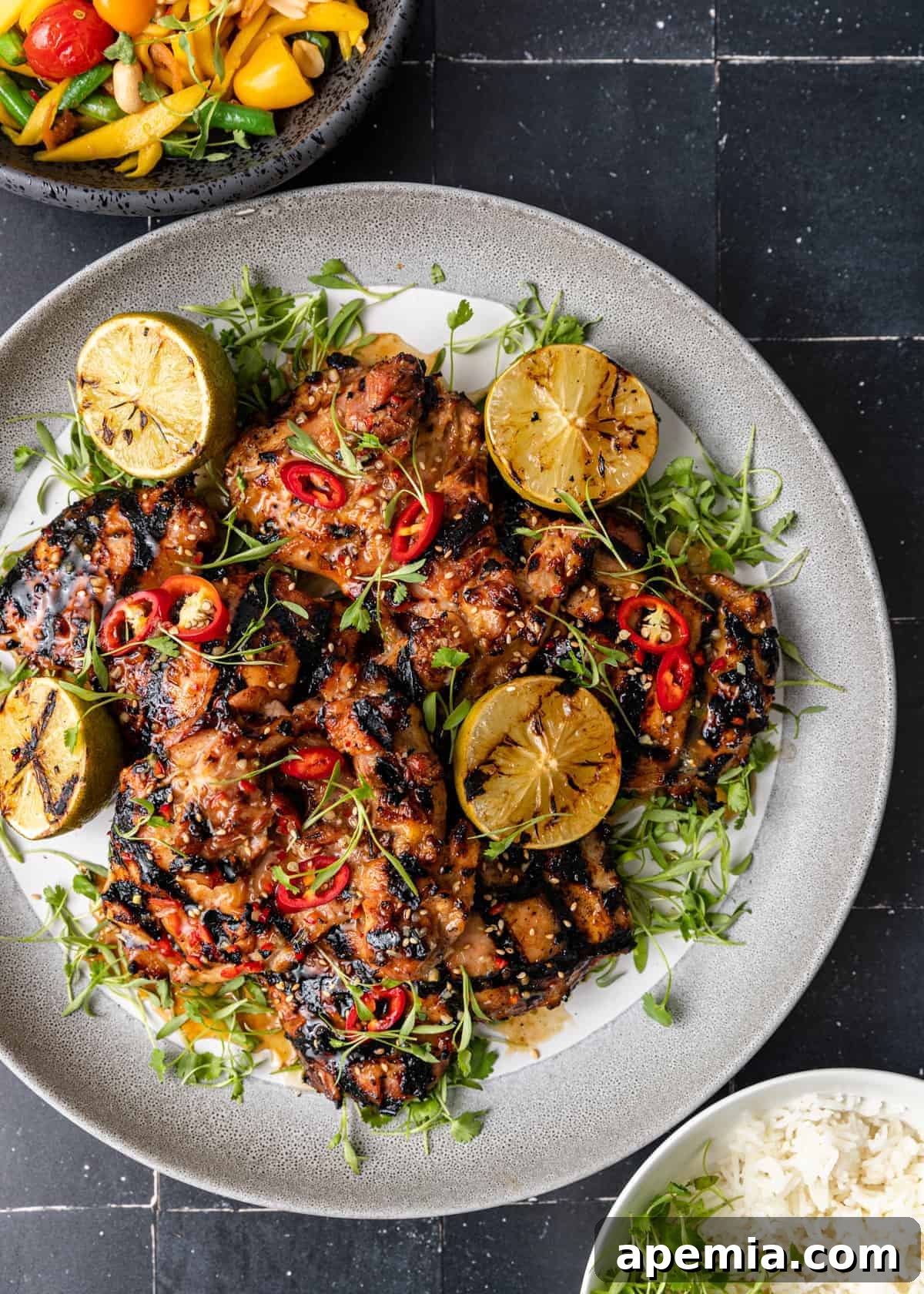
- Grill to Perfection: Once your grill is hot and ready, carefully place the marinated chicken thighs directly on the grates. Cook for 3 to 4 minutes per side. As you turn the chicken, generously baste each side with the reserved marinade. Continue this process, cooking for another 3 to 4 minutes per side, or until both sides are beautifully browned and caramelized, and the internal temperature of the thickest part of the chicken reaches a safe 165°F (74°C). Always discard any marinade that was not used for basting; it’s unsafe to consume raw.
- Allow the Chicken to Rest: Once cooked, transfer the grilled Thai chicken to a clean plate or cutting board. Cover it loosely with foil and let it rest for 5 to 10 minutes. This crucial step allows the juices to redistribute throughout the meat, ensuring that every bite is incredibly tender and moist. Skipping this step can result in dry chicken.
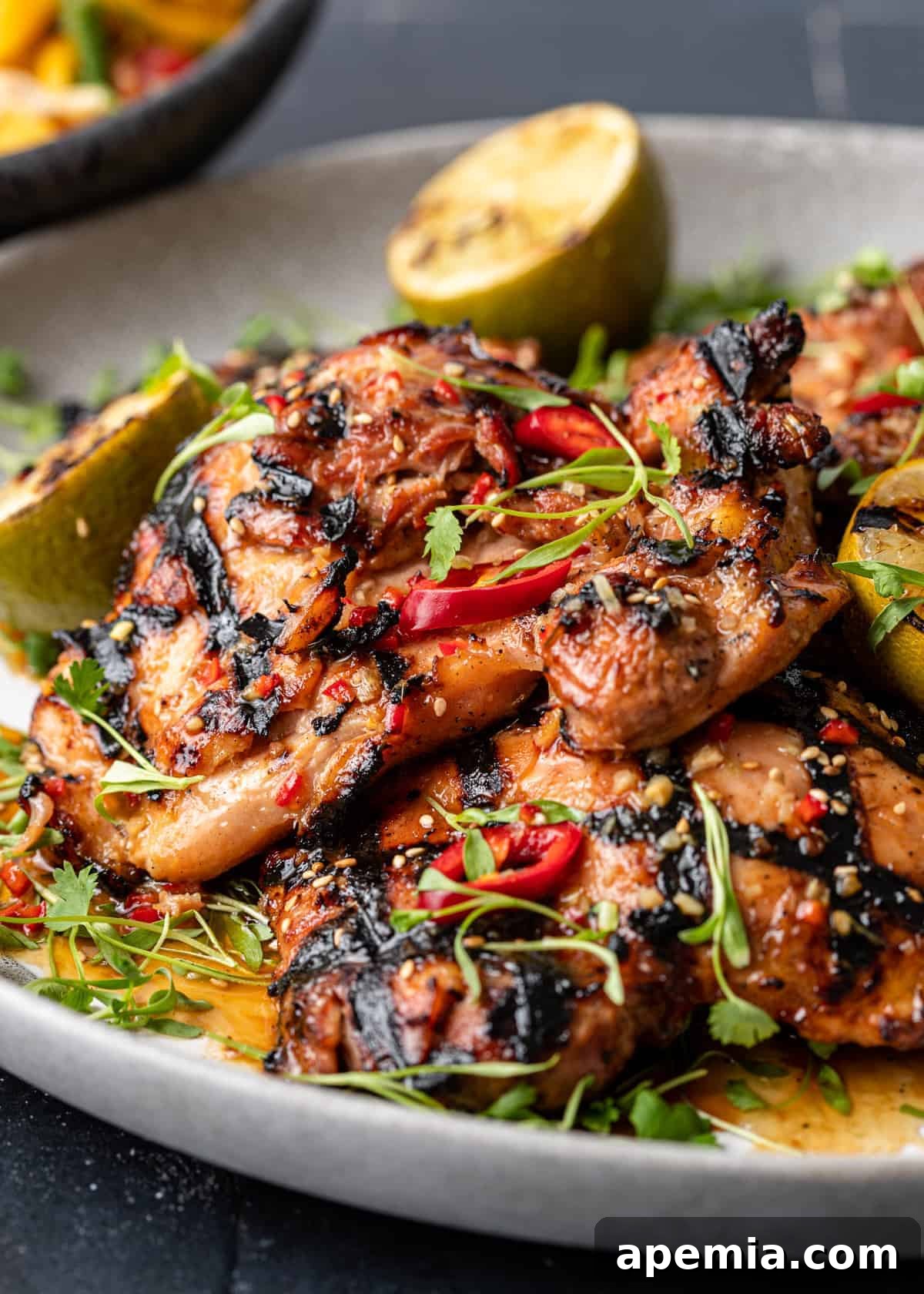
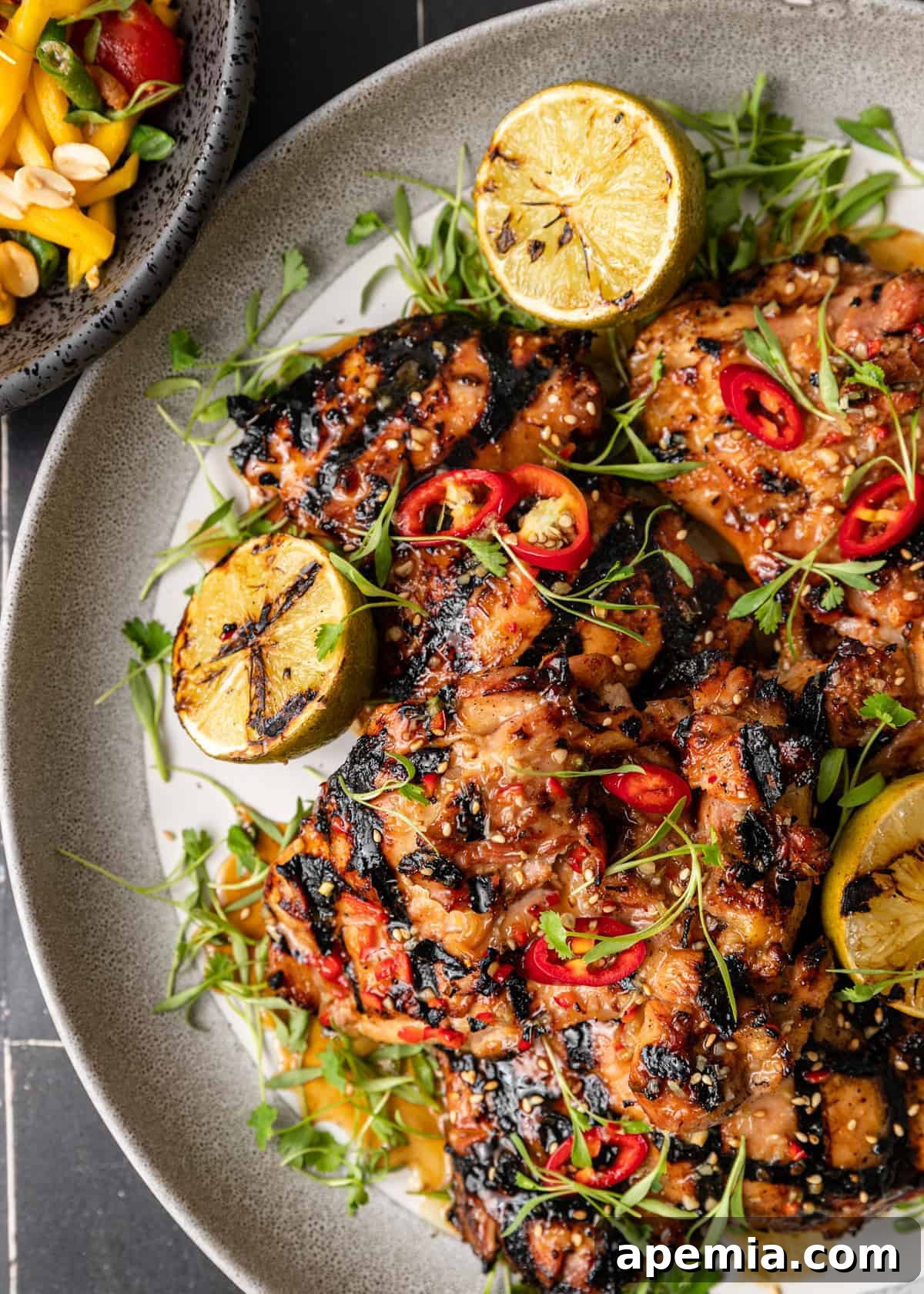
- Garnish and Serve: After resting, slice the chicken into serving portions if desired, or serve whole. Garnish generously with a sprinkle of toasted sesame seeds, vibrant fresh chiles (such as finely sliced red Fresno or jalapeño for color and extra kick), and a scattering of fresh cilantro leaves. Serve immediately with steamed rice and fresh lime wedges for squeezing.
Recommended Tools for Grilling
- Ziploc Bag or Airtight Container: Essential for efficiently marinating the chicken, ensuring all pieces are evenly coated while keeping cleanup to a minimum. Any durable, airtight container will work, but a large Ziploc bag often offers the easiest method for massaging the marinade into the meat.
- Grill: A charcoal or gas grill is perfect for achieving that authentic smoky flavor and beautiful grill marks. If outdoor grilling isn’t an option due to weather or space constraints, you can still enjoy this incredible Thai chicken recipe by using a grill pan on your stovetop. While it might lack the smoky char of an outdoor grill, it will still deliver fantastic flavor and texture. Alternatively, baking in the oven and finishing under the broiler can also yield great results.
- Instant-Read Meat Thermometer: The most reliable tool for ensuring your chicken is cooked through safely without overcooking. Aim for 163-165°F (73-74°C) internal temperature.
Storing and Reheating Leftovers
Should you be fortunate enough to have any leftover Gai Yang chicken, transfer it to an airtight container and refrigerate promptly. It will remain fresh and delicious for up to 4 days. A critical safety reminder: always discard any unused marinade that has come into contact with raw chicken. It is unsafe to save or reuse this marinade with your leftovers.
To reheat, you can gently warm the chicken on the stovetop over medium heat with a splash of water or broth to prevent drying. Alternatively, place it in a preheated oven at around 350°F (175°C) until it is thoroughly warmed through. Be careful not to overcook when reheating, as this can dry out the chicken.
Share this recipe on Pinterest!
Love this recipe? Share it with the world on Pinterest.
Frequently Asked Questions About Gai Yang
It can be challenging to determine if chicken is done simply by looking at it. The most accurate way to ensure your grilled chicken is safely cooked and perfectly juicy is by using an instant-read meat thermometer. Poultry is considered safe to eat when its internal temperature reaches 165°F (74°C) in the thickest part of the meat, avoiding the bone. For optimal juiciness, I recommend removing the chicken from the heat when it hits 163°F (73°C), as the temperature will continue to rise a couple of degrees while the meat rests.
Absolutely! One of the great advantages of this Thai chicken recipe is its adaptability. While grilling imparts a wonderful smoky flavor and char, you can easily prepare this dish on the stovetop using a grill pan. This will still give you those attractive grill marks and a delicious caramelized crust. Alternatively, you can bake the chicken in the oven at 375°F (190°C) for about 20-25 minutes (for thighs), then finish it under the broiler for a few minutes to caramelize the sauce and achieve a similar sticky perfection. Always monitor closely to prevent burning.
I consistently prefer using boneless chicken thighs for Gai Yang. The dark meat of the thigh is naturally richer and juicier than white meat, making it more forgiving on the grill and less prone to drying out. Boneless cuts also cook significantly faster and more evenly, which is incredibly convenient for a quick weeknight meal. However, boneless chicken breasts are perfectly suitable if you prefer white meat; just be sure to adjust cooking times and watch them closely to avoid overcooking. Regardless of the cut, ensure it is skinless so that the flavorful marinade can directly penetrate the meat, tenderizing and infusing it with flavor from its very core. You’ll find more detailed cooking times for various chicken cuts in the recipe notes below.
In Thailand, Gai Yang is almost always served with sticky rice (khao niao) and a variety of dipping sauces, most famously “Nam Jim Jaew,” a spicy, sour, and savory sauce. Other popular accompaniments include som tum (green papaya salad), fresh cucumber slices, and various steamed or stir-fried vegetables. The key is to have contrasting textures and flavors that complement the rich, spicy chicken.
Absolutely! The spice level is entirely customizable to your preference. To make it spicier, you can increase the amount of red chili flakes or add more fresh, finely chopped bird’s eye chilis to the marinade. For a milder version, simply reduce the amount of chili flakes or omit the fresh chilis entirely. You can also deseed fresh chilis to lessen their heat while retaining their flavor.
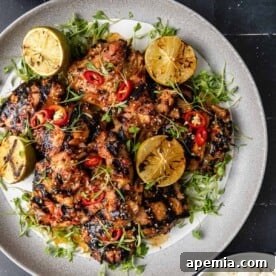
Thai Gai Yang Chicken
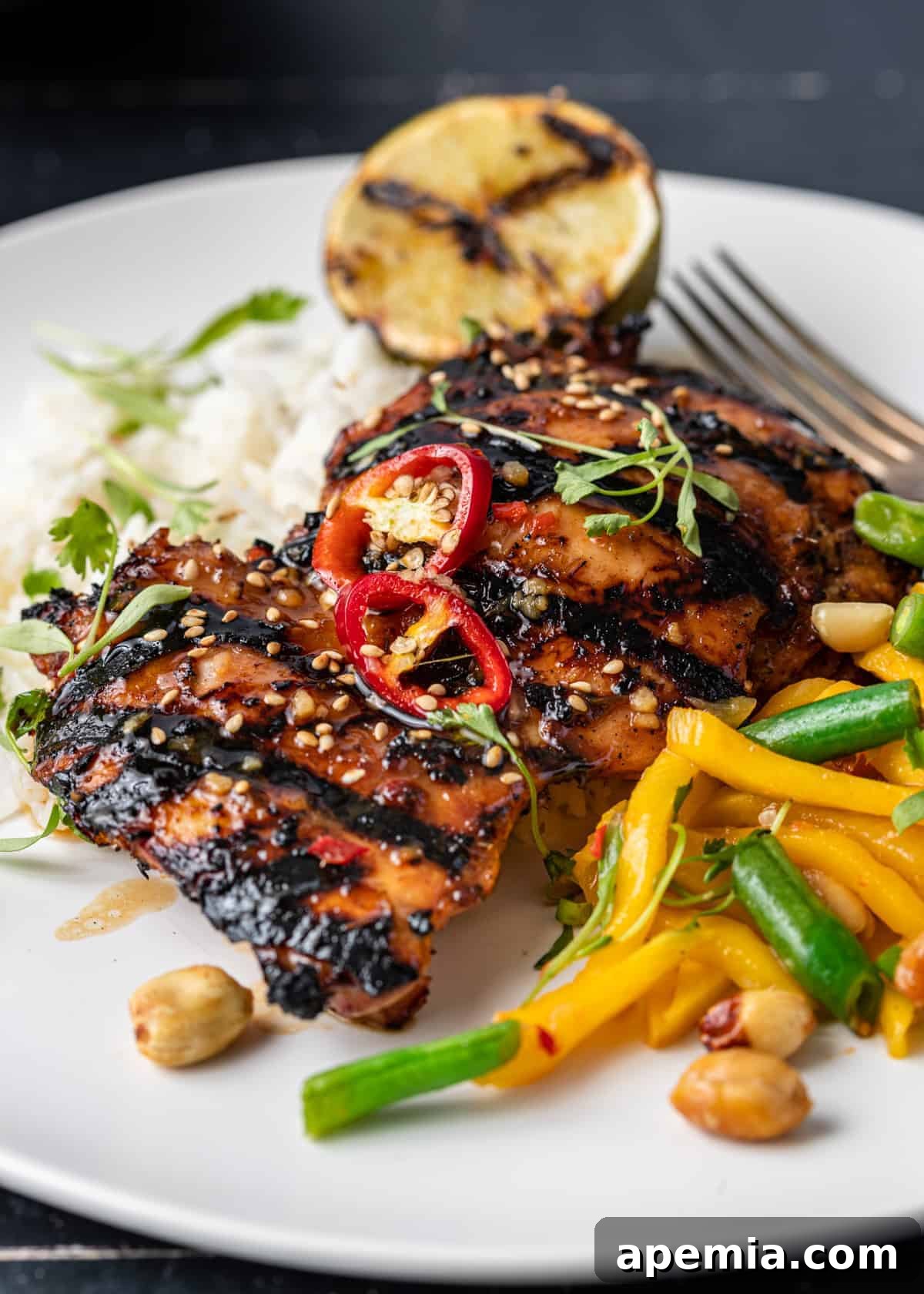
Grilled Thai chicken is tender, spicy, savory, and has an enticing aroma from the fresh lemongrass, red chili, and lime juice marinade.
4
12 mins
8 mins
45 mins
1 hr 5 mins
Print Recipe
Video
Watch a video demonstration of how to make this delicious Thai Gai Yang Chicken!
Ingredients
- 2 lbs boneless skinless chicken thighs
Marinade
- 2 tbsp lemongrass paste
- 6 cloves garlic, smashed and minced
- 2 tbsp fresh lime juice
- 2 tsp red chili flakes
- 3 tbsp fish sauce
- 2 tbsp Chinese cooking wine (sherry or sake can substitute)
- 1 tsp sesame oil
- 2 tbsp brown sugar
- 2 tbsp honey
- 1/2 tsp white pepper
Garnish
- Lime wedges
- 1 tsp sesame seeds
- Red Fresno or Jalapeño chile, finely sliced
- Cilantro leaves
Instructions
- Whisk together all the marinade ingredients in a bowl. Place the chicken thighs in a Ziploc bag or a non-reactive container and pour the marinade over them. Massage the bag to ensure the marinade coats all the chicken pieces evenly. Refrigerate for at least 45 minutes, or up to 24 hours, to allow flavors to infuse and the meat to tenderize.
- Preheat your grill to medium-high heat, aiming for 350°F (175°C). Remove the chicken from the marinade and set it aside on a plate, reserving the leftover marinade for basting.
- Place the marinated chicken on the hot grill. Cook for 3-4 minutes per side. Before turning, baste the chicken generously with the reserved marinade. Continue cooking, basting and turning, until both sides are well-browned and the internal temperature reaches 163-165°F (73-74°C). Discard any remaining unused marinade.
- Transfer the grilled chicken from the grill to a clean plate and let it rest for 5 to 10 minutes before serving. This allows the juices to redistribute, ensuring maximum tenderness and moisture.
- Garnish the rested chicken with toasted sesame seeds, fresh chiles, and cilantro leaves. Serve immediately with fresh lime wedges and a side of steamed white rice for a complete and delicious meal.
Notes
Cooking Times for Grilled Chicken
Chicken is considered safe to eat when the internal temperature at its thickest portion reaches 165°F (74°C). To prevent overcooking and ensure juicy results, it’s best to remove the chicken from the heat when it reaches 163°F (73°C), as it will continue to cook slightly while resting.
Here are approximate grilling times for chicken at 350°F (175°C):
- Boneless thighs: Grill for 4 minutes per side, then check internal temperature.
- Bone-in thighs: Grill for 6 minutes per side, then check internal temperature.
- Boneless breasts: Grill for 5 minutes per side, then check internal temperature.
- Bone-in breasts: Grill for 7 minutes per side, then check internal temperature.
These times are estimates; always rely on an instant-read thermometer for accuracy.
Nutrition
Carbohydrates: 19g |
Protein: 38g |
Fat: 39g |
Saturated Fat: 10g |
Trans Fat: 1g |
Cholesterol: 222mg |
Sodium: 1154mg |
Potassium: 584mg |
Fiber: 1g |
Sugar: 15g |
Vitamin A: 479IU |
Vitamin C: 4mg |
Calcium: 50mg |
Iron: 2mg
The information shown is an estimate provided by an online nutrition calculator. It should not be considered a substitute for a professional nutritionist’s advice.
Have You Made This Recipe? Let Me Know on Instagram!
Tag @keviniscooking or use the hashtag #keviniscooking!