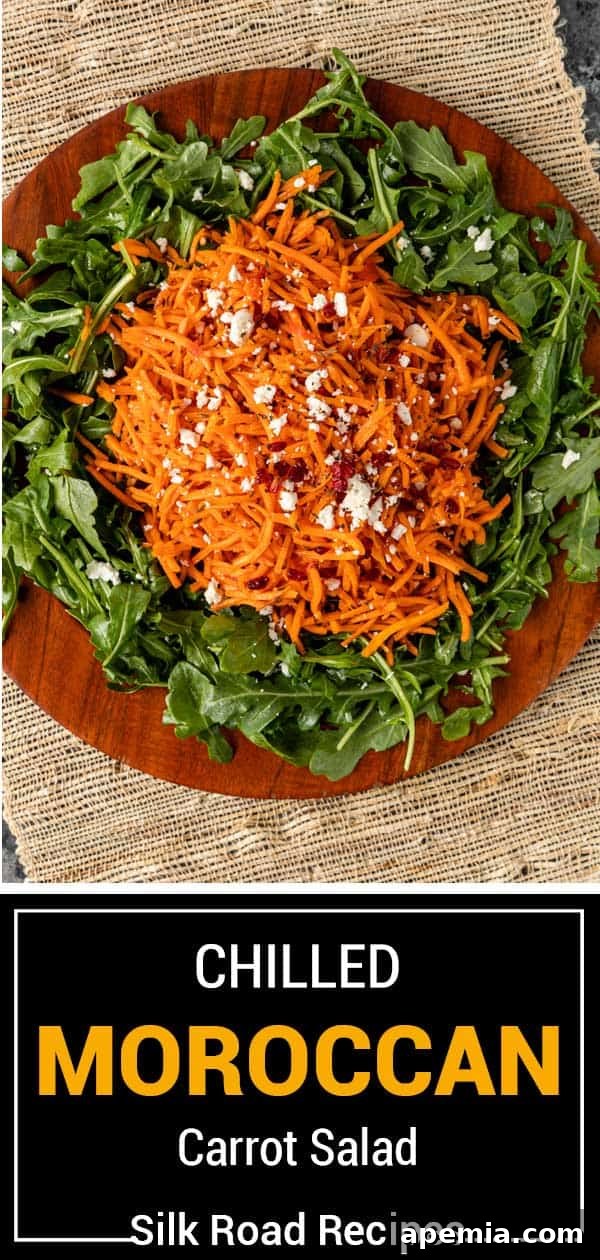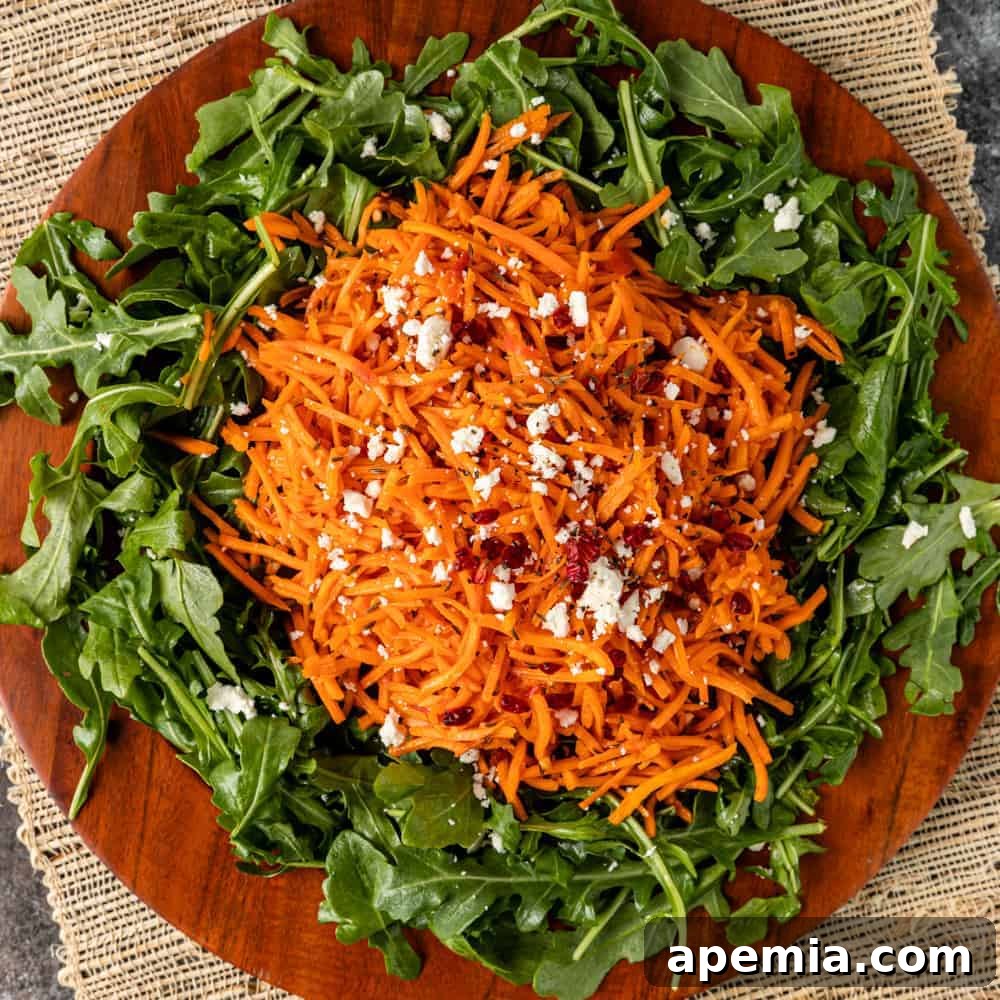
Refreshing Moroccan Carrot Salad: A Zesty & Healthy Side Dish
Experience the vibrant flavors of North Africa with this incredibly fresh and zesty Moroccan carrot salad. Doused in an irresistible chili and lemon dressing and often served on a bed of tender arugula, this sweet and savory raw carrot salad is a breeze to prepare, ready to delight your palate in just about 10 minutes (plus chill time!). It’s not just a dish; it’s a burst of sunshine for your taste buds, perfect as a starter, a light lunch, or a bright accompaniment to heavier main courses.
Moroccan cuisine is celebrated globally for its rich tapestry of flavors, aromatic spices, and diverse dishes. While many are familiar with the warm, hearty salads often laden with couscous, rice, or lentils – sometimes featuring rich, yogurt-based dressings like in this Moroccan steamed carrot salad – there’s an equally enchanting world of fresh, uncooked preparations that truly shine, especially in warmer climates or as a refreshing counterpoint to robust stews.
The Moroccan carrot salad we’re exploring today defies the heavier expectations of some traditional North African dishes. It’s a cool, crisp, and remarkably refreshing creation, designed to awaken the palate. Its bright flavors make it an ideal starter or appetizer, preparing the senses for the meal ahead. Alternatively, it serves as a fantastic, light side dish alongside more substantial, protein-focused main courses. Imagine it paired with savory chicken and lentils, a slow-cooked beef tagine, or even harissa chicken for an exciting double dose of heat!

Table of Contents
- The Art of Carrot Preparation: Julienne, Mandoline, or Shred?
- Essential Ingredients & Clever Substitutions
- How to Make the Perfect Moroccan Carrot Salad
- Recommended Kitchen Tools
- Storing & Serving Your Salad
- Frequently Asked Questions About Moroccan Carrot Salad
- Moroccan Carrot Salad Recipe
This chilled Moroccan carrot salad is an exceptionally simple, low-effort dish that requires minimal active preparation time – literally minutes once your carrots are ready (excluding the crucial chilling period). For the most profound and delicious flavor, I highly recommend preparing it either the night before or at least a few hours prior to serving. This extended marination time allows the carrots to truly absorb all the aromatic notes of the dressing, transforming the individual ingredients into a harmonious and incredibly flavorful salad. The longer it sits, the deeper the flavors become!
If you’re fond of refreshing, vibrant salads with a North African flair, you might also enjoy this chilled African salad with chickpeas and carrots, which shares a similar philosophy of fresh ingredients and bold dressings.
Expert Tip
The Art of Carrot Preparation: Julienne, Mandoline, or Shred?
The texture of the carrots is paramount to this salad’s success. I personally prefer distinct, slender carrot strips, often referred to as a julienne cut, or finely shredded carrots. These cuts not only look appealing but also allow the carrots to better absorb the vibrant dressing, creating a more integrated flavor profile.
- Store-bought convenience: In many markets today, you can find pre-cut and shredded carrots in the produce section, saving you valuable prep time. Just ensure they are fresh and crisp.
- Mandoline magic: For those who enjoy kitchen gadgets, a mandoline slicer is an excellent tool for achieving uniform, thin matchstick shreds. It’s incredibly efficient but requires caution. Always use the food guard to protect your fingers! Run the peeled carrot lengthwise against the julienne blade for perfect strips.
- Knife skills: If you prefer to rely on your culinary skills, julienning carrots by hand is a classic method. Start by trimming the ends and peeling the carrots. Then, cut them into thin, even planks (about 2 inches long). Stack a few planks and slice them lengthwise into fine matchsticks. This method offers great control and a satisfying sense of accomplishment.
- Box grater simplicity: A standard box grater is another versatile tool that can produce wonderful shredded carrots. Use the larger holes for thicker shreds or the finer ones for a more delicate texture. This is often the quickest and most accessible method for home cooks.
Whichever method you choose, consistency in size is key to ensuring even marination and a pleasant mouthfeel throughout the salad.
Essential Ingredients & Clever Substitutions
Crafting this flavorful Moroccan carrot salad relies on a few key ingredients, each playing a vital role in creating its distinctive taste. Here’s a closer look at what you’ll need and some excellent substitution options:
- Carrots: The star of the show! You’ll need approximately 5-6 medium-sized or 4 larger carrots to yield about 1 pound of julienned or shredded carrots. Opt for fresh, firm carrots with vibrant color for the best texture and flavor. Smaller “baby” carrots are often too difficult to shred effectively, so stick to their larger counterparts.
- Fresh Lemon: This is non-negotiable for that bright, essential zesty flavor. Freshly squeezed lemon juice brings a lively acidity that perfectly balances the sweetness of the carrots and the heat of the harissa. Bottled lemon juice simply doesn’t capture the same vibrant, aromatic essence.
- Quality Olive Oil: As the foundation of your dressing, the quality of your olive oil is crucial. A good extra virgin olive oil will lend a fruity, slightly peppery note that enhances the overall flavor. If you need alternatives, grapeseed oil, avocado oil, or even a light canola oil can work, though they may alter the flavor profile slightly.
- Harissa Paste: This fiery Moroccan chili paste is what gives this raw carrot salad its exciting kick and depth of flavor. Harissa is a versatile condiment made from roasted red peppers, Baklouti peppers, olive oil, garlic, and spices like caraway, coriander, and mint. It’s the heart of the dressing! For those who prefer a milder spice level, start with ½ teaspoon, taste, and gradually add more until you reach your desired heat. Different brands of harissa can vary significantly in heat and flavor, so adjust accordingly.
- Ground Coriander: A sweet, earthy, and slightly citrusy spice, ground coriander is a fantastic partner to lemon juice and a staple in Moroccan cooking. It adds warmth without heat. If you don’t have coriander, a pinch of ground cumin or even fresh finely chopped parsley can offer a different but complementary aroma.
- Caraway Seeds: Often used whole in North African and Middle Eastern dishes, caraway seeds provide wonderful pops of warm, nutty, and slightly anise-like flavor throughout the dressing. Their distinct taste is a signature element of many Moroccan dishes. Toasting them lightly before adding to the dressing can enhance their aroma even further.
- Fresh Garlic: Minced garlic provides an aromatic pungency that elevates the dressing. Fresh is always best here.
- Salt: Essential for seasoning and bringing all the flavors together. Adjust to taste.
- Arugula: For serving, a bed of fresh arugula leaves adds a peppery, slightly bitter, and tangy contrast to the sweet and spicy carrots. Baby arugula offers a milder flavor, while regular spinach or even finely chopped romaine can be used for different textural and flavor experiences.
- Feta Cheese: Crumbled feta cheese is the perfect garnish, adding a creamy, salty, and tangy dimension that beautifully complements the salad’s flavors. Its crumbly texture and briny notes are a delightful counterpoint. Excellent substitutes include tangy goat cheese, salty halloumi (perhaps pan-fried for a warm element), or even a touch of creamy cottage cheese for a lighter option.
How to Make the Perfect Moroccan Carrot Salad
Creating this delicious and healthy Moroccan carrot salad is incredibly straightforward. Follow these simple steps for a perfect result:
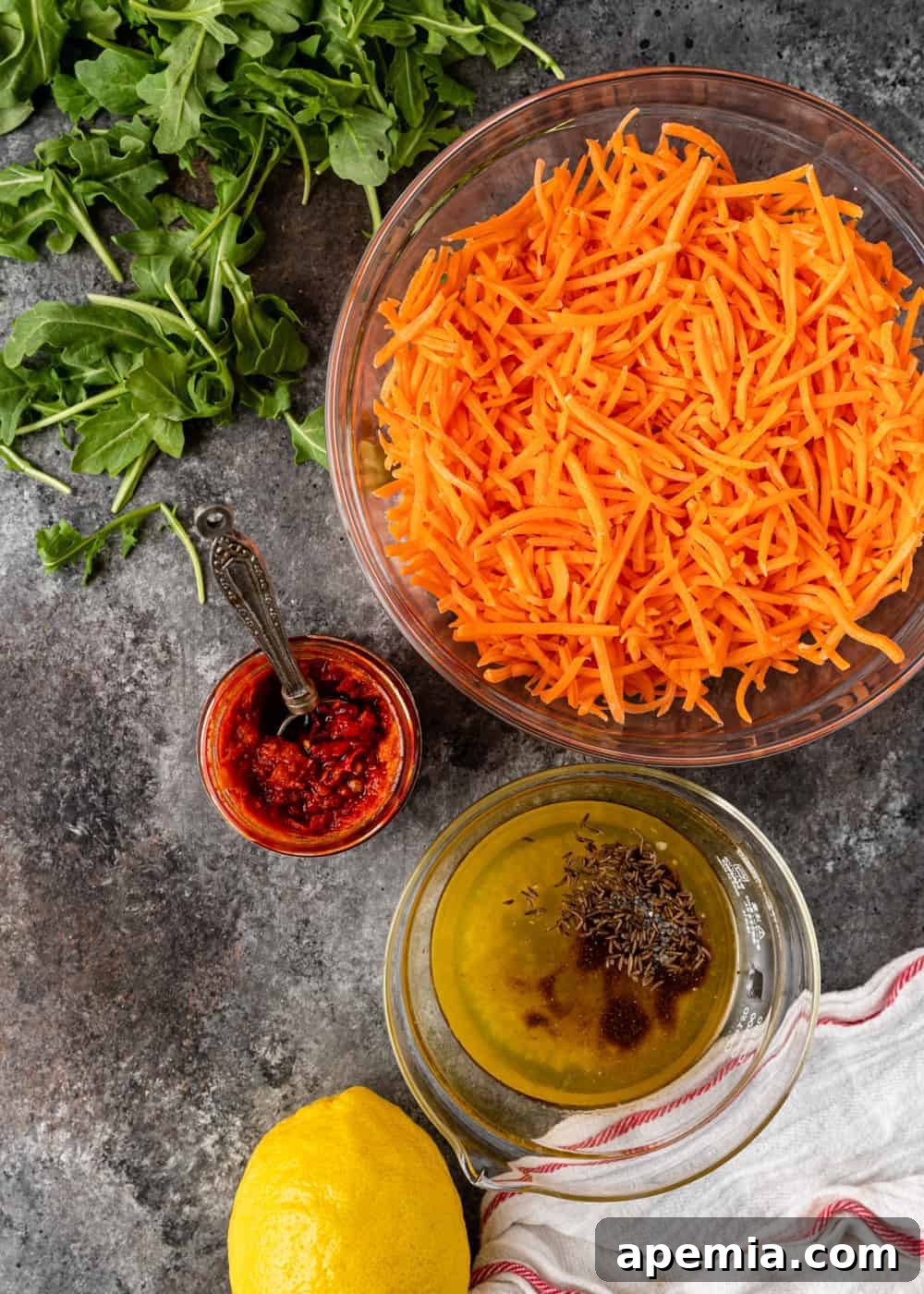
- Prepare the Carrots: Begin by thoroughly rinsing your carrots and patting them dry. Trim off both ends. Now, choose your preferred method to prepare them: use a box grater for finely shredded carrots, a mandoline slicer for uniform matchstick shreds (always using the safety guard!), or your knife skills to julienne them into thin, even strips. Transfer the prepared carrots to a medium-sized mixing bowl and set aside.
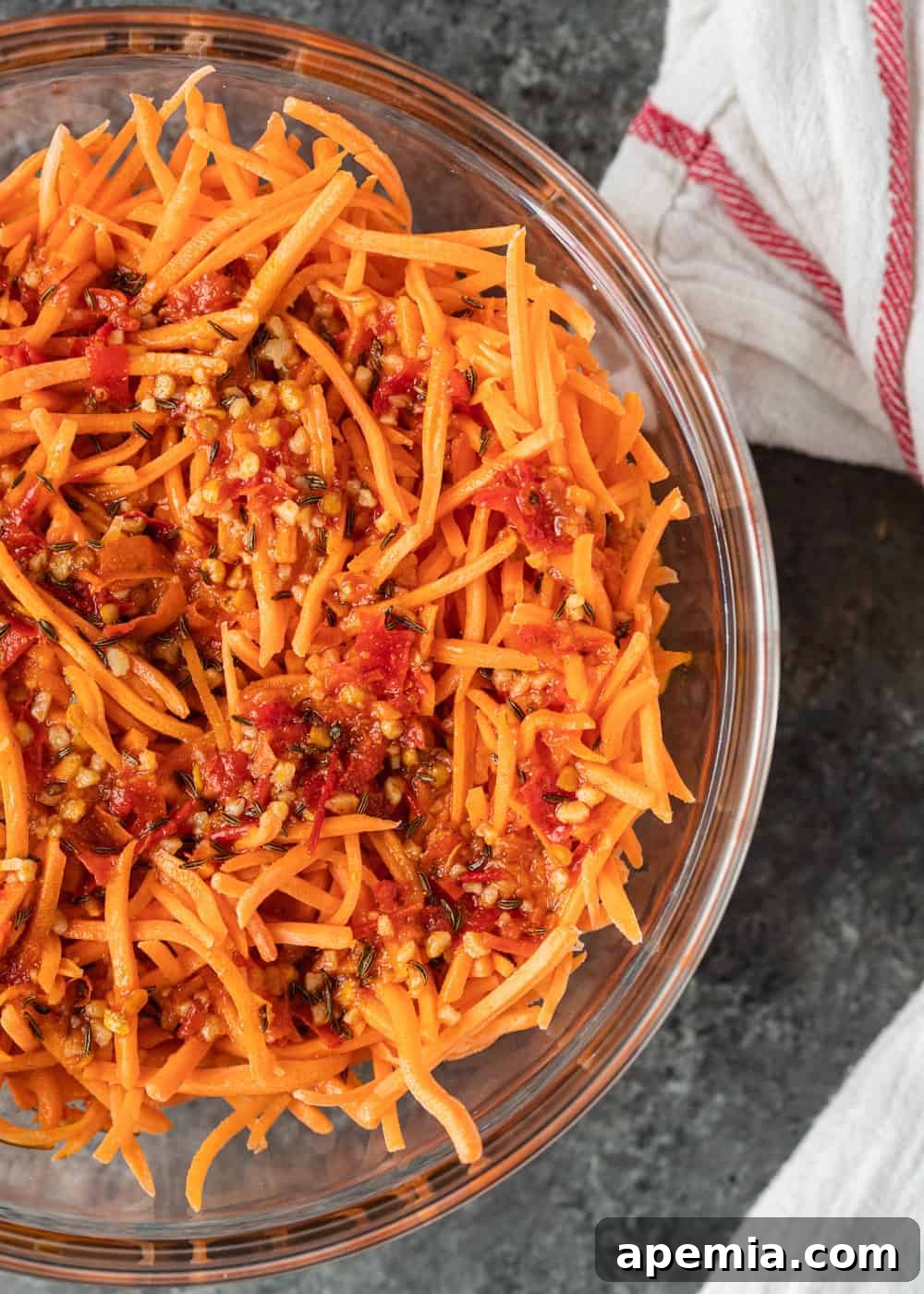
- Whisk the Zesty Dressing: In a separate small bowl, combine the fresh lemon juice, olive oil, minced garlic, harissa paste, ground coriander, caraway seeds, and salt. Whisk vigorously until all ingredients are well combined and the dressing is emulsified. Take a moment to taste the dressing and adjust seasonings as desired. You might want a little more harissa for extra heat, or a pinch more salt.
- Combine & Chill for Flavor Infusion: Pour the prepared dressing over the shredded carrots in the mixing bowl. Using your hands or a sturdy spatula, gently toss the carrots, ensuring every single piece is thoroughly coated with the flavorful dressing. The more evenly coated, the better the marination. Once mixed, cover the bowl and transfer it to the refrigerator. Allow the salad to chill for at least 30 minutes. This chilling period is crucial as it allows the carrots to soften slightly and absorb all the incredible flavors of the harissa-lemon dressing. For optimal flavor, an hour or even overnight chilling is highly recommended.
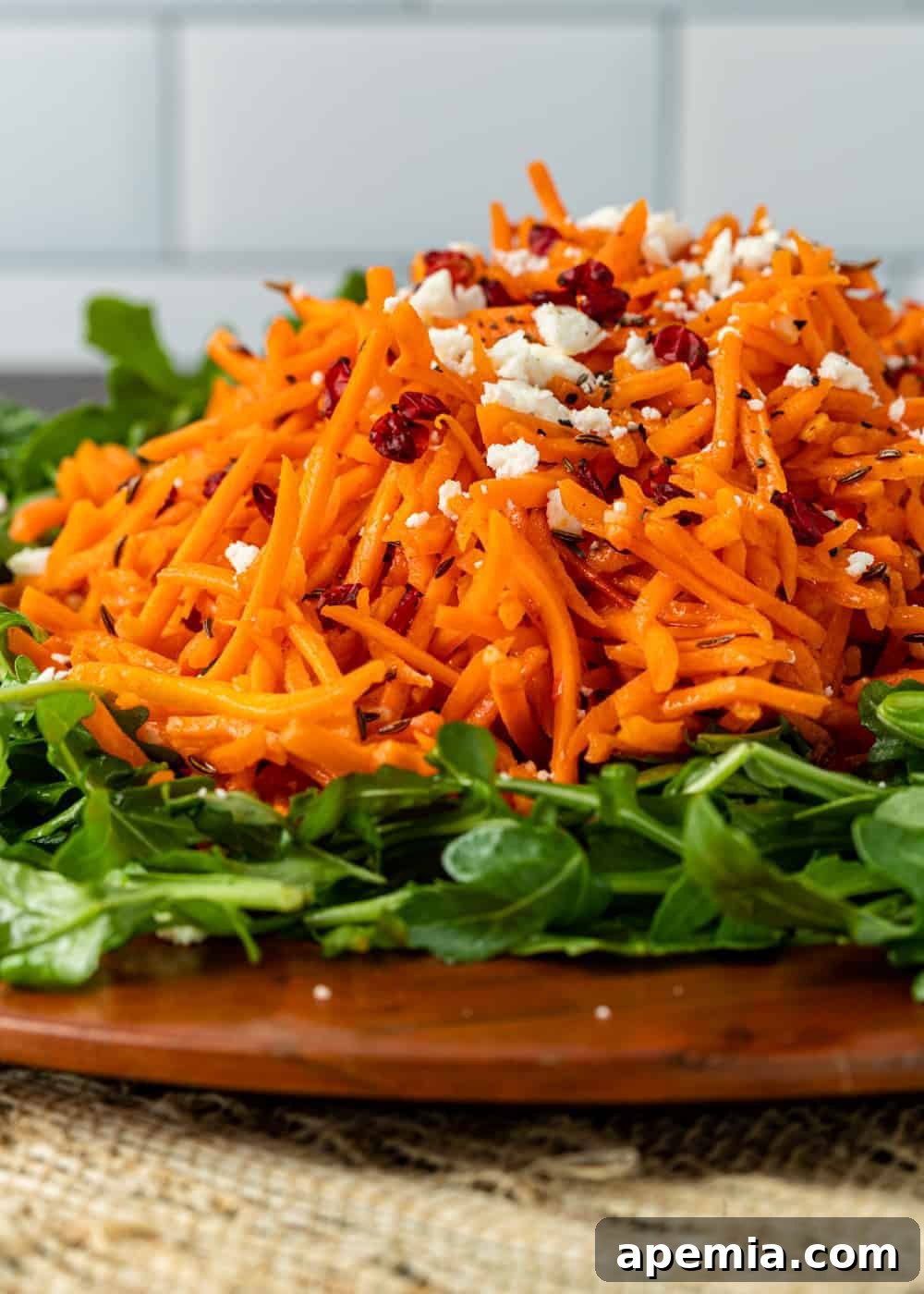
- Serve with Style: When ready to serve, arrange a handful of fresh arugula leaves on individual plates or a large serving platter, creating a vibrant green base. Spoon generous portions of the chilled Moroccan carrot salad on top of the arugula. Finally, sprinkle generously with crumbled feta cheese for that perfect creamy, salty finish. Serve immediately and enjoy the burst of North African flavors!
Recommended Kitchen Tools
Having the right tools can make preparing your Moroccan carrot salad even easier and more enjoyable. Here are a few recommendations:
- Box Grater: A kitchen classic, the trusty box grater consistently produces uniform vegetable shreds. It’s incredibly versatile, not just for carrots but also for cheese, zucchini, and more. Look for one with a comfortable handle and non-slip base.
- Food Processor with Grating Attachment: If you’re preparing a larger batch or want to save time, a food processor with a grating or slicing attachment is your best friend. It can shred a pound of carrots in mere seconds, making quick work of prep.
- Mandoline Slicer: For achieving perfectly uniform matchstick (julienne) cuts, a mandoline slicer is unmatched. It creates elegant, consistent strips that are ideal for this type of salad. However, extreme caution is advised. Always use the provided food guard to protect your fingers from the incredibly sharp blades.
- Sharp Chef’s Knife: For those who prefer traditional knife skills, a sharp chef’s knife is essential for precise julienning. A good quality knife not only makes the task easier but also safer.
- Large Mixing Bowl: A spacious mixing bowl is crucial for tossing the carrots with the dressing, ensuring everything is thoroughly combined without spills.
- Whisk: A small whisk is perfect for emulsifying the dressing ingredients, ensuring a smooth and consistent blend of flavors.
Storing & Serving Your Salad
This Moroccan carrot salad is truly at its best when served chilled. The cold temperature enhances the crispness of the carrots and sharpens the flavors of the zesty dressing. If you’re not planning to serve it immediately after the minimum 30-minute chill time, it’s best to keep it in the refrigerator until just before you plate it.
Any leftover carrot salad should be promptly returned to an airtight container and refrigerated. When stored properly, without the arugula or feta (which are best added just before serving), the dressed carrot salad will maintain its freshness and delightful flavor for up to 6 days. The flavors actually deepen and meld beautifully over time, making it an excellent meal prep option!
For even longer storage, the shredded carrots can be kept separately in an airtight container in the refrigerator for up to 10 days before dressing. The dressing itself, if stored in a sealed jar, can last for a few weeks. This flexibility makes Moroccan carrot salad an ideal candidate for preparing ahead of time, ensuring you have a healthy, flavorful side or light lunch ready to go for busy weekdays or last-minute dinner plans.
Frequently Asked Questions About Moroccan Carrot Salad
For this Moroccan carrot salad, you have several excellent options for preparing your carrots, each with its own advantages. You can use a traditional box grater for uniform shreds, a food processor with a grating disc for speed, a mandoline slicer for precise matchstick cuts (julienne), or even just a sharp chef’s knife for hand-cut strips. The “best” way often depends on your personal preference for texture and the tools you have available. A mandoline minimizes waste and creates elegant cuts, a sharp knife offers precision and less mess, a box grater provides classic uniform shreds, and a food processor is undoubtedly the quickest for larger quantities.
To maintain the maximum crispness and vibrant color of grated or shredded carrots, especially if preparing them well in advance, store them in a bowl of cold, fresh water in the refrigerator. Ensure the carrots are fully submerged. Change the water daily to keep them fresh and prevent them from losing their crunch and color. Drain them thoroughly and pat dry just before using in the salad.
Carrots are a nutritional powerhouse, offering tremendous benefits for your overall health. They are exceptionally rich in beta-carotene, which your body converts into Vitamin A – crucial for bolstering your immune system, maintaining good vision, and promoting healthy skin. Carrots also contain calcium, contributing to strong bone health, and Vitamin K, which plays a vital role in regulating blood clotting and various other bodily functions. Since this Moroccan carrot salad is made with raw carrots, the vegetable retains all of its heat-sensitive vitamins and enzymes that might otherwise be diminished through cooking methods like steaming, baking, or frying, ensuring you receive their full spectrum of benefits.
Absolutely! This Moroccan carrot salad is inherently vegan and gluten-free, provided you omit the feta cheese. The main ingredients – carrots, lemon, olive oil, harissa, garlic, and spices – are all plant-based and naturally gluten-free. For a vegan option, simply enjoy the salad without the feta, or explore plant-based feta alternatives if desired.
While the core recipe is fantastic as is, there are several delicious variations you can try. Some common additions include fresh herbs like finely chopped cilantro or mint for an extra layer of freshness. For added sweetness and texture, consider tossing in a handful of raisins or chopped dried apricots. A sprinkle of toasted sesame seeds or chopped almonds can also introduce a pleasant crunch and nutty flavor. Some regional variations might even incorporate a touch of orange blossom water for an aromatic floral note, though this is less common in spicy versions.
Share this recipe on Pinterest!
Loved making this vibrant salad? Share it with your friends and followers on Pinterest.
Moroccan Carrot Salad
4
5
0
30
35
PrintRecipe
Ingredients
Dressing
For Plating & Garnish
Instructions
-
Trim and discard the ends of your carrots. Peel them if desired. Use a box grater, mandoline slicer, or a sharp knife to shred or cut the carrots into uniform matchstick-size pieces. Transfer to a bowl.
-
In a small separate bowl, whisk together the freshly squeezed lemon juice, olive oil, harissa paste, minced garlic, ground coriander, caraway seeds, and salt until well combined. Taste and adjust seasonings as preferred.
-
Pour the prepared dressing over the shredded carrots. Toss thoroughly to coat every piece evenly. Cover the bowl and chill in the refrigerator for at least 30 minutes, allowing the flavors to meld. For best results, chill for 1-2 hours or even overnight.
-
To serve, divide the arugula leaves among individual plates or arrange on a large platter. Top each with generous portions of the chilled Moroccan carrot salad. Garnish by sprinkling crumbled feta cheese over the top before serving immediately.
Nutrition
Carbohydrates: 16g |
Protein: 6g |
Fat: 17g |
Saturated Fat: 6g |
Cholesterol: 25mg |
Sodium: 472mg |
Potassium: 477mg |
Fiber: 4g |
Sugar: 8g |
Vitamin A: 19313IU |
Vitamin C: 23mg |
Calcium: 207mg |
Iron: 1mg
The information shown is an estimate provided by an online nutrition calculator. It should not be considered a substitute for a professional nutritionist’s advice.
salads, side dish, appetizer
Moroccan, North African, Mediterranean
Kevin
Made This Recipe? Share Your Creation!
Tag @keviniscooking or use hashtag #keviniscooking on Instagram!