
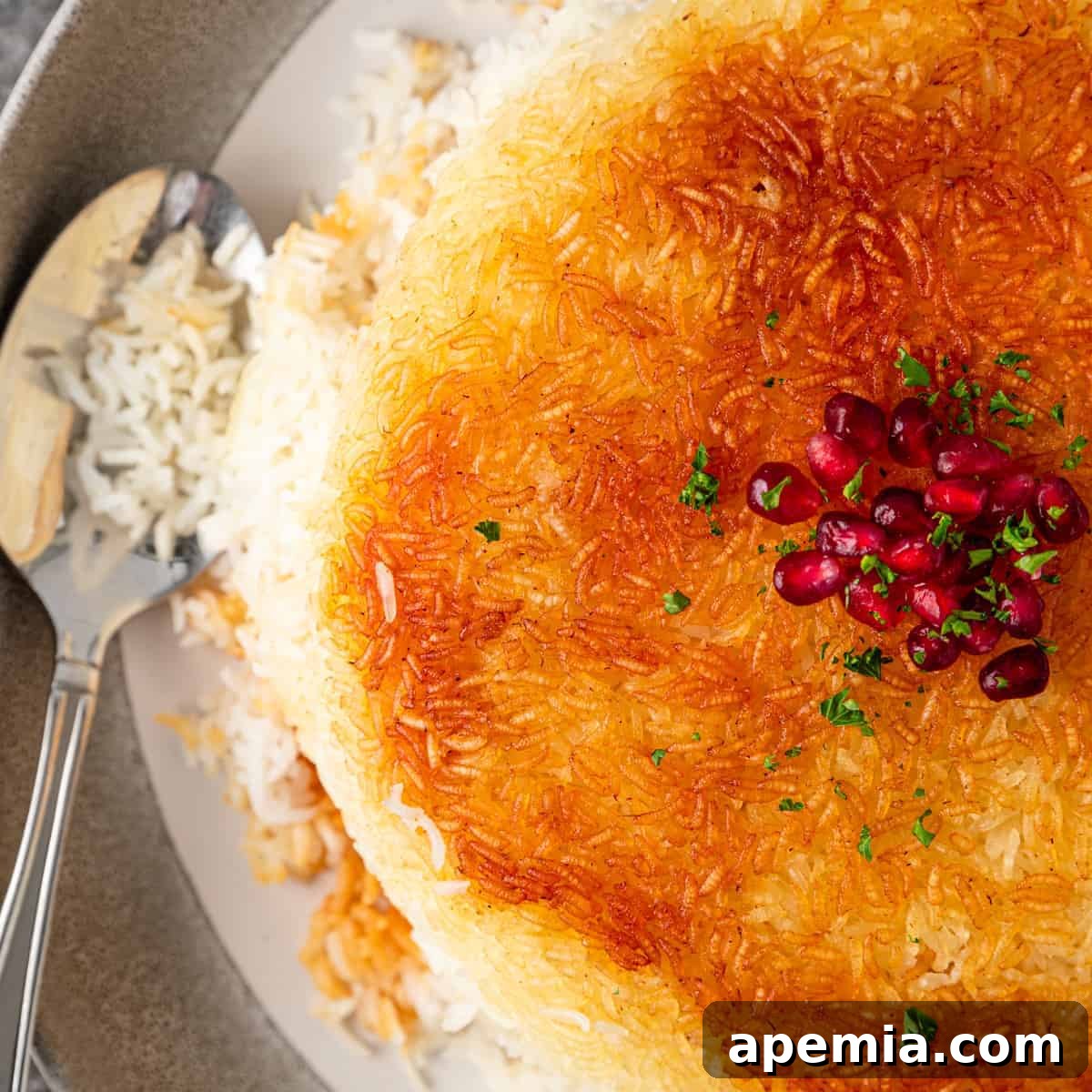
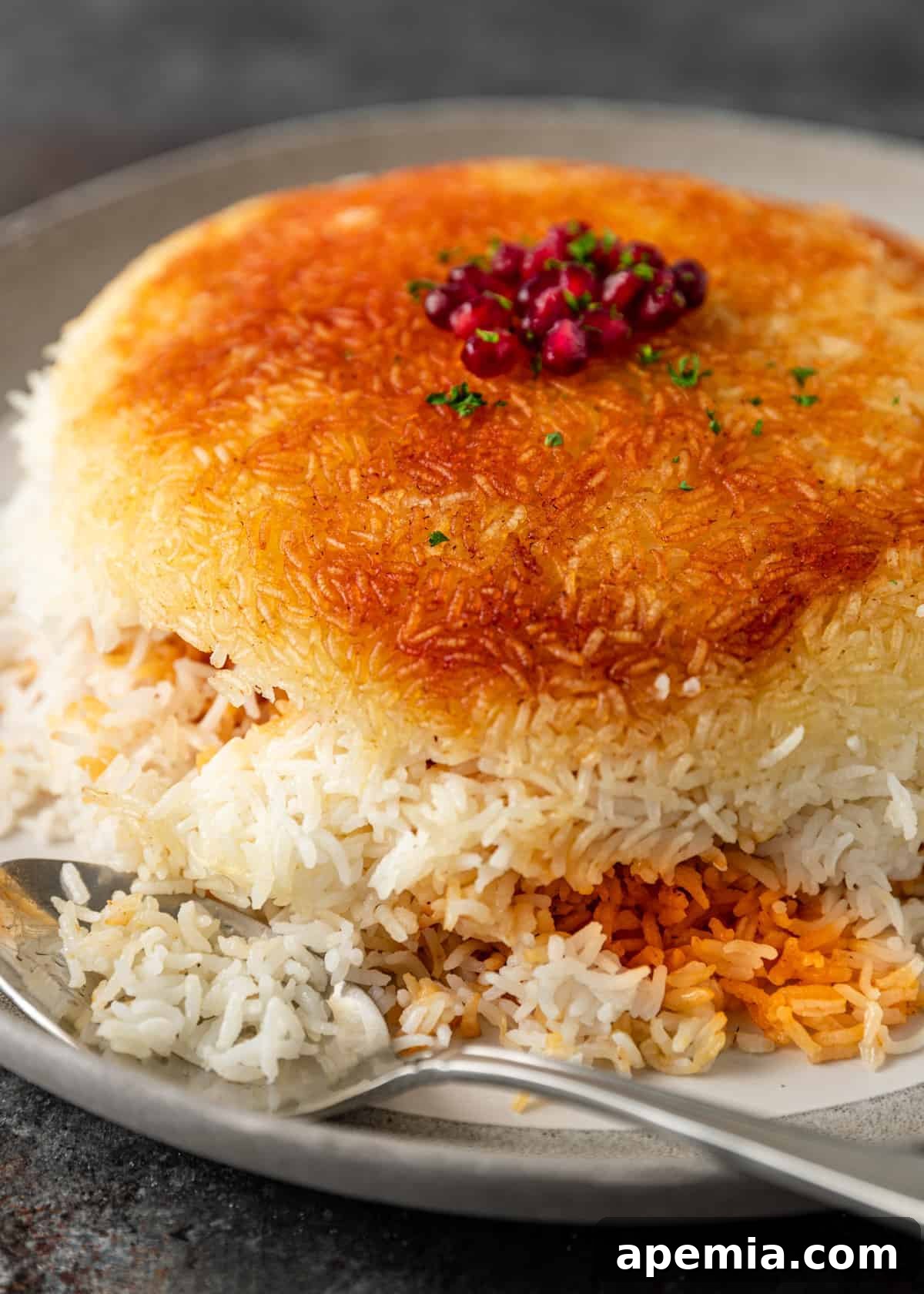
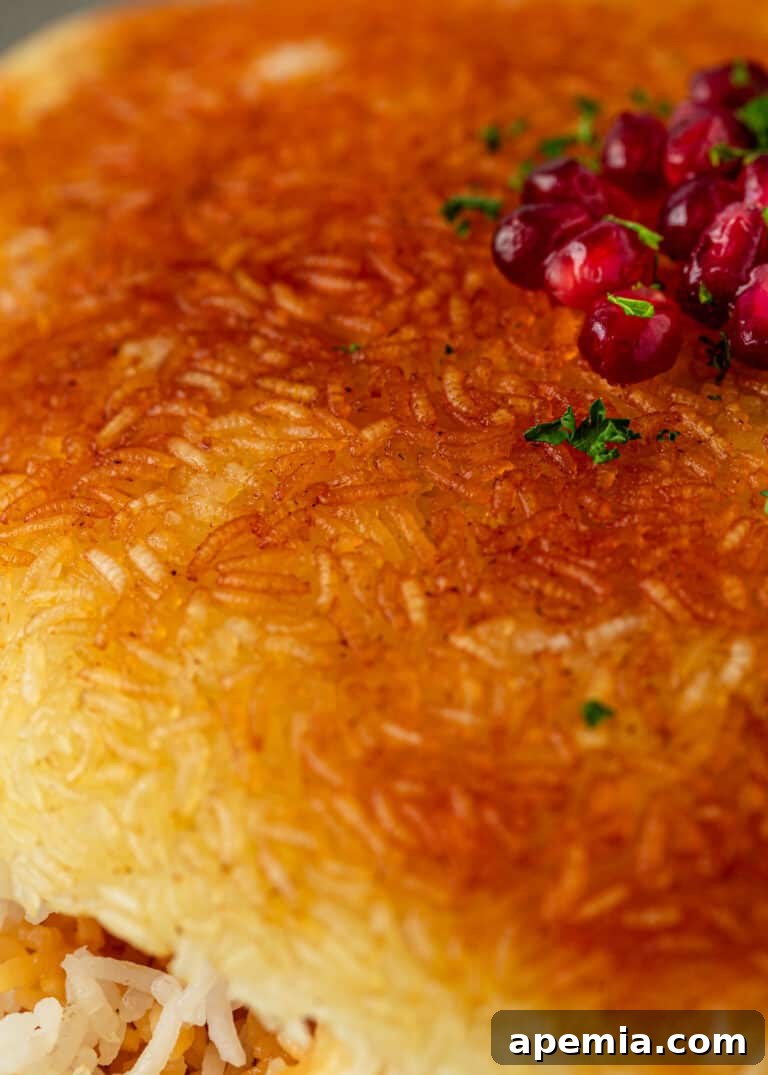
Prepare to embark on a culinary journey that will forever change your perception of rice. This authentic Tahdig recipe is a cherished gem of Middle Eastern cuisine, specifically Persian, promising a symphony of textures and flavors in every bite. Imagine perfectly steamed, fragrant basmati rice, beautifully infused with the golden essence of saffron, gracefully crowning a irresistibly crunchy, buttery layer of golden rice. The magic truly unfolds when this entire masterpiece is inverted, revealing the sensationally savory, crispy Tahdig layer on top – a true testament to the artistry of Persian cooking.
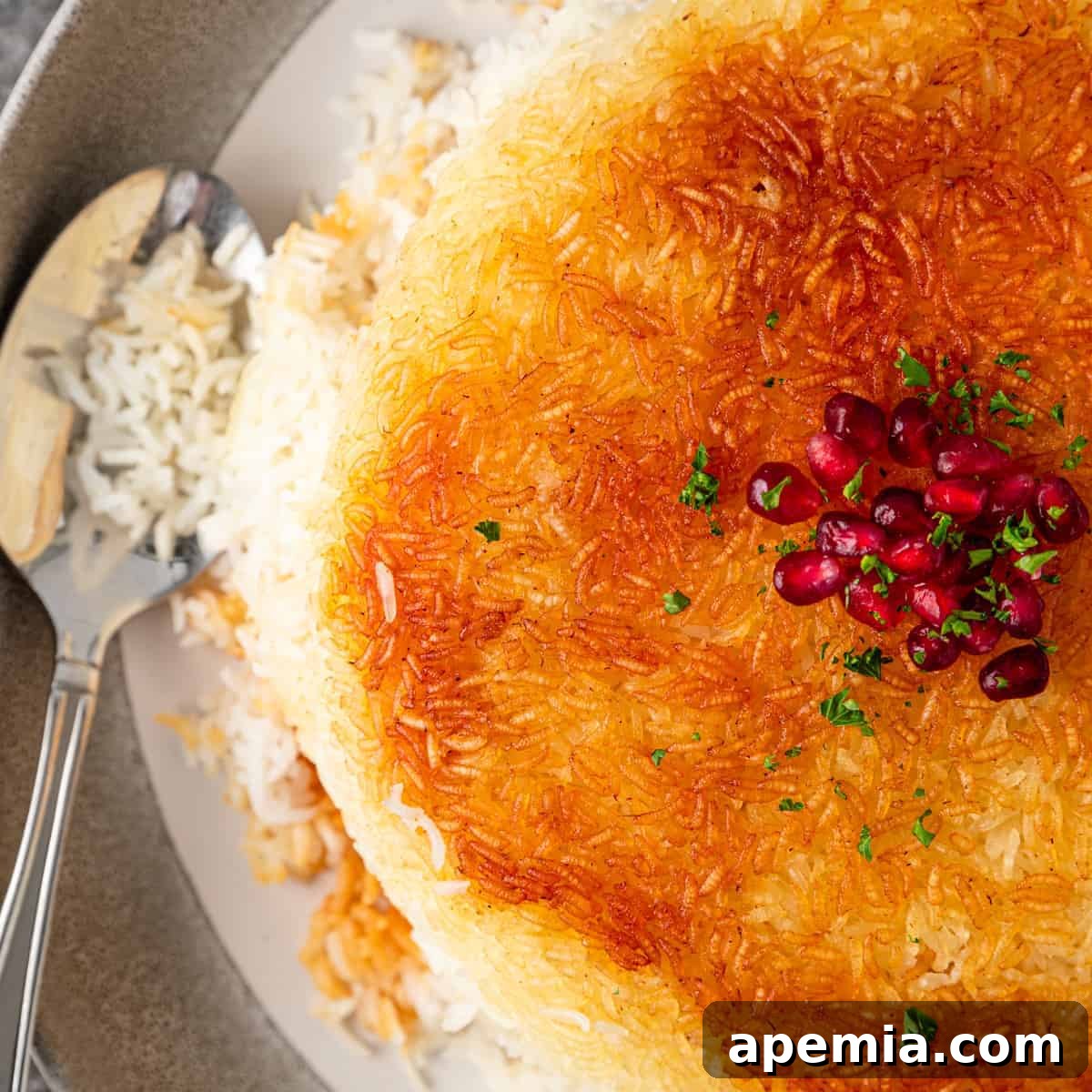
My first unforgettable encounter with Tahdig happened years ago at a vibrant Middle Eastern market in San Diego. Served alongside succulent Beef and Lamb Koobideh Kabobs, a peculiar, crispy shard caught my eye. One bite was all it took – I was instantly captivated by this exquisite, golden part of the rice. From that moment, I knew I had to learn the secrets behind this extraordinary dish that elevates humble rice to an art form. It’s a dish that not only nourishes the body but also brings immense joy and a touch of luxury to any meal.
Watch the Recipe Video: How To Make Tahdig Rice
Eager to see the transformation of simple rice into a crispy Persian masterpiece? A detailed video guide is available in the recipe card below, demonstrating every step from start to finish!
If you’re searching for an exciting new way to revitalize your daily rice dishes, this traditional Persian recipe for Tahdig (pronounced Ta-DEEG) will undoubtedly revolutionize your kitchen. With just a handful of straightforward ingredients, you can transform ordinary rice into an extraordinary, crispy, and utterly delightful creation. Tahdig isn’t just a side dish; it’s a culinary experience, revered in Persian culture and celebrated for its irresistible textural contrast and rich flavor. It’s the golden crust at the bottom of the pot, a prized delicacy that everyone eagerly anticipates.
While the technique for achieving the perfect Tahdig might seem unfamiliar at first, rest assured, it’s a process that is rewarding and easy to master with a little practice. You’ll quickly get the hang of it, and soon, you’ll be crafting your own signature versions. Persian crispy rice recipes offer immense versatility, allowing for creative additions. From fresh aromatic herbs and finely chopped vegetables to vibrant pomegranate seeds, zesty orange peel, and various spices, the possibilities for customization are endless. Once you understand the core principles, you can experiment and personalize your Tahdig to suit your taste, making each batch a unique culinary adventure.
For those eager to explore more innovative rice recipes, I recommend trying my Persian Saffron Rice with Apricot, the equally delightful Crispy Tachin Saffron Rice, or the comforting Sizzling Rice Soup. Each offers a distinct flavor profile and textural experience, showcasing the incredible versatility of rice in Middle Eastern cuisine.
Essential Ingredients for Perfect Tahdig
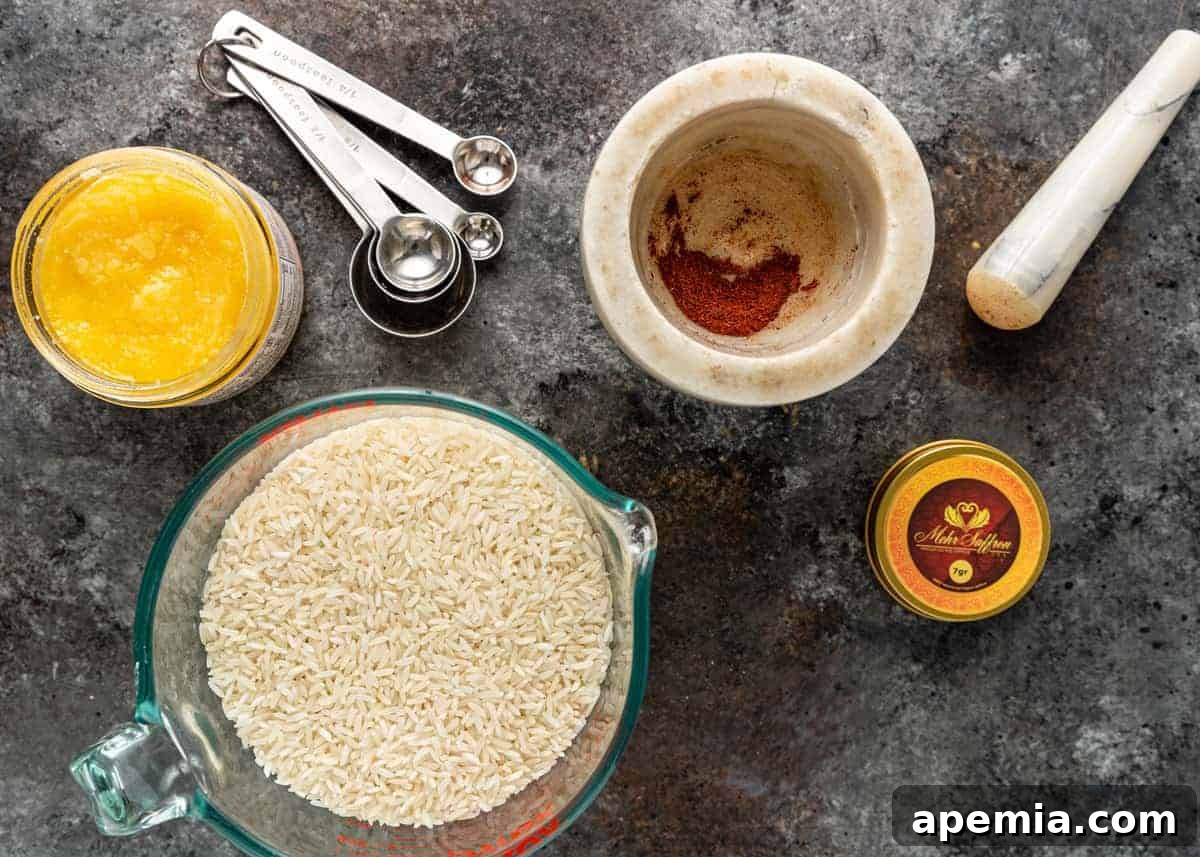
Creating an exceptional Tahdig begins with selecting the right ingredients. Each component plays a crucial role in achieving the desired texture, flavor, and signature golden hue. Here’s a closer look at the key elements:
- Basmati Rice – This is non-negotiable for an authentic Persian Tahdig. Basmati rice is renowned for its long, slender grains, delicate aroma, and fluffy texture when cooked. Unlike other rice varieties, basmati grains separate beautifully, preventing stickiness and ensuring each grain cooks evenly. This characteristic is vital for achieving the distinct fluffy top layer and the perfectly crispy bottom.
- Ghee (Clarified Butter) – Ghee is a cornerstone of Persian cooking, lending an unparalleled richness and nutty depth to the Tahdig. It offers all the luxurious flavor and smooth texture of butter, but with a significant advantage: a much higher smoke point. This makes ghee ideal for creating the intensely crispy and golden Tahdig crust without burning. If ghee is unavailable, a good quality unsalted butter can be used, but be mindful of its lower smoke point.
- Saffron – The jewel of Persian cuisine, saffron is indispensable for Tahdig. It imparts a delicate, earthy floral flavor and, more visibly, a breathtaking golden color that is synonymous with celebratory Persian dishes. For optimal color and flavor release, saffron threads must be finely ground and steeped in warm water, allowing their full potential to bloom. If genuine saffron is not within your budget, a few pinches of high-quality turmeric powder can provide a similar golden hue, though it will alter the flavor profile slightly.
- Kosher Salt – Essential for seasoning the rice during boiling, kosher salt helps to draw out excess starch and enhance the overall flavor. The precise amount is critical to ensure the rice is perfectly seasoned without being overly salty after rinsing.
- Olive Oil – A small amount of olive oil is combined with ghee or butter to further aid in crisping and to contribute to the richness of the Tahdig layer. It also helps to prevent sticking and ensures a uniform golden crust.
Crafting the Perfect Persian Tahdig: A Step-by-Step Guide
Mastering Tahdig involves a precise sequence of steps, each contributing to the magical transformation of rice into a culinary marvel. Follow these instructions carefully to achieve the ideal fluffy texture on top and that coveted crispy crust below.
1. Steep the Saffron for Maximum Flavor and Color. Begin by preparing the saffron. Using a mortar and pestle, finely grind the saffron threads into a delicate powder. If you don’t have a mortar and pestle, you can gently crush the threads between your fingers or with the back of a spoon. Transfer the powdered saffron to a small bowl, add ¼ cup of warm water, and gently stir. Set this vibrant mixture aside to steep and bloom, allowing the saffron to release its exquisite aroma and rich golden color. This step is crucial for infusing the rice with saffron’s signature characteristics.
2. Thoroughly Wash & Soak the Rice. Place your basmati rice in a medium-sized bowl. Fill the bowl with cold water and gently swirl the rice with your hand to remove excess starch. Drain the cloudy water and repeat this process until the water runs completely clear, which typically takes about 5-7 rinses. This washing process is vital for achieving separate, fluffy grains. Once thoroughly rinsed, cover the rice with 5 cups of fresh cold water and add 2 tablespoons of kosher salt. Stir well to dissolve the salt and soak the rice for at least 30 minutes. Soaking helps the grains hydrate evenly, preventing them from breaking during cooking and contributing to their ultimate fluffiness.
3. Par-Boil the Rice to Al Dente Perfection. In a large stockpot or Dutch oven, bring 12 cups of water to a rolling boil. Add ¼ cup of kosher salt to the boiling water – this heavily salted water seasons the rice from within, similar to cooking pasta. Drain the soaked rice (do not rinse it at this stage) and carefully transfer it to the boiling water. Stir gently once to prevent sticking and boil the rice for approximately 4-5 minutes. The goal is for the rice to be tender on the outside but still have a slight bite or firmness in the center (al dente). As soon as you see the first few grains rise to the surface, set a timer for 5 minutes. This timeframe might vary slightly depending on your rice and stove, so taste a grain to ensure it’s not too soft.
4. Drain & Quickly Rinse the Par-Boiled Rice. Promptly drain the par-boiled rice in a colander. Immediately give it a very quick rinse with lukewarm water. This brief rinse stops the cooking process and washes away any remaining excess starch, preventing stickiness. Taste a few grains to check for saltiness; if it seems too salty, give it another quick rinse. Set the colander aside to allow the rice to drain completely. If you are using the same pot for the next step, quickly wash and thoroughly dry it.
5. Prepare the Crisping Layer with Ghee and Saffron. Place the clean, dry stockpot or Dutch oven over medium-low heat. Add 2 tablespoons of ghee (or butter), the olive oil, and 1 tablespoon of the steeped saffron water to the pot. Allow the ghee to melt completely. Gently swirl the pan to ensure the entire bottom and a small portion of the sides are evenly coated with the buttery saffron mixture. If needed, add a touch more ghee or oil to create a sufficient layer for crisping. This foundation is key to a beautiful Tahdig.
6. Build the Tahdig Layer with Precision. This step requires quick action. As soon as the oil mixture begins to sizzle gently, take a spatula and carefully add enough of the drained rice to create a thin, even layer across the entire bottom of the pot. Use the back of the spatula to gently but firmly pack down this rice layer. This is your Tahdig layer – the part that will become wonderfully crispy and golden. Ensure it’s evenly spread and compacted for uniform crisping.
7. Mound the Remaining Rice and Initiate Steaming. Gently pile the rest of the par-boiled rice over the packed Tahdig layer, forming it into a cone shape. This dome allows steam to circulate efficiently. Make sure the Tahdig layer is completely covered by the mounded rice. Carefully use the handle of a wooden spoon to poke several holes through the rice cone, reaching almost to the bottom Tahdig layer but without piercing it. These “steam vents” are crucial for even cooking and proper steam release. Increase the heat to medium, cover the pot tightly, and allow it to cook for 10-12 minutes. This initial phase helps the Tahdig layer to set and begin crisping.
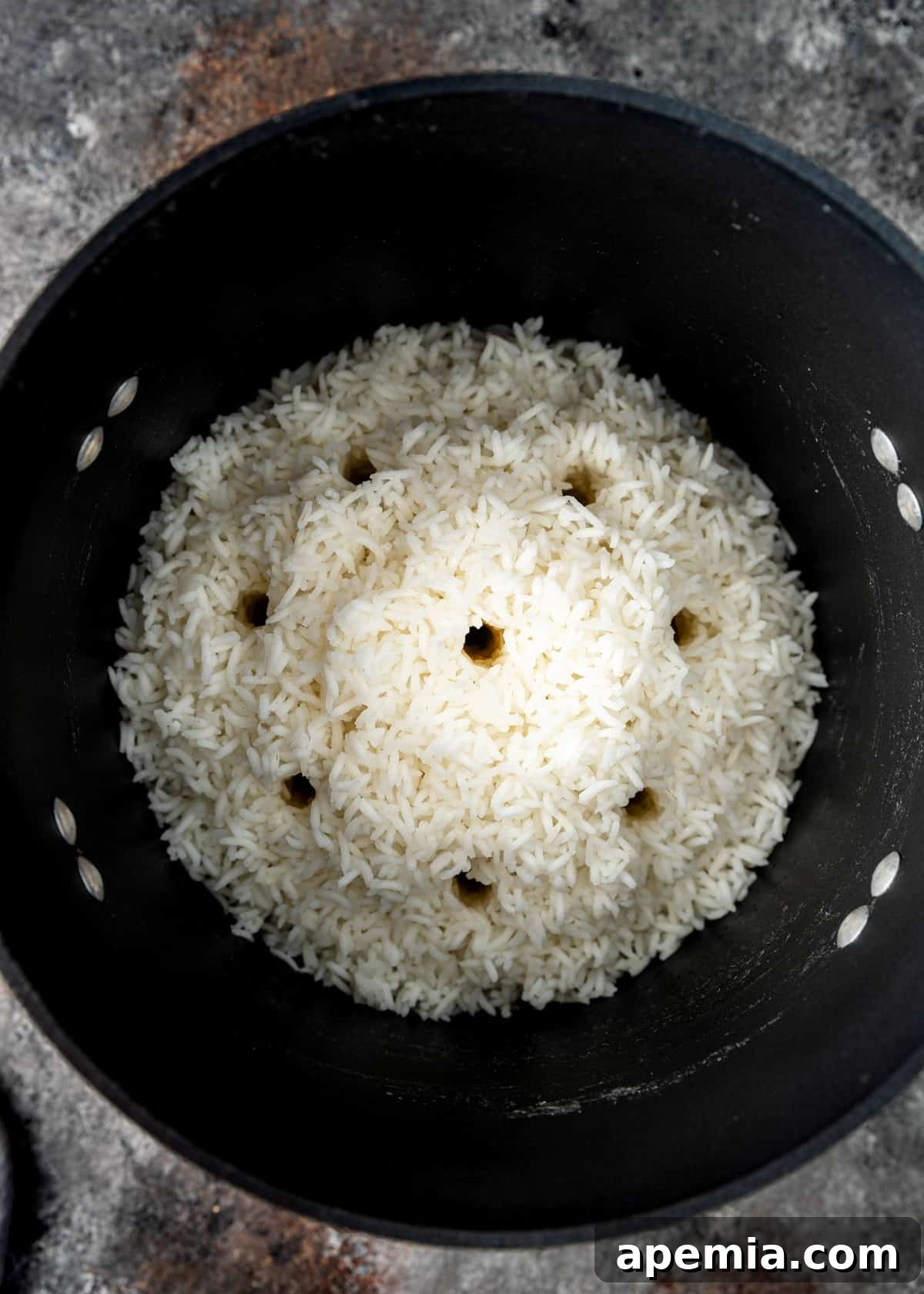
8. Prepare the Saffron Butter Drizzle. While the Tahdig is setting, melt the remaining 2 tablespoons of ghee (or butter) in a small saucepan over low heat or in the microwave. Once melted, combine this butter with the rest of your steeped saffron water and stir until well mixed. This aromatic butter will be drizzled over the rice to infuse it with more flavor and moisture during the final steaming phase.
9. Drizzle, Drape, and Seal for Final Steaming. Carefully remove the lid from the rice pot. Evenly drizzle the saffron butter mixture over the entire surface of the mounded rice. This adds flavor and helps keep the top grains moist and fluffy. Next, take a clean kitchen towel (a thin, lint-free one works best) and carefully drape it over the top of the pot, allowing the edges to hang over. Then, securely replace the lid, making sure the kitchen towel is tucked under the lid but its edges are flipped up onto the lid. The towel acts as a barrier, absorbing condensation and preventing it from dripping back onto the rice, which is essential for fluffy, non-soggy grains.
10. Reduce Heat & Rotate for Even Crisping. Reduce the heat to its lowest setting. If you have a heat diffuser, place it under the pot; this helps to distribute heat more evenly and prevent scorching. Allow the Tahdig to cook for approximately 30 minutes. During this time, periodically rotate the pot every 10-15 minutes to ensure uniform crisping of the Tahdig layer. The goal is for the top rice to be perfectly tender and fluffy, with individual grains separated, while the bottom Tahdig layer becomes gloriously golden and crispy. You might even hear a faint crackling sound as it crisps.
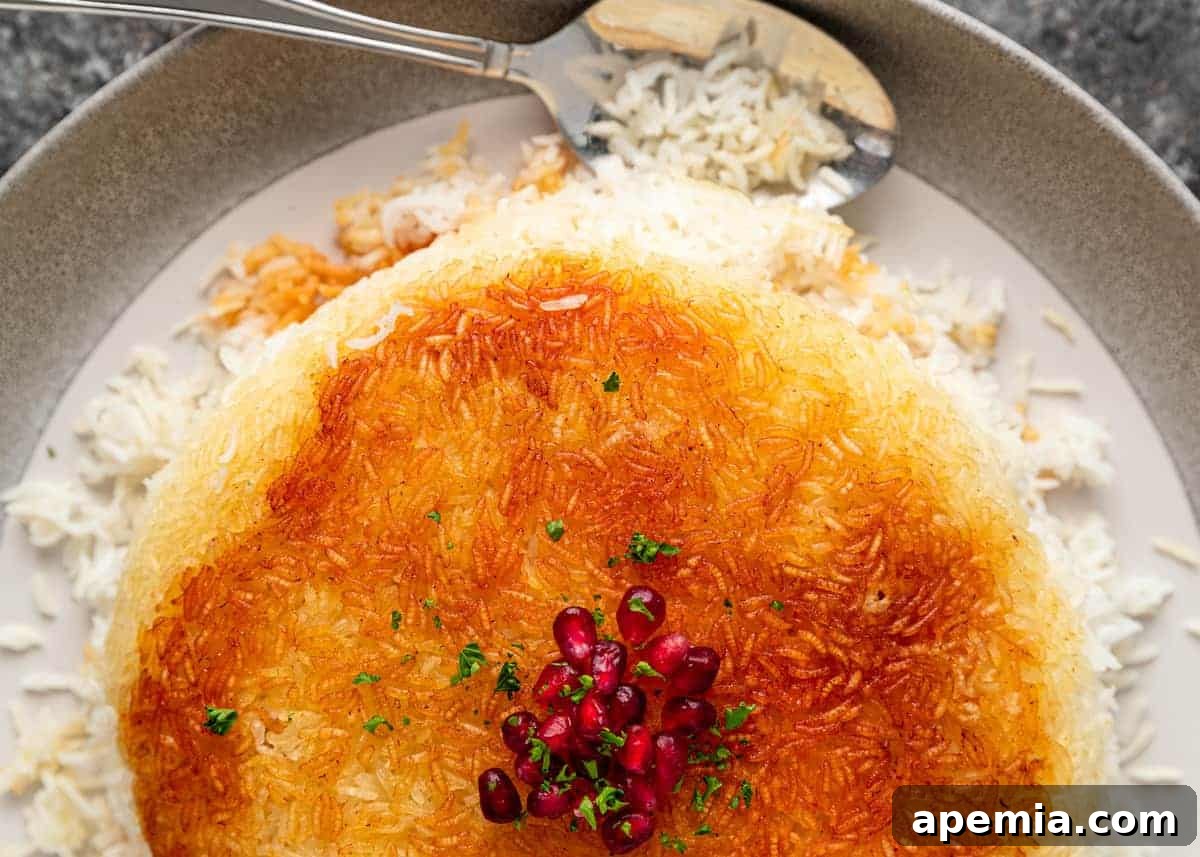
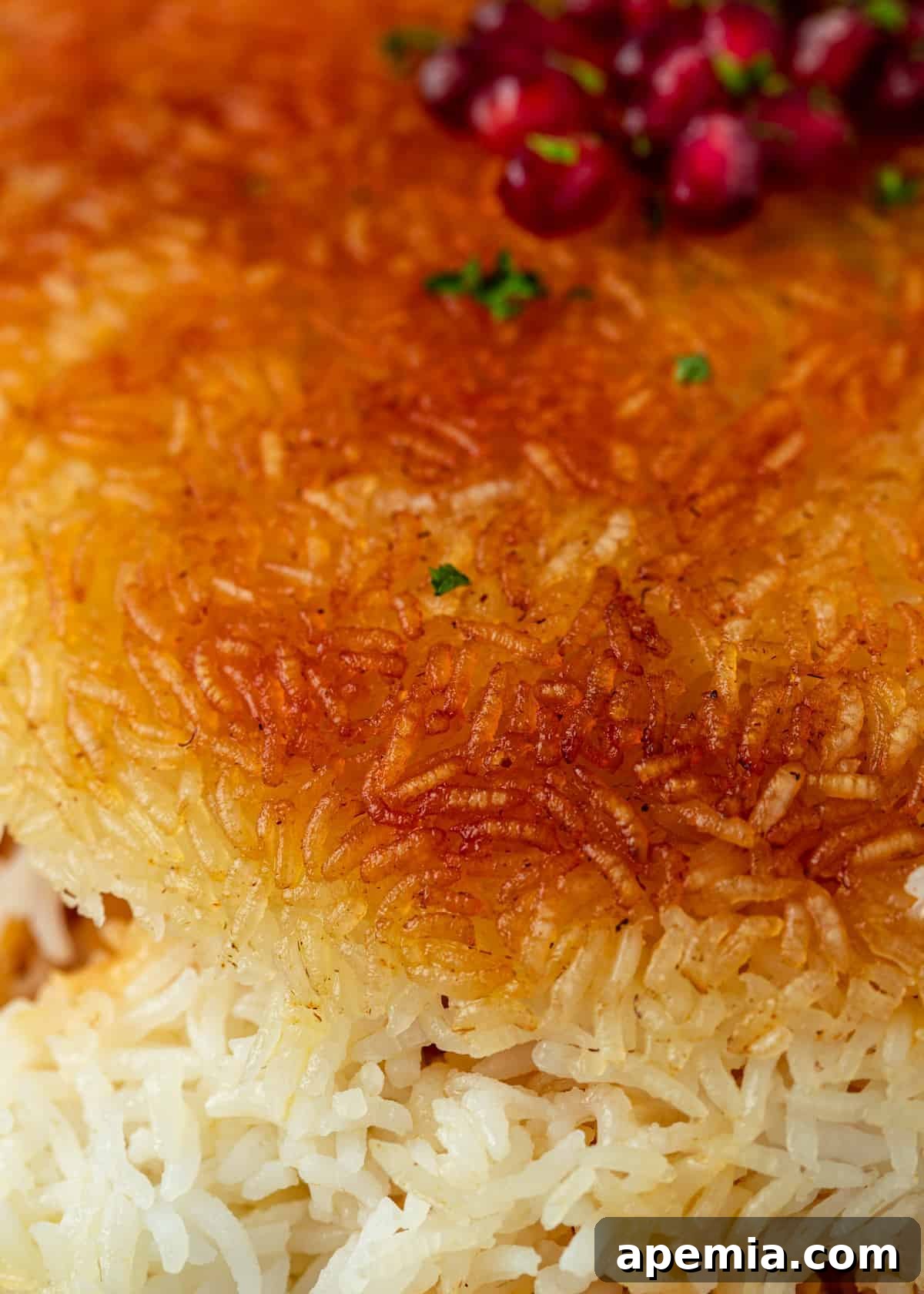
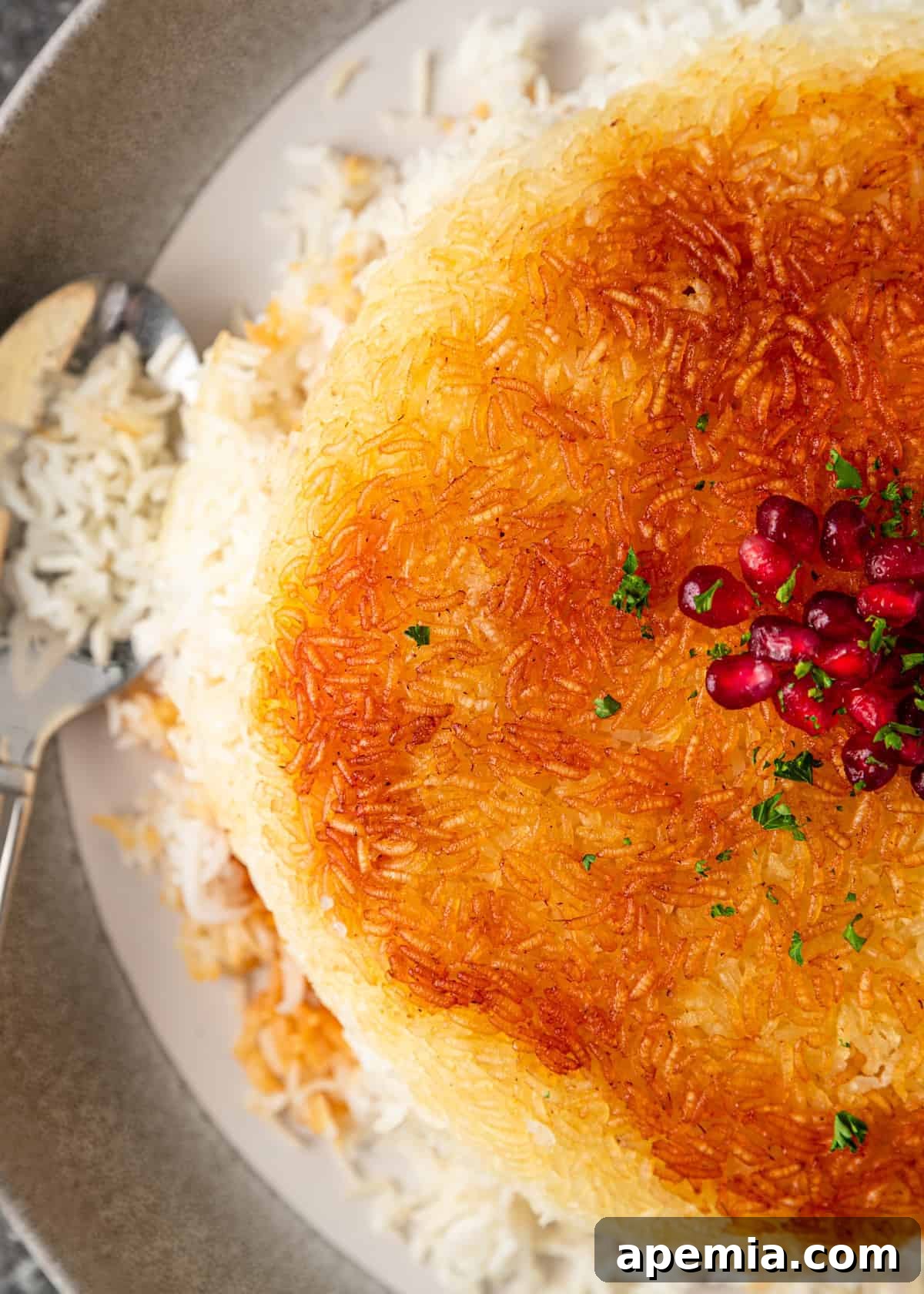
11. Invert and Serve Your Masterpiece. Once cooked, remove the pot from the heat. To release the Tahdig cleanly, run a rubber spatula gently around the inside edges of the pot. This helps loosen any rice sticking to the sides. Now for the grand reveal: place a large serving platter or tray over the top of the pot. With confidence and a swift motion, quickly and firmly flip the pot upside down onto the platter. You should hear a satisfying “swish” sound as the Tahdig releases itself. This dramatic flip reveals the beautiful golden crust on top. Alternatively, you can carefully scoop the fluffy rice onto a platter first, then gently remove the Tahdig in one piece or in sections, serving it on the side. Garnish as desired and serve immediately.
Expert Tips for Tahdig Success
Achieving the perfect Tahdig consistently can be made easier with a few key strategies. These tips will help you create a beautifully golden and crispy crust every time:
- Quantity Matters: Use At Least Two Cups of Dry Basmati. Tahdig tends to form best when there’s a substantial amount of rice. Using at least two cups of dry basmati rice provides enough volume to create a stable and well-formed crispy layer that can be easily inverted and beautifully presented. Smaller quantities might be harder to manage and could result in an uneven or fragile crust.
- Even Crisping with Intermittent Turning or a Diffuser. For a uniformly golden and crispy Tahdig, it’s crucial to distribute the heat evenly. Intermittently turn the pan every 10 to 15 minutes during the steaming process. This ensures that all parts of the bottom layer receive equal heat exposure. Alternatively, consider using a heat diffuser (also known as a flame tamer) placed between the burner and the bottom of your pot. A diffuser helps to spread the heat more broadly and gently, preventing hot spots and promoting consistent crisping.
- The Cold Water Release Trick. To ensure your glorious Persian crispy rice detaches cleanly from the cooking pot without sticking, a simple cold water technique works wonders. Once the Tahdig is cooked, you have two options:
- Fill a sink with about one inch of cold water. Briefly set the bottom of the hot pot directly into the cold water for about 30-60 seconds. The sudden temperature change causes the metal to contract slightly, helping to loosen the Tahdig from the surface.
- Alternatively, place the hot pot on a wet kitchen towel that has been soaked in cold water for a few minutes. The cool, damp surface will achieve a similar effect, allowing for a smooth and effortless release of your crispy rice masterpiece.
Perfect Pairings: What to Serve with Tahdig
Persian crispy rice is incredibly versatile. It can shine as a flavorful meatless entrée on its own, or serve as a spectacular side dish that complements a wide array of Middle Eastern and other cuisines. Its crispy texture and delicate flavor provide a wonderful contrast to many dishes. Here are some highly recommended dishes to enjoy with your Tahdig:
- Robust Meat Dishes: Pair it with savory Lamb Shawarma (Shredded) or the classic Lamb Koobideh Kabobs for a truly satisfying meal.
- Flavorful Meatballs: It’s excellent with tender Persian Meatballs (Koofteh) or the lighter Palestinian Fish Kofta Meatballs.
- Chicken Delights: Compliments perfectly with juicy Joojeh Kabob (Persian Chicken Kabob) or the rich and tangy Pomegranate Chicken.
- Hearty Stews: Serve alongside fragrant stews like Lamb Tagine with Apricots and Dates or my comforting Instant Pot Lamb Stew (Dal Gosht), where the Tahdig can soak up the delicious sauces.
- Fresh Salads and Vegetables: Balance the richness with vibrant sides such as Steamed Carrots with Yogurt Dressing or a crisp, refreshing Shirazi Salad.
Reheating Leftover Tahdig
Yes, absolutely! Tahdig makes for delicious leftovers. To store, place any remaining Persian crispy rice in an airtight container and refrigerate for up to 3 days. When you’re ready to enjoy it again, the key is to revive its crispiness. Place the Tahdig crispy-side down in a lightly oiled nonstick pan over medium heat. Heat for several minutes, allowing the bottom to recrisp beautifully, until it’s golden and crunchy on the outside and thoroughly warm in the middle. This method ensures that the delightful texture is restored, making your leftovers just as enjoyable as the freshly made dish.
Choosing the Best Pan for Tahdig
The right cookware is crucial for achieving that coveted crispy bottom. For the most consistent and best results, I highly recommend using a large, heavy-bottomed nonstick stockpot. The nonstick surface significantly minimizes the risk of the Tahdig adhering to the pan, ensuring an easy and clean release.
However, if a nonstick pot isn’t available, a cast iron pot or a Dutch oven can also be used effectively. When using these types of pans, you might need to be a bit more generous with the amount of butter or oil in the bottom layer to create a sufficient buffer and prevent sticking. Regardless of the pan choice, remember the cold water release technique: briefly dipping the bottom of the hot pan into one inch of cold water, or setting it on a cold, wet kitchen towel for a few minutes, will greatly assist in the smooth release of your Tahdig masterpiece.
Share this recipe on Pinterest!
Love this recipe? Share it with the world on Pinterest.
Exciting Tahdig Variations to Explore
While the classic saffron Tahdig is magnificent, this traditional recipe also welcomes creative makeovers. Adding different ingredients can introduce new life, flavors, and textures to the dish, making each rendition a delightful surprise. You can integrate elements during the cooking process or introduce a different crispy layer at the bottom of the pan. Experiment with any of these options for an exciting new twist:
- Crispy Bread Layer: Replace the initial rice layer with thin pieces of bread at the bottom of the pot. Try lavash, Khubz, or even flour tortillas, much like the technique used in my Sabzi Polo Recipe (Persian Herb Rice). The bread will crisp up beautifully, offering a different kind of golden crunch.
- Delightful Potatoes: For a hearty variation, arrange peeled and uniformly sliced potatoes (about ¼-inch thickness) at the bottom of the pan before adding the rice. This method is wonderfully showcased in my Lubia Polo (Iranian Rice Dish), resulting in a tender yet crispy potato layer that’s incredibly flavorful.
- Cooked Noodles: For a unique texture, a thin layer of cooked vermicelli or other thin noodles can be placed at the bottom, crisping up to a golden-brown finish.
- Creamy Yogurt Tahdig: Mix plain yogurt directly into a portion of the pre-cooked rice and use this mixture as the bottom layer. The yogurt lends a slight tang and creates an incredibly rich, golden, and slightly chewy crust known as Tahchin.
- Aromatic Fresh Herbs: Elevate the flavor profile by adding finely chopped fresh cilantro, parsley, dill, or chives to the rice before mounding it. The herbs infuse the entire dish with a fresh, vibrant aroma, complementing the saffron beautifully.
Subscribe to my Newsletter, and follow me on Facebook, Pinterest, Instagram and YouTube for all my latest recipes and videos.
Persian Tahdig (Crispy Rice Recipe)
This recipe for Persian crispy rice, also known as tahdig, features a crispy buttery layer atop tender, fluffy basmati rice.
- Servings:
- 6
- Prep Time:
- 35 mins
- Cook Time:
- 1 hr 5 mins
- Total Time:
- 1 hr 40 mins
Pin Recipe
PrintRecipe
Video
Watch the detailed video to guide you through making Persian Tahdig.
Ingredients
- 3 cups white basmati rice (See Note 1)
- Kosher salt
- 4 tbsp butter or ghee
- 1 tbsp olive oil
- 1/8 tsp ground saffron steeped in 1/4 cup warm water
- 1/2 tsp advieh
Instructions
- Using a mortar and pestle or in the palm of your hand, grind the saffron threads to a powder and mix with advieh and the water to steep and bloom. Set aside.
- Place the rice in a medium bowl, and fill it with cold water. Gently wash the rice by swishing it around with your hand, then drain. Repeat until the water runs clear, about 5 times. Cover the rice with 5 cups cold water, 2 tablespoons kosher salt, and stir. Soak the rice for at least 30 minutes.
- Fill a large stock pot or Dutch oven with 12 cups of water. Bring to a boil, and add 1/4 cup kosher salt. Drain the rice (but don’t rinse) and add it to the pot. Stir once gently and boil 4 minutes (as soon as you see the first of the rice grains pop up), and set your timer for 5 minutes (See Note 2).
- Drain rice in a colander and give it a very quick rinse with lukewarm water. Test the rice; if it’s too salty give it another quick rinse. Set aside to drain completely. Wash and dry the pot, if using the same pot.
- Set the rice pot over medium-low heat. Add 2 tablespoons of the butter (or ghee), olive oil, 1 tablespoon of the saffron water and melt the butter (or ghee). Swirl it around so it evenly covers the bottom of the pot and a little up the sides, adding more butter and/or oil if needed. Work quickly now. As soon as the oil starts sizzling, with a spatula, add enough rice to fully cover the bottom of the pot in a thin layer. Pack down the rice with the back of a spatula. This is your tahdig layer.
- Gently spoon the rest of the rice over the tahdig layer in a cone shape, making sure the tahdig layer is covered with more rice. With the handle of a wooden spoon poke a few holes in the rice without hitting the tahdig layer, this allows the steam to escape. Turn up the heat to medium, cover, and cook for 10 to 12 minutes for the tahdig to set.
- While the tahdig sets, in a small saucepan or in microwave, melt the remaining 2 tablespoons butter (or ghee) and advieh then add it to the remaining saffron water.
- Lift the lid and drizzle the remaining butter saffron mixture over the rice. Drape a kitchen towel on top of pot to catch the condensation. Place the lid firmly back on the pot, making sure the kitchen towel edges are flipped up onto the lid on top.
- Reduce the heat to low (depending on your element), and place a heat diffuser under the pot, if you have one. Cook for 30 minutes, rotating the pot a few times for even crisping, until the rice is tender and fluffy and the tahdig is crispy and golden.
- Run a rubber spatula around the inside of the pot. Place an appropriate-sized platter over the top of the pot and quickly and confidently flip the pot over. There should be a swish sound of the release of the tahdig. Alternately, you can scoop the rice, on to a platter. Gently remove the tahdig whole or in pieces, and serve it on the side.
Notes
- Basmati rice is a must for true Persian rice. Recipe for Chelo ba Tahdig adapted from Naz Deravian’s Bottom of the Pot.
- What you’re looking for is a grain that is tender on the outside but still with a bite to it on the inside. This can take anywhere between 5 to 7 minutes, depending on the type of rice.
Nutrition
Carbohydrates: 74g |
Protein: 7g |
Fat: 13g |
Saturated Fat: 7g |
Cholesterol: 26mg |
Sodium: 830mg |
Potassium: 106mg |
Fiber: 1g |
Sugar: 1g |
Calcium: 26mg |
Iron: 1mg
The information shown is an estimate provided by an online nutrition calculator. It should not be considered a substitute for a professional nutritionist’s advice.
Course: Side Dish
Cuisine: Middle Eastern, Persian
Author: Kevin
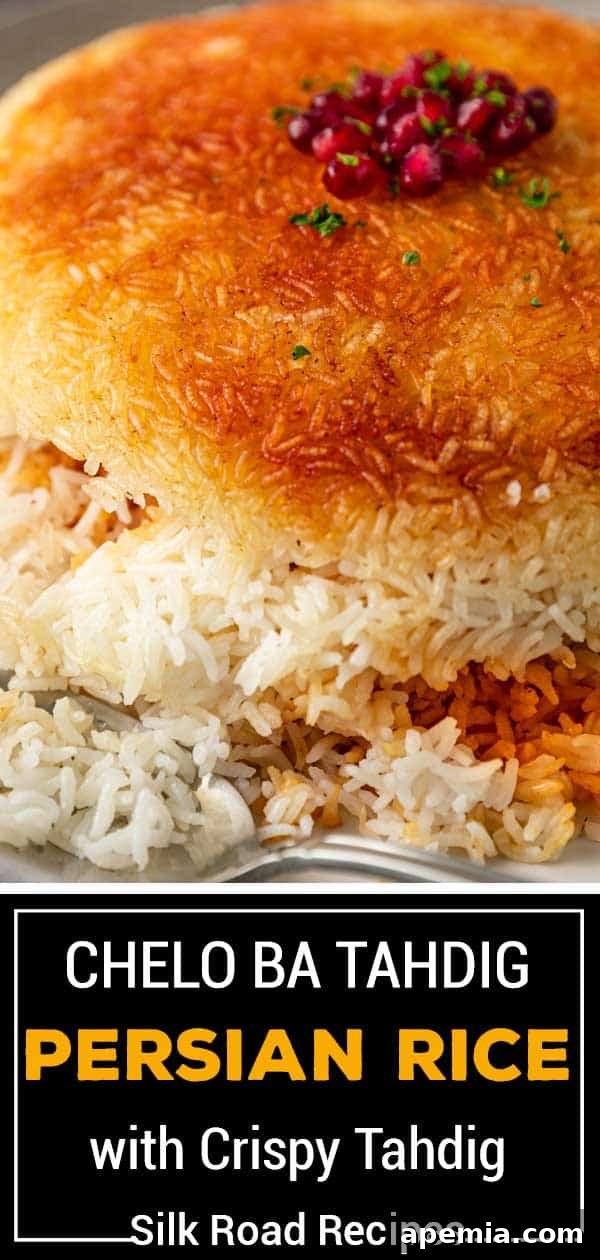
In conclusion, Persian Tahdig is more than just a rice dish; it’s a celebration of texture, flavor, and culinary tradition. The journey from humble basmati grains to a golden, crispy masterpiece is incredibly rewarding, offering a unique and delightful experience with every bite. Whether you’re serving it as a main course or a cherished side, Tahdig promises to impress your guests and bring a touch of Middle Eastern elegance to your table. Don’t be intimidated by the process – with a little patience and these detailed instructions, you too can master the art of making the perfect Persian crispy rice. Enjoy the irresistible crunch and fluffy saffron-infused grains!