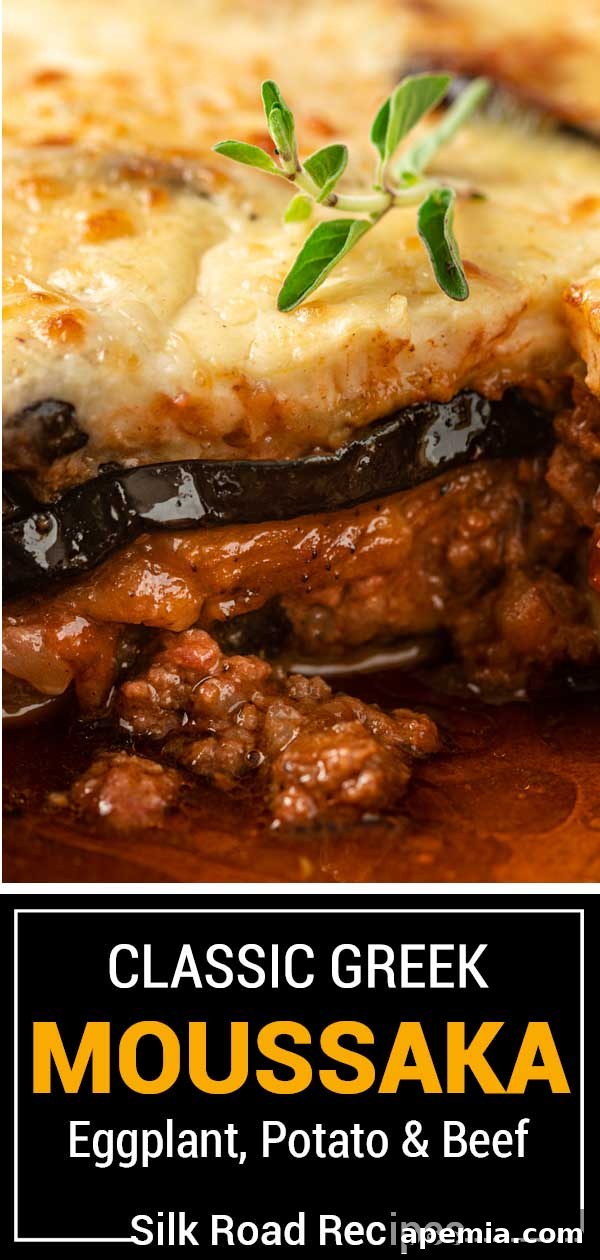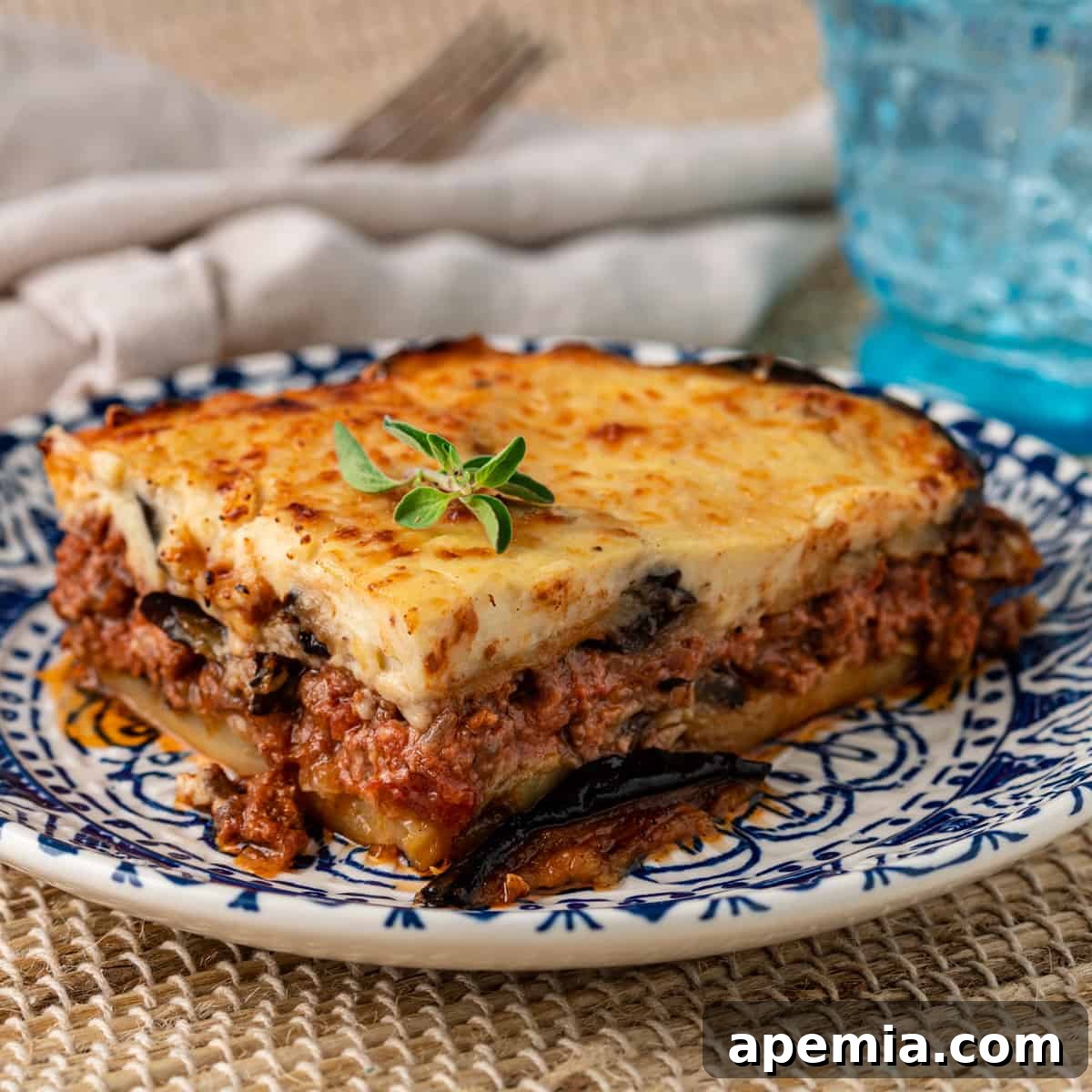
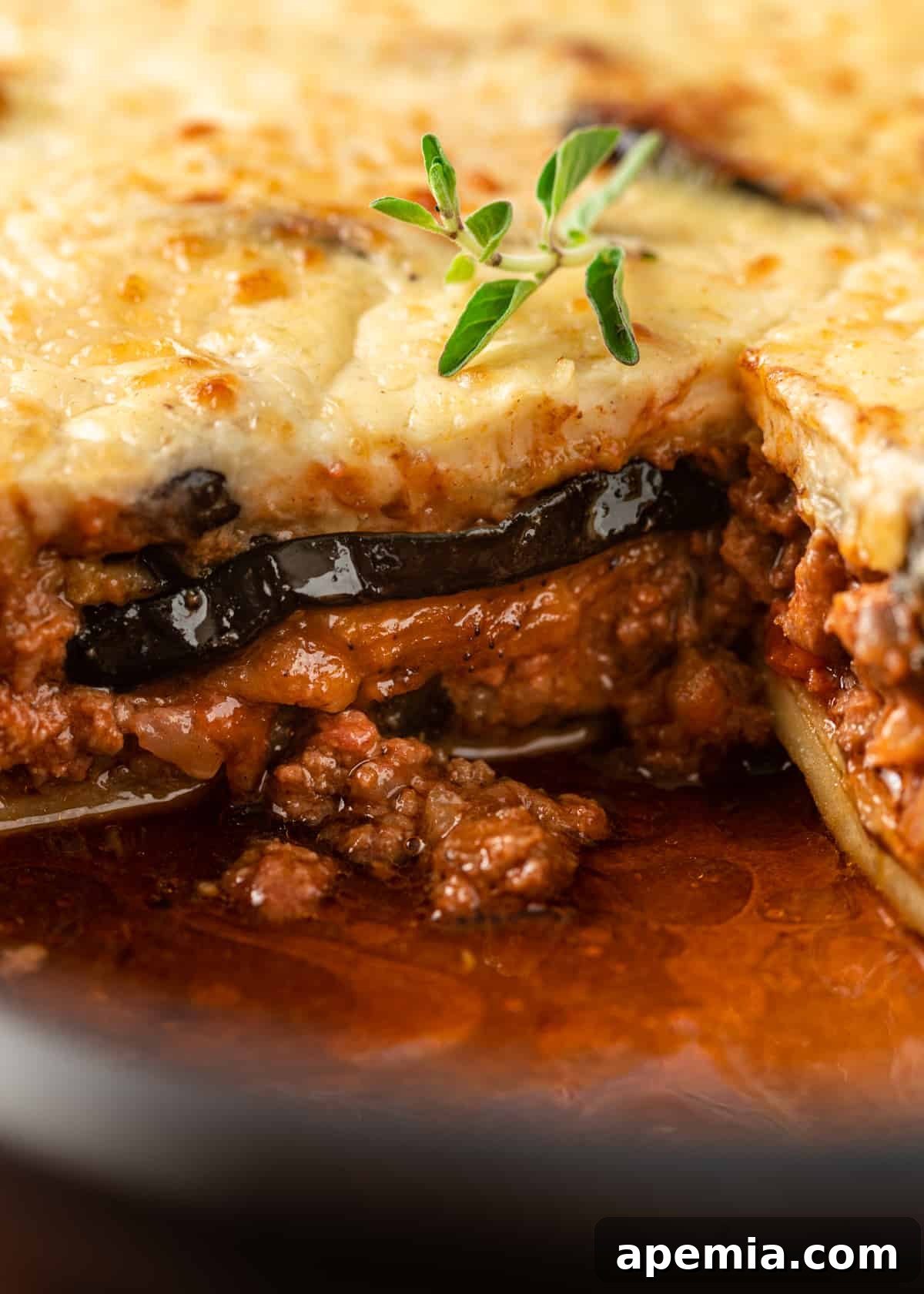
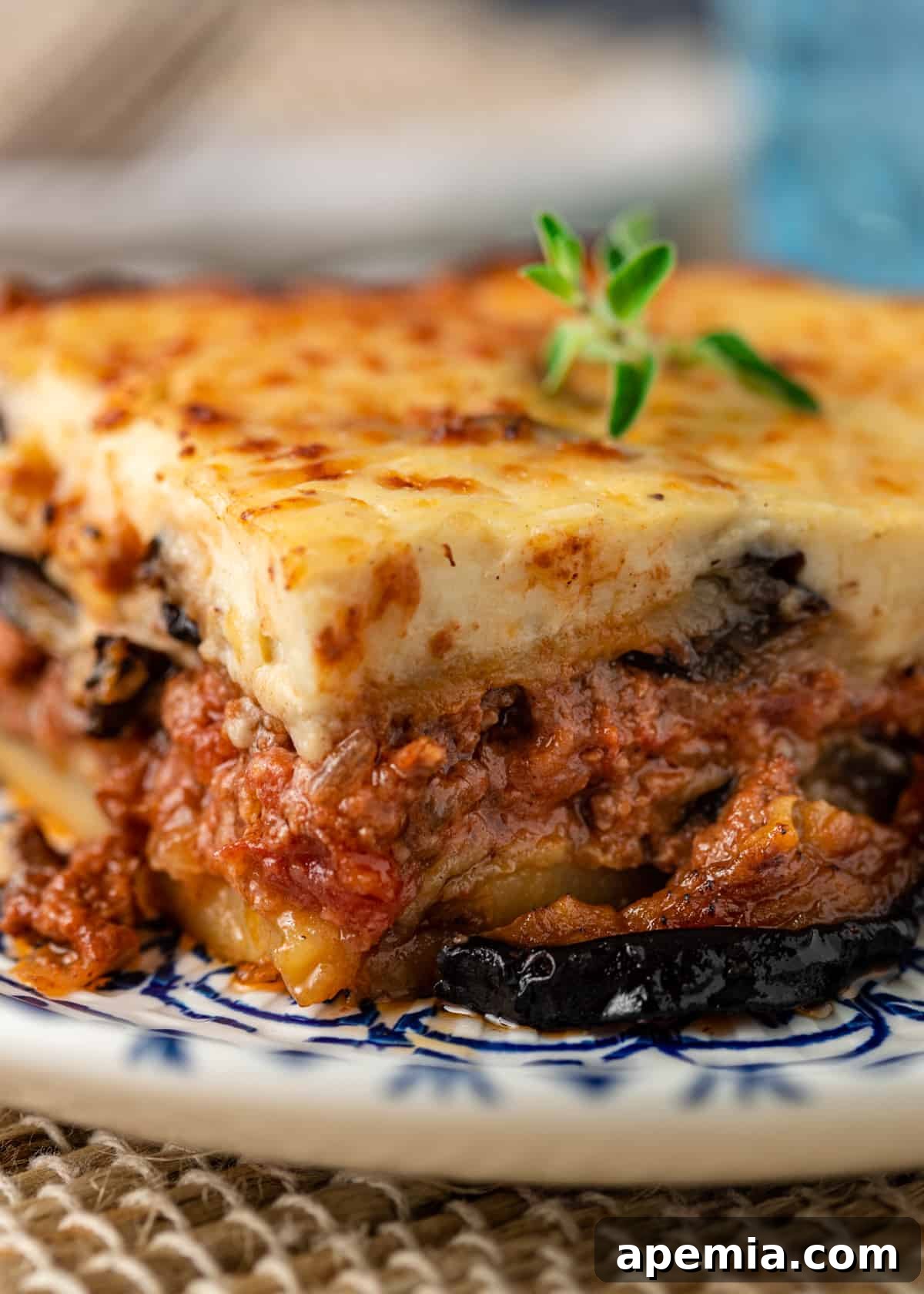
Prepare to embark on a culinary journey to the heart of Greece with this incredible **Moussaka recipe**. This isn’t just a meal; it’s a celebration of rich flavors, comforting textures, and centuries of tradition, perfectly crafted for your table. Featuring decadent layers of perfectly fried eggplant, tender, crispy potatoes, and a robust, aromatic meat sauce, all crowned with a velvety, golden béchamel, this dish truly embodies rustic comfort food at its finest.
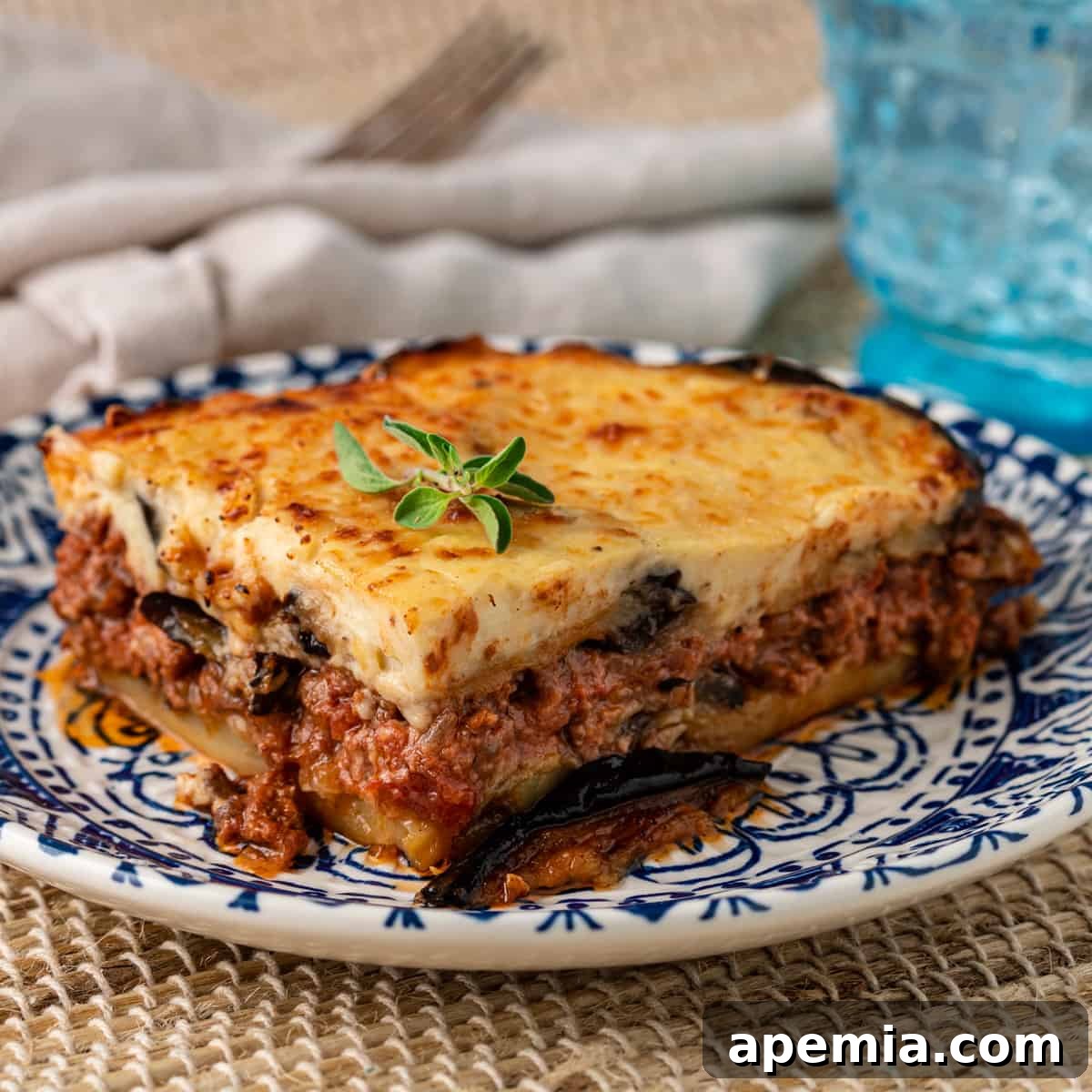
Today’s recipe offers more than just sustenance; it’s a wholesome dish that nourishes both body and spirit. Imagine the hearty satisfaction of a classic lasagna, but with tender slices of eggplant and earthy potatoes replacing pasta noodles, creating a unique and undeniably Greek twist. Once you experience the harmonious blend of flavors and textures in this delightfully filling meal, you’ll understand why Moussaka has remained a beloved staple in Mediterranean cuisine for generations.
While the preparation of Moussaka involves several steps and can take around two hours from start to finish, don’t let the process intimidate you. Think of it as a delightful labor of love, a rewarding experience that culminates in an extraordinary dish. Planning your time accordingly will make the process enjoyable, and we promise, the incredible taste and comforting warmth of homemade Moussaka will be absolutely worth every moment!
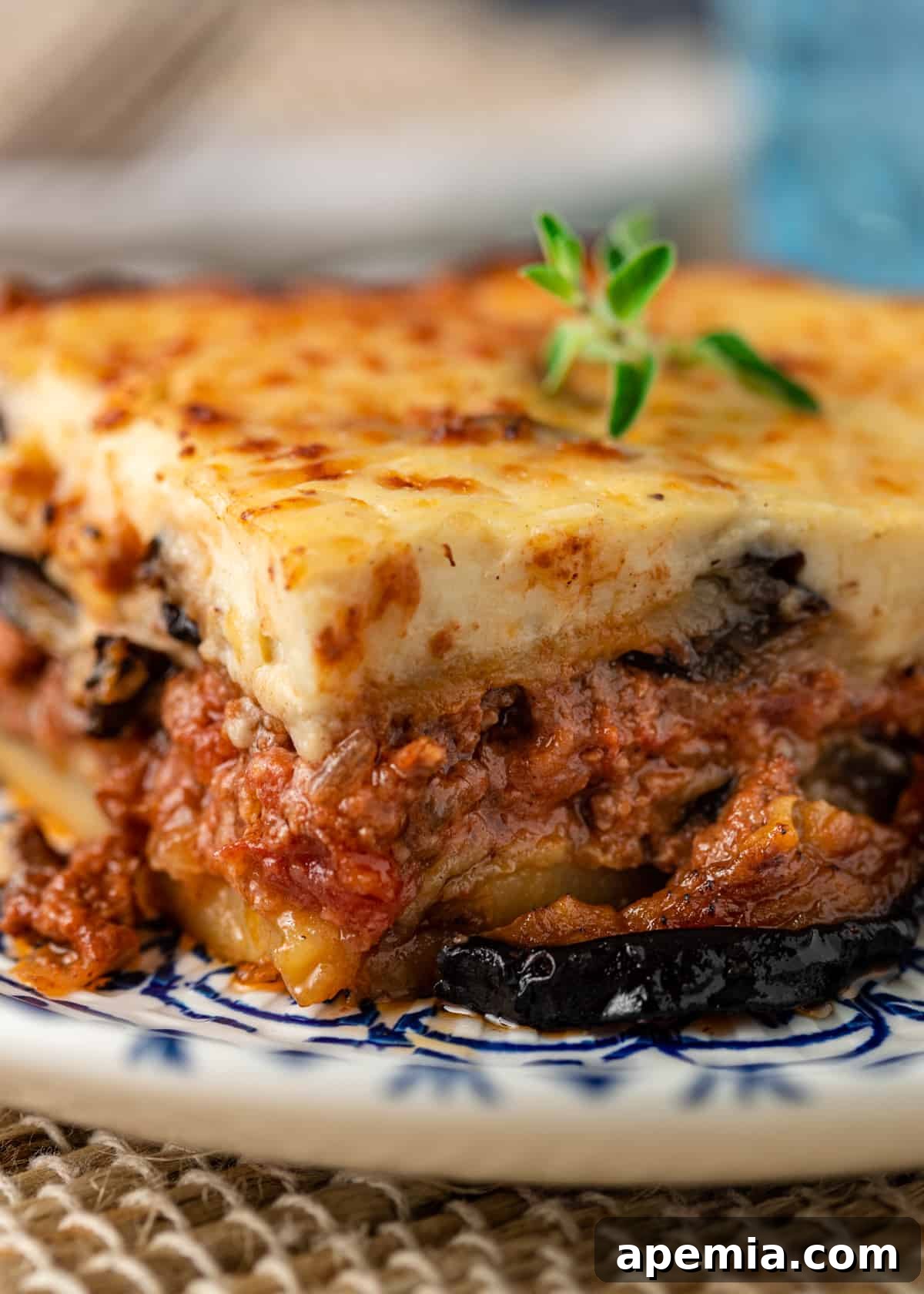
Table of Contents
- Ingredient Notes and Substitutions
- How to Make Classic Greek Moussaka
- Is Moussaka Greek? Exploring its Rich History
- Frequently Asked Questions
- Classic Greek Moussaka Recipe Card
For those eager to explore more Greek-inspired culinary delights, be sure to check out our other popular recipes like Baked Greek Yogurt Chicken, the savory Shrimp Saganaki, and our delicious Greek Lamb Meatballs.
Ingredient Notes and Substitutions for Authentic Moussaka
Crafting the perfect Moussaka begins with selecting the right ingredients. Here’s a closer look at what you’ll need and how to make the best choices:
- Eggplant: The star of the show! Choose eggplants that feel surprisingly heavy for their size, with firm yet slightly yielding skin. Younger, fresher eggplants typically have thinner, less bitter skins, meaning you won’t need to peel them. If you prefer, or if your eggplants are older, you can peel them before slicing. Salting and draining the eggplant slices is a crucial step that removes excess moisture and bitterness, ensuring they cook up beautifully without becoming soggy.
- Potatoes: For the foundational layer, yellow potatoes like Yukon Gold are ideal. Their creamy texture holds up well to baking, providing a delicious, hearty base that complements the eggplant and meat sauce perfectly. You can slice them thinly for a delicate layer or slightly thicker for more substance.
- Ground Meat: Our recipe features flavorful ground beef, which is a popular choice for Greek Moussaka. However, traditional versions often include lamb, or a combination of both for a richer, more authentic taste. Feel free to experiment with other ground meats like chicken, turkey, or pork if you’re looking for an alternative, though this will alter the traditional flavor profile. Ensure your chosen meat is browned thoroughly to develop deep, savory notes.
- Béchamel Sauce: This creamy, luscious topping is what truly elevates Moussaka to its iconic status. Made from a classic roux of butter and flour, then enriched with milk, egg yolks, and a hint of nutmeg, salt, pepper, and cheese, it creates a golden, irresistible crust. The key to a perfect béchamel is smooth whisking to avoid lumps and allowing it to thicken properly before adding the egg yolks for that extra richness and stability.
How to Make Classic Greek Moussaka: A Step-by-Step Guide
Creating this iconic Greek dish is a rewarding culinary adventure. Follow these detailed steps for a Moussaka that will impress everyone at your table:
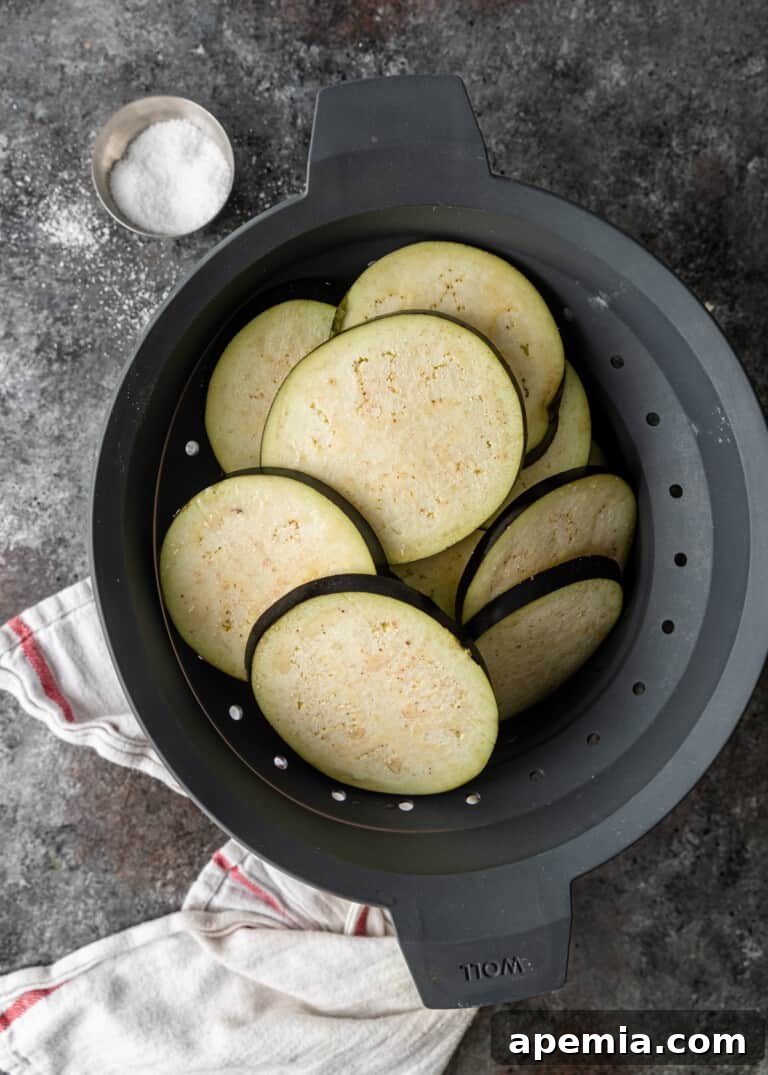
- Prepare the Eggplant: Begin by washing your eggplants thoroughly. Slice them into approximately ⅜ inch thick rounds. Generously salt both sides of each slice and arrange them in a colander. Allow them to sit for at least 30 minutes (or up to an hour) to draw out excess moisture and any bitterness. This step is crucial for achieving perfectly tender, non-soggy eggplant layers. After draining, pat them thoroughly dry with paper towels before cooking.
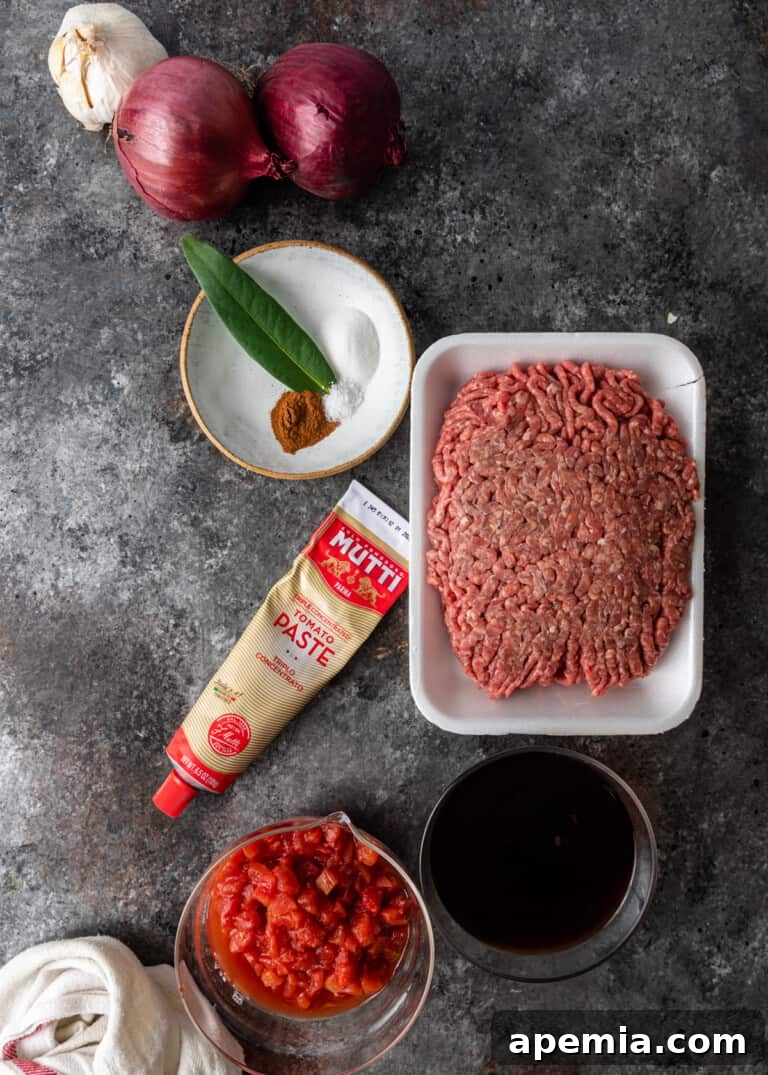
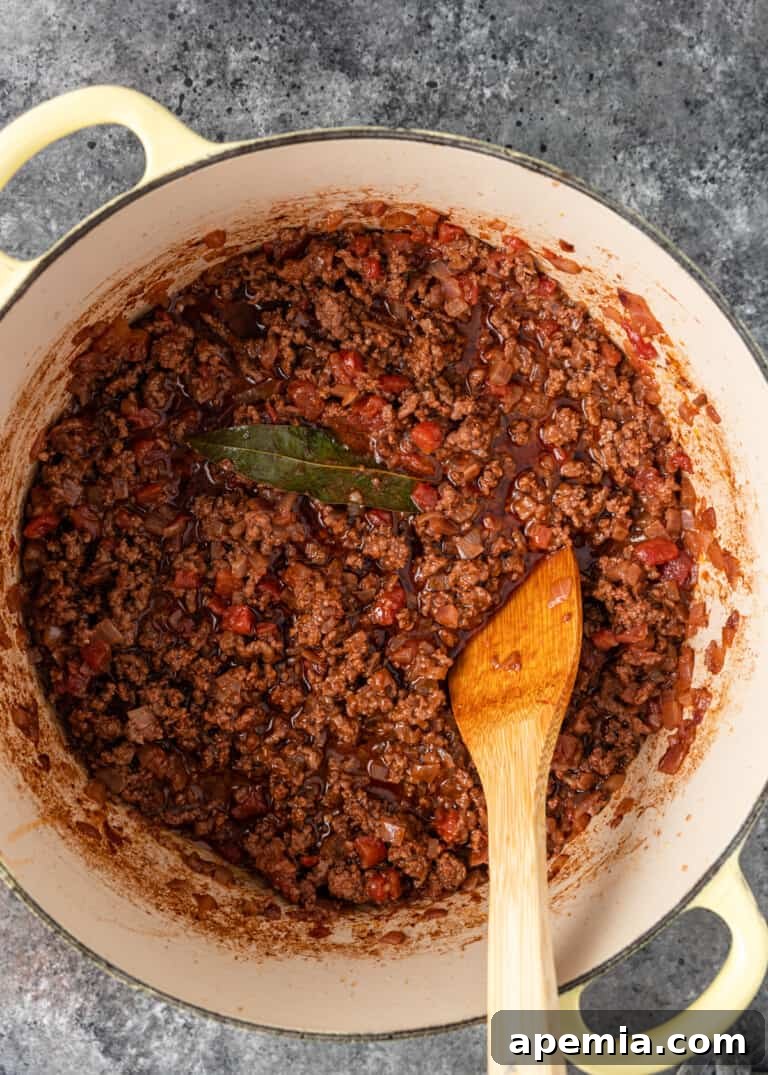
- Craft the Flavorful Meat Sauce: Heat two tablespoons of olive oil in a large Dutch oven or a deep, heavy-bottomed skillet over medium-high heat. Add the chopped red onions and sauté them for several minutes until they soften and become translucent. Stir in the minced garlic and cook for another two minutes until fragrant. Next, add the ground beef, breaking it apart with a spoon as it browns. Once the meat is nicely browned, stir in the sugar, kosher salt, and ground cinnamon. The cinnamon is a signature spice in Greek meat sauces for Moussaka, adding a warm, subtle sweetness.
- Infuse with Wine & Tomatoes: Incorporate the tomato paste, mixing it well with the meat and cooking for about a minute to deepen its flavor. Pour in the dry red wine, scraping the bottom and sides of the pan with your spoon to deglaze and incorporate all those flavorful browned bits. Stir in the chopped tomatoes and finally, add the bay leaf.
- Simmer to Perfection: Give the sauce a good stir, then reduce the heat to low. Leave the pot uncovered to allow the sauce to gently simmer for at least 30 minutes, giving the liquids time to reduce and the flavors to meld beautifully. Once reduced, remove the pan from the heat, carefully retrieve the bay leaf, and discard it.
- Prepare the Creamy Béchamel Sauce: In a separate large skillet, melt the butter over medium heat. Once melted, gradually whisk in the flour to create a smooth roux. Cook this roux on low heat for two minutes, stirring constantly, to cook out the raw flour taste. Slowly, while continuously whisking, pour in the room temperature whole milk. Continue whisking until the sauce thickens and becomes smooth. Season with kosher salt, ground black pepper, and a pinch of ground nutmeg – another essential spice for Greek béchamel. Remove the skillet from the heat, then stir in ¾ cup of grated Parmesan cheese until fully melted and incorporated. Let the sauce cool for about five minutes before whisking in the two egg yolks one at a time. This adds a beautiful richness and helps the béchamel set perfectly.
-
Cook the Eggplant Slices: Now, it’s time to cook the prepared eggplant. You have two options:
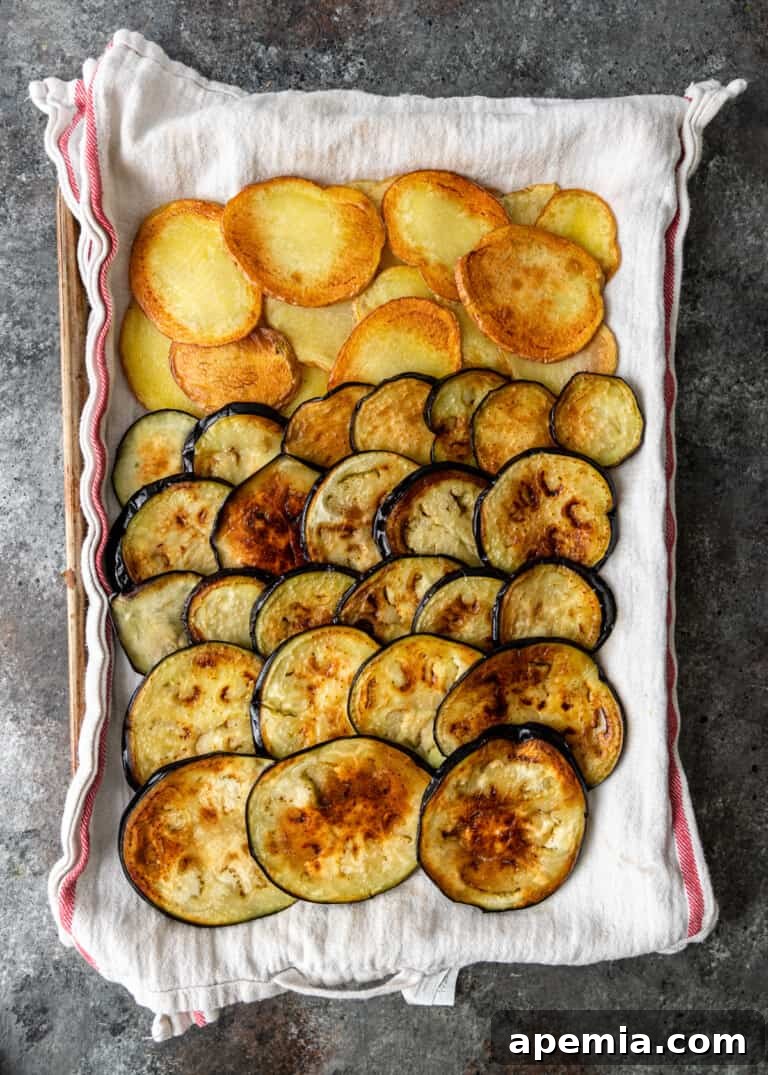
- Frying Method: Heat a generous amount of olive oil in a large skillet over medium-high heat. Fry the eggplant slices in batches until they are golden brown and tender on both sides.
- Baking Method: For a lighter alternative, arrange the eggplant slices on a baking sheet lined with parchment paper. Bake in a preheated 425°F (220°C) oven for about 15 minutes, flipping halfway through, until golden brown and softened.
Regardless of the method, drain the cooked eggplant slices on a paper towel-lined plate to absorb any excess oil.
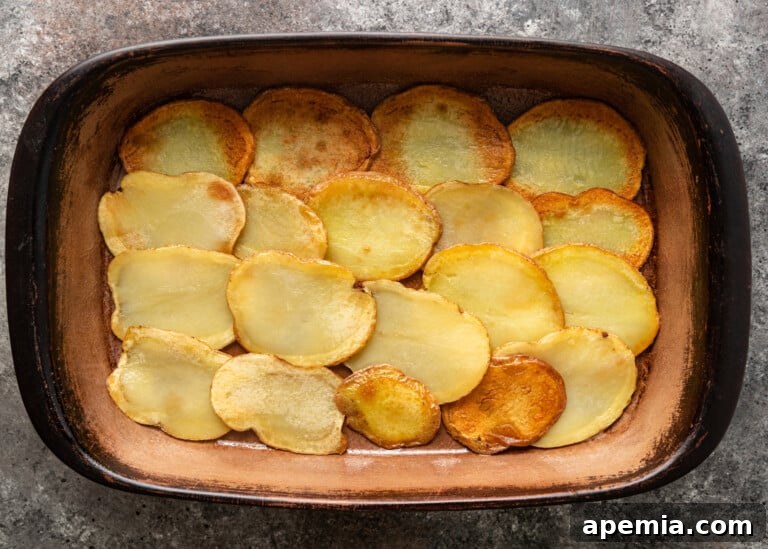
- Cook the Potatoes: Slice the yellow potatoes into ⅜ inch thick rounds. Similar to the eggplant, you can either fry them in the same skillet with olive oil until golden brown and tender, or bake them on a lined baking sheet in a 425°F (220°C) oven for 15 minutes, flipping once, until they achieve a lovely golden hue. Once cooked, sprinkle them with a little salt and set them aside on a paper towel-lined plate to drain.
- Preheat Oven & Prepare Baking Dish: Preheat your oven to 350°F (175°C). Grease the bottom and sides of a 13×9-inch baking pan generously with butter or olive oil to prevent sticking and ensure a beautiful crust.
-
Assemble Your Moussaka Layers: This is where the magic comes together!
- Start by arranging the cooked potato slices in an overlapping pattern on the bottom of the prepared baking pan, creating a sturdy base.
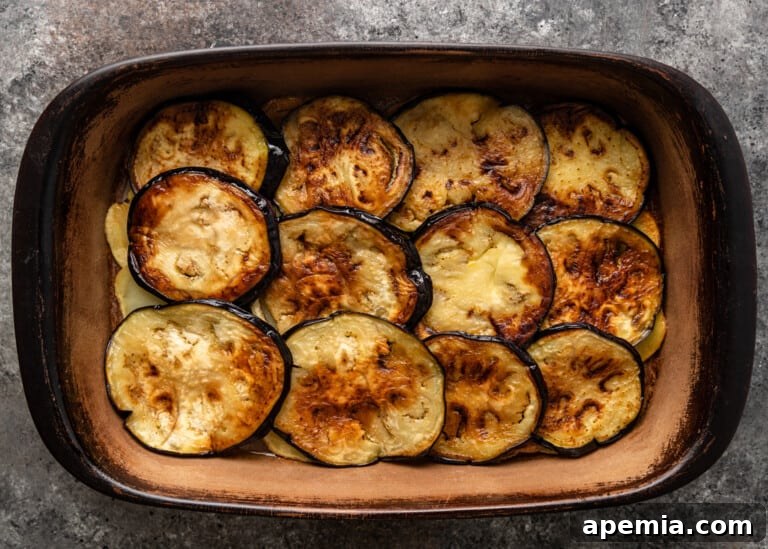
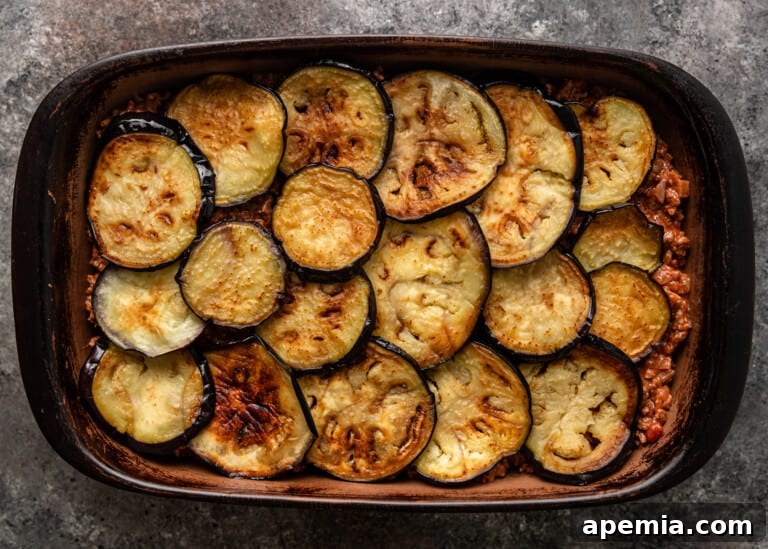
- Follow with a layer of half of the cooked eggplant slices, also overlapping slightly.
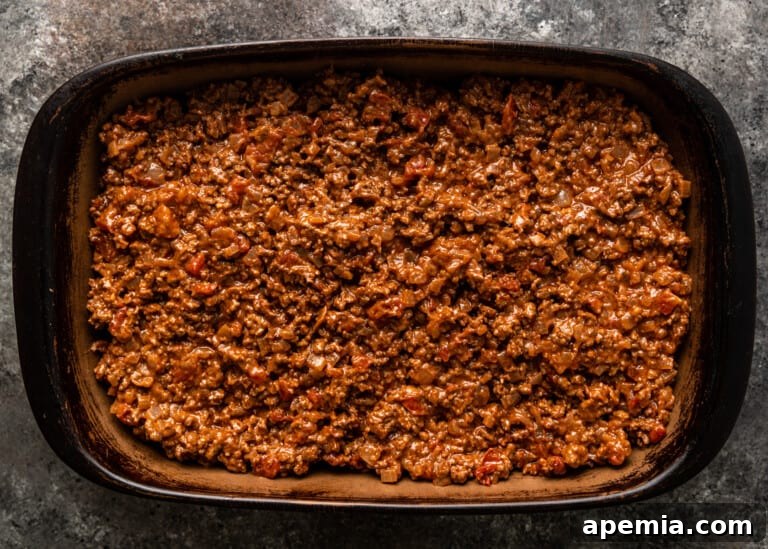
- Evenly spread the rich meat sauce over the eggplant layer.
- Add the remaining eggplant slices on top of the meat sauce, ensuring good coverage.
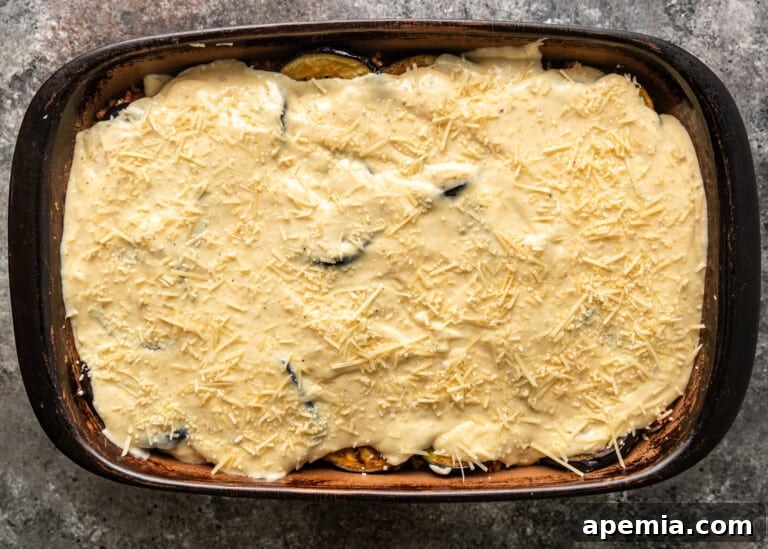
- Finally, pour the creamy béchamel sauce over the entire dish, spreading it smoothly to the edges. Sprinkle the remaining ¼ cup of Parmesan cheese over the béchamel for a golden, cheesy topping.
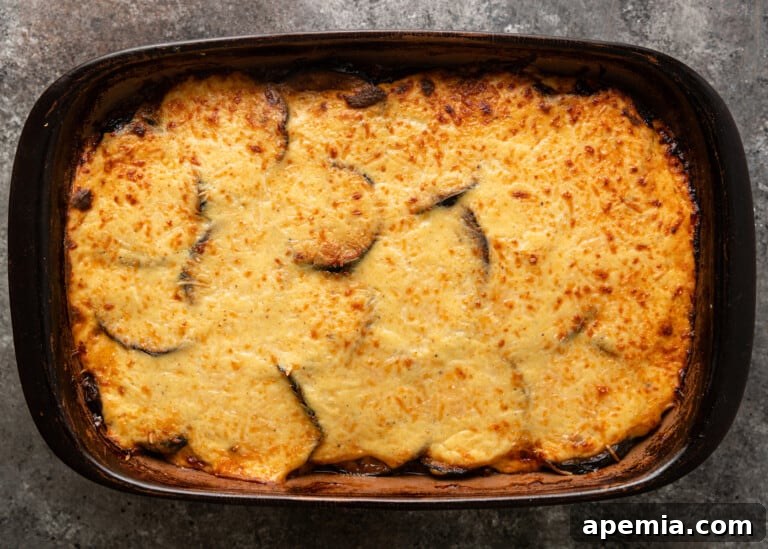
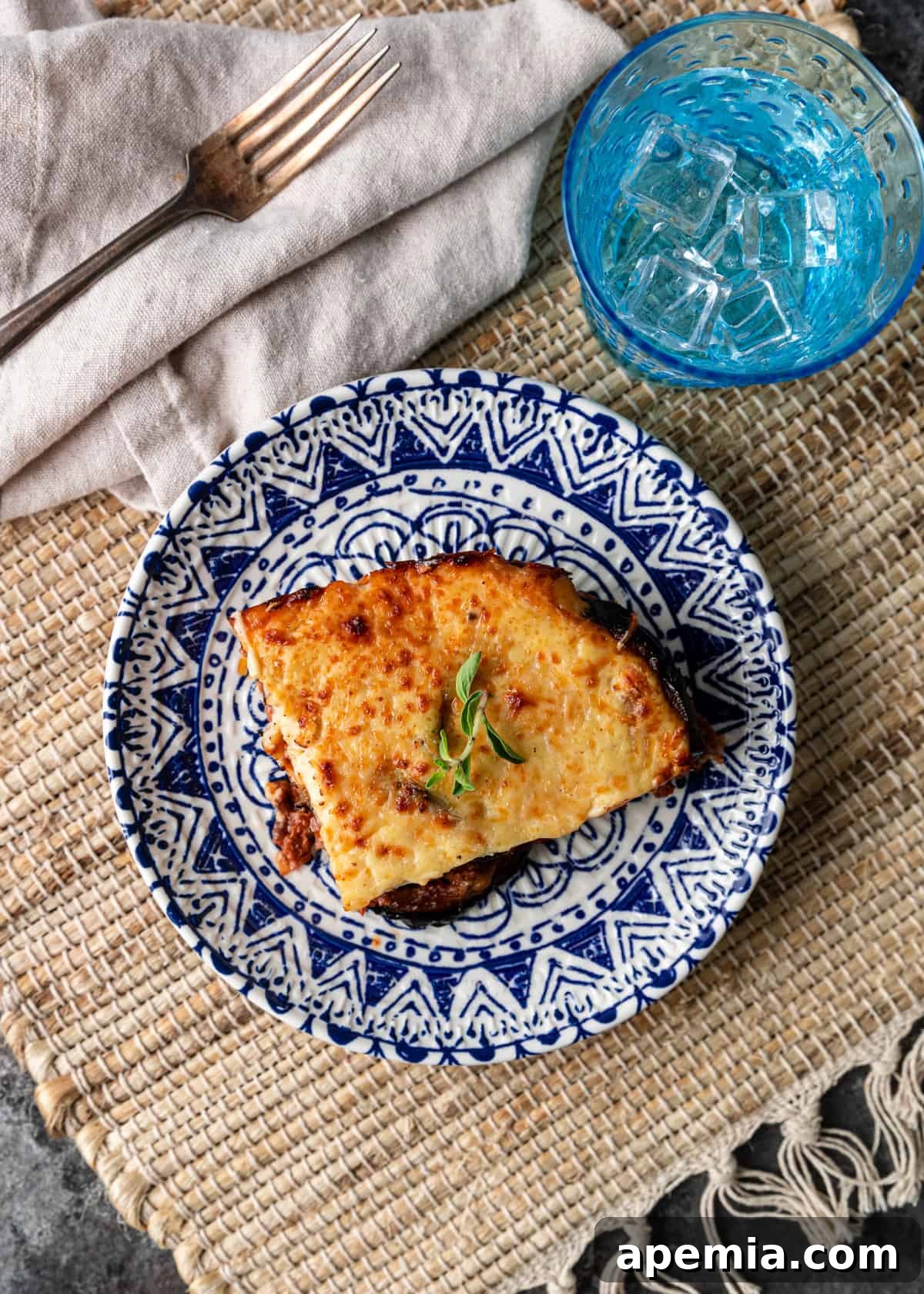
- Bake & Cool: Carefully place the assembled casserole dish into the preheated oven. Bake, uncovered, for approximately 60 minutes, or until the top is a beautiful golden brown and the béchamel is bubbling around the edges. Once baked, remove the Moussaka from the oven and let it cool for at least 15-20 minutes before slicing and serving. This resting period is crucial, allowing the layers to set and making it easier to cut neat, individual portions.
Is Moussaka Greek? Exploring its Rich History
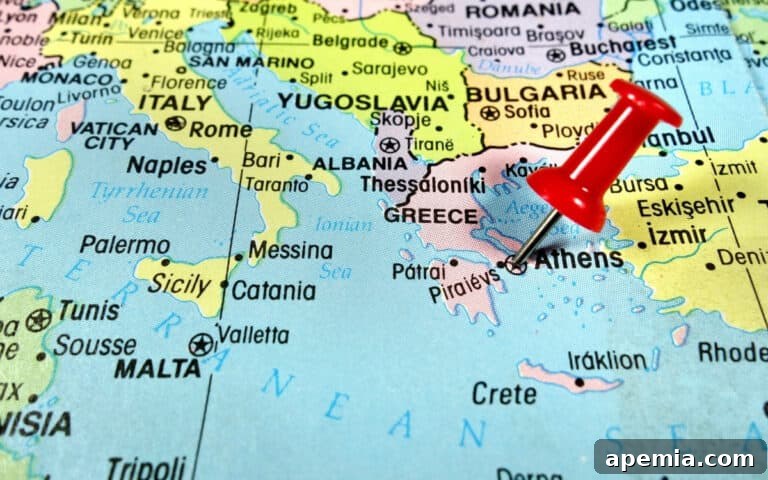
While Moussaka is undeniably a cornerstone of Greek cuisine and perhaps its most famous iteration, the dish’s true origins are more complex and reflect the rich culinary crossroads of the Mediterranean and Middle East. The term “moussaka” itself is thought to derive from an Arabic word, “musaqqa’ah,” meaning “moistened,” which points to an earlier, unlayered version often prepared with eggplant and tomatoes.
The Greek version, characterized by its distinctive layers of eggplant, ground meat (traditionally lamb or beef), tomatoes, and the crowning glory of a creamy béchamel sauce, gained prominence and its current form in the early 20th century. This specific layering and the addition of béchamel are often attributed to Nikolaos Tselementes, a celebrated Greek chef who modernized Greek cuisine by incorporating Western European culinary techniques, particularly French influences. His cookbooks popularized what we now recognize as classic Greek Moussaka.
However, similar eggplant-based casseroles exist throughout the Balkans, Turkey, and the Middle East, each with its own regional variations. For instance, Turkish Musakka typically features sautéed eggplant, ground meat, and tomatoes but without the béchamel. Other versions might include different vegetables, spices, or a yogurt-based topping. This fascinating history highlights Moussaka’s evolution, showcasing how diverse culinary traditions have blended over centuries to create this delicious and globally beloved dish. So, while its identity is deeply intertwined with Greece, Moussaka’s story is a testament to the shared culinary heritage of a vibrant region.
Frequently Asked Questions About Moussaka
Is Moussaka the same as lasagna?
While Greek Moussaka is sometimes jokingly referred to as “eggplant, potato, and beef lasagna,” this nickname can be quite misleading. While both are layered casserole dishes, they are fundamentally different in their core ingredients and flavor profiles.
- Lasagna is a classic Italian dish that typically uses wide pasta noodles, a rich tomato-based meat sauce (often bolognese), various cheeses (like ricotta, mozzarella, and Parmesan), and is sometimes finished with a béchamel sauce. Its defining characteristic is the pasta.
- Greek Moussaka, on the other hand, is distinctly Mediterranean. It features layers of pan-fried or baked eggplant and sometimes potatoes, a savory ground meat sauce (typically beef or lamb) deeply flavored with warm spices like cinnamon and nutmeg, and it’s always crowned with a luxurious, creamy béchamel sauce. No pasta is involved!
It’s also important not to confuse Moussaka with Greek Pasticcio, which *is* a Greek lasagna-style dish, but it features layers of bucatini pasta, a rich bolognese sauce, and béchamel.
What is usually served with Greek Moussaka?
Moussaka is a wonderfully hearty and satisfying meal on its own, easily served à la carte. However, it also pairs beautifully with a variety of fresh and complementary side dishes to create a more complete and traditional Greek spread. Here are some top picks:
- Fresh Salads: A light, crisp salad is the perfect counterpoint to the richness of Moussaka. Options include a classic Greek Feta Salad, a vibrant Chopped Vegetable Salad, or any fresh green salad with a simple vinaigrette.
- Fresh Bread: Crusty bread is essential for soaking up any delicious juices. Serve with warm Turkish Sesame Bread (Simit), soft Pita Bread, or any good quality artisan loaf.
- Dips and Spreads: A selection of Mediterranean dips adds extra flavor and texture. Think creamy Hummus, refreshing Tzatziki (cucumber-yogurt dip), or a spicy Muhammara (Roasted Red Pepper Dip), often served with a side of chopped fresh vegetables.
- Roasted Vegetables: Enhance the vegetable goodness with a side of Greek Roasted Vegetables (Briam), or simply your favorite seasonal roasted greens.
Can I make Moussaka in advance?
Yes, absolutely! Moussaka is an excellent dish for making ahead, which can be a real time-saver, especially for entertaining. You can assemble your Moussaka completely, up to the point of baking, a day in advance.
Simply assemble all the layers in your baking dish as directed in the recipe. Once assembled, cover the dish tightly with plastic wrap or aluminum foil and store it in the refrigerator overnight. The next day, remove it from the fridge about 30 minutes before baking to allow it to come closer to room temperature. Then, pop it into a preheated 350°F (175°C) oven for about 45-60 minutes, or until it’s heated through, bubbling, and the béchamel topping is beautifully golden brown. If the top starts to brown too quickly, you can loosely cover it with foil.
Leftovers: Any leftover Moussaka stores wonderfully in an airtight container in the refrigerator for up to 3-5 days. To reheat, you can use individual portions in the microwave or place the entire dish (covered) back in a 325°F (160°C) oven until warmed through. It often tastes even better the next day as the flavors have more time to meld!
Share this recipe on Pinterest!
Love this Classic Greek Moussaka recipe? Help us spread the word by sharing it with your friends and followers on Pinterest!
Share on Pinterest
Classic Greek Moussaka
5 from 5 votes
This authentic Greek **moussaka** recipe features delicious layers of pan-fried eggplant, tender potatoes, and a savory, cinnamon-scented beef bolognese, all topped with a rich béchamel sauce and grated cheese.
Pin Recipe
Print Recipe
Video
Ingredients
Main Layers
- 2 lbs eggplants, sliced ⅜” thick
- 4 yellow potatoes, sliced ⅜” thick
- Vegetable oil, for frying
Meat Filling
- 2 tbsp olive oil
- 2 red onions, chopped
- 2 cloves garlic, minced
- 2 lbs ground beef (or lamb/mix)
- 1 tsp sugar
- 1 tsp kosher salt
- ½ tsp ground cinnamon
- 3 tbsp tomato paste
- 14 oz chopped tomatoes (canned or fresh)
- 1 cup dry red wine
- 1 bay leaf
Bechamel Sauce
- ¼ cup butter
- ⅓ cup all-purpose flour
- 2 ½ cups whole milk, at room temperature
- ¼ tsp kosher salt
- ¼ tsp ground black pepper
- ⅛ tsp ground nutmeg
- ¾ cup Parmesan cheese, grated (divided)
- 2 egg yolks
Instructions
- Prepare Eggplant: Slice eggplant into ⅜-inch rounds (Note 1). Season generously with salt on both sides and place in a colander for at least 30 minutes to drain excess liquid. Pat dry thoroughly before cooking.
- Start Meat Sauce: In a deep skillet or Dutch oven, heat 2 tablespoons of olive oil over medium-high heat. Sauté the chopped onion for several minutes until soft. Add the minced garlic and cook for another 2 minutes until fragrant. Add the ground beef, sugar, salt, and cinnamon. Brown the meat, breaking it into crumbles with a spoon.
- Deglaze & Simmer Meat Sauce: Stir in the tomato paste, mixing well, and cook for about 1 minute. Pour in the dry red wine and chopped tomatoes, scraping the bottom and sides of the pan to incorporate all browned bits. Add the bay leaf. Stir, reduce heat to low, and simmer uncovered for 30 minutes, allowing the liquid to reduce. Remove and discard the bay leaf.
- Prepare Bechamel Sauce: In a large skillet, melt ¼ cup butter over medium heat. Whisk in the flour to form a roux and cook on low for 2 minutes. Gradually whisk in the room temperature milk, salt, pepper, and nutmeg. Simmer, stirring often, until the sauce thickens. Remove from heat and stir in ½ cup of the grated Parmesan cheese. Let cool for 5 minutes, then whisk in the egg yolks.
- Cook Eggplant: Pat the drained eggplant slices completely dry. Either fry them in a large skillet with olive oil until golden brown on both sides, or bake them on a lined baking sheet in a 425°F (220°C) oven for 15 minutes, flipping halfway. Drain cooked eggplant on a paper towel-lined plate.
- Cook Potatoes: Slice yellow potatoes into ⅜-inch rounds. Either fry them in the same skillet with olive oil until golden brown, or bake them on a lined baking sheet in a 425°F (220°C) oven for 15 minutes, flipping halfway. Season with salt and drain on a paper towel-lined plate.
- Prepare Baking Dish: Preheat oven to 350°F (175°C). Grease the bottom and sides of a 9×13-inch baking dish with butter or olive oil.
- Assemble Moussaka: Layer the bottom of the pan with overlapping cooked potato slices. Follow with a layer of half of the cooked eggplant slices. Spread the meat sauce evenly over the first eggplant layer. Top the meat sauce with the remaining eggplant slices, overlapping to cover. Finally, pour and spread the béchamel sauce over the top eggplant layer, then sprinkle with the remaining ¼ cup of grated cheese.
- Bake & Rest: Bake uncovered for 60 minutes, or until the top is golden brown and bubbling. Let the Moussaka cool for at least 15-20 minutes before slicing and serving to allow the layers to set.
Notes
- Slicing eggplant into rounds, rather than lengthwise strips, helps the pieces hold together better during layering and baking, preventing them from falling apart.
Nutrition
The following nutritional information is an estimate provided by an online nutrition calculator per serving. It should not be considered a substitute for professional nutritionist’s advice.
- Calories: 507 kcal
- Carbohydrates: 30g
- Protein: 24g
- Fat: 31g
- Saturated Fat: 13g
- Trans Fat: 1g
- Cholesterol: 127mg
- Sodium: 642mg
- Potassium: 995mg
- Fiber: 5g
- Sugar: 10g
- Vitamin A: 495 IU
- Vitamin C: 22mg
- Calcium: 219mg
- Iron: 3mg
Have You Made This Recipe? Let Me Know on Instagram!
Tag @keviniscooking or use the hashtag #keviniscooking to share your delicious Moussaka creations!