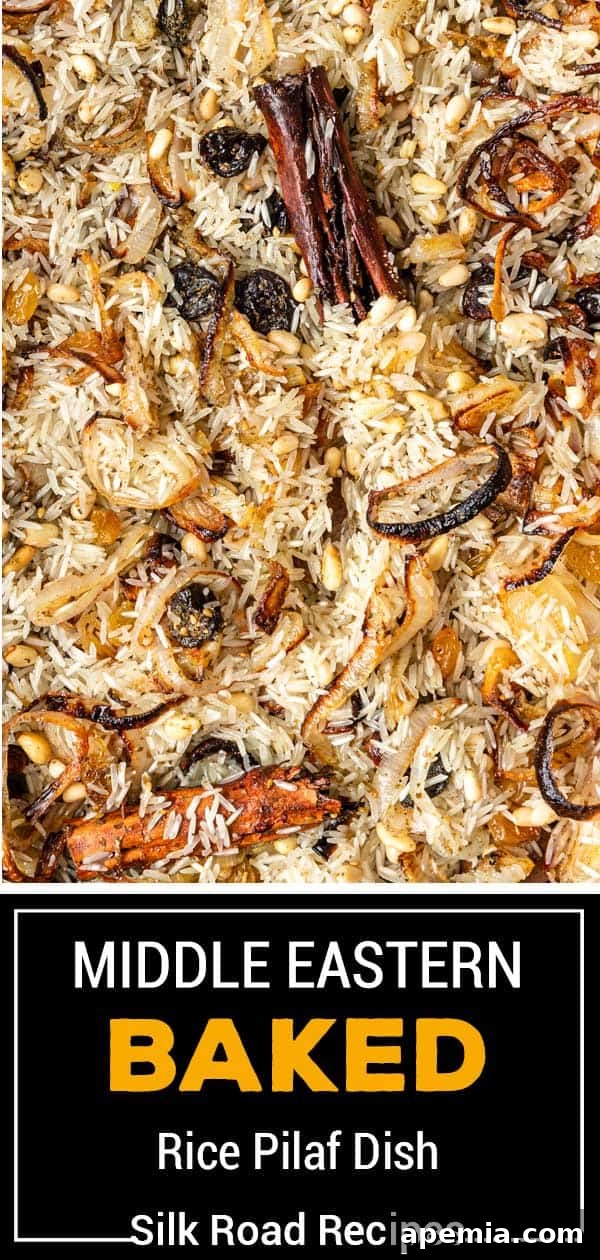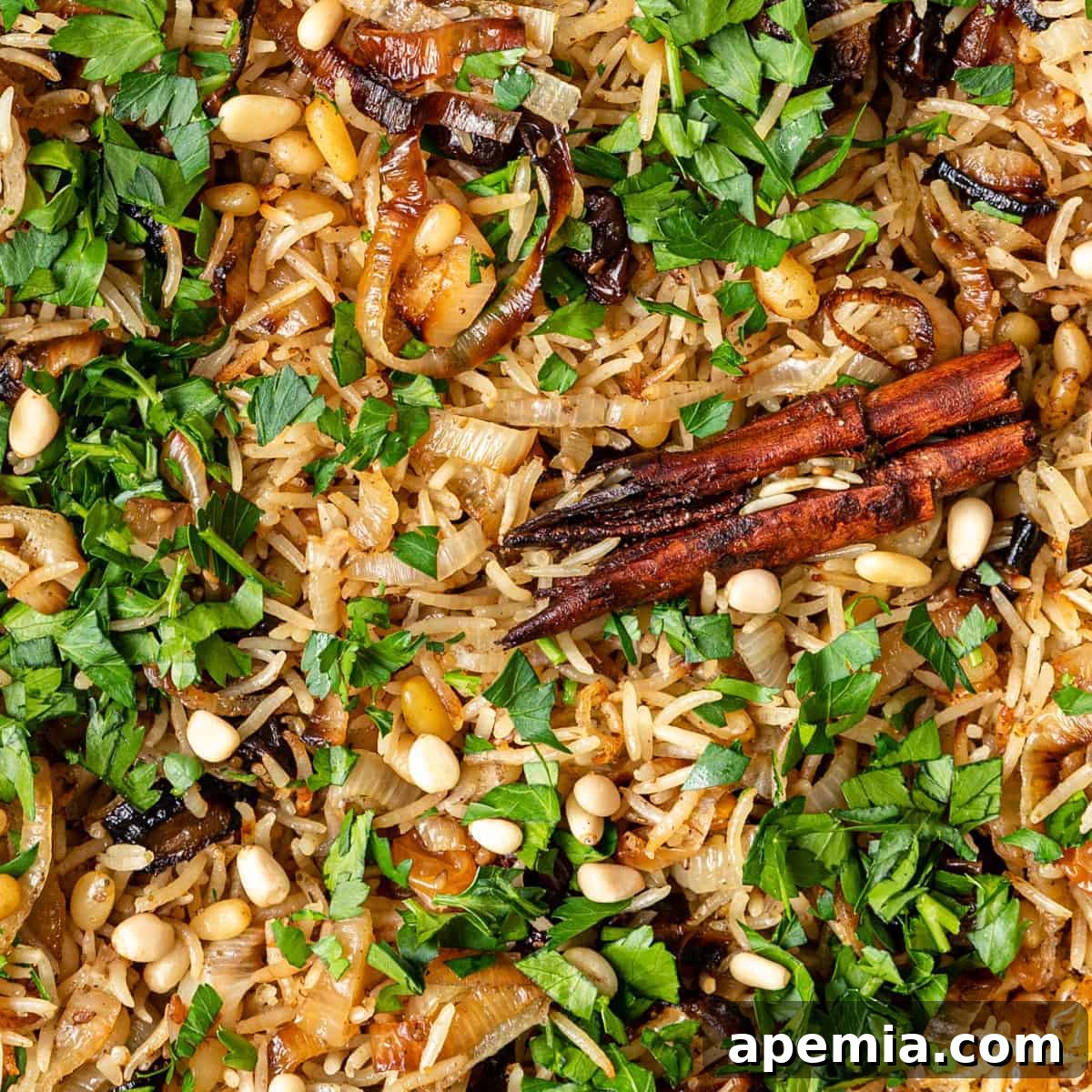
Prepare to elevate your culinary experience with this extraordinary **Middle Eastern Basmati Rice Pilaf recipe**. This isn’t just a side dish; it’s a vibrant tapestry of flavors and textures, meticulously crafted to bring the rich aromas of the Middle East directly to your table. Simple basmati rice undergoes a magical transformation, becoming an aromatic masterpiece infused with the sweetness of sautéed shallots, the earthy tang of zaatar spice, the chewiness of dried fruits, and the buttery crunch of toasted pine nuts. This baked version ensures every grain is perfectly tender and bursting with deep, complex flavors, making it an effortlessly elegant addition to any meal.
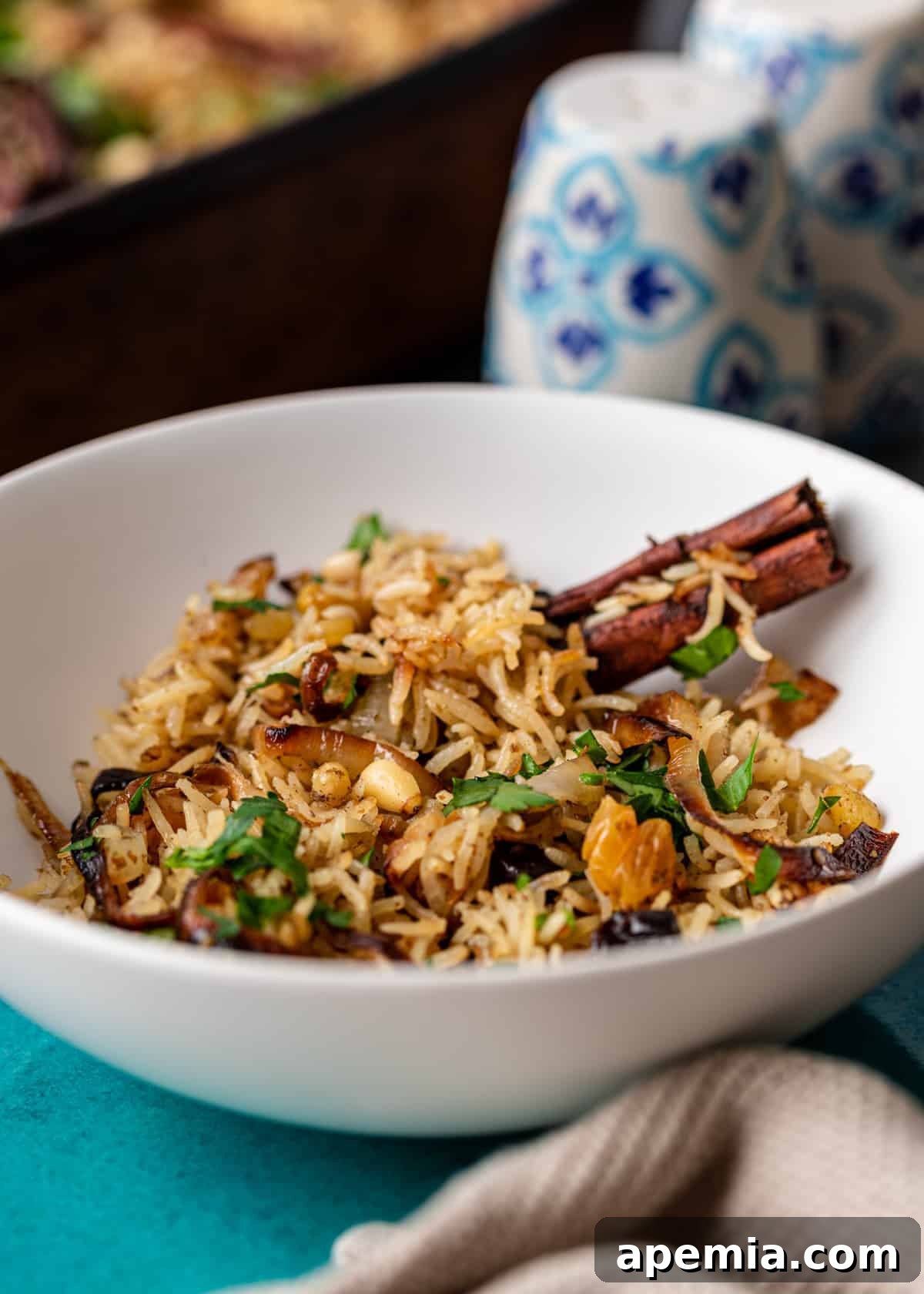
Each spoonful of this basmati rice pilaf is a delightful journey for your senses. You’ll savor the tender, fluffy texture of perfectly cooked basmati grains, brightened by the tangy sweetness of dried fruit. The buttery pine nuts add a satisfying crunch and nutty depth, while a generous blend of warming aromatic spices creates an unforgettable flavor profile. What makes this recipe truly special is the baking method. By slow-baking, the ingredients meld together harmoniously, allowing the flavors to fully develop and infuse every single grain of rice. The result is an intensely aromatic pilaf with an incredibly light, fluffy texture that will leave you craving more.
The versatility of rice in global cuisine is truly astounding, and this baked basmati rice pilaf stands as a testament to its transformative power. It exemplifies how a humble staple can be elevated into a work of culinary art with just a few carefully selected ingredients and a touch of creativity. Originating from regions where rice has been cultivated for millennia, pilaf dishes have a storied history, each variation telling a unique tale of local spices, ingredients, and culinary traditions. This particular recipe draws inspiration from the vibrant and hospitable kitchens of the Middle East, offering a taste of authentic regional charm.
If you’re looking to explore more exquisite rice preparations, be sure to try my Greek Lemon Rice for a zesty twist, my aromatic Persian Saffron Rice with Apricot, or another delightful Mediterranean Rice Pilaf. Each recipe offers a unique flavor adventure, highlighting the incredible diversity of rice in world cuisine.
Essential Ingredients and Smart Substitutions
Crafting the perfect Middle Eastern Basmati Rice Pilaf begins with selecting high-quality ingredients. Each component plays a crucial role in building the layered flavors and appealing textures of this dish.
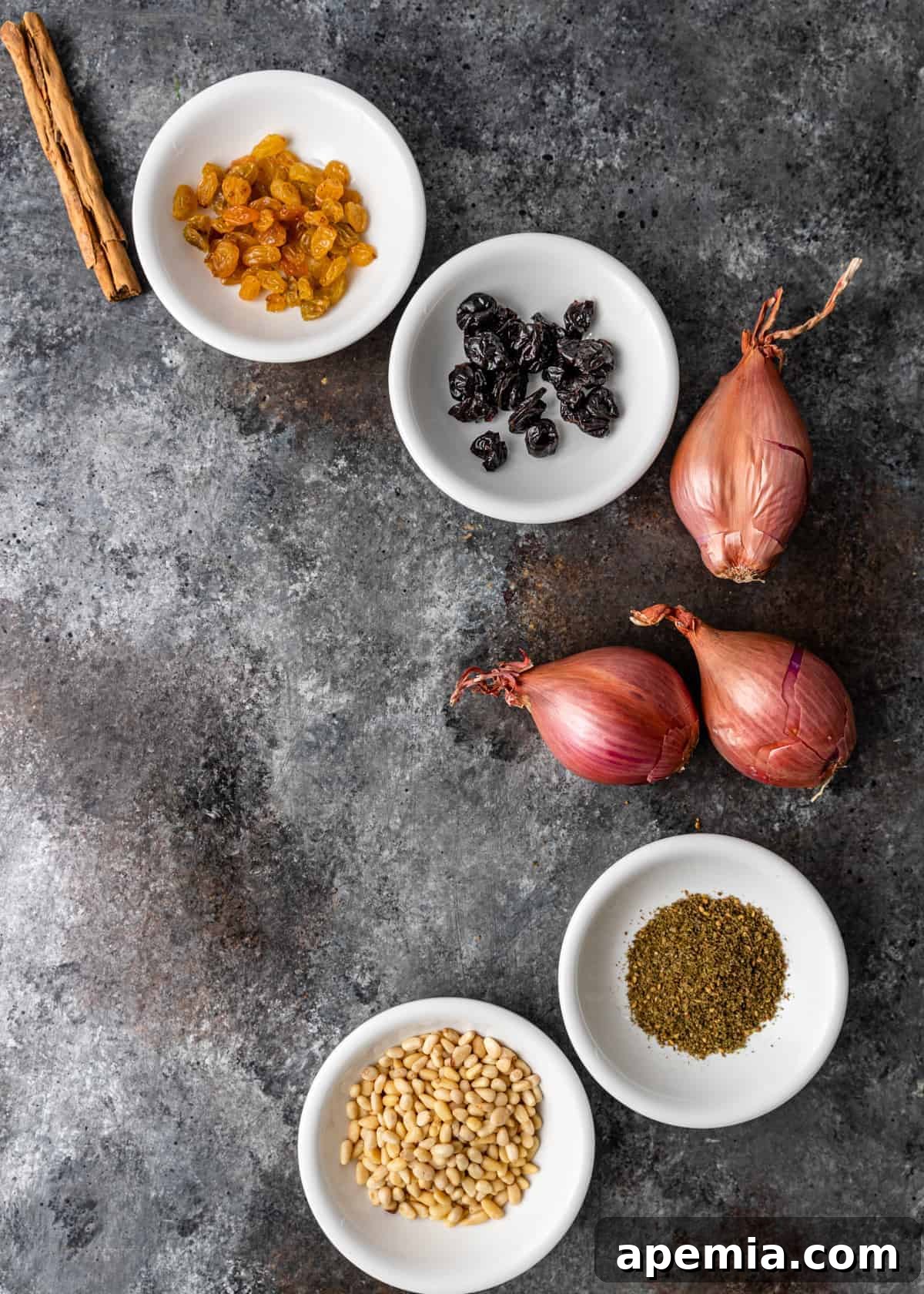
- Basmati Rice: The cornerstone of this pilaf, basmati rice is renowned for its long, slender grains, soft texture, and delicate, fragrant aroma. Its low starch content helps individual grains remain separate and fluffy after cooking, making it the ideal choice for pilaf. Both white and brown basmati rice can be used, though brown basmati will require a slightly longer cooking time due to its bran layer. When preparing basmati, consider rinsing it thoroughly under cold water until the water runs clear. This extra step helps remove excess starch, preventing stickiness and ensuring a perfectly fluffy result, though the baking method in this recipe already works wonders for grain separation.
- Shallots: These small, elongated members of the onion family contribute a sweet, delicate pungency and mild sharpness that is distinct from regular onions. When sautéed and baked, shallots caramelize beautifully, adding a depth of savory sweetness that forms the aromatic foundation of the pilaf. If shallots are unavailable, you can substitute with finely diced yellow onion, but be aware that the flavor will be slightly stronger.
- Dried Fruit: A key element for balancing the savory spices with a touch of sweetness and vibrant chewiness.
- Golden Raisins: These small, sun-dried grapes offer a concentrated burst of tangy sweetness and a delightful chewiness that complements the rice.
- Dried Cherries: Adding a bright, tart contrast, dried cherries introduce another layer of fruitiness and a pleasant textural dimension. You can experiment with other dried fruits like chopped apricots, cranberries, or even figs for varying flavor profiles. Just ensure they are plump and not overly dry.
- Pine Nuts: Also known as pinion nuts or pignoli, these small, soft, buttery morsels are actually the edible seeds of pine trees. When lightly toasted, they release a rich, nutty flavor and a delicate crunch that adds an irresistible element to the pilaf. Look for them in the baking or nut aisle of your grocery store. If pine nuts are hard to find or too costly, chopped blanched almonds or cashews can make a suitable and more budget-friendly alternative, though the flavor will differ slightly.
- Zaatar Spice: This iconic Middle Eastern spice blend is a cornerstone of the region’s cuisine and provides the signature aromatic heart of this pilaf. A typical zaatar blend features dried thyme, oregano, and marjoram, ground cumin, and sumac, combined with toasted sesame seeds and a touch of salt. Thyme lends an earthy, herbaceous note, sumac provides a bright, tangy citrus-like flavor, and sesame seeds offer a nutty crunch. You can find pre-made zaatar blends in most specialty food stores or international markets, or easily prepare your own homemade version for the freshest taste.
- Olive Oil: A good quality extra virgin olive oil is used to sauté the shallots, providing a rich, fruity base and helping to crisp the shallots beautifully before baking.
- Chicken Stock or Water: Chicken stock will infuse the rice with a deeper, richer flavor. However, water can also be used for a lighter, vegetarian-friendly version, allowing the other spices and ingredients to shine through more prominently.
- Cinnamon Stick: A whole cinnamon stick lends a warm, subtly sweet, and complex aroma to the pilaf as it bakes, without overpowering the other spices. Breaking it into pieces helps release its flavor more effectively.
- Salt and Pepper: Essential for seasoning and enhancing all the other flavors in the dish. Kosher salt is preferred for its pure taste and easy dissolution.
- Fresh Parsley: A final garnish of freshly chopped parsley adds a bright, herbaceous note and a pop of color, providing a beautiful contrast to the warm, spiced rice.
Understanding Pilaf: A Culinary Journey
What exactly defines a pilaf, and how does it differ from a simple bowl of boiled rice? The distinction lies primarily in the cooking technique and the rich tapestry of ingredients incorporated. A pilaf is not merely rice cooked in liquid; it’s a flavorful rice dish meticulously prepared to infuse every grain with profound taste and aroma. The process typically begins by sautéing rice in a fat, such as oil or butter, often alongside aromatic ingredients like onions, garlic, and a medley of spices. This initial sautéing step, known as *toasting* or *browning* the rice, is crucial as it helps to develop nutty flavors and seals the exterior of the rice grains, contributing to a distinctively fluffy texture where individual grains remain separate and tender.
Following the sautéing, a measured amount of hot liquid – usually broth (chicken, vegetable, or beef) or water – is added. The pot is then tightly covered, and the rice is allowed to simmer gently, either on the stovetop or, as in this recipe, baked in the oven. This covered cooking method traps the steam and ensures the rice absorbs all the flavorful liquid and aromatic essences. Ingredients like vegetables, various meats, succulent dried fruits, crunchy nuts, and fresh herbs are commonly added to pilafs, transforming them into diverse and satisfying one-pot meals or robust side dishes. The careful balance of fat, aromatics, liquid, and controlled cooking creates a dish far more complex and flavorful than basic boiled rice. Pilaf is a dish celebrated across Central Asia, the Middle East, India, and even parts of Europe, with countless regional variations, each boasting its unique blend of spices and accompaniments.
Step-by-Step Guide to Baking Your Basmati Rice Pilaf
This baked basmati rice pilaf recipe streamlines the cooking process, allowing the oven to do most of the work while ensuring maximum flavor infusion. Follow these detailed steps for a perfect pilaf every time:
- Prepare Your Oven and Dish: Begin by preheating your oven to a robust 450°F (232°C). This initial high temperature will help caramelize the shallots beautifully. Have a large, oven-safe casserole dish or a sturdy Dutch oven ready. Using a dish with a tight-fitting lid is crucial for trapping steam and ensuring the rice cooks evenly and absorbs all the flavors.
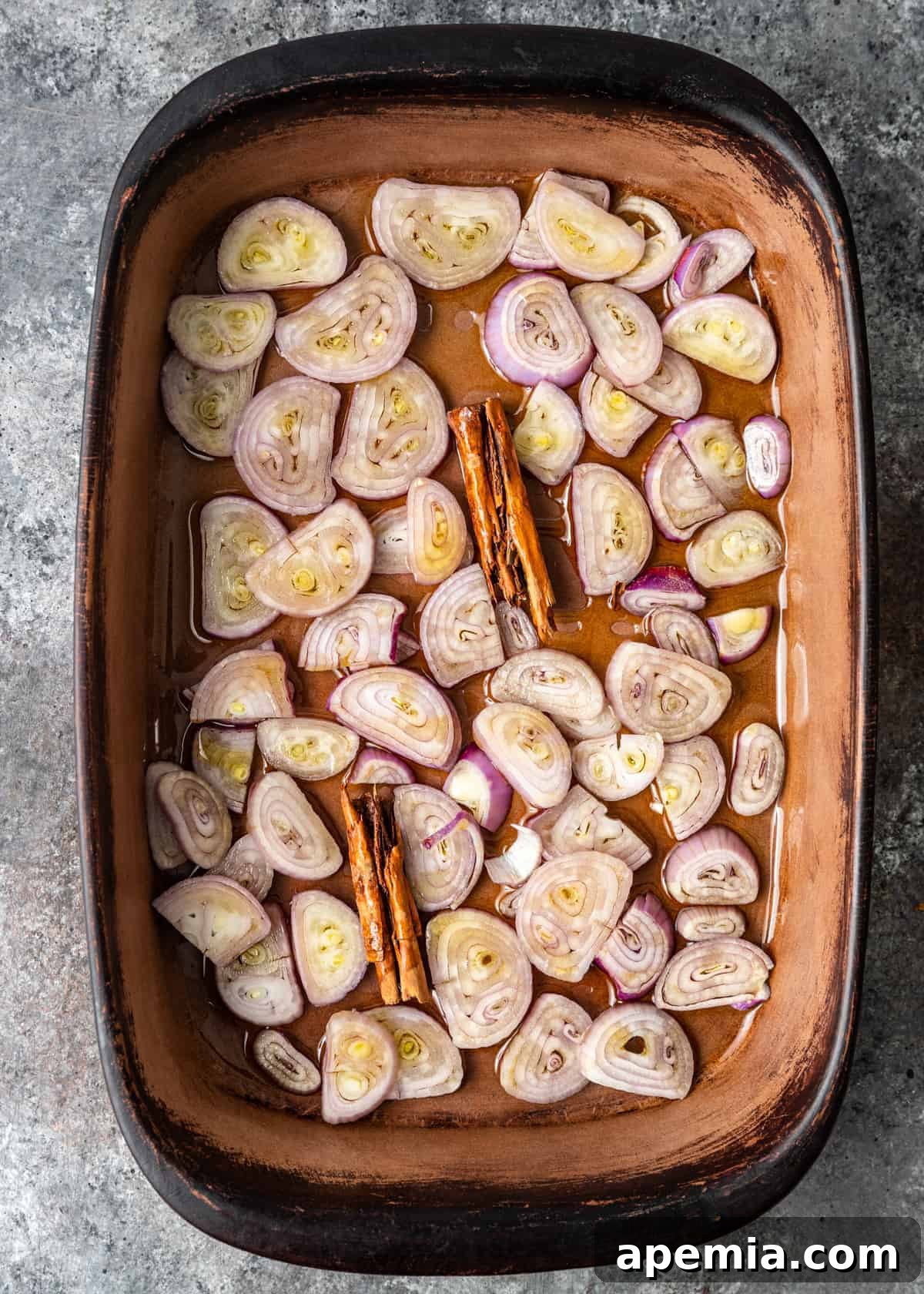
- Roast the Shallots and Cinnamon: Carefully trim the ends of your shallots, then peel away their papery outer layers. Slice the peeled shallots thinly and evenly, scattering them across the bottom of your chosen casserole dish or Dutch oven. Break the cinnamon stick into two or three pieces; this helps to release its aromatic oils more effectively. Add the cinnamon pieces to the dish with the shallots. Drizzle a generous amount of olive oil over the top, ensuring the shallots are lightly coated. Place the uncovered dish into the preheated oven to bake for 15 minutes. This step allows the shallots to soften and begin to caramelize, creating a sweet, savory foundation for your pilaf.
- Heat the Stock: While the shallots are roasting, prepare your cooking liquid. In a saucepan, bring the chicken stock or water to a rolling boil. Alternatively, for convenience, you can heat the liquid in a microwave-safe container for about 3 minutes on high, ensuring it is piping hot before adding it to the rice. Using hot liquid helps maintain the cooking temperature and ensures the rice begins cooking immediately upon combining.
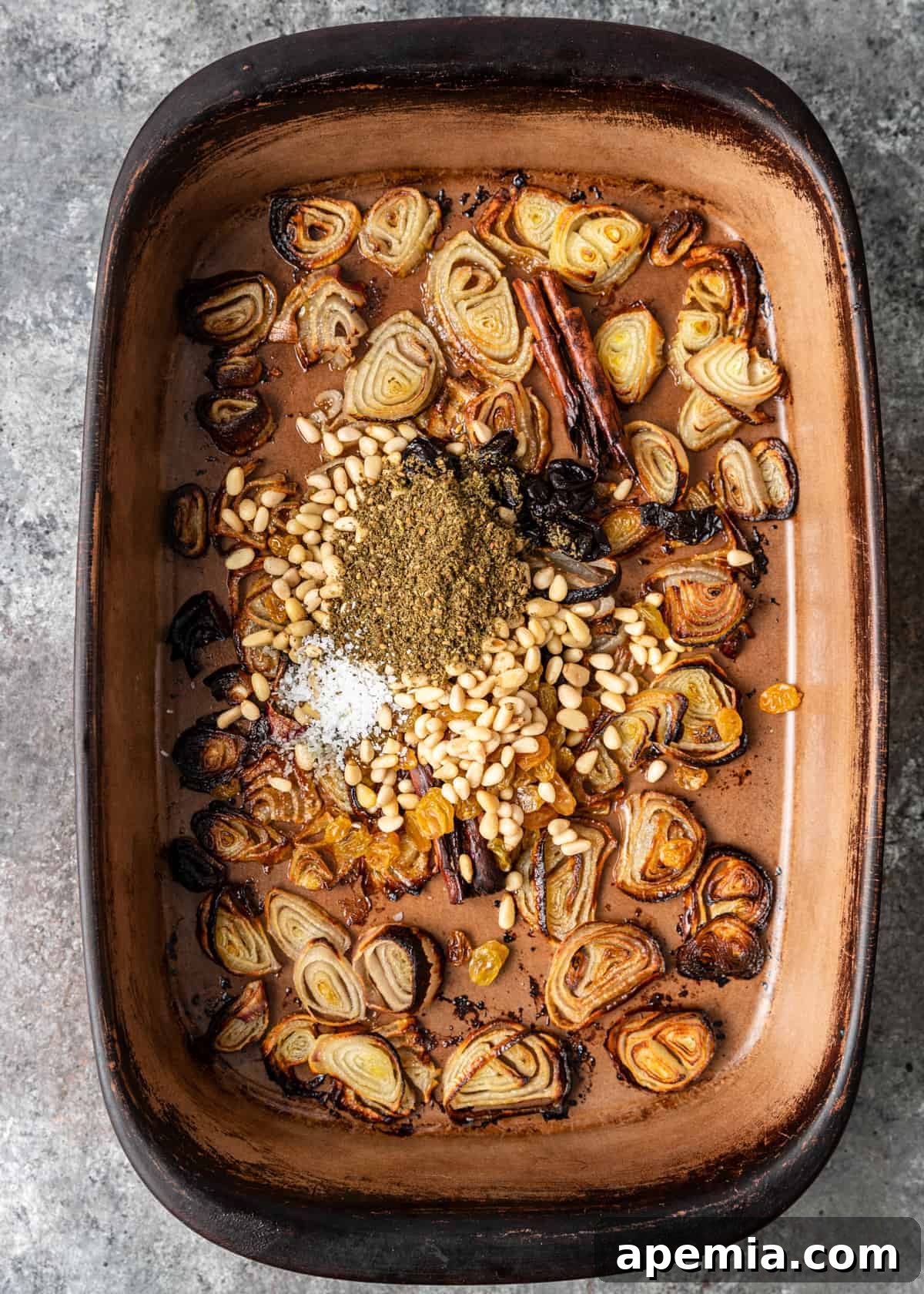
- Combine All Ingredients: Once the shallots have roasted for 15 minutes, carefully remove the casserole dish from the oven. To the warmed shallots and cinnamon, add the golden raisins, dried cherries, pine nuts, zaatar mix, kosher salt, ground black pepper, and the basmati rice. Gently stir all the ingredients together in the dish, ensuring they are well combined. With caution, pour the hot chicken stock or water evenly over the mixture. Stir once more, very gently, to ensure the rice is submerged and the ingredients are distributed without agitating the grains too much. It’s important not to over-stir at this stage to prevent the rice from becoming starchy.
- Seal and Bake the Pilaf: Tightly cover the casserole dish with its lid or a double layer of aluminum foil. A good seal is critical to trap all the steam and flavors, allowing the rice to cook perfectly. Return the covered basmati rice pilaf to the oven and continue baking for 25 minutes. Resist the urge to peek or lift the lid during this time, as this can release essential steam and interrupt the cooking process.
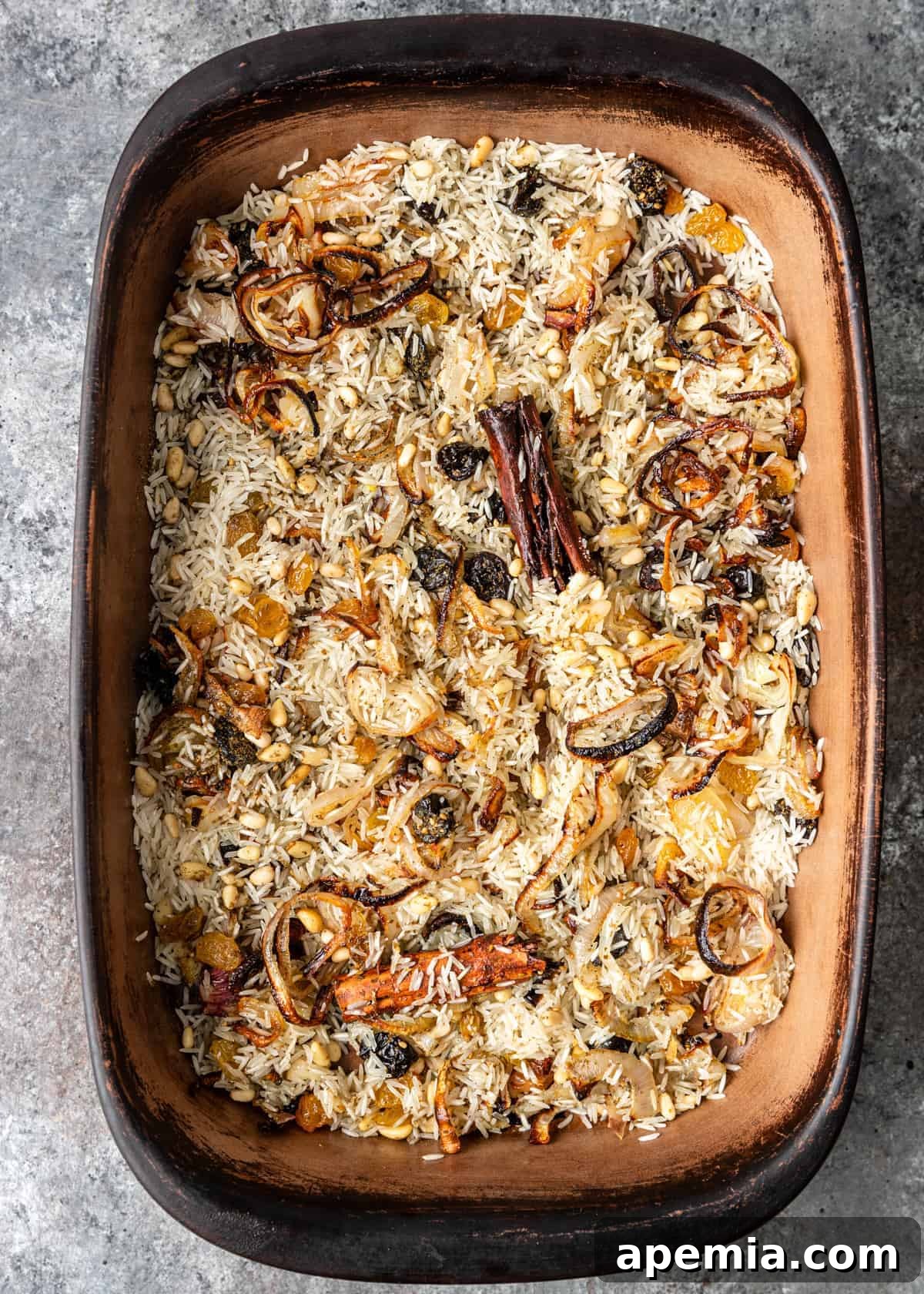
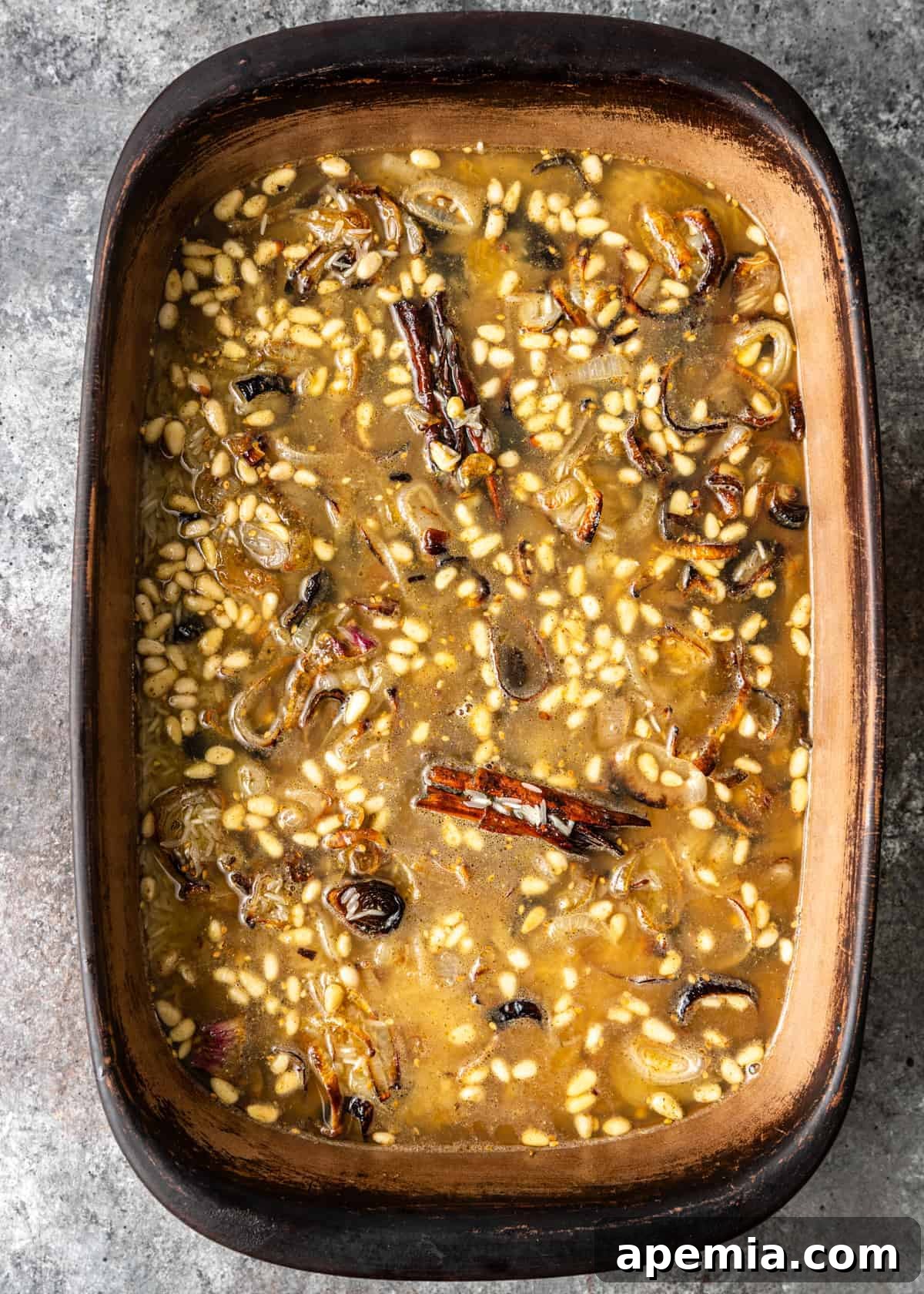
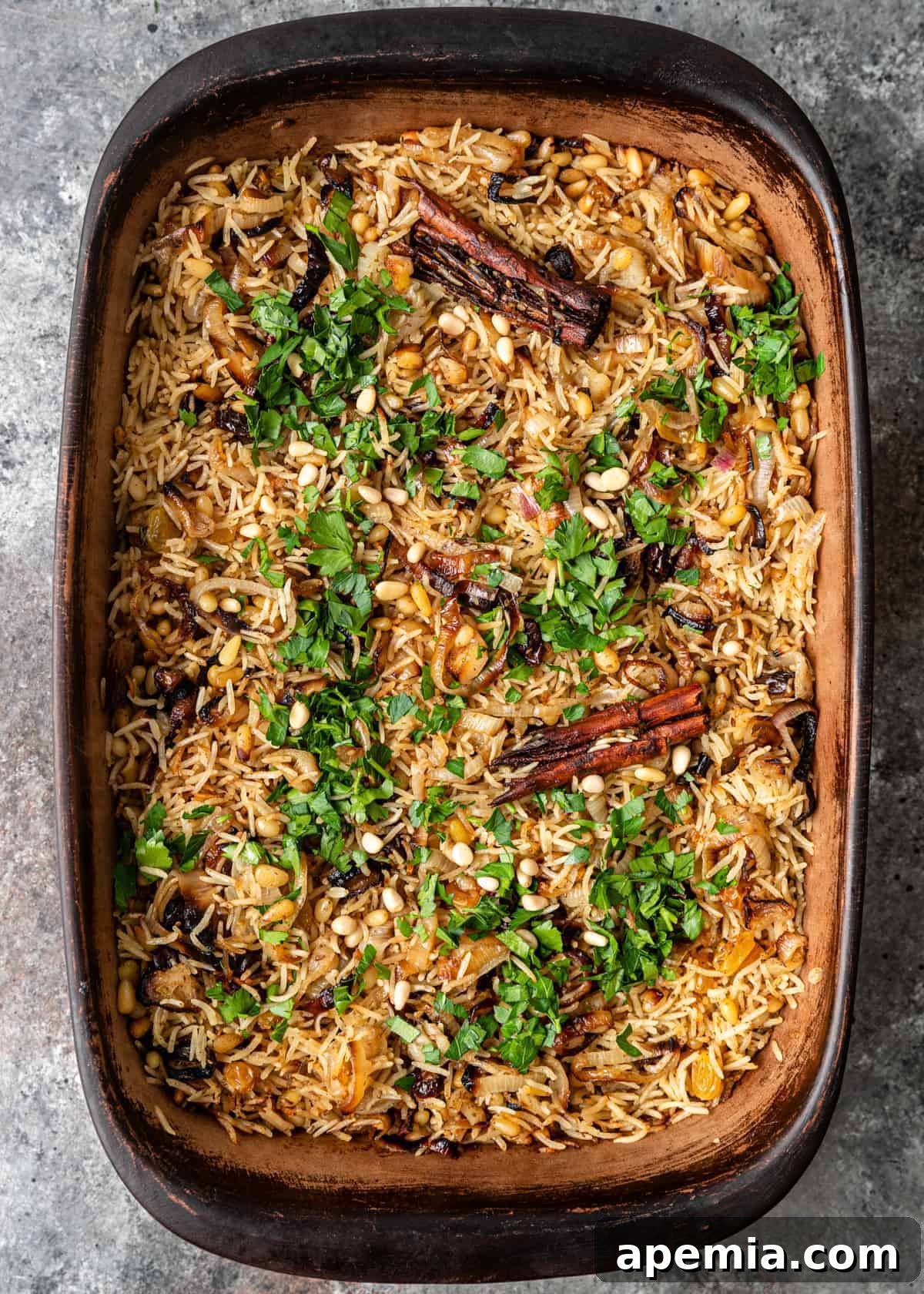
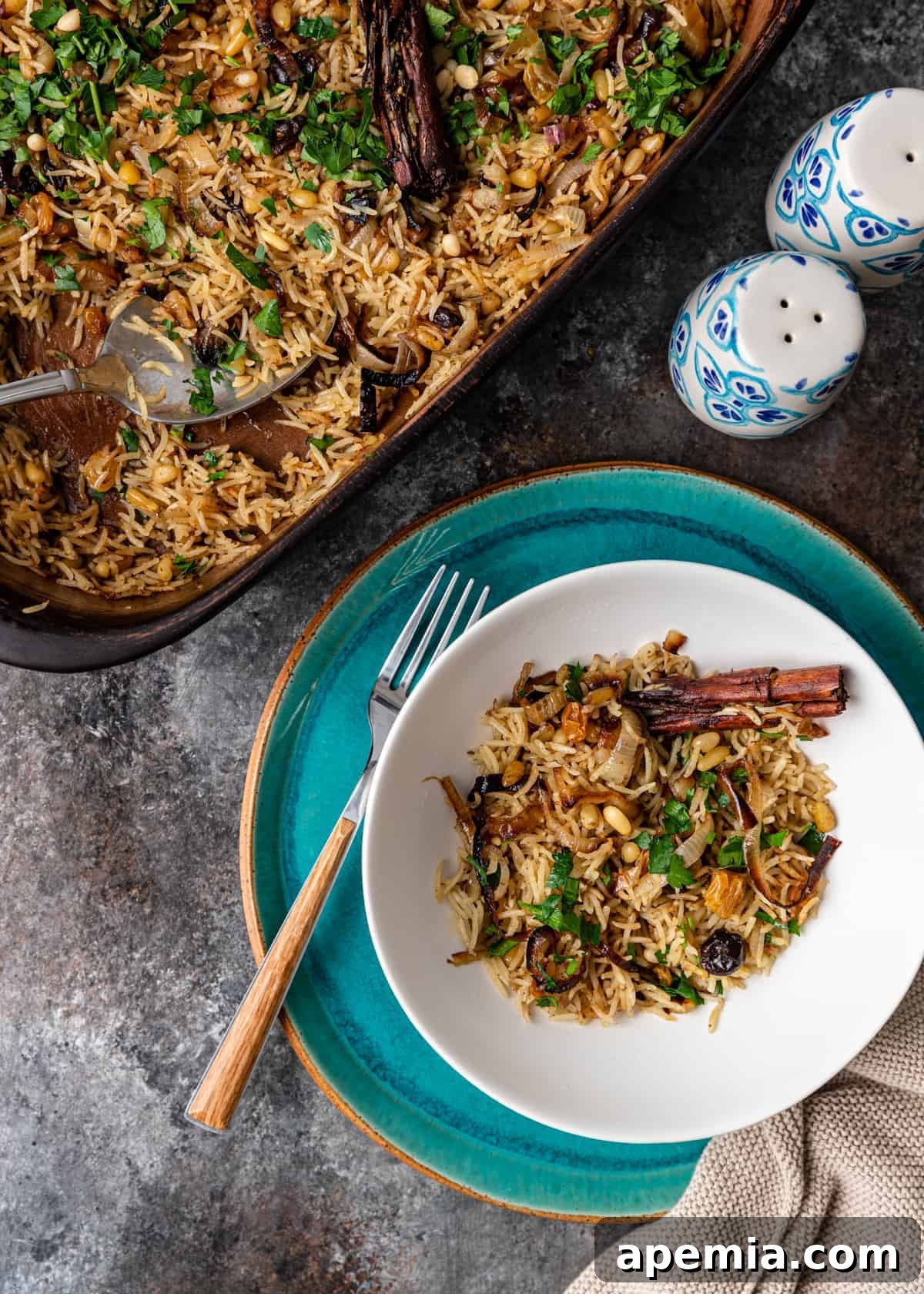
- Rest, Fluff, and Serve: After 25 minutes of baking, remove the dish from the oven, but whatever you do, **do not remove the lid or foil immediately**. This crucial “resting” period allows the rice to continue steaming in its residual heat, ensuring any remaining liquid is absorbed and the grains become incredibly fluffy and separated. Let it rest, still covered, on your counter for at least 10 minutes. Once rested, carefully remove the lid or foil. Use a fork to gently fluff the rice, separating the grains and incorporating the delicious caramelized bits from the bottom. Stir in the freshly chopped parsley for a burst of color and herbaceous freshness. Serve your aromatic Middle Eastern Basmati Rice Pilaf immediately as a stunning and flavorful side dish.
Frequently Asked Questions About Rice Pilaf
What makes a rice pilaf recipe different from regular rice?
The primary distinctions between regular boiled rice and a flavorful rice pilaf lie in their cooking methods and the ingredients used. Regular rice is typically boiled in water, often uncovered, with minimal or no added spices, salt, or other ingredients. The goal is usually a neutral base. A rice pilaf recipe, however, is deliberately designed to infuse the rice with a complex array of flavors from the very beginning. Pilafs involve an initial sautéing step where rice is toasted in oil or butter, often with aromatics like shallots or onions and a blend of highly fragrant spices. This toasting adds depth and helps prevent the grains from sticking. The rice is then simmered in a flavorful liquid, such as chicken broth, and can include a variety of complementary ingredients like dried fruits, toasted nuts, fresh herbs, or even meats and vegetables. All these ingredients are cooked together in a tightly covered vessel (whether on the stovetop, in a Dutch oven, or baked in the oven like this recipe) to trap the aromatics and steam, maximizing flavor absorption and resulting in distinct, fluffy grains.
What pairs well with basmati rice pilaf?
This baked basmati pilaf is incredibly versatile and serves as a perfect side dish to add a significant dose of flavor and elegance to almost any meal. Its rich, aromatic profile complements a wide range of main courses, particularly those found in Middle Eastern and Mediterranean cuisines. Here are some of my top recommendations to get you started:
- Grilled or Roasted Meats: Its earthy sweetness is an ideal match for succulent grilled lamb, beef, or chicken. Consider pairing it with Lebanese Kafta (Beef or Lamb), tender Chicken Koobideh, or juicy Persian Chicken Kabob.
- Hearty Stews and Tagines: The pilaf’s ability to absorb flavors makes it excellent with rich, saucy dishes like Lamb Tagine with Apricots and Dates.
- Poultry Dishes: It beautifully complements poultry, especially those with fruity or spiced profiles, such as Pomegranate Chicken or Chicken with Orange and Cherries.
- Meatballs: For a comforting meal, serve it alongside Persian Meatballs or lighter Fish Kofta Meatballs.
- Vegetarian Options: It also pairs wonderfully with roasted vegetables, lentil dishes, or a simple fresh salad for a complete vegetarian meal.
Why is my rice pilaf mushy?
A mushy rice pilaf is a common frustration, but it’s usually due to one of a few key factors. First and foremost, the **type of rice** you choose is crucial. While several long-grain rice varieties might work as substitutes, not all rice is created equal. For a fluffy pilaf, it’s essential to avoid medium to short-grain rices like Jasmine or arborio, as they contain higher starch levels and are designed to release starch, resulting in a stickier, gummier texture that is unsuitable for pilaf.
Secondly, **rinsing the rice** is a simple yet effective step. Although the baking method used in this recipe is designed to promote separate grains, giving your basmati rice a good rinse under cold running water until the water runs clear can significantly help remove excess surface starch. This minimizes the chances of the grains clumping together and ensures that desirable fluffy outcome.
Lastly, **accurate measurement of cooking liquid and precise cooking time** are paramount. Too much liquid will cause the rice grains to over-absorb and break down, leading to mushiness. Conversely, too little liquid will result in undercooked, hard grains. Similarly, cooking the pilaf for too long can also lead to an overcooked, mushy consistency. Always adhere closely to the recommended liquid-to-rice ratio and cooking times, and use a timer for precision. Remember, the resting period after baking is also vital for the final texture, allowing the rice to steam and firm up without becoming overcooked.
Share this delightful recipe on Pinterest!
Love this recipe? Share it with the world on Pinterest and inspire others to try this amazing Middle Eastern dish.
Share on Pinterest
Still Hungry?
Subscribe to my Newsletter and follow me on Facebook, Pinterest, Instagram and YouTube for all my latest recipes and videos. Don’t miss out on more delicious culinary adventures!
Middle Eastern Basmati Rice Pilaf Recipe Card
This Middle Eastern Basmati Rice Pilaf recipe is an easy-to-make, baked dish filled with fluffy basmati rice, tender dried fruit, crunchy pine nuts, and zesty zaatar spice, perfect for a flavorful side.
Recipe Details
- Servings: 6
- Prep Time: 15 mins
- Cook Time: 25 mins
- Resting Time: 10 mins
- Total Time: 50 mins
Video
Learn how to make this delicious Basmati Rice Pilaf with our step-by-step video guide!
Note: The embedded video is a placeholder. Please replace “https://www.youtube.com/embed/zUD8Izua” with the actual YouTube embed URL if available, or remove this section if no video is to be displayed.
Ingredients
- 4 large shallots
- 1 stick cinnamon
- 1/4 cup olive oil
- 1/4 cup golden raisins
- 1/4 cup dried cherries
- 1/4 cup pine nuts
- 1 tbsp zaatar spice
- 1/2 tsp kosher salt
- 1/4 tsp ground black pepper
- 1 1/2 cups basmati rice
- 2 1/2 cups chicken stock or water
- 1/4 cup parsley, chopped
Instructions
- Preheat your oven to 450°F (232°C).
- Trim and thinly slice the shallots. Scatter them on the bottom of a large casserole dish or Dutch oven. Break the cinnamon stick into two pieces and add to the pan. Drizzle the olive oil over the shallots and cinnamon. Bake for 15 minutes.
- While the shallots roast, bring the chicken stock or water to a boil in a saucepan, or heat it in the microwave for 3 minutes until very hot.
- Remove the casserole dish from the oven. Carefully add the raisins, cherries, pine nuts, zaatar spice, salt, pepper, and basmati rice to the dish. Pour the hot chicken stock or water over the ingredients, stirring gently to mix everything thoroughly. Cover the dish tightly with its lid or aluminum foil to create a tight seal.
- Return the covered dish to the oven and bake for 25 minutes.
- After baking, remove the dish from the oven and let it stand, still covered, for at least 10 minutes on the counter. This crucial resting period allows the rice to finish absorbing the liquid and become perfectly fluffy. Finally, remove the lid or foil, gently fluff the rice with a fork, stir in the chopped fresh parsley, and serve immediately.
Notes
For Leftovers: Allow the cooked rice pilaf to cool completely before transferring it to an airtight container or a sealable freezer bag. Squeeze out any excess air from the bag before sealing. Freeze for up to 2 months. To thaw, simply let the pilaf come to room temperature, then add a tablespoon of water, cover, and steam in the microwave for 2-3 minutes on high heat until warmed through. Fluff with a fork and enjoy.
Nutrition
Calories: 361kcal | Carbohydrates: 51g | Protein: 7g | Fat: 14g | Saturated Fat: 2g | Cholesterol: 3mg | Sodium: 343mg | Potassium: 260mg | Fiber: 2g | Sugar: 8g | Vitamin A: 422IU | Vitamin C: 4mg | Calcium: 47mg | Iron: 2mg
The information shown is an estimate provided by an online nutrition calculator. It should not be considered a substitute for a professional nutritionist’s advice.
Recipe Meta
- Course: Side Dish
- Cuisine: Middle Eastern
- Author: Kevin
Have You Made This Recipe? Let Me Know on Instagram!
Tag @keviniscooking or use the hashtag #keviniscooking to share your culinary creations with me!