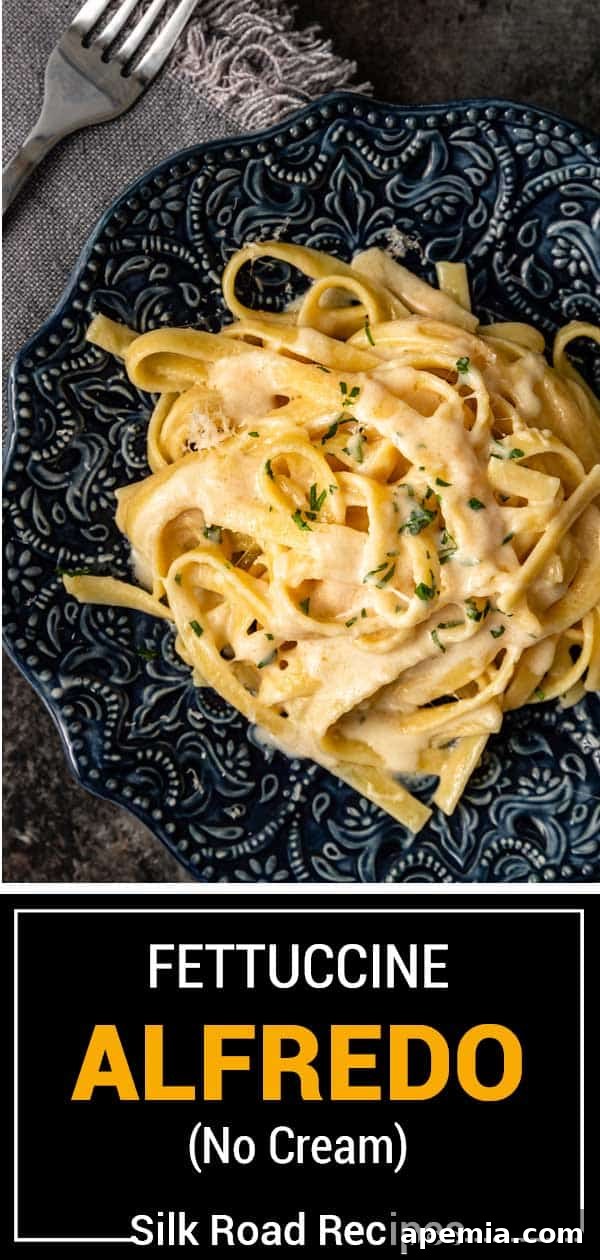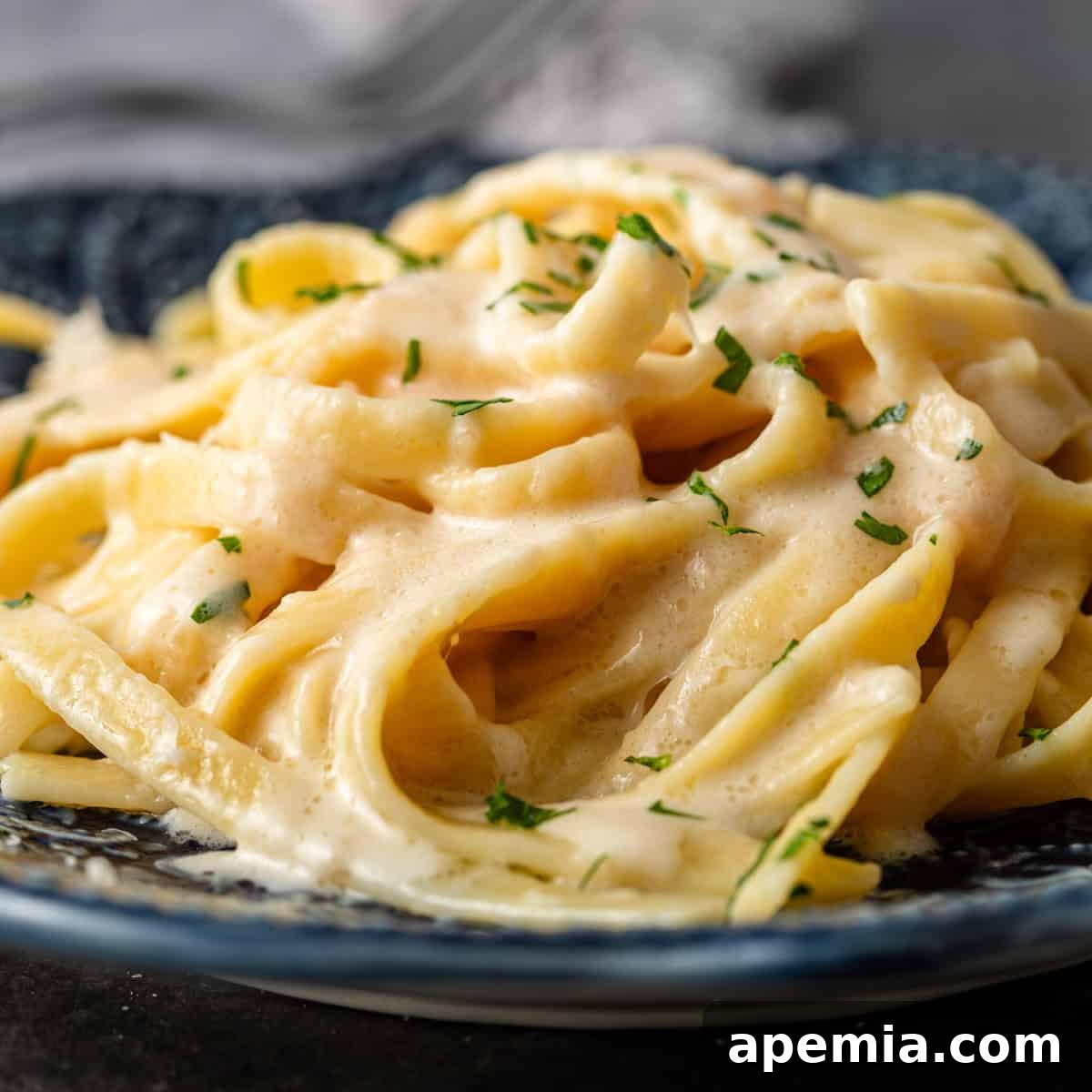
Prepare to transform your perception of this beloved Italian classic. Would you believe you can create a truly creamy, deeply decadent fettuccine alfredo with absolutely no cream? This authentic alfredo pasta recipe embraces the traditional Roman approach, requiring just three simple, high-quality ingredients to craft a silky, cheesy Italian masterpiece that comes together with astonishing ease.
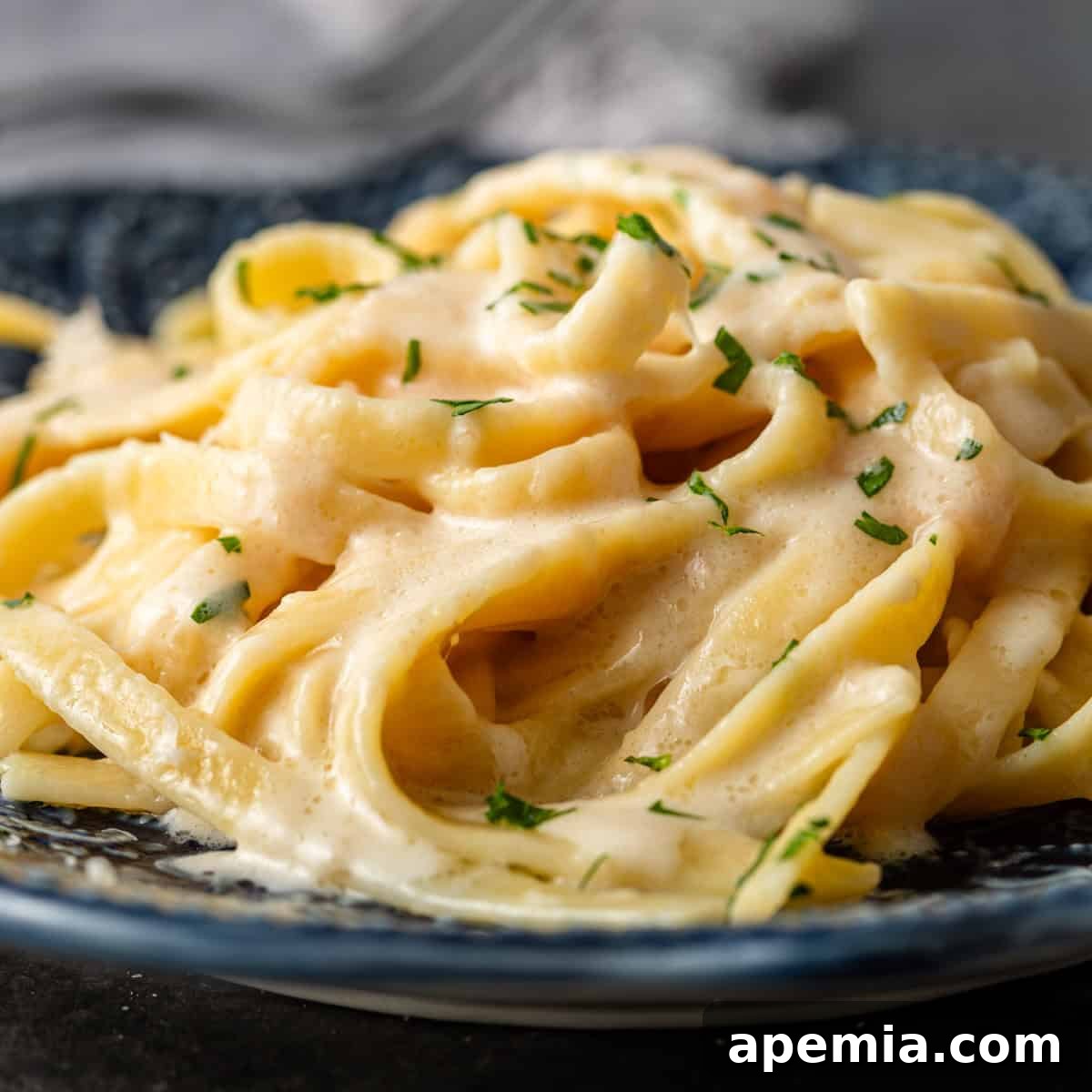
Authentic Fettuccine Alfredo: The Traditional No-Cream Italian Recipe
Step aside, restaurant-chain renditions. It’s time to rediscover the true essence of Fettuccine Alfredo. Many are surprised to learn that the original, traditional alfredo pasta recipe from Italy doesn’t call for any heavy cream at all. Forget the common misconception; this is the real deal, a culinary secret passed down through generations that proves simplicity can be the ultimate sophistication.
Known in its purest form as fettuccine al burro (fettuccine with butter), this iconic Roman dish achieves its signature rich, cheesy, and surprisingly creamy sauce using only two core ingredients: premium butter and finely grated Parmigiano-Reggiano cheese. While we do use these ingredients generously, the magic lies in their perfect harmony and the incredible technique of emulsification. It’s a remarkable culinary feat, demonstrating how humble components can yield a profoundly luxurious and satisfying meal without the need for additional dairy.
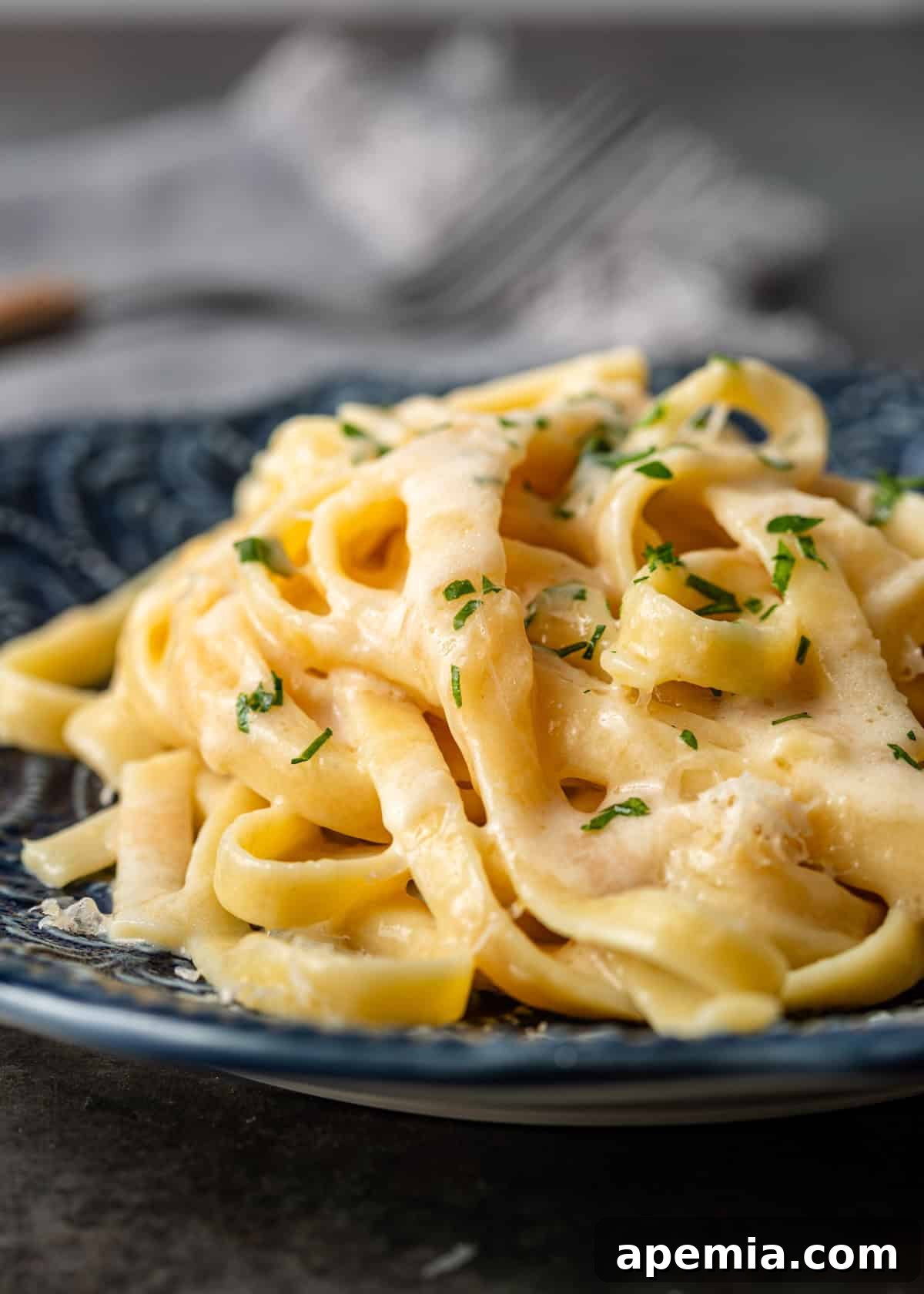
For those who enjoy a richer, creamier American-Italian style, I do have another homemade alfredo sauce recipe that incorporates heavy cream. However, I consistently find myself returning to this traditional version. It’s not just an easier and lighter alternative; it’s a testament to the elegant flavors that emerge when simple, high-quality ingredients are allowed to shine. This no-cream recipe can be whipped up in a flash, making it perfect for a weeknight indulgence or an impressive, yet effortless, dinner party dish.
Table of Contents
- The Magic of Emulsification: Unlocking the Creamy Texture
- Understanding Your Ingredients: Key Notes and Substitutions
- How to Master Authentic Fettuccine Alfredo: Step-by-Step
- Pro Tips for a Flawless Alfredo
- Recommended Kitchen Tools
- Storing and Reheating Leftovers
- Frequently Asked Questions
- Fettuccine Alfredo Pasta (No Cream) Recipe
This minimalist approach to Fettuccine Alfredo is more than just a recipe; it’s an experience in culinary revelation. The entire process is refreshingly straightforward, coming together in under 35 minutes – primarily dedicated to cooking the pasta. The subsequent steps of gently melting butter and skillfully incorporating fresh Parmesan with a touch of starchy pasta water are quick and immensely rewarding. The result is a foolproof dish that delivers a velvety, clinging sauce, perfectly coating every single strand of fettuccine. For a visual guide, be sure to watch the instructional video within the detailed recipe card below.
If you’re eager to expand your repertoire of Italian classics, I highly recommend trying my fiery Arrabiata sauce or the vibrant and fresh Salsa Verde pasta sauce. These recipes will help you master more delicious pasta preparations, bringing the taste of Italy directly to your kitchen.
The Magic of Emulsification: Unlocking the Creamy Texture
The true brilliance of authentic Fettuccine Alfredo lies in the scientific marvel of emulsification. This is the process that transforms simple butter, Parmesan, and pasta water into a single, cohesive, and lusciously creamy sauce, entirely without the addition of heavy cream. Understanding this principle is fundamental to mastering the dish.
When hot, starchy pasta water is introduced to melted butter and finely grated Parmesan, a remarkable reaction occurs. The heat from the freshly cooked pasta and the warmth of the reserved pasta water work together to perfectly melt the butter and gently warm the cheese. Crucially, the starch released from the pasta during cooking acts as a powerful emulsifier. These tiny starch molecules, along with the proteins from the Parmesan, create a bridge between the fat (from the butter) and the water (from the pasta water), allowing them to combine harmoniously instead of separating into greasy butter and watery cheese.
As you vigorously toss the hot pasta, butter, and cheese, the mechanical action aids in this emulsification process. The continuous motion breaks down the fat globules and disperses them evenly throughout the liquid. This forms a stable, homogenous mixture – a velvety sauce that is incredibly rich, smooth, and capable of clinging perfectly to every strand of fettuccine. The key is consistent tossing and maintaining enough heat to facilitate melting and blending without scorching. When executed correctly, the result is a gloriously glossy, silken sauce that epitomizes Italian culinary elegance – a testament to simple ingredients and clever technique.
Understanding Your Ingredients: Key Notes and Substitutions
(For exact measurements, please refer to the full recipe card below)
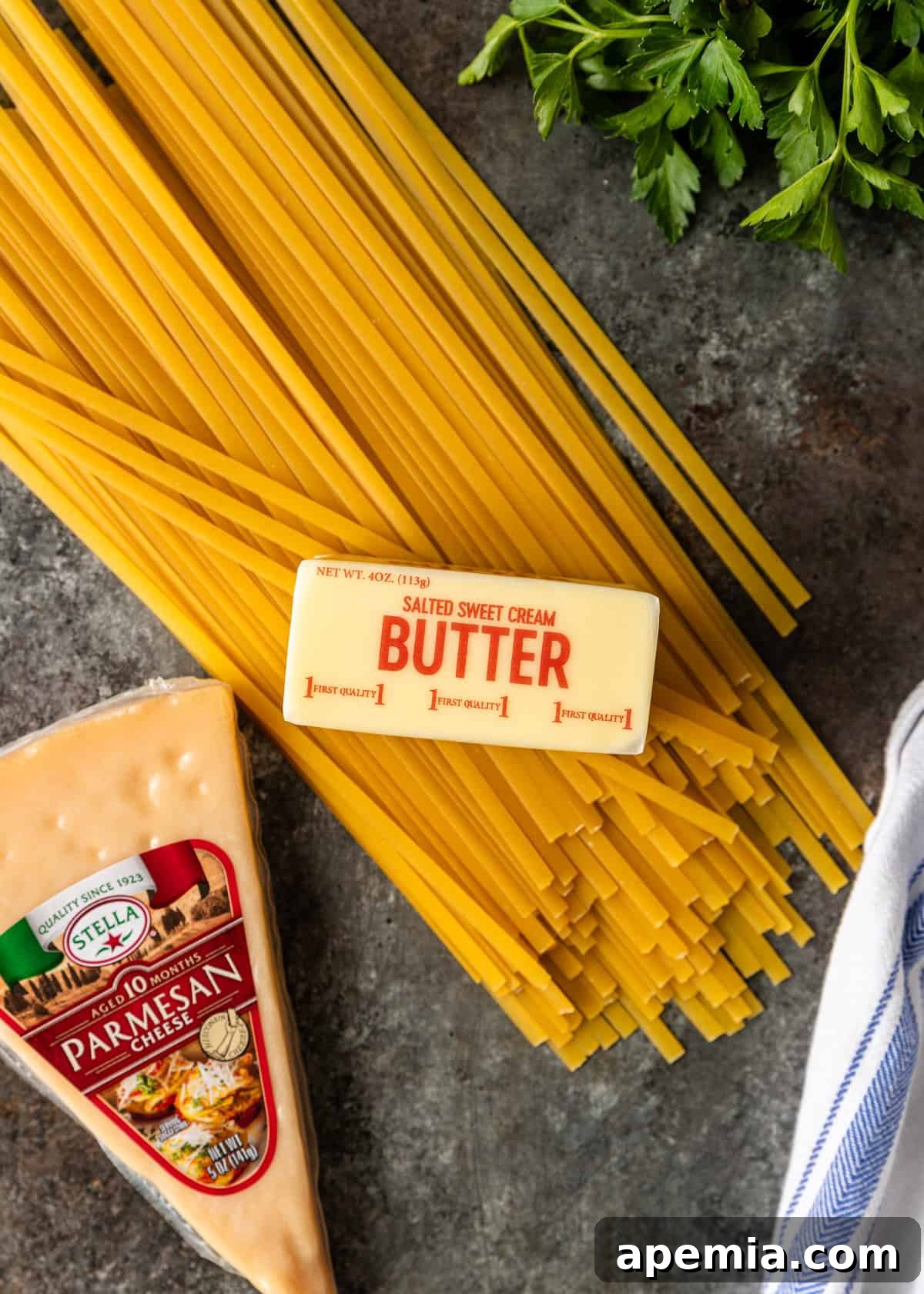
- Fettuccine – This long, flat, and relatively wide noodle is the undisputed champion for Alfredo. Its generous surface area is ideal for capturing and clinging to the rich, velvety sauce, ensuring every bite is infused with flavor. You have the option of using either dry or fresh pasta. Fresh pasta, typically richer due to egg content, offers a more delicate bite and cooks incredibly quickly (often within 2-3 minutes). Dry pasta, made from durum wheat semolina, provides a firmer, more substantial texture that stands up beautifully to the creamy sauce and any additional ingredients you might choose to incorporate. Always aim for an “al dente” texture, meaning it’s firm to the bite, as the pasta will continue to cook slightly when tossed in the hot sauce.
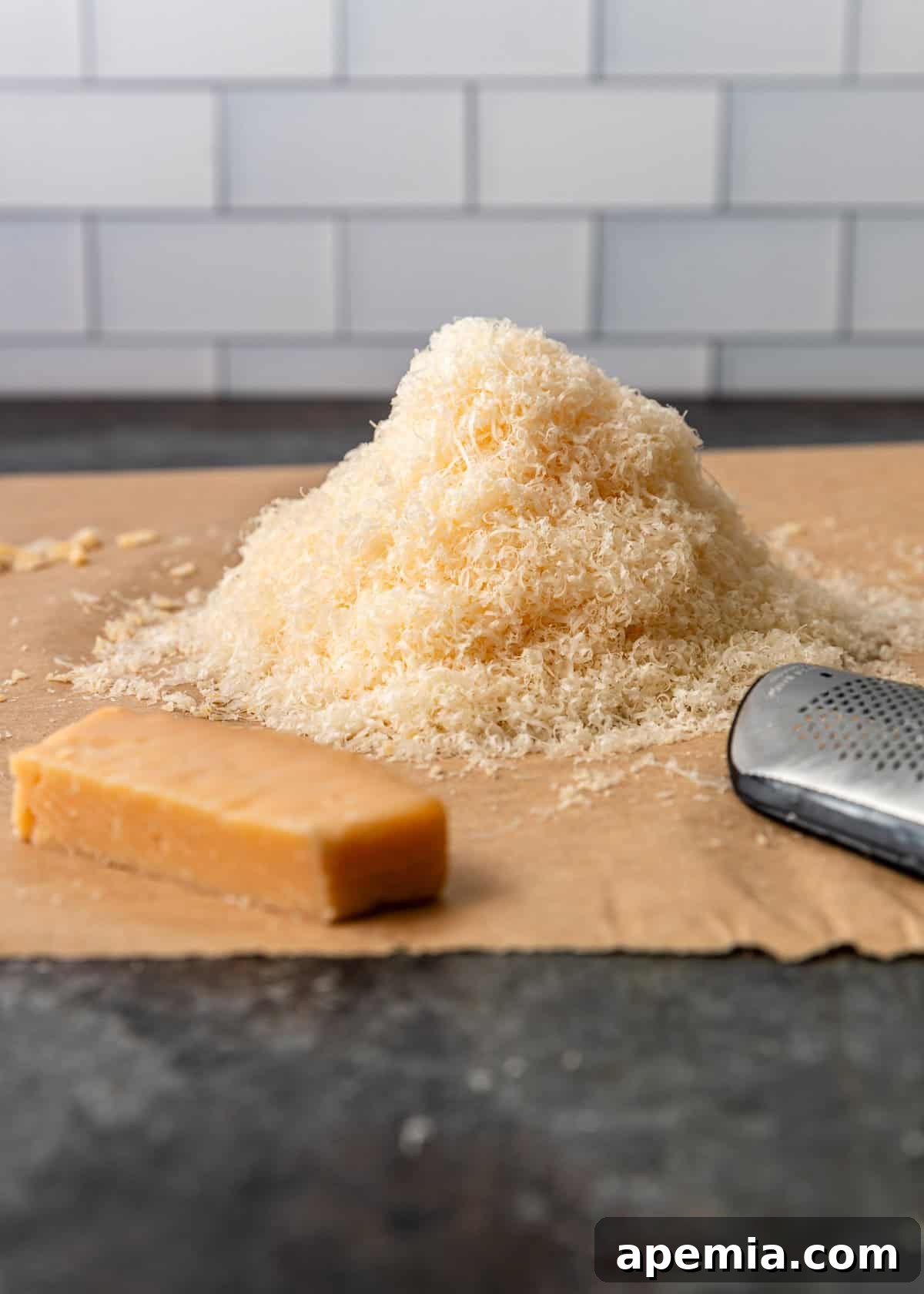
- Parmesan Cheese – The importance of your Parmesan cheese cannot be overstated for an authentic Alfredo. There are two golden rules: it must be finely grated, and it must be grated fresh off the block! Pre-shredded or bagged cheeses often contain anti-caking agents like cellulose or starch. While these prevent clumping in the bag, they actively hinder smooth melting in your sauce, often leading to a grainy or lumpy consistency. For the pinnacle of flavor and texture, choose Parmigiano-Reggiano, an aged, hard, granular cheese from specific regions in Italy, renowned for its complex, nutty, and umami notes. If Parmigiano-Reggiano isn’t available or fits your budget, a high-quality Parmesan from a solid block or Pecorino Romano (a sharper, saltier sheep’s milk cheese) are excellent alternatives. Use the smallest holes on a box grater or a microplane to achieve a fine, almost powdery consistency for optimal melting.
- Butter – The dish’s original name, fettuccine al burro, explicitly highlights butter as a star ingredient. You will need a significant amount of high-quality butter – typically two sticks (8 ounces or 1 cup) for a recipe serving eight. I highly recommend using unsalted butter, as this grants you precise control over the dish’s final seasoning. European-style butters, known for their higher fat content and lower water content, can impart an even richer, more luxurious quality to the sauce, though any good quality unsalted butter will yield delicious results. The butter is the essential fat component, contributing immensely to the sauce’s incredible richness, luscious mouthfeel, and capacity for emulsification.
How to Master Authentic Fettuccine Alfredo
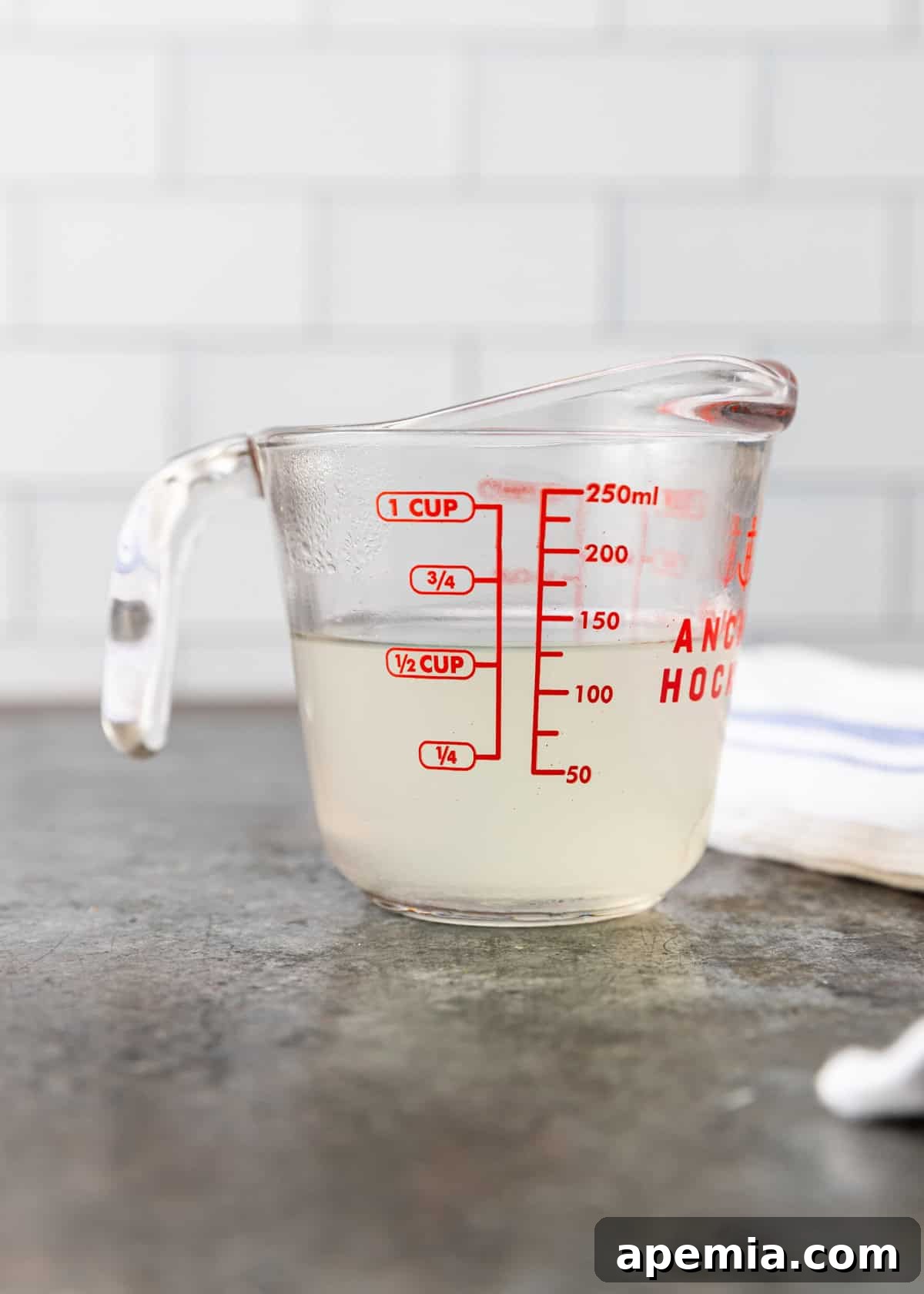
- Cook the Pasta. In a large pot, bring 4 quarts of water to a rolling boil over high heat. Once boiling rapidly, season generously with at least two teaspoons of kosher salt, stirring until dissolved. Add the fettuccine pasta and cook according to package instructions, typically 10-13 minutes for dry pasta, or just 2-3 minutes if using fresh pasta, aiming for a perfect al dente texture. Remember to reserve at least 1-2 cups of the starchy pasta water before draining.
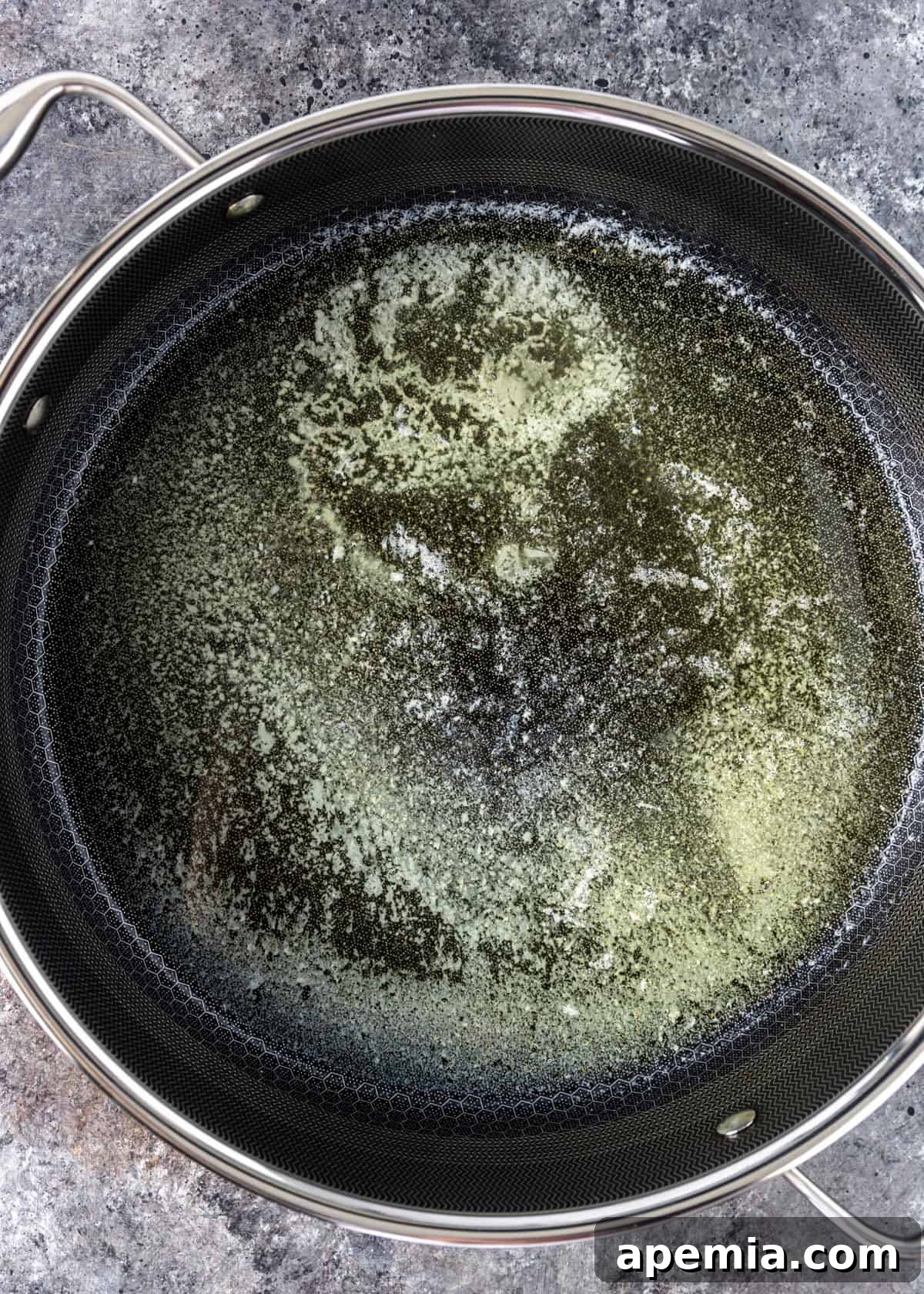
- Melt the Butter. While the pasta is cooking, in a spacious, deep skillet or sauté pan, gently melt 1 cup of unsalted butter over medium-low heat. It’s crucial to melt the butter completely without allowing it to brown or burn, as this would alter the delicate flavor of the sauce.
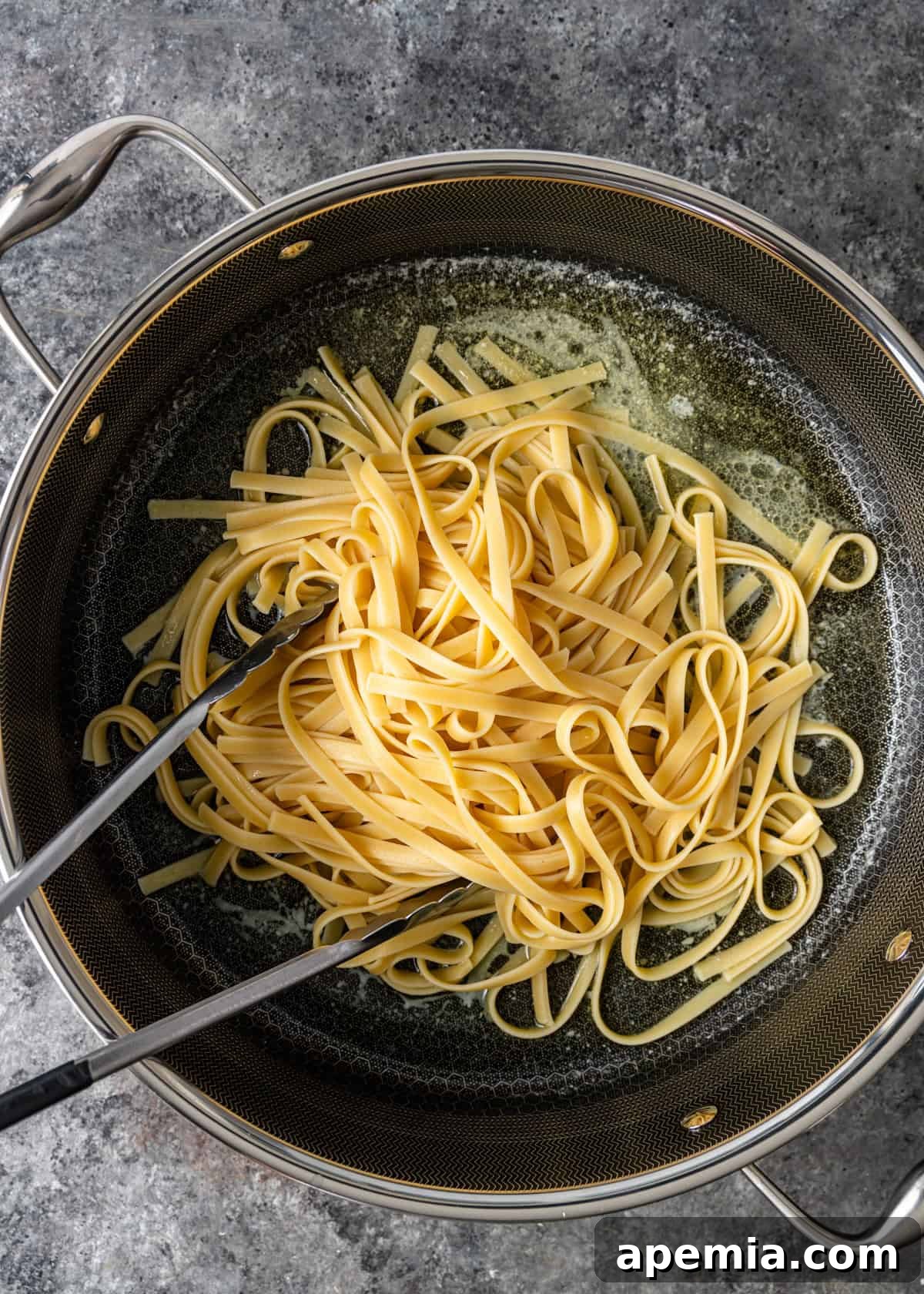
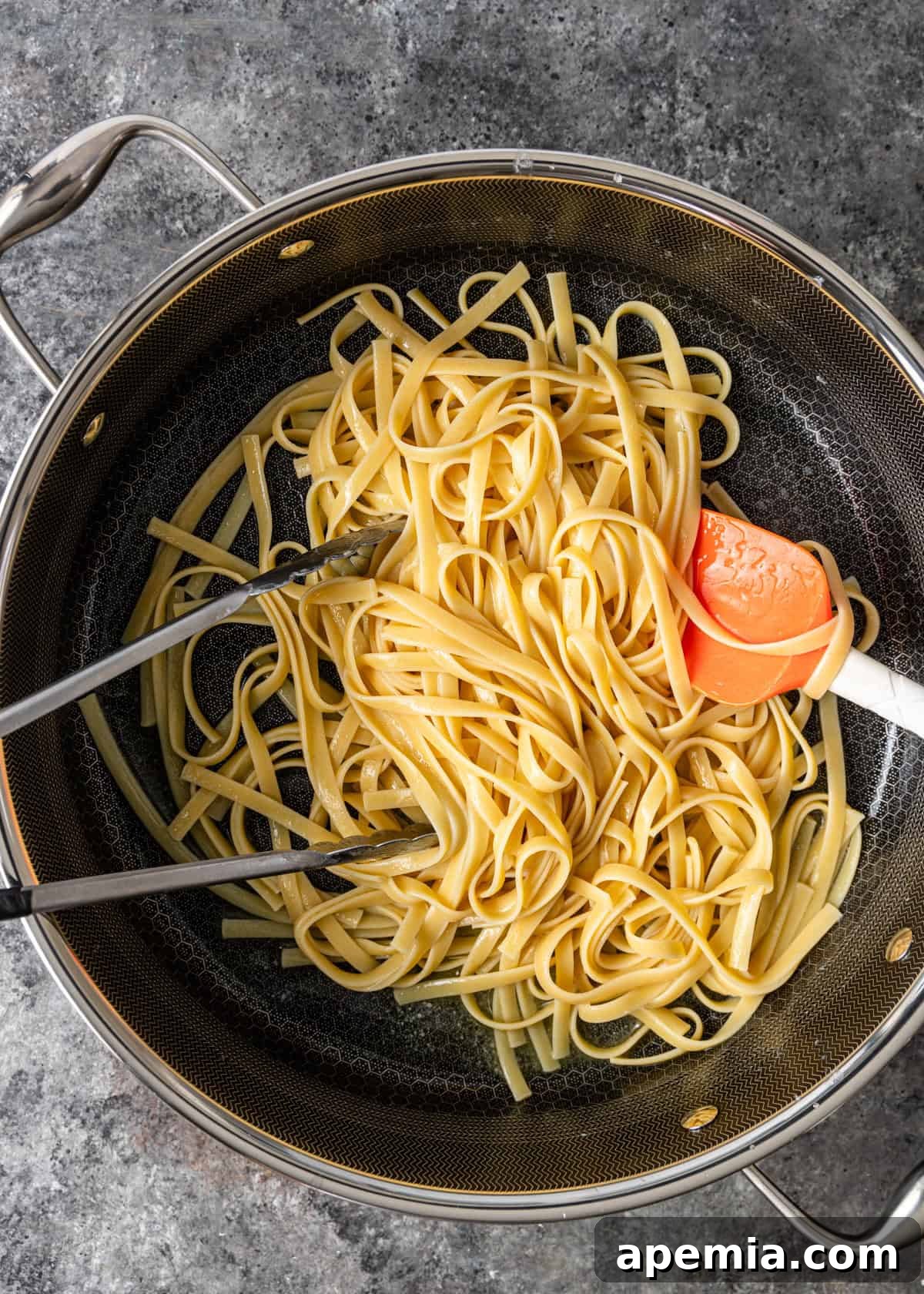
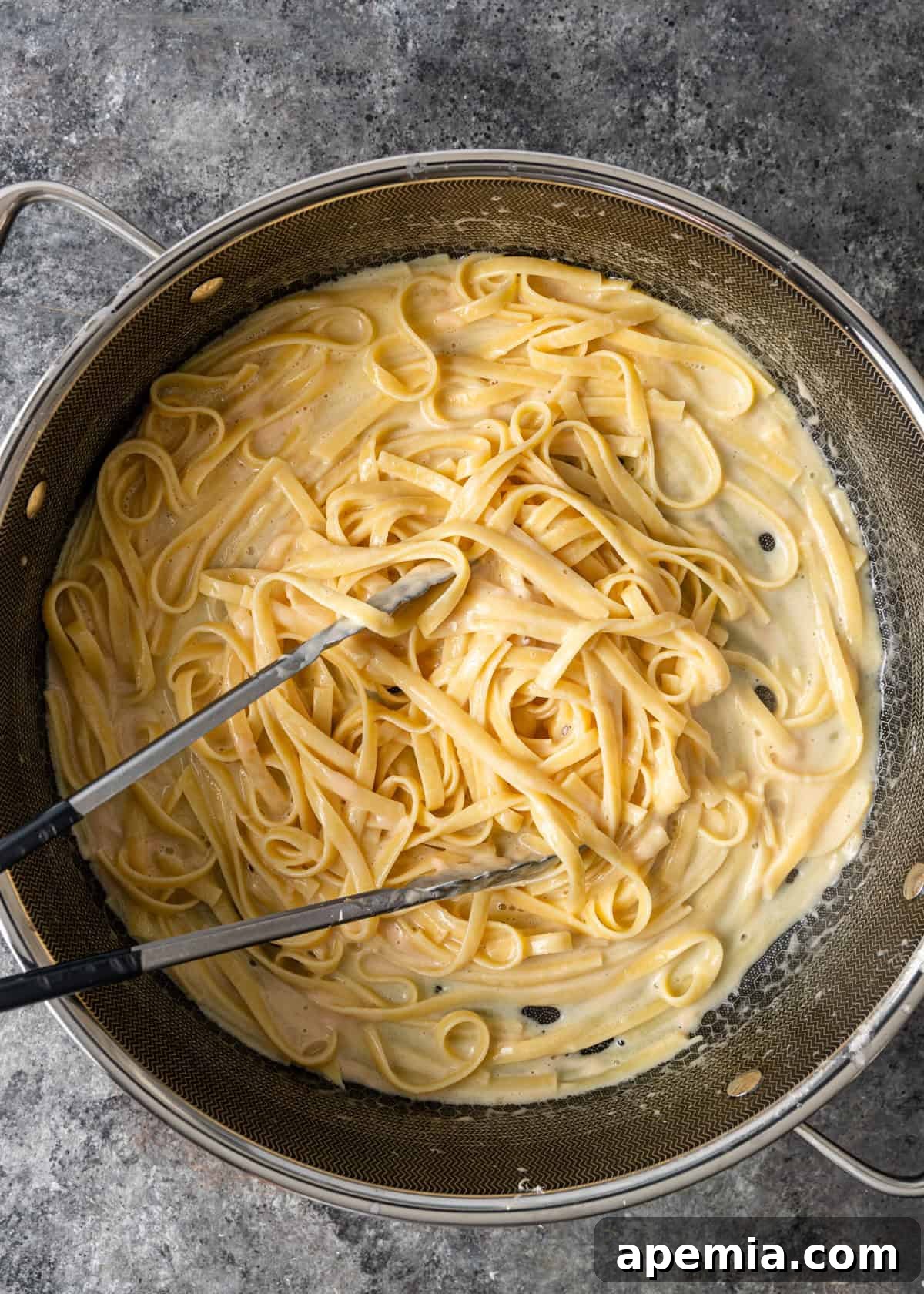
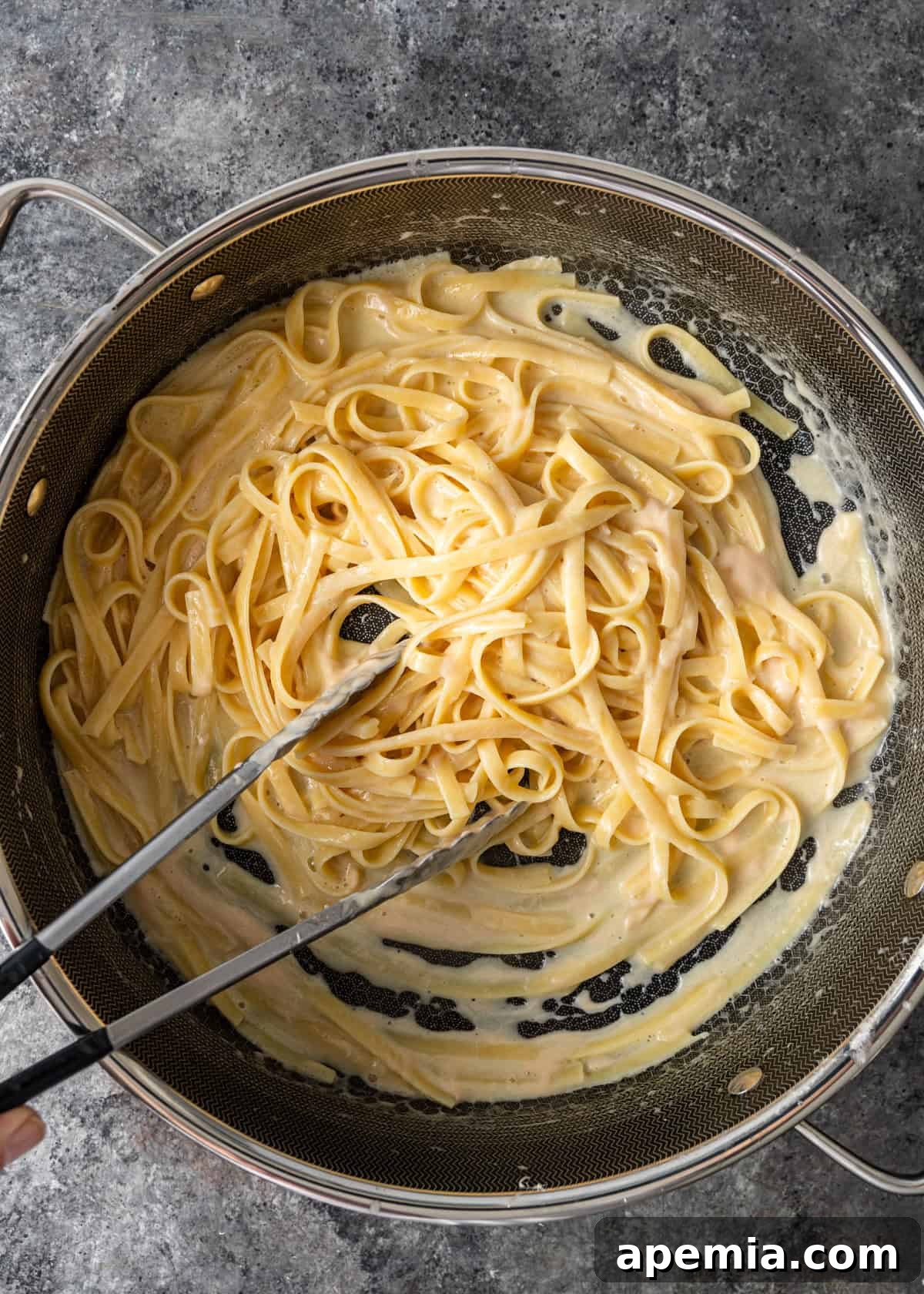
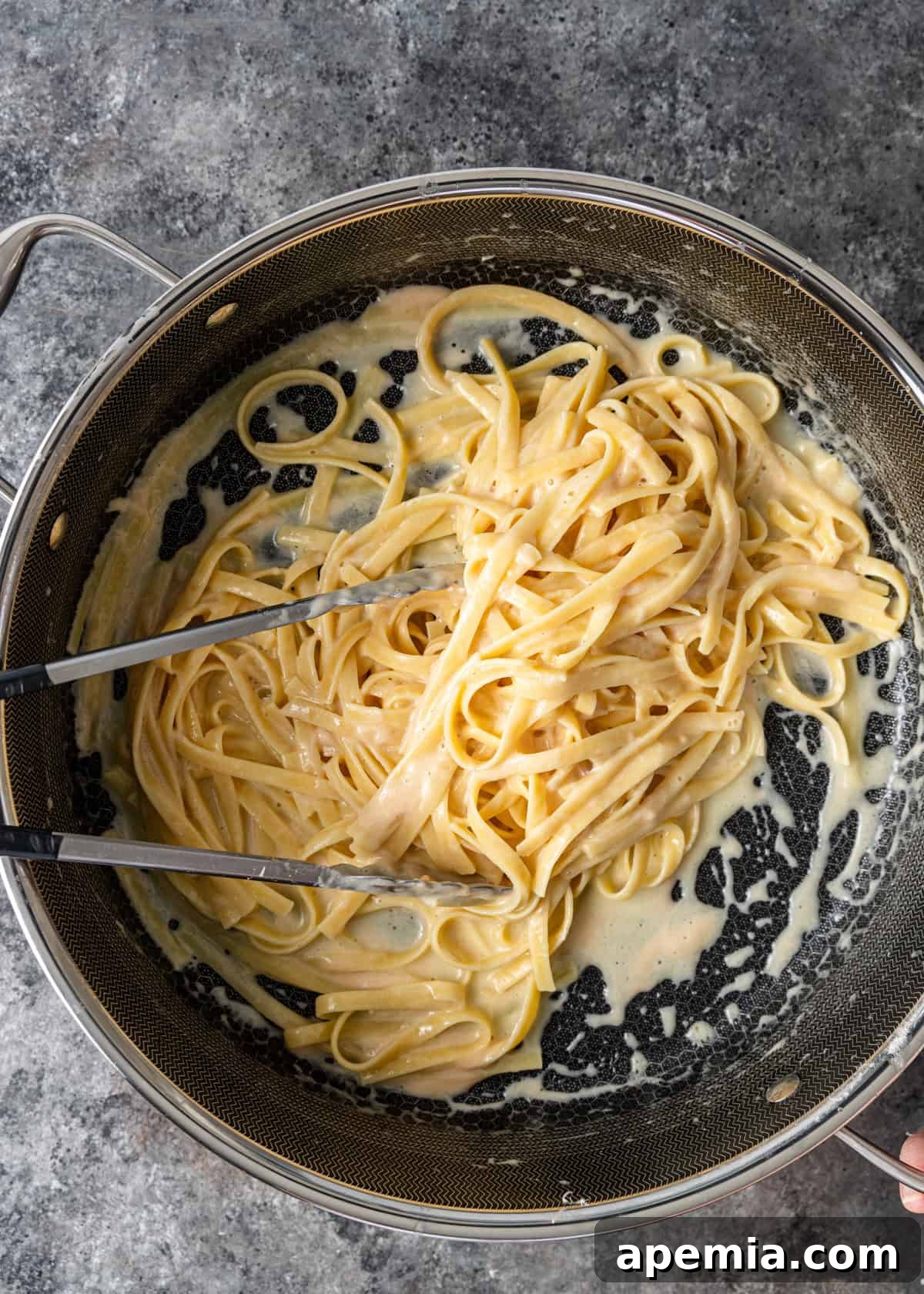
- Coat the Noodles. As soon as your pasta is al dente, use tongs to transfer it immediately and directly from the boiling water into the skillet with the melted butter. Avoid draining the pasta in a colander, as you want to preserve the starchy water clinging to the noodles. Vigorously toss the hot fettuccine in the melted butter until every strand is thoroughly coated and glistening.
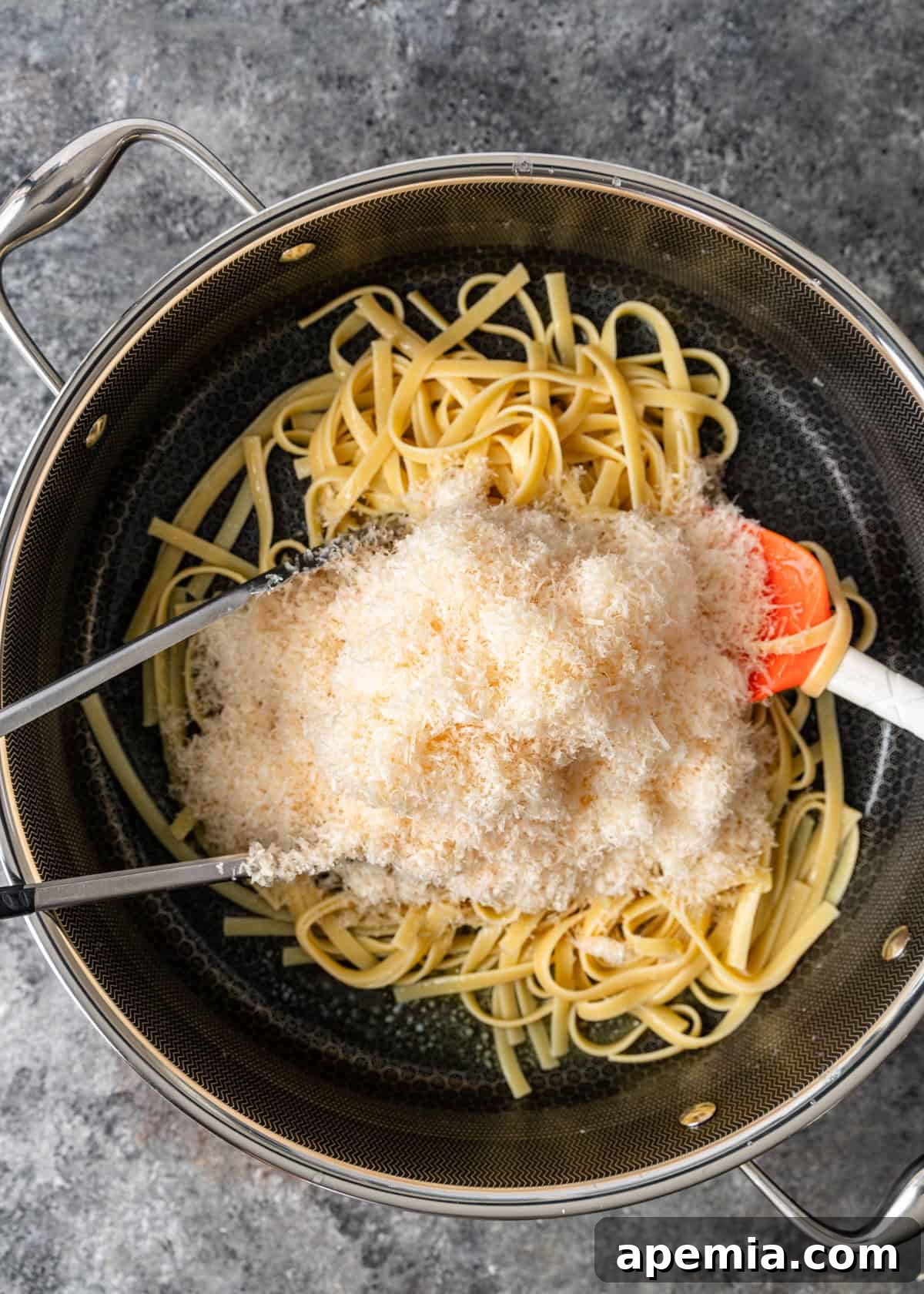
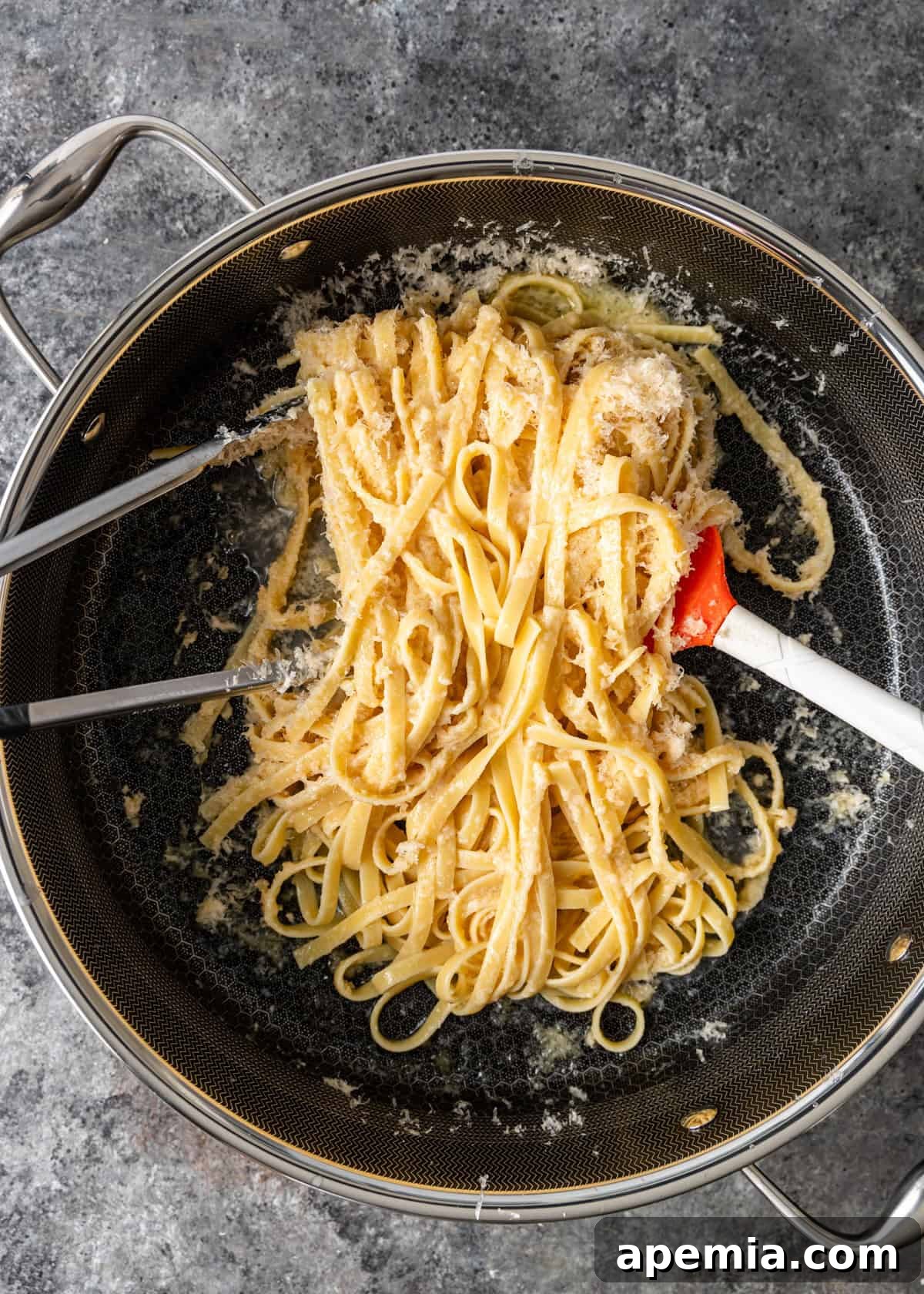
- Create the Sauce. Turn off the heat under the skillet. Begin gradually adding the finely grated Parmesan cheese (about 10 oz), a handful at a time, folding and tossing it continuously with the noodles. The residual heat from the pasta and the pan will gently melt the cheese, combining with the butter to form a luscious, thick base for your sauce. Now, start adding the reserved starchy pasta water, one tablespoon at a time. Continue tossing and mixing vigorously. The starch from the pasta water is essential; it will emulsify with the butter and melted cheese, thinning the sauce slightly while giving it a smooth, velvety consistency that beautifully clings to the pasta. Keep adding pasta water, a little at a time, until you achieve your desired sauce thickness and creaminess.
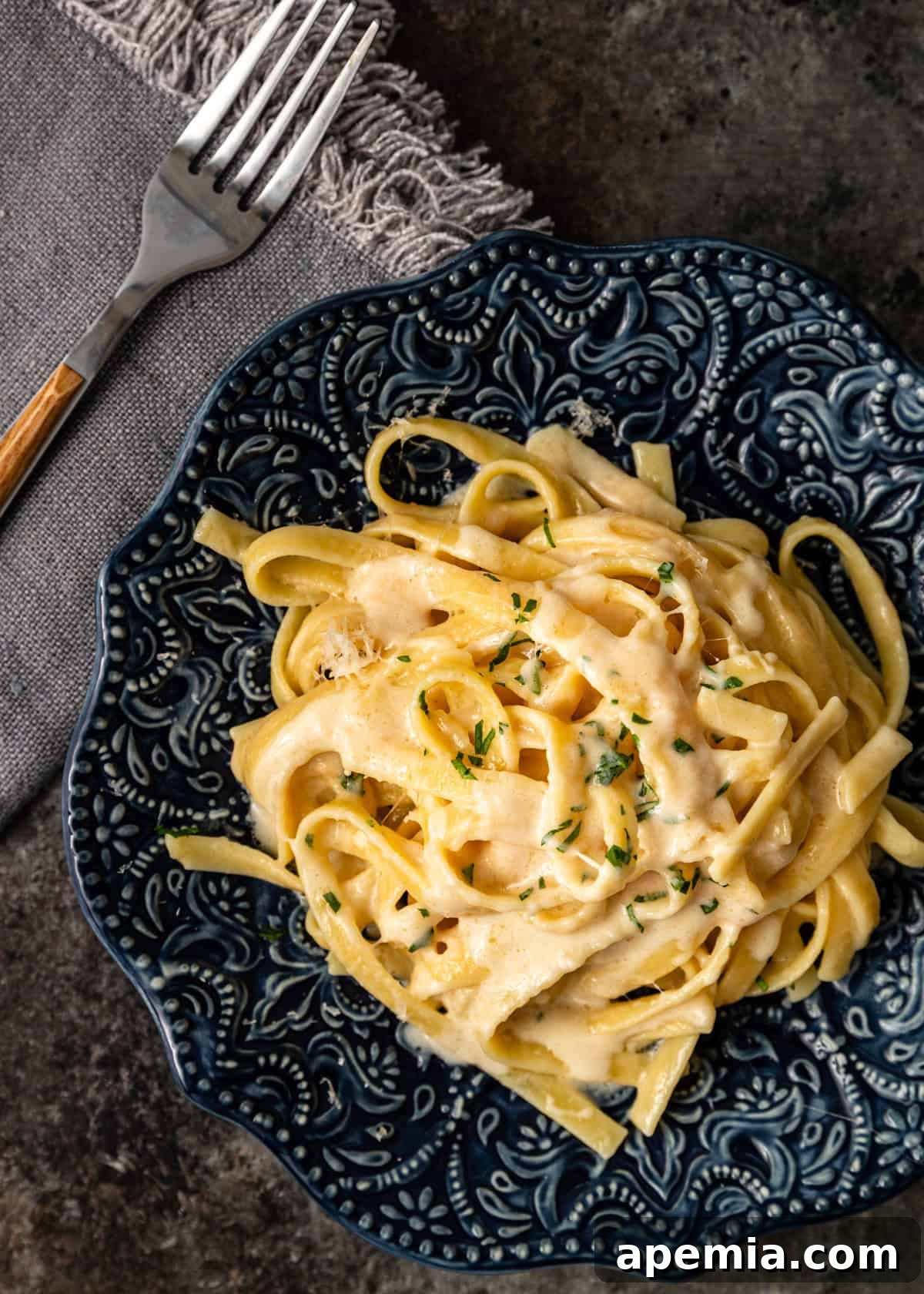
- Serve Immediately. Authentic Fettuccine al Burro is a dish meant to be enjoyed the moment it’s ready. Transfer your exquisite pasta to warmed plates, perhaps with a final sprinkle of freshly cracked black pepper or a touch more Parmesan, and savor the rich, unadulterated taste of Italy!
Pro Tips for a Flawless Alfredo
- Never Rinse Your Pasta: This cannot be stressed enough. Rinsing pasta removes the vital starches on its surface, which are absolutely essential for creating the creamy, emulsified sauce and helping it cling to the noodles.
- Always Reserve Pasta Water: This “liquid gold” is the secret to a perfect Alfredo. The starchy water is key for both emulsification and achieving the ideal sauce consistency. Always keep at least 1-2 cups of it hot and ready.
- Fresh and Finely Grated Cheese is Non-Negotiable: Pre-grated cheese contains anti-caking agents that prevent smooth melting, leading to a grainy sauce. Invest in a block of Parmigiano-Reggiano and grate it finely using a microplane or the smallest holes on your grater just before use.
- Work Quickly and Toss Vigorously: Speed and motion are crucial. The sauce forms best when the pasta is piping hot. Keep everything moving and toss continuously to ensure the butter, cheese, and pasta water emulsify properly before the dish cools.
- Season Gradually and Taste: Parmesan and butter contribute natural saltiness. Add salt to your pasta water, but taste your sauce before adding extra salt. Freshly cracked black pepper is a classic and highly recommended finishing touch.
Recommended Kitchen Tools
- Large Pot (minimum 6-quart): Essential for boiling pasta. A spacious pot allows the fettuccine to cook evenly without clumping, ensuring perfect al dente results.
- Long Tongs: Your most valuable tool for this recipe. Tongs allow you to efficiently transfer hot pasta directly from the pot to the skillet and, critically, to toss the pasta vigorously to coat it perfectly in the developing sauce.
- Cheese Grater or Microplane: As highlighted, finely grated cheese is paramount. A microplane is ideal for achieving the powdery consistency that melts seamlessly into the sauce. If using a box grater, opt for the smallest holes.
- Wide, Deep Skillet or Sauté Pan (12-inch or larger): A good quality pan with ample surface area and high sides is crucial. It needs to be large enough to comfortably accommodate and toss all the pasta without spillage, allowing the sauce to coat every strand effectively. A nonstick or well-seasoned cast iron pan works best.
Storing and Reheating Leftovers
Authentic Fettuccine Alfredo is truly a dish best savored immediately after it’s prepared, when its creamy sauce is at its most vibrant and velvety. However, if you find yourself with delightful leftovers, they can be stored in an airtight container in the refrigerator for up to 3-4 days. It’s important to note that the delicate, butter and cheese-based sauce does not freeze well; the emulsion is likely to break upon freezing and thawing, resulting in a separated, greasy, or grainy texture that won’t be as appealing.
To breathe new life into your refrigerated Fettuccine Alfredo, gently reheat it in a skillet over very low heat. The key to restoring its creamy texture is moisture and patience. Add a small amount of liquid — start with just a tablespoon or two of water, milk, or ideally, some reserved pasta water from its initial cooking, if you thoughtfully saved some. Stir continuously and gently as it warms through, allowing the sauce to slowly re-emulsify. Once warm, stir in a final sprinkle of freshly grated Parmesan cheese. Continue to stir until the cheese melts and the sauce regains its smooth, velvety consistency. This careful reheating method will bring it back surprisingly close to its freshly made glory!
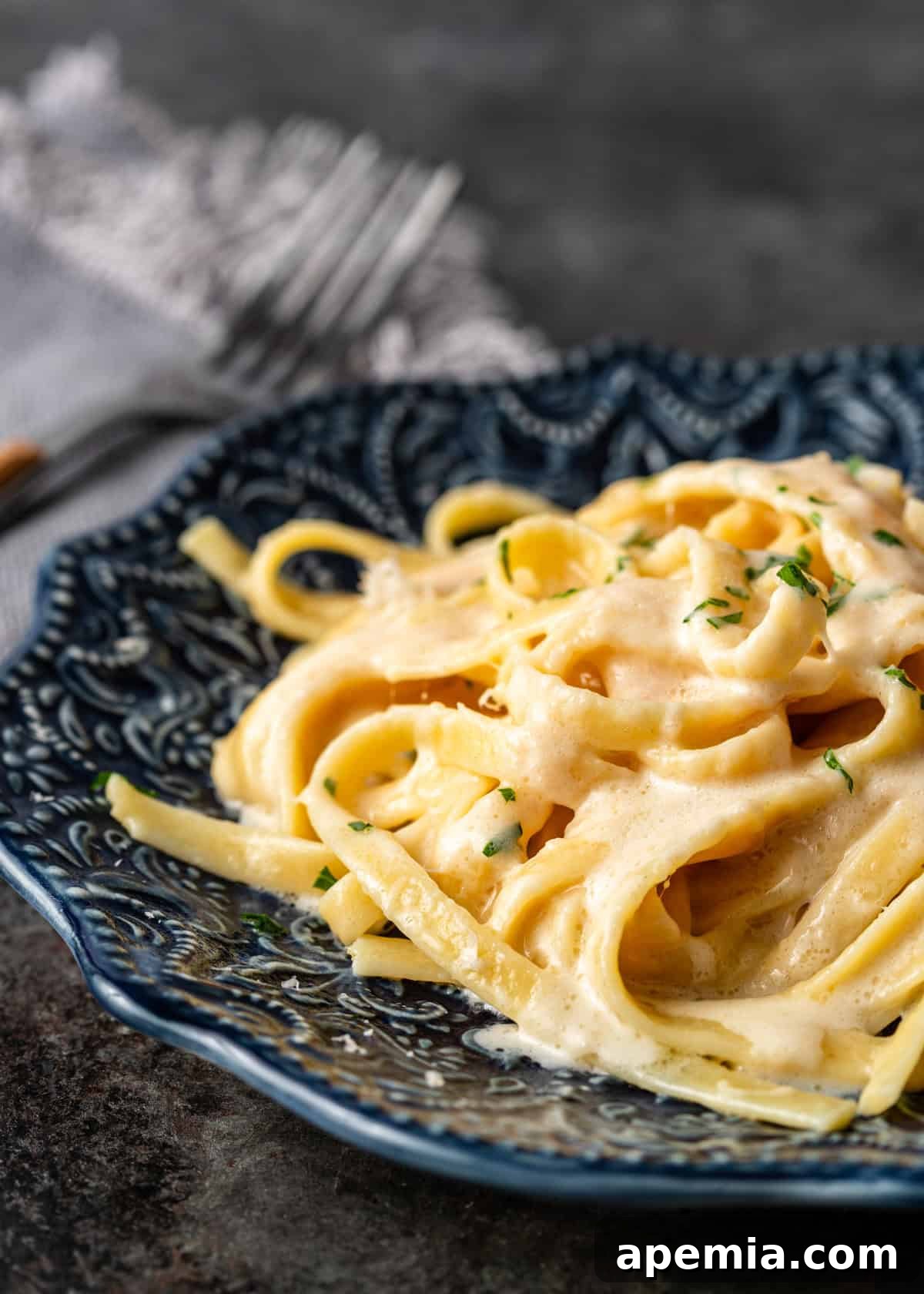
Share This Recipe on Pinterest!
Love this authentic Fettuccine Alfredo recipe? Help spread the word by sharing it with your friends and followers on Pinterest!
Frequently Asked Questions
While this recipe champions the purest, simplest form of Alfredo, its elegant simplicity makes it a superb canvas for minimal customization. The key is to enhance, rather than overpower, the delicate flavors of butter and cheese.
For protein additions, popular choices include succulent shrimp (lightly sautéed with a hint of garlic), perfectly grilled or pan-seared chicken breast (thinly sliced), or even a mild Italian sausage. Ensure any protein is cooked separately and then gently folded into the pasta at the very end to prevent overcooking or drying out.
Vegetable additions should be subtle. Options like tender sautéed mushrooms, blanched broccoli florets, vibrant bell peppers, or sweet green peas can complement the dish beautifully. For heartier vegetables such as zucchini or yellow squash, consider lightly salting and pressing them beforehand to draw out excess moisture, which can otherwise dilute your precious sauce. Sun-dried tomatoes (oil-packed, drained, and finely sliced) also provide a wonderful concentrated burst of flavor that pairs exceptionally well.
The choice between fresh and dry pasta for your Fettuccine Alfredo ultimately comes down to personal preference for texture and the time you have available. Both can yield delicious results.
Fresh pasta, often made with eggs, boasts a more delicate, tender, and somewhat richer texture. It cooks significantly faster (typically in just 2-3 minutes) and contributes a nuanced flavor profile due to the egg content. If you prefer a melt-in-your-mouth experience, fresh pasta is an excellent option.
Dried pasta, typically crafted from durum wheat semolina and water, offers a firmer, more robust, and substantial bite. It holds its shape exceptionally well and provides a satisfying chewiness that many find appealing. Its resilience also makes it a great choice if you plan to add other ingredients to your pasta. Experimenting with both will help you discover your preferred texture!
I genuinely encourage you to first try this authentic recipe exactly as written, without any added cream. You will likely be astonished by the incredible creaminess and richness achieved solely through the proper emulsification of butter, Parmesan, and starchy pasta water. The process images and video tutorial clearly illustrate this captivating transformation.
However, if you specifically crave the heavier, more dairy-forward texture synonymous with popular American-style Alfredo, I would gently redirect you to this alternative recipe. That recipe is meticulously crafted to incorporate heavy cream and other ingredients to achieve that particular richness, ensuring you get the best version of your desired Alfredo without altering the integrity of the traditional fettuccine al burro.
The iconic Fettuccine Alfredo, originally known as “fettuccine al burro,” has a fascinating origin rooted in Rome. It was created in the early 20th century by Alfredo di Lelio. The widely accepted story is that Alfredo invented the dish to help his wife, Ines, regain her strength and appetite after giving birth. The simple yet nourishing combination of fresh fettuccine, a generous amount of butter, and finely grated Parmigiano-Reggiano cheese proved to be both easily digestible and incredibly comforting. The dish’s international fame skyrocketed in 1920 when American silent film stars Mary Pickford and Douglas Fairbanks visited Alfredo’s restaurant, fell in love with his creation, and bestowed upon him a golden fork and spoon in gratitude. This act of appreciation sparked a global sensation, solidifying Fettuccine Alfredo’s place in culinary history.
Troubleshooting is a natural part of cooking, especially with a technique-driven dish like authentic Alfredo. If your sauce is too thick, gradually add more hot reserved pasta water, one tablespoon at a time, while vigorously tossing, until it reaches your desired silky consistency. If it turns out too thin, you might have added too much pasta water too quickly. You can try adding a bit more finely grated Parmesan cheese or letting the pasta sit for a minute or two (the sauce will naturally thicken slightly as it cools). If your sauce appears greasy or the butter and cheese have separated, it’s often due to the heat being too high during the emulsification process, or insufficient vigorous tossing. Ensure you turn off the heat before adding the cheese and pasta water, and always toss, toss, toss with enthusiasm!
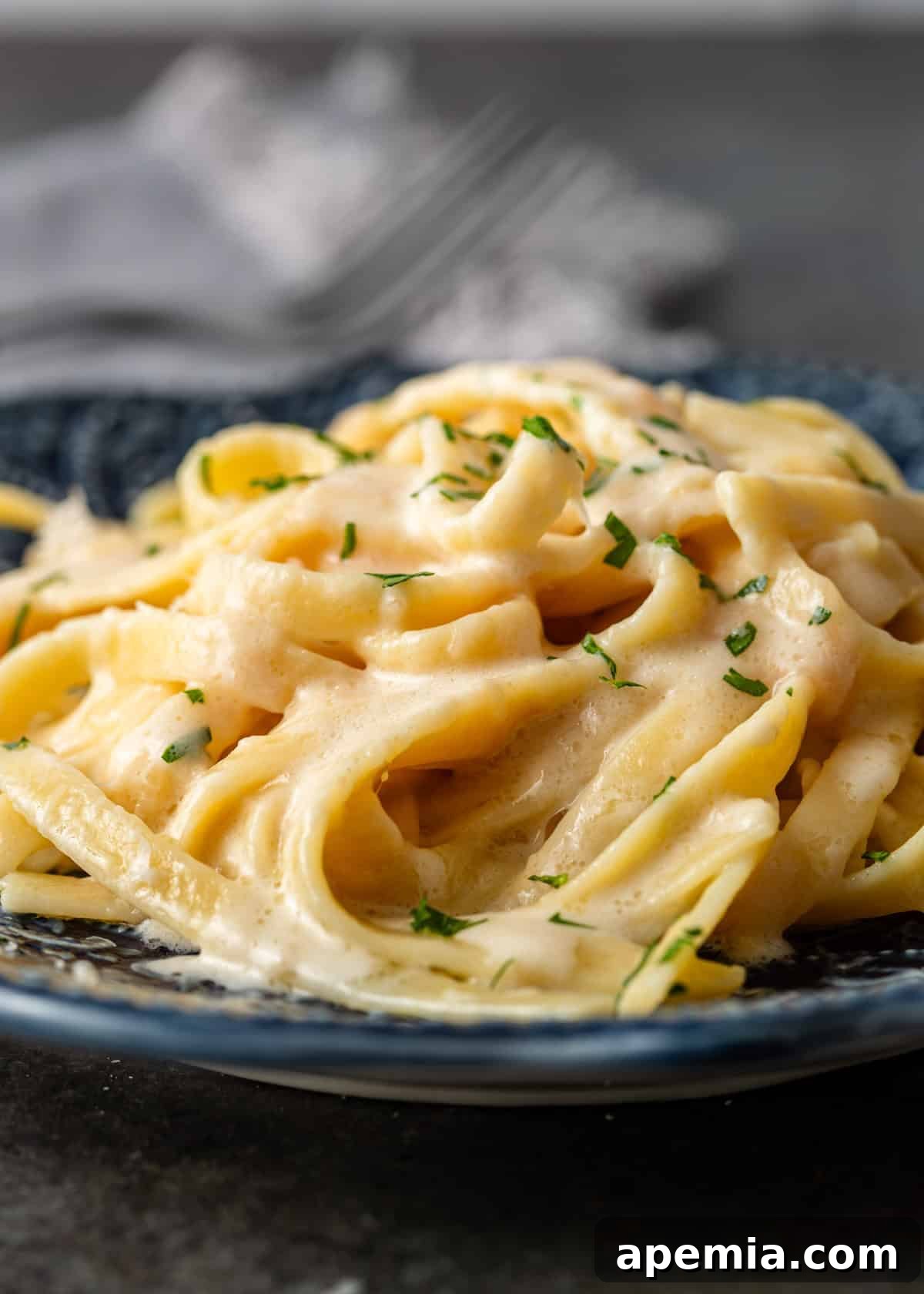
Fettuccine Alfredo Pasta (No Cream)
Craft a classic, unbelievably creamy, and cheesy Italian fettuccine alfredo with only 3 simple ingredients and no cream. This 5-step recipe is quick, foolproof, and utterly delicious.
Print Recipe
Video Tutorial
Watch the step-by-step video!
See exactly how to achieve that perfect, creamy, no-cream Alfredo sauce.
Click Here to View Recipe Video (MP4)
Ingredients
- 1 lb fettuccine pasta (dry or fresh, see Note 1)
- 1 cup (2 sticks / 8 ounces total) high-quality unsalted butter
- 10 oz (approx. 2.5 cups finely grated) Parmigiano-Reggiano cheese, freshly grated
Instructions
- In a large pot, bring 4 quarts of water to a rolling boil over high heat.
- In a wide, deep skillet, melt the butter over medium-low heat, being careful not to brown it.
- Once the water is boiling, add at least 2 teaspoons of kosher salt and stir to dissolve. Add the dry fettuccine pasta and cook for 10-13 minutes (or 2-3 minutes for fresh pasta) until al dente. Reserve 1-2 cups of the starchy pasta water.
- Using tongs, immediately transfer the cooked pasta from the boiling water directly to the skillet with the melted butter. Toss vigorously to coat all the noodles evenly in the butter.
- Turn off the heat under the skillet. Gradually add the finely grated Parmigiano-Reggiano cheese to the pasta, tossing gently and continuously until the cheese melts and blends with the butter, creating a thick base sauce. Now, add the reserved pasta water, one tablespoon at a time, tossing vigorously until the sauce emulsifies into a smooth, velvety consistency that clings beautifully to the pasta. Adjust with more pasta water if a thinner sauce is desired.
- Serve your authentic Fettuccine Alfredo immediately, optionally garnished with a final crack of fresh black pepper or an extra sprinkle of Parmesan.
Notes
- This recipe is versatile and works wonderfully with either 1 pound of dry fettuccine pasta (cooking time: 10-13 minutes) or fresh fettuccine pasta (cooking time: 2-3 minutes).
- For the best possible sauce texture and flavor, always use high-quality, freshly grated Parmigiano-Reggiano cheese. Pre-grated options often contain anti-caking agents that hinder proper melting.
Nutrition (Estimated per Serving)
Calories: 560 kcal
Carbohydrates: 42g
Protein: 21g
Fat: 35g
Saturated Fat: 21g
Polyunsaturated Fat: 2g
Monounsaturated Fat: 9g
Trans Fat: 1g
Cholesterol: 133mg
Sodium: 762mg
Potassium: 178mg
Fiber: 2g
Sugar: 1g
Vitamin A: 1021 IU
Calcium: 446mg
Iron: 1mg
The information shown is an estimate provided by an online nutrition calculator. It should not be considered a substitute for a professional nutritionist’s advice.
Have You Made This Recipe? Let Me Know on Instagram!
Tag @keviniscooking or use the hashtag #keviniscooking to share your creations!