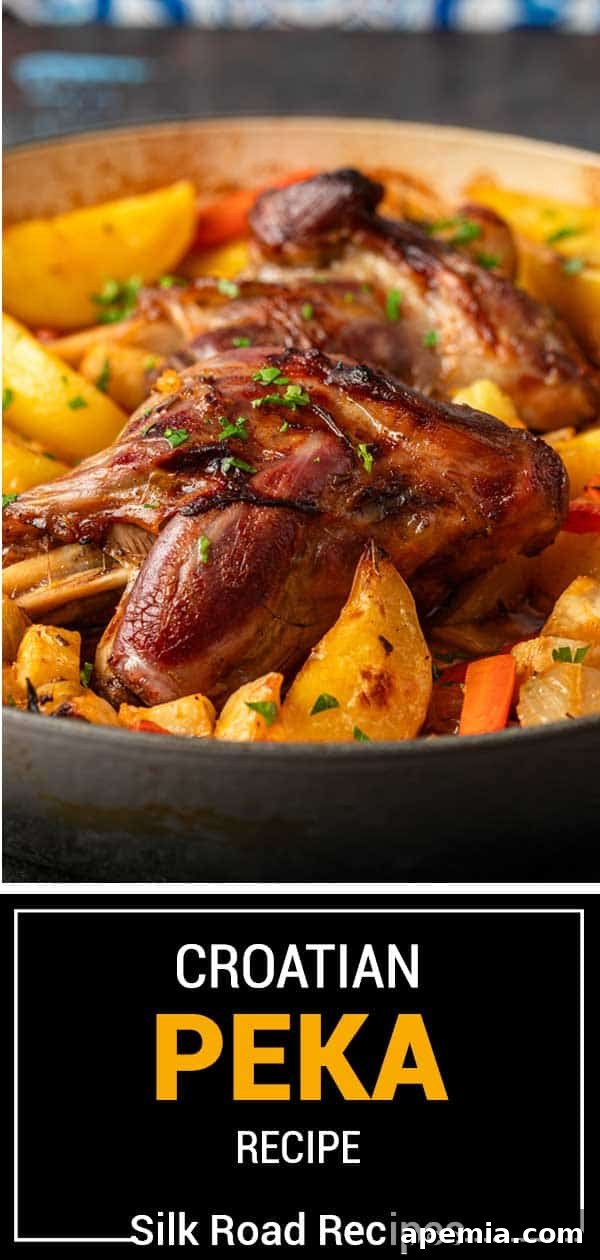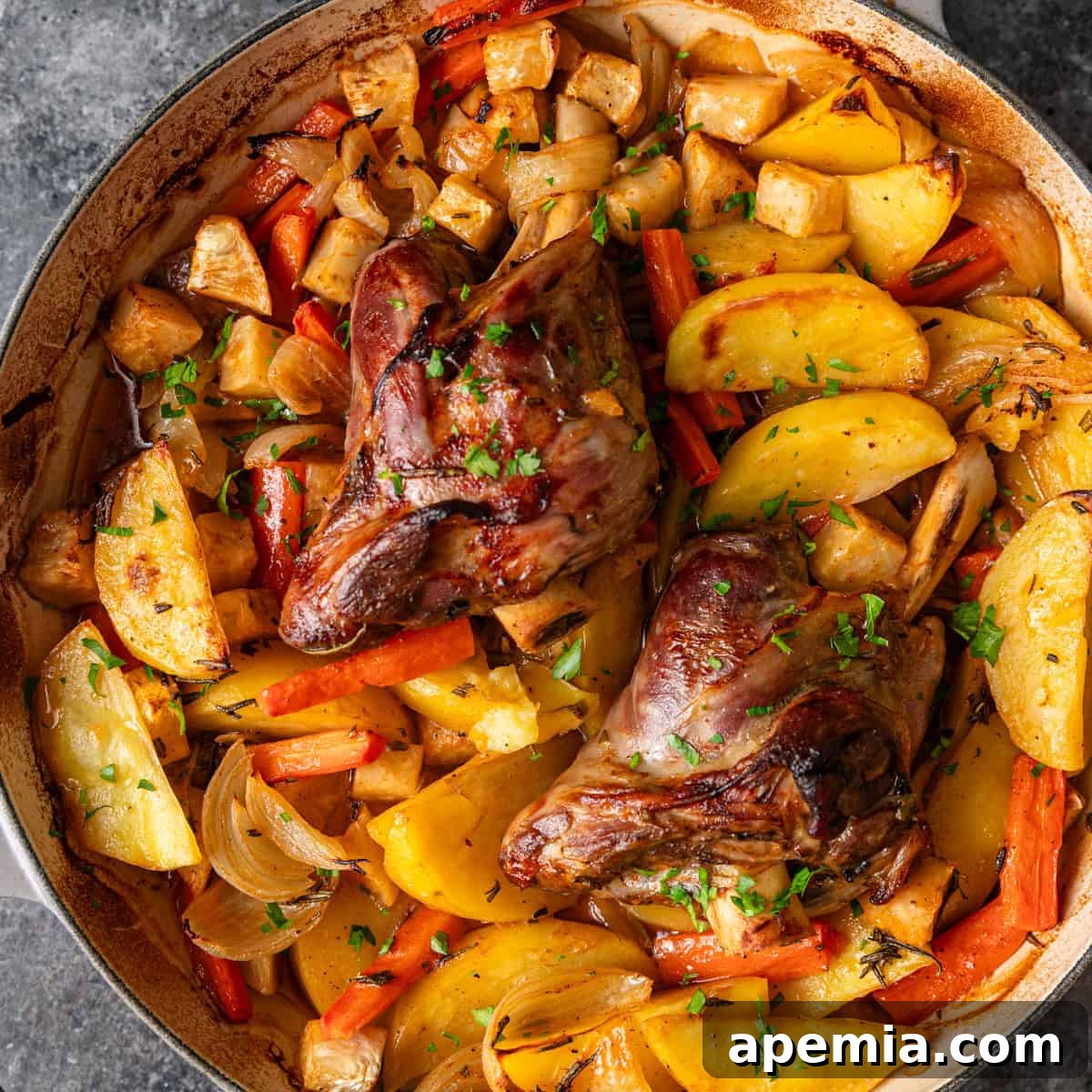
Peka is more than just a dish; it’s a culinary journey deeply rooted in Croatian tradition, promising a truly unforgettable meal. Imagine tender lamb, succulent vegetables, and rich flavors, all slow-cooked to perfection in a covered pot. This rustic cooking method, known for transforming simple ingredients into a comforting feast, emphasizes time over complex techniques, resulting in a dish that truly melts in your mouth and warms the soul.
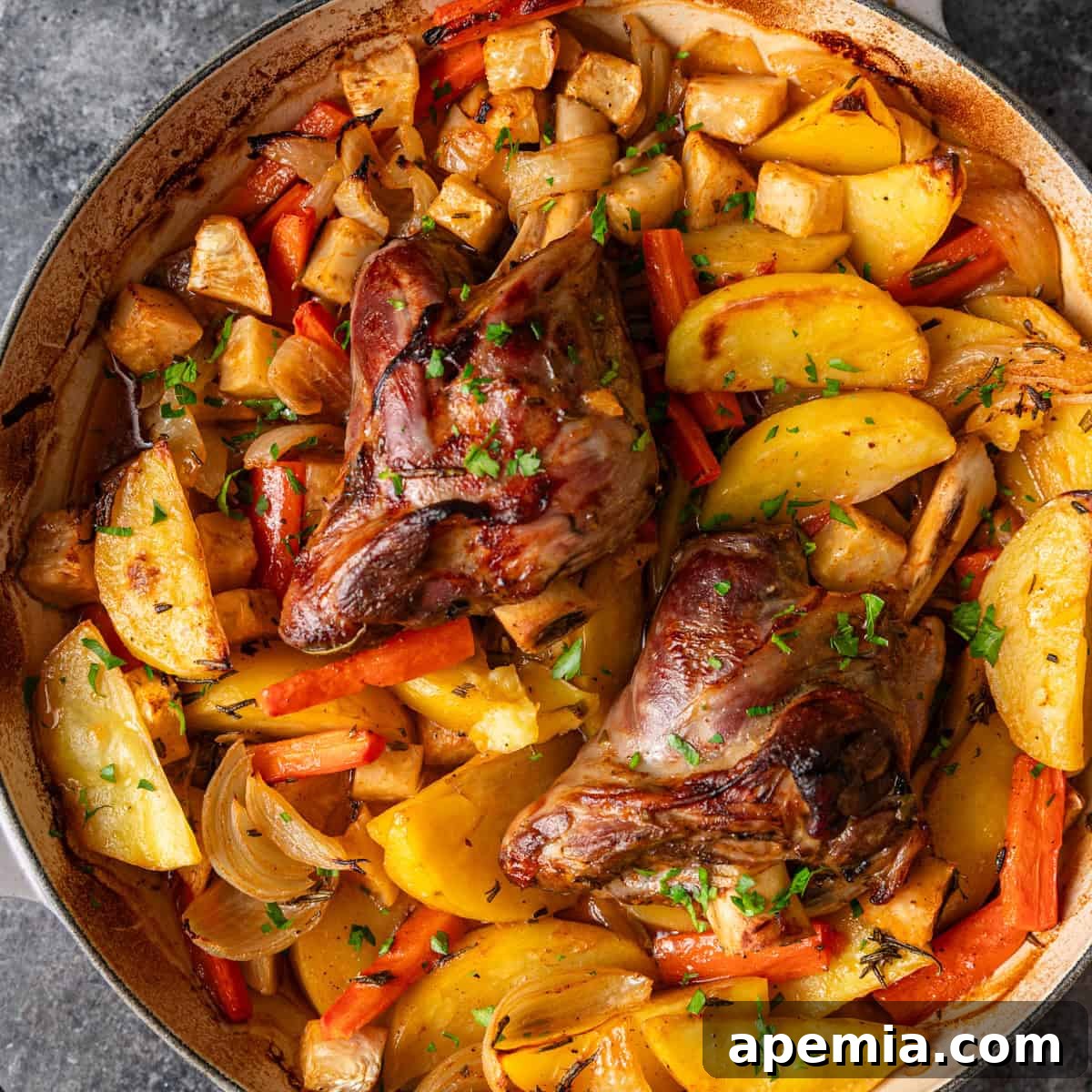
Discovering the Heart of Croatian Cuisine: Peka
Peka is not merely a recipe but a revered cooking method, particularly prominent along Croatia’s picturesque Dalmatian coast and in its charming inland villages. Historically, peka involved preparing food outdoors, nestled beneath a distinctive bell-shaped lid, then burying it in hot embers. This ingenious technique allowed meats and vegetables to gently cook in their own flavorful juices, creating an unparalleled depth of taste.
While the traditional outdoor hearth might be a rarity in most modern home kitchens, the essence of peka can be wonderfully replicated indoors. This recipe guides you through achieving the same slow-roasting effect using a familiar and versatile kitchen tool: the Dutch oven. By adapting this ancient method, you can bring the authentic flavors of Croatia right to your dining table, making it accessible to every home cook.
Our Croatian peka recipe honors the dish’s fundamental spirit by embracing a simple ingredient list and allowing time to be the master chef. Lamb shanks are the star, chosen for their rich flavor and the way their connective tissues break down into luscious tenderness during prolonged cooking. We pair these with classic root vegetables like potatoes, carrots, and onions, enhancing them with fragrant olive oil and aromatic herbs such as rosemary. The result is a meal as fork-tender as exquisite Lamb Loin Chops or a luxurious Lamb Tagine, but with a more subdued, family-friendly spice profile that lets the natural goodness of the ingredients shine.
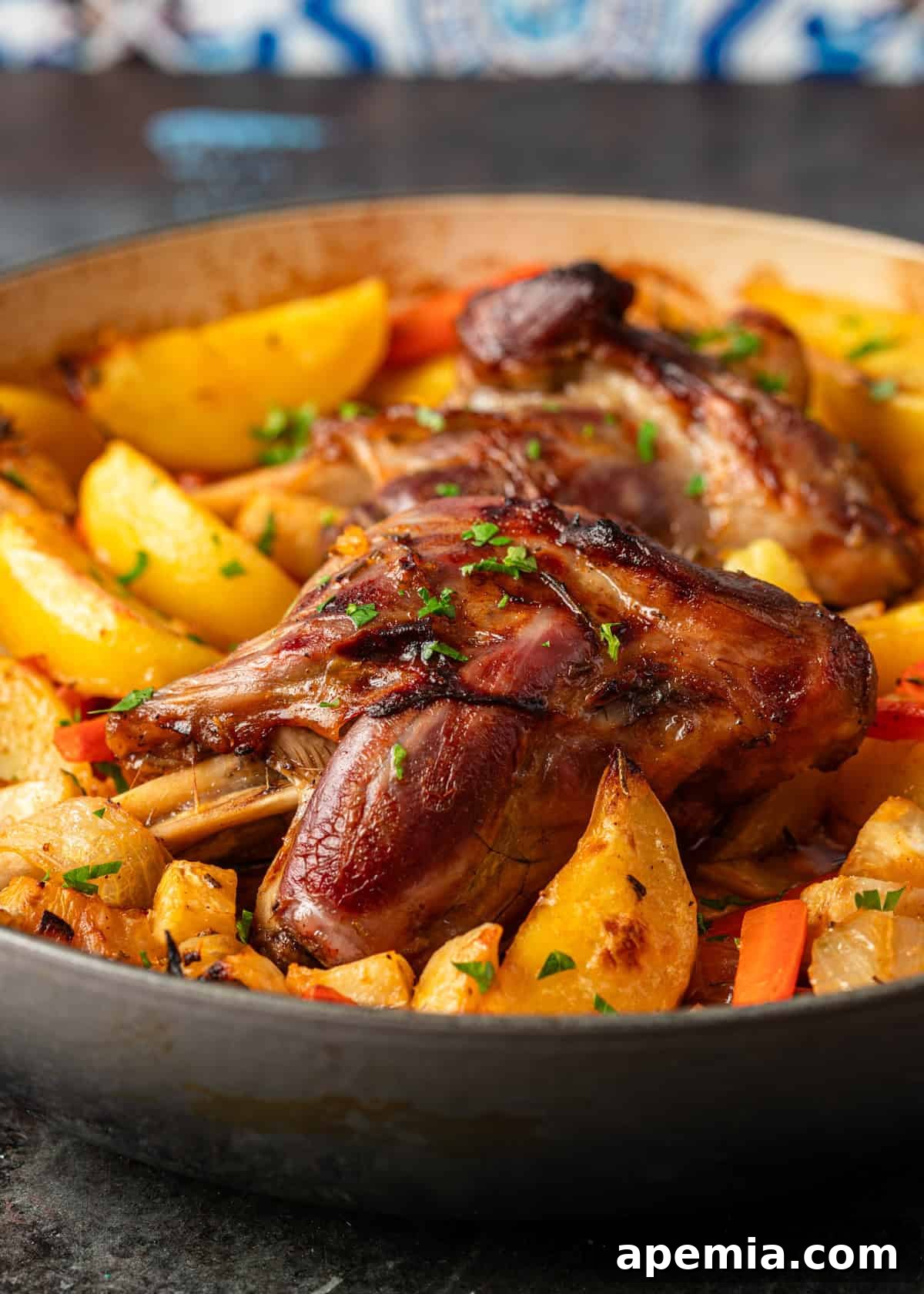
The Traditional Peka: Cooking “Under the Bell”
My culinary journey led me to the charming village of Podlug, an inland gem near the port city of Zadar in Croatia. There, I had the incredible opportunity to spend a day with a warm, welcoming family on their ancestral farm. I immersed myself in their daily life, helping to chop wood, harvest fresh vegetables from their garden, and, most memorably, prepare lunch using the traditional peka method—affectionately known as “under the bell.” My hostess shared that this age-old cooking technique was a staple for her father, a practice passed down through generations.
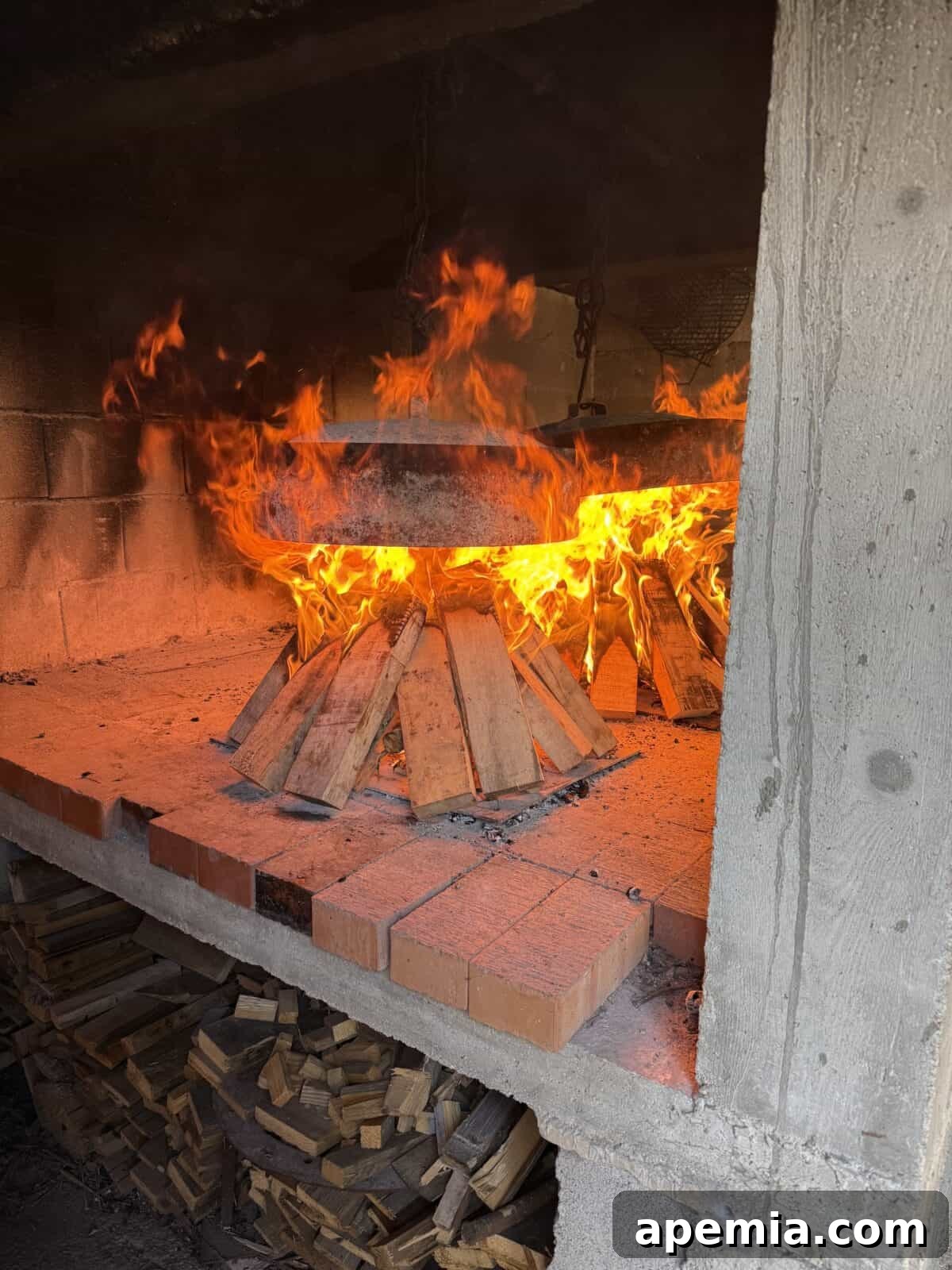
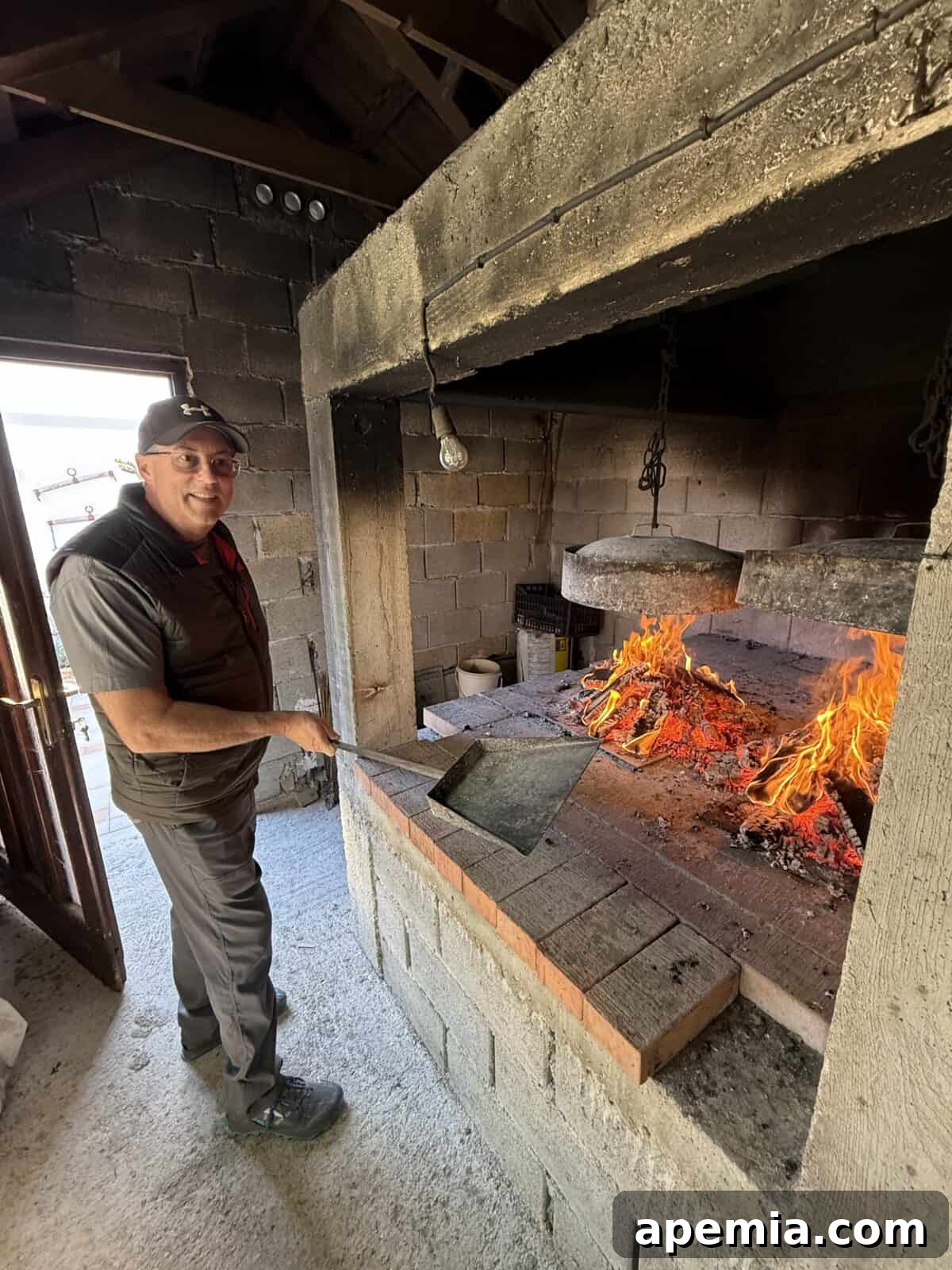
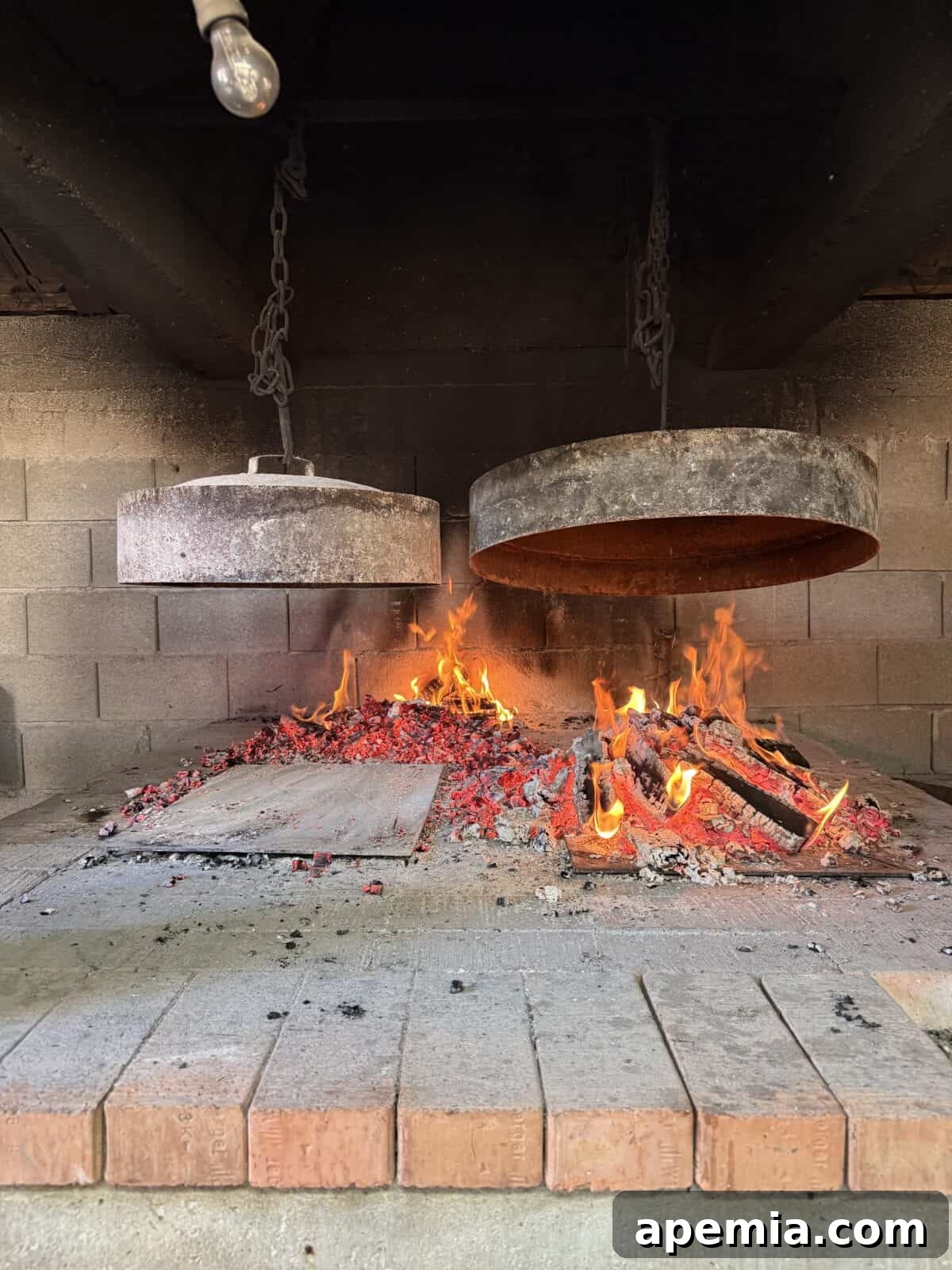
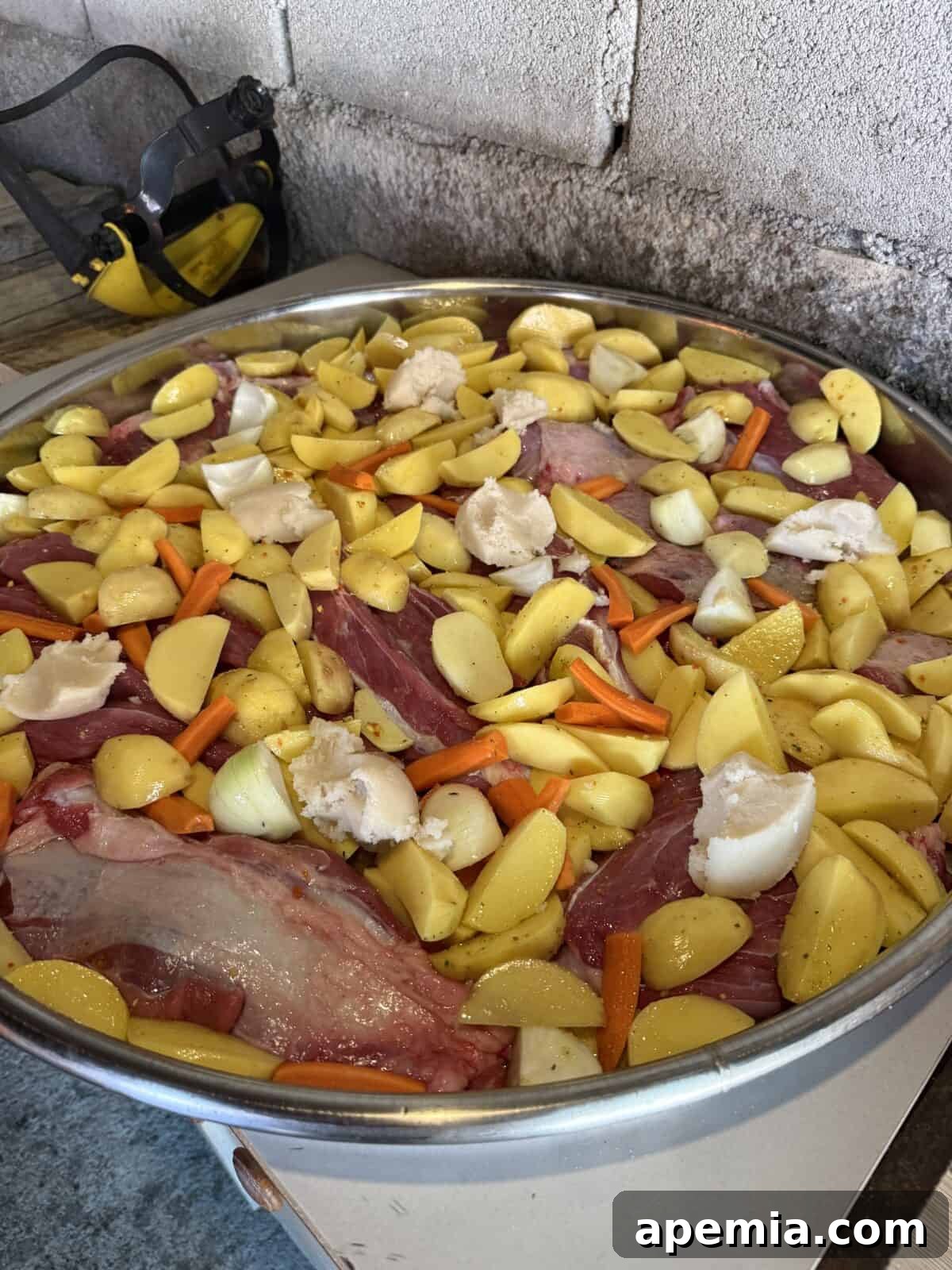
The traditional peka setup, observed in their smokehouse, truly mirrored the functionality of a modern Dutch oven, but with a rustic charm. Chopped wood was ignited on a sturdy cement and brick table, creating a vibrant, glowing bed of embers. Suspended above this fiery base was a heavy, domed iron lid. Once the wood had transformed into perfect, red-hot coals, they were carefully pushed aside. The cooking vessel, filled with raw ingredients, was then placed directly onto the heated spot. The iron bell was lowered over the pot, and crucially, hot coals were heaped on top of the bell. This ingenious design ensured the food cooked evenly from both above and below, enveloping the meal in a gentle, pervasive heat that imparted a unique smoky depth.
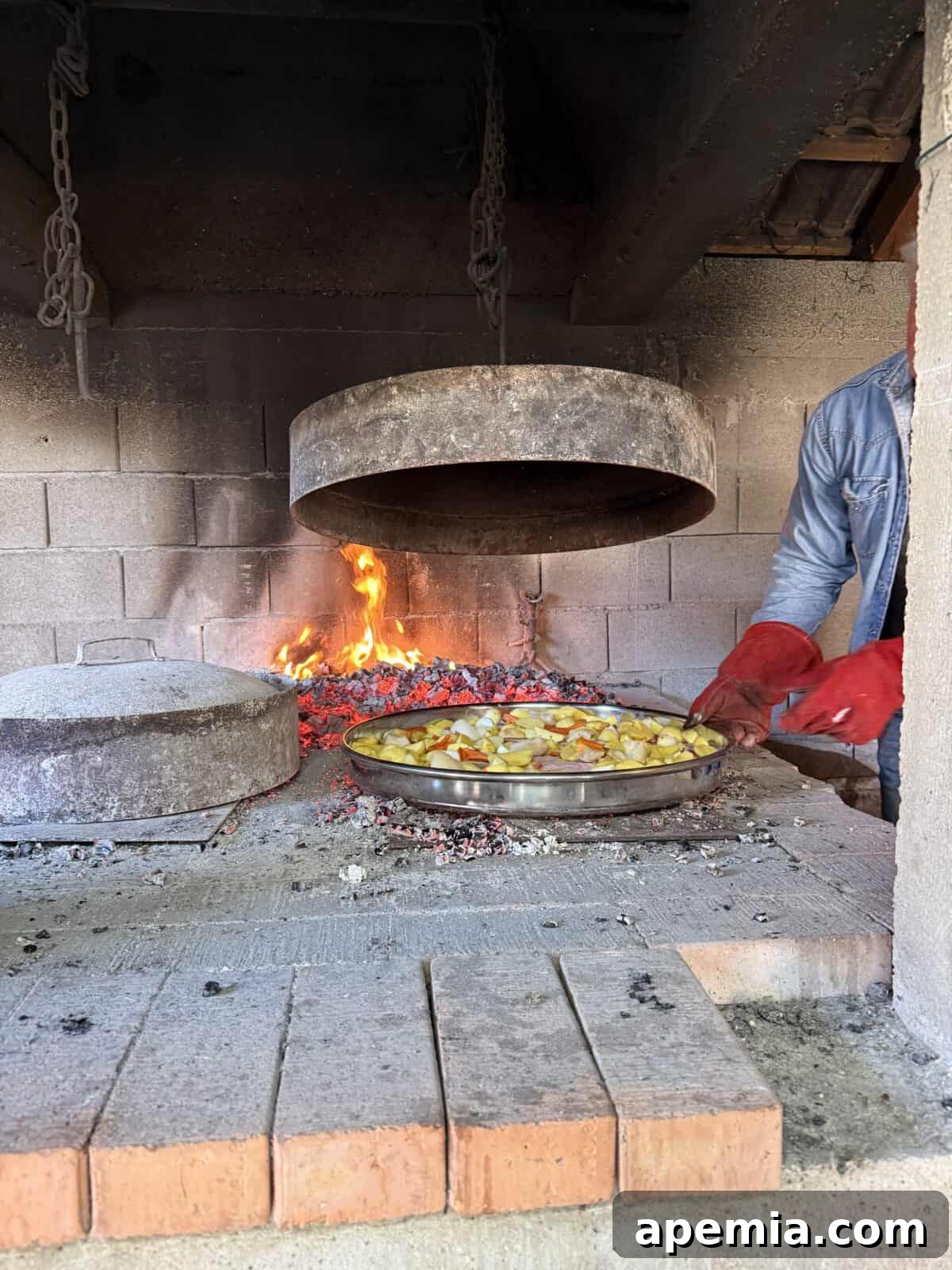
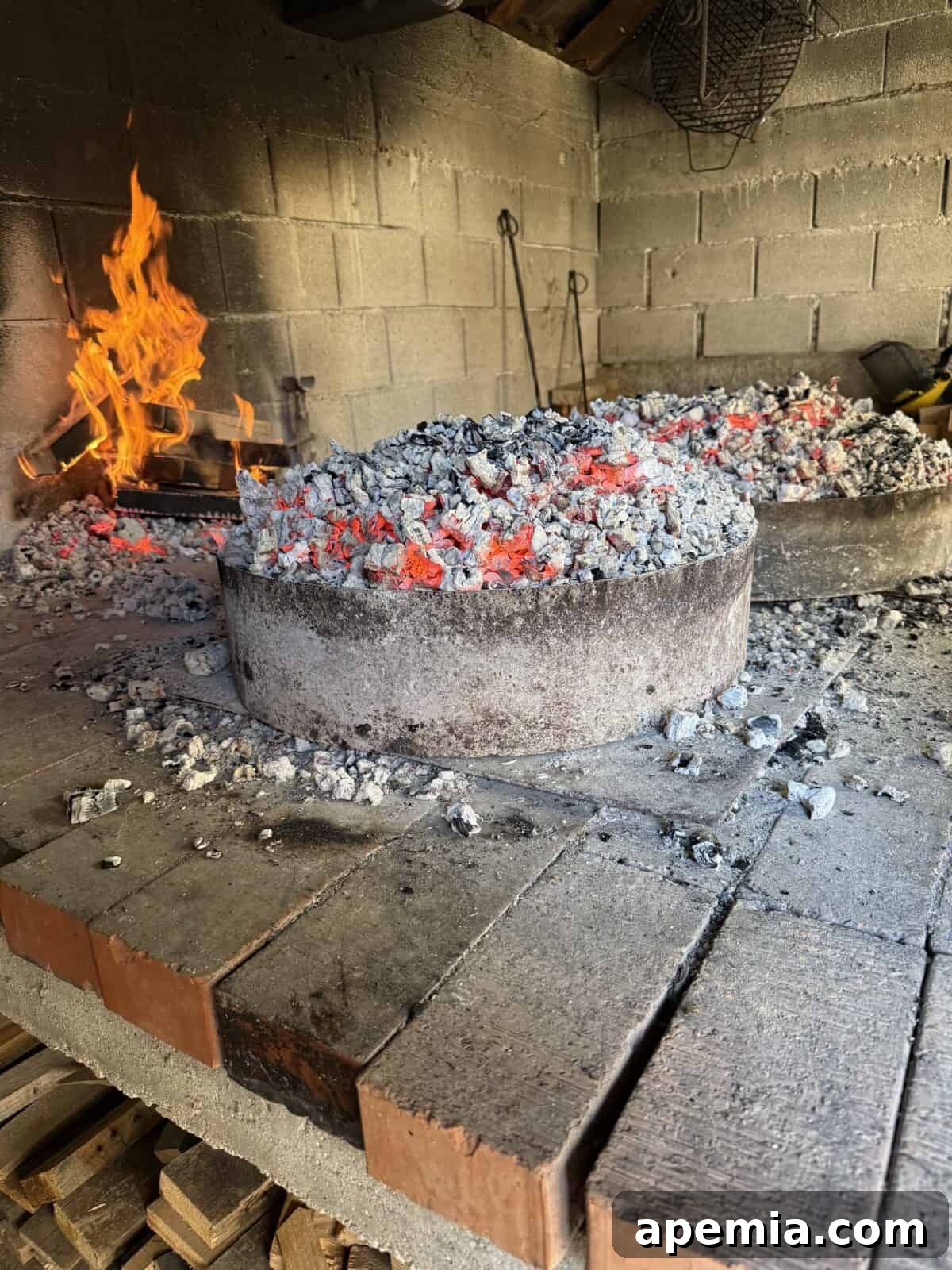
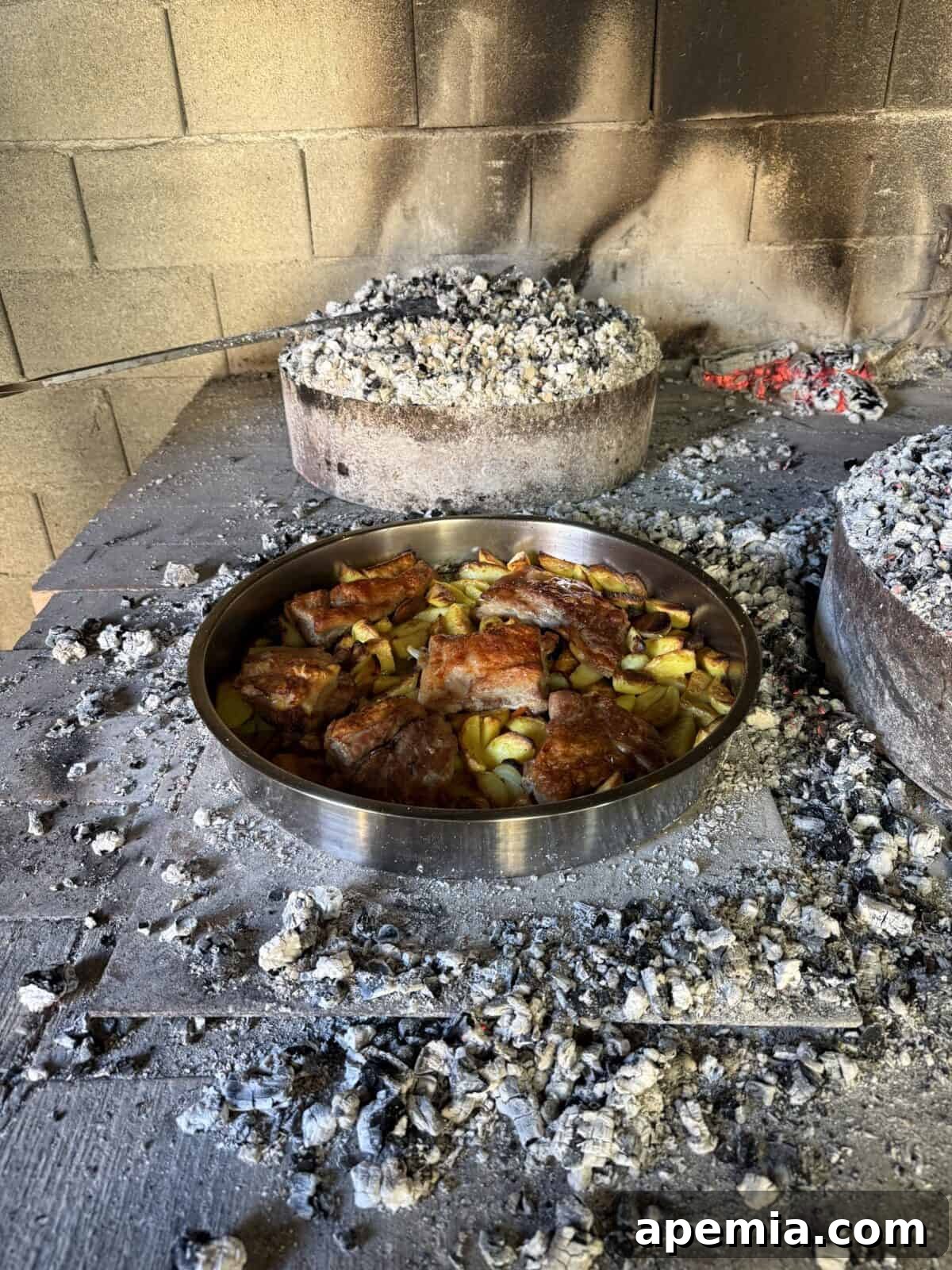
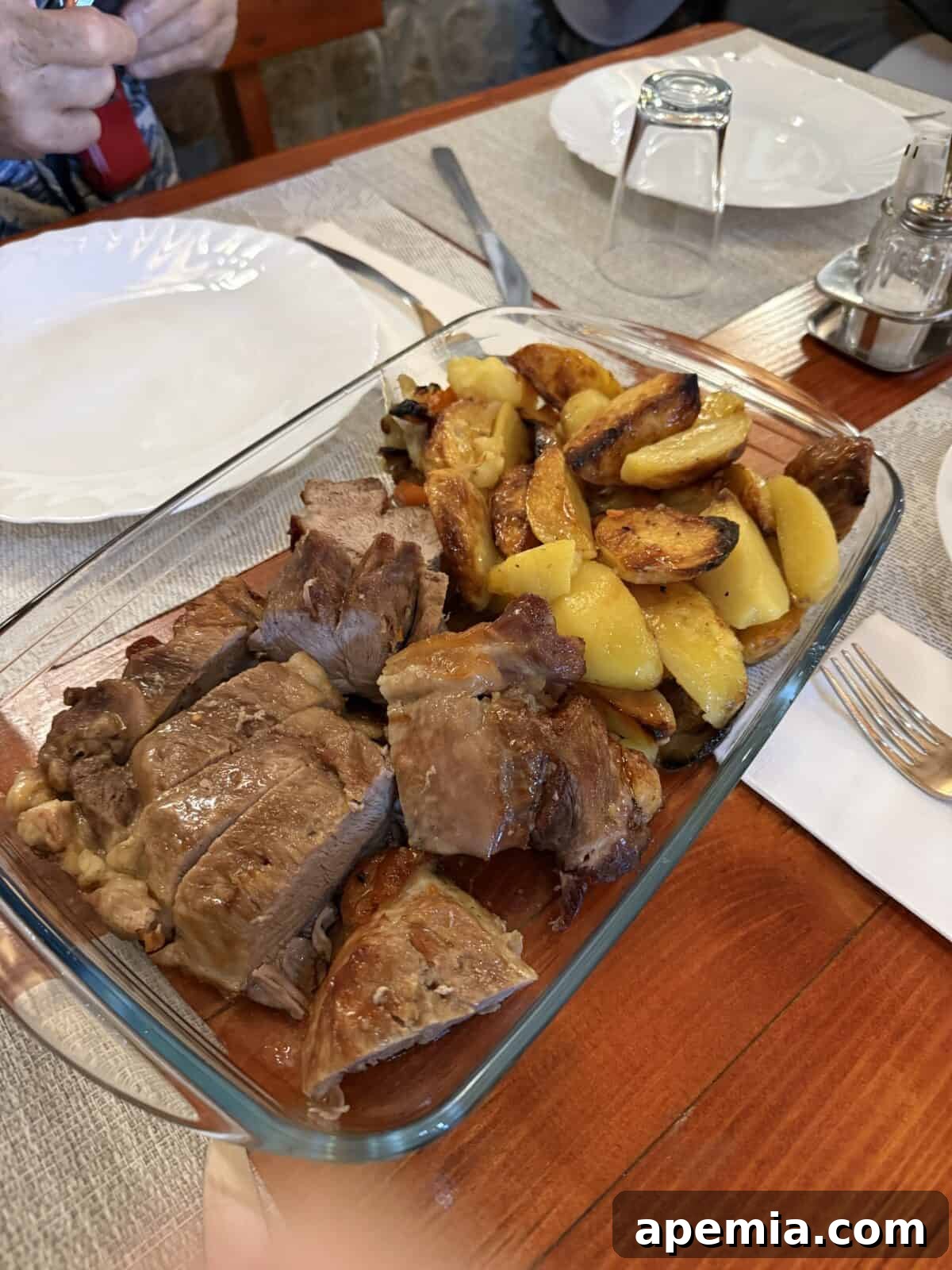
About halfway through the long cooking process, the bell was carefully lifted. The meat, by this point already incredibly tender, was moved on top of the potatoes. This clever step allowed the potatoes to generously soak up all those delectable, rendered juices, enriching their flavor profile. It also exposed the meat to direct heat for a short period, allowing it to develop a beautiful browned crust and a perfectly crispy texture. The culmination of this patient cooking was an absolutely incredible lunch: tender roasted veal and vegetables, infused with an unforgettable smoky, rustic flavor that epitomized Croatian comfort food.
Bringing Peka Home: The Dutch Oven Adaptation
Inspired by this authentic experience, I’ve adapted the “under the bell” peka method for the modern home kitchen, making it achievable and equally delicious using a Dutch oven. This adaptation captures the essence of slow, gentle cooking, allowing the flavors to meld beautifully without the need for an outdoor hearth. While this recipe primarily features lamb shanks, you have the flexibility to substitute with veal or even pork loin, depending on your preference and what’s readily available. Each option will yield a deeply flavorful and tender result, honoring the spirit of traditional peka.
Why You’ll Love This Dutch Oven Peka Recipe
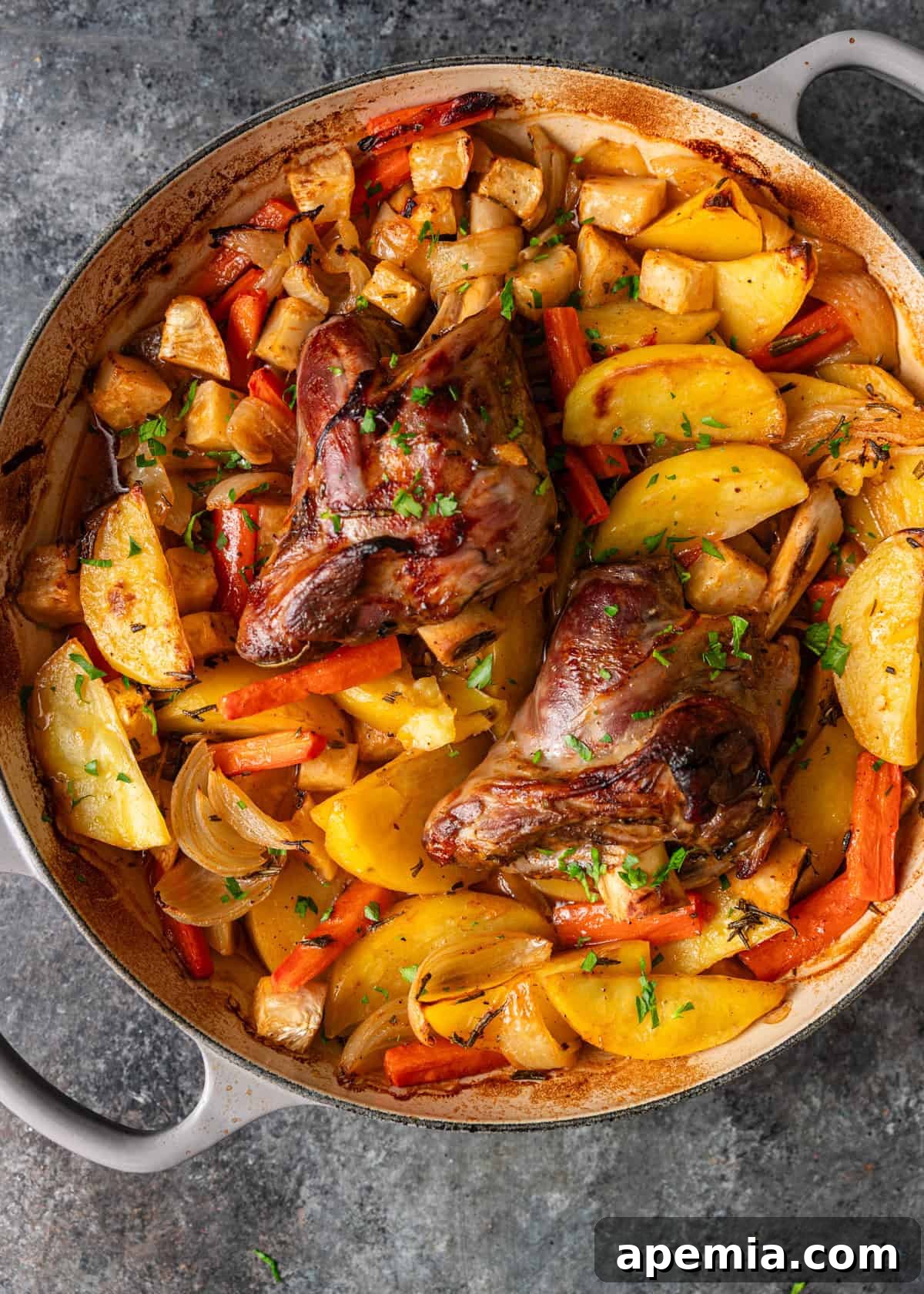
This peka recipe stands out for its incredible simplicity and profound flavor. Unlike many braised dishes, there’s no initial browning step required, which streamlines the preparation process significantly. You won’t be dealing with complicated sauces either; the magic happens as layered ingredients slowly cook together, transforming into a cohesive, deeply flavorful meal. The beauty of this dish lies in its ‘set it and forget it’ nature for much of the cooking time, making it perfect for busy weeknights or relaxed weekend gatherings. The aroma that fills your kitchen alone is worth the wait, promising a comforting, hearty, and intensely satisfying experience.
Once your peka is ready, prepare to soak up every last drop of the rich pan juices. I highly recommend serving it with traditional Balkan flatbreads like Lepinja, or other flavorful options such as Zaatar bread or Barbari bread. These breads are ideal for scooping up the tender meat, soft vegetables, and the exquisite sauce that develops during cooking. Trust me, your taste buds will thank you!
Mastering the Peka: Tips for Perfect Tenderness and Flavor
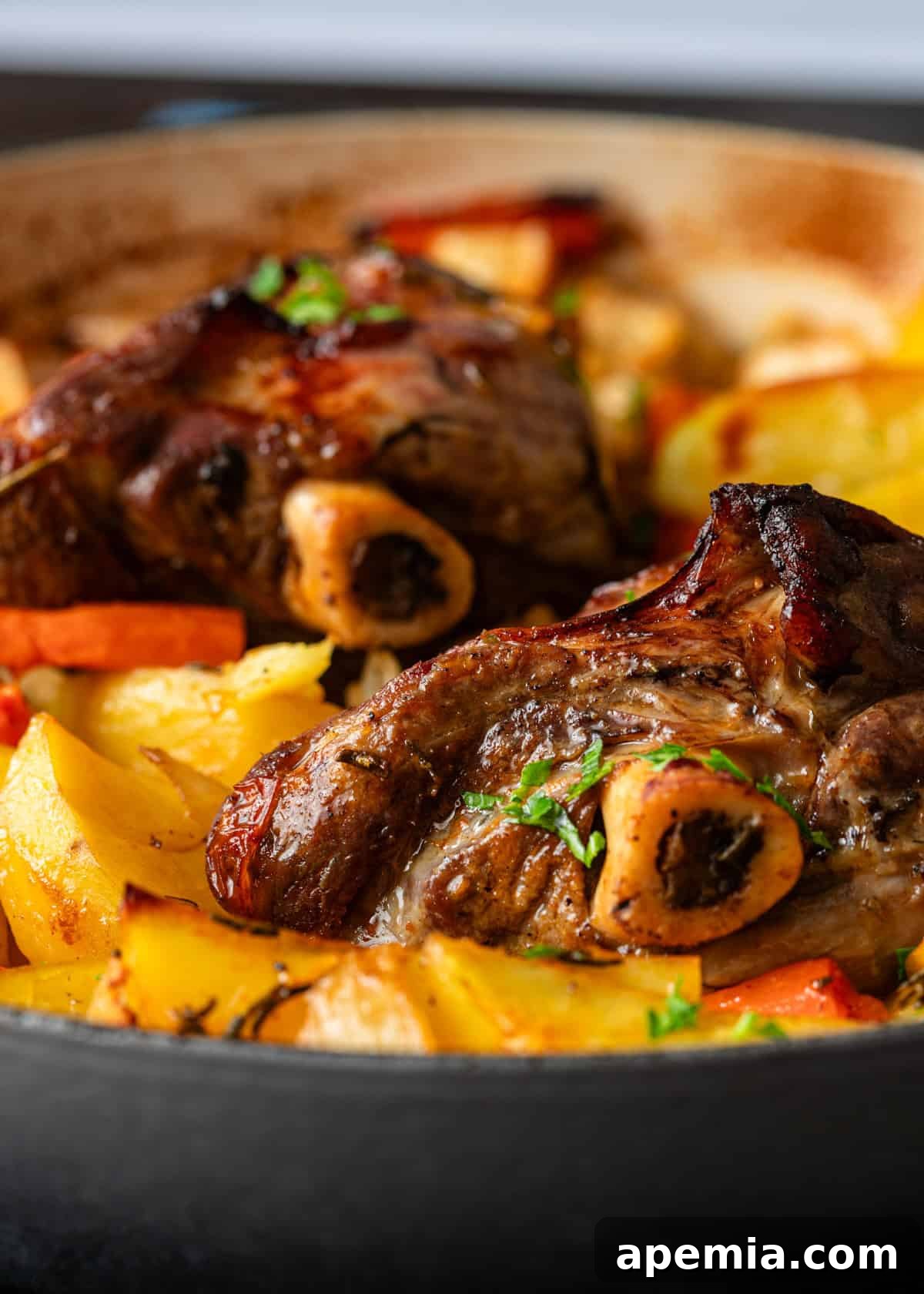
Achieving truly tender, fall-off-the-bone meat in a braised dish like peka is all about collagen conversion, not just reaching a specific internal temperature like you would with a steak. While meats may be technically safe to eat at lower temperatures, they won’t achieve that desired meltingly tender texture until higher temperatures are reached and maintained over time. This slow transformation is the secret to a perfect peka.
A Critical Rule for Braised Dishes: If your meat thermometer indicates the target temperature has been reached but a fork still encounters any resistance, keep cooking! With braises, the texture of the meat is always the ultimate indicator of doneness, triumphing over the numerical reading.
Temperature Guide for Braised Meats in a Dutch Oven (Cooked at 400°F, no initial browning)
Cut and Target Internal Temp >> Approximate Cooking Time
- Lamb shanks >> 195–205°F >> 3–3½ hours
- Veal shanks >> 190–200°F >> 2½–3 hours
- Lamb shoulder (2″ pieces) >> 195–205°F >> 2–2½ hours
Boneless Cuts:
- Boneless lamb shoulder/leg >> 195–205°F >> 1¾–2¼ hours
- Boneless veal >> 190–195°F >> 1½–2 hours
Essential Ingredients for an Authentic Peka
The beauty of Croatian Peka lies in its ability to transform simple, high-quality ingredients into an extraordinary culinary experience. Here’s a closer look at the key components:
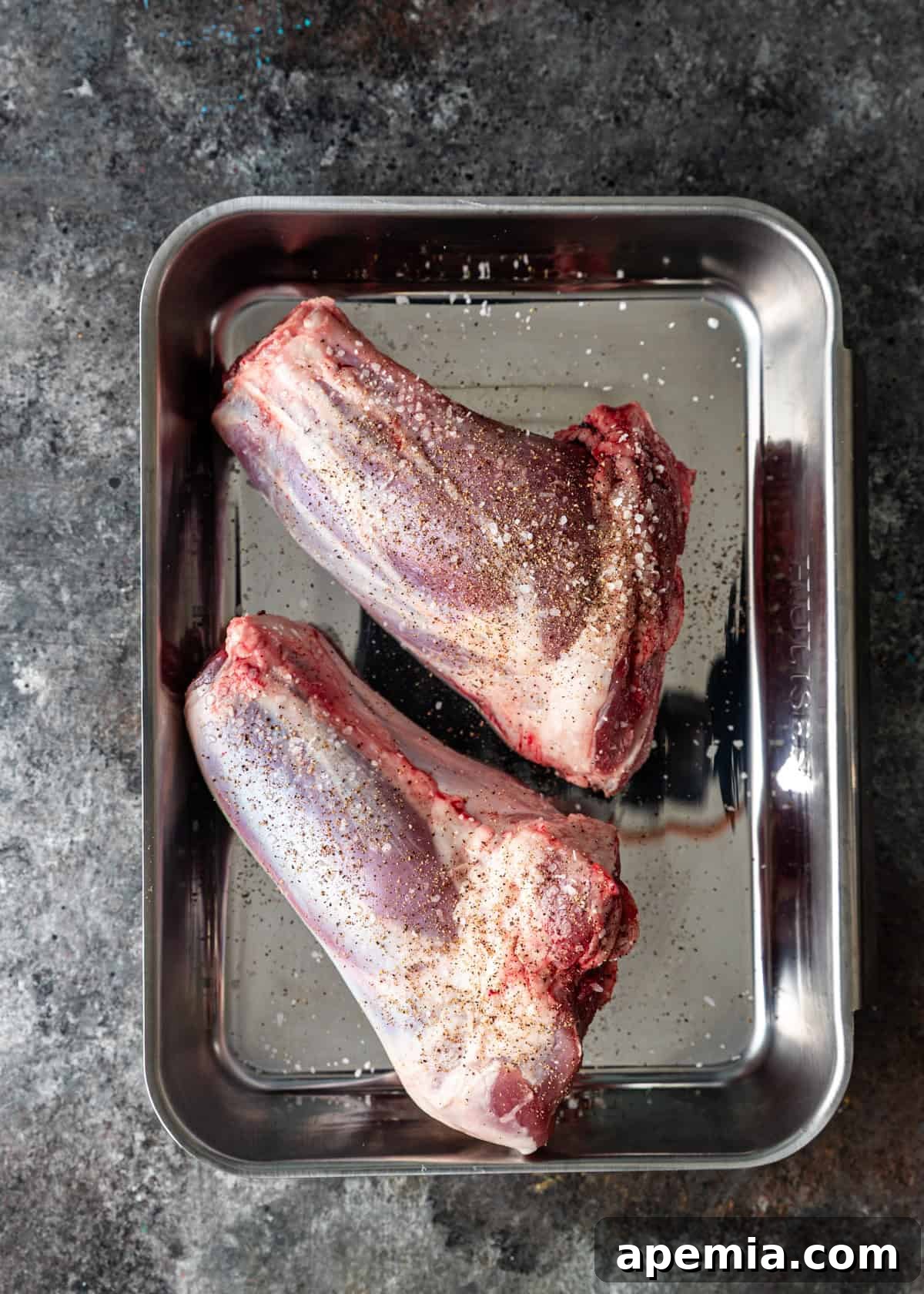
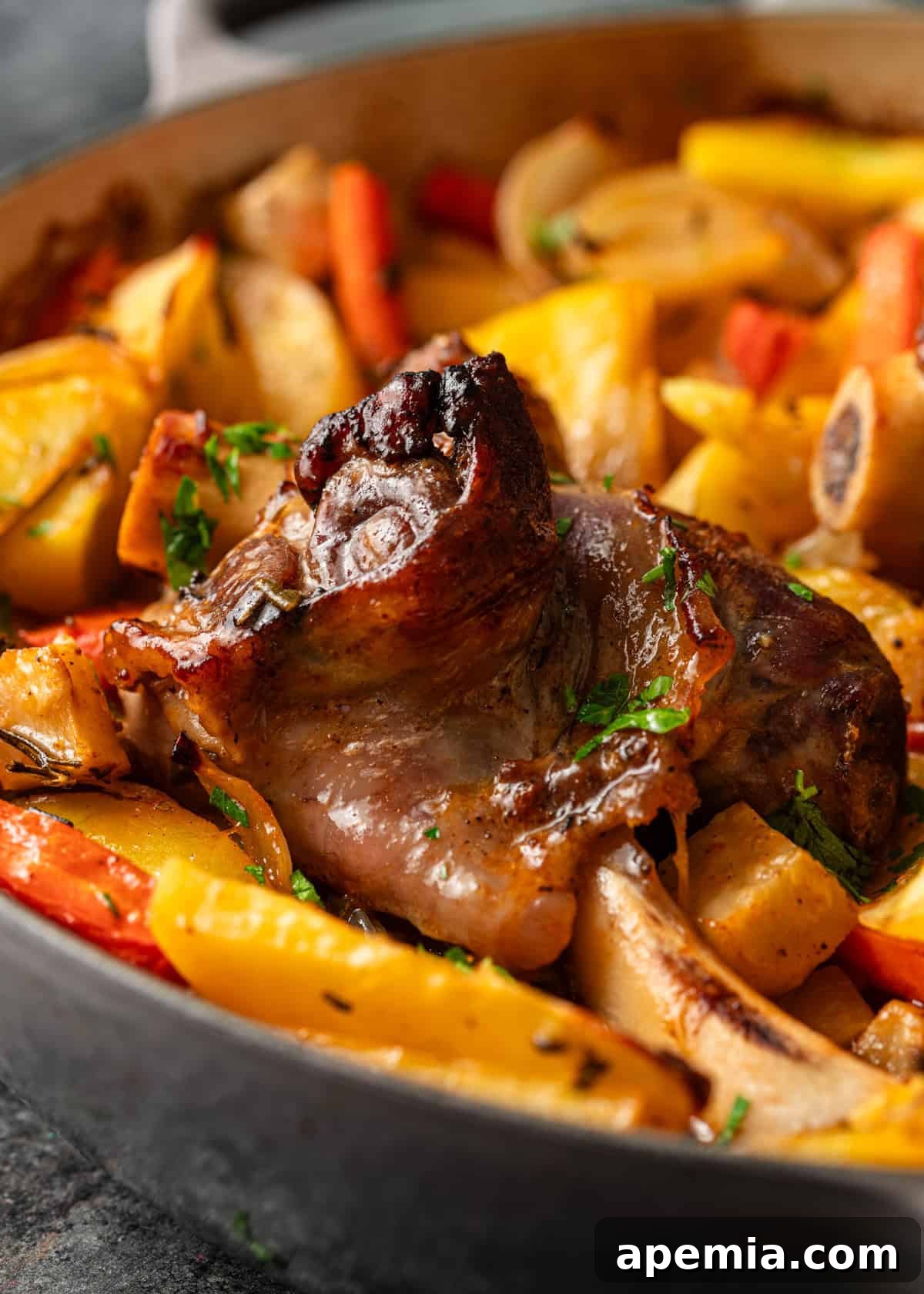
- Lamb Shanks: These are the traditional choice for a peka recipe, prized for their rich flavor and abundant connective tissue. During slow cooking, this tissue breaks down beautifully, yielding incredibly tender and succulent meat that practically falls off the bone. Lamb shoulder or veal shanks also make excellent alternatives, offering similar results, though cooking times may need slight adjustments.
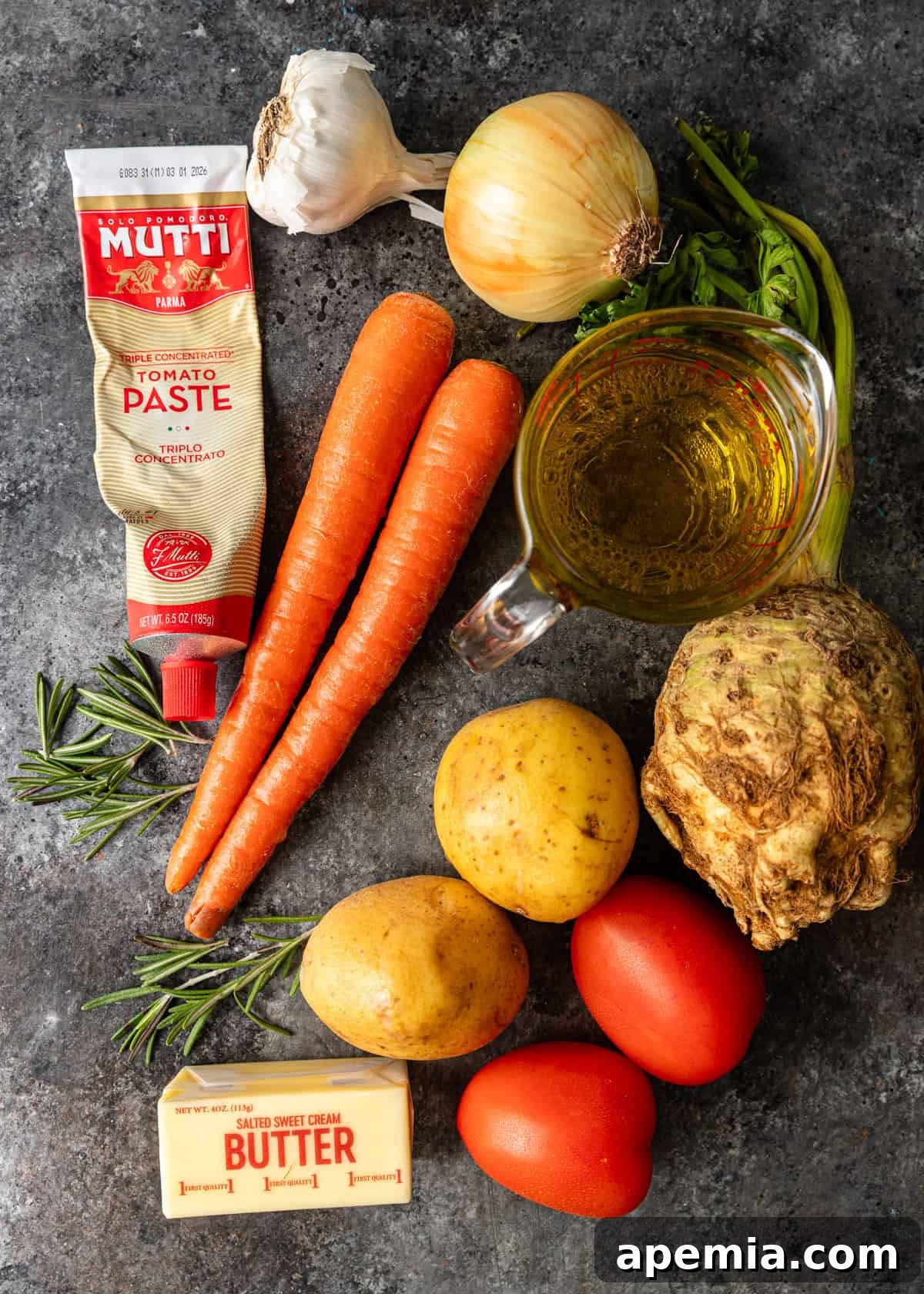
- Root Vegetables: The foundation of this hearty dish is built upon staple root vegetables. Potatoes provide a satisfying starchiness and absorb the rich pan juices, while carrots add a touch of sweetness and vibrant color. Onions contribute a crucial aromatic base, and celery root (celeriac) introduces an earthy, slightly nutty flavor that complements the meat perfectly. For best results, stick with firmer vegetables that can withstand long cooking times without turning to mush. Parsnips or turnips can be used in place of carrots or celery root if preferred, but avoid softer vegetables that might break down too quickly.
- Dry White Wine: A splash of dry white wine is instrumental in building depth and acidity in the braising liquid. It deglazes the pan, adding another layer of complexity to the sauce. If you prefer to cook without alcohol, you can substitute with an equal amount of water or vegetable stock. Keep in mind that while still delicious, the overall flavor profile will be milder without the wine’s nuanced contribution.
- Roma Tomatoes: These tomatoes contribute a gentle acidity and subtle sweetness, providing a crucial balance to the richness of the lamb and butter. Their robust flavor holds up well during long cooking. If fresh Roma tomatoes aren’t available, canned whole peeled tomatoes (crushed by hand) can be used as a convenient and equally flavorful alternative.
- Rosemary: This fragrant herb is a classic pairing with lamb, and its inclusion in peka is essential. Rosemary imparts a wonderful herbal kick and an aromatic depth that permeates the entire dish, creating an irresistible fragrance that defines the Croatian culinary experience.
- Olive Oil: A generous amount of good quality olive oil is fundamental to Croatian cooking. It helps tenderize the meat, adds richness, and carries the flavors throughout the dish.
- Garlic: Minced garlic provides an essential aromatic base, infusing the dish with its pungent, savory notes that are indispensable in Mediterranean cuisine.
- Tomato Paste: A concentrated burst of umami and depth, tomato paste helps build a rich, savory foundation for the braising liquid.
- Butter: Added towards the end, butter enriches the sauce, adding a luxurious finish and enhancing the overall mouthfeel of the peka.
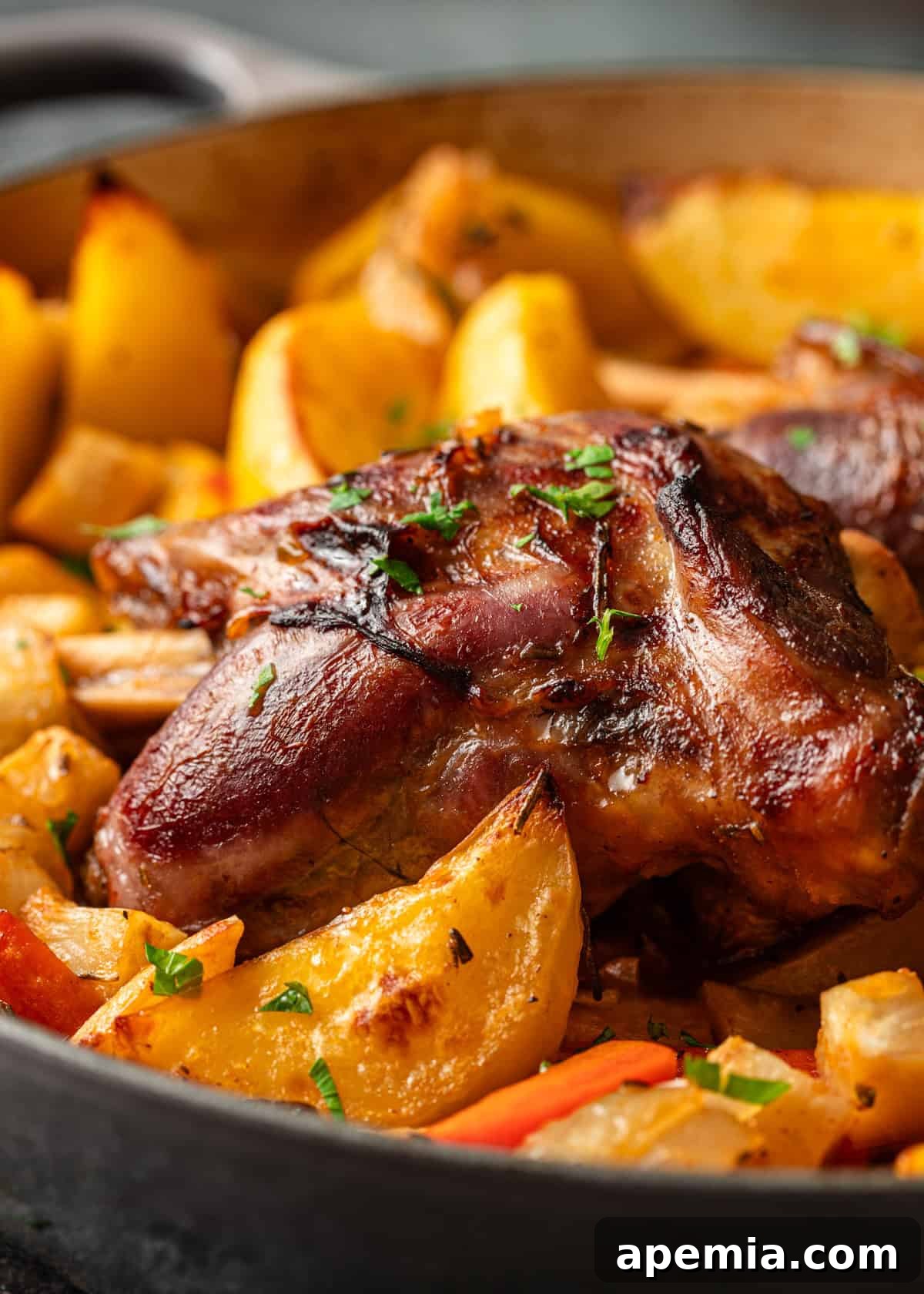
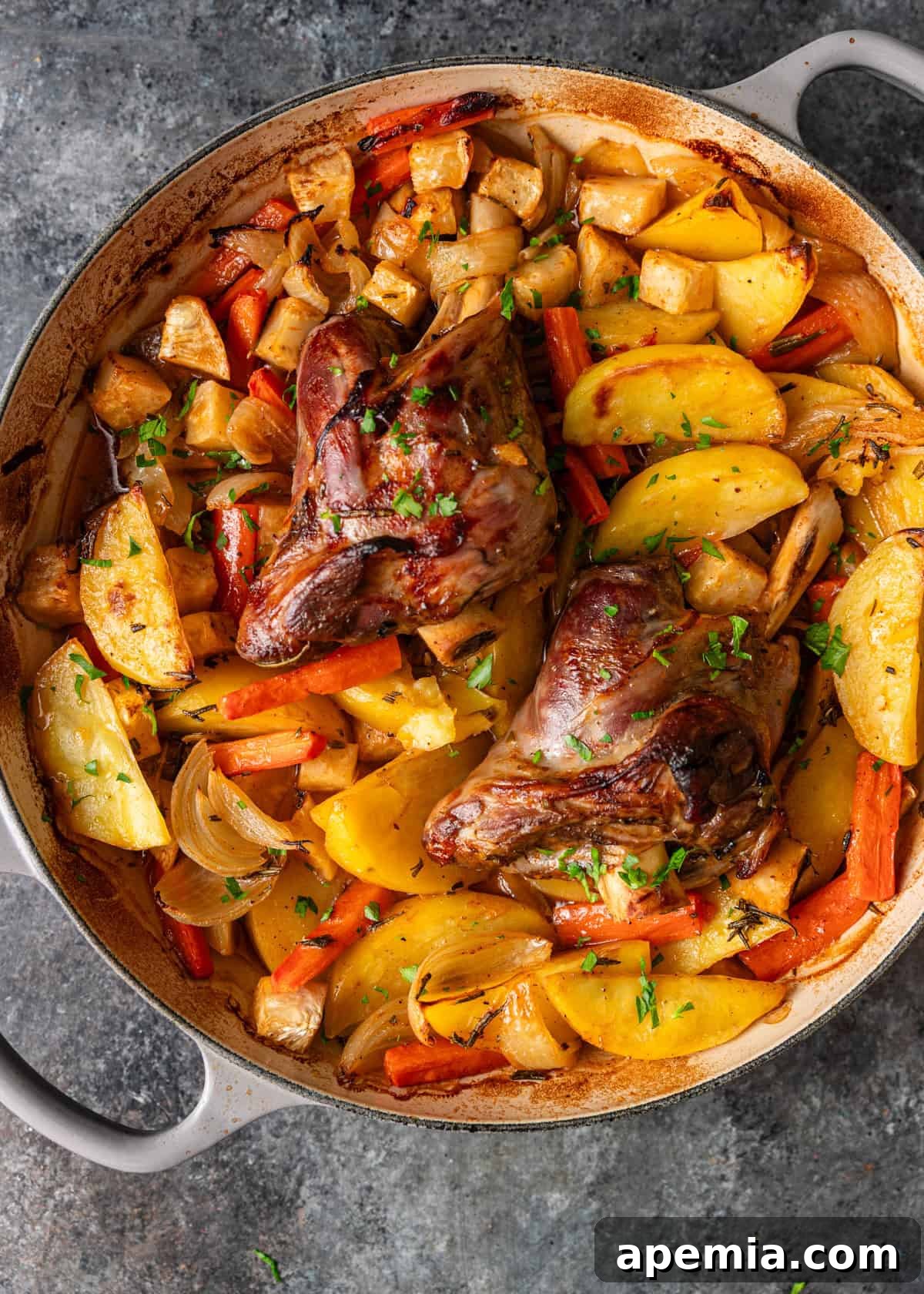
Step-by-Step: How to Make Peka in a Dutch Oven
This recipe serves 4.
Prep time: 15 minutes
Cook time: 2 hours 45 minutes
Total time: 3 hours
Ingredients
- 2 tbsp olive oil
- 1.5-2 lbs lamb shanks (See note 1 for substitutions)
- 2 tsp kosher salt, divided
- 1 tsp ground black pepper, divided
- 1 tbsp garlic, minced
- 1 tbsp tomato paste
- 1/3 cup water
- 1/3 cup dry white wine
- 1/3 cup olive oil
- 1 tbsp rosemary, minced
- 3 Roma tomatoes, roughly chopped
- 4 yellow potatoes, peeled and cut into 8 slices each
- 2 small onions, roughly chopped into 8 pieces each
- 2 carrots, peeled and roughly chopped into 3-inch pieces
- 1 celery root (celeriac), peeled and roughly chopped into 2-inch pieces
- 4 tbsp butter, cut into 4 pieces
Instructions
- Preheat Oven: Preheat your oven to 400°F (or 375°F if using convection).
- Prepare Dutch Oven: Drizzle 2 tablespoons of olive oil into the bottom of a deep casserole pot or Dutch oven.
- Season Lamb: Season the lamb shanks generously with 1 teaspoon of salt and 1/2 teaspoon of black pepper.
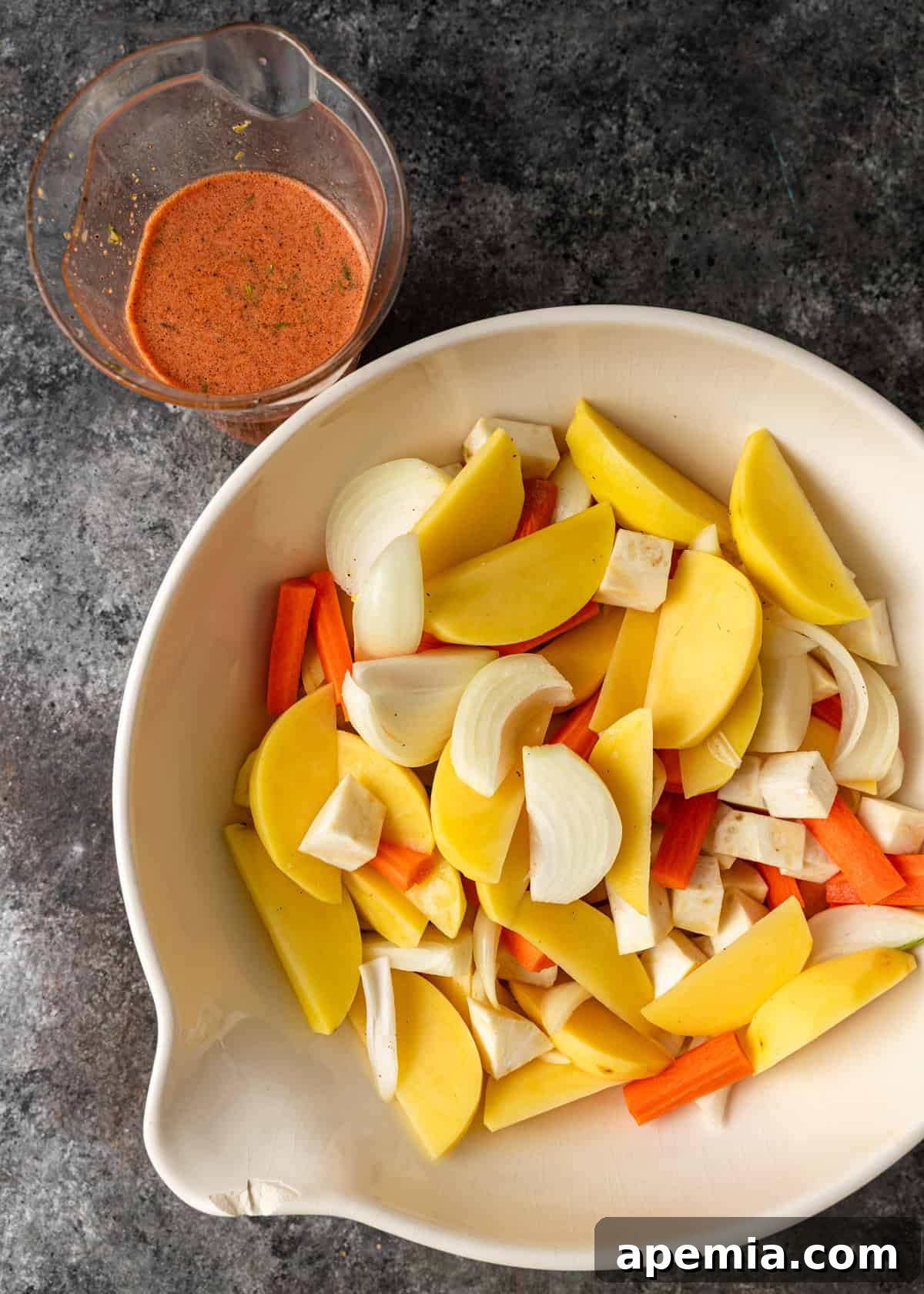
- Prepare Braising Liquid: In a separate bowl, mix together the minced garlic, tomato paste, water, white wine, the remaining 1/3 cup of olive oil, minced rosemary, and the remaining salt and pepper. Set this mixture aside.
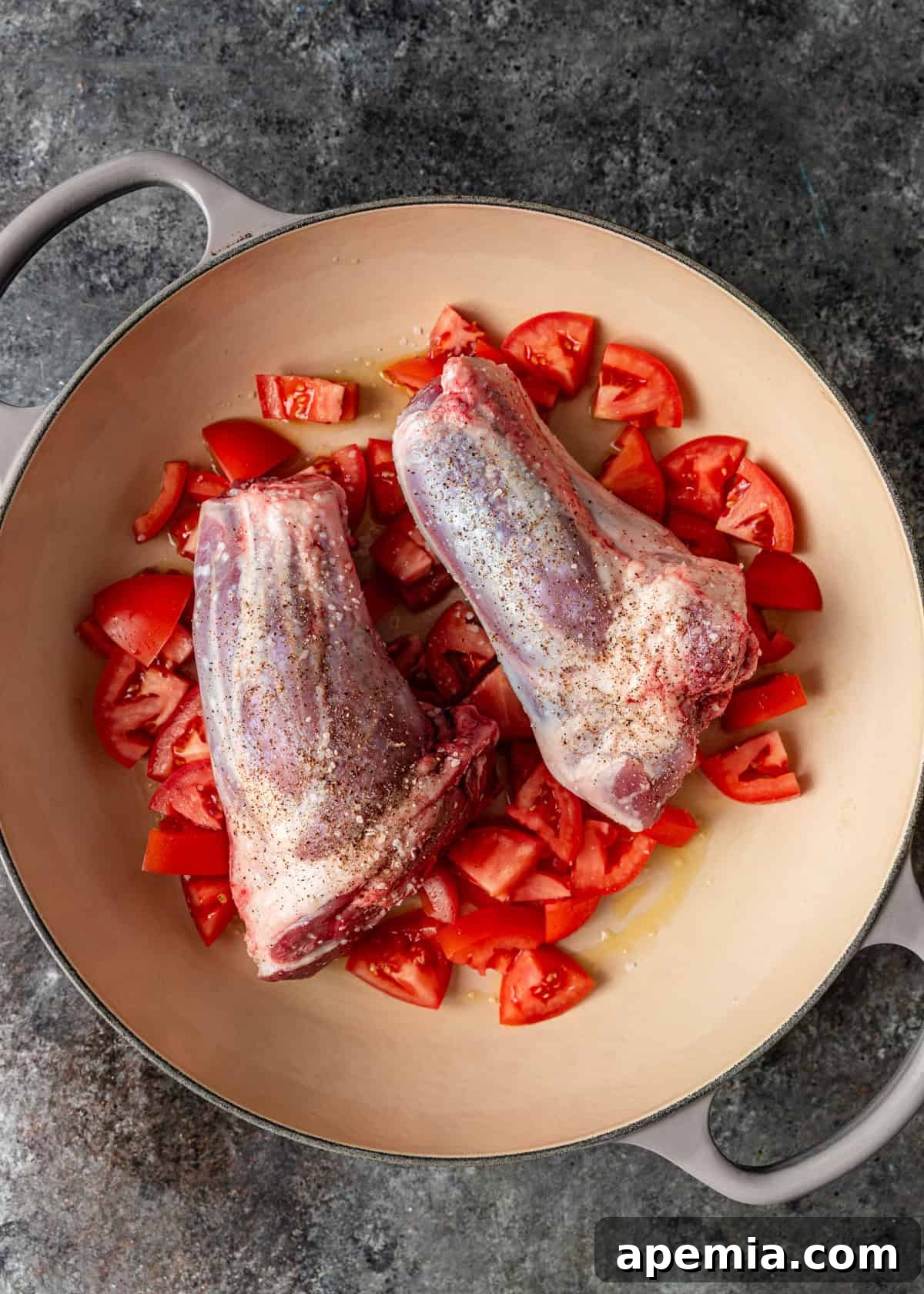
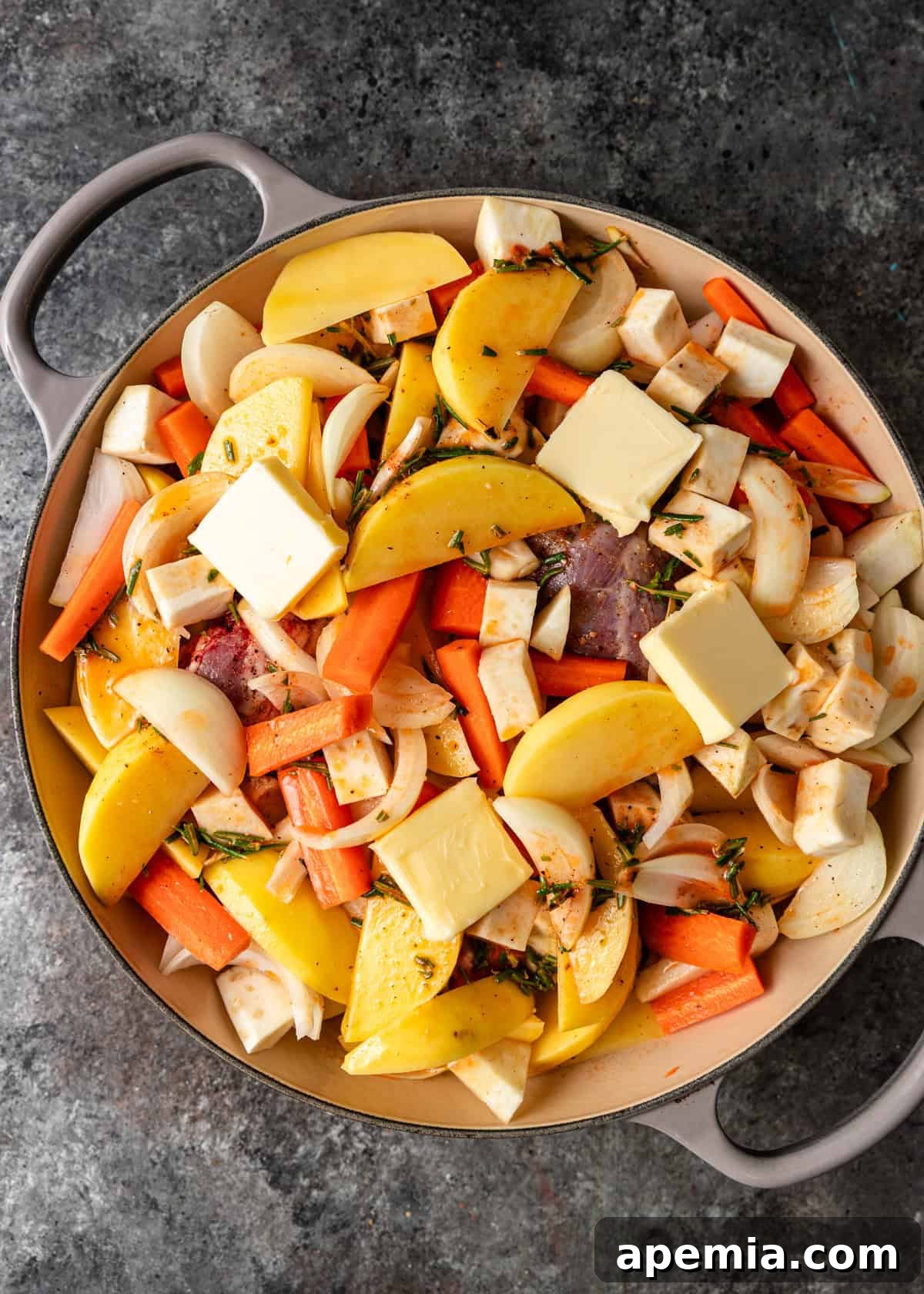
- Layer Ingredients: Arrange the roughly chopped Roma tomatoes at the bottom of the Dutch oven. Place the seasoned lamb shanks on top of the tomatoes. Evenly scatter the prepared potato slices, onion pieces, carrots, and celery root over and around the lamb. Pour the prepared wine mixture over all the ingredients. Finally, dot the top with the pieces of butter.
- First Cook Cycle (Covered): Cover the Dutch oven tightly with its lid and place it in the preheated oven. Cook for 2 hours.
- Second Cook Cycle (Covered, Basted): After 2 hours, carefully remove the lid. Turn the lamb shanks to expose different sides and baste them thoroughly with the rendered fats and pan juices that have accumulated in the pot. Re-cover the pot and continue cooking for another 30 minutes.
- Final Cook Cycle (Uncovered for Browning): Check if more liquid is needed; if the pot seems dry, add a small splash of water or dry white wine. Turn the meat once more. Now, remove the lid entirely and roast uncovered for an additional 15-30 minutes. This uncovered period allows the meat to brown beautifully and some of the liquid to reduce, intensifying the flavors. Remember the critical rule: if a fork still resists, keep cooking until truly tender.
- Serve: If the pan juices have reduced too much, add a small amount of water or white wine to loosen them, gently scraping up any browned bits from the bottom of the pot. Spoon the rich pan juices generously over the meat and vegetables before serving.
Notes
- Substitutions / Cooking Times and Temps:
For braised cuts, internal temperature is about collagen conversion, not “doneness” like a steak. All are technically safe earlier, but won’t be tender until higher temps are reached and held.
If the thermometer says you’re there but a fork still resists, keep cooking. Texture always wins over the number with braises.
Below are ideal internal temperature targets for your Dutch-oven braise at 400°F (no browning first as in recipe):
Cut and target internal temp
- Lamb shanks >> 195–205°F >> 3–3½ hours
- Veal shanks >> 190–200°F >> 2½–3 hours
- Lamb shoulder (2″) >> 195–205°F >> 2–2½ hours
Boneless
- Boneless lamb shoulder/leg >> 195–205°F >> 1¾–2¼ hrs
- Boneless veal >> 190–195°F >> 1½–2 hrs
Recommended Tools for Your Peka Journey
- Dutch Oven or Deep Casserole Dish: This is absolutely essential to replicate the enclosed, slow-cooking environment of traditional peka. A heavy-bottomed, oven-safe pot with a tight-fitting lid is crucial for trapping moisture and flavors.
- Ladle or Large Spoon: Necessary for basting the meat during cooking and for serving those delicious pan juices over the finished dish.
Storing and Reheating Leftovers
Should you be fortunate enough to have leftovers, peka often tastes even better the next day as the flavors continue to meld and deepen. Transfer any cooled remnants to an airtight container and refrigerate for up to 3 days.
When it’s time to reheat, gently warm the peka in a covered pan or an oven-safe dish at 325°F (160°C) until thoroughly heated. Avoid using high heat, as this can dry out the tender meat. If you find the sauce has thickened or reduced too much, simply add a small splash of water or dry white wine to loosen it up and revive those rich pan juices. Slow, gentle reheating is key to maintaining the meat’s incredible tenderness and preventing it from becoming tough.
Share this recipe on Pinterest!
Love this recipe? Share it with the world on Pinterest.
Frequently Asked Questions About Peka
Traditional peka, both “under the bell” and in its Dutch oven adaptation, intentionally skips the browning step. This is because the dish relies on a long, slow, and moist cooking environment to tenderize the meat. Searing creates a crust and locks in some flavors, but for peka, the goal is a gentle softening of the meat and a clean melding of flavors as they braise in their own juices. This method allows the meat to soften gradually without drying out and imparts a unique, subtle richness.
For peka, tenderness is far more important than a precise internal temperature reading. The lamb should be incredibly tender, easily yielding and shredding with a fork, with no resistance. While a meat thermometer can give you a general idea (aim for 195-205°F for lamb shanks), always trust the texture. If the meat isn’t falling apart easily, continue cooking, even if the thermometer reads within the target range. The collagen needs sufficient time to break down for that signature melt-in-your-mouth experience.
No, it’s best to resist the urge to stir! Peka is designed to cook largely undisturbed. Keeping the pot covered traps steam and allows the rendered fats and juices to circulate naturally, creating a self-basting environment. This consistent, even heat throughout the long cooking time is crucial for tenderizing the meat and ensuring the vegetables cook evenly without becoming mushy or drying out. Only open the lid to turn the meat and baste during the specified intervals, and for the final browning step.
Croatian Peka Recipe
4
15 mins
2 hrs 45 mins
3 hrs
Ingredients
- 2 tbsp olive oil
- 1.5-2 lbs lamb shanks (See Note 1 for substitutions)
- 2 tsp kosher salt divided
- 1 tsp ground black pepper divided
- 1 tbsp garlic minced
- 1 tbsp tomato paste
- 1/3 cup water
- 1/3 cup dry white wine
- 1/3 cup olive oil
- 1 tbsp rosemary minced
- 3 roma tomatoes roughly chopped
- 4 yellow potatoes peeled and cut into 8 slices each
- 2 small onions roughly chopped into 8 pieces each
- 2 carrots peeled and roughly chopped 3-inch pieces
- 1 celery root celeriac, peeled and roughly chopped 2-inch pieces
- 4 tbsp butter cut into 4 pieces
Instructions
-
Preheat oven to 400°F or 375°F if using convection.
-
Drizzle 2 tablespoons olive oil in the bottom of a deep casserole pot or Dutch oven.
-
Season the lamb shanks with 1 teaspoon salt and 1/2 teaspoon black pepper.
-
Mix together the garlic, tomato paste, water, wine, 1/3 cup olive oil, rosemary and remaining salt and pepper, set aside.
-
To the pan add the tomatoes, next the meat and scatter the potato, onion, carrots and celery root over all. Pour the wine mixture over and top with butter pieces.
-
Cover with lid and cook in oven for 2 hours. Turn the meat, baste with rendered fats and pan juices and roast covered for another 30 minutes.
-
Check if liquid is needed. Turn the meat again and roast uncovered for another 15-30 minutes. If the thermometer says you’re there but a fork still resists, keep cooking. Texture always wins over the number with braises.
-
If the pan juices have dried out, add a little water or white wine to scrape up the browned bits on bottom and spoon on top when serving.
Notes
- Substitutions / Cooking Times and Temps:
For braised cuts like these, internal temperature is about collagen conversion, not “doneness” like a steak. All of them are technically safe much earlier, but they won’t be tender until higher temps are reached and held.If the thermometer says you’re there but a fork still resists, keep cooking. Texture always wins over the number with braises.
Below are ideal internal temperature targets for your Dutch-oven braise at 400°F (no browning first as in recipe).
Cut and target internal temp
Lamb shanks >> 195–205°F >> 3–3½ hours
Veal shanks >> 190–200°F >> 2½–3 hours
Lamb shoulder (2″) >> 195–205°F >> 2–2½ hoursBoneless
Boneless lamb shoulder/leg >> 195–205°F >> 1¾–2¼ hrs
Boneless veal >> 190–195°F >> 1½–2 hrs
Nutrition
The information shown is an estimate provided by an online nutrition calculator. It should not be considered a substitute for a professional nutritionist’s advice.
Have You Made This Recipe? Let Me Know on Instagram
Tag @keviniscooking or tag me #keviniscooking!