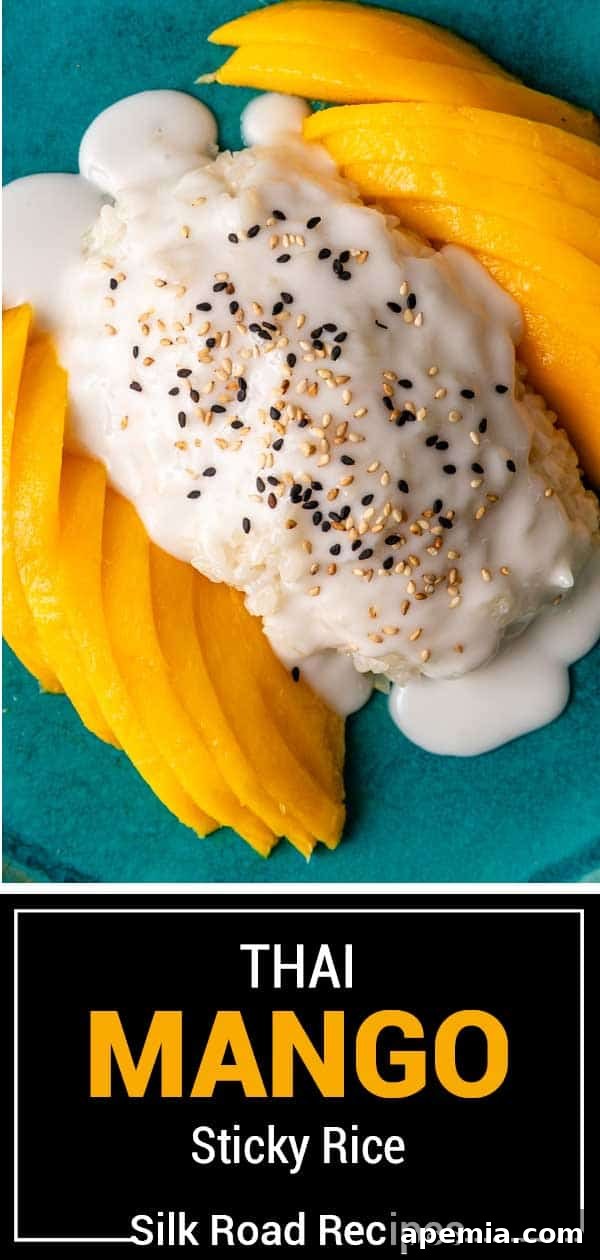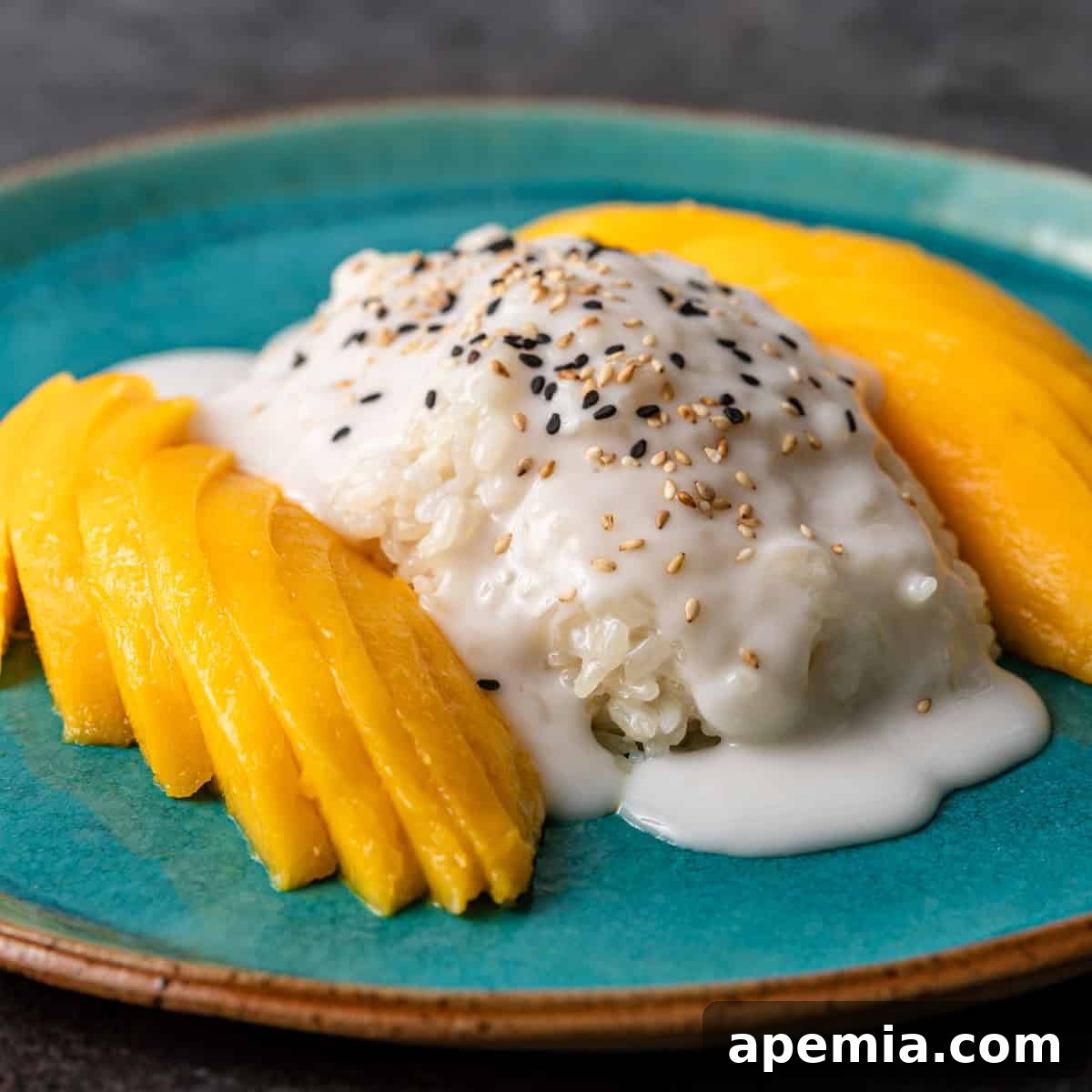
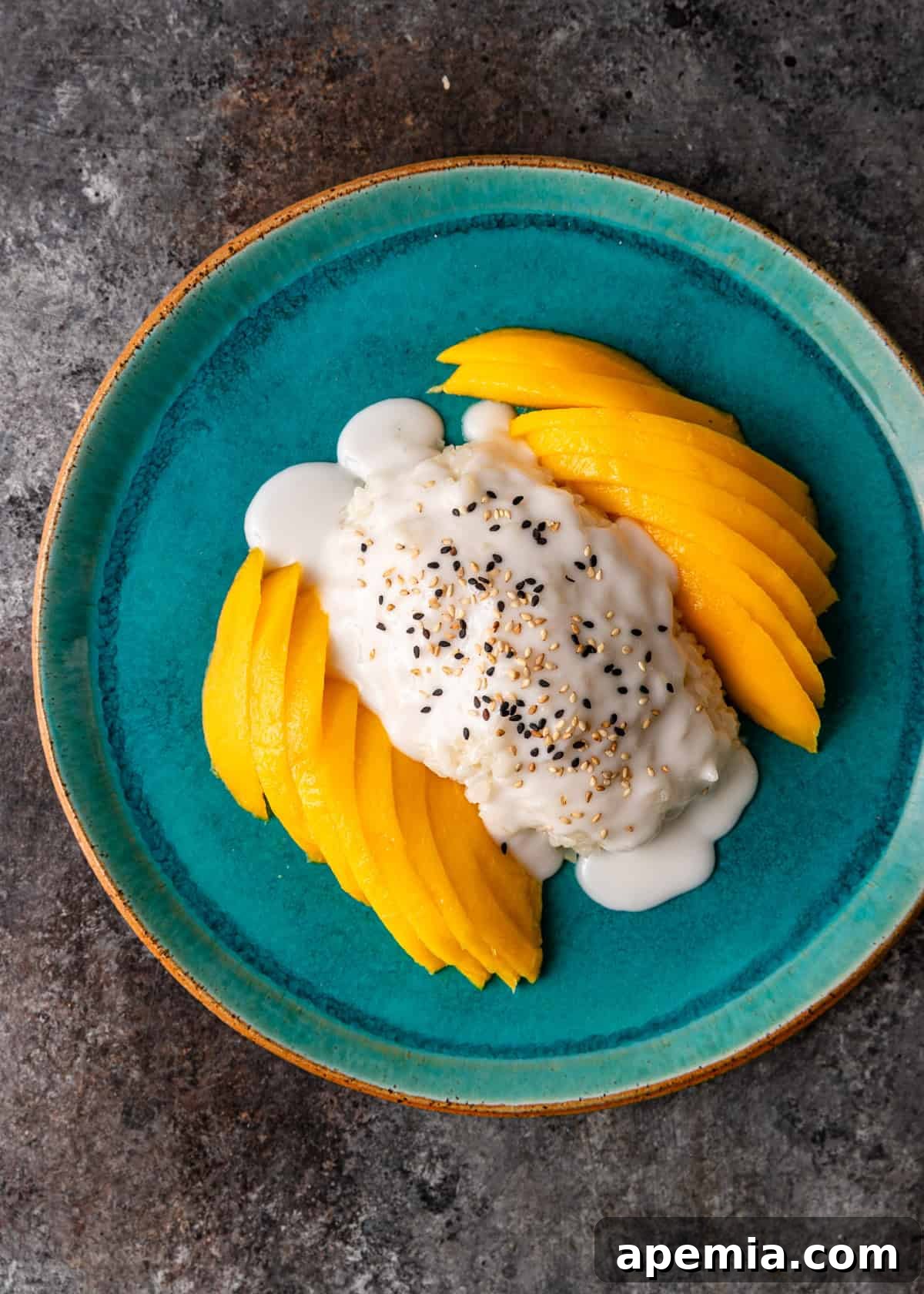
Searching for a unique and incredibly refreshing dessert that transports your taste buds straight to Thailand? This authentic Thai mango sticky rice, known locally as Khao Niao Mamuang, is a cherished traditional dish that combines simplicity with an utterly mouthwatering taste experience. Imagine tender, chewy glutinous rice generously drizzled with a luxurious, sweet, and slightly savory coconut sauce, served alongside slices of perfectly ripe, sweet mango. It’s a harmonious blend of textures and tropical flavors that creates an unforgettable dessert experience.
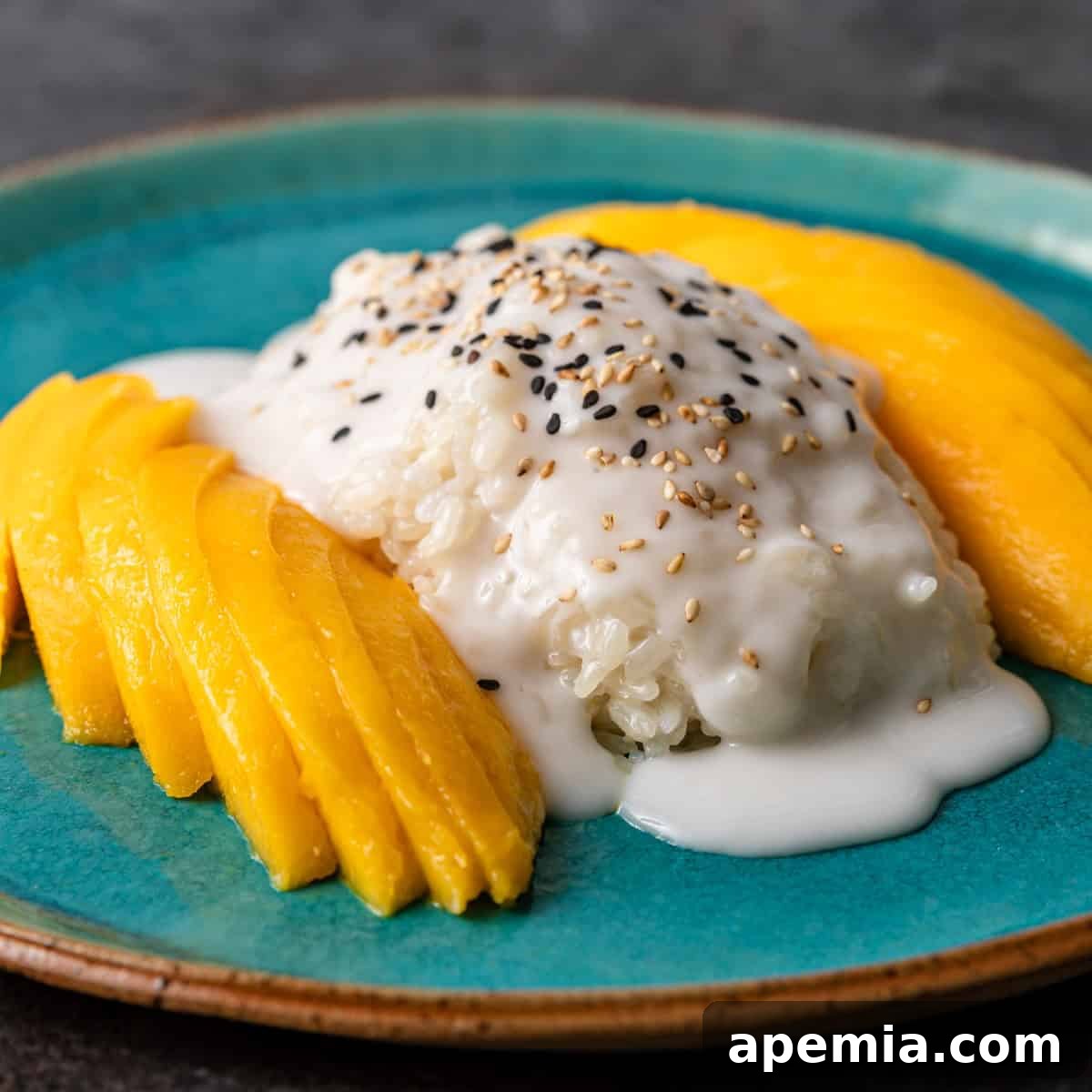
Rice is often overlooked in the realm of desserts, yet it forms the comforting base for some of the world’s most beloved sweet treats. From the aromatic Indian kheer, rich with cardamom and nuts, to the creamy Mexican arroz con leche, infused with cinnamon and citrus, rice-based desserts rightfully hold a place of honor across diverse cultures. However, few achieve the iconic status and universal appeal of Thailand’s exquisite Mango Sticky Rice.
My own journey with this particular rice dessert began during a memorable trip through the bustling streets and serene landscapes of Thailand. The first bite was a revelation – a captivating blend of textures and an explosion of tropical sweetness balanced by an unexpected savory depth. It was that moment, savoring this simple yet profoundly delicious combination of perfectly cooked glutinous rice, vibrant fresh mango, and an undeniably good coconut sauce, that solidified its place as a lifelong favorite. Its remarkable taste and incredible ease of preparation have stayed with me ever since.
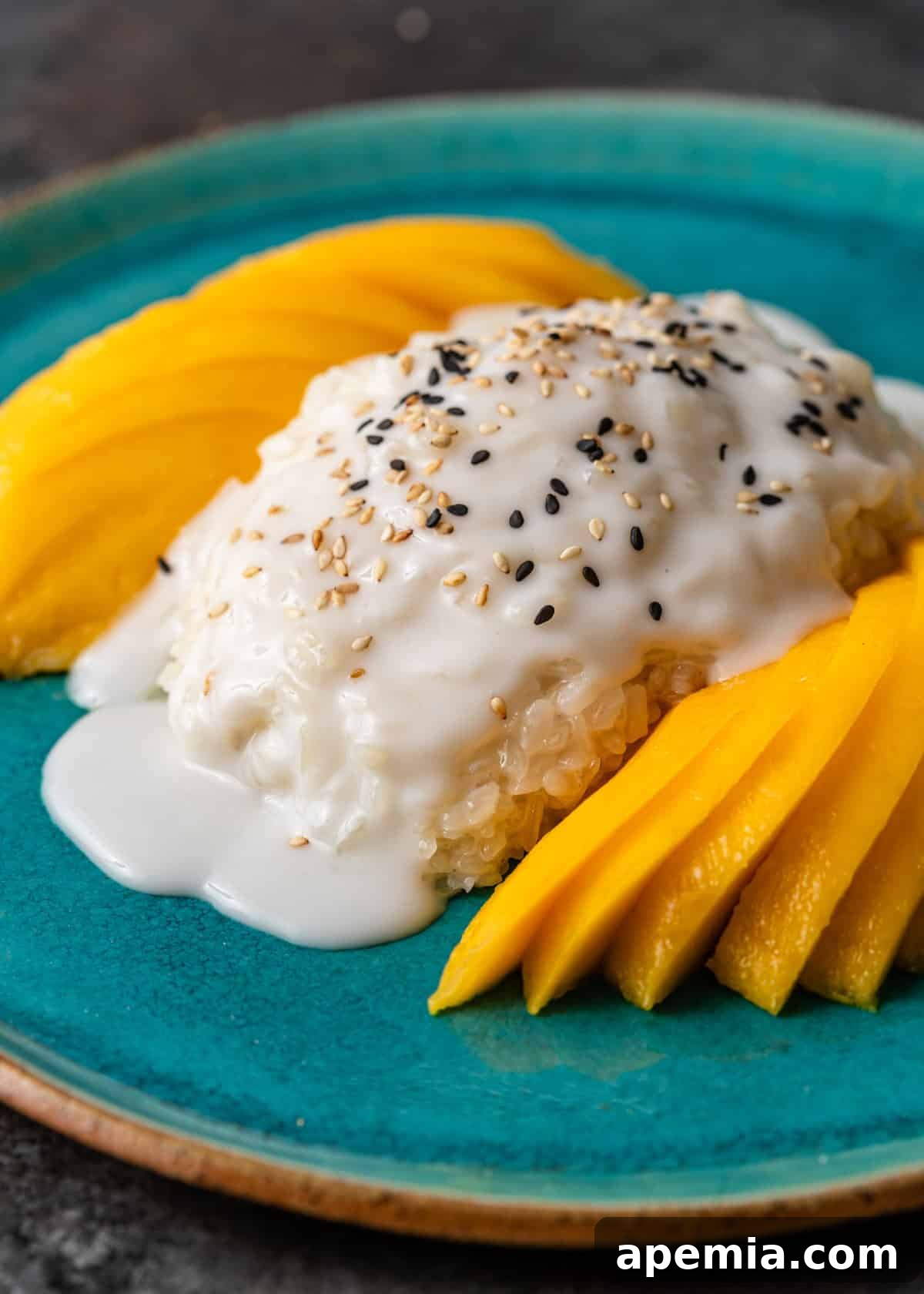
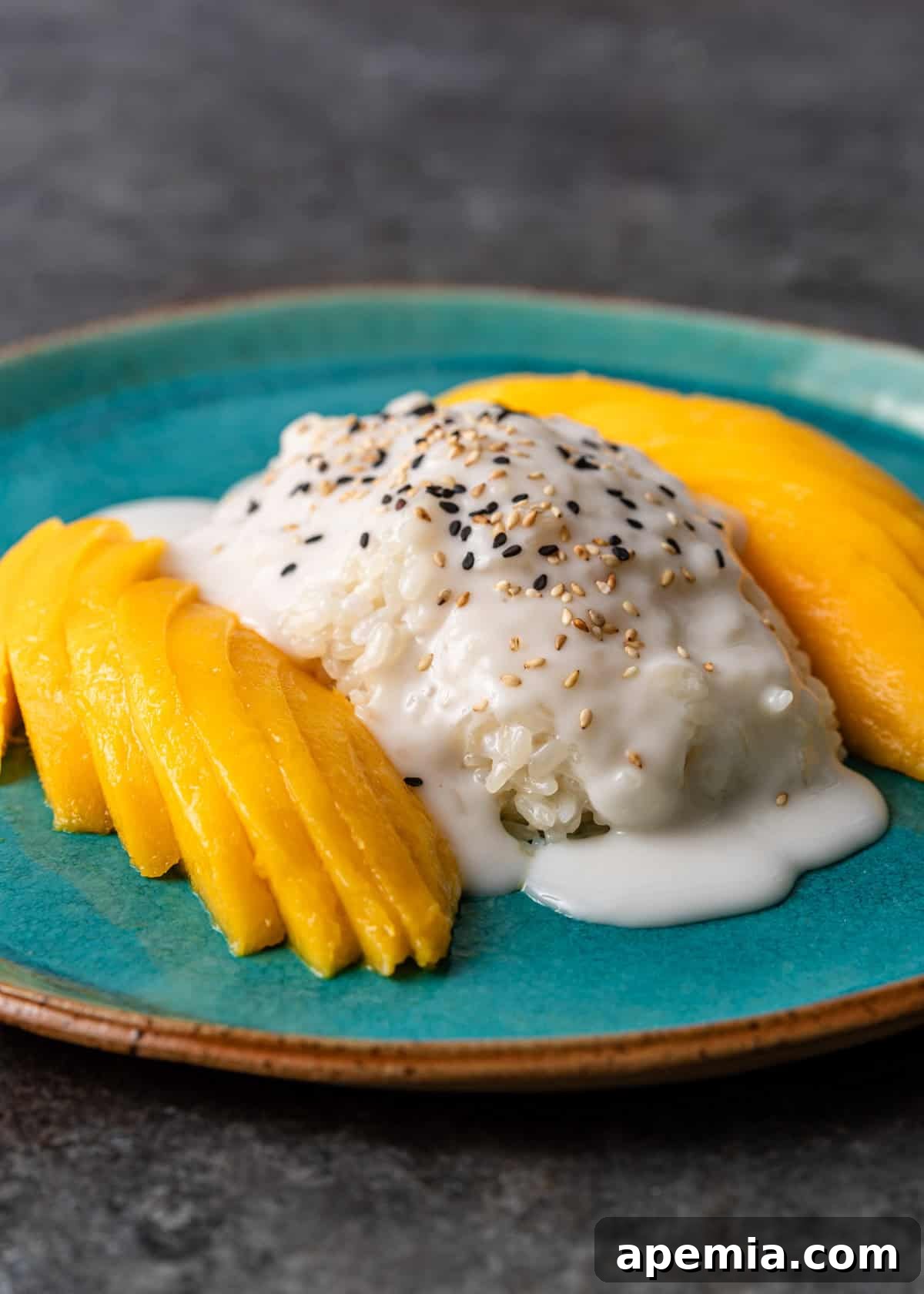
This dessert truly couldn’t be easier to prepare, and the resulting flavor is nothing short of amazing. The star is undoubtedly the sweet, creamy coconut sauce, which boasts an intriguing umami depth from a touch of salt. This rich sauce perfectly complements the satisfyingly chewy texture of the glutinous rice, while generously sliced pieces of soft, ripe mango add a burst of fruity freshness and natural sweetness. It’s a testament to how a few simple, high-quality ingredients can create something truly extraordinary.
Table of Contents
- What Makes Mango Sticky Rice So Special?
- The Essence of Ingredients: What You’ll Need
- How to Make Mango Sticky Rice: Step-by-Step Guide
- Cooking Methods for Sticky Rice
- Pro Tips for Perfection
- Recommended Kitchen Tools
- Storing and Reheating
- Frequently Asked Questions
- Mango Sticky Rice Recipe
This dessert is remarkably light, wonderfully refreshing, and absolutely packed with subtle yet unmistakable flavors that dance on your palate. A final flourish of toasted sesame seeds adds a delightful crunch and a gentle, nutty savoriness that elevates the entire dish. Get ready to indulge in a slice of Thai paradise right in your own home!
What Makes Mango Sticky Rice So Special? A Culinary Journey
Mango Sticky Rice is more than just a dessert; it’s a testament to the elegant simplicity of Thai cuisine. Its magic lies in the perfect interplay of its three main components, creating a sensory symphony that delights with every spoonful. The base is the sticky rice, specifically a glutinous variety that, when cooked, transforms into soft, chewy grains with a delightful resilience. This isn’t your average fluffy white rice; it has a unique texture that holds up beautifully to the creamy sauce.
Next, the rich coconut sauce elevates the dish from simple sweet rice to a decadent treat. Made from full-fat coconut milk, sugar, and a crucial pinch of salt, this sauce is simmered to a glossy, thick consistency. The salt acts as a flavor enhancer, cutting through the sweetness and bringing out the complex, nutty notes of the coconut, lending that desirable umami depth. Without this savory counterbalance, the dessert would risk being overly sweet.
Finally, the mangoes. These aren’t just any mangoes; they must be perfectly ripe, sweet, and fragrant, adding a burst of tropical sunshine and a soft, yielding texture that contrasts beautifully with the chewiness of the rice. Thai mango sticky rice is particularly popular during Thailand’s mango season, typically from April to May, when the fruit is at its absolute peak, guaranteeing the best possible flavor for this iconic dessert.
The Essence of Ingredients: What You’ll Need for Authentic Mango Sticky Rice
(Be sure to check the recipe card below for a full list of precise ingredients and quantities)
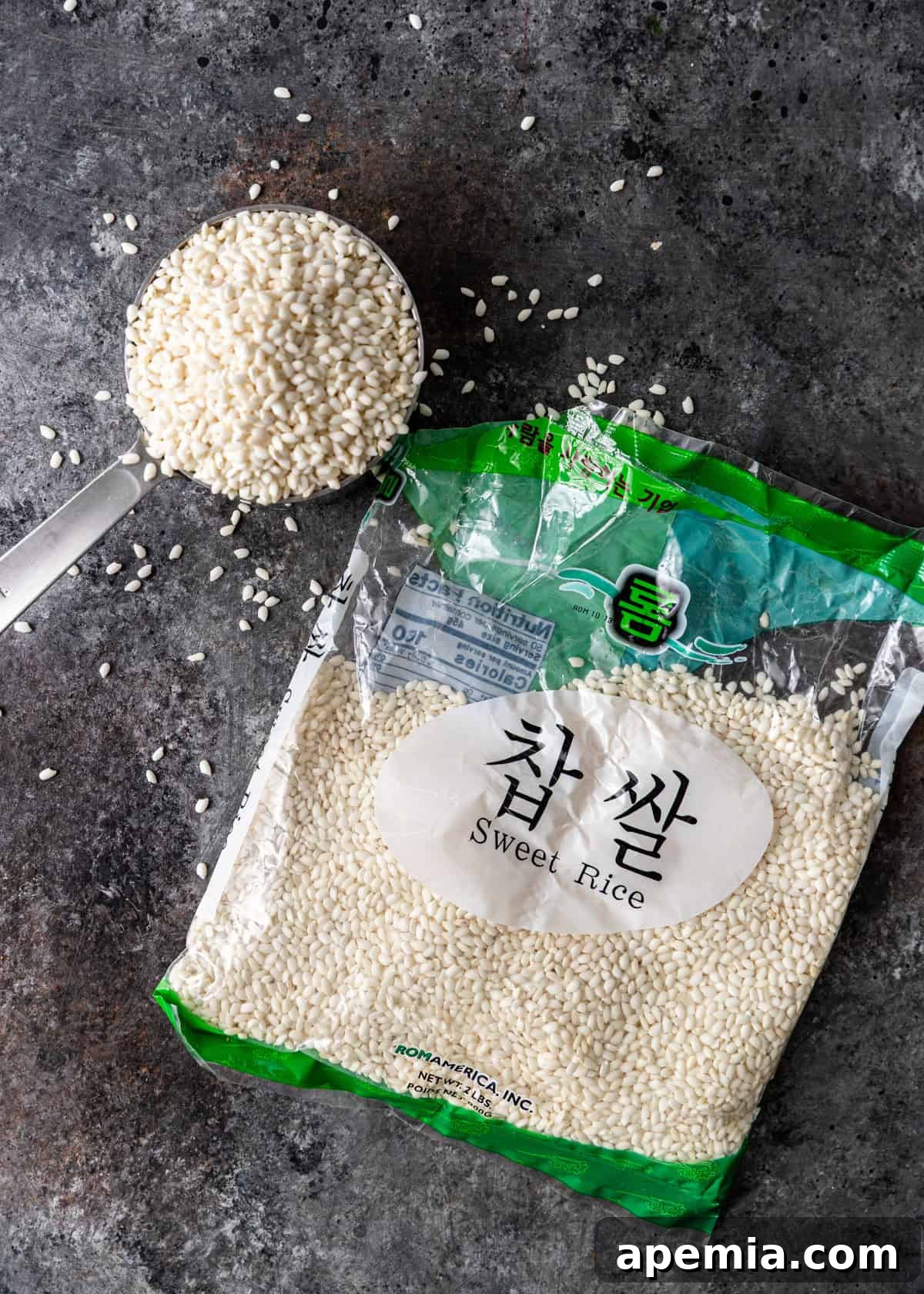
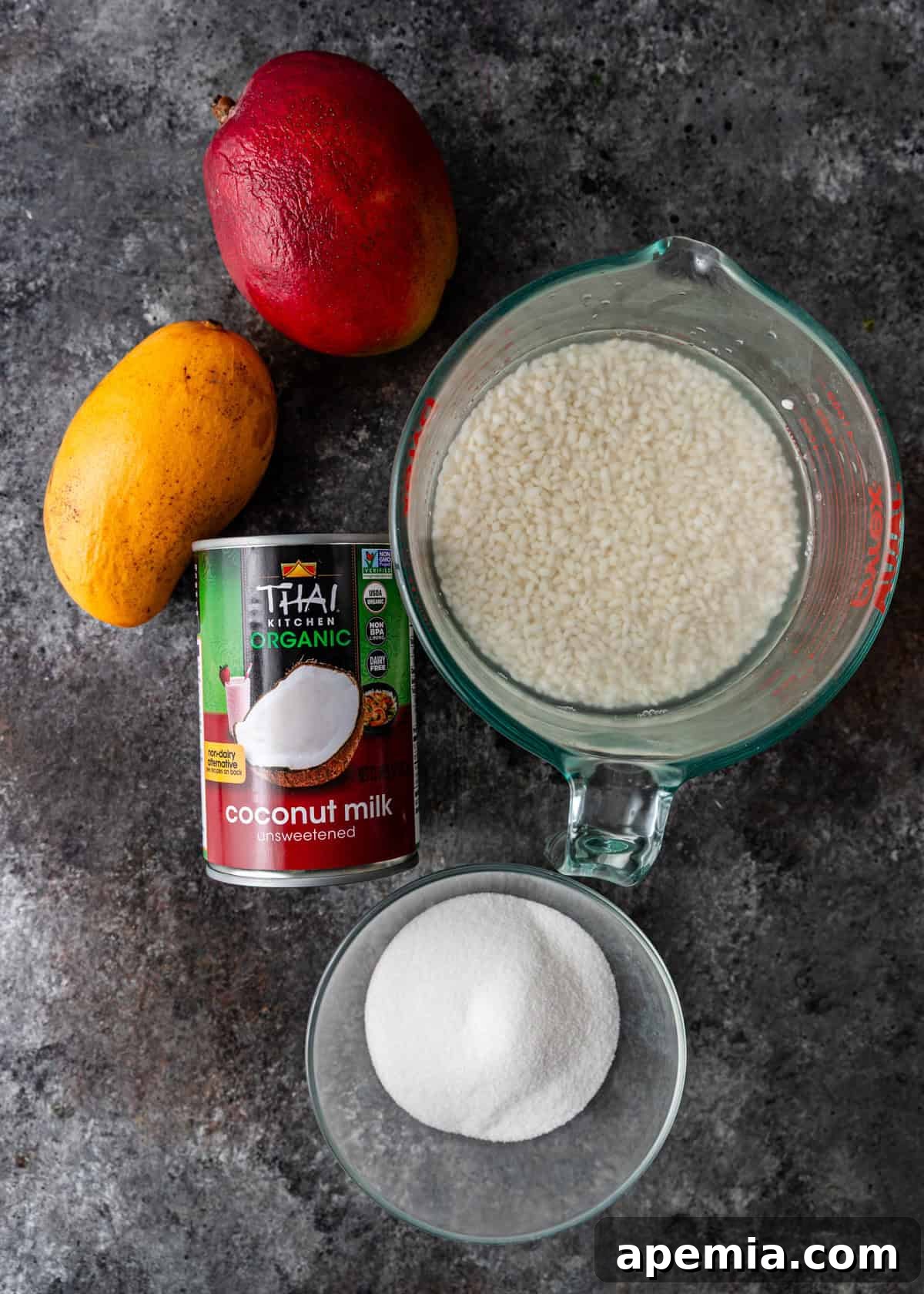
- Glutinous Rice (Sweet Rice): This is perhaps the most critical ingredient. For an authentic mango sticky rice, you must use glutinous short-grain rice, often labeled “sweet rice” in Asian grocery stores. The term “glutinous” refers to its sticky, chewy texture when cooked, not to the presence of gluten. Regular long-grain or jasmine rice will not yield the correct consistency for this dessert. Proper rinsing and soaking are crucial for achieving that perfect chewiness.
- Full-Fat Coconut Milk: To achieve the thick, creamy, and wonderfully rich coconut sauce that defines this dessert, full-fat coconut milk is essential. Do not substitute with light coconut milk, as it will result in a watery sauce lacking the characteristic depth of flavor and luxurious texture. Canned coconut cream can also be used for an even richer sauce, or, if you’re feeling adventurous and want a hint of coconut flavor without the creaminess, a mixture of almond milk and a touch of coconut extract could be a very light alternative, though it won’t be traditional.
- Granulated Sugar: This ingredient sweetens the coconut sauce and helps give it its beautiful, syrup-like consistency. While granulated sugar works perfectly well and is readily available, for an extra layer of authentic Thai flavor, consider using palm sugar. Palm sugar offers a slightly richer, more caramel-like sweetness that complements the coconut exquisitely.
- Kosher Salt: Don’t skip the salt! This seemingly small addition plays an incredibly crucial balancing role. It cuts through the sweetness of both the mango and the sugar in the coconut sauce, creating an addictive sweet-savory contrast that is the hallmark of truly great mango sticky rice. It enhances all the other flavors, bringing depth and complexity.
- Cornstarch & Water (Slurry): When mixed together, these two ingredients form a “slurry” that is vital for thickening the reserved portion of the coconut sauce. This thickening step transforms the sauce from a thin liquid into a velvety, glossy, and luxurious topping that clings beautifully to the rice and mango, elevating the entire presentation and mouthfeel.
- Ripe Mangoes: The quality of your mangoes directly impacts the success of this dessert. Always choose mangoes that are perfectly ripe, or even slightly over-ripe. They should have a strong, sweet, tropical fragrance emanating from the stem end, and yield gently to a soft squeeze without being mushy. Varieties like Ataulfo (honey mangoes) or Alphonso are excellent choices if available, known for their buttery texture and intense sweetness.
- Toasted Sesame Seeds (Optional Garnish): While entirely optional, a sprinkling of toasted sesame seeds adds a wonderful textural contrast and a gently savory, nutty, umami-rich depth of flavor that complements the sweetness of the mango and coconut. For an alternative crunch, consider crushed roasted peanuts or even toasted mung beans, which are also traditionally used in Thailand.
How to Make Mango Sticky Rice: A Detailed Guide
- Prepare the Rice for Perfect Texture. Begin by thoroughly rinsing the glutinous rice under cold running water. This step is crucial for removing excess starch, which prevents the rice from becoming overly gummy. Rinse several times until the water runs mostly clear, then drain. Cover the drained rice with fresh cold water, ensuring it’s fully submerged, and let it soak for at least one hour at room temperature, or preferably refrigerate it overnight for optimal results. After soaking, rinse and drain the rice once more before cooking.
- Craft the Creamy Coconut Sauce. In a small saucepan, combine the full-fat coconut milk, granulated sugar (or palm sugar), and kosher salt. Place the saucepan over medium heat and bring the mixture to a gentle simmer, stirring continuously to dissolve the sugar and salt. Continue to simmer for about 5 minutes, allowing the flavors to meld and the sauce to thicken slightly. Remove from heat and set aside.
- Infuse the Cooked Rice with Coconut Goodness. Once your sticky rice is cooked and still warm (see “Cooking Methods” below), transfer it to a mixing bowl. Pour approximately one-third of the prepared coconut sauce over the warm rice. Gently fold the sauce into the rice using a spoon or spatula, ensuring every grain is evenly coated. The warmth of the rice will absorb the sauce, making it rich and flavorful.
- Thicken the Remaining Sauce. In a separate small bowl, whisk together the cornstarch and 2 tablespoons of cold water until you have a smooth slurry with no lumps. Add this slurry to the remaining two-thirds of the coconut sauce in the saucepan. Return the saucepan to low heat and cook, stirring constantly, until the sauce thickens to a velvety, luxurious consistency. This usually takes only a few minutes. Remove from heat and allow it to cool slightly.
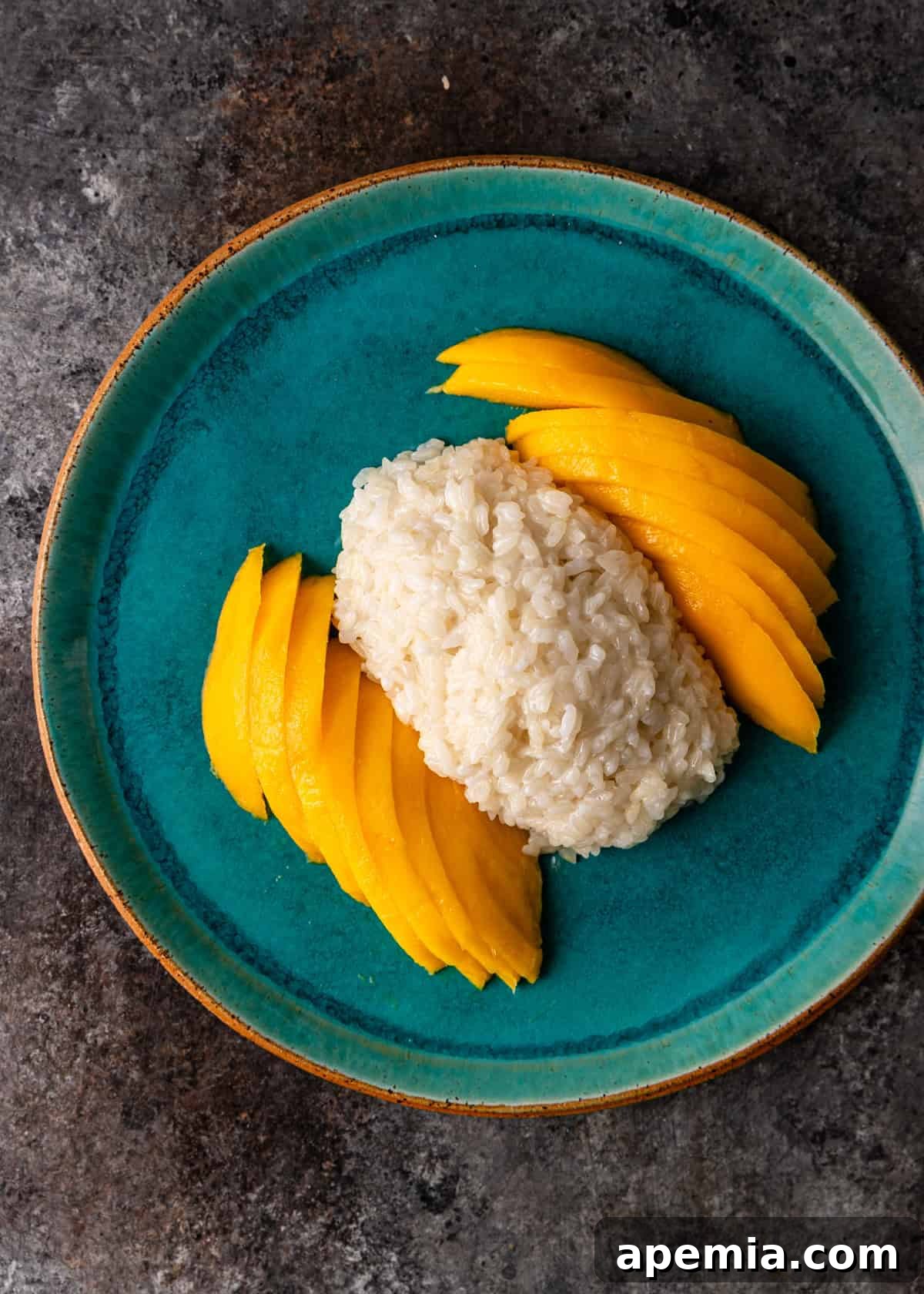
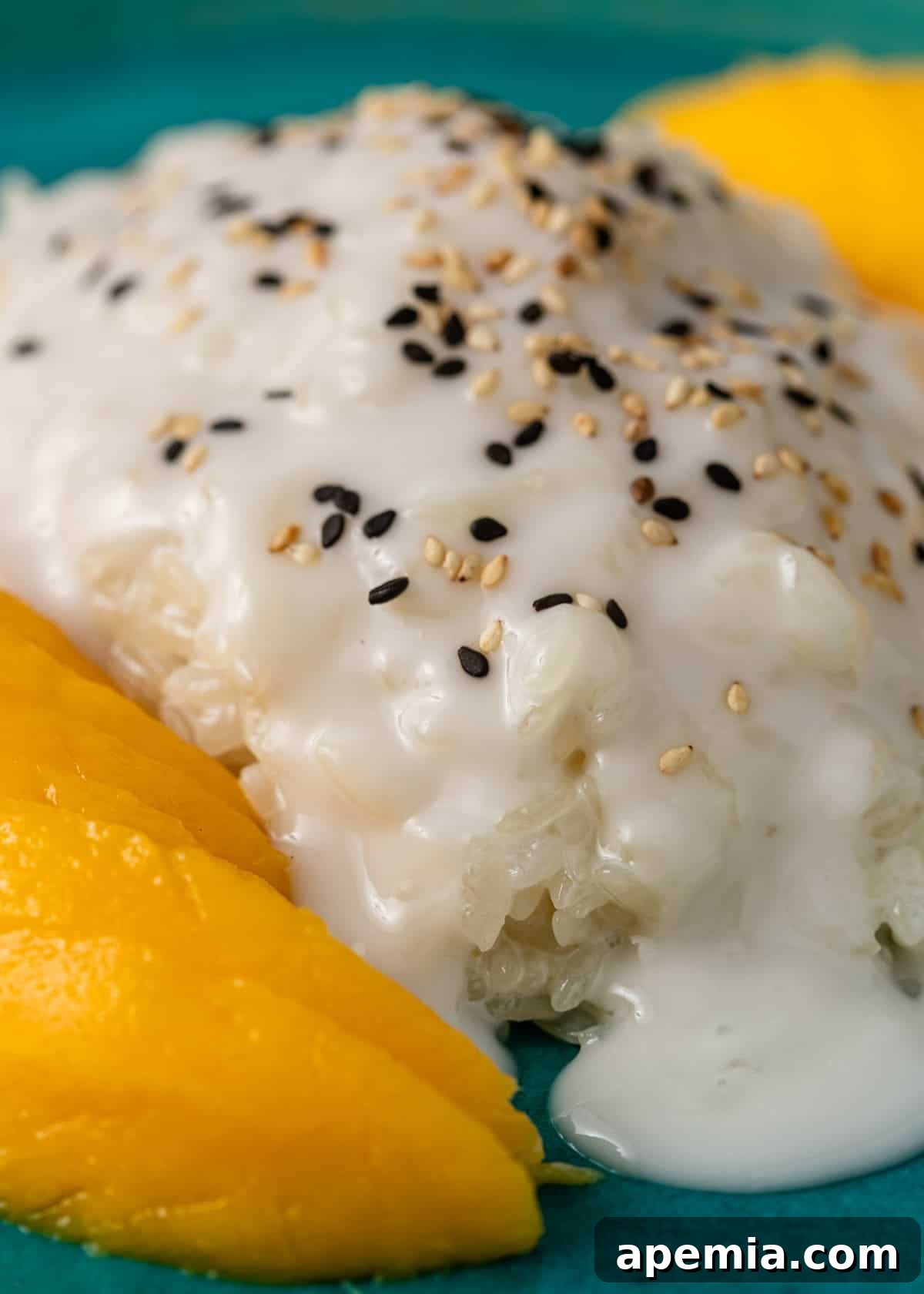
- Assemble and Serve Your Delicious Dessert. To serve, artfully arrange a portion of the coconut-infused sticky rice on a plate or in a bowl. Drizzle generously with the thickened coconut sauce. Slice your ripe mangoes into elegant pieces and place them alongside the rice. For an optional but highly recommended touch, sprinkle with toasted sesame seeds or crushed roasted peanuts for added crunch and flavor. Serve immediately and enjoy!
Cooking Methods for Sticky Rice: Ensuring Perfection
Achieving perfectly cooked glutinous rice is fundamental to this dessert. Here are two reliable methods:
- Traditional Rice Cooker Method: If you have a rice cooker, simply follow the instructions provided with your appliance for cooking glutinous rice. Generally, this involves adding the rinsed and soaked rice with the recommended amount of water, then pressing the “cook” button.
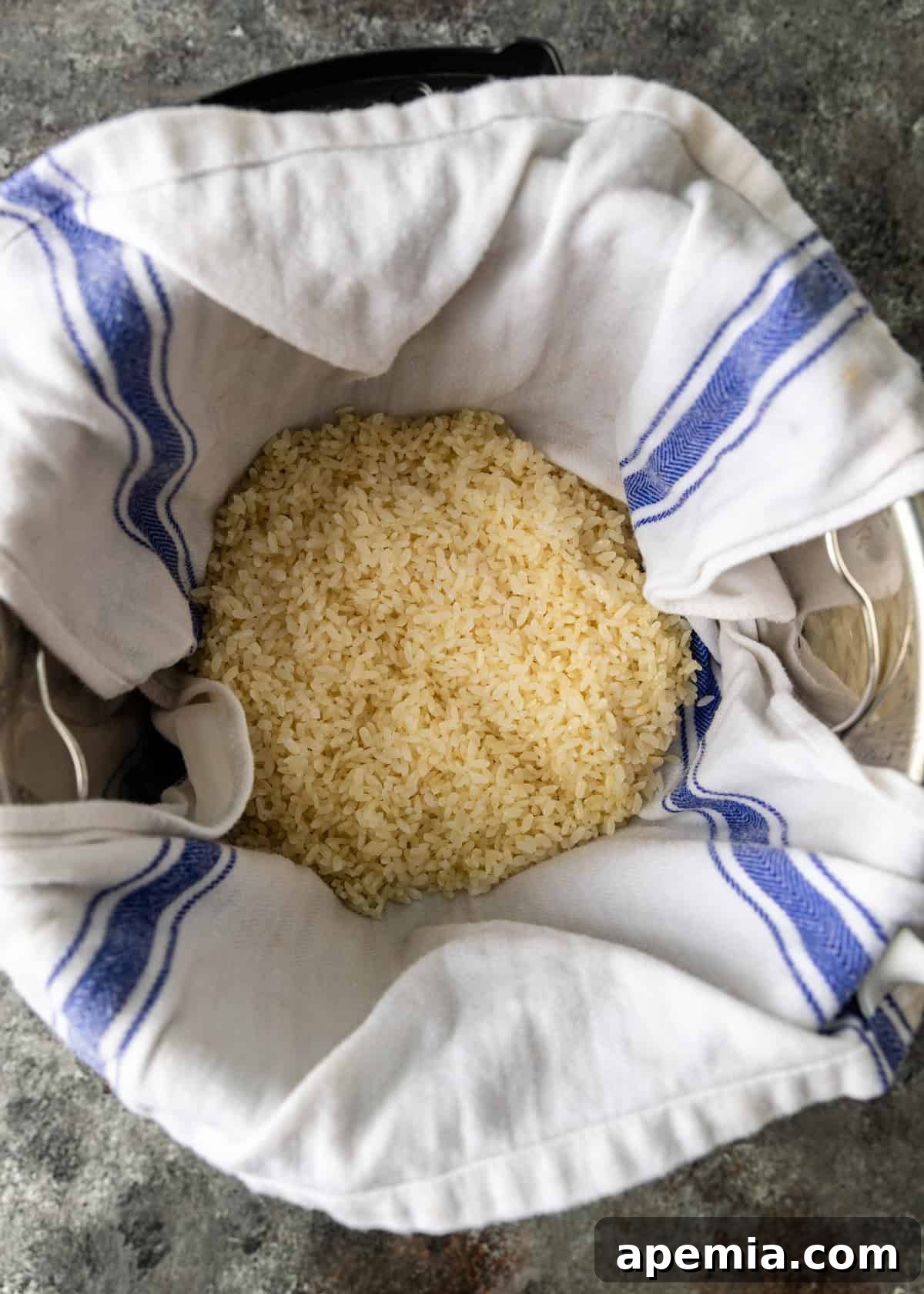
- Instant Pot Method (My Personal Favorite): Don’t own a rice cooker? Your Instant Pot is an excellent alternative! To prevent the dreaded “BURN” notice and ensure even cooking, I highly recommend lining the interior of your Instant Pot with a damp kitchen towel. Place this towel on top of the trivet, then add your rinsed and soaked rice, along with 1 ¼ cups of cold water. Secure the lid, set to High Pressure, and cook for 12 minutes. Allow for a natural pressure release for approximately 15 minutes before opening the vent and carefully removing the lid. You can then gently lift the towel-rice packet out, and the perfectly cooked rice will easily peel off the towel into your mixing bowl.
- Stovetop Steaming (Classic Method): For a truly traditional approach, sticky rice is often steamed. Place the rinsed and soaked rice in a steamer basket lined with cheesecloth. Place the basket over a pot of boiling water, ensuring the water does not touch the rice. Cover and steam for 20-30 minutes, or until the rice is tender and translucent, stirring once halfway through.
Pro Tips for Perfection
- Choose the Right Mangoes: This cannot be overstated. Ripe, sweet, fragrant mangoes are key. Under-ripe mangoes will be tart and fibrous, ruining the delicate balance of the dish.
- Don’t Rush the Rice: The soaking step is critical for developing the proper chewy, yet tender, texture. Don’t skip it or shorten the time significantly.
- Balance the Sauce: Taste your coconut sauce as you go. You might prefer a slightly sweeter or saltier profile, so adjust the sugar and salt to your personal preference.
- Serve Warm (or Cool): While typically served warm in Thailand, mango sticky rice is also delightful as a chilled dessert, especially on a hot day. The contrast between warm rice and cool mango is a highlight.
Recommended Kitchen Tools
- Rice Cooker or Instant Pot: Essential for perfectly cooked glutinous rice.
- Medium Saucepan: For preparing the creamy coconut sauce.
- Mixing Bowls: For soaking rice, preparing the cornstarch slurry, and combining rice with sauce.
- Spatula or Spoon: For mixing and serving.
- Sharp Knife and Cutting Board: For peeling and slicing mangoes.
Storing and Reheating Your Delicious Leftovers
Should you find yourself with any leftover mango sticky rice, it can be refrigerated in an airtight container for up to 3 days. It’s important to note that the rice will firm up slightly in the fridge as it cools. When you’re ready to enjoy another portion, simply add a teaspoon or two of water to the rice before reheating. Cover it loosely and microwave for 30 to 60 seconds, or until warmed through and the texture has loosened to your liking.
The coconut sauce should be stored in a separate airtight container in the refrigerator. While sliced mango is generally fine for a day or two in the fridge, for the best taste and texture, it’s highly recommended to slice fresh mango for each serving of leftover mango sticky rice. This ensures the mango remains vibrant, juicy, and perfectly complements the reheated rice and sauce.
Share this recipe on Pinterest!
Love this recipe? Share it with the world on Pinterest to save for later.
Frequently Asked Questions
There’s a common misconception that toasted sesame seeds are an inauthentic, Western addition to this traditional Thai dessert. I can assure you, this isn’t the case! Having enjoyed mango sticky rice numerous times throughout Thailand, I can confirm it’s nearly always served topped with a sprinkle of toasted sesame seeds or even toasted mung beans. They add a delightful crunch and nutty flavor that is very much a part of the authentic experience.
This is a matter of personal preference, as both methods are delicious! You’ll typically find the rice served warm at many Thai restaurants, which creates a wonderful temperature contrast with the cool, fresh mango slices. However, mango sticky rice also works perfectly as an entirely cold dessert, especially appealing when the weather is warm. I often find myself preferring it chilled on a hot summer day.
If your sticky rice turns out too hard or crunchy, it generally means it needed more moisture or cooking time. You either needed to soak the rice for a longer duration before cooking, or it required an additional couple of minutes of steaming. Conversely, if your rice is too soft and mushy, you likely added too much water during cooking or steamed it for too long. Always double-check the specific instructions for your rice cooker or Instant Pot, as different models can vary slightly.
While fresh, ripe mangoes are highly recommended for the best flavor and texture, you can use frozen mangoes if fresh ones are unavailable. Thaw them completely and drain any excess liquid before using. Be aware that the texture might be slightly softer, and the flavor less intense than peak-season fresh mangoes.
Mango Sticky Rice
Mango sticky rice is a beloved Thai dessert featuring chewy, glutinous rice infused with a creamy coconut sauce, served elegantly with slices of sweet, fresh mango.
Prep: 15 mins |
Cook: 30 mins |
Soaking Time: 1 hr |
Total: 1 hr 45 mins
Print Recipe
Equipment
- Rice Cooker
- Instant Pot
- Saucepan
- Mixing Bowls
Ingredients
Instructions
- Rinse the rice thoroughly with cold water and drain to remove excess starch. Repeat rinsing several times until the water runs mostly clear. Cover the rice with additional cold water and soak for a minimum of 1 hour, or ideally overnight in the refrigerator. After soaking, rinse and drain the water one last time.
- Cook the rice in a rice cooker or steamer according to your appliance’s instructions. If using an Instant Pot: Line the interior with a damp kitchen towel on top of the rack, then add the rinsed and soaked rice and 1 1/4 cups cold water. Set to High Pressure and cook for 12 minutes.
- Meanwhile, prepare the coconut sauce. In a saucepan, mix together the coconut milk, sugar, and 1 teaspoon of kosher salt. Bring to a gentle simmer and continue to simmer for about 5 minutes, stirring occasionally.
- After the Instant Pot rice is done, allow for a natural pressure release (approximately 15 minutes). Open the vent and carefully remove the lid. Lift the steamed rice out using the towel and transfer the rice to a large mixing bowl.
- Pour about 1/3 of the prepared coconut sauce over the cooked rice and mix gently to ensure all the rice is coated and infused. In a small separate bowl, whisk together the cornstarch and 2 tablespoons of water to create a smooth slurry. Add this slurry to the remaining coconut sauce mixture in the saucepan. Heat the sauce over low heat, stirring continuously, until it thickens to a rich, velvety consistency. Set aside to cool slightly.
- To serve, scoop portions of the coconut-infused sticky rice onto plates or into bowls. Drizzle generously with the thickened coconut sauce. Arrange the sliced ripe mango alongside the rice. Garnish with toasted sesame seeds if desired, and serve immediately.
Nutrition Information (Estimate per serving)
Calories: 522kcal | Carbohydrates: 82g | Protein: 6g | Fat: 21g | Saturated Fat: 18g | Polyunsaturated Fat: 0.4g | Monounsaturated Fat: 1g | Sodium: 308mg | Potassium: 421mg | Fiber: 3g | Sugar: 39g | Vitamin A: 1120IU | Vitamin C: 39mg | Calcium: 34mg | Iron: 4mg
The information shown is an estimate provided by an online nutrition calculator. It should not be considered a substitute for a professional nutritionist’s advice.
Cuisine: Thai |
Author: Kevin
Tag @keviniscooking or use hashtag #keviniscooking!