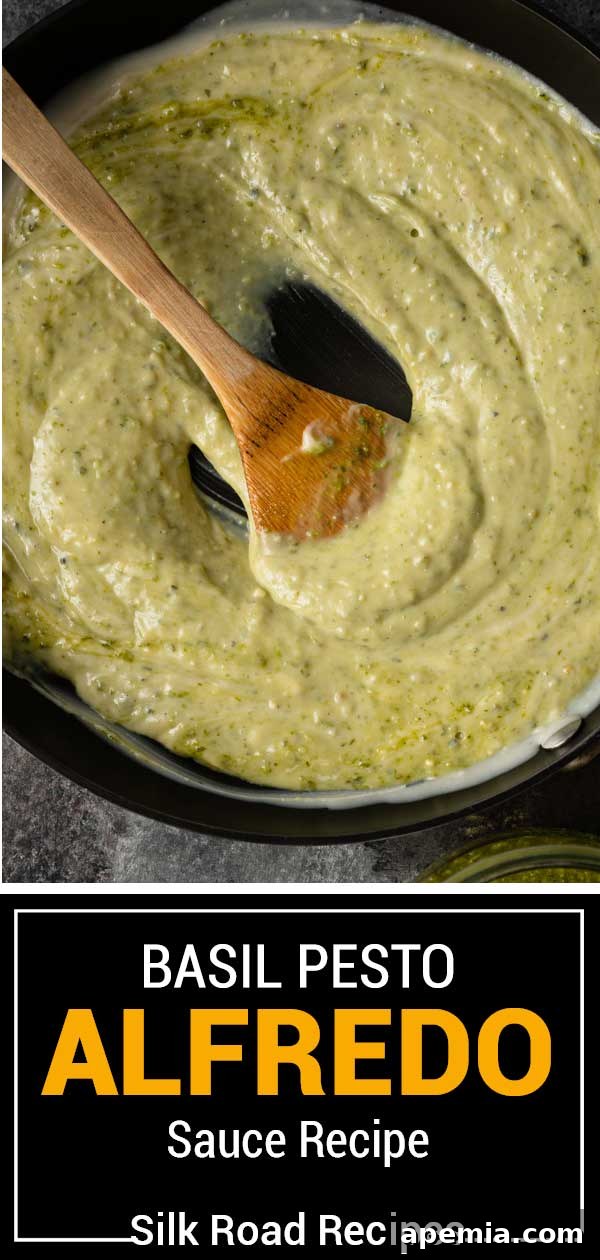
Creamy Pesto Alfredo Sauce: Your Ultimate Tomato-Free Pasta Delight
For those who love pasta but prefer to step away from traditional red marinara sauce, perhaps due to taste preference or sensitivities to tomatoes, this Pesto Alfredo Sauce offers a spectacular and satisfying alternative. Imagine a beautifully creamy, rich, and cheesy herb sauce that captivates every palate, making it an instant family favorite you’ll be asked to recreate time and again!
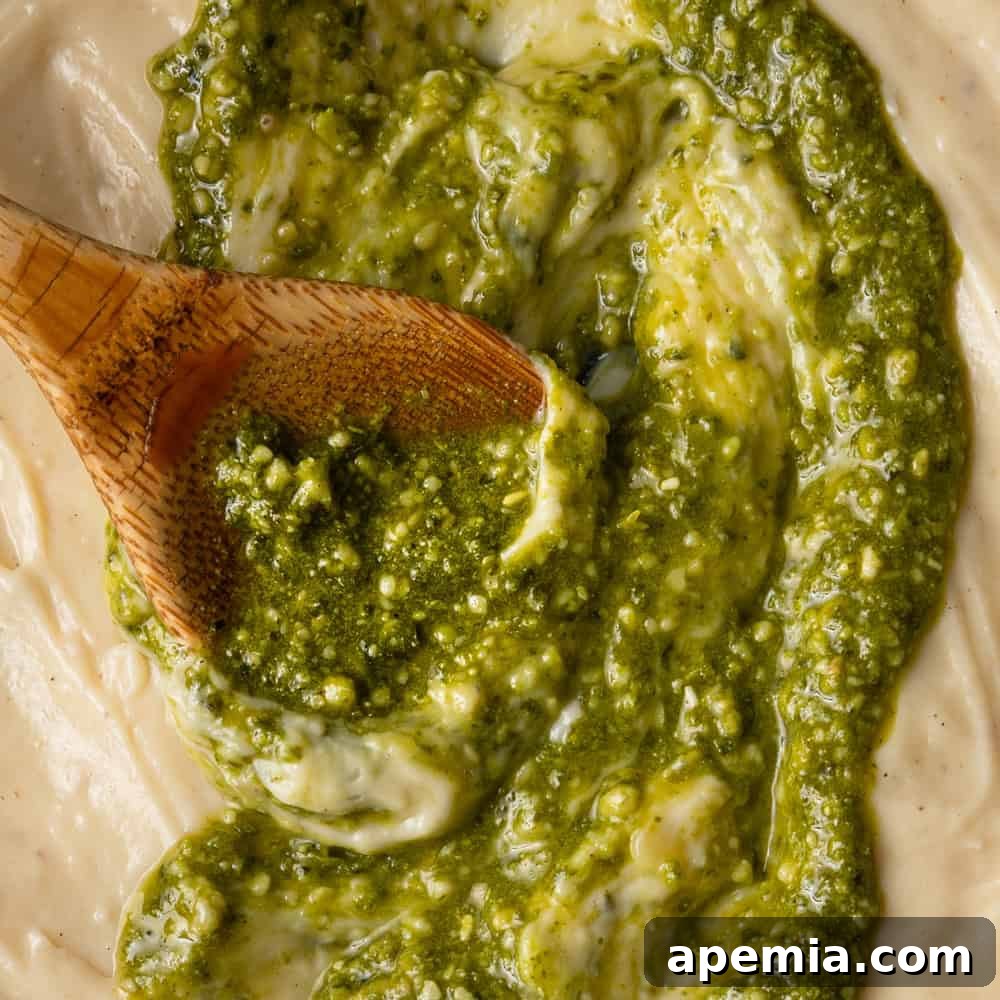
This exquisite sauce is born from the harmonious marriage of a classic Italian American-style Alfredo Sauce and vibrant, fresh Basil Pesto. The combination is nothing short of a culinary revelation—a match made in pasta heaven! It delivers an irresistible blend of creamy indulgence, cheesy goodness, and that distinctively amazing herbal pesto flavor, all within one incredibly easy-to-make sauce. This recipe is your ticket to a gourmet meal that feels special yet comes together effortlessly.
Why Choose Homemade Pesto Alfredo Sauce?
While the convenience of store-bought Alfredo and pesto might be tempting, crafting these components at home elevates your dish to an entirely new level. The ease of preparation, coupled with a vastly superior flavor profile, makes homemade the undeniable champion. By making your own, you completely bypass chemical preservatives, artificial flavors, and excessive sodium, instead relying on the freshest, highest-quality ingredients that sing with natural taste. This control over ingredients means you can cater to dietary needs or personal preferences without compromise, ensuring a healthier and more authentic meal. Your family will undoubtedly notice and appreciate the profound difference in quality and flavor!
Beyond the health benefits, the depth of flavor achieved with freshly prepared pesto and a simmering, rich Alfredo base is unmatched. The vibrant notes of fresh basil, the earthy undertones of pine nuts, and the robust aroma of garlic combine with the luxurious creaminess of homemade Alfredo to create a symphony of tastes that simply cannot be replicated by pre-packaged alternatives. This recipe isn’t just about cooking; it’s about experiencing the joy of fresh, wholesome ingredients transformed into something truly spectacular.
Table of Contents
- Why Homemade is Best
- Important Note on Pesto Quantity
- Ingredient Spotlight and Substitutions
- Step-by-Step: Crafting Your Sauce
- Expert Tips for a Perfect Sauce
- Creative Serving Ideas
- Storage and Reheating Advice
- Frequently Asked Questions
- Pesto Alfredo Sauce Full Recipe
Important Note on Pesto Quantity
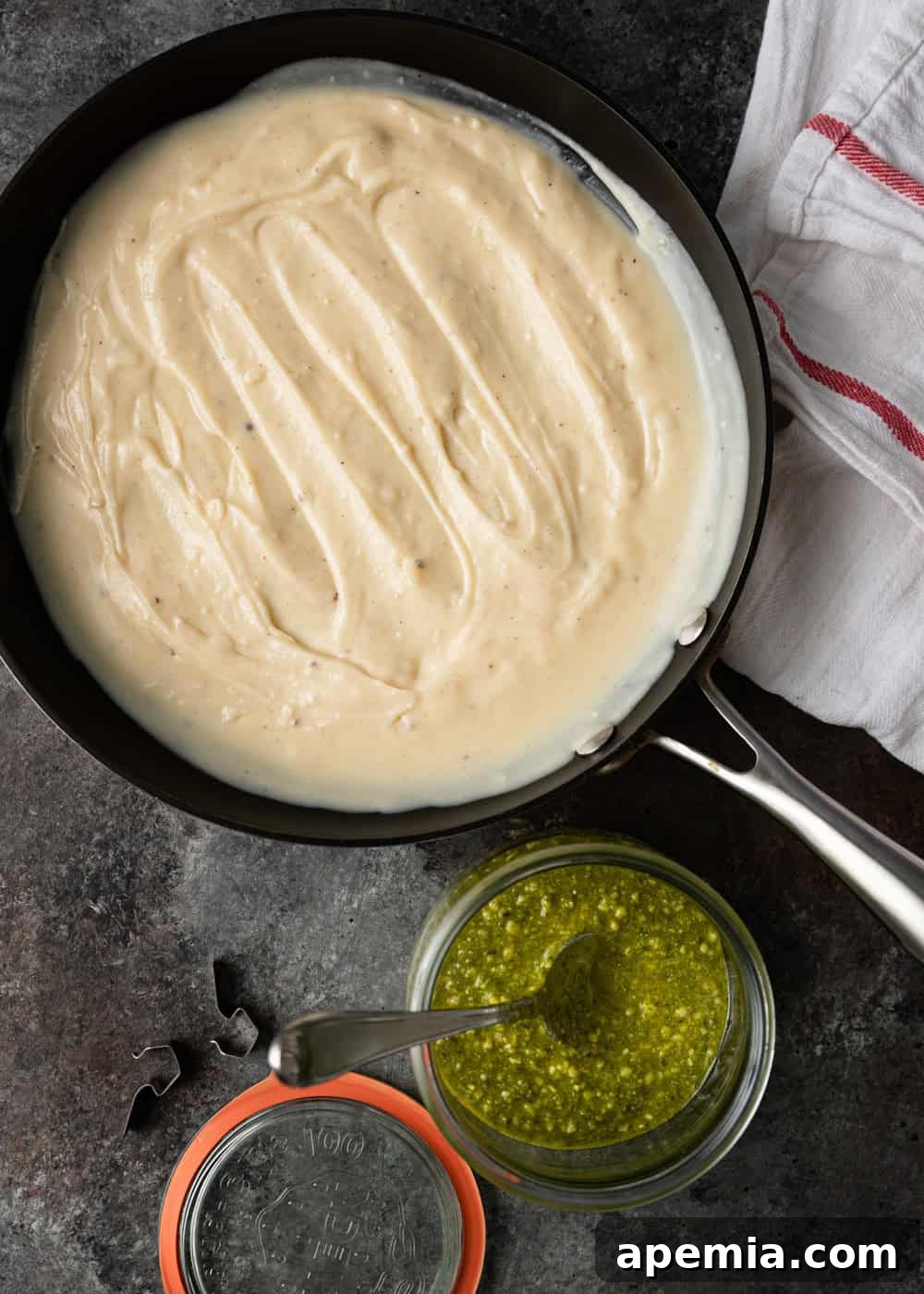
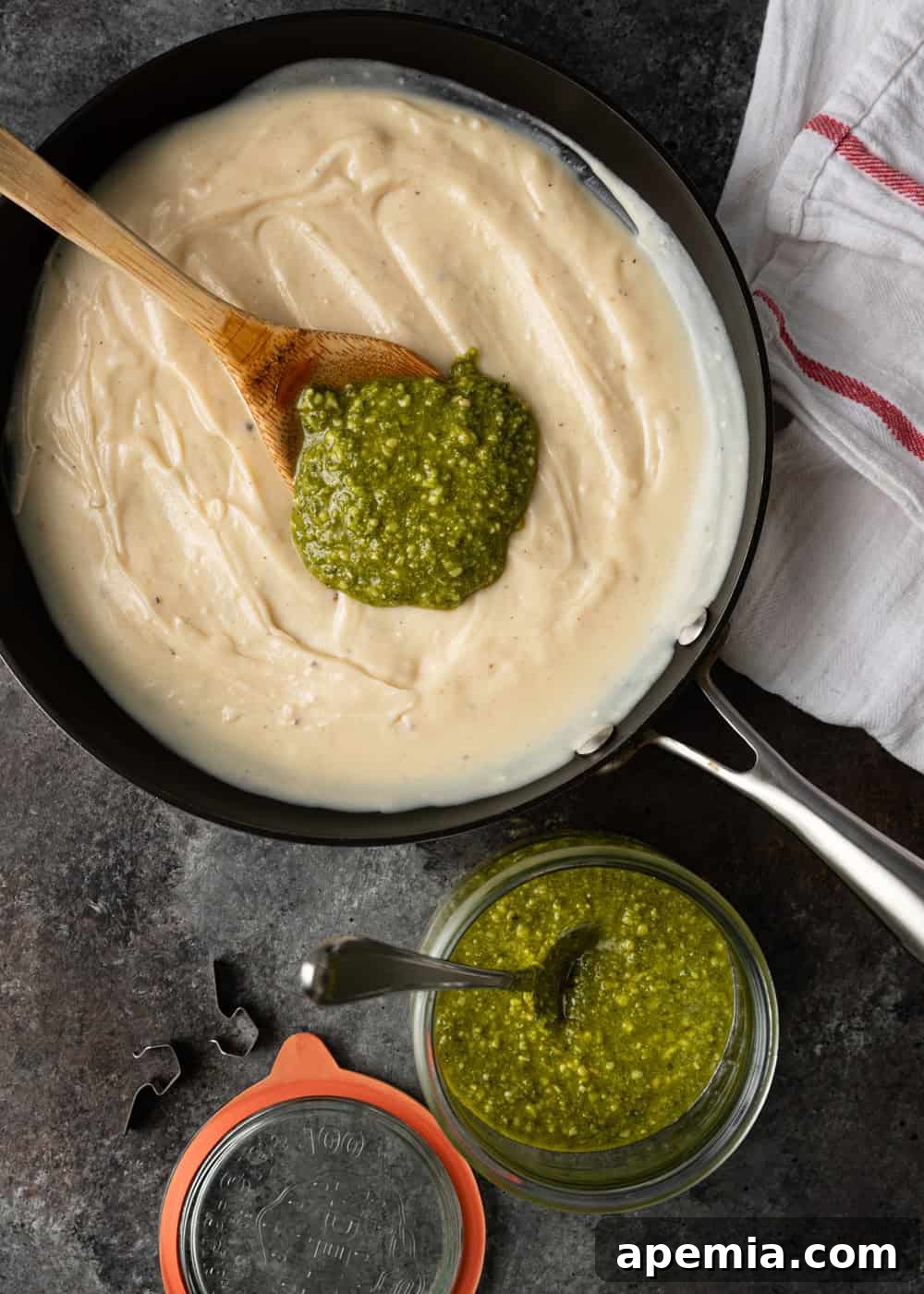
The basil pesto recipe provided below yields approximately 3 cups of fresh, aromatic pesto. This generous quantity is incredibly versatile and can be enjoyed over hot pasta, spread on sandwiches, or used as a delightful dipping sauce. However, for this specific Pesto Alfredo Sauce recipe, you will only need 1 cup of the prepared pesto. Be sure to measure carefully to achieve the perfect balance of flavors and to ensure your Alfredo sauce isn’t overpowered by the pesto.
Ingredient Spotlight: Keys to Flavor and Texture
(A comprehensive list of ingredients and precise quantities can be found in the recipe card below.)
- Fresh Basil: The undeniable star of your pesto, basil provides a fresh, vibrant, and aromatic herbaceousness. Its distinctive bright green hue and sweet, slightly peppery taste are what truly define the sauce. For optimal flavor and color, always choose basil leaves that are bright green, firm, and free from any wilting or dark spots.
- Extra Virgin Olive Oil: This foundational ingredient lends a smooth, rich texture to the pesto, seamlessly blending all the other components. A good quality extra virgin olive oil imparts a fruity, sometimes slightly peppery flavor that significantly enhances the overall taste profile of the pesto. Choose a reputable brand for the best results.
- Garlic: A staple in both Italian and American-Italian cooking, fresh garlic adds a pungent, aromatic kick to your pesto, deepening its flavor profile and providing a subtle spicy undertone that beautifully complements the freshness of basil and the richness of nuts. Always opt for fresh cloves over pre-minced garlic for superior flavor.
- Pine Nuts: Offering a delicate, rich, and buttery flavor with a subtly creamy texture, pine nuts elevate the pesto’s nutty complexity and beautifully balance the sharpness of the basil and garlic. For an even deeper, more pronounced flavor, lightly toast the pine nuts in a dry skillet over low heat until fragrant before adding them to your food processor. If pine nuts are unavailable or you have allergies, blanched almonds, walnuts, or even cashews can serve as good substitutes, though they will subtly alter the flavor and texture of your pesto.
- Unsalted Butter: Butter forms the foundational richness of the Alfredo sauce. Using unsalted butter is crucial as it allows you to precisely control the overall saltiness of your dish, harmonizing the flavors while adding a luxurious layer of creaminess and depth.
- Heavy Cream: This is a non-negotiable ingredient for achieving that signature thick, velvety consistency in your Alfredo sauce. Unfortunately, skim or low-fat milk options simply won’t yield the desired richness, body, or the luscious mouthfeel that heavy cream provides. Full-fat heavy cream (at least 36% milk fat) is paramount for authentic Alfredo.
Creative Substitutes (with considerations):- Half and Half: While lighter than heavy cream, it’s an acceptable substitute in a pinch. You might need to simmer it slightly longer to achieve a comparable thickness.
- Evaporated Milk: A surprising but effective alternative, evaporated milk provides richness and thickness when gently reduced.
- Whole Milk + Melted Butter: Combine 3 parts whole milk with 1 part melted butter for a richer milk alternative that mimics some of heavy cream’s fat content.
- Whole Milk + Greek Yogurt (whisked): Equal parts full-fat whole milk and plain Greek yogurt, whisked until completely smooth, can add creaminess and a pleasant tang. Be sure to add this mixture at the very end of cooking, off the heat, to prevent curdling.
- Parmesan Cheese (Parmigiano Reggiano or Pecorino Romano): Freshly grated Parmesan cheese is absolutely critical for its nutty, salty, and umami-rich flavor, as well as its ability to melt quickly and smoothly into the sauce. Always opt for a block of Parmigiano Reggiano (for a milder, nuttier flavor) or Pecorino Romano (for a sharper, saltier kick) and grate it yourself. Avoid pre-grated cheeses, which often contain anti-caking agents like cellulose that can lead to a gritty or clumpy sauce.
- Freshly Grated Nutmeg: This often-overlooked secret ingredient provides a subtle yet significant touch of warmth and spicy sweetness. It beautifully enhances and balances the denser, richer flavors of the cheese and cream, adding an unexpected depth without overpowering the dish. Always grate fresh nutmeg for the most aromatic and impactful result. A tiny pinch goes a long way.
Step-by-Step: How to Craft the Perfect Pesto Alfredo Sauce
Creating this rich and flavorful sauce is simpler than you might think. Follow these detailed steps for a restaurant-quality result right in your own kitchen.
-
Prepare the Basil Pesto:
- Combine Dry Ingredients: In a food processor, add all pesto ingredients EXCEPT for the fresh basil leaves and extra virgin olive oil. This includes your pine nuts, garlic cloves, salt, red pepper flakes (if using), and freshly grated Parmesan-Reggiano or Romano cheese. Pulse for about a minute or so to finely chop and combine these ingredients, forming a coarse, fragrant paste. This step helps to fully release their robust flavors before the basil is introduced.
- Add Basil and Olive Oil: Next, add the packed fresh basil leaves to the food processor bowl. With the processor running on a low setting, slowly and steadily stream in the extra virgin olive oil. Continue blending until the pesto is thoroughly combined and reaches your desired smooth or slightly chunky consistency. Avoid over-processing, which can generate heat and dull the basil’s vibrant color.
- Yield and Storage: This process will yield approximately 3 cups of fresh, aromatic basil pesto. Remember, for this specific Pesto Alfredo Sauce recipe, you will only need 1 cup. The remaining pesto can be stored in an airtight container in the refrigerator, topped with a thin layer of olive oil to prevent oxidation, for up to a week, or frozen in ice cube trays for longer storage.
-
Prepare the Alfredo Sauce Base:
- Sauté Garlic: In a large, deep skillet (a heavy-bottomed pan or cast iron skillet works beautifully for even heat distribution), melt the butter over medium heat. Once the butter is shimmering, add the minced garlic and sauté gently until it becomes fragrant, which usually takes about 30 seconds. Watch carefully to prevent the garlic from burning, as burnt garlic can impart a bitter taste to your sauce.
- Simmer Cream: Pour the heavy cream into the skillet with the sautéed garlic and butter. Whisk gently until all ingredients are well combined. Bring the mixture to a gentle simmer, maintaining a medium-low heat. Let it cook for 3 to 4 minutes, allowing the cream to slightly reduce and thicken. Do not allow it to come to a rapid boil.
- Add Cheese and Seasonings: Remove the skillet from the direct heat to prevent the cheese from clumping or seizing. Gradually whisk in the freshly grated Parmesan cheese until it is fully melted and incorporated, creating a smooth, luscious sauce. Stir in the kosher salt, white pepper, black pepper, and that essential hint of freshly grated nutmeg. Continue whisking occasionally while the sauce continues to gently thicken from the residual heat, ensuring it reaches a consistency thick enough to generously coat the back of a spoon, typically another 3 to 4 minutes.
-
Combine and Serve:
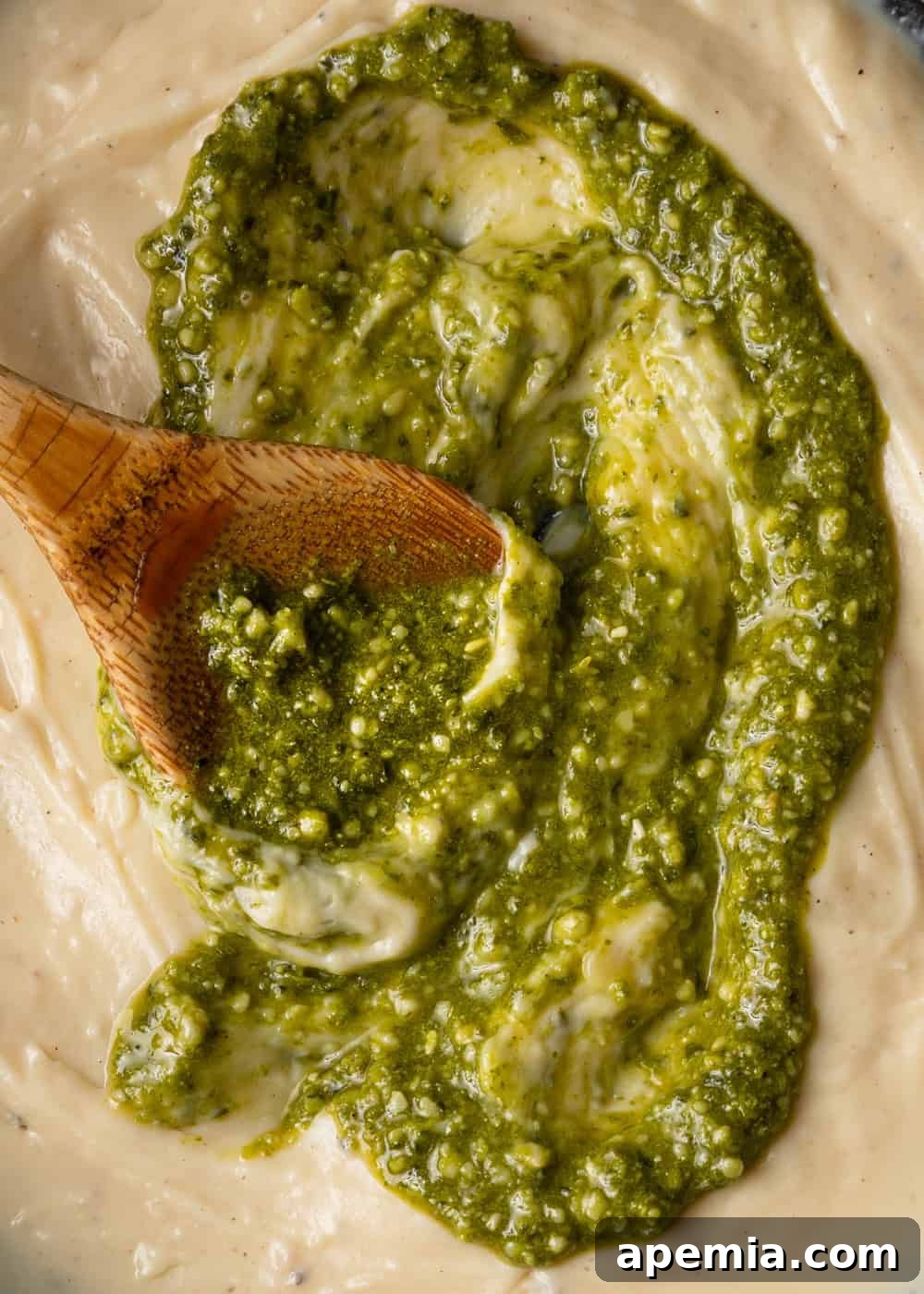
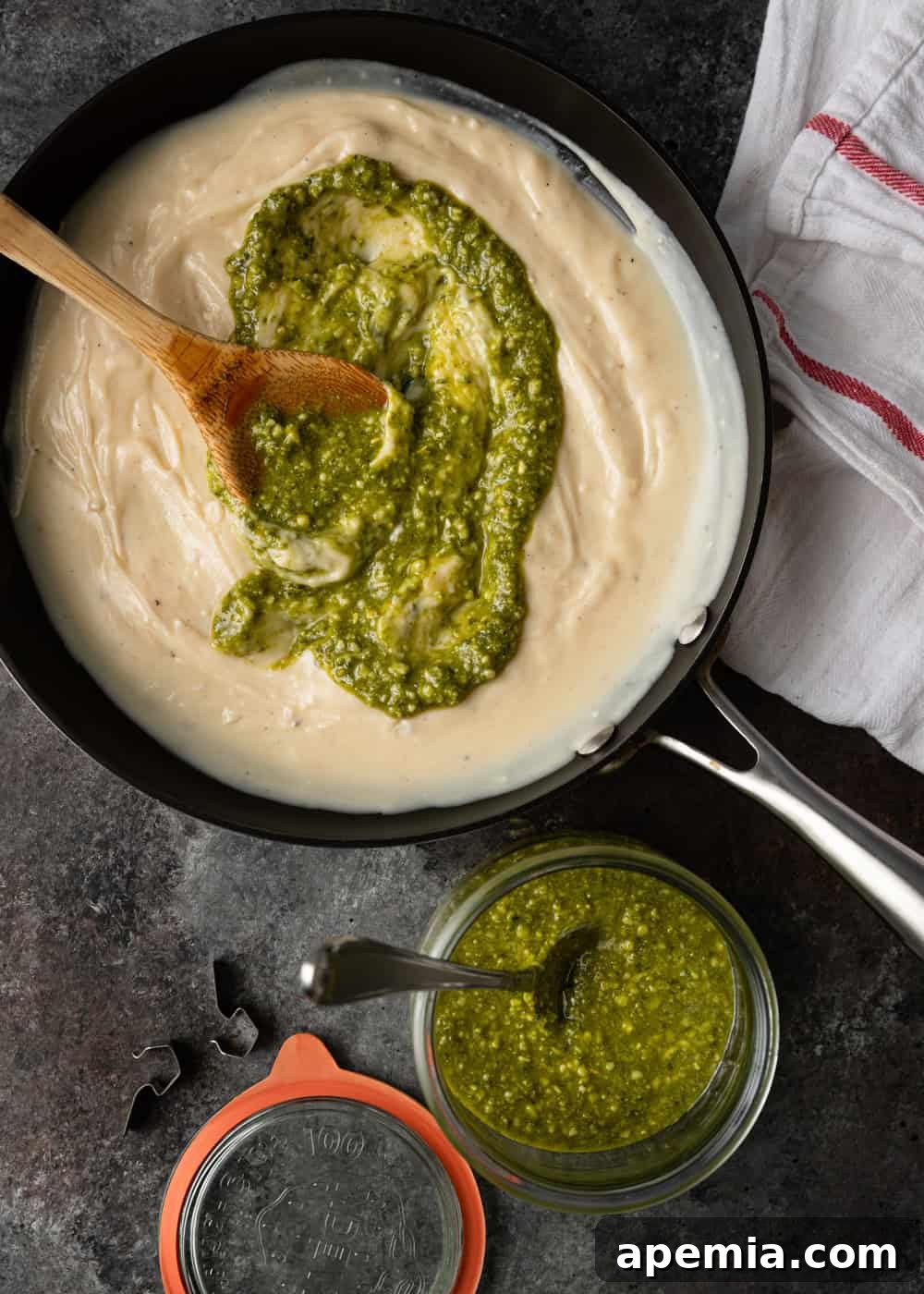
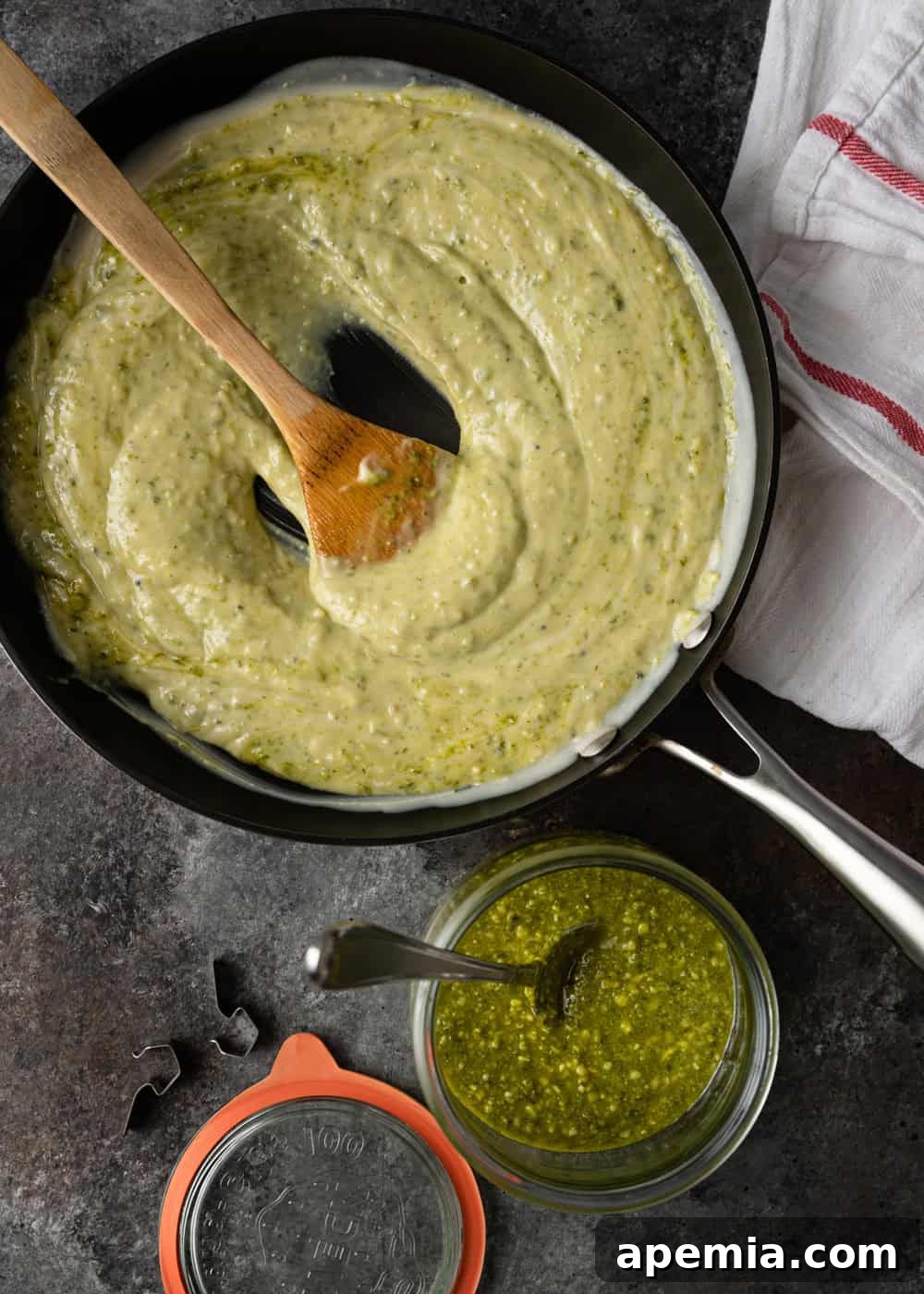
- Incorporate Pesto: Once your Alfredo sauce has reached the desired creamy consistency, remove it completely from the heat. Now, gently whisk in 1 cup of your freshly made basil pesto until it is evenly distributed and the sauce transforms into a beautiful, vibrant green hue with an incredible aroma.
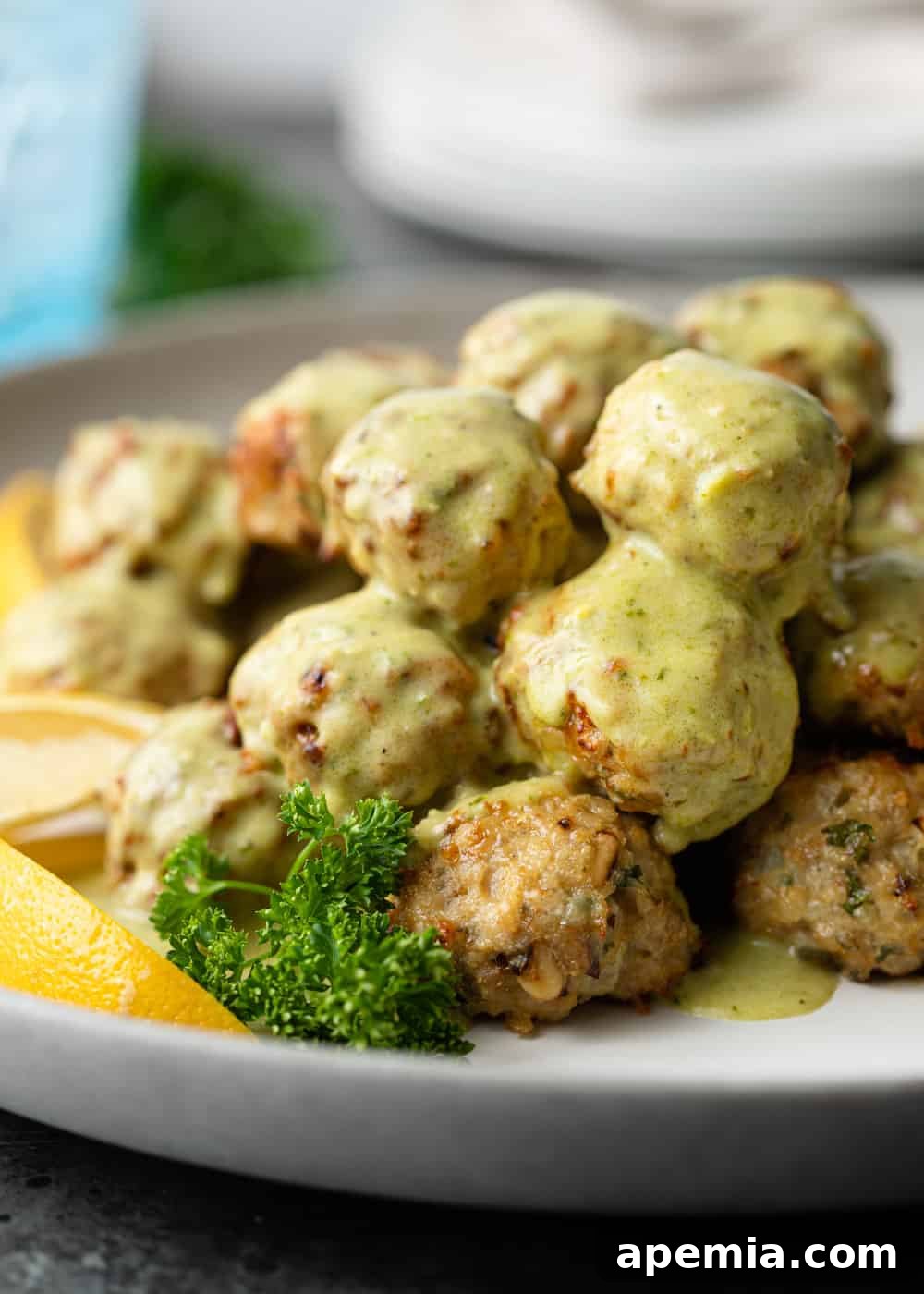
- Immediate Service: Serve your homemade Pesto Alfredo Sauce immediately. It is heavenly tossed with fettuccine (or your preferred pasta shape for a delicious Pesto Alfredo pasta), spooned generously over tender meatballs, pan-seared or sautéed chicken, or served as a decadent dipping sauce for fresh steamed vegetables or warm, crusty breadsticks. The warmth of the freshly cooked components helps the sauce adhere perfectly.
Expert Tips for the Perfect Pesto Alfredo Sauce
- Quality Ingredients are Paramount: Since this sauce relies on a few key ingredients, using the highest quality fresh basil, authentic Parmigiano Reggiano (or Pecorino Romano), and rich heavy cream will make a noticeable difference in the final flavor and texture.
- Control the Heat for Alfredo: Alfredo sauce can seize or separate if cooked at too high a heat or for too long, especially after the cheese is added. Keep the heat gentle (medium-low) and remove the skillet from the stovetop shortly after it reaches your desired thickness.
- Always Freshly Grate Your Cheese: This cannot be stressed enough. Pre-grated Parmesan often contains anti-caking agents that can prevent it from melting smoothly, resulting in a grainy or clumpy sauce. Freshly grating ensures a silky, luscious texture.
- Incorporate Pesto Gently: While the pesto itself is usually served cold or at room temperature, incorporating it into the warm Alfredo sauce is key. However, avoid boiling the pesto, as this can dull its vibrant flavor and cause its beautiful green color to brown. Stir it in off the heat.
- Taste and Adjust Seasoning: Always taste your sauce before serving. Adjust salt, pepper, or even add a tiny pinch more nutmeg to suit your preference. Different cheeses and broths can vary in saltiness, so adjust accordingly.
Creative Ways to Enjoy Your Pesto Alfredo Sauce
This versatile Pesto Alfredo Sauce goes far beyond just a simple pasta dish! Its rich, herbaceous, and creamy profile makes it a fantastic accompaniment to a wide array of meals. Here are some delightful serving suggestions to inspire your next culinary creation:
- Classic Pasta Pairing: The most obvious and beloved choice! Toss generously with fettuccine, linguine, penne, rigatoni, or your favorite pasta shape. For a more substantial meal, add some pan-seared or grilled chicken, succulent shrimp, or tender scallops.
- Vegetable Enhancement: Drizzle this glorious sauce over steamed, roasted, or grilled vegetables for an instant flavor boost. It pairs exceptionally well with broccoli, asparagus, green beans, roasted cauliflower, or even a medley of summer squash.
- Protein Perfection: Elevate your proteins by serving this sauce with pan-seared chicken breasts, grilled salmon fillets, baked cod, or as an indulgent topping for pork tenderloin medallions. It adds moisture and an explosion of flavor.
- Unique Pizza Base: Move over, tomato sauce! Use this Pesto Alfredo Sauce as a unique and incredibly flavorful white sauce base for homemade pizzas. Top with fresh mozzarella, sun-dried tomatoes, grilled chicken, and a sprinkle of fresh basil.
- Savory Dipping Sauce: Offer it warm as a rich and satisfying dipping sauce for crunchy garlic bread, warm, crusty baguette slices, artisan crackers, or even a fresh vegetable platter. It’s perfect for entertaining!
- Baked Pasta Dishes: Incorporate this creamy, herbaceous sauce into your favorite baked pasta recipes, such as stuffed shells, manicotti, or even a layered lasagna, for a delightful and unexpected twist on traditional preparations.
- Sandwich or Wrap Spread: Thin it slightly with a touch of milk or chicken broth and use it as a flavorful spread for gourmet sandwiches or wraps, adding a creamy, herby punch.
Storage and Reheating Advice
Proper storage and reheating are key to enjoying your delicious Pesto Alfredo Sauce at its best, even days after preparation.
- Storage: Leftover Pesto Alfredo Sauce should be stored in an airtight container in the refrigerator. It will typically remain fresh and delicious for up to 3-4 days. For optimal freshness, ensure it cools completely before sealing and refrigerating.
- Reheating: To reheat, gently warm the sauce in a saucepan over low heat, stirring frequently. The key is low and slow heat to prevent separation. If the sauce appears too thick after refrigeration, you can whisk in a tablespoon or two of milk, cream, or even chicken broth at a time until it reaches your desired smooth and pourable consistency. Avoid microwaving or high heat, as this can cause the dairy components to separate, leading to an oily or grainy texture.
- Freezing: While the basil pesto component freezes beautifully on its own (you can freeze portions in ice cube trays for later use), Alfredo sauce, due to its high dairy content, does not typically freeze well. It can often separate or become grainy upon thawing and reheating. If you plan to make ahead for longer periods, it’s best to freeze portions of the prepared pesto and then combine it with freshly made Alfredo sauce when you are ready to serve.
Share this recipe on Pinterest!
Love this recipe? Share it with the world on Pinterest to inspire others.
Frequently Asked Questions About Pesto Alfredo Sauce
To achieve your preferred pesto consistency, gradually add more extra virgin olive oil while blending until the sauce reaches your desired thickness. For a thicker pesto, suitable for spreading, use slightly less oil; for a thinner, more pourable sauce perfect for dressing pasta, incorporate a bit more oil or even a tablespoon of water or lemon juice to loosen it.
Several key factors contribute to a perfectly smooth and creamy Alfredo sauce: always use room-temperature ingredients, especially the heavy cream and cheese. Add the cheese gradually, ensuring it’s finely grated for quick and even melting. Whisk continuously and gently to prevent clumping. Crucially, avoid overheating the sauce, as excessive heat can cause the dairy to separate, leading to a grainy or oily texture. A consistent, gentle heat and careful whisking are your best friends for a silky-smooth result.
Absolutely! This versatile sauce can be adapted for various dietary needs. For a dairy-free Alfredo, substitute heavy cream with full-fat coconut milk or a homemade cashew cream (made from soaked and blended cashews), and use nutritional yeast instead of Parmesan for a cheesy flavor. For gluten-free requirements, simply ensure any added thickeners (though typically not needed in a classic Alfredo) are certified gluten-free, and rely on the natural thickening from cream reduction and cheese. For a fully vegan version, combine vegan butter, plant-based cream alternatives, and a plant-based Parmesan cheese substitute or nutritional yeast.
While the Alfredo sauce component is truly at its best when enjoyed fresh, you can certainly prepare the basil pesto component a few days in advance. Store the pesto in an airtight container in the refrigerator, with a thin layer of olive oil on top to prevent oxidation and keep its vibrant color. The Alfredo sauce itself comes together quite quickly, so it’s best to assemble and combine it with the pesto just before serving to maintain its ultimate creamy texture and prevent any potential separation.
To reheat Pesto Alfredo Sauce, do so gently over low heat in a saucepan on the stovetop, stirring frequently. If the sauce has thickened too much in the refrigerator, you can gradually whisk in a splash of warm milk, cream, or even a bit of chicken broth until it reaches your desired creamy consistency. Avoid using a microwave or high heat settings, as this can cause the sauce to separate, become oily, or curdle.
Homemade Pesto Alfredo Sauce
My Pesto Alfredo Sauce recipe is wonderfully creamy, rich, cheesy, and incredibly easy to make. It’s perfect over various pastas, sautéed chicken, or fresh vegetables!
Print Recipe
Ingredients
Basil Pesto Sauce
- 3/4 cup pine nuts
- 4 cloves garlic
- 1/8 tsp salt
- 1/8 tsp red pepper flakes
- 3/4 cup Parmesan-Reggiano or Romano cheese freshly grated
- 3 cups basil leaves packed
- 1 cup extra virgin olive oil
Alfredo Sauce
- 4 tbsp butter
- 2 cloves garlic minced
- 1 1/2 cups heavy cream
- 2.5 oz Parmigiano Reggiano or Parmesan
- 1/2 tsp salt
- 1/4 tsp white pepper
- 1/4 tsp freshly grated nutmeg
- 1/8 tsp black pepper
Units: US Customary (default)
Instructions
Basil Pesto Sauce
- Add all ingredients except for basil and olive oil to a food processor. Blend with a pulsing motion for about a minute to break them down and form a coarse paste.
- Next, add the packed basil leaves. With the processor running slowly, steadily stream in the olive oil to thoroughly blend the pesto until smooth.
- This recipe yields 3 cups of fresh basil pesto, which is versatile for pasta or dipping. You will use 1 cup for this Pesto Alfredo Sauce recipe.
Alfredo Sauce
- Melt the butter in a large, deep skillet (preferably cast iron) over medium heat. Add the minced garlic and sauté until fragrant, about 30 seconds, being careful not to burn it.
- Whisk in the heavy cream until well combined and bring to a gentle simmer for 3 to 4 minutes, allowing it to thicken slightly.
- Remove from heat. Whisk in the freshly grated Parmesan cheese, salt, white pepper, black pepper, and nutmeg. Cook, whisking occasionally, until the sauce thickens enough to coat the back of a spoon, another 3 to 4 minutes.
- Remove the skillet from the heat and gently whisk in 1 cup of the fresh pesto until fully incorporated and the sauce is a beautiful green.
- Serve immediately over your choice of pasta (like fettuccine), with meatballs, sautéed chicken, or as a dipping sauce for vegetables or breadsticks.
Notes
- The pesto portion of this recipe makes 3 cups of fresh basil pesto. Remember, you only need 1 cup for the Pesto Alfredo Sauce. The rest can be saved for other uses!
- For best results and a smooth texture, use freshly grated Parmesan cheese, not pre-shredded.
- Never let the Alfredo sauce come to a rolling boil after adding the cream and cheese; gentle simmering is key to preventing separation.
Nutrition Information (per serving, estimated)
Calories: 302kcal | Carbohydrates: 2g | Protein: 5g | Fat: 31g | Saturated Fat: 11g | Polyunsaturated Fat: 4g | Monounsaturated Fat: 15g | Trans Fat: 0.1g | Cholesterol: 39mg | Sodium: 266mg | Potassium: 87mg | Fiber: 0.4g | Sugar: 1g | Vitamin A: 731IU | Vitamin C: 1mg | Calcium: 135mg | Iron: 1mg
The information shown is an estimate provided by an online nutrition calculator. It should not be considered a substitute for a professional nutritionist’s advice.
Have You Made This Recipe? Let Me Know on Instagram!
Tag @keviniscooking or use the hashtag #keviniscooking!