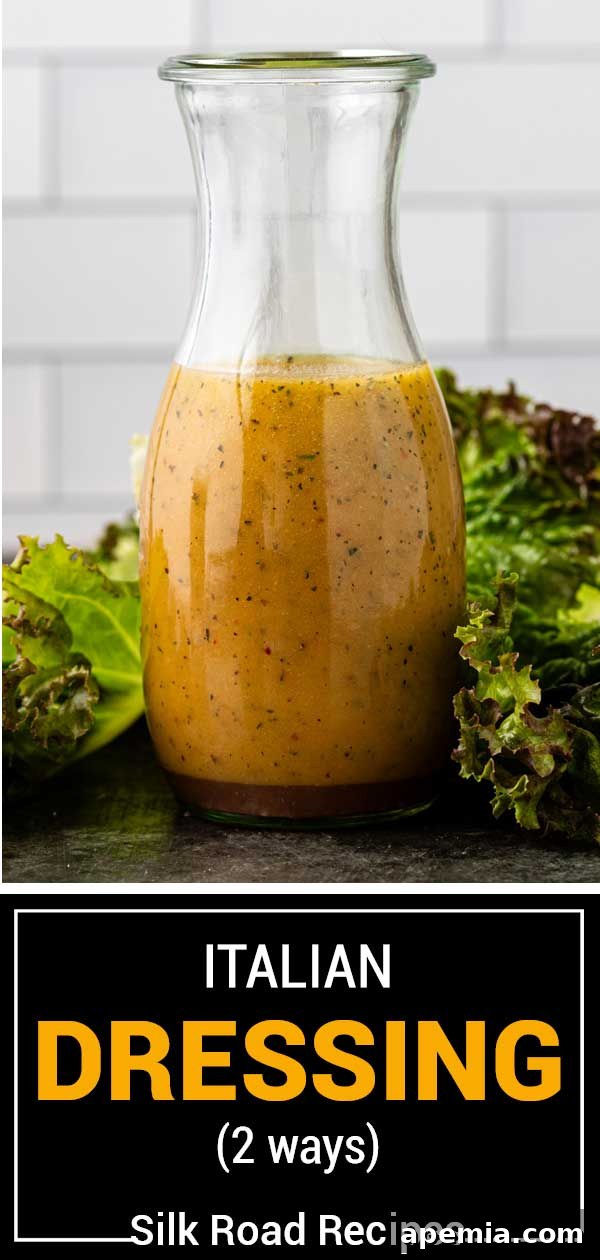
Effortlessly Delicious: Master the Art of Homemade Italian Salad Dressing (Plain & Creamy)
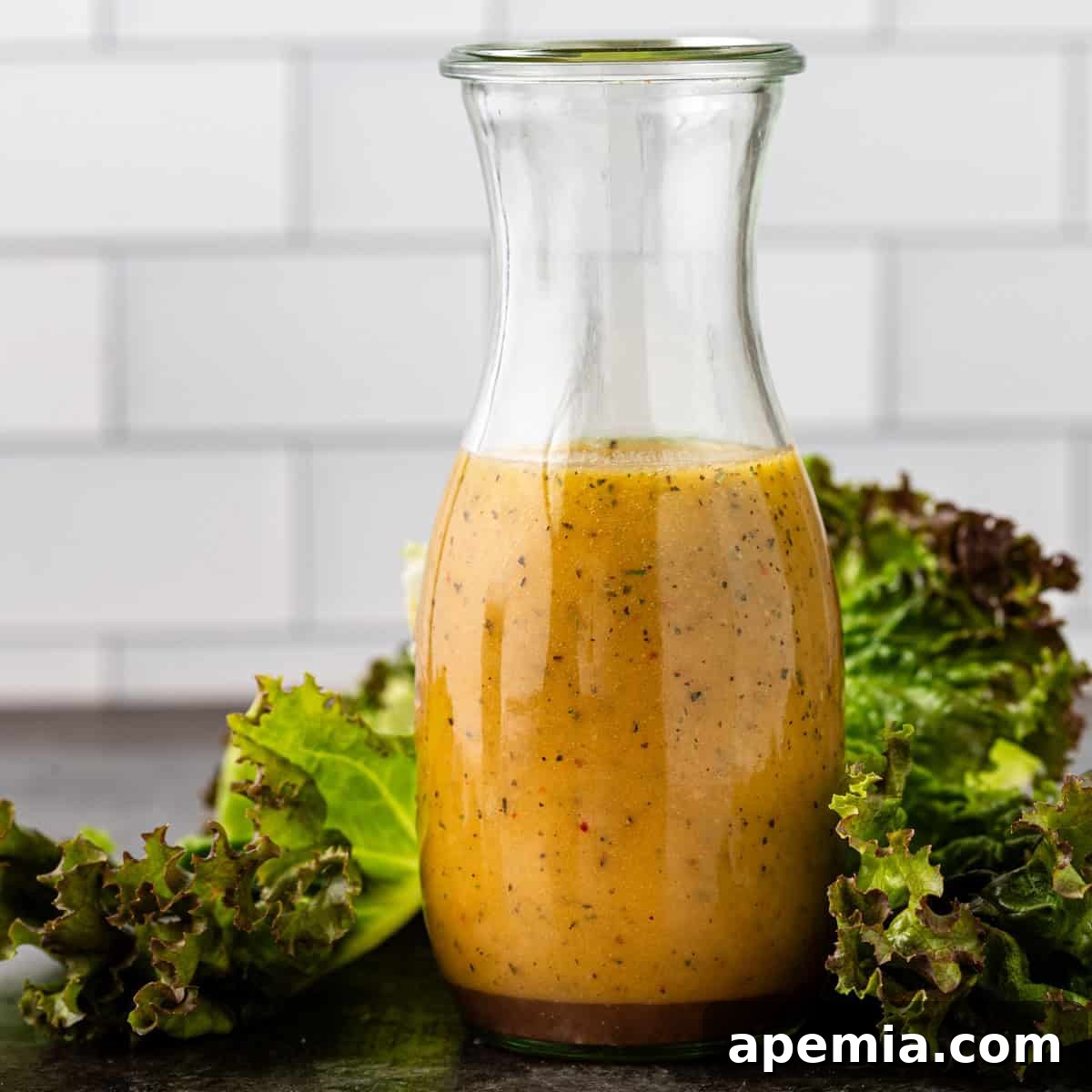
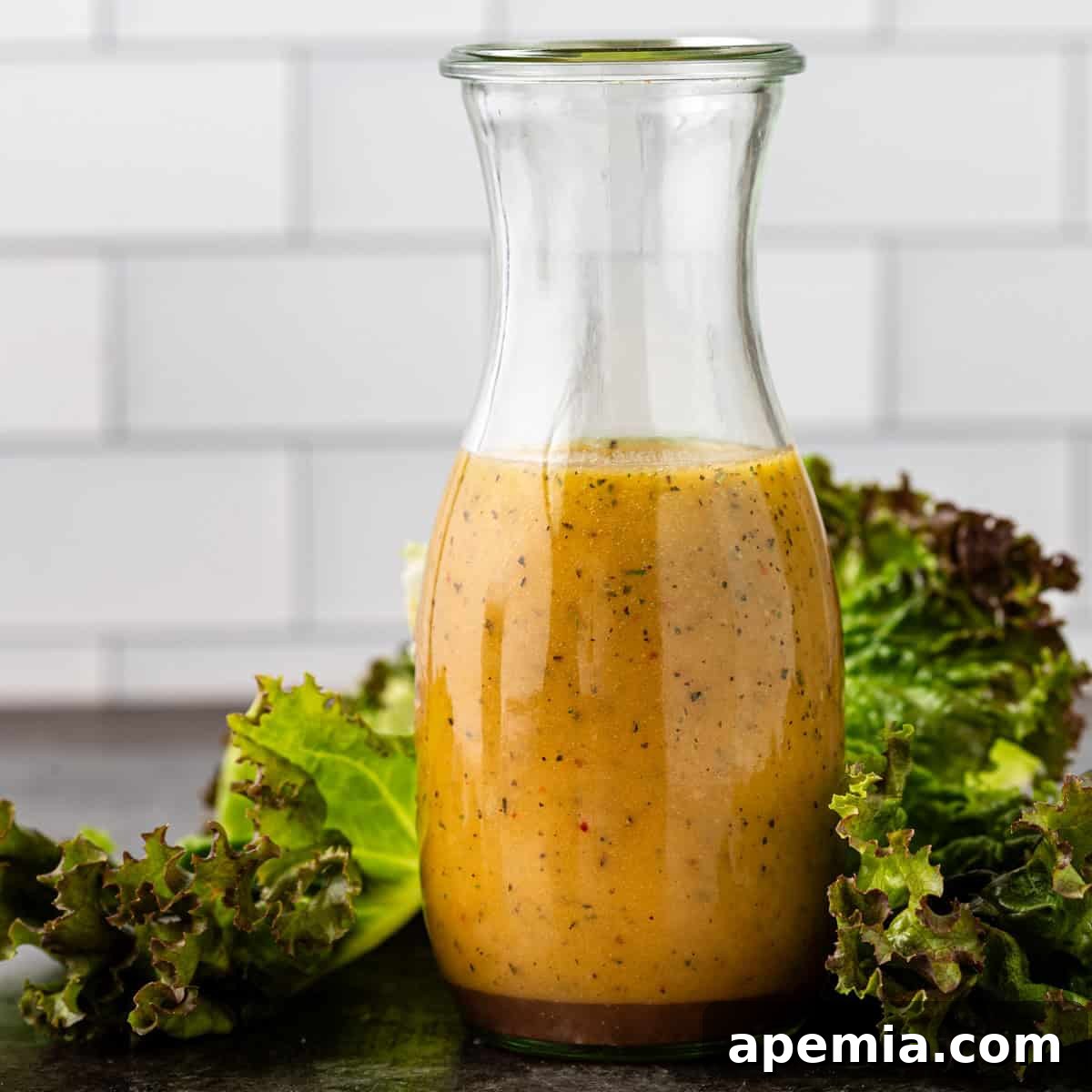
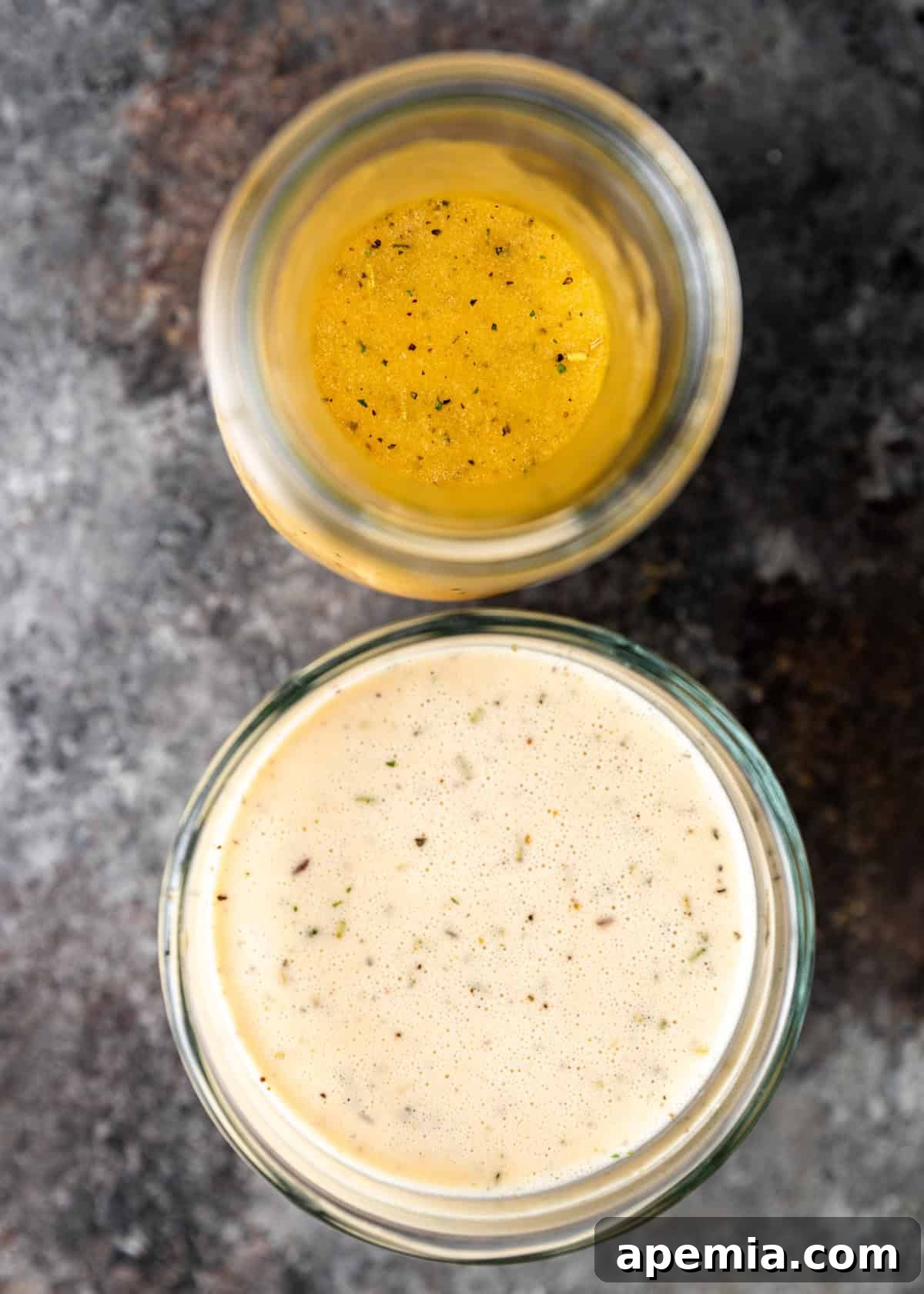
Are you searching for a quick, simple, and utterly delicious Italian salad dressing that outshines anything you can buy at the store? Look no further! This homemade Italian salad dressing recipe is crafted in minutes, delivering a vibrant, acidic, and incredibly fresh flavor profile. Whether you prefer a smooth, classic blend or desire a luscious, creamy texture, this versatile recipe has you covered with just one additional ingredient.
Why Choose Homemade Italian Salad Dressing?
If you haven’t yet embarked on the journey of making your own condiments from scratch, now is the perfect time to start! Crafting your own dressings is not only significantly more economical but also guarantees a superior flavor experience, free from the artificial preservatives and excessive sodium that often compromise taste in store-bought varieties.
Homemade salad dressings are remarkably easy to prepare. They typically rely on a few fundamental, shelf-stable ingredients – primarily a good quality olive oil, an acid like vinegar or lemon juice, and an emulsifier. These staples are easy to keep on hand, ensuring you’re always just minutes away from a fresh, flavorful dressing.
With this particular Italian salad dressing, you’ll likely find that you already possess at least half of the necessary ingredients in your pantry. Its versatility is another major advantage, boasting a myriad of applications beyond just salads (we’ll explore some fantastic recommendations in our FAQ section and beyond).
Customize Your Flavor: No More Overly Salty or Sweet Dressings
Many people find bottled dressings to be either excessively salty or overly sweet, often masking the natural flavors of your fresh greens. One of the greatest advantages of preparing Italian dressing at home is the ability to season it precisely to your preference. You control the salt, the sugar, and the spices, ensuring every batch is perfectly balanced to your taste buds. Say goodbye to generic flavors and hello to a dressing tailored just for you!
Plain or Creamy: Understanding Emulsification
Classic Italian salad dressing is often considered a heterogeneous mixture. This is because its primary components, olive oil and vinegar, do not naturally mix uniformly; you can often observe separate layers of oil and vinegar within the bottle. This separation is normal and why vigorous shaking is usually required before serving.
However, with the strategic addition of an emulsifying agent like Dijon mustard, or a creamy base such as mayonnaise or Greek yogurt, the dressing transforms. These ingredients help to stabilize the mixture, creating a homogeneous emulsion where the oil and vinegar are evenly distributed, resulting in a smooth, creamy texture throughout. This scientific marvel is what allows us to create two distinct yet equally delicious versions of this beloved dressing.
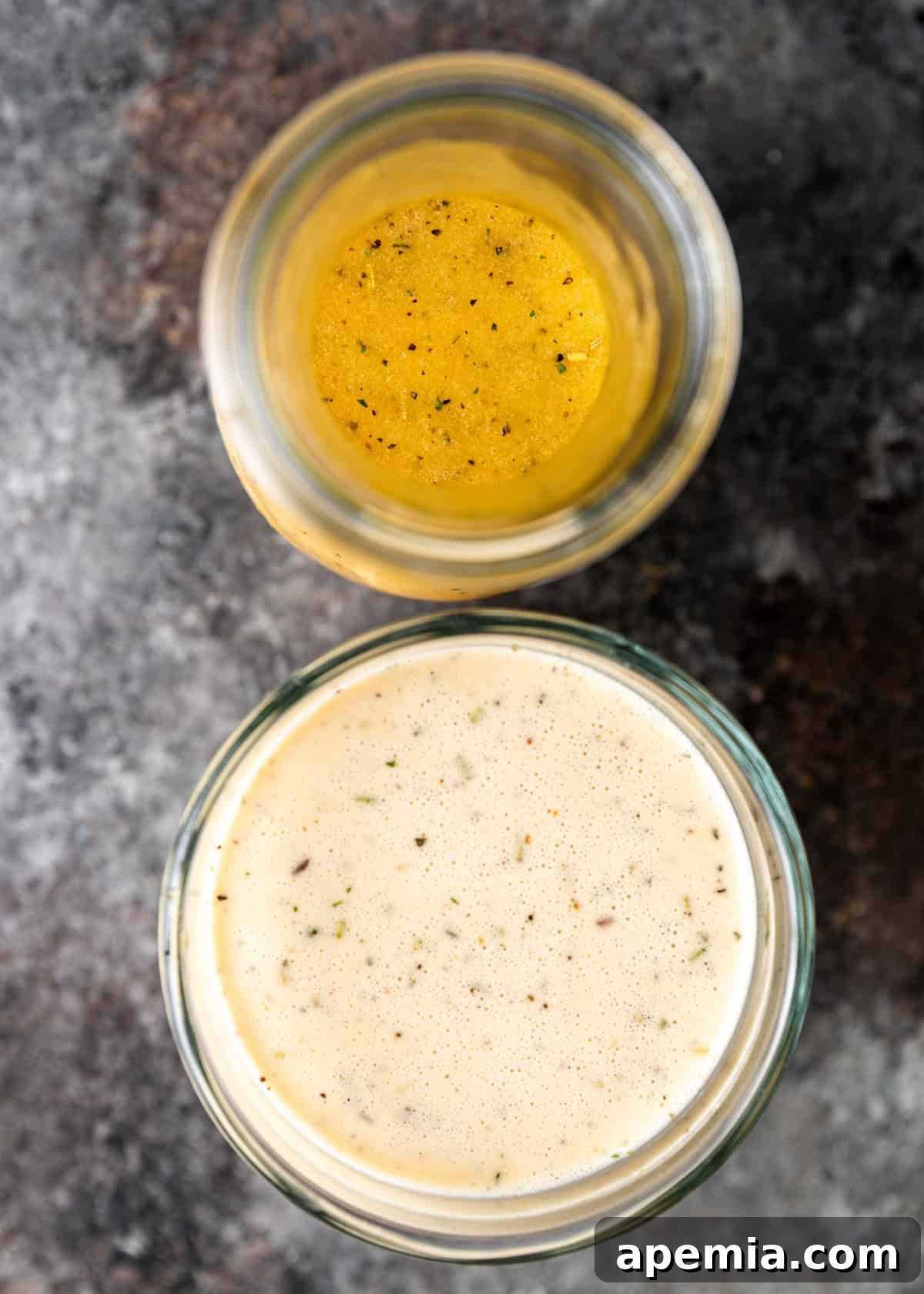
Ingredient Notes and Smart Substitutions
(For a complete list of ingredients and quantities, please refer to the recipe card below)
- Extra Virgin Olive Oil – The foundation of any good Italian dressing, the quality of your extra virgin olive oil truly makes a difference. Opt for a reputable brand with a fresh, fruity aroma for the best results. A high-quality oil provides the rich, smooth base that elevates the entire dressing.
- Red Wine Vinegar – This offers a classic tangy bite. If you prefer a milder acidity or a slightly different flavor profile, white wine vinegar makes an excellent substitute. Apple cider vinegar can also work, lending a fruitier note.
- Fresh Lemon Juice – Always opt for freshly-squeezed lemon juice over bottled for an incomparable bright, zesty flavor. For an even more intense citrus punch, consider adding a touch of lemon zest (avoiding the bitter white pith). Strain the juice if you prefer a pulp-free dressing.
- Garlic – For a smooth dressing without chunks, grating your garlic is key. A microplane works perfectly here. If fresh garlic isn’t available, a small amount of garlic powder (start with half the amount and adjust) can be used, though fresh is always preferred for its robust flavor.
- Dijon Mustard – More than just a flavor enhancer, Dijon mustard acts as a crucial emulsifier, helping the oil and vinegar blend beautifully. Its sharp, tangy notes also add depth. Stone-ground mustard can be used as an alternative, offering a slightly coarser texture and earthy flavor.
- Italian Seasoning – This aromatic blend typically includes a mix of dried herbs. If you don’t have a pre-made blend, you can easily create your own with a combination of at least three of the following:
- Rosemary (dried or finely minced fresh)
- Parsley (dried)
- Marjoram (dried)
- Oregano (dried)
- Sage (dried)
- Thyme (dried)
Adjust quantities to your preference, but a balanced mix is key.
- Red Pepper Flakes – Just a small pinch (⅛ teaspoon) adds a subtle warmth without overpowering the other flavors. If you enjoy a spicier kick, feel free to increase the amount to taste after the initial blending.
- Salt & Sugar – These are vital for balancing the acidity and bringing out the best in all the ingredients. Start with the recommended amount and adjust to your desired taste. For a natural alternative to white granulated sugar, honey or maple syrup are popular choices in homemade dressings, adding a touch of sweetness and helping with emulsification.
- Optional: Mayonnaise or Plain Greek Yogurt – These are the secret ingredients for transforming your classic Italian dressing into a rich, creamy delight. Mayonnaise offers a richer, slightly tangy creaminess, while plain Greek yogurt provides a lighter, more probiotic-rich option with a distinct tang.

How to Make Italian Salad Dressing: A Simple Guide
Creating your own Italian dressing is incredibly straightforward. Follow these easy steps for a perfect batch every time:
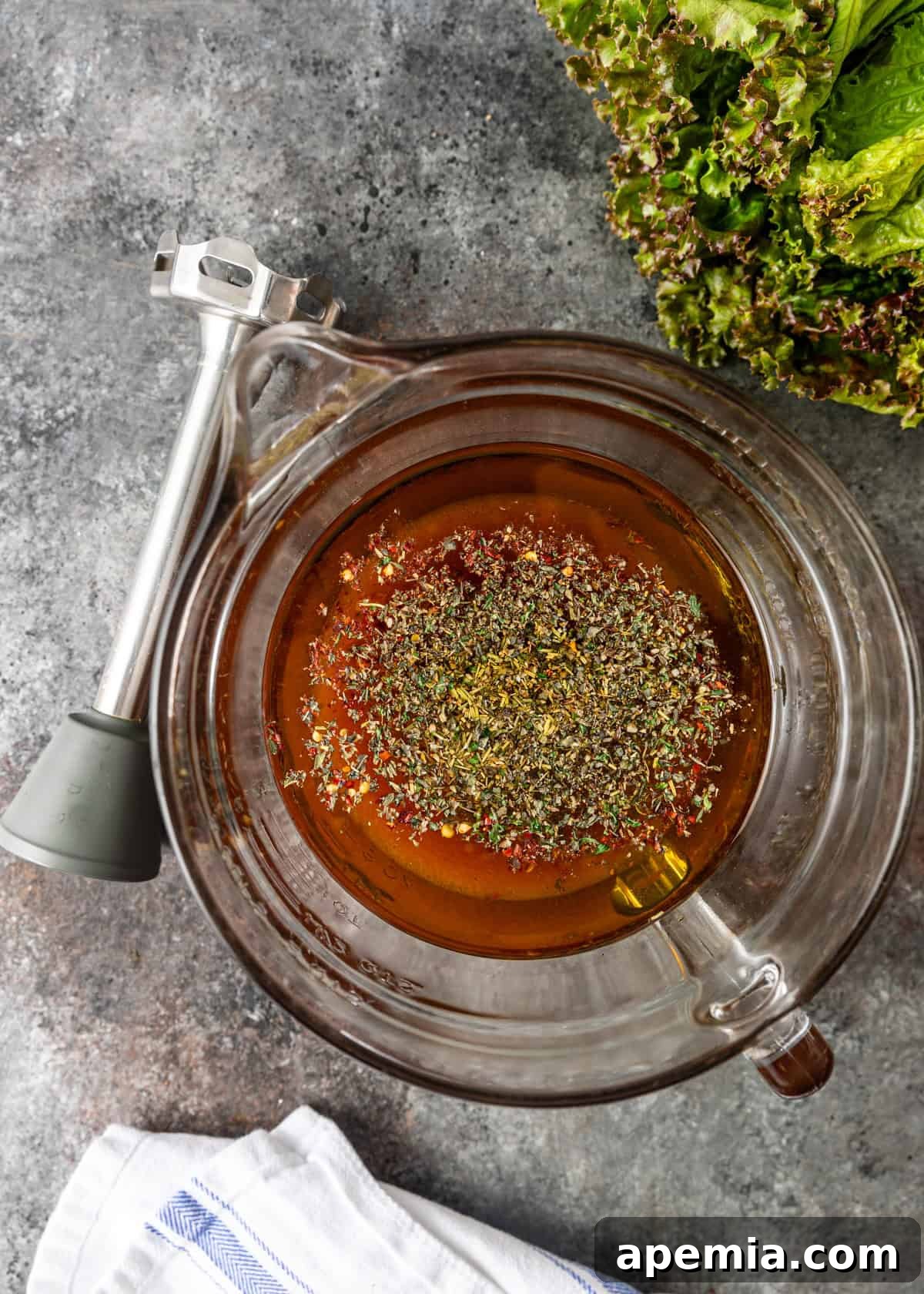
- Combine All Ingredients. Gather all your ingredients – olive oil, red wine vinegar, lemon juice, grated garlic, Dijon mustard, Italian seasoning, sugar, salt, and red pepper flakes. Add them into a mixing bowl, a large measuring cup, or directly into your desired serving container (a mason jar works wonderfully!).
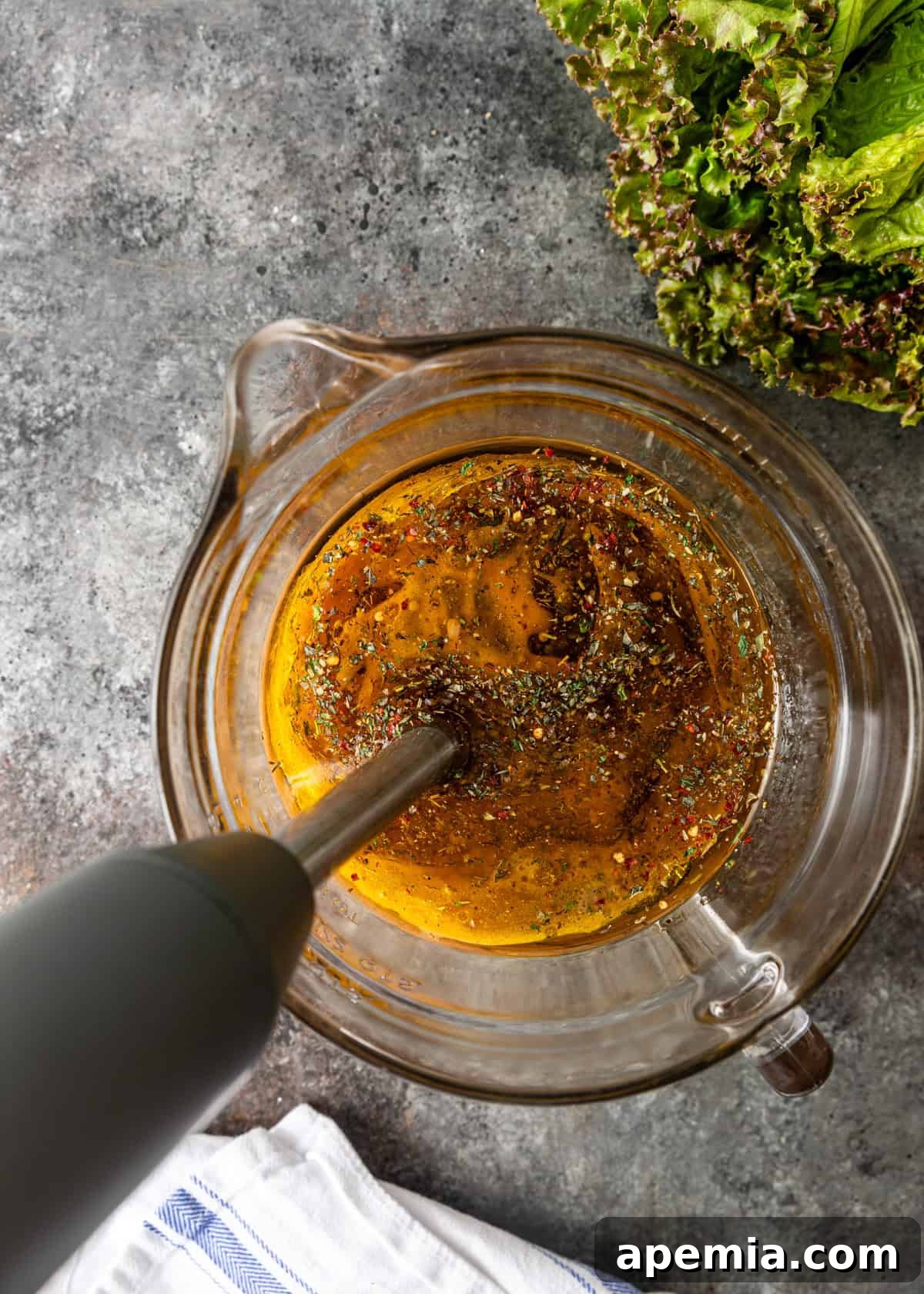
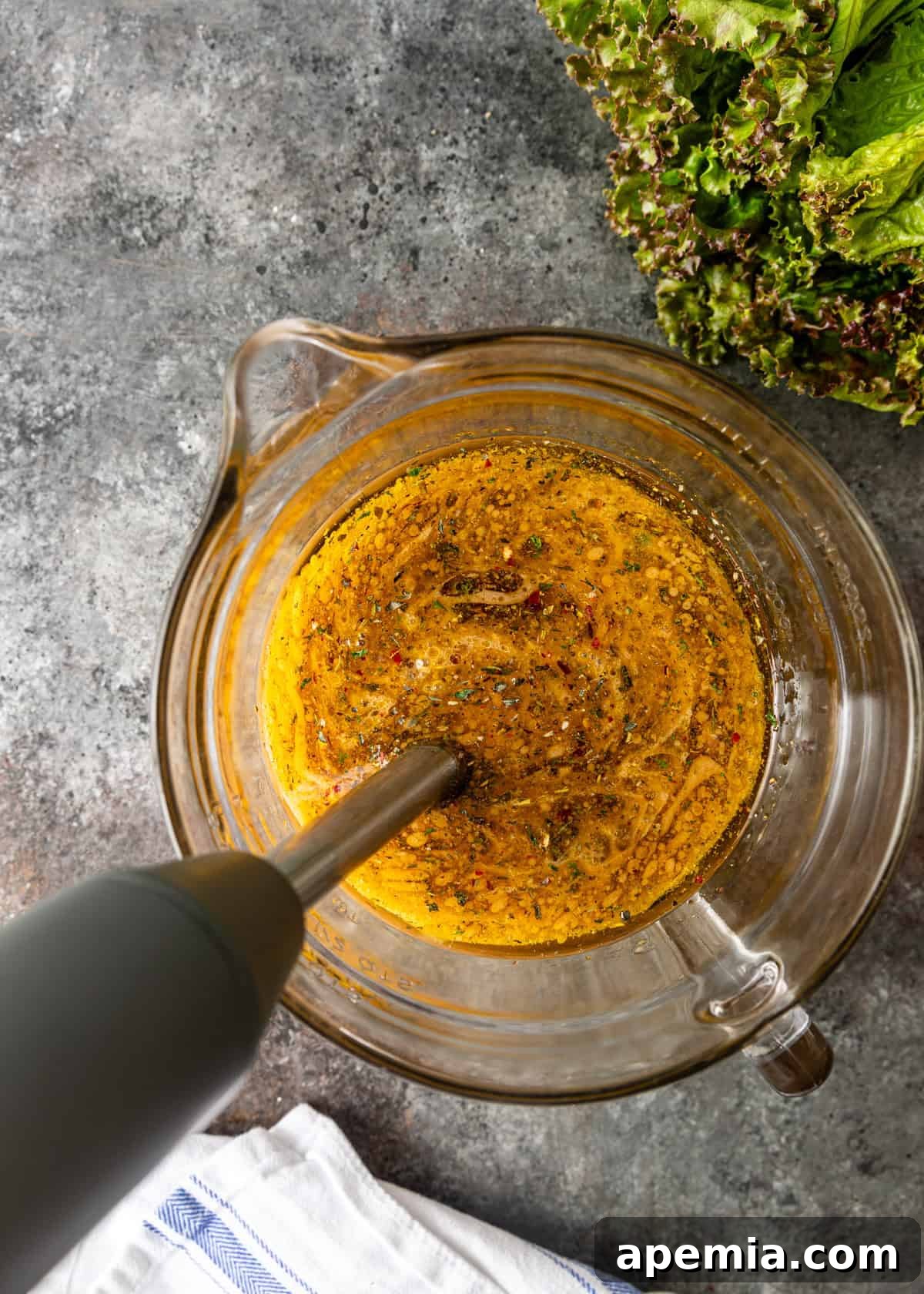
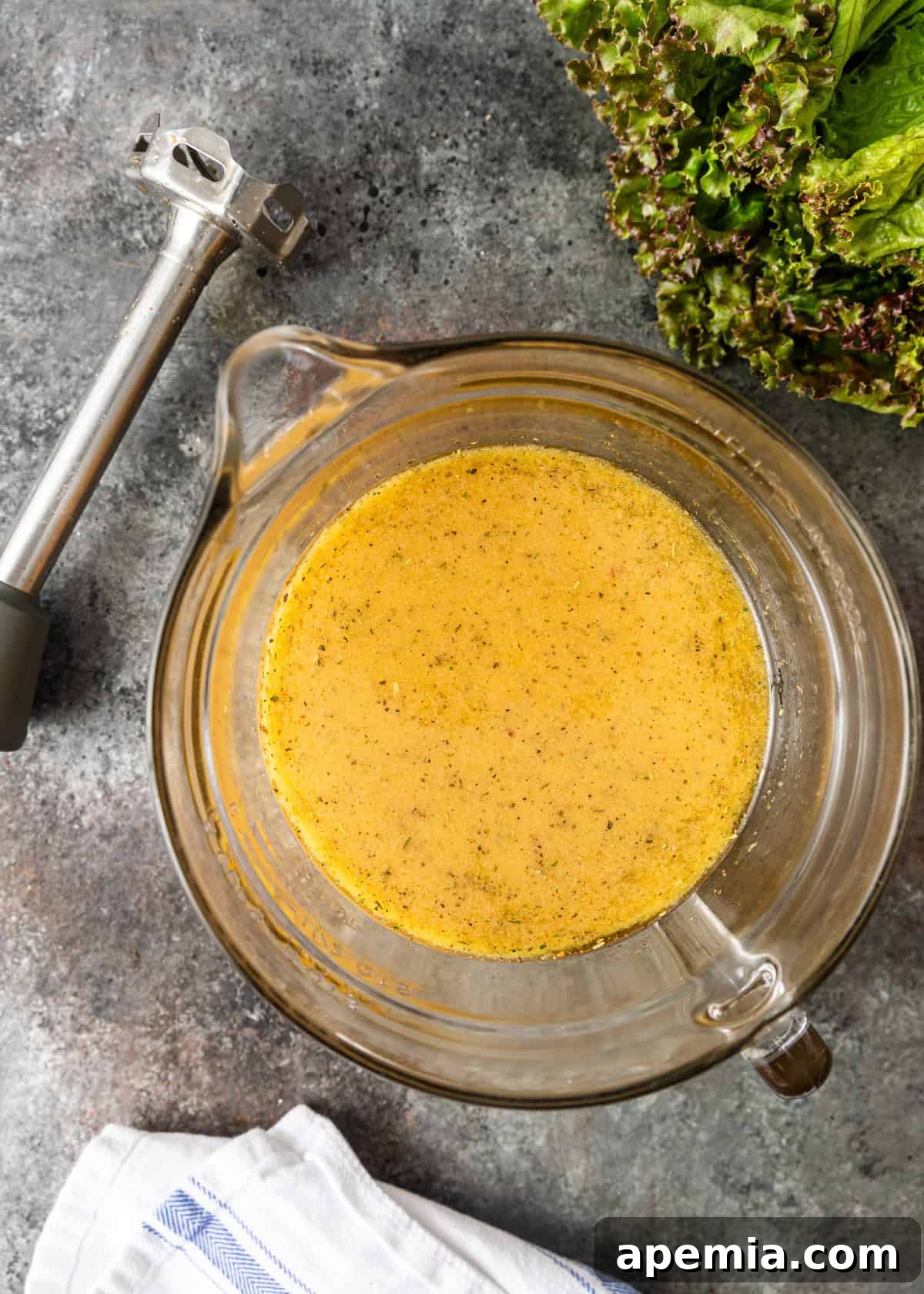
- Blend for Perfection. Using a whisk, vigorously combine the ingredients until well mixed. For guaranteed quick and thorough emulsification, especially if you want a smoother texture, an immersion blender is highly recommended. Blend until the dressing appears uniform and slightly thickened.
- Optional: Achieve Creaminess! If a creamy Italian dressing is what you desire, now is the time to add ¼ cup of either mayonnaise or plain Greek yogurt to the mixture. Once added, blend again briefly to fully incorporate the creamy element and achieve a smooth, homogeneous texture.
- Season to Taste & Serve. Taste your freshly made dressing. Adjust the seasoning as needed with additional salt, sugar, or red pepper flakes to suit your palate. Serve immediately over your favorite salads, or chill for later use. The flavors will deepen as it rests.
Recommended Tools for Italian Dressing Success
- Grater – A fine grater or microplane is essential for grating the garlic, ensuring no large, unappetizing chunks remain in your smooth dressing.
- Immersion Blender – While a whisk works perfectly fine, an immersion blender is a game-changer for achieving a consistently smooth and well-emulsified dressing in seconds. It prevents separation and creates a velvety texture.
- Mason Jar with Lid – Ideal for shaking, mixing, and storing your dressing.
Storing Your Homemade Italian Dressing
This homemade Italian salad dressing can be safely refrigerated in an airtight container for up to one week. Before each use, allow it to come to room temperature for a few minutes and give it a good stir or shake, as some natural separation may occur (especially with the plain vinaigrette version).
While it is technically possible to freeze homemade Italian dressing, it’s generally not recommended. This is especially true for the creamy version. Emulsified mixtures, by nature, will almost always separate after freezing and thawing. While you can re-whisk them together, you’ll often find that the texture and overall flavor are never quite the same as when freshly made. For the best quality and taste, enjoy this dressing fresh within its refrigerated shelf life.
Share this recipe on Pinterest!
Love this recipe? Share it with the world on Pinterest to inspire others to make their own delicious dressings.
Share on Pinterest
Frequently Asked Questions About Italian Salad Dressing
The traditional Italian dressing found in Italy is typically a very simple vinaigrette. It consists of high-quality olive oil, either red or white wine vinegar, and just a touch of salt and freshly ground black pepper. The richer, more spiced version that is popular in other countries, often containing mustard and lemon, is largely an Italian-American invention.
This homemade Italian dressing shares many core ingredients with Olive Garden’s popular version. However, there are a few notable differences. Olive Garden’s dressing often uses white wine vinegar, includes Parmesan cheese, and generally contains less garlic than our recipe. Their dressing also incorporates mayonnaise, making it naturally closer to our “creamy” Italian salad dressing variation.
Beyond drizzling over fresh greens and garden vegetables, homemade Italian dressing is incredibly versatile! It makes a fantastic marinade for chicken, fish, or vegetables, adding vibrant flavor and tenderizing qualities. Try it on roasted or grilled vegetables for an extra layer of zest. It also pairs wonderfully with grains like couscous, lentils, and quinoa, especially when preparing Mediterranean-style dishes. And of course, it’s the perfect base to toss with your favorite pasta for a refreshing and flavorful pasta salad.
Absolutely! The classic plain Italian dressing is naturally vegan. For the creamy version, simply substitute the plain Greek yogurt with a plant-based unsweetened yogurt (like almond or soy yogurt) or a vegan mayonnaise. Ensure all other ingredients, especially your Italian seasoning blend, are also free of animal products if you have strict dietary requirements.
The recipe includes a small amount of red pepper flakes for a subtle warmth. If you prefer a milder dressing, you can omit them entirely. For those who love a fiery kick, feel free to increase the quantity of red pepper flakes to half a teaspoon or more, adjusting gradually to reach your preferred heat level. You can always add more, but you can’t take it away!
Italian Salad Dressing (2 Ways)
24 Servings
10
10
Ingredients
- 1 cup extra virgin olive oil
- 1/4 cup red wine vinegar
- 1/4 cup fresh lemon juice
- 2 cloves garlic grated
- 1 tsp Dijon mustard
- 1 tsp Italian seasoning
- 1 tsp sugar
- 1/2 tsp salt
- 1/8 tsp red pepper flakes
- Optional (for creamy version): 1/4 cup mayonnaise or plain Greek yogurt
Instructions
-
Place all the ingredients (olive oil, red wine vinegar, fresh lemon juice, grated garlic, Dijon mustard, Italian seasoning, sugar, salt, and red pepper flakes) into a mixing bowl, large measuring cup, or a mason jar. Whisk vigorously or use an immersion blender to thoroughly combine and emulsify until smooth.
-
For a delightfully creamier version, add 1/4 cup of mayonnaise or plain Greek yogurt to the mixture. Blend once more until fully incorporated and the dressing achieves a velvety consistency.
-
Taste and adjust the seasoning with additional salt or sugar as desired. Serve immediately over your favorite salads, use as a vibrant marinade, or enjoy as a dipping sauce with crusty bread.
Nutrition (per serving, approximate)
Carbohydrates: 1g |
Protein: 0.04g |
Fat: 9g |
Saturated Fat: 1g |
Polyunsaturated Fat: 1g |
Monounsaturated Fat: 7g |
Sodium: 51mg |
Potassium: 6mg |
Fiber: 0.1g |
Sugar: 0.2g |
Vitamin A: 5IU |
Vitamin C: 1mg |
Calcium: 2mg |
Iron: 0.1mg
The information shown is an estimate provided by an online nutrition calculator. It should not be considered a substitute for a professional nutritionist’s advice.
Have You Made This Recipe? Let Me Know on Instagram
Tag @keviniscooking or use hashtag #keviniscooking!