
Hearty Moroccan Shakshuka Recipe: Poached Eggs in Spicy Tomato Sauce

Embark on a culinary journey to North Africa with this vibrant and flavorful Moroccan Shakshuka recipe. This iconic breakfast and brunch dish features perfectly poached eggs nestled in a robust, spicy tomato sauce, brimming with a diverse blend of aromatic North African spices and fresh, wholesome vegetables. It’s a truly satisfying meal that promises to invigorate your senses and provide an abundance of protein, making it an ideal start to any day.
Why You’ll Love This Authentic Moroccan Shakshuka
Shakshuka transcends a simple breakfast; it’s a celebration of flavors and cultures. Originating from Tunisia and widely enjoyed across North Africa and the Middle East, this savory, saucy dish has captured hearts worldwide. While Italy offers a similar rendition known as “eggs in purgatory,” the Moroccan version distinguishes itself with a unique blend of warm, earthy spices and a delightful hint of heat.
Beyond its incredible taste, this shakshuka recipe is incredibly fulfilling and healthy. Packed with nutrient-rich peppers, onions, and eight large eggs, it provides sustained energy, ensuring you’re ready to tackle your day. The distinct Moroccan spices, including the revered Ras el Hanout, infuse the dish with an unforgettable aroma and depth that sets it apart from any other egg dish you’ve tried. Plus, its versatility allows for easy customization with various vegetables, leafy greens, or cheeses, tailoring it perfectly to your family’s preferences.
A Glimpse into Shakshuka’s Rich History
The story of shakshuka is as rich and layered as its flavors, with its roots tracing back to Ottoman North Africa in the 16th century. Many countries across the region lay claim to its origin, including Tunisia, Yemen, Turkey, Algeria, Libya, and, of course, Morocco. This beloved dish likely evolved as a practical and delicious way to utilize ripe tomatoes and eggs, becoming a staple in kitchens from the bustling souks of Marrakech to the Mediterranean coasts.
Over centuries, local ingredients and culinary traditions shaped diverse variations of shakshuka. While the core concept of eggs cooked in a tomato-based sauce remains consistent, the spice blends, vegetables, and level of heat can vary significantly from one household to another. This Moroccan interpretation, with its emphasis on aromatic spices like cumin and the complex notes of Ras el Hanout, offers a truly distinctive and unforgettable experience.
Essential Ingredients for Your Moroccan Shakshuka
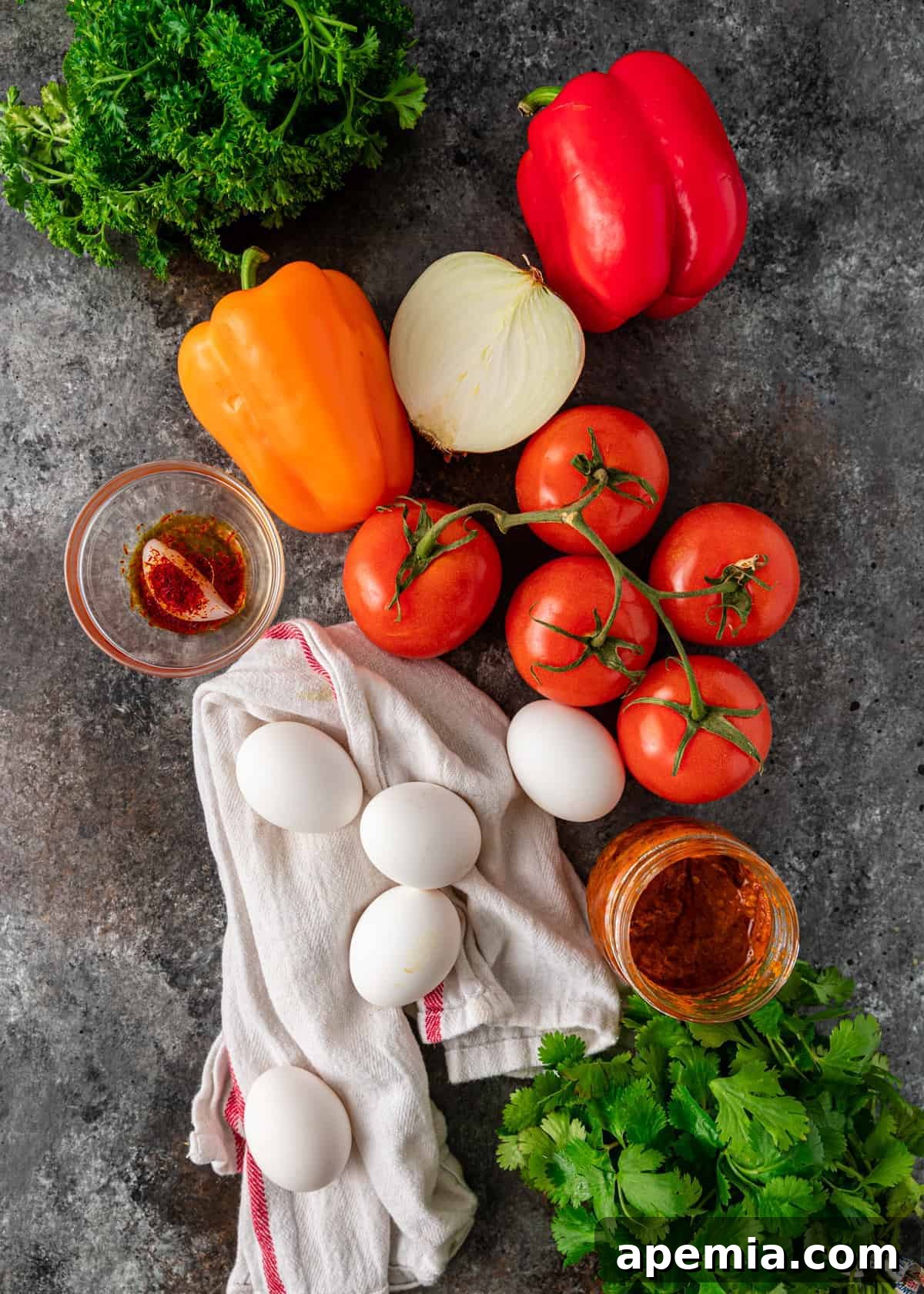
Crafting the perfect Moroccan shakshuka begins with selecting the right ingredients. Each component plays a vital role in building the dish’s signature flavor profile and vibrant texture. Here’s a detailed look at the key elements and potential substitutions:
- Saffron Threads: A delicate and highly prized spice, saffron adds a subtle floral aroma and a beautiful golden hue to the sauce. It’s crucial to “bloom” saffron properly to release its full potential, a step that enhances its flavor significantly.
- Fresh Eggs: This recipe uses eight large eggs, with a unique ratio of four whole eggs and four egg yolks. This creates a delightful contrast in texture, offering creamy yolks alongside more set whites. Save any extra egg whites for other culinary creations like meringues or a light cheesecake.
- Harissa Paste: The cornerstone of the dish’s fiery character, harissa is a hot, bold, and tangy chili paste. For a milder version, you can reduce the amount or substitute with a regular chili paste. If using hot sauce, be aware it will be thinner and may alter the sauce’s consistency slightly.
- Tomato Paste: Adding depth and richness to the tomato base, tomato paste is essential. For those with a lower heat tolerance, using a bit more tomato paste can help balance the spiciness of the harissa.
- Ras el Hanout: A quintessential North African spice blend, Ras el Hanout translates to “head of the shop,” implying it’s the best blend a spice merchant has to offer. It’s a complex mix of warm, earthy spices with subtle floral and sweet undertones, delivering the authentic Moroccan essence.
- Colorful Bell Peppers (Red, Yellow, Orange): Bell peppers contribute sweetness, color, and crucial texture. Red bell peppers are often juicier and more flavorful, making them a preferred choice, but feel free to use any combination you enjoy to create a visually appealing and balanced dish. Cut them into 3/4-inch strips for a satisfying bite.
- Yellow Onion: Onions form the aromatic base of the sauce, providing sweetness and texture. Diced yellow onions are recommended for their balanced flavor and how they soften beautifully in the sauce. For a crisper texture, red onions could be used, while shallots offer a more delicate flavor with less texture.
- Fresh Minced Garlic: Fresh garlic is indispensable in a dish with such strong, vibrant flavors. Its pungent aroma and taste are far superior to powdered garlic, which might get lost in the complex spice profile of shakshuka.
- Chopped Tomatoes: Fresh, ripe tomatoes are ideal for the sauce, providing a bright, tangy foundation. As an alternative, a 28oz can of fire-roasted or regular diced tomatoes can be used. Remember to drain canned tomatoes well to prevent a watery sauce.
- Ground Cumin: This warm, earthy spice is a must-have, complementing the other Moroccan flavors. If you find yourself without cumin, ground coriander is the closest substitute, offering a similar warm, citrusy note.
Step-by-Step Guide: How to Craft Your Moroccan Shakshuka

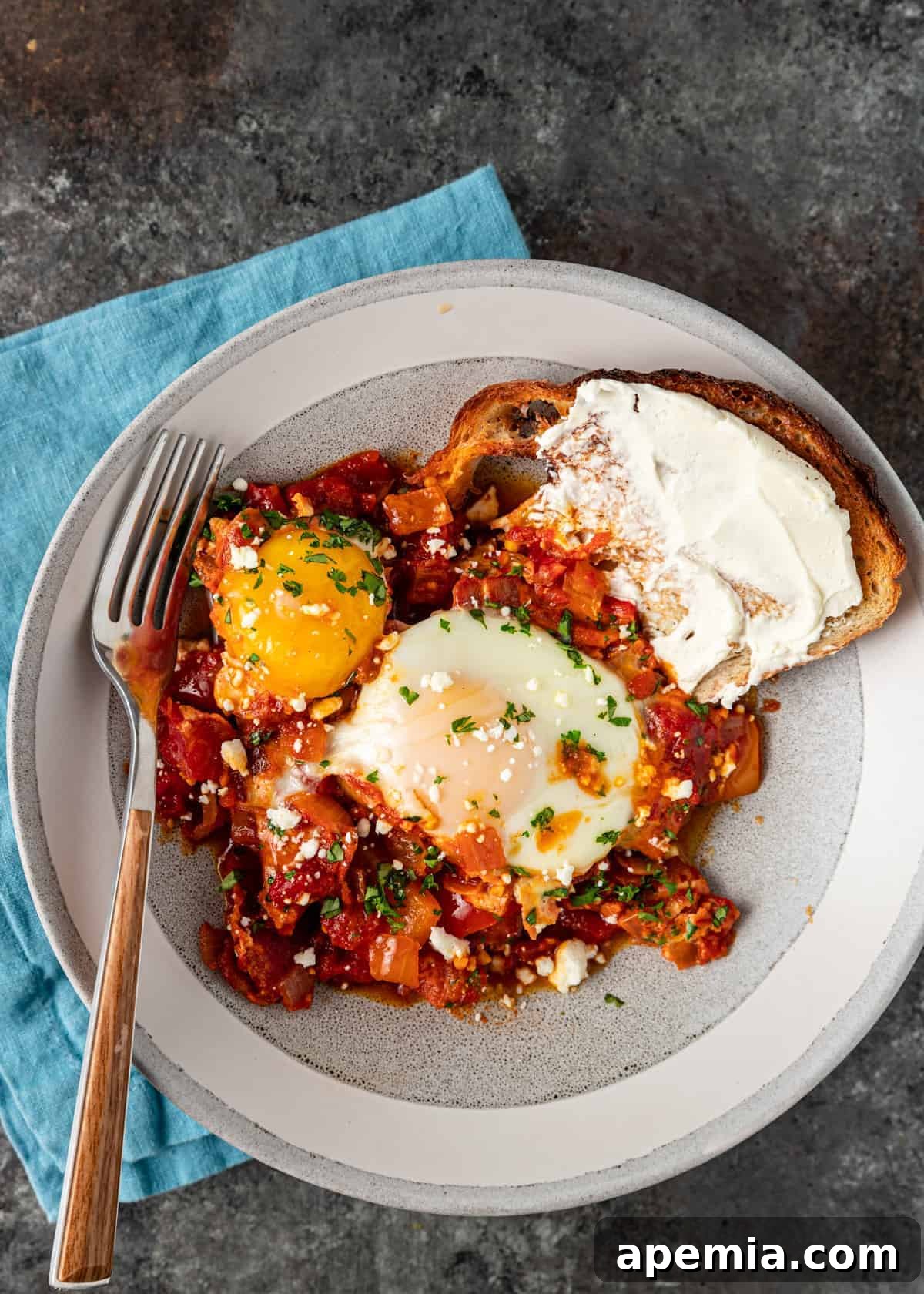
How to Make Perfect Moroccan Shakshuka
- Bloom the Saffron: Begin by gently crushing the saffron threads in the palm of your hand to release their aroma. Place them in a small bowl and add 2 tablespoons of warm water. Stir briefly and allow the saffron to bloom for at least 5 minutes. This step is crucial for extracting the full flavor and color. (See Pro Tip below for an alternative ice cube blooming method.)
- Sauté the Aromatics and Spices: Heat the olive oil in a large, deep skillet over medium heat. Once shimmering, add the harissa paste and tomato paste, along with the ground cumin and Ras el Hanout. Stir continuously for 1 minute until fragrant. This “blooms” the dry spices in oil, intensifying their flavors.
- Add Vegetables and Soften: Next, add the diced yellow onion, bell pepper strips, minced garlic, and salt to the skillet. Continue to stir-fry for approximately 8 minutes, or until the onions become soft and translucent, and the peppers begin to tenderize.
- Simmer the Tomato Base: Pour in the chopped tomatoes, including their juices, and add the bloomed saffron mixture. Stir all ingredients together thoroughly. Reduce the heat to a gentle simmer and let the sauce cook uncovered for 10 minutes. This allows the flavors to meld beautifully and the sauce to thicken to the desired consistency. Taste and adjust salt if necessary.
- Poach the Eggs: Using the back of a spoon or a small spatula, create 8 shallow depressions or “wells” in the simmering tomato sauce. Carefully crack 4 whole large eggs into alternating dips. For the remaining 4 dips, add just the egg yolks. Sprinkle half of the fresh chopped cilantro and parsley over the entire skillet. Cover the skillet with a lid and continue to simmer gently for another 10 minutes, or until the egg whites are just set and the yolks remain wonderfully runny.
- Portion and Serve: With great care, scoop two eggs, along with a generous amount of the surrounding spicy tomato sauce, into individual serving bowls. Garnish with the remaining fresh herbs. Serve immediately with optional toppings like crumbled feta cheese and a side of warm pita bread or crusty bread for dipping, alongside a creamy labneh spread.
Serving Suggestions and Perfect Pairings

Shakshuka is a meal designed to be shared and savored. The rich, flavorful sauce and perfectly poached eggs beg for something to soak up every last drop. Warm, fresh pita bread is an ideal accompaniment, perfect for scooping up the runny yolks and spicy sauce. Pair it with a dollop of creamy homemade labneh – a tangy, thick yogurt cheese – for a refreshing contrast to the heat of the shakshuka. Crusty bread or even simple toast can also serve as an excellent vehicle, ensuring no flavor goes to waste. A sprinkle of crumbled feta cheese adds a salty, briny note that beautifully complements the tomato sauce and eggs. For an extra touch of freshness, a squeeze of lemon juice or a few olives can brighten the entire dish.
Expert Tips for Your Best Shakshuka
- Saffron Blooming Technique: The traditional method is warm water, but for truly delicate saffron, try the “ice cube” method. Place an ice cube in a small bowl, crush saffron over it, and let it melt. This slow infusion ensures the saffron doesn’t “burn” and releases its maximum flavor and color.
- Sauce Consistency: If your sauce seems too thin after simmering, let it cook uncovered for a few more minutes to reduce and thicken. If it’s too thick, add a splash of vegetable broth or water.
- Perfectly Poached Eggs: The key is gentle simmering. Ensure the heat is not too high, which can cause the sauce to boil rapidly and toughen the eggs. Covering the skillet creates steam, helping the eggs cook evenly while keeping the yolks delightfully runny.
- Customizing Heat: Harissa paste comes in varying spice levels. Start with 1 tablespoon for a milder kick and increase to 2 tablespoons for a bolder, fiery flavor. You can also add a pinch of cayenne pepper for extra heat.
- Fresh Herbs are Key: Don’t skimp on fresh cilantro and parsley. They add a vibrant freshness that cuts through the richness of the sauce and brightens the entire dish. Add them at the end for maximum flavor and color.
Creative Variations and Customizations
Shakshuka is incredibly adaptable, inviting creativity in the kitchen. Feel free to experiment with additional ingredients to make it your own:
- Greens: Wilt in a handful of spinach, kale, or Swiss chard during the last few minutes of simmering the sauce for an added nutritional boost and earthy flavor.
- Cheeses: Besides feta, try sprinkling goat cheese for a tangy creaminess, or a sprinkle of Parmesan for an umami kick.
- Vegetables: Artichoke hearts, zucchini, or even roasted eggplant can be wonderful additions. Sauté them with the bell peppers and onions.
- Protein Boost: For a heartier meal, brown some ground lamb or beef with the onions and peppers before adding the tomato paste. Chickpeas are also a common and delicious addition, providing texture and plant-based protein.
- Smoky Flavor: A pinch of smoked paprika can enhance the depth and add a lovely smoky note to the sauce.
Frequently Asked Questions About Shakshuka
Shakshuka’s origins are deeply rooted in North Africa, dating back to the 16th century during the Ottoman Empire’s influence in the region. While many countries lay claim to the original recipe, including Tunisia, Yemen, Turkey, Algeria, Libya, and Morocco, it is universally cherished across these cultures as a staple dish. Each region has developed its unique twist, but the essence of eggs poached in a flavorful tomato sauce remains constant.
The heart of any shakshuka is its tomato-based sauce, which varies in acidity, saltiness, and sweetness depending on regional and personal preferences. In this Moroccan shakshuka recipe, the sauce is a vibrant blend of crushed tomatoes, simmered bell peppers and onions, and a rich combination of spices including ground cumin and the complex Moroccan Ras el Hanout. The fiery kick comes from harissa paste, balanced by the sweetness of tomato paste. Many other variations exist, incorporating ingredients like lemons for brightness, yogurts for creaminess, ground meats for a heartier meal, or even potatoes for added substance. This flexibility means you can truly customize your Moroccan shakshuka with whatever ingredients you love – think avocado, extra cheeses, or more leafy greens!
The best companions for any shakshuka recipe are those that can effectively soak up its delicious sauce and runny egg yolks. I highly recommend serving it with warm pita bread and a creamy spread of labneh. The pita acts as a perfect utensil, scooping up every last bit of the rich tomato mixture, while the labneh offers a refreshing, tangy counterpoint. Any crusty bread will do just as well – it’s all about ensuring you can savor every drop of the flavorful sauce and tender vegetables. Like any good breakfast, you can even enjoy it with a simple slice of toast!

Fiery Moroccan Shakshuka Recipe
5 from 6 votes
This Moroccan-inspired shakshuka recipe is a delicious North African breakfast of poached eggs in spicy tomato sauce. Perfect for your next brunch!
Servings: 4
Prep Time: 15 mins
Cook Time: 30 mins
Total Time: 45 mins
Print Recipe
Video
Ingredients
Main Ingredients
- 1/2 tsp saffron threads
- 2 tbsp olive oil
- 2 tbsp harissa paste (use 1 tbsp for less heat)
- 1 tbsp tomato paste
- 1 tsp ground cumin
- 1/2 tsp ras el hanout
- 1 large yellow onion, diced
- 2 large red bell peppers, 3/4 inch strips
- 1 large yellow/orange bell pepper, 3/4 inch strips
- 4 garlic cloves, minced
- 1/2 tsp salt
- 5 large tomatoes, chopped (See Note 1)
- 8 large eggs (4 whole, 4 yolks only – save whites for other use)
- 2 tbsp cilantro, chopped
- 2 tbsp parsley, chopped
Optional Toppings/Side
- ½ cup labneh (See Note 2)
- pita for serving
- Crusty bread for serving
- Feta cheese crumbles for serving
Instructions
- Crush the saffron in the palm of your hand and add to a small bowl. Add 2 tablespoons of warm water, stir and let bloom for 5 minutes. (See Note 3).
- Heat the oil in a large skillet over medium heat and add the harissa and tomato pastes, cumin, ras el hanout and cook for 1 minute until fragrant. Add the onion, bell peppers, garlic and salt. Cook, stirring often, until the onions are tender and turning translucent, about 8 minutes.
- Add the diced tomatoes with their juices and the bloomed saffron/water mixture. Stir, and turn heat to simmer and cook uncovered for 10 minutes until sauce has thickened. Season with more salt if necessary.
- Use the back of a spoon to make 8 dips in the sauce. Crack 4 whole eggs into every other dip and add a yolk to the other 4 open dips in the sauce. Sprinkle with half of the chopped cilantro/parsley mix and cover with lid. Simmer gently for 10 minutes, or until the eggs are just set with runny yolks.
- Remove lid and carefully scoop 2 eggs each with tomato mixture into bowls.
- Optional Toppings: Serve with feta cheese crumbles, remaining cilantro/parsley mix, and labneh smeared on crusty bread or pita on the side.
Notes
- You can substitute 5 cups (approx. 800 g) of canned tomatoes for fresh. A 28 oz can of fire-roasted, diced, or crushed tomatoes is a fine alternative.
- You may substitute any thick Greek yogurt, or softened cream cheese for the labneh. Feta cheese crumbles are another wonderful cheese to sprinkle on top as well.
- A trick to perfectly bloom saffron: instead of warm water, place an ice cube in a small bowl. Crush the saffron in your palm and place it on top of the ice cube. Let it sit until the ice melts and the saffron blooms. This adds an extra 15 minutes to the process but ensures the delicate saffron threads don’t get “burned” by overly hot water.
- Recipe adapted from Yotam Ottolenghi.
Nutrition
Calories: 287kcal | Carbohydrates: 19g | Protein: 17g | Fat: 16g | Saturated Fat: 4g | Cholesterol: 329mg | Sodium: 281mg | Potassium: 849mg | Fiber: 5g | Sugar: 11g | Vitamin A: 4836IU | Vitamin C: 143mg | Calcium: 115mg | Iron: 3mg
The information shown is an estimate provided by an online nutrition calculator. It should not be considered a substitute for a professional nutritionist’s advice.
Course: Breakfast
Cuisine: Moroccan, North African
Author: Kevin
Have You Made This Recipe? Let Me Know on Instagram!
Tag @keviniscooking or use hashtag #keviniscooking!