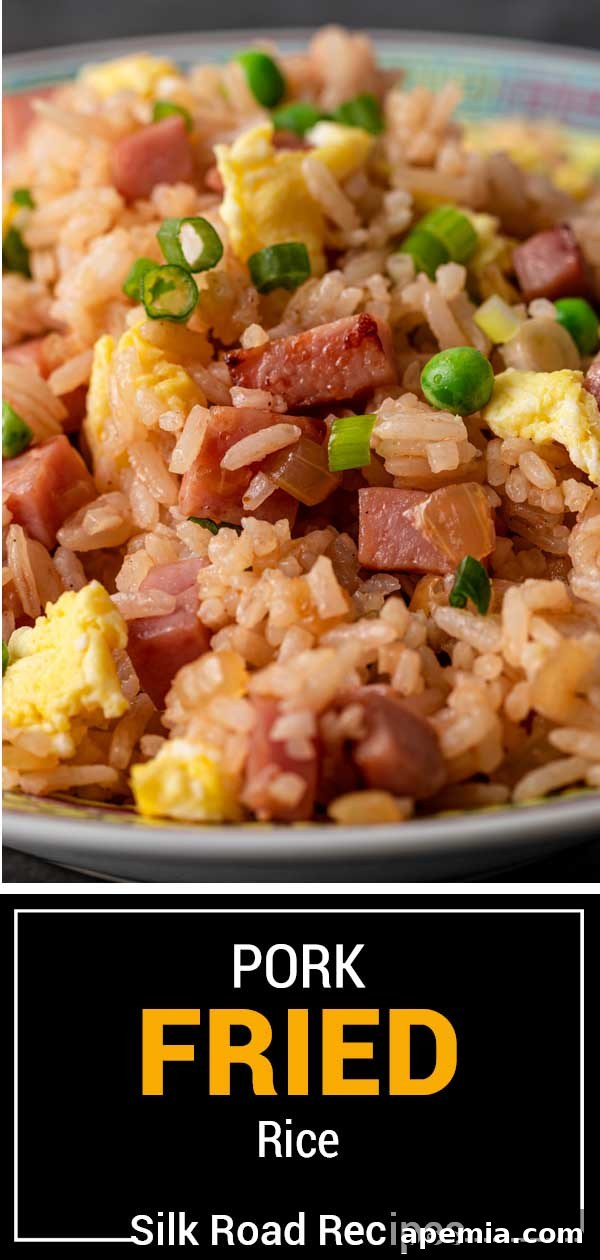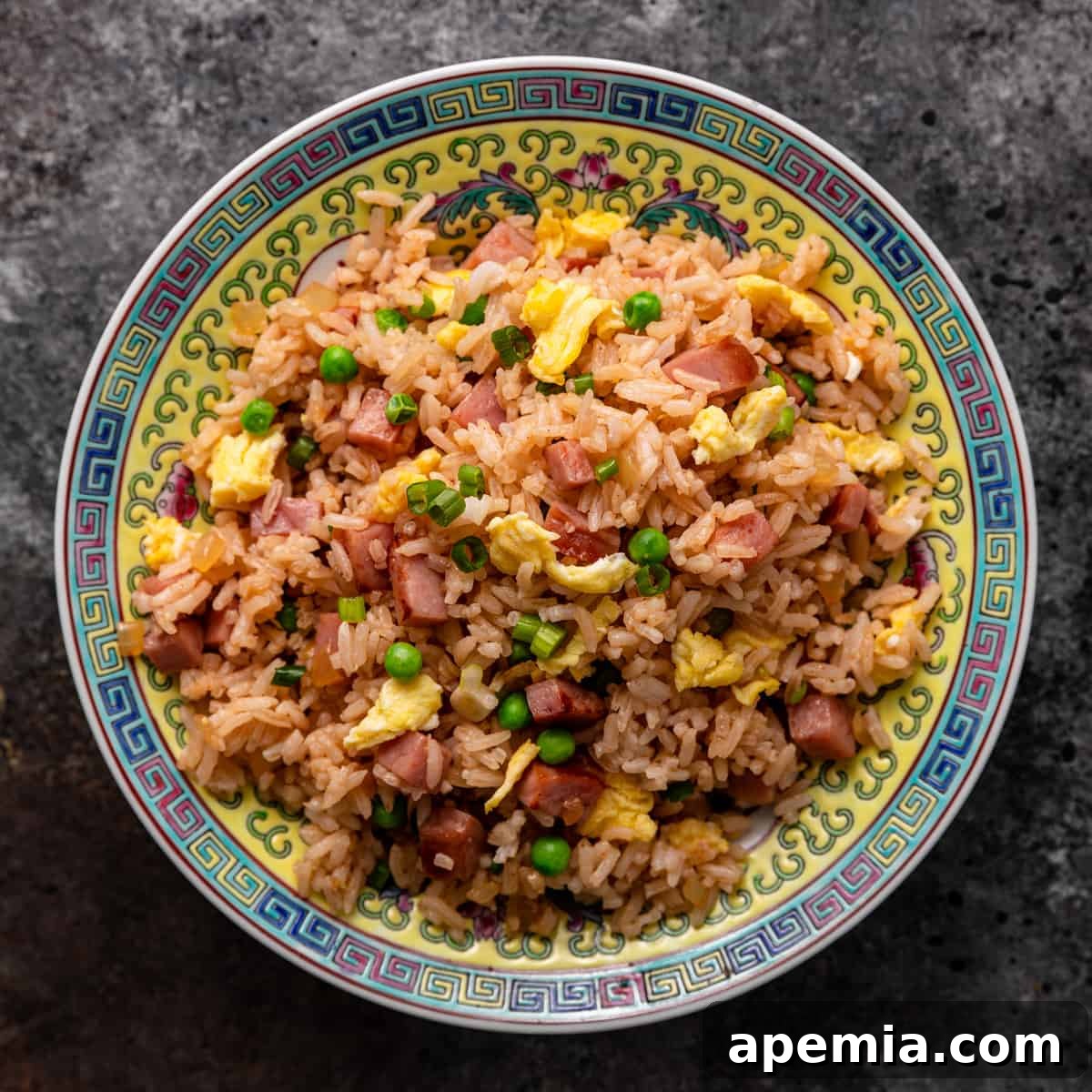
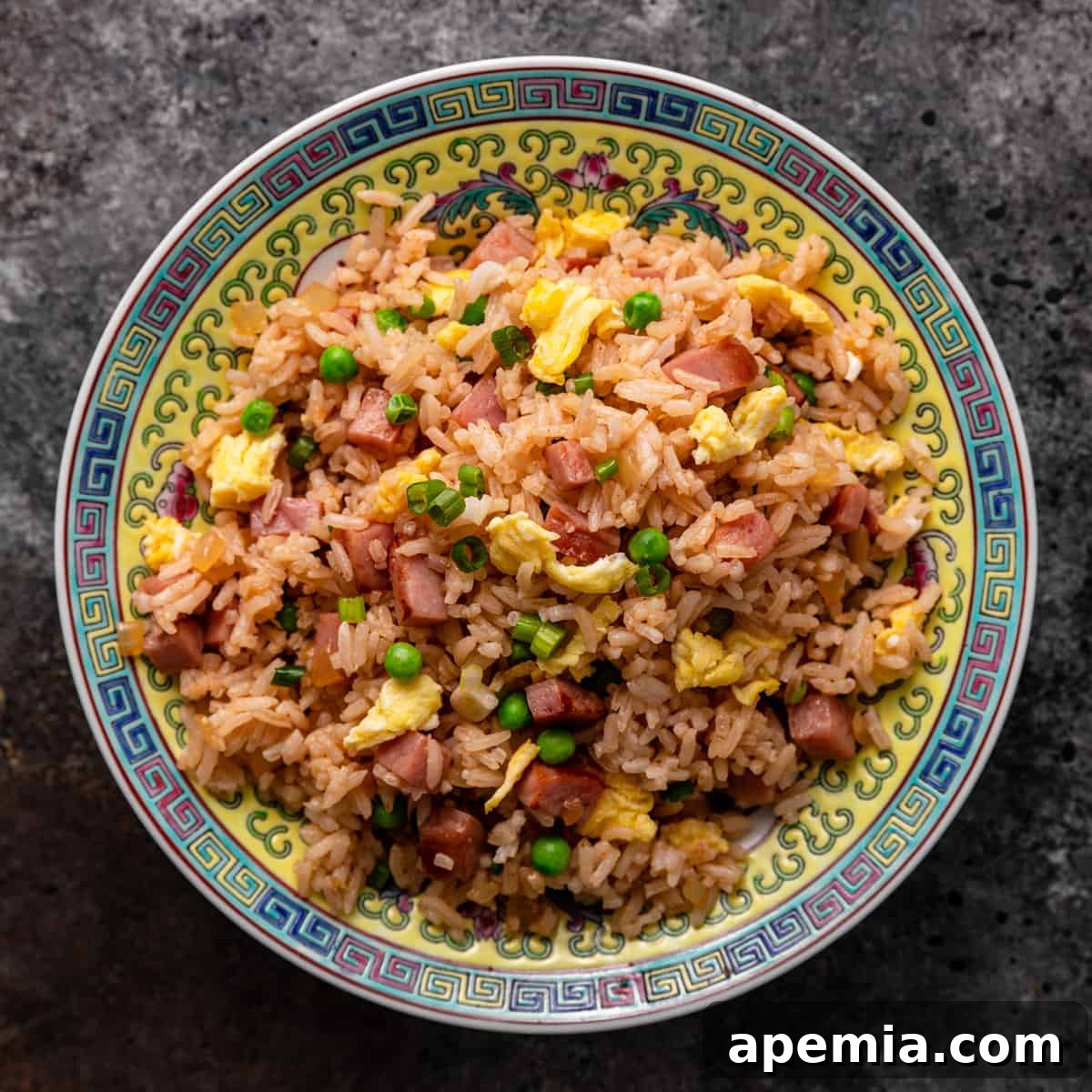
Pork fried rice is more than just a dish; it’s a culinary journey that consistently hits all the right notes. With its irresistible blend of savory flavors and remarkably simple preparation, this classic Chinese staple transforms humble ingredients into an extraordinary meal. Imagine perfectly crispy-edged rice, succulent pieces of BBQ pork, fluffy scrambled eggs, and vibrant, crunchy vegetables, all harmoniously coated in a lightly sweet and deeply savory sauce. It tastes exactly like your cherished takeout order, but with the undeniable freshness and speed of a homemade creation. Prepare to elevate your weeknight meals and impress your family with a dish that’s both comforting and incredibly flavorful.
Unlock the Secrets to Restaurant-Quality Pork Fried Rice at Home
Pork fried rice holds a revered place in Chinese culinary history and remains a beloved dish worldwide. Its origins trace back to the Sui Dynasty in China’s Jiangsu Province, where it was ingeniously devised as a resourceful way to utilize leftover rice, vegetables, and meats, preventing waste while creating a delicious meal. This practice, born out of necessity, evolved into a culinary art form. Over centuries, this humble dish has been refined into a celebrated staple, cherished for its exquisite balance of textures and flavors, and its gratifyingly straightforward preparation. The cornerstone of achieving truly exceptional fried rice lies in two fundamental principles: using cold, day-old rice and cooking with consistently high heat. This article will guide you through perfecting these techniques and more, ensuring your homemade pork fried rice is nothing short of spectacular.
The Distinctive Flavors of Cantonese Pork Fried Rice
Our recipe draws significant inspiration from classic Cantonese-style fried rice, prominently featuring Chinese BBQ pork, commonly known as char siu. The char siu is crucial for this style, imparting its signature sweetness, a subtle smoky depth, and a vibrant pop of reddish-orange color that elevates the dish both visually and gastronomically. Its unique caramelized edges and tender texture infuse every bite with an authentic richness that is genuinely hard to replicate with plain pork.
While char siu is preferred for its unique depth, cubed smoked ham serves as an excellent and readily available alternative, offering a robust savory base. The carefully balanced sauce, a symphony of umami, sweet, and aromatic notes, is enriched with a touch of Shaoxing wine for complex depth, fragrant sesame oil, and a hint of white pepper. This mixture lightly coats each grain of rice without making it soggy, creating that authentic, crave-worthy fried rice flavor. The meticulous preparation ensures those distinctively crisped rice grains and airy, fluffy eggs, transforming this recipe into the ultimate weeknight-friendly comfort food experience that will have everyone asking for seconds.
Crafting a Culinary Feast: Pairing Your Pork Fried Rice
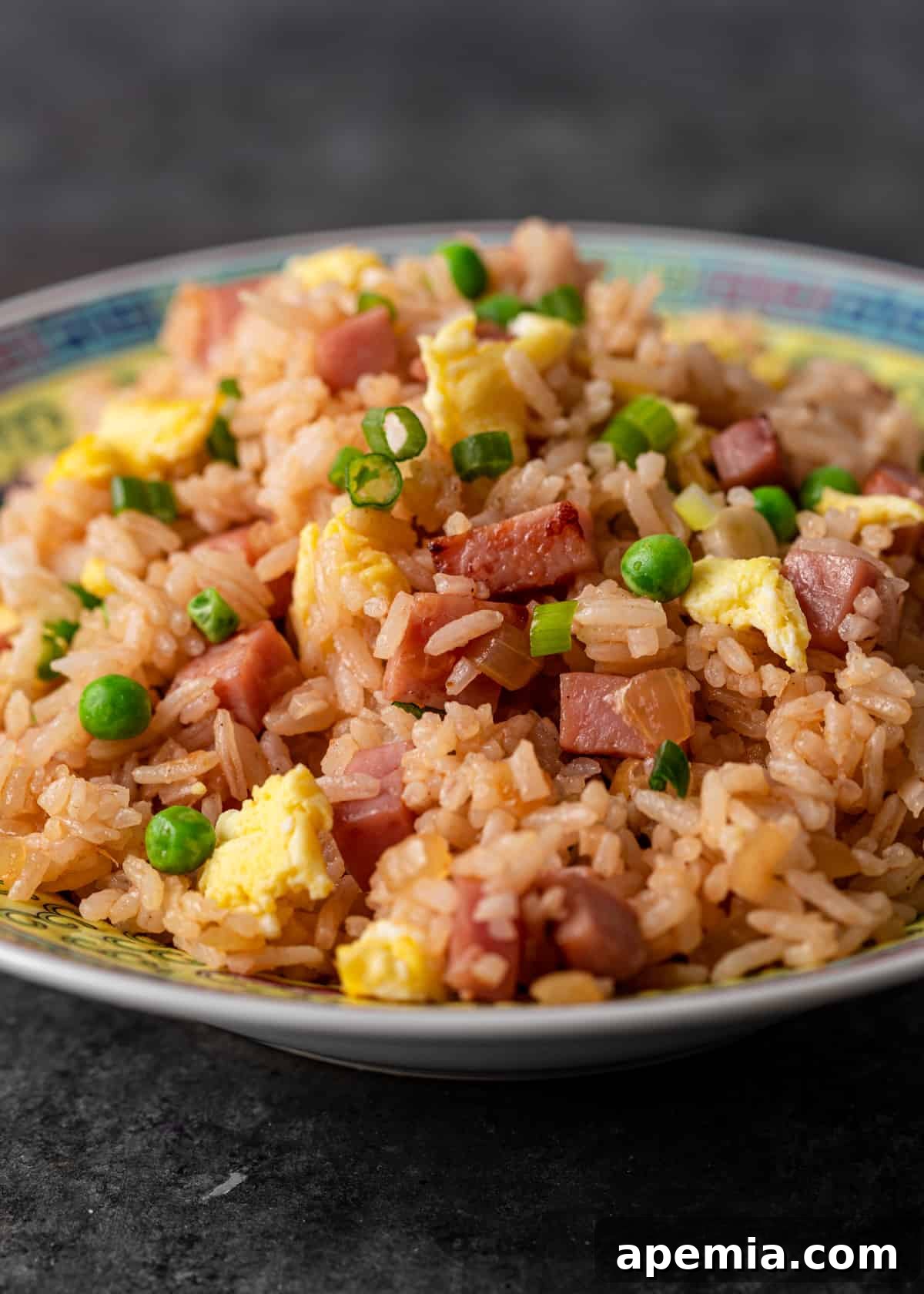
While this pork fried rice recipe is undeniably satisfying as a standalone meal, it truly shines when complemented by a selection of other delectable Chinese-inspired dishes. Imagine orchestrating a restaurant-worthy spread right in your own kitchen! Fried rice serves as a perfect foundation, allowing other dishes to build upon its savory base.
To create a truly unforgettable dining experience, consider pairing your homemade pork fried rice with the sweet and tangy notes of Honey Chicken. For a comforting start, a delicate and warming bowl of Egg Drop Soup perfectly complements the richness of the fried rice. Complete this symphony of flavors with some savory Pork Pot Stickers, offering a delightful textural contrast. This combination promises a diverse and flavorful meal that will impress family and friends alike, elevating a simple weeknight dinner into a memorable occasion worthy of any special gathering.
Table of Contents
- Char Siu – Chinese BBQ Pork Substitutions & Variations
- Essential Ingredient Notes and Substitutions
- Mastering the Technique: How to Make Pork Fried Rice
- Pro Tips for Perfect Fried Rice Every Time
- Recommended Tools for Stir-Frying
- Serving Suggestions and Delicious Variations
- Frequently Asked Questions About Pork Fried Rice
- The Ultimate Pork Fried Rice Recipe
- Storage and Reheating Leftovers
- Conclusion
Chef’s Tip: Char Siu – Chinese BBQ Pork Substitutions & Variations
While authentic Chinese BBQ pork (char siu) lends a unique sweet and savory depth to this dish, don’t let its absence deter you. Excellent and flavorful alternatives are readily available. You can use diced roasted pork tenderloin, which offers a lean and tender texture, or flavorful leftover grilled pork chops, cubed into bite-sized pieces. Another fantastic option is classic smoked ham, diced into small pieces. For an added touch of flavor when using ham or other plain pork, toss it with a tablespoon of your favorite BBQ sauce to mimic some of char siu’s rich, sweet, and slightly glazed profile, bringing it closer to the authentic taste.
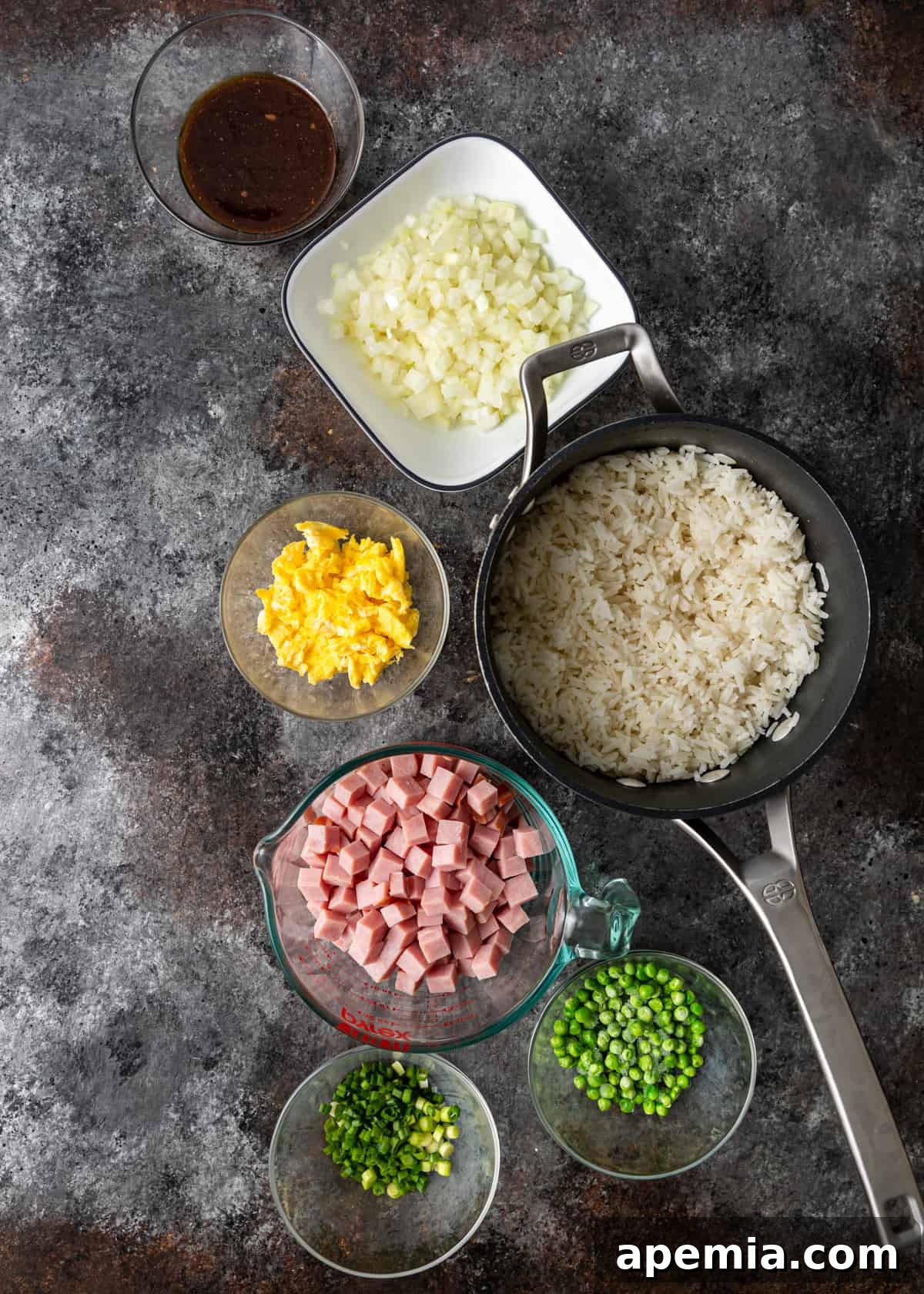
Essential Ingredient Notes and Substitutions for Flavorful Fried Rice
(_Refer to the full recipe card below for precise quantities._)
- Jasmine Rice: The Foundation of Fried Rice Success
The absolute key to truly great fried rice is using **day-old, cooked jasmine rice**. This isn’t just a suggestion; it’s a fundamental principle rooted in Asian culinary tradition. Chilling the rice overnight significantly dries out its surface moisture, preventing the grains from clumping together and becoming mushy during stir-frying. Instead, they remain separate, allowing them to crisp up beautifully and absorb the sauce without becoming saturated. For optimal results, cook your rice, spread it out to cool quickly, and then refrigerate. If jasmine rice isn’t available, long-grain basmati rice is a suitable substitute, but ensure it’s also thoroughly chilled and clump-free. - Chinese BBQ Pork (Char Siu): The Star Protein
Char Siu brings an unparalleled sweet and smoky richness to this pork fried rice. Its signature caramelized edges and tender interior infuse every bite with an authentic depth of flavor that is genuinely hard to replicate. You can often find pre-made char siu at well-stocked Asian markets, or you can prepare it at home if you’re feeling adventurous. However, if char siu is unavailable, a fantastic substitute is smoked boneless cooked ham, diced and tossed with a tablespoon of your favorite BBQ sauce to emulate that sweet, savory glaze. Other suitable options include leftover roasted pork tenderloin or grilled pork chops, diced small. - Shaoxing Wine: The Secret to Authentic Depth
This essential Chinese cooking wine is a cornerstone of authentic Asian cuisine, providing a complex aromatic quality that deepens the overall flavor profile. Shaoxing wine adds a subtle sweetness and a distinct umami note that perfectly rounds out the sauce. It’s often found in Asian grocery stores. If you can’t source Shaoxing wine, a good quality dry sherry can serve as an effective substitute, delivering a similar aromatic quality and depth. - Chinese Five Spice: Aromatic Warmth
A small pinch of Chinese Five Spice blend is all it takes to introduce a wonderful, subtle warmth and complexity to your fried rice. This ancient blend, typically consisting of star anise, cloves, Chinese cinnamon, Szechuan peppercorns, and fennel seeds, is not meant to dominate the dish but rather to provide an aromatic background that enhances the other flavors. For the freshest and most vibrant results, I highly recommend mixing up your own blend if you have the individual spices on hand. - Eggs: Fluffy Curds of Goodness
Eggs are integral to the classic fried rice experience, creating those signature soft, fluffy curds that add both texture and richness. Scrambling them separately ensures they maintain their delicate consistency and don’t coat the rice grains, which can lead to a less desirable or mushy texture. This method guarantees beautiful, airy egg pieces distributed throughout the dish. - Green Onions: A Fresh Finish
Added towards the very end of cooking, chopped green onions provide a mild, refreshing bite and a vibrant color contrast. Their delicate sharpness helps to cut through the richness of the pork and rice, brightening the overall flavor profile and adding a delightful fresh element. Use both the white and green parts for maximum flavor. - Frozen Peas: Sweetness and Texture
These small, sweet green gems add a delightful pop of color and a pleasant textural contrast to the dish. They thaw quickly in the hot wok, requiring minimal cooking time. Feel free to experiment with other quick-cooking vegetables like diced red bell pepper, thinly sliced zucchini, corn kernels, or shredded carrots to customize your fried rice according to your preference or what’s in season.
Mastering the Technique: How to Make Perfect Pork Fried Rice
Creating delicious, restaurant-quality pork fried rice at home is a straightforward process when you follow these key steps. Each stage is designed to build flavor, ensure proper texture, and achieve the ideal balance that defines truly great fried rice. Read through these instructions carefully to maximize your success.
- Prepare Your Rice Ahead of Time: This is arguably the most critical step for achieving non-soggy, perfectly textured fried rice. Cook your jasmine rice per your favorite method (approximately 2 cups dry rice typically yields 4 cups cooked). Once cooked, immediately spread the hot rice thinly on a large baking sheet or plate. This maximizes surface area, allowing it to cool down quickly and dry out. Once completely cool, transfer it to an airtight container and refrigerate for at least 6 hours, ideally overnight. Before frying, use your hands or a fork to gently break up any clumps so the grains are separate and ready to fry evenly. This ensures crispy, distinct grains, not soggy clumps.
- Whisk Together the Flavorful Sauce: In a small bowl, combine all the sauce ingredients: soy sauce, honey, sesame oil, Shaoxing wine (or dry sherry if substituting), rice vinegar, kosher salt, white pepper, and Chinese Five Spice. Whisk until thoroughly blended and homogenous. This allows the individual flavors to meld together, creating a balanced sauce, and ensures it’s ready to be added swiftly to the hot wok at the appropriate moment, preventing overcooking of other ingredients.
- Scramble the Eggs to Fluffy Perfection: Heat a small non-stick skillet over medium heat with just a drop or two of vegetable oil. Add your beaten eggs and cook gently, stirring and breaking them into soft, fluffy curds. Avoid overcooking, as they should remain tender and moist. Once cooked to your liking, immediately transfer the scrambled eggs to a plate and set them aside. Cooking them separately prevents them from coating the rice grains and helps them retain their delicate, airy consistency.
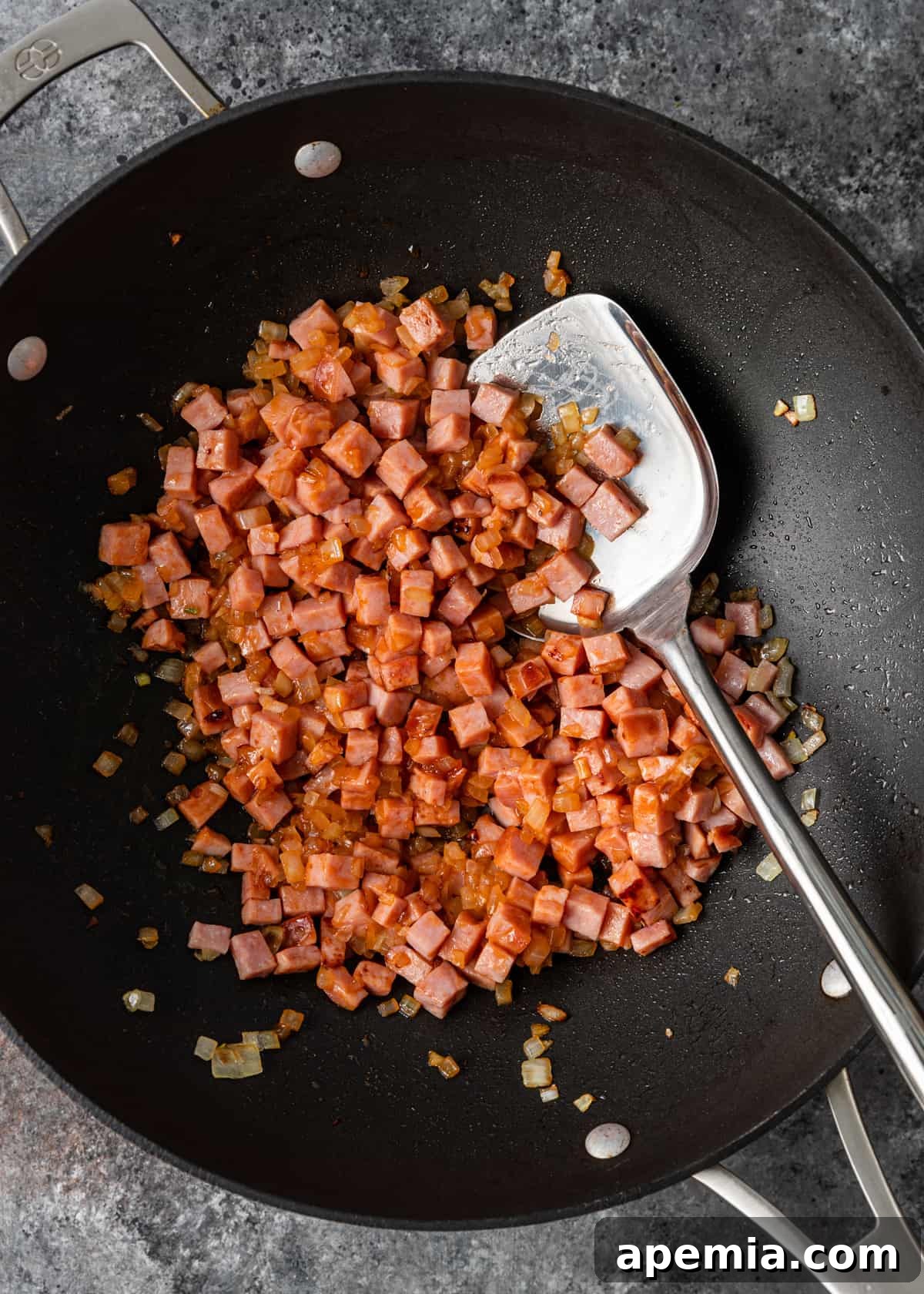
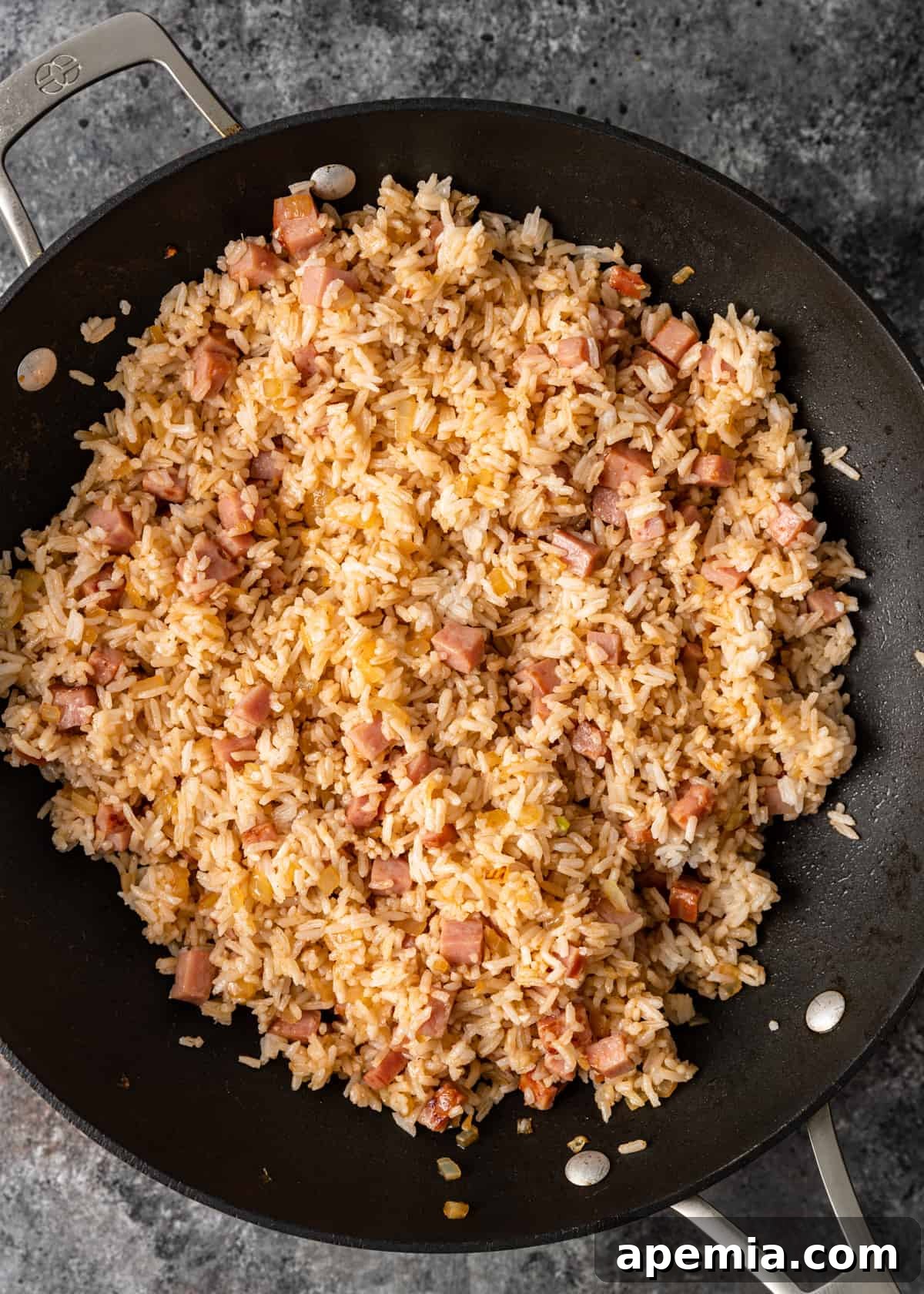
- Stir-Fry Your Aromatics and Pork Fillings: Heat your large wok or skillet over high heat until it’s very hot and you see a wisp of smoke rising from the surface. Add the specified 1 tablespoon of vegetable oil, swirling to coat the pan. Immediately add the diced yellow onion. Stir-fry vigorously for 1-2 minutes until the onion becomes translucent and wonderfully fragrant. Next, add the cubed Chinese BBQ pork (or your chosen substitute) and continue to stir-fry briefly for another 2 minutes to lightly caramelize the pork and deepen its already rich flavor.
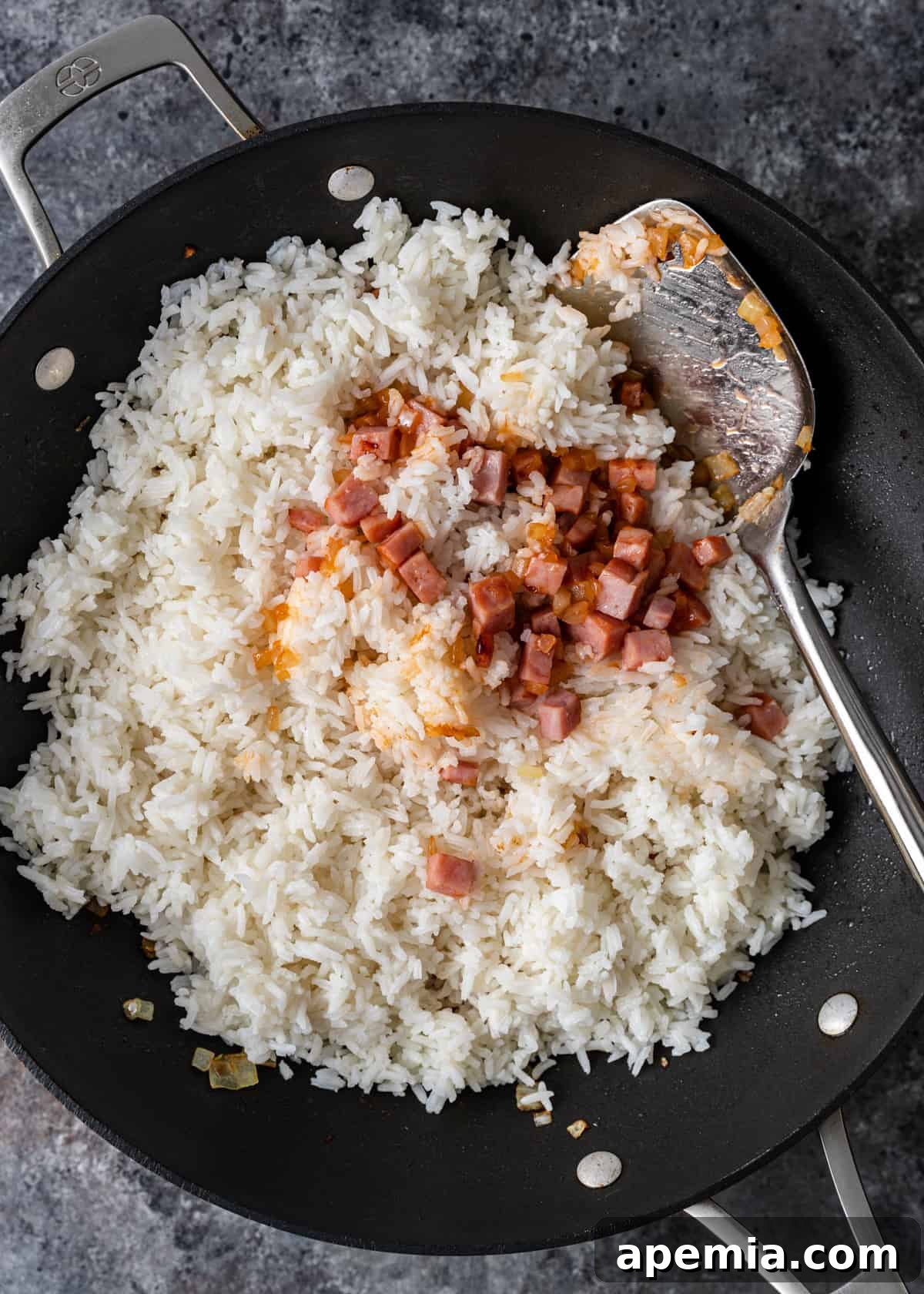
- Integrate and Fry the Rice: Add the cold, day-old rice to the wok. This is where the magic happens! Using a sturdy spatula or wooden spoon, vigorously toss and stir-fry the rice, pressing down gently to break up any remaining clumps and ensuring it combines well with the onions and pork. Continue to fry for 3-5 minutes, allowing the rice to heat through completely and some individual grains to develop a desirable slightly crispy, golden-brown exterior. Constant stirring prevents burning.
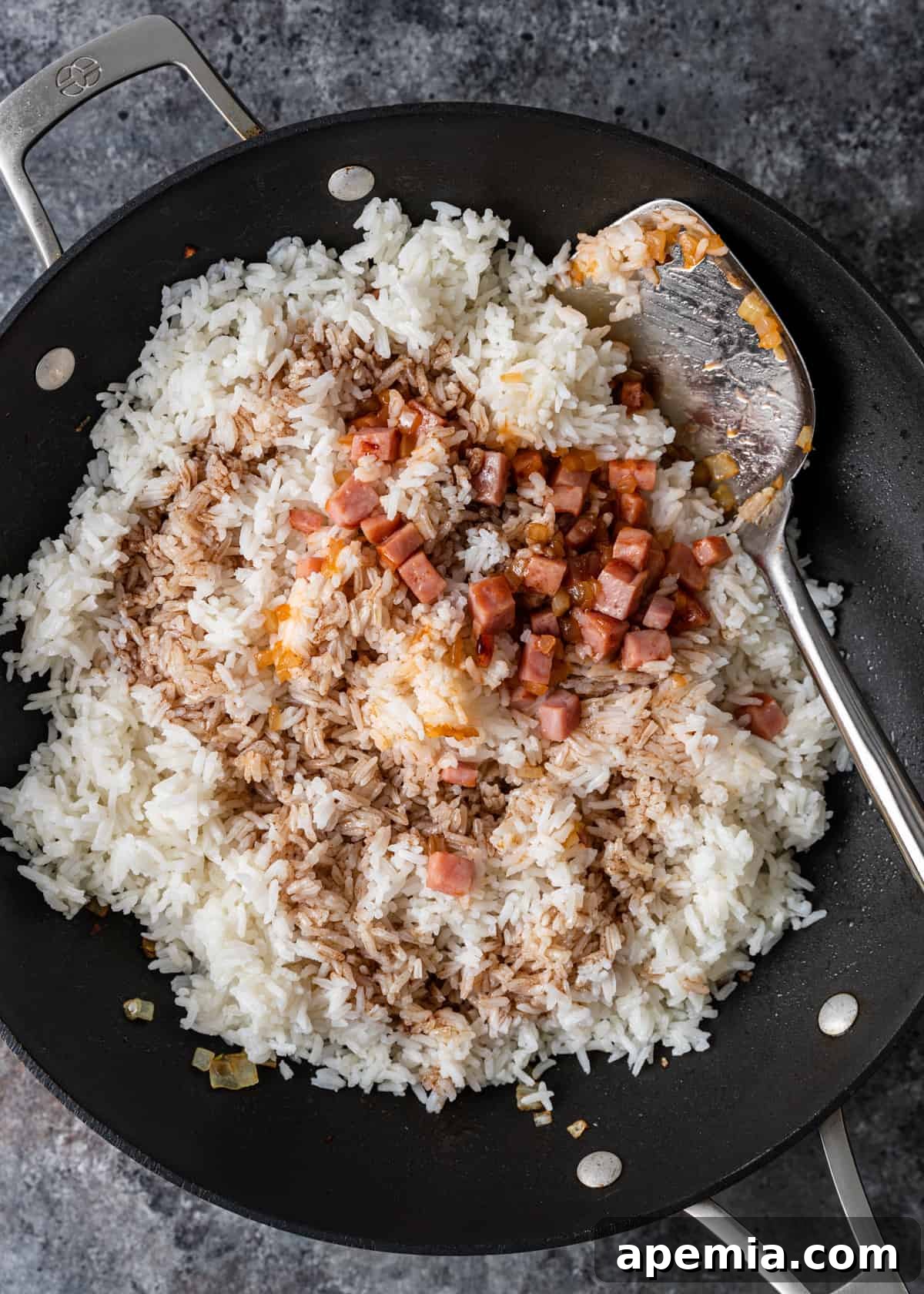
- Introduce the Sauce and Coat Evenly: Once the rice is heated and has begun to crisp, pour the pre-mixed sauce mixture directly over the rice in the wok. Continue to stir-fry energetically and quickly, tossing and mixing until every single grain of rice is evenly coated with the fragrant sauce. The rice should now take on a beautiful color and a tantalizing aroma. Ensure no dry spots remain.
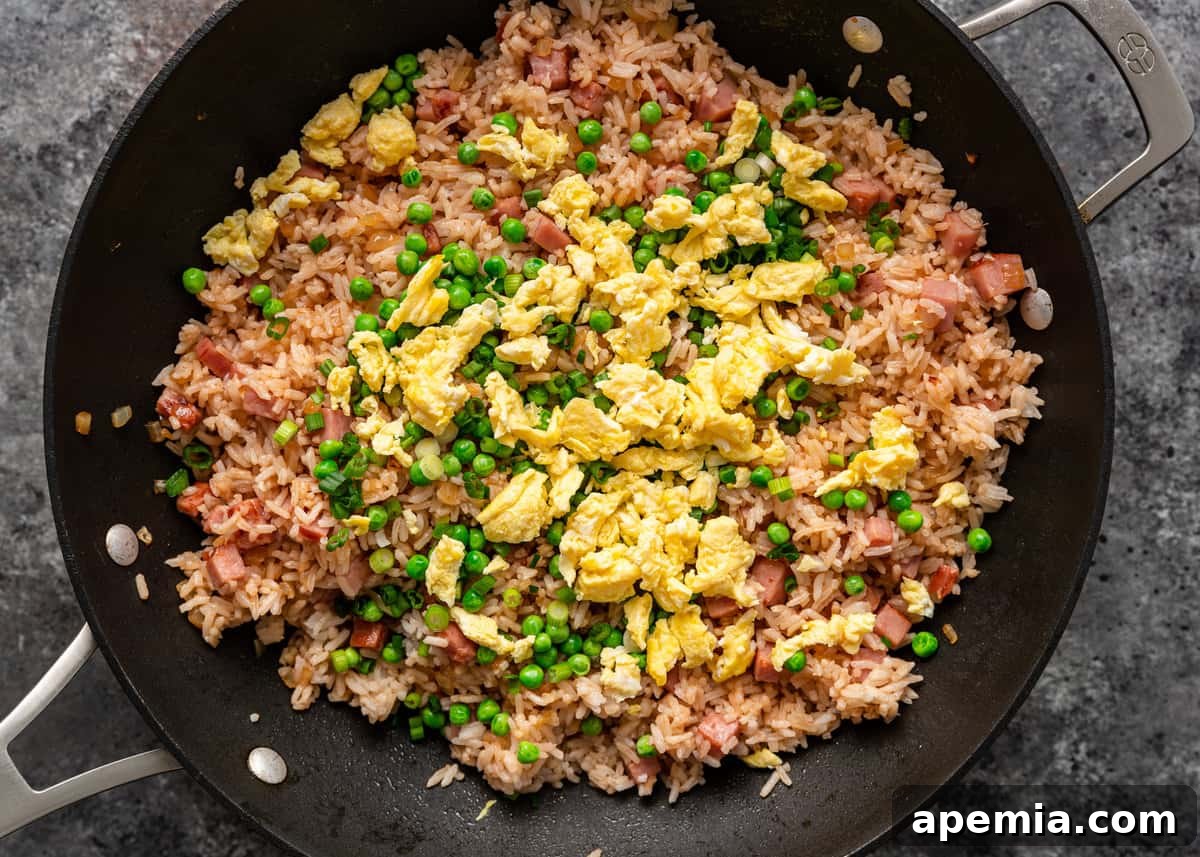
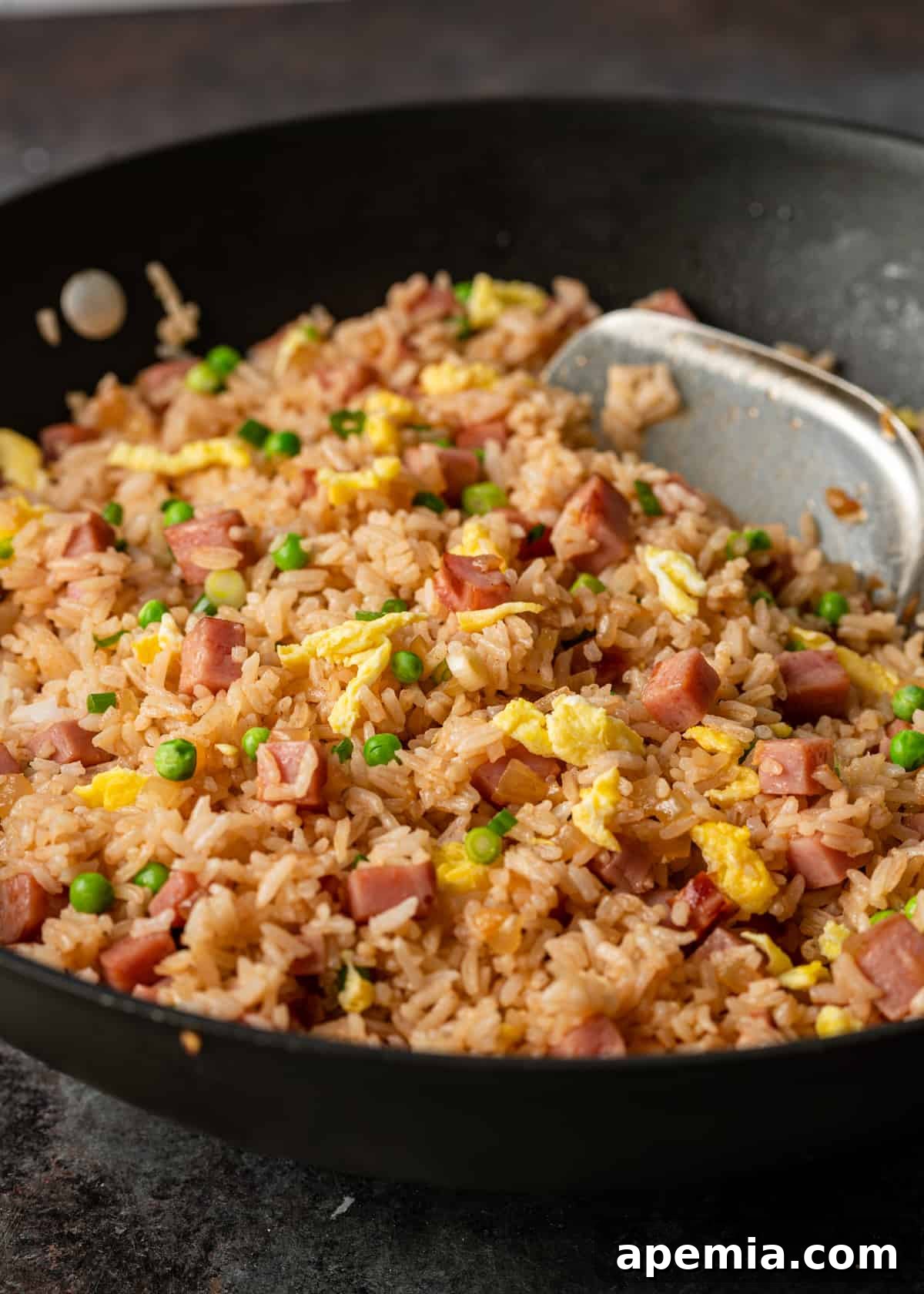
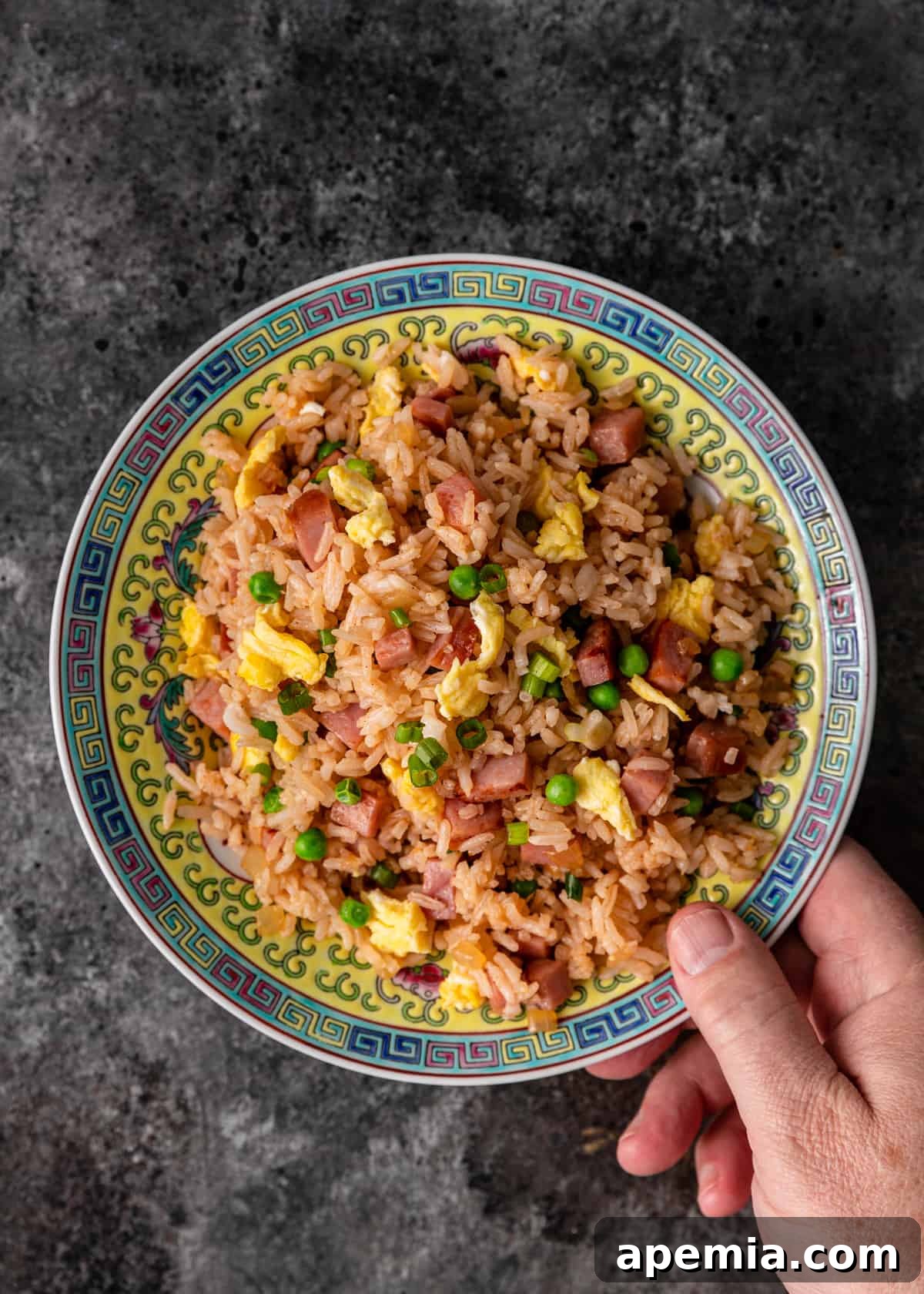
- Finish with Freshness and Serve Hot: Finally, add the frozen peas, chopped green onions, and the reserved scrambled eggs to the wok. Stir-fry for another 1-2 minutes, allowing the peas to warm through and all the ingredients to fully integrate and meld their flavors. Taste the fried rice and adjust seasoning if necessary (add a pinch more salt or a dash of soy sauce, if desired). Serve immediately while piping hot to enjoy the peak of its texture and flavor. Garnish with extra green onions if preferred.
Pro Tips for Perfect Fried Rice Every Time
Achieving truly exceptional fried rice is all about technique and a few crucial considerations. Follow these expert tips to ensure your homemade version rivals any restaurant favorite:
- Don’t Crowd the Pan: This is the golden rule of stir-frying and cannot be overstated. Overfilling your wok or skillet will dramatically drop the temperature of the cooking surface, causing ingredients to steam in their own moisture instead of frying. This inevitably leads to bland, soggy, and unappetizing results. If you’re cooking for a crowd or making a large batch, work in smaller, manageable batches to maintain consistently high heat and achieve that coveted crispy texture and “wok hei” flavor.
- High Heat is Your Friend (and Necessity): A searingly hot wok or skillet is absolutely essential for achieving “wok hei” – the elusive smoky, charred flavor that defines authentic and expertly prepared stir-fries. Ensure your pan is screaming hot, almost smoking, before adding any oil or ingredients. This rapid, intense heat seals in flavors and creates superior texture.
- Use the Right Oil with a High Smoke Point: For stir-frying, it’s crucial to select an oil that can withstand high temperatures without breaking down or burning. Vegetable oil, canola oil, and peanut oil are excellent choices due to their high smoke points and neutral flavors. Avoid olive oil or butter, which have lower smoke points and can easily burn, imparting an unpleasant taste to your dish.
- Prep Everything First (Mise en Place is Key!): Stir-frying is a fast-paced cooking method that requires your full attention. Before you even turn on the heat, have all your ingredients chopped, measured, and meticulously organized into small bowls, ready to go. This “mise en place” approach ensures a smooth, stress-free cooking experience and prevents ingredients from overcooking while you’re scrambling to chop the next item.
- Taste and Adjust Seasoning to Taste: The amount of saltiness from soy sauce can vary based on your preferred brand and personal preference, as can the impact of other spices. Always taste your fried rice at the very end of cooking, just before serving. Adjust the seasoning with a little more salt, soy sauce, or a dash of white pepper as needed to achieve your perfect flavor balance.
Recommended Tools for Achieving Wok Hei
Having the right equipment can significantly enhance your stir-frying experience and the overall quality of your pork fried rice. While not strictly necessary for every item, these tools will make the process smoother and more authentic:
- Wok or Large Heavy-Bottomed Skillet: A traditional carbon steel wok is ideal for stir-frying due to its sloped sides, which allow for efficient tossing and even heat distribution. Its seasoned surface also contributes to that coveted “wok hei.” However, if you don’t have a wok, a large, heavy-bottomed skillet (such as cast iron or a sturdy stainless steel pan) can work effectively, provided it offers enough surface area to avoid overcrowding and retains high heat well.
- Small Non-Stick Skillet: Perfect for quickly scrambling your eggs separately. A non-stick surface ensures easy cleanup and prevents eggs from sticking, allowing them to remain fluffy and delicate without interfering with the rice’s texture.
- Wooden Spoon or Wok Spatula: Essential for scooping, tossing, and flipping the rice without crushing the grains. A specialized wok spatula, typically made of stainless steel or wood with a flat, angled edge, is particularly effective for scraping the bottom of the wok and preventing sticking, while also being ergonomic for tossing.
- Prep Bowls (Mise en Place Bowls): Having all your ingredients prepped and portioned in small bowls before you start cooking is invaluable for the fast-paced nature of stir-frying. This organizational step will make the entire process smooth, efficient, and enjoyable, ensuring you can add ingredients at just the right time.
Serving Suggestions and Delicious Variations
Pork fried rice is an incredibly versatile dish that can proudly stand as the star of your meal or serve as a perfect, satisfying accompaniment to a larger Chinese feast. Its robust flavors make it suitable for a variety of culinary pairings.
- The Ultimate Takeout Spread: Elevate your home dining experience by serving this flavorful fried rice alongside an array of classic Chinese dishes. Consider the delightful tang of Sweet and Sour Chicken, the aromatic and crispy Chinese Five Spice Chicken, and the irresistible, bright flavors of Crispy Chinese Lemon Chicken for a spread that will truly rival any restaurant order!
- A Lighter Side: For a more balanced or lighter meal, pair your pork fried rice with a fresh and vibrant vegetable dish. A quick Bok Choy Stir Fry or a simple plate of steamed green beans or broccoli, perhaps with a dash of sesame oil, would make an excellent complement.
- Quick & Easy Lunch: Don’t forget that any leftovers from this delicious recipe make an absolutely superb and convenient next-day lunch! Pack it up for work or school for a satisfying and flavorful midday meal that tastes just as good the second time around.
- Protein Swaps: This recipe is incredibly adaptable to different dietary preferences or what you have on hand. Not a fan of pork? Simply substitute the char siu with diced chicken breast or thigh, succulent shrimp, thinly sliced beef, or even firm tofu for a vegetarian version. Ensure any substitute protein is cooked thoroughly before adding the rice.
- Veggie Boost: Feel free to customize your fried rice with additional vegetables beyond peas and onions. Diced carrots, corn kernels, crisp bean sprouts, water chestnuts, or thinly sliced bell peppers can add extra flavor, nutritional value, and delightful crunch. Add harder vegetables earlier in the stir-frying process to ensure they cook through.
- Spice It Up: For those who enjoy a kick of heat, a dash of chili oil, sriracha, or finely minced fresh chilies (like bird’s eye chilies) can be added during the final minutes of cooking or simply served on the side for individual preference.
Share this recipe on Pinterest!
Love this recipe? Share it with the world on Pinterest. Help others discover this amazing homemade pork fried rice!
Frequently Asked Questions About Pork Fried Rice
The magic of day-old rice lies in its significantly reduced moisture content. When freshly cooked, rice contains a high amount of surface moisture, which causes it to steam and clump together when stir-fried in a hot wok. Cold, day-old rice, however, has dried out slightly, allowing the individual grains to fry properly. This process yields that desirable slightly crispy texture, prevents the dish from becoming mushy, and ensures each grain remains distinct. This separation of grains is absolutely key to authentic fried rice.
Cooking the eggs separately ensures they remain soft, fluffy, and distinct as delicate curds within the fried rice. If raw eggs are added directly into the wok with the rice and other ingredients, they tend to coat the rice grains, creating a sticky or dull texture and preventing the individual grains from crisping up effectively. Pre-scrambling guarantees those beautiful, airy egg pieces that are a hallmark of great fried rice, adding a pleasant textural contrast without compromising the rice’s integrity.
Without a doubt, the biggest pitfall is **overcrowding the pan**. Whether it’s too much rice or too many other fillings added at once, an overcrowded wok or skillet drastically lowers the cooking temperature. Instead of stir-frying ingredients rapidly, they end up steaming in their own juices. This consistently results in a bland, soggy, and unappealing fried rice. Always work in smaller batches if necessary to maintain consistent high heat and achieve perfectly fried, distinct components that burst with flavor and texture.
For stir-frying, it’s crucial to use an oil with a high smoke point. Vegetable oil, canola oil, or peanut oil are all excellent choices. They can withstand the intense, high temperatures needed to properly fry the ingredients without breaking down, burning, or imparting an unpleasant flavor to your delicious dish. Avoid oils like extra virgin olive oil or butter, which have lower smoke points.
Absolutely! This recipe is incredibly versatile and easily adaptable. For a vegetarian version, simply omit the pork and increase the amount of vegetables, or add firm tofu or tempeh, stir-fried until golden and crispy. For other protein options, swap the char siu with diced chicken, succulent shrimp, or thinly sliced beef. Ensure any substitute protein is cooked thoroughly before adding the rice to the wok, following the same high-heat stir-frying principles.
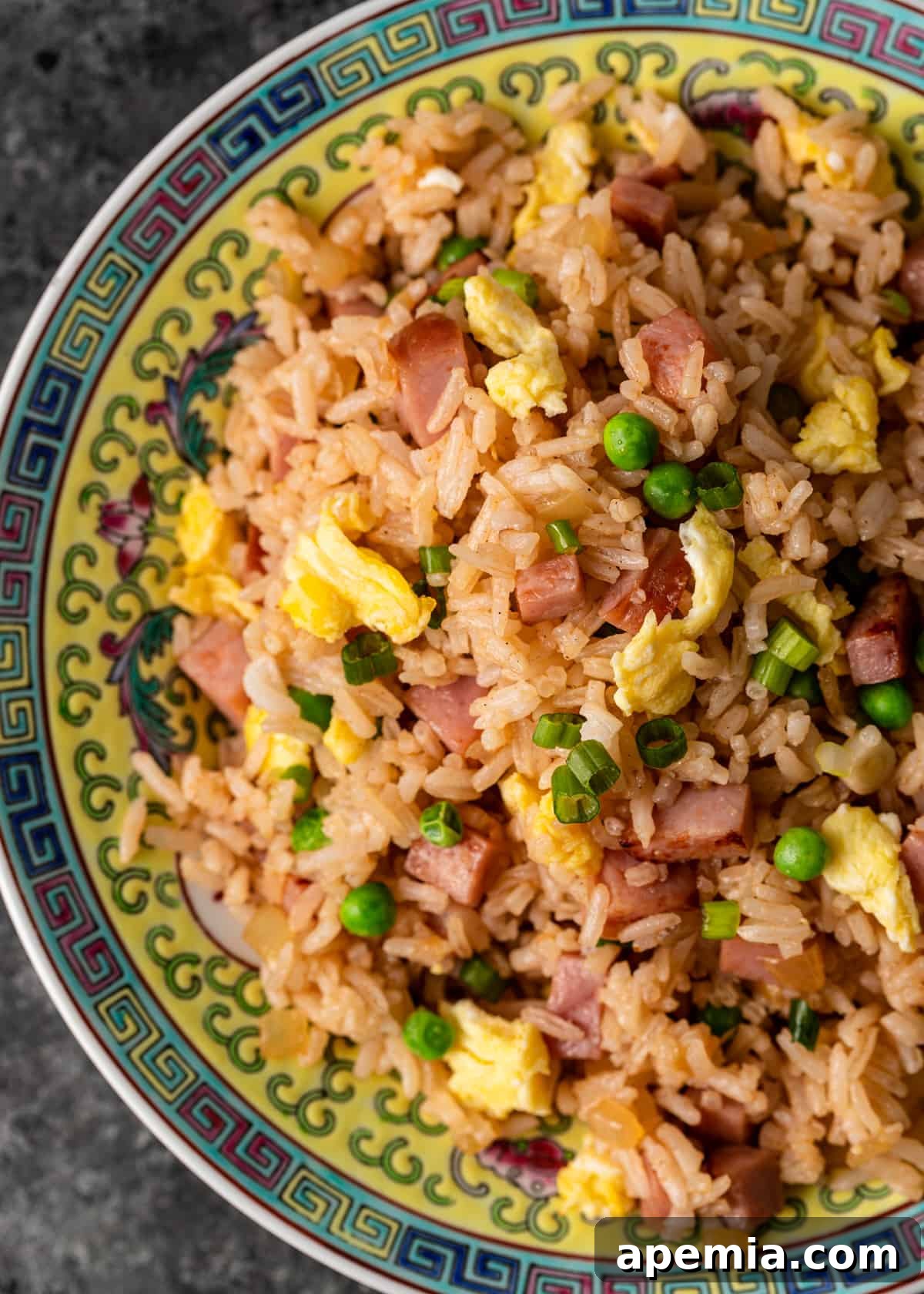
The Ultimate Pork Fried Rice Recipe
This recipe delivers authentic, restaurant-quality pork fried rice right in your own kitchen. Enjoy crispy rice, tender char siu (or your chosen substitute), fluffy eggs, and vibrant vegetables all coated in a perfectly balanced savory sauce.
Recipe Summary
- Yields: 6 servings
- Prep time: 15 minutes
- Cook time: 30 minutes
- Total time: 45 minutes
- Rating: 5 out of 5 stars (from 1 vote)
Ingredients
For the Rice:
- 2 cups jasmine rice (1-day old cooked rice is best; yields approximately 4 cups cooked)
- 1 tsp vegetable oil (for cooking rice, optional)
- 1/2 teaspoon kosher salt (for cooking rice, optional)
For the Savory Sauce:
- 1 tablespoon soy sauce
- 1 teaspoon honey
- 1 teaspoon sesame oil
- 1 teaspoon Shaoxing wine or dry sherry
- 1 teaspoon rice vinegar
- 1 teaspoon kosher salt
- 1/4 teaspoon white pepper
- 1/8 teaspoon Chinese Five Spice
For the Flavorful Fillings:
- 1 tablespoon vegetable oil (for stir-frying)
- 1 medium yellow onion, diced
- 1 lb Chinese BBQ pork (Char Siu), cubed (See Note 1 below for substitution)
- 1/2 cup frozen peas
- 2 green onions, chopped
- 2 eggs, scrambled
Instructions
- Prepare the Rice: Cook your jasmine rice per your favorite method to yield about 4 cups cooked rice. Allow it to cool completely, then spread it thinly on a baking sheet and refrigerate for at least 6 hours, or ideally overnight. Before you begin stir-frying, use your hands or a fork to break up any clumps, ensuring the rice grains are separate. (Day-old rice is crucial for optimal texture in fried rice.)
- Mix the Sauce: In a small bowl, whisk together the soy sauce, honey, sesame oil, Shaoxing wine (or dry sherry), rice vinegar, kosher salt, white pepper, and Chinese Five Spice until well combined. Set this sauce mixture aside.
- Scramble the Eggs: Heat a small skillet with a drop or two of vegetable oil over medium heat. Add the beaten eggs and cook gently, stirring with a spoon to break them into soft, fluffy curds. Once cooked, transfer the scrambled eggs to a plate and set aside.
- Stir-Fry Aromatics and Pork: Heat a large wok or skillet over high heat until it’s very hot and slightly smoking. Add 1 tablespoon of vegetable oil. Add the diced yellow onion and stir-fry for 1-2 minutes until it becomes translucent and fragrant. Next, add the cubed Chinese BBQ pork (Char Siu) or your chosen substitute and stir-fry for another 2 minutes to lightly caramelize the pork.
- Add and Fry the Rice: Add the cold, day-old rice to the wok. Using a wooden spoon or wok spatula, vigorously toss and stir-fry the rice, pressing down gently to break up any remaining clumps. Continue to fry for 3-5 minutes until the rice is heated through and some grains begin to crisp slightly.
- Incorporate the Sauce: Pour the prepared sauce mixture directly over the rice in the wok. Continue to stir-fry energetically, tossing and mixing until every grain of rice is evenly coated with the fragrant sauce.
- Finish and Serve: Finally, add the frozen peas, chopped green onions, and the reserved scrambled eggs to the wok. Stir-fry for another 1-2 minutes, allowing the peas to warm and all ingredients to fully integrate. Taste the fried rice and adjust seasoning if necessary (add a pinch more salt or a dash of soy sauce). Serve immediately while hot for the best experience.
Notes
- Chinese BBQ Pork (Char Siu) Substitute: If authentic char siu is unavailable, you can substitute 1 pound of cubed smoked boneless cooked ham. For enhanced flavor, toss the ham with 1 tablespoon of your preferred BBQ sauce before adding it to the wok in Step 4.
Nutrition Information (Estimated Per Serving)
Calories: 463 kcal | Carbohydrates: 55g | Protein: 24g | Fat: 10g | Saturated Fat: 5g | Polyunsaturated Fat: 2g | Monounsaturated Fat: 7g | Trans Fat: 0.01g | Cholesterol: 101mg | Sodium: 1710mg | Potassium: 376mg | Fiber: 2g | Sugar: 3g | Vitamin A: 436 IU | Vitamin C: 4mg | Calcium: 44mg | Iron: 2mg
The information shown is an estimate provided by an online nutrition calculator. It should not be considered a substitute for a professional nutritionist’s advice.
Recipe Details
- Course: Side dishes, Main Course
- Cuisine: Chinese
- Author: Kevin
Have You Made This Recipe? Let Me Know on Instagram!
Tag @keviniscooking or use hashtag #keviniscooking! We love to see your delicious creations!
Storage and Reheating Leftovers for Maximum Flavor
Proper storage is key to ensuring your delicious pork fried rice remains fresh and tasty for future enjoyment. Handle leftovers correctly to maintain quality and safety.
- Storage: Allow any leftover fried rice to cool completely at room temperature, but promptly (within two hours of cooking) transfer it to an airtight container. Refrigerate immediately. It will keep well in the refrigerator for up to 3-4 days. Ensure it’s stored separately from raw meats to prevent cross-contamination.
- Freezing: For longer storage, fried rice can be successfully frozen. Spread the cooled rice in a single layer on a baking sheet and freeze until solid (this prevents the grains from clumping together). Once frozen, transfer the solid rice to a freezer-safe bag or an airtight container. It can be frozen for up to 1-2 months. For best results, thaw overnight in the refrigerator before reheating.
- Reheating: The best way to reheat fried rice to maintain its desirable crispy texture is in a skillet or wok over medium-high heat with a tiny bit of oil. Break up any clumps and stir-fry for a few minutes until heated through and some of the rice grains begin to crisp up again. This method brings back much of its original texture and flavor. Alternatively, you can microwave it, but be aware that it might lose some of its crispy texture and become softer.
Conclusion: Your Journey to Perfect Homemade Fried Rice
Making authentic, restaurant-quality pork fried rice at home is not only achievable but incredibly rewarding. By meticulously following these detailed steps and embracing the key principles of using day-old rice and cooking with consistently high heat, you’ll be able to create a dish that’s bursting with flavor, rich in texture, and deeply satisfying. This recipe offers a perfect blend of savory char siu, fluffy eggs, and crisp vegetables, all coated in a classic sauce that evokes the best of Cantonese cuisine.
Whether it’s for a quick weeknight dinner that comes together faster than takeout, a festive family meal, or an impressive homemade “takeout” spread, this pork fried rice will quickly become a cherished favorite in your culinary repertoire. Don’t hesitate to experiment with variations, adjust seasonings to your personal preference, and make it truly your own. The joy of cooking and savoring a homemade classic is truly unmatched. Happy cooking and enjoy every delicious bite!