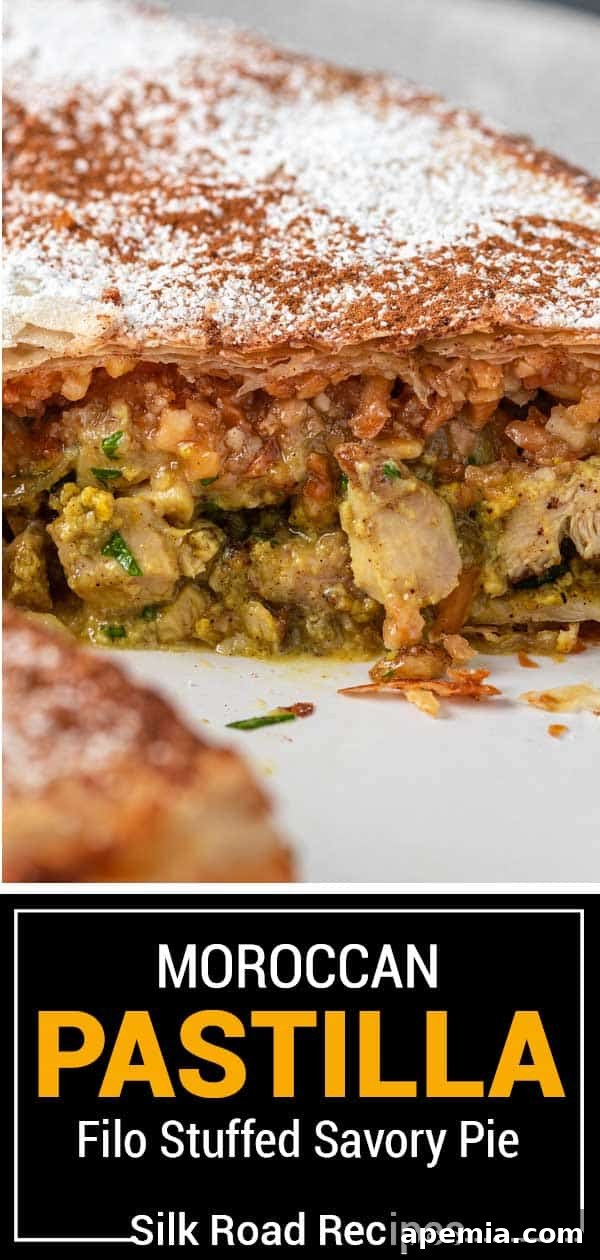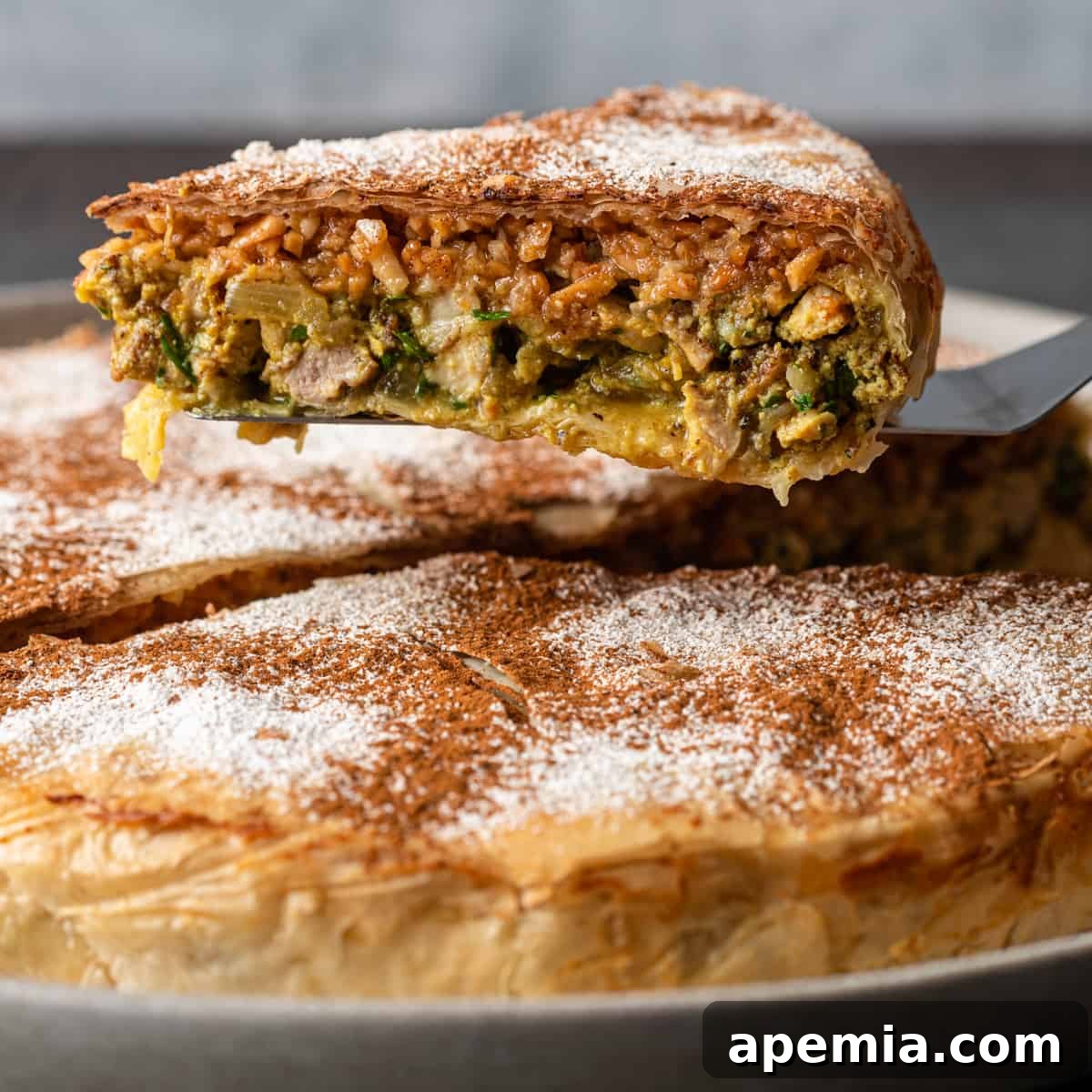
Pastilla is an iconic Moroccan delicacy, a dish that masterfully blends sweet and savory flavors into an unforgettable culinary experience. Imagine biting into layers of exquisitely buttery, golden-brown filo pastry, revealing a rich filling of tender, fragrant chicken harmoniously combined with sweet, spiced almonds. Each mouthful is a symphony of textures and tastes, where the warmth of North African spices like saffron, cinnamon, and Ras el Hanout dances on your palate. While its preparation might seem elaborate, the process is surprisingly straightforward, culminating in a spectacular dish that is truly more than worth every moment spent.
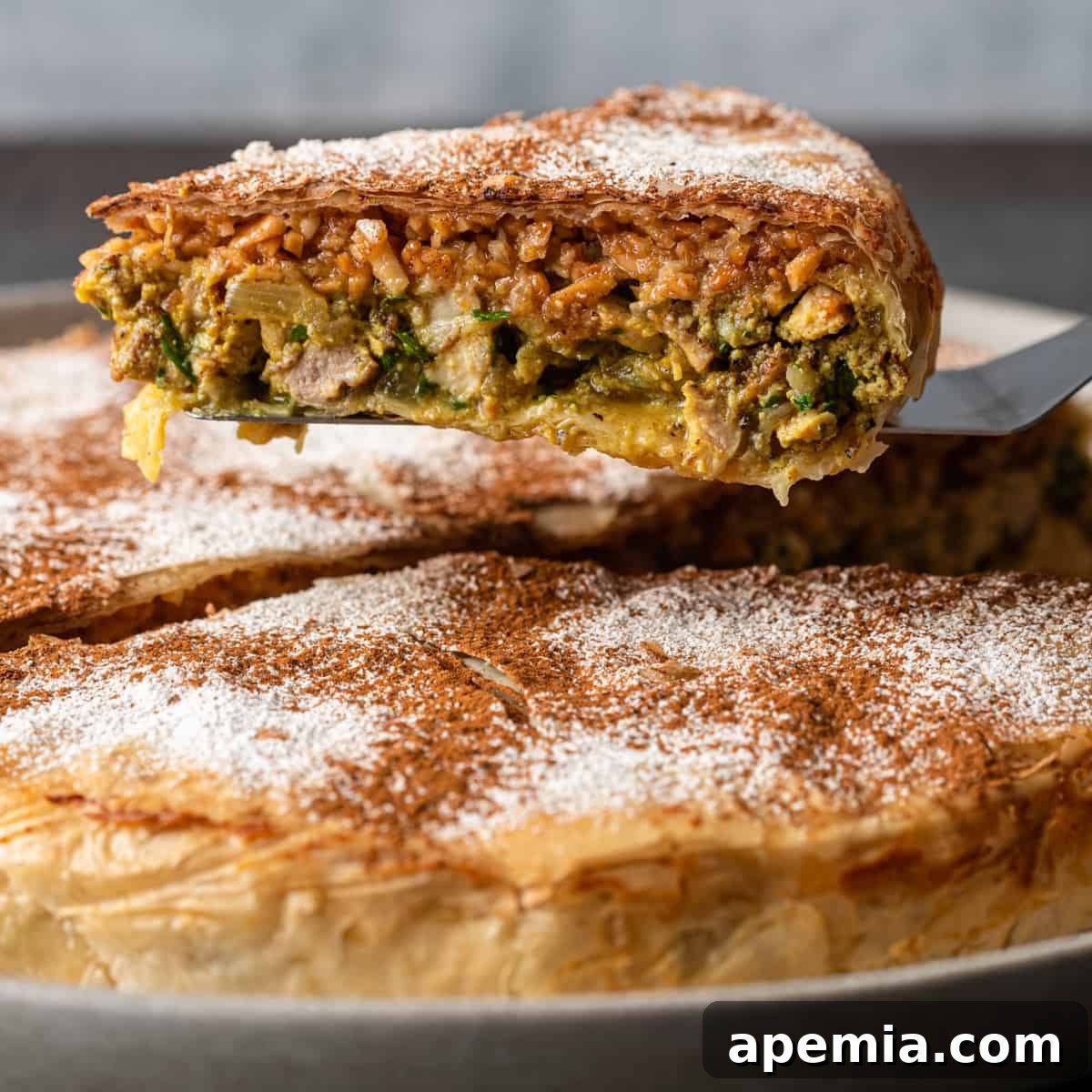
This authentic Moroccan Pastilla recipe offers a unique and incredibly addictive rustic charm. It’s a golden-brown pot pie that might initially surprise you with its fusion of sweet toasted almonds and savory, succulent chicken. This combination, though unconventional to some, creates an intensely delicious and balanced profile that truly needs to be tasted to be believed. It stands apart from typical savory pies, inviting you on a flavorful journey.
Far beyond the familiar chicken pot pie, Pastilla is elevated by being simmered in an array of captivating North African spices. Think aromatic Ras el Hanout, comforting cinnamon, vibrant turmeric, and luxurious saffron. These incredible spices infuse every fiber of the chicken and every crumb of the almond filling, releasing their fragrant warmth with each delicate, flaky bite. The result is a truly exotic and comforting dish perfect for special occasions or an adventurous weeknight meal.
Table of Contents
- Mastering Filo Dough: Essential Tips for Success
- Ingredient Deep Dive: Notes and Smart Substitutions
- Crafting the Sweet Almond Filling for Pastilla
- Preparing the Savory Chicken Filling for Pastilla
- Assembling and Baking Your Moroccan Pastilla
- Recommended Kitchen Tools for Pastilla
- Storing and Reheating Your Delicious Pastilla
- Frequently Asked Questions About Pastilla
- Authentic Moroccan Pastilla Recipe Card
After creating this magnificent pie, you might find yourself with some extra filo dough. Don’t let it go to waste! Refrigerate the unused sheets for future culinary adventures. You can transform them into delightful Greek Tiropita (cheese pie), savory Spanakopita triangles, or even a sweet and sticky Baklava. The versatility of filo ensures your efforts in the kitchen continue to yield delicious results.
We’ve got an exciting journey ahead, covering every aspect of preparing this beloved Moroccan dish. So, roll up your sleeves and let’s dive into the art of making Pastilla!
Chef’s Top Tips
Mastering Filo Dough: Essential Tips for Success
Working with filo (also spelled phyllo) dough can seem intimidating at first, but with these simple tips, you’ll master it in no time. Its delicate nature is key to the signature flakiness of Pastilla.
Keep It Covered and Damp – Filo dough has a notorious tendency to dry out incredibly fast, becoming brittle and prone to cracking. To prevent this, always keep the sheets you’re not actively working with covered under a lightly damp kitchen towel. This maintains their moisture and elasticity, making them pliable and easy to handle.
Handle with Care and Don’t Panic – Filo is exceptionally thin and tears very easily. Use a light touch when separating sheets and brushing with butter or oil. If a sheet rips, don’t fret! It happens to everyone. Simply layer another piece on top, and once baked, the tears will be completely invisible within the many crispy layers of your Pastilla.
Prep Everything Before You Start – Efficiency is your friend when working with filo. Have all your fillings ready, butter melted, and workspace organized before you even open the package of dough. Work swiftly but without rushing, applying just enough melted butter between layers for that glorious crispy, golden finish. Avoid drowning it in butter; a light, even coat is perfect for achieving the desired texture without making the pie greasy.
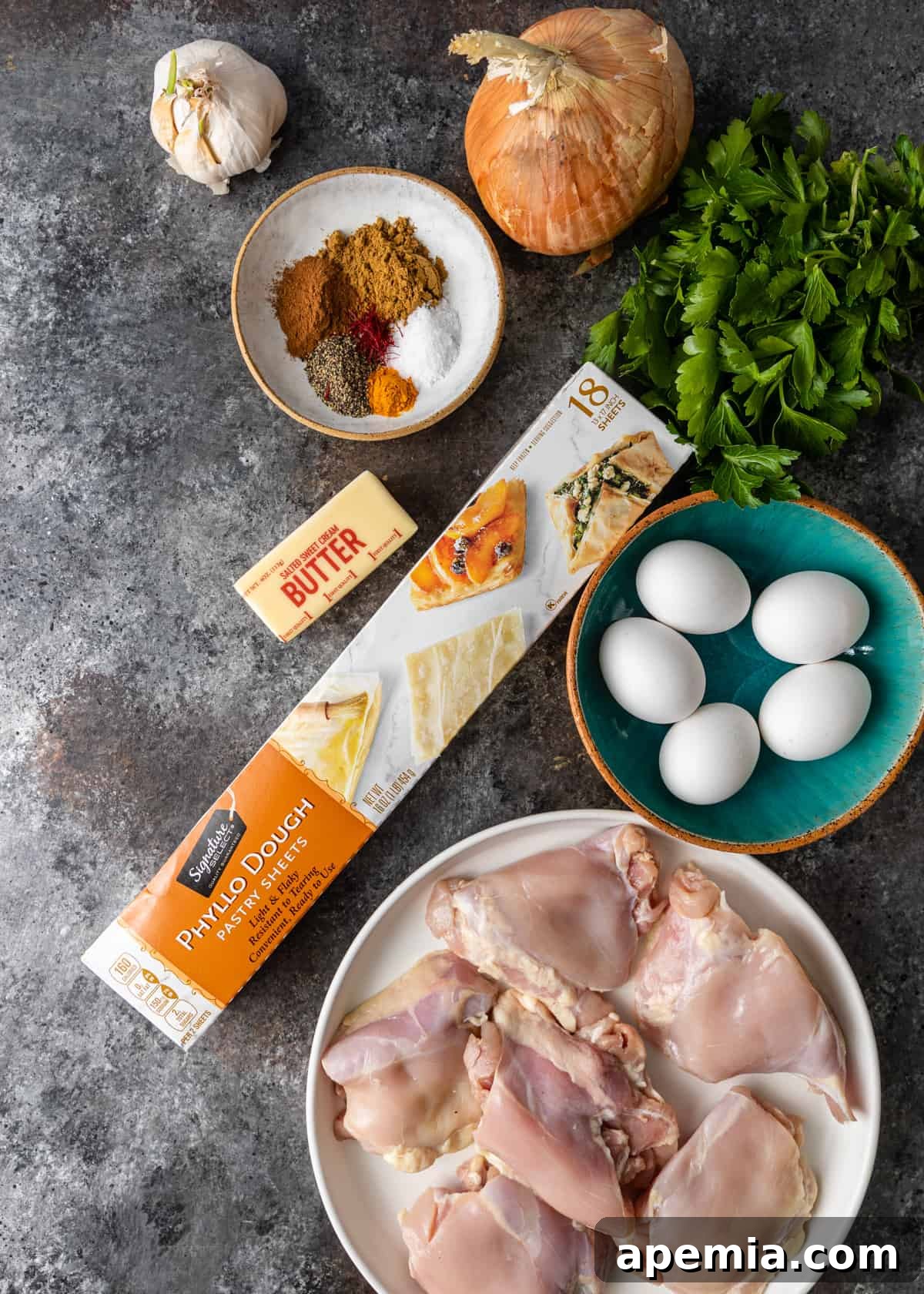
Ingredient Deep Dive: Notes and Smart Substitutions
(For precise quantities and a complete list, please refer to the recipe card below)
- Filo Sheets – Traditionally, Moroccan Pastilla is crafted using a special dough called warqa, which is even thinner and more delicate than filo. If you have access to warqa, it will lend an even more authentic touch. However, readily available filo pastry works exceptionally well and yields fantastic results, making this recipe accessible to all home cooks. Look for good quality, fresh filo for the best outcome.
- Butter – Butter is fundamental to achieving the signature crispiness and rich flavor of Pastilla’s pastry layers. We use a generous amount to ensure each filo sheet browns beautifully and contributes to the overall structural integrity and taste of the pie. Salted butter adds a subtle depth, but unsalted can be used if you prefer to control the salt content precisely.
- Almond Filling – The delightful bottom layer of our Pastilla is a sweet and textural marvel. It’s made from blanched, toasted almonds, which are then finely blended. The blend incorporates warm cinnamon, fragrant orange blossom water for a floral note, fine powdered sugar, and a touch of softened butter to bind it into a luscious, crumbly mixture. For an extra aromatic touch, a splash of rose water can be substituted for or added alongside orange blossom water.
- Chicken Filling – Our savory core is a tender, deeply flavorful chicken mixture. It features succulent boneless, skinless chicken thighs, known for their juiciness, slow-cooked with aromatic yellow onions and pungent garlic. This rich blend is then gently bound together with whisked eggs, creating a cohesive and moist filling that contrasts beautifully with the almond layer.
- Ras el Hanout – This exceptional Moroccan spice blend, whose name translates to “head of the shop” (implying the best spices a merchant has to offer), is the heart of Pastilla’s distinctive flavor. It’s a complex and fragrant mix, often containing dozens of spices. Our blend includes warm notes of cinnamon, cloves, and cardamom, balanced with lighter, more exotic hints of lavender, mint, and rose petals. It delivers a unique profile that is simultaneously sweet, savory, and subtly spicy, making this Pastilla truly irresistible. Don’t skip this ingredient if you want an authentic taste; look for a reputable source.
- Additional Seasonings – Beyond Ras el Hanout, Pastilla features several other common North African spices and fresh herbs that build a vibrant, smoky, and layered flavor profile:
- Ground Cinnamon: Essential for both sweet and savory elements, bridging the two distinct fillings.
- Ground Turmeric: Provides a beautiful golden hue to the chicken and a subtle earthy warmth.
- Saffron Threads: The most prized spice, saffron imparts a delicate floral aroma and a rich golden color to the chicken filling, elevating the dish to a luxurious level.
- Fresh Parsley: Adds a burst of freshness and a touch of herbaceousness that brightens the rich flavors of the chicken.
- Kosher Salt & Black Pepper: Fundamental for seasoning and enhancing all the other flavors to perfection.
Crafting the Sweet Almond Filling for Pastilla
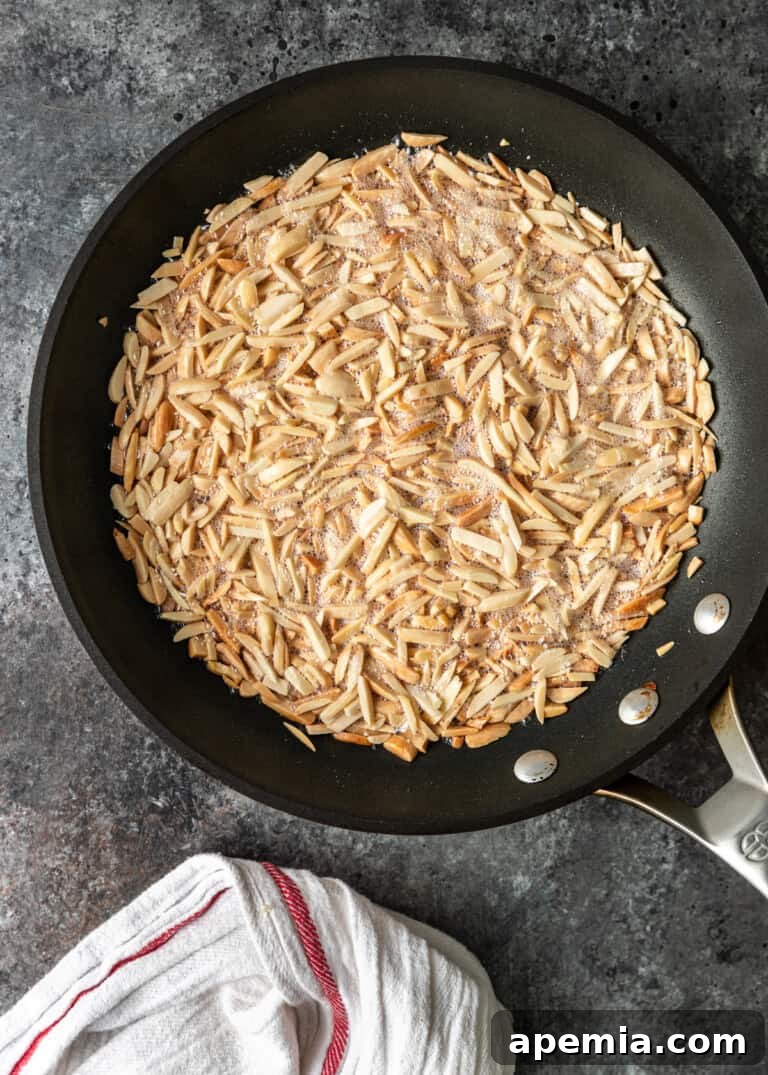
- Toast the Almonds to Perfection. Begin by heating a generous amount of vegetable oil in a skillet over medium heat. Add your blanched and slivered almonds, stirring continuously. Toast them until they achieve a beautiful golden-brown color and become fragrant. This step is crucial for developing their nutty depth. Carefully remove the toasted almonds with a slotted spoon, allowing excess oil to drain on paper towels. Reserve the oil in the skillet for later use with the chicken. Let the almonds cool slightly.
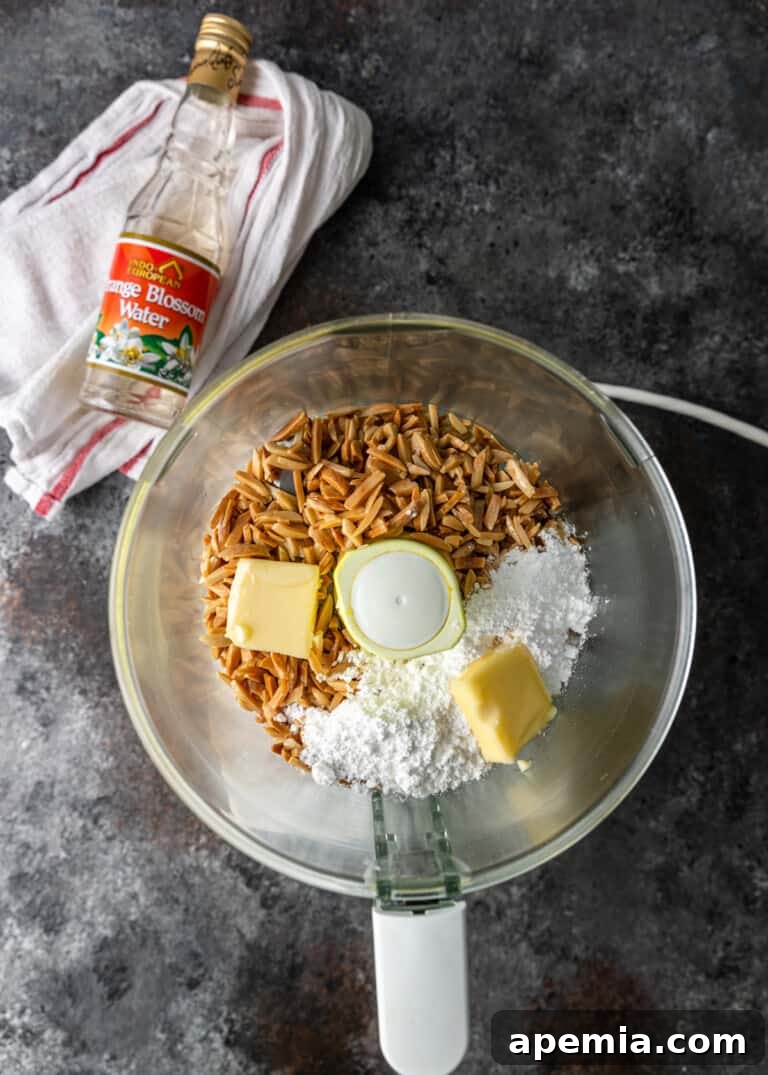
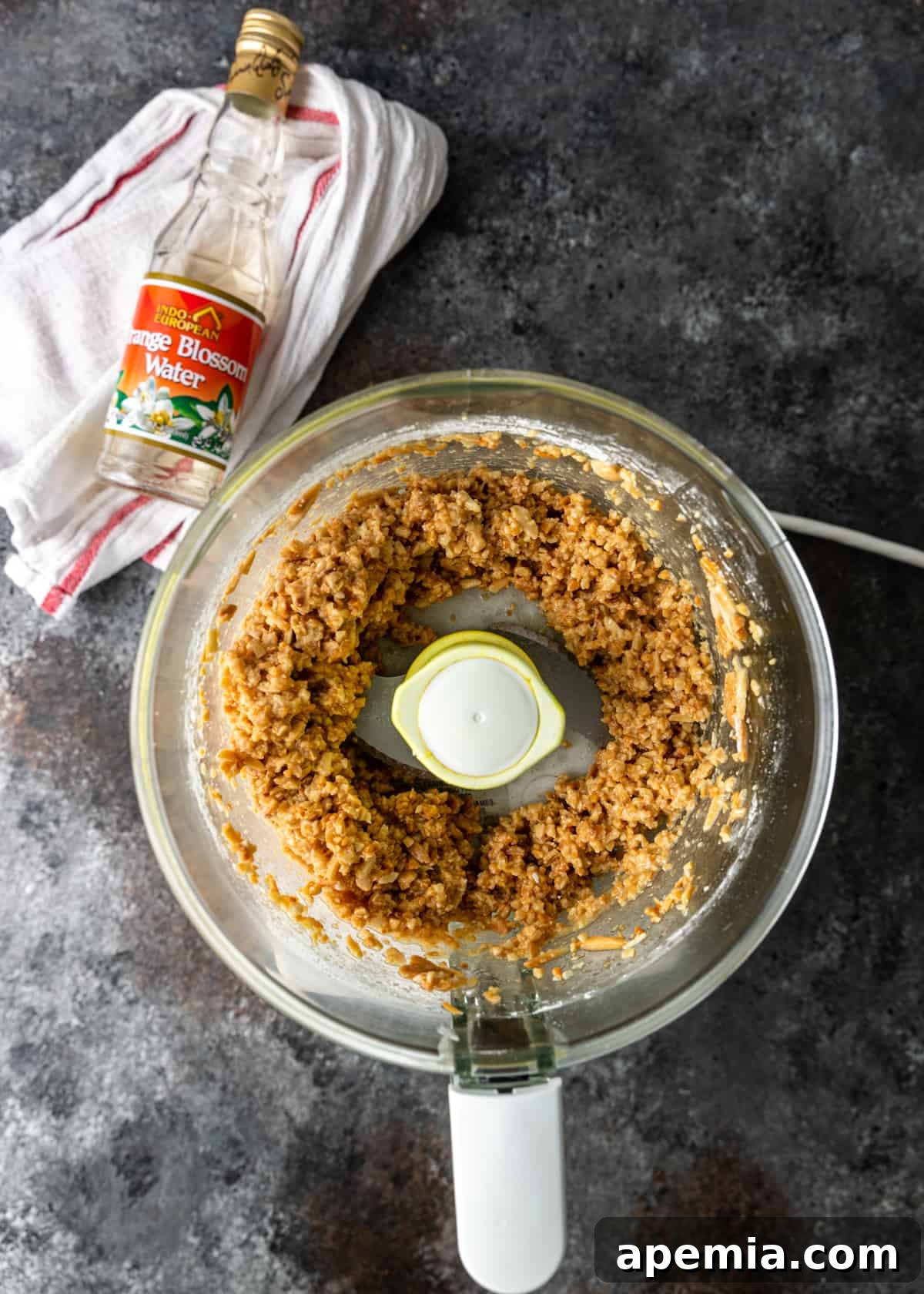
- Blend to a Loose Crumb. Once cooled, transfer the toasted almonds to a food processor. Add the remaining almond filling ingredients: powdered sugar for sweetness, cinnamon for warmth, a delicate splash of orange blossom water for its distinct aroma, and softened butter to bring it all together. Pulse the mixture in short bursts until it forms a loose, wet crumb texture. Be careful not to over-process; you want a rustic texture, not a paste. Set this aromatic filling aside while you prepare the chicken.
Preparing the Savory Chicken Filling for Pastilla
- Season & Marinate the Meat for Flavor. In a small bowl, whisk together the vibrant spices for the chicken filling: Ras el Hanout, ground cinnamon, kosher salt, black pepper, turmeric, and delicate saffron threads. Place your boneless, skinless chicken thighs into a sturdy Ziploc bag. Pour the prepared spice mixture over the chicken. Seal the bag tightly and toss thoroughly to coat, ensuring the aromatic spices are massaged deeply into the meat. This brief marination allows the flavors to truly penetrate the chicken.
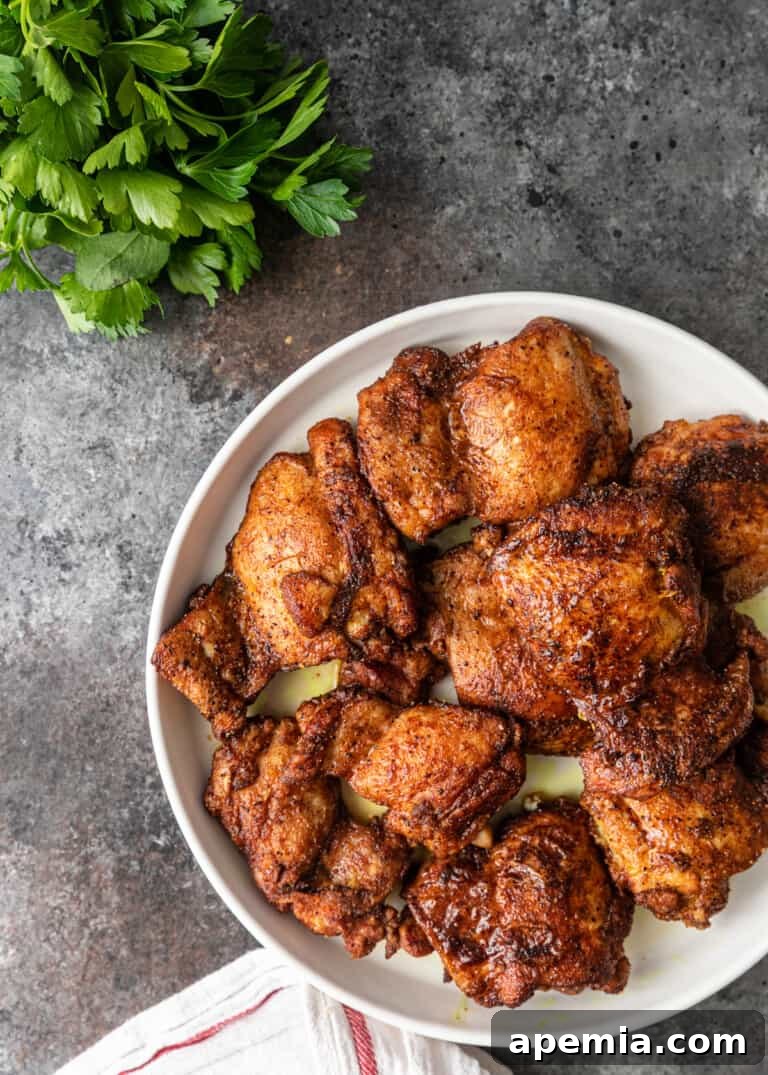
- Brown the Chicken for Depth. Reheat the reserved oil from toasting the almonds in the same skillet over medium-high heat, adding an extra tablespoon of fresh oil if needed. Carefully add the seasoned chicken thighs to the hot skillet and brown them for approximately 6 minutes on each side, aiming for a beautiful golden crust. This step develops rich flavor and color. Remove the browned chicken from the skillet and set it aside on a plate to cool. Once it’s cool enough to handle comfortably, either dice the chicken into small pieces or shred it using two forks.
- Sauté Aromatics and Combine with Chicken. Reduce the heat to medium in the same skillet. Add the finely sliced onions and minced garlic. Sauté them gently until they are softened and translucent, becoming fragrant and slightly sweet. Return the diced or shredded chicken to the skillet. Add the fresh chopped parsley. Stir everything together well, allowing the flavors to meld, and continue to cook for about 10 minutes, or until the chicken is fully cooked through and wonderfully aromatic. Taste and adjust seasoning with additional salt or pepper as desired.
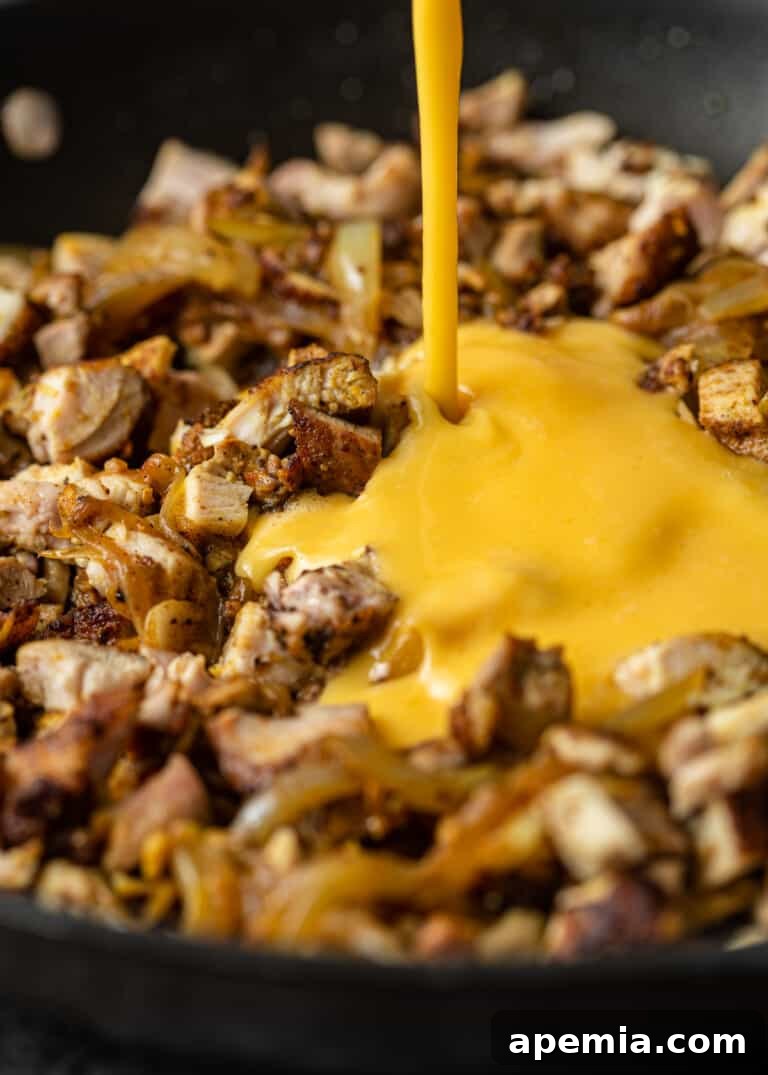
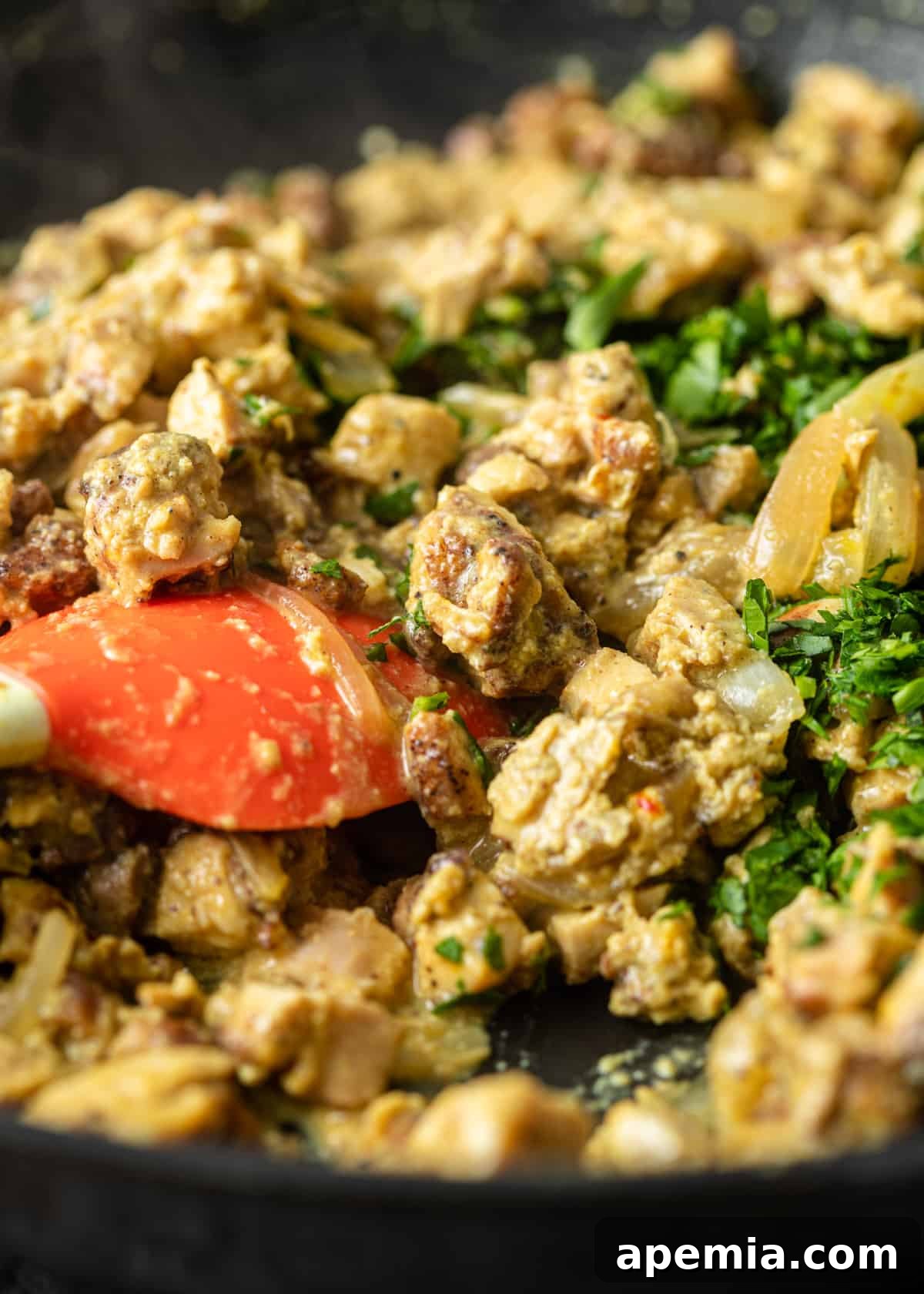
- Bind with Eggs for Richness. In a separate bowl, whisk together four of your eggs until well combined. Lower the heat under the skillet to low. Slowly pour the whisked eggs over the chicken and onion mixture, stirring constantly and gently. The eggs will gradually thicken and coat the chicken, creating a cohesive, moist, and savory filling. Continue to stir until the eggs are just set, but still very tender. Transfer this flavorful chicken filling to a plate or shallow dish to cool completely before assembly.
Assembling and Baking Your Moroccan Pastilla
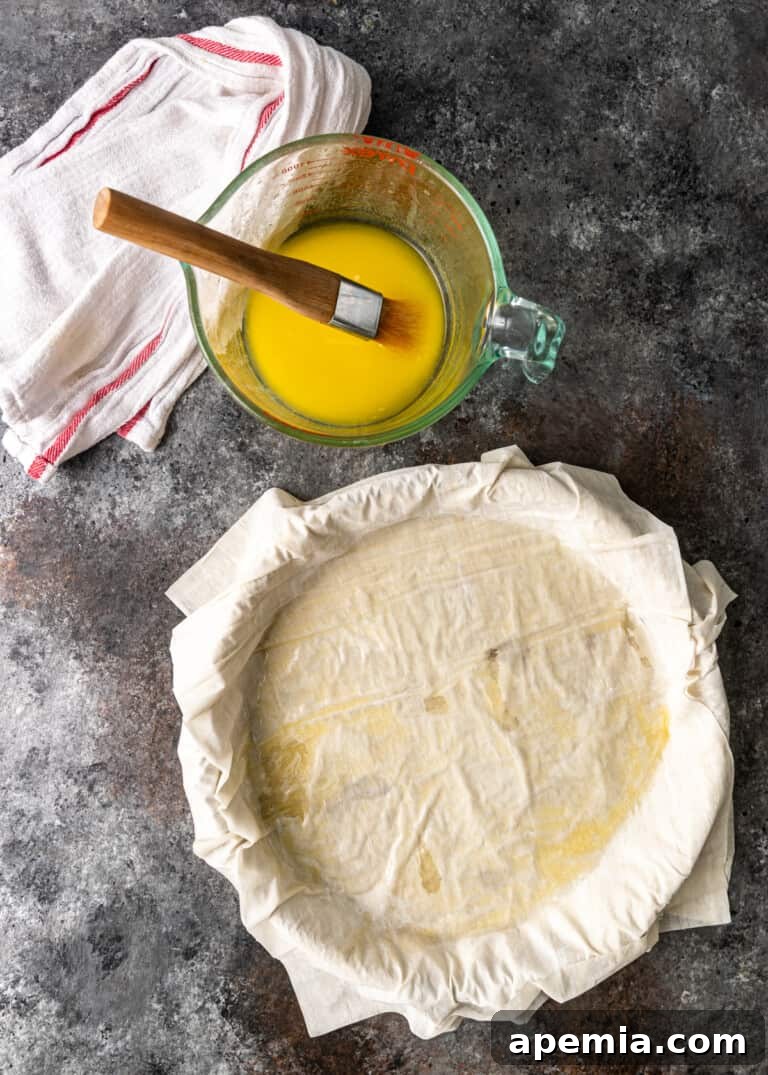
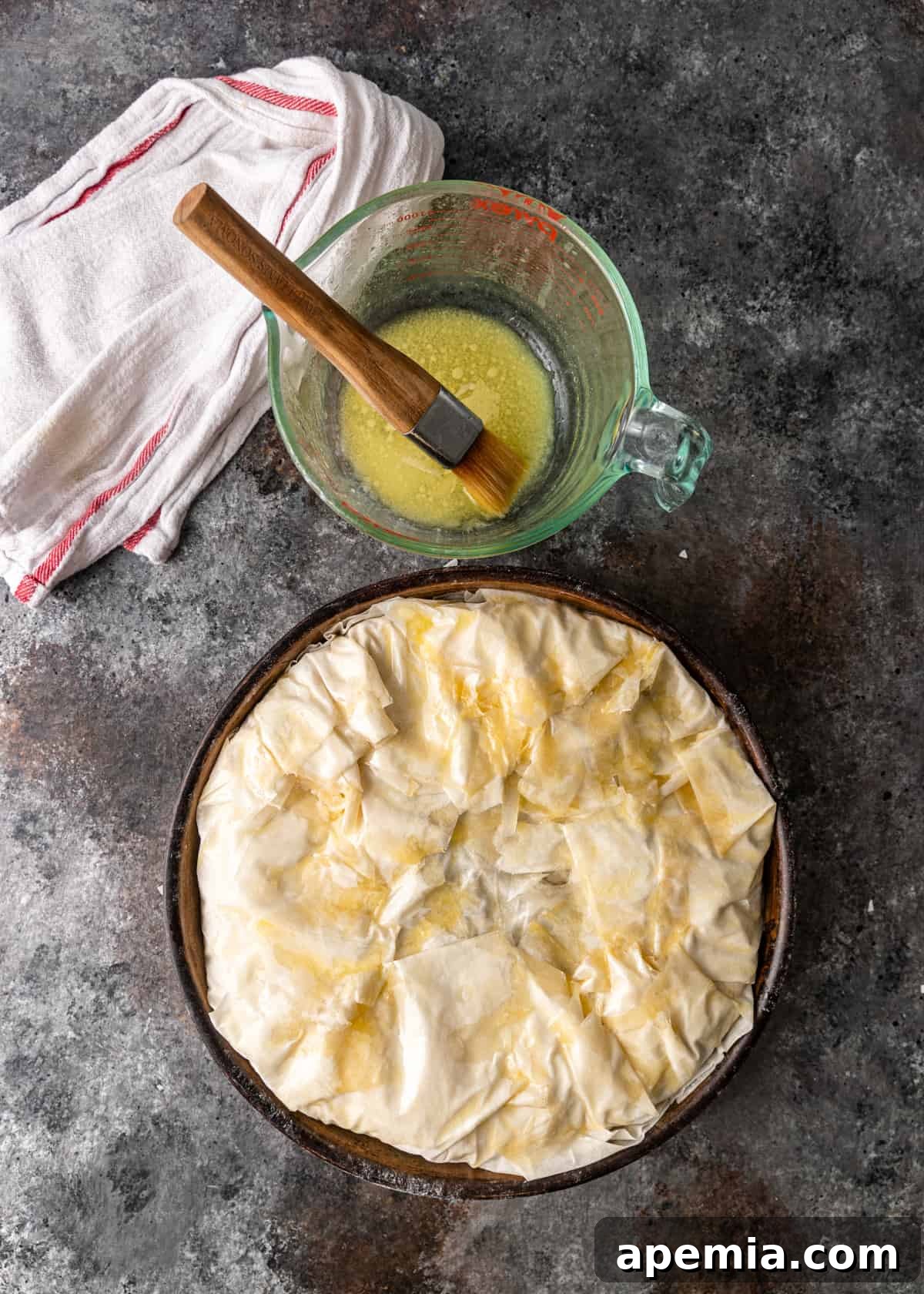
- Layer the Filo Dough Base. Preheat your oven to 375°F (190°C). Prepare a 10-inch pie dish or an oven-safe skillet by coating it generously with cooking spray or melted butter. Take two sheets of filo dough and carefully drape them over the center of the dish, allowing the edges to hang over. Gently press the dough to conform to the bottom and sides of the dish. Lightly brush the dough with melted butter. Repeat this layering process four more times with two fresh filo sheets each time, for a total of 10 sheets. Each time, slightly rotate the dish and layer the dough a little further from the center, creating an overlapping pattern around the edges. This technique ensures a robust base and ample overhang for folding. (Refer to the video for a visual guide!)
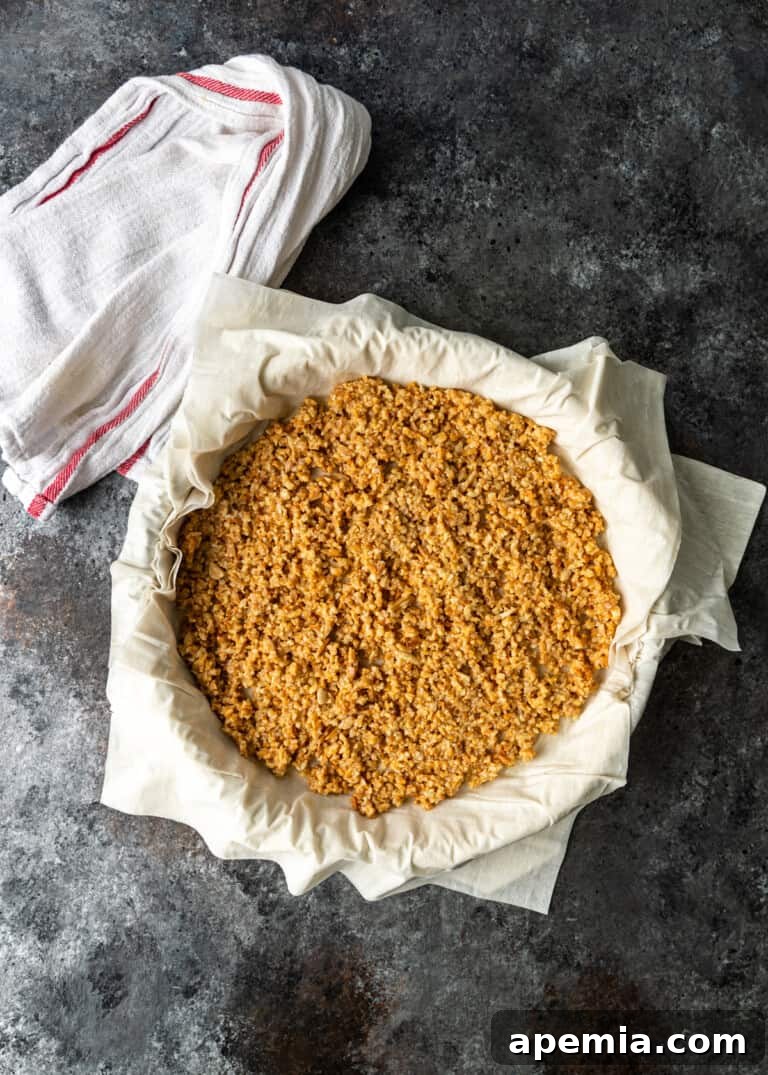
- Add the Sweet Almond Filling. Evenly spread the prepared sweet almond filling across the bottom layer of buttered filo sheets, extending it all the way to the edges of the dish. This creates the foundational sweet note of the Pastilla. Carefully place two more filo sheets directly over the almond filling, then brush them lightly with melted butter. Follow with another two filo sheets, brushed with butter again. These middle layers help separate the sweet and savory fillings and add to the pie’s incredible texture.
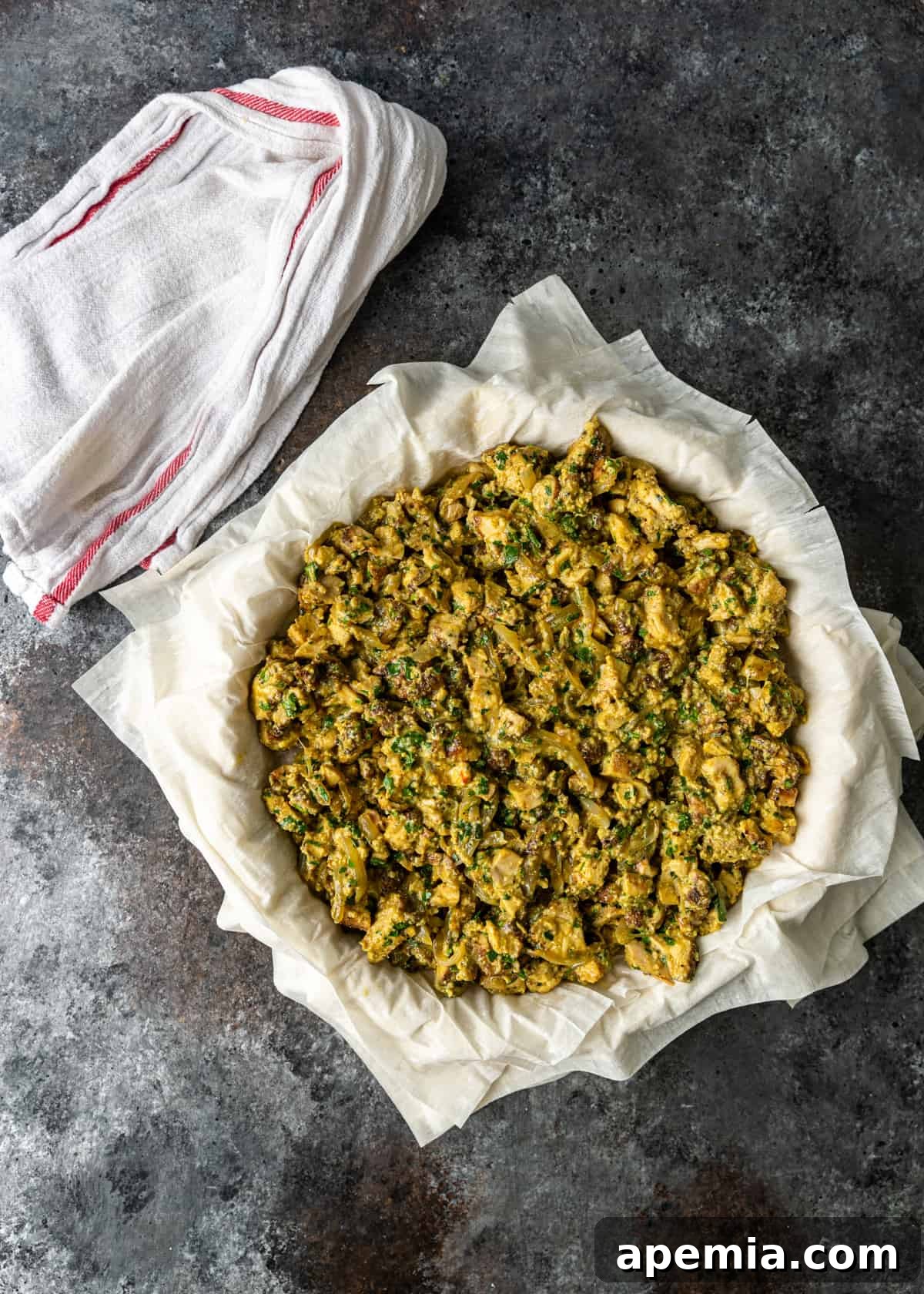
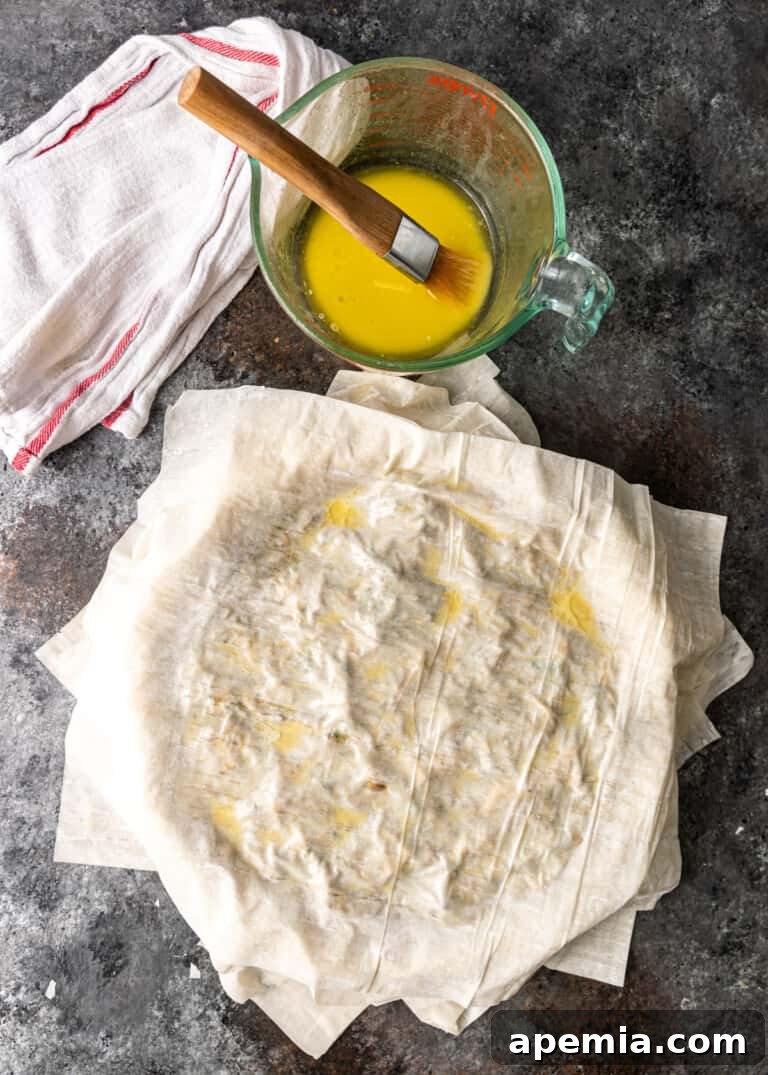
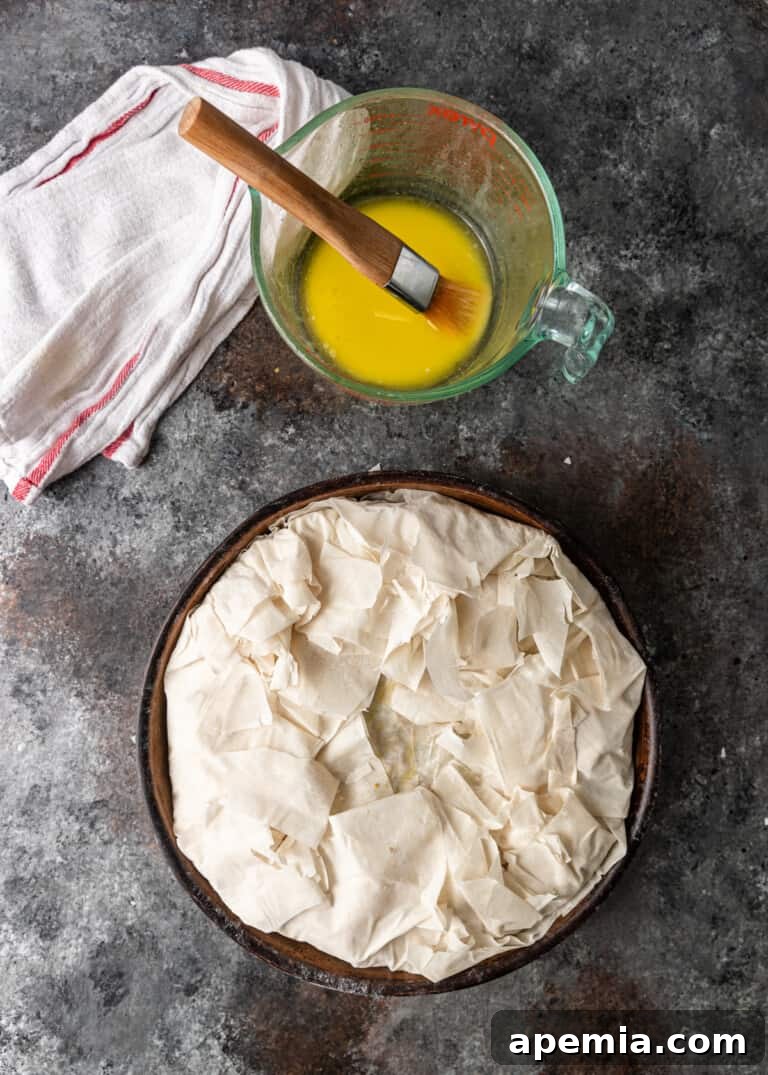
- Introduce the Savory Chicken Filling. Now, carefully spread the cooled chicken filling over the buttered filo layers, ensuring it reaches the edges of the dish for an even distribution of flavor. Once the chicken is neatly in place, cover it with two final sheets of filo dough, placed in the center. Next, take the filo dough that has been hanging over the edge of the dish and neatly fold it inwards, over the center of the pie. Gently press these folded edges down with your hands to seal the pie. Brush the top surface with a little more melted butter. For an extra golden crust, whisk the remaining egg (if any from your batch) and lightly brush it over the entire surface of the Pastilla.
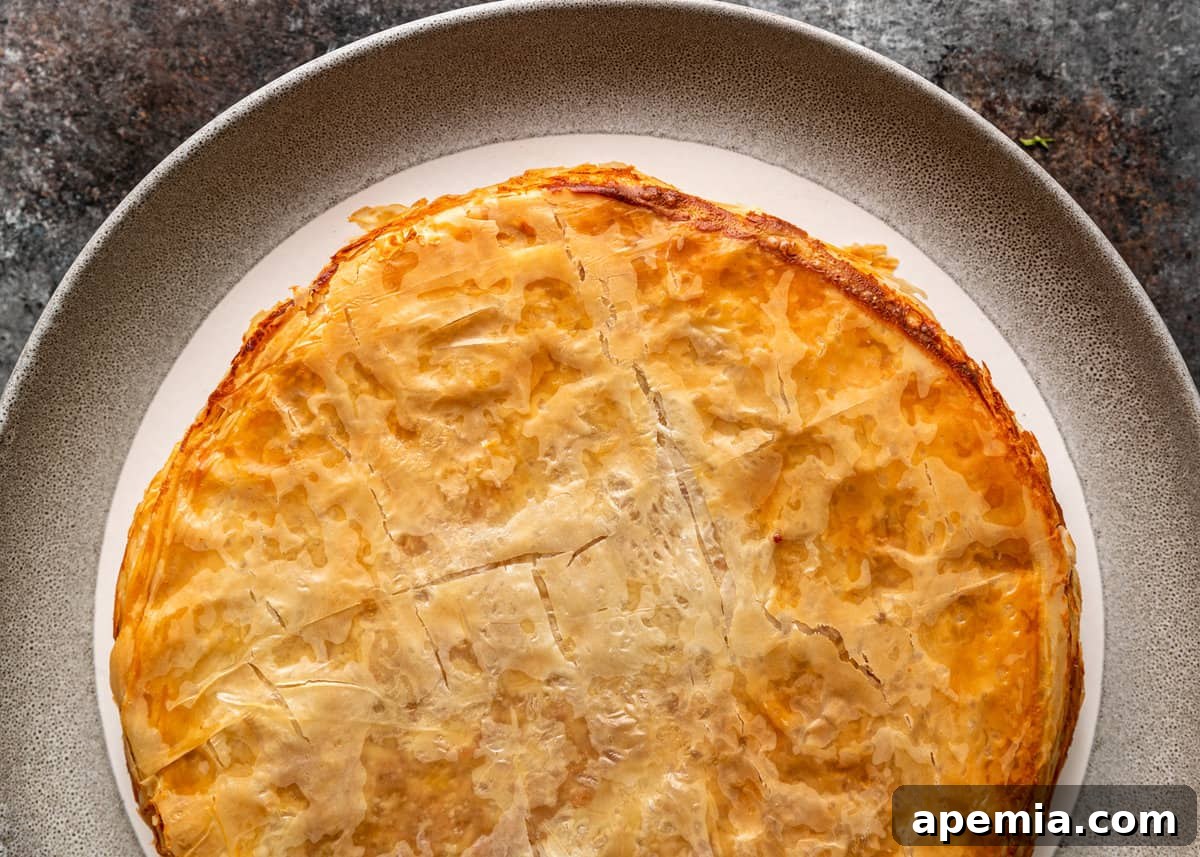
- First Bake for Golden Perfection. Carefully place your assembled Pastilla on the center rack of your preheated oven. Bake for approximately 20 minutes, or until the top filo layers are beautifully golden brown and crispy. This initial bake sets the pastry and cooks the fillings further. Remove the pie from the oven and allow it to cool briefly for a few minutes.
- Second Bake for Even Browning. Using a thin spatula or knife, carefully run it around the rim and edges of the pie dish to ensure the Pastilla is not stuck. This is a critical step for a clean flip. Place a flat baking sheet directly over the top of the pie dish. With confidence and quickness, swiftly flip the dish over so that the Pastilla is now upside-down on the baking sheet. This exposes the bottom (now top) of the pie for browning. Return the Pastilla to the oven and bake for an additional 5 minutes, or until this side also achieves a beautiful golden hue and crispness.
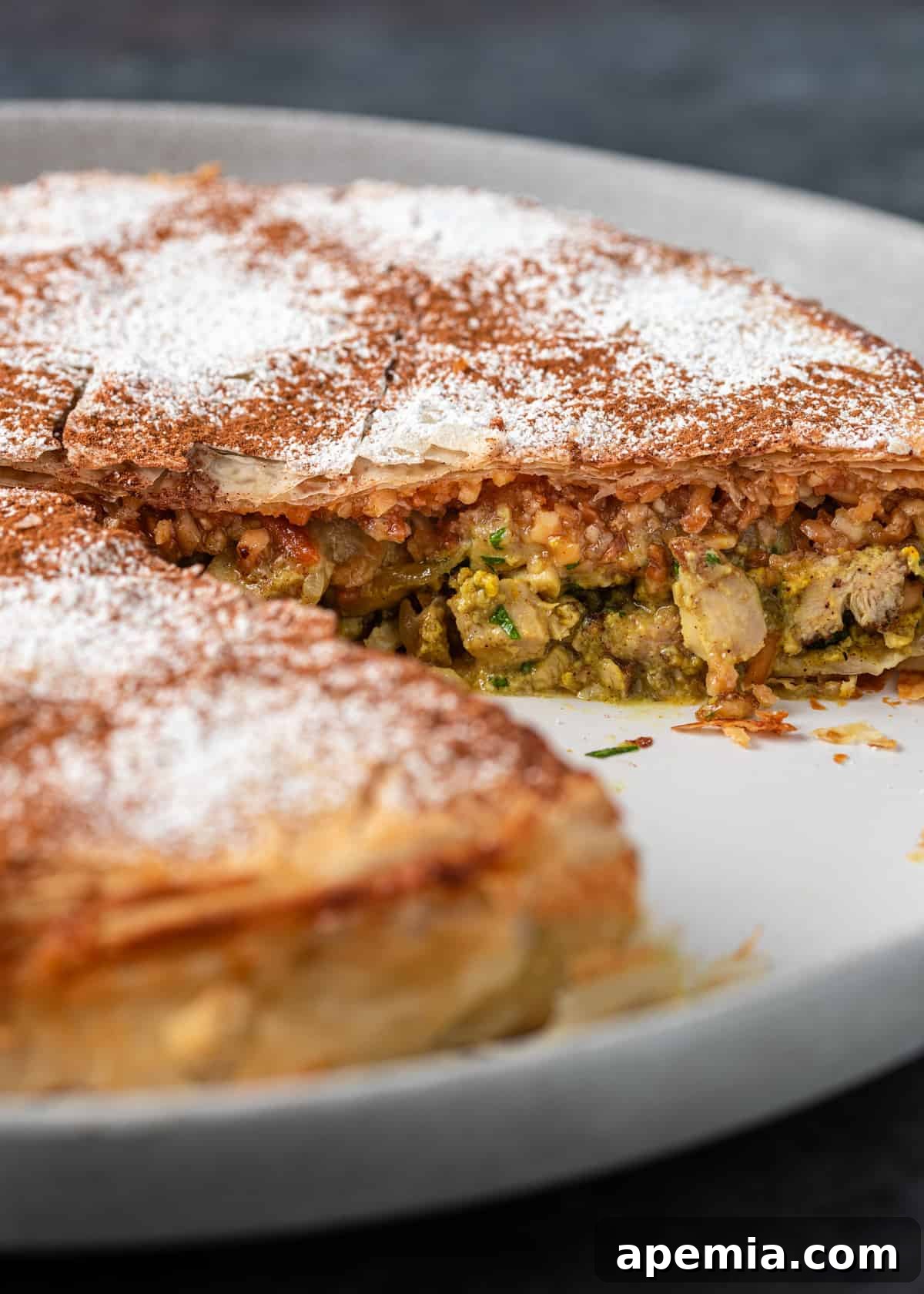
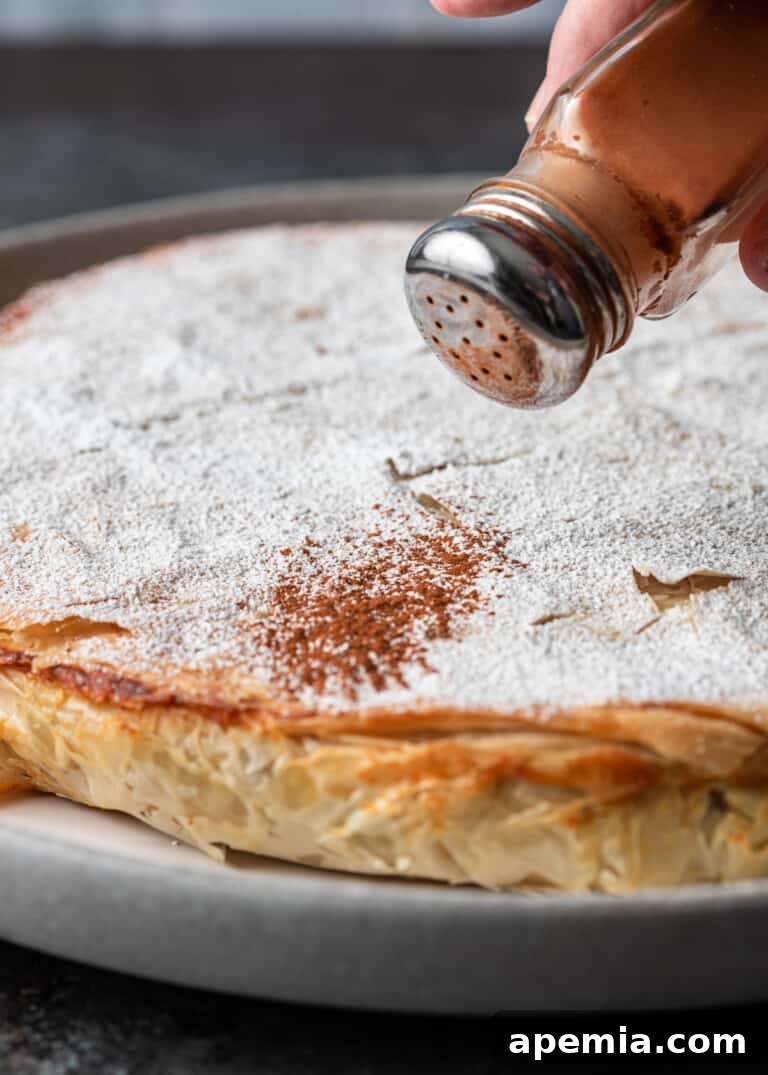
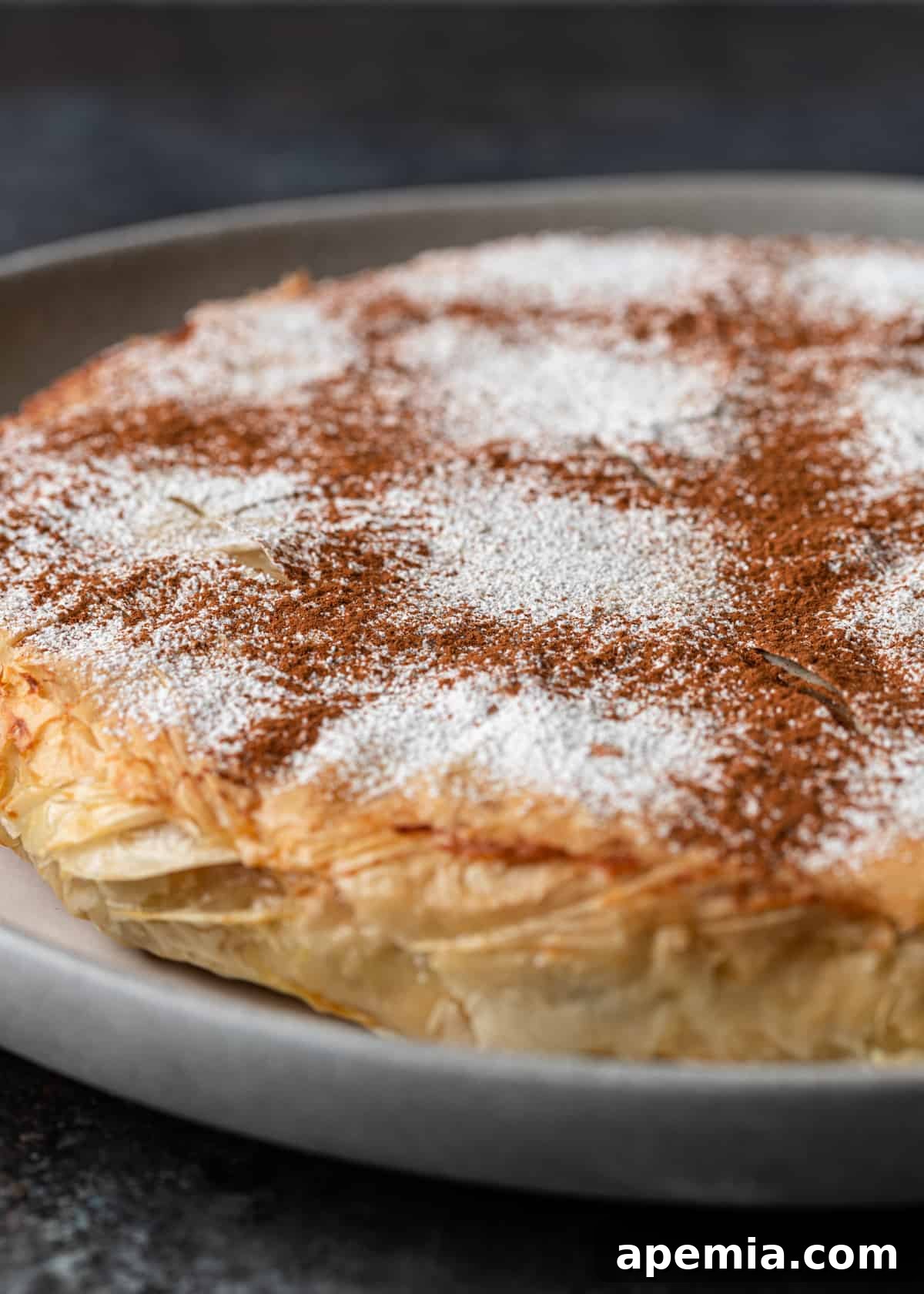
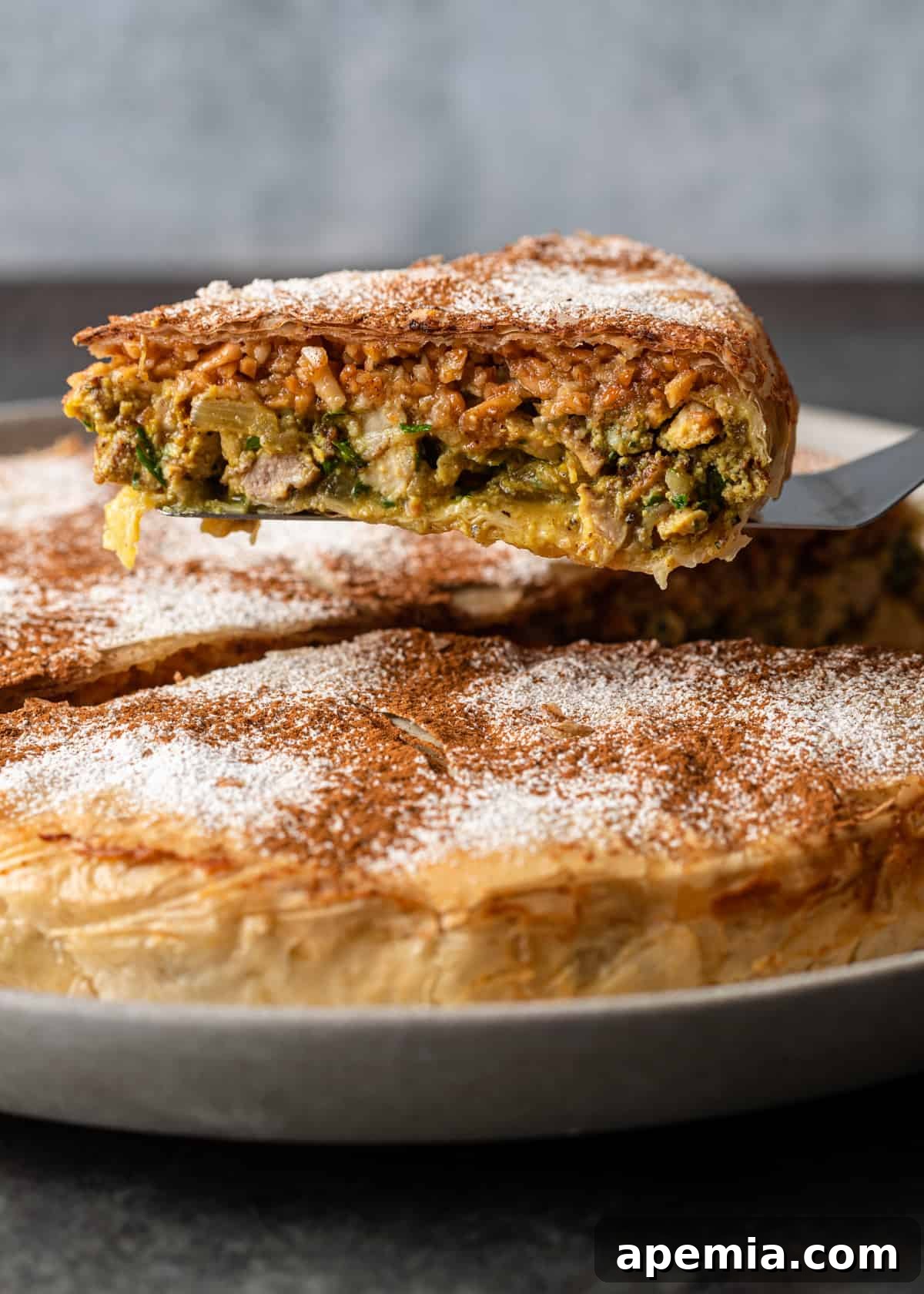
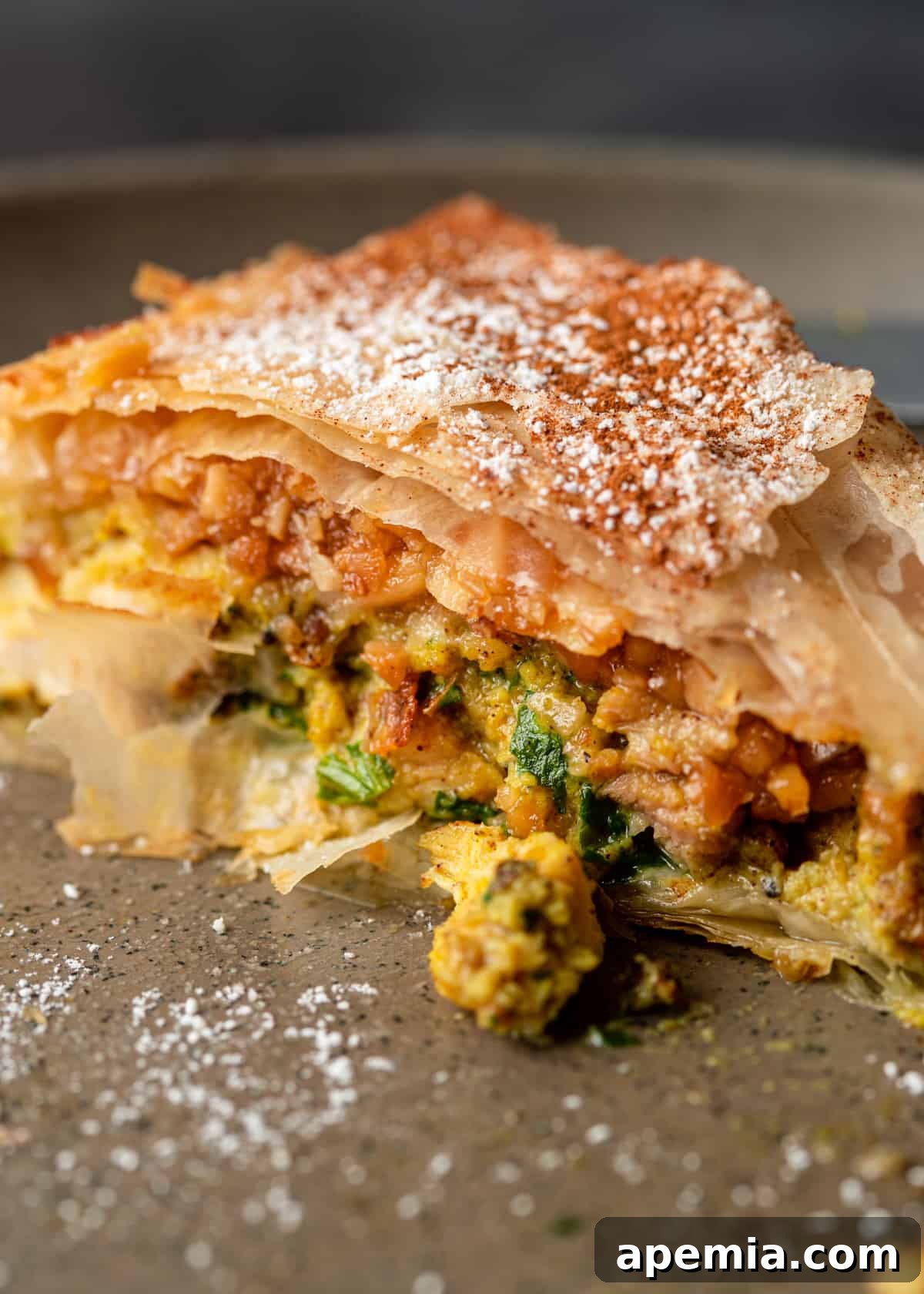
- Rest, Garnish, and Serve. Once fully baked, remove the Pastilla from the oven and let it rest on the baking sheet for 5 minutes. This allows the layers to settle and makes it easier to transfer. Using a large spatula, carefully lift the entire Pastilla onto a serving plate. For a traditional Moroccan presentation, generously sprinkle the top with powdered sugar. If desired, create elegant decorative lines or patterns using ground cinnamon (as beautifully pictured). Serve your exquisite Moroccan Pastilla while it’s still wonderfully warm, allowing its sweet and savory aromas to entice everyone at the table.
Recommended Kitchen Tools for Pastilla
To ensure a smooth and enjoyable Pastilla-making experience, having the right tools on hand can make all the difference. Here are the essentials:
- Large Skillet: An essential for browning your almonds and chicken, as well as sautéing the aromatics. A 10-12 inch cast iron or heavy-bottomed non-stick skillet works perfectly for even heat distribution.
- Food Processor: Crucial for quickly and efficiently blending your toasted almonds into the desired loose crumb texture for the sweet filling. A standard-sized food processor will do the job.
- 10-inch Pie Dish or Oven-Safe Skillet – A standard 10-inch pie dish is ideal for shaping and baking your Pastilla, giving it a classic round form. Alternatively, if you have an oven-safe skillet of similar size, you can use the same skillet you cooked the chicken in, saving on dishes!
- Baking Sheet: Necessary for the “flip” method during baking, ensuring both sides of your Pastilla achieve a uniform golden-brown crispness.
- Pastry Brush: Indispensable for lightly and evenly coating each delicate layer of filo dough with melted butter, contributing to that incredible flaky texture.
Storing and Reheating Your Delicious Pastilla
This Moroccan Pastilla recipe is quite generous, yielding ample servings that are perfect for sharing or enjoying over several days. What’s more, it stores and reheats beautifully, making it an excellent dish for meal prepping or entertaining. To preserve its quality, allow the Pastilla to cool completely to room temperature before transferring it to an airtight container.
You can then refrigerate it for up to a week, or freeze it for up to one month. When ready to enjoy your delicious leftovers, reheat the Pastilla in a preheated oven at 350°F (175°C). Cover it lightly with foil to prevent over-browning, and bake until it’s warmed through and the pastry regains its delightful crispness, typically about 15-25 minutes from the fridge or 30-45 minutes from frozen.
Share this recipe on Pinterest!
Love this recipe? Help others discover this incredible Moroccan dish by sharing it with the world on Pinterest.
Frequently Asked Questions About Pastilla
Pastilla, often referred to as ‘B’stilla’, is a magnificent and celebrated pie-like dish originating from the Maghreb region of North Africa. This culturally rich area encompasses countries like Morocco, Algeria, Tunisia, Libya, and Mauritania. Maghrebi cuisine is renowned for its heavy spicing and diverse use of ingredients, including wheat, various red meats (traditionally goat or beef), and abundant seafood. Among these culinary treasures, Pastilla stands out as a true specialty, particularly beloved in Morocco, Algeria, and Tunisia.
While our recipe features succulent chicken, Pastilla is also very commonly prepared with a flavorful seafood filling. Both variations are incredibly delicious and offer distinct culinary experiences. If you ever have the chance, we highly encourage you to explore both the poultry and seafood versions to truly appreciate the versatility of this iconic dish!
Traditionally, the original Moroccan Pastilla was made with squab, which is young pigeon, lending the dish a unique, delicate flavor. However, over time, and especially in modern kitchens, the filling has evolved to be more accessible. Today, boneless, skinless chicken thighs are the most common and popular choice for Pastilla, valued for their tender texture and ability to absorb the rich North African spices beautifully. You might also find variations made with beef, lamb, or even vegetarian options, but chicken remains the standard poultry choice.
Absolutely! Pastilla is an excellent make-ahead dish, which makes it perfect for entertaining or busy weekdays. You can prepare both the almond and chicken fillings a day or two in advance and store them separately in airtight containers in the refrigerator. The filo pastry can be assembled with the fillings up to 12 hours before baking. Simply cover the unbaked pie tightly with plastic wrap and refrigerate. Before baking, let it sit at room temperature for about 30 minutes, then proceed with the baking instructions as usual. This makes holiday meal prep a breeze!
Ras el Hanout is a highly aromatic and complex Moroccan spice blend, often considered the “king of spices” in North African cuisine. Its name translates to “head of the shop,” signifying that it’s made from the finest spices a merchant has to offer. There’s no single definitive recipe for Ras el Hanout; blends can contain anywhere from a dozen to over a hundred different spices, often including cinnamon, turmeric, ginger, cardamom, mace, nutmeg, cloves, allspice, and even dried rosebuds or lavender. For Pastilla, Ras el Hanout is crucial because it provides the dish’s signature warm, fragrant, and slightly sweet-spicy depth, harmonizing the savory chicken with the sweet almonds and cinnamon.
Moroccan Pastilla
Pin Recipe
PrintRecipe
Video Tutorial
Ingredients
For the Sweet Almond Filling
- 2 cups slivered and blanched almonds
- 2 tablespoons vegetable oil (plus more for chicken)
- 1/2 cup powdered sugar
- 2 tablespoons orange blossom water
- 2 tablespoons butter softened
- 1/2 teaspoon ground cinnamon
For the Savory Chicken Filling and Assembly
- 2 lbs boneless, skinless chicken thighs
- 1 tablespoon vegetable oil (additional for browning chicken)
- 2 teaspoons Ras el Hanout
- 1 1/2 teaspoon kosher salt
- 1 teaspoon black pepper
- 1 teaspoon ground turmeric
- 1 teaspoon ground cinnamon
- 1/8 teaspoon saffron threads
- 1 medium yellow onion finely sliced
- 3 cloves garlic minced
- 1/4 cup fresh parsley chopped
- 5 large eggs (4 for filling, 1 for egg wash if desired)
- 1 lb filo sheets (thawed if frozen)
- 8 tbsp butter melted
For Decoration (Optional)
- powdered sugar
- ground cinnamon
Instructions
For the Almond Mixture
-
In a large skillet, heat the specified vegetable oil over medium heat. Add the slivered almonds and cook, stirring frequently, until they turn a beautiful golden brown and are fragrant. Using a slotted spoon, remove the almonds from the skillet, allowing them to drain on a paper towel-lined plate. Keep the remaining oil in the skillet for the chicken filling.
-
Once the fried almonds have cooled slightly, transfer them to a food processor. Add the powdered sugar, the 1/2 teaspoon of ground cinnamon, orange blossom water, and the softened butter. Pulse all these ingredients together until you achieve a loose, wet crumb mixture. Be careful not to over-process it into a paste. Set this delightful almond filling aside.
For the Chicken Filling
-
In a small bowl, combine the chicken filling seasonings: Ras el Hanout, 1 teaspoon of ground cinnamon, kosher salt, black pepper, ground turmeric, and saffron threads. Mix thoroughly.
-
Place the boneless, skinless chicken thighs into a sturdy Ziploc bag. Add the prepared spice mixture to the bag. Seal the bag, then toss and massage the chicken to ensure every piece is thoroughly coated with the aromatic spices.
-
Reheat the reserved oil in the skillet over medium-high heat, adding an extra tablespoon of vegetable oil if necessary. Place the seasoned chicken into the hot skillet and brown it on both sides for approximately 6 minutes in total, until a golden crust forms. Remove the browned chicken from the pan and set it aside to cool. Once cool enough to handle, carefully dice or shred the chicken meat and set it aside.
-
In the same skillet, reduce the heat to medium. Add the finely sliced yellow onion and minced garlic. Sauté, tossing occasionally, until they are softened and translucent. Return the diced or shredded chicken to the skillet along with the fresh chopped parsley. Stir everything well to combine. Continue to cook over medium-high heat for about 10 minutes, or until the chicken is fully cooked through and the flavors have melded beautifully. Taste and adjust seasoning as needed.
-
Beat 4 of the eggs together until smooth. Turn the heat under the skillet to low. Slowly pour the beaten eggs over the chicken mixture, stirring carefully and continuously to coat the chicken. The eggs will cook and thicken, binding the filling together into a moist and cohesive mixture. Once the eggs are just set, remove the skillet from the heat and allow the chicken filling to cool completely.
Assembly & Baking
-
Preheat your oven to 375°F (190°C). Prepare a 10-inch pie dish or a similar sized oven-safe skillet by lightly coating it with oil or cooking spray to prevent sticking.
-
Take 2 sheets of filo dough and carefully drape them over the center of your prepared baking dish, allowing the ends to hang over the sides. Gently press the dough into the bottom and up the sides of the dish to form a mold. Brush the dough lightly with melted butter. Repeat this process four more times (using 2 sheets each time, for a total of 10 sheets), slightly rotating the dish each time and placing the filo sheets a little off-center to create an even overhang on all four sides. This builds a robust and flaky base.
-
Spread the cooled almond mixture evenly over the buttered filo sheets, extending it to the edges. Cover the almond layer with 2 more sheets of filo, then brush with melted butter. Layer another 2 sheets of filo and brush again with butter. Next, spread the cooled chicken mixture evenly across these layers, pushing it gently to the edges of the dish. Finally, place 2 more filo sheets over the chicken filling in the center. Carefully fold the overhanging filo edges from the base layers up and over the center of the pie, forming a neat seal. Gently press them down and brush the entire top surface with more melted butter. For a richer golden color and finish, whisk the remaining 1 egg (if applicable) and brush it all over the Pastilla (See Note 1).
-
Place the Pastilla on the center rack of your preheated oven and bake for 20 minutes, or until the filo pastry is beautifully golden brown and crisp. Remove the pie from the oven and let it cool for a few minutes. Using a spatula, carefully run it around the rim and edges of the filo to ensure it’s loosened from the dish. Place a baking sheet squarely on top of the pie dish and, with a quick, confident motion, flip the dish over so the Pastilla is now inverted onto the baking sheet. Return the Pastilla to the oven and bake for an additional 5 minutes to brown the underside (which is now facing up).
-
Remove the baked Pastilla from the oven and let it rest on the baking sheet for 5 minutes. This brief resting period helps the layers settle. Using a large, flat spatula, carefully transfer the entire Pastilla to a serving plate. For a traditional and festive presentation, generously sprinkle the top with powdered sugar. If desired, create elegant decorative lines or a beautiful pattern using ground cinnamon (as shown in the accompanying pictures). Serve your exquisite Moroccan Pastilla warm and enjoy!
Chef’s Notes
- Any remaining unused sheets of filo dough can be carefully re-wrapped and refrigerated for later use in other delicious recipes, such as Baklava or savory pies.
Nutrition Information (Estimated per serving)
The nutritional information provided is an estimate generated by an online calculator. It should not be considered a substitute for personalized professional nutritional advice.