
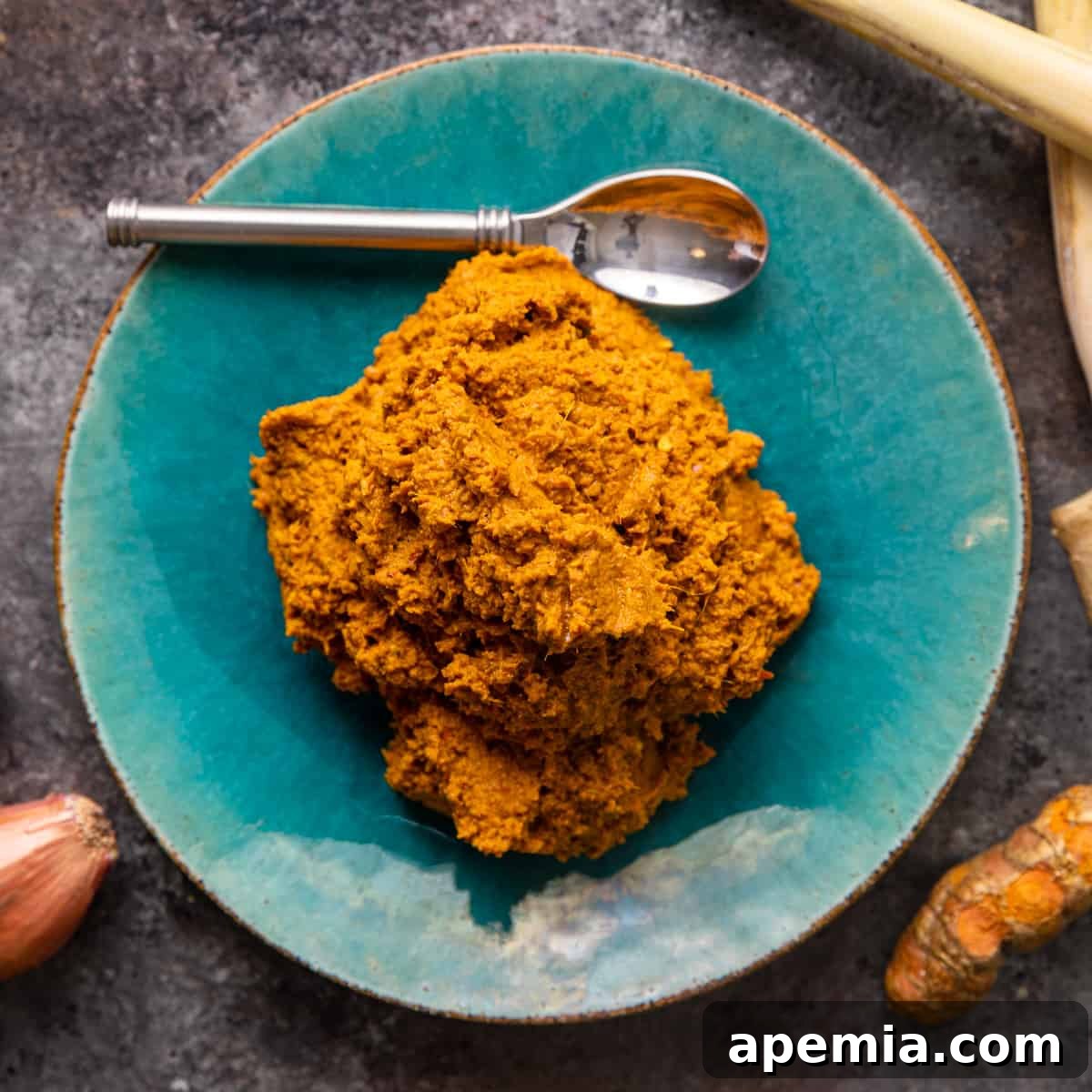
Welcome to the ultimate guide for crafting your own authentic and incredibly flavorful yellow curry paste. This vibrant paste is the heart of many beloved Thai dishes, offering a delightful balance of aromatic, citrusy notes with a gentle, yet invigorating, heat. Unlike its fiery red counterpart, yellow curry paste provides a milder spice experience, making it a perfect entry point for those new to Thai cuisine or simply preferring less intensity. However, don’t mistake “mild” for lacking character – with a thoughtful inclusion of tien tsin chile peppers, this recipe still delivers that signature tongue-tingling spice and warmth you crave!
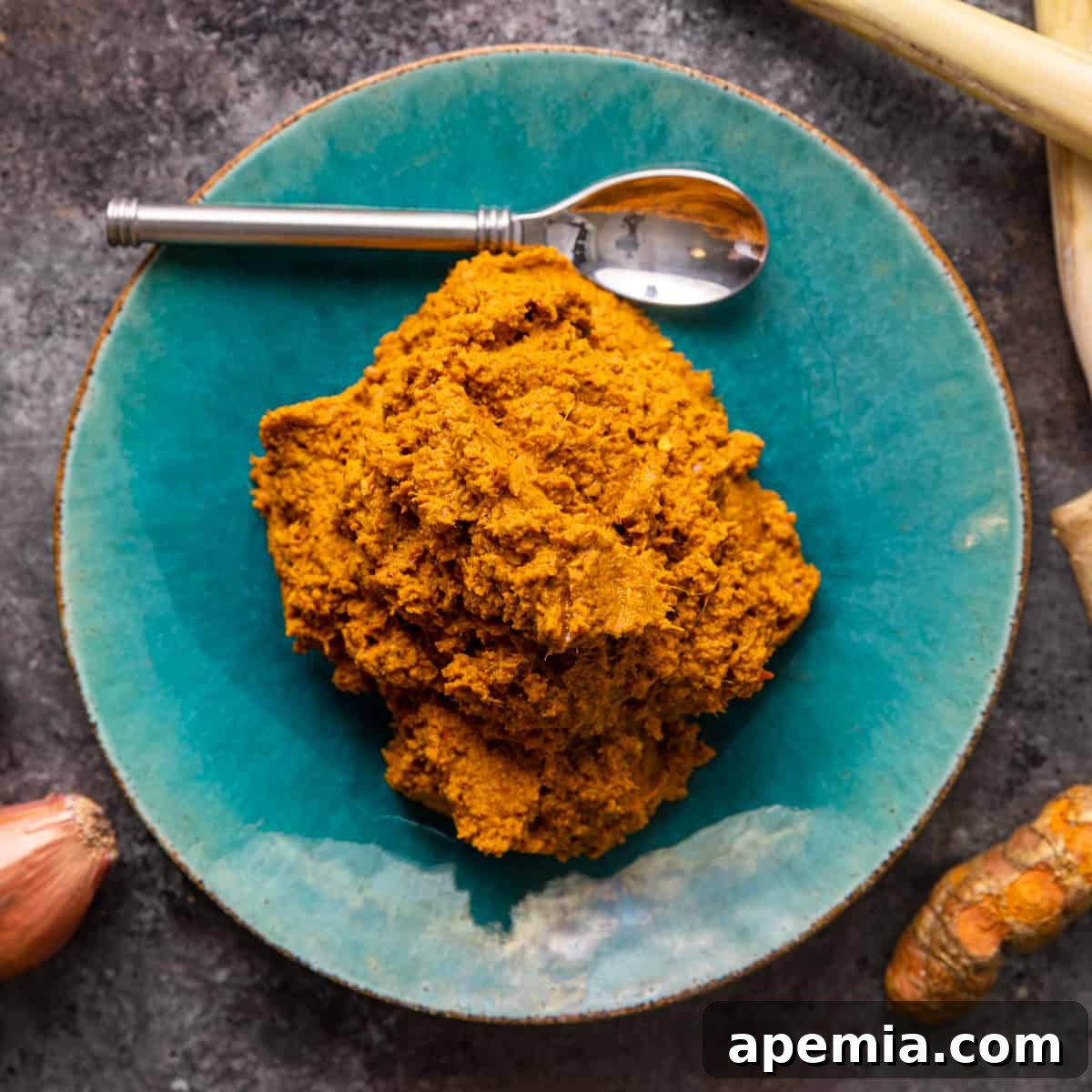
My primary goal with this recipe is to empower you to create exquisite yellow curry paste using ingredients that are readily available. While traditional Thai recipes often call for exotic items like galangal and authentic shrimp paste, I understand that these can sometimes be a challenge to source outside of specialty Asian markets. That’s why I’ve meticulously developed this recipe with accessible substitutions that promise genuinely captivating and authentic-tasting results. You’ll achieve incredible depth of flavor without an extensive scavenger hunt for ingredients.
My culinary journey through Southeast Asia, particularly Vietnam, Cambodia, and Thailand, this past year exposed me to an incredible array of curries. Each region offered its unique spin, but the comforting and complex flavors of Thai yellow curry truly stood out. This homemade Thai yellow curry paste is remarkably versatile. It excels as a robust addition to marinades for meats and vegetables, can be effortlessly stirred into rich sauces and hearty stews, or used as the foundational flavor for quick and delicious stir-fries. The latter method is particularly rewarding, as the gentle heat of the pan allows the aromatic spices to truly bloom and deepen, infusing your entire dish with unparalleled flavor.
Table of Contents
- The Magic of Homemade & Freezing
- Ingredient Notes and Substitutions
- How to Make Yellow Curry Paste
- Recommended Tools
- Storing Your Paste
- Serving Suggestions & Creative Uses
- Frequently Asked Questions
- Thai Yellow Curry Paste Recipe
The distinctive subtle heat and the warm, bright, lemony undertones of this yellow curry paste make it an absolutely ideal companion for seafood. Personally, I find it shines brightest when paired with succulent shrimp, creating a dish that is both comforting and exotic. Beyond seafood, it serves as an excellent, milder alternative to red curry paste in virtually any recipe. This makes it perfect for a wider range of proteins, including tender poultry, rich beef, or plant-based alternatives like tofu and various vegetables. Its adaptability ensures that this paste will become a staple in your culinary repertoire.
Tip From Kevin
The Magic of Homemade & Freezing
There’s an undeniable superiority to homemade spice blends and condiments compared to their store-bought counterparts. When you make it yourself, you have complete control over the quality and freshness of every ingredient, free from artificial additives and excessive preservatives. For a versatile condiment like this yellow curry paste, I often find I won’t use the entire batch in one go. My secret for effortless future meals? I spoon any excess paste into an ice cube tray, freeze it solid, and then transfer the frozen cubes to a freezer-safe zip bag. This method provides perfectly portioned servings, ready to be thawed and used whenever the craving for authentic Thai flavors strikes, saving you time and effort on busy weeknights!
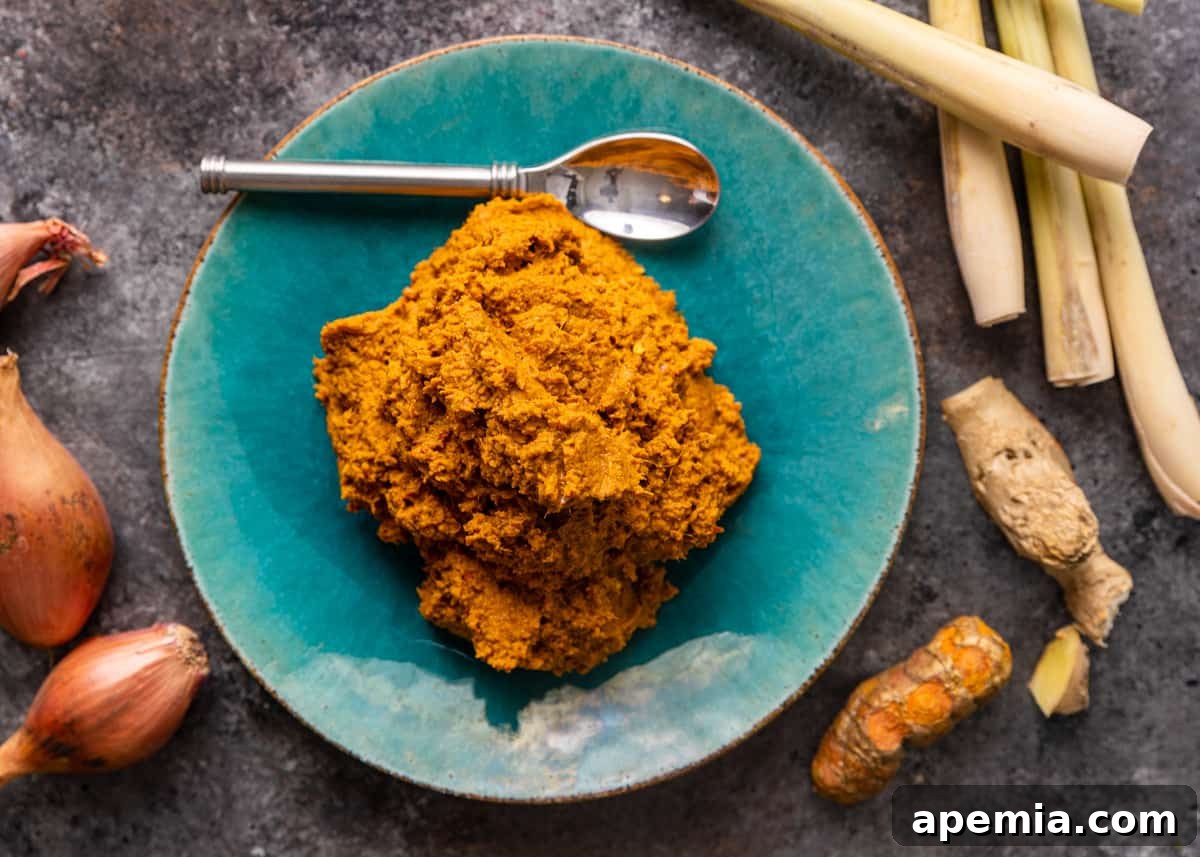
Ingredient Notes and Substitutions for Authentic Flavor
(For precise measurements and a complete list, please refer to the detailed recipe card below)
- Small, Dried Red Chiles: The backbone of the paste’s heat and complexity. I prefer Tien Tsin chile peppers, also known as Chinese red peppers or Tianjin peppers. These small, bright red chiles are primarily known for their robust heat, coupled with a subtle, intriguing citrusy note. You can often find them in well-stocked Asian markets. If Tien Tsin chiles are elusive, an excellent and widely accessible substitute is Chiles de Arbol, typically found in the Mexican section of most grocery stores. Remember, soaking them first is crucial for optimal blending and slightly mellowing their fiery kick.
- Garlic: Fresh garlic is indispensable for its pungent, aromatic foundation. Approximately 4 cloves, or about one tablespoon when minced, will provide the perfect intensity.
- Ginger: While many traditional Thai yellow curry paste recipes feature galangal – a rhizome from the ginger family with a more sharp, piney, and citrusy flavor – fresh ginger makes a fantastic and easier-to-find alternative. If you happen to have access to fresh galangal, by all means, use it for an even more authentic touch.
- Lemongrass: This is a non-negotiable ingredient, absolutely critical for imparting that signature fresh, fragrant, and vibrant lemony aroma that defines authentic Thai yellow curry. It provides a unique flavor profile that’s hard to replicate. If you absolutely cannot find it, a combination of fresh kaffir lime leaf (if available) or even just lemon zest and juice can offer a hint of the desired brightness, though it won’t fully capture lemongrass’s distinct essence.
- Shrimp Paste (Kapi): A small but mighty ingredient, shrimp paste delivers an intense savory, salty, and undeniably “shrimpy” umami punch that adds incredible depth to the paste. Its fermented flavor is a cornerstone of Thai cooking. The best and most common substitute is good quality fish sauce. If using fish sauce, be mindful of its thinner consistency and adjust the amount of water added during blending to achieve the desired paste texture.
- Shallots: These provide a milder, sweeter, and more delicate onion flavor than regular onions, making them ideal for the nuanced profile of yellow curry. Suitable substitutes include a sweet Vidalia onion, leeks, scallions, or even chives, depending on what you have on hand and your desired intensity.
- Curry Powder: This recipe uses yellow curry powder, which in Thai cuisine typically refers to “Kaeng Kari” and showcases Indian influences. I often prefer to make my own blend to fine-tune the salt content and other spices, and it’s surprisingly simple to whip up. However, high-quality pre-made yellow curry blends are widely available at most major grocery chains.
- Coriander Seeds: These offer a warm, earthy, and slightly citrusy flavor that beautifully complements the other aromatics. Whole seeds, freshly ground, yield the most potent flavor, but pre-ground coriander will also work. This is a fantastic spice to keep in your pantry for many homemade condiments and spice blends.
- Turmeric: Beyond its role in flavoring, turmeric is primarily responsible for the signature vibrant “yellow” hue in this yellow curry paste recipe. It also contributes a subtle earthy and slightly peppery taste.
- Cumin: Adding a warm, earthy, and slightly nutty dimension, cumin is essential for the depth of flavor. If needed, caraway seeds can serve as a substitute, offering a similar warm and slightly peppery profile.
- Salt: A fundamental seasoning that balances and enhances all the other flavors. Kosher salt is preferred for its clean taste.
- Water: Used to achieve the perfect blend and desired consistency of the paste. Start with a small amount and add incrementally.
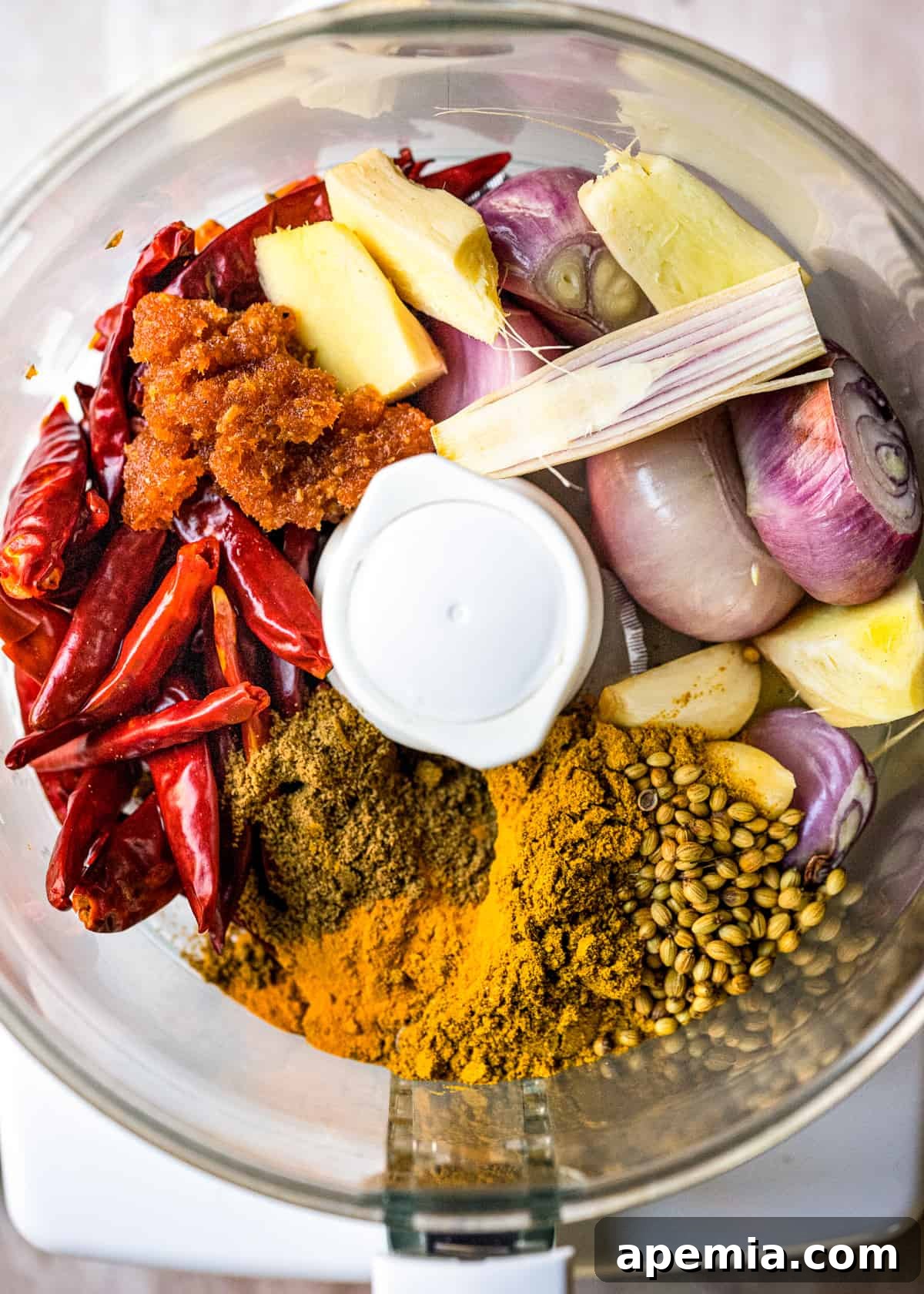
How to Make Yellow Curry Paste: A Step-by-Step Guide
- Soften the Chiles: Begin by placing your dried chiles in a heatproof bowl. Cover them completely with hot water and allow them to soak for approximately 3 minutes. This crucial step softens the chiles, making them easier to blend into a smooth paste and helping to release their full flavor. To ensure they remain submerged, you can place a smaller dish or a heavy spoon on top.
- Prepare the Lemongrass: While the chiles are soaking, trim the lemongrass stalks. Cut off the very root end and peel away any tough, dry outer leaves until you reach the more tender, pale inner stalk. We primarily want the white part and just a small portion of the light green section, as this holds the most flavor. Once trimmed, slice the lemongrass stalks in half lengthwise or into smaller pieces to facilitate easier blending.
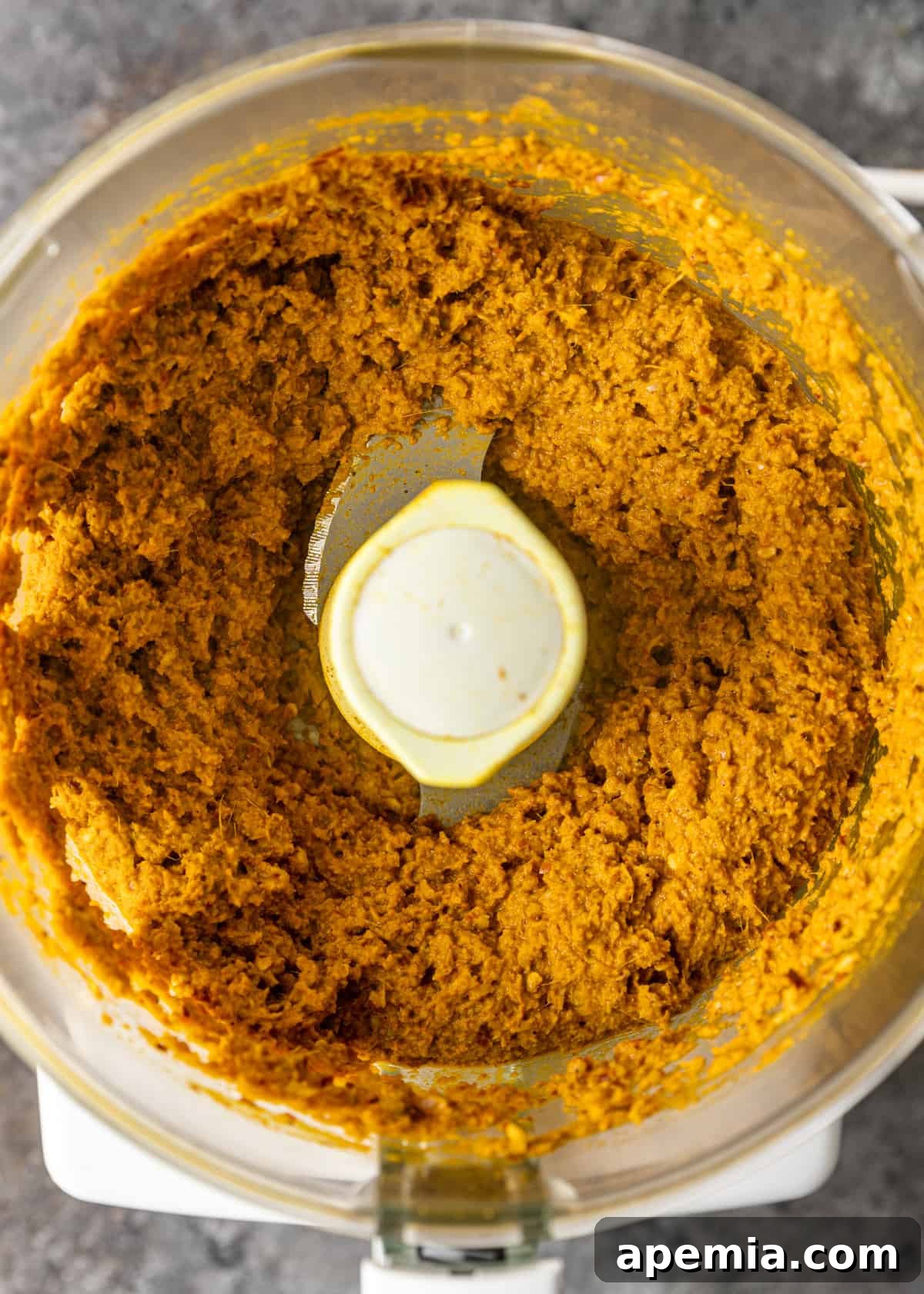
- Make the Paste: Carefully drain the softened chiles, discarding the soaking water. Transfer the drained chiles to the bowl of a food processor or a high-speed blender. Add the prepared lemongrass along with all the remaining ingredients, *except for the water*. Begin by pulsing the mixture in short bursts until the ingredients are finely chopped. Then, with the processor running, gradually add the water in small amounts, pulsing and scraping down the sides as you go, until a thick, uniform paste begins to form. Continue adding water incrementally and blending until you achieve your desired consistency – add more for a thinner, smoother paste, or less for a thicker, more rustic texture.
- Store or Use Immediately: Your fresh, homemade yellow curry paste is now ready to transform your dishes! Use it right away as a base for a rich curry, a flavorful marinade, a dynamic stir-fry sauce, or a hearty stew. As a general guide, I typically use about 4 tablespoons of this paste per dish, depending on the volume and desired intensity. Alternatively, prepare it for storage as detailed below.
Recommended Tools for a Perfect Paste
- Bowl & Weight: You’ll need a heatproof bowl for soaking the dried chiles. Having something heavy on hand, like a smaller dish, plate, or even a heavy spoon, is helpful to keep the chiles submerged in the hot water, ensuring they soften evenly.
- Food Processor or Blender: This is a non-negotiable tool for achieving a truly smooth and consistent curry paste. While traditional methods often involve a mortar and pestle, breaking down fibrous ingredients like lemongrass and ginger, along with wet ingredients, to a fine paste manually is incredibly labor-intensive and messy. A food processor or high-speed blender will make the process much quicker, easier, and ensure a superior texture.
Storing Your Precious Paste
Proper storage is key to extending the life of your homemade yellow curry paste. When stored in an airtight container, your fresh paste will keep beautifully in the refrigerator for up to 5 days. For longer preservation, freezing is an excellent option, allowing the paste to remain fresh for up to 2 months without significant loss of flavor.
I highly recommend freezing your paste in an ice cube tray. Once the cubes are solid, pop them out and transfer them to a freezer-safe zip bag or container. This method not only prevents freezer burn but also provides convenient, pre-portioned servings that are easy to thaw and use whenever you need a burst of Thai flavor. Simply grab a cube or two, and you’re ready to cook!
Share this recipe on Pinterest!
Love this recipe? Share it with the world on Pinterest.
Serving Suggestions & Creative Uses for Yellow Curry Paste
This versatile yellow curry paste opens up a world of culinary possibilities beyond the traditional yellow curry dish. Its balanced flavors make it suitable for a wide array of applications:
- Classic Thai Yellow Curry: The most obvious and delicious use! Combine with coconut milk, your choice of protein (chicken, shrimp, beef, tofu, or mixed vegetables), and perhaps some bamboo shoots or potatoes for a rich and comforting meal served with jasmine rice.
- Marinade for Grilling or Roasting: Whisk a few tablespoons of the paste with a little oil, lime juice, and a touch of sugar. Use it to marinate chicken, pork, fish, or firm tofu before grilling, baking, or pan-frying for an incredible flavor boost.
- Stir-Fries: Add a spoonful of paste to your wok with a bit of oil before adding vegetables and protein. This allows the spices to “bloom” and release their full aroma, creating a deeply flavored stir-fry.
- Soup Base: Stir a teaspoon or two into chicken or vegetable broth for a quick, aromatic, and spicy soup base. Add noodles, vegetables, and protein for a complete meal.
- Flavor for Stews: Incorporate the paste into slow-cooked stews for an unexpected but delightful Southeast Asian twist. It pairs wonderfully with root vegetables and hearty meats.
- Spicy Spreads or Dips: Mix a small amount of the paste into mayonnaise, yogurt, or cream cheese for a flavorful spread for sandwiches, wraps, or a dip for crudités.
Frequently Asked Questions About Yellow Curry Paste
While both contain the word “curry” and “yellow,” yellow curry powder and yellow curry paste are fundamentally different and cannot be directly substituted for one another to achieve the same result. The paste is a vibrant blend of fresh, aromatic ingredients like lemongrass, ginger, garlic, shallots, and chiles, pulverized together to create a moist, pungent, and deeply flavored base. Yellow curry powder, on the other hand, is typically a dried Indian-inspired spice blend, offering a completely different flavor profile and texture. The fresh components in a paste simply cannot be replicated by dried powders, which lack the essential moisture, freshness, and complex aromatic oils. For an authentic Thai yellow curry experience, the paste is indispensable.
In the spectrum of Thai curries, yellow curry typically occupies the third spot in terms of heat level, generally considered milder than red, but often spicier than green (though experiences can vary widely, as I’ve found with some particularly fiery green curries in Bangkok!). The general rule of thumb is:
- Green Curry Paste: Often the freshest and brightest in flavor, typically made with fresh green chiles, kaffir lime zest, and basil. It can range from mild to quite spicy.
- Red Curry Paste: Generally the spiciest of the three, characterized by dried red chiles (more than yellow), galangal, and red shallots, giving it a robust, deep flavor and vibrant red hue.
- Yellow Curry Paste: (This recipe!) Known for its warm, mellow spice and rich color derived primarily from turmeric. It often incorporates dried red chiles, lemongrass, and shrimp paste, offering a savory, slightly sweet, and aromatic profile that is typically less intense than red curry.
An excellent feature of homemade yellow curry paste is your ability to perfectly control the heat. The only truly spicy ingredient we’re using is the dried chiles. If you’re concerned about the spice level, I recommend starting with fewer chiles (perhaps around 10-15), blending the paste, and then tasting it. You can always add more chiles and blend again until you achieve your preferred level of tongue-tingling warmth.
Absolutely! The primary non-vegan ingredient in this recipe is shrimp paste. To make it suitable for a vegan or vegetarian diet, simply omit the shrimp paste. You can substitute it with an equal amount of good quality vegetarian fish sauce (often made from seaweed or mushroom extracts) to mimic the umami depth, or simply increase the salt slightly and add a dash of soy sauce or tamari for savoriness. Some recipes also use fermented soybean paste as a vegan alternative to shrimp paste.
Homemade Thai Yellow Curry Paste
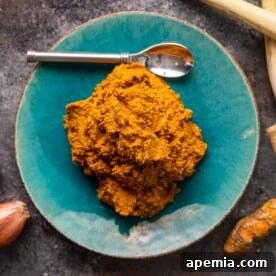
Yellow curry paste is a masterful blend of aromatic, citrusy seasonings and spicy chile peppers. It’s sweet, spicy, and savory all in one, forming the flavorful foundation for countless Thai culinary delights!
8
15 minutes
15 minutes
PrintRecipe
Ingredients
-
40
small dried red chiles
(See Note 1) -
1
tsp
kosher salt
-
4
cloves
garlic
-
2
lemongrass stalks -
3
shallots
-
6
inch
fresh ginger
peeled -
1 1/2
tbsp
shrimp paste -
2
tbsp
yellow curry powder
-
1
tbsp
coriander seeds -
1
tsp
turmeric
-
1
tsp
cumin
-
1/4
cup
water
Metric
Instructions
-
Soften the chiles in a bowl with hot water for 3 minutes. Ensure they are fully submerged.
-
Trim the root end and tough outer leaves off the lemongrass stalk. Use only the white part and a little of the tender green section. Cut the prepped lemongrass in half or into smaller pieces.
-
Transfer the drained chiles, salt, garlic, prepared lemongrass, shallots, peeled ginger, shrimp paste, yellow curry powder, coriander seeds, turmeric, and cumin to a food processor or high-speed blender. Pulse until finely chopped, then gradually add the water. Purée until a thick, smooth paste forms. Add more water, a tablespoon at a time, if you prefer a thinner, smoother texture.
-
Use your fresh yellow curry paste immediately, or store it. For refrigeration, place in an airtight container for up to 5 days. For longer storage, freeze in ice cube trays, then transfer the frozen cubes to a plastic bag for up to 2 months.
Notes
- For the small dried red chiles, I prefer Tien Tsin chile peppers (also known as Chinese Red Peppers or Tianjin peppers) which can typically be found in the Asian food section of your market or any Asian grocery store. As an excellent substitute, you can use Chiles de Arbol, commonly located in the Mexican food section of your local market.
- This recipe yields approximately 2 cups of yellow curry paste in total. I typically use about 4 tablespoons per recipe, making this batch suitable for 8 distinct dishes (32 tablespoons total).
Adapted from Sujet Saenkham’s Spice I Am.
Nutrition
Calories:
40
kcal
|
Carbohydrates:
7
g
|
Protein:
3
g
|
Fat:
1
g
|
Saturated Fat:
1
g
|
Cholesterol:
32
mg
|
Sodium:
396
mg
|
Potassium:
157
mg
|
Fiber:
2
g
|
Sugar:
2
g
|
Vitamin A:
681
IU
|
Vitamin C:
3
mg
|
Calcium:
35
mg
|
Iron:
1
mg
The information shown is an estimate provided by an online nutrition calculator. It should not be considered a substitute for a professional nutritionist’s advice.
condiments
Thai
Kevin
Have You Made This Recipe? Let Me Know on Instagram
Tag @keviniscooking or tag me #keviniscooking!
Crafting your own Thai yellow curry paste at home is a rewarding culinary endeavor that brings authentic flavors directly to your kitchen. With accessible ingredients and a simple process, you can achieve a depth and freshness that store-bought versions simply cannot match. Whether you’re simmering a comforting curry, marinating your favorite protein, or infusing a stir-fry with vibrant aromas, this homemade paste will elevate your cooking. Embrace the journey of creating this essential Thai condiment, and prepare to impress your taste buds with truly captivating dishes!