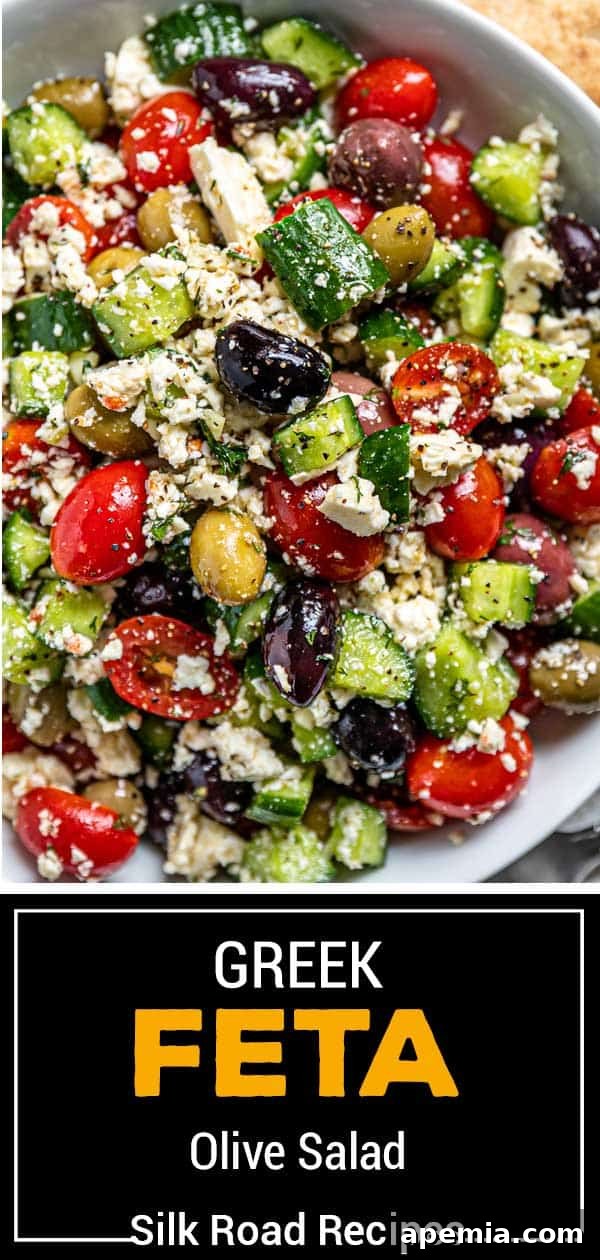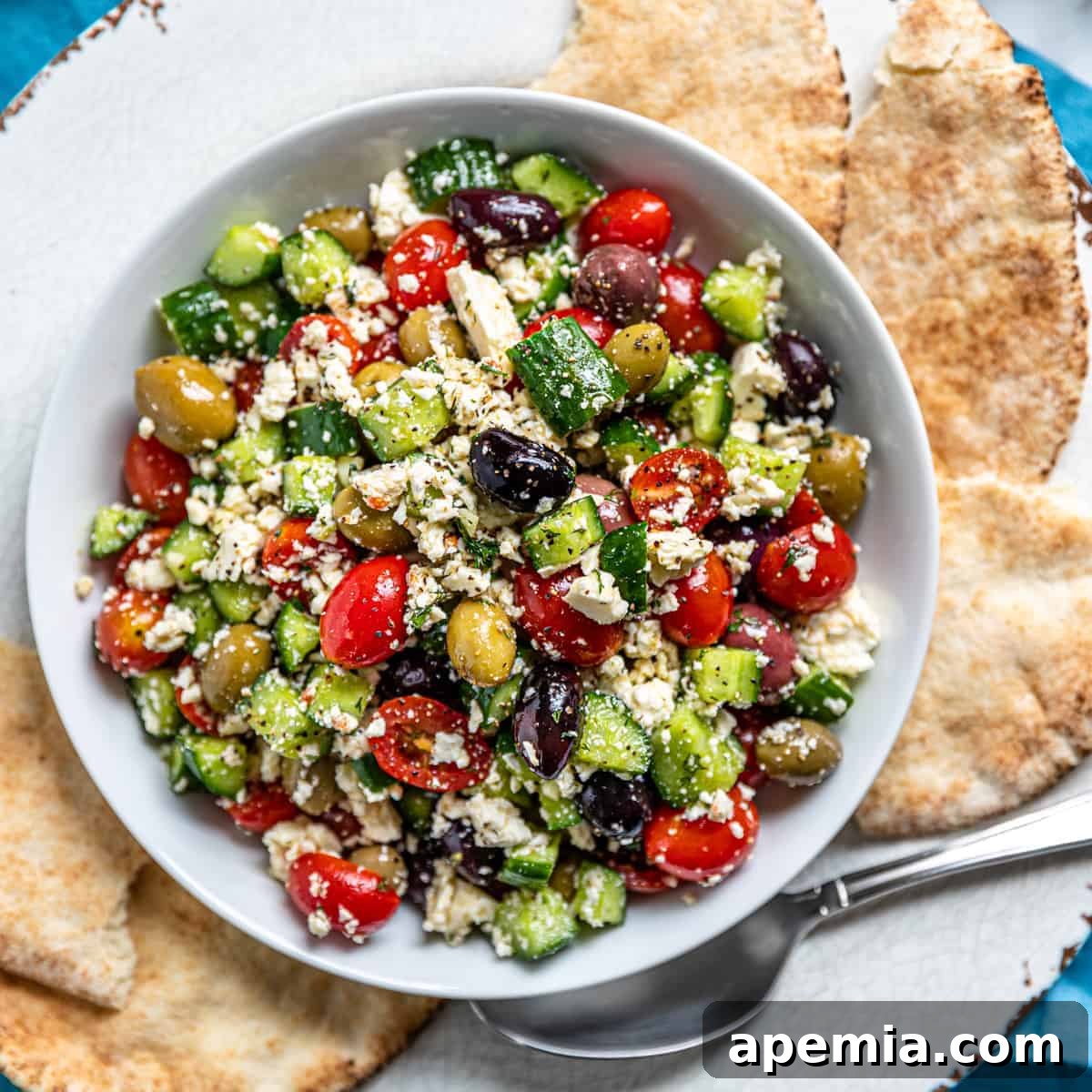
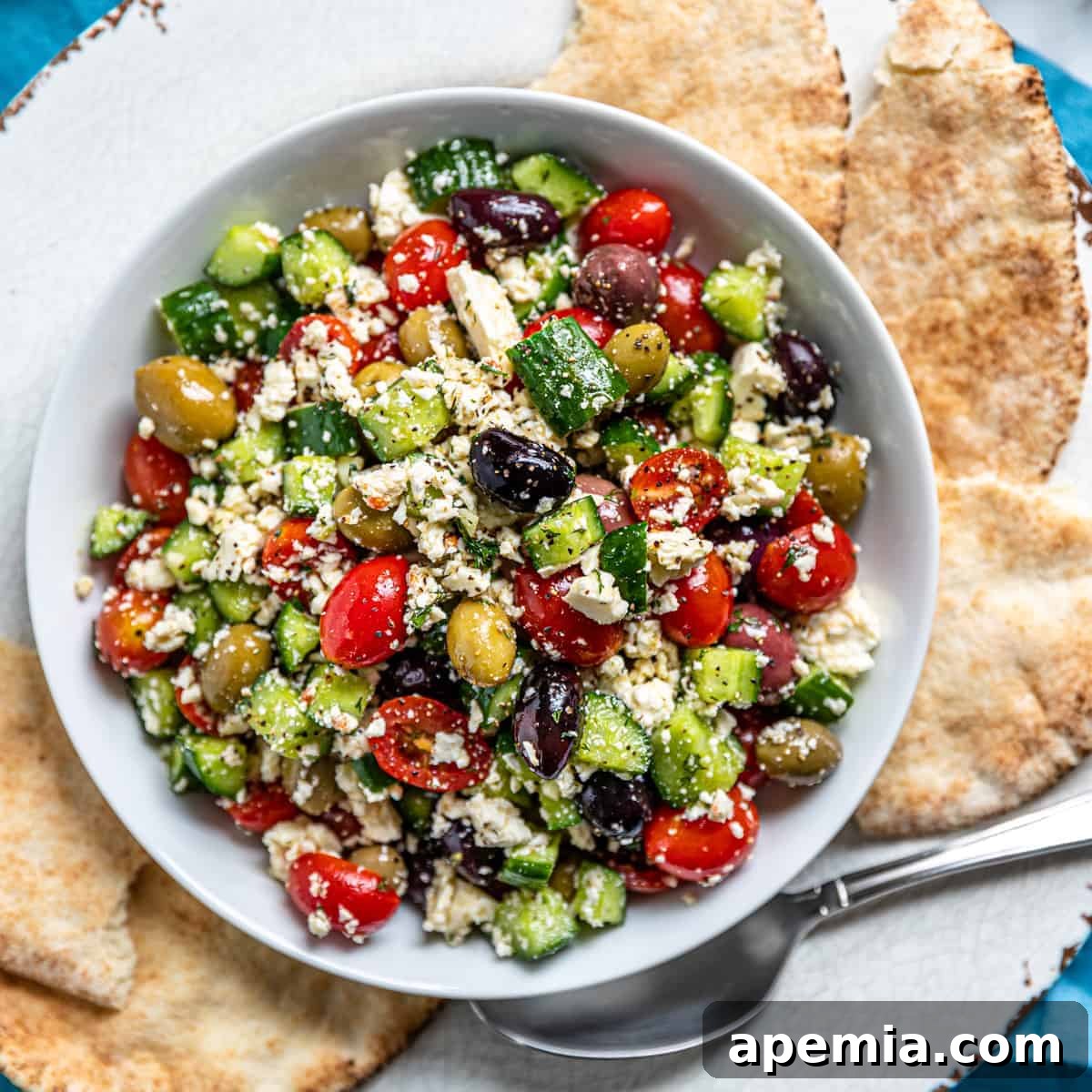
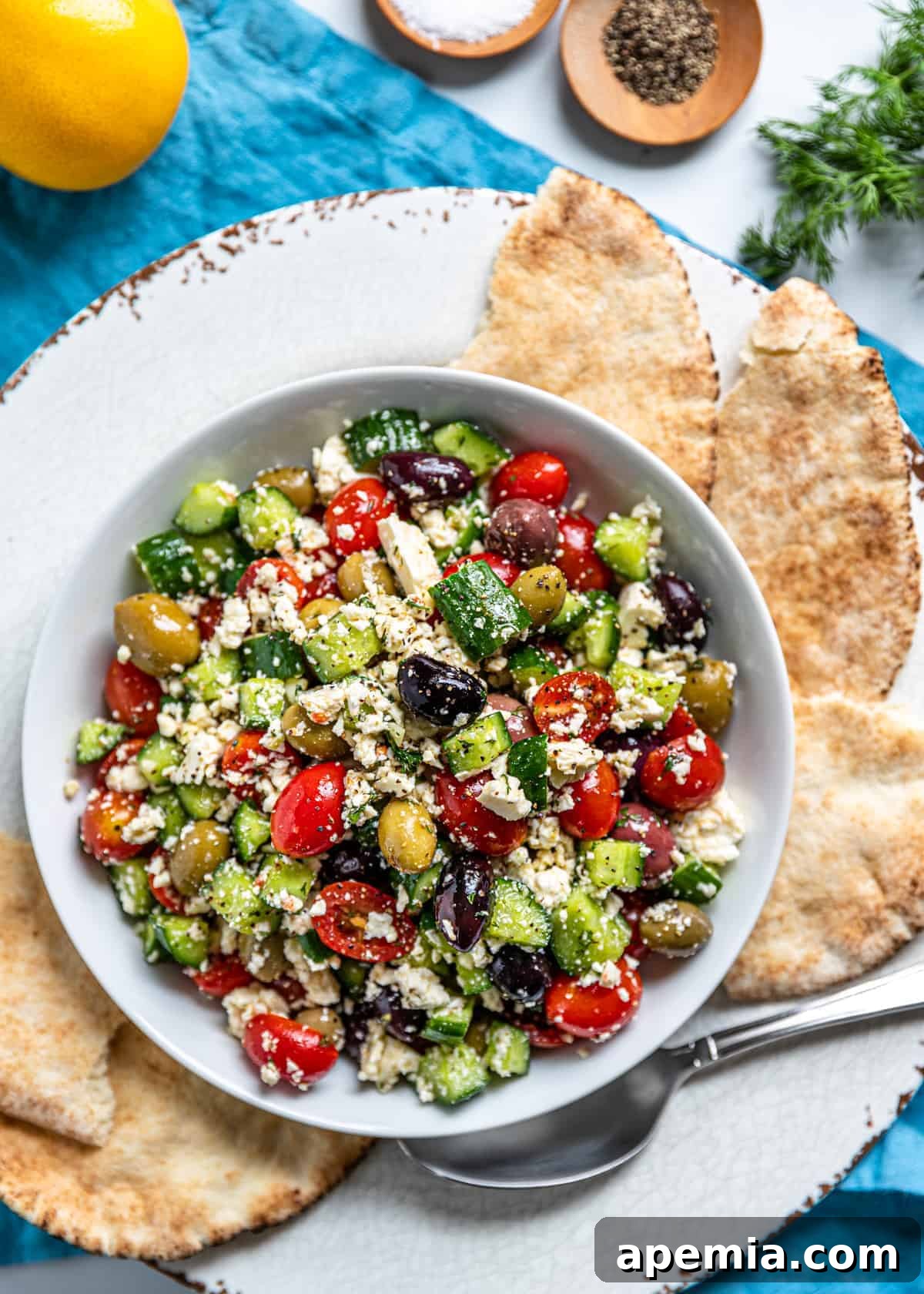
Experience the authentic taste of the Mediterranean with our ultimate Greek Feta Salad recipe. This vibrant dish is packed with crisp cucumbers, ripe tomatoes, briny Greek olives, and creamy feta cheese, all brought together with a zesty homemade Greek dressing. It’s a wonderfully fresh and satisfying option, whether you’re looking for a light lunch, a wholesome side, or a vibrant addition to any meal.
The Ultimate Greek Feta Salad: A Taste of the Mediterranean
There’s something incredibly appealing about simple salads that truly let their fresh, high-quality ingredients shine. This Greek Feta Salad is a prime example of such a dish. It masterfully combines the distinct flavors of crisp vegetables, savory olives, and the unmistakable tang of authentic Greek feta cheese, all harmonized by a vibrant, homemade dressing inspired by the sun-drenched Mediterranean. This recipe is not only bursting with flavor but also surprisingly easy to prepare, requiring minimal effort and a straightforward shopping list.
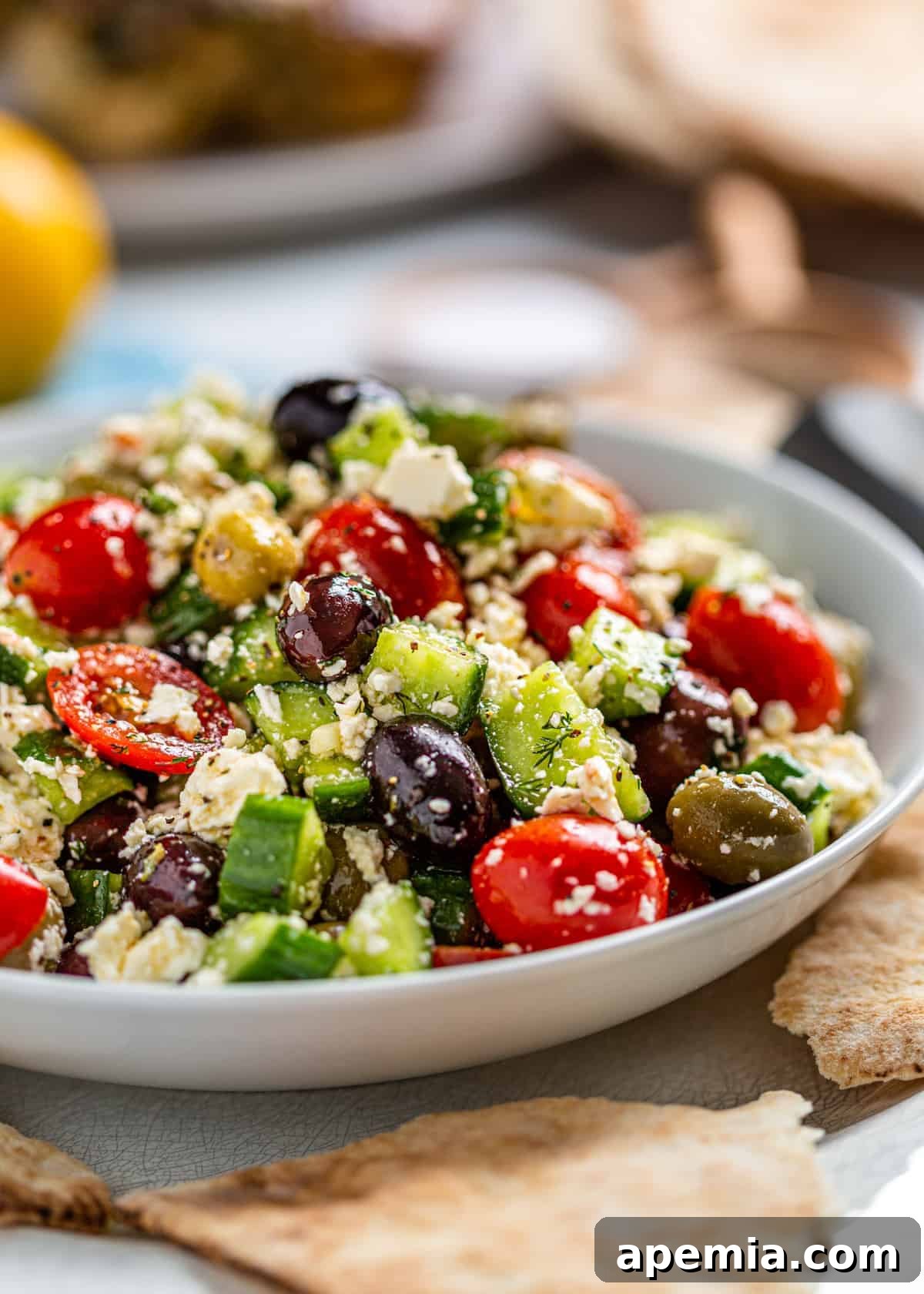
The true heroes of this salad are undoubtedly the rich, marinated olives and the wonderfully briny feta cheese. These potent flavors are beautifully balanced by the refreshing crunch of fresh cucumbers and the juicy sweetness of ripe tomatoes. The result is a harmonious blend of textures and tastes that creates an irresistibly satisfying culinary experience. This salad isn’t just delicious; it’s a celebration of fresh produce and classic Mediterranean staples, making it a perfect choice for any time of year.
Table of Contents
- Why You’ll Love This Greek Feta Salad
- The Heart of Greek Cuisine: Authentic Feta Cheese
- Essential Ingredients and Smart Substitutions
- Step-by-Step: How to Make Greek Feta Salad
- Serving Suggestions
- Storing Your Greek Feta Salad
- Recommended Kitchen Tools
- Frequently Asked Questions
- Greek Feta Salad Recipe
Why You’ll Love This Greek Feta Salad
There are countless reasons to fall in love with this Greek Feta Salad, making it a staple in any kitchen. First and foremost, its simplicity is a major draw. With minimal prep time and straightforward instructions, it’s perfect for busy weeknights or impromptu gatherings. The use of fresh, wholesome ingredients means every bite is packed with natural goodness, offering a healthy and satisfying meal option. It’s incredibly versatile, adaptable to various dietary preferences, and can be easily scaled up or down depending on your needs.
Beyond its ease, this salad delivers an explosion of authentic Greek flavors. The interplay of salty feta, briny olives, crisp vegetables, and a herbaceous dressing creates a symphony for your taste buds. It’s light yet filling, making it an excellent choice for a refreshing lunch or a delightful complement to heavier main courses. Plus, it’s a fantastic way to incorporate more vegetables and healthy fats into your diet, aligning perfectly with the principles of the Mediterranean diet. You’ll quickly find yourself making this salad again and again!
The Heart of Greek Cuisine: Authentic Feta Cheese
Greek feta cheese is not just an ingredient; it’s a cornerstone of Mediterranean cuisine, renowned for its distinctive tangy, salty flavor and delightfully crumbly yet creamy texture. What makes it truly special are the traditions surrounding its production. Authentic Greek feta is traditionally made from sheep’s milk, or a blend that includes goat’s milk, and is aged in brine, which contributes to its unique character.
The type of milk used significantly influences its profile. Sheep’s milk feta offers a richer, more robust flavor, while a blend with goat’s milk can result in a slightly firmer texture and a milder, often more peppery, taste. These subtle differences create a diverse range of flavors, but all true feta shares that characteristic briny kick that perfectly complements fresh vegetables.
When selecting feta for your salad, always look for “Protected Designation of Origin” (PDO) Greek feta. This ensures you’re getting the genuine article, crafted with traditional methods and milk sources that guarantee its superior taste and texture. Avoid pre-crumbled varieties, as they often contain anti-caking agents that compromise flavor and texture. Instead, opt for a block of feta stored in brine and crumble it yourself for the freshest experience.
Essential Ingredients and Smart Substitutions
Crafting a truly exceptional Greek Feta Salad starts with selecting the right ingredients. Here’s a detailed look at what you’ll need and some helpful substitution tips:
- Cucumbers: For this salad, Persian or English cucumbers are ideal. Persian cucumbers are sweeter, have fewer seeds, and contain less water, making them perfect for salads. English cucumbers also work wonderfully, offering a thin skin and minimal seeds that don’t require peeling. If neither is available, a regular garden cucumber can be used, but you might want to peel it and scoop out larger seeds to prevent excess moisture.
- Tomatoes: Small, sweet tomatoes like grape or cherry tomatoes are fantastic for their burst of flavor and firm texture. They complement the olives and feta beautifully. Halving them allows their juices to mingle with the dressing. Heirloom cherry tomatoes can add a lovely variation in color and sweetness.
- Greek Olives: The brininess of Greek olives is non-negotiable for an authentic flavor. Marinated Kalamata olives are highly recommended, either from the specialty food section of your grocery store (often found near the salad bar) or jarred. They provide a rich, salty, and slightly fruity depth that elevates the entire salad. If Kalamata are too strong, a mix of milder Greek olives like green Halkidiki can be used.
- Feta Cheese: As discussed, authentic Greek feta is a must. Its tangy, salty, and creamy yet crumbly texture is unmatched. It pairs incredibly well with the fresh vegetables and briny olives, while also adding a welcome protein boost to make the salad more substantial. Always opt for a block in brine and crumble it yourself for the best quality and flavor.
- Homemade Greek Salad Dressing: This simple yet powerful dressing ties all the flavors together. Its fresh, bright profile is far superior to store-bought options:
- Extra Virgin Olive Oil: The foundation of any good Mediterranean dressing. Use a high-quality extra virgin olive oil for the best flavor. Avocado oil can be a mild substitute if needed, but olive oil is traditional.
- Fresh Lemon Juice: Provides essential acidity and a bright, citrusy note that cuts through the richness of the feta and enhances all other flavors. Freshly squeezed is always best.
- Garlic: Freshly minced garlic adds a pungent depth that is characteristic of Greek cuisine. Avoid garlic powder for this dressing; the fresh aroma and flavor are key.
- Fresh Dill: Its distinct herbaceous, slightly anise-like flavor pairs exceptionally well with cucumbers and lemon, amplifying the authentic Greek profile of the salad. If fresh dill is unavailable, dried dill can be used in a smaller quantity (about 1/3 the amount).
- Dried Oregano: Another signature herb in Greek cooking, oregano provides an earthy, peppery warmth. Use dried oregano for a more concentrated flavor.
- Salt: Essential for enhancing all the other flavors. Adjust to taste, considering the saltiness of the feta and olives.
- Red Pepper Flakes: A touch of red pepper flakes adds a subtle warmth and a hint of spice, elevating the dressing without overpowering the fresh ingredients. Adjust the quantity based on your preference for heat.
Step-by-Step: How to Make Greek Feta Salad
Preparing this refreshing Greek Feta Salad is incredibly straightforward. Follow these simple steps for a perfect result every time:
- Prepare the Fresh Vegetables: Begin by trimming the ends off your cucumber. Slice it lengthwise, then slice each half again lengthwise. Turn these long pieces over and cut them crosswise into uniform ½-inch pieces. For the tomatoes, simply slice each small grape or cherry tomato in half lengthwise. This ensures even distribution and bite-sized pieces throughout the salad.
- Whip Up the Homemade Dressing: In a medium-sized mixing bowl, combine all the dressing ingredients: olive oil, fresh lemon juice, minced garlic, fresh dill, dried oregano, salt, and red pepper flakes. Whisk vigorously until all the ingredients are well incorporated and the dressing appears emulsified. The aroma alone will transport you to the Mediterranean!
- Assemble and Serve: Add the prepared cucumbers and olives to the bowl with the freshly made dressing. Next, crumble the authentic feta cheese directly over the vegetables. Gently toss all the ingredients together, ensuring everything is evenly coated with the vibrant dressing. For optimal flavor, you can serve the Greek Feta Salad immediately. If you’re not serving it right away, cover the bowl and chill it in the refrigerator. This allows the flavors to meld beautifully. Enjoy your homemade taste of Greece!
Serving Suggestions
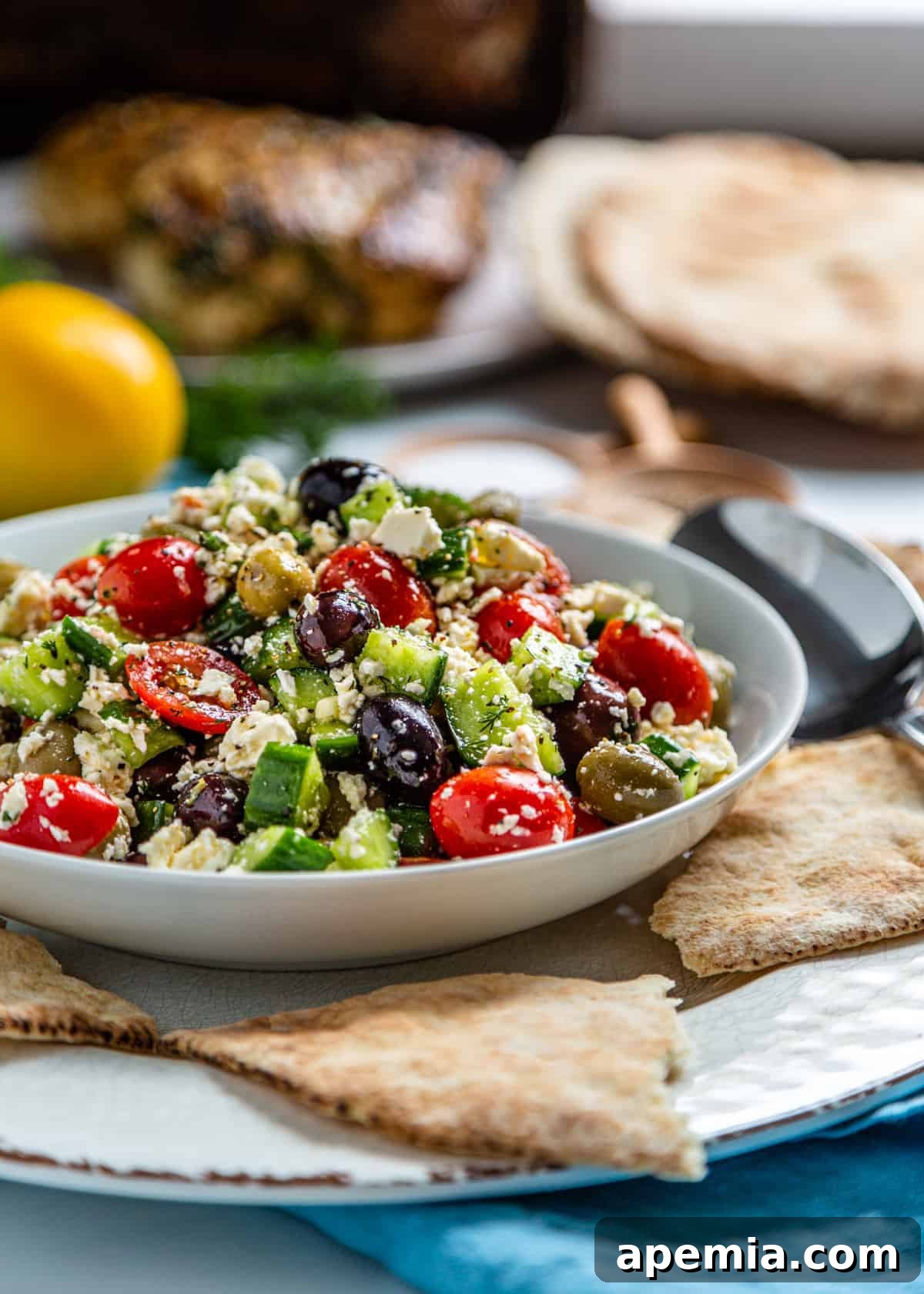
This versatile Greek Feta Salad is satisfying enough to stand on its own, especially when paired with some delicious accompaniments. For a light yet filling lunch, serve it alongside warm whole wheat pita bread and a dollop of creamy Mediterranean hummus. The combination of fresh, tangy flavors with the wholesome bread and dip is simply irresistible.
As a delightful side dish, this salad complements a variety of Mediterranean and Middle Eastern main courses. Pair it with succulent Jordanian roasted chicken with pomegranate sauce for a flavorful dinner, or serve it alongside savory beef and lamb koobideh kabobs. Its refreshing qualities cut through the richness of grilled meats beautifully. It also pairs wonderfully with grilled fish, falafel, or even a simple lentil soup. The possibilities are endless!
Storing Your Greek Feta Salad
Like most fresh salads, Greek Feta Salad is best enjoyed when it’s freshly made. The crispness of the vegetables and the vibrancy of the dressing are at their peak shortly after assembly. Ideally, consume the salad within 1-2 days of preparation. If the salad has already been dressed, aim to eat it within 24 hours. The main reason for this is that cucumbers and tomatoes tend to release excess moisture when dressed, which can make the salad watery and mushy over time.
To maximize the shelf-life of your Greek Feta Salad, it’s best to store the assembled salad (chopped cucumbers, tomatoes, olives, and feta) separately from the dressing. The undressed components will keep well in an airtight container in the refrigerator for up to 3 days. The homemade Greek dressing, stored in its own airtight container, can last for about 1 week in the fridge.
If you find that your dressed salad leftovers have become a bit watery, simply drain off any excess liquid before serving. To refresh the flavors, I often like to add an extra squeeze or two of fresh lemon juice or a sprinkle of fresh dill to brighten it up before enjoying.
Recommended Kitchen Tools
While this Greek Feta Salad is incredibly simple to make, having the right tools can make the process even smoother and more enjoyable:
- Quality Knife & Cutting Board: A sharp, good-quality chef’s knife and a sturdy cutting board are essential for efficiently chopping your cucumbers and tomatoes. A sharp knife not only makes cleaner cuts but also enhances safety by reducing the risk of slipping.
- Mixing Bowl: A spacious mixing bowl is crucial for tossing the salad ingredients and dressing without spillage. You can serve the salad directly in your mixing bowl for a casual meal, or transfer it to a more decorative serving bowl if you’re hosting guests.
- Whisk: A small whisk is perfect for emulsifying the homemade Greek salad dressing, ensuring all the ingredients are thoroughly combined for a consistent flavor.
Share this recipe on Pinterest!
Love this recipe? Share it with the world on Pinterest and inspire others to create this delicious salad.
Frequently Asked Questions
For an authentic and superior Greek Feta Salad, true Greek feta cheese is paramount. Look for feta that is made primarily from sheep’s milk, or a blend with goat’s milk, and is stored in brine. This type of feta delivers that characteristic creamy yet crumbly texture, along with a perfectly balanced tangy and salty flavor that beautifully complements fresh ingredients like cucumber and tomato. Avoid pre-crumbled feta, as it often sacrifices flavor and texture for convenience. Instead, purchase a block of feta in brine and crumble it fresh yourself; this ensures the best quality and taste for your salad.
The distinction between “feta” and “Greek salad cheese” is significant and relates to a Protected Designation of Origin (PDO) status. Authentic feta is a PDO cheese, meaning it must be produced in specific regions of Greece using traditional methods, primarily from sheep’s milk (or a maximum of 30% goat’s milk). This strict regulation guarantees its unique flavor, texture, and quality. Greek salad cheese, on the other hand, is often a generic term for similar cheeses made outside these PDO specifications, frequently using cow’s milk. While it might taste somewhat similar, it typically lacks the depth of flavor, the characteristic tang, and the distinct creamy-crumbly texture of genuine Greek feta.
If you prefer a thicker or creamier Greek salad dressing, there are a few simple methods you can try. One popular approach is to whisk in a small amount of Greek yogurt or sour cream, which will add creaminess and a pleasant tang. Start with a tablespoon and add more to achieve your desired consistency. Another option is to simply increase the amount of olive oil used in the dressing; olive oil adds body and can help create a slightly thicker emulsion. For a subtle thickening without altering the flavor profile significantly, you could also add a very small pinch of xanthan gum (a natural thickener), but use it sparingly as a little goes a long way.
Absolutely! While the core ingredients define the classic Greek Feta Salad, you can certainly customize it with other fresh vegetables. Bell peppers (especially green or red for color and crunch), thinly sliced red onion for a pungent kick, or even finely chopped romaine lettuce for added bulk and texture are all excellent additions. Just remember that adding more watery vegetables might require draining excess liquid before serving or adjusting the amount of dressing. Experiment to find your perfect combination!
Greek Feta Salad
Greek feta salad is made with tangy cheese, chopped veggies, and marinated olives. Flavorful and fresh, it’s also super easy to make!
4
15
15
30
PrintRecipe
Ingredients
- 2 cups Persian cucumbers or 1 English cucumber
- 8 oz small tomatoes, halved
- 2 cups marinated Greek olives
- 4 oz feta cheese, crumbled
Greek Salad Dressing
- 3 tbsp olive oil
- 1/2 lemon juice (about 2-3 tbsp) and zest
- 1 garlic clove, minced
- 1 tbsp fresh dill, chopped fine
- 1/2 tsp ground oregano
- 1/2 tsp salt
- 1/2 tsp red pepper flakes
Instructions
- Trim and discard ends of the cucumber. Slice the cucumber lengthwise and each half again lengthwise. Turn pieces and cut across into 1/2 inch pieces.
- Slice the small tomatoes in half lengthwise.
- In a medium size bowl, add the dressing ingredients and whisk together. Add the cucumber, tomatoes, olives, and crumble the feta cheese over. Toss to coat and serve immediately or chill if not using right away.
Nutrition
|
Carbohydrates: 9g
|
Protein: 6g
|
Fat: 27g
|
Saturated Fat: 7g
|
Cholesterol: 25mg
|
Sodium: 1666mg
|
Potassium: 273mg
|
Fiber: 3g
|
Sugar: 4g
|
Vitamin A: 998IU
|
Vitamin C: 11mg
|
Calcium: 196mg
|
Iron: 1mg
The information shown is an estimate provided by an online nutrition calculator. It should not be considered a substitute for a professional nutritionist’s advice.
Have You Made This Recipe? Let Me Know on Instagram
Tag @keviniscooking or tag me #keviniscooking!