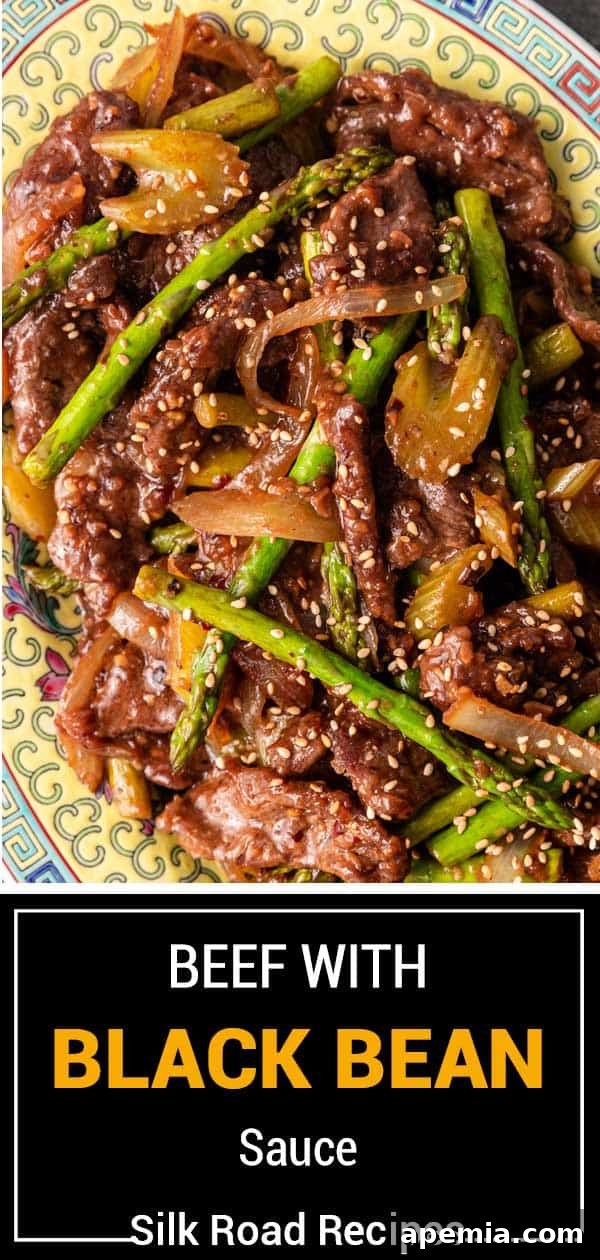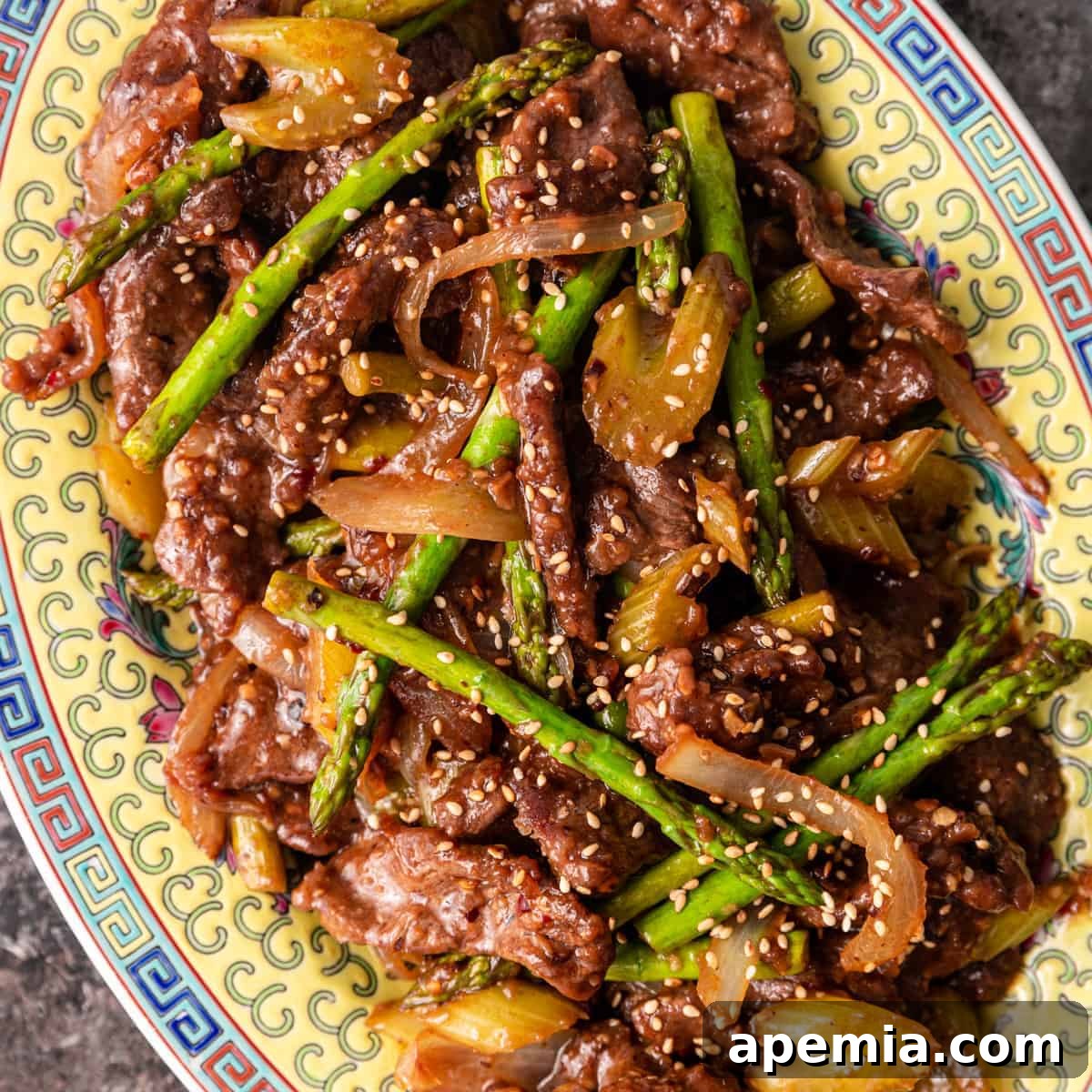
Indulge in the rich, savory flavors of a Chinese classic with this easy-to-follow recipe for Beef with Black Bean Sauce. Tender strips of velvety beef, combined with crisp, fresh vegetables, are bathed in an iconic umami-laden sauce made from fermented black beans. This dish isn’t just mouthwateringly delicious; it’s a perfect replica of your favorite takeout, made right in your own kitchen.
There’s nothing quite like the craving for Chinese takeout after a long, demanding week. The allure of those deeply satisfying flavors is undeniable. While ordering in is convenient, mastering your favorite Chinese dishes at home offers unparalleled freshness, control over ingredients, and a truly rewarding culinary experience. We’ve already explored beloved recipes like General Tso’s Chicken and Crispy Egg Rolls to help you satisfy that craving. Today, we’re diving into another takeout hero: the exquisite Beef with Black Bean Sauce.
This dish holds a special place in my heart – and on my dinner table – for its incredible depth of flavor and irresistible texture. Imagine succulent, melt-in-your-mouth beef, perfectly stir-fried and coated in a luxurious, aromatic sauce that bursts with savory umami notes. It’s a sensory delight that keeps me reaching for this recipe again and again, proving that homemade Chinese food can rival, or even surpass, any restaurant offering.
Table of Contents
- Mastering the Flavors of Black Bean Sauce
- Ingredient Essentials and Clever Substitutions
- Step-by-Step Guide to Homemade Perfection
- Recommended Kitchen Tools for Stir-Fry Success
- Storing, Reheating, and Meal Prep Tips
- Frequently Asked Questions
- Beef with Black Bean Sauce Recipe Card
Mastering the Flavors of Black Bean Sauce
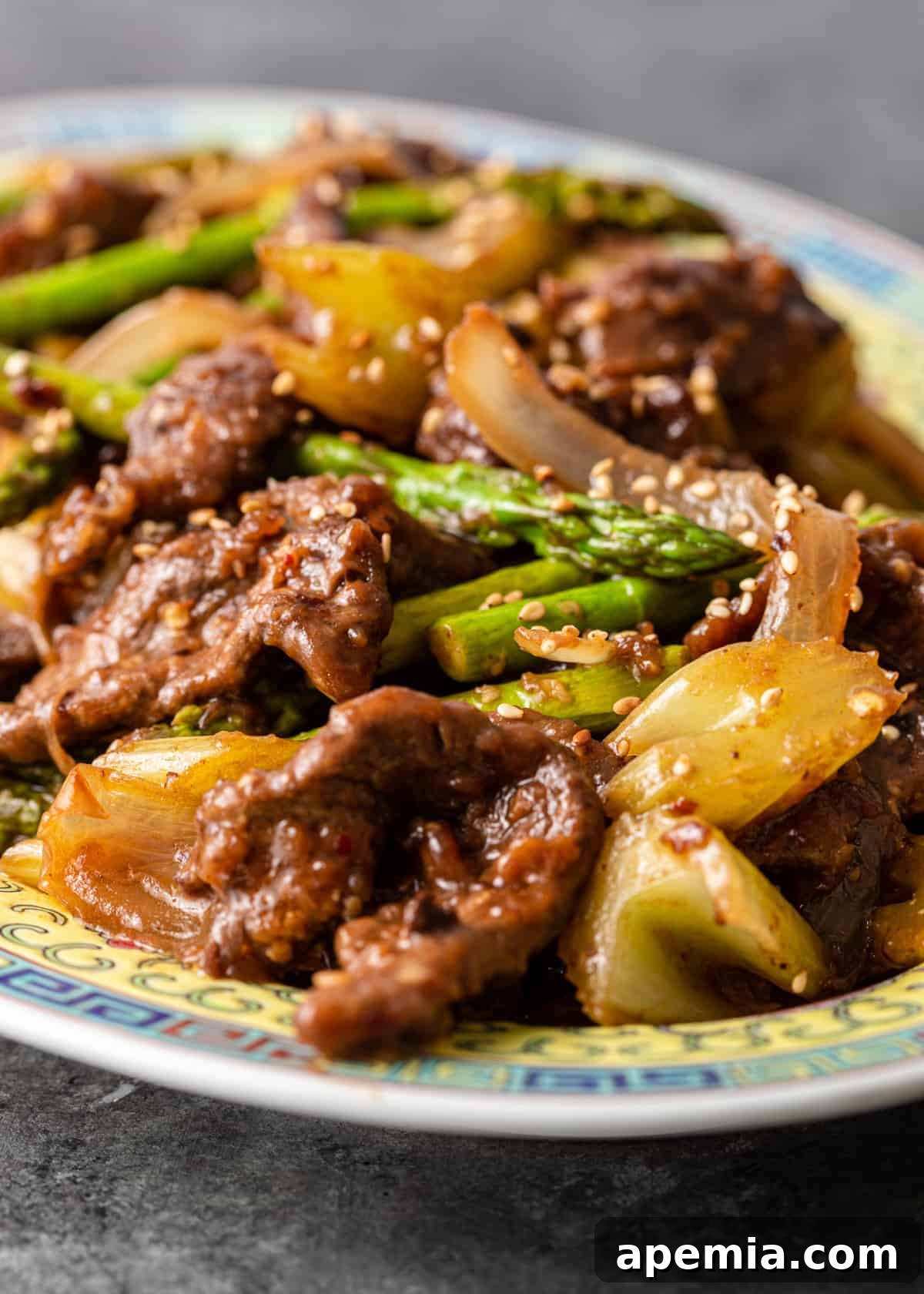
The magic of Beef with Black Bean Sauce lies in its expertly balanced flavor profile. While savory notes from soy sauce and the subtle sweetness and crunch of fresh vegetables like onion, celery, and asparagus contribute significantly, it is undoubtedly the fermented black beans that are the star of this culinary show. These tiny, unassuming beans, when fermented, develop an extraordinary deep, salty, and earthy essence with a complex umami kick that is utterly addictive. This unique characteristic is precisely why black bean sauce is a cornerstone of traditional Chinese cuisine, beloved across generations.
In just about 30 minutes, you can whip up this restaurant-quality beef with black bean sauce right in your own kitchen. Serve it piping hot over a bed of fluffy steamed rice or your favorite stir-fried noodles for a truly satisfying and wholesome meal that will transport your taste buds straight to an authentic Chinese eatery.

Chef’s Tip for Perfect Velveting
Mastering the Flavors of Black Bean Sauce
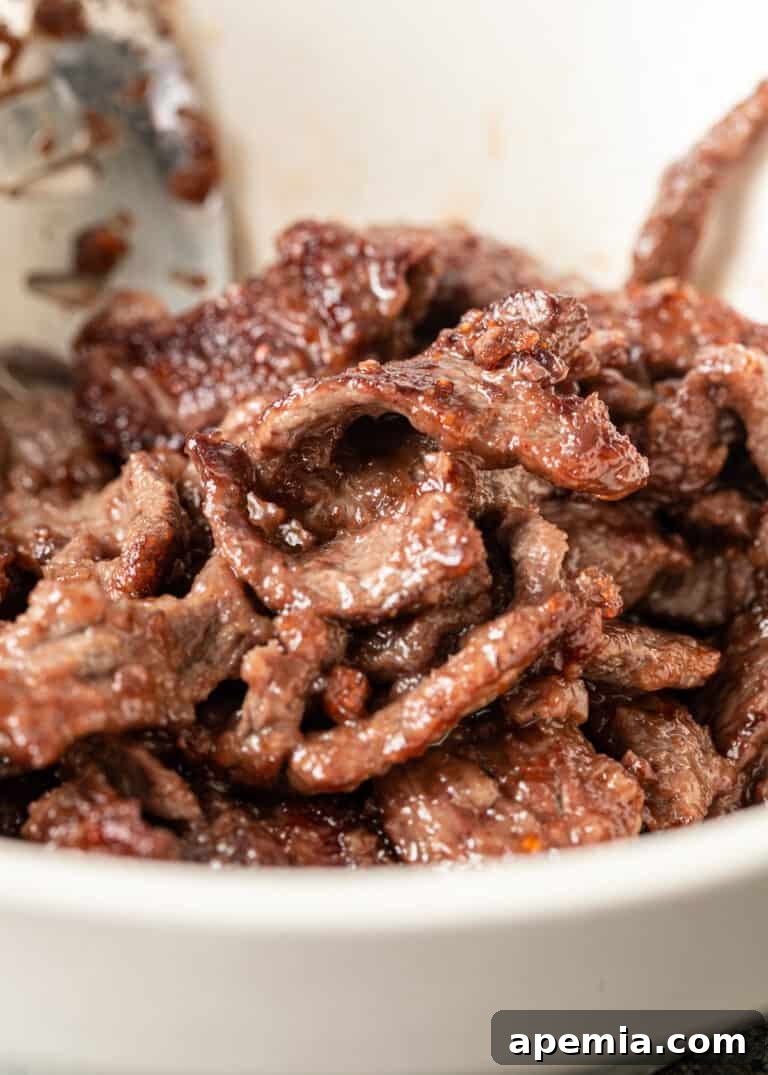
To achieve truly tender, “velvety” beef, don’t skimp on the marinating step. The cornstarch in the marinade creates a protective coating that locks in moisture and keeps the beef incredibly tender during high-heat stir-frying. For best results, marinate for at least 30 minutes, or even up to an hour in the refrigerator. This simple technique is the secret to restaurant-quality beef texture in your stir-fries!
Ingredient Essentials and Clever Substitutions
(For a complete list of precise quantities, please refer to the detailed recipe card below.)
- Beef: For a perfect stir-fry, select a lean cut of beef. Sirloin is my go-to for its tenderness and flavor, but other excellent choices include hanger steak, flank steak, skirt steak, or even a boneless rump roast. The key is to slice it thinly against the grain for maximum tenderness.
- Vegetable Oil: Essential for high-heat stir-frying. Any neutral-flavored cooking oil with a high smoke point, such as canola oil, peanut oil, or grapeseed oil, will work beautifully.
- Cornstarch: A crucial ingredient for “velveting” the beef. It tenderizes the meat by protecting its fibers during cooking, resulting in that wonderfully soft, silky texture characteristic of restaurant-quality Chinese dishes.
- Dark Soy Sauce: This isn’t just for color! Dark soy sauce is fermented longer than regular soy sauce, boasting a richer, deeper umami flavor and a slightly thicker consistency. It also has a lower salt content. If you can’t find dark soy sauce, a passable substitute can be made by mixing equal parts regular soy sauce and oyster sauce, or simply use regular soy sauce, noting the difference in color and depth.
- Beef Broth: Forms the flavorful liquid base of our robust black bean sauce, adding richness and body.
- Black Bean Paste: The true star and namesake of our dish! This fermented black bean paste delivers an intense, savory, salty, and earthy umami punch that defines this recipe. Don’t skip it!
- Rice Wine Vinegar: Adds a subtle tang and brightens the sauce, balancing the richness of the black beans. If unavailable, apple cider vinegar or white wine vinegar can be used as alternatives.
- Minced Garlic & Ginger Paste: This classic aromatic duo is indispensable in Asian cuisine. They work in perfect harmony to provide a fragrant, pungent, and warming foundation that elevates all the other flavors in your black bean sauce.
- Red Pepper Flakes: For those who enjoy a touch of heat, red pepper flakes add a pleasant kick to the dish. Feel free to adjust the quantity or omit them entirely for a milder version.
- Sesame Oil: A drizzle of roasted sesame oil at the end imparts a distinctive nutty aroma and deepens the savory profile of the black bean sauce, adding another layer of complexity.
- White Onion: Contributes natural sweetness and a satisfying textural crunch that complements the tender beef.
- Asparagus & Celery: These vegetables add freshness, color, and a pleasant crispness. The beauty of stir-fries is their versatility – feel free to swap these out for other vegetables you have on hand or prefer. Carrots, bell peppers, snow peas, green beans, broccoli florets, or even baby corn are all fantastic additions.
Step-by-Step Guide to Homemade Perfection
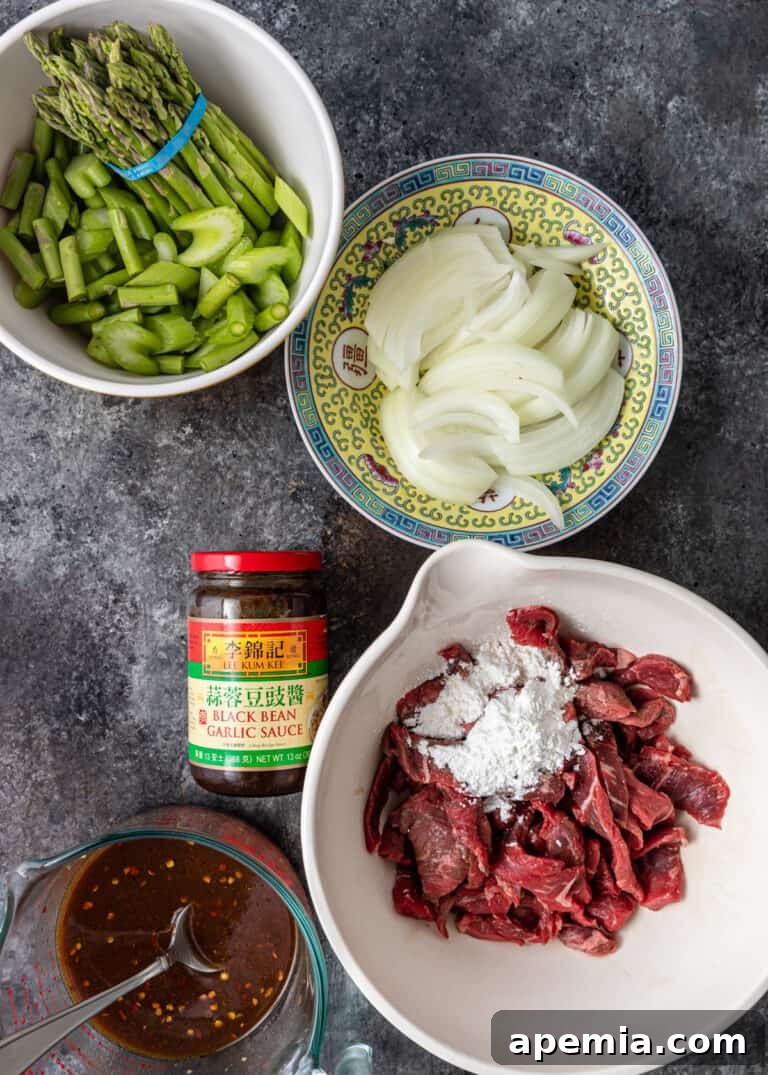
- Prepare and Marinate the Beef: Begin by thinly slicing your chosen beef cut. Cut the meat along the grain into 2-inch strips, then cut these strips across the grain into ¼-inch thick pieces. This cross-grain slicing is essential for maximum tenderness. In a bowl, combine the beef strips with 1 tablespoon of vegetable oil, 3 tablespoons of cornstarch, and 1 teaspoon of dark soy sauce. Toss well to ensure every piece is evenly coated. Allow the beef to marinate for at least 10 minutes (30 minutes or more in the refrigerator is ideal for the best velvety texture).
- Chop the Vegetables: While the beef marinates, prepare your vegetables. Peel and halve the white onion, then cut each half into ½-inch strips. Trim the woody ends off the asparagus and cut the stalks into thirds. Slice the celery into uniform ½-inch pieces. Set all your prepped vegetables aside – this is crucial for the fast-paced nature of stir-frying.
- Whisk the Flavorful Sauce: In a separate small bowl, combine all the sauce ingredients: ¼ cup of beef broth, 3 tablespoons of black bean paste, 2 tablespoons of rice wine vinegar, 1 tablespoon of dark soy sauce, 2 cloves of minced garlic, 2 teaspoons of ginger paste, 1 teaspoon of red pepper flakes (if using), and 1 teaspoon of sesame oil. Whisk vigorously until all ingredients are thoroughly combined and the black bean paste is fully integrated. Set this aside, ready to be added to the wok.
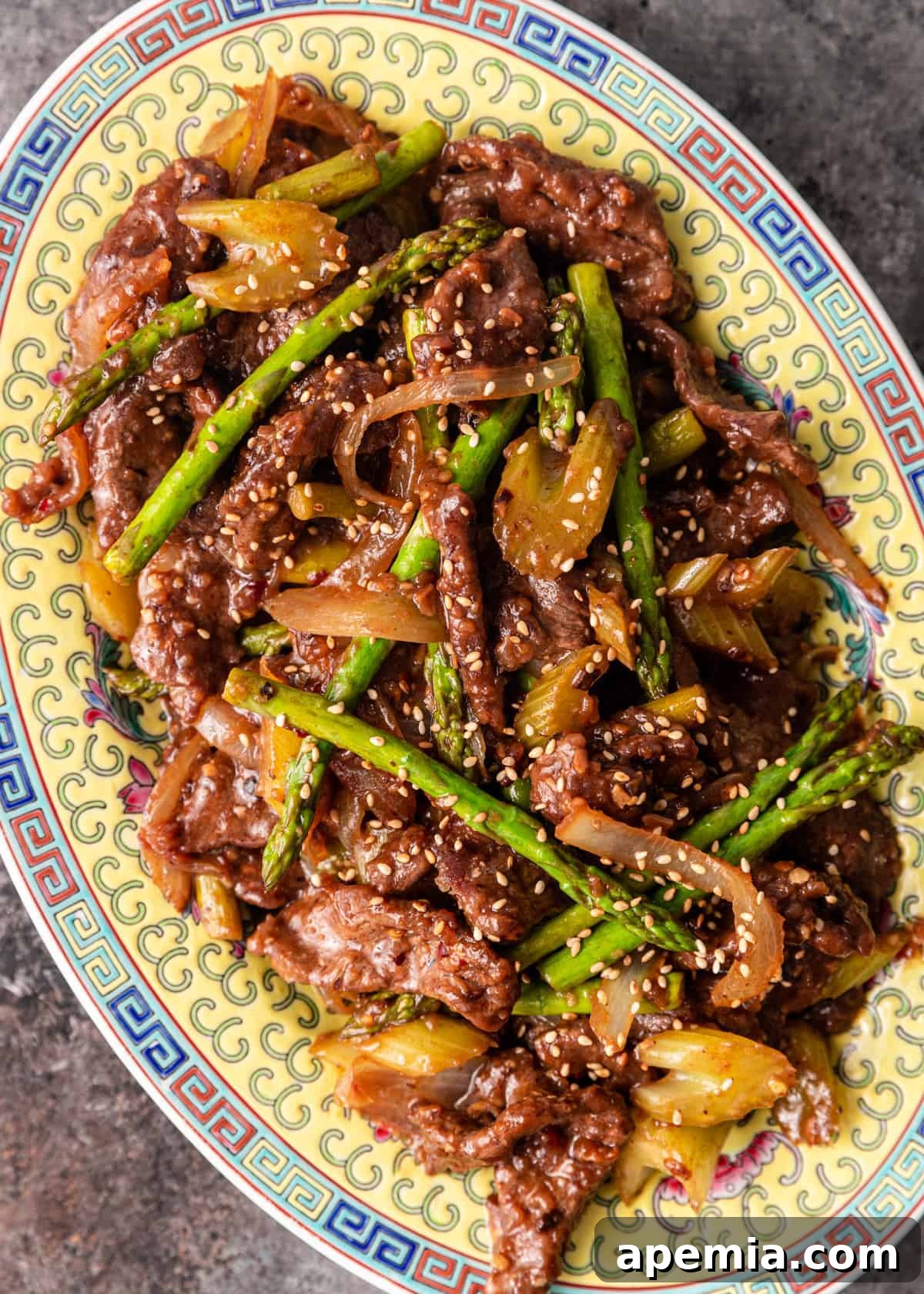
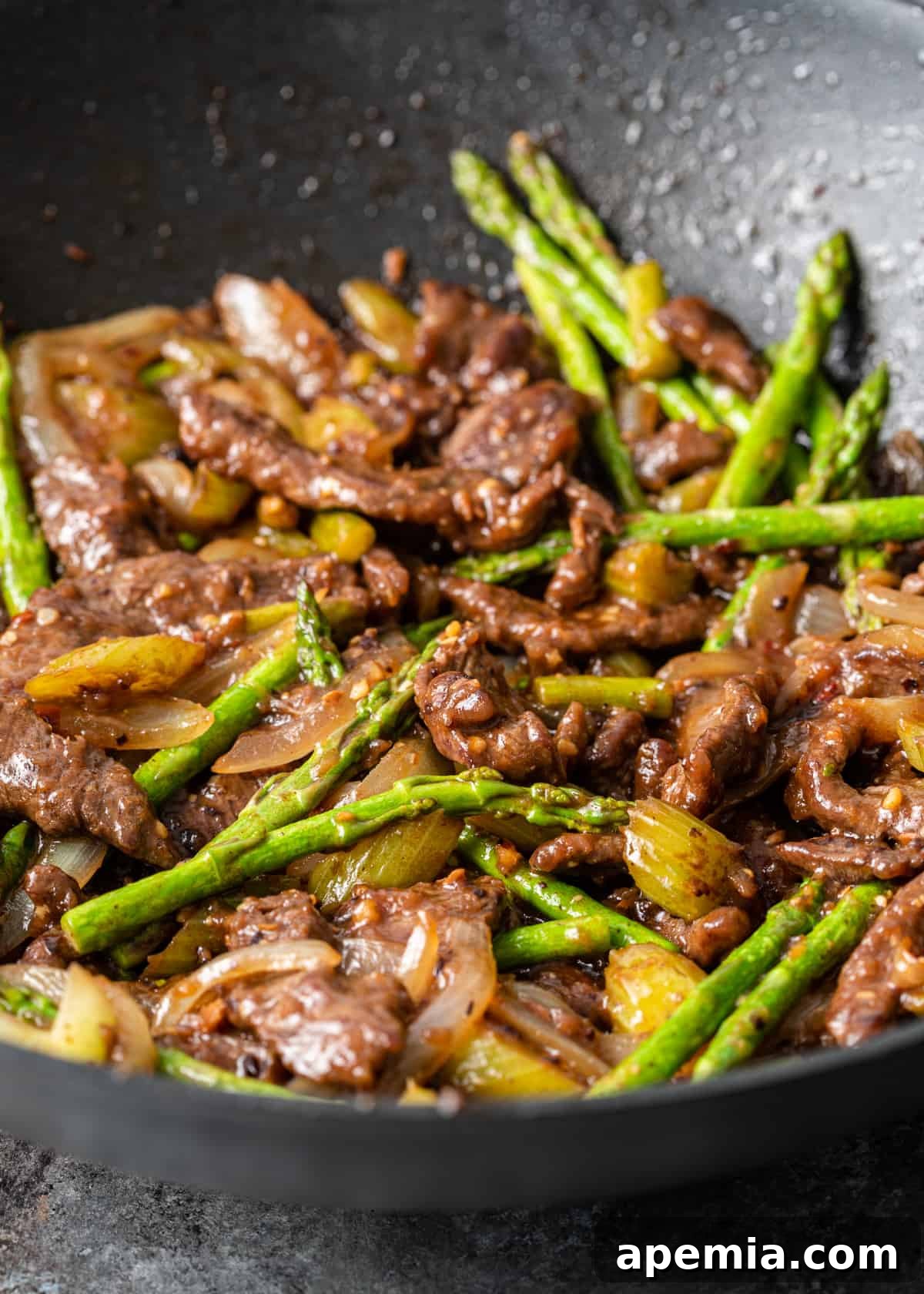
- The Art of Stir-Frying: Heat your wok over high heat until it begins to smoke lightly – this indicates it’s hot enough. Add 2 tablespoons of vegetable oil, swirling to coat the wok surface. Add the marinated beef (if cooking a large batch, do this in two smaller batches to avoid overcrowding, which can steam the meat instead of searing it). Stir-fry for approximately 3 minutes, tossing continuously and breaking apart any strips that stick together, until the beef is beautifully seared and no longer pink. Remove the cooked beef from the wok and set it aside. Without cleaning the wok or reducing the heat, add the sliced onion and stir-fry for 3 minutes until it starts to soften. Next, add the celery and continue to cook for another 3 minutes. Finally, return the seared beef to the wok along with the prepped asparagus and pour in your whisked black bean sauce mixture. Stir-fry for a final 4 minutes, allowing the sauce to thicken and coat all the ingredients evenly, infusing them with its rich flavor.
- Serve with Pride: Your homemade Beef with Black Bean Sauce is now ready! Serve it immediately over a generous portion of freshly steamed white rice, brown rice, or your favorite Chinese noodles. For an extra touch of presentation and flavor, garnish with a sprinkle of toasted sesame seeds and fresh cilantro sprigs. Enjoy your flavorful, restaurant-quality meal!
Recommended Kitchen Tools for Stir-Fry Success
Achieving the perfect stir-fry texture and flavor often comes down to the right equipment. While you can certainly make this dish in a large skillet, a wok is truly transformative for this style of cooking.
- Wok: A traditional wok is your best friend for stir-frying. Its unique round-bottomed shape is specifically designed to distribute high heat evenly across the entire cooking surface, ensuring that ingredients cook quickly and uniformly. The sloped sides also make it easy to toss ingredients without them spilling out, and the concentrated heat at the bottom creates that distinctive “wok hei” (breath of the wok) flavor that is highly prized in Chinese cuisine. Investing in a good carbon steel wok will elevate your stir-frying game considerably.
- Sharp Knife and Cutting Board: Essential for precise, uniform slicing of beef and vegetables, which ensures even cooking.
- Large Bowl for Marinating: For mixing and letting your beef tenderize.
- Small Whisk or Fork: To perfectly combine your flavorful sauce ingredients.
- Spatula or Wok Utensil: A sturdy spatula designed for high-heat cooking is ideal for tossing and stirring.
Storing, Reheating, and Meal Prep Tips
This Beef with Black Bean Sauce recipe is fantastic fresh, but it also makes for excellent leftovers, perfect for meal prepping. Follow these tips to enjoy your dish days after cooking:
Allow your Beef with Black Bean Sauce to cool completely to room temperature before transferring it to an airtight container. It can then be stored in the refrigerator for up to 5 days, maintaining its delicious flavor and texture.
To reheat, the best method is to recreate the original cooking process as closely as possible. Heat a little vegetable oil in a wok or large skillet over medium-high heat. Add your leftovers and stir-fry gently until heated through. If the sauce appears too thick or the beef looks a bit dry, simply add a tablespoon or two of water or beef broth to loosen it up and rehydrate the ingredients.
Alternatively, the microwave can also be used for convenience. Heat the dish on medium power in 30-second increments, stirring after each interval, until thoroughly warmed (this usually takes up to 2 minutes total). To prevent the beef from drying out, add a splash of water or beef broth to your container before microwaving.
Share this irresistible recipe on Pinterest!
Loved making this savory beef with black bean sauce? Share your culinary success and inspire others by pinning this recipe to your boards.
Frequently Asked Questions
Absolutely! In fact, preparing the sauce in advance can actually enhance its flavor profile. As the black bean sauce sits, the intense saltiness from the fermented black beans and soy sauce tends to mellow out slightly. This allows the more subtle sweet, savory, and aromatic notes from the garlic, ginger, and other ingredients to shine through, creating a more harmonious and complex flavor. Additionally, the sauce will naturally thicken a bit as it rests, ensuring it perfectly coats every strip of beef and vegetable when you’re ready to stir-fry.
Chewy beef is a common issue in stir-fries, often resulting from overcooking or improper preparation. With the high heat of a wok, beef cooks very quickly. If you cook it for too long, even by a minute, it can become tough. Aim for just enough cooking time to sear the outside and ensure it’s no longer pink. Another crucial factor is marination; extending the marinating time for your beef (even up to an hour) allows the cornstarch and soy sauce to work their magic, breaking down tough muscle fibers and helping you achieve that desirable melt-in-the-mouth, velvety texture. Also, ensure you slice the beef thinly and against the grain.
You certainly can! While it won’t strictly be “Beef with Black Bean Sauce” anymore, the rich and savory black bean sauce pairs wonderfully with a variety of other proteins. Chicken, pork, or lamb can be excellent alternatives, often requiring similar cooking times and preparation methods. For those seeking a plant-based option, firm tofu or seitan are fantastic choices. Ensure they are pressed well to remove excess moisture and cut into appropriate sizes before stir-frying to absorb the sauce effectively. The versatility of black bean sauce means you can truly make this dish your own!
The classic accompaniment is plain steamed white or brown rice, which perfectly soaks up the delicious sauce. For a heartier meal, serve it over stir-fried noodles like lo mein or chow mein. You can also add a side of quick blanched or stir-fried greens like bok choy or gai lan for extra vegetables and freshness. A sprinkle of toasted sesame seeds or fresh cilantro provides a beautiful garnish and an extra layer of flavor.
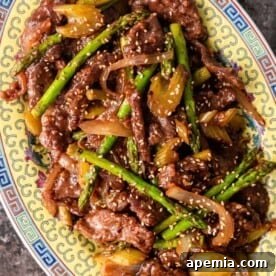
Beef with Black Bean Sauce
4
15 minutesmins
15 minutesmins
30 minutesmins
Print Recipe
Ingredients
- 1 ½ lbs beef sirloin (See Note 1 for alternatives)
- 1 tbsp vegetable oil (for marinade)
- 3 tbsp cornstarch
- 1 tsp dark soy sauce (See Note 2)
Sauce
- 1/4 cup beef broth
- 3 tbsp black bean paste
- 2 tbsp rice wine vinegar
- 1 tbsp dark soy sauce (See Note 2)
- 2 cloves garlic minced
- 2 tsp ginger paste
- 1 tsp red pepper flakes (optional, for heat)
- 1 tsp sesame oil
Stir Fry
- 2 tbsp vegetable oil (for stir-frying)
- 1 medium white onion
- 1 lb asparagus woody ends trimmed off
- 4 stalks celery
Instructions
- Cut beef along the grain into 2-inch strips, then cut across the grain into ¼-inch thick pieces. If using pre-cut stir-fry beef, ensure strips are similar size.
- In a medium bowl, combine the sliced beef with 1 tablespoon vegetable oil, cornstarch, and 1 teaspoon dark soy sauce. Toss well to coat. Marinate for at least 10 minutes, or longer in the refrigerator for optimal tenderness.
- Prepare your vegetables: Peel and cut the white onion in half, then trim both ends. With the cut side facing you, slice each half into ½-inch strips across the onion. Cut the celery into ½-inch pieces and the asparagus into thirds after removing the woody ends. Set all vegetables aside.
- In a small bowl, whisk together the beef broth, black bean paste, rice wine vinegar, 1 tablespoon dark soy sauce, minced garlic, ginger paste, red pepper flakes (if using), and sesame oil until well combined. Set this sauce mixture aside.
- Heat a wok over high heat until it just begins to smoke. Add 2 tablespoons of vegetable oil, swirling to coat the wok. Add the marinated beef (in batches if necessary to avoid crowding) and stir-fry for 3 minutes, tossing occasionally, until the beef is seared and no longer pink. Remove the beef from the wok and set aside on a clean plate.
- Without washing or cooling the wok, add the sliced onion and stir-fry for 3 minutes until slightly softened. Then add the celery and cook for another 3 minutes. Finally, return the cooked beef to the wok, add the asparagus, and pour in the prepared black bean sauce mixture. Stir-fry for a final 4 minutes, allowing the sauce to thicken and coat all ingredients thoroughly.
- Serve your delicious beef with black bean sauce immediately, either as is, over a bed of steamed rice, or with noodles. Garnish with toasted sesame seeds and fresh cilantro sprigs, if desired. Enjoy!
Notes
- For incredibly tender stir-fried beef, beyond sirloin, consider cuts like hanger steak, flank steak, skirt steak, or a boneless rump roast. Always slice them thinly and against the grain to break up muscle fibers.
- Dark soy sauce differs significantly from regular (light, all-purpose) soy sauce. It is much thicker, has a deeper, richer umami flavor, and is produced through a longer fermentation/aging process. It also contains less salt. Its distinctive dark, almost black color adds visual appeal. If dark soy sauce is unavailable, a substitute can be made by mixing equal parts regular soy sauce and oyster sauce, or simply use regular soy sauce (though the final color and flavor depth will vary).
Nutrition
Carbohydrates: 15g |
Protein: 43g |
Fat: 8g |
Saturated Fat: 2g |
Cholesterol: 94mg |
Sodium: 958mg |
Potassium: 890mg |
Fiber: 4g |
Sugar: 4g |
Vitamin A: 1024IU |
Vitamin C: 9mg |
Calcium: 78mg |
Iron: 6mg
The nutritional information provided is an estimate from an online calculator and should not be considered a substitute for professional dietary advice.
Made This Recipe? Share Your Culinary Creation on Instagram!
Tag @keviniscooking or use the hashtag #keviniscooking so we can see your delicious work!