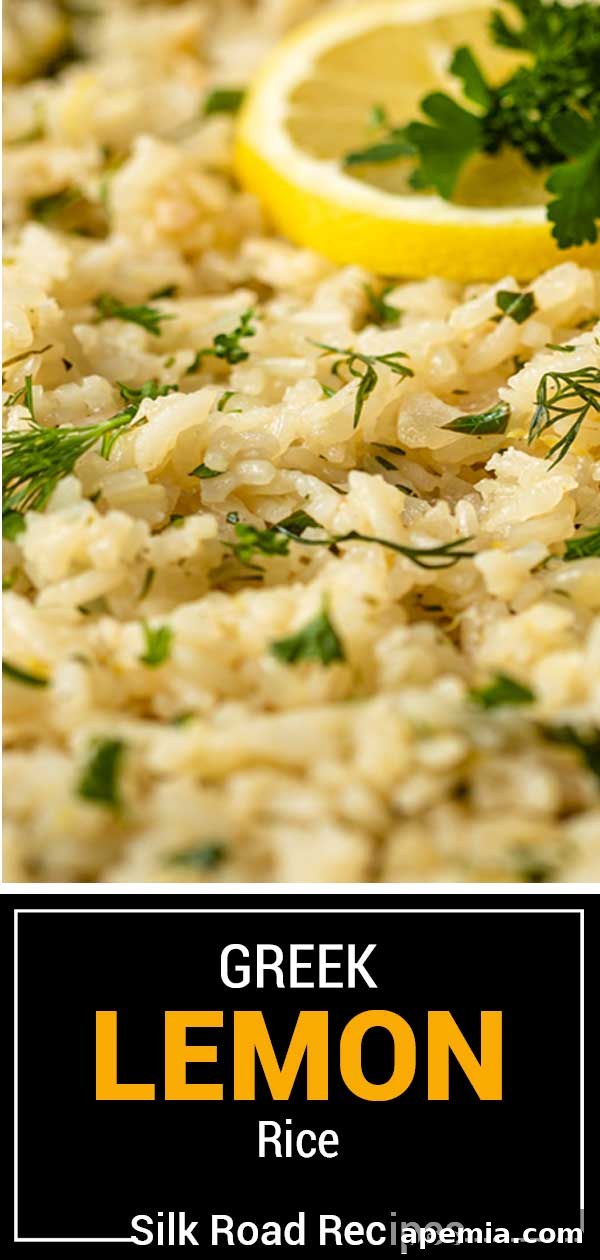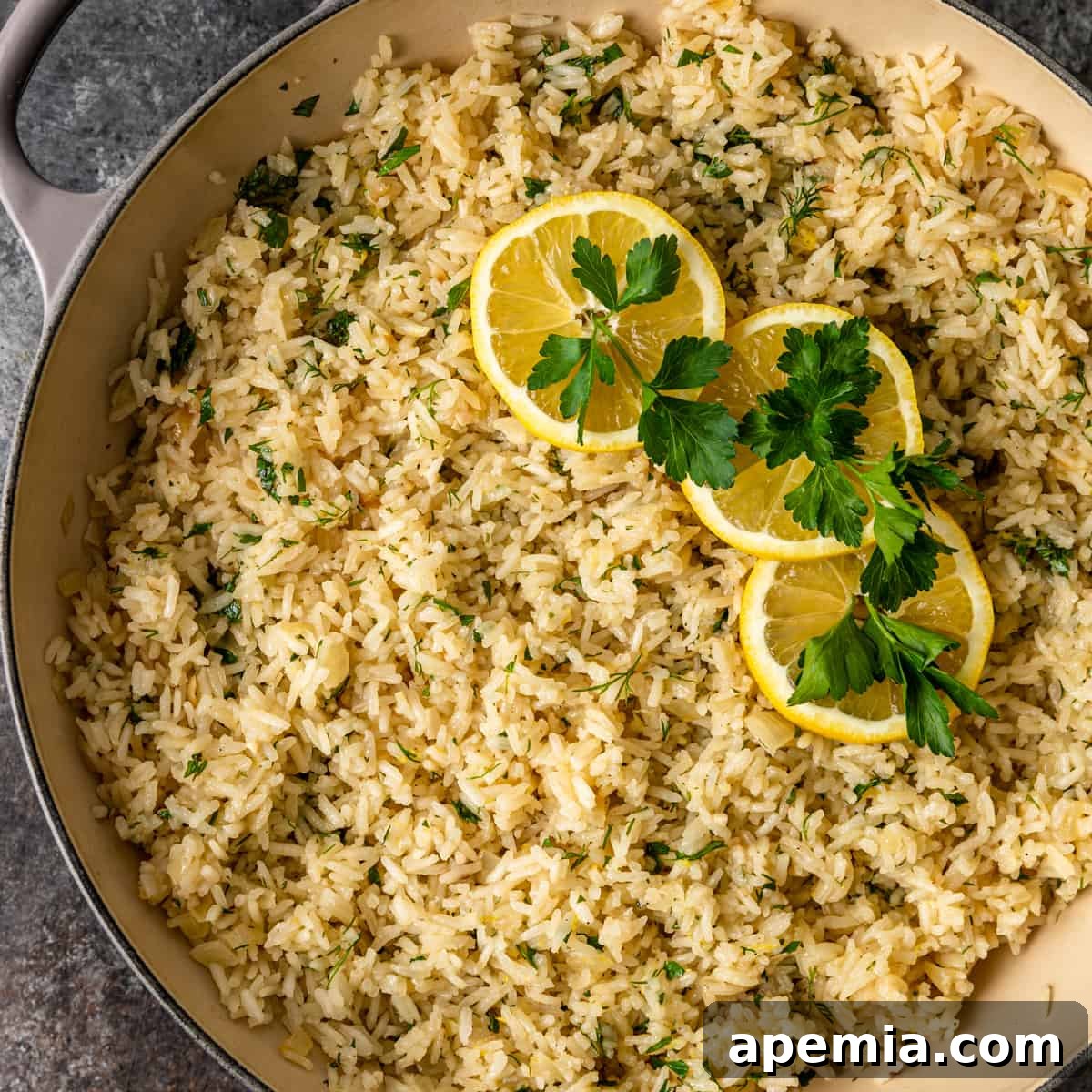
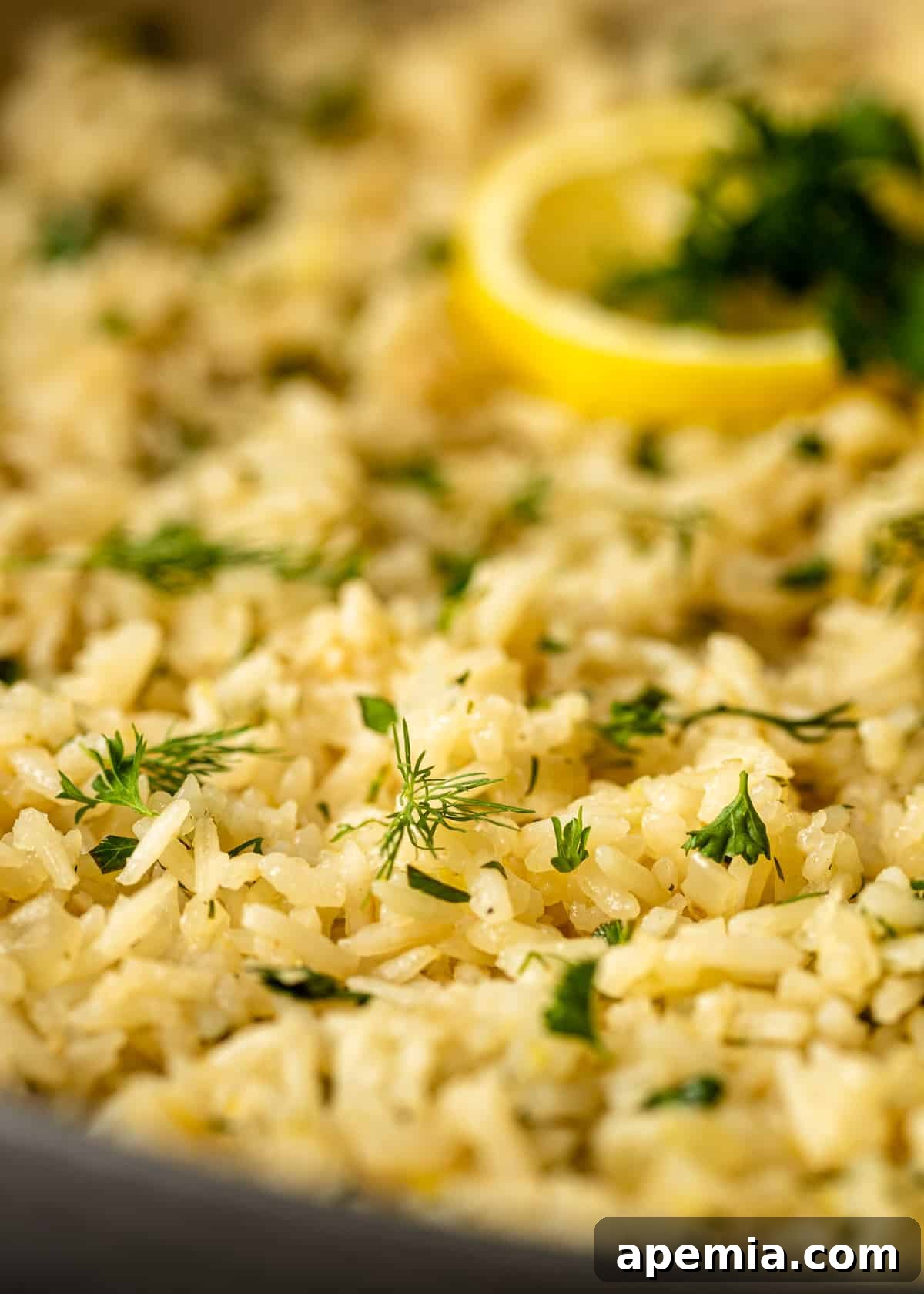
Experience the vibrant flavors of the Mediterranean with this bright and irresistibly tasty Greek Lemon Rice. This delightful dish, featuring a harmonious blend of fresh herbs, aromatic garlic, sweet onion, and an abundance of zesty lemon, serves as a magnificent side that complements virtually any meal. Remarkably, it’s a 30-minute, one-pan recipe, making it an ideal choice for busy weeknights, yet it’s flavorful enough to stand alone as a light and satisfying meal.
Why You’ll Love This Greek Lemon Rice Recipe
While some might opt for instant rice for speed, our Greek Lemon Rice recipe, though involving a few more steps like sautéing onions and garlic, and lightly toasting the rice grains before simmering, promises an unparalleled depth of flavor and texture that is well worth every moment of preparation. The total cooking time remains impressively short, clocking in at around 30 minutes from start to finish. This small investment of time elevates a simple rice dish into a culinary experience.
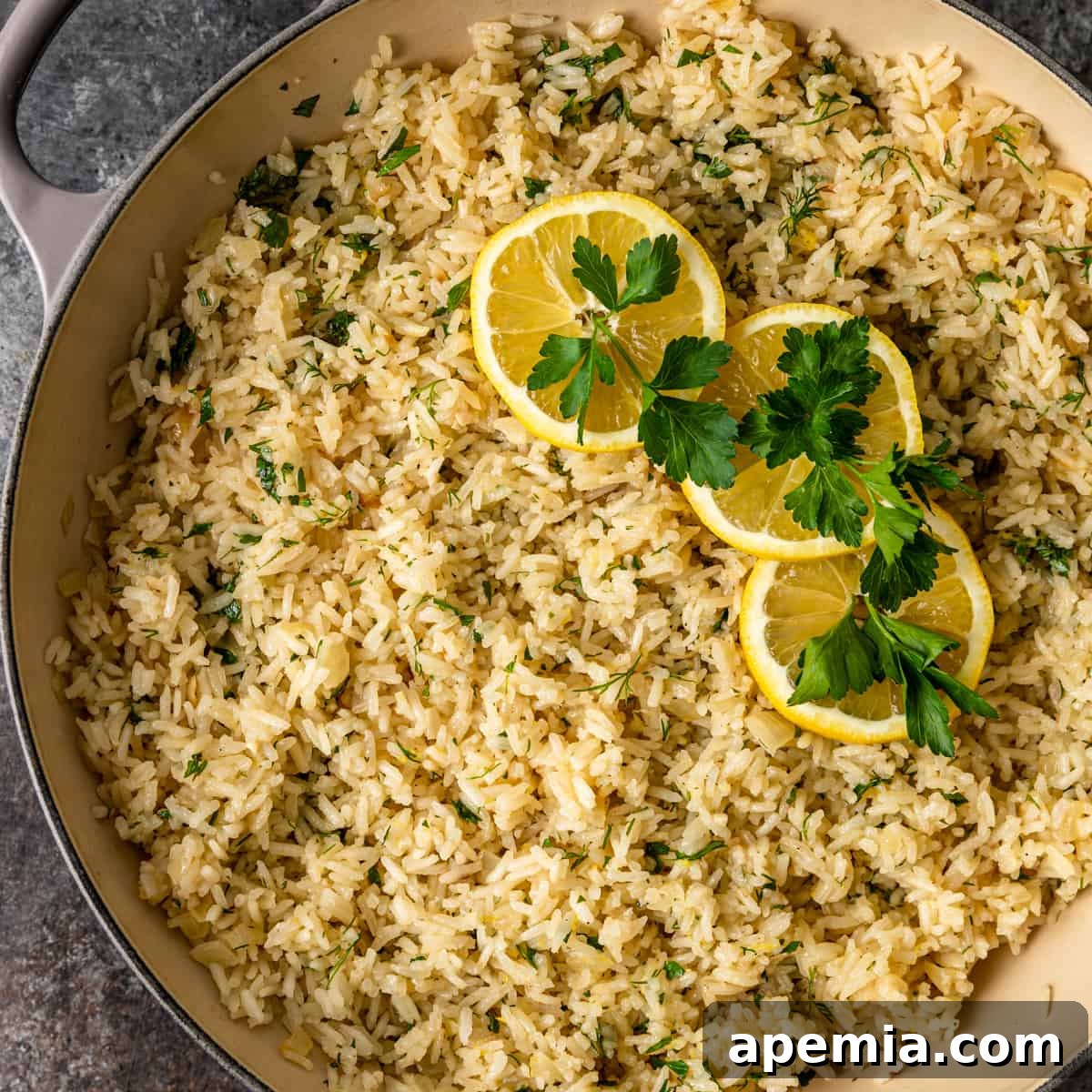
The result is a sensationally vibrant side dish, bursting with the quintessential tastes of the Mediterranean. We meticulously combine fresh flat-leaf parsley and fragrant dill with the bright zest and tangy juice of fresh lemons. A touch of salt and pepper balances these invigorating flavors, creating a truly unforgettable experience. For an added layer of indulgence and a creamy, salty counterpoint, I often recommend topping this fluffy rice with crumbled feta cheese. However, it is utterly satisfying and delicious just as it is, making it a versatile addition to any table.
Table of Contents
- Why Greek Lemon Rice Is A Must-Try
- Essential Ingredients and Clever Substitutions
- Step-by-Step Guide to Perfect Greek Lemon Rice
- Pro Tips for the Fluffiest Lemon Rice
- Recommended Kitchen Tools
- Serving Suggestions and Meal Pairings
- Storing and Reheating Your Lemon Rice
- Frequently Asked Questions
- Authentic Greek Lemon Rice Recipe
Why Greek Lemon Rice Is A Must-Try
This Greek Lemon Rice isn’t just a side dish; it’s a celebration of fresh, clean flavors that transport you straight to the sun-drenched shores of Greece. Its universal appeal makes it an ideal accompaniment for an extensive array of Mediterranean dishes. Imagine pairing its zesty freshness with savory shrimp saganaki, tender souvlaki skewers, succulent lamb meatballs, or hearty stuffed peppers. The bright lemon and aromatic herbs cut through richer main courses, offering a refreshing contrast that elevates the entire meal.
Beyond traditional pairings, this versatile rice can be enjoyed with grilled chicken, baked fish, or even as a base for a vibrant vegetarian bowl. It’s also a fantastic dish to serve at potlucks, family gatherings, or holiday meals, where its vibrant color and enticing aroma are sure to impress. If you’re exploring other easy and delicious rice-based side dishes, consider delving into the world of pilafs. Recipes like baked basmati rice pilaf or Lebanese-style rice offer different, yet equally delightful, flavor profiles to expand your culinary repertoire.
Essential Ingredients and Clever Substitutions
(For a complete list of precise measurements and quantities, please refer to the comprehensive recipe card below.)
- Long Grain White Rice: The foundation of our fluffy Greek Lemon Rice. Any variety labeled as “long-grain,” such as jasmine or basmati rice, will yield excellent results. Their elongated grains prevent sticking, ensuring that perfect light and airy texture. For best results, rinse thoroughly before cooking to remove excess starch.
- Chicken Broth: This is our secret to infusing the rice with a richer, more savory base flavor compared to plain water. However, if you’re aiming for a vegetarian or vegan version, a good quality vegetable broth works beautifully. In a pinch, water can be used, though you might want to slightly increase the seasoning.
- Lemons: Fresh lemons are non-negotiable for authentic Greek lemon rice. You’ll need at least one lemon for its vibrant zest and tangy juice (aim for about 1 tablespoon of zest and 3 tablespoons of juice). An additional lemon is recommended for elegant garnishes, adding both visual appeal and an extra aromatic kick.
- Onion & Garlic: These foundational aromatics are sautéed to create a fragrant base that imparts a wonderful depth and savory contrast to the bright lemon flavors. Yellow onion is typically used, offering a balanced sweetness once caramelized. Fresh garlic cloves, minced, release their pungent goodness, permeating every grain of rice. Do not skip these!
- Fresh Herbs: The use of fresh herbs is crucial for achieving the characteristic bright and lively flavor profile of this dish.
- Flat Leaf Parsley: Chosen for its robust and potent flavor, flat-leaf parsley stands out beautifully in this recipe. While curly-leaf parsley can be substituted, you’ll need to use a larger quantity to achieve a comparable intensity of flavor.
- Dill: Dill provides a distinctive, slightly anisy, and fresh taste that is quintessential in Greek cuisine. If dill is not to your liking, fresh oregano makes a fantastic alternative, offering an earthy, peppery note that complements the other ingredients well.
- Feta Cheese: While entirely optional, crumbled feta cheese adds a delightful salty, tangy, and slightly creamy element that harmonizes wonderfully with the lemon and herbs. For those seeking other creamy options, goat cheese offers a milder, tangier profile. If you prefer a lighter, sharper flavor, a sprinkle of freshly grated Parmesan cheese can also be a delicious addition.
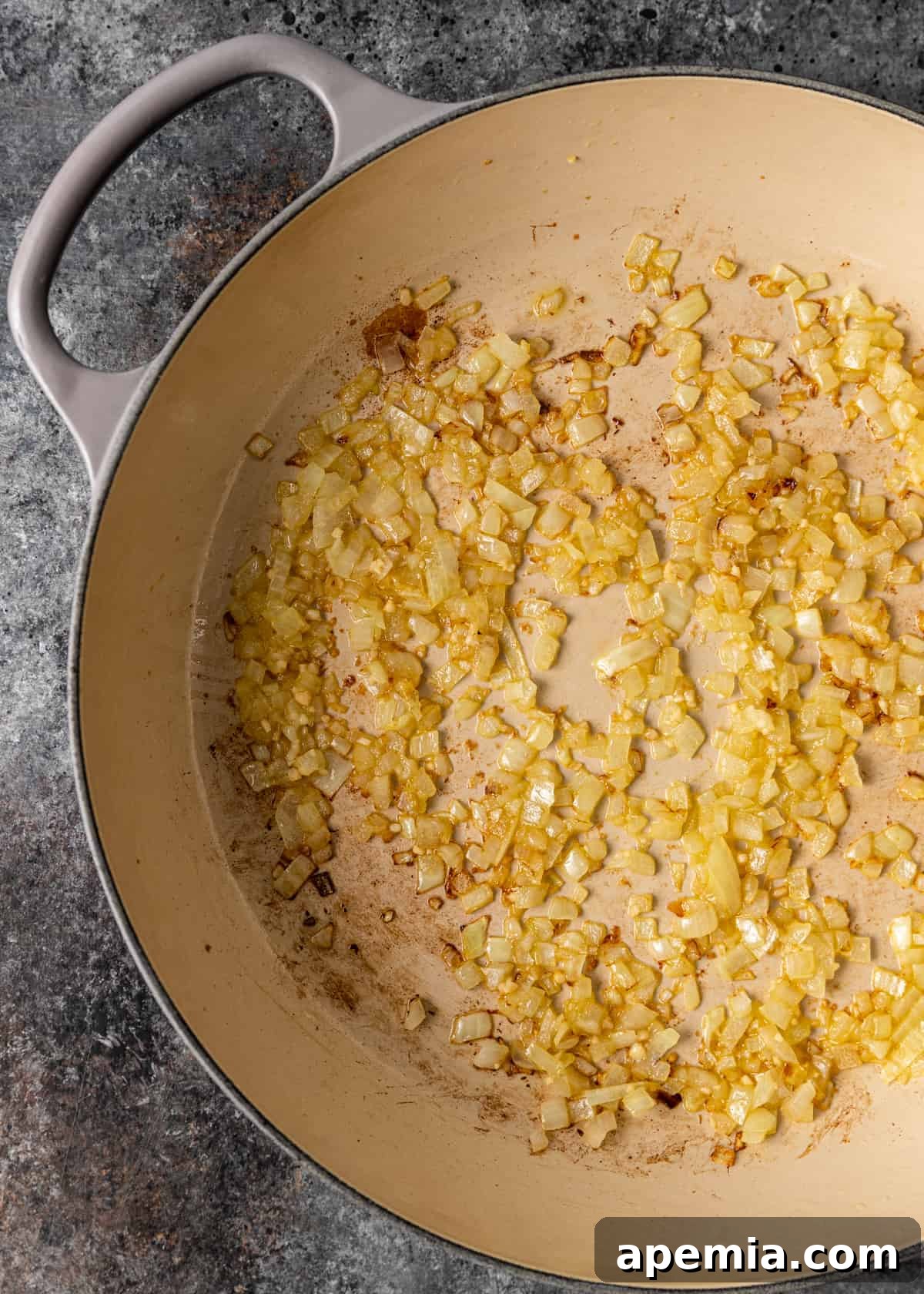
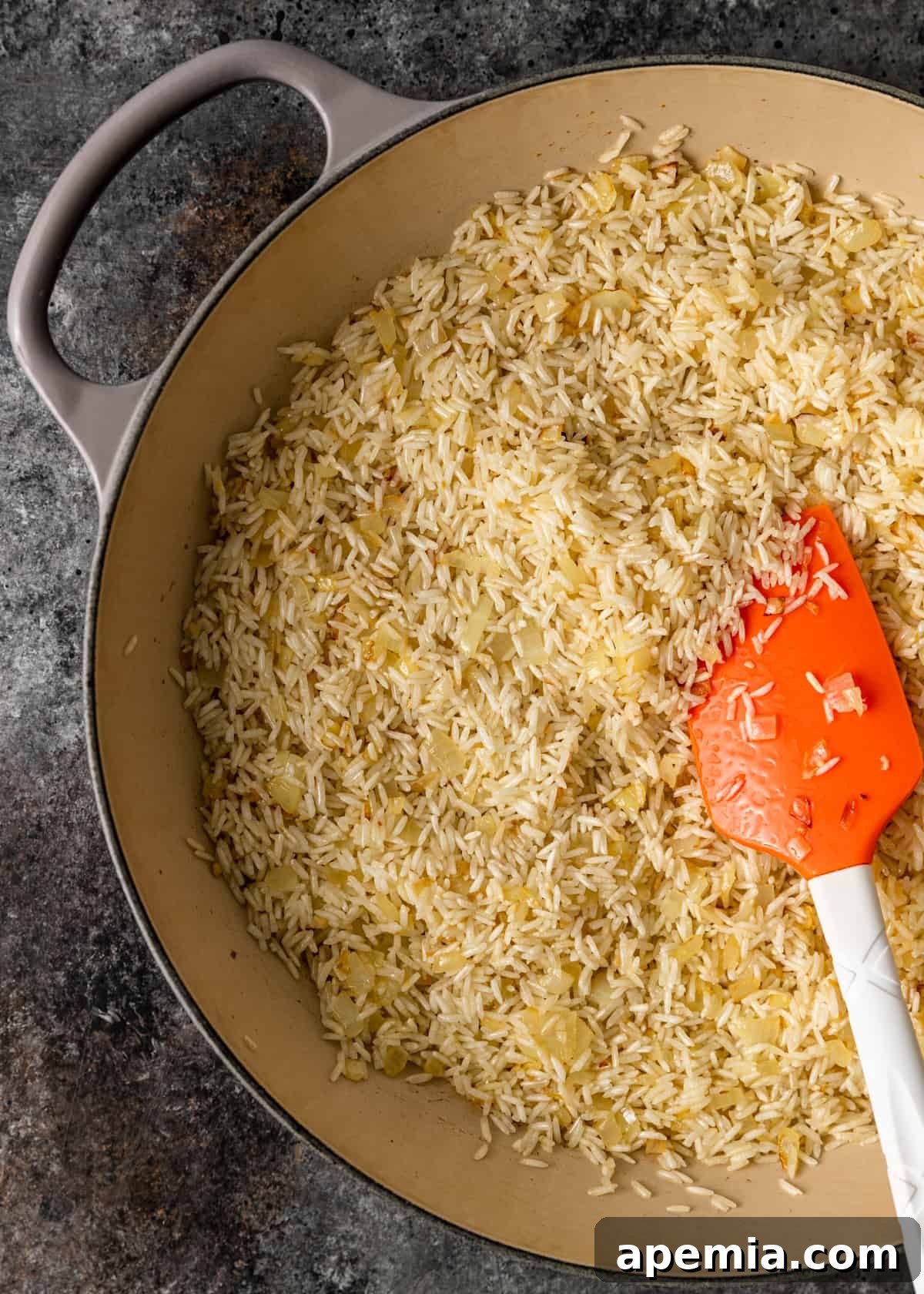
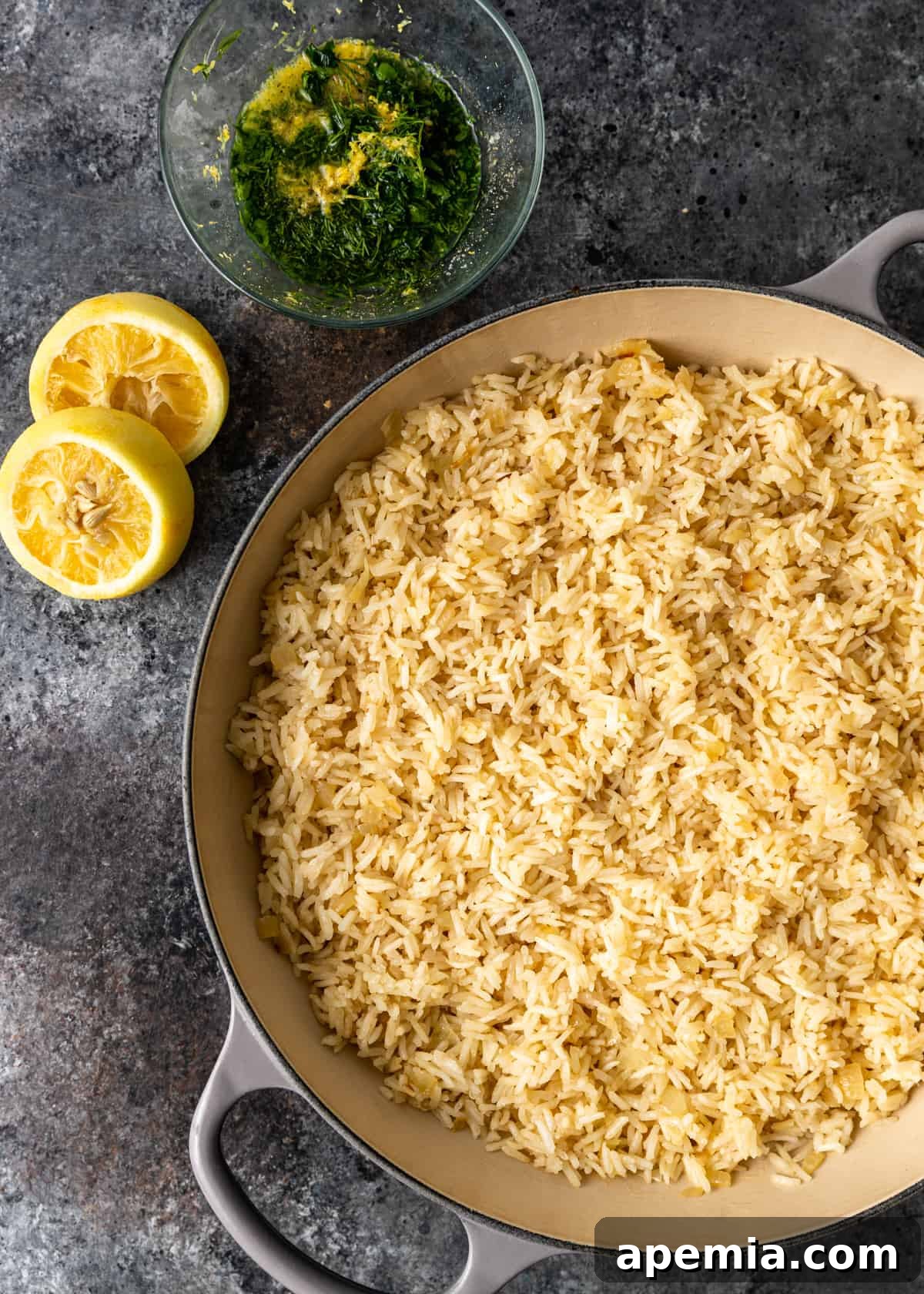
Step-by-Step Guide to Perfect Greek Lemon Rice
- Rinse the Rice: Place your long-grain rice in a fine-mesh sieve and rinse thoroughly under cool running water. Continue rinsing and gently agitating the rice with your fingers until the water runs completely clear. This crucial step removes excess starch, preventing sticky rice and ensuring a light, fluffy texture. Once rinsed, drain well and set aside.
- Prepare the Lemons: Carefully zest one of your lemons, aiming to collect about 1 tablespoon of bright yellow zest. Then, juice the same lemon to yield approximately 3 tablespoons of fresh lemon juice. Set both the zest and juice aside. Take your second lemon and slice it thinly; these will be reserved for a beautiful and aromatic garnish.
- Sauté the Aromatics: In a large, heavy-bottomed saucepan or deep skillet, add the olive oil and heat it over medium heat. Once shimmering, add the diced yellow onion and sauté for about 3 minutes, stirring occasionally, until it begins to soften. Then, stir in the minced garlic and continue to sauté for another 2 minutes, or until the onion becomes translucent and the garlic is wonderfully fragrant. Be careful not to burn the garlic.
- Toast the Rice: Add the rinsed and drained rice grains to the saucepan with the sautéed aromatics. Toast the rice for approximately 5 minutes, stirring frequently. This step is vital as it lightly browns the grains, enhancing their nutty flavor and helping them maintain their individual texture, preventing them from clumping together.
- Simmer to Perfection: Pour the chicken broth (or your chosen liquid) into the pan, stirring gently to combine all ingredients. Bring the mixture to a rolling boil. Once boiling, immediately reduce the heat to low, cover the saucepan tightly with a lid, and let it simmer undisturbed for 12 minutes. Resist the urge to lift the lid during this time!
- Rest for Fluffiness: After 12 minutes, remove the saucepan from the heat, but keep the lid on. Allow the rice to rest, still covered, for an additional 10 minutes. This resting period is essential; it allows the rice to absorb any remaining moisture evenly and steam itself to a perfect, fluffy consistency.
- Add Freshness and Seasoning: Gently uncover the pan. Stir in the reserved lemon zest, fresh lemon juice, minced flat-leaf parsley, and dill (or oregano). Add the kosher salt and ground black pepper to taste, adjusting as needed. Fluff the rice gently with a fork to incorporate all the fresh flavors.
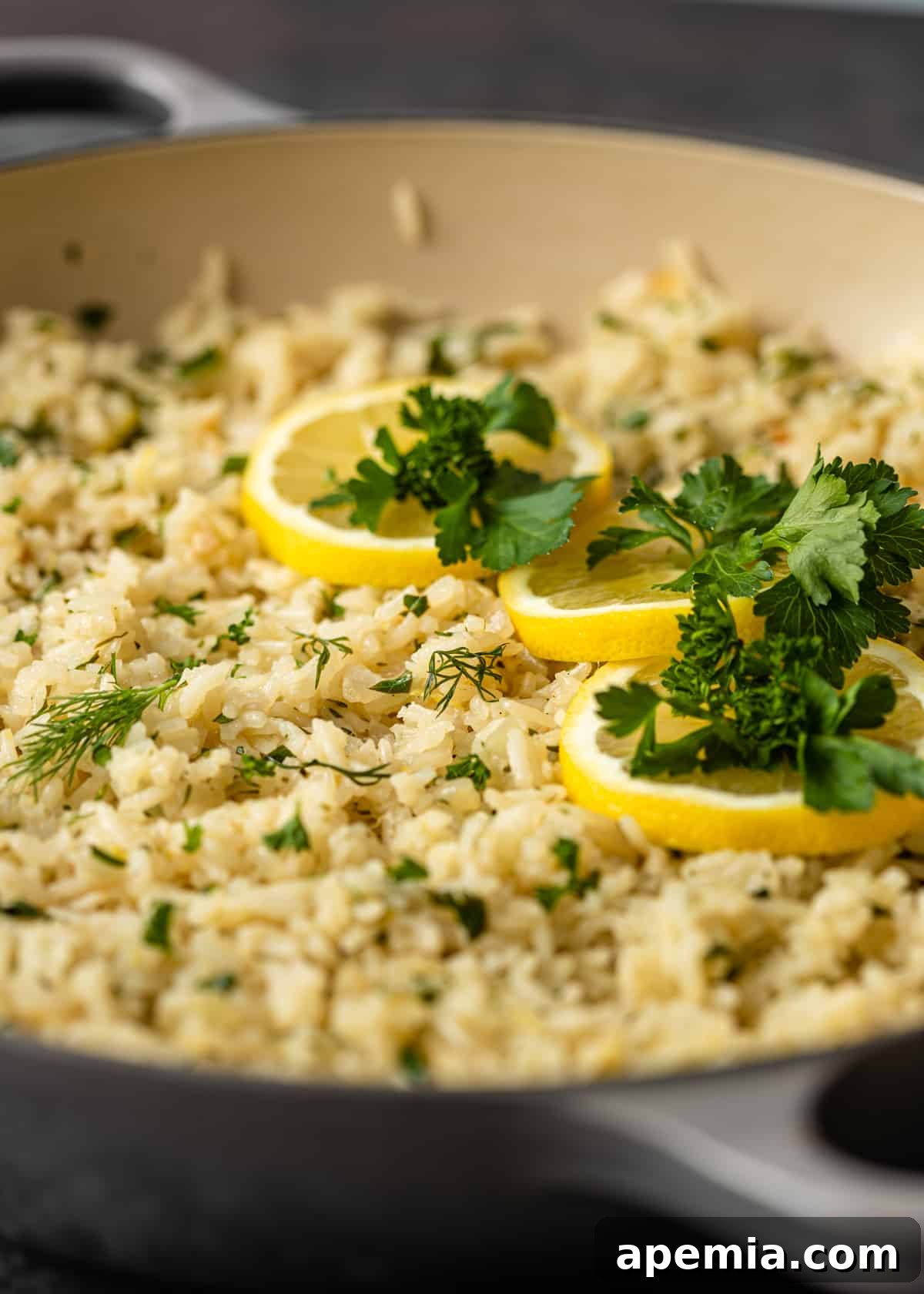
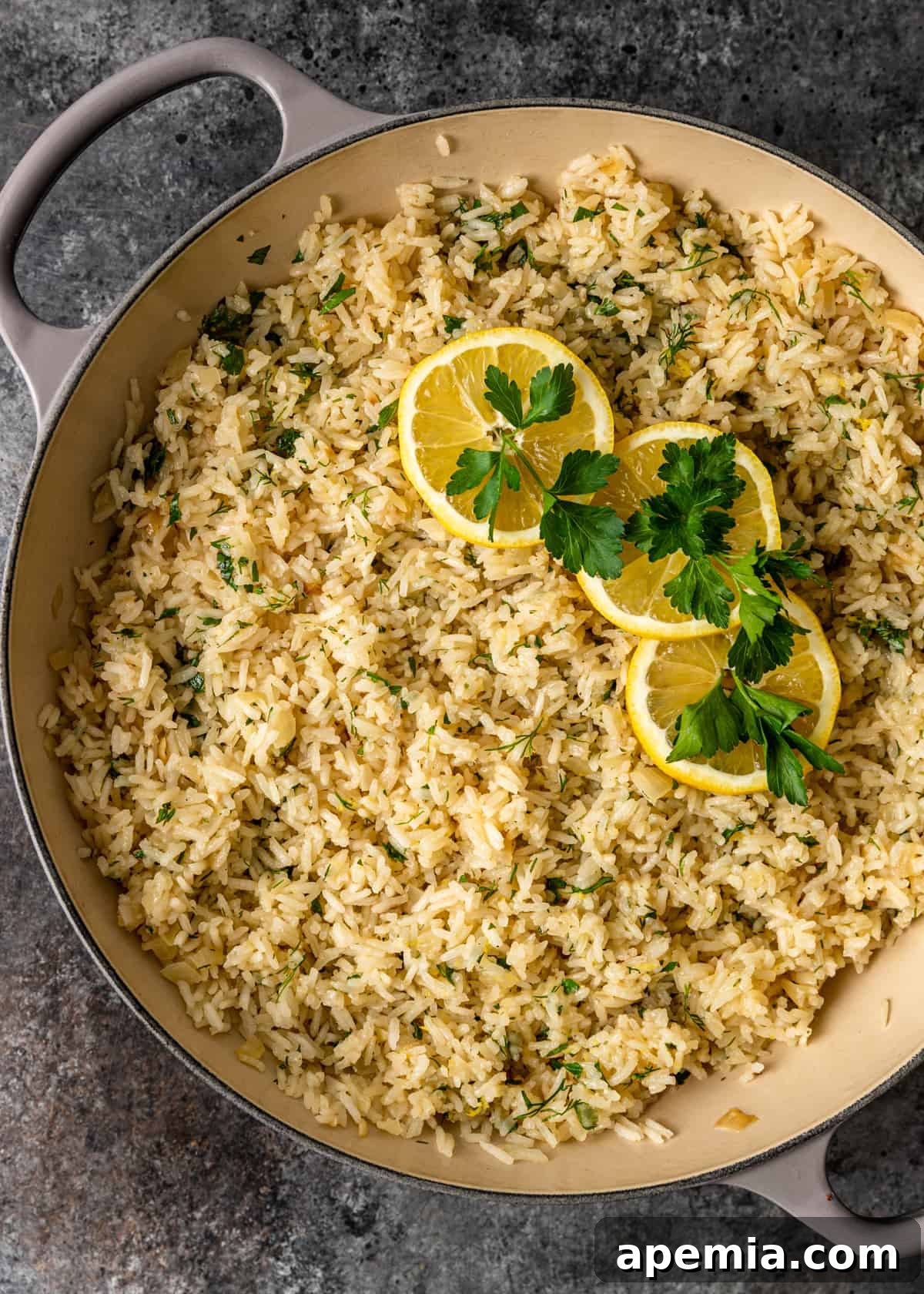
- Serve and Enjoy: Transfer your beautiful Greek Lemon Rice to serving bowls or a platter. Garnish generously with the reserved lemon slices and a sprinkle of crumbled feta cheese, if using. Serve immediately and savor the bright, aromatic flavors!
Pro Tips for the Fluffiest Lemon Rice
- Rinse, Rinse, Rinse: Seriously, this step makes all the difference. Removing surface starch prevents gummy, sticky rice and ensures each grain cooks up perfectly separate and fluffy.
- Don’t Skip Toasting: Briefly sautéing the dry rice grains in oil before adding liquid creates a protective barrier around each grain. This helps them stay separate and adds a delicious nutty depth to the flavor.
- Tight-Fitting Lid: A good seal is crucial for steaming the rice evenly. If your lid isn’t tight, you can place a layer of aluminum foil between the pot and the lid to create a better seal.
- No Peeking During Simmering: Lifting the lid releases steam, which is essential for cooking the rice. Trust the process and keep it covered for the full 12 minutes.
- Rest is Best: The 10-minute resting period off the heat allows the rice to finish cooking with residual heat and absorb any remaining moisture, resulting in perfectly plump and fluffy grains.
- Fresh is Key: While dried herbs can work in a pinch, fresh parsley and dill are paramount for the bright, vibrant flavor profile of authentic Greek Lemon Rice.
Recommended Kitchen Tools
- Fine-Mesh Sieve: Absolutely essential for rinsing the rice until the water runs clear, which is key to achieving that desirable fluffy, non-sticky texture.
- Large Saucepan or Deep Skillet: A heavy-bottomed pan ensures even heat distribution, crucial for sautéing aromatics and cooking the rice without burning. A lid is also necessary for simmering.
- Zester & Juicer: To extract the maximum flavor from your fresh lemons, a quality zester and juicer are invaluable. They ensure you get all the aromatic zest and tangy juice efficiently.
- Wooden Spoon or Spatula: Ideal for stirring the aromatics and rice without scratching your pan.
Storing and Reheating Your Lemon Rice
Proper storage is paramount when it comes to cooked rice to prevent bacterial growth. Always ensure your Greek Lemon Rice cools completely to room temperature before transferring it to storage containers. This typically takes about 30-60 minutes, but avoid leaving it out for more than two hours.
Once cooled, transfer the rice to a clean, sealable bag, pressing out any excess air, or an airtight container. Your delicious Greek Lemon Rice can be safely refrigerated for up to 6 days. For longer storage, this recipe freezes remarkably well, making it an excellent candidate for meal prepping in bulk! Frozen Greek Lemon Rice can be stored for up to 2 months. To thaw, simply let it come to room temperature overnight in the refrigerator, or for a few hours on the counter, before reheating.
To reheat, spoon the desired amount of leftover rice into a microwave-safe bowl. Add a tablespoon of water (or broth) to help reintroduce moisture and prevent drying out. Cover the bowl loosely with a microwave-safe lid or damp paper towel. Microwave on high for 2 to 3 minutes, or until the grains are moist, soft, and heated through. Fluff with a fork before serving to restore its light texture.
Share this recipe on Pinterest!
Love this recipe? Share it with the world on Pinterest to inspire others with this Mediterranean delight.
Frequently Asked Questions
Briefly sautéing, or “toasting,” the raw rice grains is a fundamental technique for several reasons. Firstly, it helps to infuse the grains with the rich flavor and enticing aroma of the sautéed garlic and onions, creating a more complex and nuanced taste. This results in a deeper, nuttier, and warmer flavor profile than simply boiling the rice. Secondly, toasting the grains helps to seal their exterior, preventing them from sticking together during cooking. This crucial step contributes significantly to achieving a fluffy rice with distinct, individual grains rather than a gummy or clumpy texture.
While some culinary traditions advocate soaking rice to promote tenderness and moisture, it’s generally not necessary for this Greek Lemon Rice recipe. The initial thorough rinsing of the grains is designed to remove excess starch, which is the primary reason for soaking in other recipes. This method already ensures a desirable texture. Furthermore, I’ve found that pre-soaking rice can sometimes inhibit its ability to fully absorb the rich flavors of the lemon juice and broth during cooking, as the grains are already saturated with water. However, if you have a strong preference for soaking, you may do so for 15 to 20 minutes before proceeding to the toasting step, just be aware that the liquid absorption might be slightly altered.
While a brown rice version would undoubtedly be delicious, it’s not a straightforward 1:1 substitution. Brown rice differs significantly from white rice in its cooking requirements; it typically demands a longer cooking time and a greater amount of liquid due to its intact bran layer. Therefore, simply swapping brown rice for white rice in this recipe without adjustments would likely lead to undercooked grains or an incorrect liquid ratio. If you’re keen on incorporating brown rice into your diet and wish to adapt this recipe, I highly recommend consulting a dedicated guide on how to cook brown rice to understand the necessary modifications for liquid and cooking time. Once mastered, you can then experiment with adding the lemon and herb flavors.
Absolutely! This Greek Lemon Rice recipe is incredibly easy to adapt for a vegan diet. Simply substitute the chicken broth with an equal amount of good quality vegetable broth or even plain water. Omit the optional feta cheese, or use a dairy-free feta alternative for a similar tangy, salty flavor. All other ingredients – olive oil, onions, garlic, rice, lemons, and fresh herbs – are naturally vegan-friendly.
If you desire an even more pronounced lemon flavor, there are a few adjustments you can make. Increase the amount of lemon zest by an additional half to one tablespoon; remember that zest contains the concentrated essential oils of the lemon, providing maximum aroma and flavor. You could also add a very thin slice of lemon directly into the cooking liquid while the rice simmers, removing it before resting. Another tip is to drizzle a tiny bit more fresh lemon juice over the finished rice just before serving.

Authentic Greek Lemon Rice
6
10 mins
20 mins
30 mins
Print Recipe
Ingredients
- 2 tbsp olive oil
- 1 cup yellow onion diced
- 2 cloves garlic minced
- 1 1/2 cups long grain white rice
- 2 1/4 cups chicken broth (or vegetable broth/water for vegan)
- 2 large lemons (for zest, juice, and garnish)
- 3 tbsp flat-leaf parsley minced
- 3 tbsp dill or oregano minced
- 1 teaspoon kosher salt
- 1/2 teaspoon ground black pepper
- 1/4 cup feta cheese crumbles (optional)
Instructions
-
Rinse rice in a sieve under cold running water, gently mixing with fingers, until the water runs completely clear. Drain well and set aside. Zest one lemon to yield about 1 tablespoon of zest, then juice the same lemon for about 3 tablespoons of juice. Slice the other lemon into thin rounds for garnish.
-
Heat olive oil over medium heat in a large saucepan or deep skillet.
-
Add the diced yellow onion and sauté for 3 minutes until softened. Stir in the minced garlic and sauté for another 2 minutes, or until the onion is translucent and the garlic is fragrant (be careful not to burn it).
-
Add the rinsed and drained rice to the saucepan. Toast the rice, stirring often, for 5 minutes until lightly golden and fragrant.
-
Pour in the chicken broth (or alternative). Bring to a boil, then immediately reduce heat to low. Cover the pan tightly and cook for 12 minutes without lifting the lid. Remove from heat and let it rest, still covered, for 10 minutes.
-
Remove the lid. Stir in the reserved lemon zest, lemon juice, minced fresh parsley, dill (or oregano), salt, and pepper to taste. Fluff the rice gently with a fork.
-
Serve immediately, garnished with the optional lemon slices and feta cheese crumbles. Enjoy your vibrant Greek Lemon Rice!
Notes
Nutrition
Calories: 238kcal |
Carbohydrates: 44g |
Protein: 5g |
Fat: 5g |
Saturated Fat: 1g |
Cholesterol: 2mg |
Sodium: 720mg |
Potassium: 175mg |
Fiber: 2g |
Sugar: 2g |
Vitamin A: 195IU |
Vitamin C: 24mg |
Calcium: 37mg |
Iron: 1mg
The information shown is an estimate provided by an online nutrition calculator. It should not be considered a substitute for a professional nutritionist’s advice.
Have You Made This Recipe? Let Me Know on Instagram!
Tag @keviniscooking or use the hashtag #keviniscooking!