
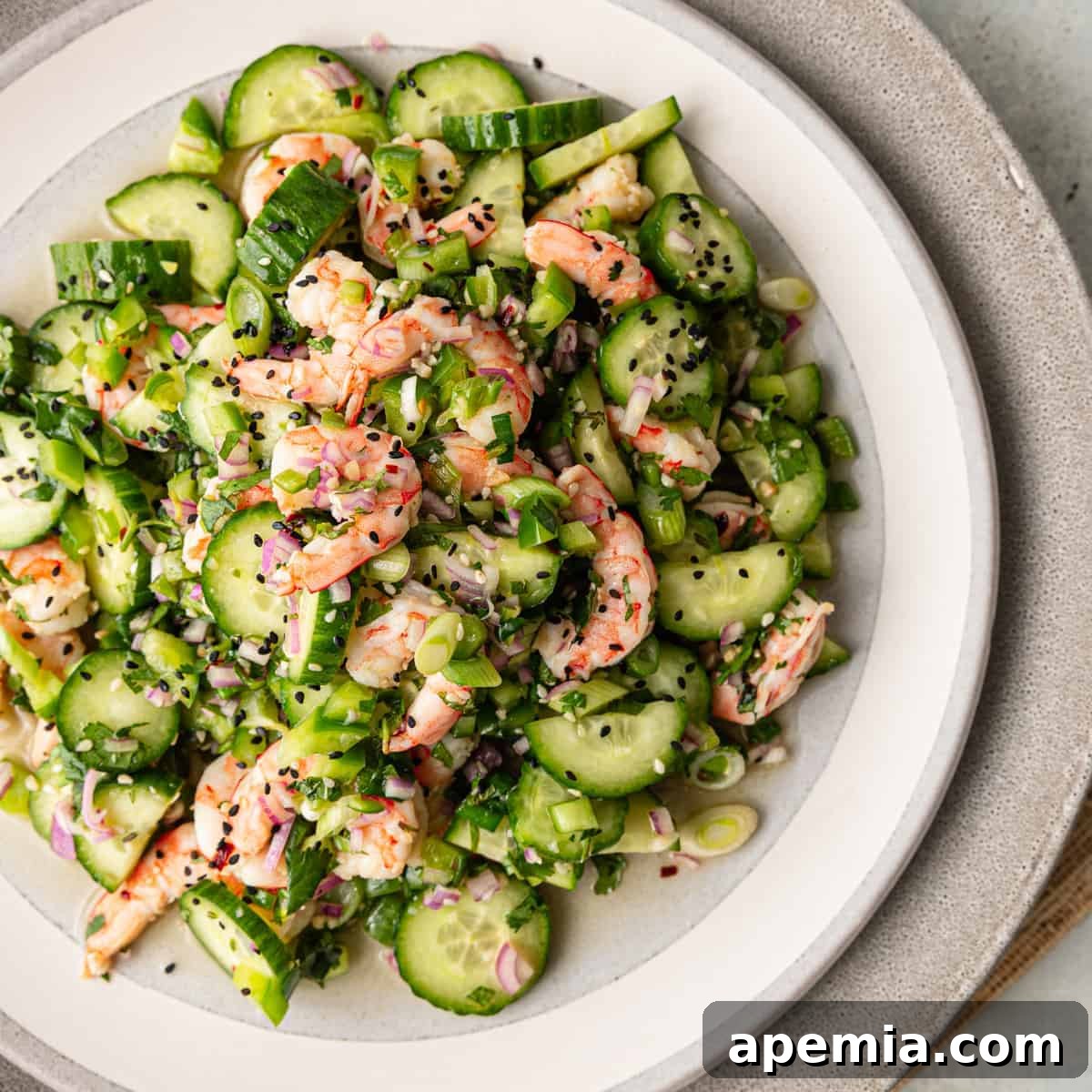
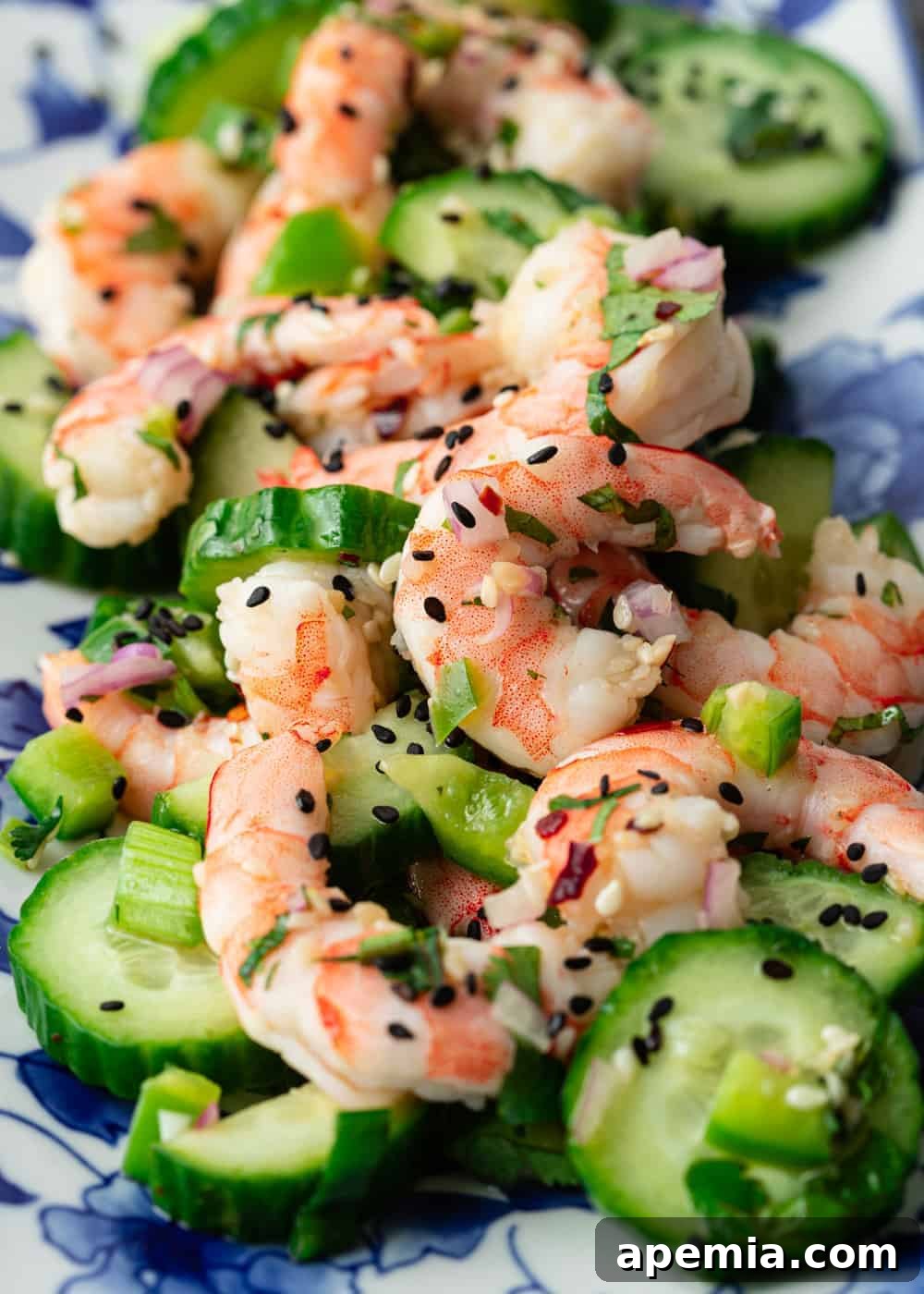
If you’re seeking a light, refreshing, and incredibly flavorful dish, your culinary journey ends here with Sunomono. This classic Japanese cucumber salad is a true delight, combining the crispness of fresh vegetables with the tender sweetness of shrimp, all brought together by a vibrant, tangy, and subtly spicy dressing. It’s an experience that awakens the palate and leaves you feeling invigorated.
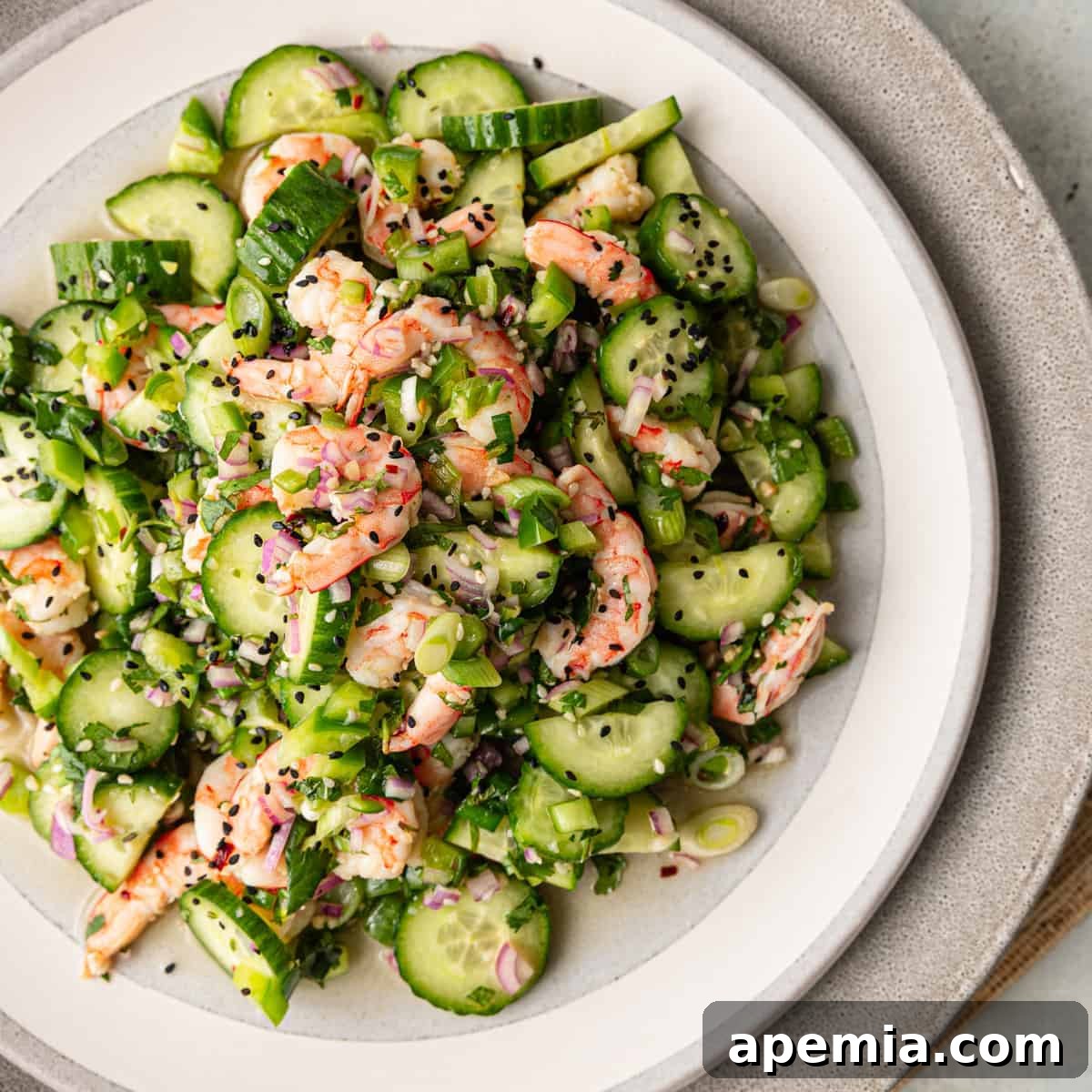
Japanese Sunomono Salad with Shrimp: A Refreshing Culinary Journey
This recipe for sunomono salad is remarkably simple to prepare, yet it bursts with complex flavors. It’s the quintessential dish for a light and lively appetizer, a vibrant side, or even a satisfying main meal. Imagine enjoying this cooling salad on a warm summer day, its freshness providing the perfect antidote to the heat. While sunomono is traditionally a vegetable-centric dish, adding cooked shrimp transforms it into a more substantial offering, making it a fantastic on-the-go lunch or a quick, healthy dinner.
I often find myself preparing generous batches of this Japanese cucumber salad when my garden yields an abundance of cucumbers. However, its irresistible appeal means you don’t have to wait for harvest season to enjoy it. This delightful dish can be made anytime you crave a meal that’s both filling and energizing, without ever weighing you down. And feel free to experiment! If you have other crisp vegetables readily available, don’t hesitate to toss them into the mix for an added layer of texture and flavor.
Table of Contents
- What is Sunomono? A Brief History
- Why You’ll Love This Shrimp Sunomono Salad
- Essential Ingredients & Smart Substitutions
- How to Make Japanese Sunomono Cucumber Salad
- Pro Tips for Perfect Sunomono
- Serving Suggestions & Creative Variations
- Frequently Asked Questions About Sunomono
- Japanese Sunomono Salad Recipe
What is Sunomono? A Brief History
The term “Sunomono” (酢の物) literally translates from Japanese to “vinegared things,” perfectly encapsulating the essence of this traditional dish. These vinegary salads are a staple in Japanese cuisine, often served in small, elegant bowls as an appetizer (otoshi or otsumami) before a meal or as a refreshing side dish (okazu) alongside larger plates. Their primary purpose is to cleanse the palate and stimulate the appetite, offering a delicate balance of sweet, sour, and sometimes savory notes.
While sunomono can be prepared with almost any vegetable imaginable, Japanese cucumbers (kyuri) are by far the most common and beloved ingredient. Their inherent crispness and subtle flavor make them an ideal canvas for the tangy dressing. Over time, variations have emerged that incorporate seafood, such as shrimp, crab, or even octopus, known as “seafood sunomono” or “sunomono ebi” (with shrimp) or “tako sunomono” (with octopus). These additions transform the light salad into a more substantial and protein-rich offering while maintaining its refreshing character. The history of sunomono is deeply intertwined with Japan’s culinary traditions, where balance, seasonality, and refined flavors are paramount. It’s a testament to the simplicity and elegance of Japanese cooking, proving that extraordinary taste can be achieved with just a few quality ingredients.
Why You’ll Love This Shrimp Sunomono Salad
- Incredibly Refreshing: The crisp cucumbers and tangy dressing make this salad a perfect palate cleanser and a welcome dish on any hot day.
- Bursting with Flavor: A harmonious blend of sweet, sour, salty, and spicy notes creates an unforgettable taste experience.
- Quick & Easy: With minimal cooking required (especially if using pre-cooked shrimp), this salad comes together in just about 20 minutes.
- Healthy & Nutritious: Packed with fresh vegetables and lean protein, it’s a guilt-free option that supports a healthy lifestyle.
- Versatile: Ideal as an appetizer, a light side dish, or a satisfying main course. You can easily customize it with different vegetables or proteins.
- Visually Appealing: The vibrant colors of cucumbers, bell peppers, cilantro, and shrimp make for a beautiful presentation on any table.

Essential Ingredients & Smart Substitutions
Crafting the perfect sunomono begins with selecting fresh, high-quality ingredients. Here’s a breakdown of what you’ll need and some helpful substitution tips:
For the Salad:
- Shrimp: These succulent seafood morsels introduce a delightful salty-sweet flavor and a tender texture that complements the crisp vegetables beautifully. I typically opt for cooked, medium-sized shrimp for convenience, ensuring they are already deveined with tails and shells removed. If using raw shrimp, simply cook them briefly until pink and opaque before chilling.
- Cucumbers: Japanese cucumbers, known as “kyuri,” are the star. They are characterized by their thin skin, slender shape, small seeds, and a subtle, almost melon-like sweetness. Their firm texture holds up wonderfully in the dressing. If kyuri are difficult to find, excellent substitutes include Persian cucumbers (mini cucumbers) or English (hothouse) cucumbers, both of which have thin skins and minimal seeds. Avoid standard American slicing cucumbers, which tend to be watery with larger seeds.
- Cilantro: This fresh herb provides a vibrant burst of lemony, peppery flavor and a striking green color. If cilantro isn’t to your liking, fresh parsley or even a mix of mint and parsley can offer a similar fresh note.
- Bell Pepper: I favor green bell peppers for their distinctive sharp, slightly bitter undertone and their exceptional crunch. However, feel free to use red, orange, or yellow bell peppers if you prefer a sweeter, milder flavor and a pop of different color. Thinly dicing them ensures they integrate well into the salad.
- Green Onions: Also known as scallions, these add a mild oniony bite and a fresh, bright green element. They contribute a subtle pungency without overpowering the delicate flavors of the dressing and other vegetables.
For the Tangy Dressing:
- Garlic: Freshly minced garlic cloves impart a pungent, aromatic depth and a hint of spiciness. While powdered garlic can be used in a pinch, fresh garlic offers superior flavor. Start with a small amount and adjust to your taste.
- Serrano Chiles: For those who appreciate a kick, serrano chiles inject a zesty heat that brings the dressing to life. If you prefer a milder salad, you can remove the seeds and membranes, or substitute with a less potent chili like jalapeño, or omit entirely for a non-spicy version.
- Lime Juice: Freshly squeezed lime juice is crucial for its bright acidity and refreshing citrus flavor, which lifts the entire dish. Always use fresh limes for maximum impact; bottled juice won’t provide the same vibrant taste.
- Rice Wine Vinegar: This is the classic foundation for sunomono dressings, prized for its mild tanginess and subtle sweetness. Look for it in the international aisle of your grocery store or at an Asian market. Ensure you’re using plain rice vinegar, not seasoned rice vinegar, which often contains added sugar and salt.
- Sesame Oil: A small amount of toasted sesame oil adds a rich, nutty aroma and flavor that is characteristic of many East Asian dishes.
- Fish Sauce: This ingredient is a secret weapon for adding deep umami, salty, and slightly sweet notes all at once. It provides complexity that is hard to replicate. If you need to omit it, a dash of soy sauce can be a decent substitute, though the flavor profile will shift slightly.
- Salt: Essential for seasoning the dressing and for drawing out excess moisture from the cucumbers (more on this important technique below).
- Red Pepper Flakes: These add a smoky, sustained heat and a beautiful fleck of red color to the dressing. Adjust the quantity according to your preferred spice level.
- Sesame Seeds: Both white and black sesame seeds are used for their subtle crunch, nutty flavor, and visual appeal. Use a combination or whichever you have on hand for garnishing and within the dressing.
- Mint Leaves: Fresh mint leaves introduce a sweet, cooling counterpoint that highlights the other flavors in the dish and adds an unexpected layer of freshness.
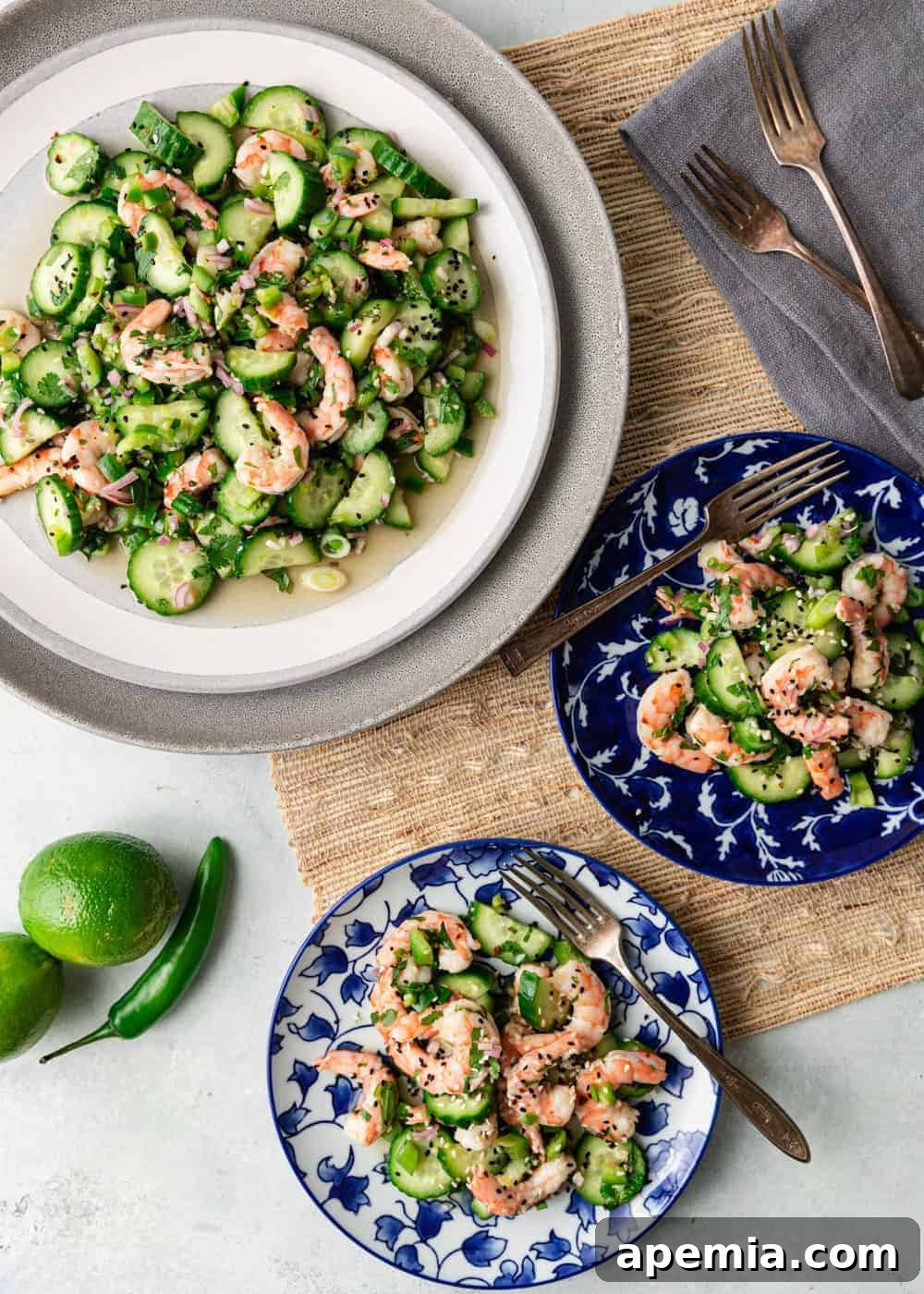
How to Make Japanese Sunomono Cucumber Salad
Preparing this Japanese Sunomono Salad is straightforward and rewarding. Follow these simple steps for a perfect outcome:
- Prepare the Cucumbers: Before you begin, slice your cucumbers thinly. For best results and to prevent a watery salad, place the sliced cucumbers in a colander and sprinkle them with about a teaspoon of salt. Let them sit for 15-20 minutes; this process, known as osmosis, draws out excess moisture. Gently squeeze the cucumbers to remove the water, then pat them dry with a paper towel. This ensures your salad remains crisp.
- Whisk the Dressing: In a small bowl, combine the rice wine vinegar, fresh lime juice, sesame oil, the optional fish sauce, salt, red pepper flakes, and a portion of the sesame seeds and chopped mint leaves. Whisk thoroughly until all ingredients are well combined. Stir in the minced garlic cloves and seeded, minced serrano chile peppers. Set this flavorful dressing aside.
- Combine Salad Ingredients: In a medium-sized mixing bowl, gently combine the cooked shrimp, prepped (and dried) sliced cucumbers, diced green bell pepper, thinly sliced green onions, and chopped cilantro.
- Dress and Toss: Pour the freshly made dressing evenly over your shrimp and cucumber mixture. Using tongs or a large spoon, gently toss all the ingredients together, ensuring every piece is beautifully coated in the tangy, aromatic dressing.
- Garnish and Serve: Transfer the sunomono salad to individual serving bowls. For an appealing presentation and an extra burst of freshness, garnish generously with additional chopped cilantro, mint leaves, and a sprinkle of sesame seeds on top. Serve immediately for optimal crispness, or refrigerate for flavors to meld further.
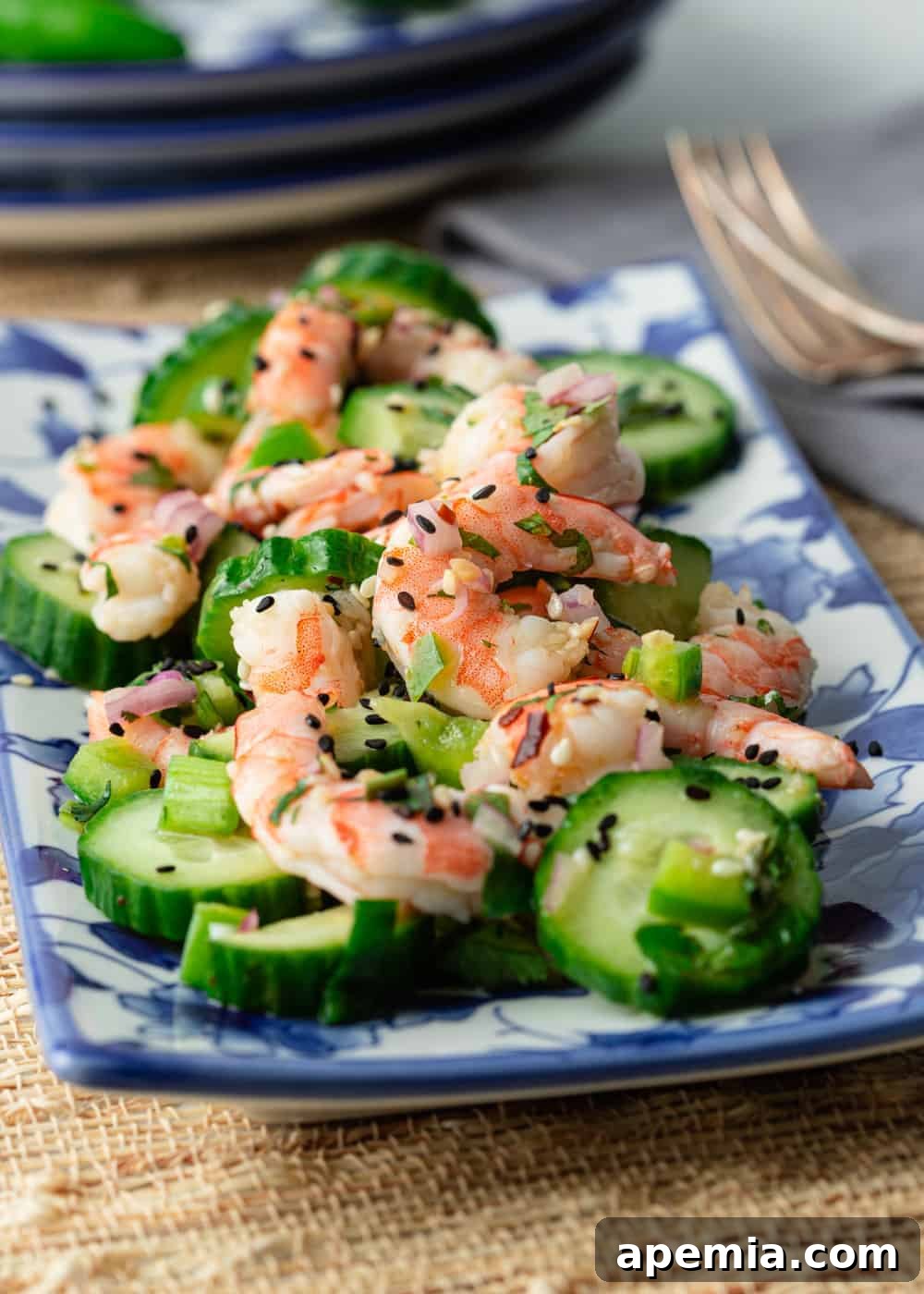
Pro Tips for Perfect Sunomono
- Salt Your Cucumbers: As mentioned in the instructions, salting and draining cucumbers is key to preventing a watery, soggy salad. Don’t skip this step for the best texture.
- Thin Slices are Best: Uniform, thin slices of cucumber and bell pepper not only look more appealing but also ensure a consistent texture and allow them to absorb the dressing more effectively. A mandoline slicer can achieve perfectly thin, even slices with ease.
- Fresh Ingredients Matter: For a salad with such bright, clean flavors, the quality of your fresh produce makes a significant difference. Use fresh limes, vibrant herbs, and crisp cucumbers.
- Chill for Flavor Development: While delicious immediately, letting the salad chill in the refrigerator for at least 30 minutes (or even a few hours) allows the flavors to deepen and meld beautifully. Just be mindful of the cucumber’s crunch over extended periods.
- Adjust Spice to Taste: The amount of serrano chile and red pepper flakes can be adjusted to your preference. If you’re sensitive to heat, start with a smaller amount or omit entirely. For more heat, add extra!
Serving Suggestions & Creative Variations
This Japanese Sunomono Salad is incredibly versatile and can be enjoyed in many ways:
Serving Suggestions:
- Classic Appetizer: Serve in small individual bowls as a refreshing start to any meal, especially Japanese or Asian-inspired dinners.
- Side Dish: It pairs wonderfully with grilled fish, chicken teriyaki, sushi, sashimi, or a simple bowl of steamed rice.
- Light Lunch: Enjoy a larger portion for a healthy and satisfying lunch, perhaps alongside some edamame or a small miso soup.
- Summer BBQ Staple: Its cool, tangy profile makes it an excellent addition to outdoor gatherings and barbecues, offering a refreshing contrast to grilled meats.
Creative Variations:
- Seafood Swap: Instead of shrimp, try cooked crab meat (fresh or imitation), thinly sliced cooked octopus (tako sunomono), or even thinly sliced seared scallops.
- Vegetarian/Vegan Sunomono: Omit the shrimp and fish sauce. You can add firm tofu (pressed and lightly pan-fried or baked until crispy) for protein, or simply enjoy it as a pure cucumber and vegetable salad. Use soy sauce or tamari instead of fish sauce.
- Add Other Vegetables: Experiment with thinly sliced radishes for an extra peppery crunch, shredded carrots for sweetness and color, or even blanched asparagus tips.
- Spicy Kick: For more heat, add a touch of sriracha or gochujang to the dressing, or include more chiles.
- Nutty Crunch: Toasted peanuts or cashews can add an interesting textural and flavor dimension.
- Citrus Twist: While lime is classic, a tiny splash of yuzu juice can elevate the citrus notes with its unique floral aroma.
Frequently Asked Questions About Sunomono
Sunomono is a Japanese word that directly translates to “vinegared things.” This name perfectly describes the core of these traditional Japanese salads, which feature various chopped vegetables and herbs dressed in a light, tangy, and often slightly sweet rice vinegar and citrus-based dressing. They are a beloved part of Japanese cuisine, typically served in small portions to cleanse the palate and awaken the appetite before or alongside meals. While most commonly made with Japanese cucumbers, many recipes, like this one, incorporate seafood such as shrimp, crab, or other tender ocean delights, sometimes referred to as “seafood sunomono” or specific names like “ebi sunomono” for shrimp.
Keeping cucumbers perfectly crisp in sunomono salad, or any salad for that matter, can be a bit challenging due to their naturally high moisture content. While this moisture makes them wonderfully refreshing, it can also lead to soggy leftovers if not managed properly. The secret to maintaining their delightful crunch lies in a simple technique: salting. I highly recommend slicing your cucumbers a bit in advance, then placing them in a colander and sprinkling generously with salt. Let them sit for about 15-20 minutes. The salt works through osmosis, drawing out excess water from the cucumbers. After this time, you’ll notice a pool of liquid at the bottom of the colander. Gently squeeze the cucumbers to remove any remaining moisture, then pat them dry with paper towels before adding them to your salad. This small step makes a significant difference in the final texture and longevity of your sunomono.
Any leftover sunomono salad should be stored promptly in an airtight container in the refrigerator. It will typically remain delicious for up to 3-5 days. It’s important to note that even with the salting trick to prevent sogginess, the cucumbers will gradually lose some of their initial crispness the longer they sit in the dressing. However, don’t let this deter you! More time in the refrigerator also means more time for the incredible flavors of the dressing to marinate into the vegetables and shrimp, creating an even more intensely flavorful experience. Your taste buds will be so delighted by the deepened flavors that you might barely notice the slight change in texture.
Yes, you can certainly prepare sunomono ahead of time, which makes it an excellent choice for meal prep or entertaining. For best results, I recommend prepping and salting the cucumbers and cooking the shrimp (if using raw) up to a day in advance, storing them separately in airtight containers in the refrigerator. The dressing can also be made and stored separately for up to 3-4 days. When you’re ready to serve, simply combine all the components, toss with the dressing, and garnish. This method ensures maximum freshness and crispness, especially if you prefer a very crunchy salad. If you don’t mind a slightly softer cucumber, you can combine the entire salad 1-2 hours before serving to allow the flavors to fully meld.
Tip From Kevin
Can’t find Japanese cucumbers?
Japanese cucumbers are celebrated for their crisp texture, succulent flesh, and subtly sweet, melon-like flavors. If these aren’t available at your local market, don’t worry! You can achieve excellent results using a seedless variety with very thin skin. Excellent alternatives include English Hothouse cucumbers or Persian cucumbers (often sold as “mini cucumbers”). These varieties offer a similar firm texture and mild flavor profile, making them ideal substitutes for this refreshing salad.
Share this recipe on Pinterest!
Love this recipe? Share it with the world on Pinterest.

Japanese Sunomono Salad
4
20 mins
20 mins
Print Recipe
Ingredients
Salad
- 1 lb cooked medium shrimp deveined, shells and tails removed
- 2 Japanese cucumbers sliced thinly (See Note 1)
- 1/2 cup cilantrochopped
- 2 green onionsthinly sliced
- 1 green bell pepperthinly diced
Dressing
- 3 cloves garlic minced
- 1 Serrano chile pepper seeded and minced
- 1/4 cup lime juice approximately 3 limes
- 1/4 cup rice wine vinegar
- 1 tbsp sesame oil
- 2 tsp fish sauce (optional)
- 1/2 tsp salt
- 1/2 tsp red pepper flakes
- 1 tsp sesame seeds white, black, or combination
- 8 mint leaves chopped
Instructions
-
In a small bowl, whisk together the lime juice, rice wine vinegar, sesame oil, fish sauce (if using), salt, red pepper flakes, sesame seeds, and mint. Stir in the minced garlic and serrano chile. Set aside.
-
In a medium-sized bowl, combine the cooked shrimp, prepped sliced cucumbers, chopped cilantro, thinly sliced green onion, and diced bell pepper. Pour the dressing over the ingredients and toss gently to combine everything thoroughly. Serve immediately for best crispness. If not eating right away, cover and refrigerate.
Notes
- If Japanese cucumbers are unavailable, use a seedless variety with very thin skin, such as English or Persian cucumbers, for optimal texture and flavor.
- For crisper cucumbers, slice them thinly, place in a colander, sprinkle with salt, and let sit for 15-20 minutes to draw out excess moisture. Squeeze gently and pat dry before adding to the salad.
Nutrition
Carbohydrates: 11g |
Protein: 17g |
Fat: 5g |
Saturated Fat: 1g |
Trans Fat: 1g |
Cholesterol: 143mg |
Sodium: 1180mg |
Potassium: 487mg |
Fiber: 2g |
Sugar: 4g |
Vitamin A: 848IU |
Vitamin C: 36mg |
Calcium: 113mg |
Iron: 1mg
The information shown is an estimate provided by an online nutrition calculator. It should not be considered a substitute for a professional nutritionist’s advice.
Have You Made This Recipe? Let Me Know on Instagram
Tag @keviniscooking or tag me #keviniscooking!
Embrace the Freshness of Sunomono
Japanese Sunomono Salad with shrimp is more than just a dish; it’s an invitation to experience the simple elegance and vibrant flavors of Japanese cuisine. Its refreshing qualities, combined with the wholesome goodness of crisp vegetables and succulent shrimp, make it an ideal choice for a healthy, delicious, and easy meal. Whether you’re serving it as an intriguing appetizer, a bright side dish, or a satisfying light lunch, this sunomono recipe promises to delight your senses and leave you feeling wonderfully refreshed. So, gather your ingredients, follow these steps, and prepare to embark on a delightful culinary journey with this irresistible Japanese classic. Enjoy the burst of fresh flavor!