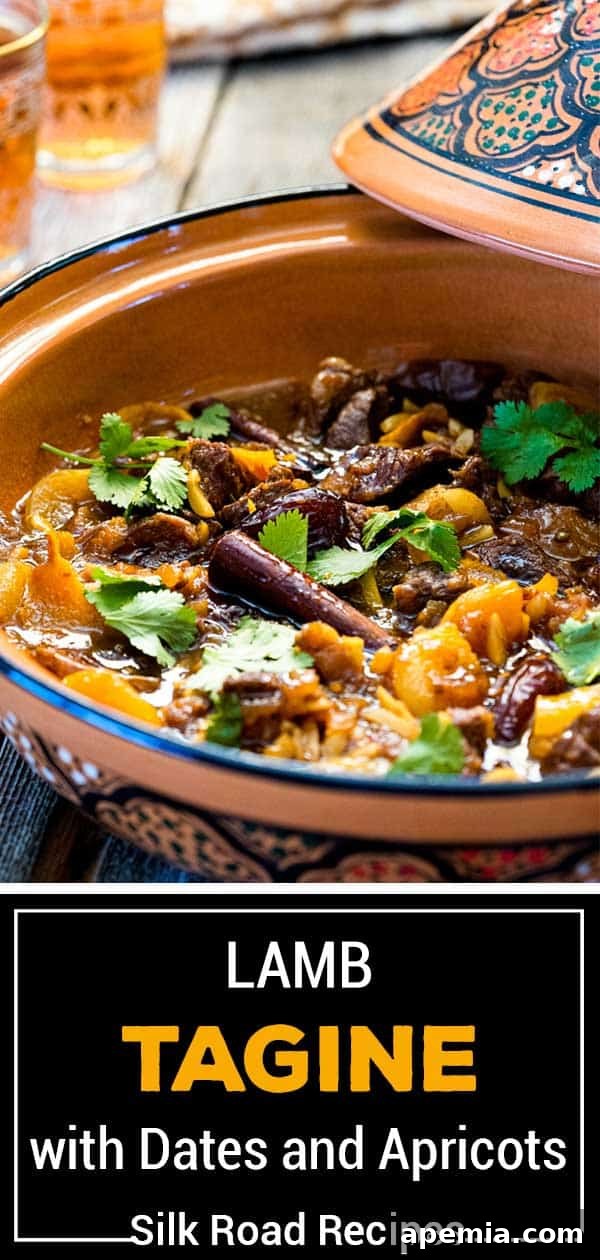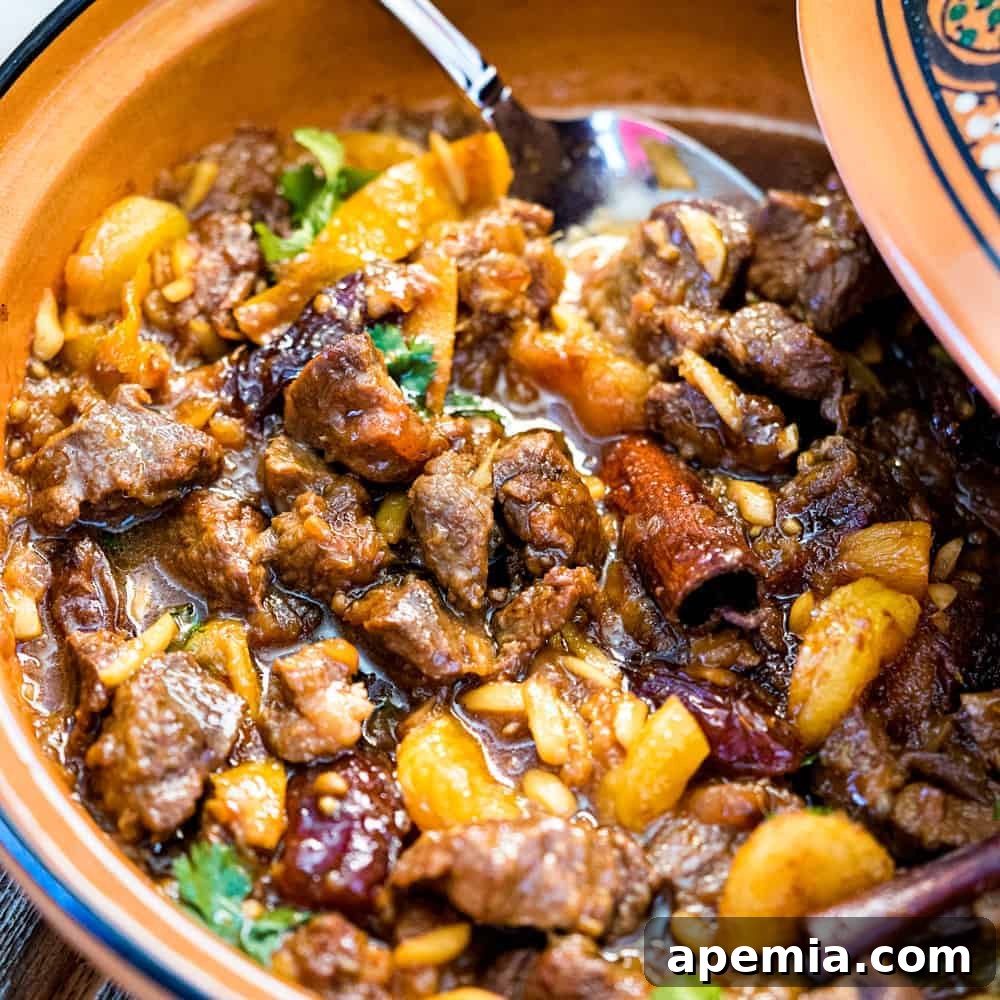
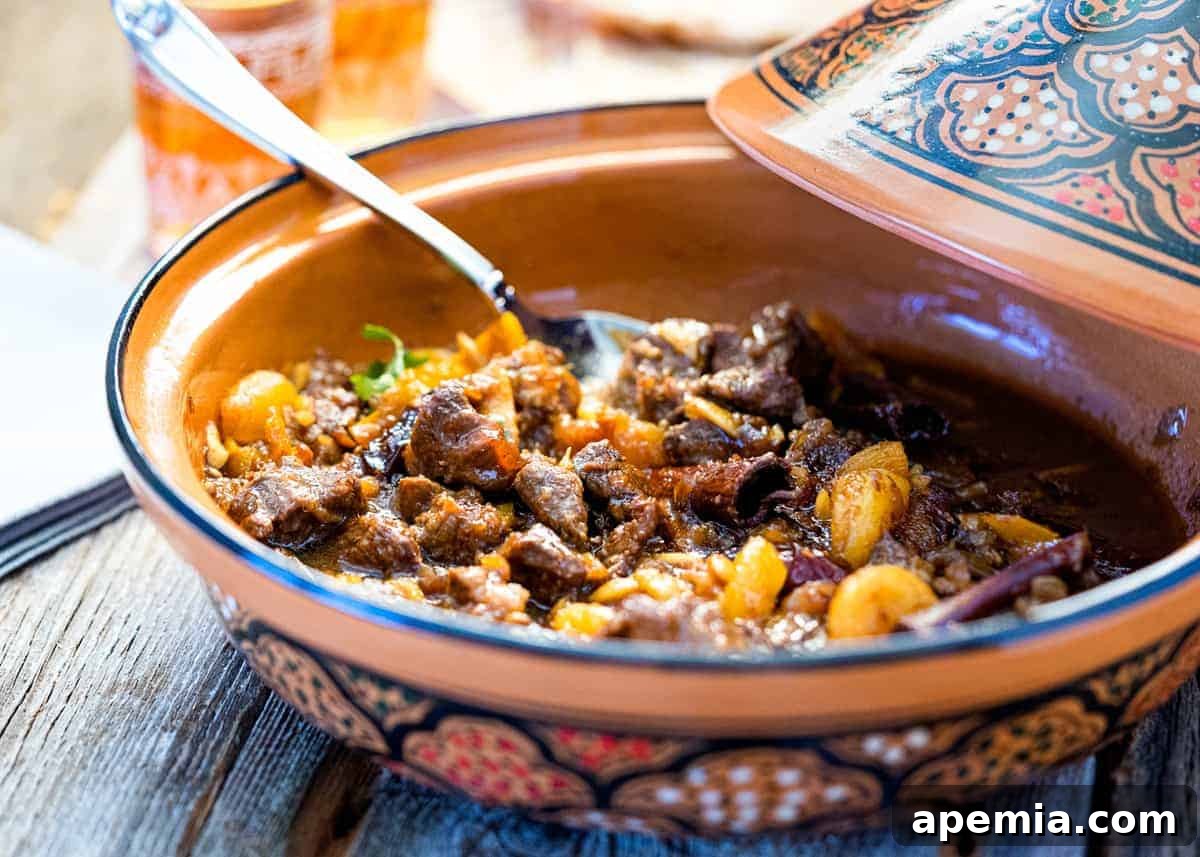
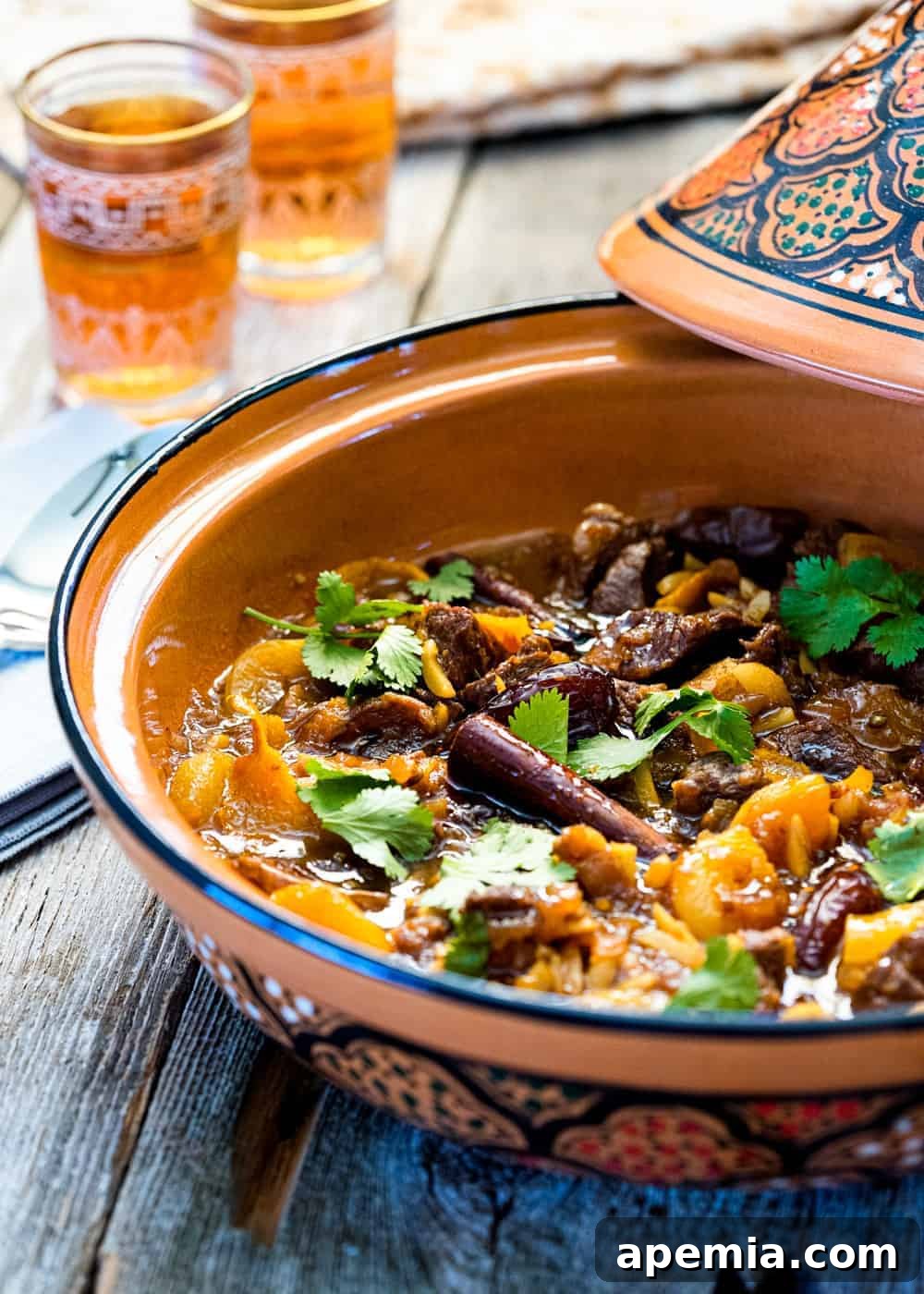
Embark on a culinary journey to the heart of North Africa with this exquisite Moroccan Lamb Tagine with Apricots and Dates. Far from your average stew, this dish offers a symphony of rich flavors and tender textures, making it the perfect comforting meal for cooler weather or any special occasion. Succulent lamb is slow-simmered until it becomes buttery soft, enveloped in a thick, aromatic sauce infused with a blend of warming Moroccan spices. The natural sweetness of apricots and dates cuts through the richness, creating a perfectly balanced and utterly irresistible stew that begs to be scooped up with crusty bread or served alongside fluffy couscous.
Understanding the Tagine: A Culinary Art Form
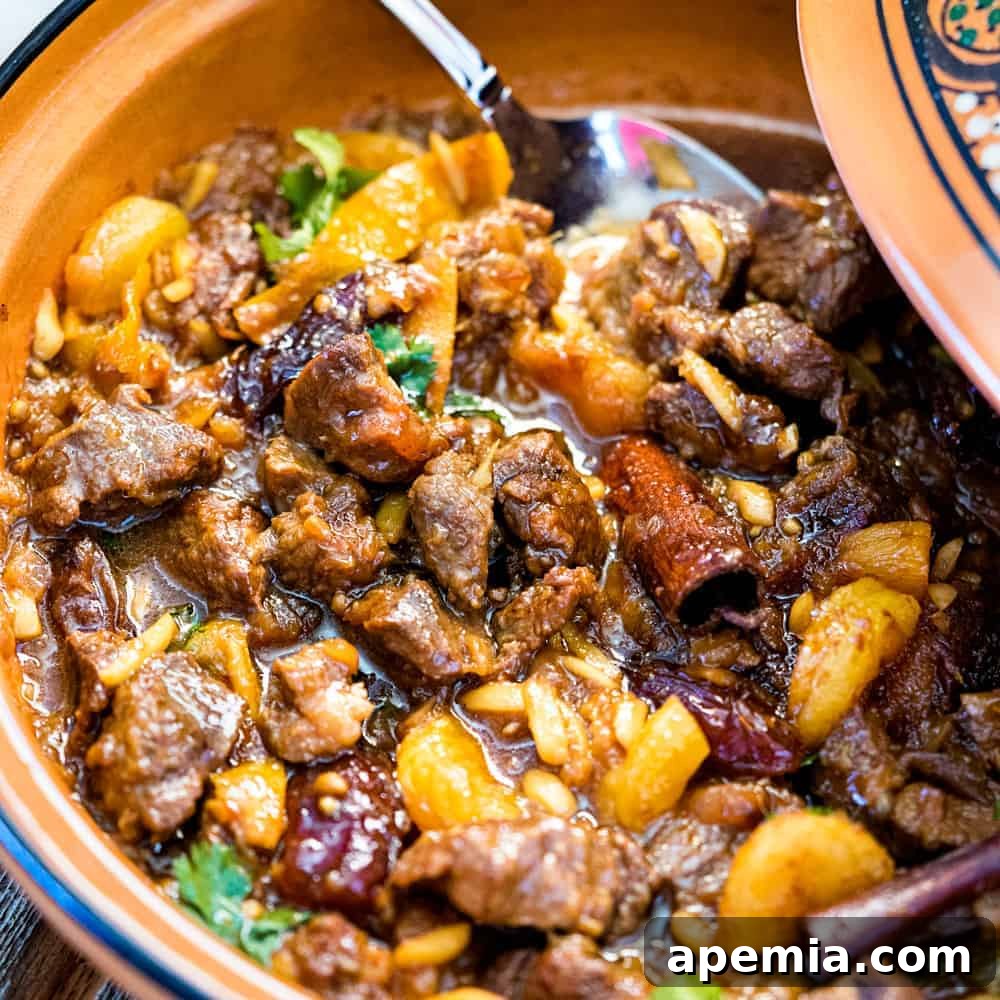
A tagine is more than just a cooking pot; it’s a centuries-old North African culinary tradition. This distinctive vessel, typically made of glazed ceramic or unglazed clay, features a flat, circular base and a tall, conical lid. Its unique design is engineered for slow cooking, allowing steam to rise, condense on the cool lid, and drip back down into the dish. This continuous self-basting process keeps ingredients incredibly moist, tenderizes meats to perfection, and allows flavors to meld and deepen over hours, resulting in dishes that are both deeply aromatic and extraordinarily rich.
When a recipe is simply titled “tagine,” it describes the method of cooking, rather than a specific set of flavors. The versatility of tagine cooking is truly remarkable, allowing for a vast array of ingredient combinations and spice profiles. For example, a chicken tagine might feature a bright, tangy profile with preserved lemons and olives, while a beef tagine could lean towards a sweeter, more robust character with sweet potatoes and prunes. Each offers a unique and delicious experience, distinct from the earthy, subtly sweet notes of this lamb tagine recipe. For those exploring plant-based options, I also have a quick and delightful vegetarian tagine recipe available.
Despite the diversity, many tagine recipes share a foundation of beloved Moroccan seasonings. Fragrant coriander, precious saffron, and pungent ginger are commonly found, building a warm and inviting spice base. To further enhance the complexity and authenticity of this lamb tagine, I often incorporate Ras el Hanout, a renowned Moroccan spice blend known for its floral, peppery, and earthy qualities. This harmonious blend of spices is perfectly suited to complement the robust, earthy flavors of tender lamb.
The true magic of this particular lamb tagine recipe lies in the interplay between these profound spices and the sweet, tangy bursts of dried apricots and dates. These fruits introduce a beautiful, natural sweetness that beautifully balances the savory depth of the lamb and the warmth of the spices. The result is a heavenly, mouthwatering stew that you’ll savor down to the very last, rich drop – a true taste of Moroccan culinary excellence.
Table of Contents
- No Tagine? No Problem!
- Essential Ingredients and Clever Substitutions
- Step-by-Step Guide to Moroccan Lamb Tagine
- Recommended Kitchen Tools
- Storing and Reheating Your Tagine
- Frequently Asked Questions
- Lamb Tagine with Apricots Recipe
Chef’s Tip
No Tagine? No Problem!
While an authentic tagine pot adds to the traditional experience, you absolutely do not need one to create this incredible lamb tagine. Many home cooks achieve fantastic results using readily available kitchen equipment. A heavy-bottomed Dutch oven or a covered casserole dish are excellent substitutes. These types of cookware are designed to retain and distribute heat evenly, effectively mimicking the gentle, consistent cooking environment of a traditional tagine. The key is a tight-fitting lid, which is essential for trapping steam and creating the moist, slow-cooking conditions necessary to tenderize the lamb and allow the complex flavors to fully develop and blend. Don’t let the absence of a specialized pot deter you from enjoying this magnificent Moroccan dish!
Essential Ingredients and Clever Substitutions
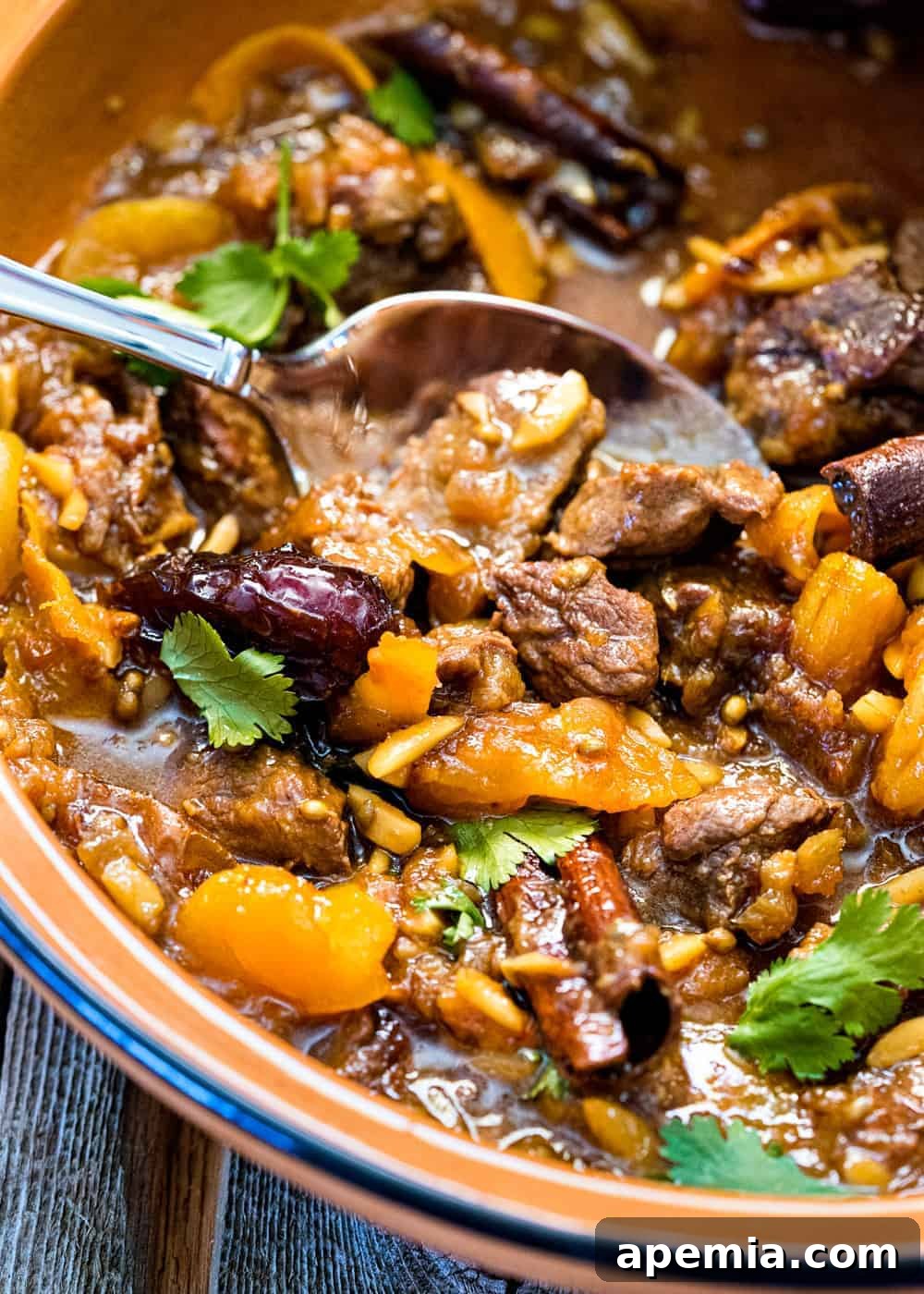
- Cubed Lamb Shoulder or Leg: For the ultimate tender and flavorful tagine, lamb shoulder is an ideal choice. It’s a hardworking muscle with a rich, savory flavor that benefits immensely from the slow-cooking process, breaking down into melt-in-your-mouth pieces. Lamb leg is also an excellent option, especially if you plan to use a pressure cooker for a quicker cooking time. Any boneless cut of lamb, cubed into manageable pieces, will work wonderfully in this recipe, absorbing all the aromatic spices.
- Olive Oil & Butter: This classic combination provides a rich and flavorful base for sautéing your aromatics and browning the lamb. For a truly authentic North African touch and a nutty flavor, you can substitute this mixture with ghee, a clarified butter that also boasts a higher smoke point.
- Slivered Almonds: These add a delightful textural contrast and a subtle nutty crunch to the finished dish. To prepare them for the tagine, blanching is recommended: simply boil the almonds for 1 minute, then quickly transfer them to cold, running water. This process makes them smoother and removes any underlying bitterness, ensuring a delicate flavor.
- Dried Apricots & Dates: These sweet and tangy jewels are fundamental to Moroccan tagines, providing a crucial balance to the savory lamb and robust spices. While apricots and dates are traditional, feel free to get creative with substitutions. Other dried fruits like figs, raisins, or even cranberries can be used, each adding its own unique sweetness and texture profile to the stew.
- Orange: The bright, citrusy notes from an orange are key to lifting the deep flavors of the tagine. You’ll need either four thin strips of orange peel (making sure to avoid the bitter white pith) or one tablespoon of finely grated orange zest. This subtle addition imparts a wonderful aromatic complexity without making the dish taste overtly citrusy.
- Honey: This natural sweetener is essential for developing the tagine’s signature sweet and syrupy sauce. Honey not only adds a beautiful glaze but also harmonizes perfectly with the warm spices, bright orange, and dried fruits, contributing a depth of sweetness that sugar simply cannot replicate.
- Red Onion: Red onions offer a slightly sweeter and milder flavor when caramelized, which forms a foundational layer of taste for the tagine. If red onions are unavailable, yellow or white onions can be substituted without significantly altering the dish’s overall profile.
- Ginger Paste: Convenient ginger paste provides a powerful and fresh burst of ginger flavor. If you prefer to use fresh ginger, you can easily make your own paste by blending a 2-inch piece (approximately 1 ounce) with about 3 to 4 tablespoons of olive oil until smooth.
- Key Seasonings:
- Saffron: Revered as the world’s most luxurious spice, saffron imparts a distinct, delicate floral aroma and a beautiful golden hue to the tagine. A small pinch goes a very long way. If saffron is hard to find or too expensive, turmeric is its best substitute, providing a similar golden color and a warm, earthy flavor, though with a different aromatic signature.
- Coriander: Ground coriander seeds bring a warm, citrusy, and slightly sweet flavor to the spice blend. Cumin can be used as an alternative for its earthy notes, or a high-quality curry powder can offer a complex spice profile if coriander is not readily available.
- Cinnamon: Two cinnamon sticks simmer slowly to infuse the tagine with a gentle, comforting warmth that doesn’t overpower the other flavors. If using ground cinnamon, two teaspoons will achieve a similar aromatic effect, adding a cozy, sweet spice note.
- Ras el Hanout: This is an optional but highly recommended Moroccan spice blend that truly elevates the dish. Its name, meaning “head of the shop,” implies it contains the finest spices a merchant has to offer. It’s a complex, aromatic mix, often featuring notes that are floral, peppery, earthy, and subtly spicy all at once. Including Ras el Hanout in this lamb tagine recipe adds unparalleled depth and authenticity, making it a truly unforgettable meal.
Step-by-Step Guide to Moroccan Lamb Tagine
- Sauté Almonds, Garlic & Onions: Begin by heating the olive oil and butter (or ghee) in your tagine, Dutch oven, or heavy-bottomed pot. Add the blanched almond slivers and toast them gently for approximately 5 minutes until they turn a beautiful golden brown and release their nutty aroma. Remove the almonds from the pot and set them aside for garnish later. In the same pot, add the diced red onions and minced garlic. Stir well and cook over low heat for 8-10 minutes until they soften, become translucent, and achieve a rich golden-brown color, forming a sweet and savory base for your tagine.
- Season & Sear the Lamb: Stir in the ginger paste, a pinch of saffron threads, the cinnamon sticks, and the crushed coriander seeds. Allow these spices to cook for about a minute, allowing their fragrances to bloom and permeate the onions. Add the cubed lamb to the pot, ensuring every piece is thoroughly coated in this aromatic spice, onion, and garlic mixture. Sauté the lamb for 3-4 minutes, just enough to lightly brown the exterior, which helps lock in juices and build a deeper flavor profile.
- Initiate the Slow Simmer: Pour enough water into the pot to just barely cover the meat. Increase the heat to bring the liquid to a gentle boil. Once boiling, reduce the heat to its lowest setting, cover the pot tightly, and allow it to simmer for a minimum of 1 hour. This extended, gentle cooking process is crucial for breaking down the lamb’s fibers, ensuring the meat becomes exceptionally tender and succulent. For best results, aim for a fall-apart texture rather than just reaching a specific internal temperature.
- Infuse with Fruits & Citrus: After the initial simmering, carefully uncover the pot. Stir in the seeded dates, dried apricots, and either the orange peel strips or orange zest. Give all the ingredients a good mix to combine them evenly, then cover the pot once more. Allow it to simmer for an additional 20 minutes. During this phase, the dried fruits will plump up and release their natural sugars, infusing the sauce with a delightful sweetness, while the orange adds a refreshing aromatic lift that brightens the overall flavor.
- Final Seasoning & Serving: Uncover the tagine and stir in the honey and, if using, the Ras el Hanout. Cover the pot again and simmer for another 10 minutes, allowing all the flavors to fully meld and the sauce to thicken slightly into a rich, syrupy consistency. Taste the tagine and adjust the seasoning with salt and freshly ground black pepper as desired. If the sauce is too watery, simply let it simmer uncovered for a few minutes to reduce and thicken. If it becomes too thick, add a splash of water or broth. Serve immediately, piping hot and steaming, garnished generously with the reserved toasted slivered almonds and a sprinkle of fresh chopped cilantro for a vibrant finish.
Recommended Kitchen Tools
- Tagine: The traditional ceramic or clay cooking pot with a conical lid, perfect for slow-cooking and achieving exceptionally tender, flavorful results. If using, remember to cure it before its first use and employ a heat diffuser on direct heat sources.
- Dutch Oven: An excellent and highly versatile alternative to a tagine. Its heavy construction and tight-fitting lid make it ideal for slow-cooking stews and braises, producing results very similar to what you’d achieve in a traditional tagine.
- Pressure Cooker (e.g., Instant Pot): For those seeking a much faster cooking time without sacrificing tenderness, a pressure cooker is a fantastic option. It efficiently tenderizes the lamb while allowing the complex flavors to develop beautifully in a fraction of the time.
Storing and Reheating Your Tagine
One of the many delights of lamb tagine is that it often tastes even better the next day. The robust Moroccan seasonings have additional time to fully penetrate the lamb and infuse the sauce, deepening the overall flavor and making leftovers a truly sought-after treat.
To store your lamb tagine, allow any remaining portions to cool completely to room temperature. Once cooled, transfer the tagine to an airtight container and refrigerate for 3 to 5 days. For longer-term storage, lamb tagine freezes exceptionally well. Portion the cooled tagine into freezer-safe containers or heavy-duty freezer bags and freeze for up to 3 months. When ready to enjoy, thaw overnight in the refrigerator before reheating.
To reheat, gently warm the lamb tagine on the stovetop over medium-low heat, stirring occasionally, until it is thoroughly heated through. If the sauce has thickened too much during storage, you may wish to add a splash of water or broth to achieve your desired consistency. While microwaving is an option for individual servings, stovetop reheating generally provides more even warming and helps maintain the best texture and flavor.
Share this recipe on Pinterest!
Love this recipe? Share it with the world on Pinterest.
Frequently Asked Questions
For tagine, I highly recommend using lamb shoulder. This cut is naturally rich in flavor and, though initially tougher, becomes incredibly succulent and tender when slow-cooked. The tagine’s long, gentle simmering process allows the connective tissues to break down beautifully, resulting in meat that literally falls apart with each bite. Lamb leg is also an excellent choice, particularly if you’re opting for a quicker cooking method like a pressure cooker. Ultimately, any boneless cut of lamb, cubed, will work well, but lamb shoulder offers an unparalleled depth of flavor and texture that truly shines in this dish.
Absolutely! An Instant Pot or any pressure cooker can significantly reduce the cooking time while still achieving a wonderfully tender and flavorful lamb tagine. The process is similar to the stovetop method: you’ll first use the Sauté function to toast the almonds, then soften the onions and garlic, and finally sear the spiced lamb. After adding about 1 cup of water, you’ll close the lid and select the Stew or Meat/Stew setting for high pressure cooking for approximately 35 minutes. Once cooked, perform a quick release of pressure, then stir in the dates, apricots, orange, honey, and Ras el Hanout, using the Sauté setting again for about 10 minutes to allow the flavors to meld and the sauce to thicken to a perfect syrupy consistency. This makes a delicious tagine achievable even on busy weeknights.
Moroccan lamb tagine with apricots and dates is most traditionally served with fluffy couscous, which is perfect for soaking up every drop of the rich, aromatic sauce. However, it’s also commonly enjoyed with warm, crusty bread (such as traditional Moroccan khobz) or even rice, allowing you to fully savor the flavorful liquid. I personally love serving it with both couscous and a side of fresh bread to ensure no drop of that exquisite sauce goes to waste. A final sprinkle of freshly chopped cilantro or parsley adds a bright, herbaceous finish that beautifully complements the deep, warming flavors of the stew.
Ras el Hanout is a complex and highly aromatic Moroccan spice blend, whose name translates to “head of the shop,” signifying it contains the finest spices a merchant has to offer. There’s no single definitive recipe, as each spice master creates their own unique blend, often containing dozens of ingredients like cardamom, clove, cinnamon, nutmeg, mace, allspice, dry ginger, chili peppers, coriander seed, peppercorn, paprika, fenugreek, and turmeric. Its importance lies in its ability to add immense depth, warmth, and a sophisticated layer of flavor to Moroccan dishes, elevating them beyond simple savory or sweet profiles. In this lamb tagine, it provides an unparalleled aromatic complexity that truly defines its authentic Moroccan character and makes the dish sing.
The masterful balance of sweet and savory is a hallmark of many Moroccan dishes, and this lamb tagine with apricots and dates is a prime example. The robust, earthy flavor of the lamb and the warm, intense spices (saffron, ginger, coriander, cinnamon, Ras el Hanout) form a strong, deeply savory foundation. This is beautifully contrasted by the natural sweetness and slight tang of the dried apricots and dates, along with the aromatic lift from the orange and the caramel notes of honey. These sweet elements don’t make the dish dessert-like; instead, they temper the richness of the meat and spices, creating a harmonious and incredibly appealing complexity that excites the palate and keeps you coming back for more. It’s a delicate dance of flavors where each element enhances the other without overpowering, resulting in a truly captivating culinary experience.
Lamb Tagine with Apricots
Lamb tagine is a thick, savory Moroccan stew simmered with North African spices, tender lamb, and topped with crunchy almonds and sweet dried apricots. It makes for an aromatic, hearty, and deeply satisfying meal.
Print Recipe
Equipment
-
Tagine or
-
Dutch Oven
Ingredients
- 1 tbsp olive oil (See Note 1)
- 1 tbsp butter (See Note 1)
- 2 tbsp blanched almond slivers
- 2 red onions, diced
- 3 cloves garlic, minced
- 2 tbsp ginger paste (from 1 ounce, 2-inch piece of fresh ginger)
- pinch saffron threads
- 2 cinnamon sticks
- 2 tsp crushed coriander seeds
- 2 lbs lamb shoulder or leg, cubed
- 8 dates, seeded
- 8 dried apricots
- 1 orange (See Note 2)
- 2 tbsp honey
- 1/2 tsp Ras el Hanout (optional)
- 1/2 tsp salt
- 1/4 tsp black pepper
Instructions
Traditional Tagine / Dutch Oven Method
-
Heat the butter and oil in a tagine or heavy Dutch oven. Stir in the almonds and sauté until golden; remove and set aside. Add the diced onions and garlic, stir and cook over low heat until golden brown. Stir in the ginger paste, saffron, cinnamon sticks, and coriander seeds. Add the cubed lamb pieces and stir to make sure everything is coated with the onion and spices. Sauté for 4 minutes to brown the lamb lightly.
-
Next, pour enough water in to cover the meat. Bring to a boil, then reduce the heat to low, cover, and simmer for 1 hour or until the meat is very tender.
-
Uncover and add the dates, apricots, and orange peel or zest. Stir to mix, then cover once more and simmer for an additional 20 minutes.
-
Stir in the honey and Ras el Hanout (optional). Simmer for another 10 minutes, covered. Taste and season with salt and pepper as desired. The sauce should be syrupy. If it is too watery, allow it to simmer uncovered for 5 minutes to thicken. If too thick, add a bit more water.
-
Top with the reserved toasted almonds and chopped cilantro, and serve hot along with couscous and your choice of bread.
Instant Pot Method
-
Use the Sauté setting on your Instant Pot. Melt the butter and oil. Stir in the almonds and sauté until golden; remove and set aside. Add the diced onions and garlic, stir and cook until golden. Stir in the ginger paste, saffron, cinnamon sticks, and coriander seeds. Add the cubed lamb pieces and stir to make sure everything is coated with the onion and spices. Pour 1 cup water over the meat, close the lid, and set to the Stew or Meat/Stew setting for high pressure for 35 minutes.
-
Once done, perform a Quick Release of pressure. Add the dates, apricots, orange peel or zest, honey, and Ras el Hanout (optional). Select the Sauté setting again for 10 minutes, stirring occasionally, to allow the flavors to meld and the sauce to thicken to a syrupy consistency. Season to taste with salt and pepper. If the sauce is too watery, continue sautéing for another 5 minutes or as needed.
-
Top with the reserved toasted almonds and chopped cilantro, and serve hot along with couscous and your choice of bread.
Slow Cooker Method
-
Toast almonds in butter and oil until golden; set aside. In a separate skillet, sauté onions and garlic until soft. Add ginger, saffron, cinnamon sticks, and coriander; cook for 1–2 minutes until fragrant. Next, add lamb and brown lightly on all sides. Transfer the entire mixture (lamb, onions, spices) to your slow cooker.
-
Add dates, apricots, orange zest/peel, honey, Ras el Hanout (optional), salt, and pepper to the slow cooker. Pour in water or broth until it reaches halfway up the meat (this is less liquid than stovetop methods).
-
Cook on Low for 6–8 hours or on High for 3½–4½ hours, or until the lamb is incredibly tender. If the sauce appears thin after cooking, uncover and cook on High for 20–30 minutes to reduce, or transfer the sauce to a skillet and reduce it on the stovetop. Top with the toasted almonds and chopped cilantro; serve hot with couscous or bread.
Notes
- You can substitute the olive oil and butter with 2 tablespoons of ghee for an authentic flavor and higher smoke point.
- For the orange, use a vegetable peeler to get 4 strips of orange peel, making sure to avoid the bitter white pith. Alternatively, you can use 1 tablespoon of finely grated orange zest.
- If using a traditional clay tagine, ensure it has been properly cured prior to its first use. Always use a heat diffuser between the tagine and the heat source (flame or electric burner) to prevent cracking and ensure even heat distribution.
- A Dutch oven or any heavy-bottomed pot with a tight-fitting lid can be used as an effective substitute for a tagine, delivering similar slow-cooking results.
Nutrition
Carbohydrates: 41g |
Protein: 31g |
Fat: 11g |
Saturated Fat: 3g |
Cholesterol: 92mg |
Sodium: 401mg |
Potassium: 848mg |
Fiber: 5g |
Sugar: 32g |
Vitamin A: 650IU |
Vitamin C: 22mg |
Calcium: 93mg |
Iron: 4mg
The information shown is an estimate provided by an online nutrition calculator. It should not be considered a substitute for a professional nutritionist’s advice.
Have You Made This Recipe? Let Me Know on Instagram
Tag @keviniscooking or tag me #keviniscooking!