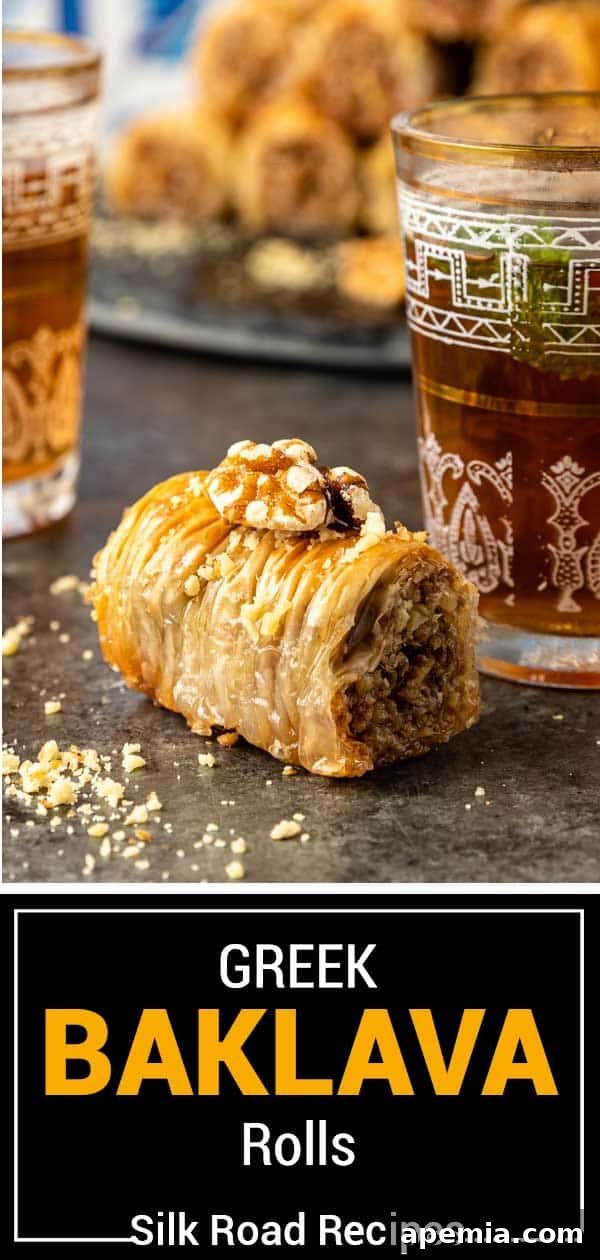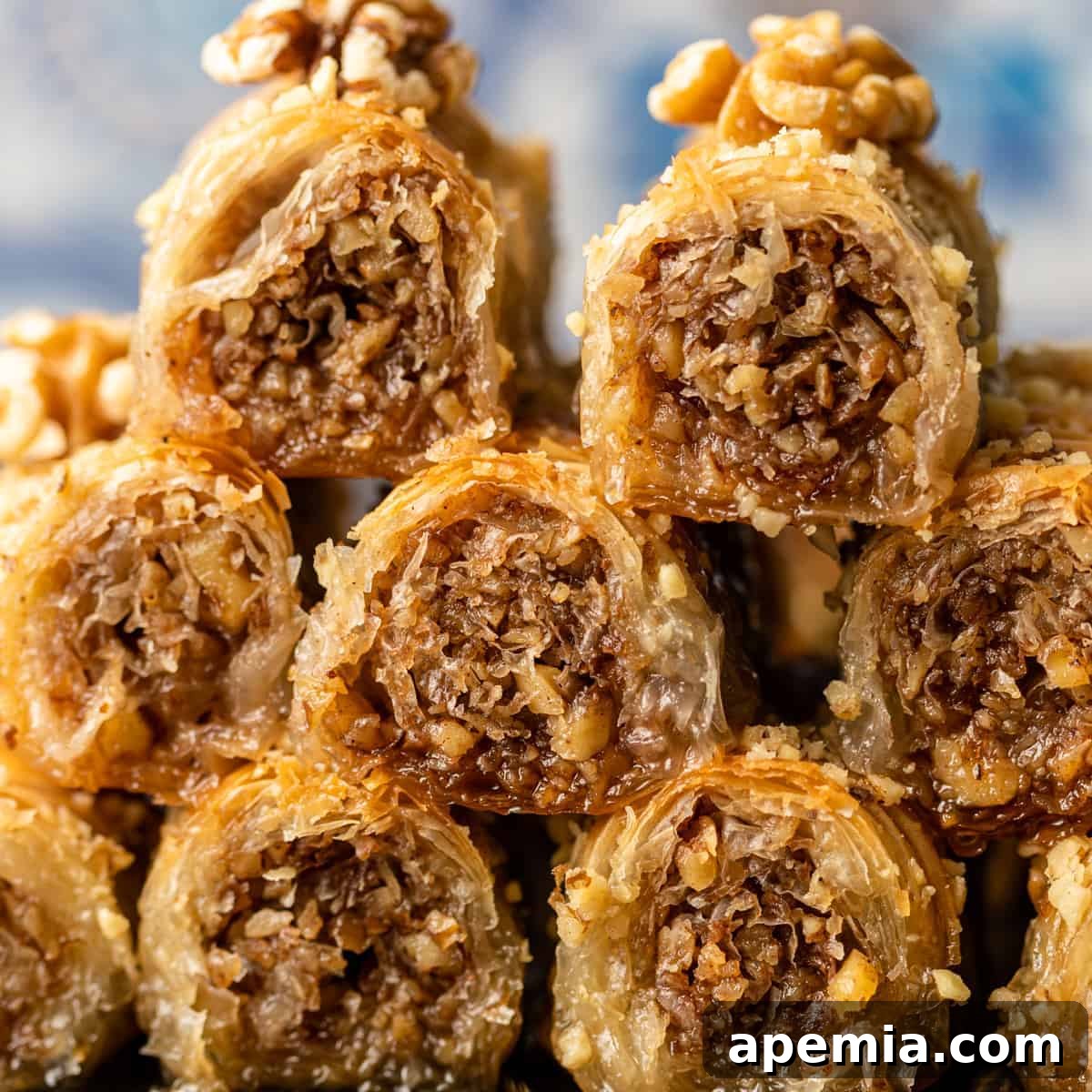
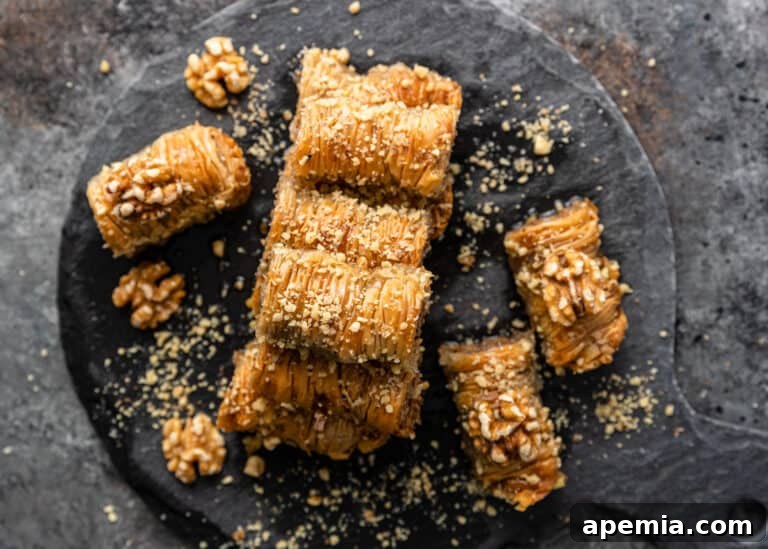
Indulge in the captivating charm of Greek Baklava Rolls, affectionately known as Saragli. These delightful pastries offer everything you cherish about classic Greek baklava – crispy, golden phyllo layers, a rich, aromatic walnut filling, and a delicate, orange-infused syrup – but with an effortlessly elegant twist that simplifies the preparation process without compromising on flavor or texture. Get ready to master this impressive dessert!
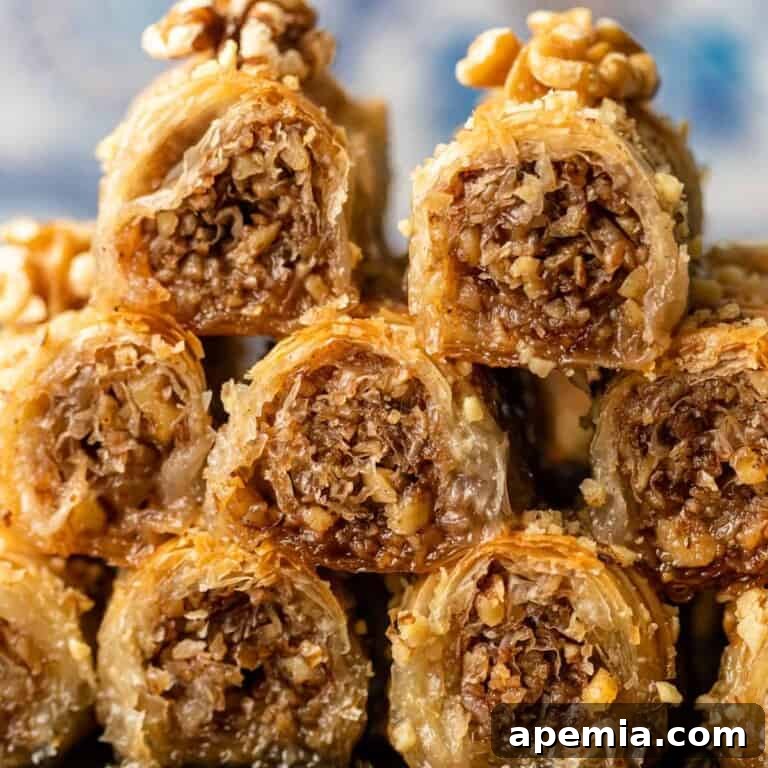
Experience the Decadence of Greek Baklava Rolls (Saragli)
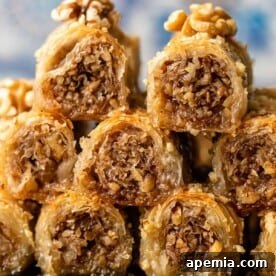
Greek Baklava Rolls, or “Saragli,” are a testament to the art of Mediterranean confectionery, offering a phenomenal culinary experience. Each roll is a masterpiece of culinary contrast: deeply rich, buttery layers of ultra-flaky phyllo dough are meticulously wrapped around a warmly spiced cinnamon-nut mixture, then baked to a state of crispy, golden-brown perfection. The magic culminates as the entire dessert is generously bathed in a fragrant, honey-infused syrup, allowing its sweet essence to permeate every single nook and cranny. The result is pure, unadulterated decadence that melts in your mouth.
What sets Saragli apart, beyond its irresistible taste and texture, is its remarkable ease of preparation compared to traditional Greek baklava. While classic recipes often demand upwards of 33 individual sheets of phyllo dough, making them quite labor-intensive and time-consuming, our Saragli recipe simplifies the process dramatically. Each elegant cigar-shaped roll requires only two sheets of phyllo, significantly cutting down on assembly time. This ingenious method means you can achieve all the luxurious indulgence and complex flavors of authentic baklava in a mere fraction of the effort, making it an ideal choice for home bakers seeking an impressive yet manageable dessert.
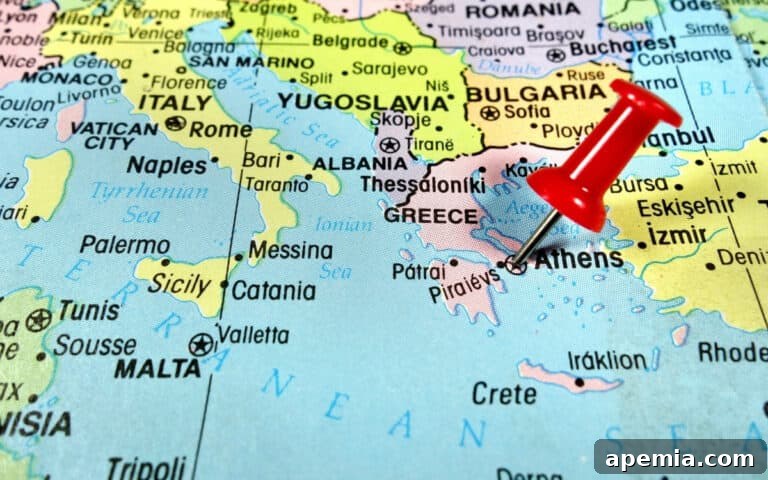
Table of Contents
- Why Choose Saragli Over Traditional Baklava?
- Ingredient Notes and Substitutions
- Essential Tools for Perfect Baklava Rolls
- How to Make Greek Baklava Rolls (Step-by-Step)
- Tips for Success with Phyllo and Syrup
- Frequently Asked Questions About Baklava Rolls
- Greek Baklava Rolls (Saragli) Recipe Card
- Serving and Storage Suggestions
Why Choose Saragli Over Traditional Baklava?
While the allure of traditional Greek baklava, with its myriad of meticulously layered phyllo sheets, is undeniable, the creation of these iconic squares can often be intimidating for even seasoned bakers. The sheer volume of layers—sometimes up to 33—requires patience, precision, and a delicate touch to prevent the ultra-thin dough from drying out or tearing. This is where Saragli, the humble yet elegant baklava roll, truly shines.
Our recipe for Greek Baklava Rolls offers a wonderfully streamlined approach without sacrificing any of the authentic flavor or satisfying crunch. Instead of painstakingly layering many sheets, you work with just two sheets per roll, making the process considerably faster and more forgiving. The act of rolling the phyllo around a dowel creates a beautiful, crinkled texture that not only looks sophisticated but also provides more surface area for that delicious syrup to soak into, resulting in an incredibly moist and flavorful bite every time. This method also helps to prevent the dough from becoming too dense or overly rich, maintaining that desired delicate flakiness. So, if you’re looking for a dessert that delivers maximum impact with minimal fuss, Saragli is your perfect choice for any occasion.
For those eager to explore more delectable dessert ideas from the rich culinary traditions of the Silk Road and the Mediterranean, be sure to check out my recipes for Turkish Delight, Tahini Chocolate Bark, and this recipe for Halva. I also have an easy classic baklava recipe that will impress your guests and save you precious time!
Ingredient Notes and Substitutions for Authentic Flavor
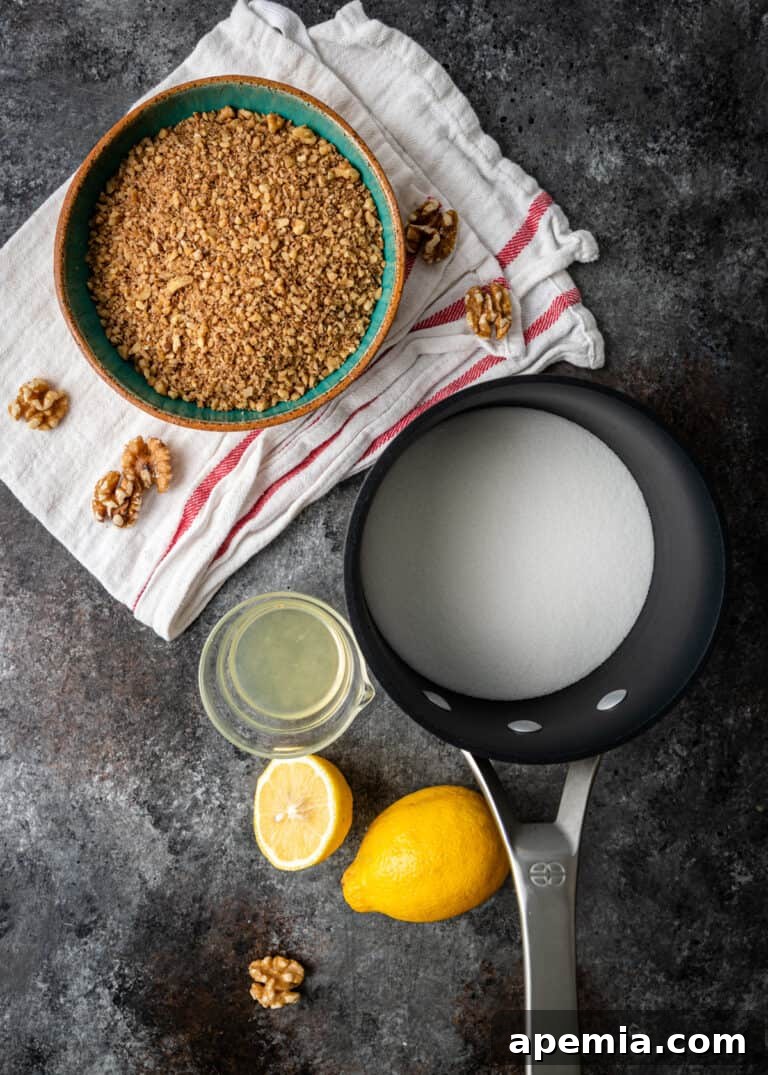
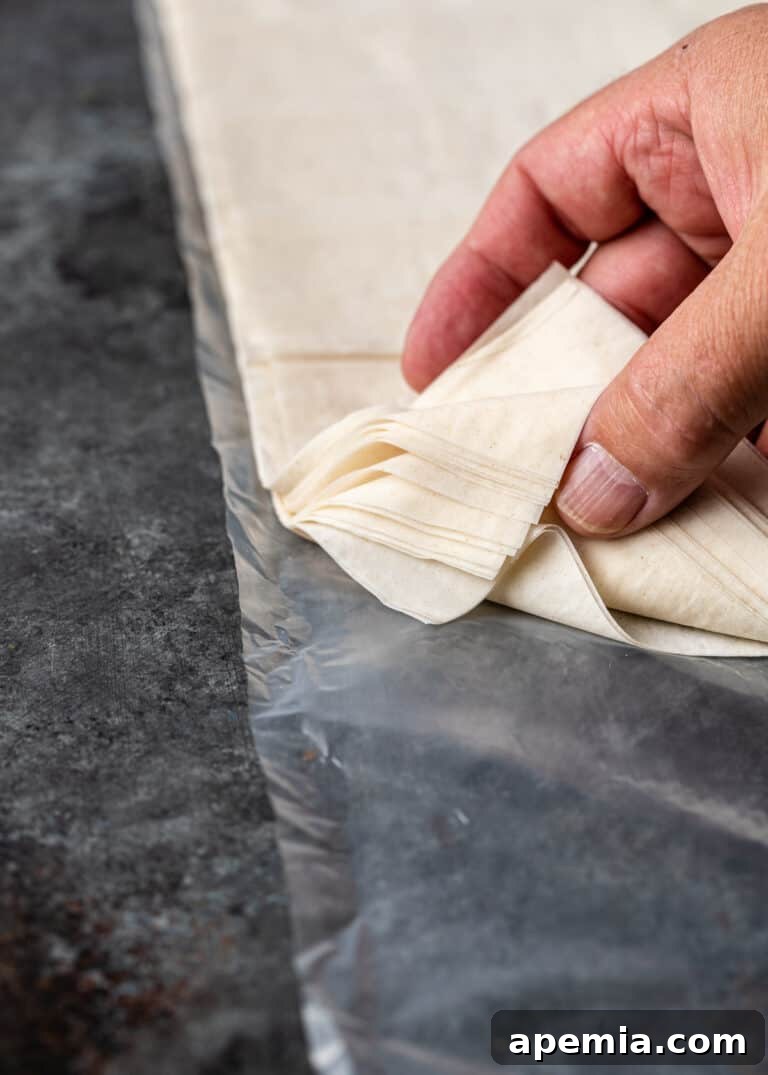
- Phyllo Dough – This delicate, tissue-thin pastry is the heart of baklava, imparting its signature flaky, buttery texture. You’ll typically find phyllo dough in the freezer section of most supermarkets; occasionally, it’s available in the refrigerated section near puff pastry or biscuits. For this recipe, you’ll need one 16-ounce package, which usually contains between 18-20 sheets. Remember to thaw it properly overnight in the refrigerator before use, then bring it to room temperature for about an hour before unwrapping to prevent cracking. Always keep unused phyllo covered with a damp cloth while working to maintain its moisture.
- Butter – The rich, savory essence of good quality butter is paramount in this recipe, layering through the phyllo to create that desirable crispness and flavor. I highly recommend using the best unsalted butter (or clarified butter, known as ghee) you can find. Avoid margarine or other butter substitutes, as they often contain too much water and lack the rich flavor that makes baklava truly special. If using salted butter, you might want to slightly reduce the salt elsewhere in your diet, though it typically won’t impact the dessert’s taste significantly.
- Walnuts – Walnuts are the quintessential nut for Greek baklava, offering a delightful earthy sweetness and a satisfying crunch that complements the other flavors beautifully. However, don’t hesitate to customize! Feel free to experiment with other nuts like finely chopped almonds, pistachios (which are common in Turkish baklava), or a combination for a unique flavor profile. Ensure your nuts are fresh for the best taste.
- Orange Water – Also known as orange blossom water, this fragrant ingredient is optional but highly recommended. It infuses the syrup with a delicate floral and fruity sweetness that elevates the entire dessert to another level of sophistication. Look for it in the international foods aisle of your grocery store or at your local Middle Eastern/ethnic food market. If you can’t find it, a splash of vanilla extract or a bit of orange zest added to the syrup can offer a similar aromatic note.
- Cinnamon – This warming spice pairs perfectly with walnuts, giving the filling its characteristic Greek baklava flavor. Use freshly ground cinnamon for the most vibrant aroma.
- Honey – Integral to the syrup, honey adds depth and its unique sweetness. Use a good quality local honey for the best flavor.
- Lemon Juice – A small amount of lemon juice in the syrup is crucial. It helps prevent the sugar from crystallizing and adds a subtle brightness that balances the sweetness.
Chef’s Tip for Seamless Rolling
Essential Tools for Perfect Baklava Rolls
Crafting perfect Saragli rolls is significantly easier with the right tool: a piece of wood doweling or a similar small cylindrical rod. This simple item transforms the rolling process, making it swift and uniform. I found that a 4-foot long, ⅜-inch thick dowel from a hardware store works wonders. By cutting it in half, you get two convenient 2-foot dowels, and the entire project costs less than a dollar. If a dowel isn’t readily available, a clean, sturdy wooden spoon handle, a thin rolling pin, or even a smooth, clean curtain rod could work in a pinch. The key is a firm, round surface that allows for easy wrapping and release of the delicate phyllo dough.
How to Make Greek Baklava Rolls (Step-by-Step)
- Prepare Your Ingredients and Workspace. Begin by combining your walnuts and cinnamon in a food processor or by hand. Pulse or chop until they form fine, even crumbs, ensuring a consistent texture for the filling. Set aside about 2 tablespoons of this mixture for a decorative topping later. Next, melt the butter gently over low heat or in the microwave, and let it cool slightly. Grease two 8×8 inch baking pans and have them ready. Preheat your oven to 350 degrees F (177 degrees C).
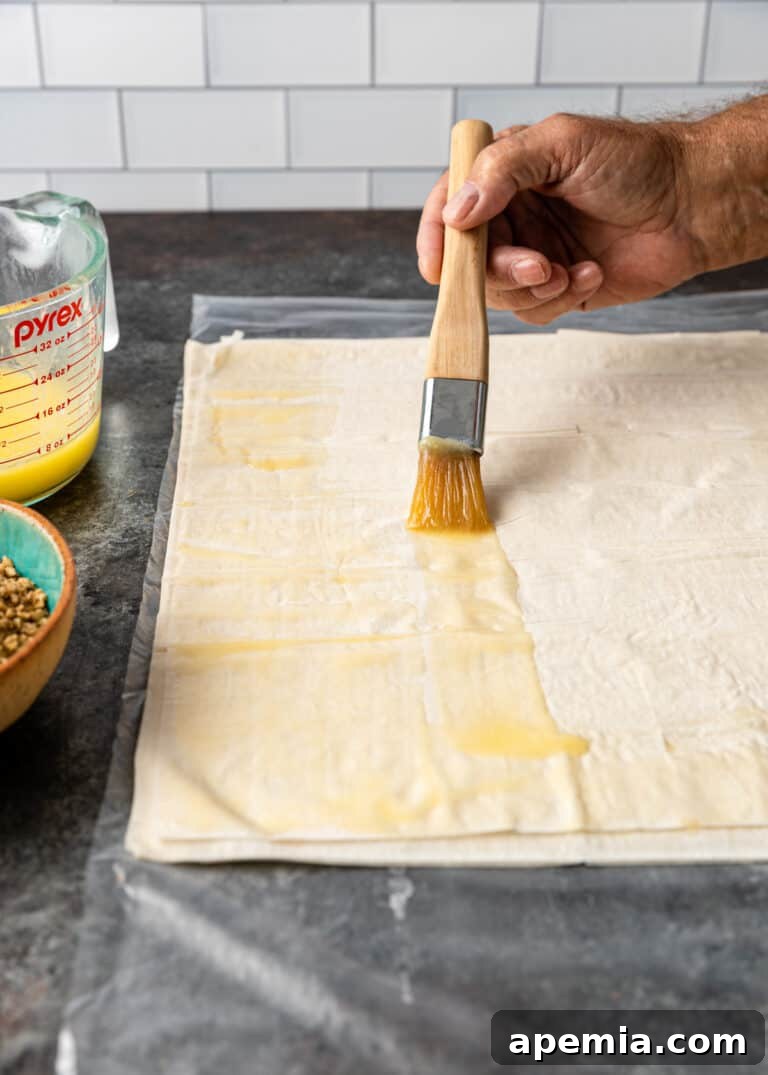
- Lay Out and Prepare the Dough. Carefully unroll your phyllo dough sheets onto a clean, flat, and dry working surface. It’s crucial to keep any unused phyllo covered with a lightly damp towel to prevent it from drying out and becoming brittle. Take one sheet of phyllo, lay it flat, and brush its entire surface generously with melted butter, ensuring an even coating. Then, sprinkle a uniform layer of the cinnamon-nut mixture over the buttered phyllo sheet.
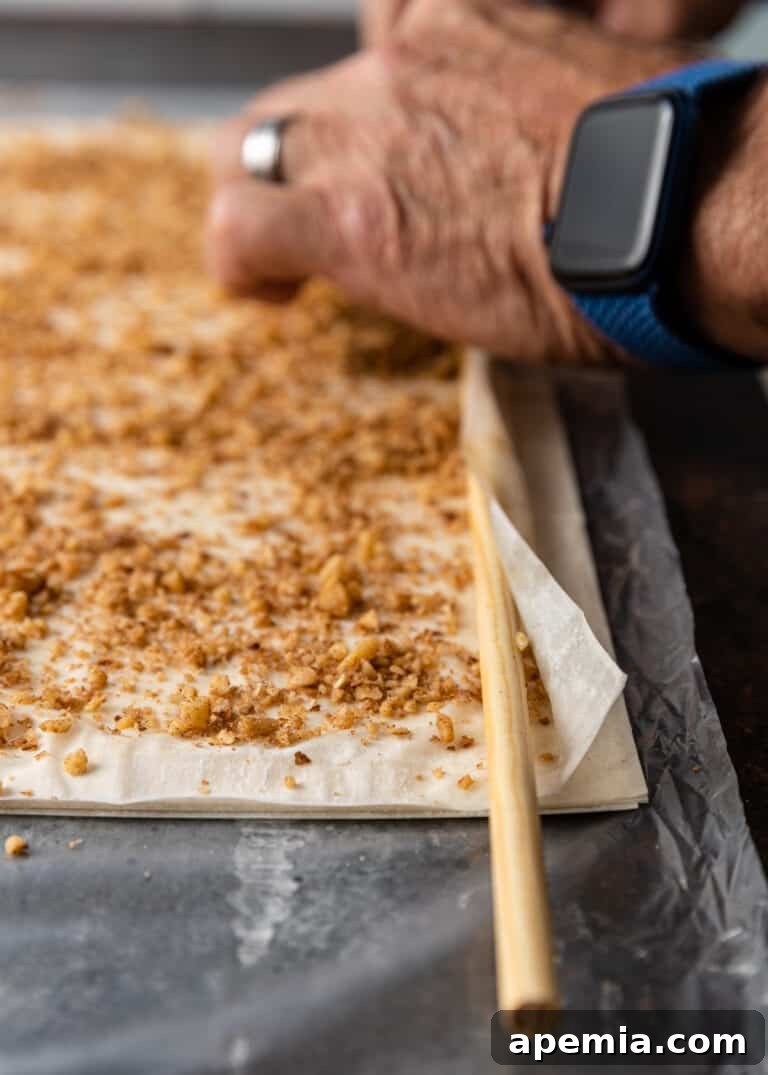
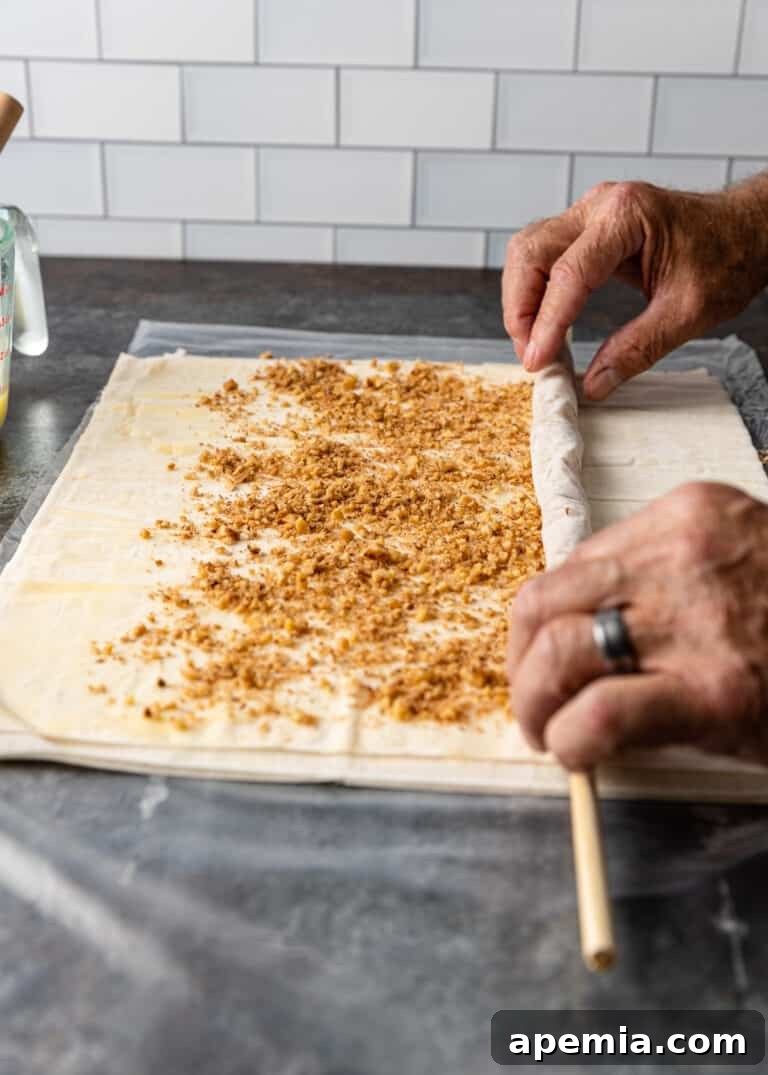
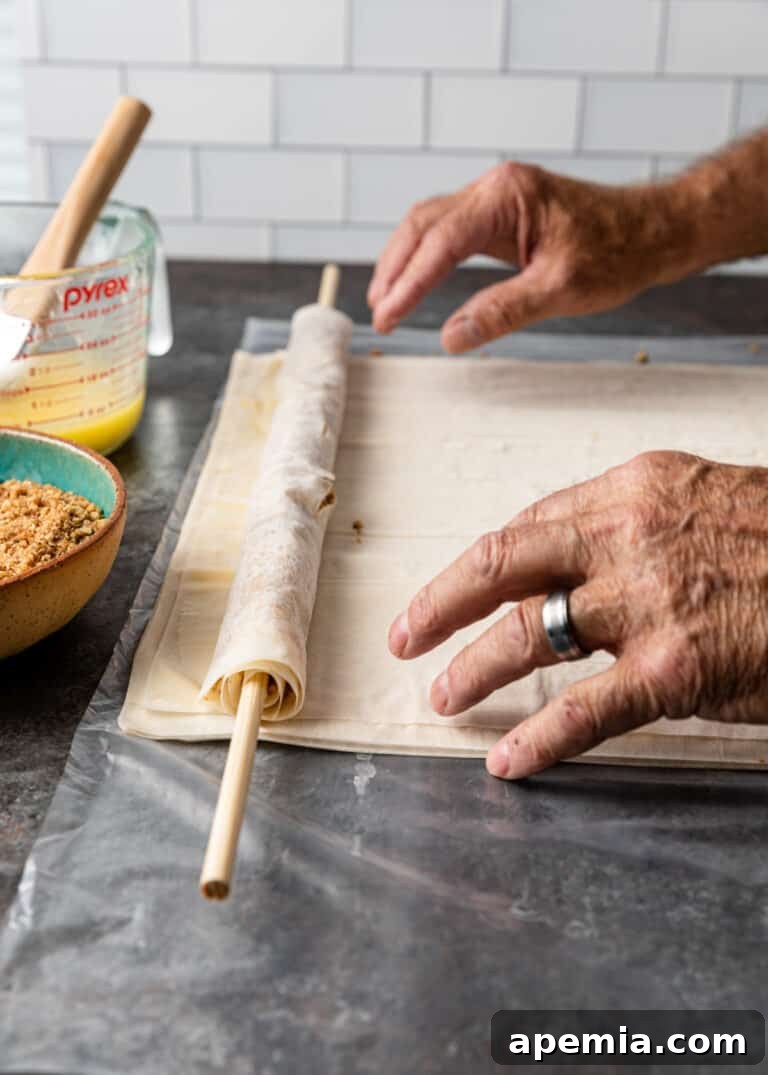
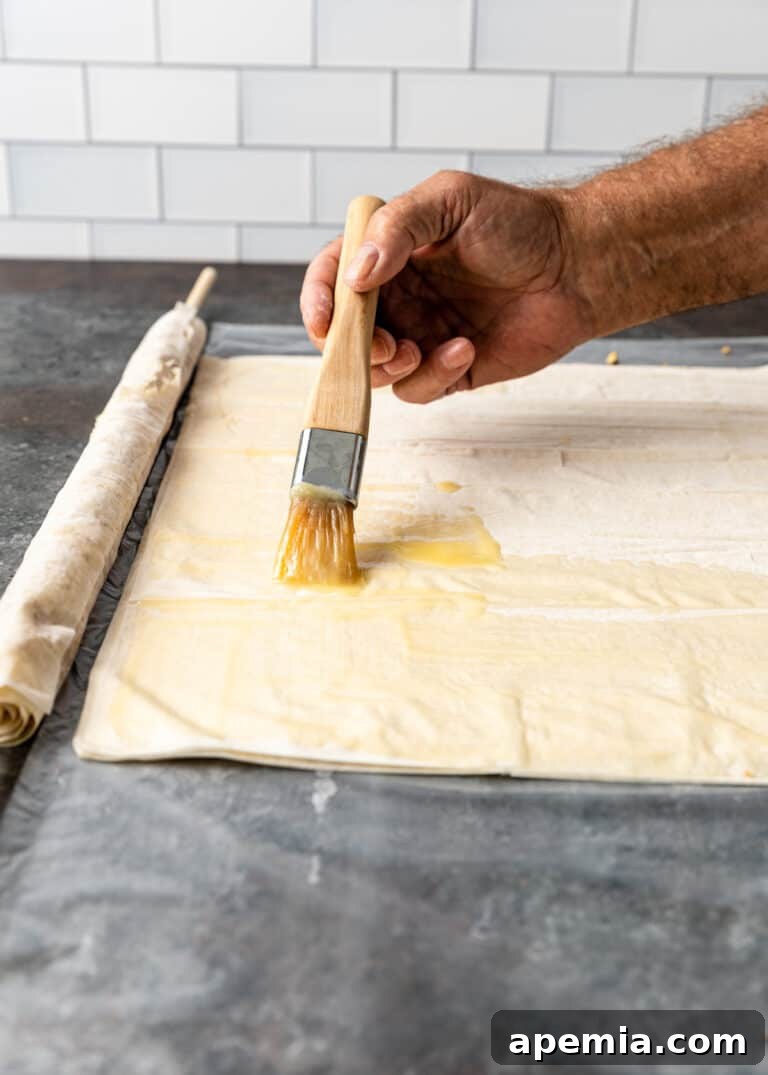
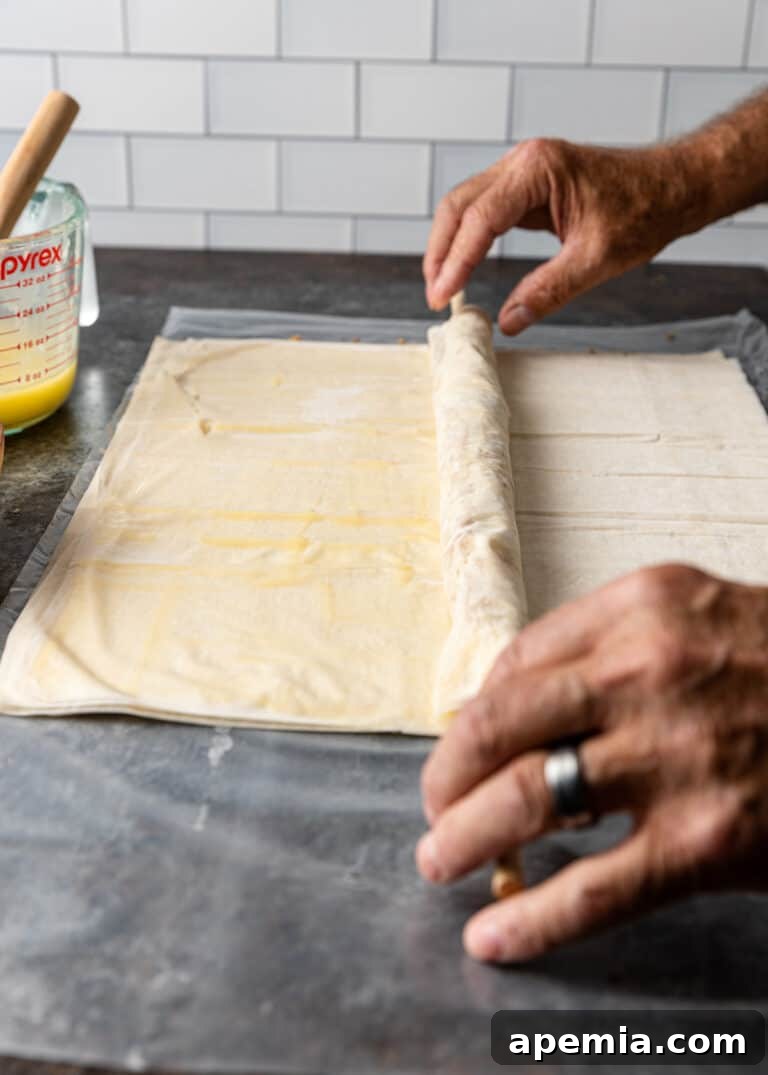
- Initiate the Rolling Process. Position your long, thin wooden dowel horizontally along the edge of the first buttered and nut-sprinkled phyllo sheet, closest to you. Delicately lift the edge of the phyllo and wrap it snugly around the dowel, securing the start of your roll. Continue to gently roll the dowel forward, gathering the entire sheet of phyllo, until you reach the far end of the pastry. Leave the dowel in place for a moment.
- Add a Second Phyllo Sheet. Carefully place another fresh sheet of phyllo dough on your clean working surface. Brush this new layer thoroughly with melted butter. Now, take your dowel with the already rolled dough and place it along the edge of this new, buttered phyllo sheet, closest to you. Gently roll the dowel one more time, incorporating this second sheet of dough into your baklava roll. Each finished Saragli roll will consist of two sheets of phyllo for optimal flakiness and structure.
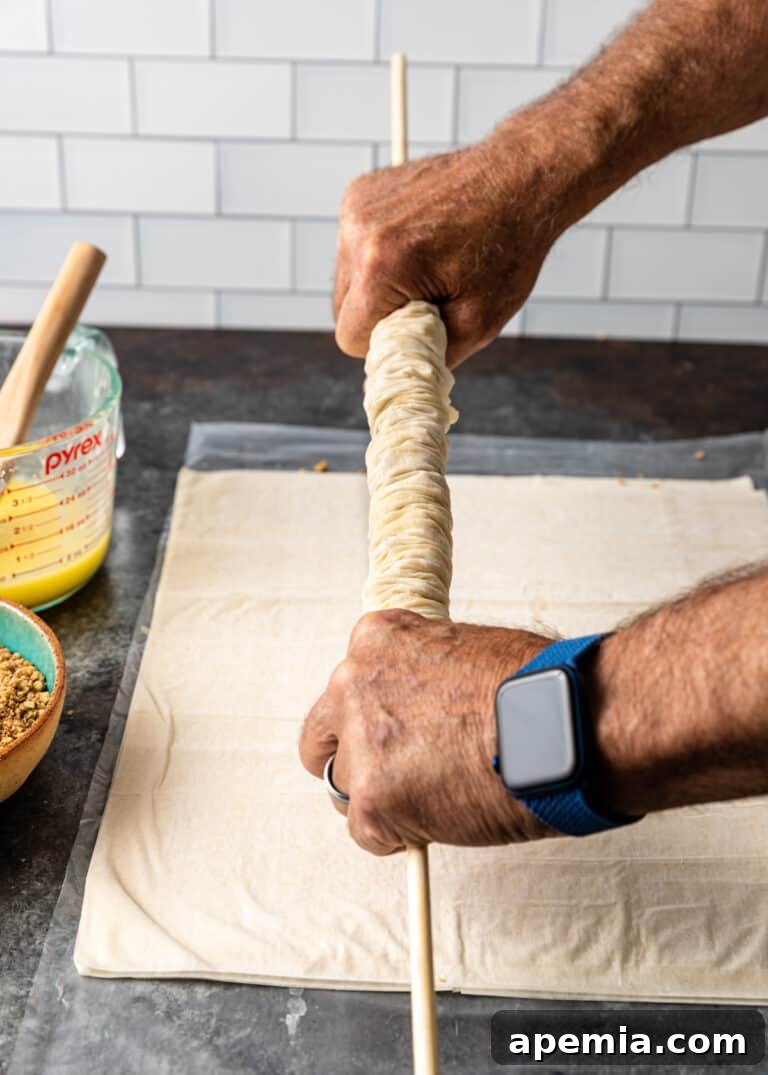
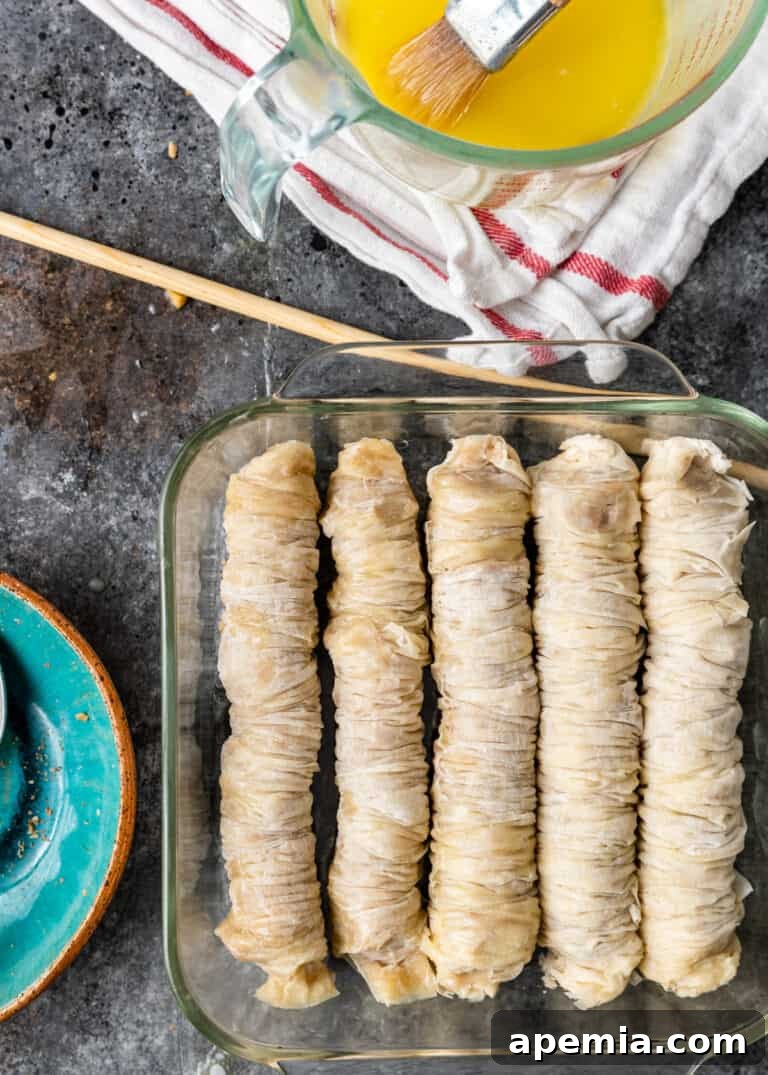
- Create the Signature Crinkled Texture. With the dowel and the double-layered roll still around it, place the roll seam-side down on your flat working surface. Using both hands, gently push the ends of the baklava roll inwards towards the center. This action will create the beautiful, characteristic crinkles and folds that give Saragli its unique appearance and allow for maximum syrup absorption.
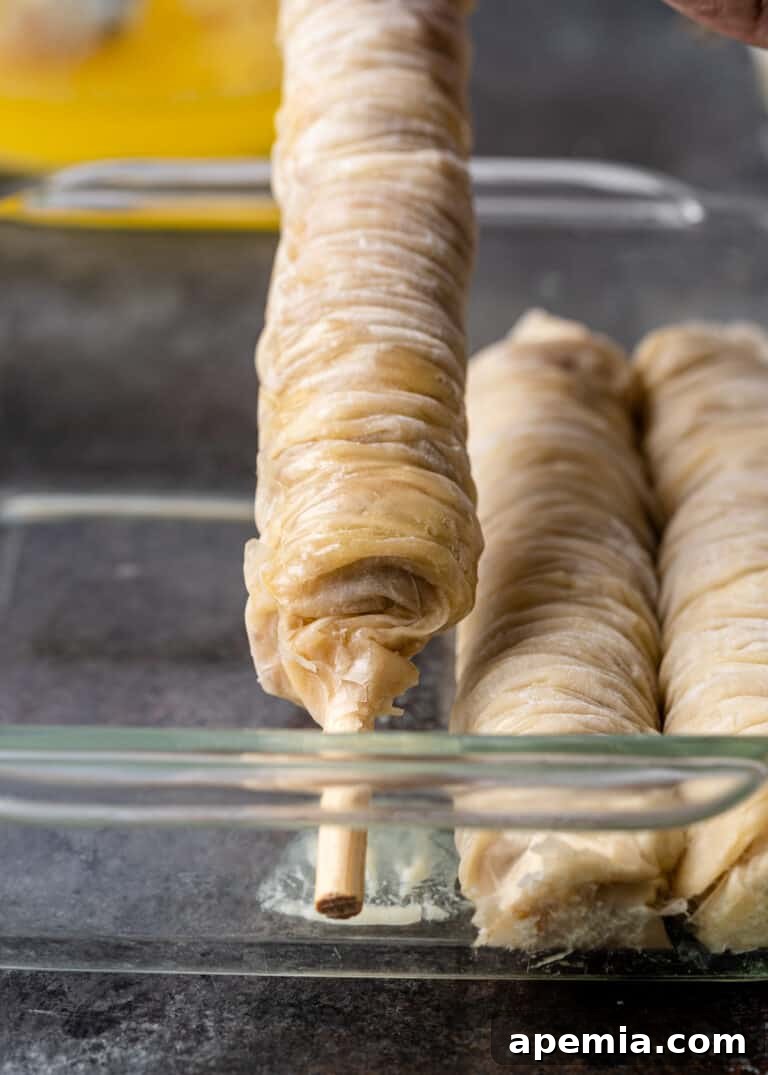
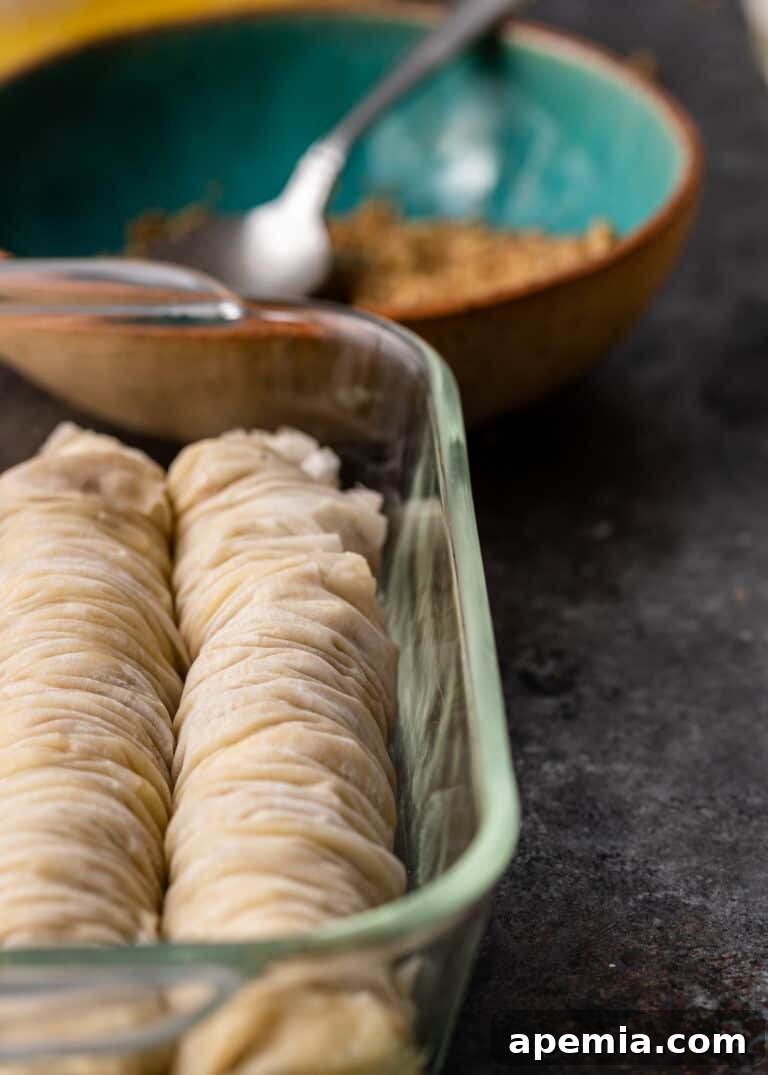
- Remove and Repeat. Once crinkled, use one hand to carefully slide the entire baklava roll off the dowel and into one of your prepared 8×8-inch baking pans. Arrange them neatly, leaving a little space between each roll. Continue repeating steps 2-5 until you have used all of the phyllo sheets and filled both baking pans. You should get approximately 5 rolls per pan, making for a substantial batch of this delightful dessert.
- Bake to Golden Perfection. Place the uncovered baking pans into your preheated oven. Bake for approximately 30-35 minutes, or until the tops of the baklava rolls achieve a beautiful, rich golden-brown color and appear delightfully crisp. This golden hue indicates perfect flakiness and doneness.
- Prepare the Aromatic Syrup. While your baklava rolls are baking, it’s time to prepare the luscious, honey-infused syrup. In a medium saucepan, combine all the syrup ingredients: sugar, water, honey, lemon juice, and the optional (but highly recommended) orange blossom water. Bring the mixture to a boil over medium heat, stirring frequently to dissolve the sugar. Once boiling, reduce the heat and let it simmer for 10 minutes, allowing the flavors to meld and the syrup to thicken slightly. Remove it from the heat and set it aside to cool for about 10 minutes; the syrup should be warm, not piping hot, when poured over the baked baklava.
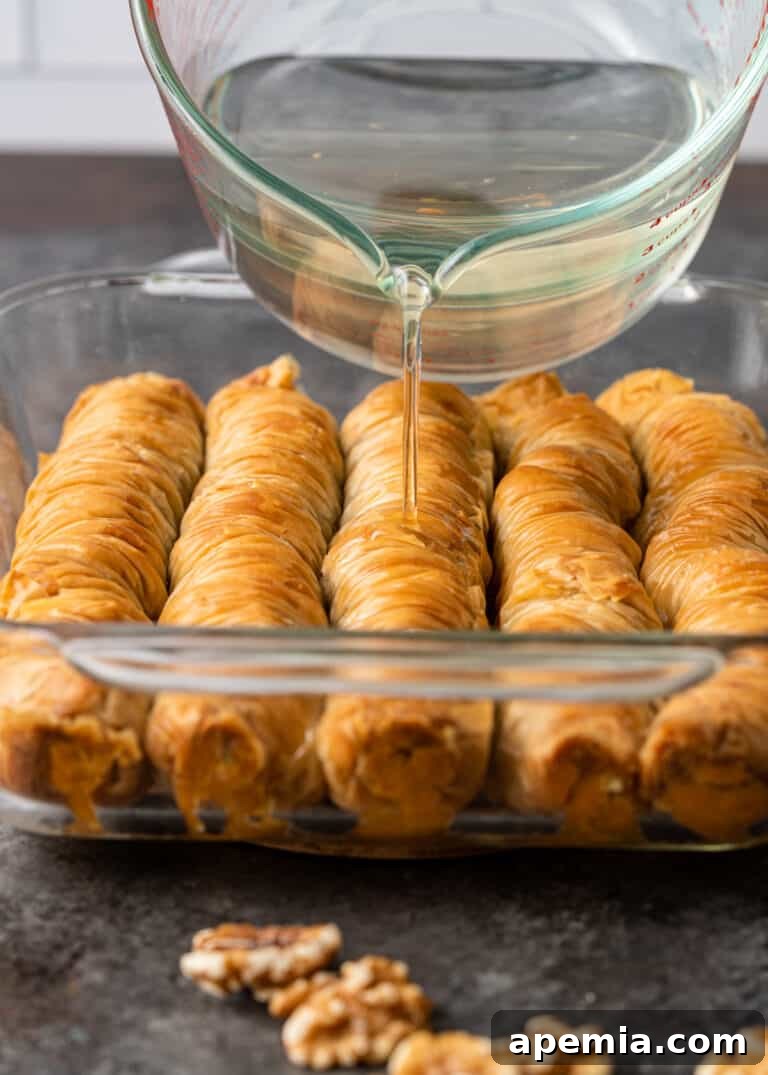
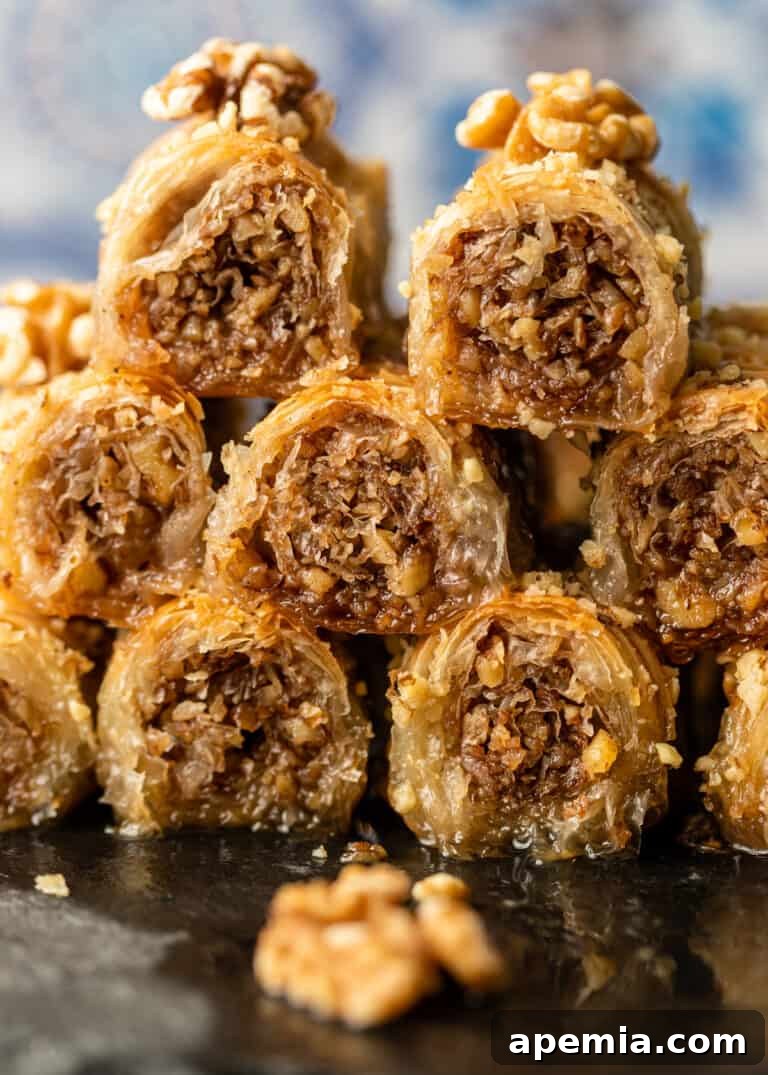
- Syrup, Garnish, and Rest. Once the baklava rolls are out of the oven, allow them to rest for 10 minutes. This brief cooling period helps them firm up slightly before the syrup is added. Then, evenly and slowly pour the prepared warm syrup over the golden baklava rolls, ensuring every crevice is saturated. Immediately sprinkle the reserved chopped walnuts and cinnamon mixture over the top for an extra layer of flavor and texture. Let the rolls rest for at least another hour—or ideally, several hours—before slicing. This resting time is crucial for the syrup to fully absorb, resulting in moist, sticky-sweet baklava. I typically slice each roll into 5 individual pieces for serving.
Tips for Success with Phyllo and Syrup
- Working with Phyllo: Phyllo dough is notoriously delicate and dries out quickly. Always keep unused sheets covered with a lightly damp towel or plastic wrap. Work quickly but carefully. If a sheet tears slightly, don’t fret; simply patch it with another small piece of buttered phyllo, as the layers will largely conceal minor imperfections.
- Achieving the Perfect Syrup: The key to irresistible baklava is the hot baklava and warm (not boiling hot or completely cold) syrup. Pouring warm syrup over hot baklava creates a “shock” that allows the syrup to penetrate deeply and evenly without making the phyllo soggy. Avoid pouring cold syrup over hot baklava or vice-versa, as this can lead to a less desirable texture. The lemon juice in the syrup is essential to prevent sugar crystallization, ensuring your syrup remains smooth and clear.
- Don’t Skimp on Butter: Butter is crucial for both flavor and crispness. Be generous when brushing the phyllo sheets. The butter not only adds richness but also helps separate the layers, creating that characteristic flakiness.
- Resting is Key: After pouring the syrup, resist the urge to cut into your baklava immediately. Allowing it to rest for at least an hour (or even better, several hours or overnight) gives the phyllo time to fully absorb the syrup and soften slightly, resulting in a more cohesive and deeply flavored dessert.
Frequently Asked Questions About Baklava Rolls
For centuries, baklava has been wildly popular throughout the Mediterranean, Middle East, and Central Asia. While its exact origin is debated, age-old recipes for this beloved dessert can be found in Turkey, Egypt, Lebanon, Persia (Iran), and, of course, Greece. Each region and culture boasts its own unique spin on this sweet, flaky masterpiece. For instance, these Greek baklava rolls feature a sweet, buttery walnut and cinnamon filling, while Turkish baklava almost always highlights pistachios and honey. Other regional recipes might incorporate different nuts, flavored syrups (like rose water or mastic), and other decadent ingredients, all drenched in deliciousness!
The best way to keep phyllo dough moist and pliable is to keep it covered with a lightly damp kitchen towel or plastic wrap. Phyllo’s thin, delicate nature makes it highly prone to cracking and drying out when exposed to air. Ensure you work quickly and cover any unused portions immediately to keep it workable and prevent tears.
Saragli boasts a surprisingly long shelf life due to its sugar content. When stored in an airtight container at room temperature, these rolls will stay fresh and delicious for up to a week. If you need them to last longer, they can be kept in the refrigerator for up to two weeks. Beyond that, baklava freezes exceptionally well for up to three months; simply thaw at room temperature before serving.
Absolutely! While walnuts are traditional for Greek baklava, you can certainly experiment with other nuts. Finely chopped pistachios are a popular choice in Turkish versions and add a vibrant green color. Almonds offer a milder, slightly sweeter flavor, and pecans can provide a distinct, rich taste. A combination of nuts can also create a wonderful depth of flavor. Just ensure they are finely chopped for an even texture within the rolls.
Greek baklava is often distinguished by its generous use of walnuts and a distinct cinnamon spice in the filling, combined with a syrup that frequently incorporates honey and sometimes orange blossom water for a bright, floral note. In contrast, Turkish baklava typically features pistachios and a simpler sugar-water syrup, often with lemon. Lebanese and other Middle Eastern versions might include a mix of nuts like pistachios and cashews, and syrups often highlight rose water or mastic. Each variation offers a delightful exploration of regional tastes and traditions.
Yes, Baklava Rolls are an excellent dessert to prepare in advance! You can assemble the rolls and place them in the baking pans, then cover them tightly with plastic wrap and refrigerate for up to 2-3 days before baking. Alternatively, you can bake the baklava, pour the syrup, and then store the finished dessert at room temperature for up to a week. The flavors often deepen beautifully overnight.
Share this recipe on Pinterest!
Love this recipe? Share it with the world on Pinterest.
Greek Baklava Rolls (Saragli)
PrintRecipe
Equipment
-
5/16″ or 3/8″ wood doweling (See Note 1)
-
3-Cup Food Processor
-
8 x 8-inch glass baking pans
Video
Ingredients
- 16 oz Phyllo dough 18-20 sheets
Filling
- 1 1/2 cups butter or ghee, melted
- 4 cups walnuts finely chopped
- 2 tsp cinnamon
Syrup
- 1 3/4 cup sugar
- 1 1/4 cup water
- 1/4 cup honey
- 2 tbsp lemon juice
- 2 tsp orange blossom water (optional)
Instructions
-
Melt butter and set aside.
-
Blitz walnuts and cinnamon in a small food processor or chop by hand to fine crumbs. Reserve 2 tablespoons for topping, and set all aside.
Assembly
-
Preheat oven to 350°F. (177°C.) Prepare two 8×8 inch baking pans by lightly greasing them.
-
On a clean, dry surface, lay out a sheet of phyllo dough. Brush the entire top surface generously with melted butter, then sprinkle evenly with approximately 1/3 cup of the cinnamon-nut mixture. Remember to keep unused phyllo covered with a damp towel.
-
Position a long, thin wooden dowel horizontally along the edge of the phyllo sheet closest to you, directly on top of the walnut mixture. Gently lift the edge of the dough and carefully wrap it around the dowel to secure. Roll the dowel completely to the far end of the pastry sheet. Keep the dowel at the end of the rolled sheet for now.
-
Lay out a second sheet of phyllo dough. Brush this new layer with butter. Place the dowel, with the already rolled dough, along the edge of this second buttered sheet closest to you. Gently roll the dowel one more time to incorporate this next layer. Each baklava roll will use a total of 2 sheets of phyllo dough.
-
Place the rolled phyllo and dowel seam side down on your working surface. Using both hands on either end of the dowel, gently push the two ends of the roll together towards the center. This will create the beautiful crinkled texture that is characteristic of Saragli.
-
Carefully use one hand to slide the crinkled baklava roll off the dowel and into one of your prepared 8”x8” baking pans. Arrange them neatly. You will need TWO square baking pans to fit all of the baklava rolls. Repeat steps 2-5 until all phyllo sheets are used and all prepared rolls are snugly placed in the baking pans.
-
Bake the rolls, uncovered, in the preheated oven for 30-35 minutes, or until their tops are a beautiful golden brown and crispy.
Syrup
-
While the baklava is baking, combine all syrup ingredients (sugar, water, honey, lemon juice, and optional orange blossom water) in a saucepan. Bring to a boil for 10 minutes, stirring often, then remove from heat and cool for 10 minutes to make it warm, not boiling.
-
Remove the baked dessert from the oven and allow it to rest for 10 minutes. Evenly pour the warm syrup over the hot baklava rolls, ensuring every piece is well coated. Sprinkle the reserved chopped walnuts and cinnamon on top. Allow the baklava to rest for at least 1 hour before slicing, ideally longer for full syrup absorption. I typically get 5 rolls per 8×8″ pan and cut each roll into thirds, yielding 15 pieces per pan.
Notes
- I purchased 5/16″ or 3/8″ wood doweling that came in a 4′ length. It was $0.98 at Home Depot. I cut it in half and it works perfectly. You can also use a thin rolling pin or a clean, smooth broomstick.
- For best results, ensure your phyllo dough is completely thawed to room temperature before use. This makes it more pliable and less prone to tearing.
- Don’t be shy with the butter! It’s essential for the flakiness and golden color of the baklava.
Nutrition
The information shown is an estimate provided by an online nutrition calculator. It should not be considered a substitute for a professional nutritionist’s advice.
Serving and Storage Suggestions
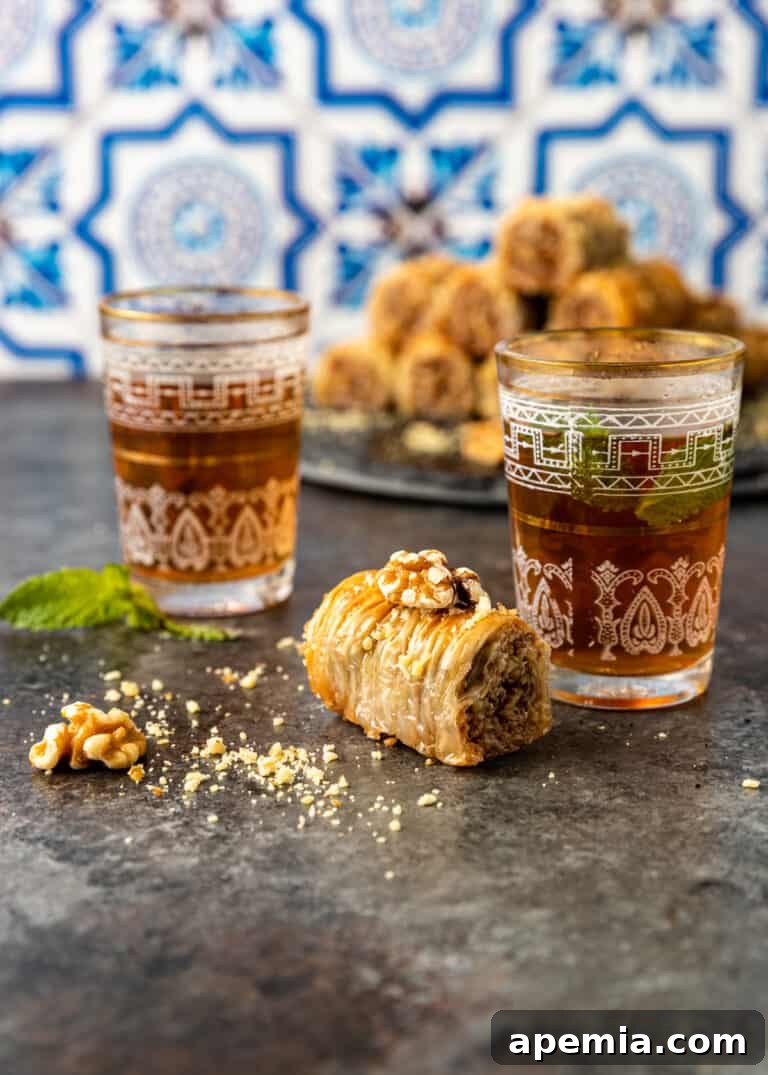
Greek Baklava Rolls are a perfect dessert for any occasion, from casual family gatherings to elegant holiday feasts. Their individual roll format makes them easy to serve and enjoy. For an extra touch, consider serving them alongside a scoop of vanilla bean ice cream or a dollop of Greek yogurt to balance the sweetness. A sprinkle of additional crushed walnuts or a delicate edible flower can also enhance their presentation.
When it comes to storage, these rolls are quite forgiving. Keep them in an airtight container at room temperature for up to 5-7 days, where they will maintain their deliciousness and a slight chewiness from the syrup. For longer freshness, refrigerate them in an airtight container for up to 2 weeks. Baklava also freezes remarkably well: arrange uncut rolls on a baking sheet to freeze solid, then transfer to a freezer-safe bag or container for up to 3 months. Thaw at room temperature for several hours before serving. No matter how you store them, these Saragli rolls are sure to bring a taste of Greek tradition to your table whenever you desire.