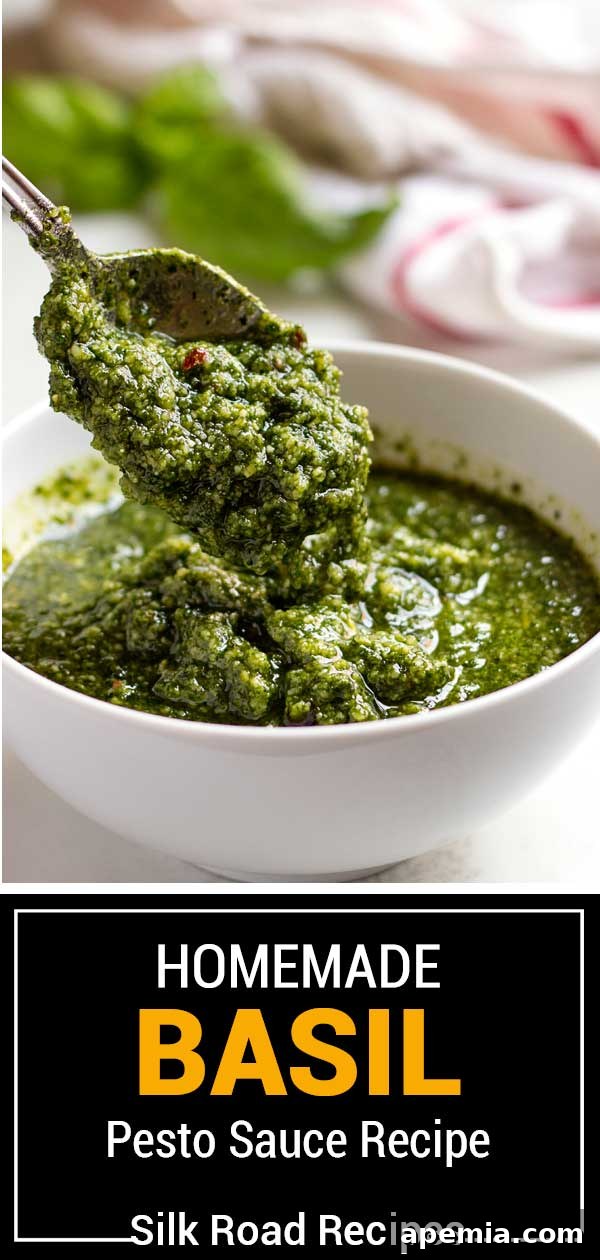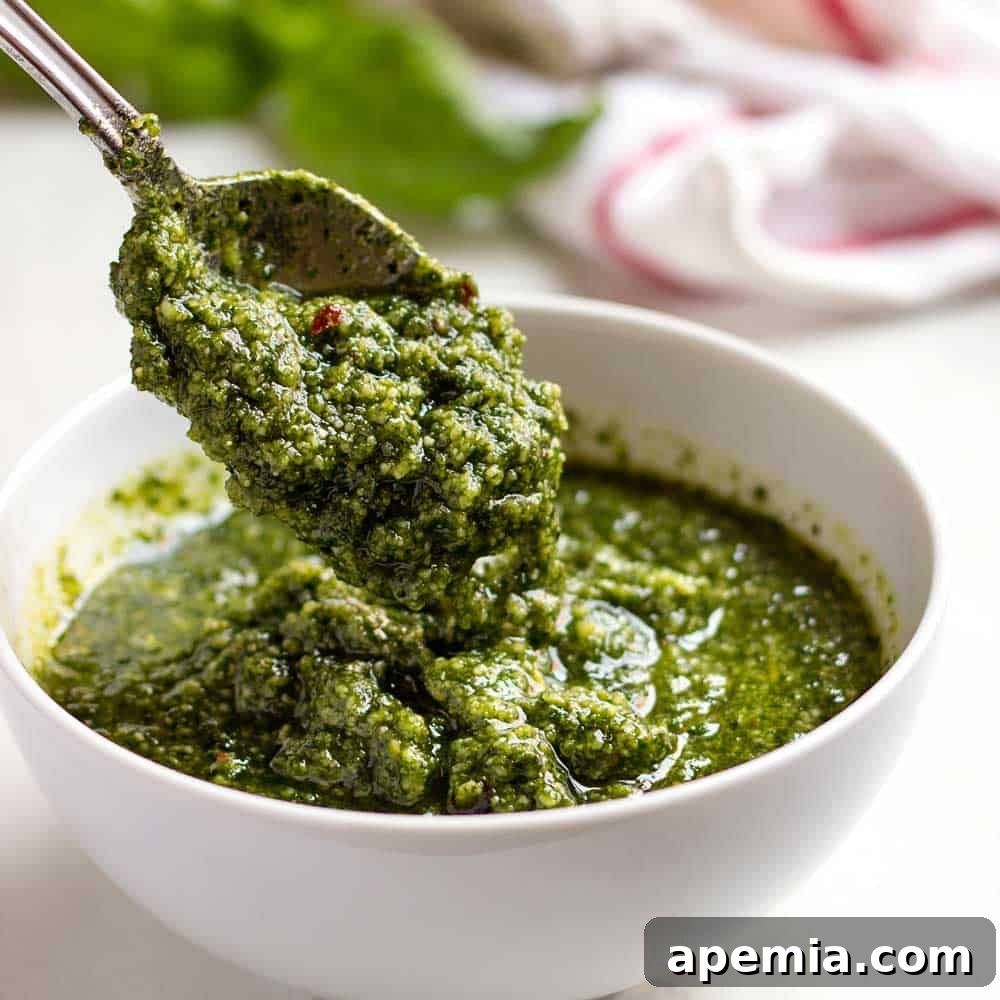
Ditch the traditional red sauces and discover a vibrant world of flavor with this incredible **homemade basil pesto recipe**. Perfect for pasta lovers seeking something fresh and different, this authentic Italian sauce can be whipped up in a mere 5 minutes, transforming your meals with its aromatic goodness. Imagine a rich, verdant sauce, bursting with the taste of fresh basil, garlic, and Parmesan, all harmoniously blended with the finest olive oil. This recipe isn’t just a meal; it’s an experience, bringing the heart of Italian cuisine right to your kitchen.
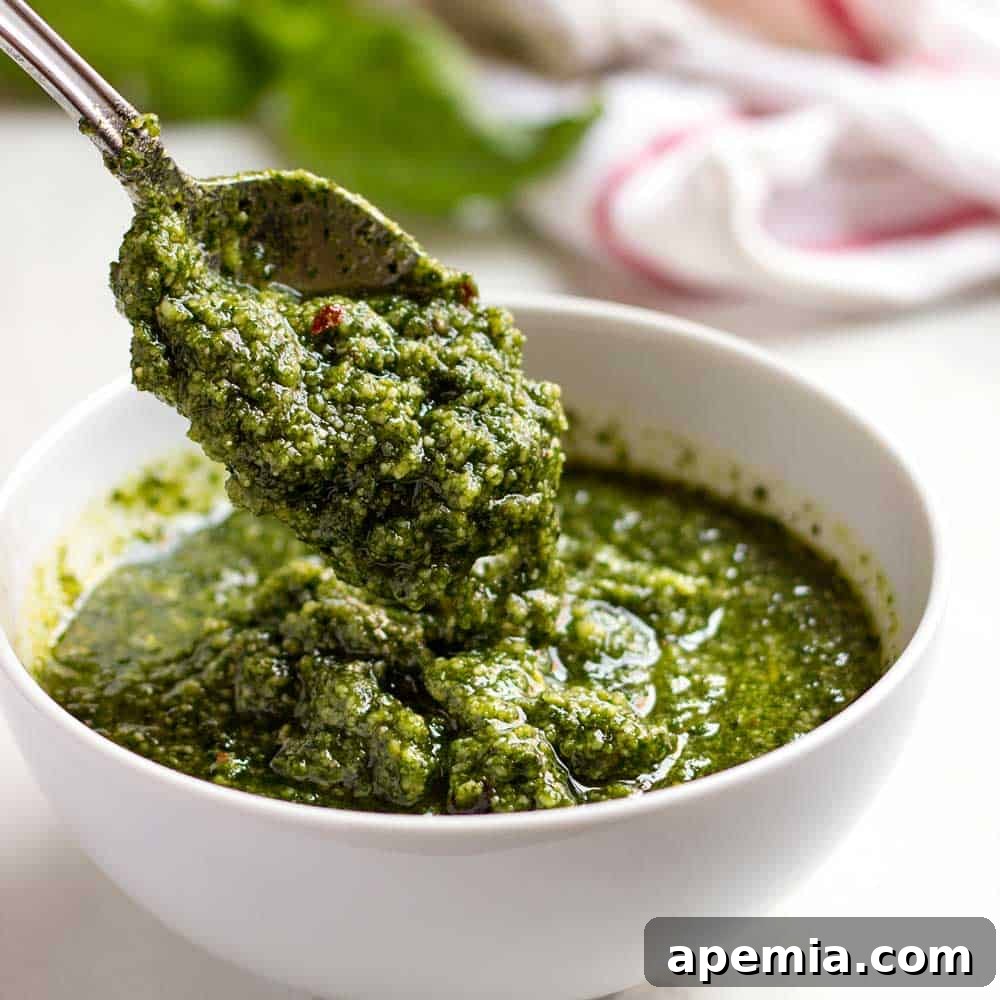
Originating from Genoa in the Liguria region of Italy, pesto is a testament to simple, high-quality ingredients creating extraordinary flavor. Traditionally, it’s made by crushing garlic, pine nuts, coarse salt, basil leaves, and a hard cheese like Parmigiano-Reggiano or Pecorino Sardo, all emulsified with extra virgin olive oil. The result is a versatile sauce that’s not only perfect for tossing with freshly cooked pasta but also shines when spread on toasted bread, used as a vibrant dip for fresh vegetables, or even as a flavorful marinade for grilled meats.
For those who appreciate a subtle warmth, a tiny pinch of red pepper flakes can be added to the mix, offering a gentle kiss of heat that beautifully complements the fresh basil and pungent garlic.
Table of Contents
- Authentic Homemade Basil Pesto
- The Secret to Perfect Pesto: Ingredients & Substitutions
- Step-by-Step: How to Make Basil Pesto
- Tips for Pesto Perfection
- Storing and Freezing Your Homemade Pesto
- Creative Ways to Enjoy Basil Pesto
- Frequently Asked Questions
- Basil Pesto Recipe Card
Authentic Homemade Basil Pesto: A Flavorful Alternative to Tomato Sauce
There’s nothing quite like the intoxicating aroma of freshly made pesto. Its vibrant green hue and potent fragrance fill the kitchen, promising a culinary delight that store-bought versions simply can’t match. While convenience sometimes dictates grabbing a jar from the market, the difference in taste and freshness when you make it yourself is truly remarkable. This recipe empowers you to create an exquisite sauce that’s far superior in flavor and texture, offering a customizable experience from start to finish. Whether you stick to classic pine nuts or experiment with walnuts or cashews for a different twist, the versatility of homemade pesto is unmatched.
If you’re among those who aren’t keen on traditional red tomato sauces, or perhaps you’re simply looking to expand your pasta sauce repertoire, basil pesto is an absolute game-changer. It offers a bright, herbaceous, and incredibly satisfying alternative that pairs beautifully with almost any pasta shape, transforming a simple meal into something extraordinary.
Basil, the star of this dish, is one of the most beloved herbs worldwide, right alongside thyme. While it’s most famously associated with Italian cuisine, basil is actually native to India and other tropical regions of Asia. Its journey across continents has cemented its role in various culinary traditions, including Southeast Asian cuisines in Indonesia, Thailand, Vietnam, Cambodia, Laos, and Taiwan, where it brings its distinctive sweet, slightly peppery, and often anise-like notes to a myriad of dishes. For pesto, we focus on the classic sweet basil, which provides that quintessential Italian flavor profile.
The Secret to Perfect Pesto: Ingredients & Substitutions
(For exact quantities, please refer to the complete recipe card below)
- Fresh Basil Leaves: The heart and soul of pesto. Choose vibrant, unblemished leaves for the best flavor and color. Look for sweet basil varieties. While the recipe calls for packed leaves, ensure they are thoroughly washed and dried to avoid diluting your pesto.
- High-Quality Extra Virgin Olive Oil: This isn’t just a binder; it’s a flavor component. A good quality extra virgin olive oil will impart fruity, slightly peppery notes, contributing significantly to the pesto’s richness and smooth texture. Avoid using light olive oil, as it lacks the robust flavor needed here.
- Fresh Garlic Cloves: Garlic adds a pungent, aromatic kick and depth. Using fresh cloves is crucial; pre-minced garlic often lacks the vibrant flavor and can sometimes carry an off-taste. Adjust the quantity to your preference – some like it milder, others bolder.
- Pine Nuts: These traditional nuts provide a rich, buttery flavor and a creamy texture when blended. Lightly toasting them before use can enhance their nutty aroma significantly. If pine nuts are unavailable or you prefer an alternative, walnuts, cashews, or even almonds can be used, each offering a slightly different flavor profile.
- Parmigiano-Reggiano or Pecorino Romano Cheese: These hard, aged Italian cheeses contribute a salty, umami depth that is essential to authentic pesto. Freshly grated cheese melts and blends more smoothly than pre-shredded varieties, which often contain anti-caking agents. Parmigiano-Reggiano offers a nuttier, milder flavor, while Pecorino Romano provides a sharper, saltier kick. You can use a blend of both.
- Coarse Salt: Essential for seasoning and helping to break down the ingredients during blending, especially if using a mortar and pestle.
- Red Pepper Flakes (Optional): For a subtle hint of heat, a pinch of red pepper flakes adds a delightful warmth without overpowering the other flavors. Omit if you prefer a classic, mild pesto.
Share this recipe on Pinterest!
Loved this amazing homemade pesto? Share it with your friends and followers on Pinterest!
Step-by-Step: How to Make Basil Pesto
- Initial Blend: Begin by adding all ingredients except for the fresh basil leaves and the olive oil to your food processor. This includes the pine nuts (or other nuts), garlic cloves, grated cheese, salt, and optional red pepper flakes. Pulse the food processor for about a minute, or until these ingredients are finely chopped and form a coarse paste. This initial blending ensures the harder ingredients are properly broken down before the basil is added.
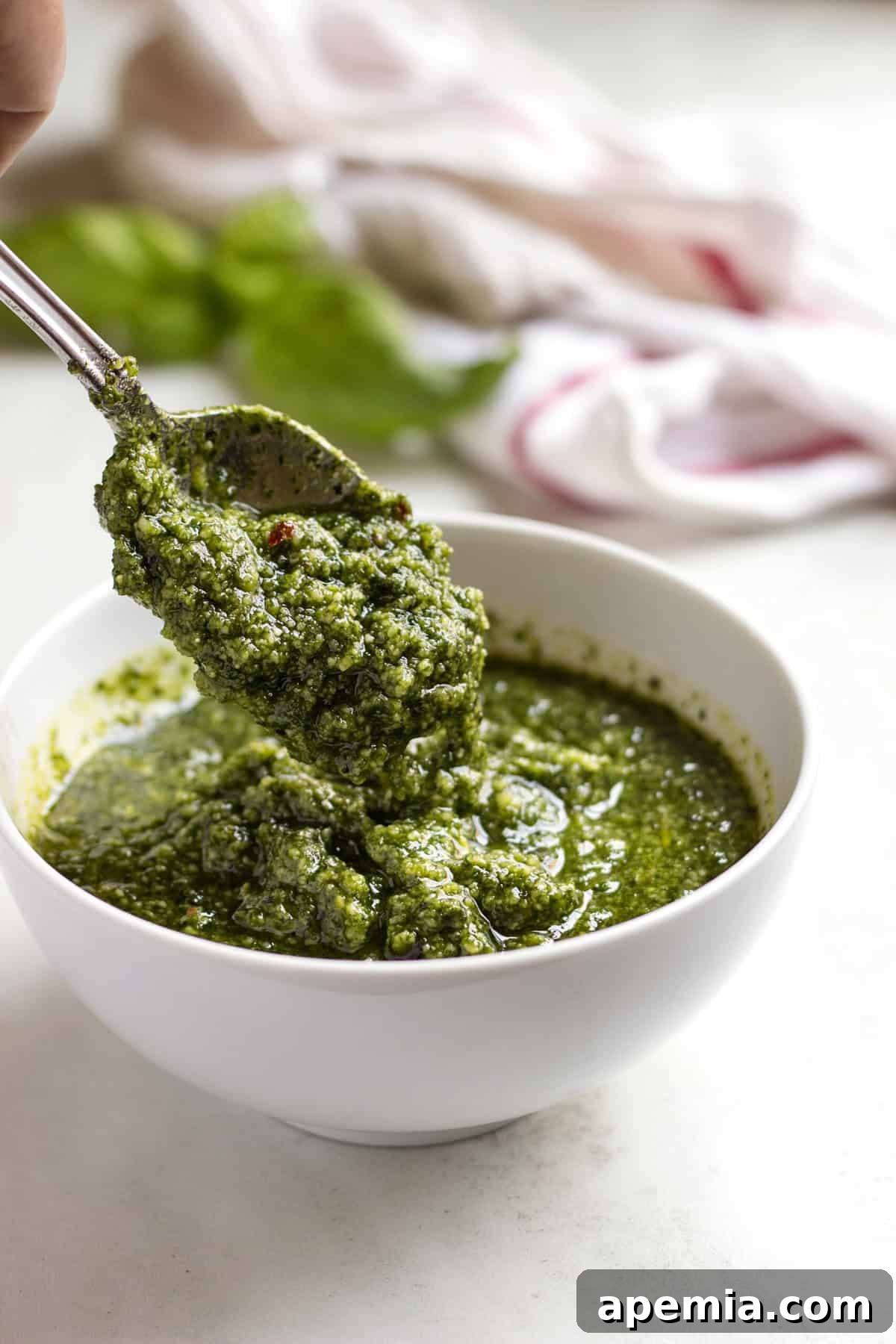
- Add Basil and Emulsify with Oil: Next, add the packed basil leaves to the food processor. With the processor running continuously, slowly drizzle in the extra virgin olive oil in a steady, thin stream. This gradual addition is key to creating a smooth, emulsified pesto, rather than a greasy separation. Continue blending until all ingredients are thoroughly combined and the pesto reaches your desired consistency. Be careful not to over-blend, as this can generate too much heat and darken the basil.
- Yield and Immediate Use: This recipe typically yields around 3 cups of fresh basil pesto. It’s perfectly ready to be served immediately over hot, al dente pasta for a quick and flavorful meal. Beyond pasta, it makes an excellent dipping sauce for crusty bread or fresh vegetables, a vibrant spread for sandwiches, or a flavorful addition to various other dishes.
Tips for Pesto Perfection
- Preventing Browning: Basil pesto is known for its vibrant green color, but it can easily oxidize and turn brown. To minimize this, you can blanch the basil leaves in boiling water for about 10-15 seconds, then immediately plunge them into an ice bath before drying thoroughly and adding to the food processor. This process locks in the chlorophyll. Additionally, adding a squeeze of fresh lemon juice (about 1-2 teaspoons) to your pesto can act as an antioxidant. When storing, always ensure a thin layer of olive oil covers the surface of the pesto to create a barrier against air.
- Adjusting Consistency: The perfect pesto consistency is a matter of personal preference. If your pesto is too thick, slowly add a bit more olive oil or even a tablespoon of water (preferably the starchy pasta water if serving immediately) while blending until you achieve the desired smoothness. If it’s too thin, you can add a few more pine nuts or a little extra grated cheese, then pulse again.
- Flavor Customization: Don’t be afraid to experiment! While classic pesto is divine, you can adjust the garlic level, try different nuts (walnuts, almonds, cashews), or even incorporate other herbs like parsley or arugula for nuanced flavors. A touch of lemon zest can also brighten the overall taste.
- Quality Ingredients Matter: As with all simple recipes, the quality of your ingredients directly impacts the final taste. Invest in fresh, fragrant basil, a good quality extra virgin olive oil, and freshly grated Parmesan or Pecorino for the most authentic and delicious results.
Storing and Freezing Your Homemade Pesto
Making a batch of homemade basil pesto means you’ll likely have leftovers, and proper storage is key to maintaining its freshness and vibrant color. Here’s how to keep your pesto delicious:
Refrigeration:
For short-term storage, transfer your freshly made pesto into an airtight container. Press a piece of plastic wrap directly onto the surface of the pesto to eliminate any air pockets, then drizzle a thin layer of extra virgin olive oil on top. This oil layer acts as a seal, preventing oxidation and keeping the pesto a beautiful green. Stored this way, pesto will stay fresh in the refrigerator for up to 5-7 days. Always use a clean spoon each time you scoop out pesto to prevent bacterial contamination.
Freezing:
Pesto freezes exceptionally well, making it perfect for meal prepping or enjoying fresh flavors year-round. There are a couple of excellent methods for freezing:
- Ice Cube Trays: Spoon the pesto into ice cube trays, filling each compartment. Once frozen solid (usually a few hours), pop out the pesto cubes and transfer them to a freezer-safe bag or container. This method is fantastic for portion control, allowing you to thaw just the right amount for a single serving of pasta or to add to a sauce.
- Small Jars or Containers: For larger portions, spoon pesto into small, freezer-safe jars or containers, leaving about half an inch of headspace at the top to account for expansion. Top with a thin layer of olive oil before sealing and freezing.
Frozen pesto can be stored for up to 6 months. To use, simply thaw the desired amount in the refrigerator overnight, or for a quicker option, place the container in a bowl of warm water. The texture might change slightly after freezing and thawing, but the flavor will remain robust and delicious. Stir well before using.
Creative Ways to Enjoy Basil Pesto
While pesto and pasta are a match made in culinary heaven, this versatile sauce has so much more to offer. Don’t limit its use to just spaghetti! Here are some creative ways to incorporate homemade basil pesto into your daily meals:
- Classic Pasta Dishes: Toss with any hot pasta, from linguine to penne, orecchiette, or fusilli. Add a splash of pasta water to create a creamier sauce.
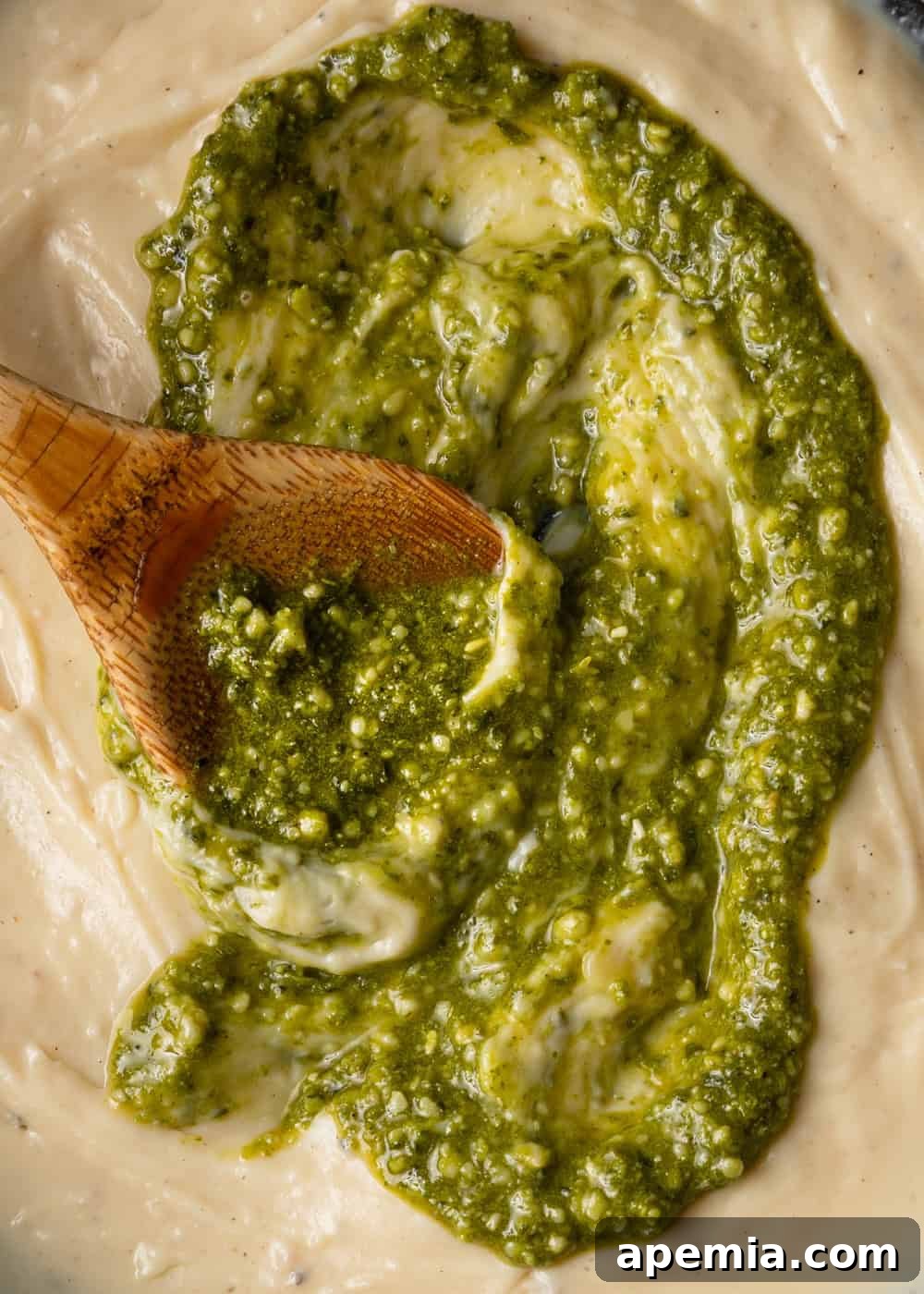
- Pesto Alfredo Sauce: Combine it with my Homemade Alfredo Sauce for a decadent and flavorful Pesto Alfredo Sauce. This fusion creates a rich, creamy sauce with a beautiful herbaceous kick that’s perfect for a comforting meal.
- Sandwich and Wrap Spread: Replace mayonnaise or other condiments with pesto for a burst of fresh flavor in your sandwiches, wraps, or paninis. It pairs wonderfully with turkey, chicken, mozzarella, and roasted vegetables.
- Pizza Base: Use pesto as a unique and flavorful base for your homemade pizzas instead of traditional tomato sauce. Top with mozzarella, cherry tomatoes, and fresh arugula after baking.
- Dips and Spreads: Mix pesto into cream cheese, sour cream, Greek yogurt, or hummus for an instant savory dip for crackers, pita bread, or vegetable sticks.
- Marinade for Meats and Vegetables: Pesto makes an excellent marinade for chicken, fish, shrimp, or even firm vegetables like zucchini and eggplant before grilling or roasting.
- Eggs: Swirl a spoonful into scrambled eggs, omelets, or frittatas for an elevated breakfast or brunch.
- Soups: Stir a dollop of pesto into vegetable soups, minestrone, or even tomato soup just before serving to add a fresh, herbaceous finish.
- Roasted Potatoes or Vegetables: Toss roasted potatoes, broccoli, asparagus, or cherry tomatoes with pesto for an extra layer of flavor.
- Bruschetta or Crostini: Spread pesto on toasted baguette slices and top with fresh mozzarella, diced tomatoes, or prosciutto for a simple yet elegant appetizer.
Frequently Asked Questions About Basil Pesto
Basil offers a complex and highly aromatic flavor profile. Its leaves typically have a sweet, slightly peppery, and often a subtle anise-like or licorice note. The aroma itself is soothing and distinct. When used fresh, basil adds an extraordinary depth and freshness to salads, soups, pasta dishes, and more, making it a beloved herb in many cuisines.
There are a few effective methods to keep your basil pesto vibrantly green. One common technique is to quickly blanch the basil leaves in boiling water for about 10-15 seconds, then immediately transfer them into an ice bath. This process, known as shocking, helps to lock in their vibrant green color before blending. Additionally, adding a small amount of lemon juice (about 1-2 teaspoons per batch) to the pesto can help, as the acid acts as an antioxidant. When storing, always ensure the pesto’s surface is covered with a thin layer of olive oil or plastic wrap pressed directly onto it to minimize exposure to air.
To achieve your desired pesto consistency, you can easily make adjustments during or after blending. For a thicker pesto, use slightly less olive oil initially. If your pesto turns out too thick, gradually add more extra virgin olive oil while the food processor is running, or even a tablespoon of cold water, until it reaches a smoother, more spreadable texture. For a thinner sauce, continue adding olive oil or a bit of starchy pasta water (if using it for pasta) until you reach the perfect pourable consistency.
Absolutely! To make basil pesto dairy-free or vegan, simply substitute the Parmigiano-Reggiano or Pecorino Romano cheese with a plant-based alternative. Nutritional yeast is a popular choice, providing a cheesy, umami flavor. You can also find vegan Parmesan cheese substitutes in many grocery stores. Adjust the amount to taste, and you’ll have a delicious vegan pesto!
A standard food processor with a sharp S-blade is ideal for making pesto. A medium to large-sized bowl (8-12 cups) works best for the quantities in this recipe, allowing enough space for the ingredients to circulate and blend evenly. While a traditional mortar and pestle is the authentic tool, a food processor offers speed and convenience for achieving a smooth consistency.
Homemade Basil Pesto Recipe
Love pasta but not traditional tomato sauce? Then, this classic Italian basil pesto recipe is for you! Make this vibrant, flavorful homemade pesto in just 5 minutes!
12
10 mins
10 mins
Ingredients
- 3/4 cup pine nuts (lightly toasted for enhanced flavor, optional)
- 4 large garlic cloves, peeled
- 1/8 tsp coarse salt (or to taste)
- 1/8 tsp red pepper flakes (optional, for a hint of heat)
- 3/4 cup freshly grated Parmesan-Reggiano or Pecorino Romano cheese (or a mix)
- 3 cups fresh basil leaves, packed (ensure leaves are dry)
- 1 cup extra virgin olive oil (high quality recommended)
Instructions
- Add pine nuts, garlic cloves, salt, red pepper flakes (if using), and grated cheese to a food processor. Pulse for about a minute until the ingredients are finely chopped and form a coarse paste.
- Add the packed basil leaves to the food processor. With the processor running continuously, slowly drizzle in the extra virgin olive oil in a steady, thin stream until all ingredients are thoroughly combined and the pesto is smooth and emulsified. Be careful not to over-blend.
- This recipe yields approximately 3 cups of fresh basil pesto. Serve immediately over hot pasta, as a spread, or a dip. Store any leftovers as directed in the “Storing and Freezing” section above.
Nutrition
(Estimated per serving, based on 12 servings)
- Calories: 243 kcal
- Carbohydrates: 2g
- Protein: 3g
- Fat: 26g
- Saturated Fat: 4g
- Polyunsaturated Fat: 5g
- Monounsaturated Fat: 15g
- Cholesterol: 7mg
- Sodium: 101mg
- Potassium: 78mg
- Fiber: 0.4g
- Sugar: 0.4g
- Vitamin A: 351 IU
- Vitamin C: 1mg
- Calcium: 81mg
- Iron: 1mg
The information shown is an estimate provided by an online nutrition calculator. It should not be considered a substitute for a professional nutritionist’s advice.
Sauces
Italian
Kevin
Have You Made This Recipe? Let Me Know on Instagram!
Tag @keviniscooking or use the hashtag #keviniscooking!