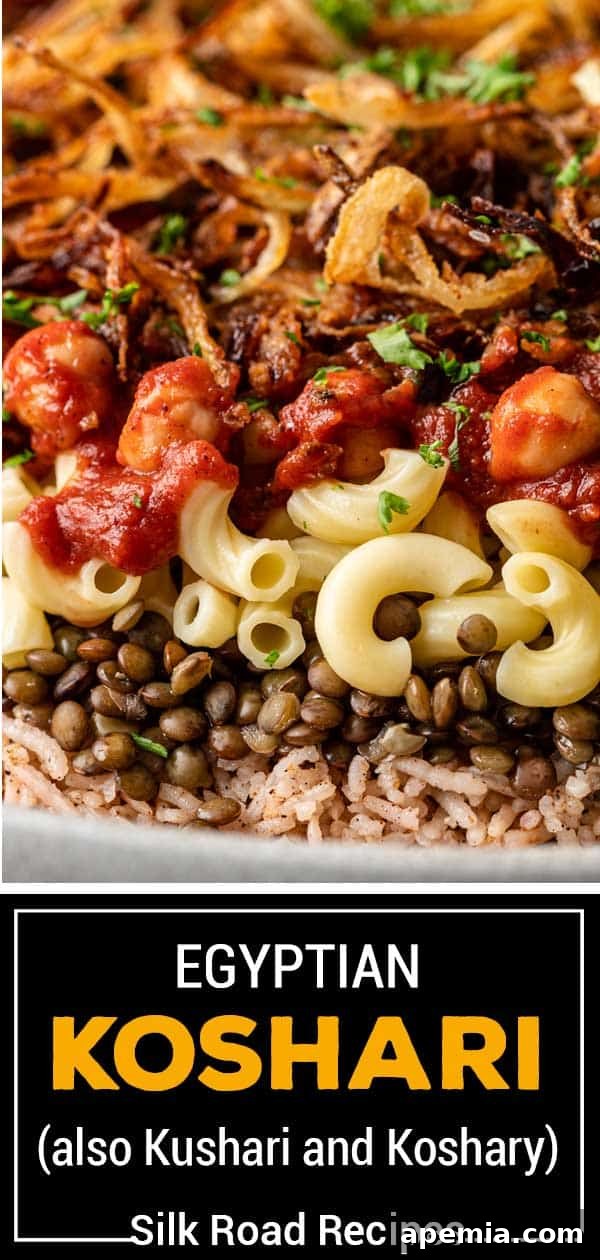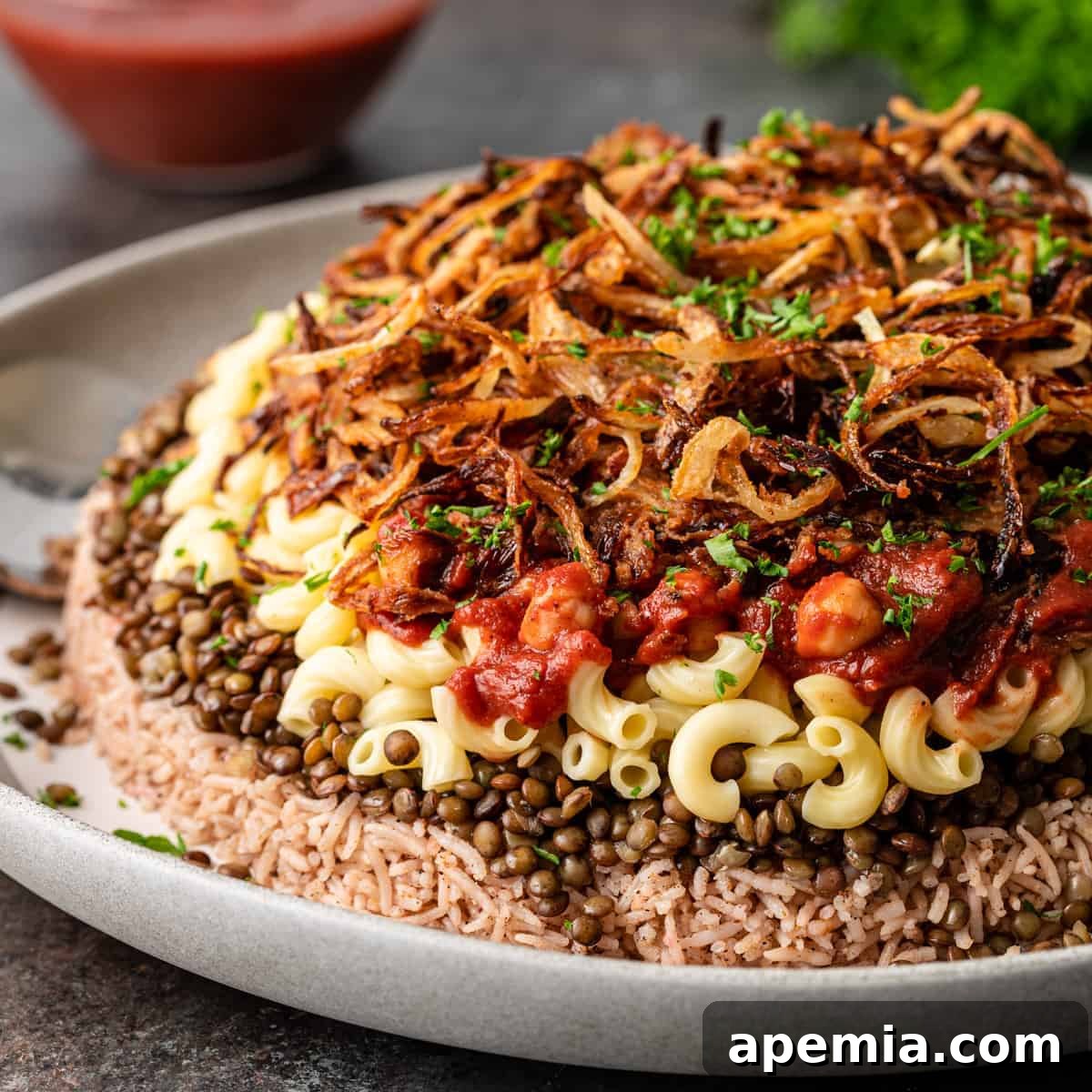
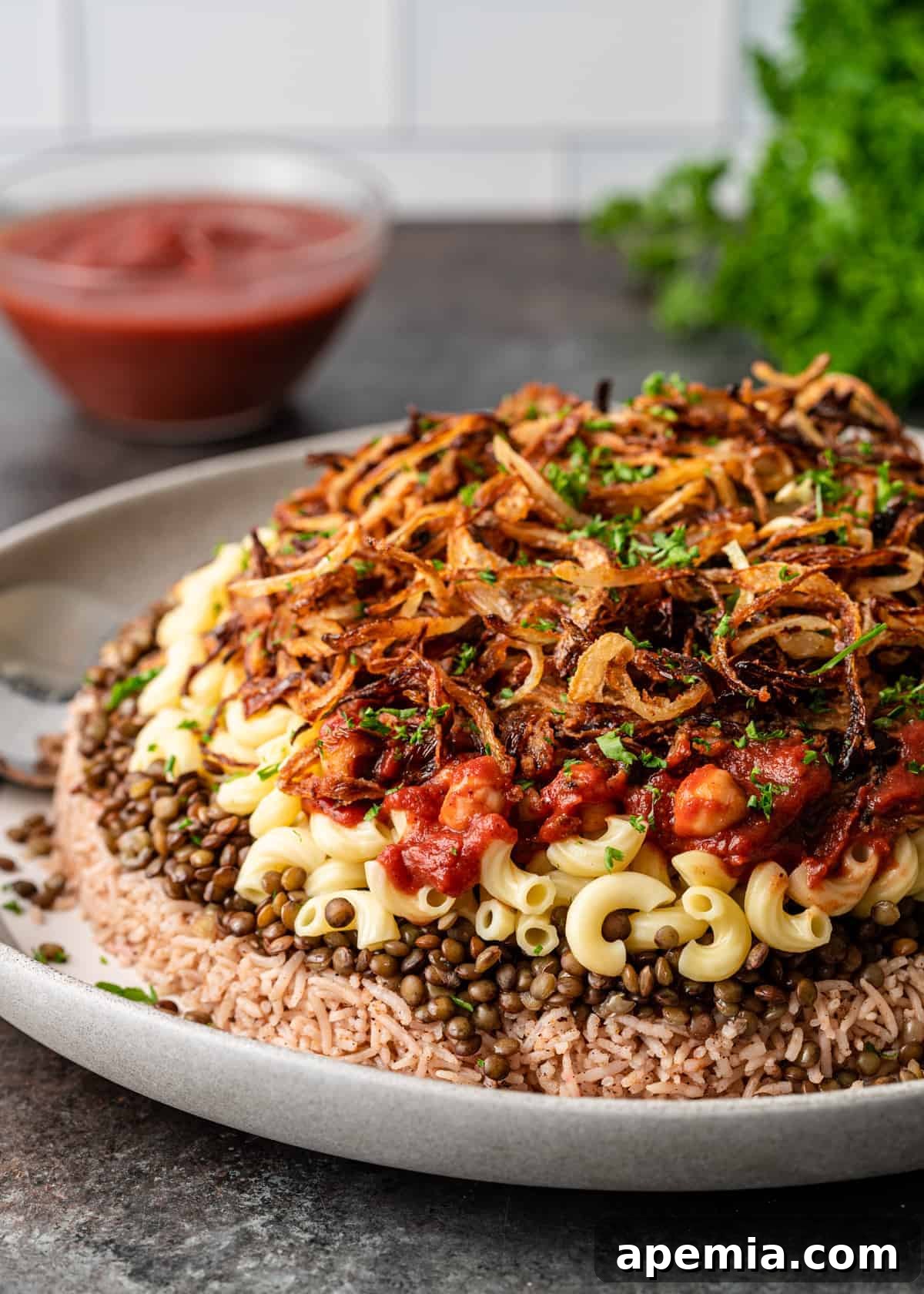
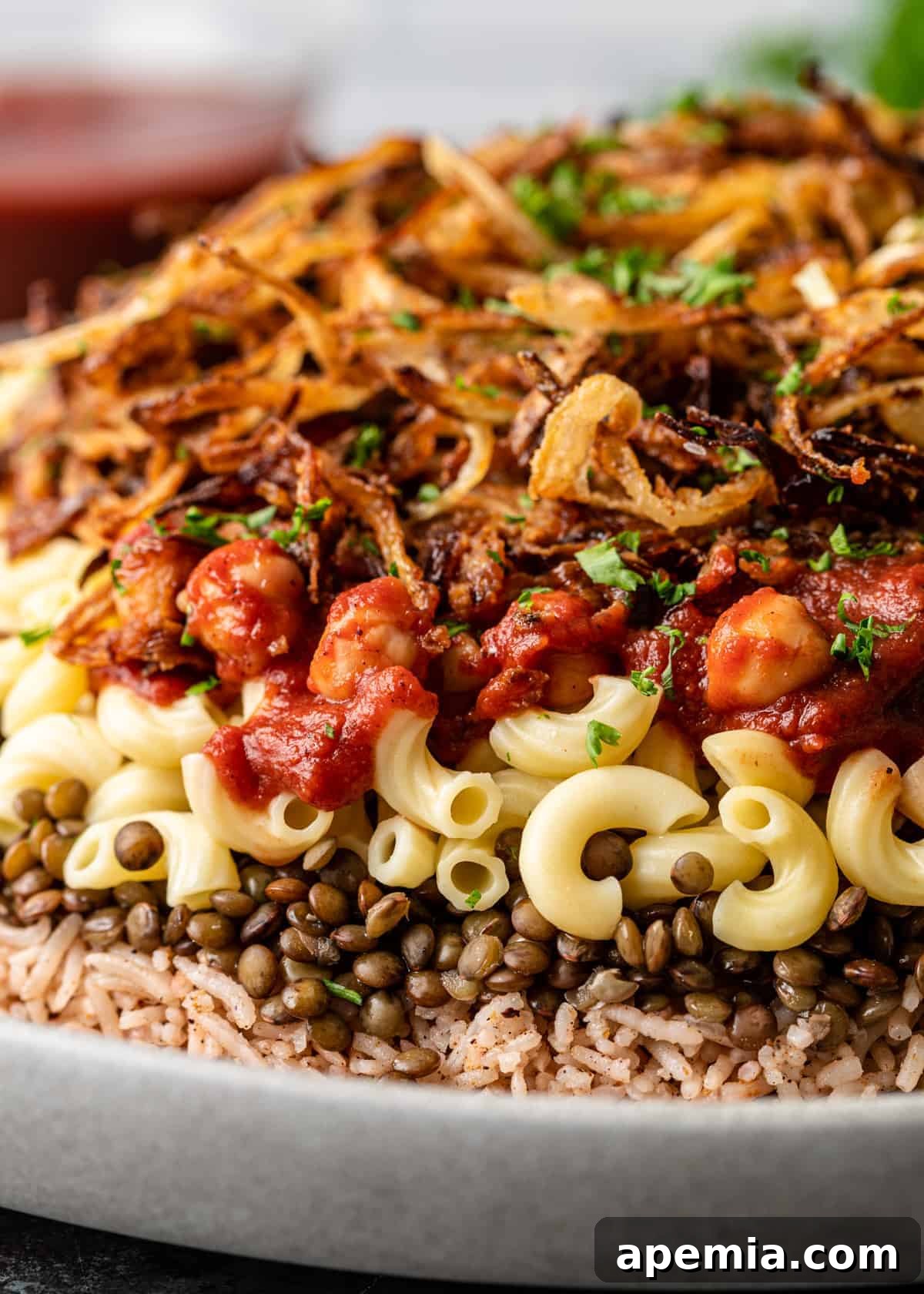
Koshari, often spelled Koshary or Kushari, stands as the beloved national dish of Egypt. This vibrant and satisfying meal is a masterful fusion of textures and flavors, combining tender lentils, fluffy basmati rice, small macaroni pasta, and wholesome chickpeas, all simmered in a rich, spicy tomato sauce. Traditionally served in beautiful layers and generously crowned with crispy fried onions, Koshari is an experience for the senses – a hearty, filling, and utterly delicious dish that embodies the spirit of Egyptian culinary heritage.
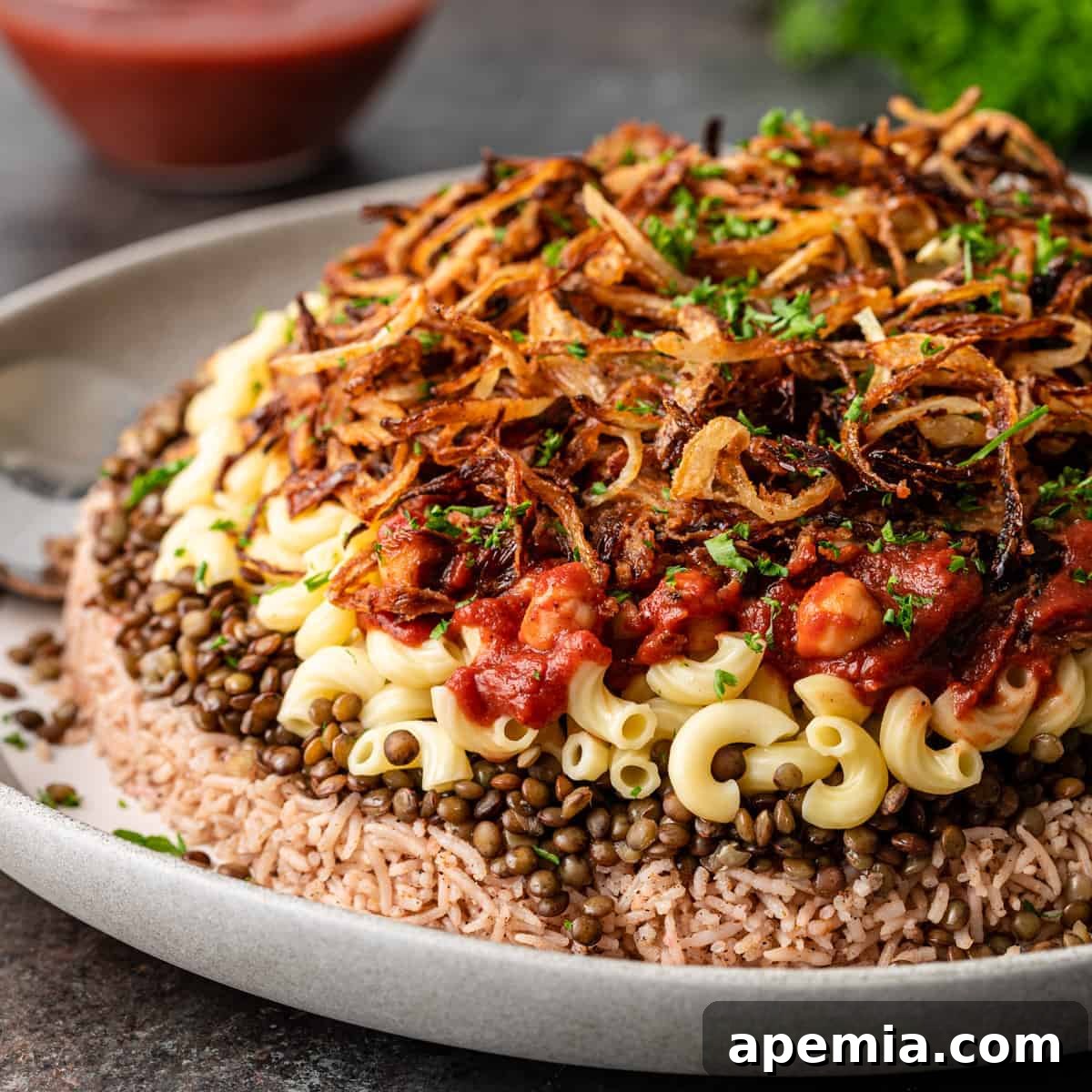
Authentic Egyptian Koshari: A Taste of Egypt’s Culinary Soul
Exploring the world through its cuisine is one of life’s greatest pleasures. Each country’s national dish offers a unique window into its culture, traditions, and the cherished ways families share love and flavor at the dinner table. From the savory depths of Filipino chicken adobo to Saudi Arabia’s aromatic kabsa, these culinary staples tell stories. Today, we invite you to embark on a flavorful journey to Egypt with its iconic Koshari.

While Koshari is often served with a beautifully layered presentation, showcasing each distinct component, don’t feel intimidated! You can absolutely achieve the same incredible taste by simply tossing all the ingredients together for a quicker, equally satisfying meal. Whether you opt for a stunning presentation or a simpler approach, the flavors of this Egyptian classic will not disappoint.
Table of Contents
- What is Egyptian Koshari?
- The Rich History of Koshari
- Essential Ingredients for Koshari
- Lentil Love: Green or Brown?
- Step-by-Step Guide to Making Koshari
- Mastering the Koshari Assembly
- Tips for Perfect Koshari
- Serving Suggestions
- Recommended Kitchen Tools
- Storing and Reheating Koshari
- Frequently Asked Questions About Koshari
- Egyptian Koshari Recipe Card
This richly flavored and incredibly filling dish is not only delicious but also remarkably inexpensive, made with common staple ingredients found in Egyptian kitchens. It’s often enjoyed with fiery shatta sauce or creamy garlic sauce (Toum), or for the truly adventurous, both! These additions elevate the experience, adding extra dimensions of spice and zest.
What is Egyptian Koshari?
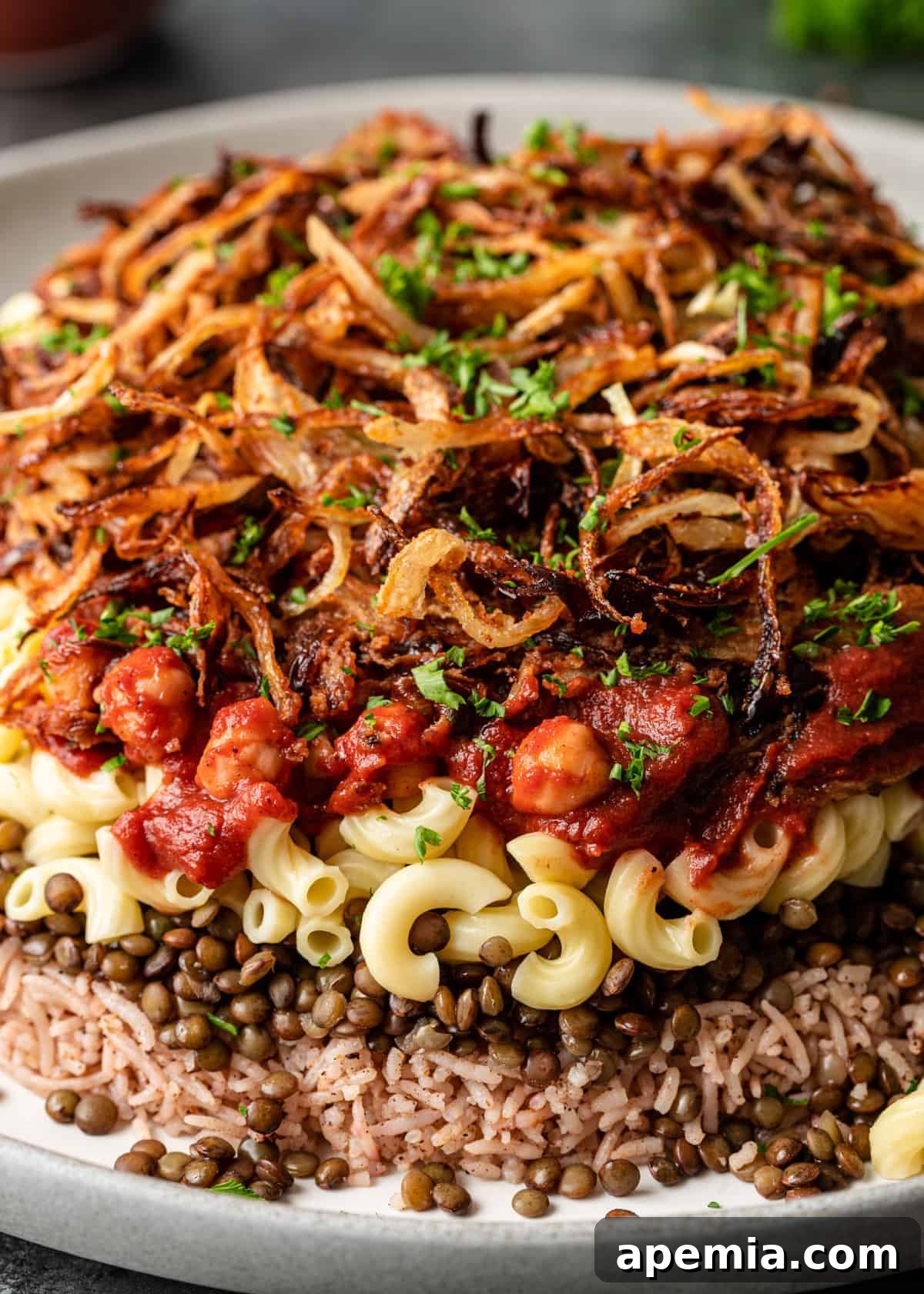
At its heart, Egyptian Koshari is a hearty vegetarian dish built upon a foundation of rice, lentils, and macaroni, generously smothered in a garlicky, spicy tomato sauce and topped with perfectly crispy fried onions. It’s a complete meal in itself, offering a delightful interplay of soft, firm, and crunchy textures, all brought together by a complex blend of Middle Eastern spices. This unique combination makes Koshari a fulfilling and immensely satisfying dish, perfect for any occasion.
The Rich History of Koshari
Koshari’s origins are as fascinating as its flavor. While firmly established as Egypt’s national dish, its roots stretch beyond the Nile. The core concept of a rice and lentil dish is believed to have come from India, resembling the popular Indian comfort food “khichuri.” However, Koshari truly evolved in Egypt, where it absorbed influences from various cultures that passed through the region.
The addition of macaroni, for instance, is a distinct Italian-Egyptian fusion, reflecting the strong Italian immigrant presence in Egypt during the 19th and early 20th centuries. Over time, these diverse culinary threads intertwined to create the unique Koshari we know and love today. It became a staple for its affordability, ease of preparation, and its ability to feed many, making it a beloved street food and home-cooked meal across Egypt. Each region might even boast its own slight variation, a testament to its widespread appeal and adaptability.
Lentil Love: Green or Brown?
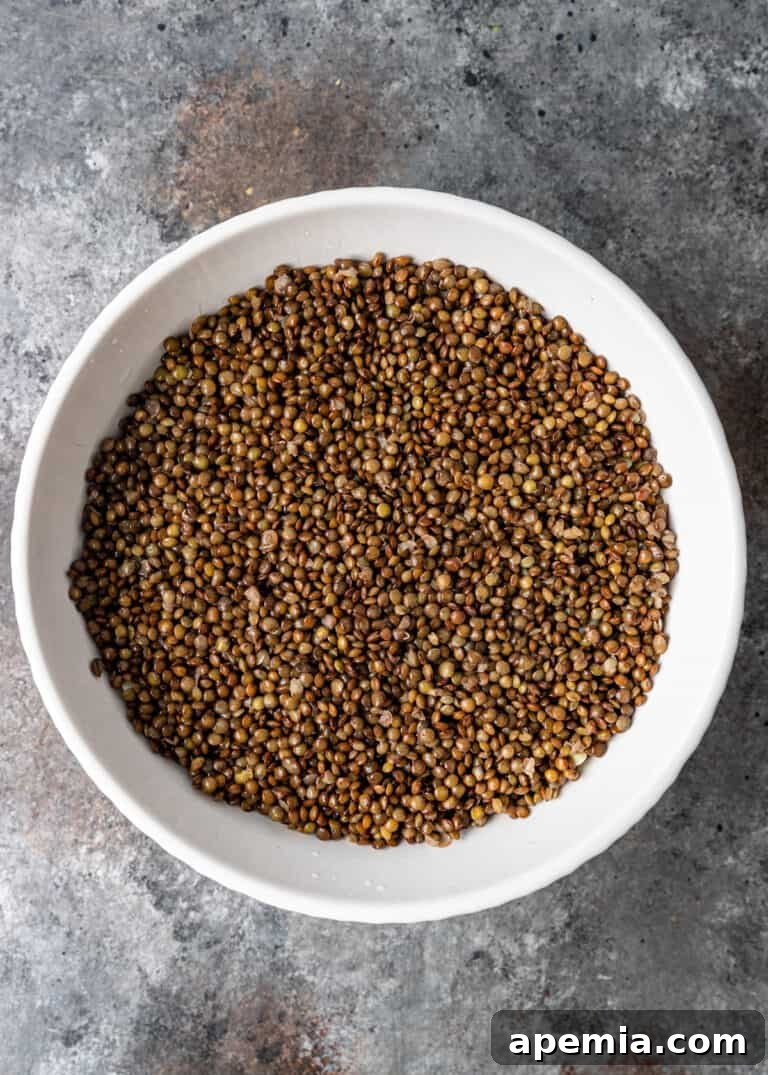
When preparing Koshari, you might wonder about the best choice of lentils. Green and brown lentils, while similar, offer subtle differences in taste, texture, and cooking time. Green lentils tend to have a slightly peppery flavor and a firmer texture, making them excellent for dishes where you want them to hold their shape, like salads. Brown lentils, on the other hand, are milder and become softer and creamier when cooked, making them ideal for soups, stews, and, indeed, Koshari. Either variety works wonderfully in this recipe, so choose based on your preference for texture. Both provide that essential earthy depth to the dish.
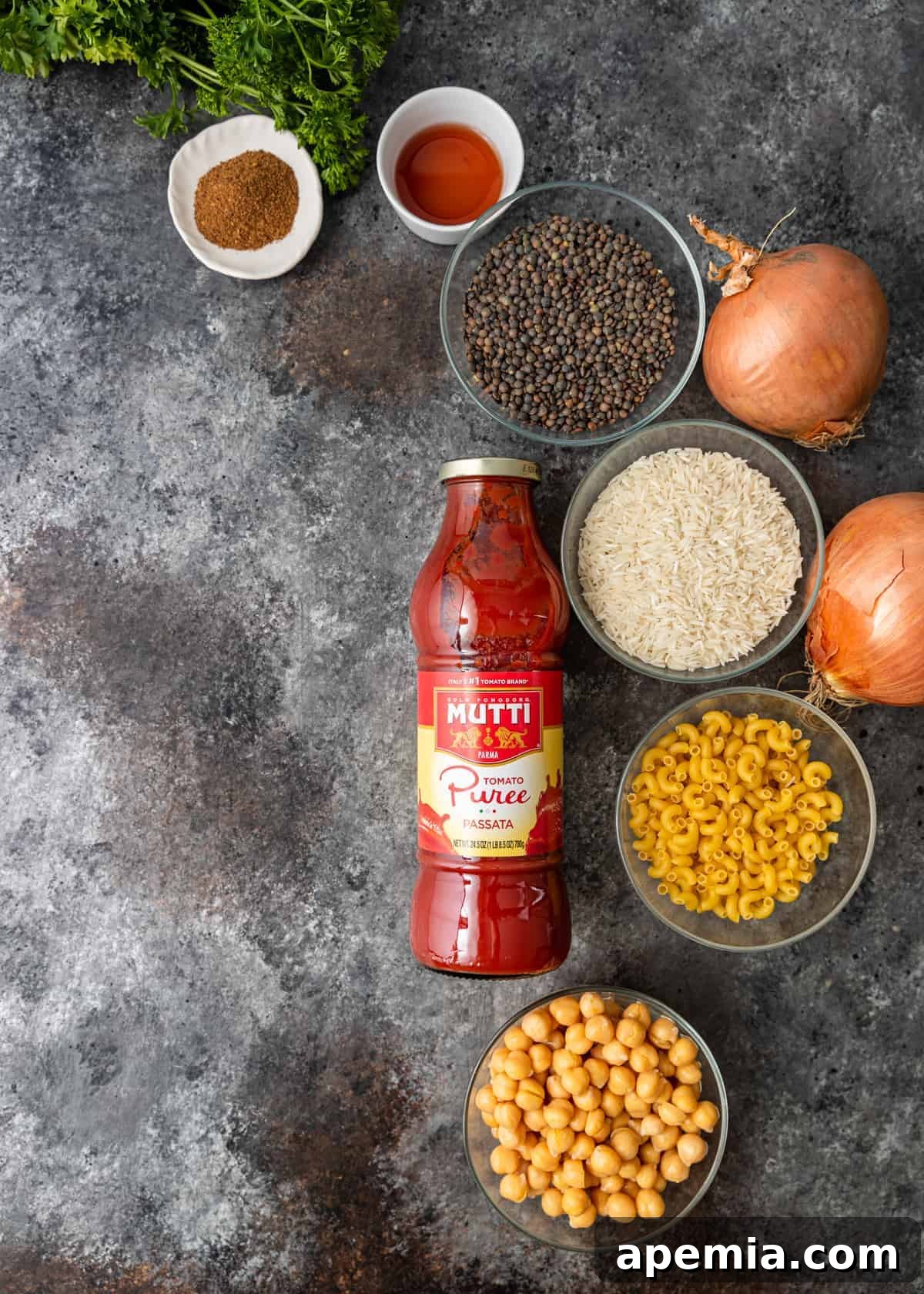
Essential Ingredients for Koshari
(A full list of ingredients and quantities can be found in the recipe card below)
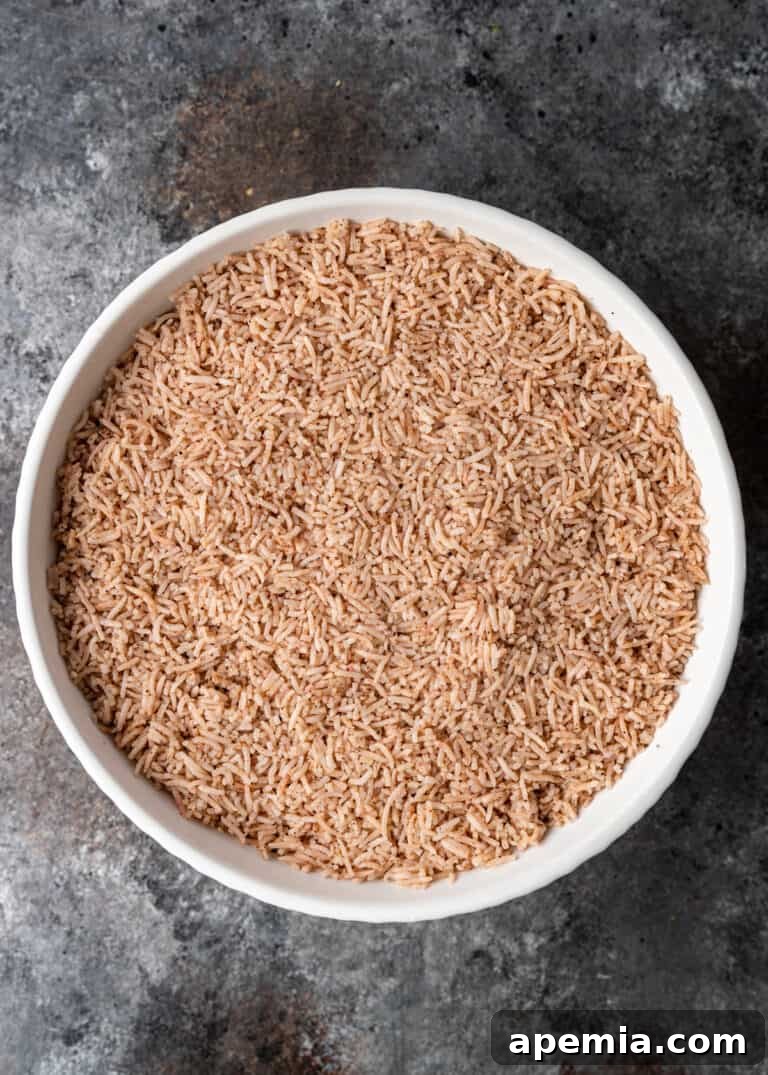
- Basmati Rice: This long-grain rice variety is favored for its delicate, nutty, and slightly floral aroma and taste. It cooks up light and fluffy, providing a perfect base for Koshari. While other long-grain rice types can be substituted, basmati truly enhances the authentic flavor.
- Lentils: As discussed, either green or brown lentils are excellent choices. Using both can even add an interesting dimension! The key is to rinse them thoroughly before cooking to ensure purity and prevent excessive foam, and cook them until they are tender but still hold their shape.
- Macaroni: Small, springy elbow macaroni is the traditional pasta for Koshari, contributing a comforting chewiness. However, some variations might use small pasta shapes like ditalini, or even broken spaghetti, so feel free to experiment with what you have on hand.
- Tomato Passata: This rich, strained purée of ripe tomatoes forms the heart of the tangy and robust Koshari sauce, beautifully coating the chickpeas. If passata isn’t available, high-quality crushed tomatoes or even a thick tomato sauce can be used as a substitute, though passata offers a smoother texture.
- Garlic: Freshly minced garlic is indispensable for the sauce, providing an aromatic and bold flavor that truly defines Koshari. Do not skimp on the garlic – its pungent warmth is crucial.
- Chickpeas: As a wonderful vegetarian source of protein, chickpeas are a vital component of Koshari. They add texture and substance, making the dish incredibly filling. Canned chickpeas are convenient, just ensure they are thoroughly rinsed and drained.
- Red Wine Vinegar: A splash of red wine vinegar brightens the tomato sauce, adding a necessary acidic counterpoint to the richness of the other ingredients. Red grape vinegar or even a squeeze of fresh lemon juice can be used as alternatives if needed.
- Parsley: Fresh parsley is a must, both incorporated into the sauce for herbaceous notes and sprinkled generously over the finished dish for a burst of color and fresh flavor.
- Baharat Spice Blend: This quintessential Middle Eastern spice blend provides Koshari with its signature sweet, spicy, and smoky character. While you can find commercial Baharat, making your own fresh blend is highly recommended for unparalleled depth of flavor. A quick alternative blend is provided in the recipe notes if you’re short on time.
- Onions, Flour & Vegetable Oil: These three ingredients are key to creating the irresistible golden, crispy fried onions that crown every authentic plate of Koshari. Sweet yellow onions are a great choice, but any onion variety will work as long as they are thinly sliced for optimal crispiness.
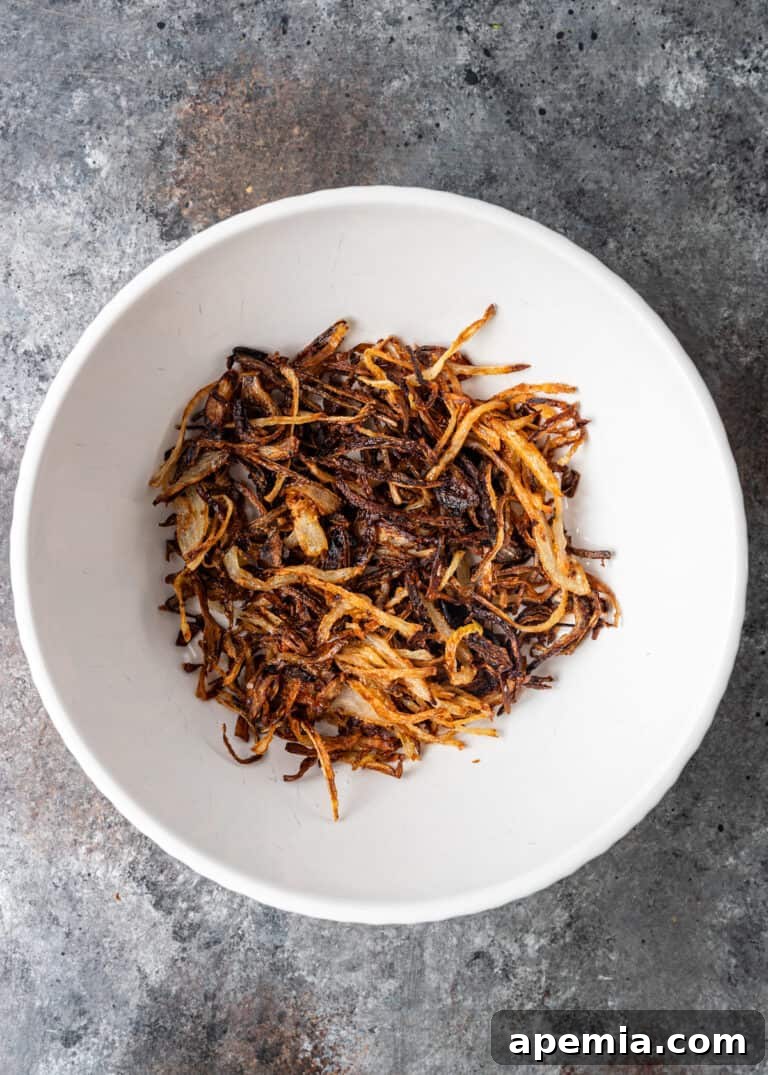
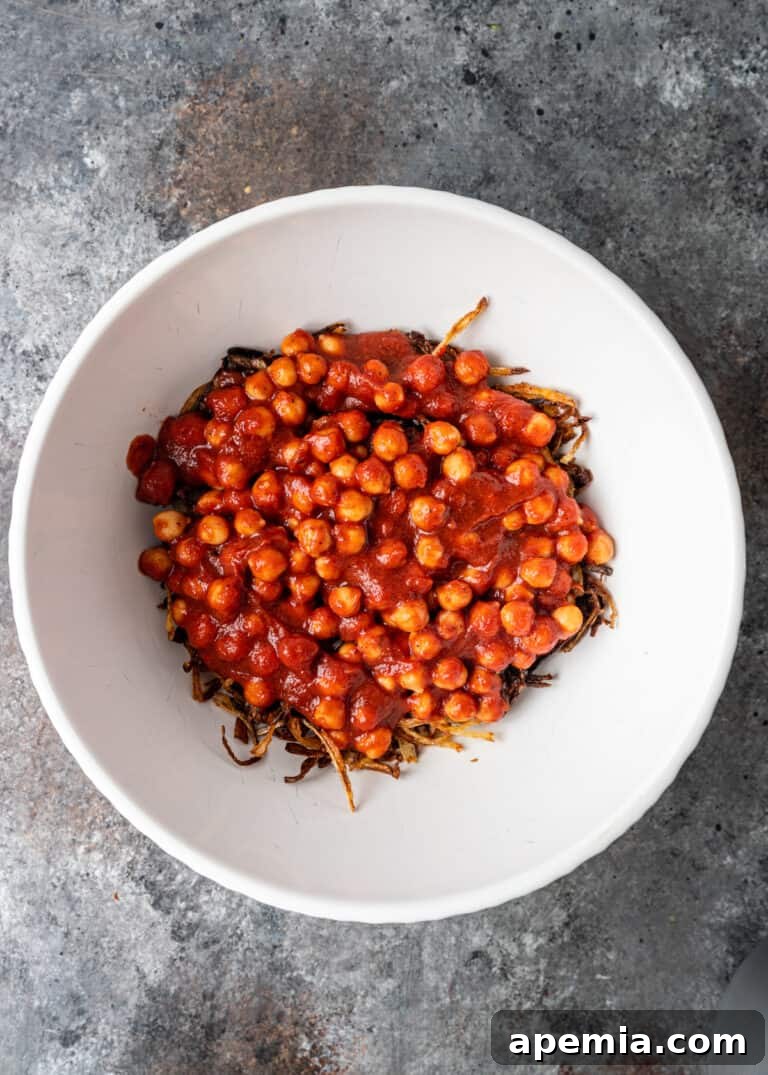
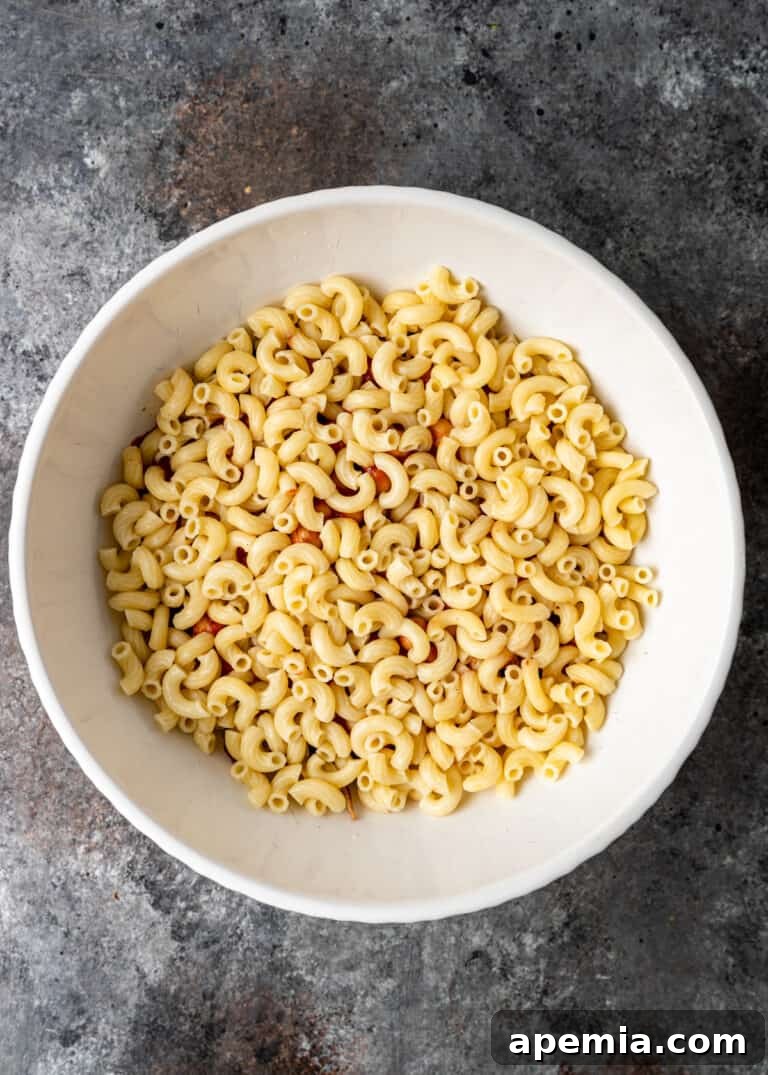
Step-by-Step Guide to Making Koshari
Creating Koshari involves preparing several components, which, when cooked simultaneously, can significantly speed up the process. Here’s how to bring each delicious element to life:
- Prepare the Crispy Onions: Begin by thinly slicing your onions. In a bowl, toss the sliced onions with a light coating of flour. Heat vegetable oil in a deep skillet over medium-high heat (a deep skillet helps prevent splatters). Fry the onions in batches, ensuring they turn a beautiful dark golden brown and become perfectly crispy. Once done, drain them on a paper towel-lined plate and season lightly with salt. Set these aside – they are the crowning glory!
- Prepare the Rice: Rinse the basmati rice under cold water until the water runs clear. In a saucepan, bring 1 ½ cups of salted water to a boil. Add the rinsed rice and 1 tablespoon of Baharat spice blend. Stir gently, cover the saucepan, reduce the heat to low, and simmer for 18 minutes until the water is absorbed and the rice is tender. Fluff with a fork and set aside.
- Prepare the Lentils: In a separate saucepan, bring 4 cups of salted water to a boil, adding a teaspoon of the Baharat spice blend for extra flavor. Add the rinsed lentils and cook, uncovered, for about 20 minutes, or until tender but still firm. Drain any excess water and set aside.
- Prepare the Macaroni: Bring 3 cups of salted water to a boil in another saucepan. Add the elbow macaroni and cook according to package instructions, usually about 10 minutes, until al dente. Drain thoroughly and set aside.
- Prepare the Chickpea Tomato Sauce: Heat 2 teaspoons of vegetable oil in a saucepan over medium heat. Add the minced garlic and sauté for about 1 minute until fragrant. Pour in the tomato passata, add the remaining Baharat spice (2 teaspoons), and a pinch of salt. Stir well, then add the rinsed and drained cooked chickpeas. Cover partially and let it simmer on low heat for 10 minutes, allowing the flavors to meld. Just before serving, stir in the red wine vinegar and fresh parsley to brighten the sauce.
Mastering the Koshari Assembly
There are two main ways to serve Koshari: mixed or beautifully layered. For that impressive, traditional presentation, follow these steps:
- Layer the Components: In a large, deep bowl, carefully place half of the crispy fried onions at the very bottom. Next, layer the warm chickpea tomato mixture, followed by the cooked elbow macaroni. Then, add the tender lentils, and finally, gently top with the fluffy basmati rice. Use a spatula to gently flatten and pack down each layer, helping the Koshari hold its shape when inverted.
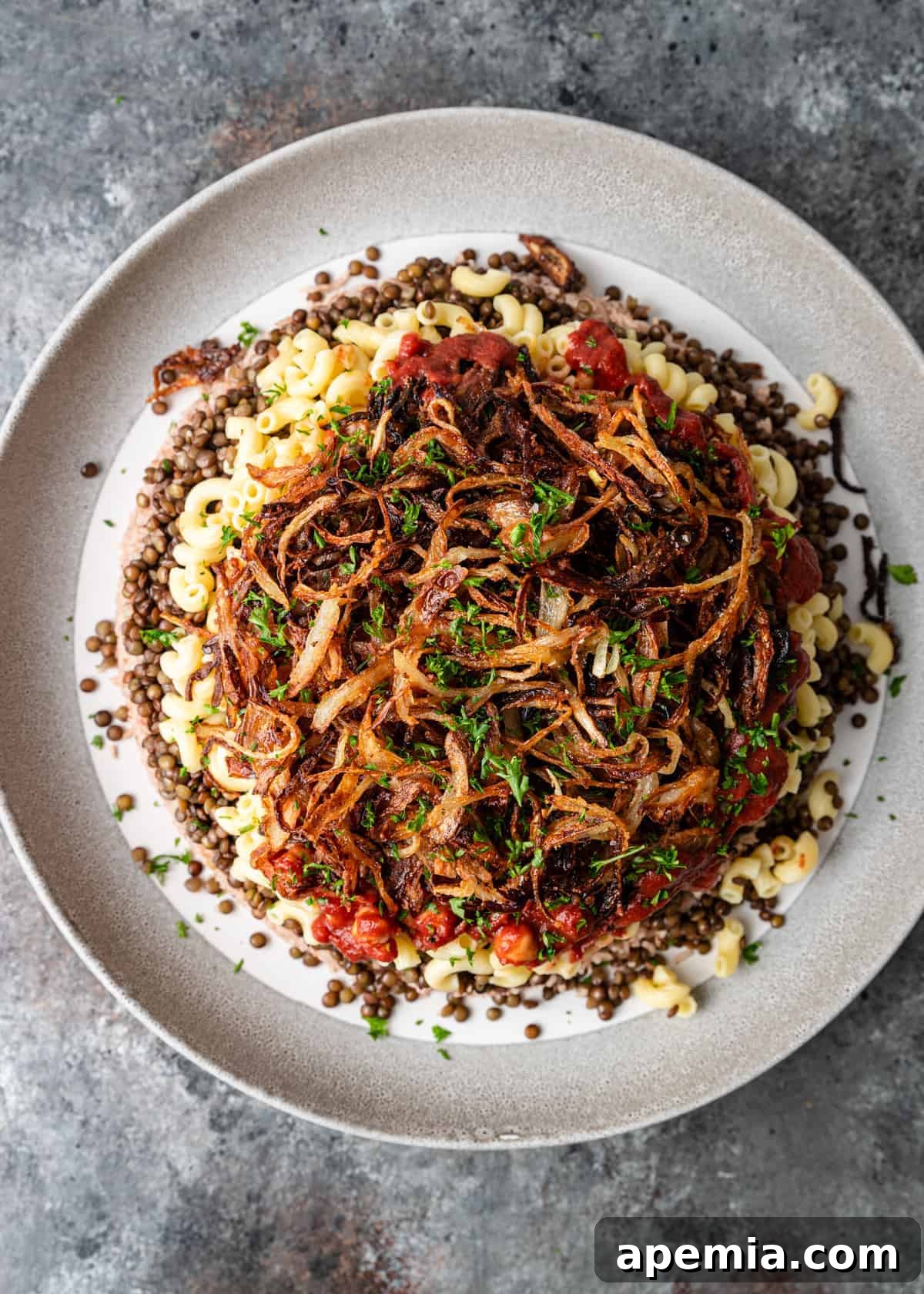
- The “Flip” Technique: This is the exciting part! Place a large plate or platter (make sure it’s wider than the mouth of your bowl) firmly over the top of the bowl. Holding both the platter and the bottom of the bowl securely, confidently and quickly flip the entire contraption over. Give the bowl a firm shake, then carefully lift it off. The Koshari should release itself, forming a beautiful, inverted tower of delicious layers on your platter.
- Serve with Garnish: Generously top your magnificent Koshari with the remaining crispy onions and a sprinkle of fresh minced parsley. Serve immediately with your choice of shatta (hot sauce) and Toum (garlic sauce) for the ultimate authentic experience.
Tips for Perfect Koshari
- Preparation is Key: Koshari has multiple components. To save time, you can prepare the crispy onions, cook the lentils, and even the tomato sauce ahead of time. Store them separately in airtight containers in the fridge, then reheat gently and assemble when ready to serve.
- Crispy Onions Secret: Don’t overcrowd the skillet when frying onions. Work in batches to ensure they crisp up beautifully instead of steaming. Also, make sure they are sliced uniformly thin.
- Flavorful Rice: Rinsing your rice is important for preventing stickiness. Adding Baharat spice to the rice water infuses it with an extra layer of authentic flavor right from the start.
- Adjust Spice Levels: The Baharat spice blend offers a warm, aromatic heat. If you prefer more kick, consider adding a pinch of cayenne pepper or a fresh chili to your tomato sauce. For a milder version, reduce the amount of Baharat slightly.
- Don’t Forget the Vinegar: The red wine vinegar in the tomato sauce is not optional! It provides a crucial tanginess that cuts through the richness and balances the flavors beautifully.
Serving Suggestions
Koshari is a complete meal on its own, packed with protein and carbohydrates. However, it’s often served alongside additional condiments to customize the experience. A drizzle of zesty lemon juice is a common addition, as is a dash of Egyptian cumin powder. The two most popular accompaniments are:
- Shatta: A spicy chili sauce, either red or green, that adds a fiery kick.
- Toum (Garlic Sauce): A creamy, potent Lebanese garlic sauce that offers a cool, pungent contrast to the warmth of the Koshari.
Having these sauces on the side allows everyone to tailor their Koshari to their preferred level of spice and garlic intensity.
Recommended Kitchen Tools
Having the right tools can make preparing Koshari a smoother process:
- Deep Skillet: Essential for frying the onions with minimal splatter and even browning.
- Multiple Saucepans: Ideally, four saucepans allow you to cook the rice, lentils, pasta, and chickpeas simultaneously, significantly cutting down on total preparation time.
- Large Mixing Bowl: Perfect for either tossing all the Koshari components together for a quick meal or for layering them for the traditional presentation.
- Large Plate or Platter: Crucial for the inverted presentation technique. Ensure it’s wide enough to comfortably cover the mouth of your mixing bowl.
- Spatula: Useful for gently pressing down the layers during assembly.
Storing and Reheating Koshari
Once all the components of Koshari are mixed together, it’s best enjoyed within 3 days. Over time, the rice can become slightly stale, and the crispy onions may soften, while the individual flavors tend to merge more. If you plan to store it for longer, or prefer to maintain distinct textures, consider storing the individual components (rice, lentils, pasta, sauce, and onions) separately in airtight containers in the refrigerator. When stored separately, they may keep for up to 4-5 days.
The best way to reheat Koshari is in the microwave. For individual servings, add a tablespoon or two of water to the dish, cover it, and microwave for about a minute. Stir, and then repeat until it’s thoroughly warmed through, ensuring the moisture helps revive the grains and pasta.
Share this recipe on Pinterest!
Love this recipe? Share it with the world on Pinterest.
Share on Pinterest
Frequently Asked Questions About Koshari
Koshari is definitively an Egyptian national dish, but it does carry historical roots tracing back to India. This explains the interesting blend of spices and ingredients common in both cuisines. It’s most likely related to “khichuri,” a simple rice and lentil meal popular throughout Southeast Asia. However, Koshari is also a fantastic example of culinary fusion, with the addition of macaroni being a notable Italian-Egyptian influence. The enduring appeal of Koshari lies in its simplicity, affordability, and ability to be a filling meal, leading to many delightful regional variations found throughout Egypt.
Yes, you certainly can use canned lentils for convenience. However, it’s worth noting that you might miss out on the rich, infused flavor that comes from simmering dried lentils with the Baharat spice blend. Freshly cooked lentils generally offer a superior flavor and texture compared to their canned counterparts. If you’re new to cooking dried lentils, rest assured they are incredibly easy and an inexpensive source of protein. There are many guides available to help you master them!
Making and assembling all the components of Koshari typically takes just under an hour. The most efficient way to prepare it is by cooking the various components simultaneously – for example, having the rice, lentils, pasta, and chickpea sauce all cooking at the same time will significantly speed up your total preparation time.

Egyptian Koshari Recipe
Egyptian Koshari is a savory, richly spiced dish featuring rice, pasta, chickpeas, lentils, and crunchy fried onions in a garlicky tomato sauce.
Servings: 6
Prep Time: 10 mins
Cook Time: 40 mins
Total Time: 50 mins
Print Recipe
Video
Koshari is a comforting meatless dish of pasta, rice, and lentils in spicy tomato sauce. Make this recipe for Egypt’s national dish soon!
Ingredients
Crispy Onions
- 2 large yellow onions, thinly sliced
- 1/4 cup flour
- 1 cup vegetable oil
Koshari
- 1 cup basmati rice
- 1 cup green or brown lentils, picked over and rinsed
- 2 tbsp Baharat Spice Blend, divided (See Note 2 below)
- 1 cup elbow macaroni
- 2 cups tomato passata/sauce
- 1 tsp kosher salt
- 2 tsp vegetable oil
- 4 garlic cloves, minced
- 15 oz cooked chickpeas, rinsed
- 1 tbsp red wine vinegar (or red grape vinegar)
- 3 tbsp fresh parsley, minced
Serve with Optional
- Shatta Sauce
- Garlic Sauce (Toum)
Unit System: US Customary (Click for Metric)
Instructions
Crispy Onions
- In a large, deep-sided skillet, heat the oil over medium-high heat.
- In a large bowl, toss the thinly sliced onions with the flour until coated. Working in batches, fry the onions until they reach a dark golden brown and are perfectly crispy. Drain them on a paper towel-lined plate and season with salt. Repeat with the remaining onions and set aside.
Koshari Components
- Rice: Rinse the rice in a sieve under cold water until the water runs clear. In a saucepan, bring 1 1/2 cups water and a teaspoon of kosher salt to a boil. Add the rinsed rice and 1 tablespoon of Baharat Spice Blend. Stir, cover, reduce heat to low, and cook for 18 minutes. Set aside.
- Lentils: In a saucepan, bring 4 cups water, a teaspoon of kosher salt, and a teaspoon of Baharat Spice Blend to a boil. Add the lentils and cook uncovered for 20 minutes, or until tender. Drain and set aside.
- Macaroni: In a saucepan, bring 3 cups water and a teaspoon of kosher salt to a boil. Add the elbow macaroni and cook uncovered for 10 minutes, or until al dente. Drain and set aside.
- Tomato Sauce Chickpeas: In a saucepan over medium heat, add 2 teaspoons of vegetable oil. Sauté the minced garlic for 1 minute until fragrant. Add the tomato passata/sauce, the remaining salt, the remaining 2 teaspoons of Baharat Spice Blend, and the cooked chickpeas. Turn the heat to low and simmer partially covered for 10 minutes. Stir in the red wine vinegar and minced fresh parsley. Set aside.
Assembly
- You have two options: either layer for an impressive presentation OR mix all components together, reserving some crispy onions for topping.
- For Layered Presentation: In a large bowl, place half of the crispy onions at the bottom. Layer the components in the following order: the Tomato Chickpea mixture, then the cooked elbow macaroni, followed by the cooked lentils, and finally, the cooked basmati rice as the top layer. Gently press down on the layers with a spatula to help the Koshari firm up for flipping.
- Flipping and Serving: Cover the bowl with a large plate or platter (larger than the bowl’s width). Carefully but confidently grasp both the plate and bowl sides, flip away from you, and firmly shake the bowl. Place the plate side down on your countertop. The Koshari should release itself into a perfect mound. Top with more crispy onions and chopped parsley. Serve immediately with hot sauce (Shatta) and garlic sauce (Toum) for an authentic experience.
Notes
I highly recommend making your own Baharat Spice Blend for the best flavor. However, if you need a quick version, this mixture is a good start and enough for this recipe:
- 1 tbsp ground cinnamon
- 1 tsp ground cumin
- 1 tsp black pepper
- 1/2 tsp ground coriander
- 1/2 tsp paprika
- 1/2 tsp kosher salt
- 1/8 tsp ground cloves
Nutrition
The information shown is an estimate provided by an online nutrition calculator. It should not be considered a substitute for a professional nutritionist’s advice.
- Calories: 817 kcal
- Carbohydrates: 94 g
- Protein: 22 g
- Fat: 41 g
- Saturated Fat: 31 g
- Sodium: 829 mg
- Potassium: 949 mg
- Fiber: 19 g
- Sugar: 10 g
- Vitamin A: 555 IU
- Vitamin C: 14 mg
- Calcium: 93 mg
- Iron: 6 mg
Course: Main Dishes, Side Dishes
Cuisine: Egyptian, Middle Eastern
Author: Kevin
Have You Made This Recipe? Let Me Know on Instagram
Tag @keviniscooking or tag me #keviniscooking!