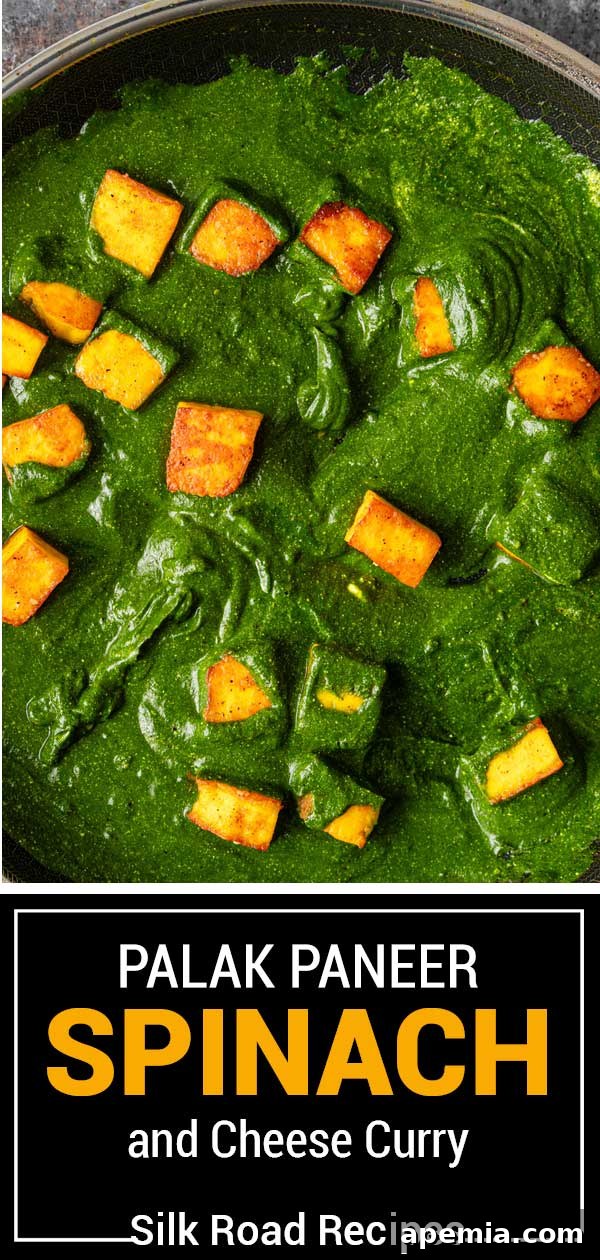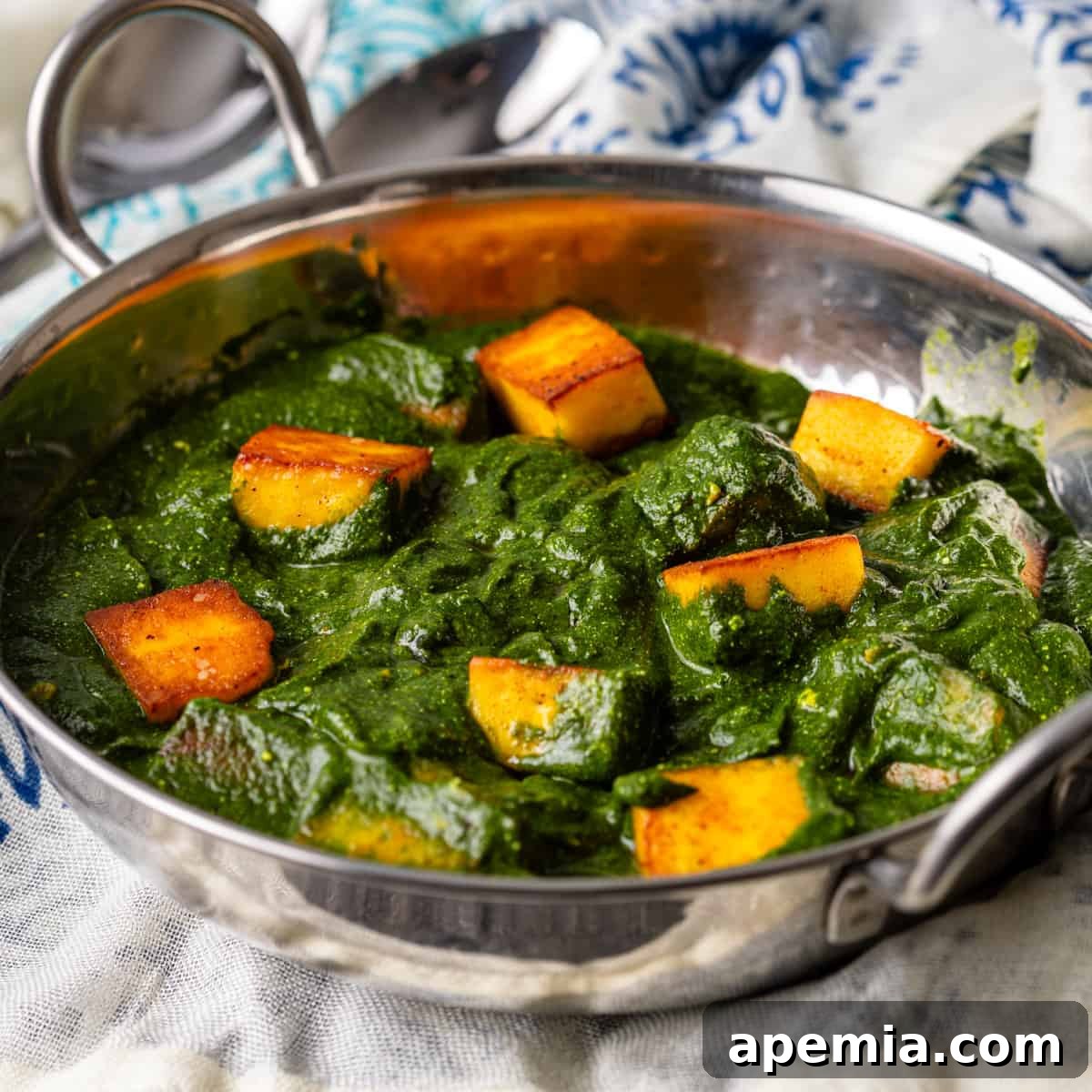
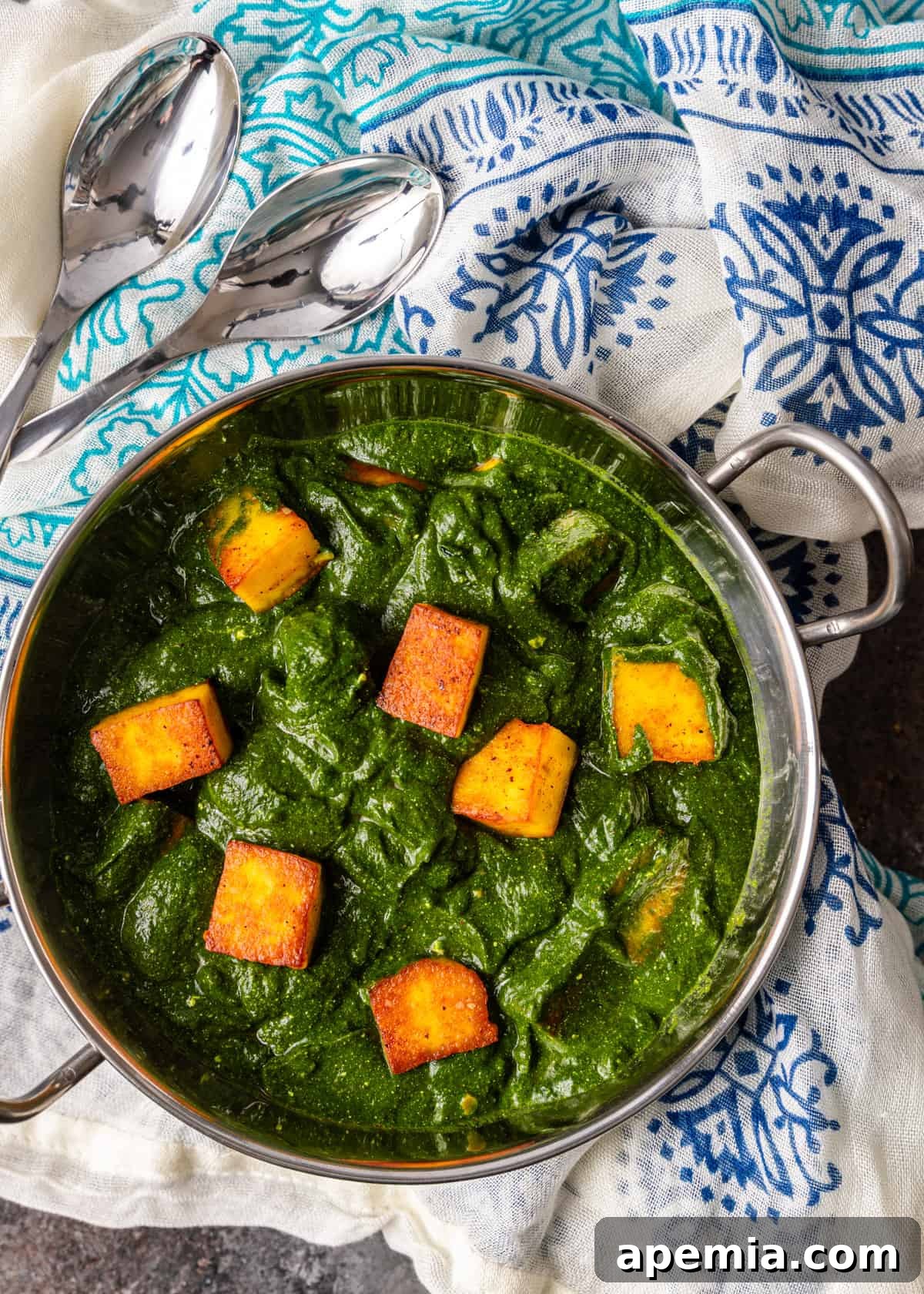
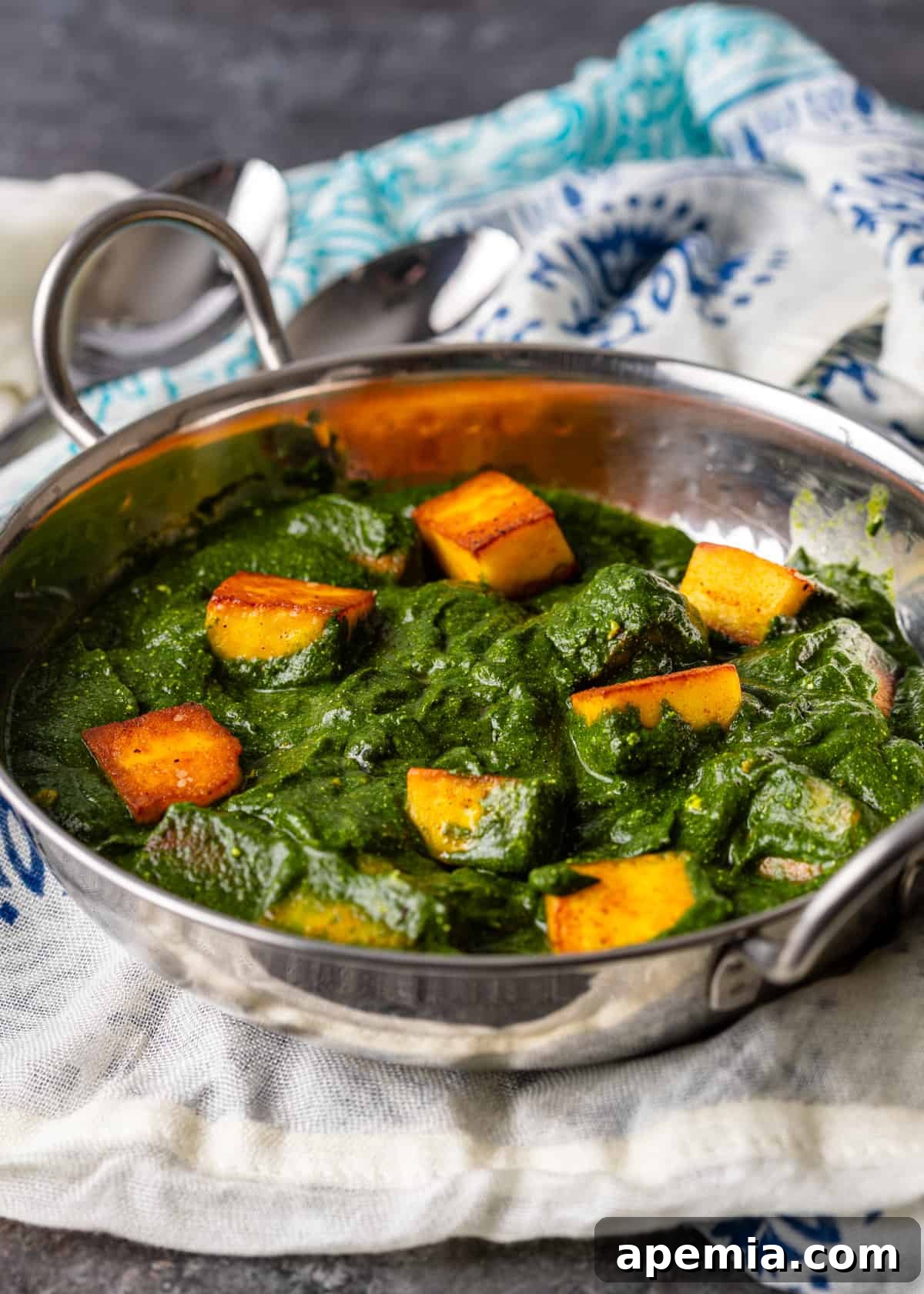
Embark on a culinary journey to India right from your kitchen with our exquisite Palak Paneer recipe. This cherished vegetarian curry artfully combines golden-fried paneer cheese cubes with a luxuriously smooth, vibrantly green sauce crafted from perfectly puréed and seasoned spinach. It’s an incredibly simple dish to prepare, often ready in just 30 minutes, yet it delights the senses with an intricate dance of citrusy, earthy, and aromatic Indian spices. Garnish with a fresh squeeze of lemon juice and serve alongside warm naan or fluffy basmati rice for a truly authentic and satisfying experience.
Crafting the Perfect Palak Paneer: A Quick, Flavorful, and Authentic Experience
Palak Paneer stands as a testament to the richness and diversity of Indian vegetarian cuisine, particularly revered in Northern India. Our rendition of this classic creamy curry has been meticulously adapted to bring out its best qualities, drawing inspiration from culinary experts. A game-changing technique we embrace is subtly piercing the paneer cubes before marinating. This simple yet brilliant step allows the porous paneer to thoroughly absorb the aromatic spices, ensuring that each bite is bursting with flavor from the inside out.
The foundation of this dish lies in a wonderfully aromatic marinade for the paneer, a balanced fusion of earthy turmeric and a gentle kick of chili powder. These very spices, along with fragrant whole cumin seeds and pungent fresh garlic, form the aromatic base that elevates the tender baby spinach to new heights. The careful tempering of these spices is crucial, releasing their full fragrant potential and creating a deep, complex flavor profile.
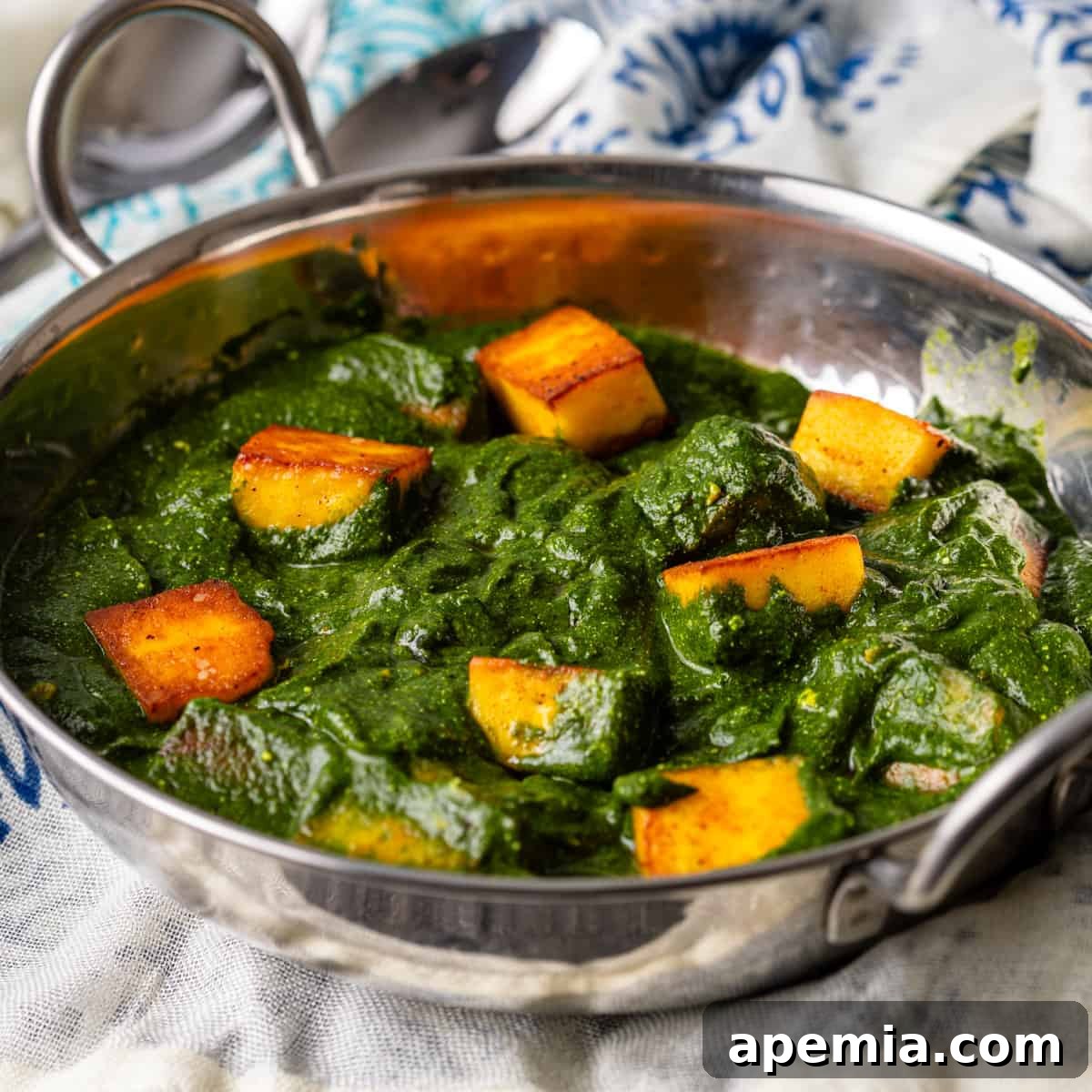
After being gently cooked, the fresh greens are transformed into a silken, thick paste through puréeing, then enriched with creamy plain yogurt. This combination yields a velvety, savory sauce that perfectly coats the pan-fried, golden-brown paneer. The interplay of textures – the tender yet firm paneer and the smooth, rich spinach gravy – creates a truly memorable dish. Whether you’re an experienced cook or exploring Indian flavors for the first time, this Palak Paneer recipe offers an authentic and accessible path to a delicious homemade curry.
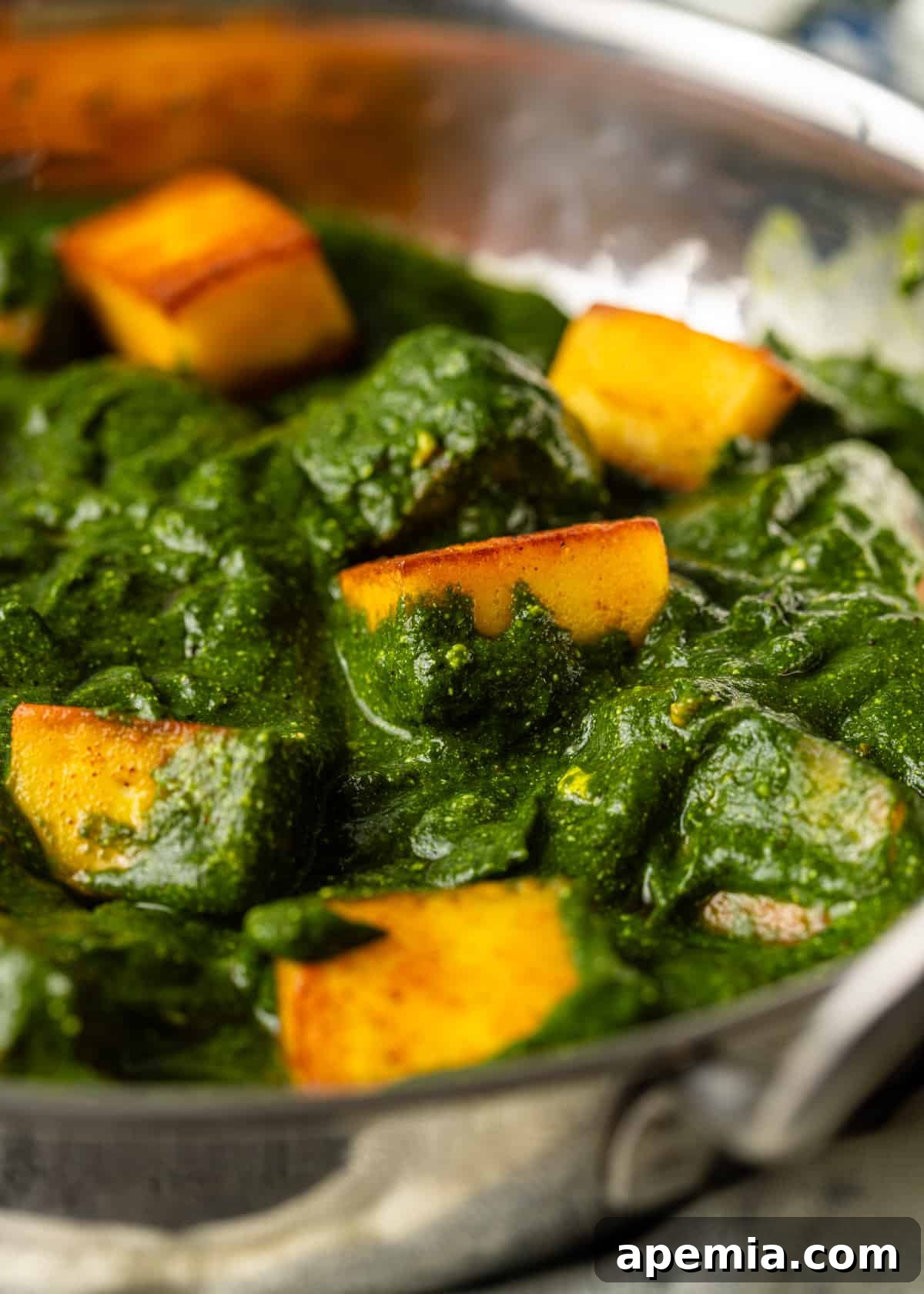
Table of Contents
- Palak Paneer vs. Saag Paneer: Understanding the Distinction
- The Heart of the Dish: Ingredient Notes and Substitutions
- How to Make Palak Paneer: A Step-by-Step Guide
- Recommended Tools for Perfect Palak Paneer
- Storing and Reheating Your Palak Paneer
- Frequently Asked Questions About Palak Paneer
- Palak Paneer (Spinach and Cheese Curry) Full Recipe Card
For enthusiasts of rich vegetarian curries, the journey into Indian cuisine offers many delights. You’ll undoubtedly enjoy Paneer Butter Masala, another beloved dish that celebrates the versatility of paneer with its rich, tomato-based gravy. And if you’re looking for a more robust and hearty option, our Potato Curry, also inspired by The Curry Guy, is a fantastic choice. It’s a substantial dish, brimming with tender potatoes, sweet onions, ripe tomatoes, and fragrant chiles, making it incredibly satisfying. Pairing Palak Paneer with these other curries creates a diverse and delectable Indian feast that will impress any palate.
Expert Tip
Palak Paneer vs. Saag Paneer: Understanding the Distinction
While often conflated, Palak Paneer and Saag Paneer are distinct dishes within the rich tapestry of Indian cuisine, primarily differing in their leafy green components. Understanding this difference will enhance your appreciation for each unique curry.
Palak is the Hindi word specifically for spinach. Thus, Palak Paneer is precisely what its name suggests: a curry made exclusively with spinach and paneer. The flavor profile is characterized by the mild, slightly sweet, and earthy notes of spinach, blended into a creamy sauce. It is a very specific and popular preparation.
Saag, conversely, is a broader term that refers to mixed leafy greens. A Saag Paneer can therefore be prepared using a variety of greens, which might include mustard greens (sarson), fenugreek leaves (methi), kale, collard greens, or even a combination of these. While spinach is often included in a saag mix, it isn’t the sole green. The inclusion of other greens gives Saag Paneer a more complex, sometimes slightly bitter or pungent, flavor profile compared to the singular, more delicate taste of Palak Paneer.
Our recipe focuses on the classic “Palak Paneer” to truly celebrate the unique, smooth, and vibrant character that pure spinach imparts to this creamy cheese curry.
The Heart of the Dish: Ingredient Notes and Substitutions for Palak Paneer
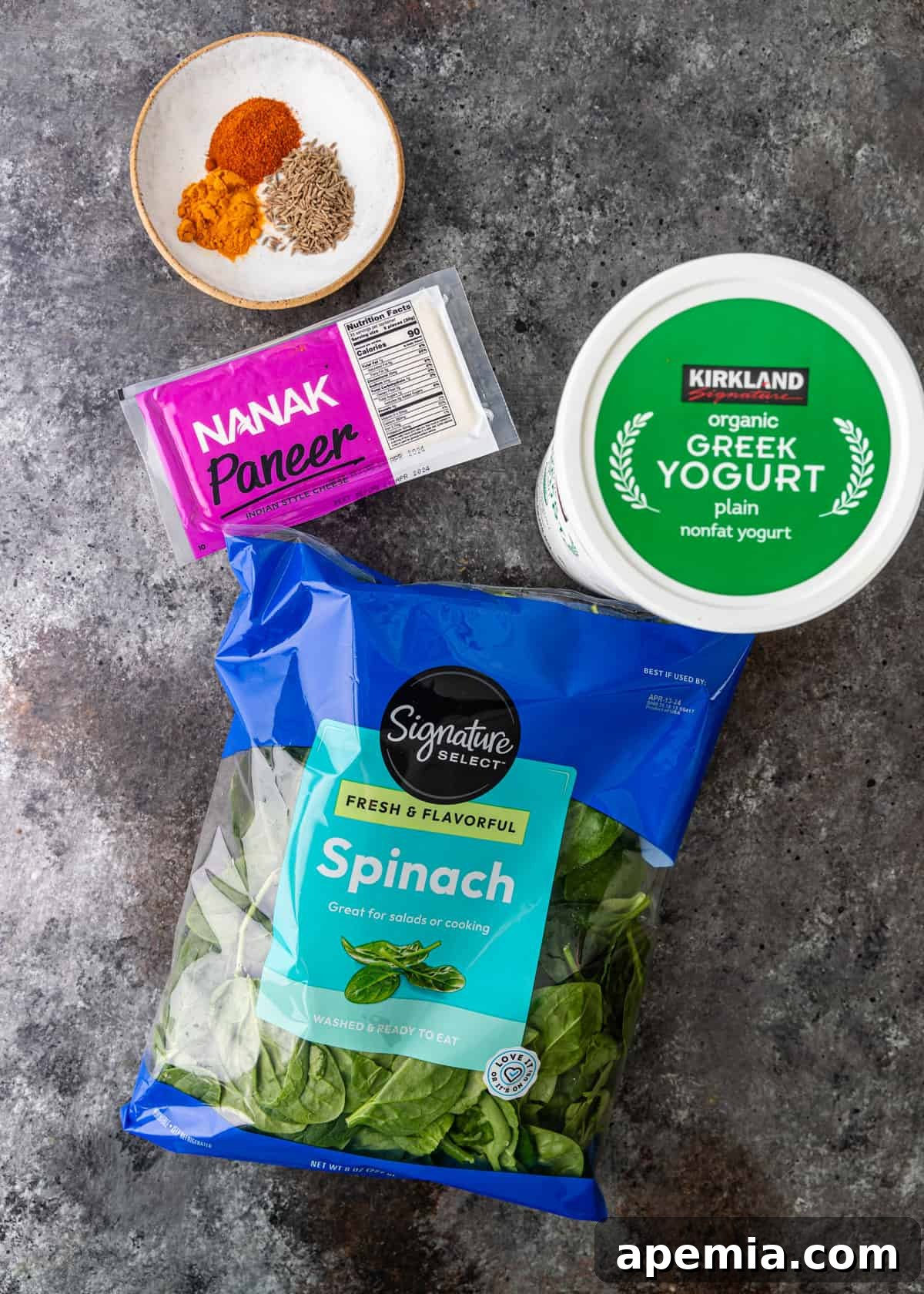
- Paneer: This fresh, non-melting Indian cheese is the star of our dish. Its unique, firm texture softens beautifully when cooked and has an incredible ability to absorb the rich flavors of the curry. If paneer is unavailable, Halloumi cheese is the best substitute due to its similar frying properties and texture. For a vegan alternative, extra-firm tofu, thoroughly pressed and seasoned, works wonderfully.
- Baby Spinach: We highly recommend using fresh baby spinach for its delicate texture, naturally sweeter profile, and less fibrous leaves, which result in a smoother, more palatable purée. While younger, baby spinach retains all the nutritional benefits of its mature counterpart, including iron and vitamins. If you are making a Saag Paneer (not Palak Paneer), you could experiment with other greens like Swiss chard, arugula, or baby kale, but expect a change in the overall flavor.
- Ground Turmeric: This vibrant golden spice is indispensable for its characteristic earthy, slightly pungent flavor and beautiful color. It’s a staple in Indian curries and also prized for its anti-inflammatory properties. Always ensure your turmeric powder is fresh for the best aroma and hue.
- Chili Powder: Adds warmth and a subtle or strong heat, depending on the type used. For a milder heat and rich red color, opt for Kashmiri chili powder. A quick homemade substitute can be made by combining paprika (for color), ground cumin, and a pinch of cayenne pepper for desired spiciness.
- Cumin Seeds: These whole seeds are crucial for the tempering (Tadka) process, where they are briefly toasted in hot oil to release an intense, nutty, and deeply aromatic flavor that permeates the entire dish. This distinct aroma cannot be fully replicated by ground cumin. If substituting with ground cumin (1:1 ratio), add it later in the cooking process to prevent it from becoming bitter.
- Garlic: Freshly chopped garlic provides a foundational pungent and aromatic flavor that is vital to the curry’s depth. While convenient, pre-minced jarred garlic may offer a slightly less intense flavor, so adjust quantities as needed.
- Plain Yogurt: Integral for achieving the desired creamy consistency and adding a delightful tang that balances the earthiness of the spinach. Full-fat plain yogurt is recommended for optimal richness. Greek yogurt is particularly excellent, offering a thicker texture and a more pronounced tang that also helps to counteract any potential bitterness from the greens. For a dairy-free option, unsweetened plain coconut yogurt or a cashew cream could be used.
- Canola Oil: A neutral cooking oil that allows the intricate flavors of the spices and fresh ingredients to shine. For a more traditional and rich flavor, consider using ghee (clarified butter), which adds a wonderful nutty depth. Any other high-heat neutral vegetable oil is also suitable.
How to Make Palak Paneer: A Step-by-Step Guide for Culinary Success
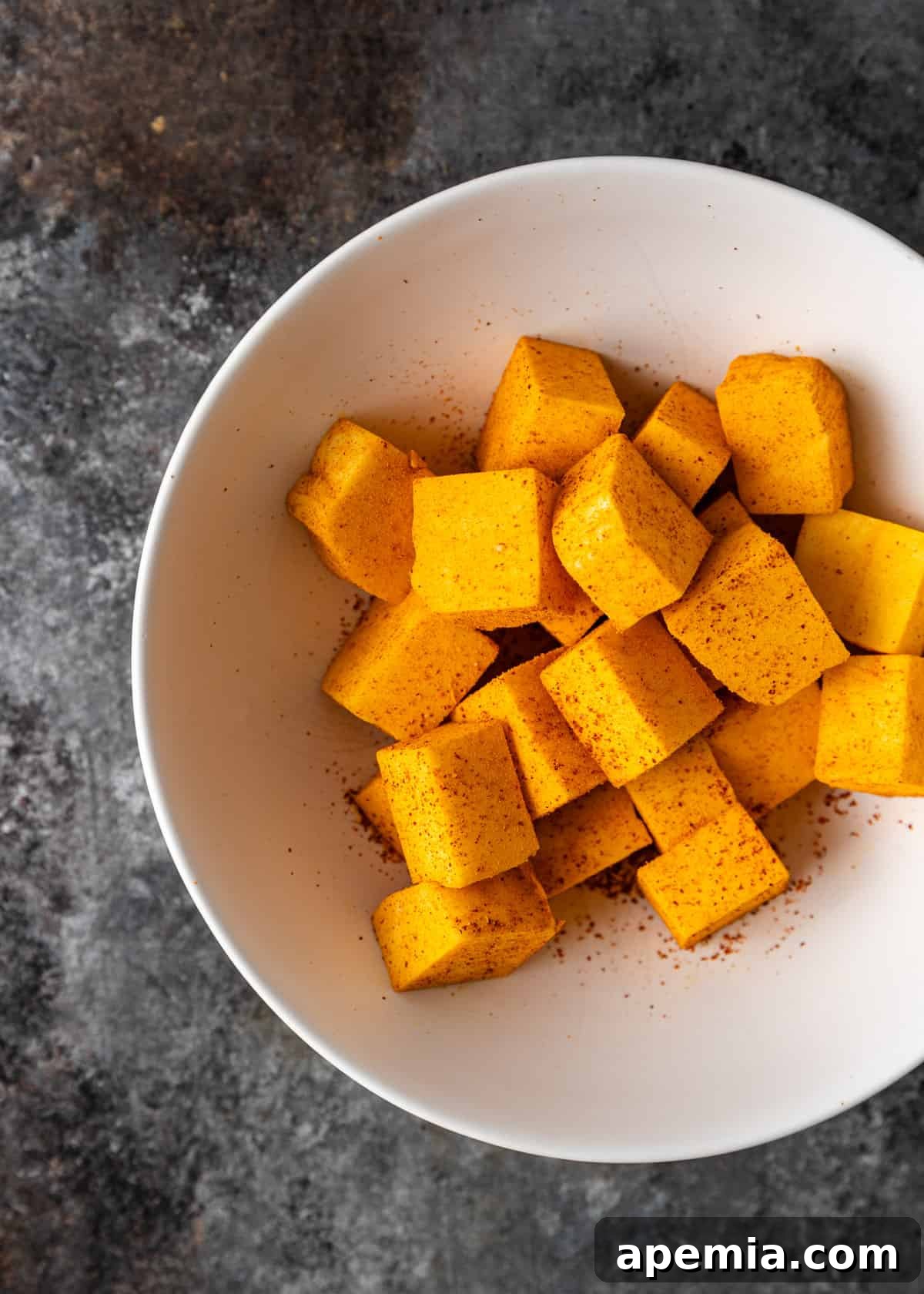
- Prepare and Season the Paneer: Start by carefully slicing the paneer block into uniform, bite-sized cubes, roughly 1-inch square. For an elevated flavor experience, use a fork to gently pierce each cube several times; this clever trick allows the spices to penetrate deeper. Transfer the paneer to a medium bowl and sprinkle with ½ teaspoon of ground turmeric, ½ teaspoon of chili powder, and ½ teaspoon of salt. Toss gently but thoroughly, ensuring every surface of the paneer is evenly coated with the vibrant spices. Set the seasoned paneer aside to marinate briefly while you begin preparing the spinach.
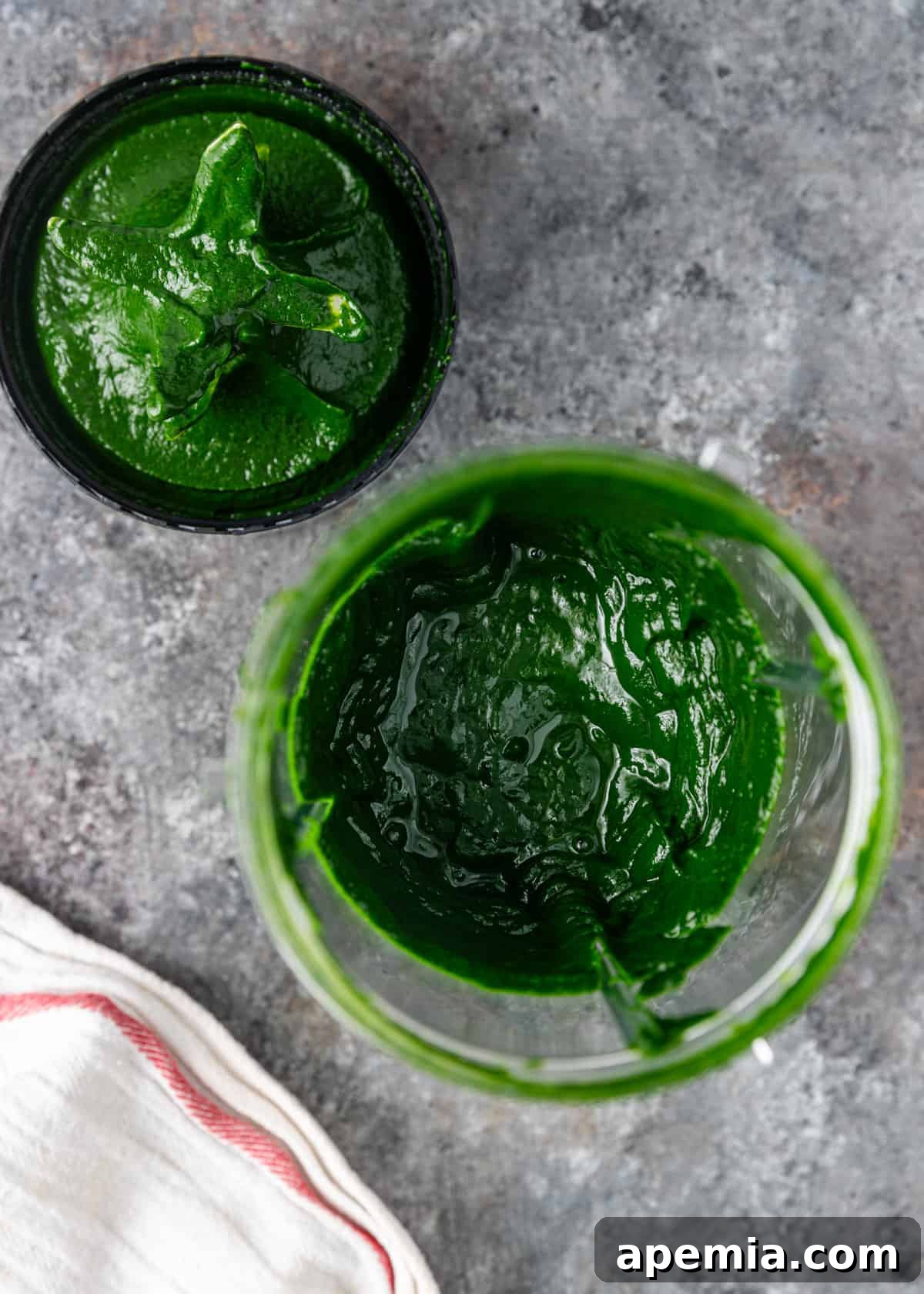
- Marinate, Steam, and Purée the Spinach: In a large saucepan, combine 1 cup of water and generously layer 1 pound of fresh baby spinach on top. Bring the water to a rolling boil over medium-high heat. Once boiling, immediately reduce the heat to a gentle simmer, cover the saucepan tightly with a lid, and steam the spinach for precisely 2 minutes. This quick steam wilts the spinach perfectly while preserving its bright green color and nutritional value. Remove the lid and continue to cook, uncovered, stirring occasionally, until all the water has completely evaporated from the pan. This step is vital to prevent a watery curry. Allow the steamed spinach to cool slightly for a few minutes. Once cool enough to handle, transfer the spinach to a food processor or a high-speed blender and purée until it forms a perfectly smooth, thick, and vibrant green paste. Set this spinach purée aside.
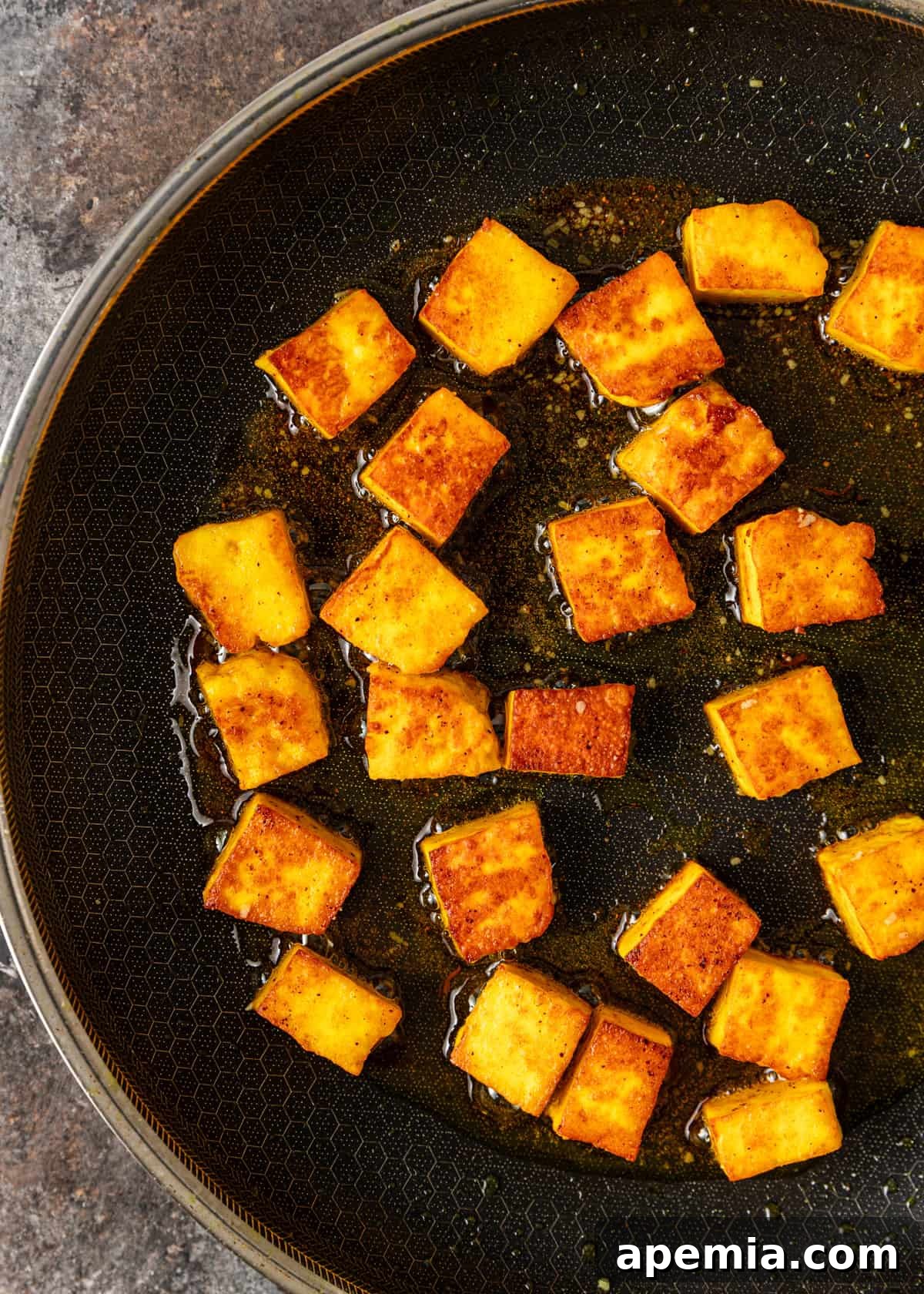
- Fry the Paneer to Golden Perfection: Heat 2 tablespoons of canola oil in a large, sturdy skillet (a non-stick or cast-iron pan works best) over medium-high heat. Once the oil is shimmering and hot, carefully add the marinated paneer cubes in a single layer. Avoid overcrowding the pan; if necessary, fry the paneer in two batches. Fry the paneer, turning the cubes occasionally with tongs or a spatula, until all sides are beautifully golden brown and develop a slightly crispy exterior. This texture contrast is essential for the dish. Once browned, promptly remove the paneer from the skillet and transfer it to a plate lined with paper towels to drain any excess oil.
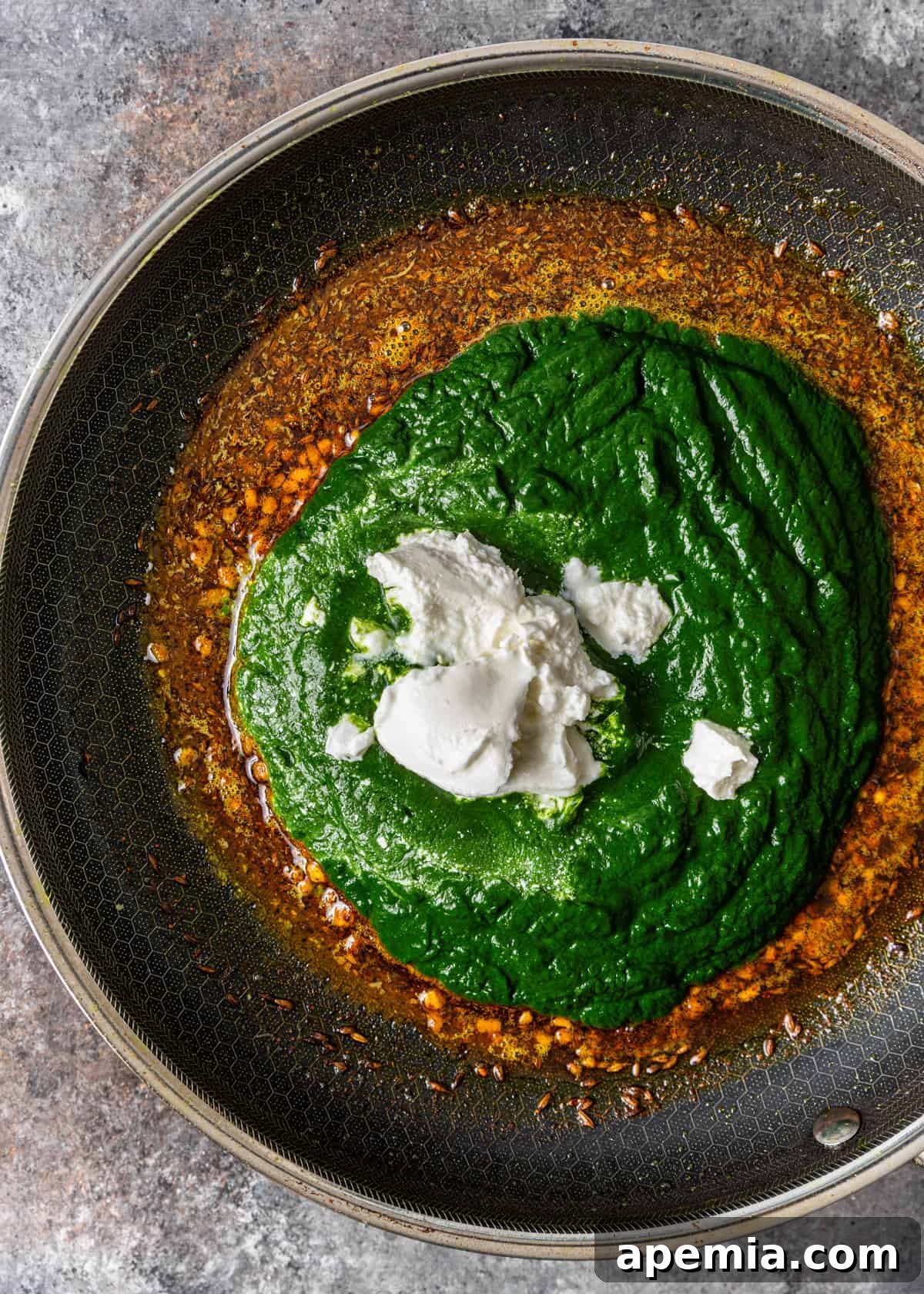
- Temper the Spices and Sauté Garlic: Keep the same skillet on the stovetop with the remaining flavorful oil (add a small splash more if the pan seems too dry). Reduce the heat to medium. Add 1 teaspoon of whole cumin seeds to the hot oil. Temper the cumin seeds by stirring continuously for only about 30 seconds, until they begin to sizzle, turn a shade darker, and release their incredibly fragrant aroma. Be vigilant to prevent them from burning. Immediately add the remaining 1 teaspoon of ground turmeric, 1 teaspoon of red chili powder, and 3 cloves of finely chopped garlic to the skillet. Fry this aromatic mixture for another 1-2 minutes, stirring constantly, until the garlic turns a light golden brown and the spices are wonderfully fragrant. This tempering (known as Tadka) is crucial for building the curry’s robust flavor base.
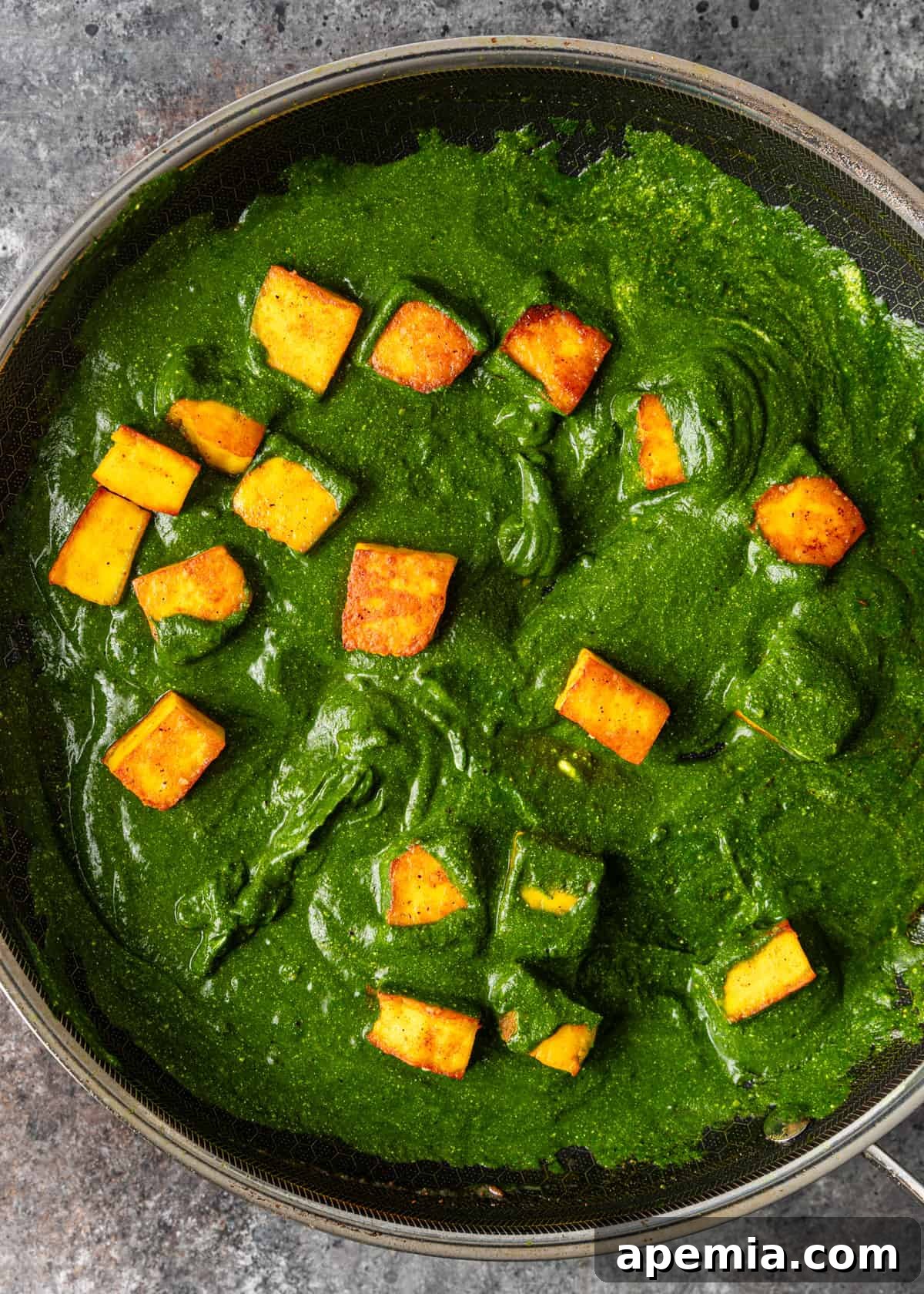
- Assemble and Serve Your Palak Paneer: Add the prepared, smooth spinach purée to the skillet with the tempered spices and garlic. Stir thoroughly to combine all the ingredients, ensuring the spinach is evenly coated with the aromatic mixture. Next, gently stir in 3 tablespoons of plain yogurt (Greek yogurt is highly recommended for a richer and tangier sauce). Continue to stir until the yogurt is fully incorporated and the sauce achieves a smooth, creamy consistency. Return the golden-fried paneer cheese cubes to the skillet, gently folding them into the spinach curry. Heat the entire dish through for a few minutes, allowing the paneer to warm up and further absorb the sauce’s exquisite flavors. Taste and season generously with additional salt and freshly ground black pepper as needed. Serve your delectable Palak Paneer immediately, ideally with warm naan bread, fluffy basmati rice, or homemade roti. A small wedge of fresh lemon for squeezing over at the table is an optional but highly recommended touch that brightens and lifts all the flavors beautifully.
Recommended Tools for Perfect Palak Paneer
Having the right kitchen tools can make the process of preparing Palak Paneer even more enjoyable and ensure a perfect outcome every time.
- Food Processor or High-Speed Blender: This is an absolutely essential tool for achieving the signature smooth, luscious, and creamy consistency of the Palak Paneer sauce. While steaming softens the spinach, only a powerful appliance can break it down adequately to eliminate fibrous textures and create that velvety purée.
- Large Heavy-Bottomed Skillet or Kadai: A good quality skillet (preferably non-stick or cast iron) or a traditional Indian kadai is crucial. It’s used for evenly frying the paneer to a beautiful golden crisp and for tempering the spices without burning them. Its ability to retain and distribute heat consistently is key to the success of your curry base.
- Saucepan with Lid: A medium-sized saucepan with a tight-fitting lid is needed for efficiently steaming the baby spinach. The lid traps the steam, ensuring the spinach wilts quickly and evenly while preserving its vibrant color and essential nutrients before it’s puréed.
- Cutting Board and Sharp Knife: Essential for safely and precisely cubing the paneer into uniform pieces and for finely chopping the garlic and any other aromatics.
- Measuring Cups and Spoons: Accurate measurement of ingredients, especially spices, is vital in Indian cooking to achieve the perfect balance of flavors and ensure your curry is consistently delicious.
- Tongs or Spatula: Useful tools for carefully turning the paneer cubes as they fry to achieve even browning, and for stirring the curry sauce as it simmers, preventing sticking and ensuring uniform cooking.
Storing and Reheating Your Palak Paneer
Palak Paneer is one of those wonderful dishes that often tastes even better the day after it’s made, as the flavors have more time to meld and deepen. Proper storage and reheating techniques are crucial to preserve its deliciousness and creamy texture.
- Storage: To store any uneaten Palak Paneer, allow it to cool to room temperature (within two hours of cooking) and then transfer it promptly to an airtight container. It can be safely refrigerated for up to 3-4 days. For longer storage, Palak Paneer freezes exceptionally well. Place it in a freezer-safe, airtight container or a heavy-duty freezer bag, ensuring as much air as possible is removed to prevent freezer burn. It can be kept in the freezer for up to 2-3 months. Always thaw frozen curry overnight in the refrigerator before reheating.
- Reheating: The optimal method for reheating Palak Paneer (or any creamy spinach curry) is on the stovetop over medium-low heat. Transfer the desired portion to a saucepan and stir frequently and gently to ensure even heating and to prevent the sauce from sticking to the bottom. Reheating gradually is important, especially due to the yogurt in the sauce; high or rapid heat can sometimes cause the yogurt to separate or the sauce to become oily. If the curry appears too thick after reheating, you can stir in a small splash of water or milk to achieve your preferred consistency. Avoid reheating in the microwave on high power, as this can sometimes alter the delicate texture of both the paneer and the spinach sauce. Gentle, slow reheating will yield the best results, keeping the paneer tender and the sauce wonderfully creamy.
Frequently Asked Questions About Palak Paneer
The core difference between these two popular Indian dishes lies in their primary green ingredient. “Palak” is the Hindi word specifically for spinach, so Palak Paneer strictly uses spinach as its green component. This gives it a distinct, milder, and often slightly sweeter flavor profile. “Saag,” however, is a broader term for mixed leafy greens, which can encompass a variety of vegetables like mustard greens (sarson), fenugreek (methi), kale, and sometimes spinach. Therefore, while Palak Paneer is a type of Saag Paneer, Saag Paneer itself can offer a wider and more varied range of flavors and textures due to the blend of different greens used.
Yes, they are! “Palak” is simply the Hindi word for spinach. So, when an Indian recipe calls for ‘palak’, it is referring to spinach.
To ensure your Palak Paneer is delightfully smooth and free from any unwanted bitterness, consider these key tips:
- Opt for Young Spinach: Always choose fresh, young baby spinach. It naturally contains lower levels of oxalic acid, which is the compound responsible for the bitter taste in mature spinach.
- Mind the Cooking Time and Temperature: Avoid overcooking spinach or cooking it at excessively high temperatures. As soon as the water begins to boil during the steaming process, reduce the heat to a gentle simmer for just a couple of minutes. Prolonged high-heat exposure can intensify bitterness.
- Incorporate Creamy and Tangy Elements: The addition of dairy or a rich creamy substitute is highly effective in neutralizing bitterness. Plain yogurt, especially Greek yogurt, is excellent for this due to its natural fat content and inherent tang (acidity), which beautifully balances and cuts through the earthy bitterness of the greens. Heavy cream or a silky cashew paste can also be used to achieve a similar luxurious mouthfeel and flavor balance.
- A Pinch of Sweetness (Optional): In some cases, a very small pinch of sugar can subtly enhance the flavors and further counteract any bitterness, though typically, proper preparation makes this unnecessary.
Share this recipe on Pinterest!
Loved making this delicious Palak Paneer? Share it with your friends and followers on Pinterest!
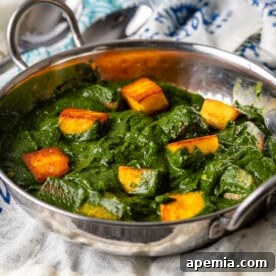
Palak Paneer (Spinach and Cheese Curry)
4
10 minutes
20 minutes
30 minutes
PrintRecipe
Video
Ingredients
For the Paneer
- 1/2 lb paneer cheese cubed (See Note 1 for piercing tip)
- 1/2 tsp ground turmeric
- 1/2 tsp chili powder
- 1/2 tsp salt
- 2 tbsp canola oil or other neutral cooking oil
For the Spinach Gravy
- 1 lb fresh baby spinach
- 1 cup water
- 1 tsp cumin seeds
- 1 tsp ground turmeric
- 1 tsp red chili powder
- 3 cloves garlic finely chopped
- 3 tbsp plain yogurt Greek yogurt recommended for thickness and tang
- Salt and freshly ground black pepper, to taste
- Lemon wedges, for serving (optional)
Instructions
-
Cut the paneer into bite-sized cubes, approximately 1-inch each. For maximum flavor absorption, gently pierce each cube several times with a fork (this step is optional but highly recommended). Transfer the paneer to a medium bowl. Add ½ teaspoon ground turmeric, ½ teaspoon chili powder, and ½ teaspoon salt, tossing gently to ensure every piece is thoroughly coated with the spices. Set the seasoned paneer aside to marinate while you proceed with the spinach preparation.
-
In a large saucepan, add 1 cup of water and layer the fresh baby spinach on top. Bring the water to a rolling boil over medium-high heat. Once boiling, immediately reduce the heat to a gentle simmer, cover the saucepan tightly, and steam the spinach for exactly 2 minutes. This brief steaming wilts the spinach perfectly while retaining its vibrant green color and nutrients. Remove the lid and continue to cook, uncovered, stirring occasionally, until all the water has completely evaporated from the pan. Allow the steamed spinach to cool slightly for a few minutes. Transfer the cooled spinach to a food processor or a high-speed blender and purée until it forms a perfectly smooth, thick paste. Set aside.
-
Heat 2 tablespoons of canola oil in a large, heavy-bottomed skillet over medium-high heat. Once the oil is shimmering and hot, carefully add the marinated paneer cubes in a single layer. To avoid overcrowding and ensure even browning, you may need to fry the paneer in two batches. Pan-fry the paneer, turning the cubes occasionally with tongs or a spatula, until all sides are beautifully golden brown and slightly crispy. Remove the fried paneer from the skillet and transfer it to a plate lined with paper towels to drain any excess oil.
-
Using the same skillet with the remaining oil (add a tiny bit more if the pan seems too dry), reduce the heat to medium. Add 1 teaspoon of whole cumin seeds. Temper the cumin seeds by cooking for approximately 30 seconds, stirring continuously, until they begin to sizzle, turn a shade darker, and release their intensely fragrant aroma. Be careful not to burn them. Immediately add the remaining 1 teaspoon ground turmeric, 1 teaspoon red chili powder, and 3 cloves of finely chopped garlic to the skillet. Fry this aromatic mixture for another 1-2 minutes, stirring constantly, until the garlic is lightly golden brown and the spices are wonderfully fragrant. This tempering (Tadka) is crucial for building the curry’s foundational flavor.
-
Add the smooth spinach purée to the skillet with the tempered spices and garlic. Stir well to combine, ensuring the spinach is evenly coated with the aromatic mixture. Next, gently stir in 3 tablespoons of plain yogurt (Greek yogurt is highly recommended for a richer, tangier sauce). Continue to stir until the yogurt is fully incorporated and the sauce is smooth and creamy. Return the golden-fried paneer cheese cubes to the skillet, gently folding them into the spinach curry. Heat the entire dish through for a few minutes, allowing the paneer to warm up and absorb more of the sauce’s flavors. Season generously with additional salt and freshly ground black pepper to taste. Serve your delicious Palak Paneer immediately, ideally with warm naan bread, fluffy basmati rice, or fresh roti. A squeeze of fresh lemon juice over the top at the table is an optional but highly recommended touch that brightens the flavors beautifully.
Notes
- Piercing the cubed paneer with a fork before seasoning helps the spices penetrate the cheese more deeply, resulting in a more flavorful and tender paneer in every bite.
- This recipe has been lovingly adapted and refined, with initial inspiration drawn from my friend Dan at The Curry Guy, known for his exceptional curry insights and clever cooking techniques.
Nutrition
Carbohydrates: 8g |
Protein: 12g |
Fat: 22g |
Saturated Fat: 9g |
Polyunsaturated Fat: 2g |
Monounsaturated Fat: 5g |
Trans Fat: 0.03g |
Cholesterol: 39mg |
Sodium: 418mg |
Potassium: 708mg |
Fiber: 3g |
Sugar: 1g |
Vitamin A: 10877IU |
Vitamin C: 33mg |
Calcium: 417mg |
Iron: 4mg
The information shown is an estimate provided by an online nutrition calculator. It should not be considered a substitute for a professional nutritionist’s advice.
Have You Made This Recipe? Let Me Know on Instagram!
Tag @keviniscooking or use the hashtag #keviniscooking so I can see your delicious creation!