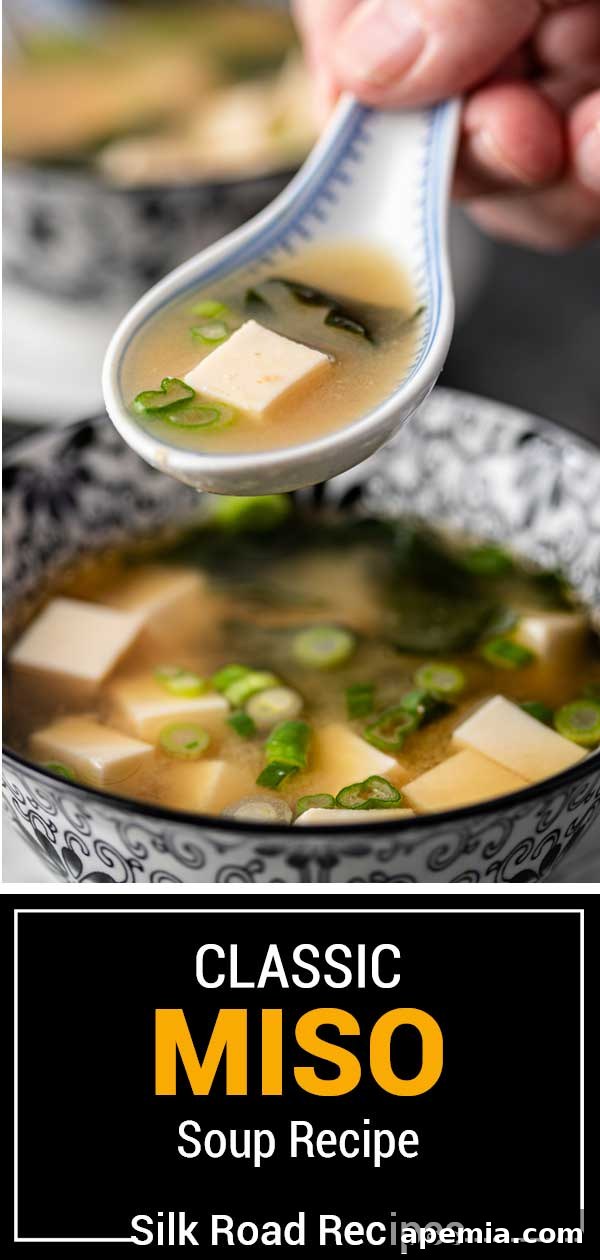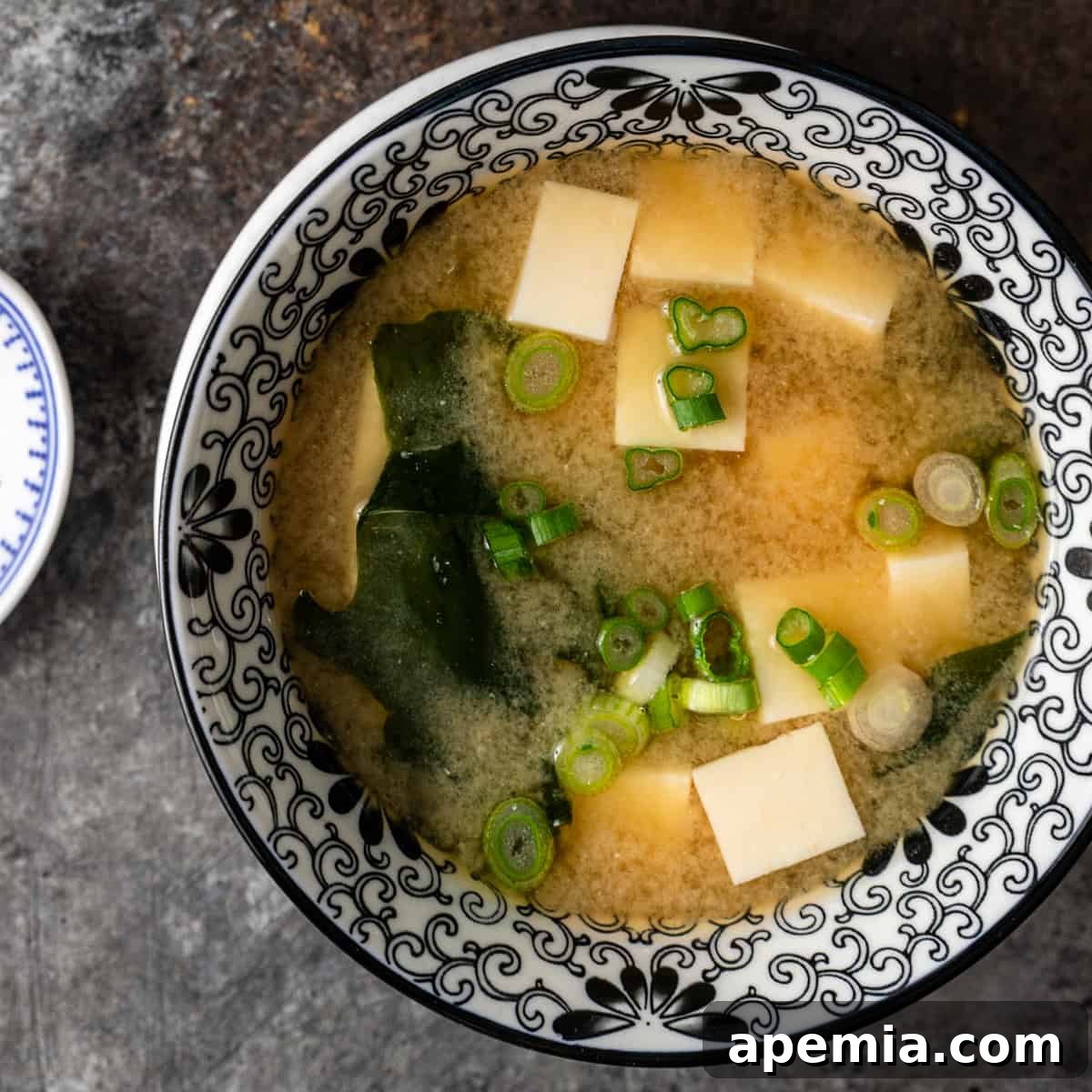
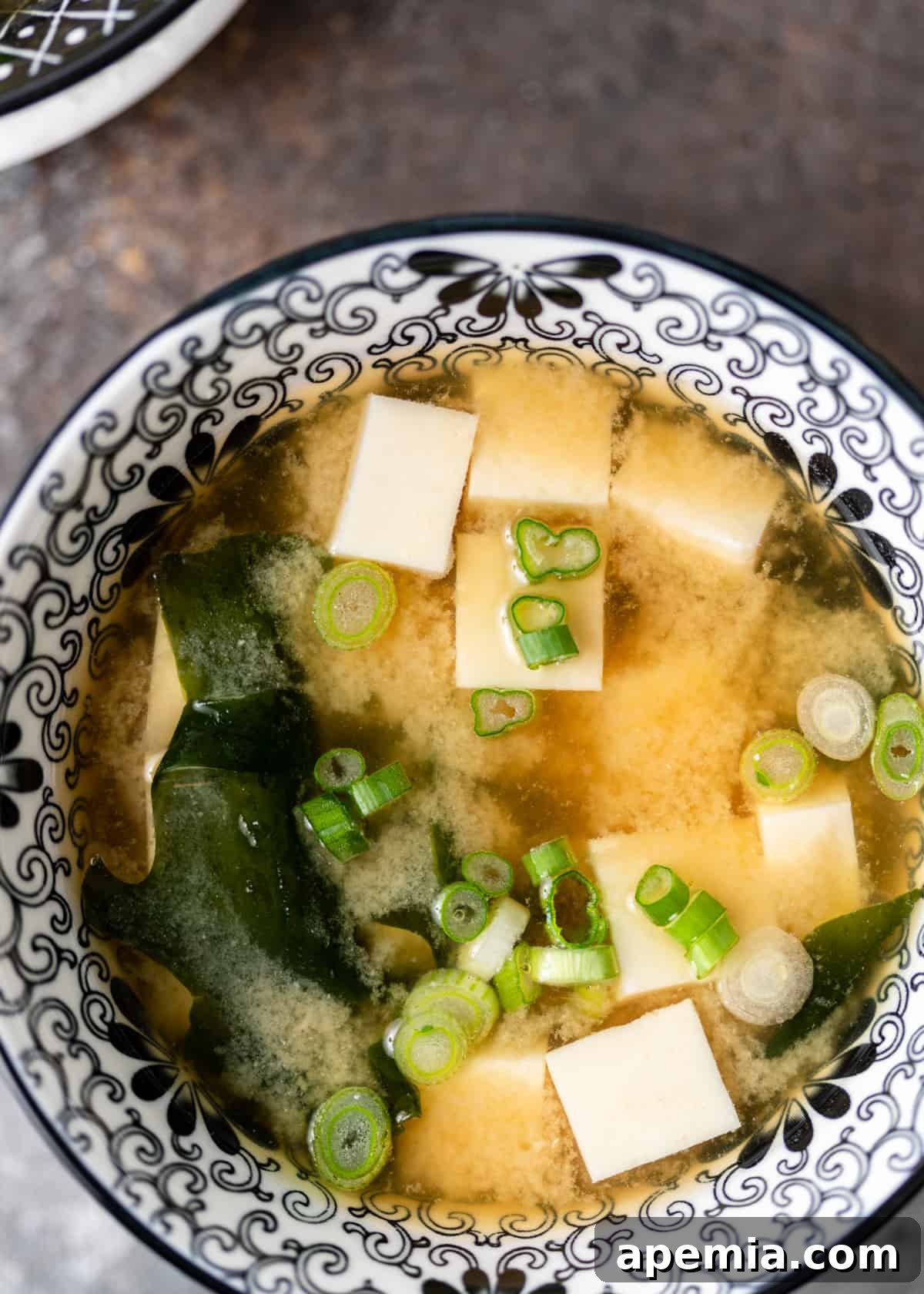
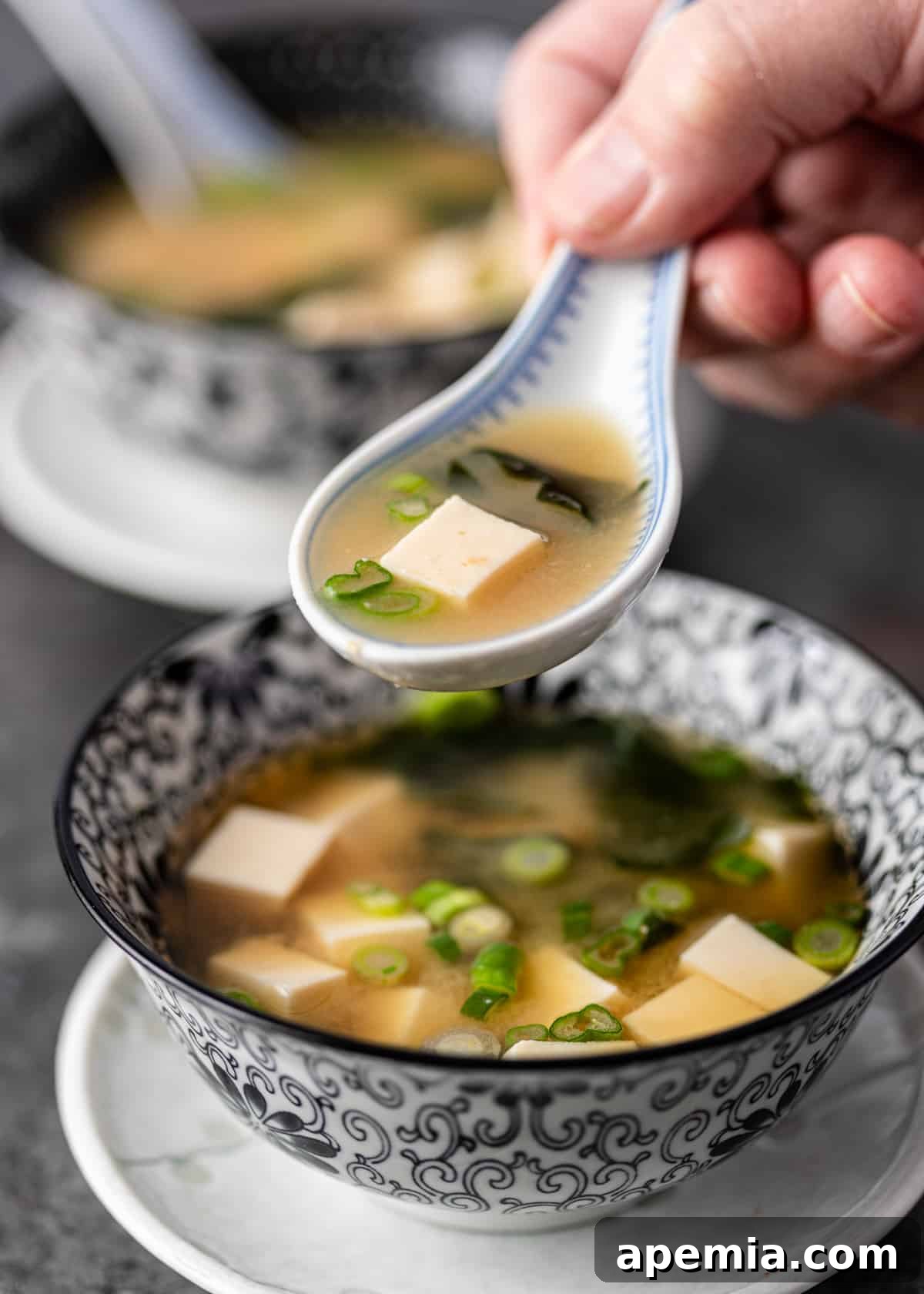
Experience the comforting embrace of a restaurant-quality starter right in your own kitchen with this authentic miso soup recipe. This delightful Japanese classic, crafted with essential ingredients like savory miso paste, nutrient-rich dried kelp, silky tofu, and tender seaweed, offers a remarkably satisfying and wholesome vegetarian option. Perfect for a light lunch, a quick weeknight dinner, or as an elegant appetizer course, homemade miso soup is a testament to simple ingredients yielding profound flavors.
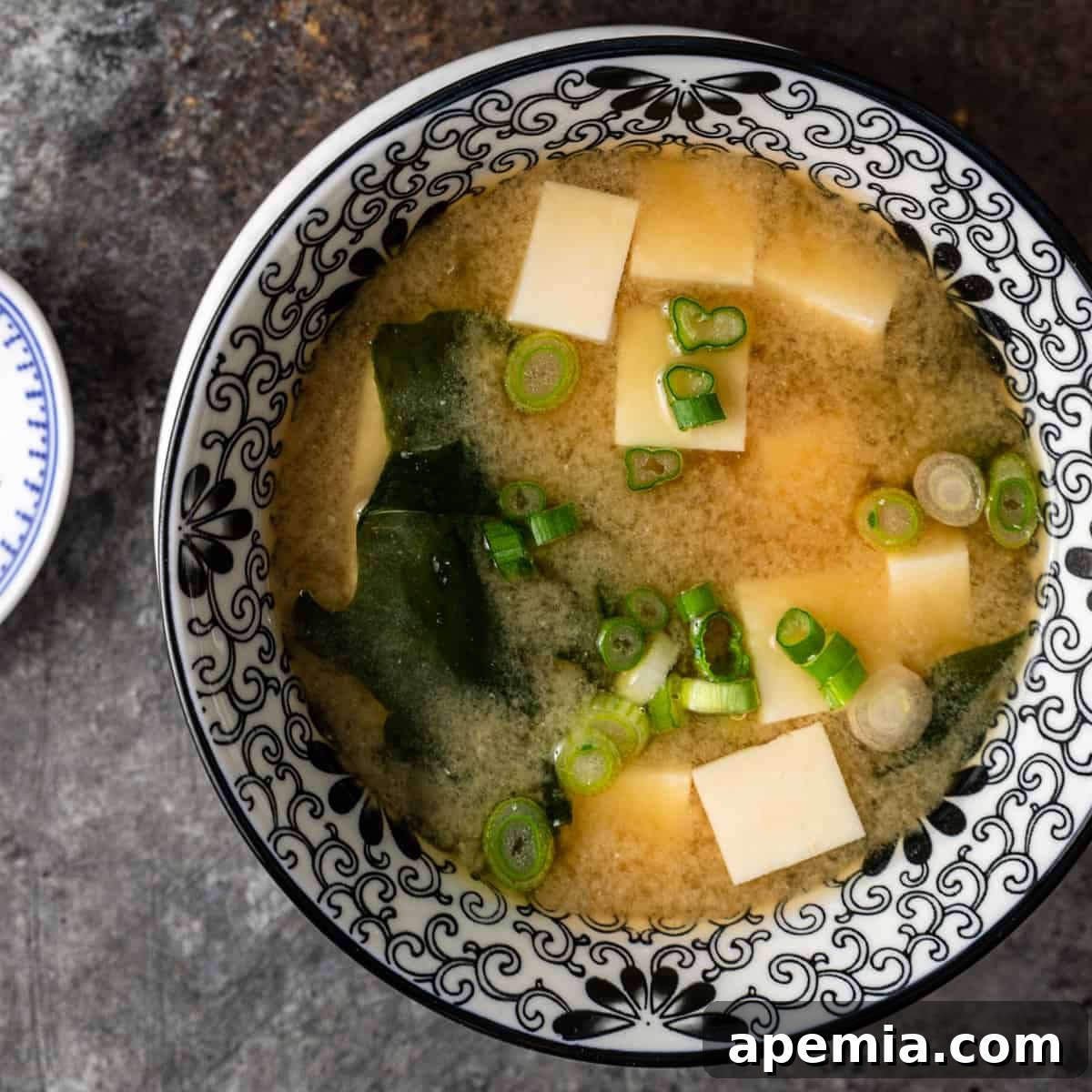
If you’re a devoted fan of Japanese cuisine, particularly sushi, then you’ve undoubtedly savored the warm, inviting taste of traditional miso soup. It’s a staple appetizer served in most Japanese restaurants, preparing your palate for the culinary journey ahead. While restaurant versions are often delicious, I find that crafting homemade miso soup allows for a more substantial and personalized experience. This homemade approach transforms it from a mere starter into a satisfying meal in itself, making it an ideal choice for a nourishing lunch or a healthy, quick dinner after a long day.
There’s something uniquely comforting about a steaming bowl of soup, and I confess, I’ve never met a soup I didn’t appreciate. My culinary adventures have led me through a diverse range of beloved recipes, from the delicate textures of Egg Drop Soup and the hearty goodness of Lebanese Lentil Soup, to the vibrant zest of Greek Chicken Orzo Soup, and the aromatic spices of Mulligatawny Soup with coconut milk and fresh vegetables. Each offers its own unique comfort, but this homemade miso soup holds a special place, bringing the authentic taste of Japan directly to your table with surprising ease.
Embarking on your journey to create authentic Japanese miso soup might require a small quest for ingredients, but I assure you, the effort is profoundly rewarding. Begin your search in the international foods aisle of your local grocery store, which often stocks many Japanese pantry staples. For a more extensive selection and potentially better prices, an Asian market is your best bet, providing a treasure trove of authentic ingredients. Should these local options prove elusive, the vast world of the internet is an invaluable resource, with numerous online stores specializing in international and Asian groceries. Trust me, the delightful aroma and exquisite flavor of your homemade Japanese miso soup will make every step of the ingredient hunt worthwhile!
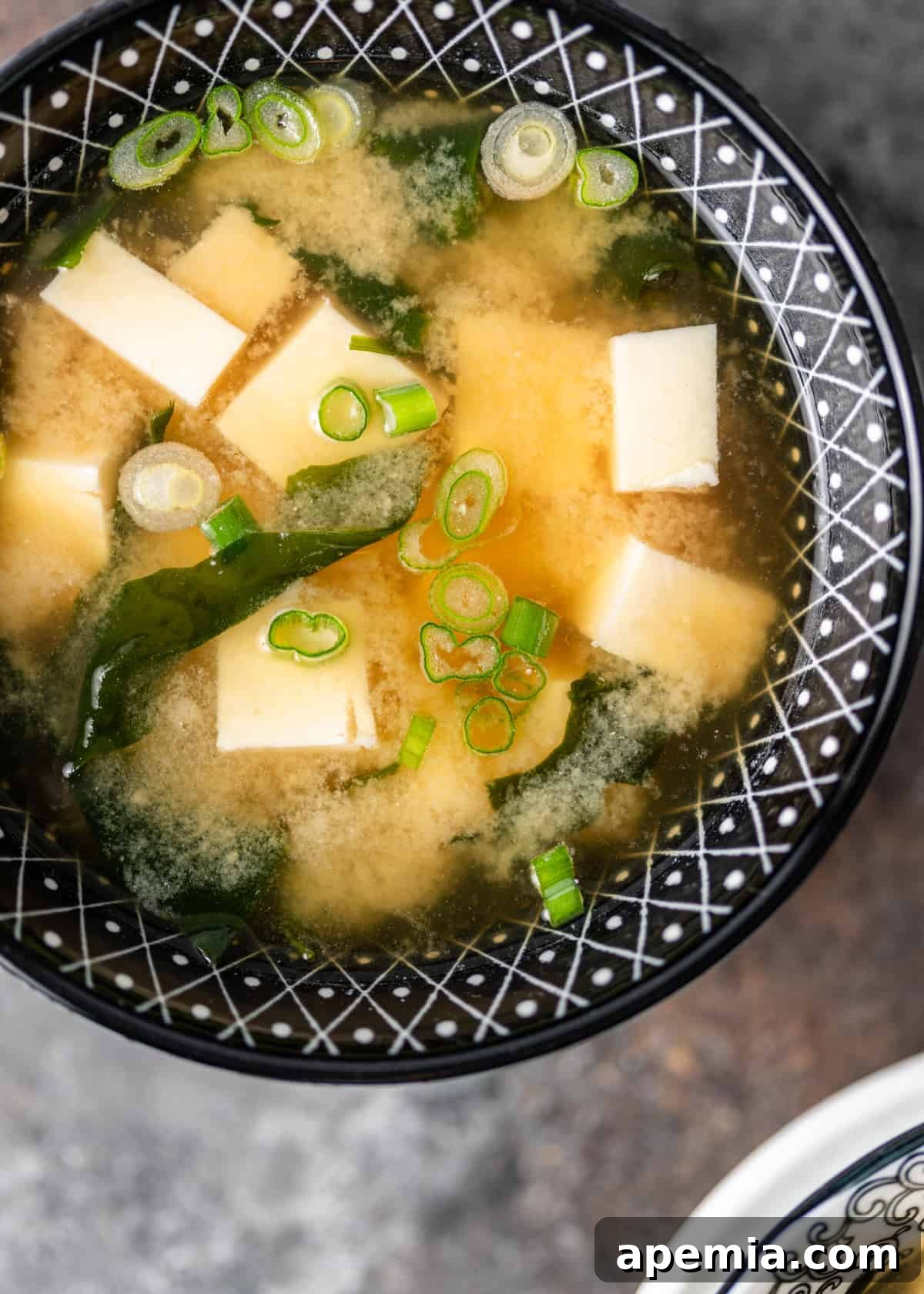
Essential Ingredients for Authentic Miso Soup
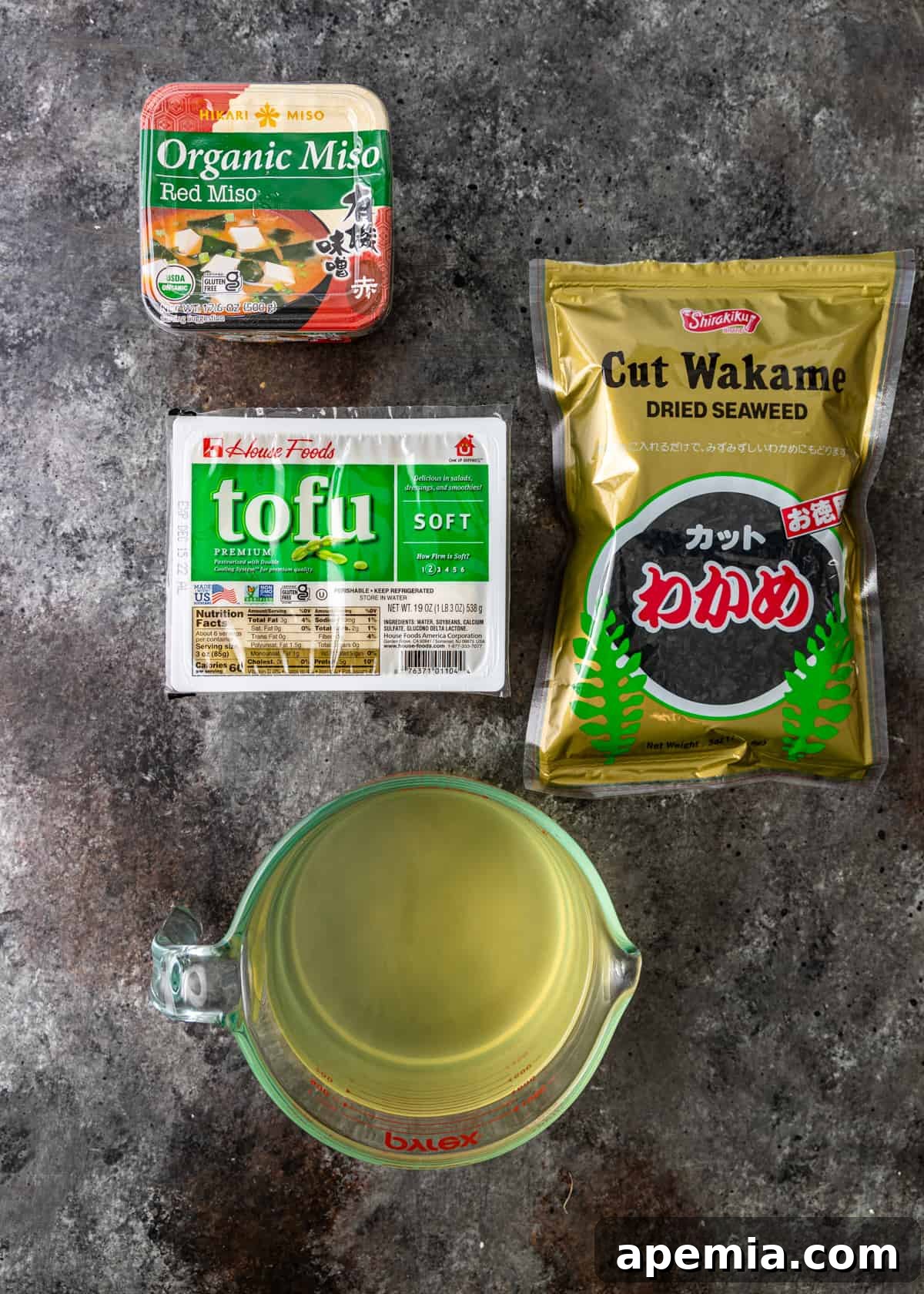
Creating an authentic bowl of miso soup hinges on a few key Japanese ingredients, each playing a crucial role in developing its characteristic umami depth and delicate flavor profile. While some substitutions are possible, sticking to the traditional components will yield the most satisfying and genuine result.
- Dried Kelp (Kombu): Known as Kombu in Japanese, this dried edible seaweed is indispensable for crafting the foundational “dashi” broth. Kombu lends a subtle, briny sweetness and a deep umami flavor, forming the backbone of the soup. Look for thick, flat pieces with a white powdery residue, which indicates quality.
- Dried Bonito Flakes (Katsuobushi): These thinly shaved flakes of dried, fermented, and smoked bonito fish (a variety of tuna) are another cornerstone of authentic dashi. Bonito flakes, also called Katsuobushi, contribute a smoky, savory depth that perfectly complements the kombu. The combination of kombu and katsuobushi creates a complex, synergistic umami profile that defines traditional Japanese broths.
- Water: Simple yet crucial, water serves as the canvas upon which the dashi broth is built. Using good quality filtered water can subtly enhance the purity of your dashi’s flavor.
- Soft Tofu: Tofu is a plant-based protein staple in miso soup, providing a satisfying texture and nutritional boost. For miso soup, always opt for soft or silken tofu. Its delicate, custardy consistency absorbs the rich dashi flavor beautifully, contrasting wonderfully with the broth. Firm or extra-firm tofu would be too dense and won’t give you the desired mouthfeel.
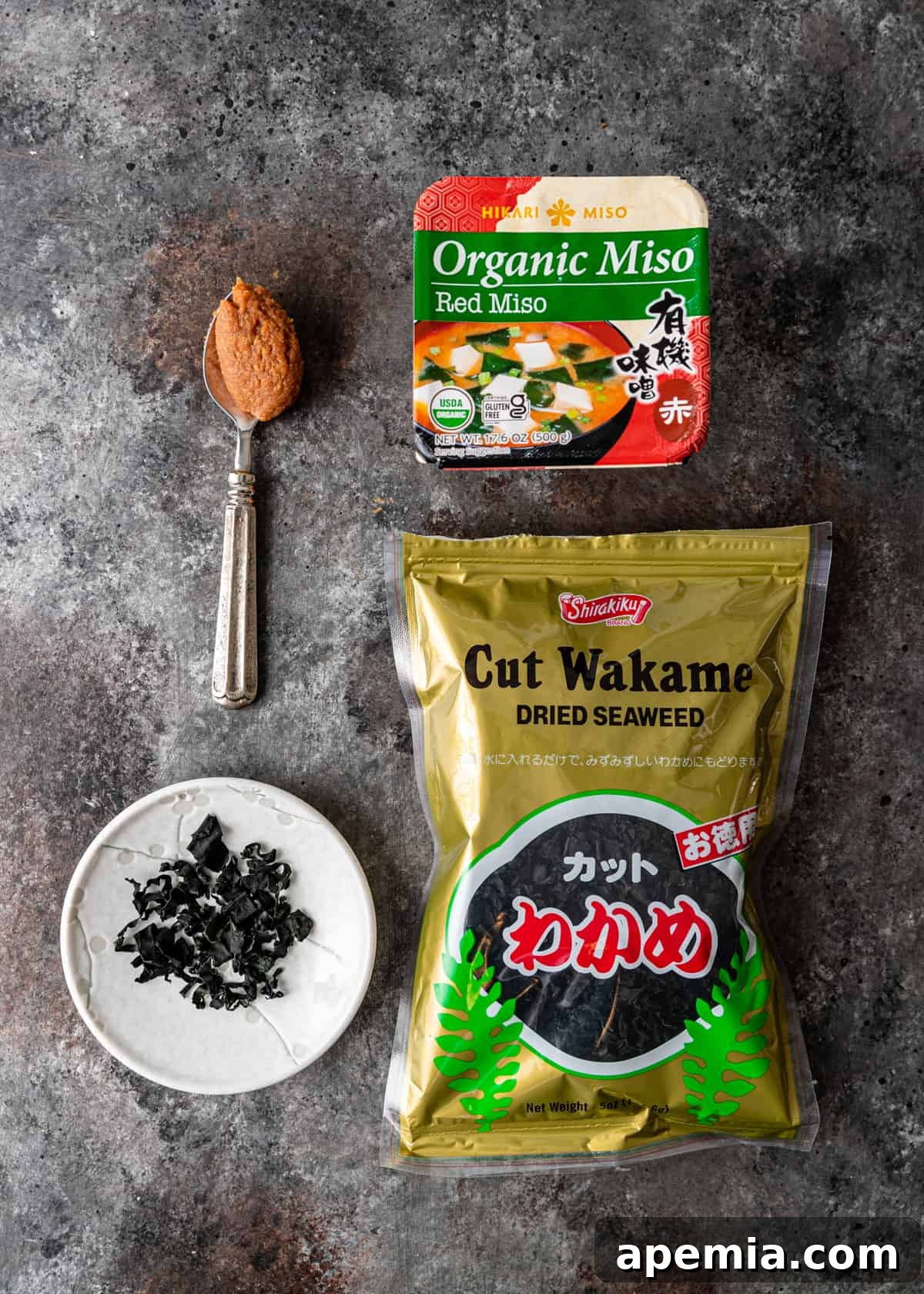
- Miso Paste: This fermented soybean paste is where the “miso” in miso soup comes from! It’s the primary source of the soup’s distinctive salty, earthy, and intensely savory umami flavor. There are various types of miso paste, including white (shiro), red (aka), and mixed (awase). White miso is typically milder and slightly sweet, making it an excellent choice for a lighter, everyday soup. Red miso is aged longer, resulting in a deeper, more robust, and saltier flavor. Awase miso offers a balanced blend. For this recipe, a good quality white or awase miso is recommended, using approximately 1 tablespoon of miso paste for every 1 cup of dashi for a well-balanced flavor.
- Dried Wakame Seaweed: Wakame is a delicate, edible seaweed that adds another layer of umami, a hint of sweetness, and a lovely green color to the soup. When rehydrated, it becomes tender and slightly slippery, providing a pleasant textural element. It’s typically sold dried and expands significantly when introduced to liquid.
- Green Onion (Scallions): Sliced thinly, green onions serve as a fresh garnish, adding a mild, pungent bite and a vibrant splash of green that enhances both the soup’s appearance and its savory aroma.
How to Prepare the Perfect Miso Soup: A Step-by-Step Guide
Making delicious homemade miso soup is a simple and rewarding process, largely thanks to the flavorful dashi stock. Follow these steps to achieve a perfectly balanced and comforting bowl.
- Start the Dashi: The Foundation of Flavor. Begin by gently wiping any impurities from your kombu (dried kelp) with a damp cloth – do not wash it, as you’ll lose valuable umami. Cut or break the kombu into several manageable pieces to maximize its surface area. Place these pieces into a sufficiently large saucepan and add the specified amount of water. Slowly bring the mixture to *just below a boil* over medium heat. Keep a close eye on it; as soon as you start to see small bubbles forming around the edges of the pot, turn off the heat immediately. It’s crucial not to let the kombu boil, as this can extract bitterness. During this process, skim off any foam or residue that rises to the surface to ensure a clear broth.
- Infuse with Dried Bonito Flakes. Carefully remove the kombu pieces from the saucepan using tongs. You can set them aside for another culinary use, such as making a secondary dashi stock or incorporating them into other dishes, or simply discard them. To the hot water, add the dried bonito flakes. Return the saucepan to the heat and bring the mixture to a full boil. As soon as it boils vigorously, remove the saucepan from the heat. Allow the katsuobushi to steep for approximately 10 minutes. This steeping period allows the bonito flakes to release their rich, smoky essence into the dashi.
- Strain the Dashi for Clarity. Place a fine-mesh sieve over a measuring bowl or a clean pot. Carefully pour the dashi through the sieve, separating the liquid from the steeped bonito flakes. Gently press the wet bonito flakes with the back of a spoon to extract every last drop of flavorful liquid. Once strained, you can discard the spent katsuobushi or, like the kombu, save it for other creative culinary uses if desired. You now have a pristine, flavorful dashi stock, the soul of your miso soup.
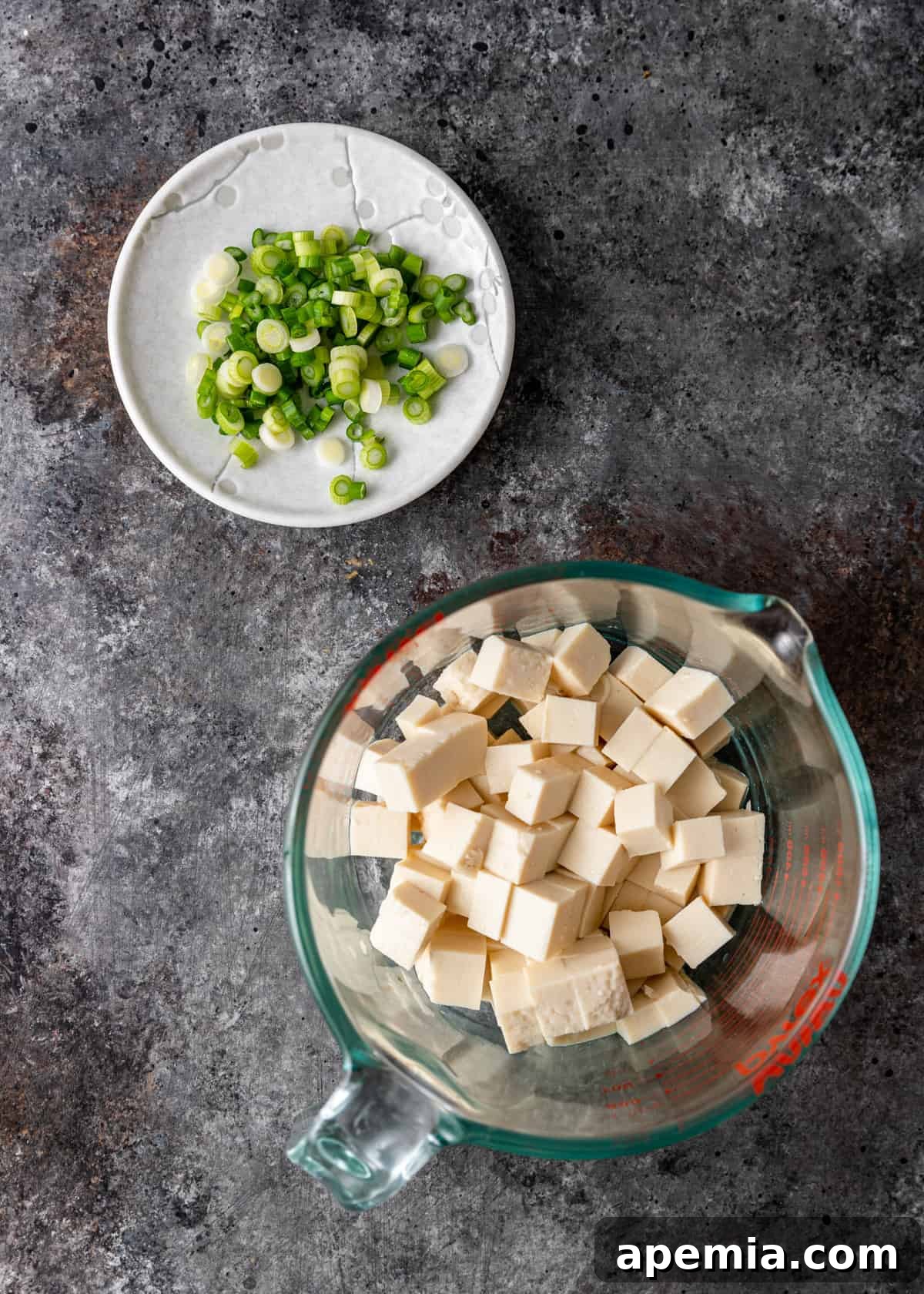
- Prepare the Fresh Additions. While your dashi is ready, prepare the fresh elements for your soup. Slice the green onion (scallions) into thin rounds, separating the white and green parts if you wish to use them differently. Cube the soft tofu into neat ½-inch pieces. The soft texture of the tofu is key, as it will absorb the dashi’s flavor beautifully without being overly chewy. Set both the sliced green onion and cubed tofu aside.
- Incorporate the Miso Paste. Transfer your fresh dashi back into the saucepan and bring it to a gentle simmer over medium-low heat. Miso paste should never be boiled, as high heat can destroy its delicate flavor and beneficial probiotics. To ensure smooth incorporation, take a ladleful of the warm dashi and place your miso paste into the ladle. Stir the miso paste in the ladle with a spoon until it completely dissolves into a smooth slurry. Once dissolved, pour the miso mixture back into the saucepan with the rest of the dashi and stir gently to combine.
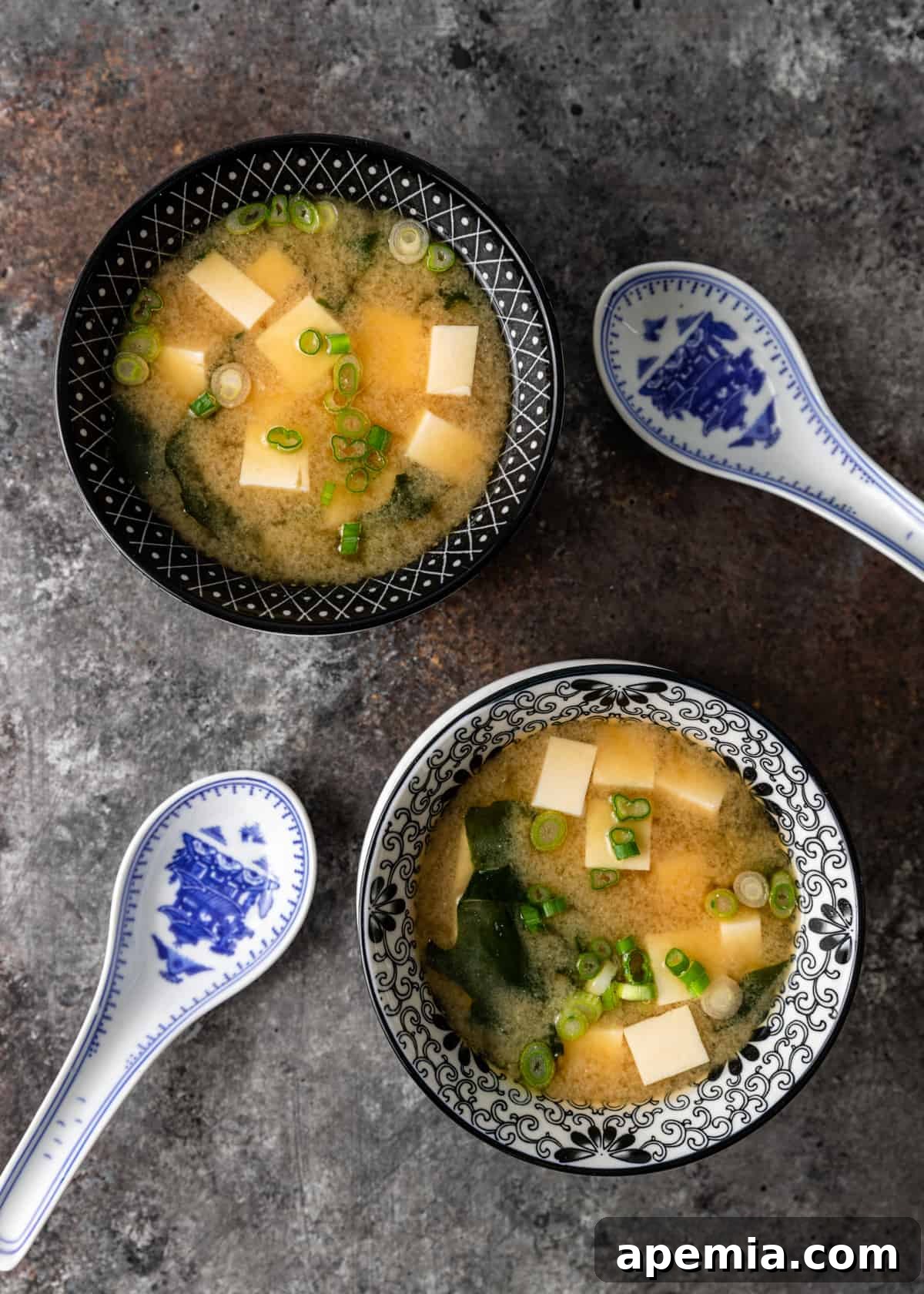
- Assemble and Serve Your Miso Soup. With the miso perfectly integrated, it’s time to add the remaining ingredients. Gently incorporate the cubed soft tofu and the dried wakame seaweed. The wakame will rehydrate and expand quickly in the warm broth. Continue to heat the soup until it reaches a gentle simmer, being extremely careful not to let it come to a boil at this stage. Once heated through and the wakame is tender, ladle the fragrant miso soup into individual bowls. Garnish generously with the sliced green onion. Serve your homemade miso soup immediately while it is piping hot and savor every nourishing spoonful!
- 10 g kombu (dried kelp)
- 10 g katsuobushi (dried bonito flakes, about 1 cup)
- 4 1/4 cups water
- 8 oz soft tofu
- 4 tbsp miso paste (See Note 1 for choosing your miso)
- 1 tbsp dried wakame seaweed
- 2 green onions, thinly sliced
- Gently wipe kombu clean and cut or break it into several pieces.
- In a large saucepan, add water and kombu. Over medium heat, slowly bring the mixture to *just below a boil* (turn off heat when bubbles start to form). Skim any foam. Remove kombu with tongs; set aside for another use or discard.
- Add dried bonito flakes to the saucepan, stir, and bring to a full boil. Once boiling, remove from heat and let the katsuobushi steep for 10 minutes.
- Strain the dashi through a fine-mesh sieve into a clean bowl. Press the wet bonito flakes to extract as much liquid as possible. Discard or save the katsuobushi for other uses.
- Thinly slice the green onions and set aside. Cut soft tofu into ½-inch cubes and set aside.
- Return the dashi stock to the saucepan and bring it to a gentle simmer over medium-low heat.
- Place the miso paste into a ladle with a small amount of warm dashi and stir until fully dissolved. Pour this dissolved miso back into the saucepan and stir gently.
- Add the cubed tofu and dried wakame seaweed. Heat the soup to a gentle simmer, ensuring it *never* comes to a rolling boil at this stage (to preserve miso’s flavor and nutrients). Ladle into bowls and top with fresh green onion slices. Serve immediately and enjoy!
- For a balanced flavor, use approximately 1 tablespoon of your preferred miso paste (white, red, or awase) for every 1 cup of prepared dashi stock. Adjust to your taste preferences.
What is Authentic Miso Soup Comprised Of?
At its heart, traditional Japanese miso soup is defined by the harmonious blend of dashi stock and miso paste, precisely as this recipe guides you to prepare. This foundational combination provides the distinct umami depth that makes miso soup so beloved. While some traditionalists might keep it to these two core components, a more common and satisfying version, like mine, includes tender cubes of soft tofu and rehydrated dried wakame seaweed for added texture, nutrition, and subtle flavors. Beyond these staples, the beauty of miso soup lies in its adaptability. Many home cooks and chefs enjoy customizing their soup with additional fresh vegetables such as thinly sliced mushrooms, delicate spinach leaves, or finely julienned carrots, enhancing its nutritional profile and visual appeal. The variations are endless, allowing you to tailor your authentic miso soup to your personal preferences and what fresh ingredients are available.
Understanding Miso Paste: Its Core Ingredients
The magic of miso paste, the star ingredient of our soup, originates from the careful fermentation of soybeans. This age-old process involves introducing a beneficial mold called “koji” – derived from cultivating specific fungi on grains like rice, barley, or even soybeans themselves – to cooked soybeans. This mixture is then left to ferment over weeks, months, or even years, depending on the desired flavor and type of miso. While the term “mold” might initially sound off-putting to some, rest assured, the koji mold used in miso production is entirely safe and responsible for transforming simple soybeans into a complex, nutritious, and incredibly flavorful paste. This fermentation not only creates its signature umami but also contributes to its probiotic benefits, making miso paste a healthy addition to your diet.
Can Miso Paste Be Simply Added to Water for Soup?
While the idea of simply stirring miso paste into hot water for a quick soup is tempting for convenience, the truth is, you’d be missing out on the profound depth of flavor that defines authentic miso soup. Miso paste alone, dissolved in plain water, will result in a rather flat and one-dimensional broth, lacking the rich, savory complexity that true Japanese cuisine is known for. This is precisely why creating a proper dashi stock beforehand is paramount. Dashi, made from kombu and bonito flakes, provides an intricate umami foundation that elevates the miso’s flavor, creating a robust and deeply satisfying soup. Some individuals might opt for the quick “miso-in-water” method when time is extremely short, but I wholeheartedly advocate for the homemade dashi approach. The slight extra effort yields a miso soup recipe that is incomparably more authentic, flavorful, and truly nourishing, delivering an experience far beyond a simple mixture of paste and water.
Miso Soup Recipe: Your Guide to Japanese Comfort
Video Guide to Making Miso Soup
Watch this helpful video to guide you through each step of preparing a perfect bowl of miso soup at home.
Ingredients for Miso Soup
Quantities are approximate and can be adjusted to taste.
Instructions for Making Miso Soup
Prepare the Dashi (Japanese Soup Stock)
Assemble the Miso Soup
Recipe Notes
Nutritional Information (per serving)
The information shown is an estimate provided by an online nutrition calculator. It should not be considered a substitute for a professional nutritionist’s advice.